Design05 mins. read
Essentia Home opens the doors to a new destination for luxury interiors in Delhi
by Essentia HomeMar 22, 2025



by Pranjal MaheshwariPublished on : Aug 25, 2026
The second half of the 20th-century creative landscape—a period of rebuilding and the rise of modern, industrial production—was marked by the desire for a holistic design sensibility. Home and the objects dotting it were bridged, while allied disciplines like architecture, furniture and product design were interpreted as differently scaled manifestations of the same idea: ‘design’ in the service of comfortable, new-age living.
Several housing complexes developed around the world during this time boasted ‘complete’ units, including the miracle of clean, modular furniture. Suburban living with the same core belief became the ideal elsewhere. The concept of a mutable design language, seamlessly crossing disciplines backed by a unifying philosophy, acquires varying contemporary forms. A new furniture and homeware collection by British homeware manufacturer MADE, drawing directly on the iconic architecture of the historic Barbican Estate in London, and made in collaboration with the Barbican Shop, is an interesting proposition in that direction.
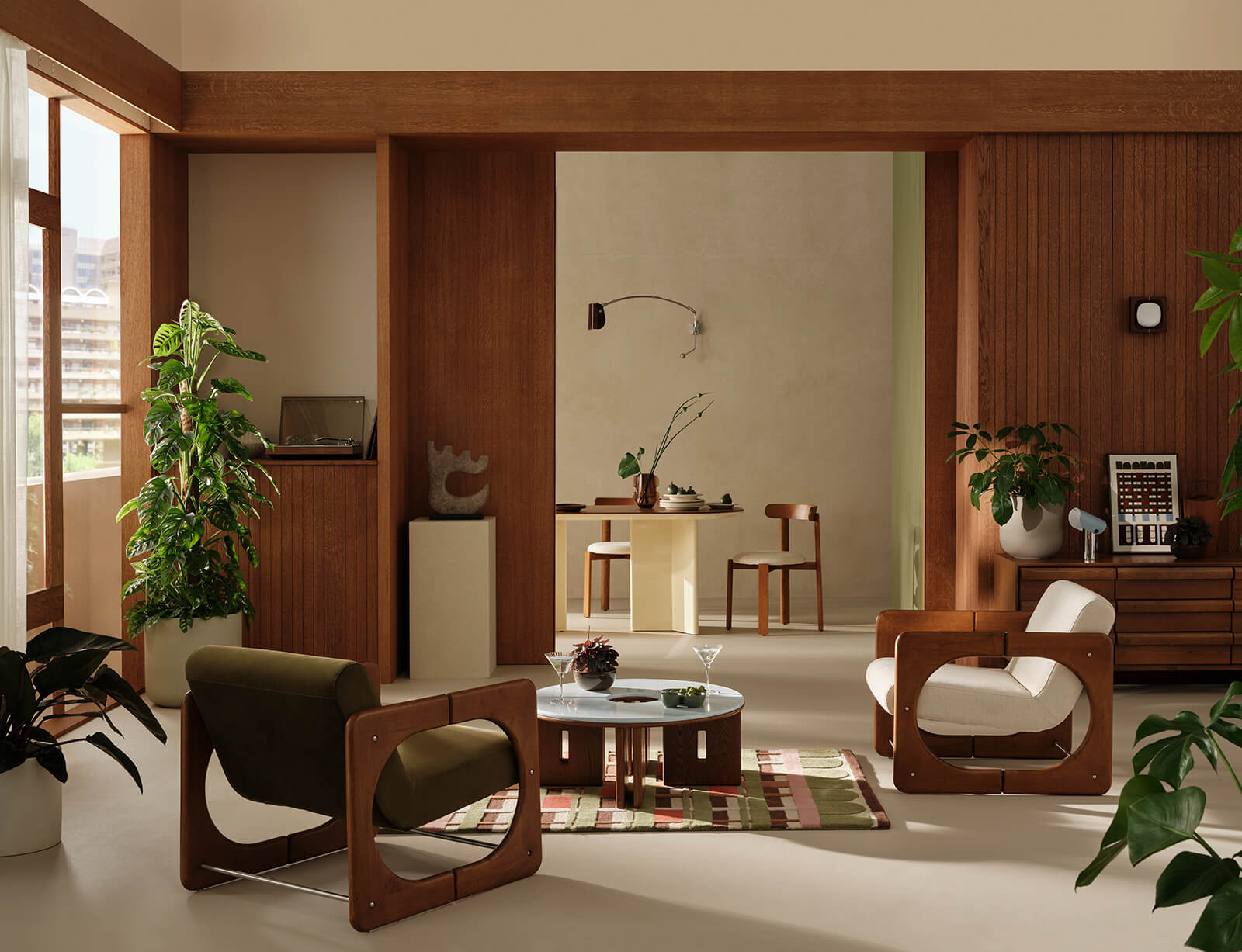
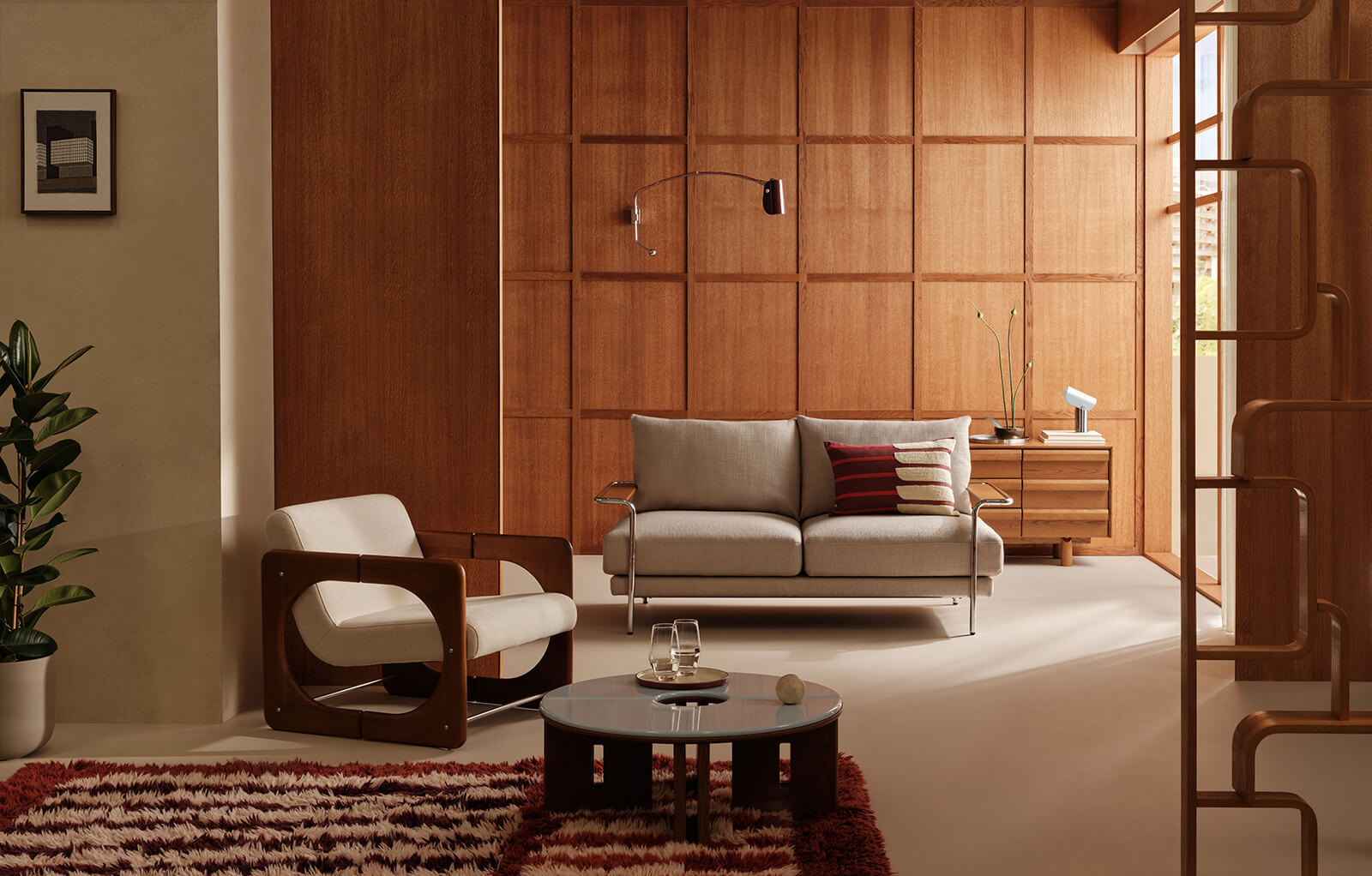
The conception of the 23-piece collection, titled MADE x Barbican, draws on the post-World War 2 design language of the brutalist cultural centre and residential complex in the City of London, designed by the erstwhile British architecture firm Chamberlin, Powell and Bon. It even traverses the estate’s extensive archives, comprising its architectural and cultural history, including the layouts and furnishings of the 1960s show flats for the complex designed by British architect and interior designer, Miriam Howitt. Borrowing from her Scandinavian design sensibilities, the collection blends sculptural and geometric forms with modular forms and curvilinear silhouettes, conceived to function as a set as well as individually, suiting contemporary design sensibilities.
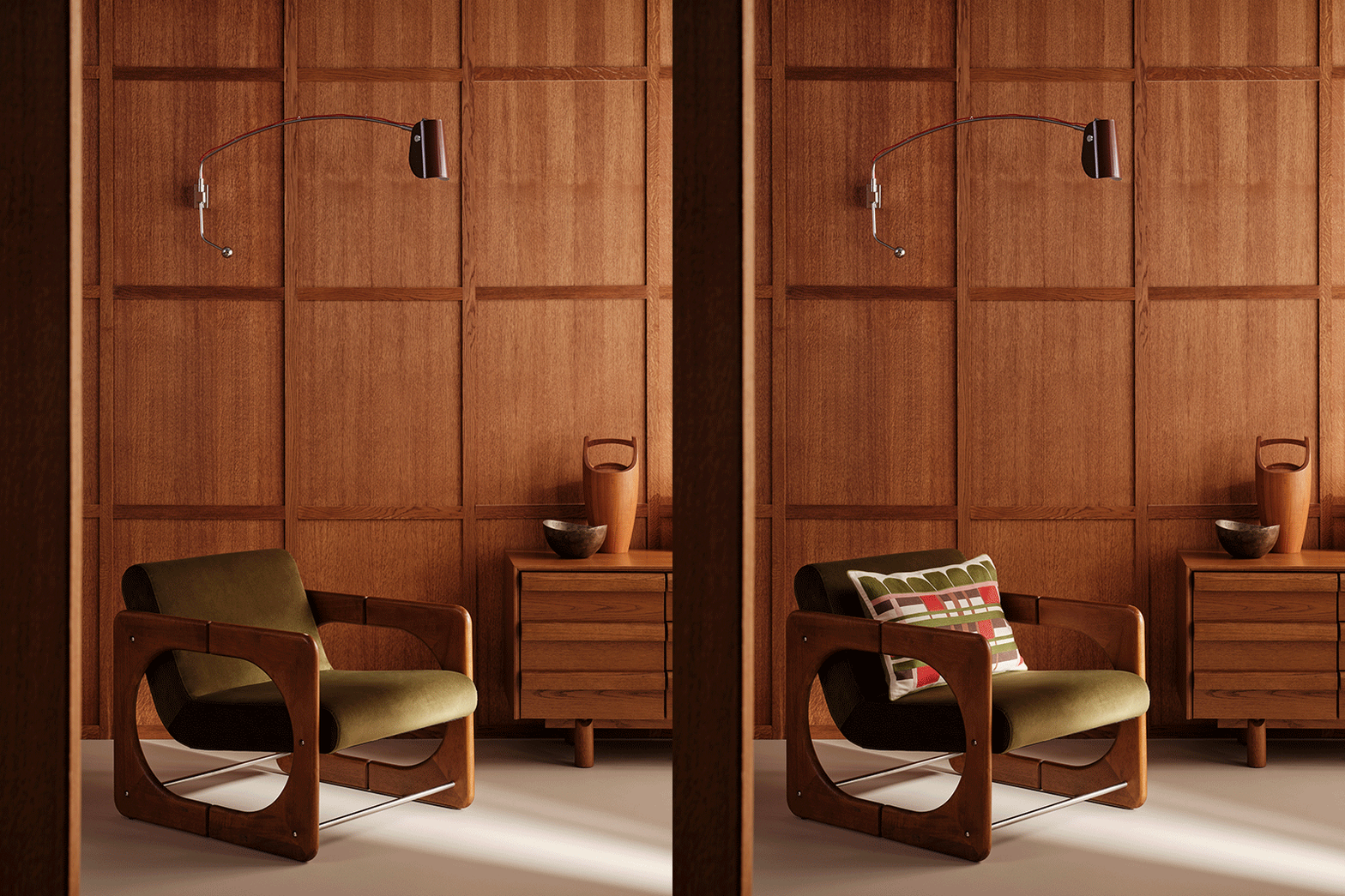
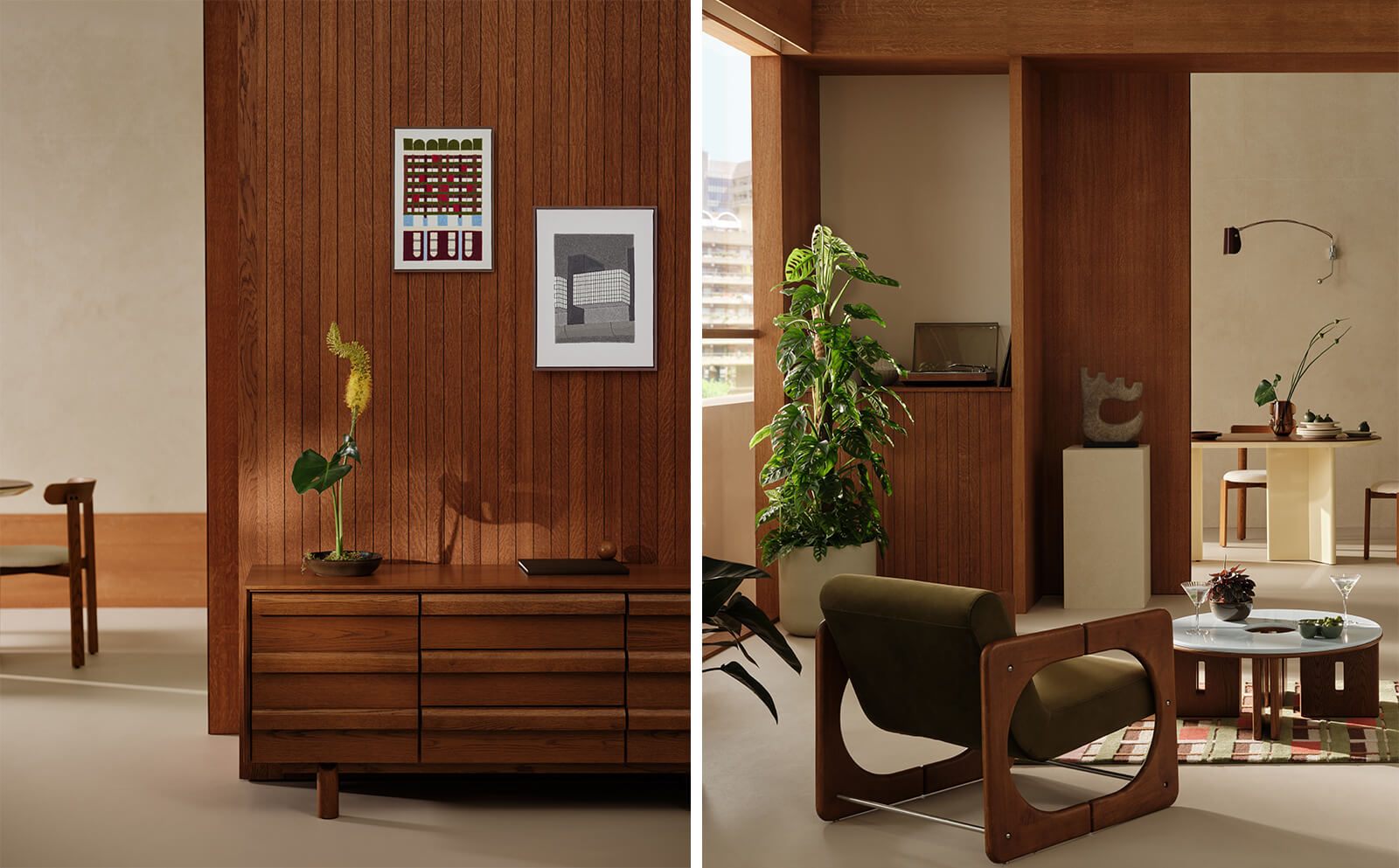
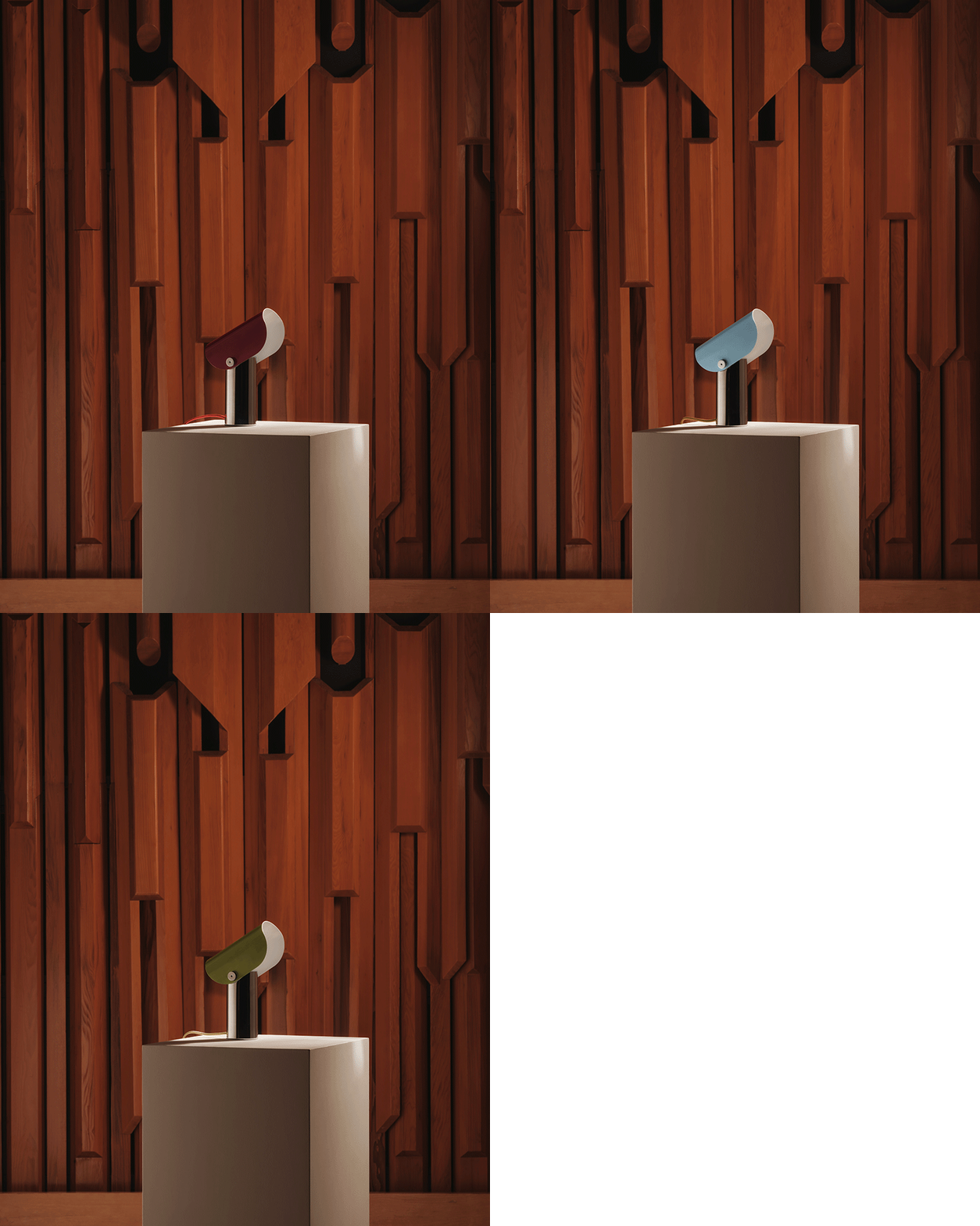
The MADE x Barbican collection includes a range of furniture, lighting and home decor, including two sofas, dining tables, lamps, lights, rugs and wall art—each with a marked motif or design inspiration owed to the Barbican. The Curve lighting series, for instance, takes from the tubular acoustic panels of the Barbican concert hall, translating them into a folded shade mounted on a chrome base. The lampshade is rendered in tones of burgundy, olive green and dusty blue—a palette invoking Howitt’s mid-century design scheme and continued through the entire collection. The Curve series also includes a floor lamp and a wall light.
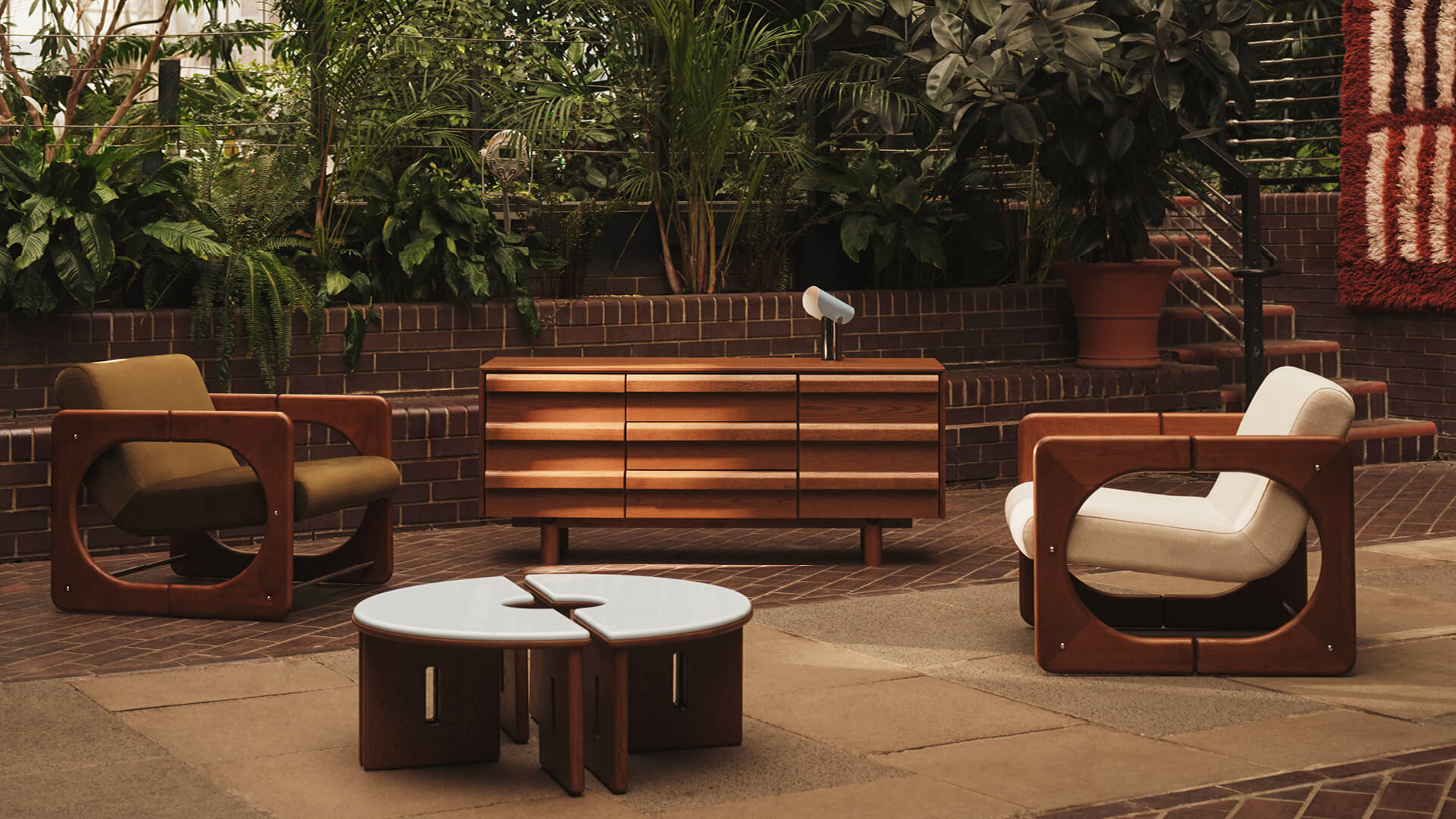
Inspired by the sunken seating pits by the lake in the Barbican complex, the collection also introduces the Plinth series. The Plinth Round coffee table, composed of two symmetrical semi-circular sections that can be rearranged to host different settings, is a particular highlight here. The Plinth Oval dining table comes in a yellow gloss finish, complete with dining chairs, marked by its distinct three-way legs, mirroring the estate’s concrete retaining walls.
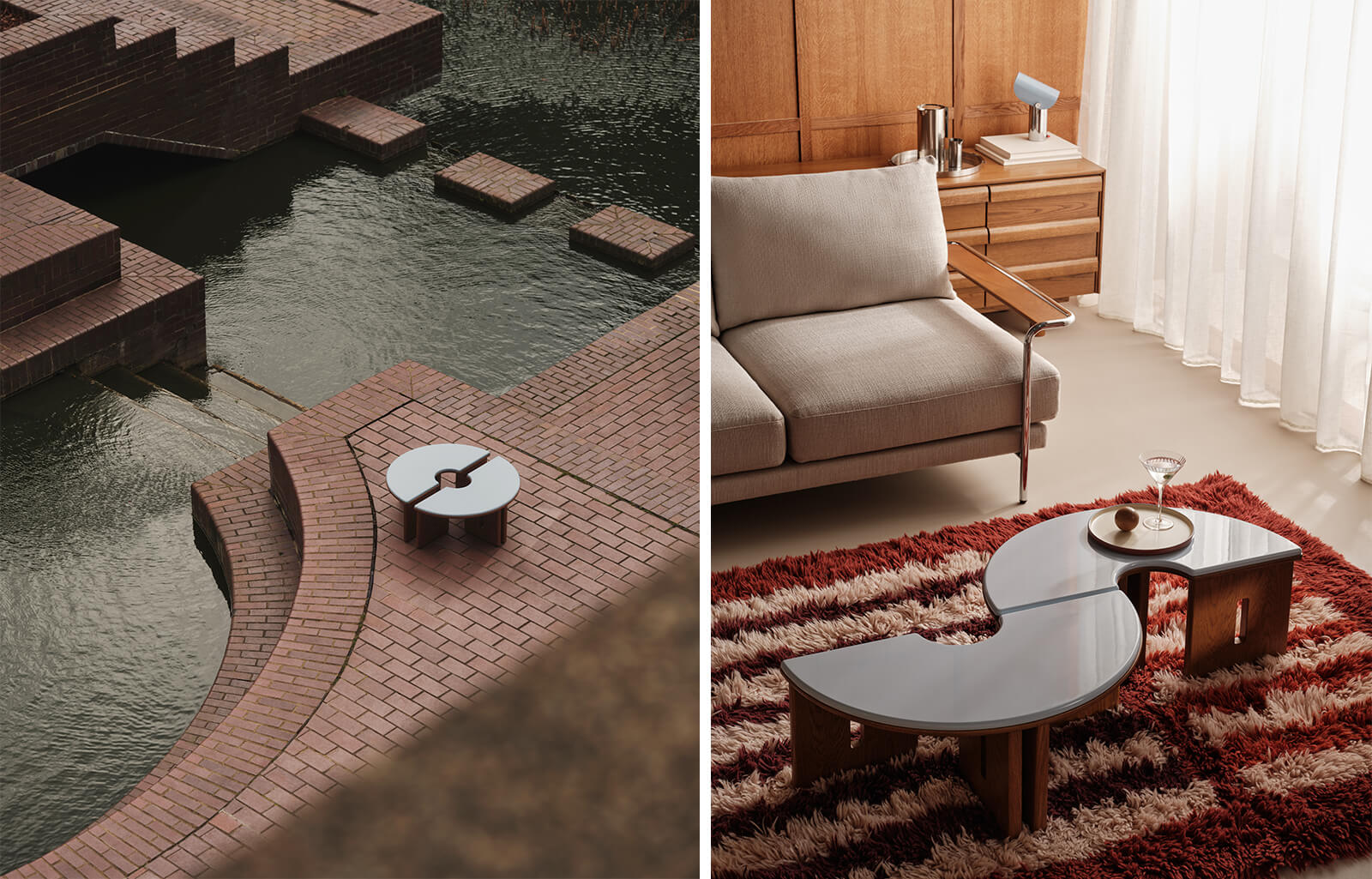
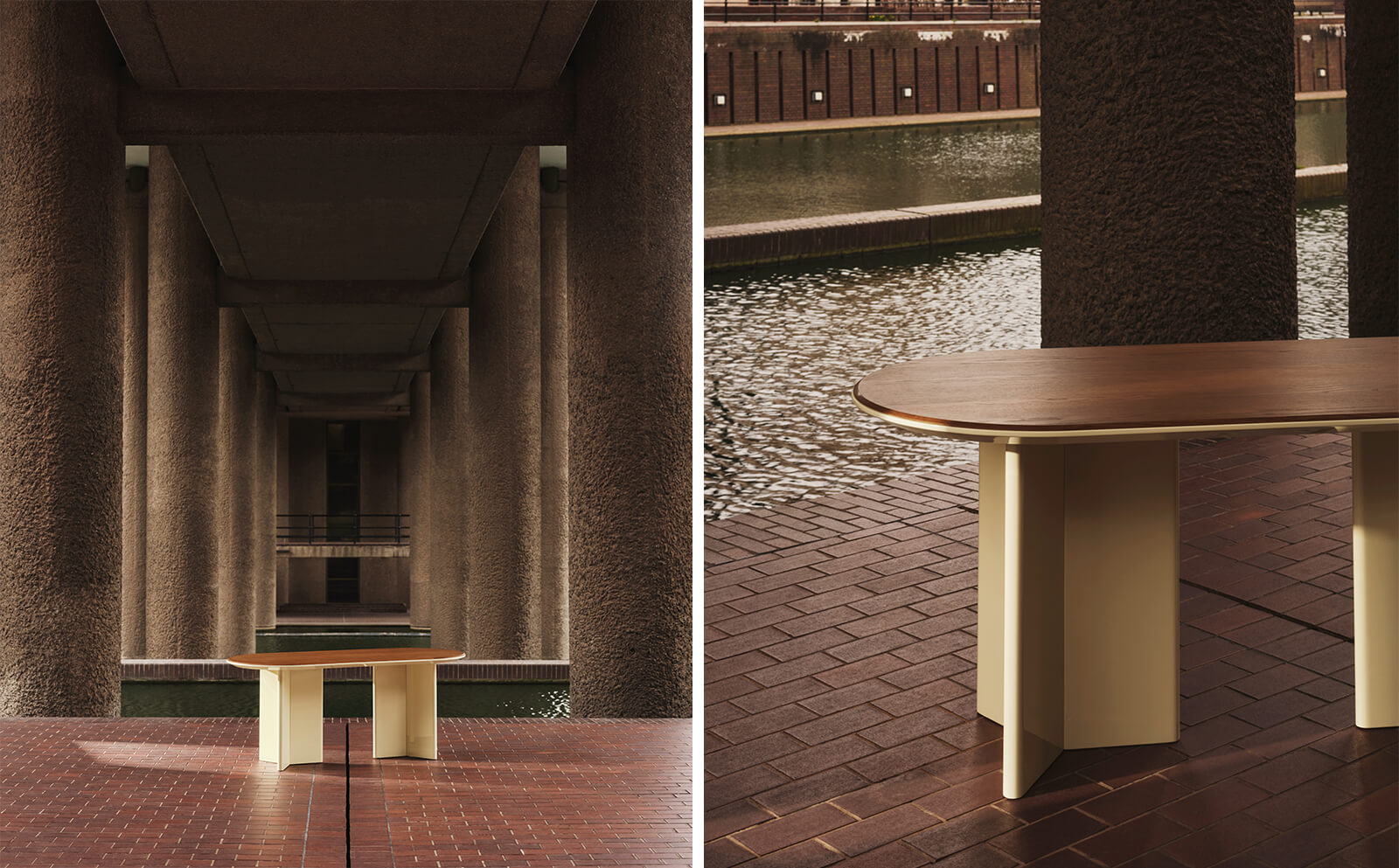
The series also includes a Plinth Narrow shelving unit and a Plinth Large sideboard, both in polished oak. “Inspired by the Arts Centre’s tiled overhangs and concrete towers, the Plinth shelving unit offers a space to curate and display", states Beatriz Nuno, MADE's Head of Design in conversation with STIR, responding to the specific design inspirations for products in the collection. "The profile of the shelves is inspired by the Estate’s balcony silhouettes to match the sideboard, while the leg uprights mimic the same square cut-outs as the concrete towers”, she said.
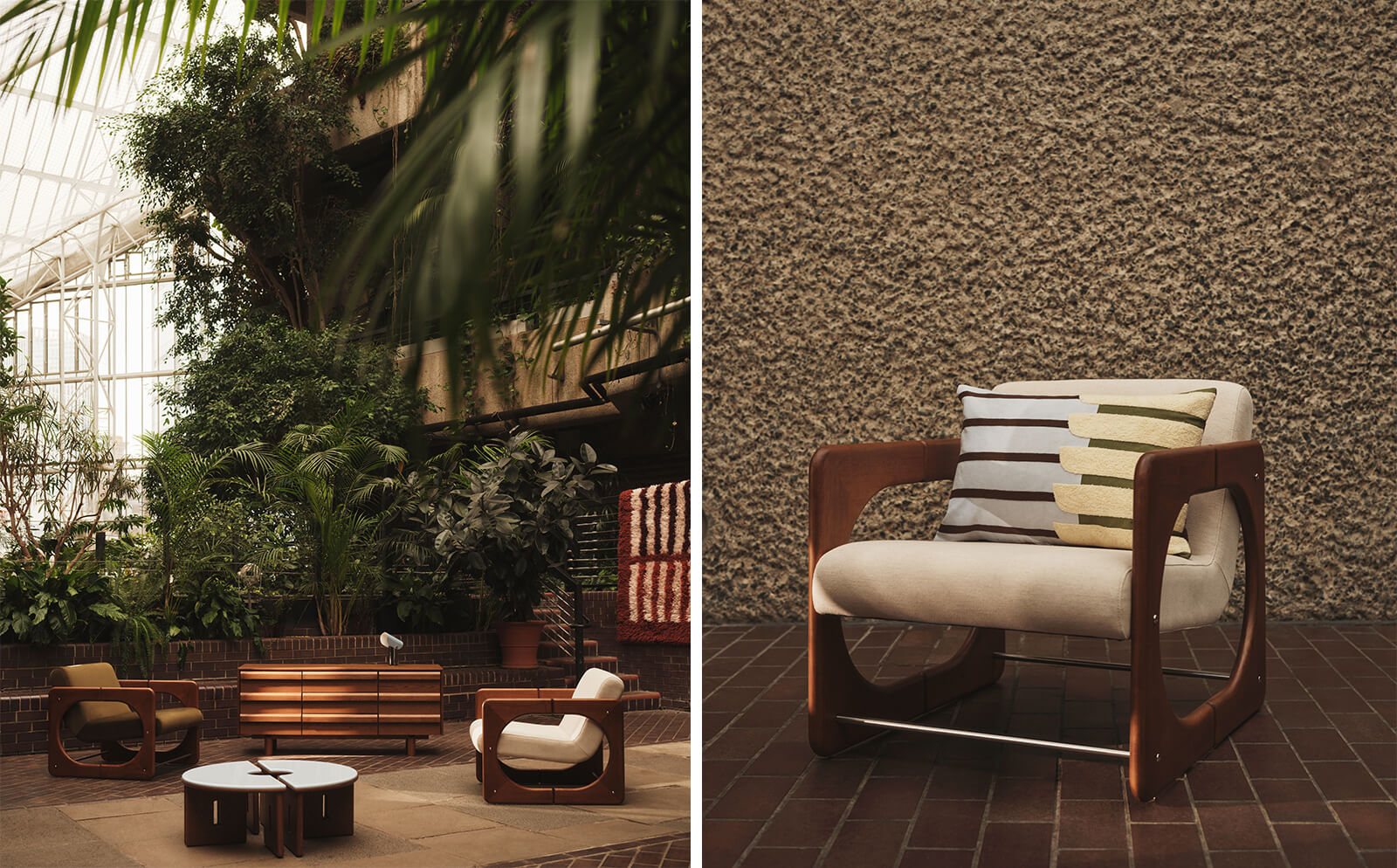
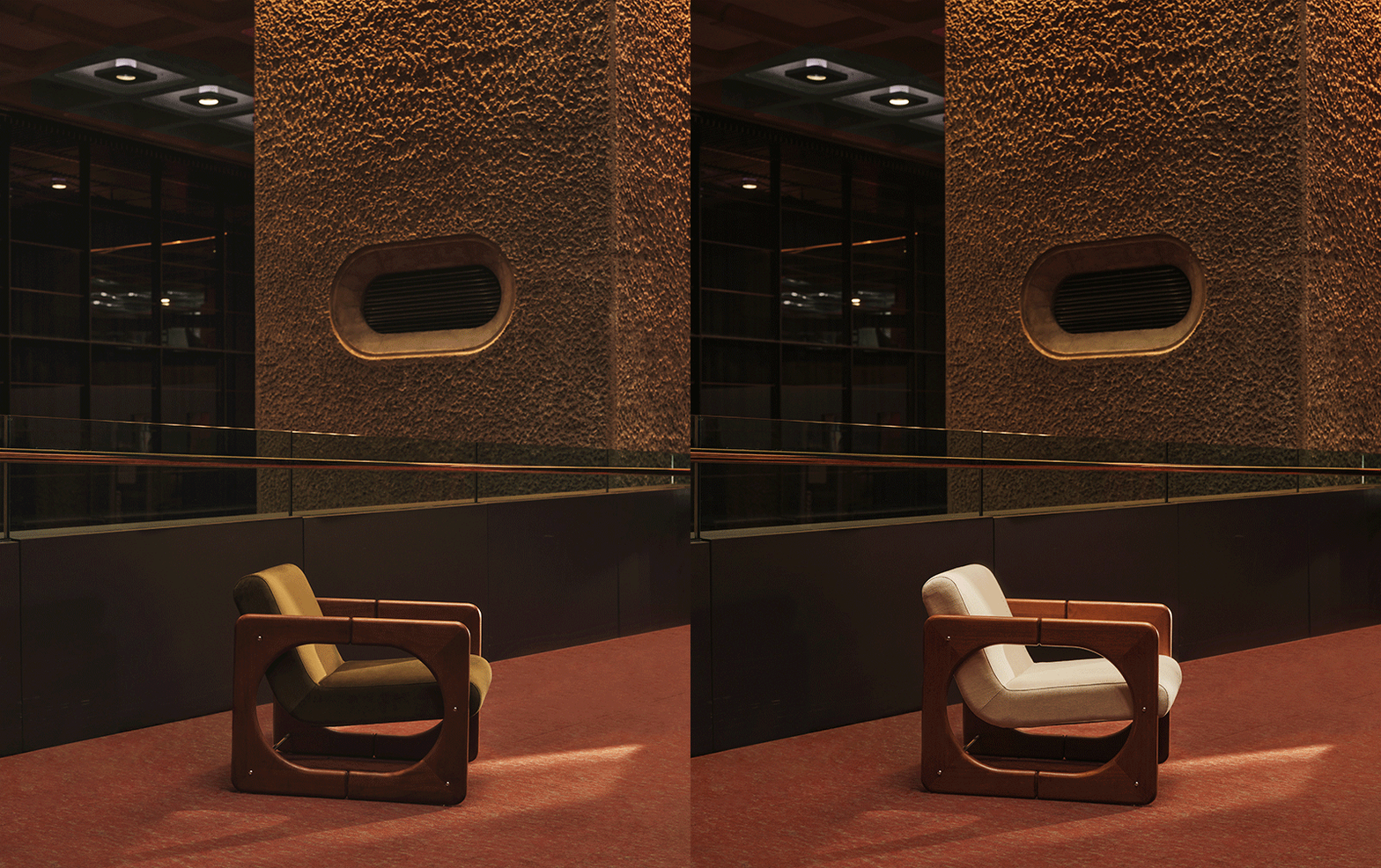
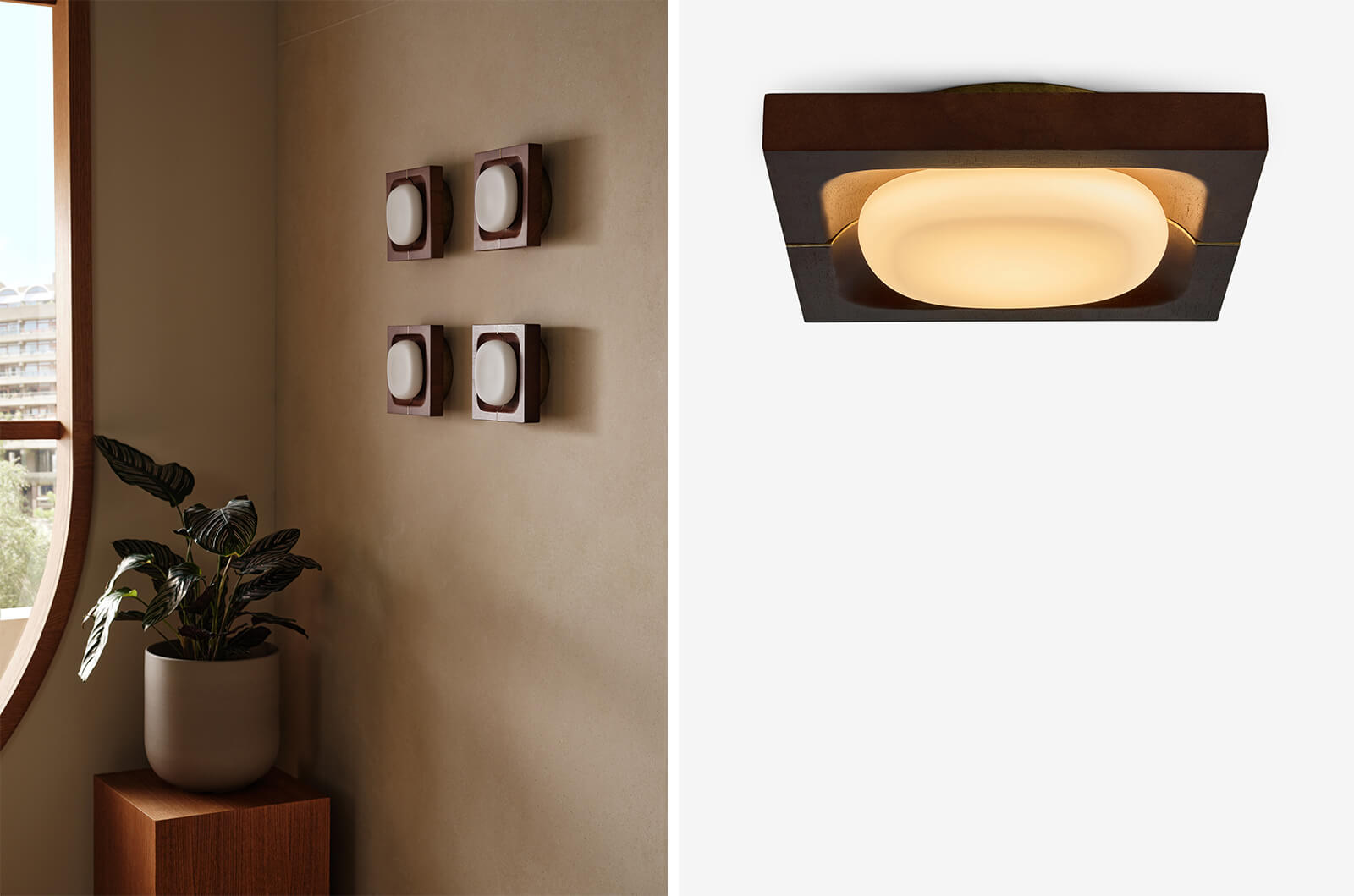
Alongside Curve and Plinth, other wooden furniture from the collection also carries definitive structural elements from the Barbican as geometric motifs throughout the design. The silhouette of the Dual Accent chair, for example—named after the contrast between warm oak and the earthy shades of its white and olive green upholstery—references the capsule-shaped cutouts in Barbican’s concrete pillars. The Coffer series of flush and wall lights, on the other hand, borrows from the exposed concrete waffle ceiling that covers many of the post-war estate’s indoor and outdoor public spaces.
The bespoke collection also comprises soft furnishings such as cushions and rugs that adorn patterns and palettes from Howitt’s classic design scheme. The Brute rug reimagines the designs from the original show flats in hand-tufted wool, featuring the bold colour palette the British designer used to anchor the off-white interior spaces of the flats. A similar aesthetic is also extended in the Barbican Tier rug and cushion, the Barbican Balcony cushion and embroidered wall art such as Tier and Block.
“We were excited by the prospect of working together to celebrate the Barbican’s iconic identity through contemporary furniture and design", states Jo Davis, Barbican’s Head of Retail, on the collaboration with MADE. "As the Barbican Shop continues to expand its offer through carefully selected design-led partnerships, MADE was a natural collaborator to help translate elements of the Barbican's bold forms, materials and character into a contemporary collection.”
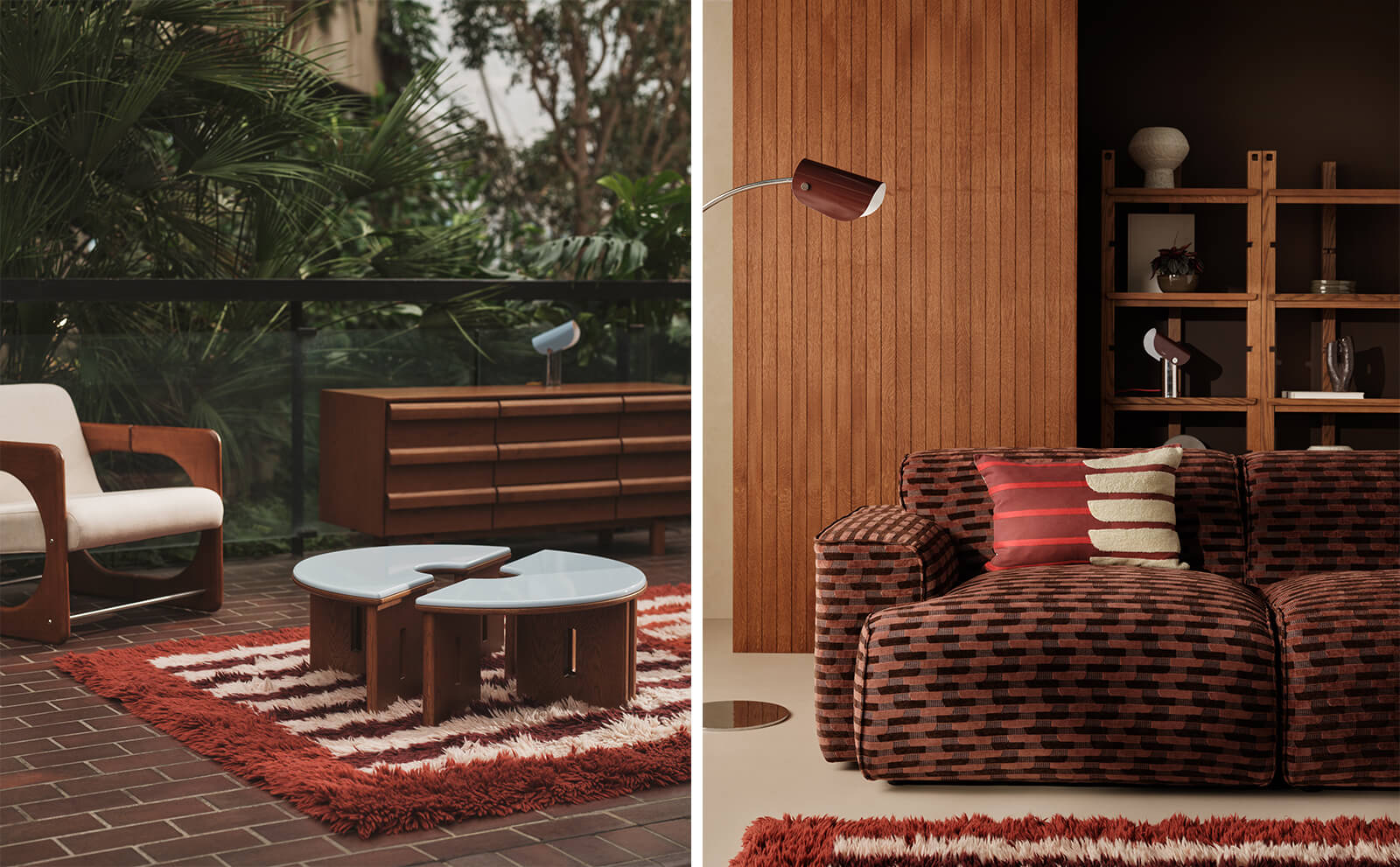
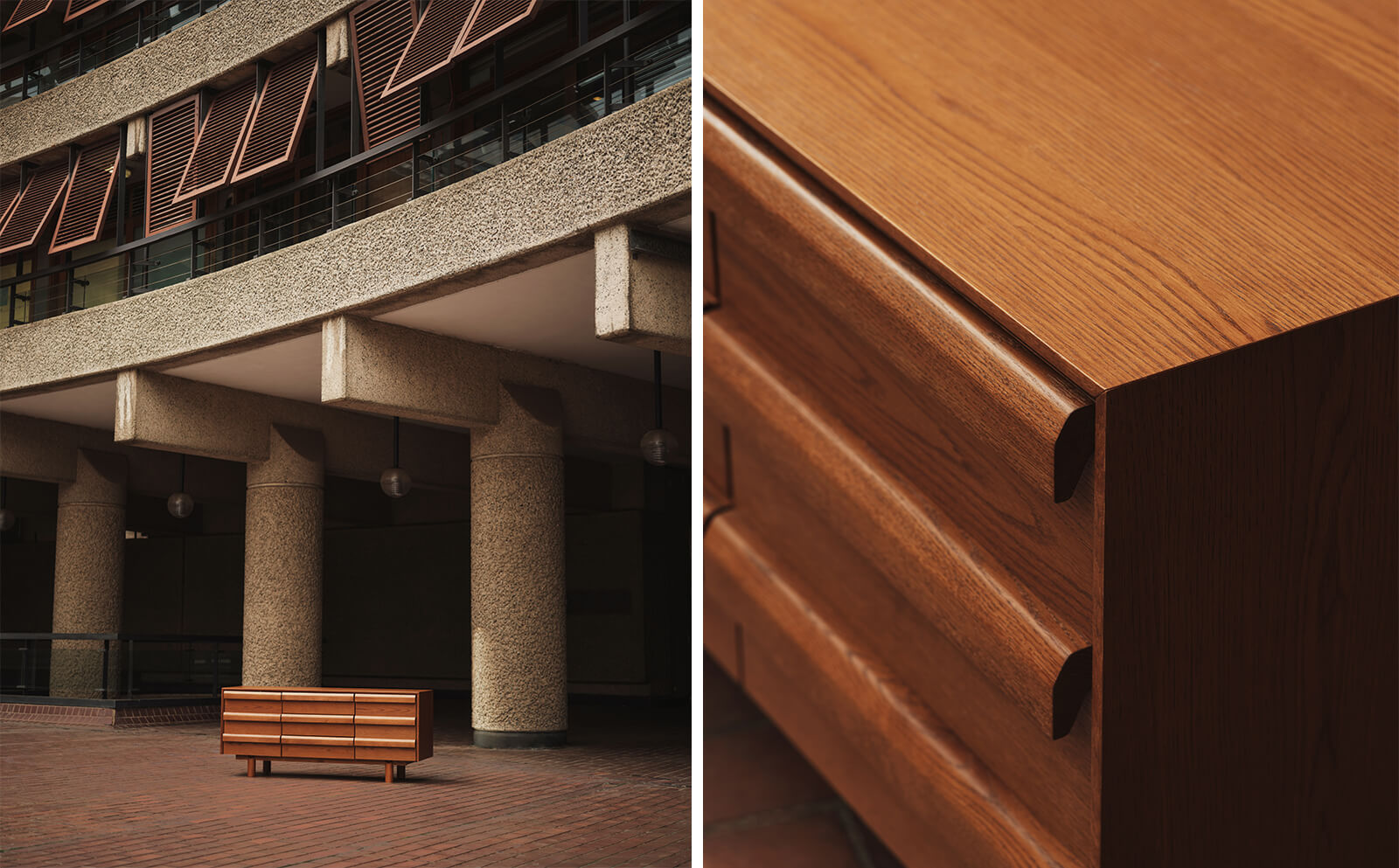
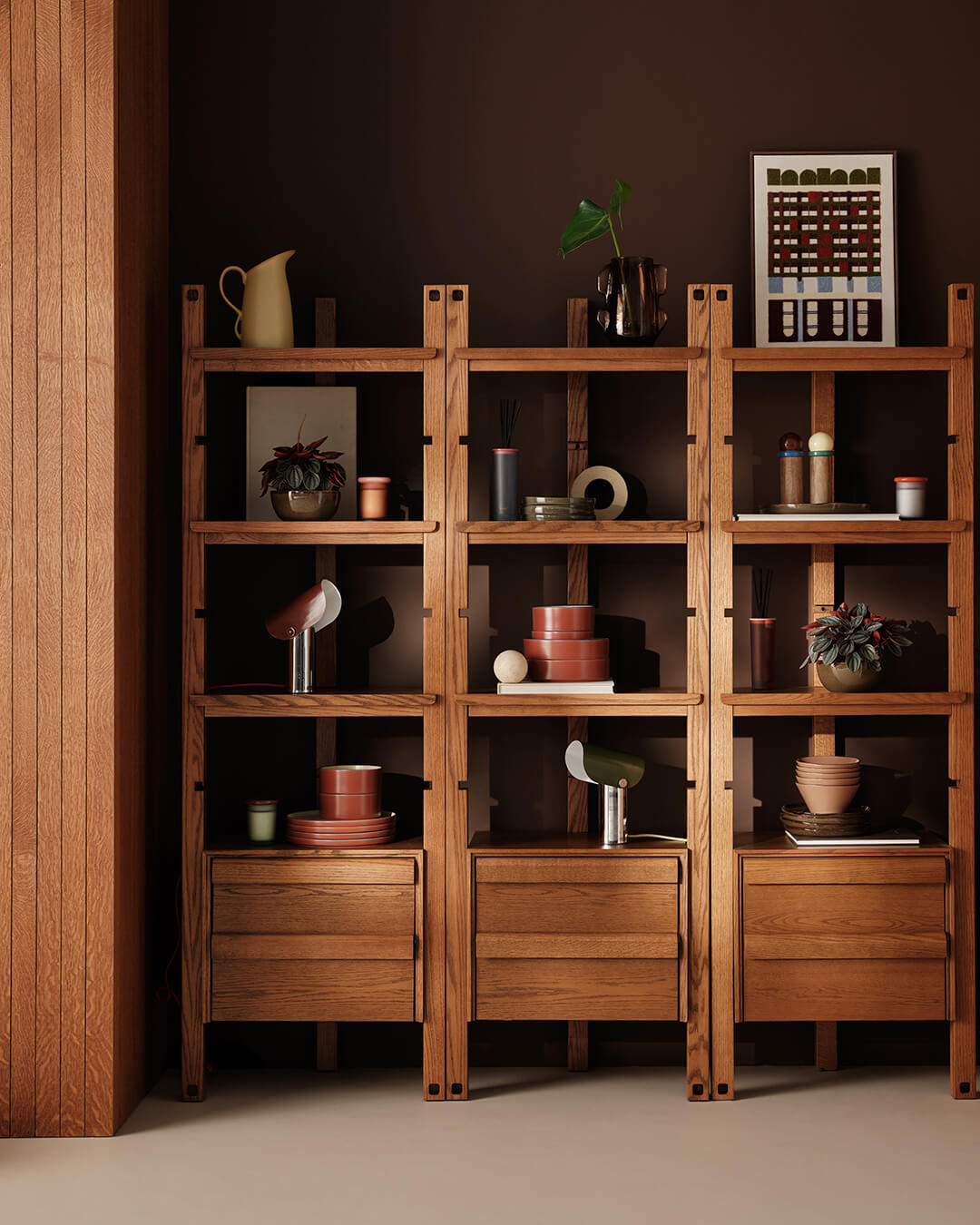
Through a characteristic blend of formal brutalist sensibilities and contemporary design principles, including modular layouts, fused with a retro colour palette, the MADE x Barbican collection strives to package the material essence of the historic post-war estate—credited with transforming the largest Second World War bomb site in the City of London—into channels for modern living. While it is an interpretation of the estate’s architectural legacy, the curved silhouettes and warm, neutral hues lend the collection a distinct aesthetic appeal. That is in addition to the desirability accompanying the prospect of ‘owning’ a piece of furniture that quite directly translates the estate’s persistent appeal for Londoners and beyond. The collection’s premiumness is not derived from its price point, but rather its aspirational association.
To celebrate the launch of the collection, MADE has partnered with the London Design Festival this year for a showcase set against its muse, the Barbican Centre’s Level G Hub, from September 12 – 20, 2026. The showcase will also highlight Barbican’s interior archives and the design inspirations for the furniture.

by Pranjal Maheshwari Oct 23, 2026
Co-authored by Jareh Das, Chairman traces the British designer’s fixation on chairs as symbols of power and identity and as mediums of expression and community building.
by Chahna Tank Oct 22, 2026
STIR speaks with the Mumbai-based type designer about her practice, type walks and why she wants more people to have stronger opinions about Indian-script fonts.
by Mirra Lynn Oct 22, 2026
The curators behind Palestine Design Week 2026 reflect on its intent, considering how design holds memory, makes space for loss and imagines a future in Palestine.
by Jincy Iype Oct 15, 2026
STIR explores craft, material intelligence and people shaping Indian design through dialogues with Design Democracy’s co-founders and the curators of its special exhibitions.

make your fridays matter with a well-read weekend
Enter your details to sign in
Don’t have an account?
Sign upOr you can sign in with
a single account for all
STIR platforms
All your bookmarks will be available across all your devices.
Stay STIRred
Already have an account?
Sign inOr you can sign up with
Verification link sent to check your inbox or spam folder to complete sign up process
Tap on things that interests you.
Select the Conversation Category you would like to watch
Please enter your details and click submit.
Enter the 6-digit code sent at


MADExBarbican's new collection transcribes an iconic architecture onto modern furniture
by Pranjal Maheshwari | Published on : Aug 25, 2026


 Sign in with Google
 Sign in with email
What do you think?