Architecture06 mins. read
The House of Mango Shadows frames a contemporary Indian retreat amidst greens
by Nikitha SunilJul 10, 2024



by Keziah VikranthPublished on : Feb 11, 2024
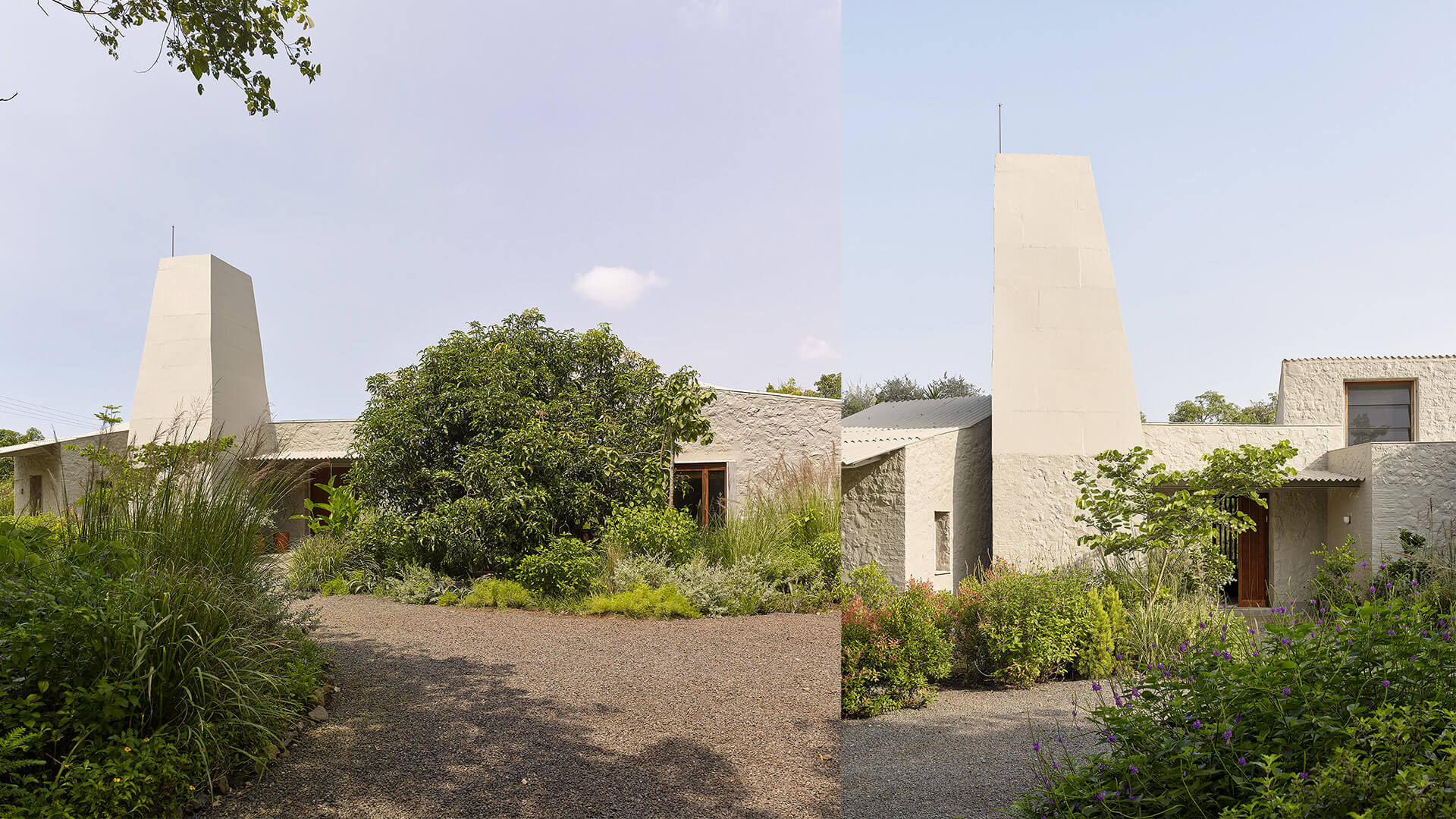
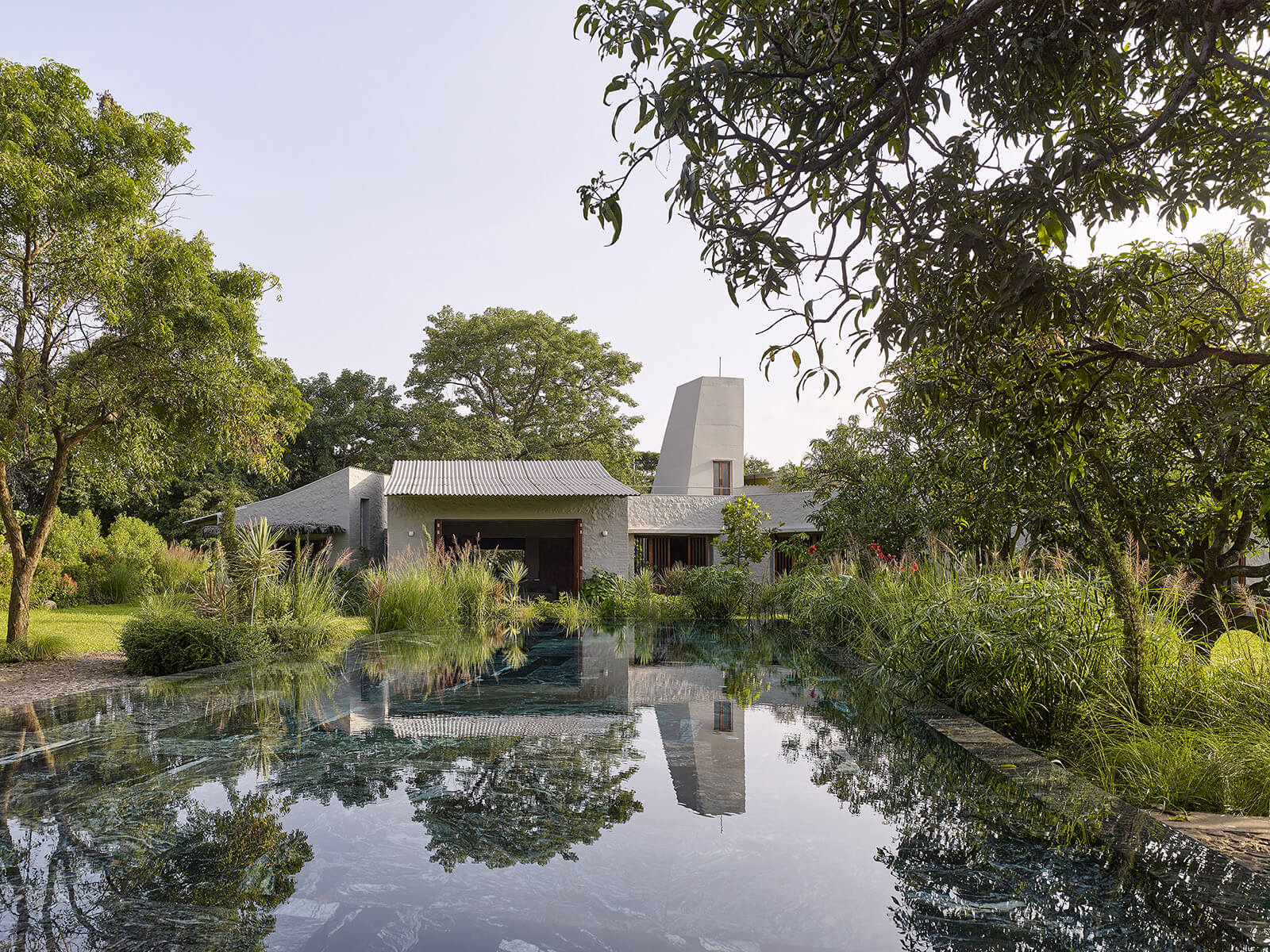
Tucked in off the gravel road leading to the village of Satirje, the main house of Villa Uma is a scattered collection of simple forms, each carefully placed. This holiday home for a family has been oriented in response to picturesque views of an introverted garden as well as the distant hills of Kankeshwar in Maharashtra. Spread across a single-acre plot, the house and the facilities provided around it sit neatly around the stunning family pool, a gleaming centrepiece finished in black and white granite.
Villa Uma, named after the matriarch of the clients’ family, was conceived by Samuel Barclay and his team at Case Design in Mumbai. With projects in India, Europe, the Middle East and Africa, Case Design is an architecture and design practice committed to exploring the design process through acts of making. In an exclusive interview with STIR, when asked about the brief provided for the project, the team responded, “Mansi and Akshat Poddar are siblings based in Mumbai who provided us with a refreshingly simple project brief. Their vision was clear from the outset: they sought to create a tranquil retreat from the bustling city life of Mumbai for themselves and their family. They wanted a modern Indian vacation home with a generous swimming pool where the natural world could seamlessly weave its way into the fabric of the house.”
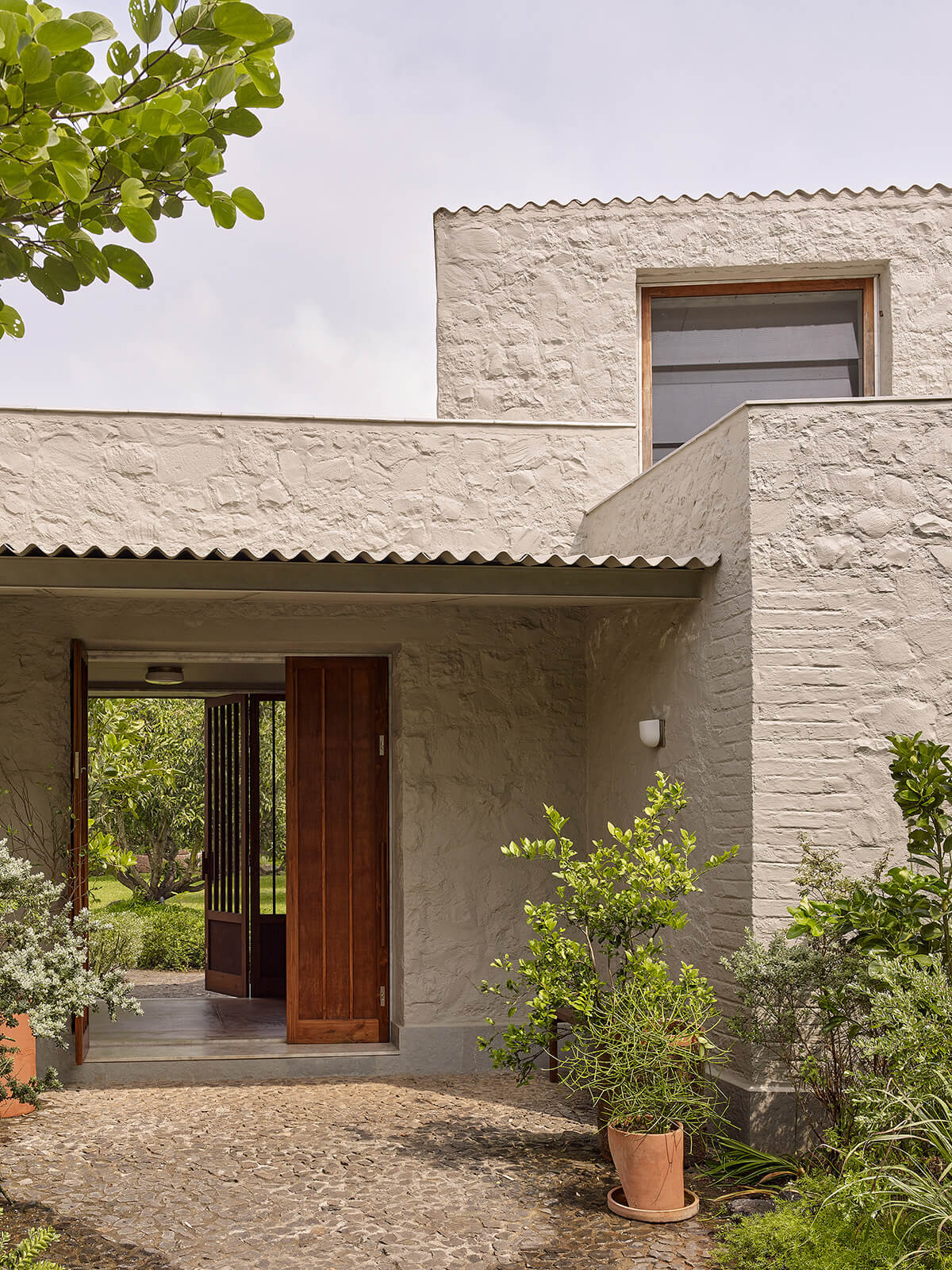
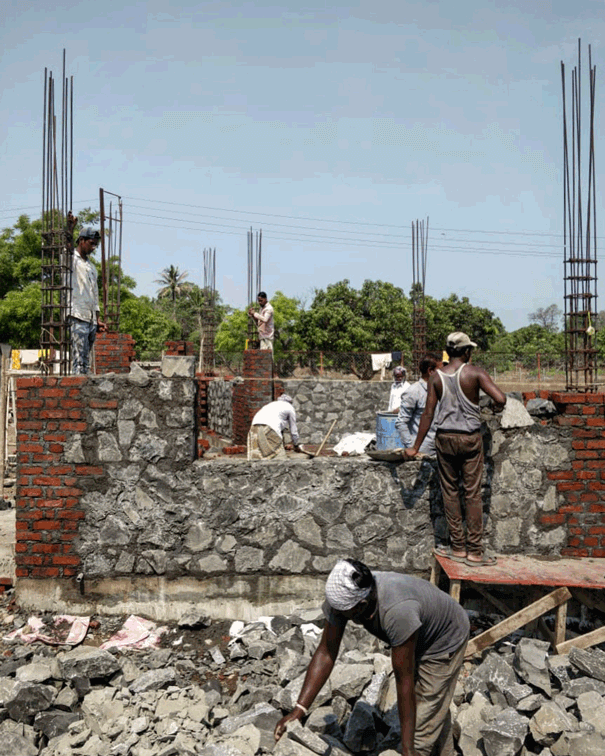
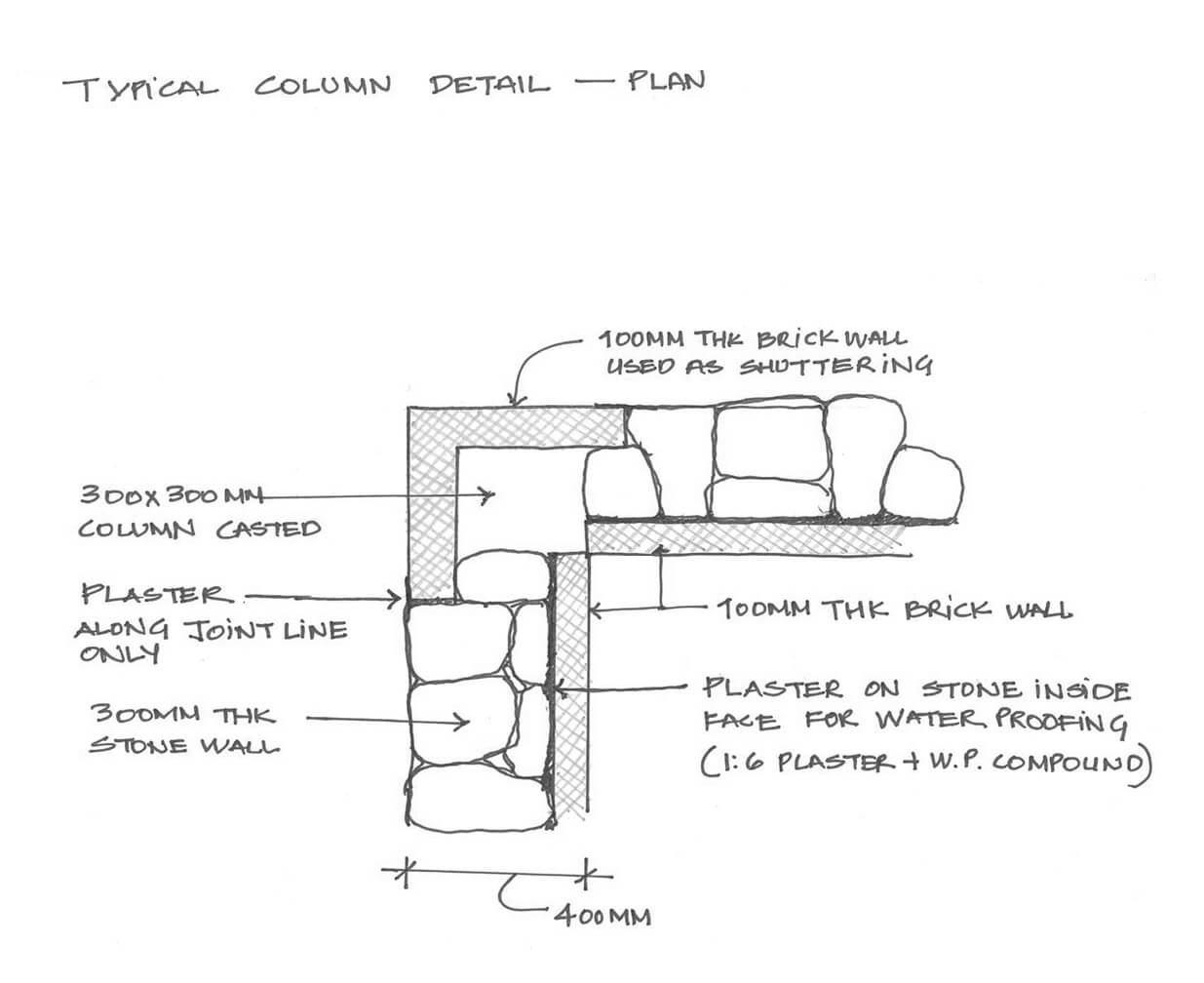
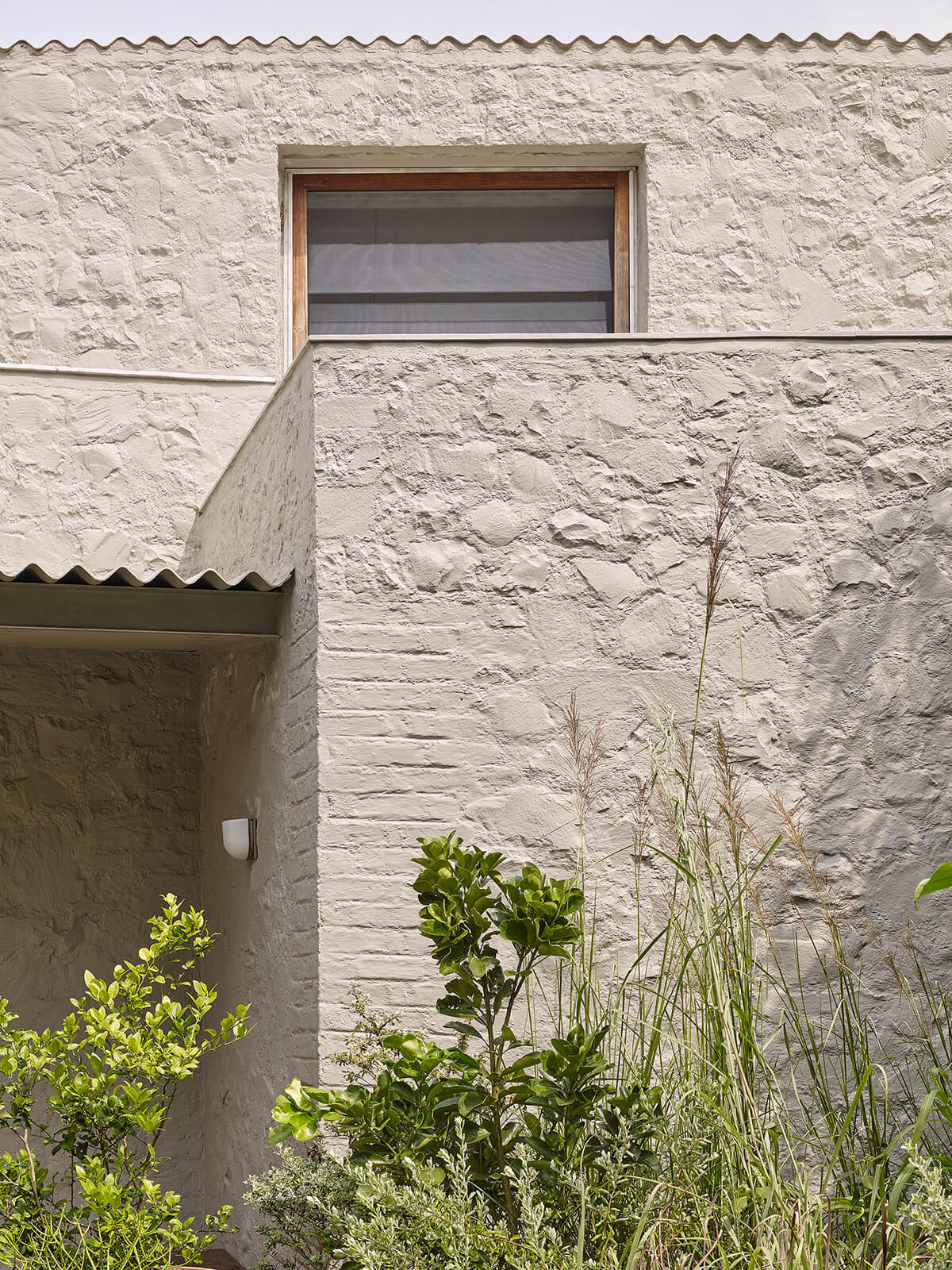
True to the requirement, the main complex of the residential architecture is situated amidst a grove of existing mango trees. Constructed from a combination of locally sourced materials, the primitive concrete frame was erected using left-in-place shuttering formed by the interlock of brick and black basalt. The rough-hewn texture of the exterior protects the smooth mottled walls of the softly pigmented interiors as lightweight steel supports the thin corrugated sloping roofs. “The various buildings spread around the site to make up the home are made from locally sourced brick and black basalt and draw inspiration from the vernacular architecture of the region in proportion and form. The simple system of construction reduces the amount of waste and material transport and also ensures that the villa fits in and enhances the beauty of the new and existing landscape,” says the team enthusiastically about the home’s monotone textured exteriors that belies the vibrance of its interiors.
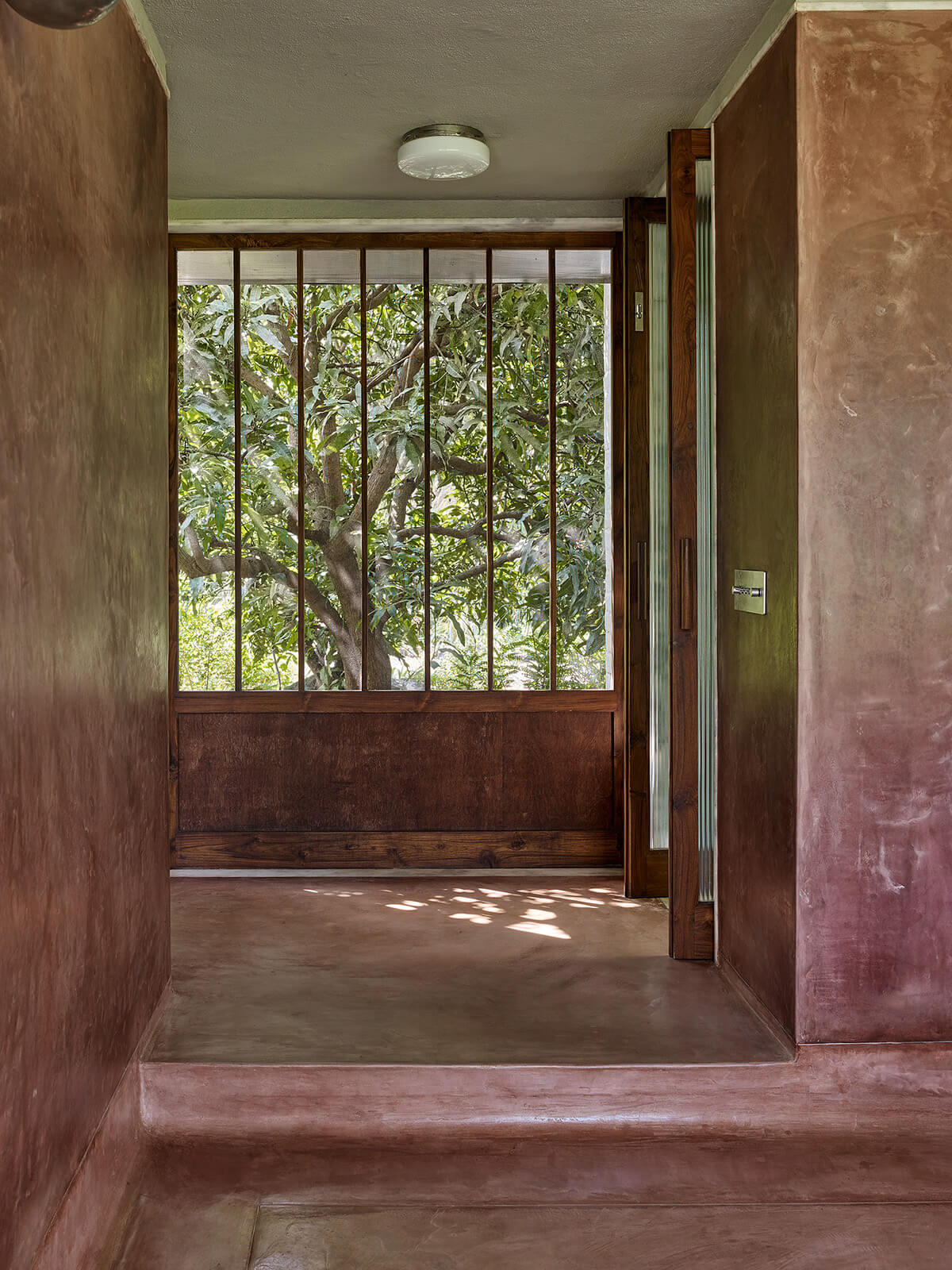
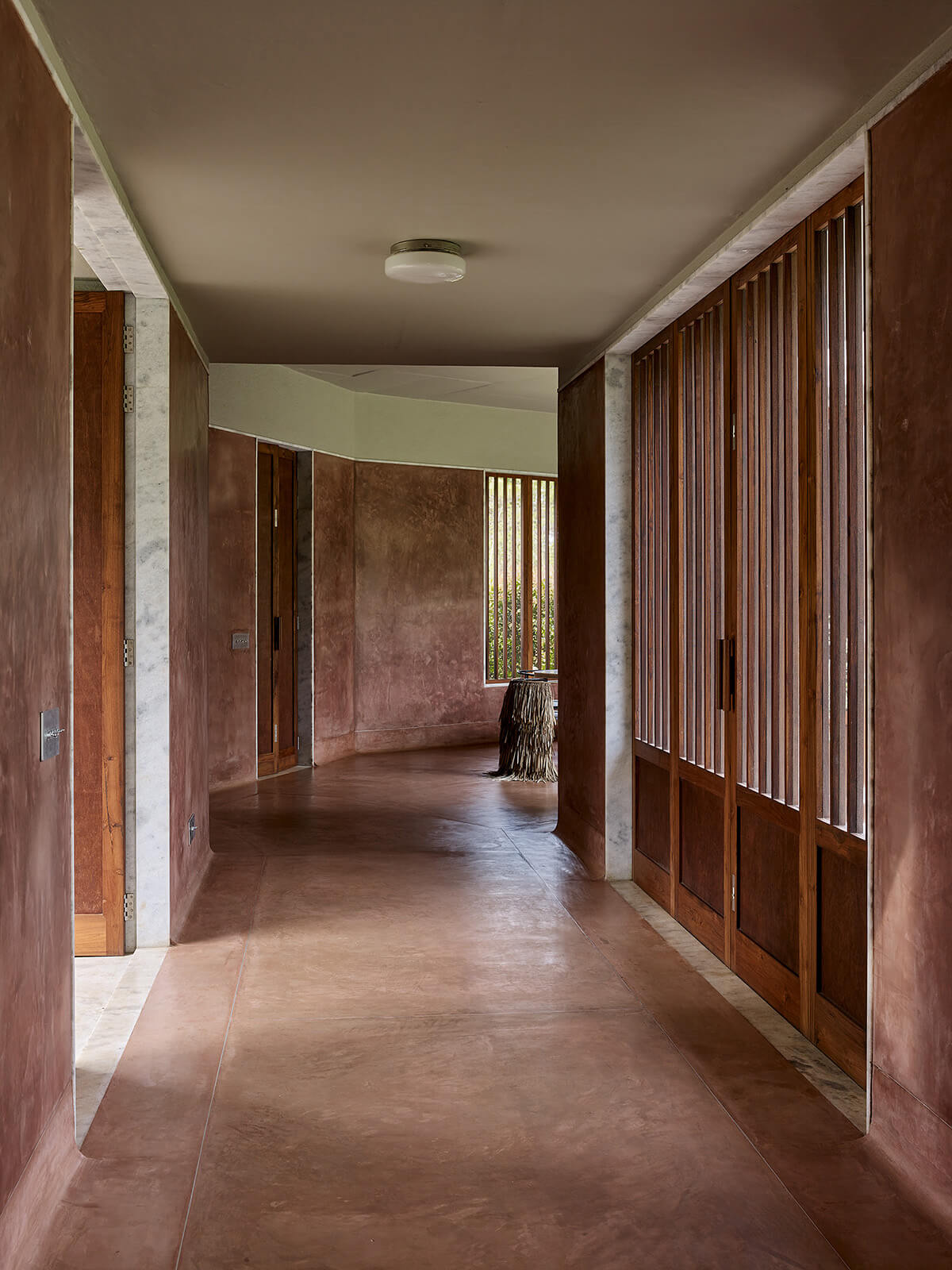
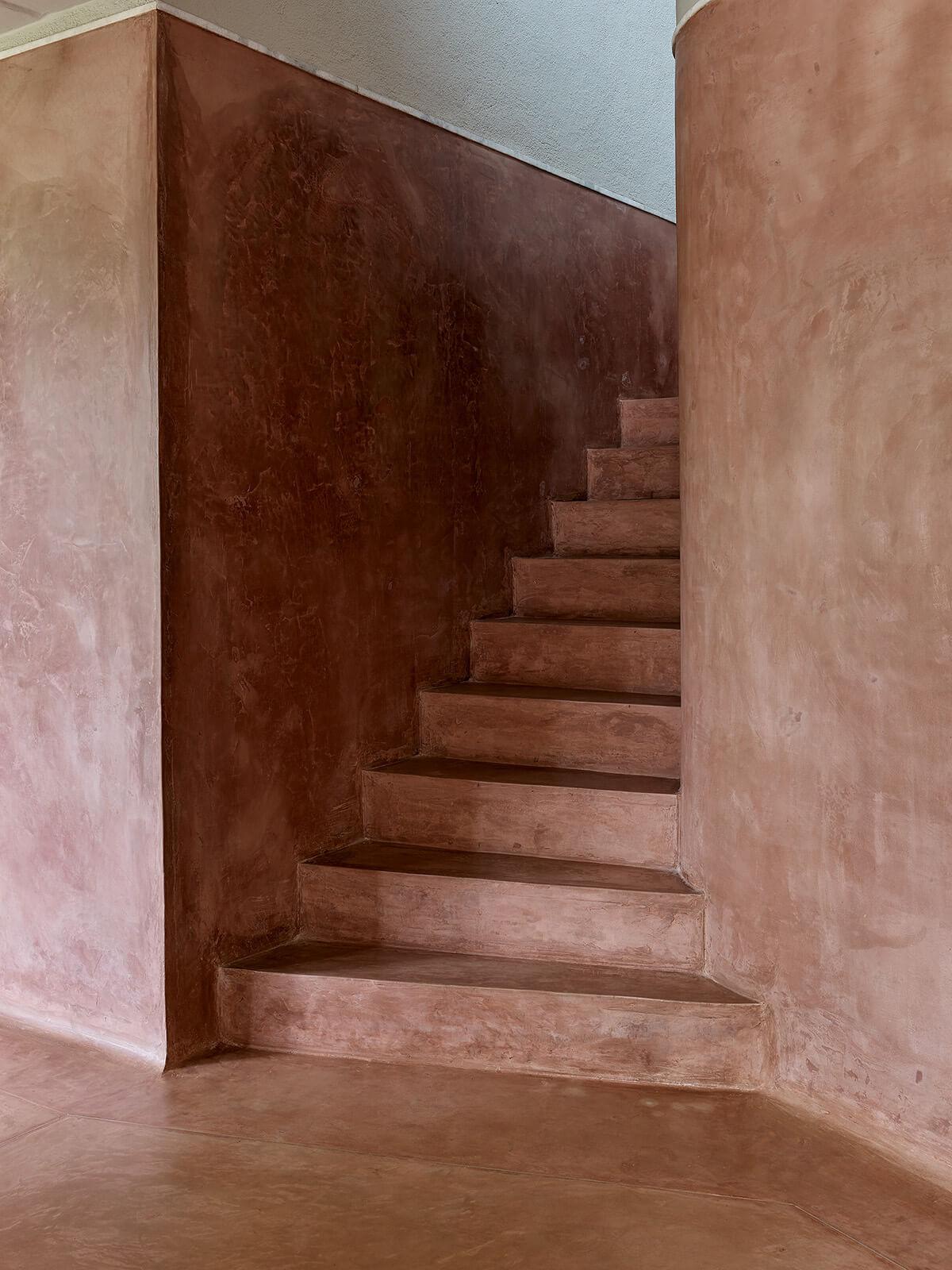
Inside, the walls are all pigmented, mostly in hues of red except for the powder room, which is doused in an exciting emerald green. Each room offers unique perspectives into the surrounding landscape, framed artfully by wooden doors and windows. The organic, earthy feel of the wall tones is a welcome contrast to the largely geometric proportions of smaller design elements such as windows and furniture elements.
With the shell kept minimal, the careful insertions of designer pieces and lighting allow the craftsmanship and design details of the home to shine.
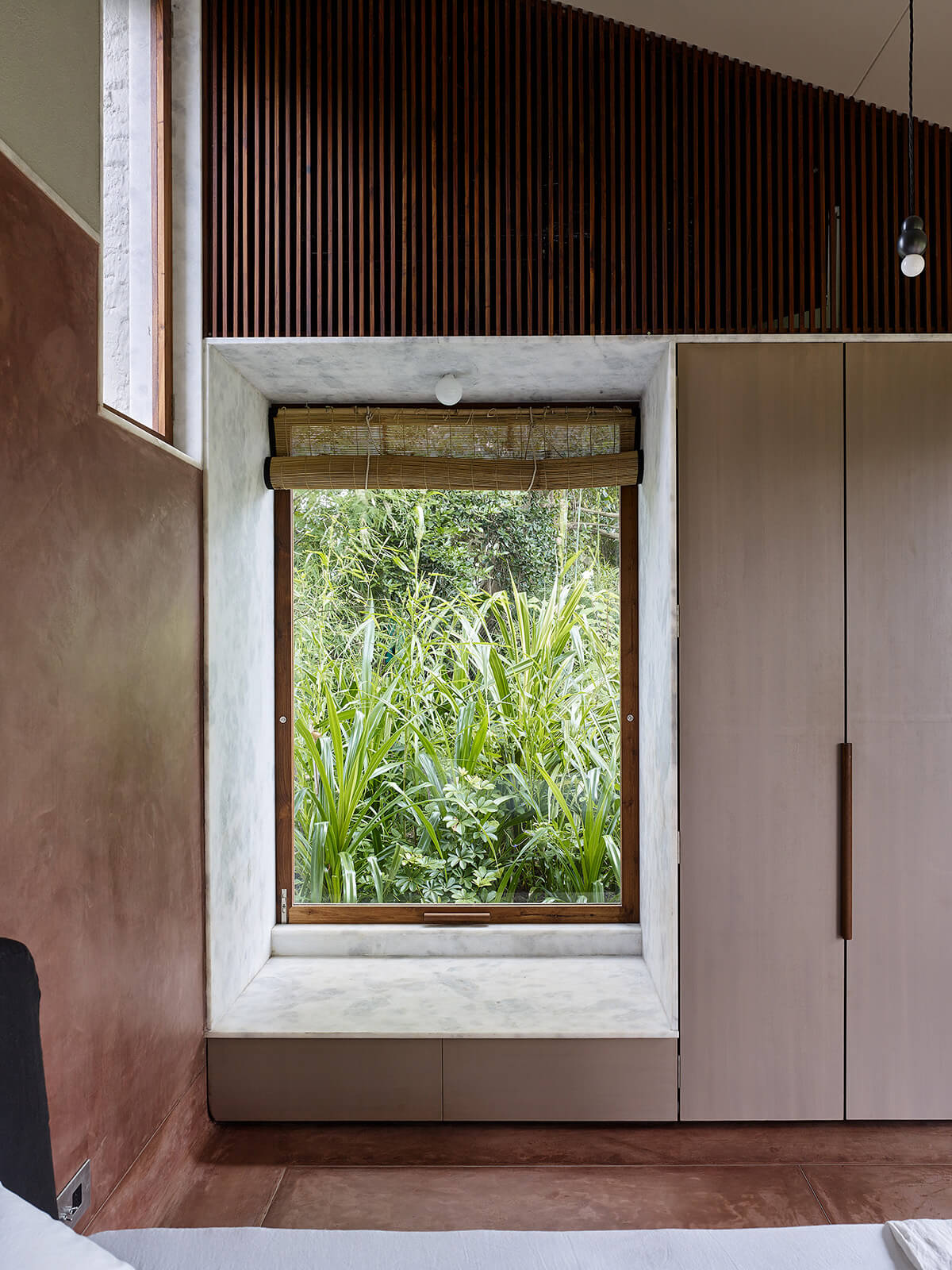
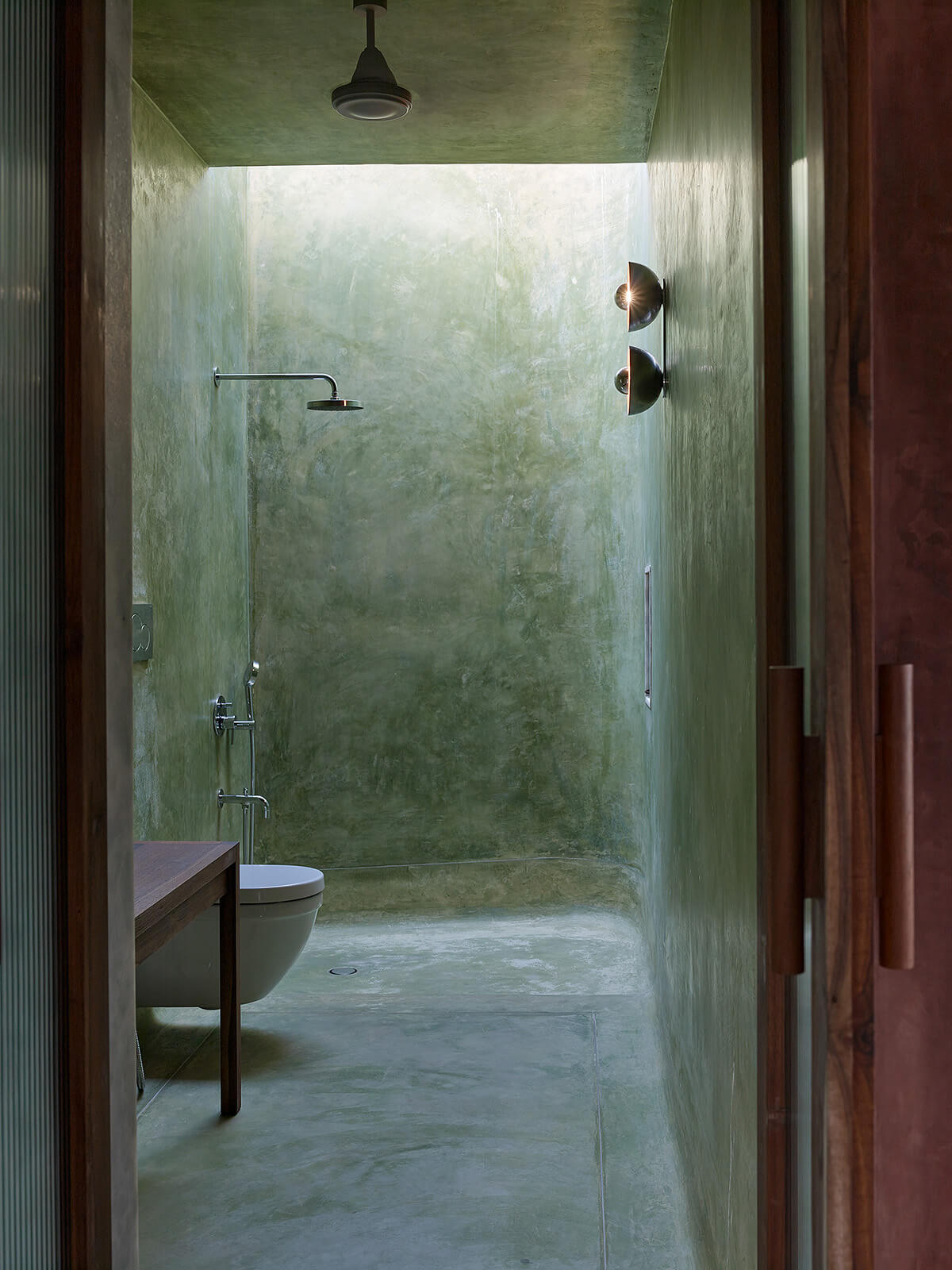
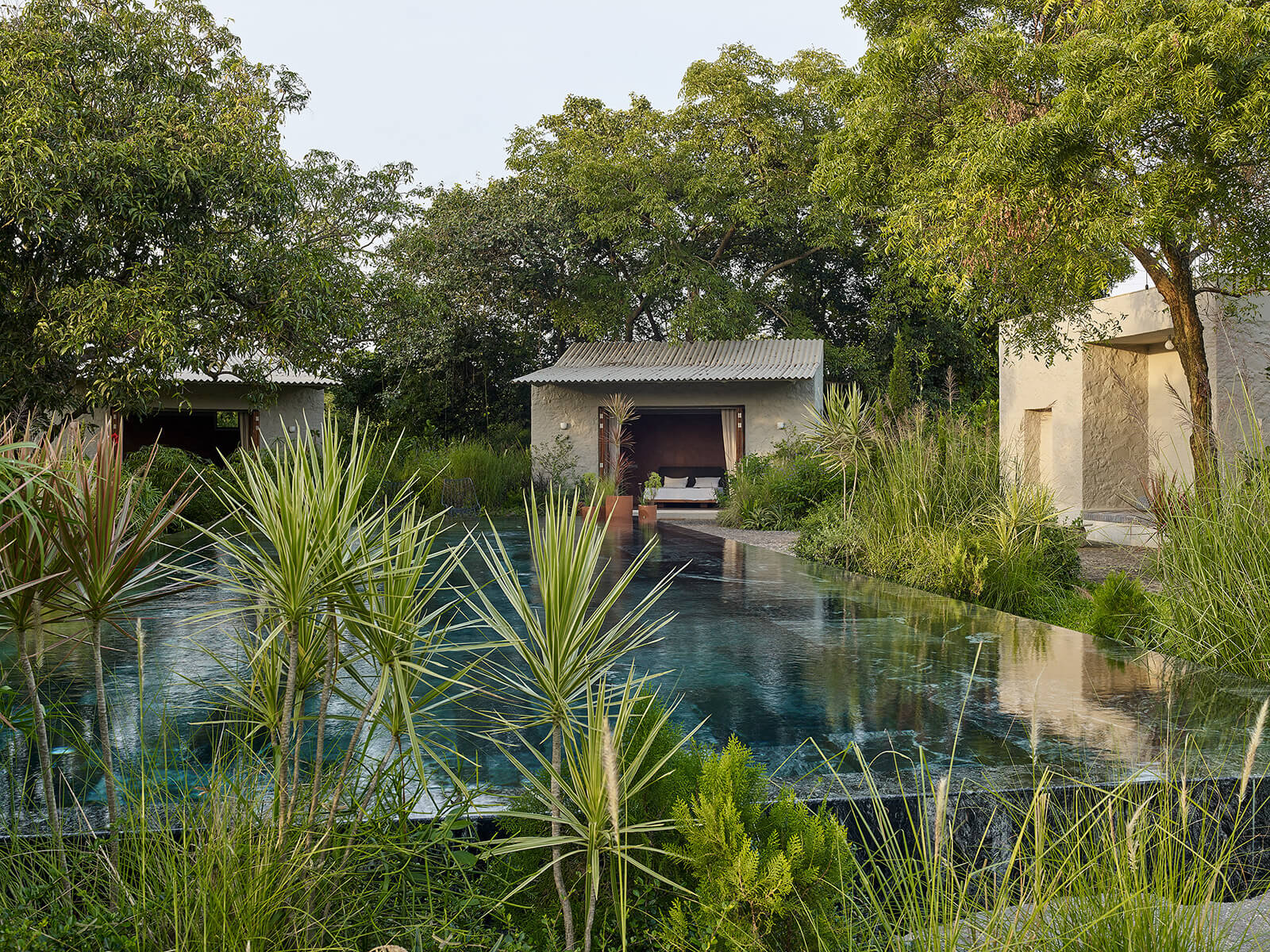
A quick meander to the outside takes one to the swimming pool design, a linear entity clad in black and white granite from Karnataka, leading to an intimate pavilion to the east and two guest houses to the north. Simple stone paving is carefully arranged from the broken basalt waste generated in the construction of the house, a commendable sustainable effort. Connecting each of the structures, these paths seamlessly knit the detached buildings to the pool, garden, and larger landscape of Alibag.
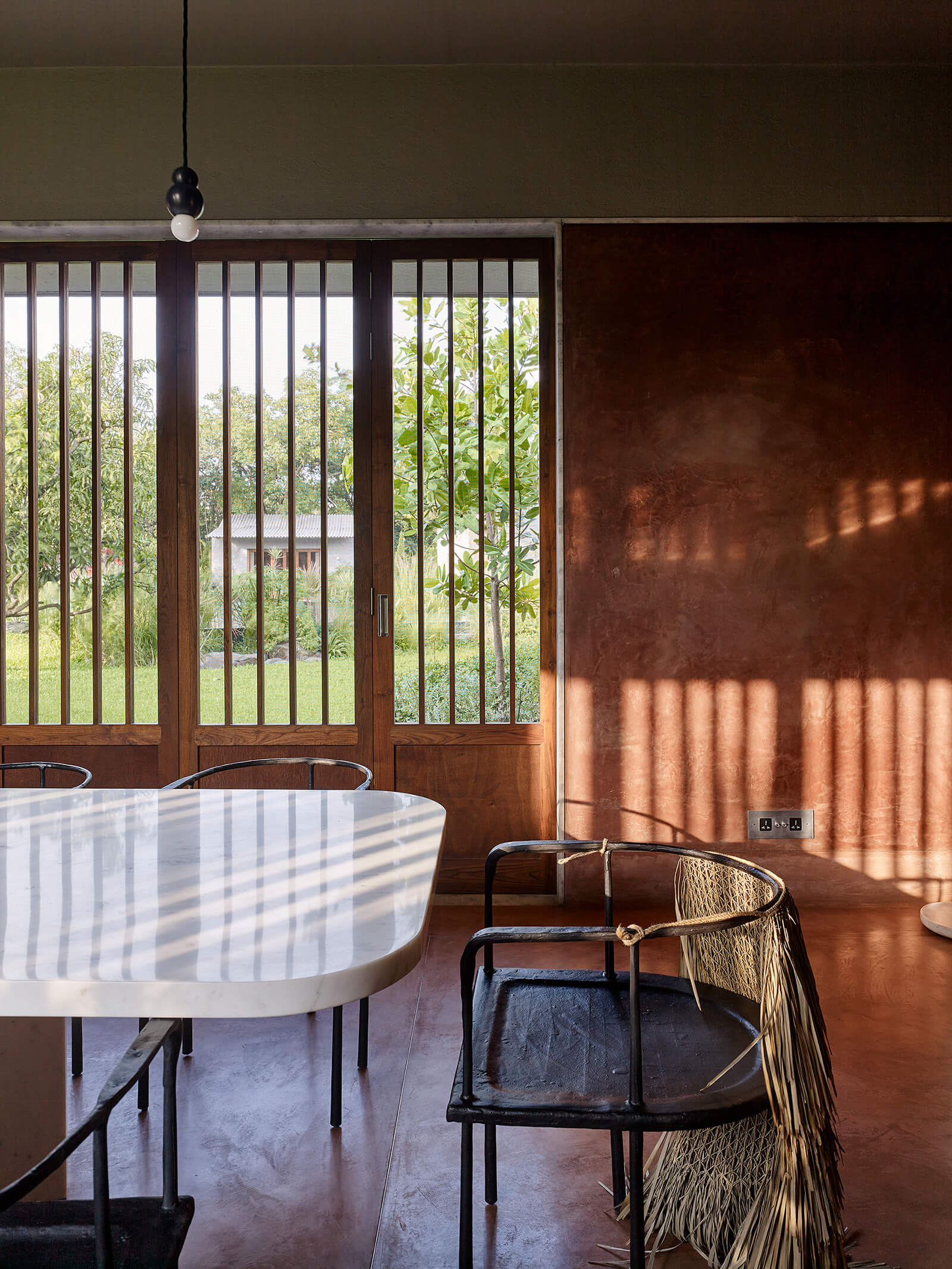
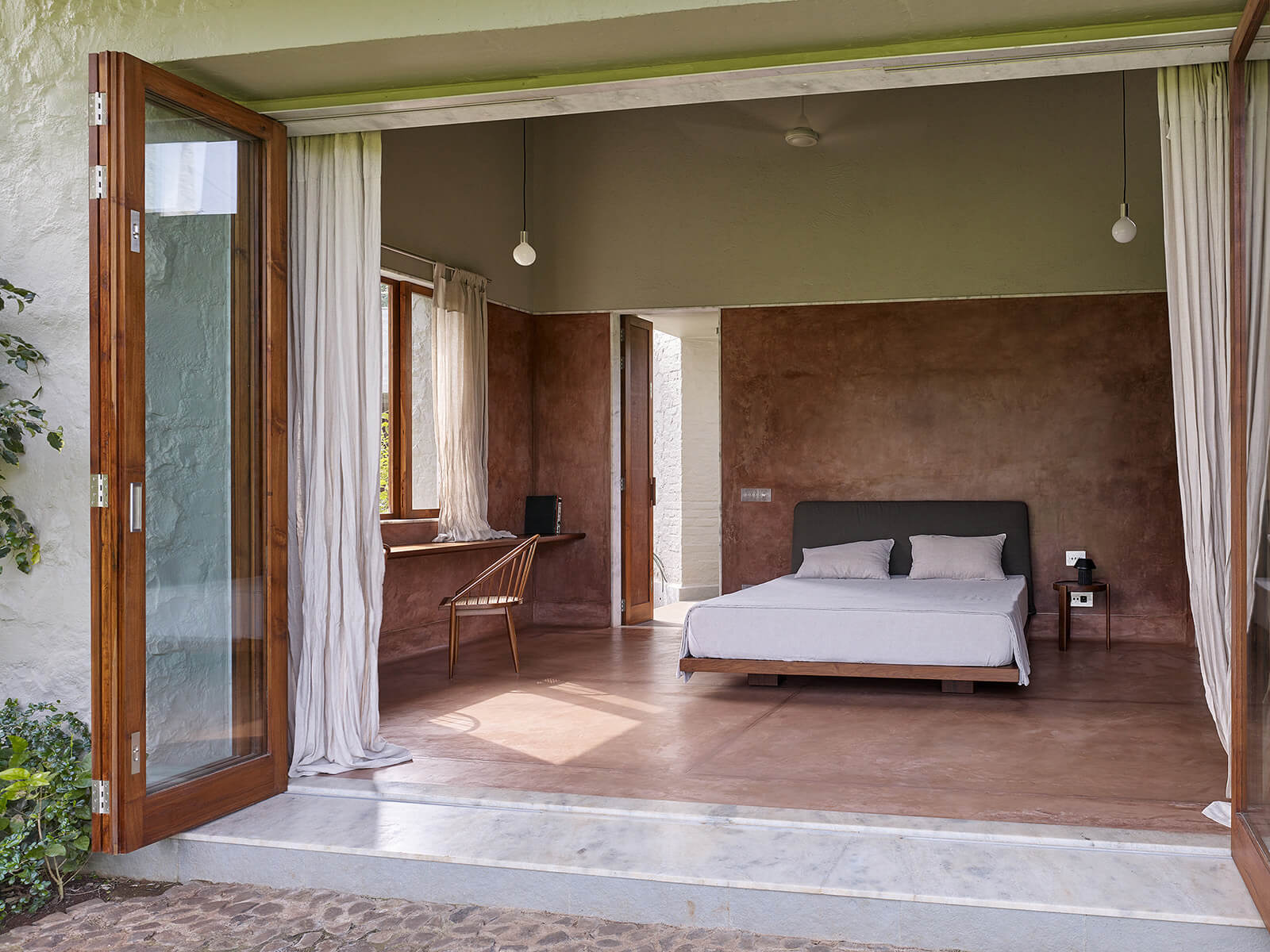
Although the project was begun during the difficult COVID-19 season, the team was able to pull through. They describe the challenges they faced this way: “After a single site visit days just before the quarantine in Mumbai, our team began the design phase while working remotely from various locations. Fluctuating material and labour costs created by the pandemic required creative solutions and project scheduling adjustments. It was our first time working with Elysium Abodes (the primary contractor) which provided both new opportunities for collaboration and adjustments in established working practices for our studio.”
Villa Uma is a study in understated elegance, a symphony of material, colour and texture. With the landscape around it set to reflect controlled chaos, the built environment of the villa architecture allows one to be oneself, without pretence, in the lap of nature.

by Pranjal Maheshwari Oct 19, 2026
The Mumbai-based architects integrate courtyards, mesh screens and north light trusses to create a dining space that doubles up as a community hub at SR University, Warangal.
by Mrinmayee Bhoot Oct 17, 2026
The Rotterdam-based institute centres the Indian Ocean as a network for exploring material histories and transnational links shaping coastal cultures, positing them as future models.
by Pranjal Maheshwari Oct 16, 2026
At the 2026 Stirling Prize ceremony, Mary Duggan with RUFF Architects, MAKER Architecten and Nakshabid Architects were felicitated for proffering quality housing and social equity.
by Mrinmayee Bhoot Oct 12, 2026
The new Centre for Contemporary Arts, fostering public engagement with art in Uzbekistan, is housed in a tram depot refurbished by the French studio, emulating local craftsmanship.

make your fridays matter with a well-read weekend
Enter your details to sign in
Don’t have an account?
Sign upOr you can sign in with
a single account for all
STIR platforms
All your bookmarks will be available across all your devices.
Stay STIRred
Already have an account?
Sign inOr you can sign up with
Verification link sent to check your inbox or spam folder to complete sign up process
Tap on things that interests you.
Select the Conversation Category you would like to watch
Please enter your details and click submit.
Enter the 6-digit code sent at


Villa Uma by Case Design is an understated family home in lush Alibag
by Keziah Vikranth | Published on : Feb 11, 2024


 Sign in with Google
 Sign in with email
What do you think?