Design08 mins. read
Joris Laarman advocates for the Symbiocene at Friedman Benda
by Pranjal MaheshwariMay 27, 2026




by Chahna TankPublished on : Nov 26, 2025
Morning light drifts into a home through its oft-open doors, glinting off polished pewter and Delftware on orderly shelves, sliding across the blue-and-white tiles bought cheaply—its stillness broken only by the scrape of a broom. An air of cleanliness, achieved not through bathing, but the crisp whiteness of one’s linen; rose-scented water poured over guests’ hands before dinner; sturdy wooden cupboards carved with biblical motifs—all comprise the small scenes making up an everyday existence in the Netherlands during the Dutch Golden Age. They denote not only the accessories of a thriving nation, but its worldly ambitions and air of self-assurance. In a culture defined as much by Calvinist restraint as it was by merchant prosperity, the Dutch Golden Age marked an almost obsessive respect for crafted objects and stringent ideals. The exhibition At Home in the 17th Century at Rijksmuseum, Amsterdam, inhabits this uncertain domestic space, exploring how the objects that made up the homes of the Dutch embodied societal norms and economic aspirations.
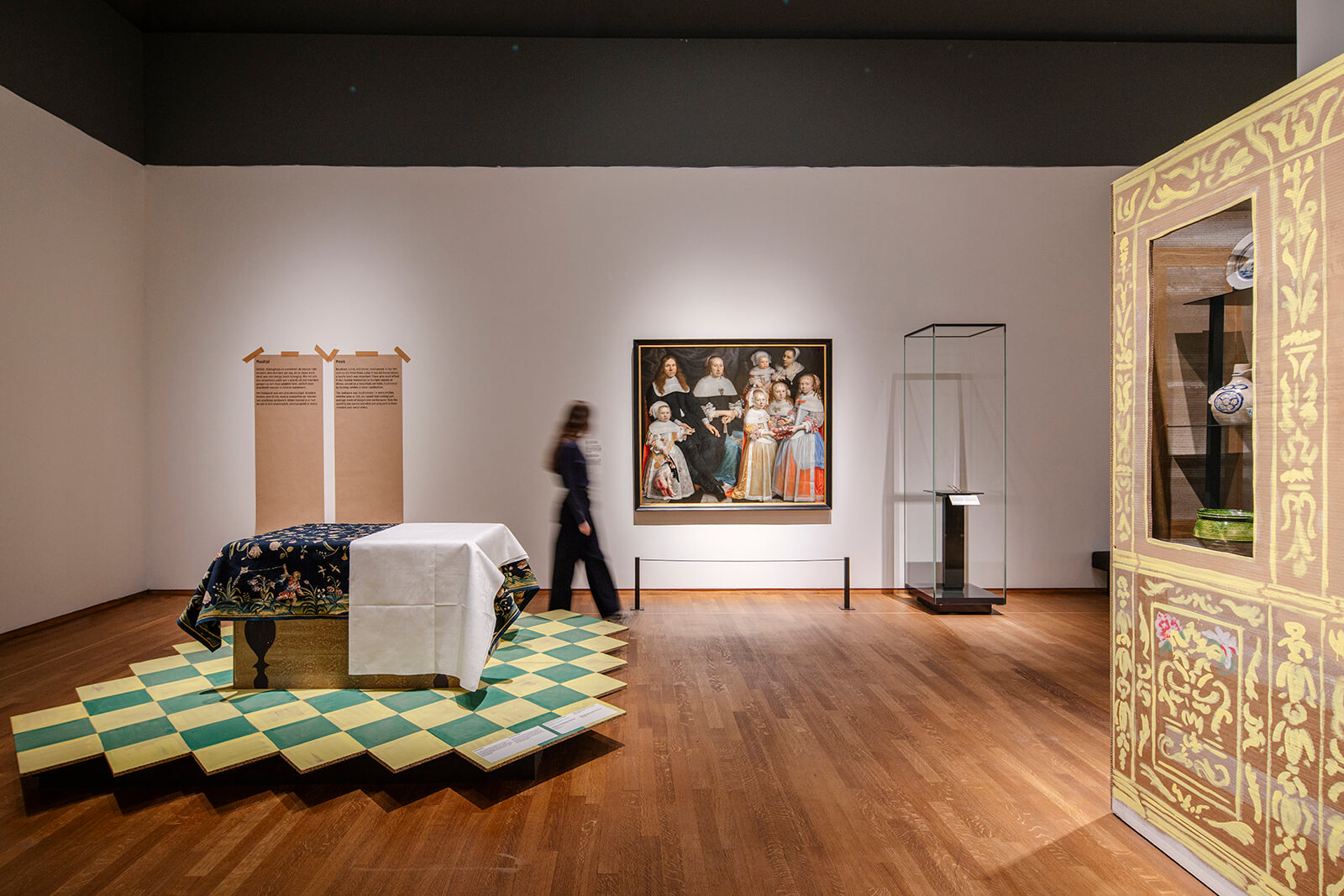
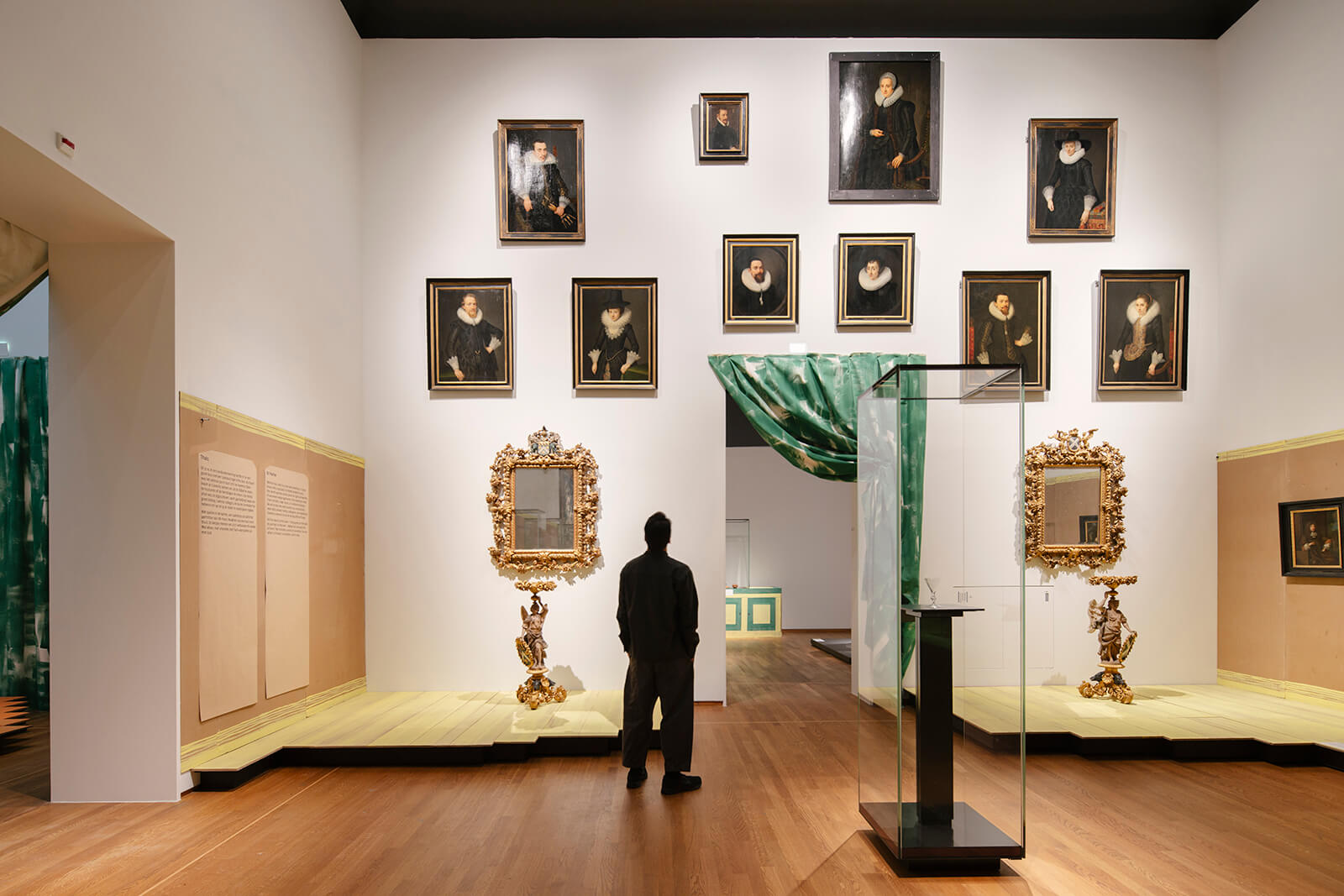
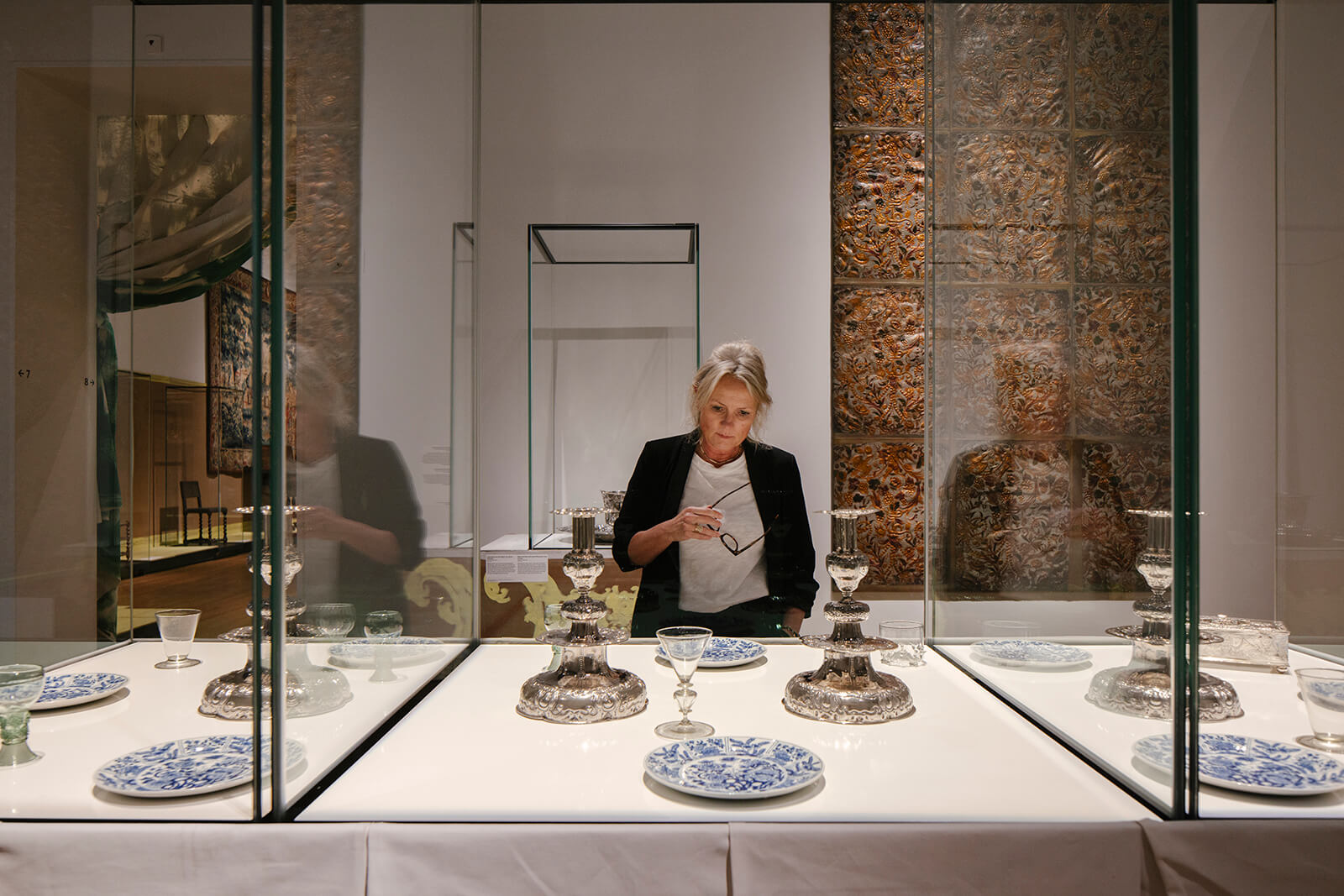
On view from October 17, 2025 to January 11, 2026, the immersive exhibition guides visitors through a full day in a 17th-century Dutch household—from morning to dusk. Visitors are made privy to how spaces were organised, objects arranged and materials chosen to structure daily life. As the curatorial team tells STIR, using the ‘day-in-the-life’ format was the most inclusive option because while people lived in diverse houses, “every household followed a similar pattern during the day, from lighting the fire and getting ready for the day to coming together in the evening around the fireplace.”
Curated by an expert team specialising in different subjects, including Sara van Dijk (curator of textiles), Maartje Brattinga (curator of glass), Alexander Dencher (curator of furniture), Femke Diercks (head of decorative arts), Suzanne van Leeuwen (curator and restorer of jewellery) and Marijn Stolk (archaeologist), the exhibition turns the museum’s interiors into a semblance of a Dutch residence by using an age-old museum storytelling technique—the diorama—inviting visitors to experience snapshots of a moment frozen in time across its nine galleries.
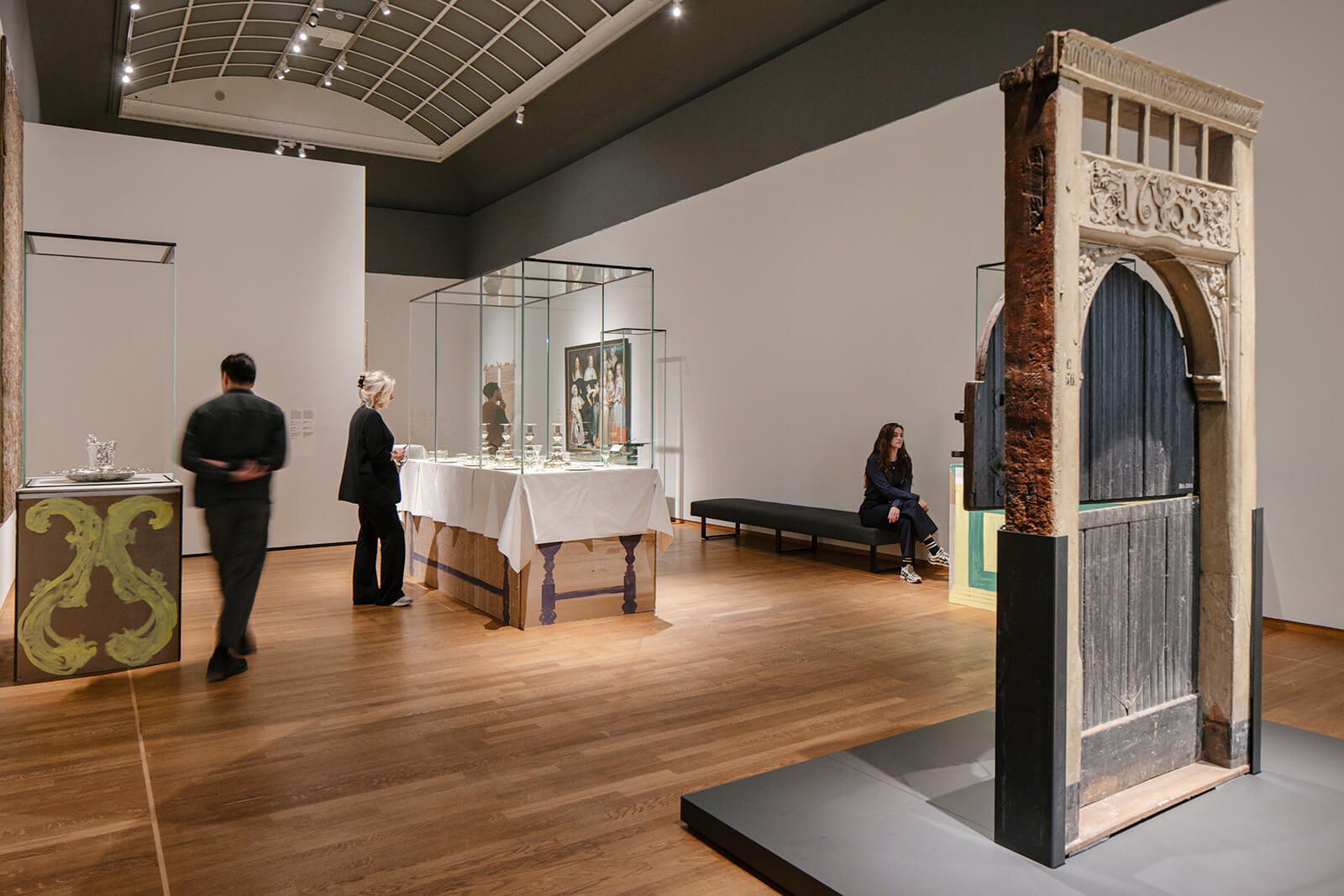
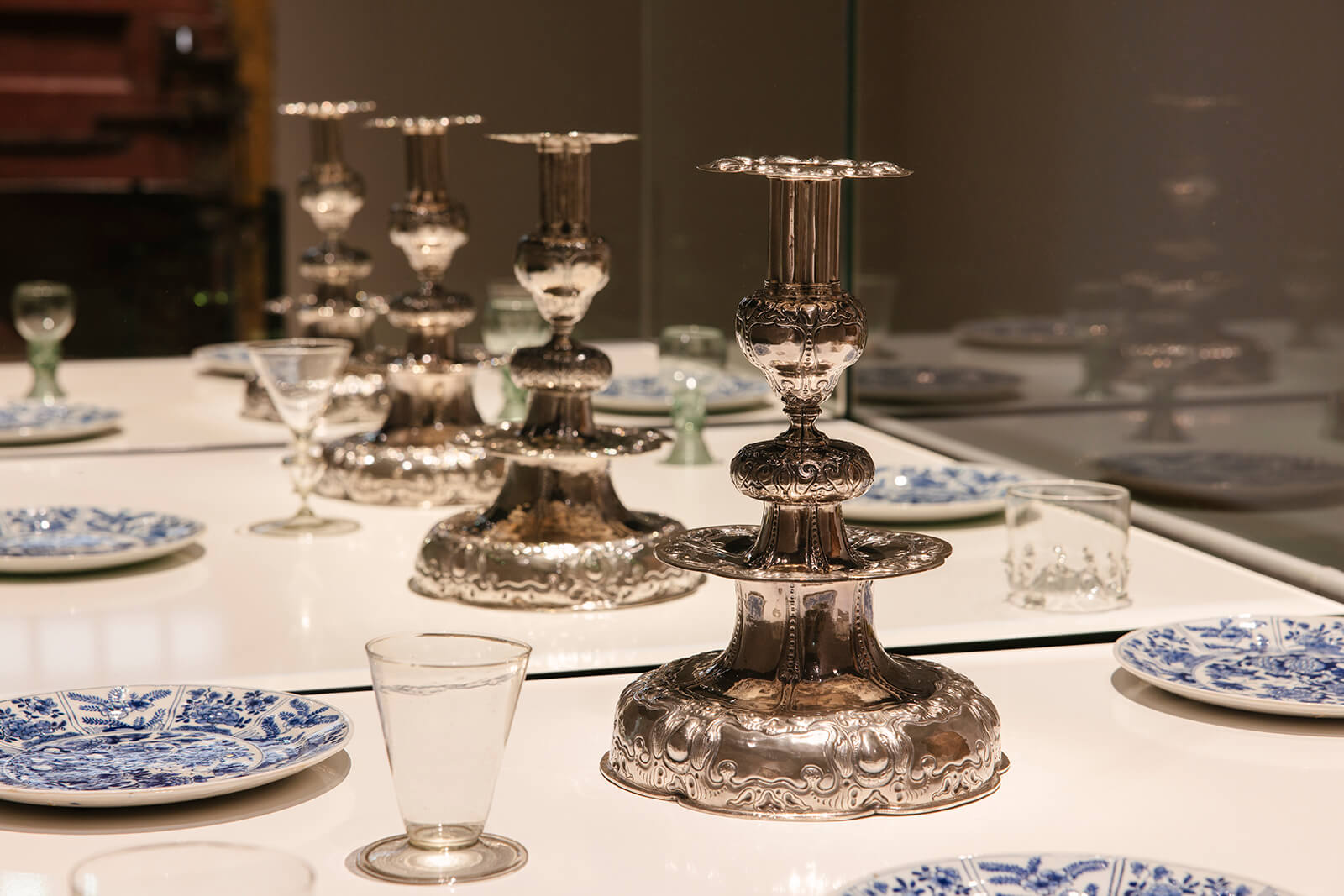
In that vein, the scenography for the design exhibition was commissioned to Steef de Jong—the Dutch artist and theatre practitioner celebrated for his imaginative cardboard stage designs. For the showcase, de Jong imagines the residential interiors as theatre sets, with each display unfolding into the next akin to scenes from a play. Interactive elements and cut-outs immerse the audience in the scene being played out, providing an intimate glimpse into the lives of families across social classes. This interest in the quotidian life of those we can only pick out in oil paintings today—with the genre painting a particularly popular style in that era—speaks not only to a sense of nostalgia, but mines the vast networks that made such comfort possible: the accoutrements from former colonies, the craftsmanship of skilled artisans, the tastes honed by mimicking a romanticised East.
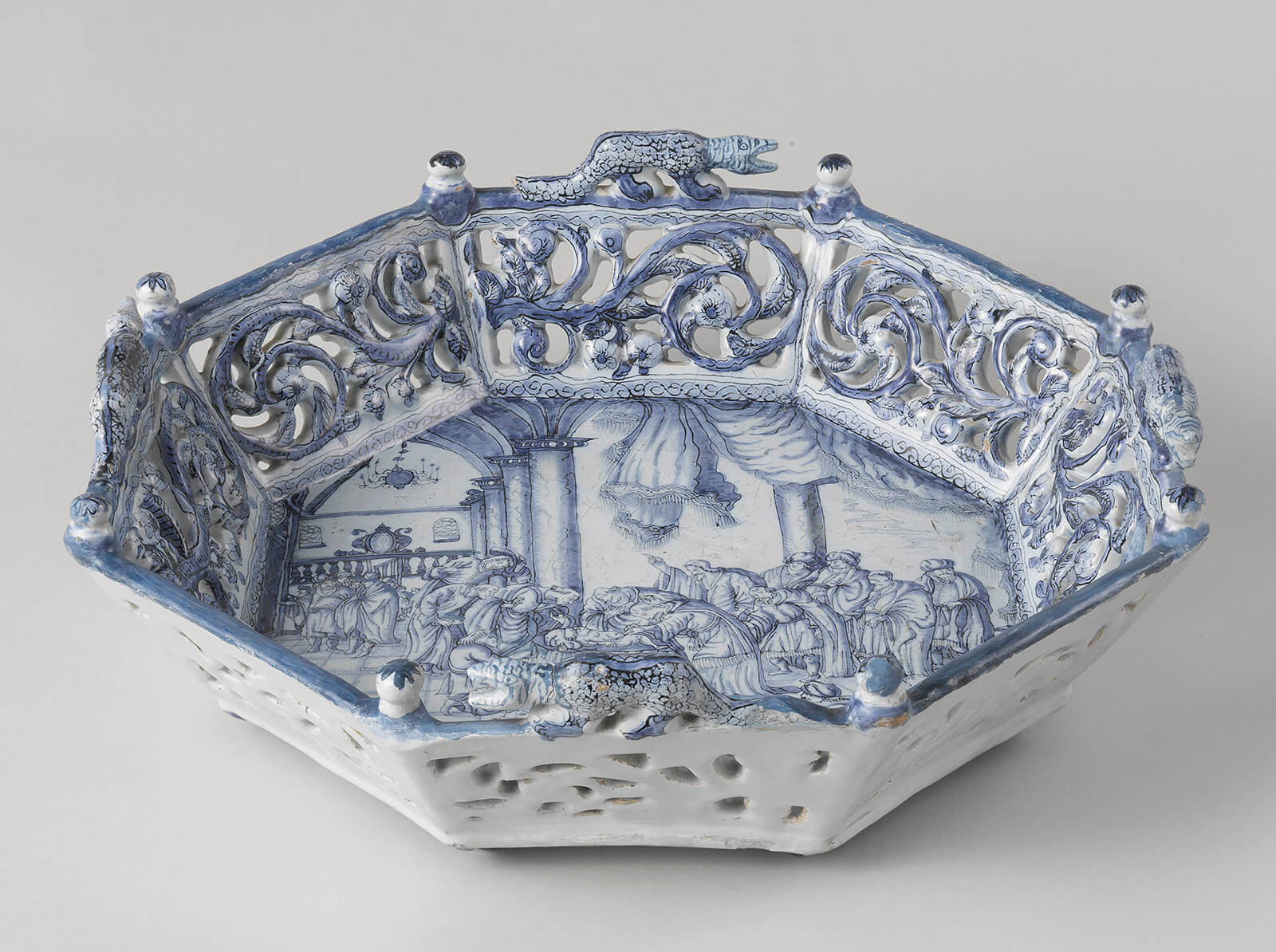
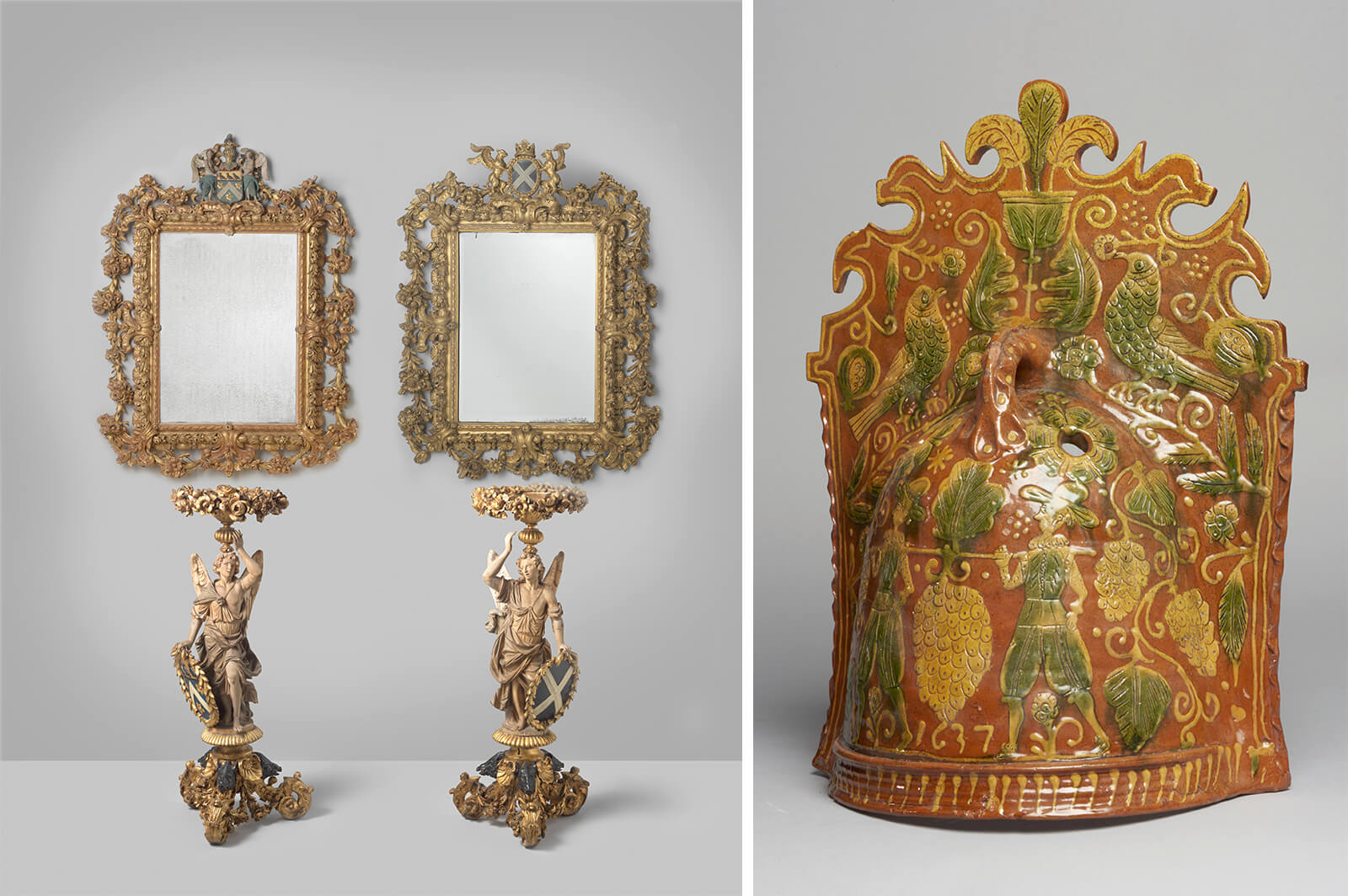
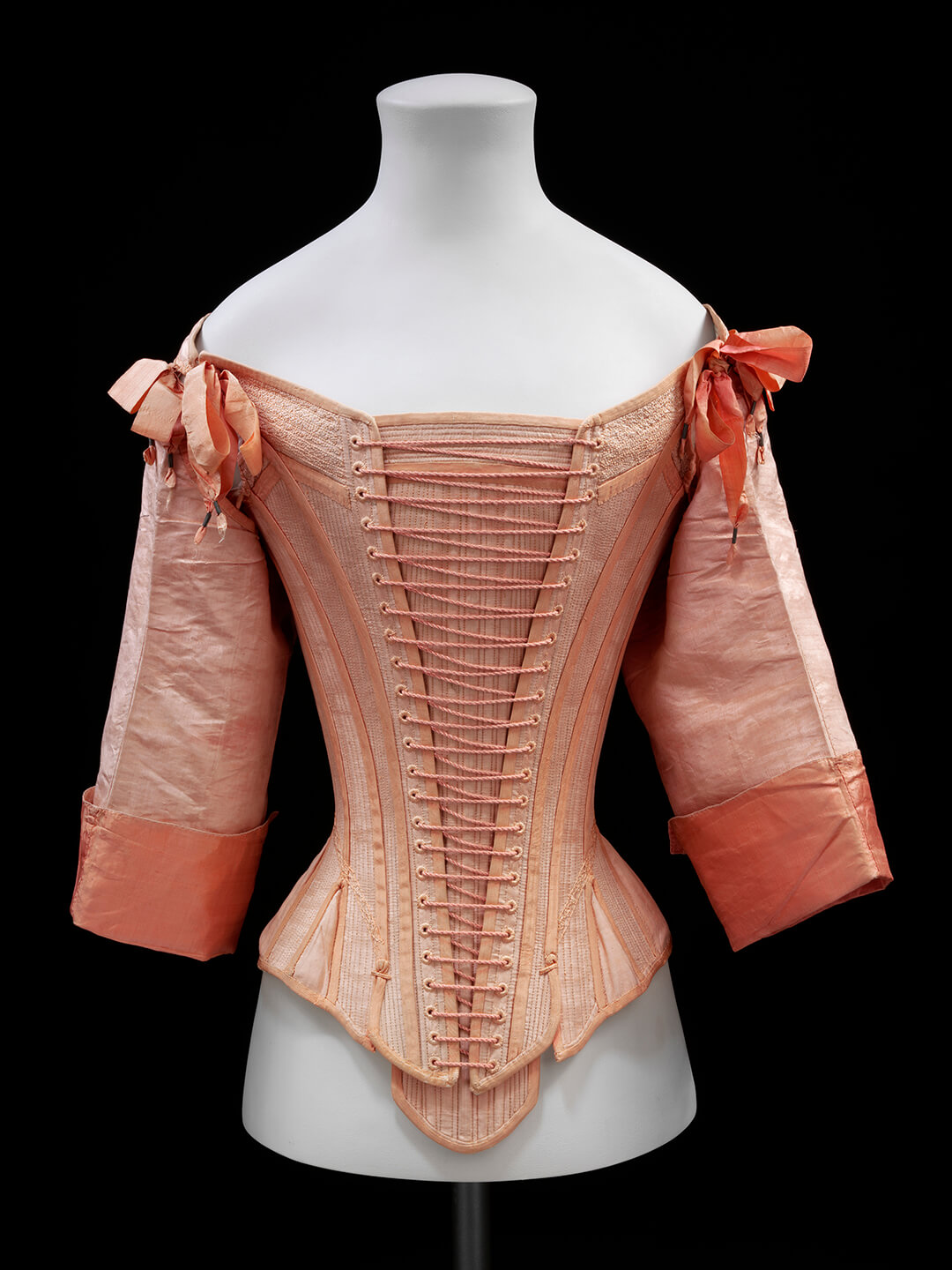
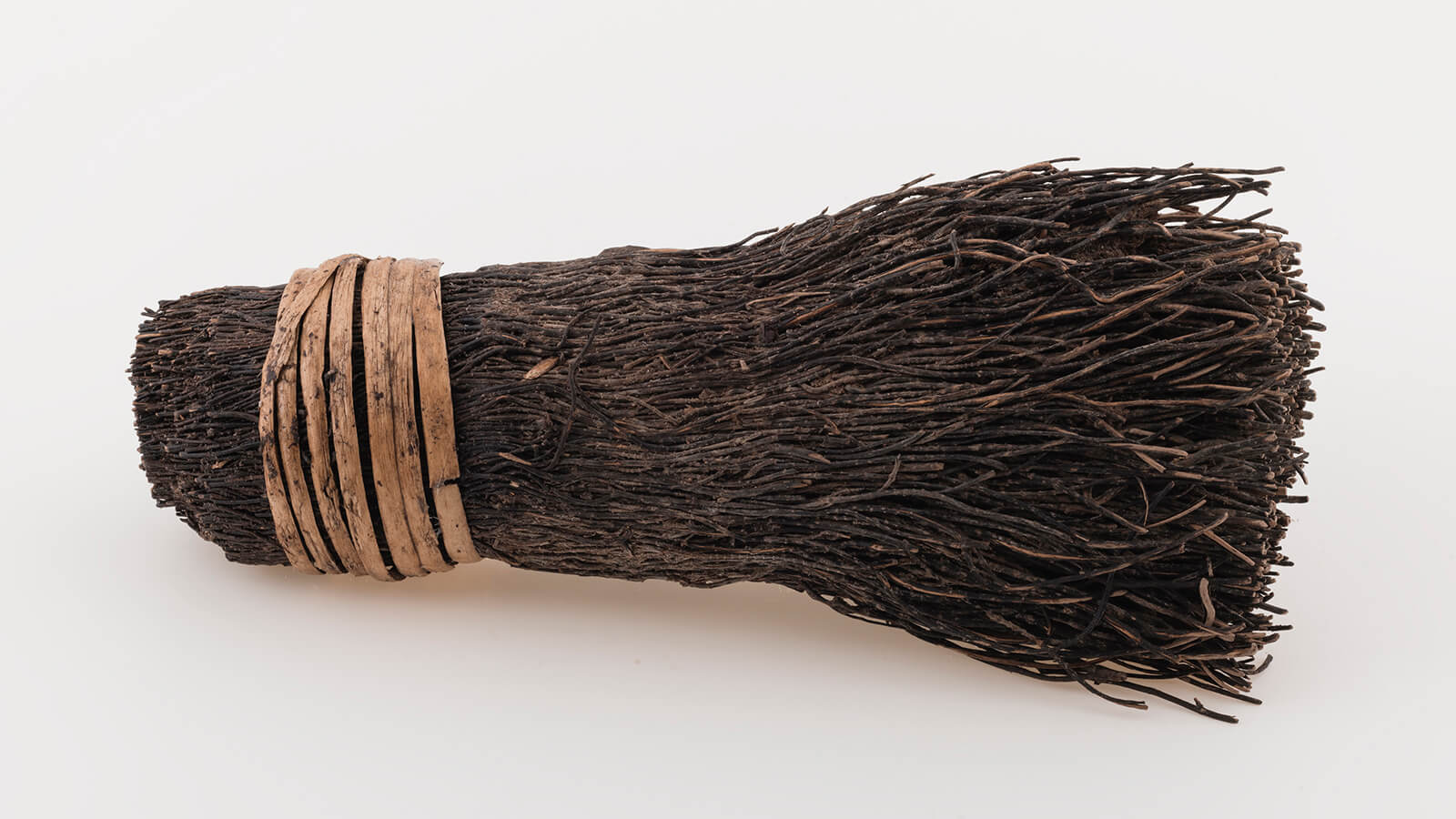
To conjure a realistic sense of life in the 17th century, the exhibition places everyday objects—brooms, earthenware cooking pots, simple utensils—in deliberate contrast with items of extraordinary refinement. The ornate fireplace designed by Dutch architect Philip Vingboons for Amsterdam mayor Joan Huydecoper, or the exquisitely embroidered silk stays and busk on loan from the V&A Museum, add a sense of tangible opulence to the otherwise sparse white cube. “It is precisely the combination of the everyday and the extraordinary that provides new insights about domestic life,” the curators share with STIR.
Yet, a delineation between lower classes and the more comfortably placed merchant classes isn’t fully acknowledged. The idea, as the curators emphasise, is to construct a fuller picture of the Dutch Golden Age—one that incorporates furniture, products and artefacts of the everyday material world. But this is also a space where manual labour—the endless tasks of housekeeping, cleaning, washing, scraping—is seemingly concealed.
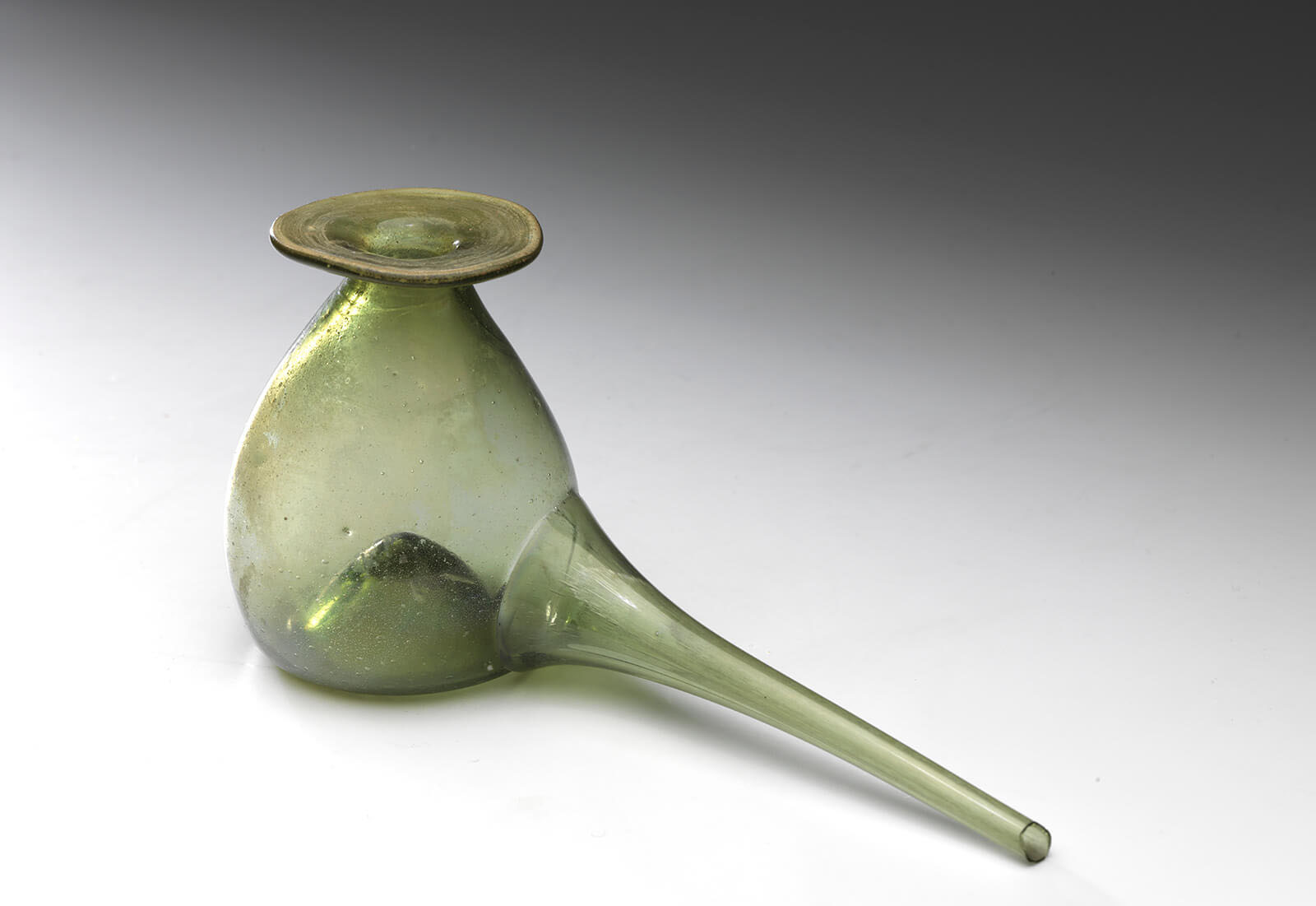
Focusing on individual lives, the exhibition also zooms in on the Boudaen Courten family of Zeeland through a cluster of preserved belongings: gilded furniture, paintings and an astonishing medical relic—a bladder stone once removed in a major surgical procedure. Shown together for the first time in centuries, they sketch the outlines of a family’s private world: its aspirations, ailments and intimacies. On the other hand, a comprehensive view of life in that era emerges from kitchen utensils and food waste unearthed from a cesspit at the home of the mayor of Hoorn and his family, the Soncks. The curators share that the artefacts recovered will be displayed alongside their charming family portrait, allowing visitors to “engage on a more personal level with the past”.
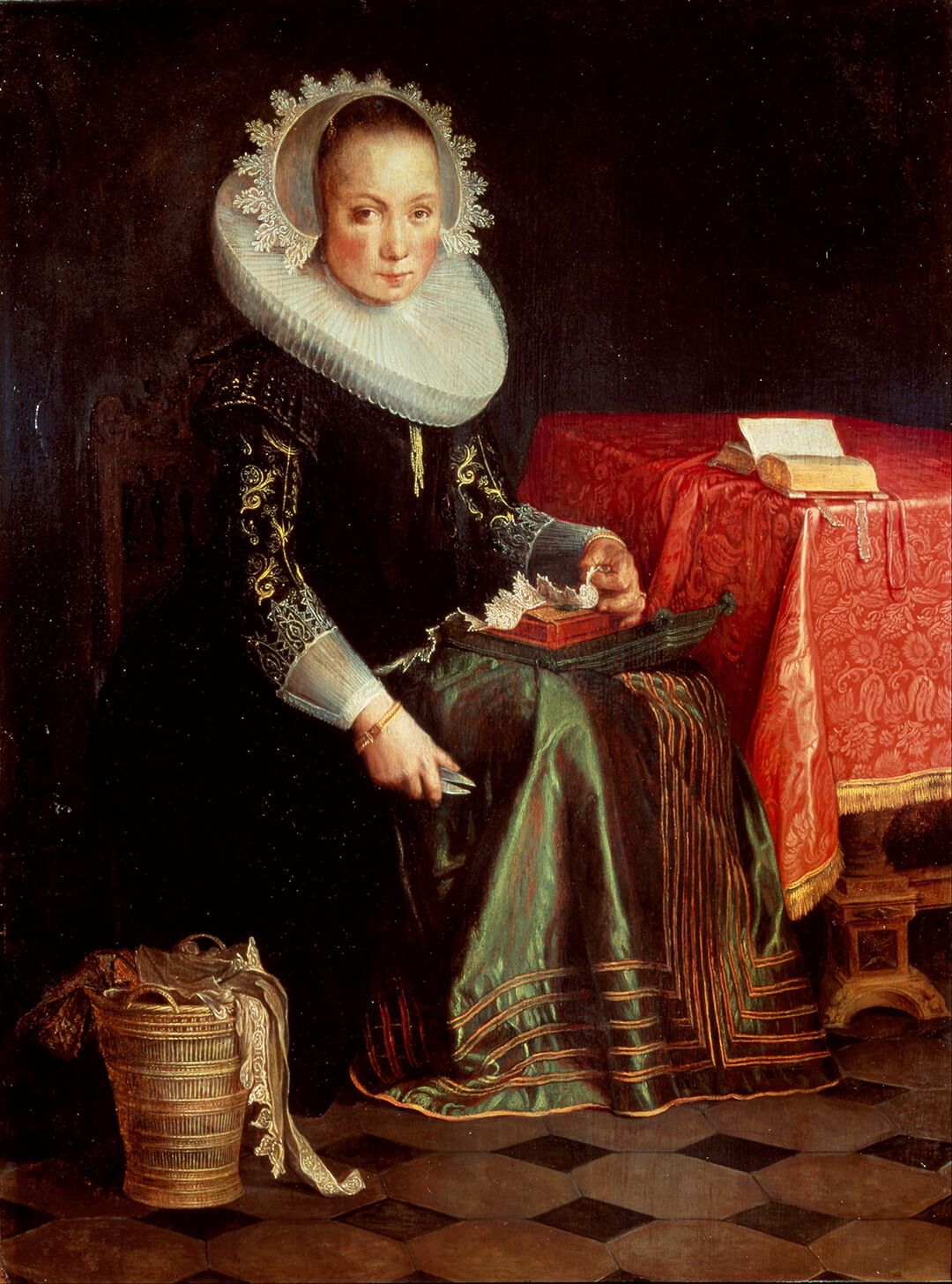
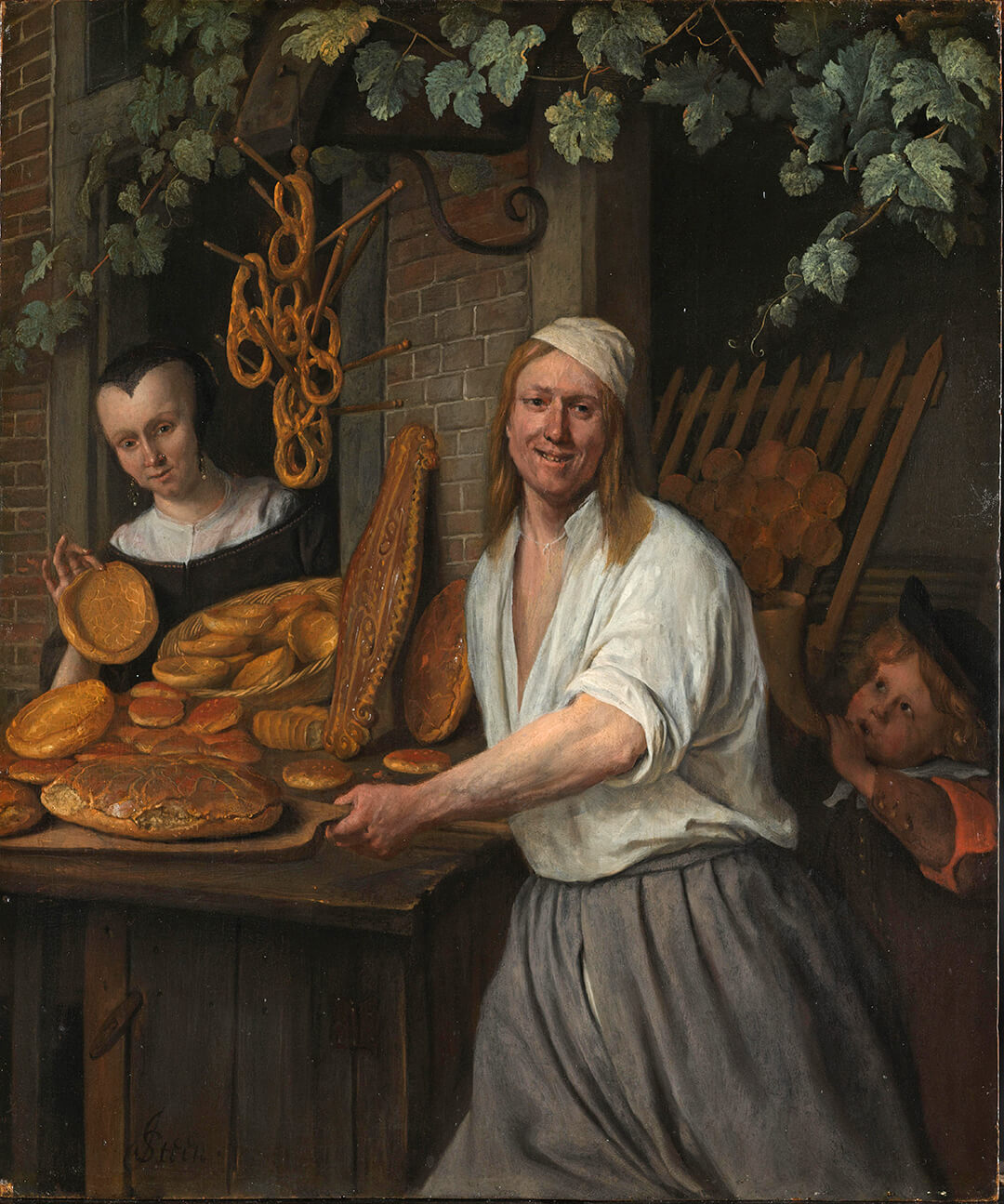
Paintings on display, too, anchor these domestic scenes in lived experience, with the exhibition presenting works that mirror the lived realities of the 17th century. Genre painting had emerged as a distinct Dutch art form in the 1600s, turning away from grand religious or mythological motifs. Painters like Johannes Vermeer, Rembrandt van Rijn and Frans Hals turned their gaze to the ordinary—a woman pouring milk in a gleaming kitchen, a family gathered around a table or young couples in a tavern. They transformed the everyday into subjects worthy of aesthetic contemplation.
Among the ones on display are Utrecht artist Joachim Wtewael’s 1628 portrait of his daughter Eva, seated with a sewing kit in her lap and a prayer book beside her—a vision of an ideal lady of the house—an indication of the only role women were seen fit to play during that period. The portrait by Jan Steen, hung in the kitchen of a baker’s family in Leiden, conversely, depicts a couple running a business together from their home.
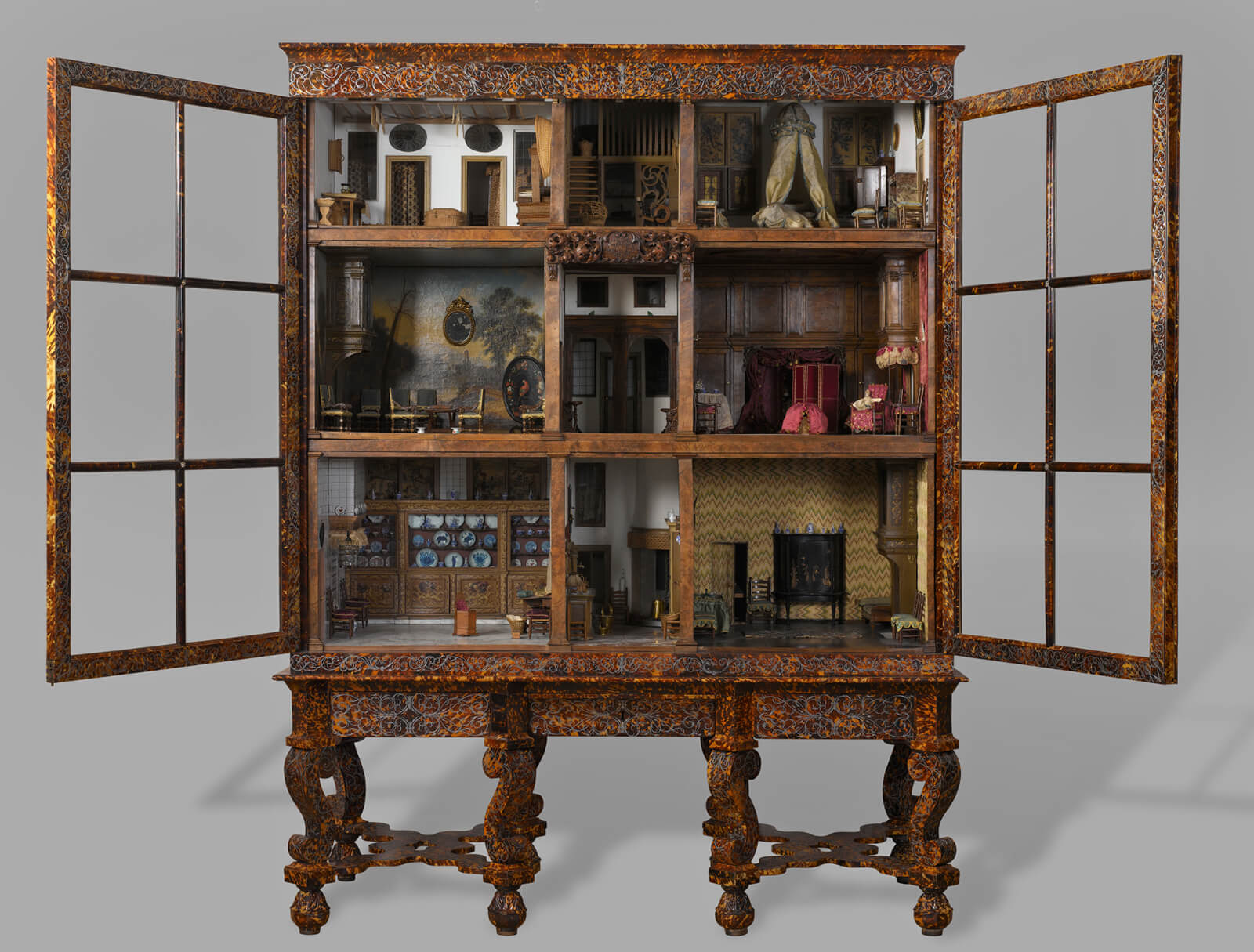
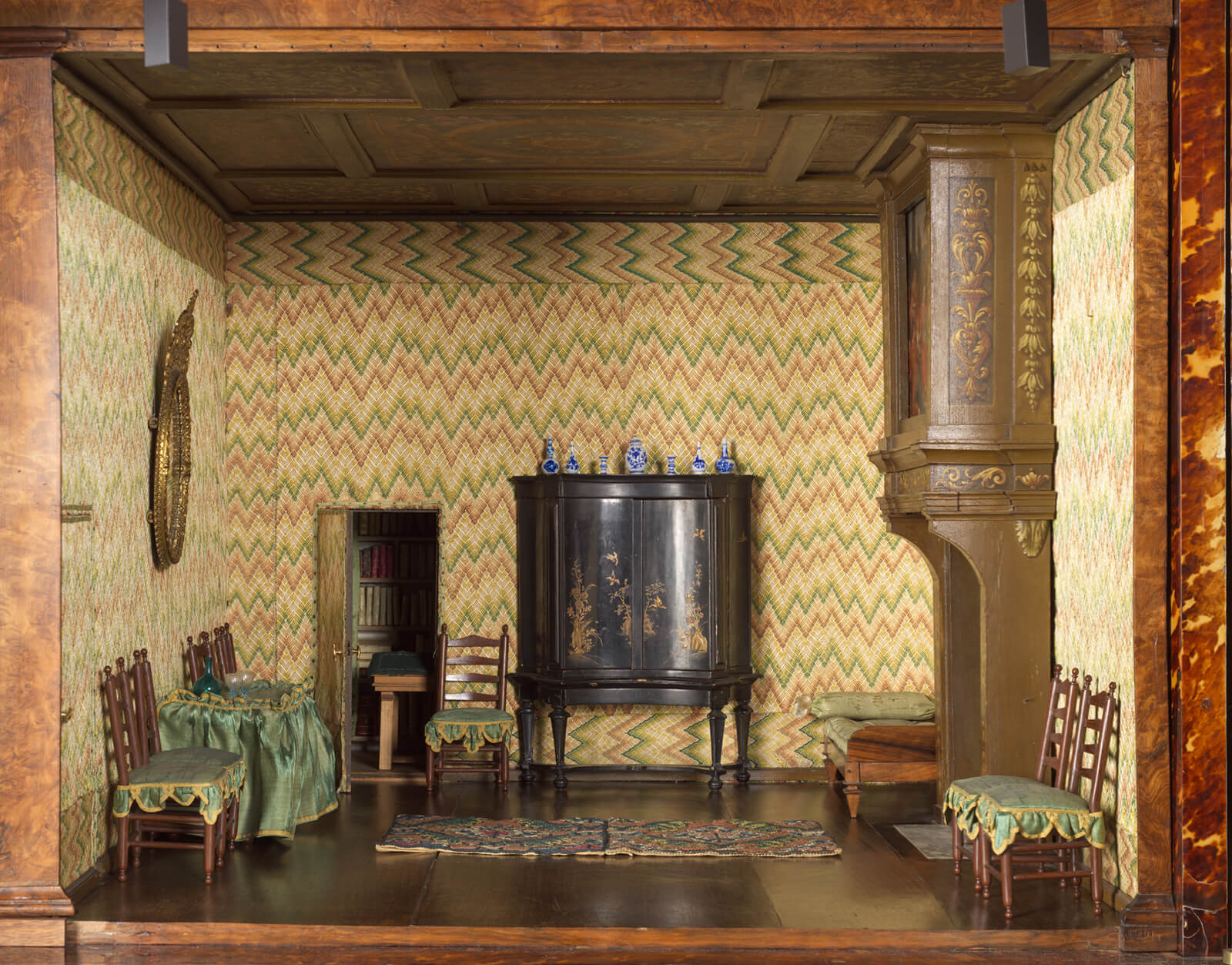
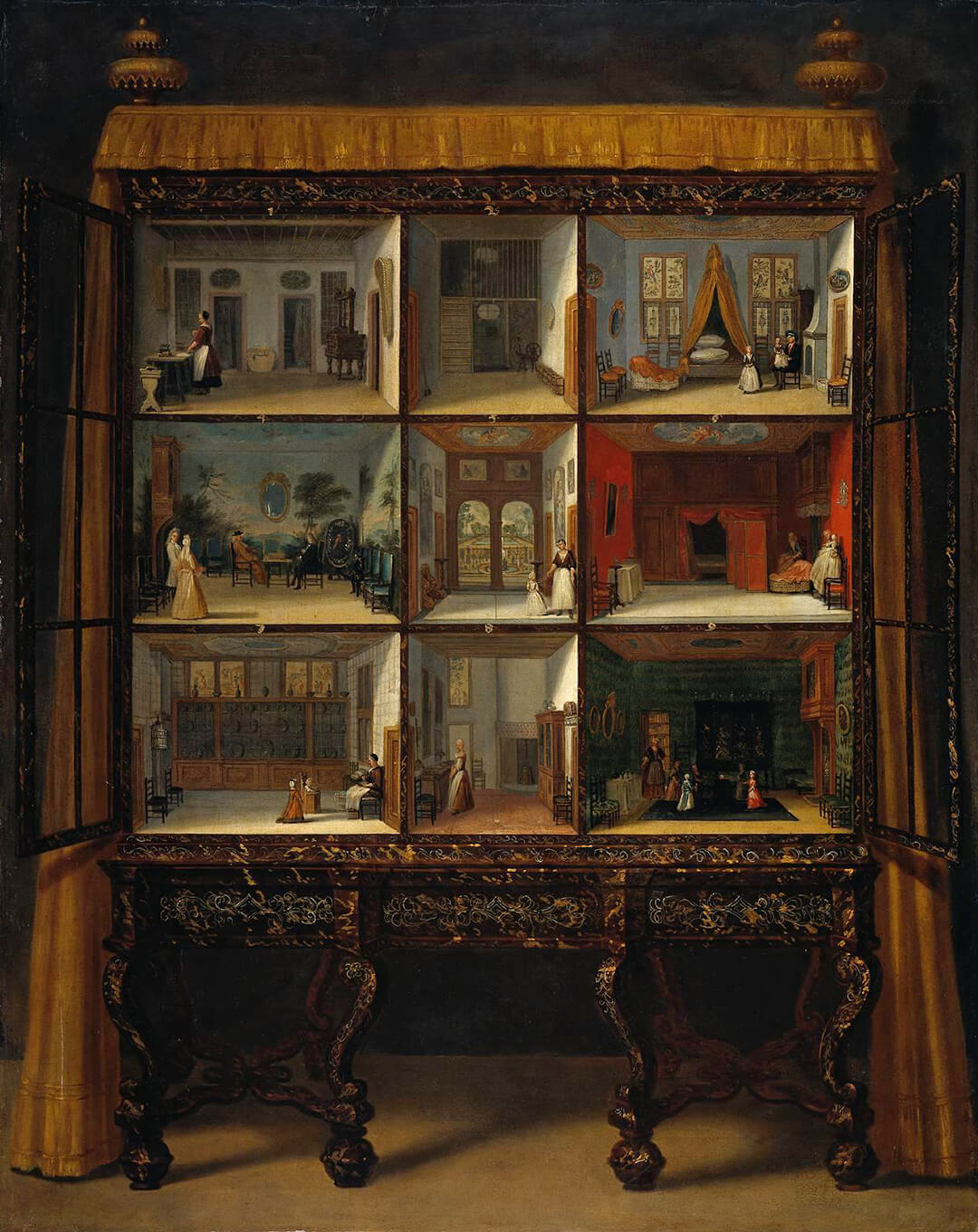
In contrast to the otherwise humble artefacts that domesticate the sterile gallery rooms, the heart of the exhibition is two doll’s houses that belonged to Petronella Oortman and Petronella Dunois. Recently digitised with a virtual tour guided by British actor Helena Bonham Carter, the Amsterdam-based museum’s most prized possessions were far from toys; these miniature homes—crafted between 1686 and 1710—were a medium for wealthy women to express their ideas, exert agency and distinguish their wealthy status.
Remarkable feats of craftsmanship and displays of opulence, the doll’s houses were belaboured objects—painstakingly detailed down to the doorknobs in each room. Described by the curators as “a microcosm where the lady of the house reigned supreme”, one could draw a comparison between these and the fabled cabinets of curiosities. While men could arrogantly display their worldly travels through the objects they collected (a precursor to the museum format) in such cabinets, women were relegated to quietly assert their authorship and identity through miniature residential designs, which, as much as they were symbols of wealth, were also educational tools. They broadened the agency women held within a domestic sphere (otherwise governed by male authority) by commissioning artisans, curating objects to their taste and arranging interiors entirely according to their own vision, replicating the expanding world in miniature form.
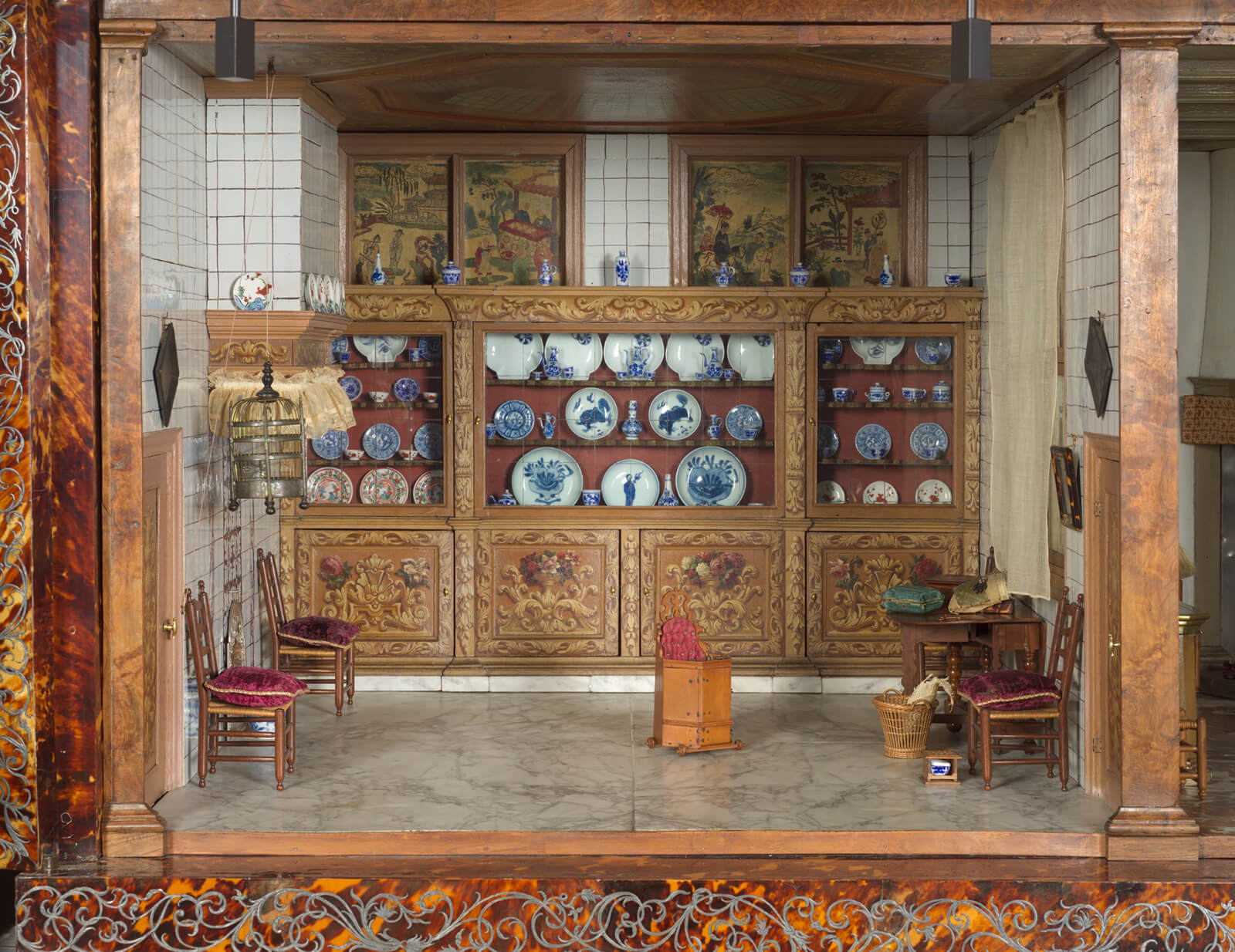
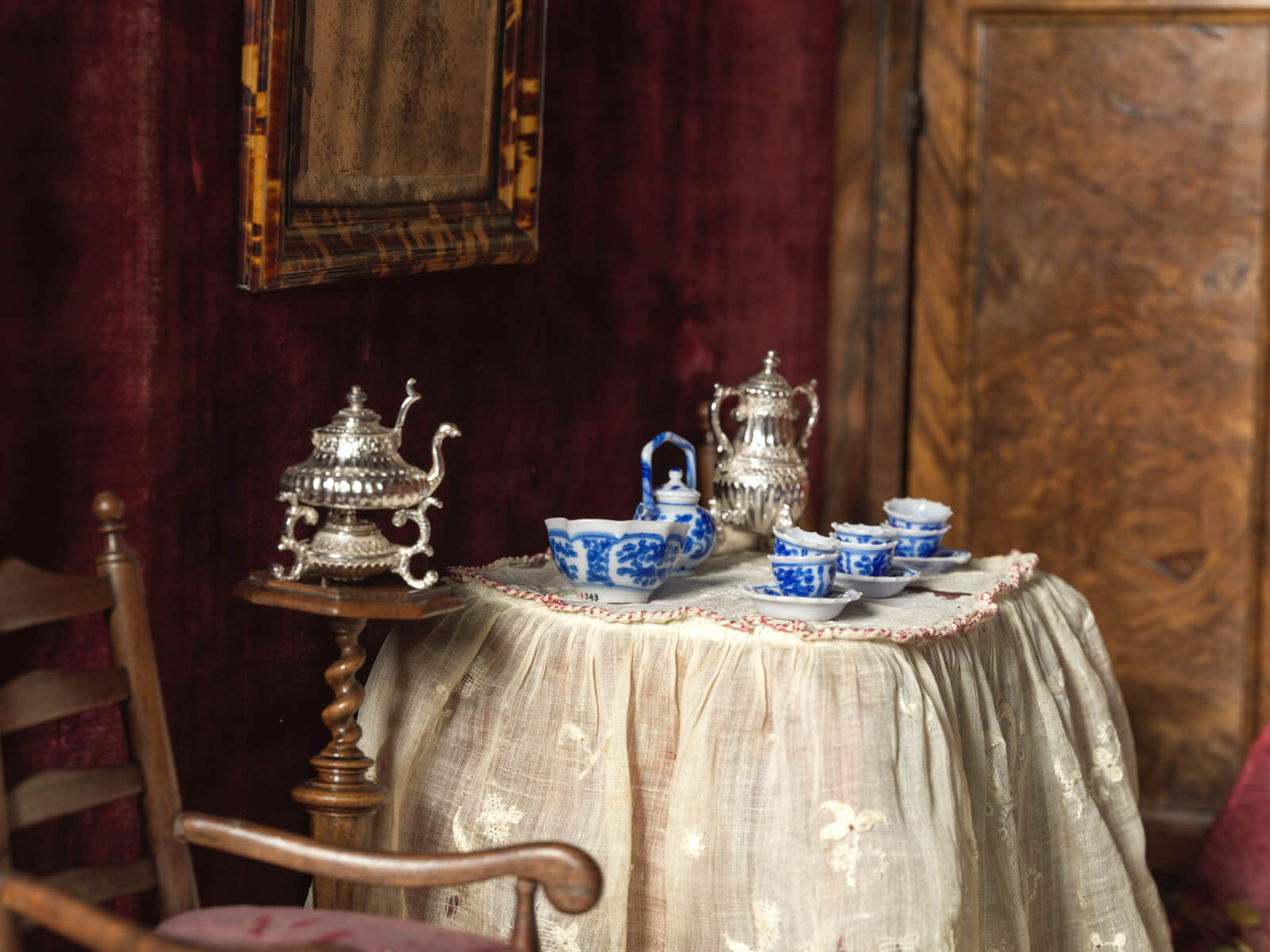
Oortman’s house, in particular, astonishes with its detailed precision. A fully equipped kitchen with running water, a functioning fountain, a library of 83 leather-bound books, a laundry room, an attic and even a basement—it has every functional corner one expects in a full-sized home, signalling the labour that went into creating such a delectable artefact. Commissioned from highly skilled artisans—woodcarvers, basket weavers, silversmiths, glassblowers—the miniatures possess a fidelity that borders on the uncanny. Even the artwork on the walls is real.
Preserving the mundane objects—utensils, linens, tools—that rarely survive centuries and offering a glimpse into the contradictions of a world otherwise lost to time allows these miniature houses to serve as a sort of archive of domestic life. As the curators share, “They are the only surviving intact interiors from that period. With regard to historical interiors and furnishings alone, they form an inexhaustible source of knowledge.”
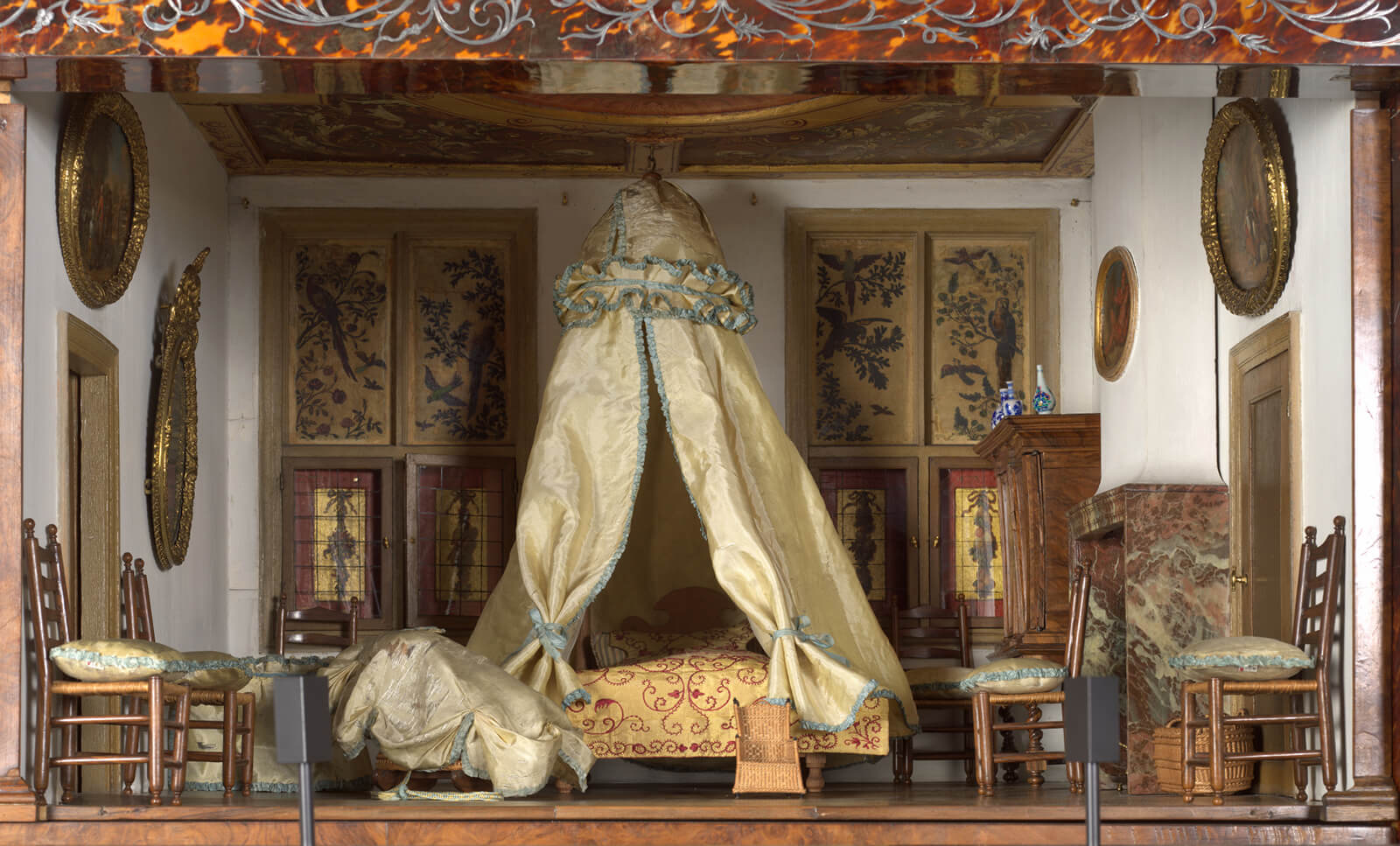
So singular was Oortman’s doll’s house that the Dutch painter Jacob Appel immortalised it in a 1710 painting, capturing the precise arrangement of the wax dolls that populated the miniature house—all, save one, now lost to time. In his depiction, a small Black servant doll wearing a silver collar chain introduces an unsettling undertone to Oortman’s otherwise genteel domestic world, puncturing its refinement with the realities of servitude and empire. Layered with the aura of an exclusionary social hierarchy and the notion of a righteous race and civil society, these houses signify a more complex understanding of ownership over the ordinary.
While the doll’s houses and preserved artefacts astonish, it is what they don’t explicitly state that becomes of note in considering the exhibition. The global networks, a colonial consequence, the disparities in social and economic class, the abhorrent idea of the mastery and civility of particular races; it’s these minute but significant nuances that are particularly worth considering. At Home in the 17th Century brings up such negotiations by simply putting everyday objects in juxtaposition with luxurious refinements, asking who could adorn their houses in what manner and who could afford to have servants to clean their homes. Meanwhile, the doll’s houses conversely underline what agency different classes and groups could assert, the sway wealth held over society at the time, as well as the sense of exclusionary pride in owning objects that were specifically crafted for particular families.
Mexican director Guillermo del Toro, in talking about the objects that make up his home, calls them relics, talismans even. The objects we surround ourselves with are carriers of memory; they tell the stories of who we are, who we want to be, the people and ideas most dear to us. This is what makes the showcase compelling, but what also demands direct acknowledgement. Perhaps the 17th century isn’t so different from the world we inhabit today. And to this, it raises the question: if three centuries from now, our lives were to end up as a museum display, what stories would they tell? What atrocities would they conceal? Would the doll’s houses of today be merely intangible Instagram feeds of tomorrow?
‘At Home in the 17th Century’ is on view from October 17, 2025 – January 11, 2026, at Rijksmuseum, Amsterdam.

by Pranjal Maheshwari Oct 23, 2026
Co-authored by Jareh Das, Chairman traces the British designer’s fixation on chairs as symbols of power and identity and as mediums of expression and community building.
by Chahna Tank Oct 22, 2026
STIR speaks with the Mumbai-based type designer about her practice, type walks and why she wants more people to have stronger opinions about Indian-script fonts.
by Mirra Lynn Oct 22, 2026
The curators behind Palestine Design Week 2026 reflect on its intent, considering how design holds memory, makes space for loss and imagines a future in Palestine.
by Jincy Iype Oct 15, 2026
STIR explores craft, material intelligence and people shaping Indian design through dialogues with Design Democracy’s co-founders and the curators of its special exhibitions.

make your fridays matter with a well-read weekend
Enter your details to sign in
Don’t have an account?
Sign upOr you can sign in with
a single account for all
STIR platforms
All your bookmarks will be available across all your devices.
Stay STIRred
Already have an account?
Sign inOr you can sign up with
Verification link sent to check your inbox or spam folder to complete sign up process
Tap on things that interests you.
Select the Conversation Category you would like to watch
Please enter your details and click submit.
Enter the 6-digit code sent at


Ways of being: At Home in the 17th Century at Rijksmuseum, Amsterdam
by Chahna Tank | Published on : Nov 26, 2025


 Sign in with Google
 Sign in with email
What do you think?