Design07 mins. read
Friedman Benda displays creative genius as quotidian in Wendell Castle’s retrospective
by Pranjal MaheshwariOct 12, 2026



by Pranjal MaheshwariPublished on : May 27, 2026
A bird assembles its nest—a patchwork of twigs, mud and grass—only for the breeding season, and once abandoned, the nest slowly disintegrates and returns to its surroundings. Beavers build dams using branches, mud and vegetation, and leave them all behind every few years. When coral reefs reach the end of their lifespan, their calcium carbonate skeletons become the base support for the next generation. Lichens are symbiotic organisms that thrive even on bare, lifeless surfaces like rocks due to a critical, complementary partnership between fungus and algae. Almost everything that is part of a natural process embraces temporality and cyclicity as a fundamental of existence, with the definitive, and perhaps singular, exception of human civilisation. It is this distinction that birthed the duality of man and nature; humans being the only species speculated to have single-handedly redefined the geological cycle of an entire planet.
What might turn the tide of the evident, rampant degradation of the environment is perhaps a positive speculation, an insight into a potential future that dissolves the duality of man and nature. What does this future look like? Dutch artist and designer Joris Laarman illustrates this vision with his new solo exhibition, Symbio, at the Friedman Benda gallery in New York.
The displays at Symbio apparently reference Australian geoscientist Glenn Albrecht’s theoretical utopia of Symbiocene, where humanity thrives by entering into an interdependency with nature. In conversation with Laarman, STIR explored whether these product displays imply the foreseen inevitability of the speculative geological epoch, or are they better understood as a wishful expression. “In this case, hope and inevitability are intertwined,” he says. “One could argue whether the Symbiocene is our only sustainable future, but [that] will never happen if we don’t make it more desirable than the alternatives by engineering and visualising what it means. I honestly think a vast majority of people would happily exchange such futures with our current system. Nobody hates to coexist with nature; it’s deeply engraved in our DNA. It’s just the system we are stuck in [that] doesn’t support it properly,” he continues.
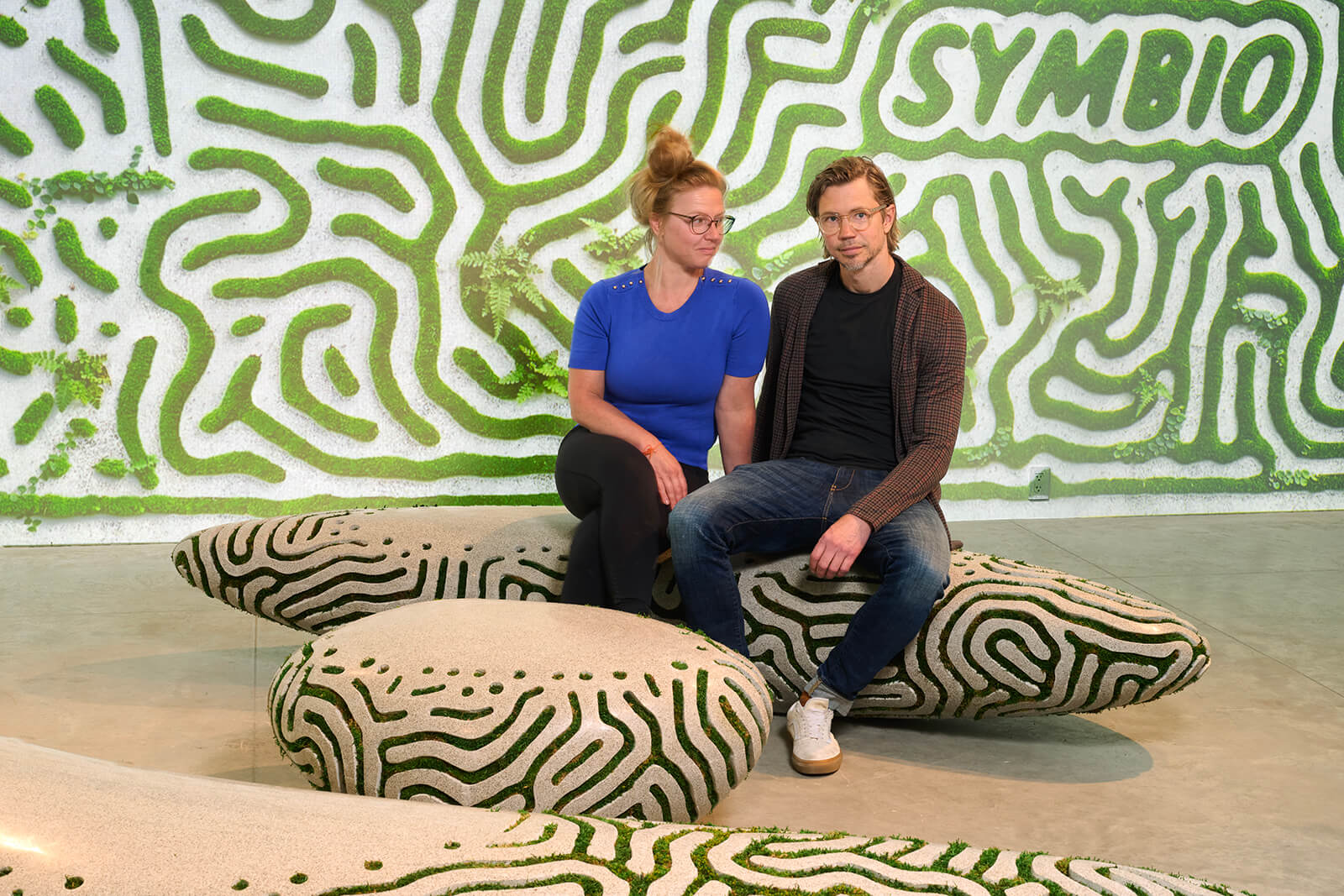
Laarman's last solo exhibition in the city was almost a decade ago at the Cooper Hewitt Museum. In his 2017 showcase, Design in the Digital Age,the Dutch designer presented furniture designs and samples from the then-ambitious (and later, widely successful!) infrastructure development idea MX3D—a 12-metre stainless steel pedestrian bridge constructed mid-air using advanced 3D printing. The project was developed by Joris Laarman Lab (JLL), which the designer founded with his partner and filmmaker Anita Star in 2004. The studio is an Amsterdam-based multidisciplinary collaborative of craftspeople, scientists and engineers that works at the intersection of manual finesse and advanced digital tools and workflows. Despite receiving much acclaim, the displays appeared to only highlight the potential of digital fabrication in redefining mass manufacturing workflows. With Symbio, Laarman combines his longstanding fascination with the biological world and the intellectual explorations that have shaped his earlier works, introducing an unusual, organic dimension to his oeuvre.
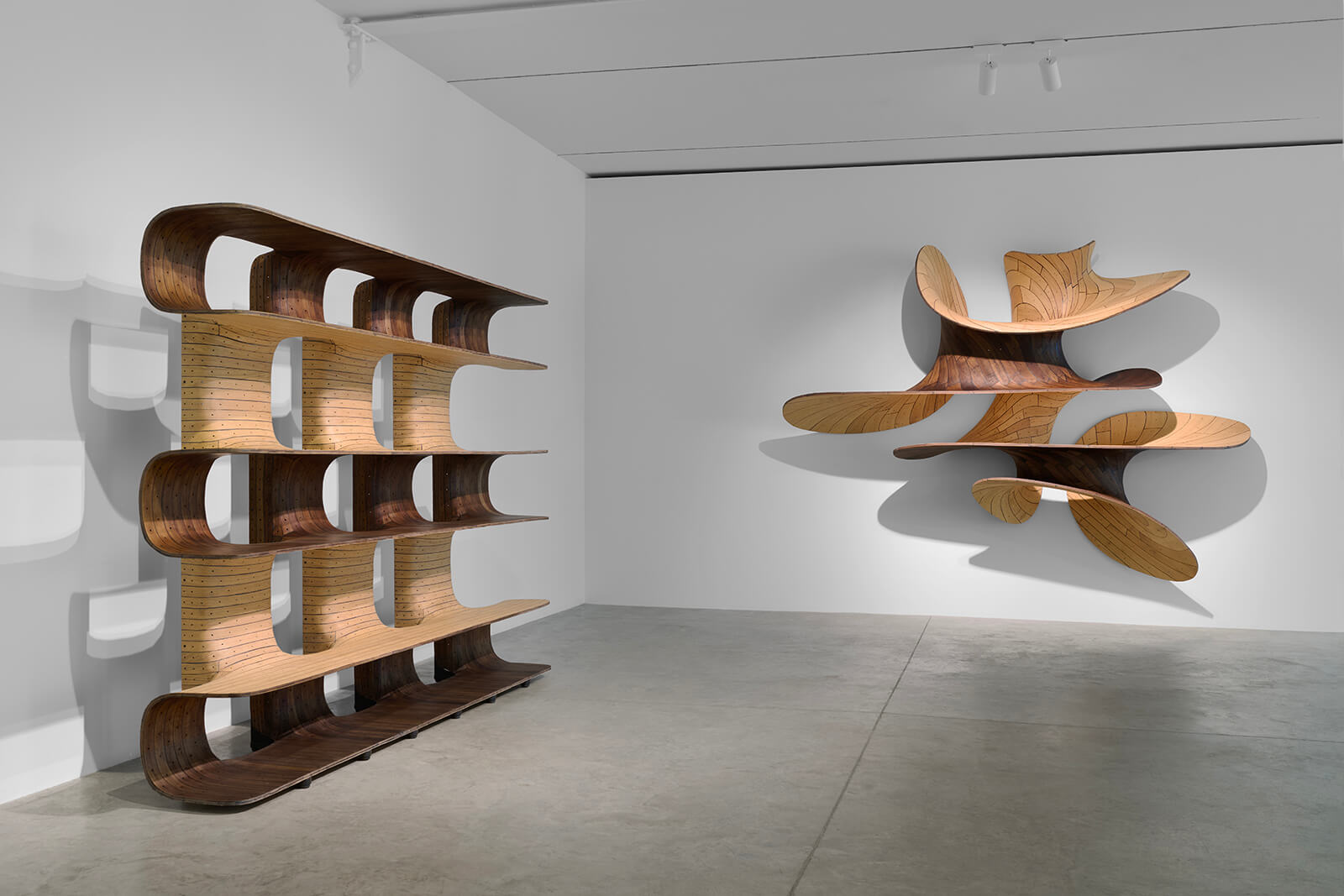
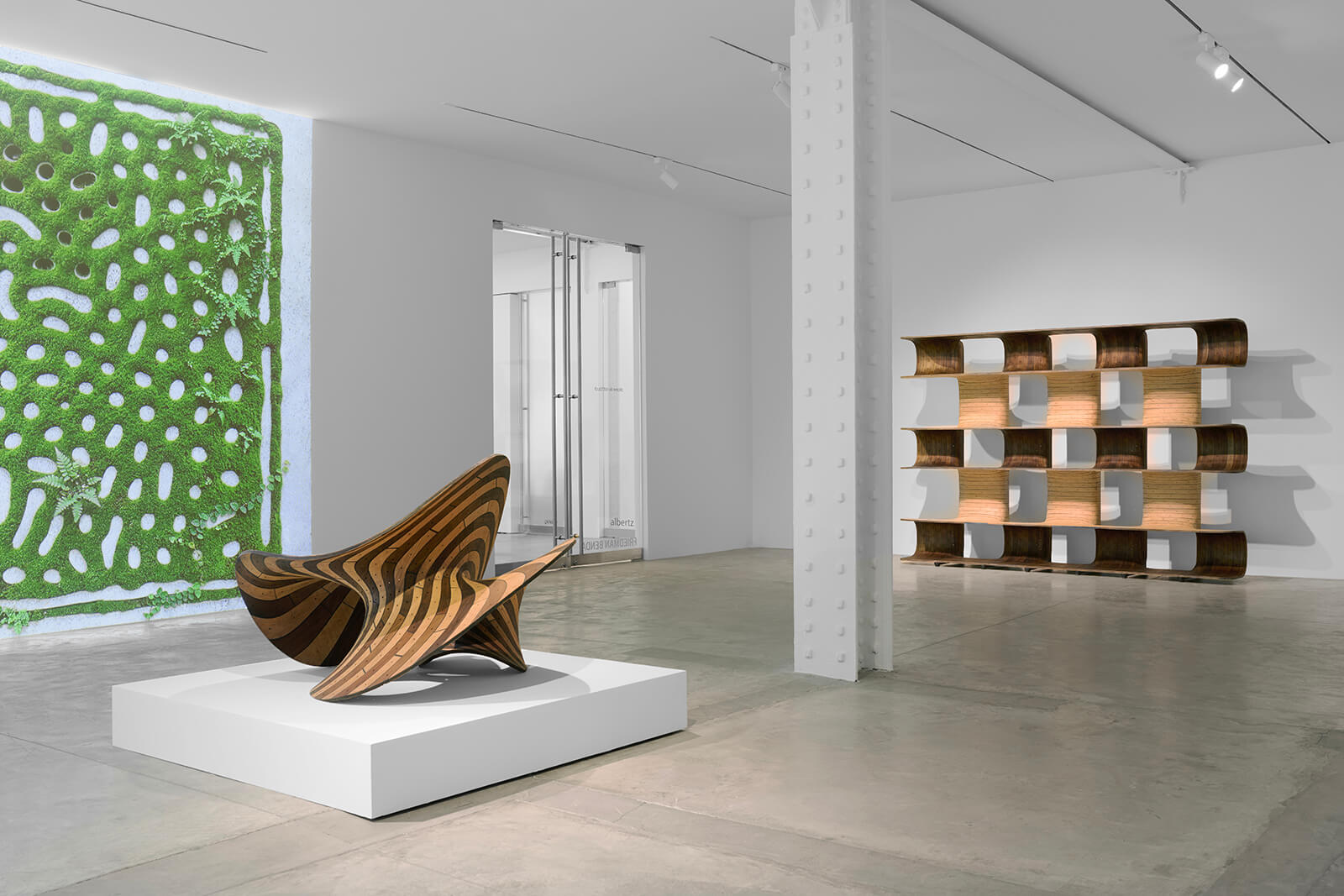
The present showcase condenses the last decade of JLL’s multidisciplinary investigations into two product series, featuring some of the most widely seen materials in our built environment: plywood and concrete. The first, Ply Loop, presents a new, fluid geometric language for plywood products in four distinct forms: chair, console, freestanding bookcase and wall shelf. These complex geometries are made possible through meticulous hand-guided digital design and fabrication tools and an exciting material innovation in the form of a novel biodegradable resin developed by Arnhem-based company Plantics using waste generated by the Netherlands’ sugar beet industry. The adhesive’s unique, plant-based formulation lends it malleability until fired in a kiln, allowing greater flexibility while shaping the product.
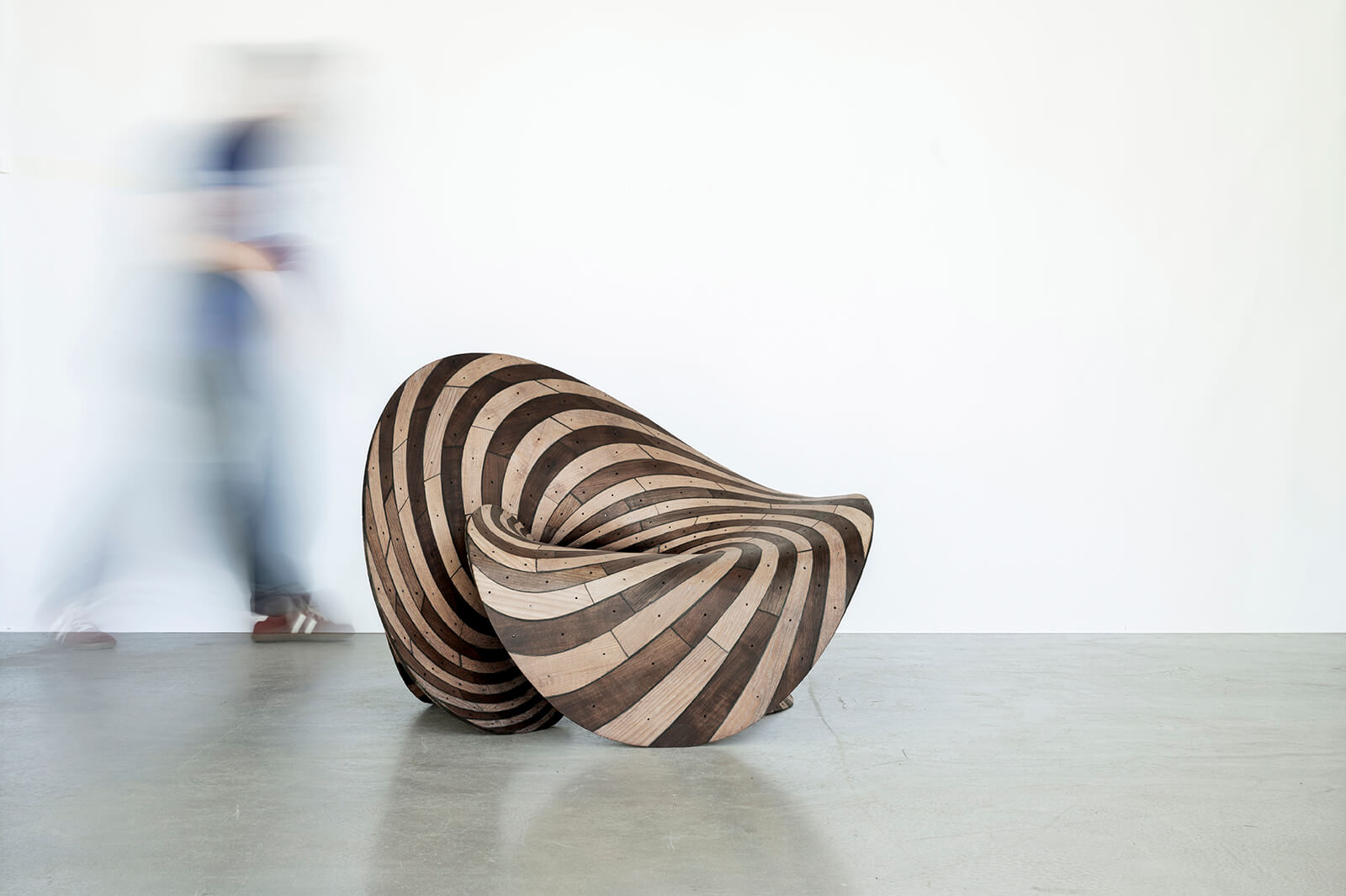
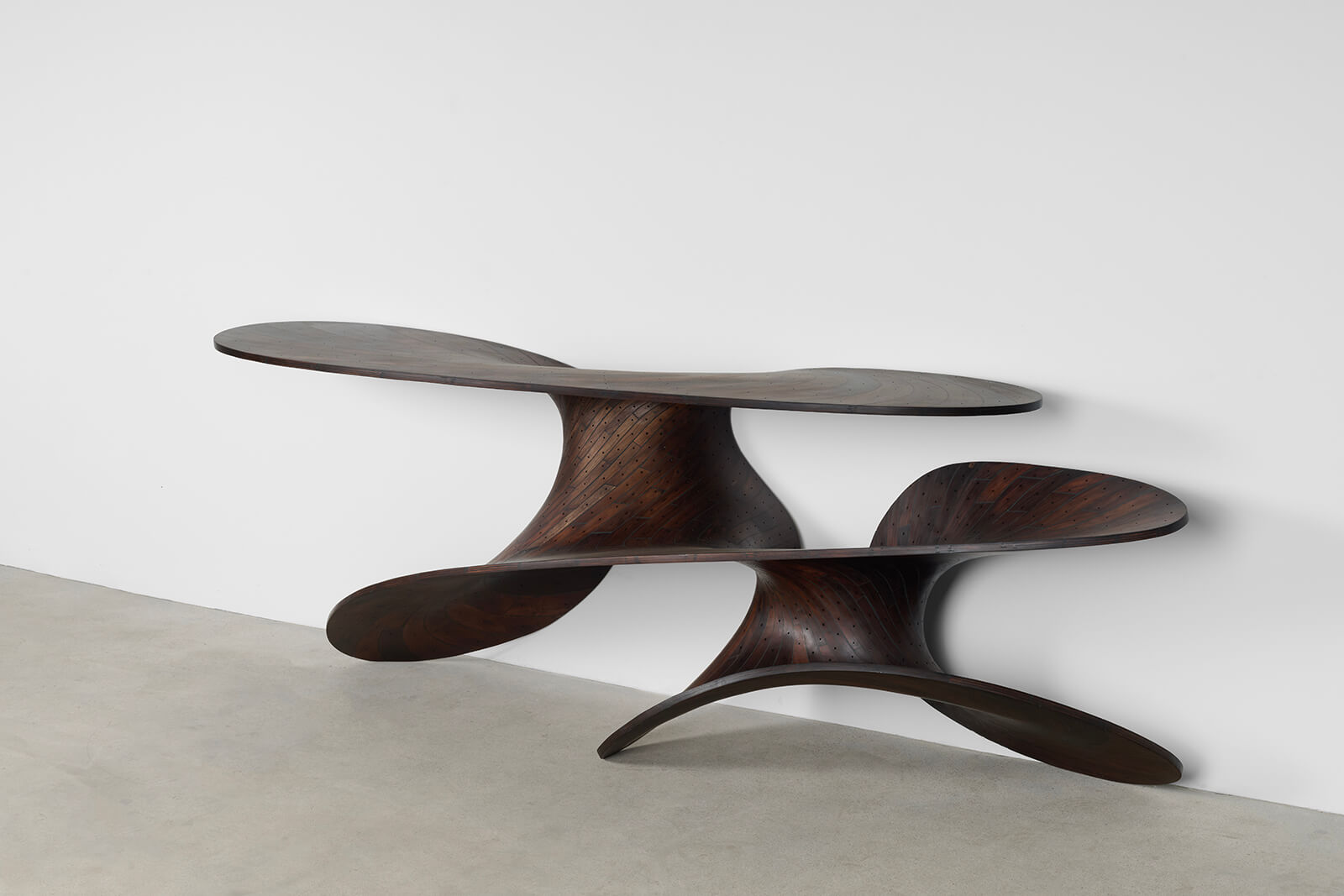
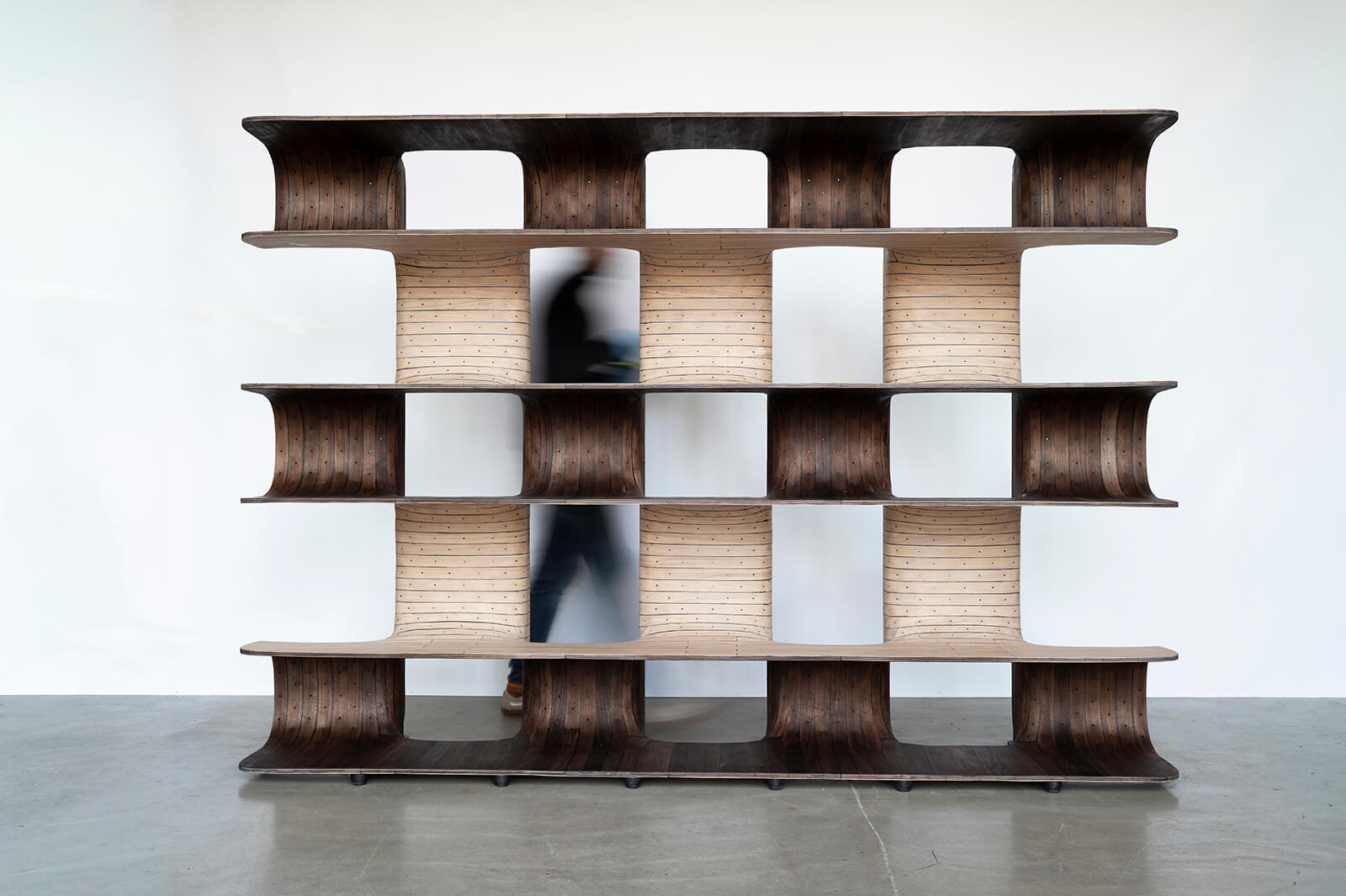
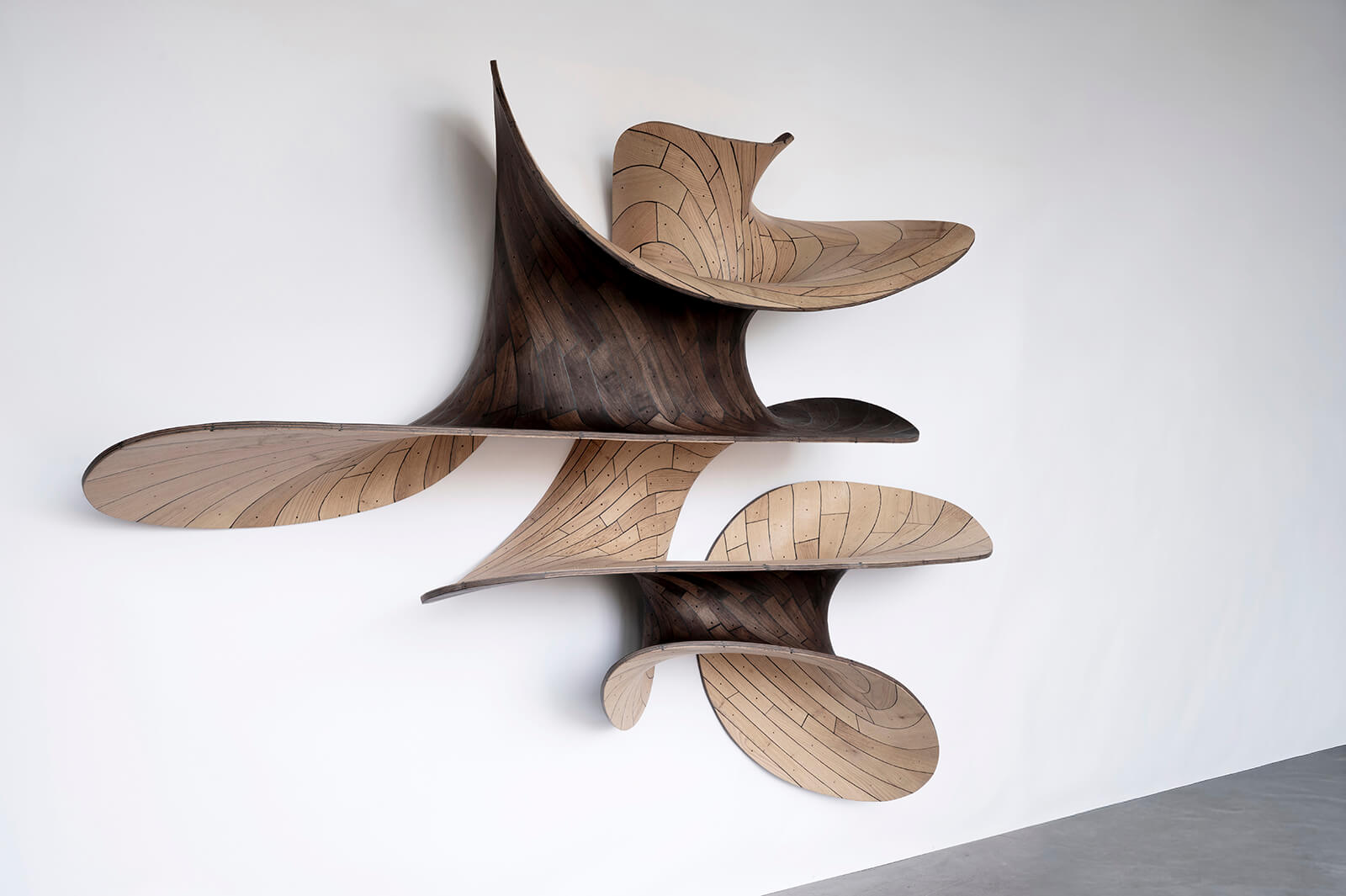
Laarman leverages the elasticity granted by the adhesive for joining numerous stacks of laser-cut pieces of veneer, adjusted minimally in size as they descend from convex to concave surfaces: a precision made possible by his signature algorithmic workflows. The depth and curvature of the final assembly are made legible using contrasting dark-and-light tones.
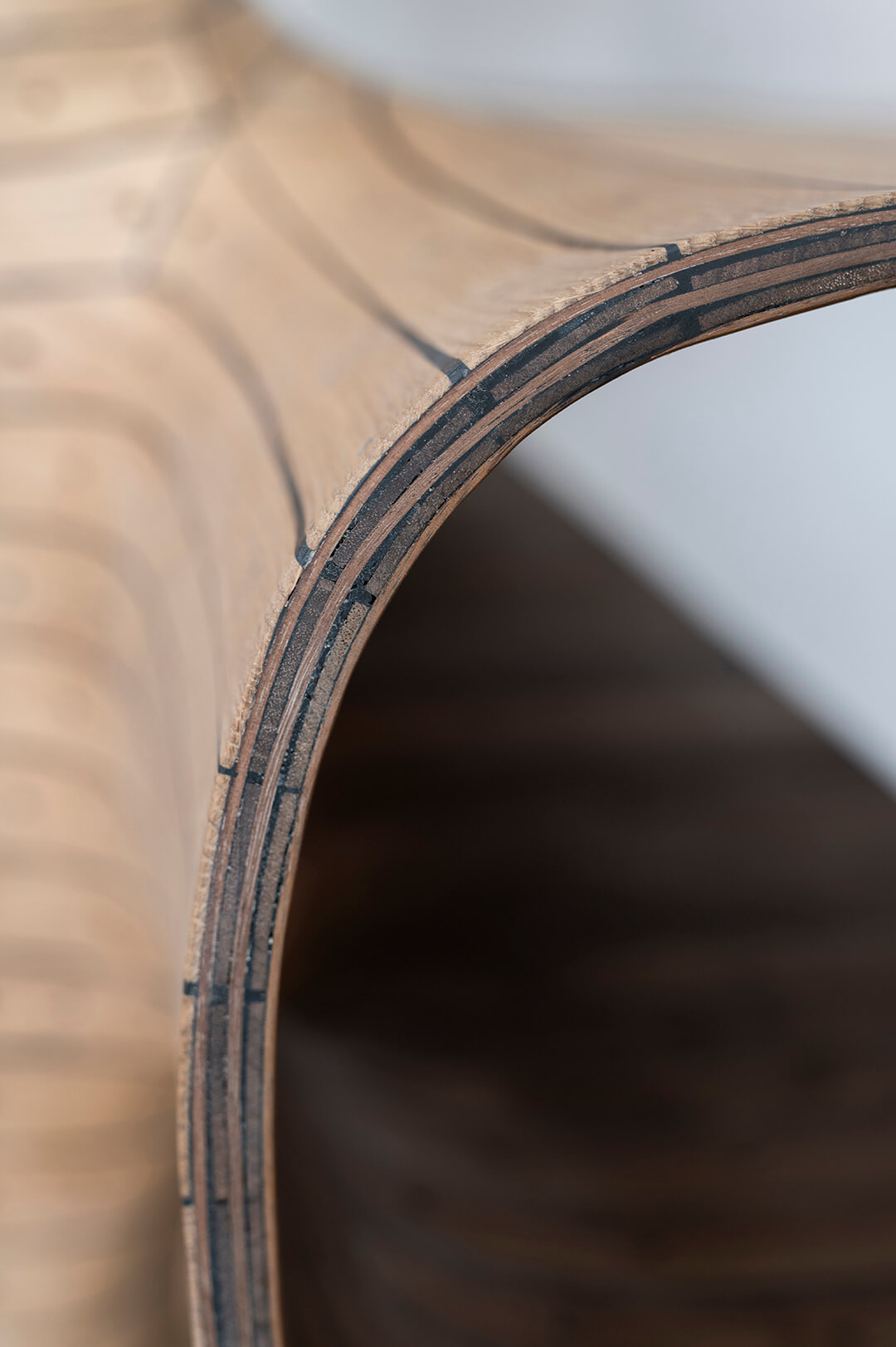
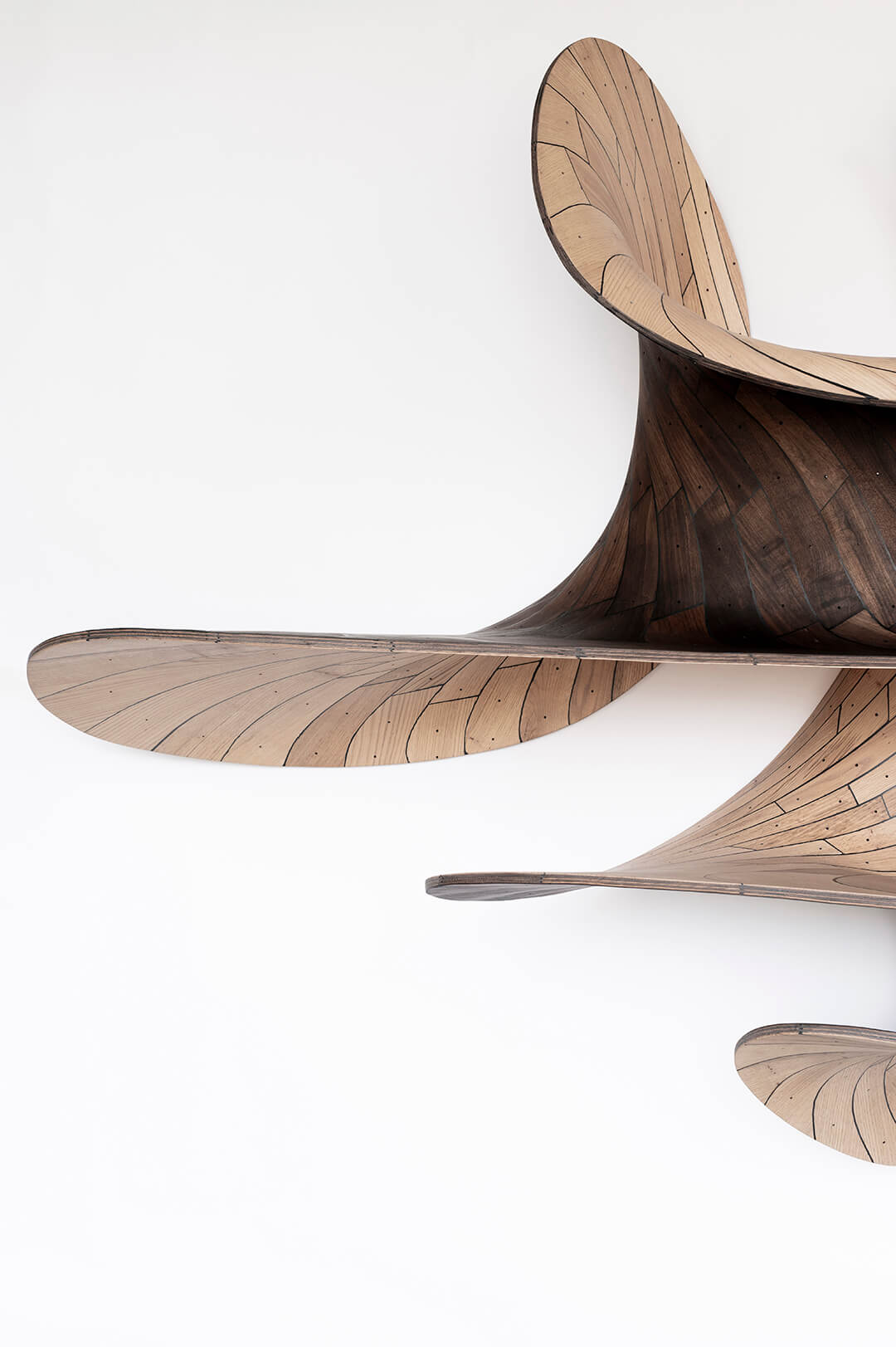
While the resultant samples inspire awe, the underlying research for the series aims to progress towards a scalable, regenerative model. “With these early experimental works backed by the gallery, we usually try to push the limits of what is possible with the technique,” Laarman explains the development of the project. “This way we learn the most and end up with such sculptural works. We have done so with many other works, like, for instance, the robotic metal printer that spun off into MX3D. Next up is to iterate towards more scalable work with the Plantics material.”
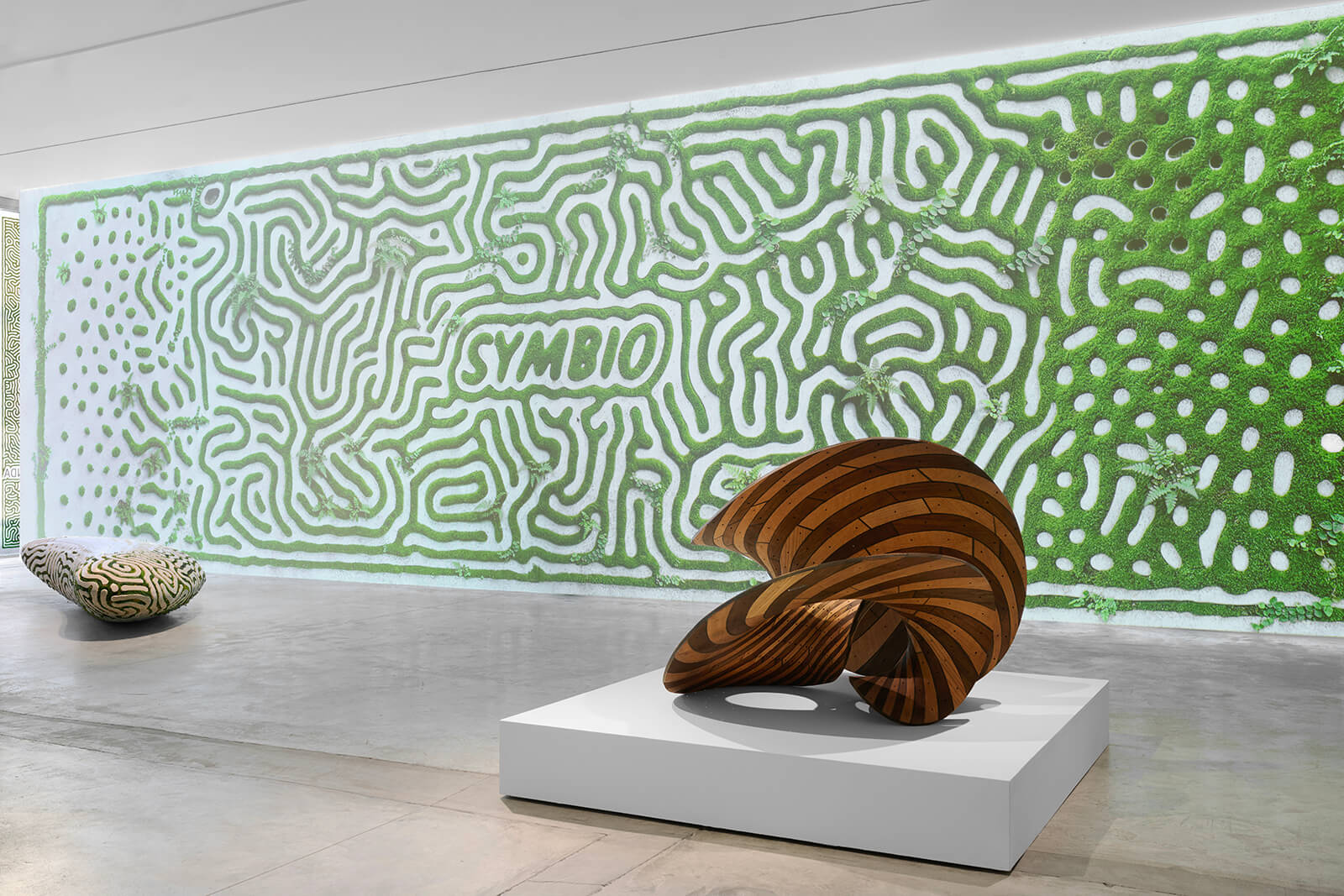
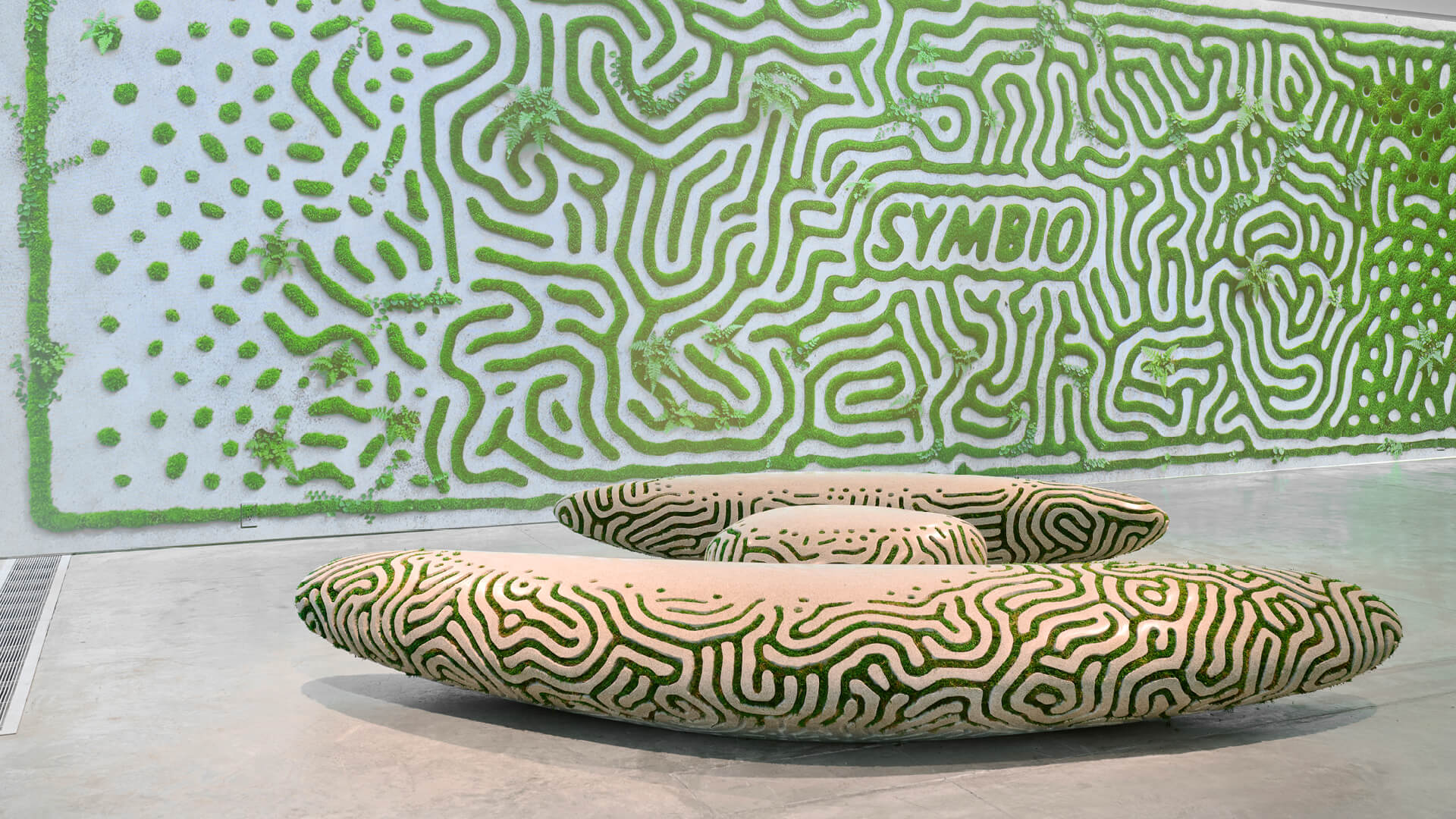
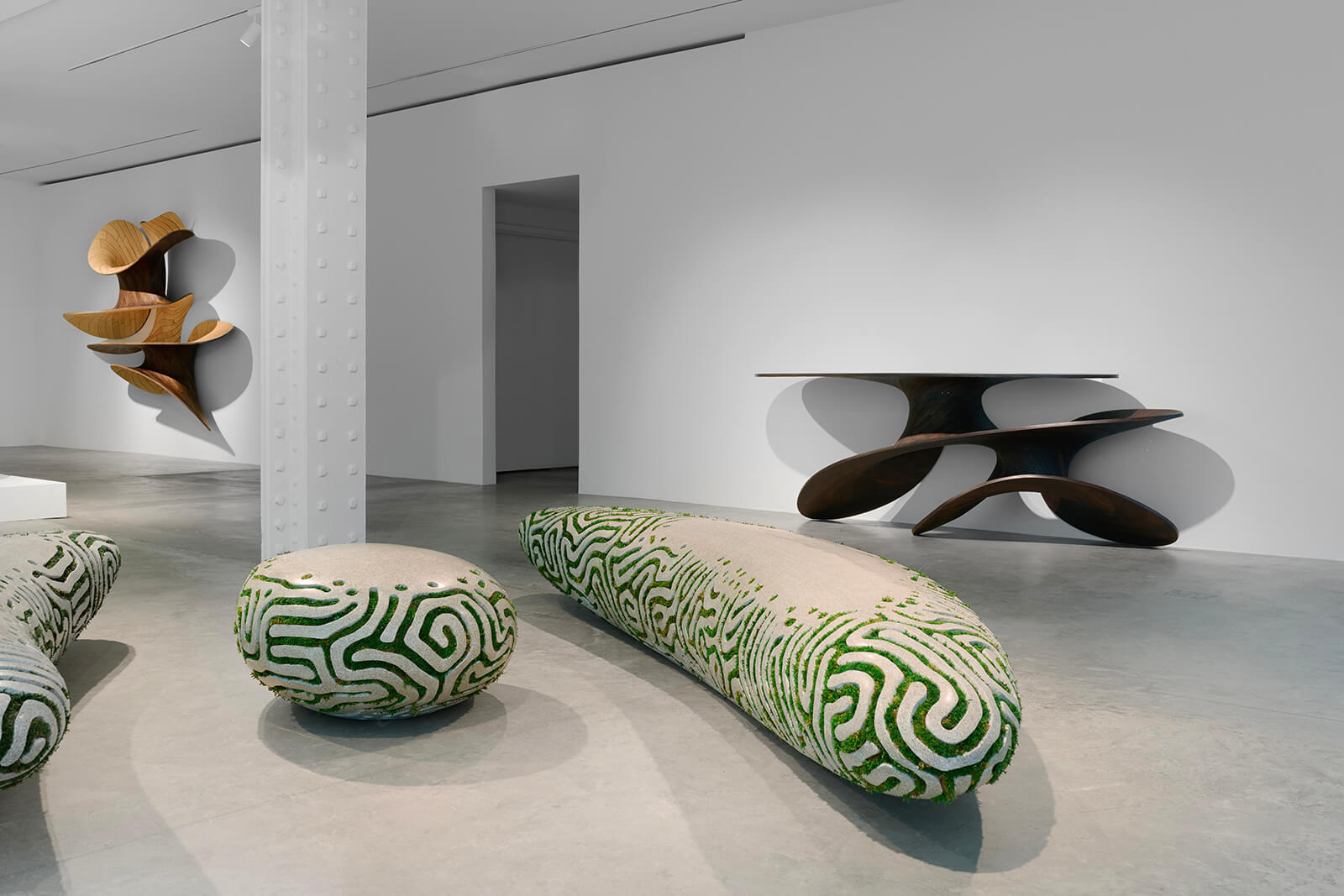
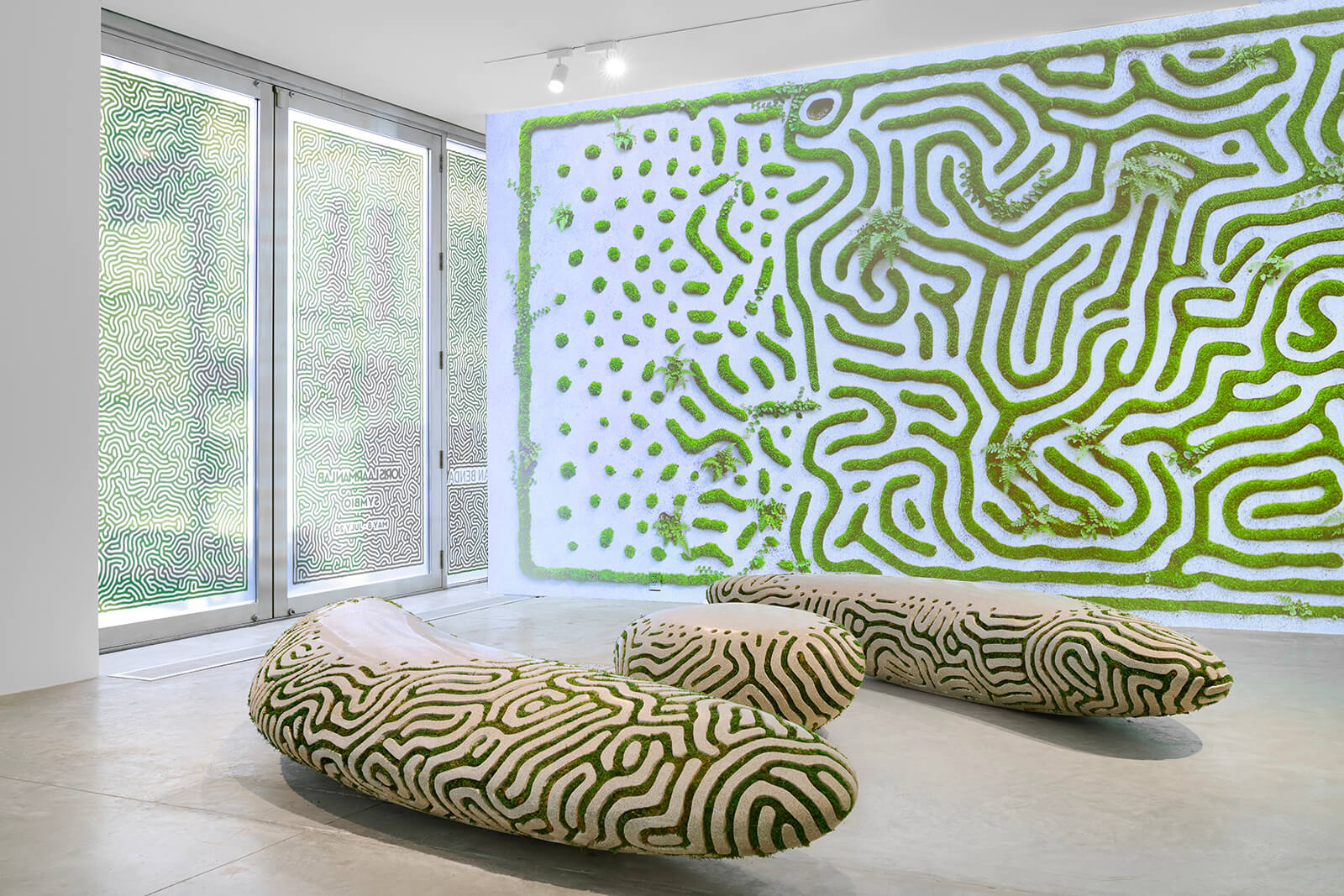
The second series, and the namesake of the show, Symbio, is a collection of benches made with novel concrete offerings of Dutch companies Freecrete and Peabbl. The concrete promises to capture carbon during its manufacturing instead of releasing it, fundamentally overturning the villainous connotations of the material—and, by extension, of its patrons—to curb its grave impact on the environment. Laarman turns the spotlight on the virtually net-positive material by infusing it with a bio-active substrate and 3D printing it into outdoor furniture with primitive forms. “I wanted to show what the impact could be of these recent groundbreaking material innovations in concrete. [As] one of the most used man-made materials on Earth, it builds our world, but it also comes at a heavy environmental cost,” he shares with STIR, thrilled by the material’s possibilities in the future. “But the moment this material becomes a permanent carbon sink, everything reverses. Besides that, in combination with 3D printing techniques, it also has more freedom in design. We can engineer all kinds of intricate details that work with nature, like drainage and nesting cavities, etc,” he adds.
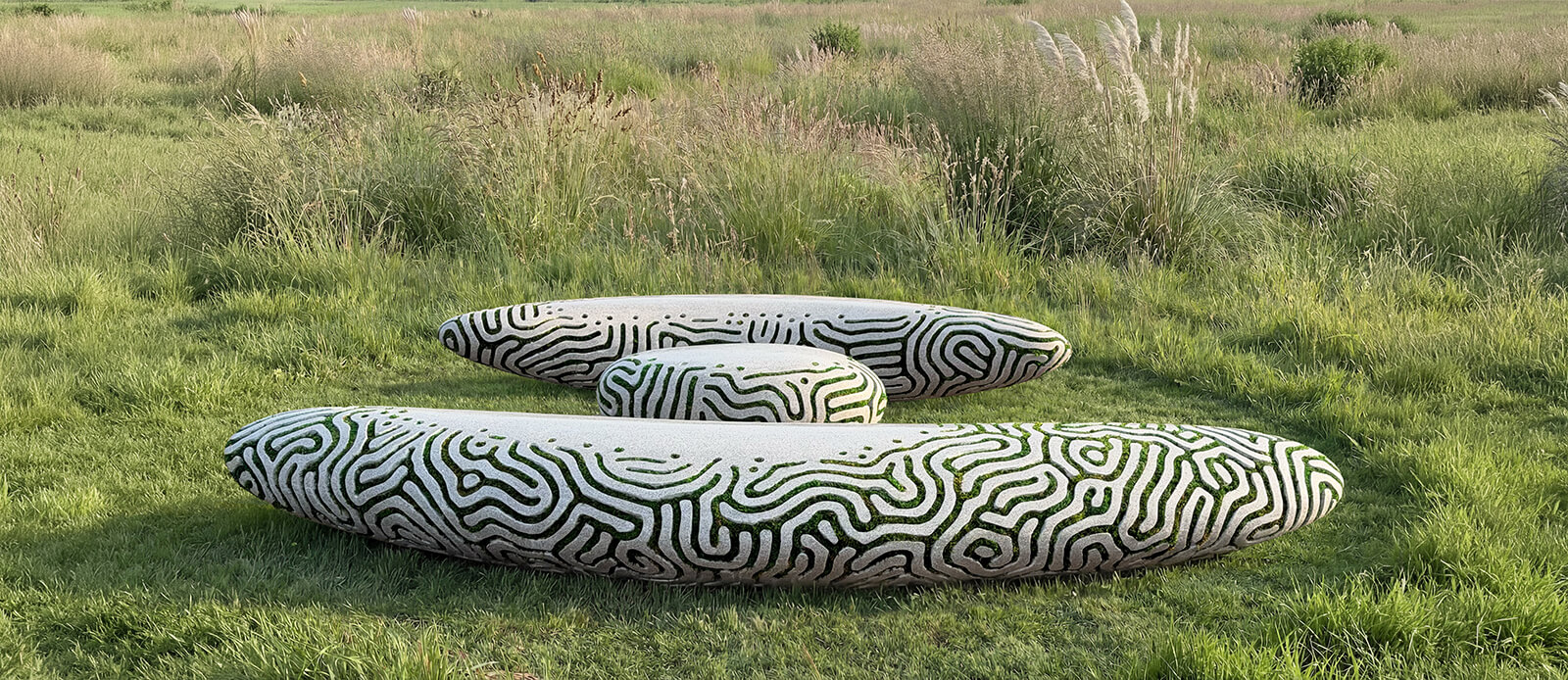
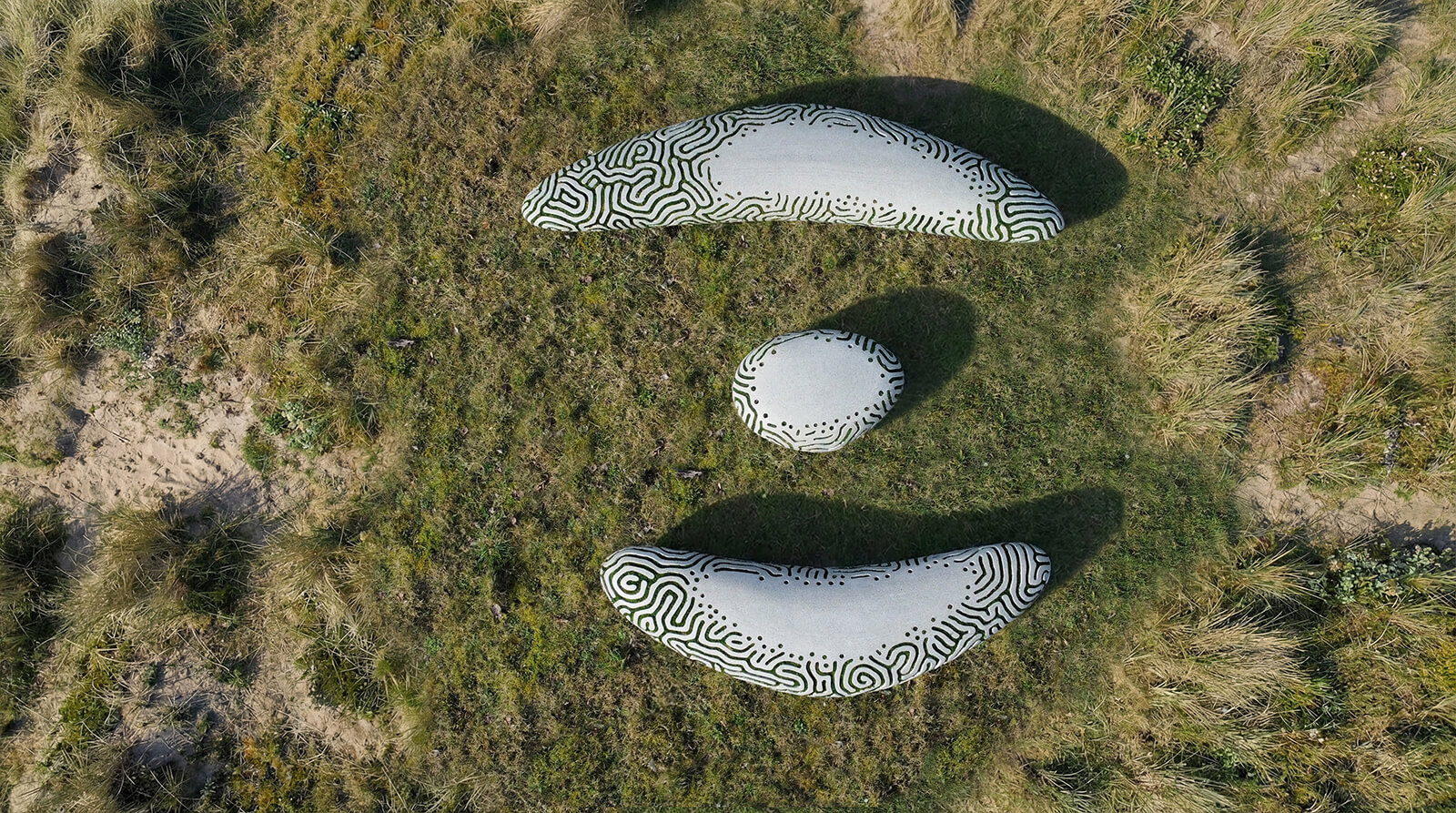
The surface of the benches features a network of recessed channels fostering the growth of mosses and lichens. Together, the objects define the possibility of an almost paradoxical existence: the artificial and natural at once. “The artificial as well as the organic should be in balance to work. Finding out where that balance is is an iterative process. It’s like a play between the forces of nature and steering it in a direction where everything supports each other,” is how Laarman describes this negotiation. The channels, seemingly engraved in the concrete monoliths, follow the reaction-diffusion patterns first described by renowned British mathematician Alan Turing in a 1950s study, The Chemical Basis of Morphogenesis. For Laarman, these patterns serve as symbols of a potent symbiosis between nature and architecture.
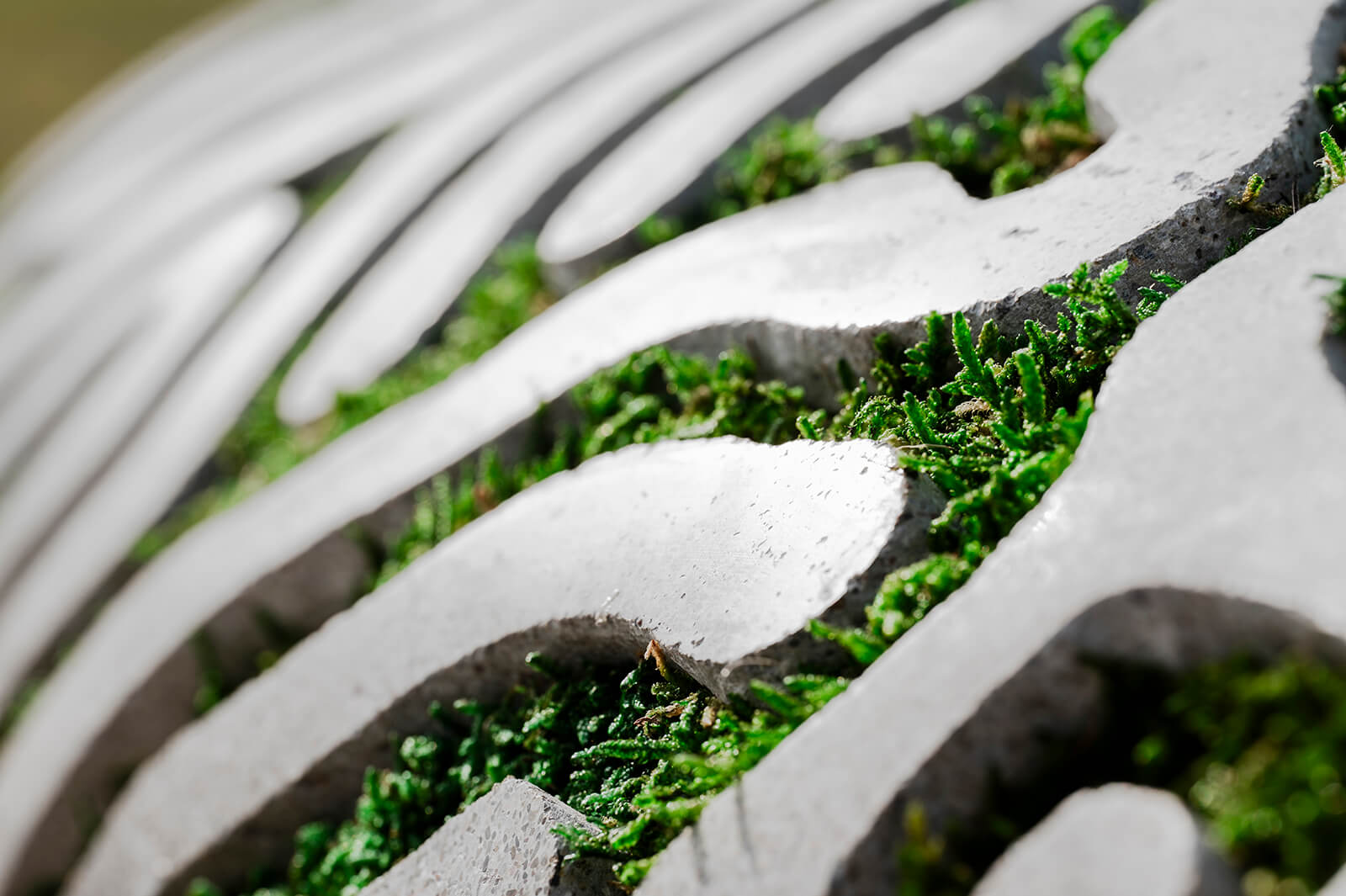
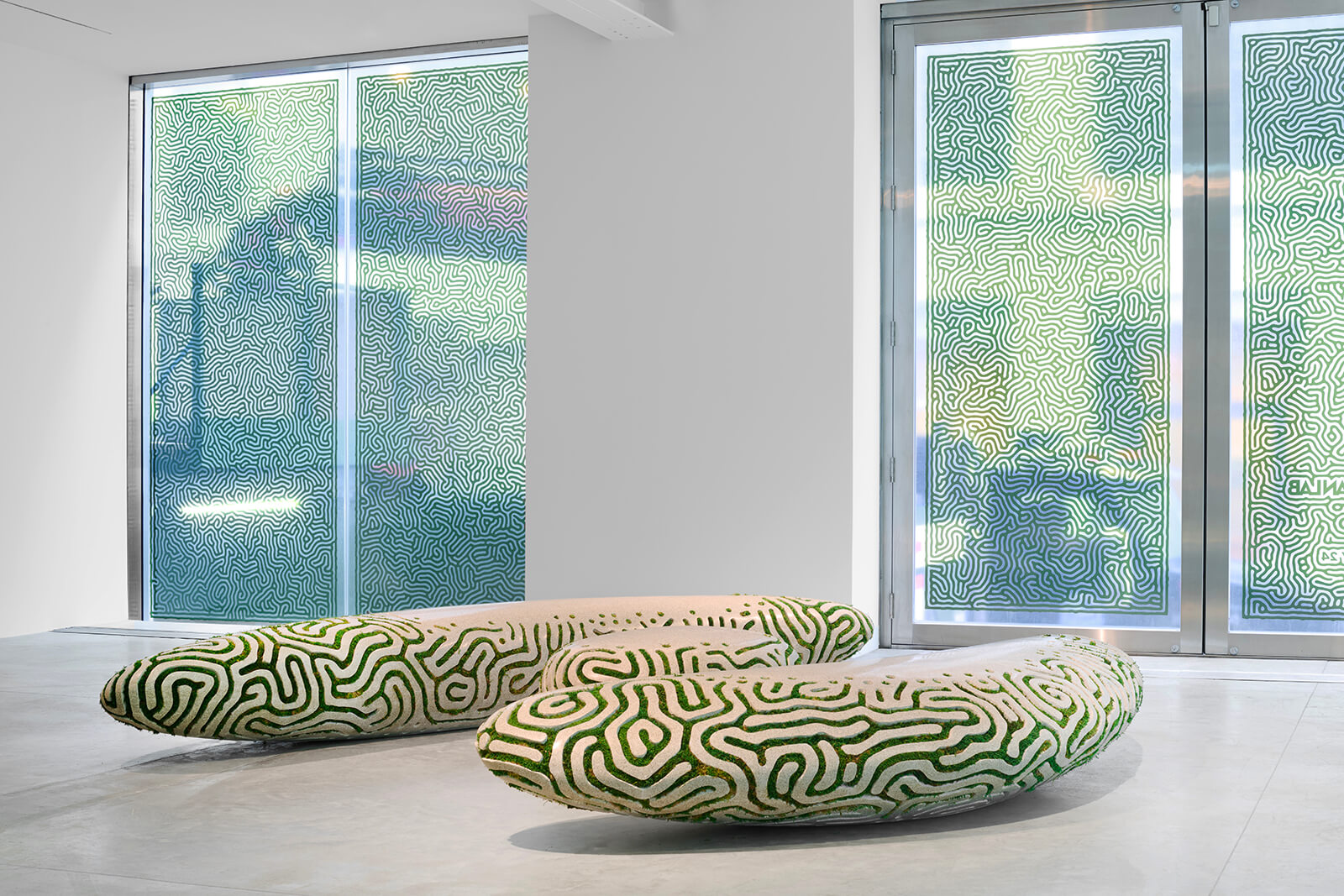
The designs have been on display at Friedman Benda since May 8, 2026, inciting some curious responses among the visitors. “The works were received really well! Especially by multiple museums. This is great, so a lot of people will be able to see and learn about them,” Laarvis tells STIR. “It’s been funny to see some people think certain details are there for aesthetic reasons. But everything in the objects always has functional reasons why it looks like it does. I always like it when you can figure out by looking at an object how it is made. Regarding the Symbio benches, we are in conversations to translate them into an architectural scale.”
To stand at the forefront of design avant-garde is not a recent recognition for Laarman, as evidenced by Heatwave Radiator, his graduation project from 2003 that challenged minimalism’s monopoly over functional efficiency. Symbio, however, marks a distinct milestone in the journey of the Dutch innovator. By intertwining material experimentation with aesthetics and relevance, he manages to produce an optimism that, although imaginative, is quite assuring in the current times of ecological unrest and climate emergency.

by Pranjal Maheshwari Oct 23, 2026
Co-authored by Jareh Das, Chairman traces the British designer’s fixation on chairs as symbols of power and identity and as mediums of expression and community building.
by Chahna Tank Oct 22, 2026
STIR speaks with the Mumbai-based type designer about her practice, type walks and why she wants more people to have stronger opinions about Indian-script fonts.
by Mirra Lynn Oct 22, 2026
The curators behind Palestine Design Week 2026 reflect on its intent, considering how design holds memory, makes space for loss and imagines a future in Palestine.
by Jincy Iype Oct 15, 2026
STIR explores craft, material intelligence and people shaping Indian design through dialogues with Design Democracy’s co-founders and the curators of its special exhibitions.

make your fridays matter with a well-read weekend
Enter your details to sign in
Don’t have an account?
Sign upOr you can sign in with
a single account for all
STIR platforms
All your bookmarks will be available across all your devices.
Stay STIRred
Already have an account?
Sign inOr you can sign up with
Verification link sent to check your inbox or spam folder to complete sign up process
Tap on things that interests you.
Select the Conversation Category you would like to watch
Please enter your details and click submit.
Enter the 6-digit code sent at


Joris Laarman advocates for the Symbiocene at Friedman Benda
by Pranjal Maheshwari | Published on : May 27, 2026


 Sign in with Google
 Sign in with email
What do you think?