Design04 mins. read
Mayfair Design District 2026 turns its focus to What Matters Now
by Pia BhatiaSep 09, 2026



by Chahna TankPublished on : May 28, 2026
The advertising agency Chiat\Day underwent a radical redesign of its New York headquarters in 1994, right at the cusp of the internet age—long before open-plan offices or co-working spaces became mainstream workplace typologies. Commissioned by advertising executive Jay Chiat as a paperless and mobile office at a moment of widespread uncertainty surrounding the role computers and internet would play in everyday life, the Chiat\Day Project, designed by Italian architect and designer Gaetano Pesce (1939 – 2024), emerged as one of the most experimental and unconventional office redesign projects of the late 20th century, heralding the advent of the modern 'flex office'. Located on the 38th floor of a skyscraper in NY’s Financial District, it was also regarded as one of the earliest examples of a 'virtual office'.
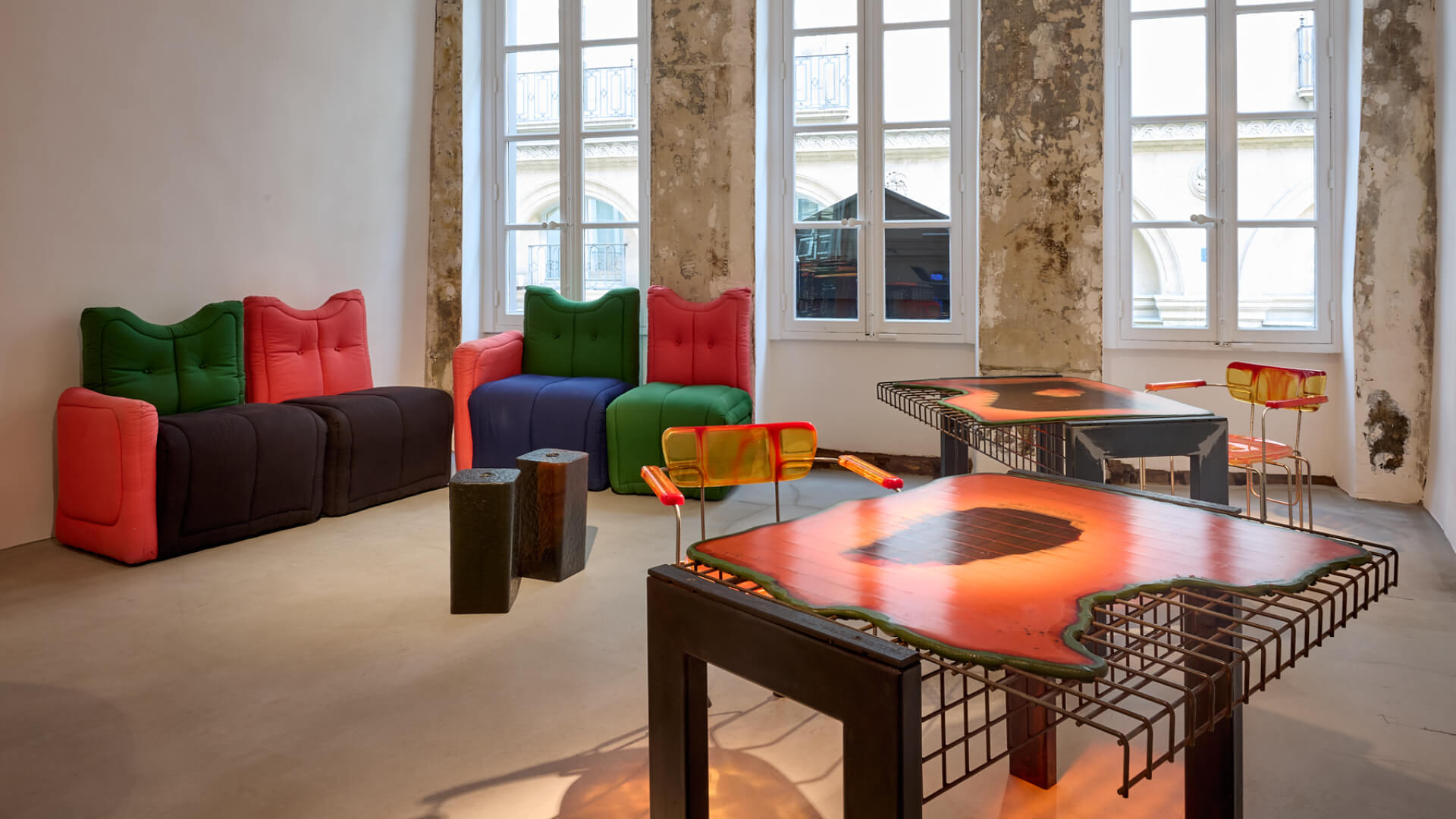
Despite its significance, the office closed just four years later in 1998, amid broader organisational restructuring following Chiat\Day’s merger with TWBA in 1995. Much of the TWBA\Chiat\Day office interior was subsequently destroyed, while surviving fragments were dispersed among collectors, archives and private holdings. Now, what remains of this iconic workspace is reunited at Paris-based Pulp Galerie’s second exhibition, Gaetano Pesce: The Chiat\Day New York Project, on view from March 26 – May 30, 2026.
The design exhibition assembles surviving desks, chairs, locker doors and architectural fragments from the original office building—pieces of a project that has long existed almost mythically through archival photographs and scattered objects. "This Chiat\Day exhibition first and foremost feels like a rediscovery of a rich and fascinating project that has too often been overlooked, both within Gaetano Pesce’s career and in the broader history of advertising and workplace culture," the contemporary design gallery shares with STIR.
After the redesign, the office unfolded as an almost psychedelic explosion of colours, with floors and sculptural furniture cast in bright polychromatic resin. The Italian designer drew on his architectural training and rejection of modernism to reimagine the workspace as an open, fluid environment free from hierarchy and fixed workstations. Employees were encouraged to move through the space intuitively rather than adapt to a fixed corporate structure.
"The Chiat\Day offices represented the first hot-desking proposal in history. There were no assigned desks, paper was abandoned in favour of a fully digital environment and the organisation was no longer vertical but completely flattened. These two dimensions of the project reveal, in our view, both what corporate offices have since lost and what has now become fully democratised," Pulp Galerie elaborates.
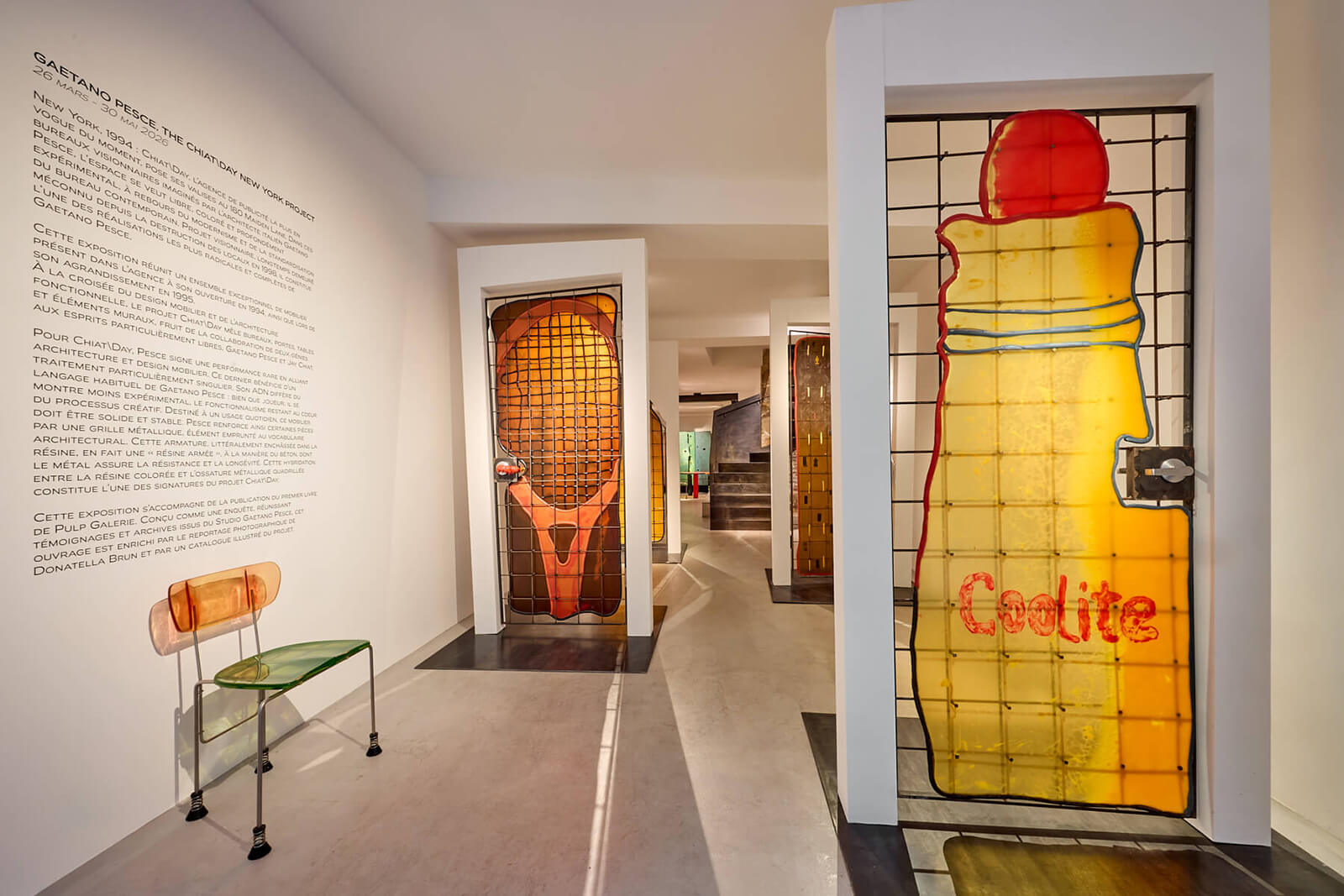
The showcase is neither a historical reconstruction nor a direct interpretation of the original project, but rather an attempt to reintroduce what survives of the office, described by the gallery as ‘one of the most landmark achievements in the history of architecture and contemporary design’, to collectors and design enthusiasts. "It is not uncommon for visitors to enter the gallery and tell us that they once worked in these offices—sometimes even at the very yellow desk we are presenting—or that they had lunch at one of the cafeteria tables shown in the exhibition. Our aim was to preserve the humorous spirit of the project, especially through the fully functional doors," they share.
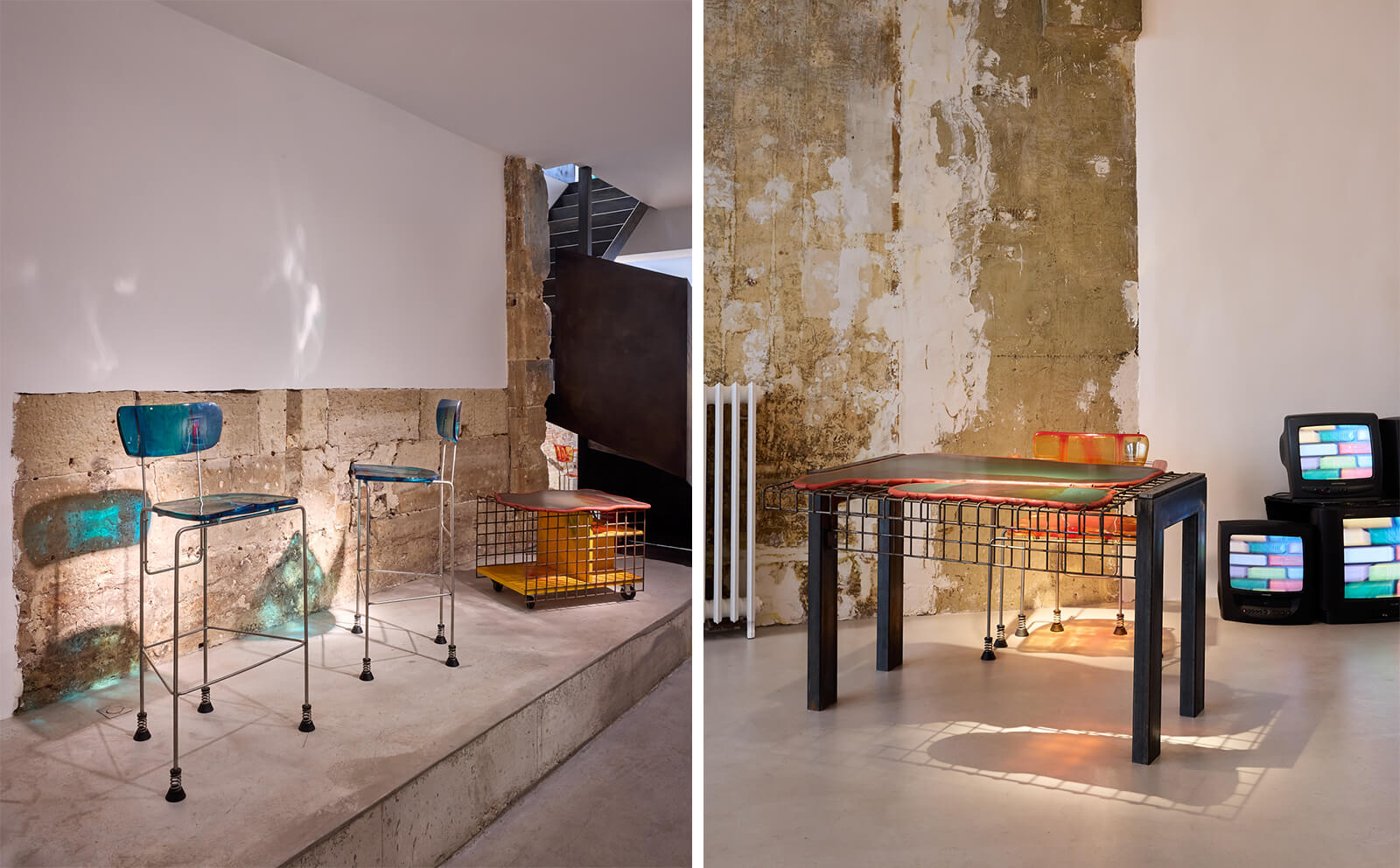
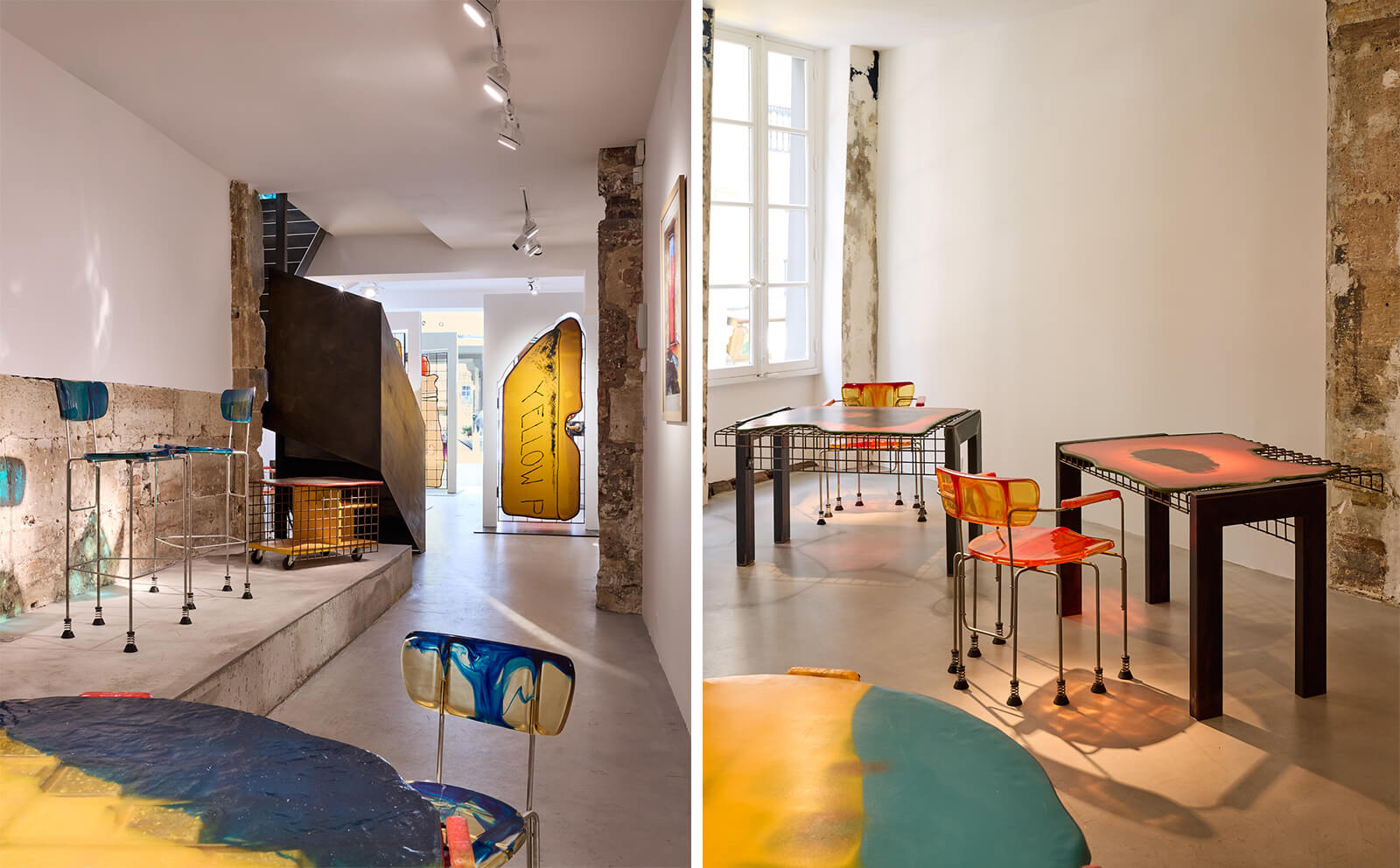
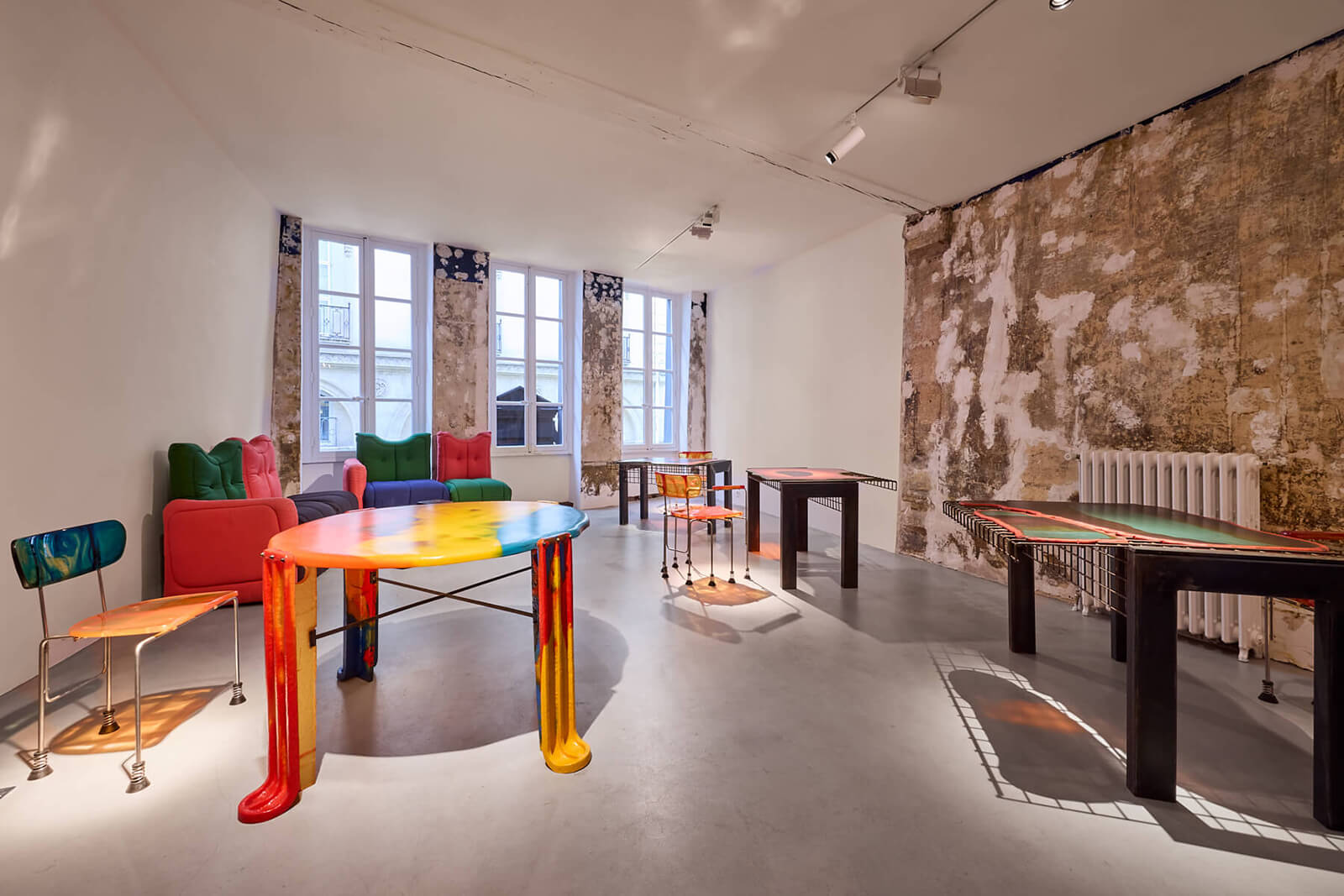
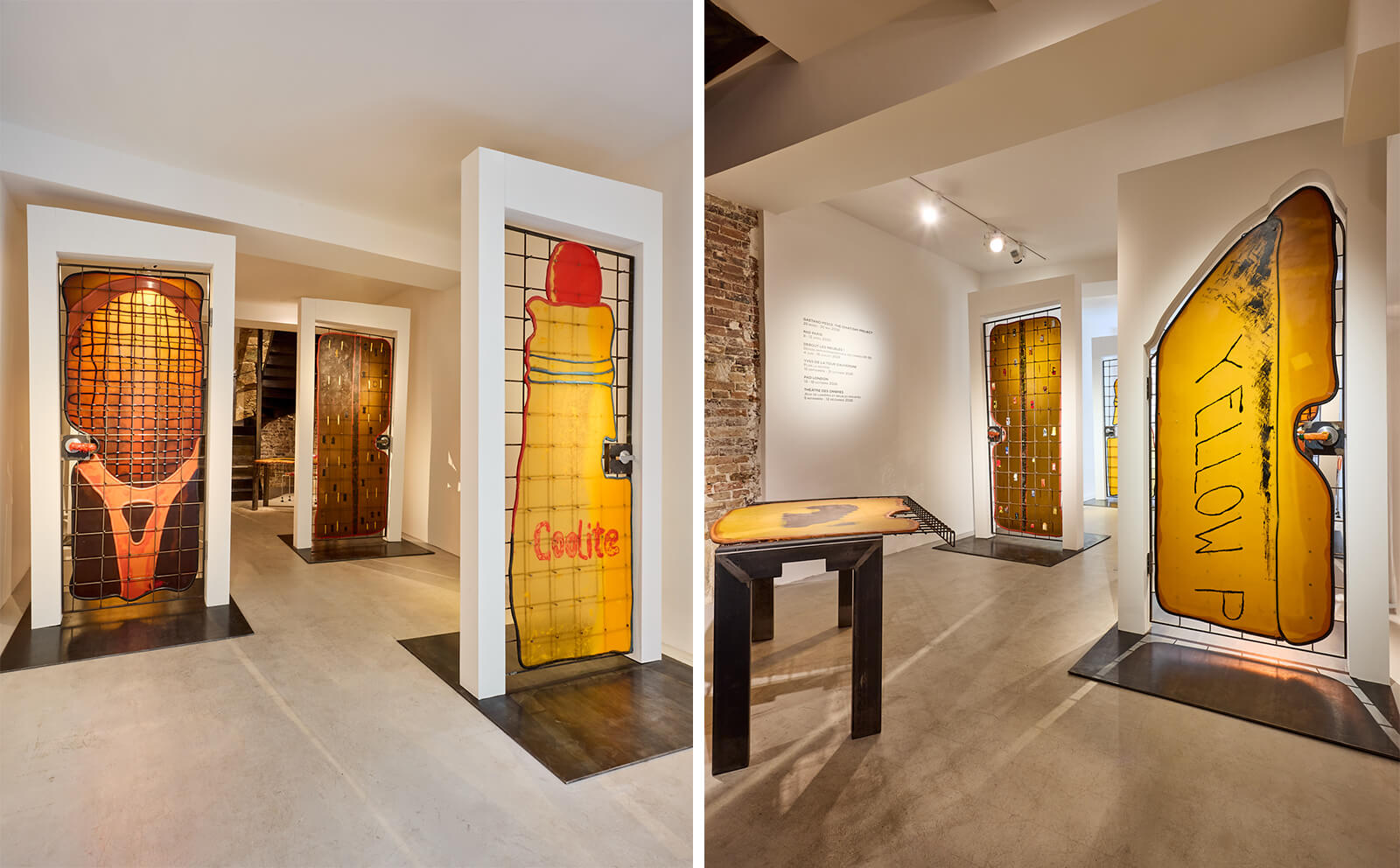
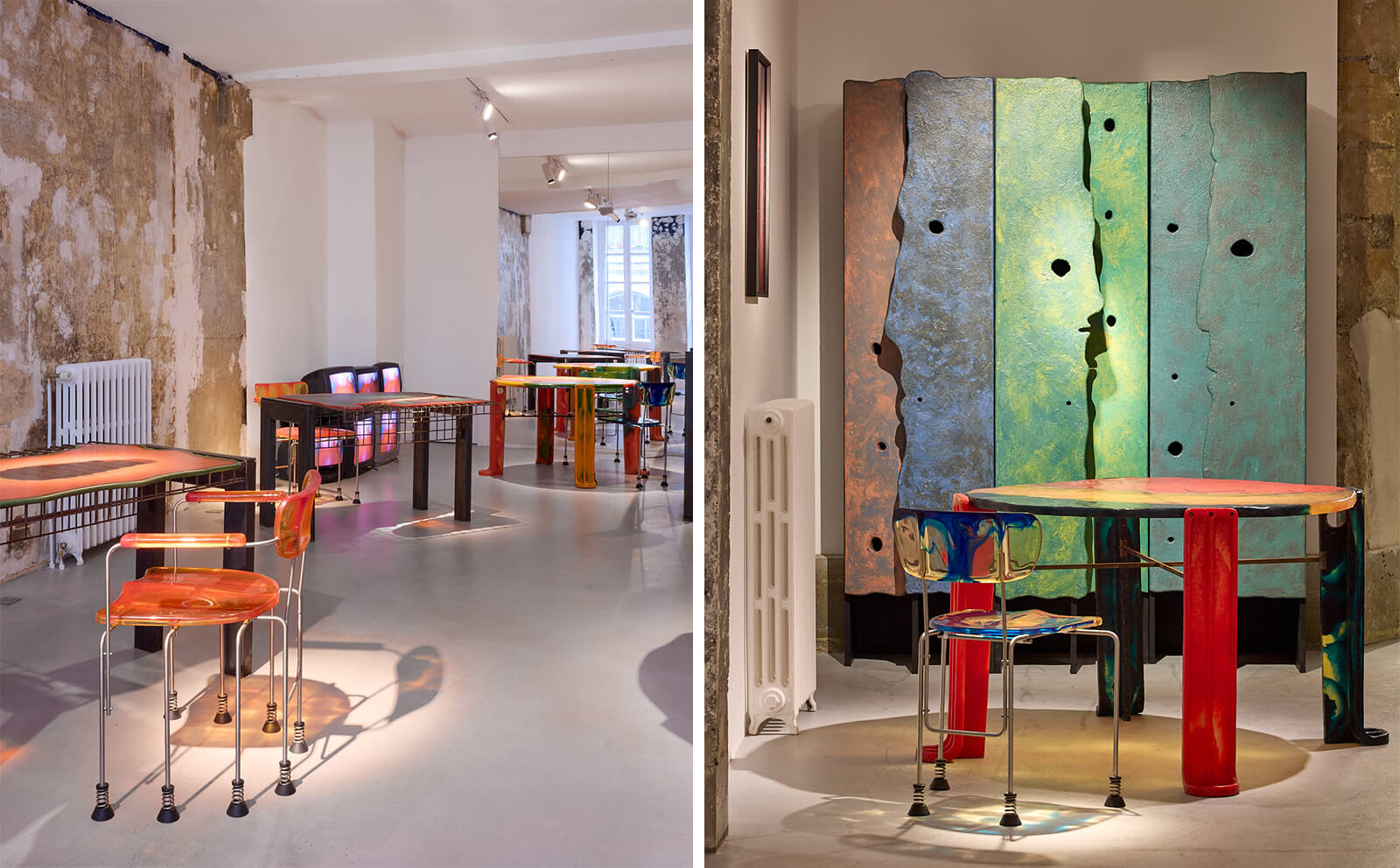
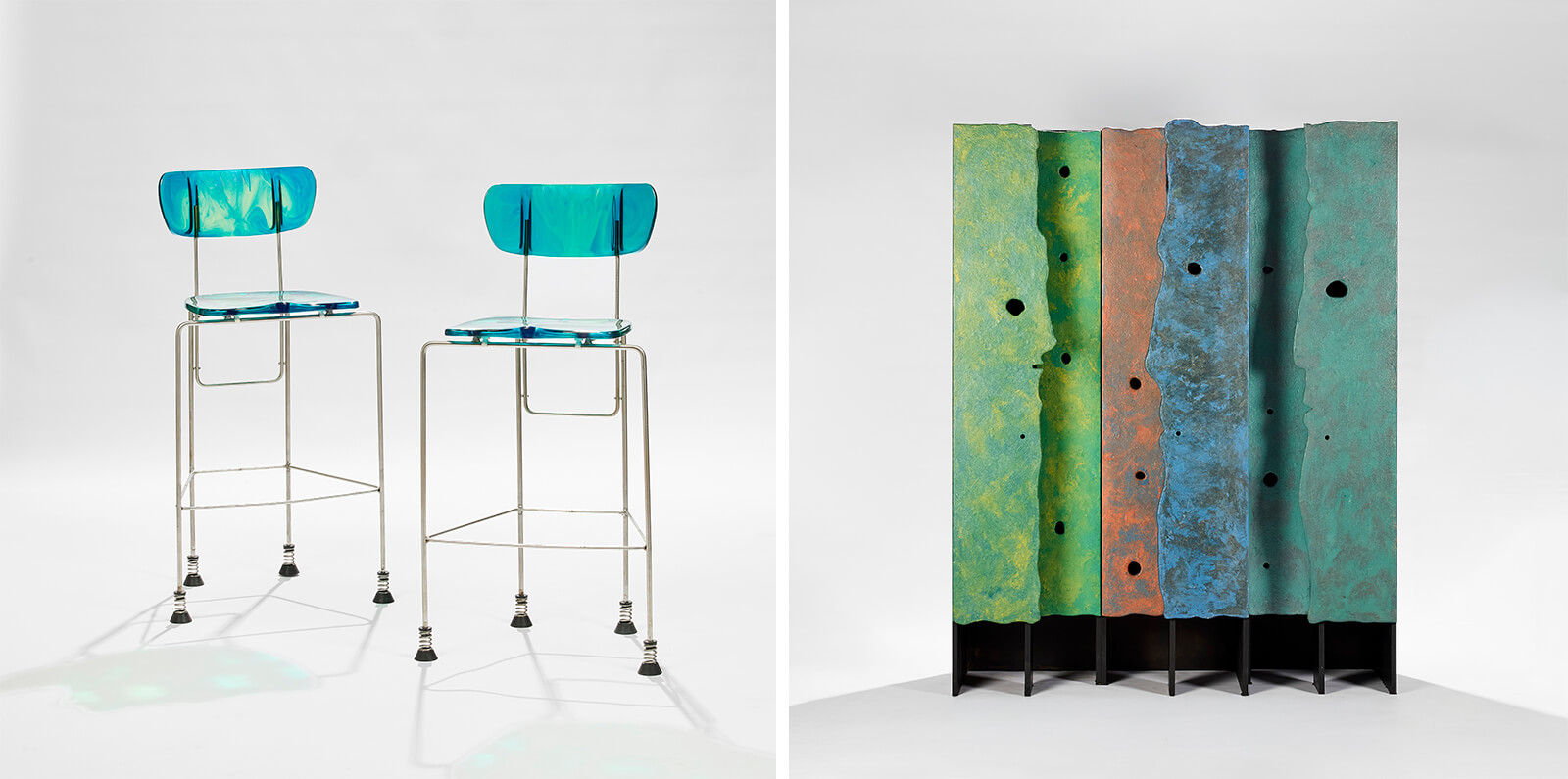
On view are surviving desks, doors, chairs and tables—many still retaining traces of their past use. Among the most striking are the Locker Doors (c.1994), originally produced for employees of the agency by Mexican craftsmen under Pesce’s direction. Rejecting conventional industrial design language and standardisation, these doors, each a different face, feature undulating surfaces and vibrant colours, embracing imperfection and turning a utilitarian office element into a sculptural masterpiece. Created for the agency cafeteria, the Waffle Table (c.1994) reflects Pesce’s commitment to what he called the 'differentiated series'—the idea that no two objects should ever be entirely identical. Its colourful circular resin top rests on four differently coloured legs, reinforced through an integrated metal framework, drawn from architectural construction, combining playful experimentation with functional stability.
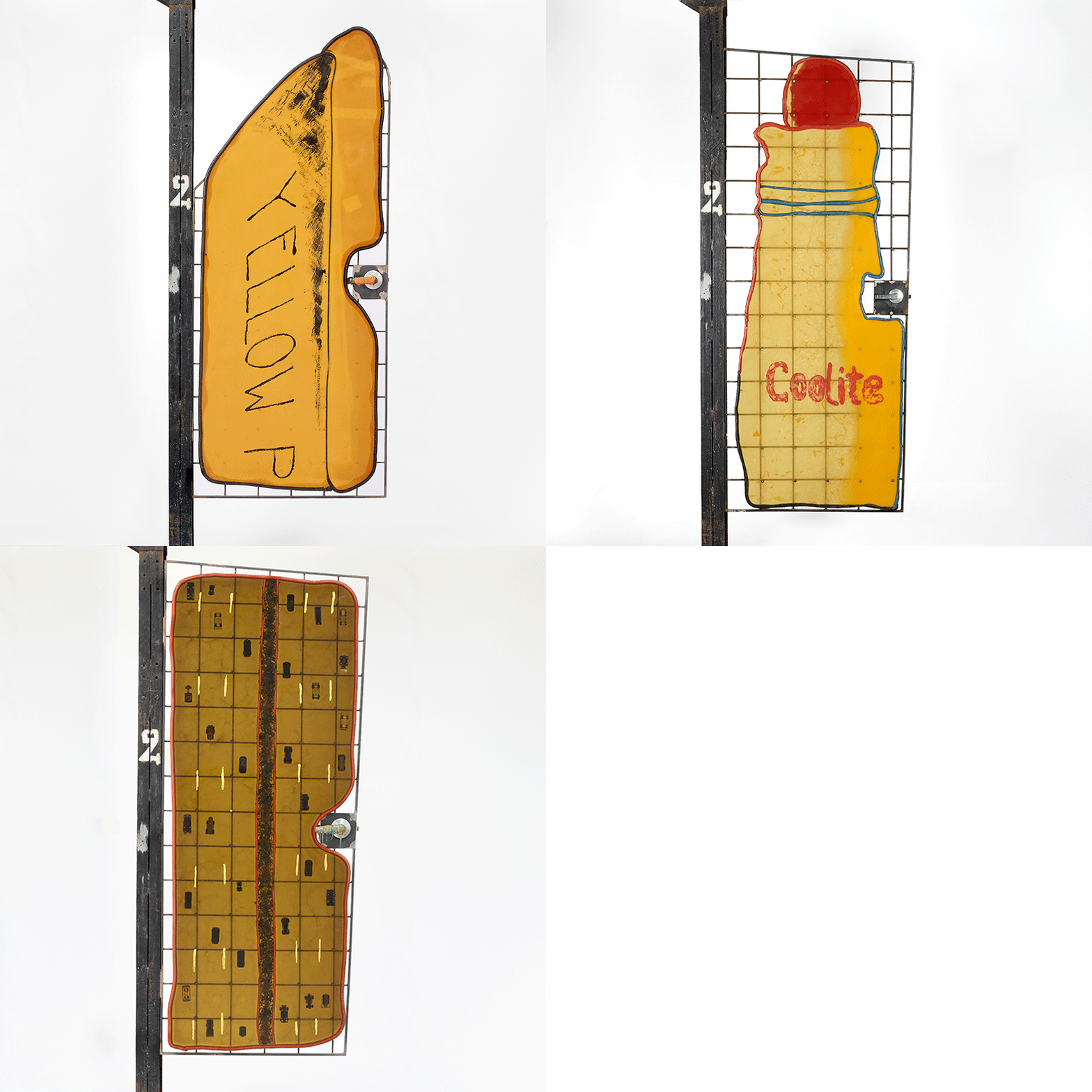
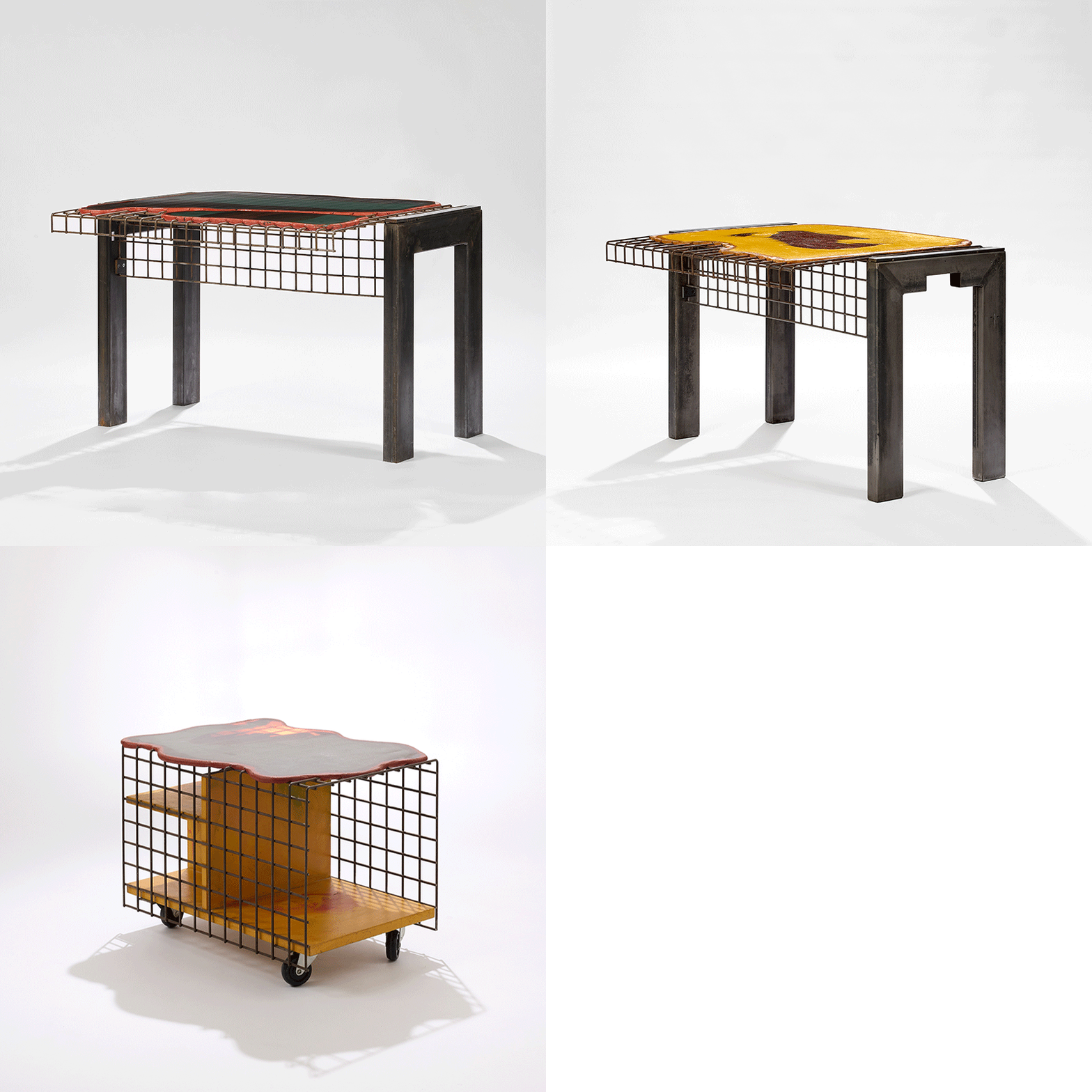
Equally emblematic are the TBWA\CHIAT\DAY Desks (c.1995), which combine brightly coloured translucent resin surfaces with raw oxidised metal structures. Beneath the tabletops is a visible metal grid—a recurring motif throughout the project—creating a tension between industrial and fluid product design. These modular desks can be easily assembled, rearranged and folded. Elsewhere, objects such as the Highway Door (c.1995) reveal Pesce’s ability to transform functional components into narrative devices. Miniature toy cars move across a resin surface of the door, like vehicles along a highway, collapsing distinctions between art and design while introducing humour and storytelling into the everyday office environment.
The exhibition’s spatial design draws heavily from archival images and video documentation of the original office. "For the occasion, we were fortunate to receive the loan of a video by Françoise Dalmon and the Centre Pompidou, documenting the offices just eight days before their destruction. It unfolds like a walk through the premises, as though the visitor were personally moving through this fascinating environment—passing through doors, workspaces and staircases before arriving at the Piazza, the central area of the offices, conceived as the square of a village," the design gallery explains.
An accompanying book publication expands this archival reconstruction and immersion through preparatory sketches, photographs by Milan-based photographer, photo editor and journalist Donatella Brun and materials from the Gaetano Pesce studio, transporting visitors back to the marvellous Chiat\Day office in 1990s New York. Partially displayed alongside the furniture and objects, these photographs reinforce the exhibition’s immersive atmosphere while revealing the office evolving as both workplace and experimental social landscape.
Gaetano Pesce: The Chiat\Day New York Project reveals how contemporary workplace culture continues to grapple with many of the ideas first tested within these once radical interiors. Seen today, the Chiat\Day project feels remarkably prescient: probing the increasingly unstable role of the office itself in an era shaped by digital infrastructures, remote work and the rise of AI. At a time when the relationship between labour, technology and physical space is once again being fundamentally redefined, the exhibition revisits a moment when the future of work still appeared uncertain, experimental and full of possibility. It is also interesting to note how much of Pesce’s vision for the office has now become commonplace—mobility, flexibility and decentralised work have all become the defining language of workplace culture now because of how they are now designed. Yet the playfulness, the eccentricity, the radical individuality at the heart of his vision rarely made the transition alongside it—perhaps at a moment when they are needed most.
‘Gaetano Pesce: The Chiat\Day New York Project’ is on view from March 26 – May 30, 2026, at Pulp Galerie, Paris.

by Jincy Iype Oct 15, 2026
STIR explores craft, material intelligence and people shaping Indian design through dialogues with Design Democracy’s co-founders and the curators of its special exhibitions.
by Pranjal Maheshwari Oct 13, 2026
Through furniture, art and films, the showcase at the Ian Potter Centre in Melbourne advocates for biophilic material cultures as an antidote to planetary degradation.
by Pranjal Maheshwari Oct 12, 2026
The exhibition reimagines the 20th-century Scottsville residence of the American sculptor and his partner, ceramicist Nancy Jurs, curated by their daughter Alison Castle.
by Chahna Tank Oct 08, 2026
Javier Guzman Cervantes and Ulises Morin Arzola tell STIR about their ‘open code’ approach to design, working through a process of stockpiling and the idea of ‘queering’ materials.

make your fridays matter with a well-read weekend
Enter your details to sign in
Don’t have an account?
Sign upOr you can sign in with
a single account for all
STIR platforms
All your bookmarks will be available across all your devices.
Stay STIRred
Already have an account?
Sign inOr you can sign up with
Verification link sent to check your inbox or spam folder to complete sign up process
Tap on things that interests you.
Select the Conversation Category you would like to watch
Please enter your details and click submit.
Enter the 6-digit code sent at


Inside Gaetano Pesce’s radical Chiat\Day office redesign at Pulp Galerie, Paris
by Chahna Tank | Published on : May 28, 2026


 Sign in with Google
 Sign in with email
What do you think?