Design05 mins. read
Design Democracy returns to Hyderabad with an intersectional programme
by Jincy IypeSep 04, 2026



by Jincy IypePublished on : Aug 15, 2026
A fork is a strange thing to put in your mouth. A spoon, slightly less so, though its whole purpose is to carry something (often wet) towards your face without spilling it. We do this every day, often several times a day, with barely a thought. Our hands find the handle, the wrist adjusts, the utensil meets the mouth. Bite, chew, swallow, repeat. We learn which spoon to use for soup or dessert, which hand to hold the knife in and how loudly it is socially acceptable to scrape a fork against a plate. Cutlery really is a small tool set for manners, isn’t it?
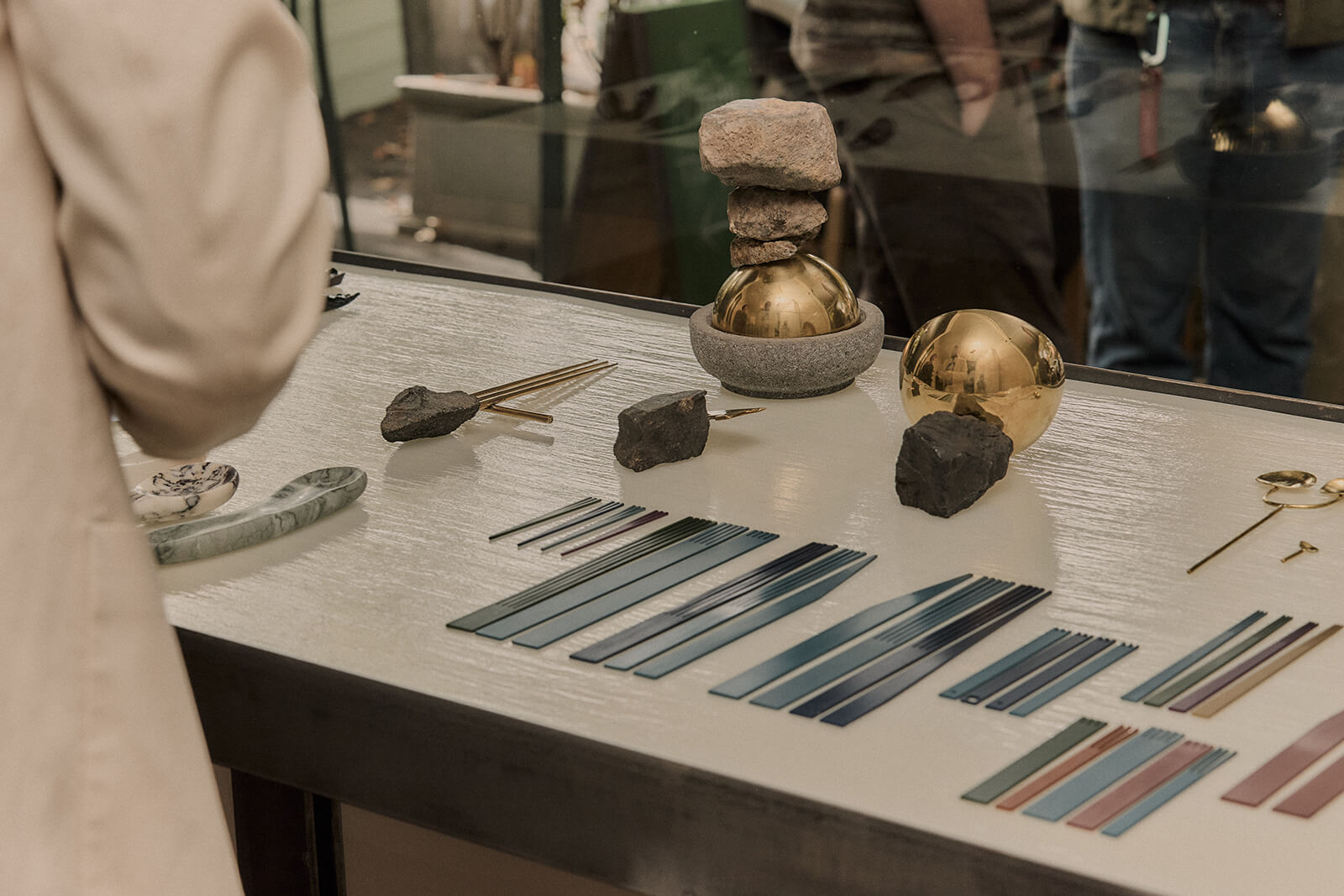
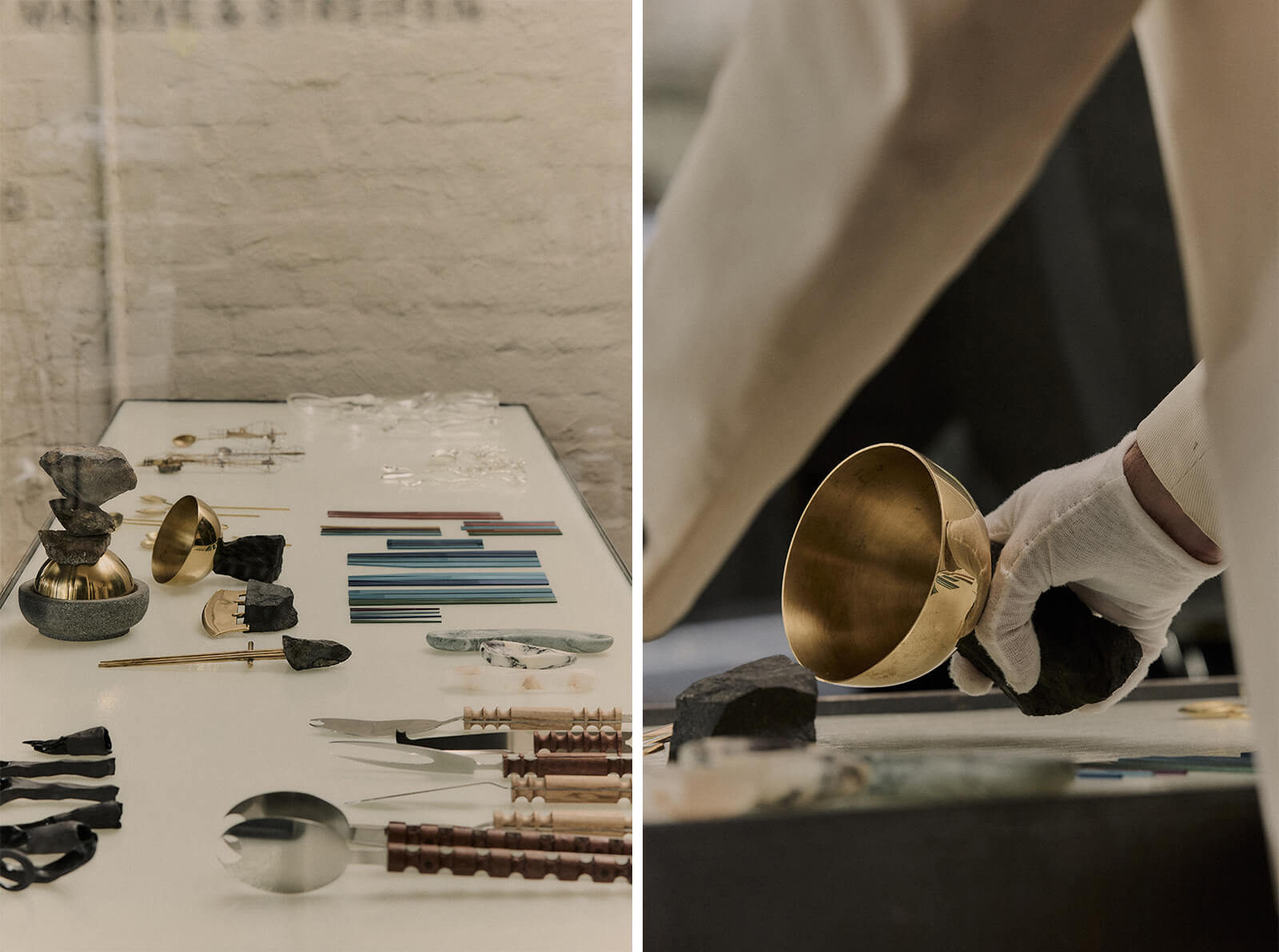
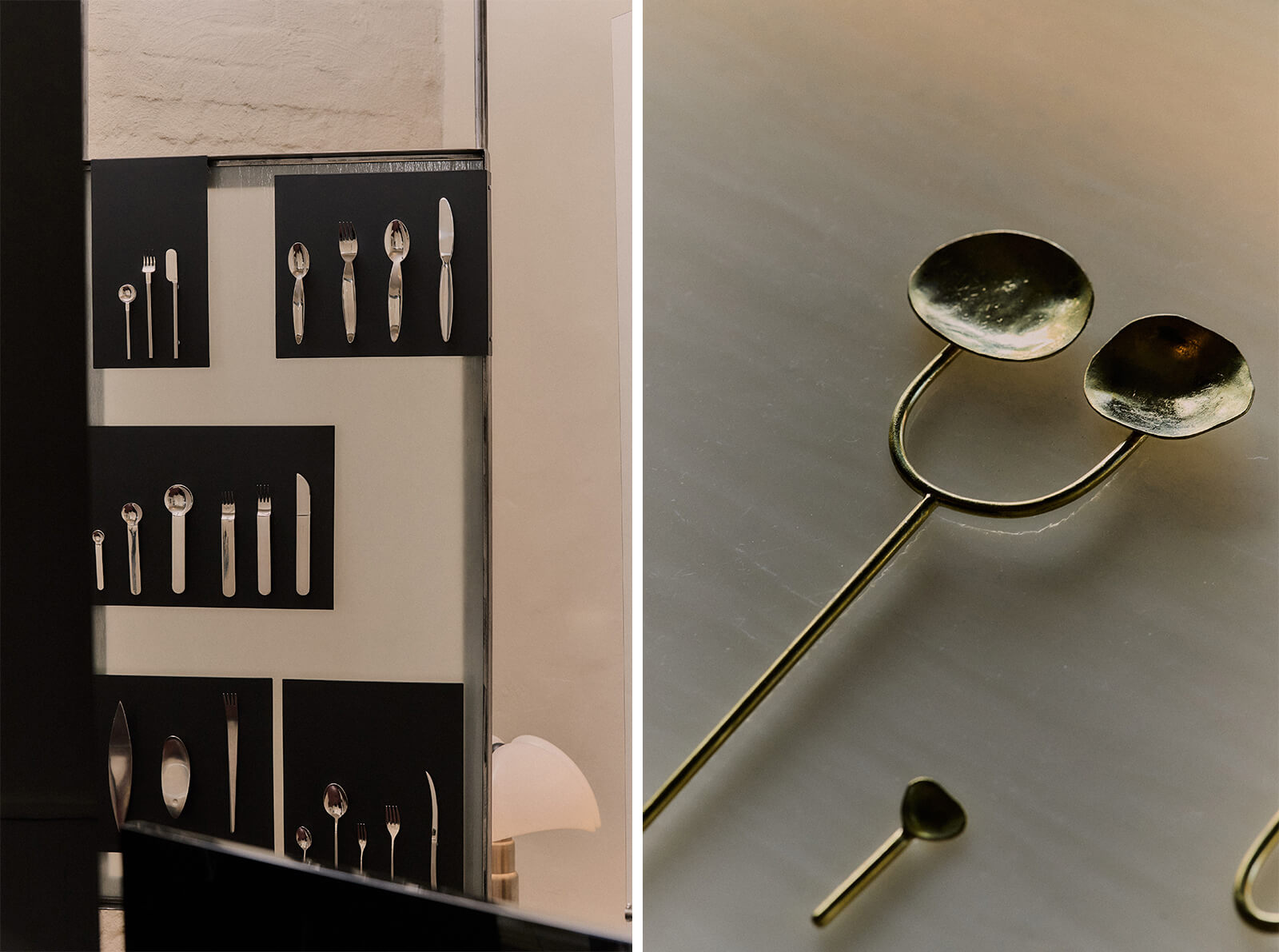
It is also one of the few designed objects to cross the body’s threshold with such dizzying regularity. Its weight, balance, curve, temperature and texture register almost immediately: hand, object, tongue, lips, teeth (and, repeat). Table Manners, a design exhibition and project curated by Object Massive with spatial design by studio Streifen, takes this peculiar intimacy—sometimes fun, sloppy, often polite—very seriously. Eleven contemporary designers and artists were asked by curator Georgia Smedley of Object Massive, a creative research practice, to craft one-off cutlery sets distilled through their own practices and creative ethos, placing these unruly new objects alongside historical and contemporary design pieces from the Kraftsman collection presented at Melbourne Design Week 2026.
Smedley, a Melbourne-based curator, writer and photographer, had originally imagined a room full of spoons when they began thinking about Table Manners some three years ago. “I wanted to exhibit as many spoons as possible, big, small, stirring, useless, coke, sugar, medicine spoons, which eventuated as cutlery in all their variations,” they say. “For many reasons, standardisation takes precedence in industrial design, but within the choreography that makes something useful, we lose the individual cadence of wanting. I am greedy for wanting,” Smedley continues. The idea expanded into forks, knives, spoons and chopsticks, each one an opportunity to stare closely at stabby items we have spent years putting in and out of our mouths but barely paid attention to as adults.
I am greedy for wanting. I’m greedy for something chewed up and spat out by the human body, greedy for the hand, greedy for imaginative work, greedy for a high and low note, greedy for a fleshy mind and for an object proven by the hand, disorganised out of usefulness. – Georgia Smedley, founder, Object Massive
“Cutlery–forks, knives, spoons, chopsticks act as a violent little deferral between my fingers, my body, and within this era of artifice, [where] disruption to standardisation feels like a small rebellion. I want it to be fun. I want to anger my mouth, and yours,” they state in the project’s description. “Aside from a toothbrush, these are the only objects that cross the threshold into my body every single day, and so the object should be intimately meditated upon, set upon, rethought, calculated and then let loose,” says Smedley of the brief relayed to the creatives.
The selection, then, was deliberate. Smedley looked for those whose practices were ‘legible in the objects they make’, with strong principles that could survive translation into a single set of cutlery. The brief, too, was deliberately open: each maker was asked to distil their practice into a one-off set, with function left loose enough to let the object think about eating, etiquette and intimacy on its own terms. The group spans disciplines and geographies, from Melbourne to Portugal and South Korea. Across the newly conceived items, Smedley notes how “the works become a self-portrait of the makers’ own desires, wants, thirsts”. Greed mattered, but so did patience: “the dialogue between the two became really apparent when you look at works [by] Hamish Munro or Studio Yeodong Yun—time and care become the indulgence”.
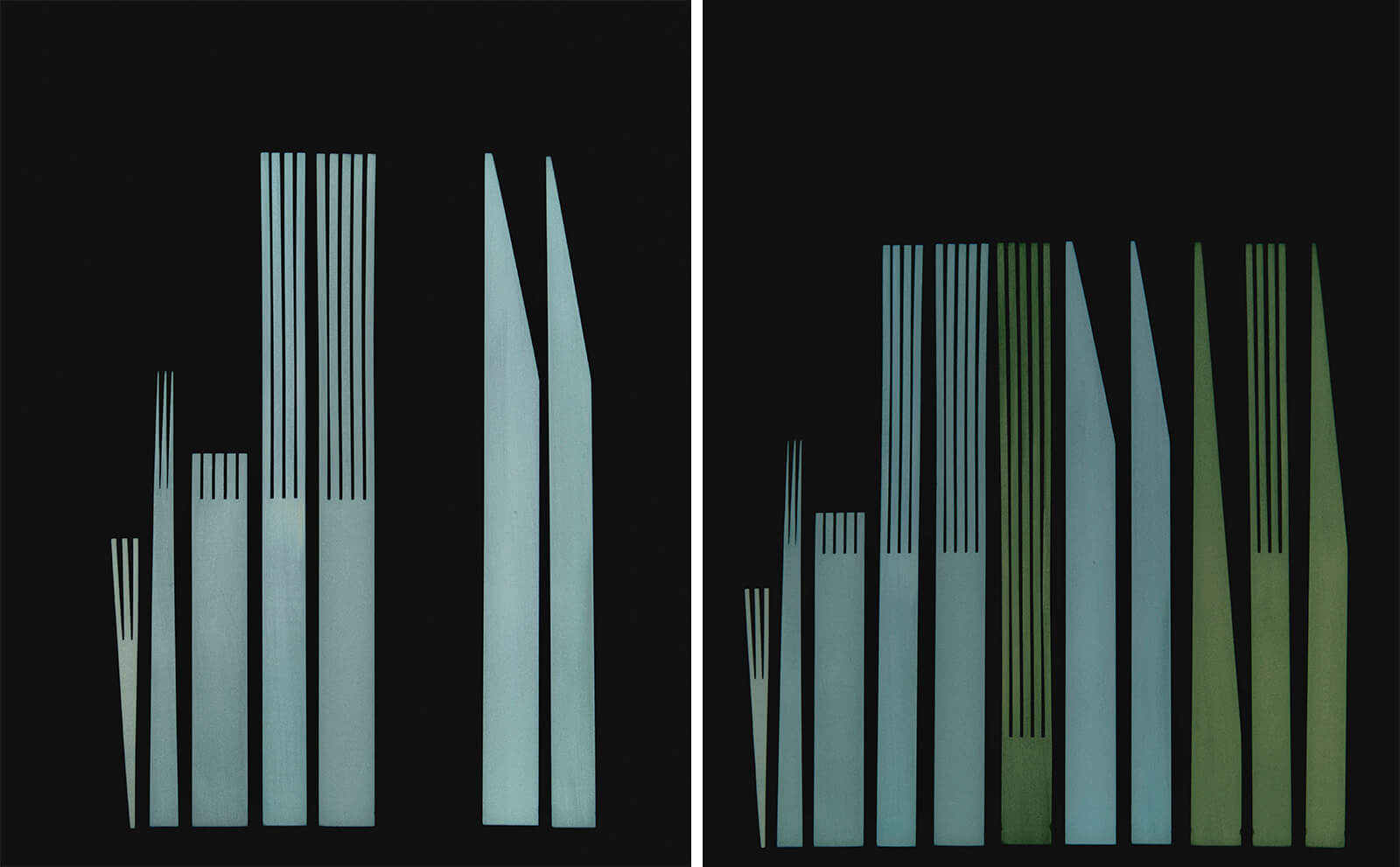
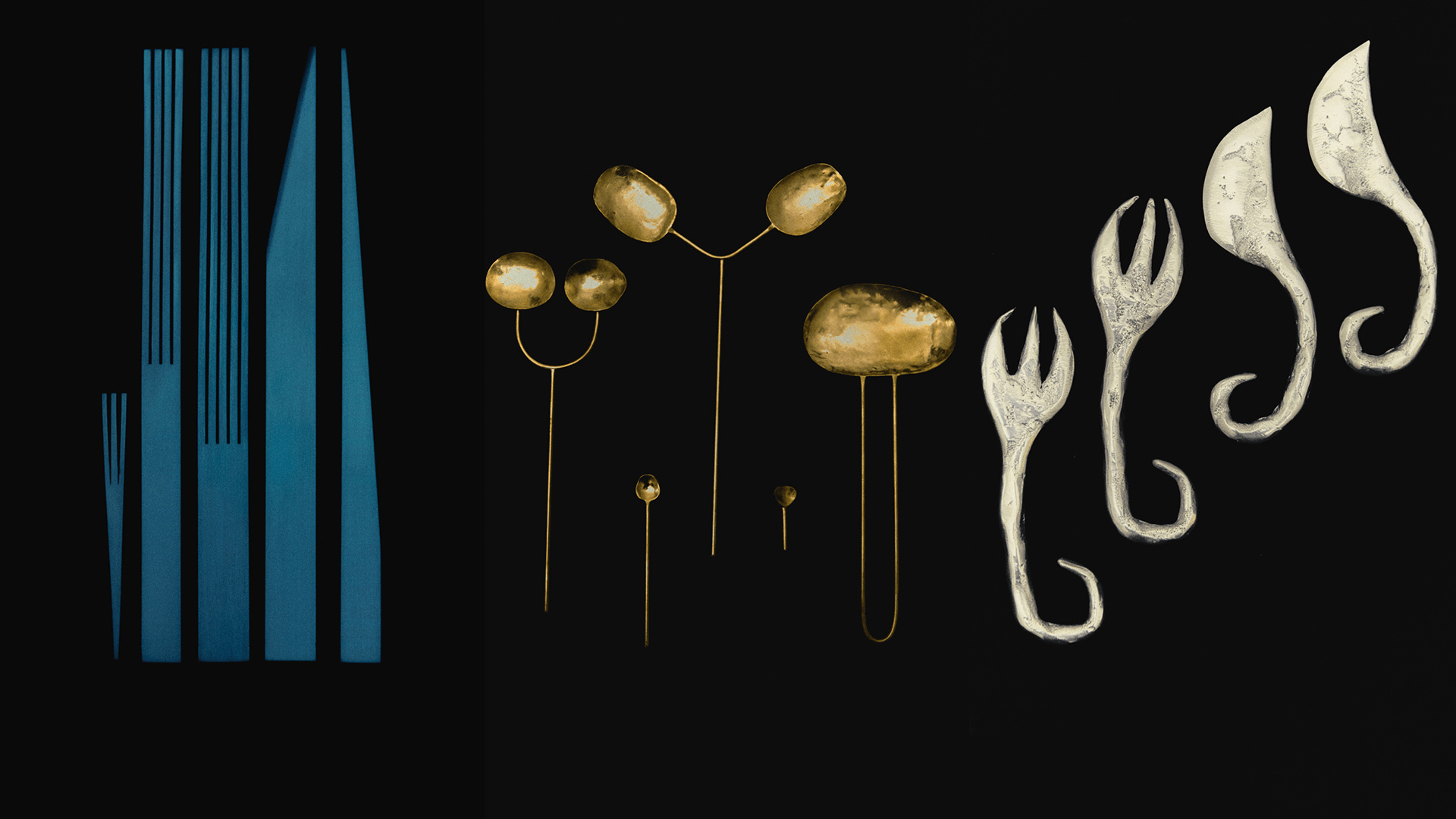
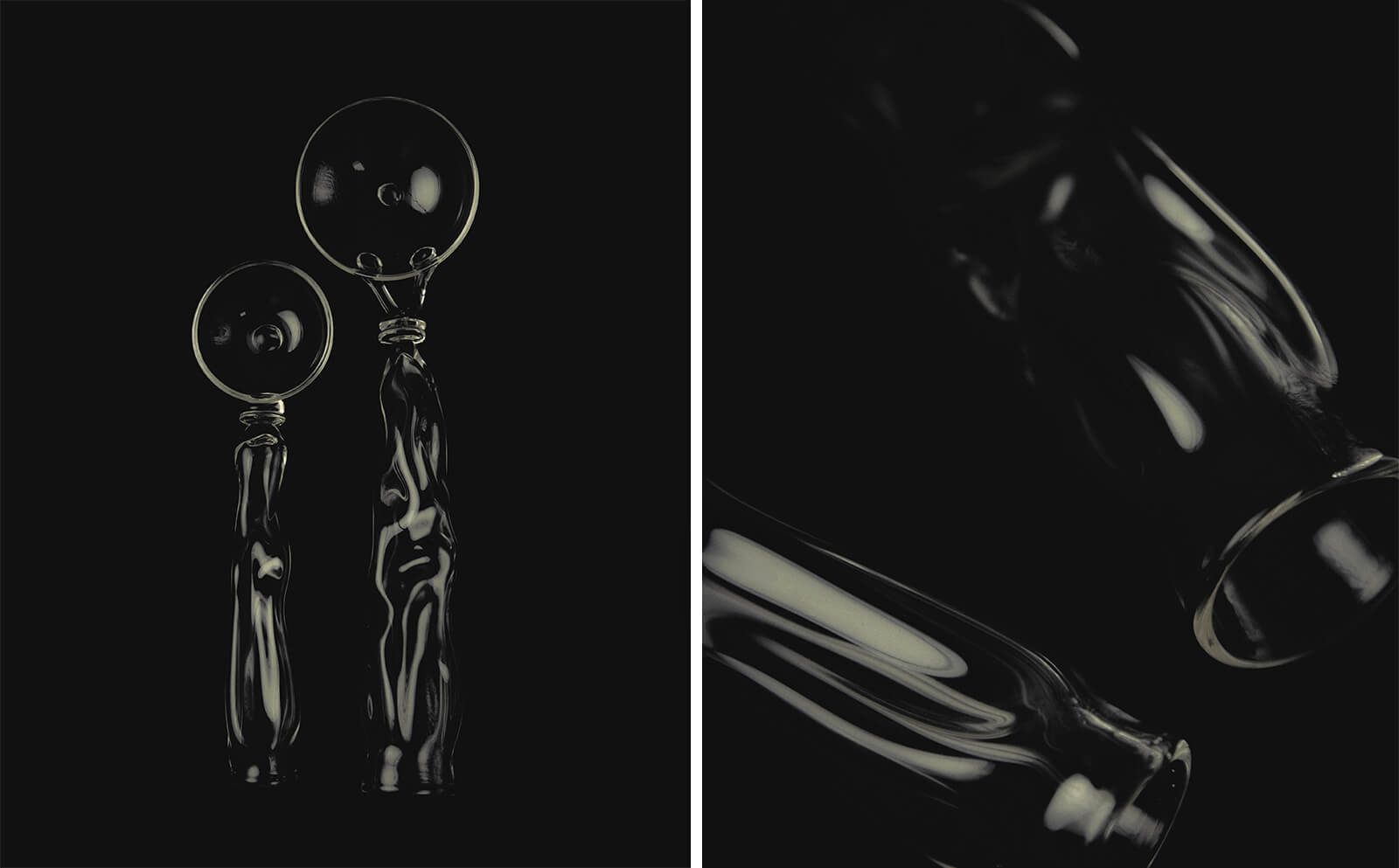
The resulting products are recognisable enough to make the brain work harder, piquing curiosity or leaving one plain aghast or at least mildly confused. (Can you actually eat with some of these?) For example, Hamish Donaldson, a third-generation glassblower, displayed glass pieces that look as though ordinary tableware has melted, stretched and been caught mid-transformation: tiny bulbous bowls are placed atop wavering, see-through bodily stems. Melbourne-based jeweller, artist and designer Hamish Munro takes another route, reducing knife and fork to severe blue geometries, no curves in sight, the familiar silhouette pulled taut to resemble strict skyscrapers.
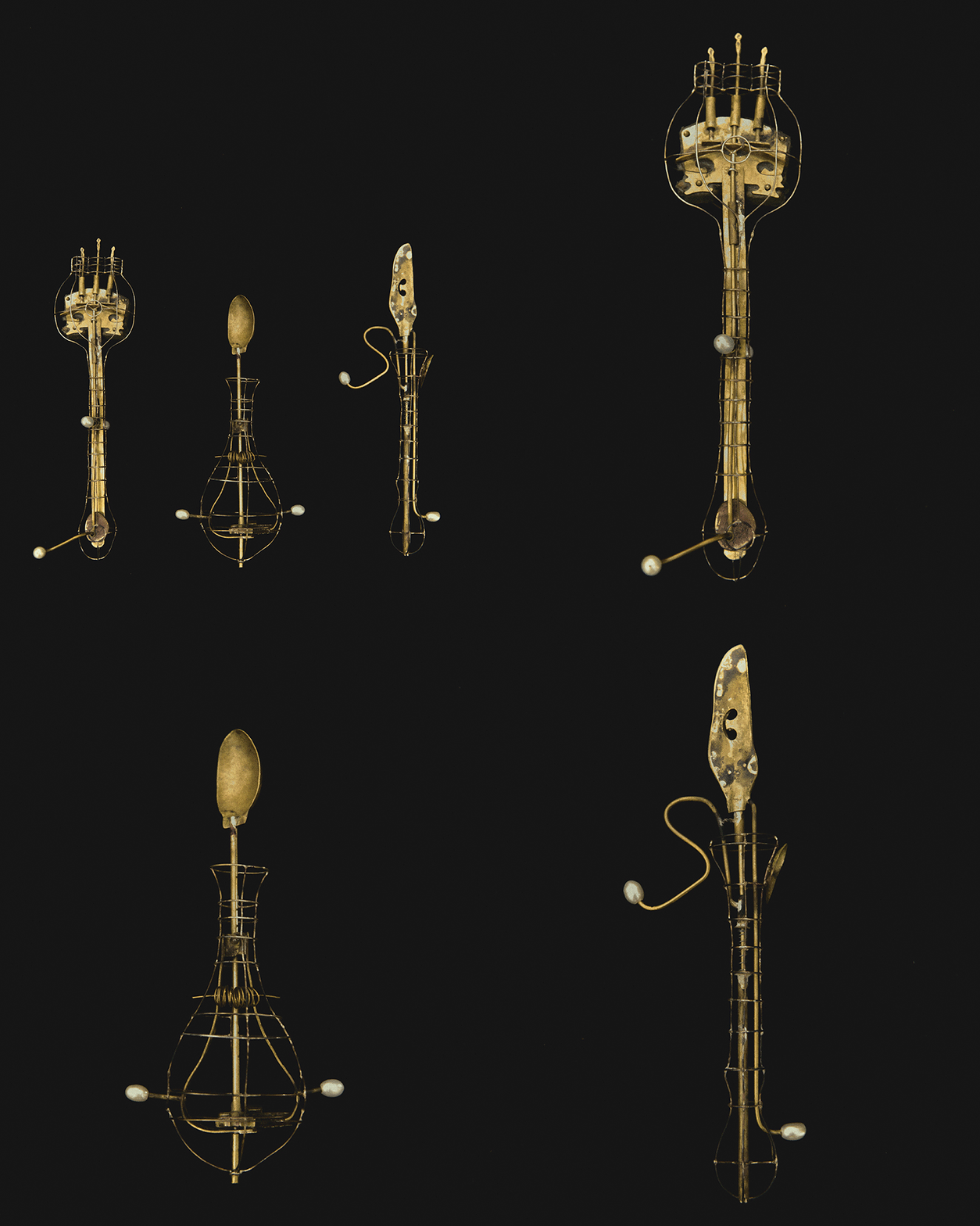
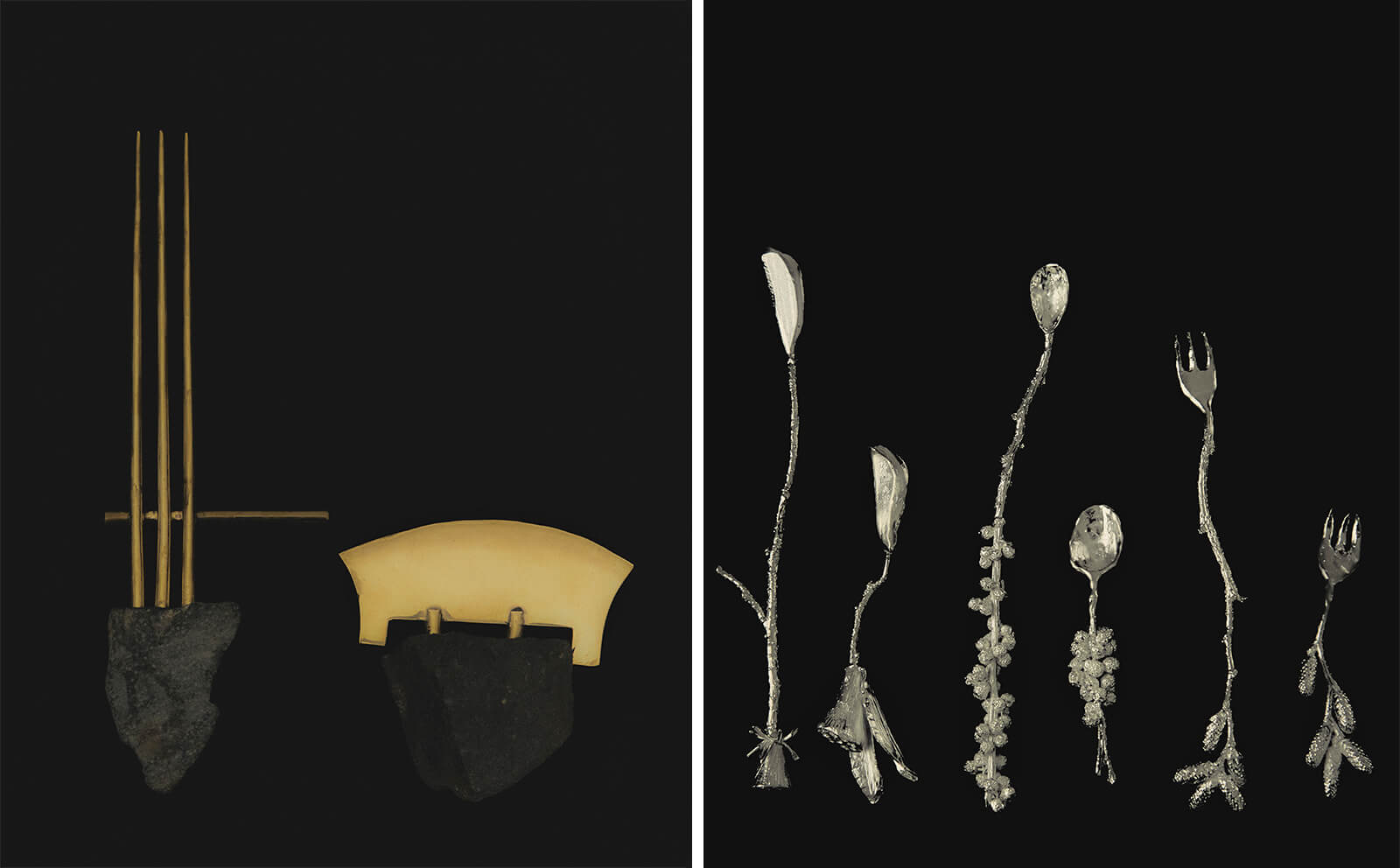
The objects by Lisbon-based artist Sebastião Lobo seem to have escaped from a Neolithic gathering. Slender golden prongs are affixed to a rough black stone, accompanying its stout knife-sibling, resembling stone tools. Meanwhile, Studio Yeodong Yun’s silverware appears to be growing curly roots and gnarly stems that split, curl and sprout around their implements, the spoons and forks threaded with delicate, flowering forms. The other creatives include Belle Thierry, Julian Leigh May, Ryan Mueller, Snelling Studio (New Zealand), Soie Lait (France), Streifen, Studio Kyss and Tai Snaith.
I was interested in cutlery as the instrument that sits right on the line between the appetite and the etiquette, the thing that lets us indulge while keeping us polite.
Many decades have been spent redesigning chairs, lamps, kettles and phones, as Smedley notes in conversation with STIR. The fork’s form has largely been left untouched. Its apparent ‘perfection’ has made it almost invisible in its ubiquity. As Smedley puts it, these objects are “so familiar that we have stopped seeing them as designed objects at all… That invisibility is exactly what makes them interesting to me, because these are the objects… [that] carry an enormous amount of inherited social instruction about how to behave. Looking closely at cutlery gives us a way to notice all of the habit and etiquette we absorbed as children and now perform automatically, and once you see how much convention is folded into something as small as a spoon, you start to ask what else in daily life you have simply accepted as given”.
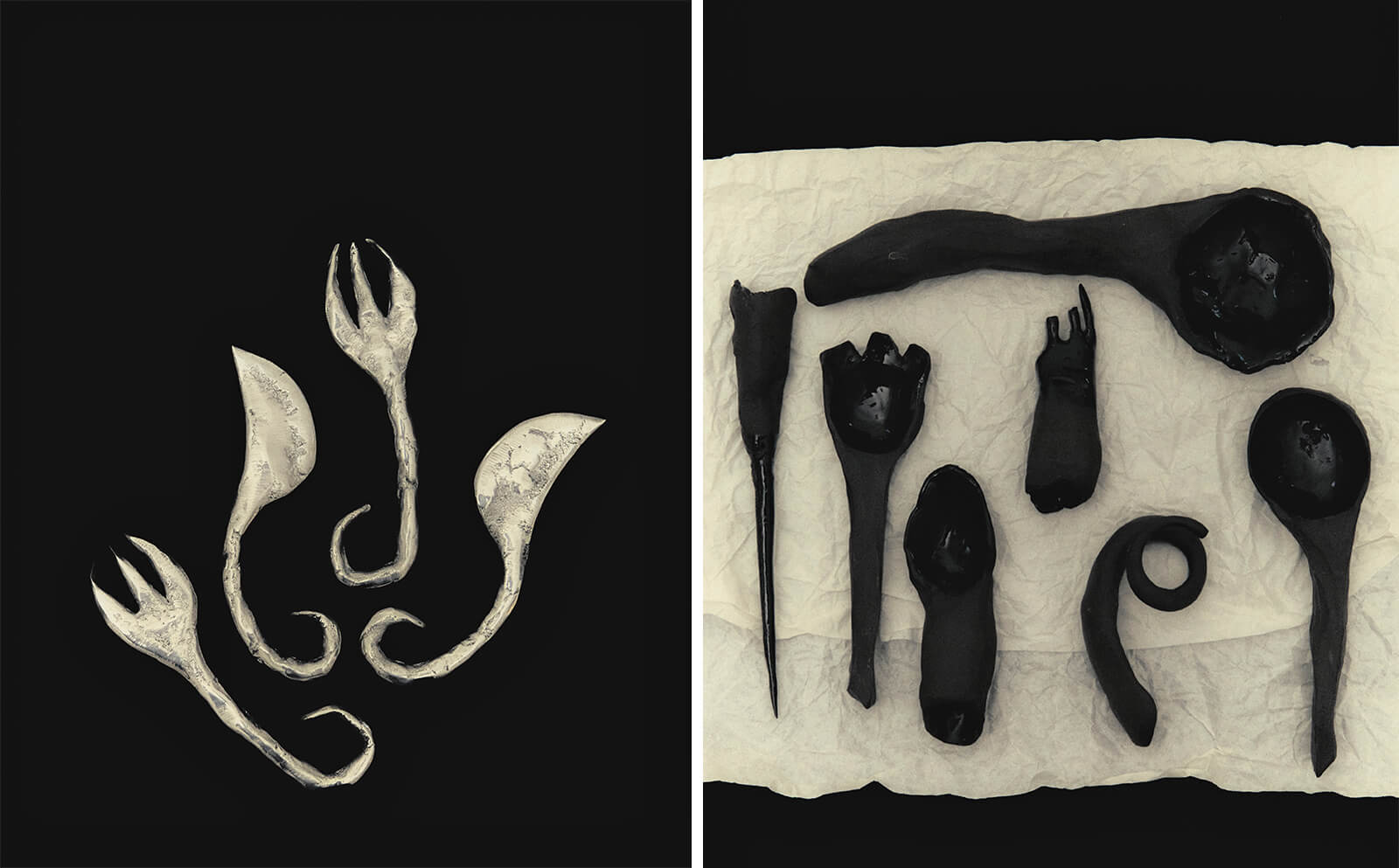
That invisibility is loaded if you think about it, which is precisely the point of Table Manners. Eating comes with a conditioning, a choreography we inherit before we understand it. A performance. The fork in the left hand. The knife in the right. The spoon held at a certain angle. The elbow that must stay off the table. The mouth that should not be too greedy. “Eating is one of the last things most of us still do with our hands and our full attention, and it carries a kind of permitted greed, the want to have more, to taste, to make a mess of it, that we spend most of our adult lives learning to fold away behind good manners. I was interested in cutlery as the instrument that sits right on the line between the appetite and the etiquette, the thing that lets us indulge while keeping us polite,” they tell STIR.
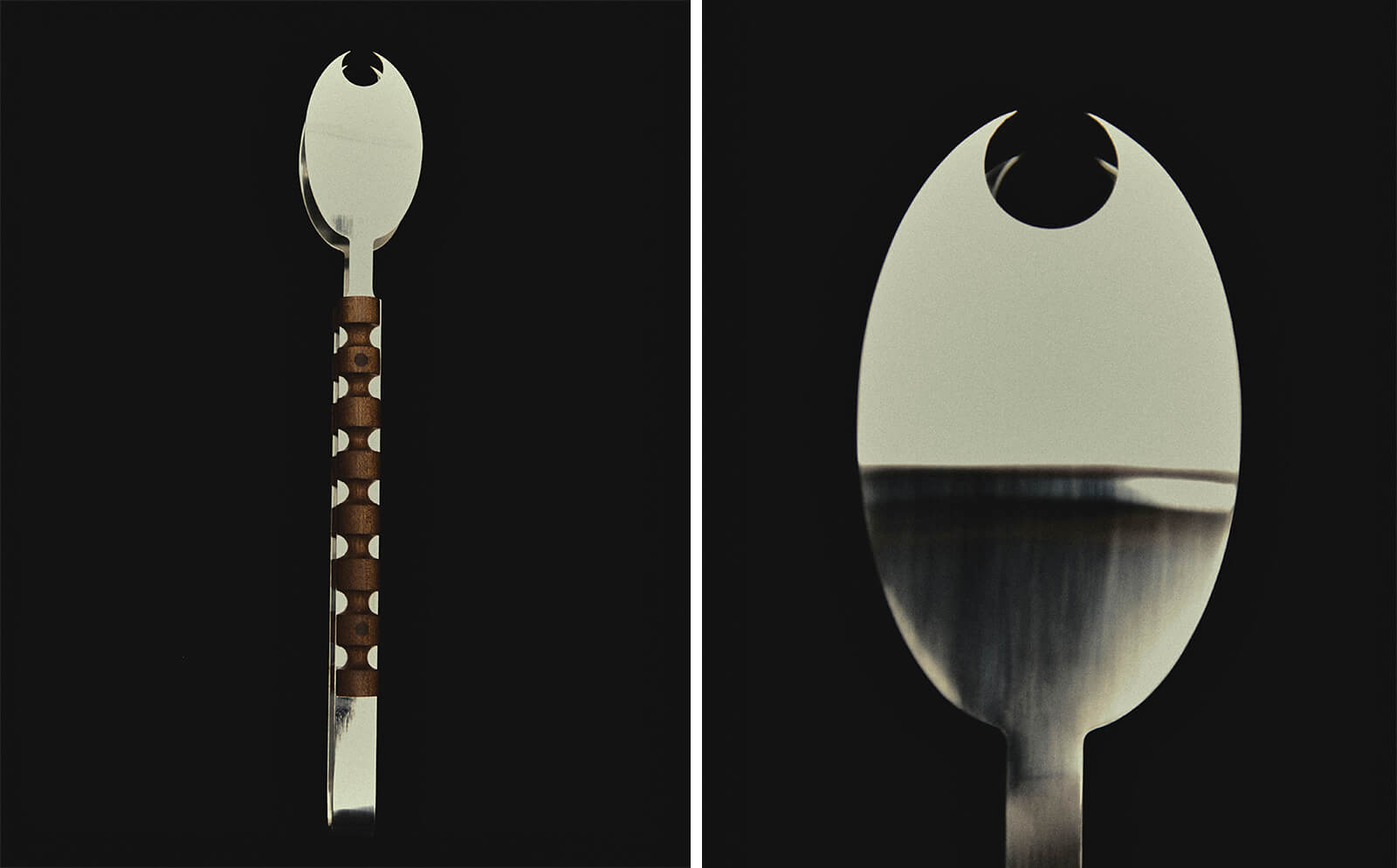
Perhaps that is why these objects feel slightly feral, almost unsettling. They interrupt the performance and make the hand hesitate. Does your spoon need to be polite, behaved or do the things we put in our mouths every day deserve a little more scrutiny? “I actually think the idea is just to not accept anything as it is just because someone designed it in a way that is or was useful for a time,” they convey. “The makers still drifted to conventional utensil shapes; I think the most rebellious thing we could do is shift the convention of eating altogether, if only because we are allowed to,” Smedley observes. Table Manners doesn’t seem to offer clear directives on whether these designs could potentially work, but it does end up questioning the very personal and often social act of eating itself, and the conditioning and norms around it.
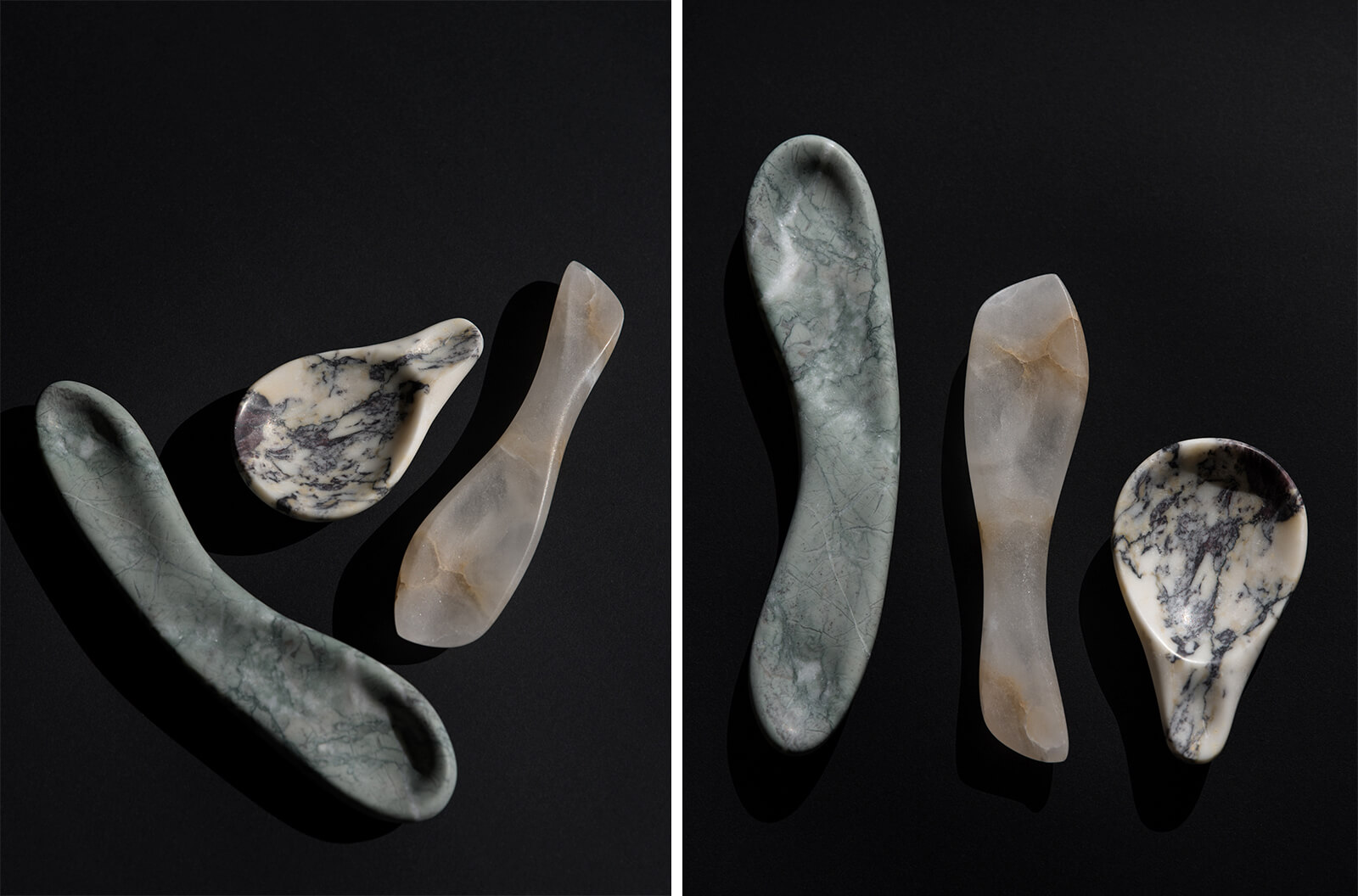
Perhaps that is the larger provocation here. Once something becomes so familiar that we stop seeing it as ‘designed’, we also stop asking why it has to be the way it is—or questioning the rehearsed conventions and accepted social registers of the activity it belongs to. A fork can be questioned. So can a chair, a phone, a coffee maker—or any of the countless objects that conduct everyday life. As Smedley mentions, “The risk, of course, is that celebrating the peripheral becomes its own orthodoxy. But the more interesting question is what it means to keep looking, to refuse the settled categories of what design is for and who it serves.”

by Pranjal Maheshwari Oct 13, 2026
Through furniture, art and films, the showcase at the Ian Potter Centre in Melbourne advocates for biophilic material cultures as an antidote to planetary degradation.
by Pranjal Maheshwari Oct 12, 2026
The exhibition reimagines the 20th-century Scottsville residence of the American sculptor and his partner, ceramicist Nancy Jurs, curated by their daughter Alison Castle.
by Mrinmayee Bhoot Oct 08, 2026
The game designer discusses their work and its manipulation of scale, scientific data and non-human perspectives to create speculative futures in conversation with STIR.
by Chahna Tank Oct 08, 2026
Javier Guzman Cervantes and Ulises Morin Arzola tell STIR about their ‘open code’ approach to design, working through a process of stockpiling and the idea of ‘queering’ materials.

make your fridays matter with a well-read weekend
Enter your details to sign in
Don’t have an account?
Sign upOr you can sign in with
a single account for all
STIR platforms
All your bookmarks will be available across all your devices.
Stay STIRred
Already have an account?
Sign inOr you can sign up with
Verification link sent to check your inbox or spam folder to complete sign up process
Tap on things that interests you.
Select the Conversation Category you would like to watch
Please enter your details and click submit.
Enter the 6-digit code sent at


Table Manners: What happens when cutlery stops behaving?
by Jincy Iype | Published on : Aug 15, 2026


 Sign in with Google
 Sign in with email
What do you think?