|
Astral projections, an altered consciousness, a near-death encounter, euphoric stimulation; a rare occurrence as it may be, an out-of-body experience is induced rather than willed. Transcendental in the literal sense, it is a momentary act of dissociation, dislocation and disembodiment; it is a seeing of the self as separate from the physical vessel we occupy, contentiously so. It's fleeting, but world-altering. Sans the constraints of time and rueful will, this 'second body'—as writer Daisy Hildyard would term our very global, environmental presence—is a means, a place of creative liberation, of an unprecedented vantage, but also of consequence.

In removing the 'self' from the body, the world may be rendered anew, Hildyard states, for one is afforded not just critical insight, but also a sense of solidarity with something bigger, beyond the unitary. It is a way of perceiving a 'body' of work as a natural extension of the creative's own body. It also alludes to a multimodal, unfixed, diasporic existence as a means to challenge singular hegemony. We all occupy many bodies, tread many grounds, traverse many skies and float through many oceans, to belong, to become, to be—out of body, out of time.
|
|
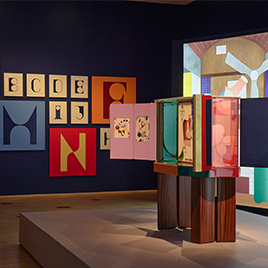
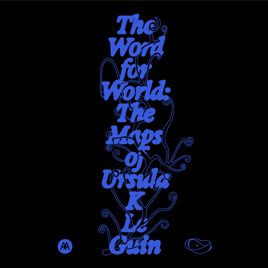
And so we must, for at the risk of sounding sermonic, what other way is there to be, really? This week's dispatch embodies a similar viewpoint from which to practice care as a continued, willful out-of-body experience, a second body, if you will. This is most directly interpreted in Ursula K. Le Guin's many words and worlds, made alive in her fictions and maps in an eponymous book and exhibition at the AA School, London. An interview with Ryan Preciado delves into his heritage and memory as synonymous with his body of work. Nipa Doshi's fearlessly feminist cabinet of rituals, desires and entwined histories, entitled 'A Room of My Own', draws on her diasporic experience as a force in her design language.
Simultaneously living in (and through) many second bodies in an otherwise hyper-connected world is a practice unlike any other. The obvious temptation is an all-knowing state, but the wealth of this being is in an all-caring state—a tree in the Amazon, a pelagic fish or a breathing coral, an indigenous tribesman, a migrating songbird, a forlorn ancestor, a mushroom—everywhere, and nowhere.

|