Art09 mins. read
The home and the world: Rashid Johnson’s multivalent Black selfhood
by Avani Tandon VieiraJun 24, 2025



by Hili PerlsonPublished on : Nov 03, 2025
The foggy Oslo autumn, with mist rising from the fjord around the Astrup Fearnley Museet, makes for a perfectly pitched environment for Burning the Days, the first retrospective dedicated to the elusive, pseudonymous Lutz Bacher (1943 – 2019). It’s a ghost story on meaning and authorship, and a psychic autopsy of the American empire. Curated by Solveig Øvstebø in collaboration with Helena Kritis and Dirk Snauwaert (for the show’s second iteration at WIELS, Brussels, which opens next year), the exhibition moves fluidly between decades and media, resisting the logic of chronology in favour of something messier, more disjunctive—something closer to how Bacher made and unmade meaning. From re-appropriated photography to unaltered readymades, film material and even sound, interpretations and implications creep up on you, delivered obliquely through the artist’s decontextualisation and juxtaposition.
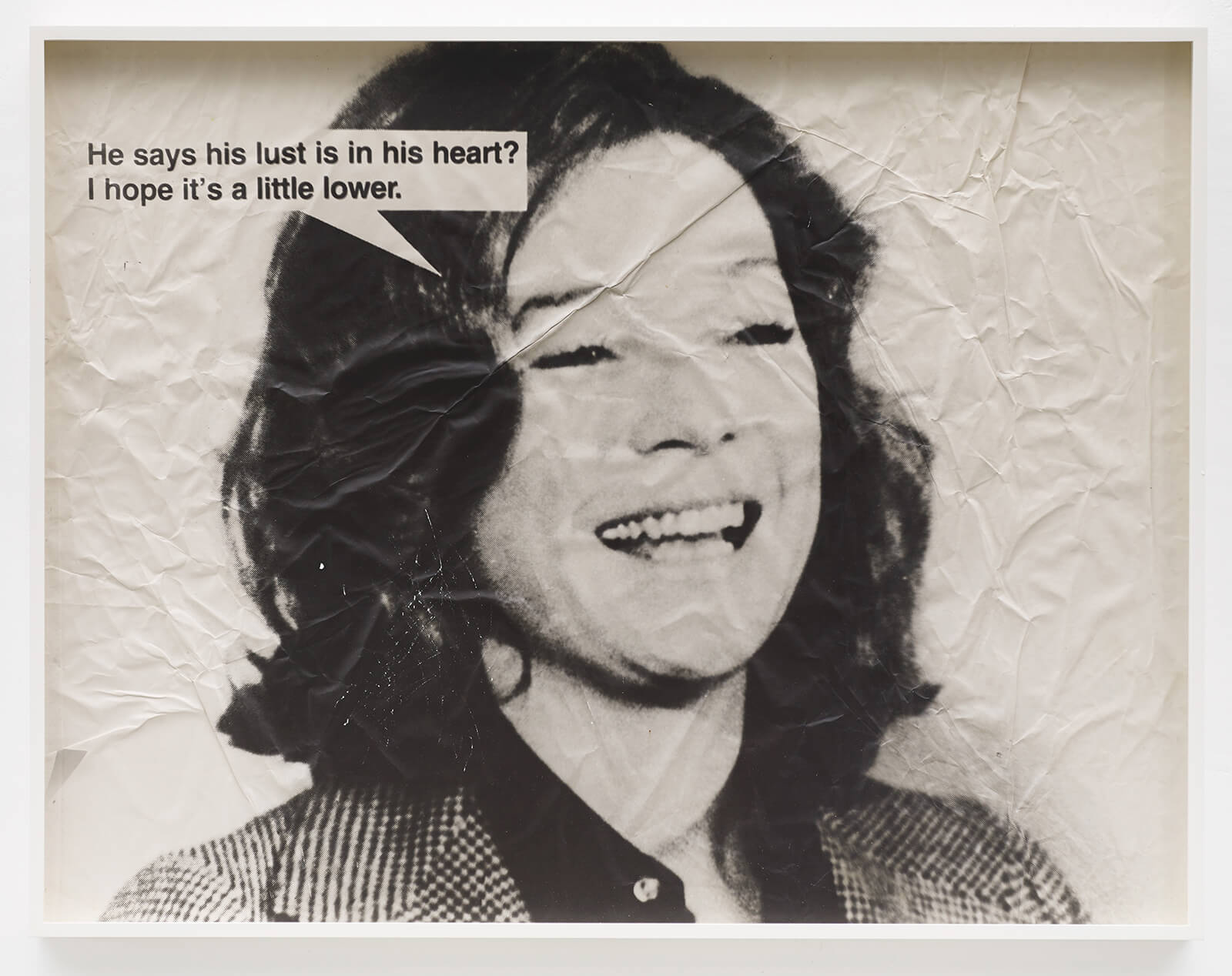
Bacher, born and raised in the U.S. (though never publicly confirming her legal name), navigated the art world for five decades under a German-sounding male alias, not as a disguise but as an enduring critique of the cultural economy of persona. “Who is Lutz Bacher?” was always the wrong question. What mattered was what her work did: how it destabilised, how it pried loose the sutures of representation, how it sat—awkwardly, defiantly—in the grey zone between sincerity and détournement.
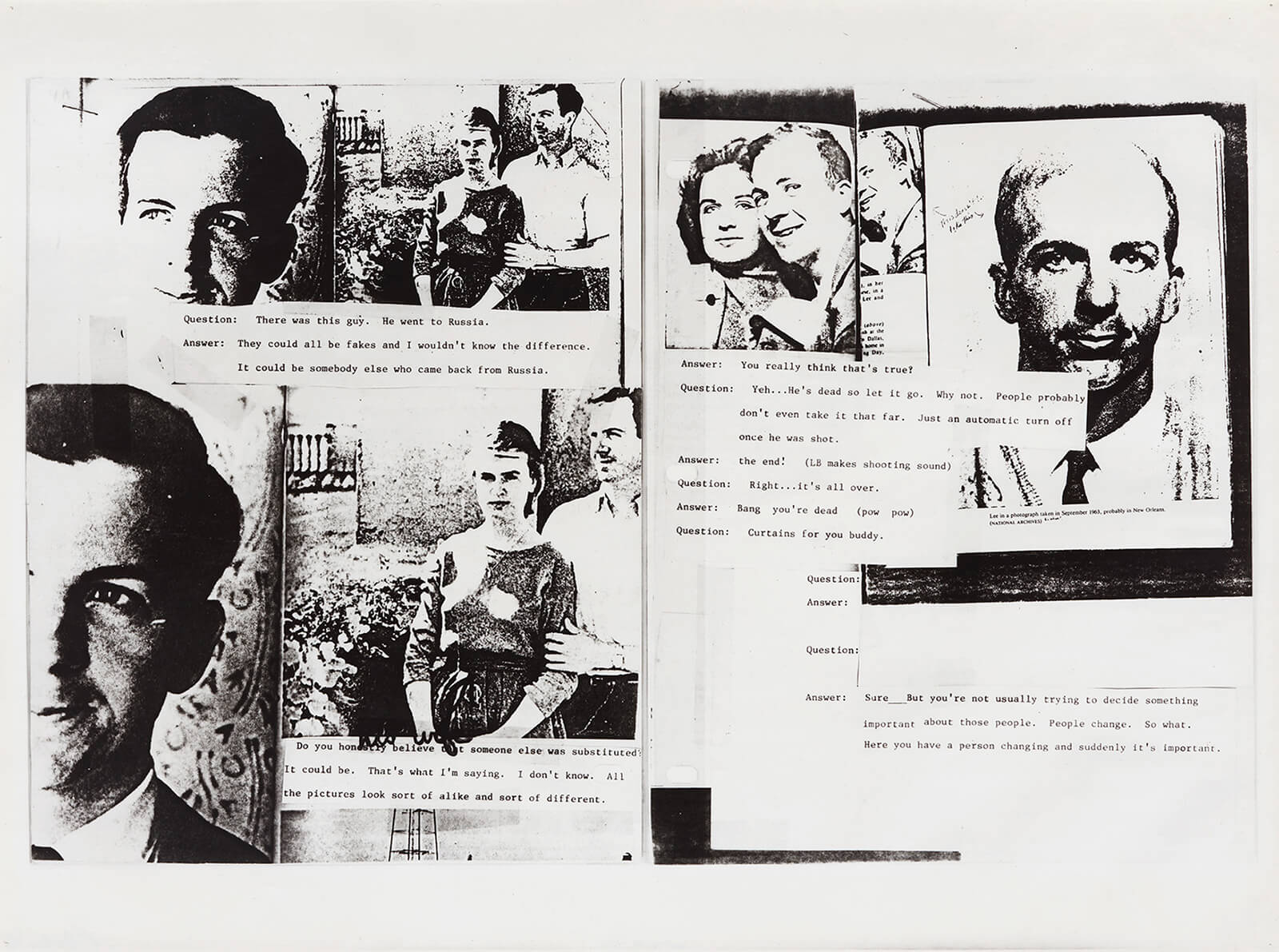
Fittingly, Do You Love Me? (1994) is a twelve-hour video composed of anonymous, awkward and fragmented conversations with friends and colleagues replying to the titular question. Shown on loop on the museum’s website, the piece plays like a broken oracle, spooling out the artist’s presence and absence in equal measure. Meanwhile, the exhibition’s title, Burning the Days, is borrowed from a phrase American soldiers used during the Vietnam War. It conjures images of suspended time, days consumed in boredom and dread, neither truly lived nor entirely lost. It’s an apt frame for Bacher’s oeuvre, whose use of readymades to speak of life’s detritus and the cultural unconscious has left an indelible mark on contemporary art-making and criticism since the 1970s.
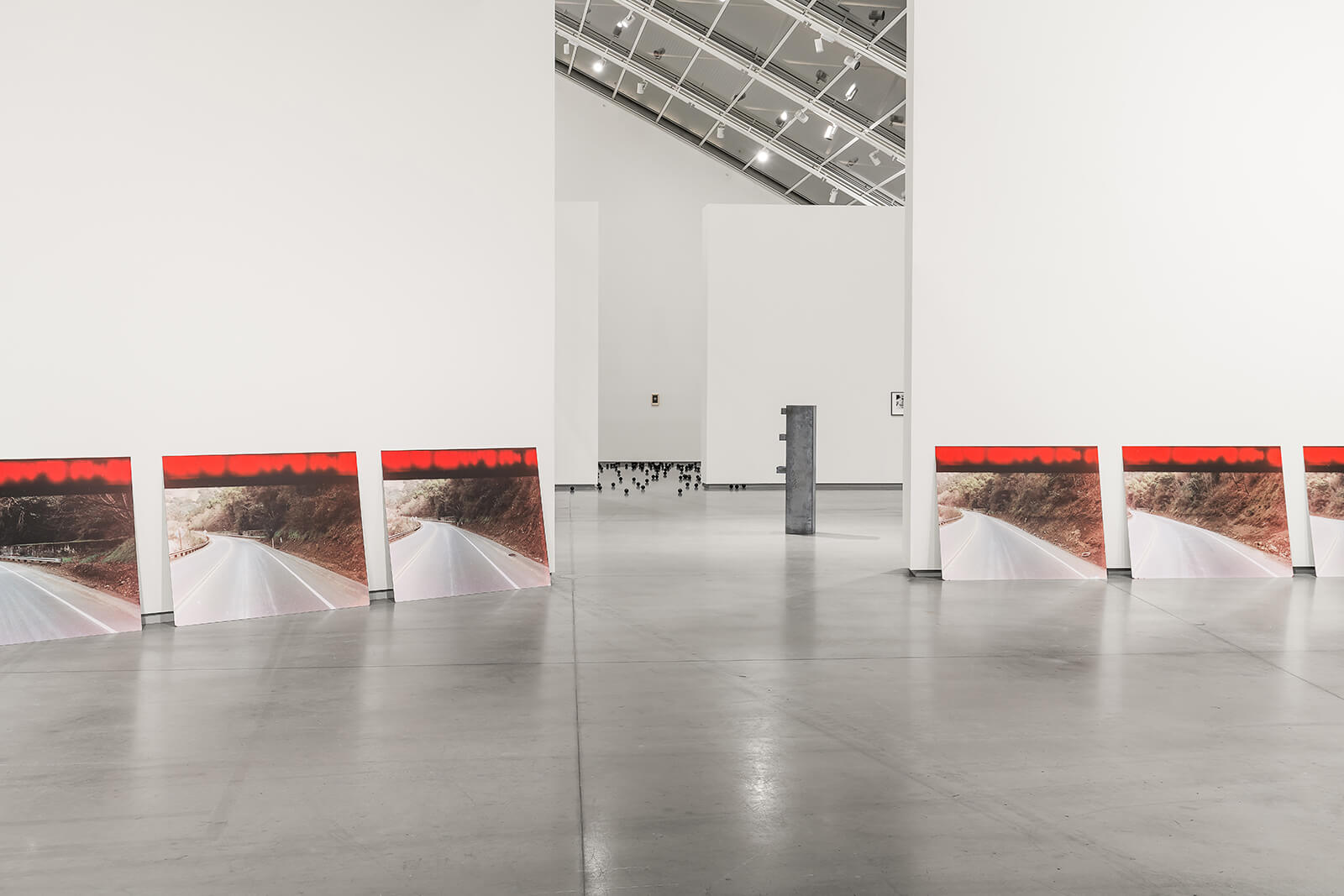
The exhibition’s dramaturgy must have been a challenge, considering Bacher’s legacy as an exacting exhibition-maker, and the curator’s deep engagement with the late artist’s thinking is evident. The first gallery sets the tone in hushed, ambiguous registers. The series of large-scale prints, The Road (2007), is leaned against the wall and unspools across the space like a memory too large to hold: a hypnotic work that pairs a relentless forward-driving motion with intermittent glimpses of roadside banalities, creating a kind of narrative stasis through perpetual motion. On the opposite wall hangs Smoke (1976), the artist’s only known self-portrait. Or quasi-portrait. The black-and-white collaged strips of photographs show a woman standing, sitting, smoking or drinking a glass of milk. It’s a performative gesture of self-inscription that feels both casual and impenetrable, a refusal to cohere into identity even as she offers her own image.
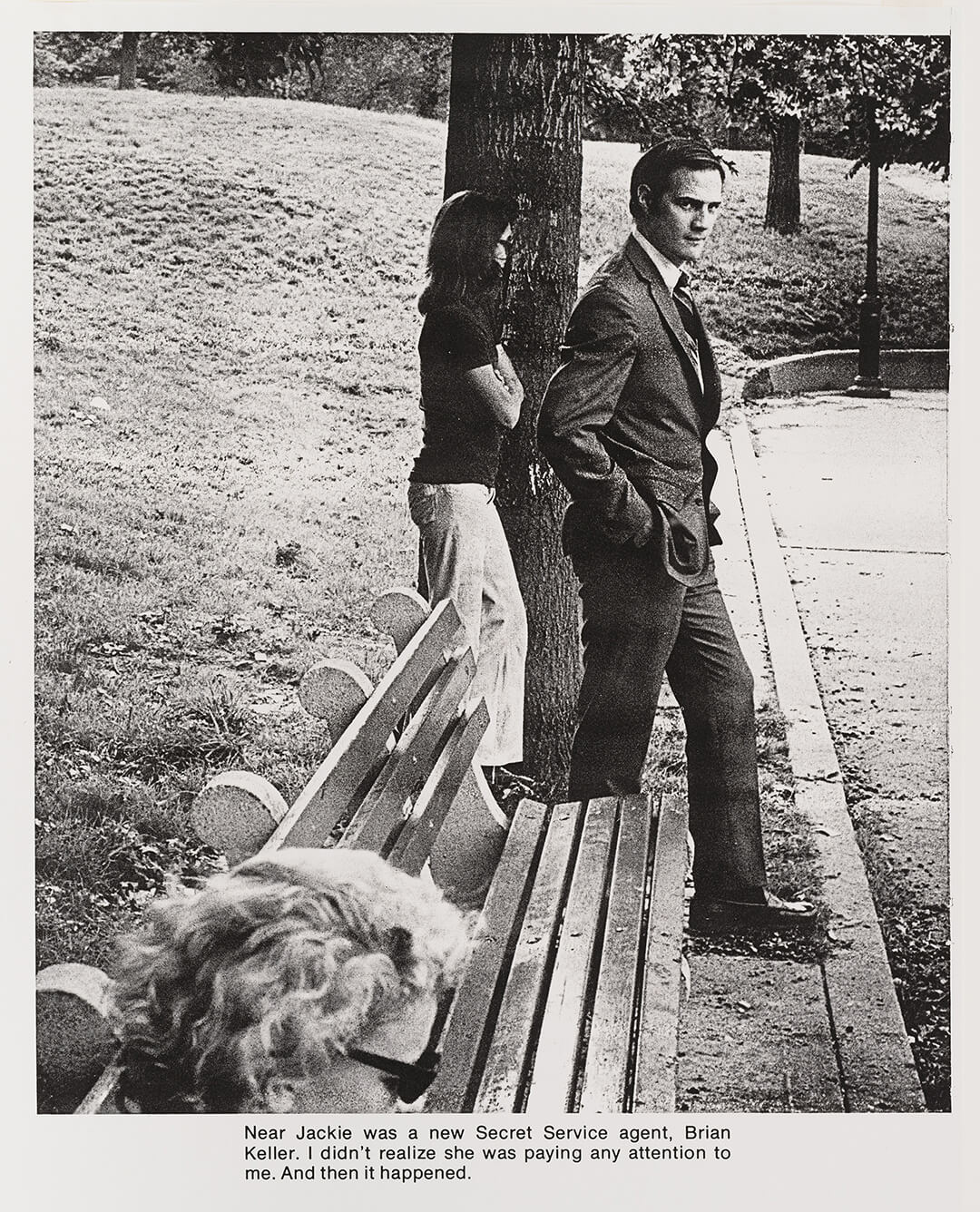
Nearby, Jackie & Me (1989) reproduces images and captions sourced from celebrity paparazzo Ron Galella, reconstructing his obsessive attempts to photograph Jacqueline Kennedy Onassis. Galella frames the chase as flirtation, imagining that Jackie, ever composed and elusive, is not fleeing his lens but playfully engaging with him. “The most desirable woman in the world wanted to be chased by me,” he declares. Bacher presents the material without comment, allowing the viewer to sit in the discomfort of his delusion. In doing so, the work becomes a quiet indictment—not just of one man’s projection, but of the entire apparatus of the invasive gaze. But also of something more insidious: the absolute unreliability of meaning produced when text and image are paired. So easily persuasive, manipulative to the point it cannot be unseen. And yet hardly reflective of fact.
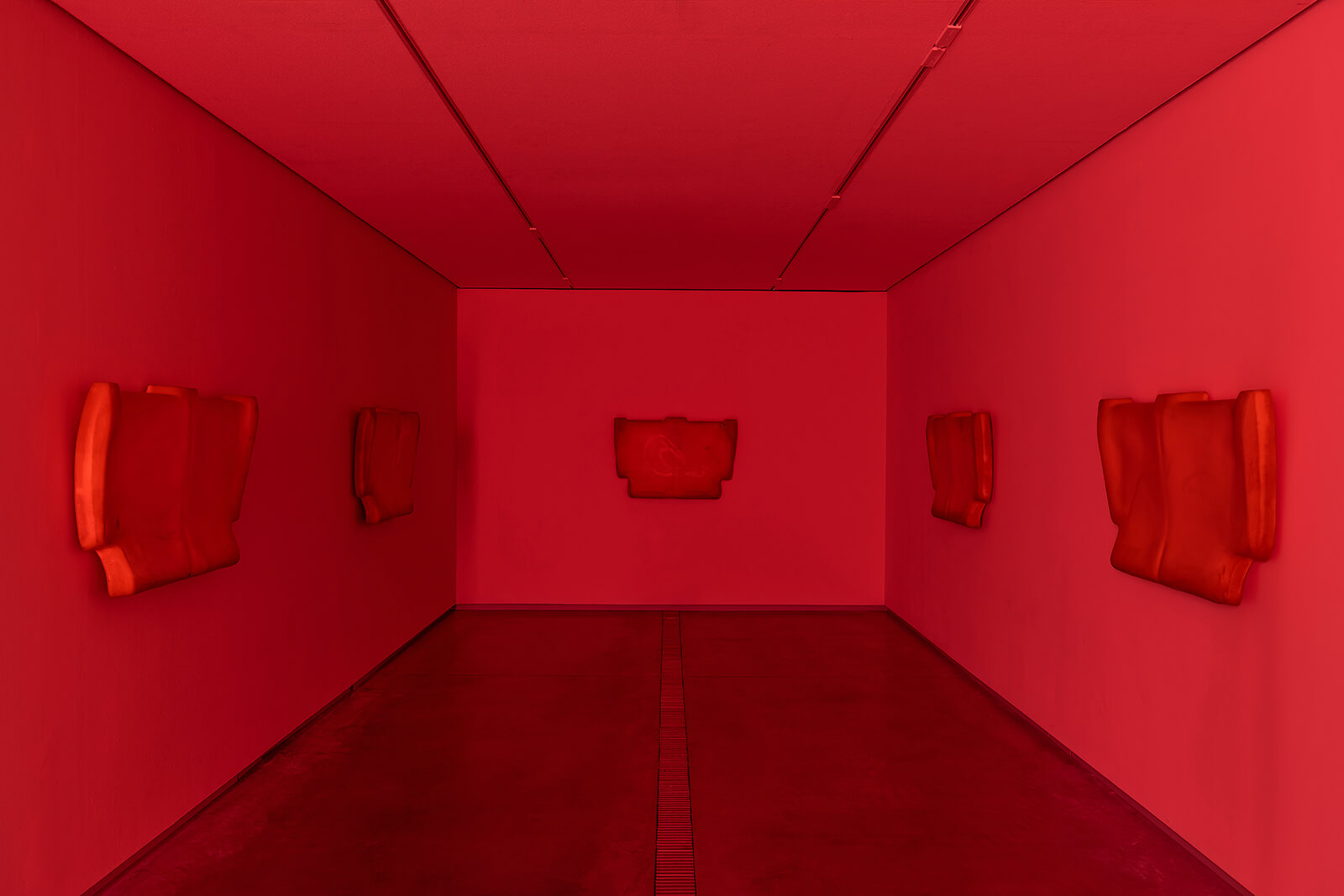
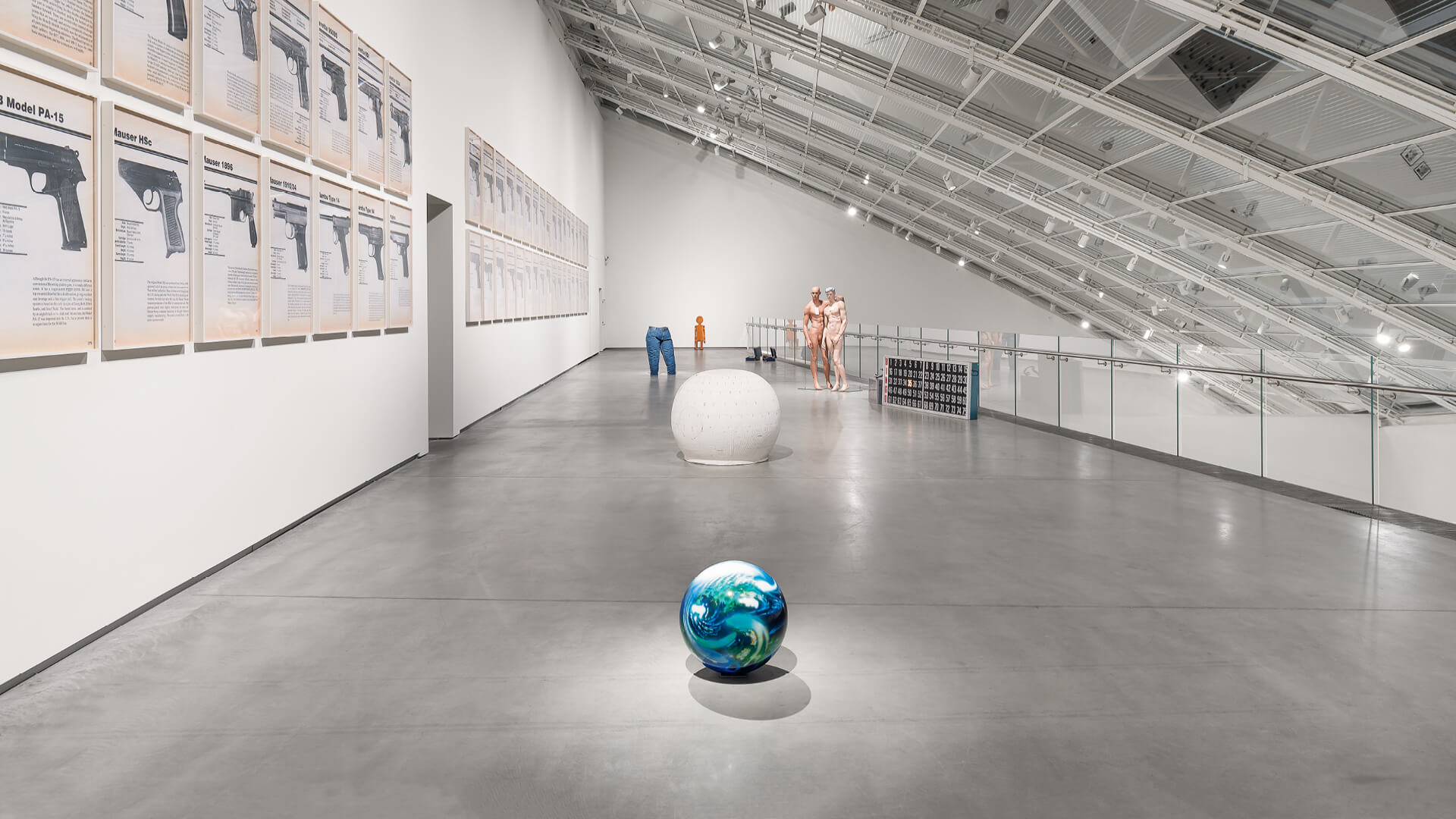
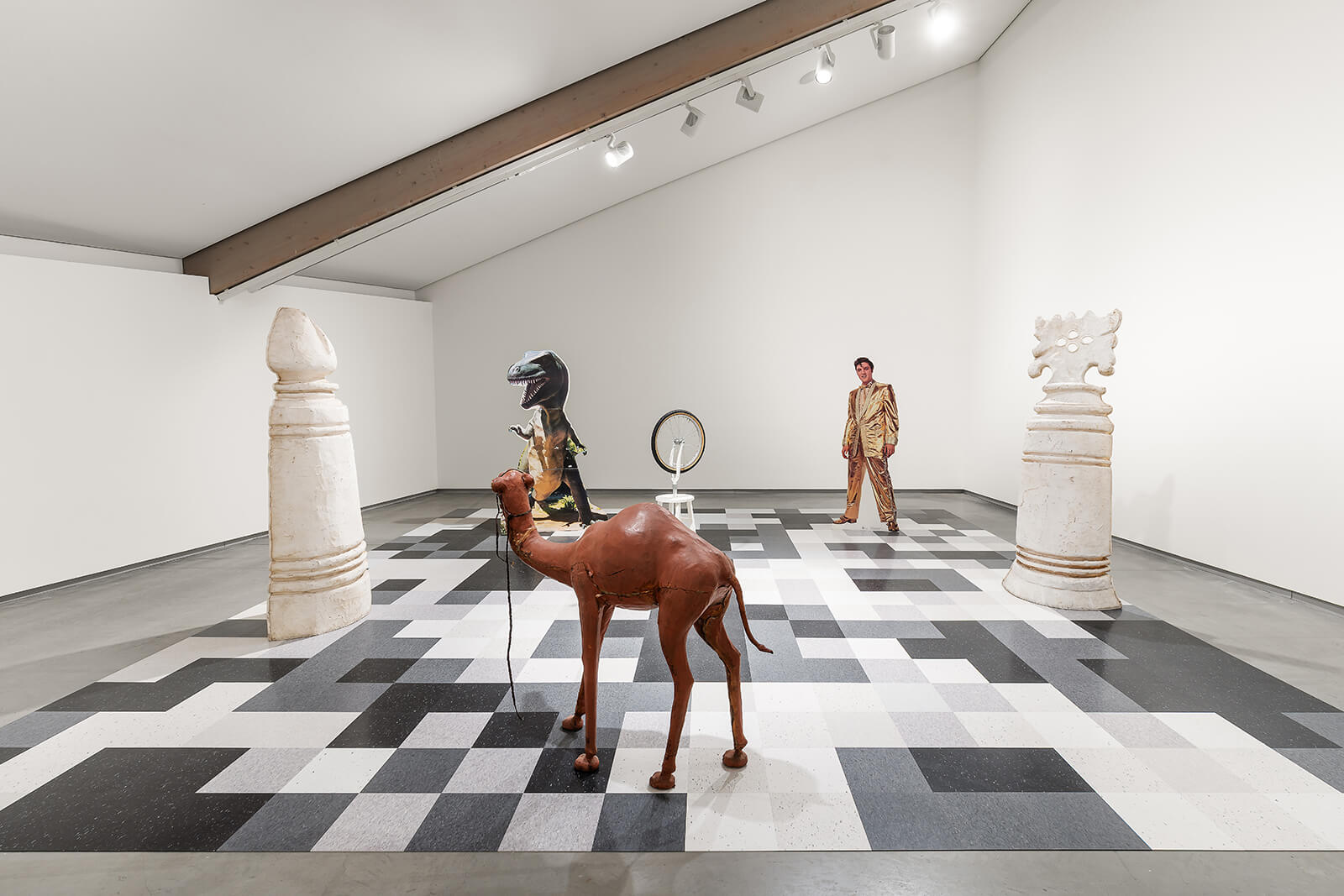
On the museum’s upper level, the exhibition touches more directly on Bacher’s deadpan dissection of American identity and power with nothing more than found objects. Many of these readymades—such as a pair of absurdly large Levi’s jeans, stuffed with polystyrene, or the enormous plush Big Boy (1992), a therapeutic doll for children who suffered abuse—feel like artefacts from a collapsed civilisation, but they also refuse to be monumental or mournful. FIREARMS (2019)—Bacher’s final work, completed just one day before her passing—consists of 58 framed pigment prints depicting guns sourced from a found technical manual, each accompanied by detailed specifications such as model, origin and dimensions. Appropriating neutral, factual material, Bacher reveals how weapons operate as symbols of power, fetish and commodification, particularly within the context of American gun culture. It’s also a culminating reflection on the uneasy intersection of beauty and brutality that runs throughout her practice.
Somewhat of a personal revelation in this show was Sweet Jesus (2016). In this sound piece, installed on the museum’s second-floor terrace, Bacher transforms a found recording of actor James Earl Jones reciting the biblical genealogy from the Gospel of Matthew into a haunting meditation on lineage, voice and absence. What begins as a solemn recitation of male names becomes an eerie chant—its rhythm both hypnotic and hollowed out by the omission of Jesus, who should have been named at the end of the bloodline. Typical of Bacher’s approach, Sweet Jesus turns a fragment of cultural authority into an estranged sonic object.
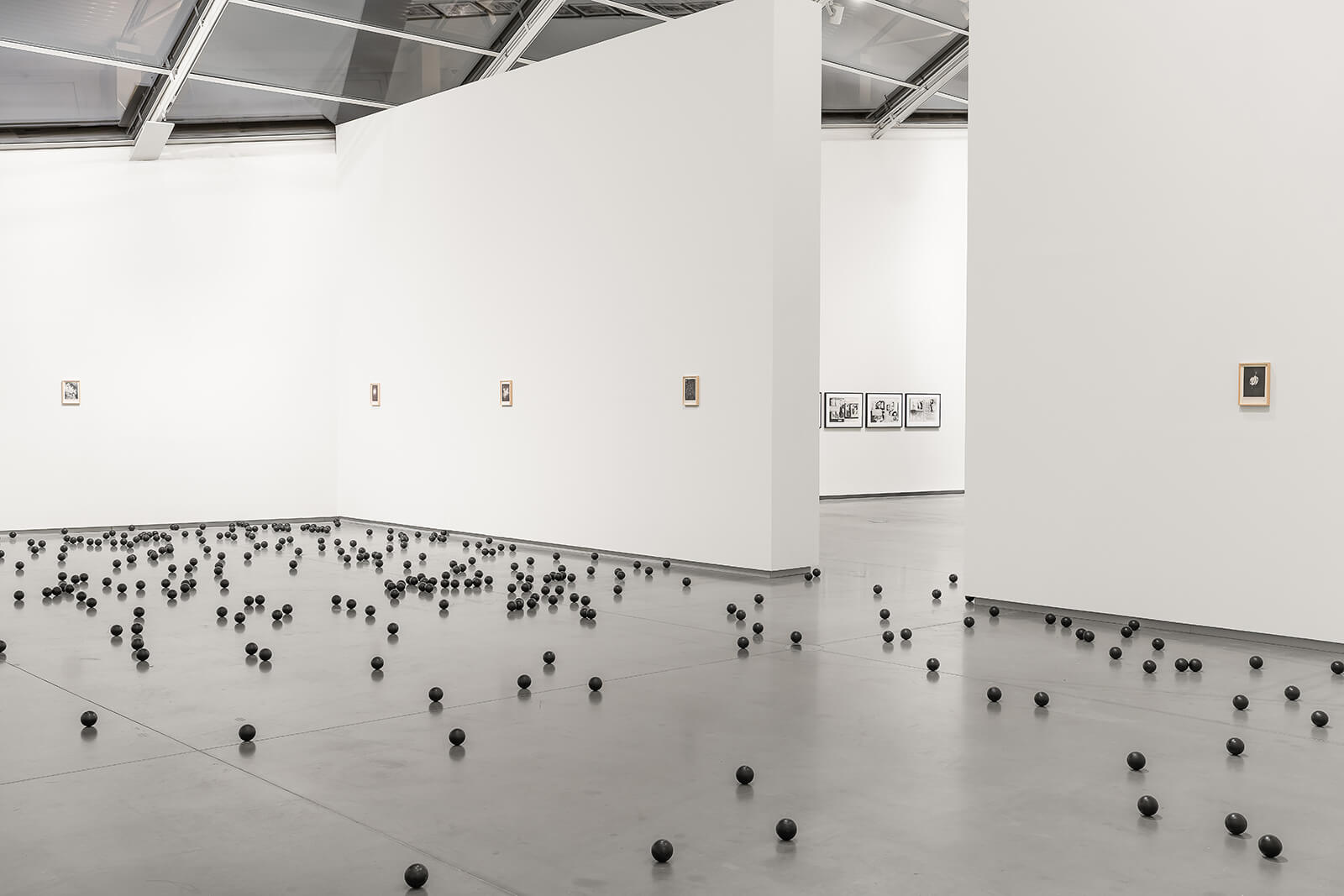
Bacher was not interested in resolution. Her work thrives in contradiction: intimacy and violence, banality and horror, control and its dissolution. In an era when so much institutional art production chases clarity or moral alignment, Burning the Days revels in the ambiguity of the unresolved, the too-much, the not-enough. This is perhaps where the curators succeed most: in maintaining the work’s dissonance, its refusal to cohere into a knowable whole.
‘Lutz Bacher: Burning the Days’ is on view from September 26, 2025 – January 4, 2026, at Astrup Fearnley Museet, Oslo.
The views and opinions expressed here are those of the author(s) and do not necessarily reflect the official position of STIR or its editors.

by Anmol Ahuja Oct 15, 2026
How do heaps of souvenirs and relics with racist Aboriginal motifs and features become art? MCA Sydney’s winter showcase—the artist’s largest to date—beckons a possibility.
by Srishti Ojha Oct 14, 2026
The first Dutch publication on the Turkish artist, the eponymous book centres on Refik Anadol: Latent City, his living data sculpture of Bruges, exhibited at BRUSK gallery.
by Vandana Kalra Oct 14, 2026
With his latest exhibition as a point of departure, the modernist discusses his decades-long practice, the spontaneity of drawing and the social responsibility of artists.
by Srishti Ojha Oct 09, 2026
In his ongoing exhibition, the South African artist creates two post-apocalyptic futures to explore society’s relationship with textiles, patterns and technology.

make your fridays matter with a well-read weekend
Enter your details to sign in
Don’t have an account?
Sign upOr you can sign in with
a single account for all
STIR platforms
All your bookmarks will be available across all your devices.
Stay STIRred
Already have an account?
Sign inOr you can sign up with
Verification link sent to check your inbox or spam folder to complete sign up process
Tap on things that interests you.
Select the Conversation Category you would like to watch
Please enter your details and click submit.
Enter the 6-digit code sent at


Lutz Bacher's first posthumous retrospective reads like a lasting afterimage
by Hili Perlson | Published on : Nov 03, 2025


 Sign in with Google
 Sign in with email
What do you think?