Design07 mins. read
We Must Imagine It by Unfold Projects advocates for regenerative art and design
by Pranjal MaheshwariJul 14, 2026



by Mrinmayee BhootPublished on : Nov 03, 2025
'Material histories', 'collaboration', and 'heritage' are terms (to name a few) that are often invoked nonchalantly when writing about furniture and product design. They’re called upon in service of a design language that 'honours craftsmanship' and appears to be its maker’s identity made manifest. Yet, there seems to be little consensus (apart from trite press releases) on what design that results from layered, nuanced narratives—borne as much through engagement with material as through personal insight—can be. Design like this is always performed at the seams; it is always interdisciplinary in execution and pluralistic in expression. It often emerges as a nebulous dialogue between past inspirations, present conditions and future imaginations. For Ryan Preciado, a Los Angeles-based designer of Chumash Native American and Mexican heritage, it’s these liminal spaces—somewhere between contemporary art practice, sculpture and furniture making—that are most productive. He describes himself, first and foremost, as a ‘curious person’.
In conversation with STIR, the American designer talks about the curiosities that have shaped his practices, the memories that continue to guide him and his enduring influences. They’re as varied as his work is enticing. Ranging from car culture in California to the Memphis school of design and his indigenous heritage, these are both easy to spot and hard to separate in his work. To Preciado, his furniture designs are a means to negotiate a sense of the everyday. As he tells STIR, “I grew up with a strong awareness of labour, community and the kinds of everyday objects that surround us. I wouldn’t go so far as to say these objects carry cultural identity, but what they really carry is their own ordinariness. And it’s that plainness that makes them worthwhile to me, because by focusing intently on something so unremarkable, you start to see it differently.”
And yet, he acknowledges the diverse histories and aesthetics his designs play with, noting, “I’m drawn to the humour and looseness of Memphis and the discipline of modernism. I don’t try to resolve those influences into one language; I let them sit next to each other. For me, that’s the practice: holding these contradictions and letting the work itself be the place where they meet.”
The origins of his practice are as mythic as the kind of references he draws on. “I started making furniture when I was around 20. At the time, my friend and I were filming skate videos, and someone asked us to make a small video for his woodshop. He couldn’t really pay us, so he offered to teach us how to make something instead. I chose a desk because my partner at the time needed one. We broke up right after I gave it to her, but the silver lining was I ended up falling down the rabbit hole of loving carpentry,” he recounts to STIR. It’s this insistence on making by hand, an inherent awareness of labour and a love for community that feels most vital to his work as a furniture designer.
I think furniture and architecture are always in dialogue; furniture gives you the scale of a body, while architecture gives you the scale of a world.
Apart from this sense of grounded craftsmanship, there’s a refreshing engagement with material—both textual and raw matter—for designing. Speaking about his initial influences in design, he continues, “I was working at a store that had books on people like Carlo Mollino and Ettore Sottsass, and I just absorbed everything I could. I remember finding a book on Thomas Schutte’s houses, and it blew my mind. Those early experiences, stumbling into making, following curiosity and discovering these heroes still shape how I approach it all today.” While Mollino and Sotsass could be listed as early references, the friendships and collaborations seem to have propelled Preciado’s work forward. Having been taken under the wing by ceramics gallery and store South Willard’s co-founder Ryan Conder, Preciado was soon introduced to Peter Shire, a member of the 1980s Memphis design collective. He worked as Shire’s off-and-on assistant for four years, and many of Preciado’s artefacts bear that signature sense of humour and whimsy, as he himself notes.
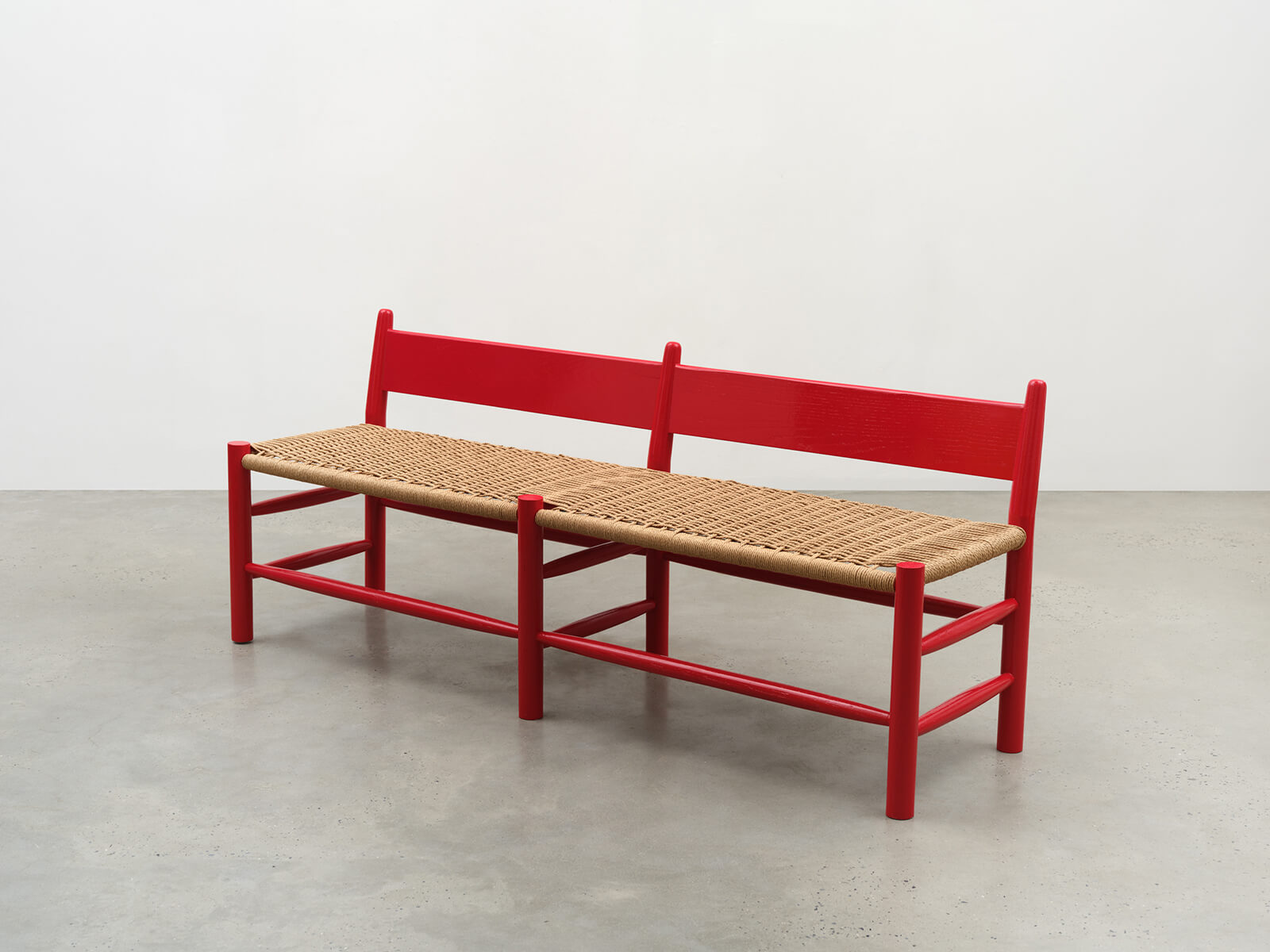
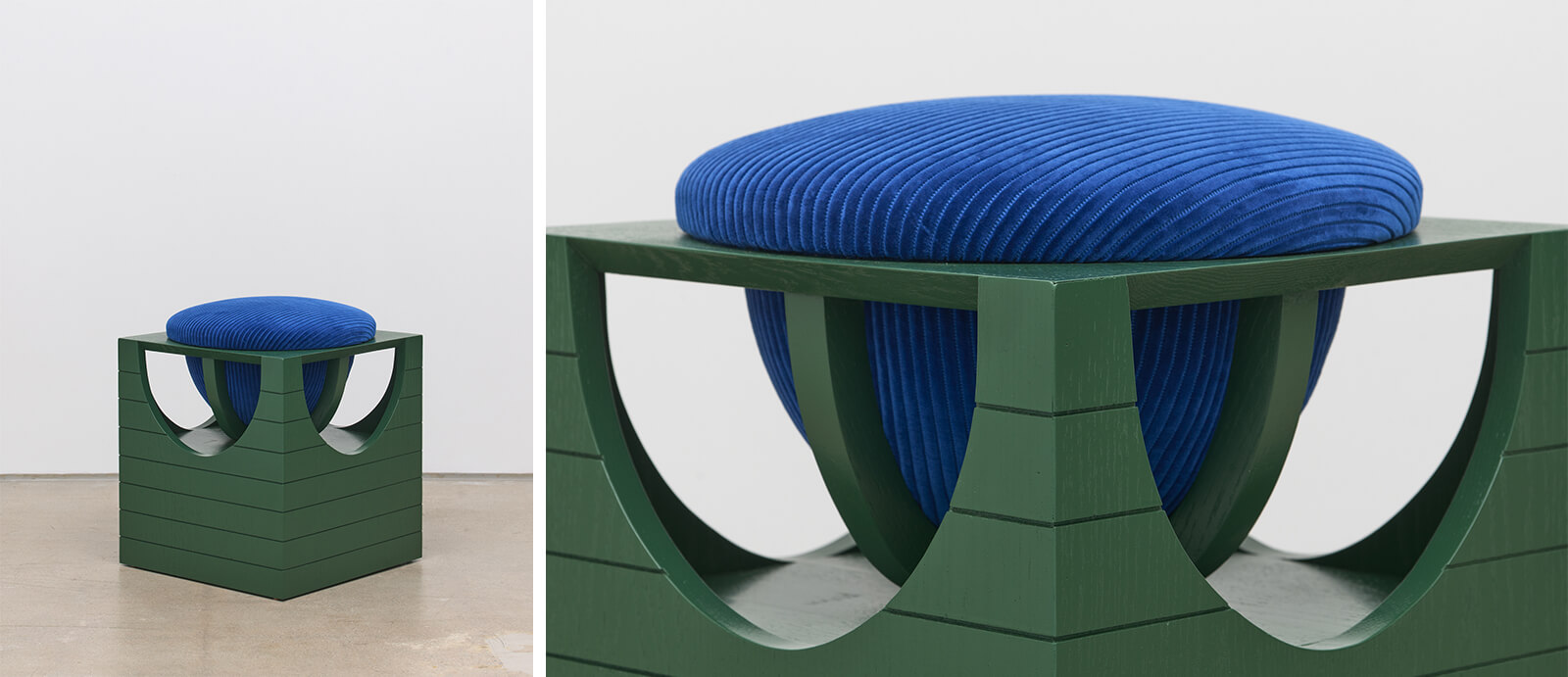
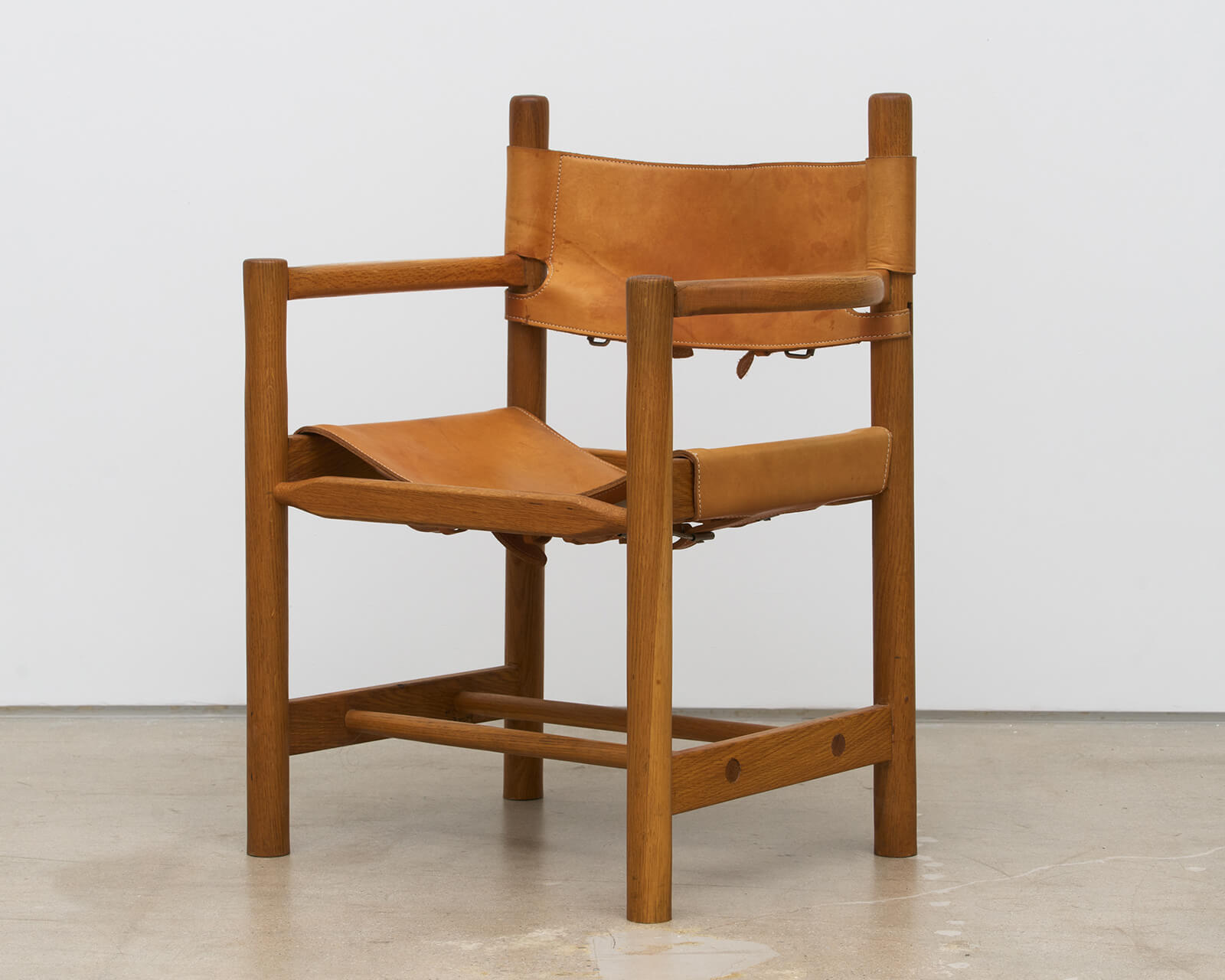
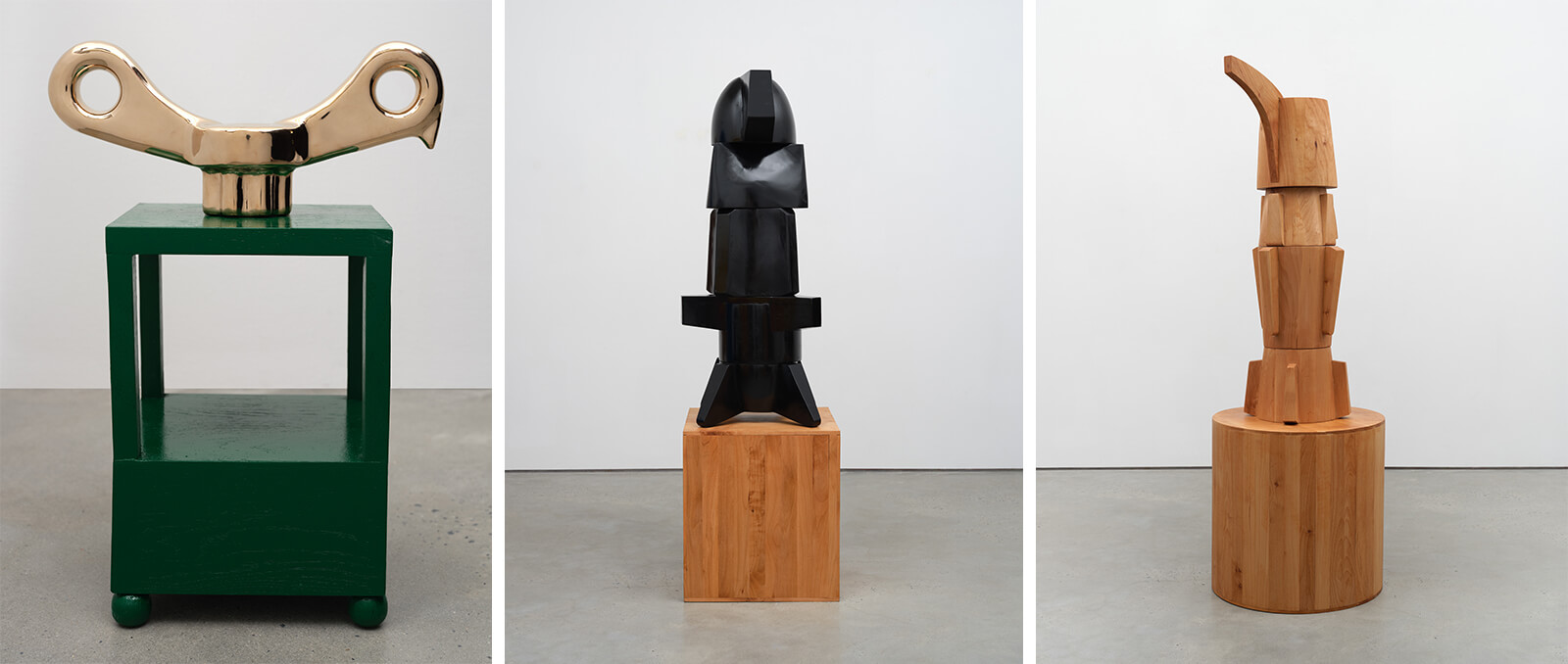
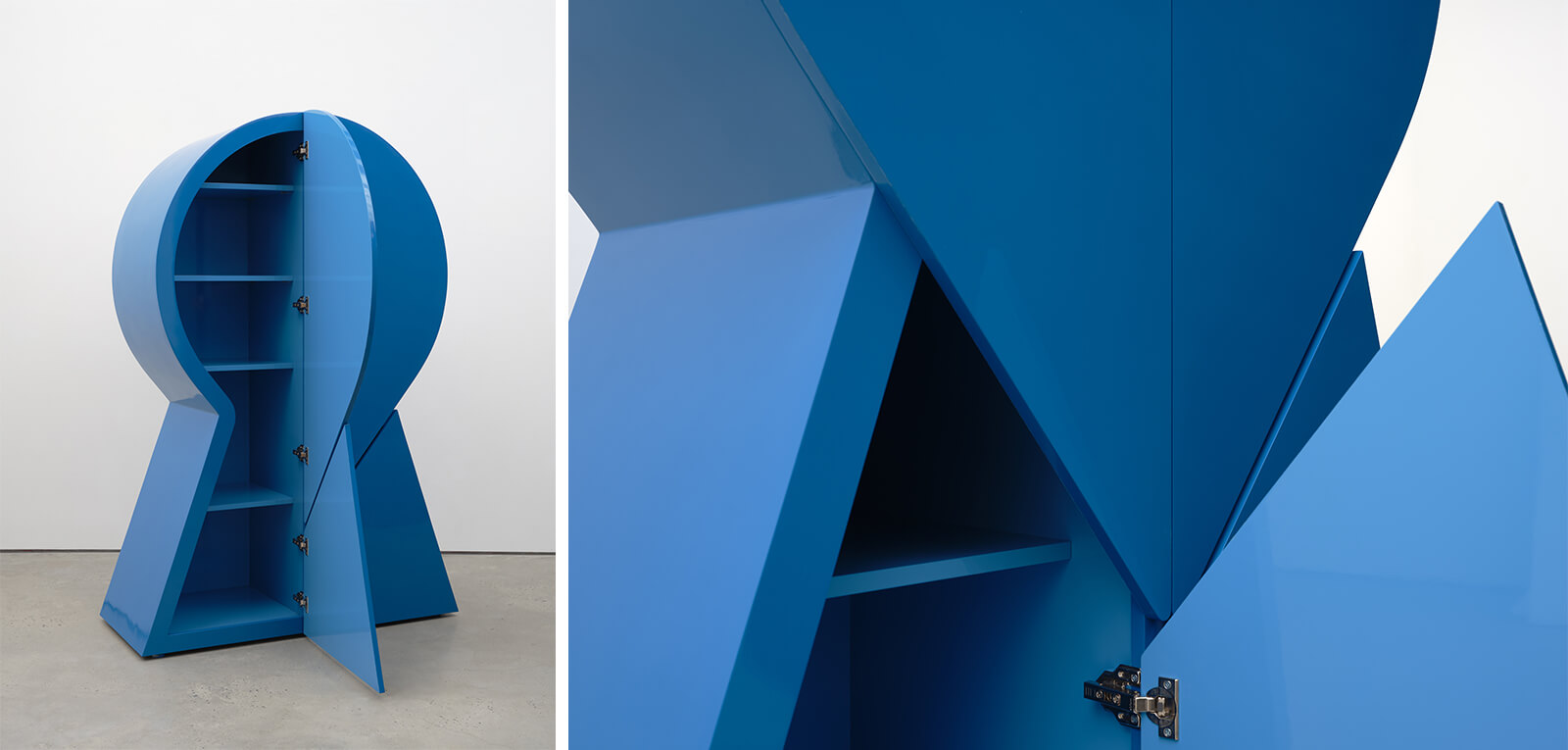
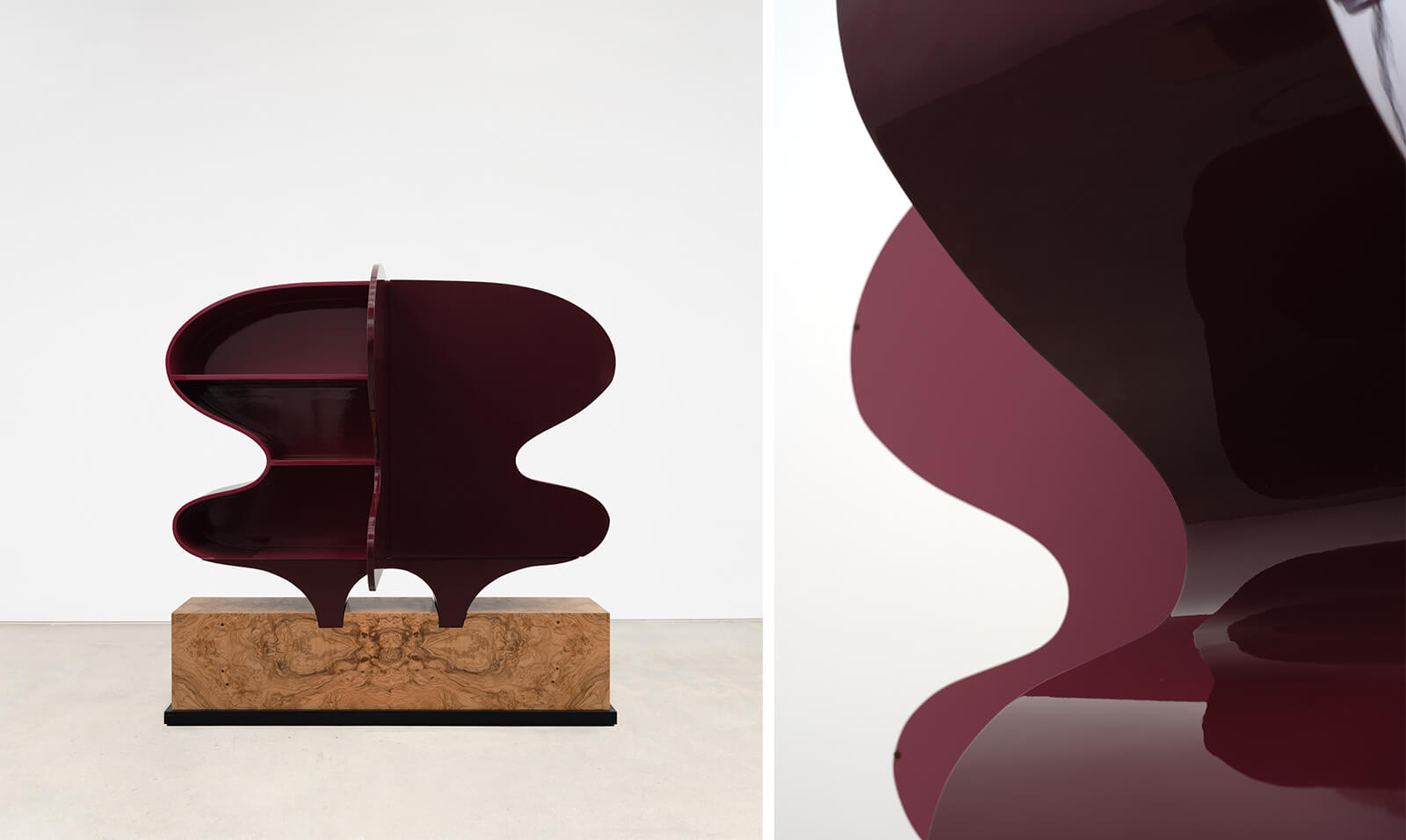
Previously, Preciado has described his designs as ‘insecure sculptures’, thinking of them less as fully functional pieces of furniture, more as some form of in-between. It’s also a nod to his own feelings about his work. Vitally, as Preciado describes, his works are strongly influenced by the memory of the people he holds dear, the places he grew up in and the cities he continues to inhabit. We could look at some of his more recognised pieces, such as the Chumash Chair, to illustrate this. The chair reappropriates Danish designer Borge Mogensen’s Spanish chair, reclaiming its contentious narrative for his own. Some of his totems, like the 2023 Handle Totem, similarly seem to reference Mexican culture, blending these with references from his life in the US, like the alder wood sculpture Totem (Gene Vincent) (2024) for Portraits at Karma gallery, NYC. The piece consists of fluid stacked shapes meant to resemble sink handles found at a hardware store in Los Angeles. His Pope cabinet, designed to resemble the shape of the papal mitre, is painted a brilliant green, in reference to Adolf Loos’ American Bar in Vienna. While Preciado was fascinated with Loos’ writing, this could not be divorced from the Austrian architect’s racist views, and the piece, as Preciado describes, is a means to make sense of that tension.
I’m drawn to the humour and looseness of Memphis and the discipline of modernism. I don’t try to resolve those influences into one language; I let them sit next to each other.
It’s precisely this critical engagement with contentious, exclusionary, oftentimes racist and misogynist conversations about design, particularly relevant when thinking about modernism, that the discussion with Preciado unfolds along. The designer has recently been working with often problematic narratives of misattributed design credits, of the erasure of certain people (deemed not to belong) from design canons, and recasting them into his own cosmogony. So Near, So Far at the Palm Springs Art Museum (PSAM), for instance, was a study of Manuel Sandoval—the carpenter who worked with modernists like Frank Lloyd Wright and Rudolph Schindler, but whose name does not appear in discussions on furniture designed by them (allegedly by themselves).
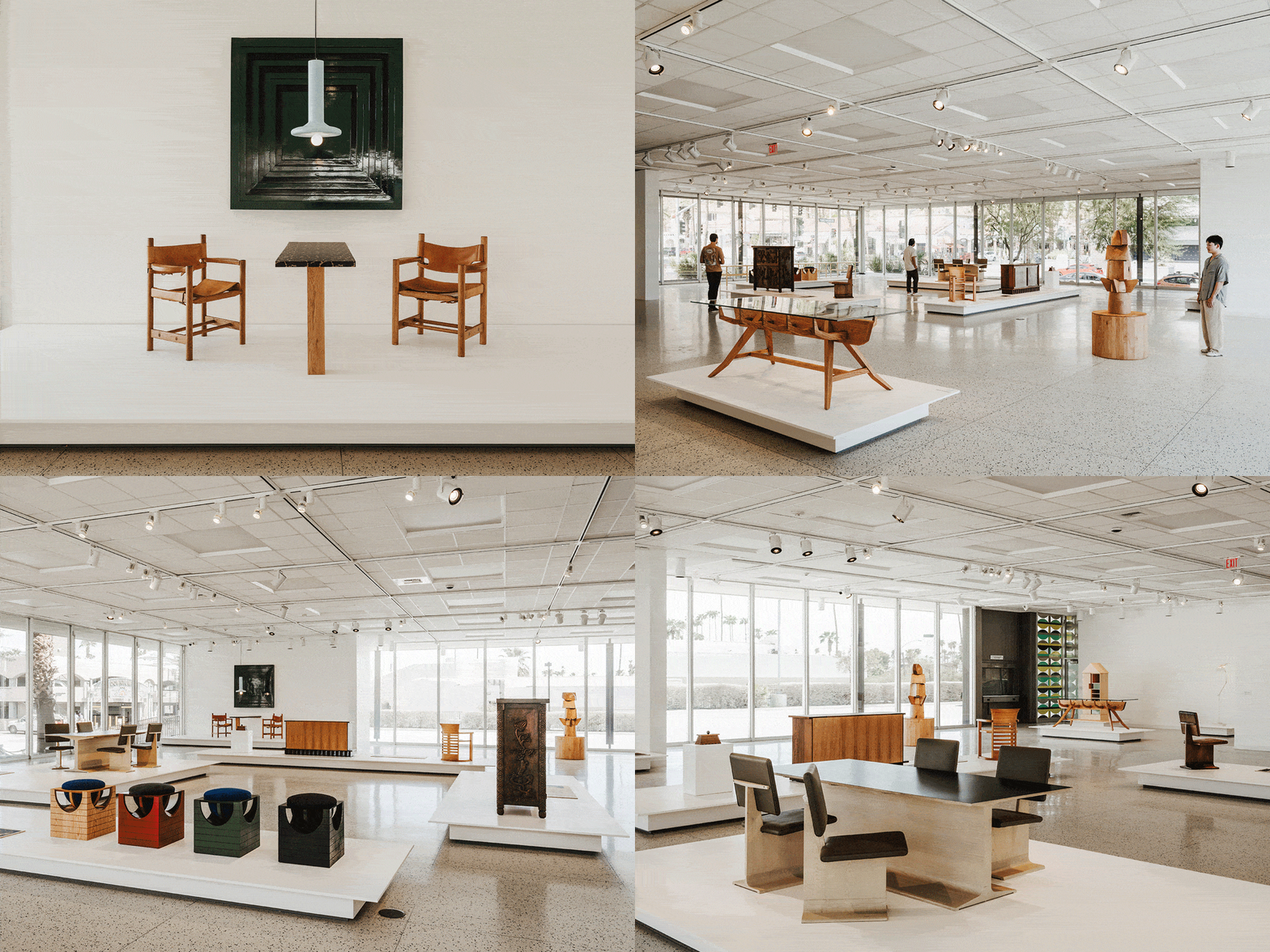
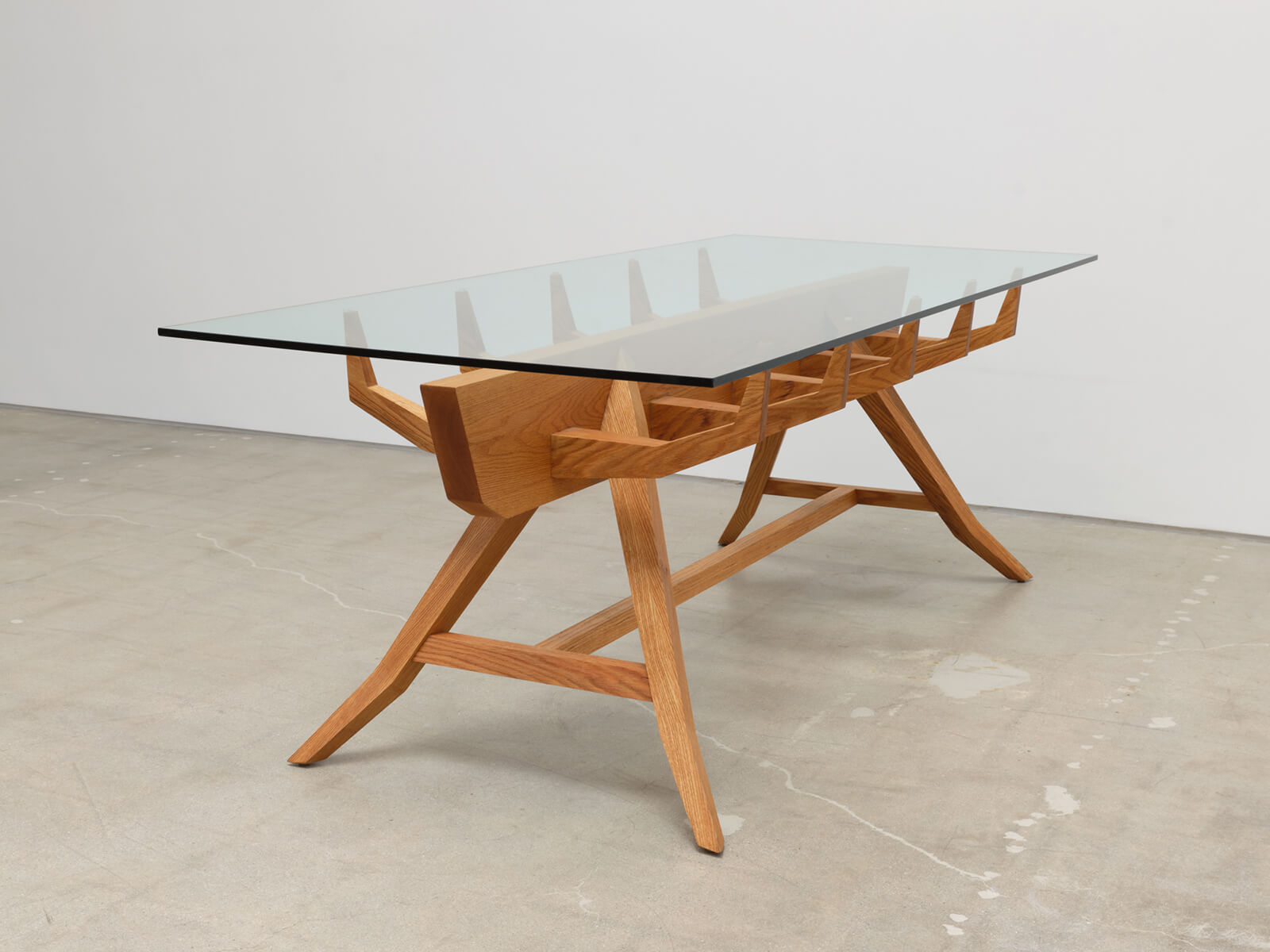
Describing how he stumbled on Sandoval, Preciado tells STIR, “Right before the pandemic, my friend Andrew Romano asked me about replicating a dining table set Schindler had designed for his Walker House. At first, I turned it down. I wasn’t interested in just replicating someone else’s design. But Andrew sent me the info anyway, and that’s when I noticed the name, Manuel Sandoval. I started digging and realised how pivotal he was to Schindler’s career—he was [his] main carpenter. But there was almost nothing written about him. That absence stuck with me. So I decided to make the dining table set, but really as a way to shine a light on Sandoval. It became less about the replication itself and more about bringing forward his role, his labour and how much his hands shaped what we now think of as Schindler’s work. The project grew into a way of asking: whose names get remembered in design history, and whose don’t?”
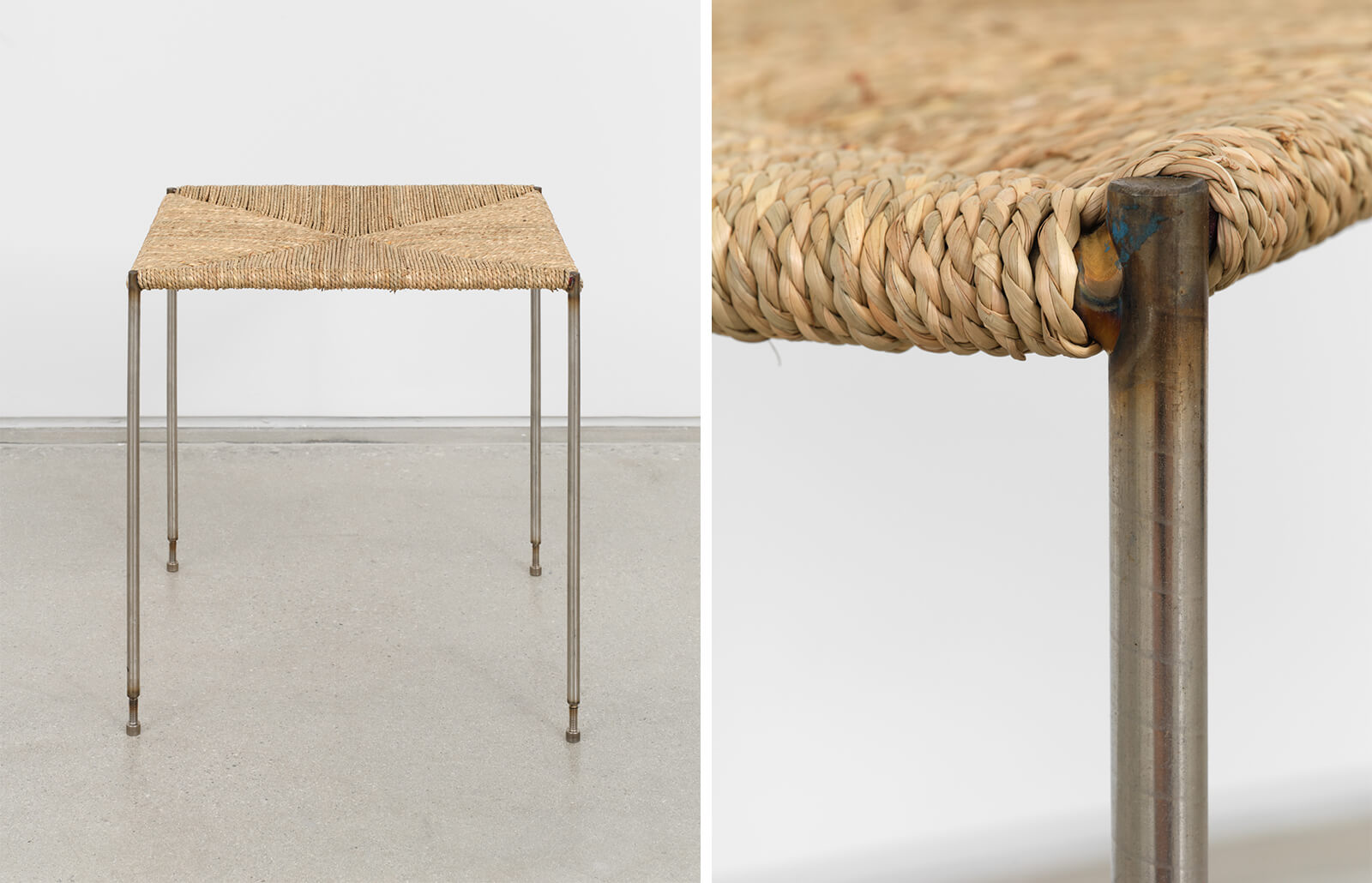
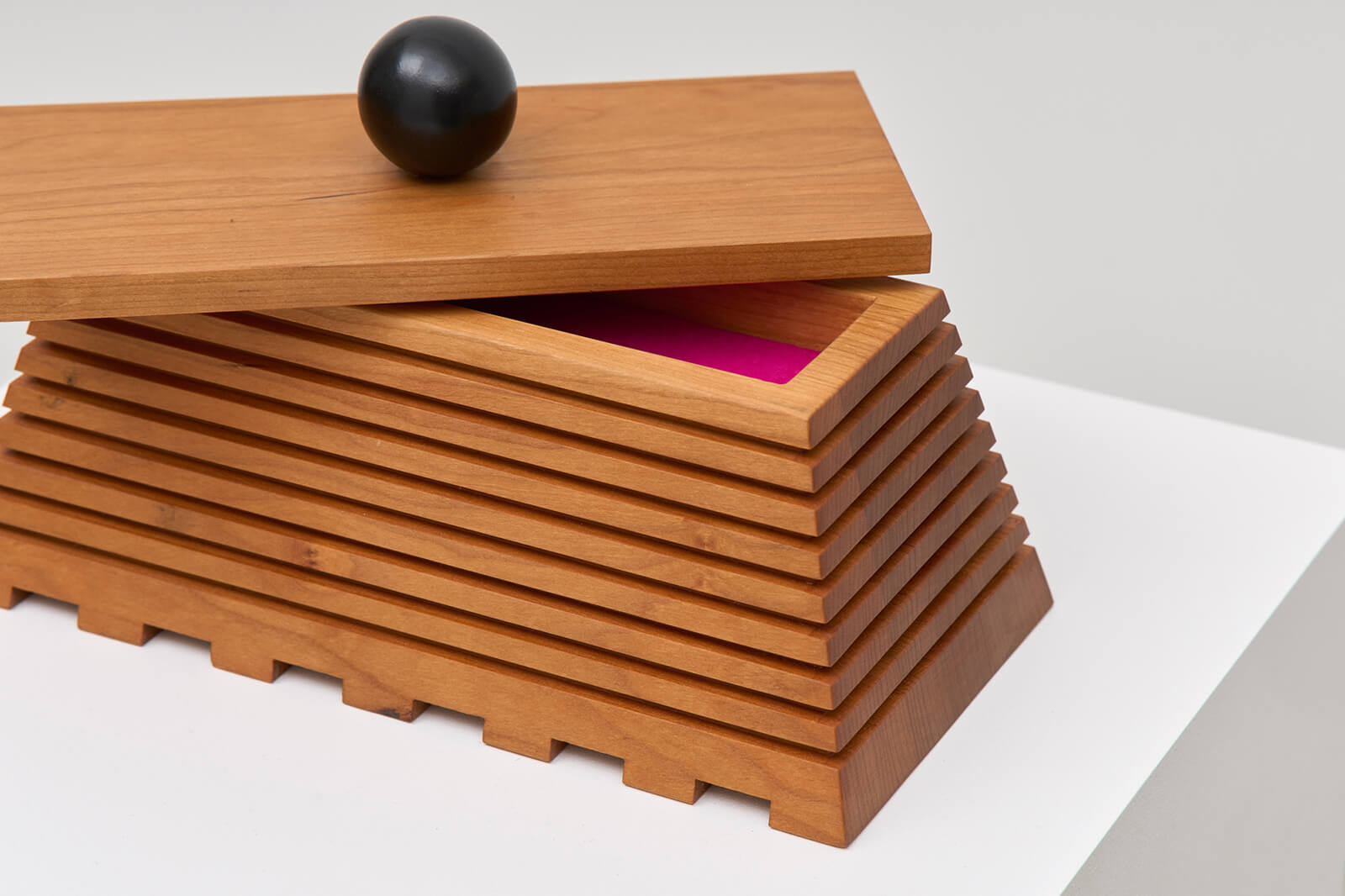
It’s a particularly fraught question, and one that Preciado does not shy away from. The design exhibition itself was a lively dialogue across generations, between Sandoval and Preciado. The display included newly commissioned furniture, lighting and sculpture that were both recreations and interpretations by Preciado of Sandoval’s legacy, a crucial redressing. The stools on display and the aforementioned table were originally worked on by Sandoval. Preciado even recreated a pencil box Sandoval had created to house a pencil FLW had gifted to him for the show. A recently concluded exhibition at the MAK Center, a multidisciplinary centre for art and architecture housed in a residence designed by Schindler, explored a similar question. The show, Reading Room, was meant to transform the modernist residence into a space for exchange through the practice of reading, and featured furniture designed by Preciado.
The project [at PSAM] grew into a way of asking: whose names get remembered in design history, and whose don’t?
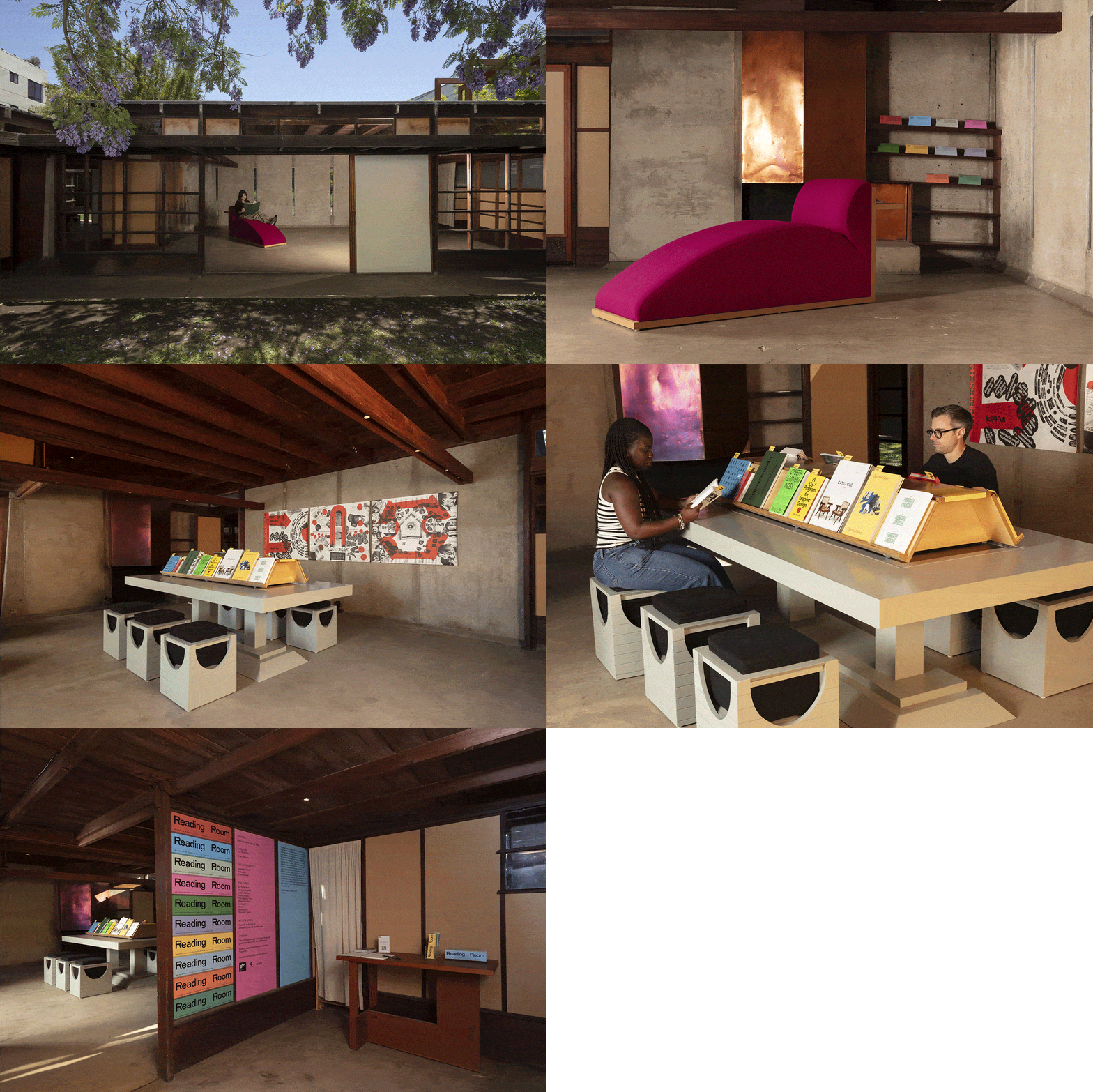
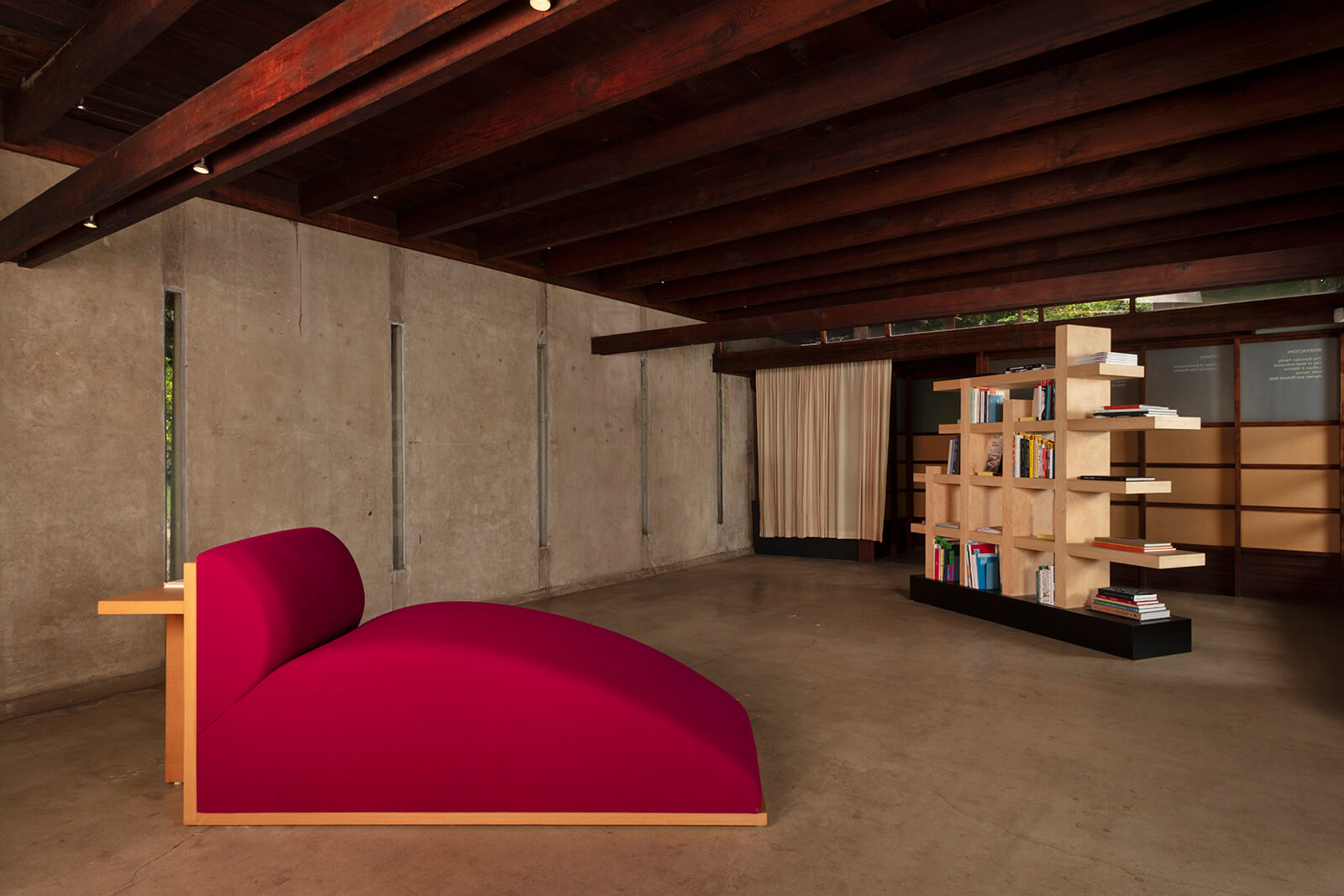
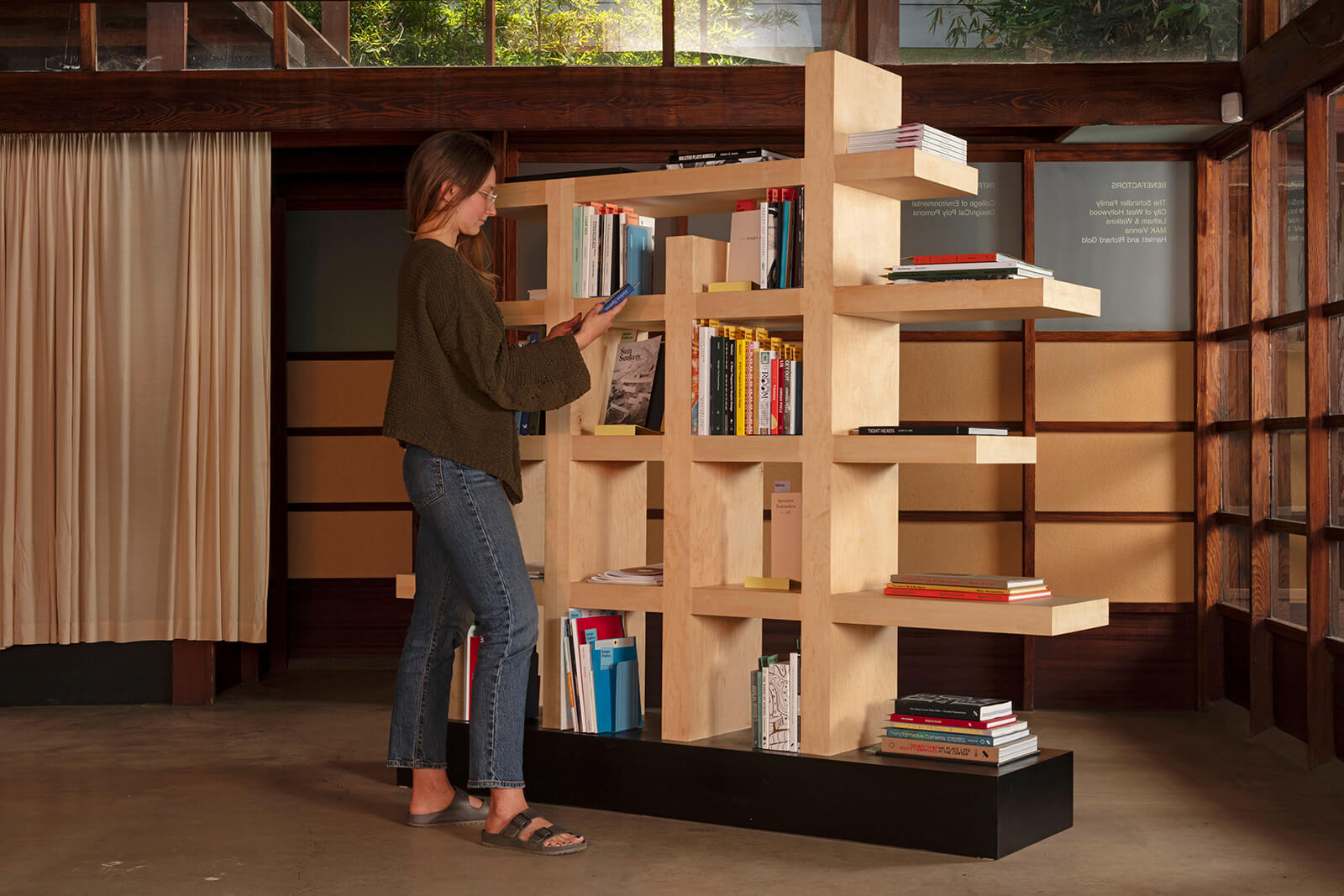
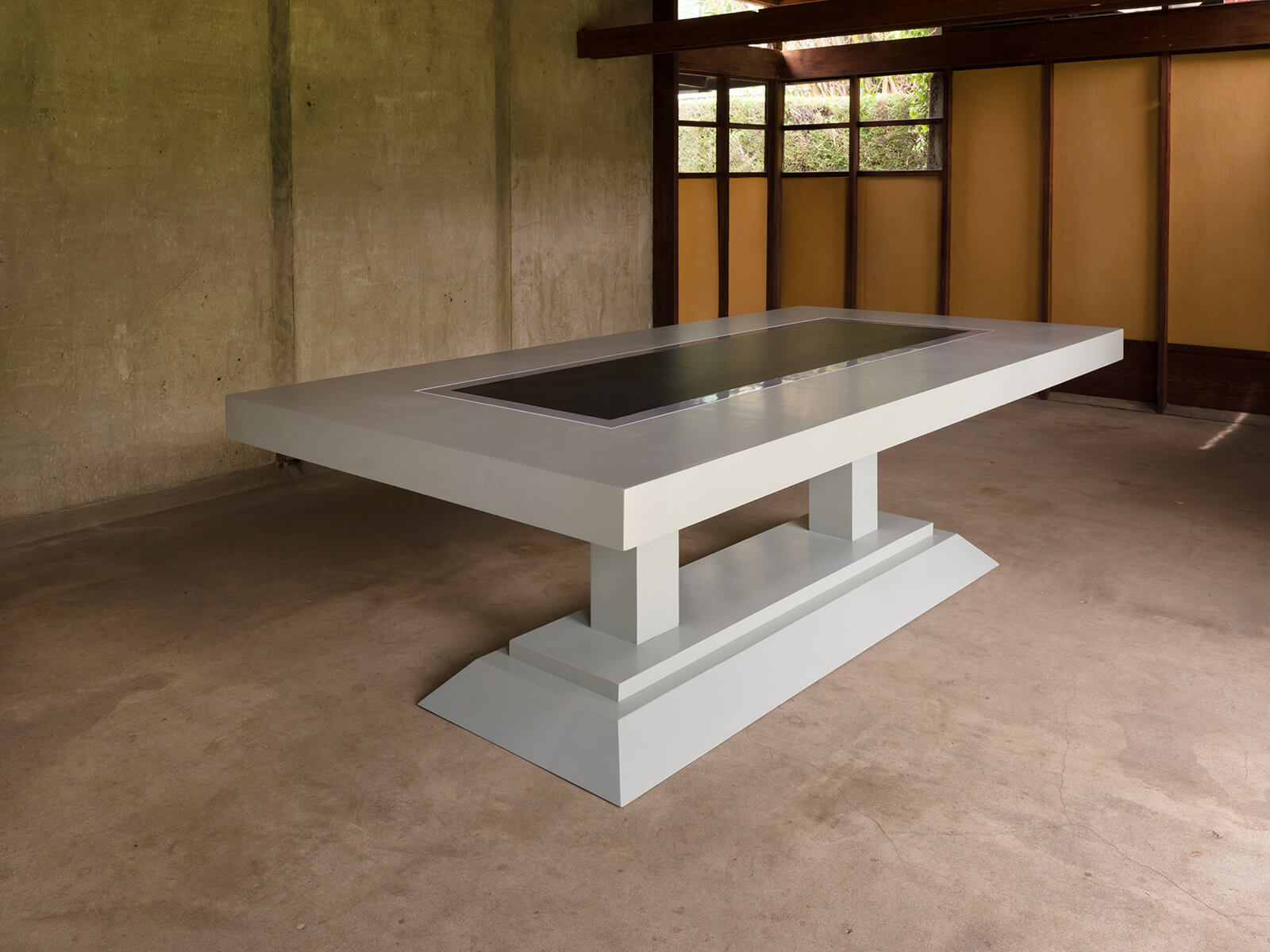
“For the MAK show, I designed a table, six stools, a bookshelf and a lounge chair with built-in shelves. The lounge chair in particular came from looking closely at Schindler’s own built-ins—I wanted to borrow that logic but twist it into something more sculptural. I was influenced by Sottsass and [Aldo] Rossi, who are both big for me, but also from the freeway interchanges in L.A., where structures overlap in these choreographed ways. I was also thinking about Ellsworth Kelly and Paul Feeley—artists who could let form and colour do the heavy lifting,” Preciado notes of the commission.
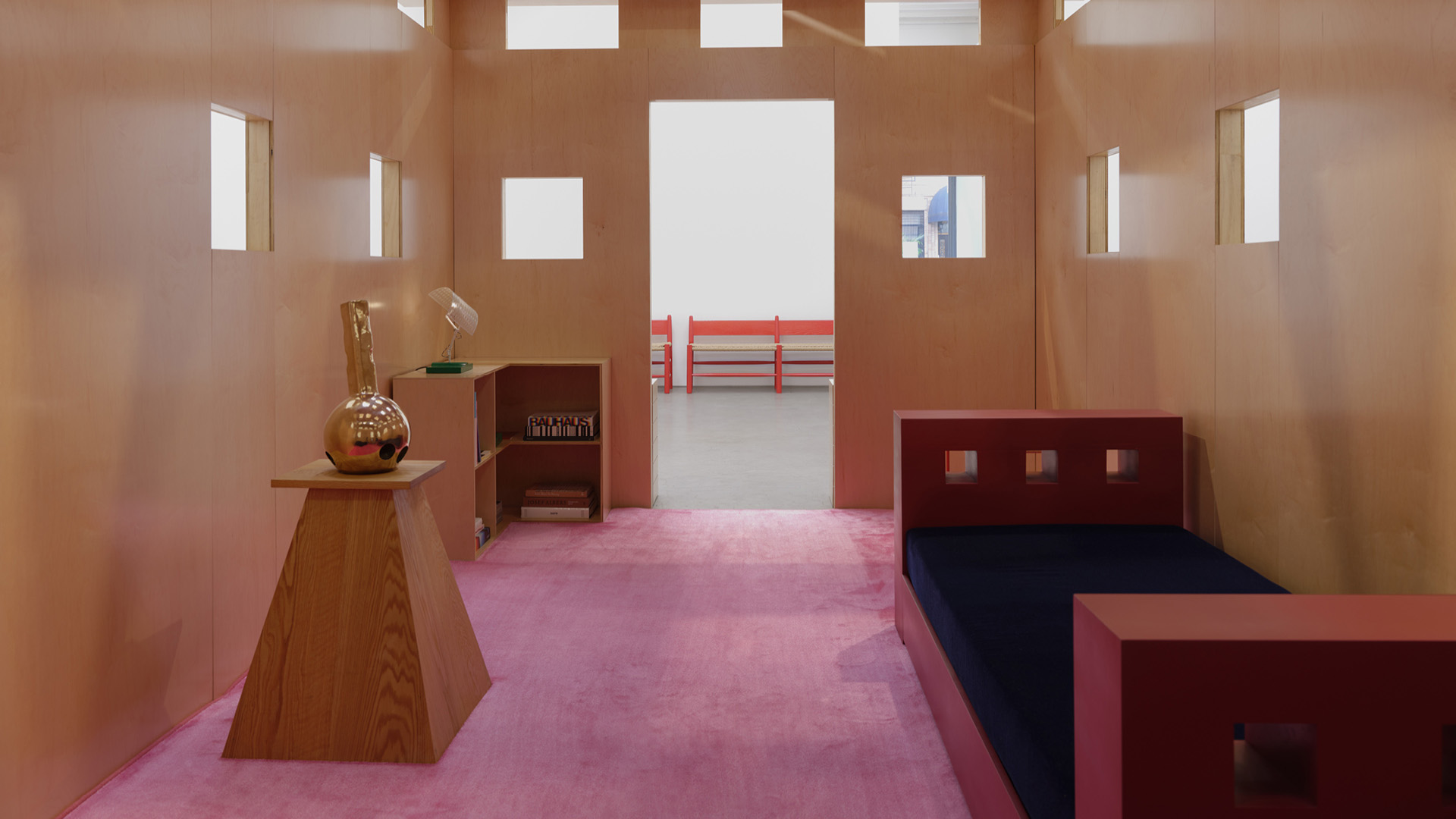
The works in the show are incredibly expressive. The lounge chair, especially, as Preciado notes, deep pink, stands out, while the free-standing bookshelf seems to echo some of the architectural language of the gallery itself. Architectural influences, as Preciado relays, are abundant in his work. Whether that’s subverting and challenging the narratives of modernists like Loos or FLW, or in using personal associations with their design language to arrive at a more fruitful resolution.

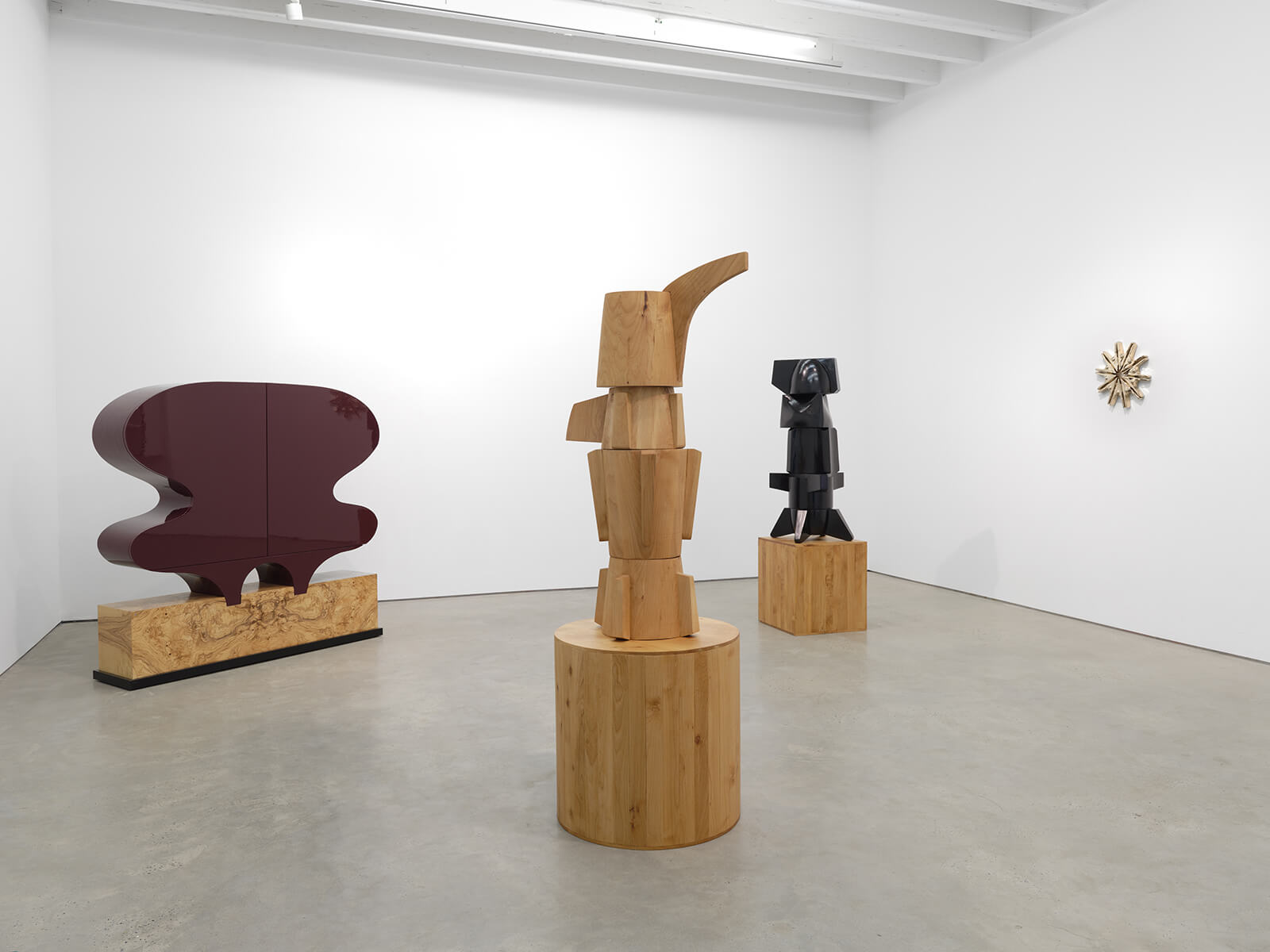
This architectural sensibility is perhaps most apparent in his 2024 show at the Karma gallery, titled Portraits. Centred around an architectural intervention, the show consisted of sculpture and wall works. The Town I Live In (2024), the intervention that forms the pivot for the show, was a house, intended to invite visitors to reconsider their relationships to domestic environments, art and each other. The exhibition text lists Rossi and Jean Prouve as influences for the large-scale installation. The reference to Rossi, in particular, seems straightforward enough, with the gridded facade of the installation reminiscent of Rossi’s own stringent design language. Within this installation, Preciado arranged different artefacts, including his Beaudry Avenue Daybed (2024), meant to evoke the memory of a highway protection barrier in Echo Park and Donald Judd’s work. The use of fuchsia was a nod to Sottsass’ 1965 Casa Lana, while the sculpture Bird in Boyle Heights (2024) was based on the form of a bicycle key, part of Preciado’s personal memories. A bookshelf integrated in The Town I Live In also displayed works by Preciado’s several collaborators and inspirations.
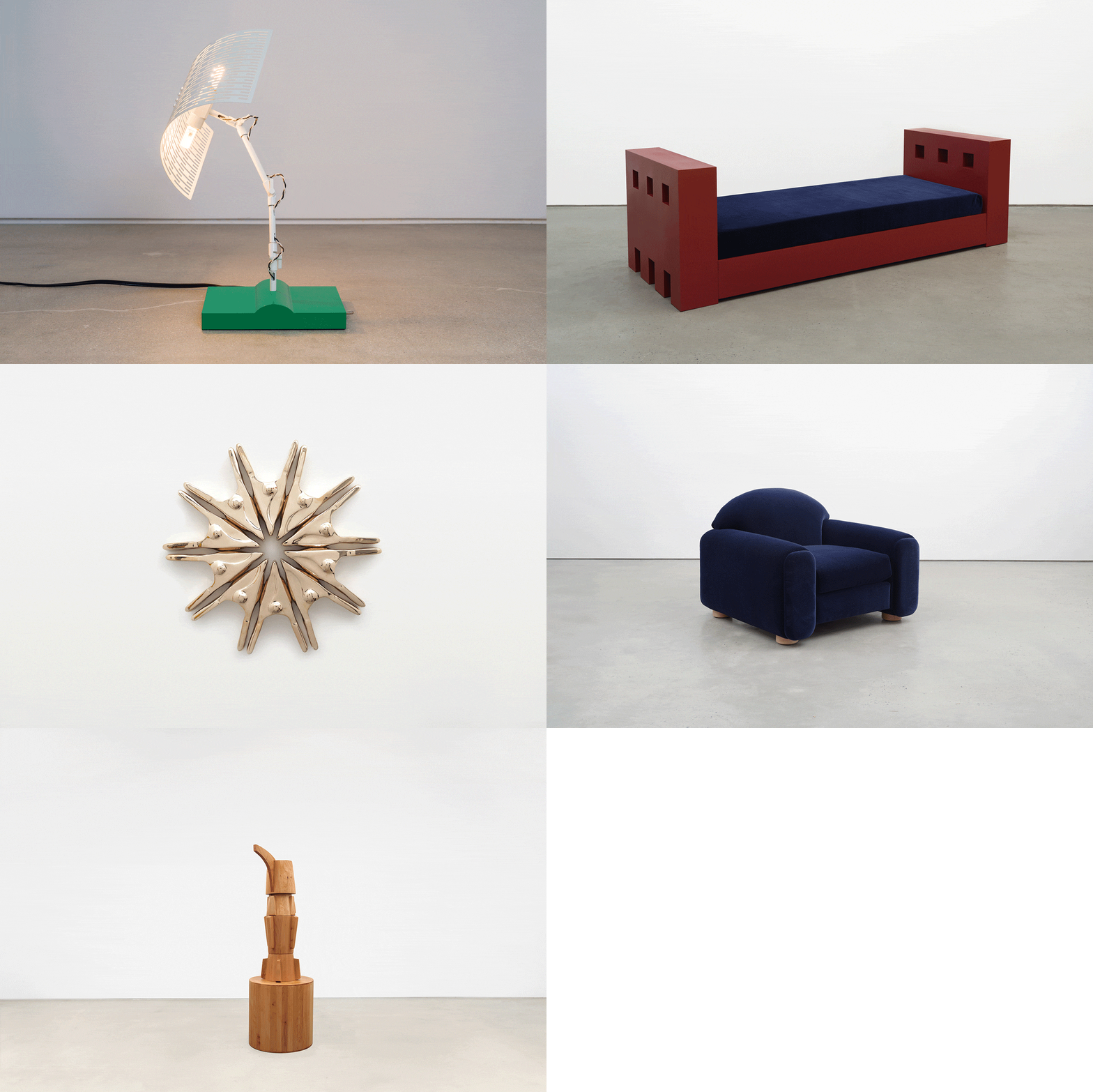
Together, these allusions weave discrete references into a new vernacular, both personal and collective. Portraits of the artist take the form of design. This show particularly underscores Preciado’s belief in memory being the activating agent for design. As he elaborates, “I think furniture and architecture are always in dialogue; furniture gives you the scale of a body, while architecture gives you the scale of a world. When you put them together, they shape how you move, how you remember and even how you see yourself in relation to a space. [The installation] only became complete when someone entered, sat down, and lived with it for a moment. That participation was important. The work opened up once the viewer’s body was in the room. It becomes less about the objects themselves and more about how they echo something personal, how a home, even a temporary one, can feel like a reflection of who we are.”
Who Preciado is, is perhaps most apparent in the works that he makes. If it’s the artists, architects and designers he’s looked up to or wants to question, it’s the very personal engagement with their work that comes through in the final output. “It’s less about translating a reference directly and more about letting it mix with memory. By the time a piece is finished, it holds both: where it came from and what I’ve lived through,” he says. And that in itself is what feels most exciting about his work. It’s a sense that design could be anything; if it draws on one reference or ten, it could, in essence, also be intensely personal.

Speaking about how his experience and lived memories come together in his work, the designer notes, “I’ve always been influenced by a wide mix of people and ideas, artists, designers, architects, but also conversations, music and things I encounter day to day. I don’t feel the need to separate them or rank which ones are most important. What matters is the way they open up new ways of seeing and making. Sometimes it’s about looseness and humour, sometimes it’s about clarity and restraint and other times it’s about the labour and memory built into objects. That being said, I'm sure there’s a handful of people you could see in what I do.”
To try to push his designs into a category feels like a disservice to the wonderfully unruly nature of the objects he creates. They’re all a little bit of everything, everywhere, all at once, and that’s what’s most alluring about them. That’s the tension: a challenge to channel different times, memories, influences and materials all into a single artefact, and the excitement of this work that Preciado mines. He says, “I can wake up and make anything I want.” That is the essence of his work.

by Pranjal Maheshwari Oct 23, 2026
Co-authored by Jareh Das, Chairman traces the British designer’s fixation on chairs as symbols of power and identity and as mediums of expression and community building.
by Chahna Tank Oct 22, 2026
STIR speaks with the Mumbai-based type designer about her practice, type walks and why she wants more people to have stronger opinions about Indian-script fonts.
by Mirra Lynn Oct 22, 2026
The curators behind Palestine Design Week 2026 reflect on its intent, considering how design holds memory, makes space for loss and imagines a future in Palestine.
by Jincy Iype Oct 15, 2026
STIR explores craft, material intelligence and people shaping Indian design through dialogues with Design Democracy’s co-founders and the curators of its special exhibitions.

make your fridays matter with a well-read weekend
Enter your details to sign in
Don’t have an account?
Sign upOr you can sign in with
a single account for all
STIR platforms
All your bookmarks will be available across all your devices.
Stay STIRred
Already have an account?
Sign inOr you can sign up with
Verification link sent to check your inbox or spam folder to complete sign up process
Tap on things that interests you.
Select the Conversation Category you would like to watch
Please enter your details and click submit.
Enter the 6-digit code sent at


Ryan Preciado on the dialogue between personal memory, history and heritage
by Mrinmayee Bhoot | Published on : Nov 03, 2025


 Sign in with Google
 Sign in with email
What do you think?