
|

|

|
|
The super-exponential rise of the global human population since industrialisation will give way to an equally rapid decline in less than a generation. Every aspect of the built, cultural, economic as well as political environment will dramatically change. This certain, impending transformation is an urgent question for architects to face. In a microbiological turn in |
architecture theory, the smallest form of life offers new ways of thinking about the largest question. For billions of years, bacteria have been experts in exponential growth but also of living collaboratively with very limited resources.
When bacteria sense increasing toxicity and declining resources in overpopulated environments, they invent new behaviours, reducing the consumption of resources and diversifying themselves via rapid mutations to be more resilient in the face of an unknown future. They innovate in the face of a crisis.
|



|

|
|

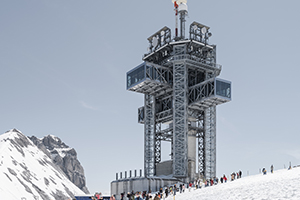
A 'signpost' amid the Alps, TITLIS Tower by Herzog & de Meuron is a structural triumph 05 MIN READ
|


Exploring the world of children's book designs by Seymour Chwast 08 MIN READ
|

|


|

Concéntrico 2026 in Logroño, Spain: A festival the city has made its own 10 MIN READ
|


 |
|
|||
|
|||
|


|
NEWS
If You Want Peace by Stefon Diggs proffers dreamlike collectibles at Tuleste Factory
02 MIN READ

Forms of Belonging by Egeværk at HB381 layers geology, landscape and belonging
04 MIN READ
|


|
|||
|
|
||||||||||||||
|
||||||||||||||


