Design03 mins. read
Master illustrator Seymour Chwast on getting ideas when creativity runs dry
by Zohra KhanFeb 02, 2021



by Chahna TankPublished on : Jul 17, 2026
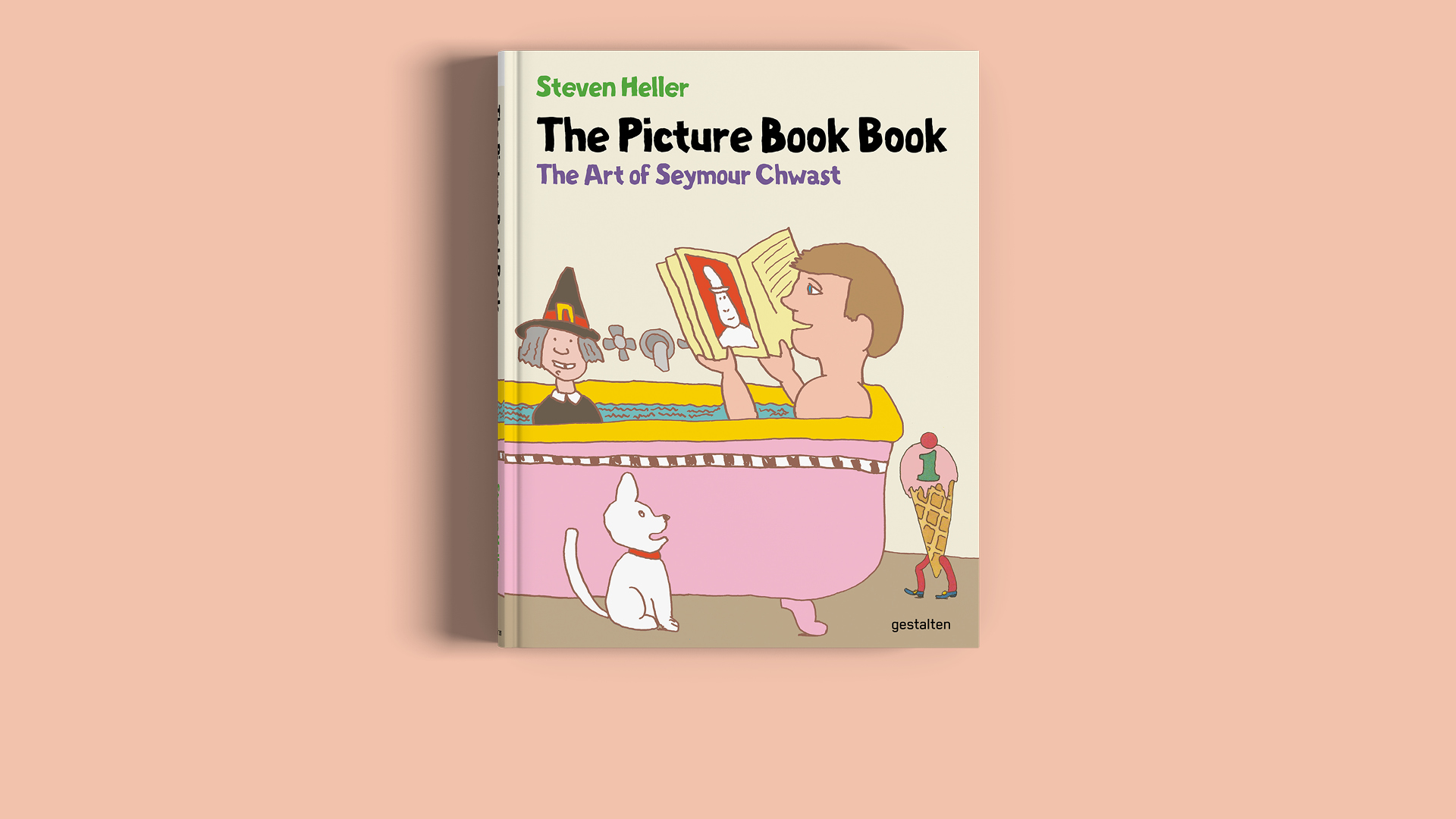
"I love doing books. I love working with stories and characters. It's what I do," Seymour Chwast proclaims in a conversation with STIR, discussing his latest publication. The beloved graphic designer and co-founder of Push Pin Studios—best known for his posters, editorial illustrations and commercial work—has not-so-secretly been designing children's books—lots and lots of them—for years, defining what might only be called as his 'parallel career'. "I've done over 40 books for children," he remarks—and now, his expansive body of work in children's book design has been catalogued in gestalten’s The Picture Book Book: The Art of Seymour Chwast, a retrospective volume edited by American art director and journalist Steven Heller.
Few people know Chwast's work better than Heller. As his longtime friend and collaborator, Heller has spent decades writing about the American designer and his works. “He's done it so many times. He can do it by heart now. I'm really grateful for the work he's done on my behalf,” Chwast tells STIR, laughing. "Steven loves my work. So I don't have a problem with that. And I love what he writes. So we've gotten along very nicely here. We've been at it for a long time," he says. Heller also reflects on their long association in the introduction of the book, and goes on to state, “With all due modesty, I should know more about Chwast’s work than almost anyone else—possibly even Chwast himself. But The Picture Book Book proves my claim is wrong.” This admission captures the book's premise—despite Chwast’s towering reputation in graphic design, his children’s books have remained a lesser-known aspect of his illustrious career—one that deserves just as much attention; and that’s what The Picture Book Book aims to do.
Working with children's books allows me a freedom that I don't get often with adult material. – Seymour Chwast
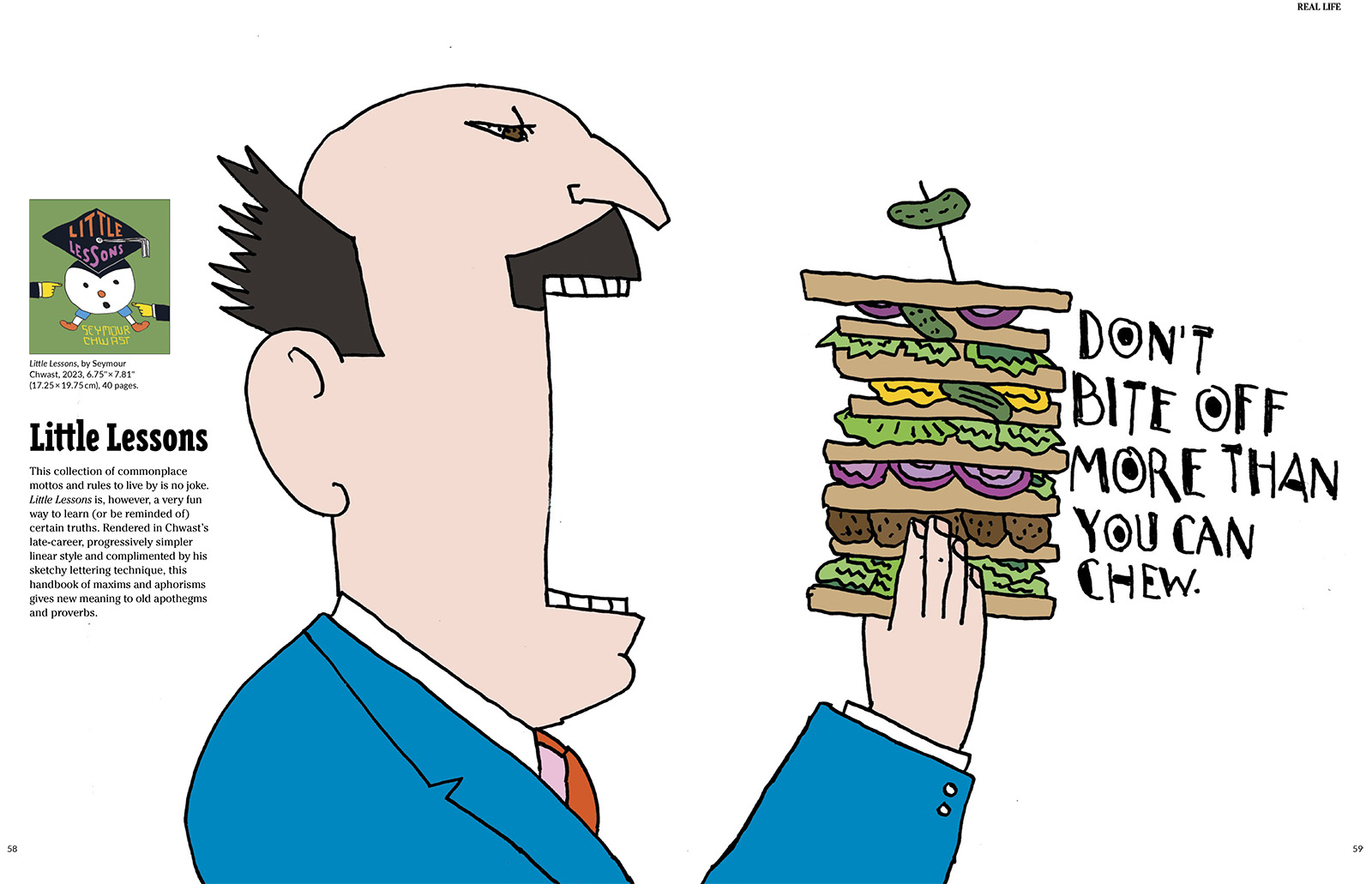
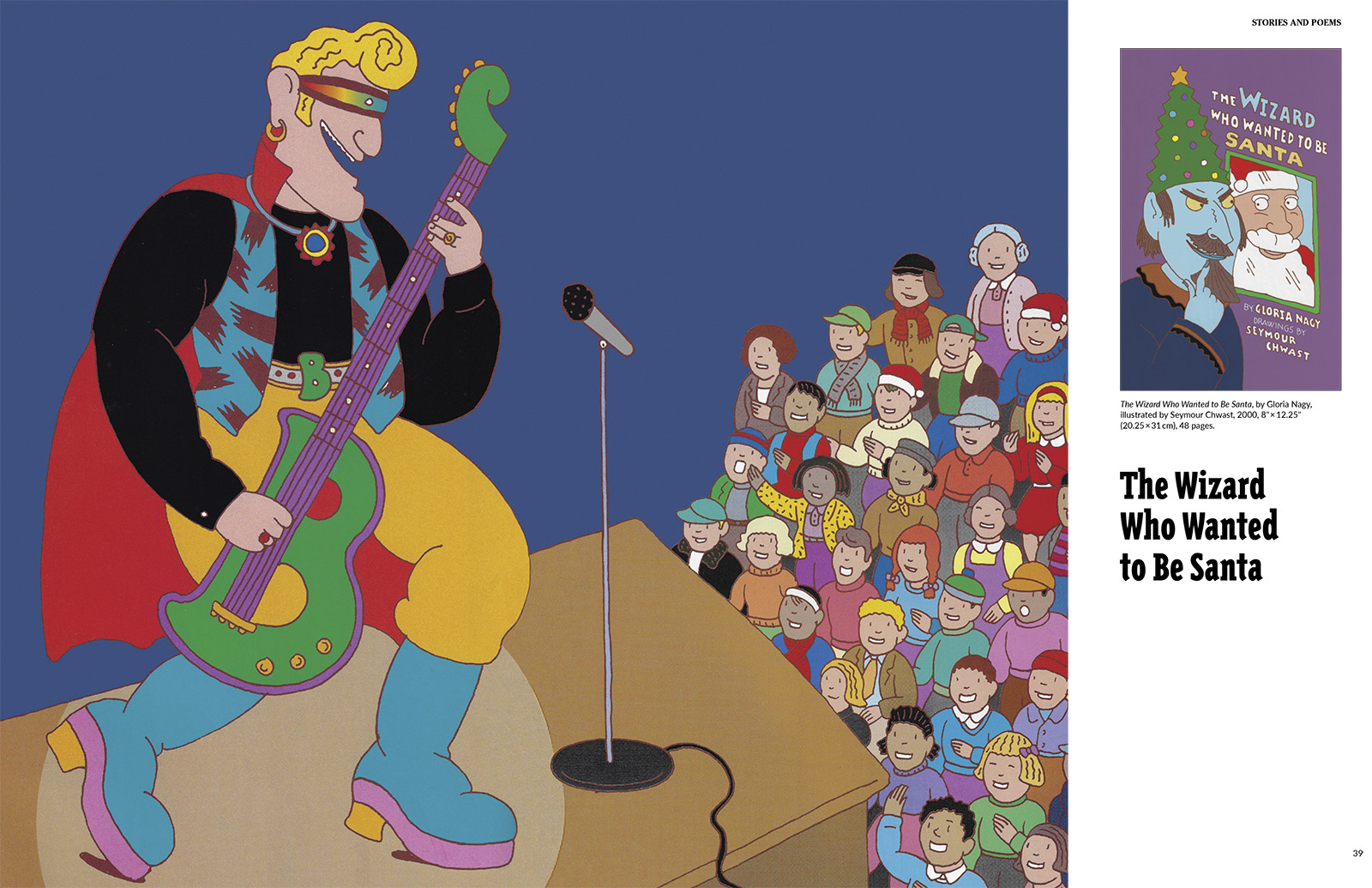
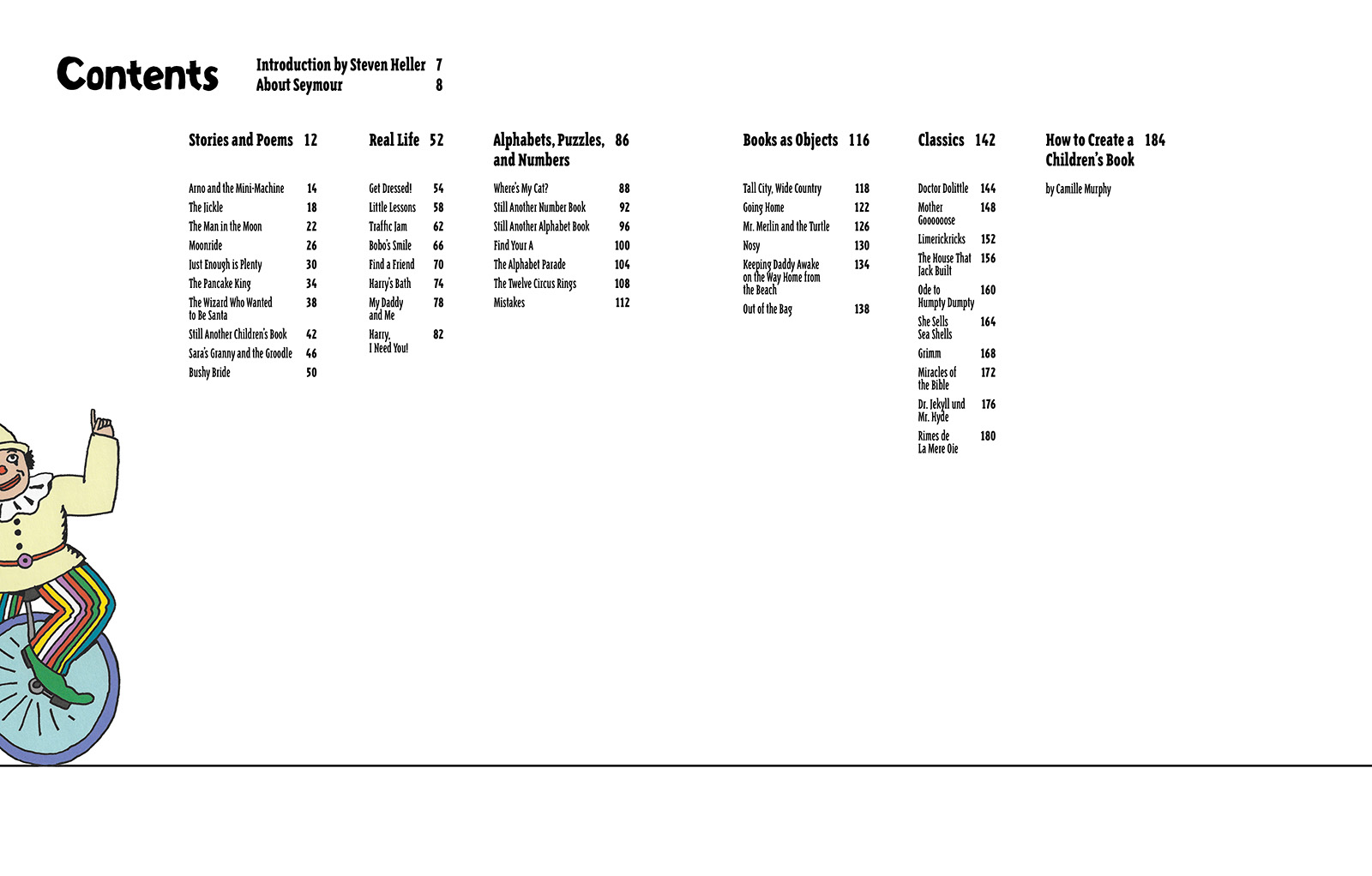
The picture book assembles the many illustrations and layout designs Chwast has done for children’s books by other authors, as well as his own, organised into six thematic chapters: Stories and Poems; Real Life; Alphabets, Puzzles and Numbers; Books as Objects; Classics; and a closing guide How to Create a Children’s Book (illustrated by Chwast himself) by design director, Camille Murphy. Every section—and often, every spread of the book—has a distinct visual language. The pages brim with the original book covers and interior spreads, accompanied by brief text that introduces each book and invites readers to wander through the playful and experimental world of Chwast’s children's books. Every page is bursting with bold colours and flat illustrations, populated by an ever-expanding cast of wonderfully oddball characters.
"Working with children's books allows me a freedom that I don't get often with adult material," Chwast explains to STIR. "It gives me freedom to come up with doing things in a different way and producing a different kind of book." As opposed to posters—where, as he puts it, "one image, it's got to work". That freedom is evident in the sheer breadth of the work chronicled in this volume: books built around stories and poems; books teaching alphabets or numbers through playful visual games; puzzle books that ask readers to spot what's missing or what's different; books that turn familiar aphorisms and proverbs into delightfully illustrated nuggets of wisdom. Chwast has also illustrated classic books and stories such as the fairy tales of the Brothers Grimm, Dr Jekyll and Mr Hyde as well as stories from the Bible, reimagining them for children with the same wit and graphic inventiveness that define the rest of his work.
Fame, I don't understand; what becomes popular or what people like. I just do the best I can. – Seymour Chwast
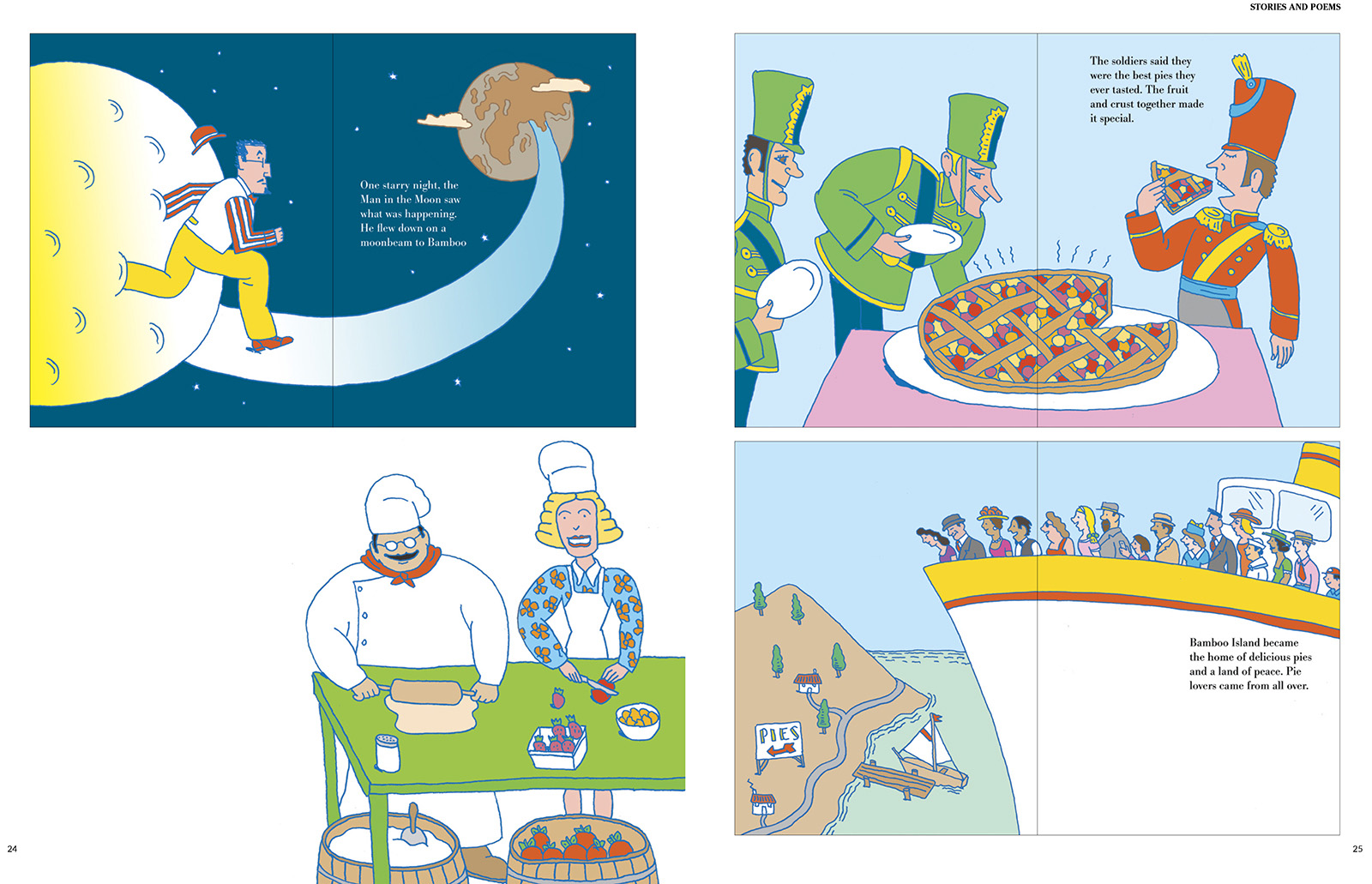
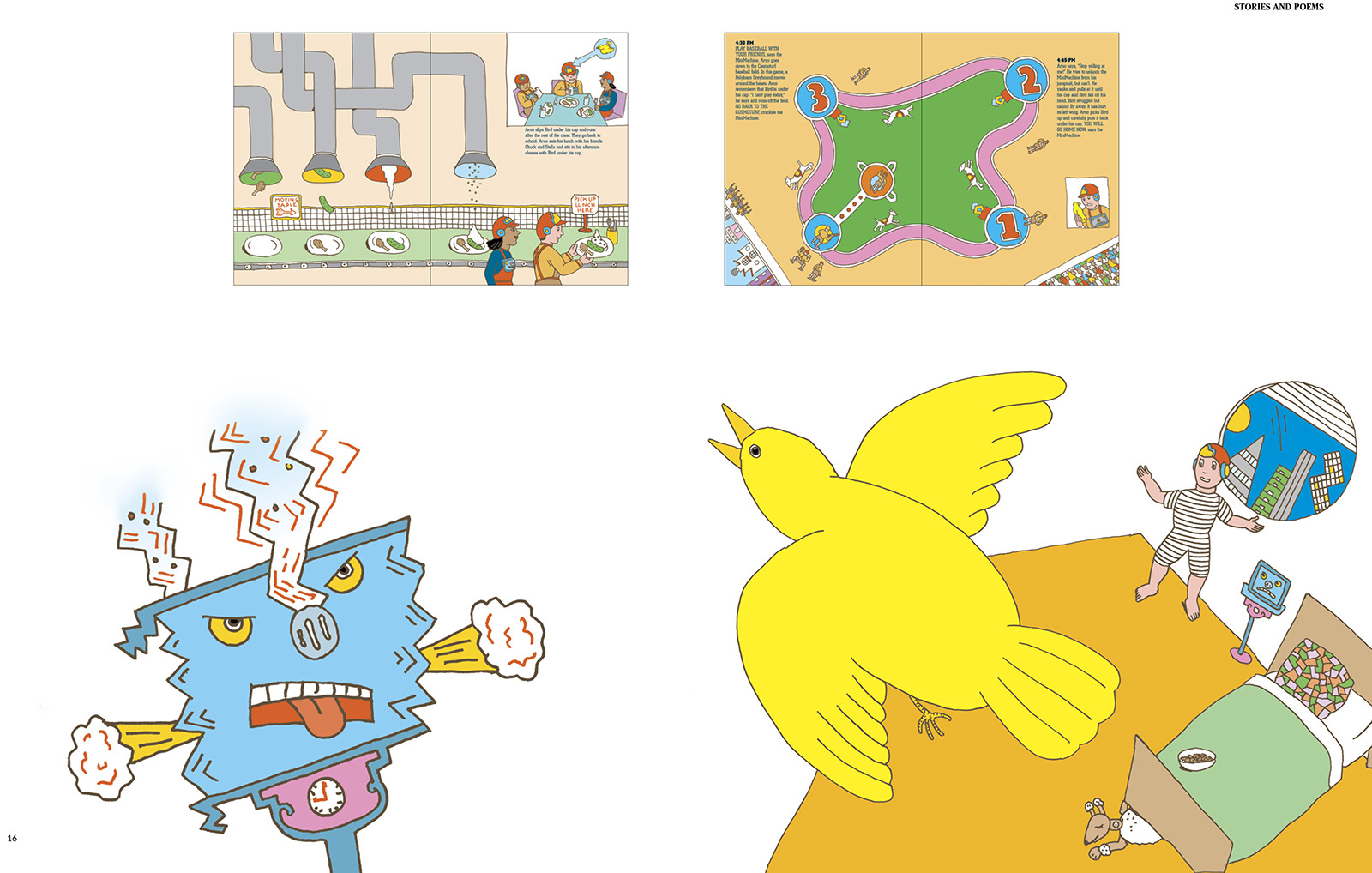
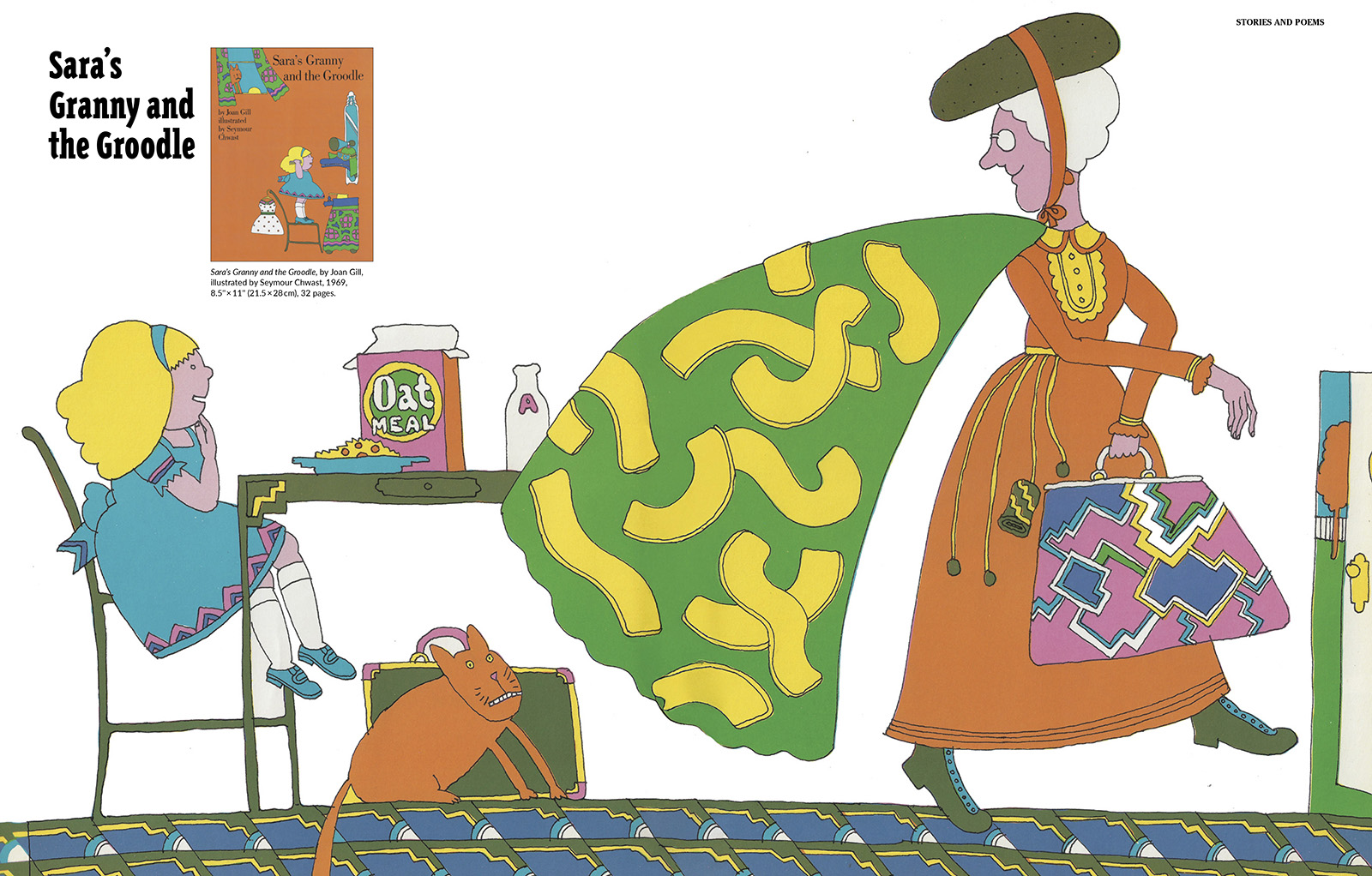
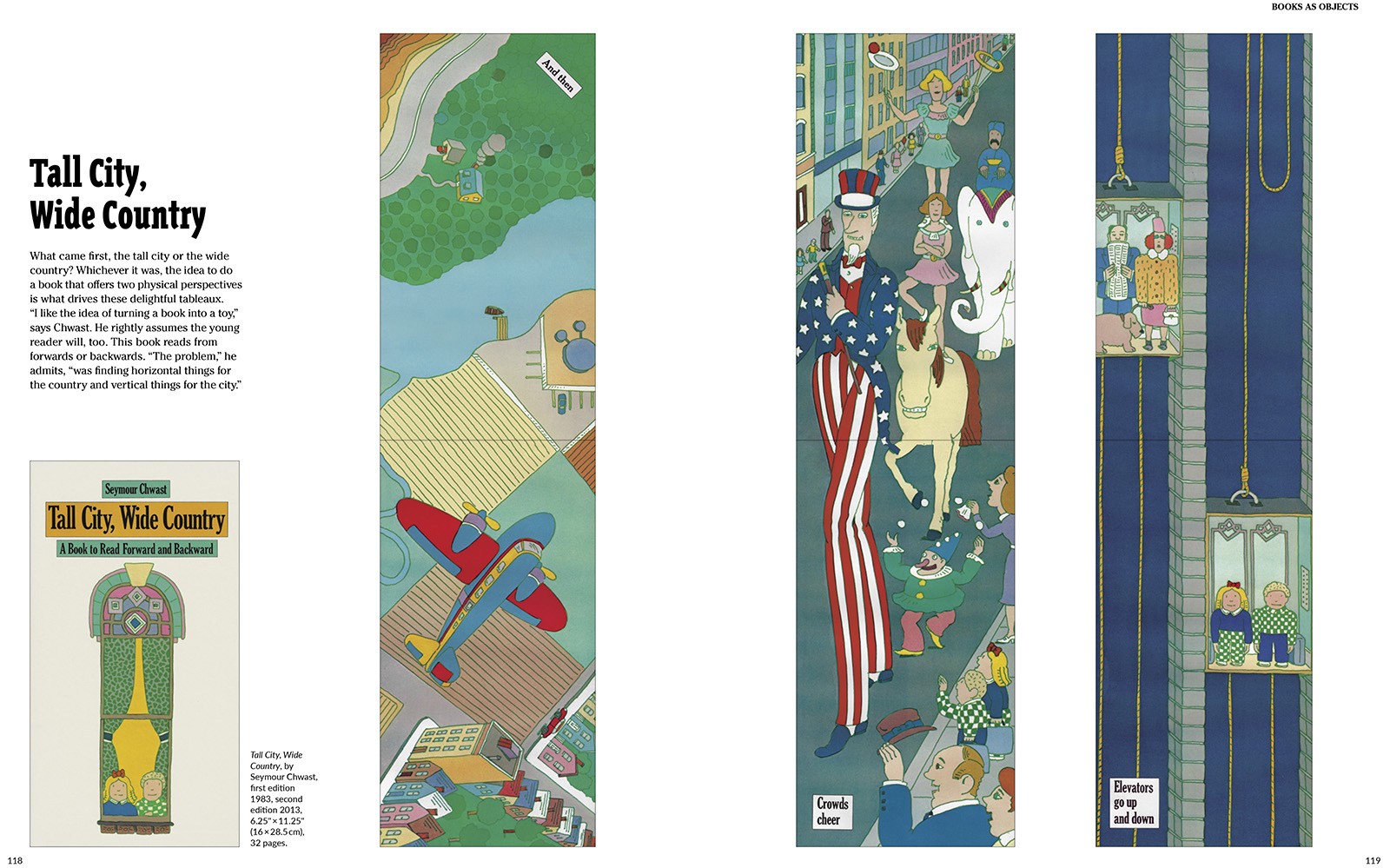
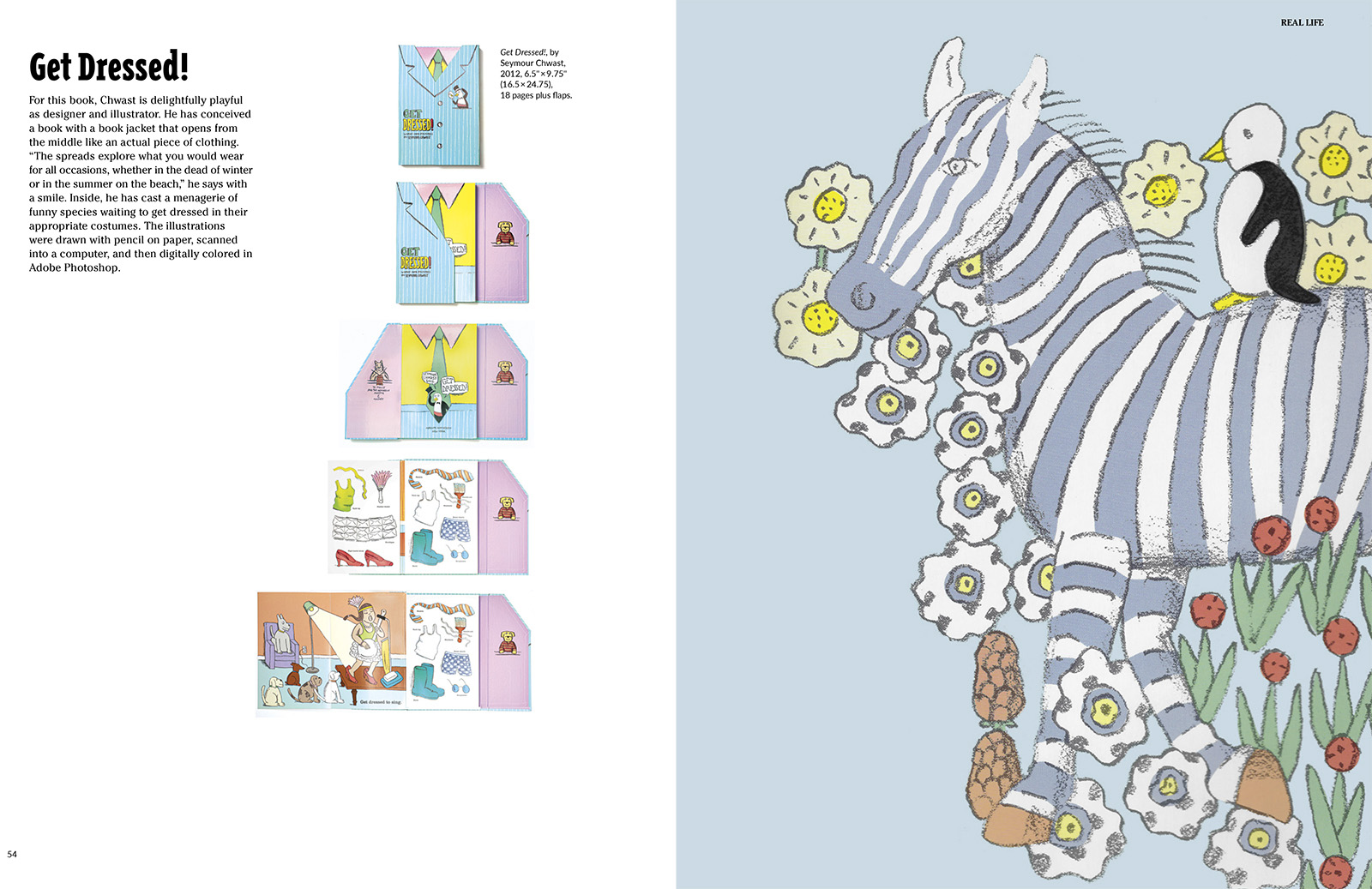
Apart from these, there are also books that capture Chwast's fascination with treating the book itself as part of the story. For example, in his book Get Dressed (2012), the dust jacket opens from the centre like a piece of clothing, turning the very act of opening the book into part of the narrative. Interactive flaps, fold-and-cut-outs and other visual surprises appear throughout his work, reflecting his long-held fascination with books that invite participation. “I've been trying to find projects where the book is an object or a toy where you have to manipulate the book itself in order to read the story or whatever the content is,” he tells STIR. The dust jacket of The Picture Book Book itself can be repurposed into a poster, which should not be a surprise, given that Chwast himself designed the book's layout.
When asked about his experience of seeing years and years of his own works in one place while designing the layout, Chwast says: "All the failures, I think, are forgotten, thankfully. I don't remember the successes. A success is when a publisher wants to do my book. And if the book is a success, that's great. If it isn't, that is terrible, but I'll try to do my best the next time."
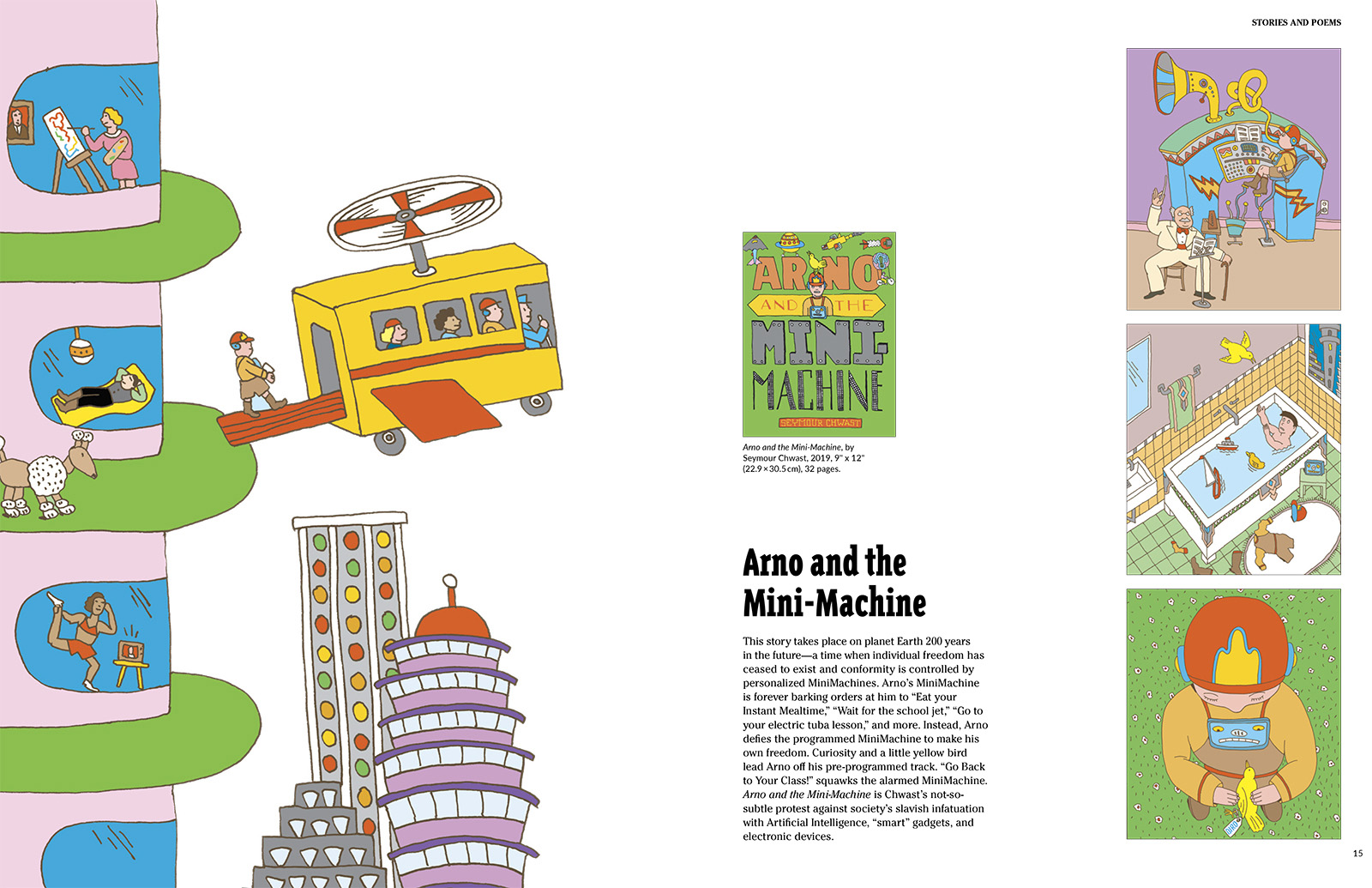
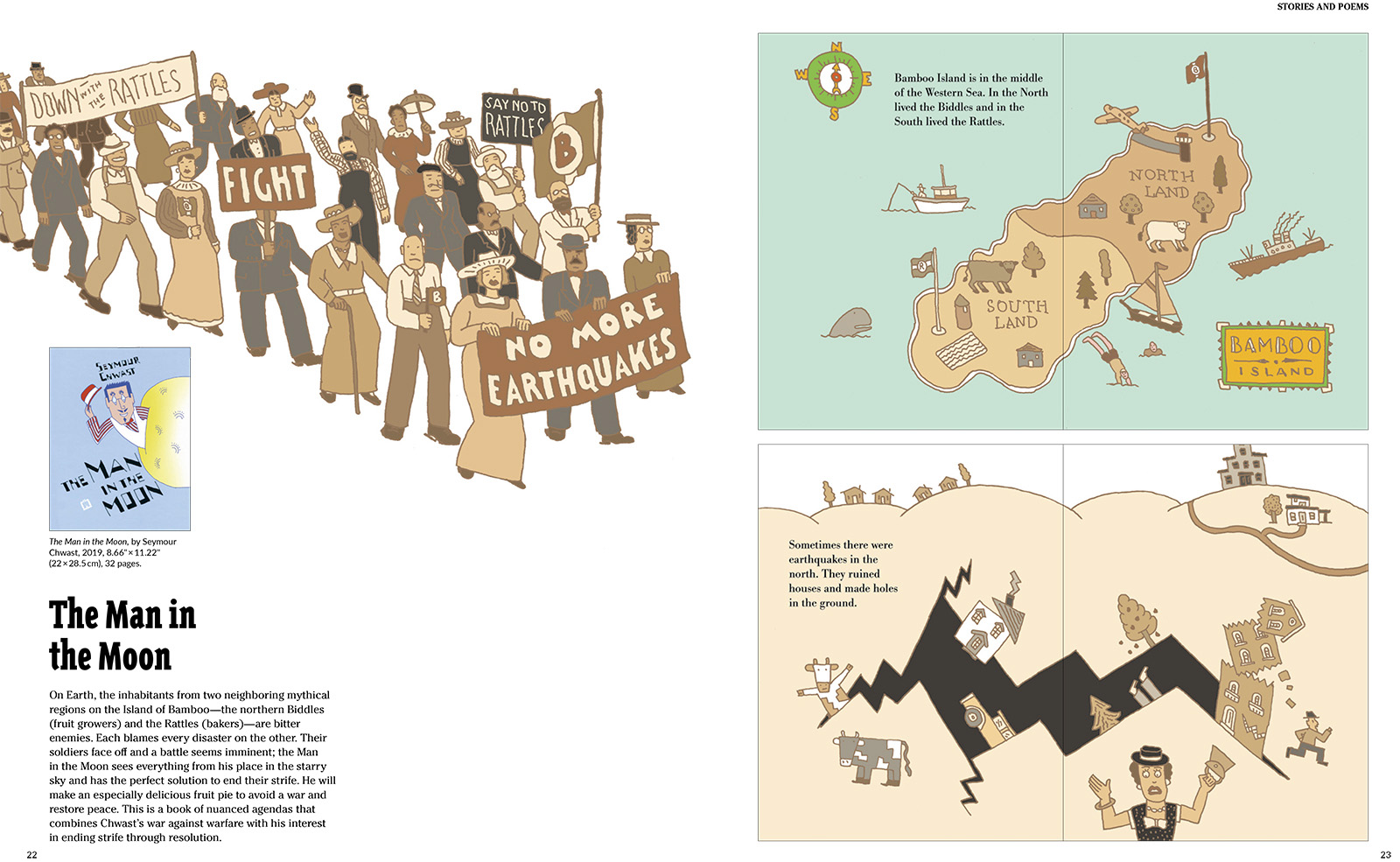
Beneath all the humour and play, many of Chwast's books are political as well. Rather than shielding children from complex ideas, Chwast's picture books serve as spaces where curiosity can flourish. The Man in the Moon (2019) imagines two neighbouring communities—the fruit-growing Biddles and the bread-baking Rattles—on the brink of war, until the eponymous Man in the Moon intervenes with an unexpected act of peacemaking: baking a pie! "This is a book of nuanced agendas that combines Chwast’s war against warfare with his interest in ending strife through resolution," the description reads. Another book, Arno and the Mini-Machine (2019), is set 200 years in the future, where personalised Mini-Machines have hijacked individual freedom and reduced human life to conformity. In such a world, the titular Arno paves a way to his own freedom. Published merely a few years before generative AI became part of everyday conversation, it is difficult not to see the book as a meditation on our growing dependence on intelligent technologies.
Having previously told STIR about his preference for drawing with his hands on paper rather than relying on technology, and having already witnessed one seismic shift in the design industry with the advent of the computer and the digitisation of art, his response to AI's growing omnipresence is cautiously pragmatic. "I knew that the computer was just a tool. It took me a long time to get used to it. And then finding out I could do a lot of work on the computer. That may happen with AI as well, but I still draw on paper," he shares. "It's a wonderful source and a good tool to use. It does not solve all problems and does not do books by itself. We still need artists and designers to do that work."
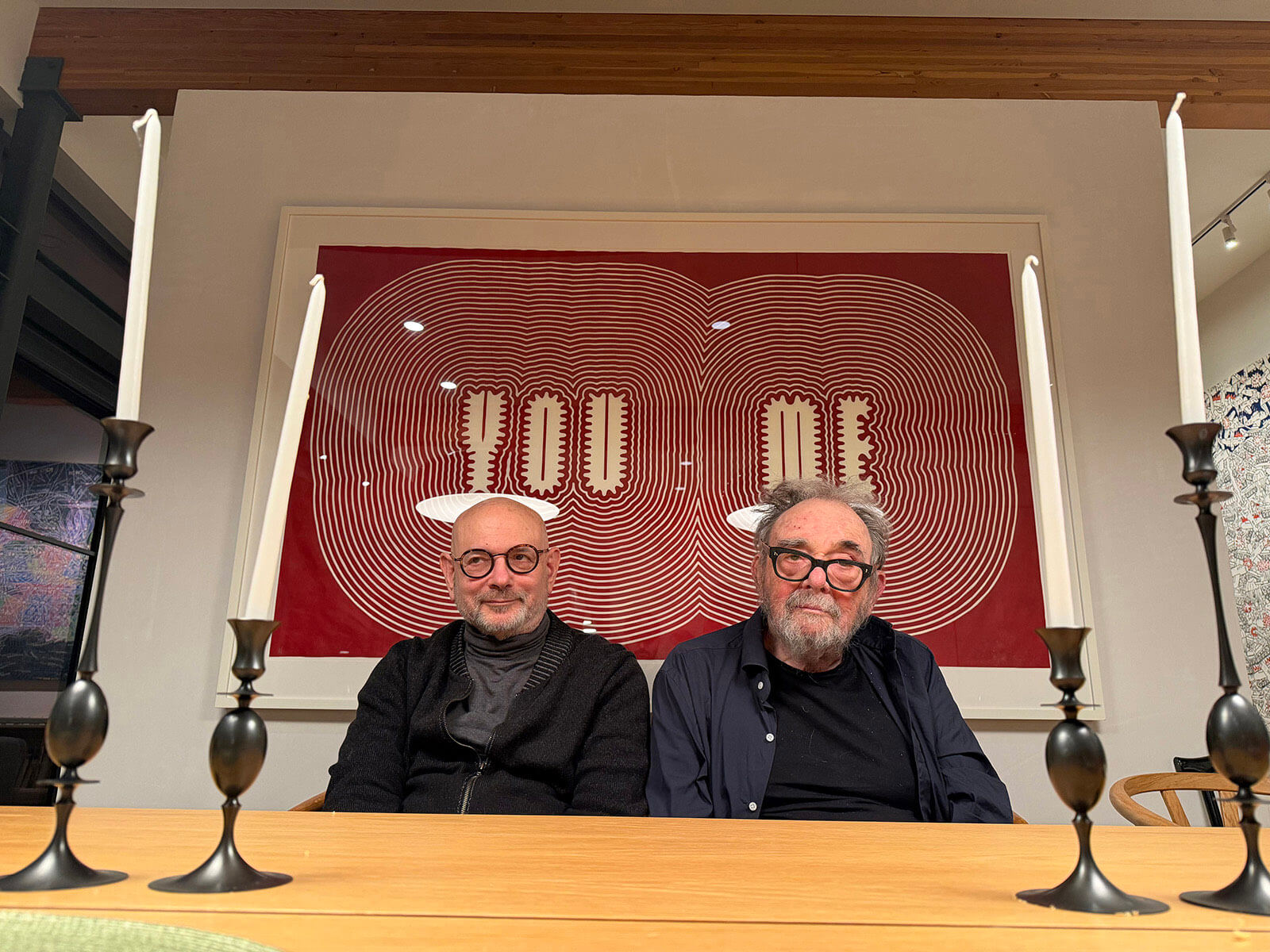
The Picture Book Book isn't a monument to a designer looking back at a lifetime of achievements; it simply feels like the work of someone who continued making things—one story, one poster, one playful experiment at a time. And for all the attention the book brings to his overlooked body of work, Chwast himself seems uninterested in questions of legacy. Asked whether he wishes his children's books occupied a larger place in how people remember him, he simply shrugs, saying: "It's up to them. I just think of the next project that I'm working on, whether it's a book or a poster. I like doing books, and I like doing posters. Fame, I don't understand; what becomes popular or what people like.” In the end, he leaves us with: “I just do the best I can."
'The Picture Book Book: The Art of Seymour Chwast' is published by gestalten and can be purchased from their website.

by Pranjal Maheshwari Oct 23, 2026
Co-authored by Jareh Das, Chairman traces the British designer’s fixation on chairs as symbols of power and identity and as mediums of expression and community building.
by Chahna Tank Oct 22, 2026
STIR speaks with the Mumbai-based type designer about her practice, type walks and why she wants more people to have stronger opinions about Indian-script fonts.
by Mirra Lynn Oct 22, 2026
The curators behind Palestine Design Week 2026 reflect on its intent, considering how design holds memory, makes space for loss and imagines a future in Palestine.
by Jincy Iype Oct 15, 2026
STIR explores craft, material intelligence and people shaping Indian design through dialogues with Design Democracy’s co-founders and the curators of its special exhibitions.

make your fridays matter with a well-read weekend
Enter your details to sign in
Don’t have an account?
Sign upOr you can sign in with
a single account for all
STIR platforms
All your bookmarks will be available across all your devices.
Stay STIRred
Already have an account?
Sign inOr you can sign up with
Verification link sent to check your inbox or spam folder to complete sign up process
Tap on things that interests you.
Select the Conversation Category you would like to watch
Please enter your details and click submit.
Enter the 6-digit code sent at


Seymour Chwast's The Picture Book Book explores his art of children's book design
by Chahna Tank | Published on : Jul 17, 2026


 Sign in with Google
 Sign in with email
What do you think?