Architecture09 mins. read
Tracing the influence of architecture awards with Beyond Recognition at UIA 2026
by Mrinmayee BhootJul 28, 2026



by Mrinmayee BhootPublished on : Jul 17, 2026
While forest fires decimate terrains across the world as of this writing, rising temperatures reaching 50 degrees claim lives in South Asia and bring countries in Europe to a halt, holding a symposium for 10,000 architects talking about the state of the world seems like a farcical situation. Yet, this year’s UIA World Congress of Architects convened in Barcelona from June 29 – July 1, 2026, in these persistingly uncomfortable conditions for that very purpose. Designated by UNESCO as the World Capital of Architecture 2026 in recognition of its nomination for the Congress, the Spanish city is currently executing urban renewal operations in several locations, foregrounding the event. Notably, the denser, tourist-attracting La Rambla district is being turned into a greener, more accessible and inviting space, thereby reclaiming it for locals. The city, as it were, is always becoming.
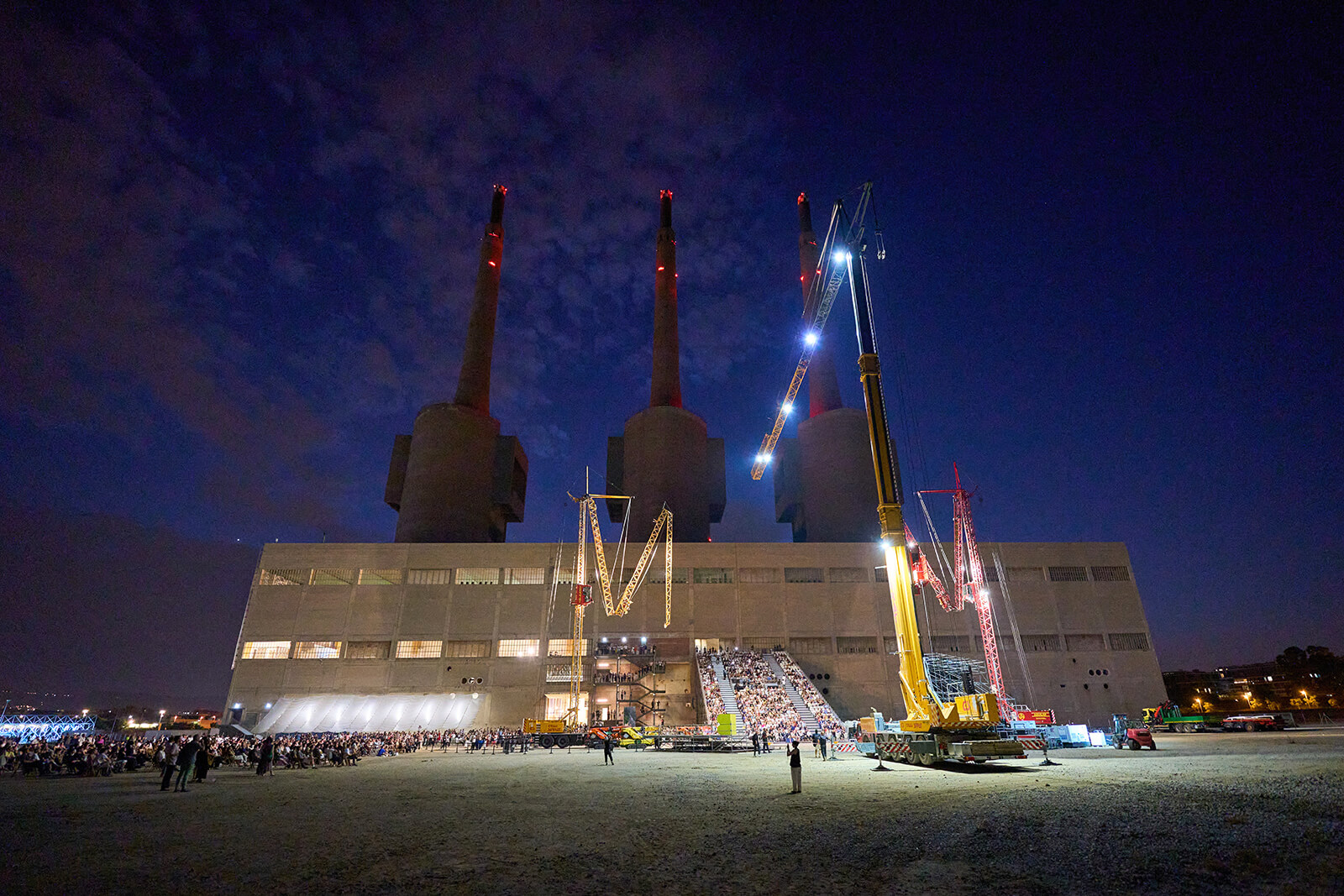
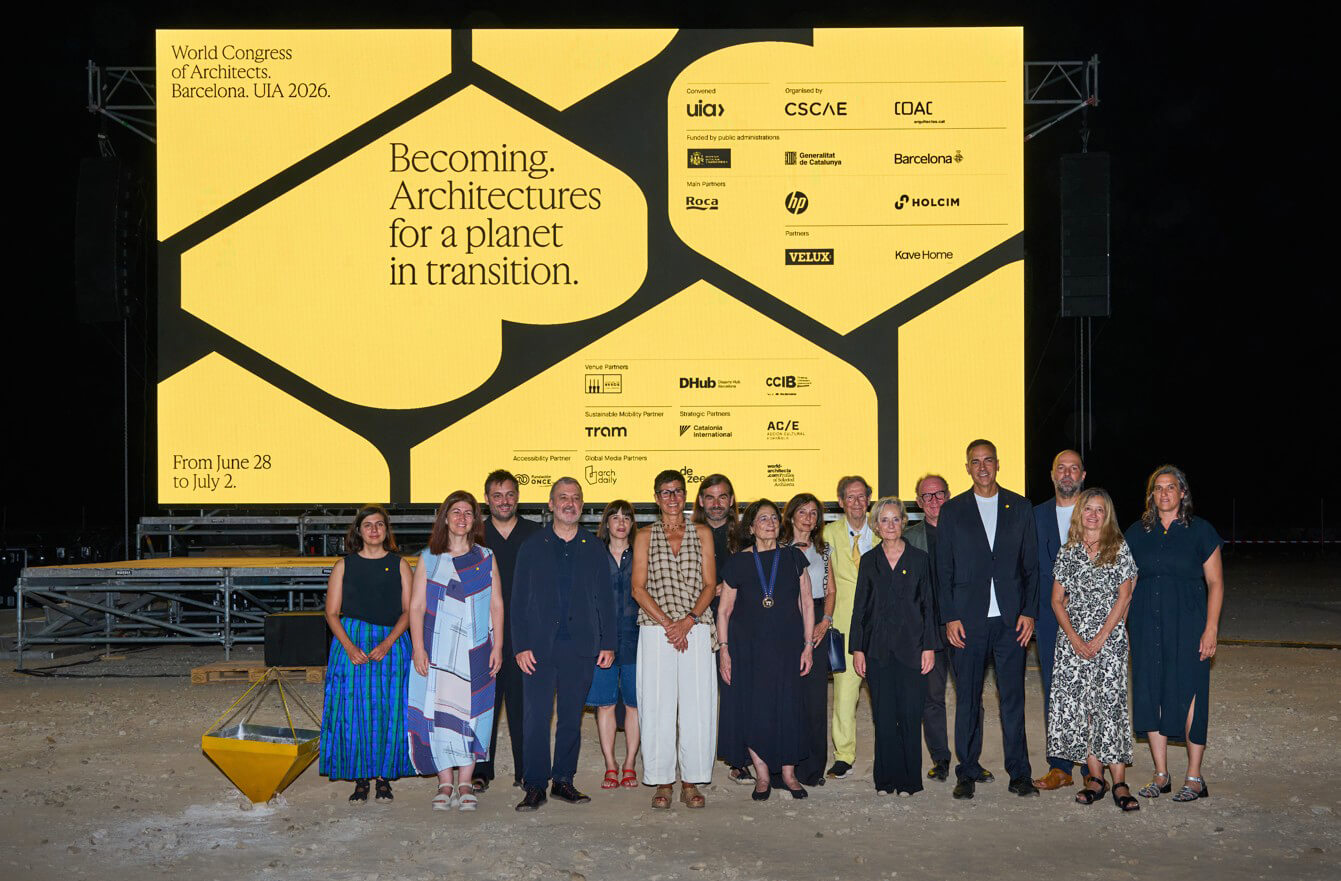
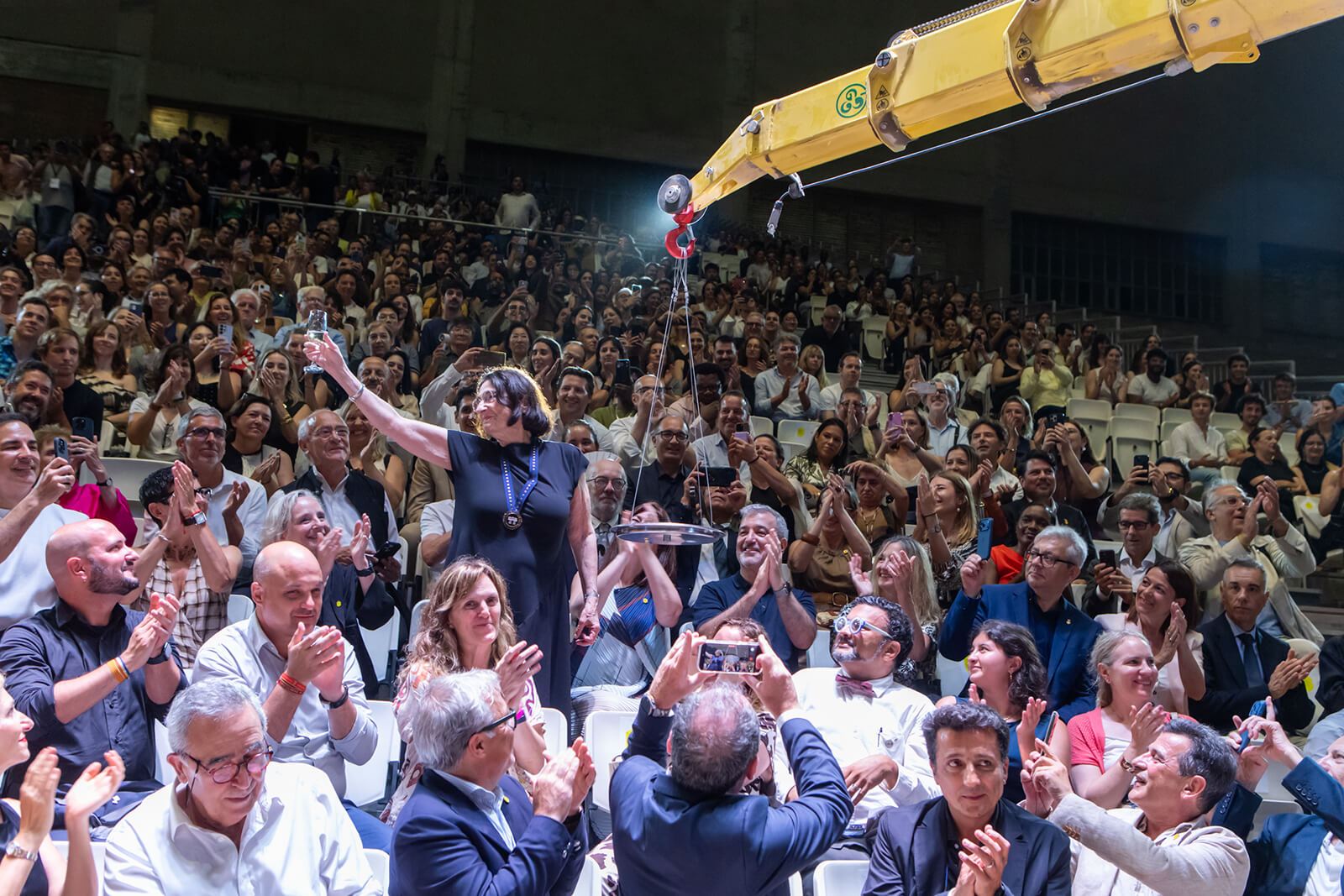
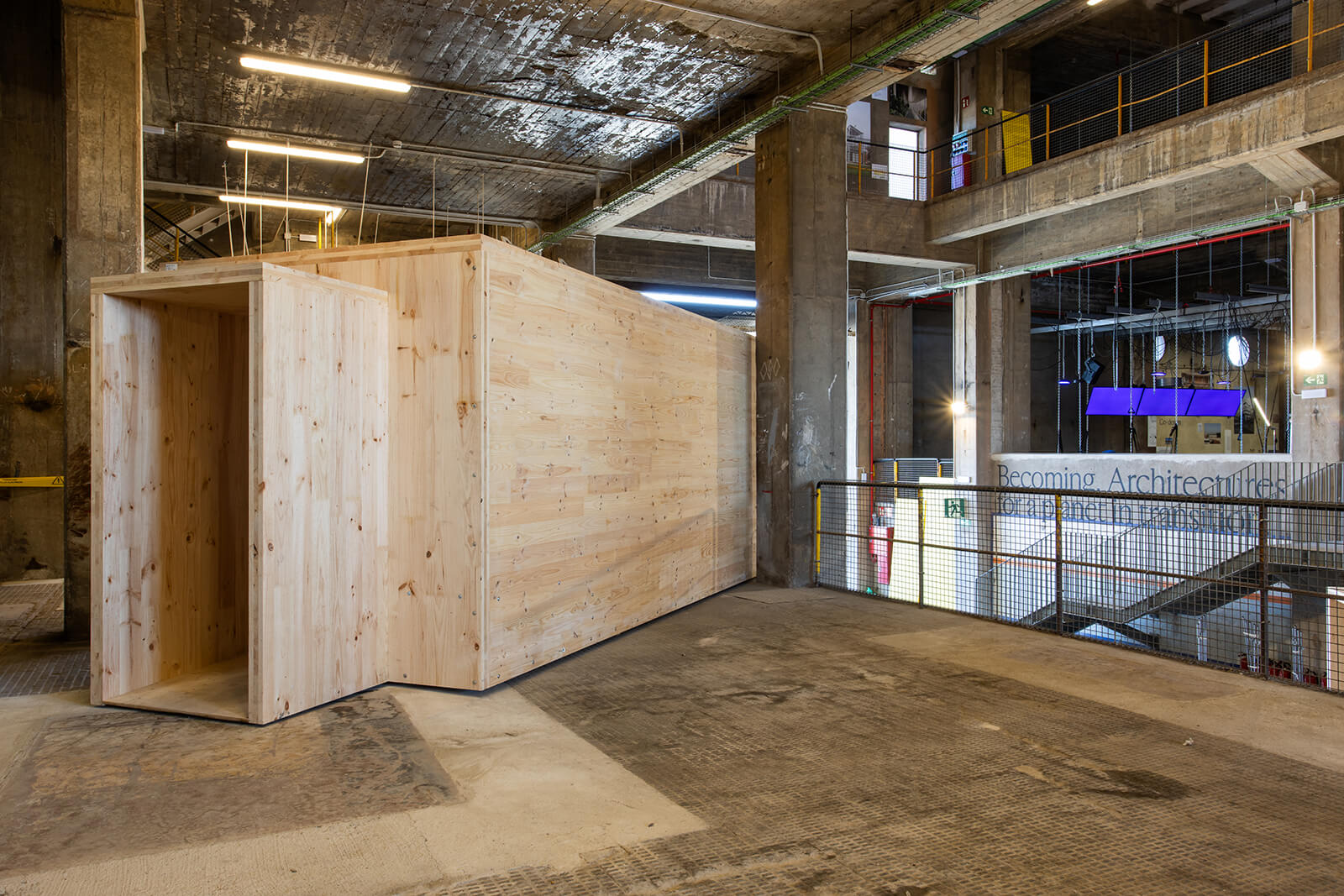
Much of this chaos translated into the opening ceremony for UIA 2026, held at Three Chimneys on the evening of June 28, 2026. A relic of a time before the city's transition towards renewable energy, the obsolete thermal power plant also holds the event’s central exhibition, which underpins the theme for the Congress, Becoming. Architectures for a Planet in Transition, on view till July 19, 2026. If the hectoring industrial building metres away from the sea serves as a stark reminder of the follies of unchecked progress, it is by design. With the industrial architecture as a backdrop, the evening closed with a performance by sound artists Cabosanroque and Cube Studio, in which looming cranes—symbols of the Anthropocene, of course—enacted a celebration of the decline of human civilisation, puppeteered to open champagne bottles to toast our imminent demise.
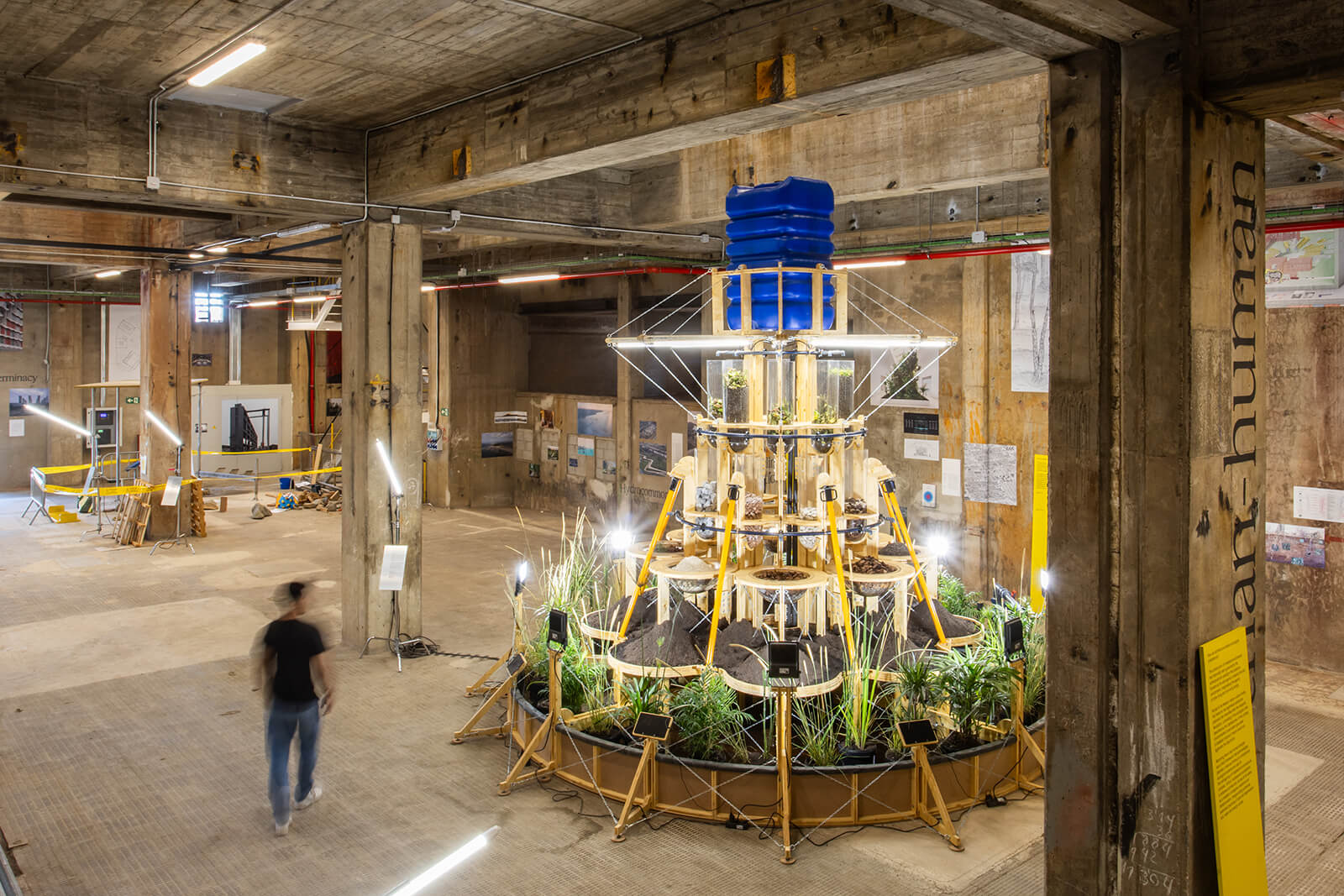
This impression of an alternative future/s—one where humans are extinct, or perhaps one where none of our hubris has come to pass, or where spatial practices are not defined by colonial and capitalist ends—was the provocation the Congress contended with, using Becoming as a method. Unlike the Copenhagen conference’s deterministic call, Leave no one behind, Becoming is an acknowledgement of uncertainty. Uncertainty has become our burning world’s only verifiable condition. As the speakers STIR interviewed echoed, the notion implies mutuality, collaboration and a certain decentring, not as an antidote to the uncertainty, but as a way to navigate it.
Almost a hundred sessions were spread over three days—following the six themes tentpoling the Congress, detailed in our pre-event overview—with plenary sessions bookending each day’s scheduled talks. Critical Antagonists, as the curators dubbed the symposium’s moderators, coming from fields as peripheral to architecture as philosophy, economics, ecology or cultural theory, added a layer of friction—questioning and, at times, resisting the theme. Their role, as the curators noted, was to bring to light the expanded conditions of architecture.
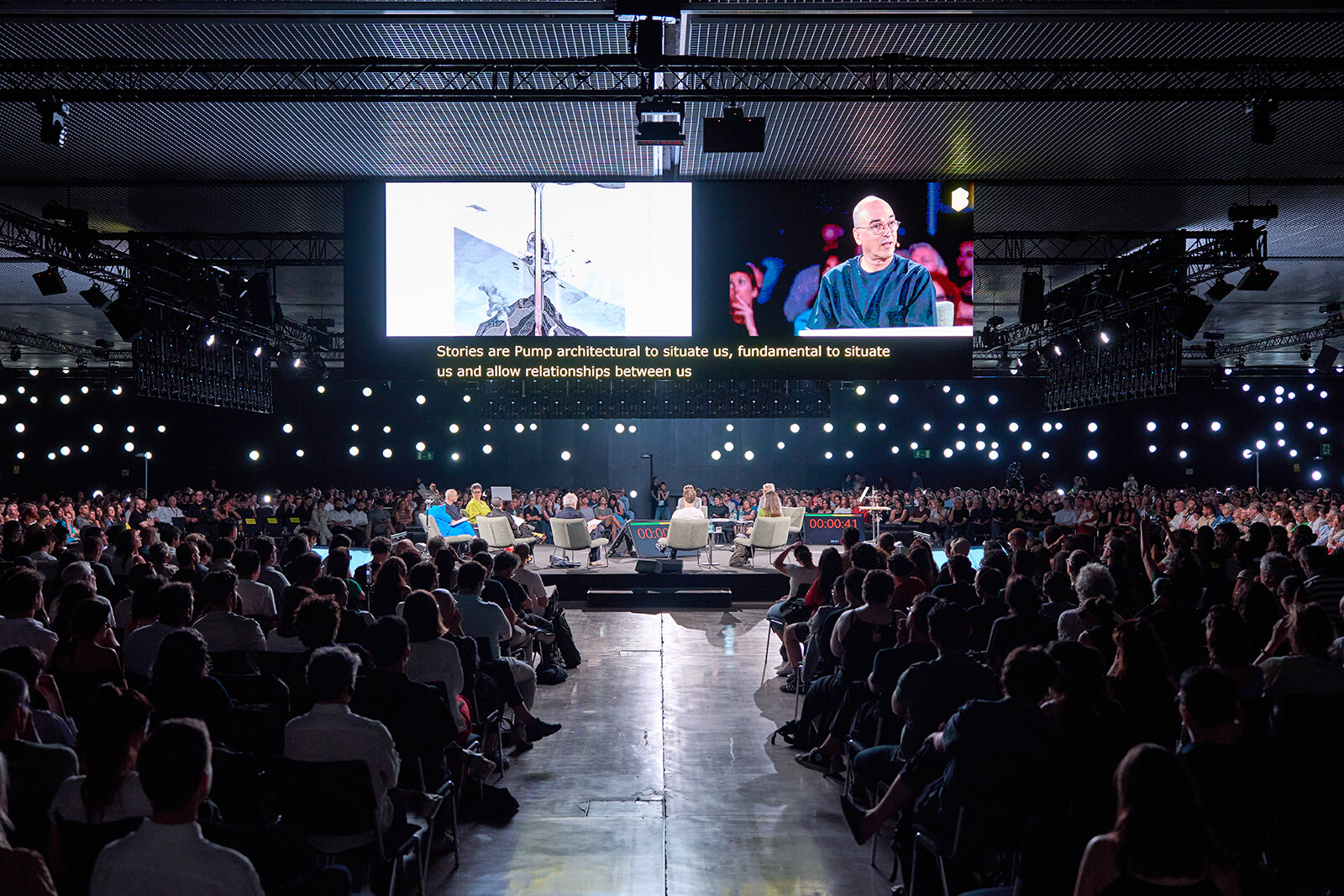
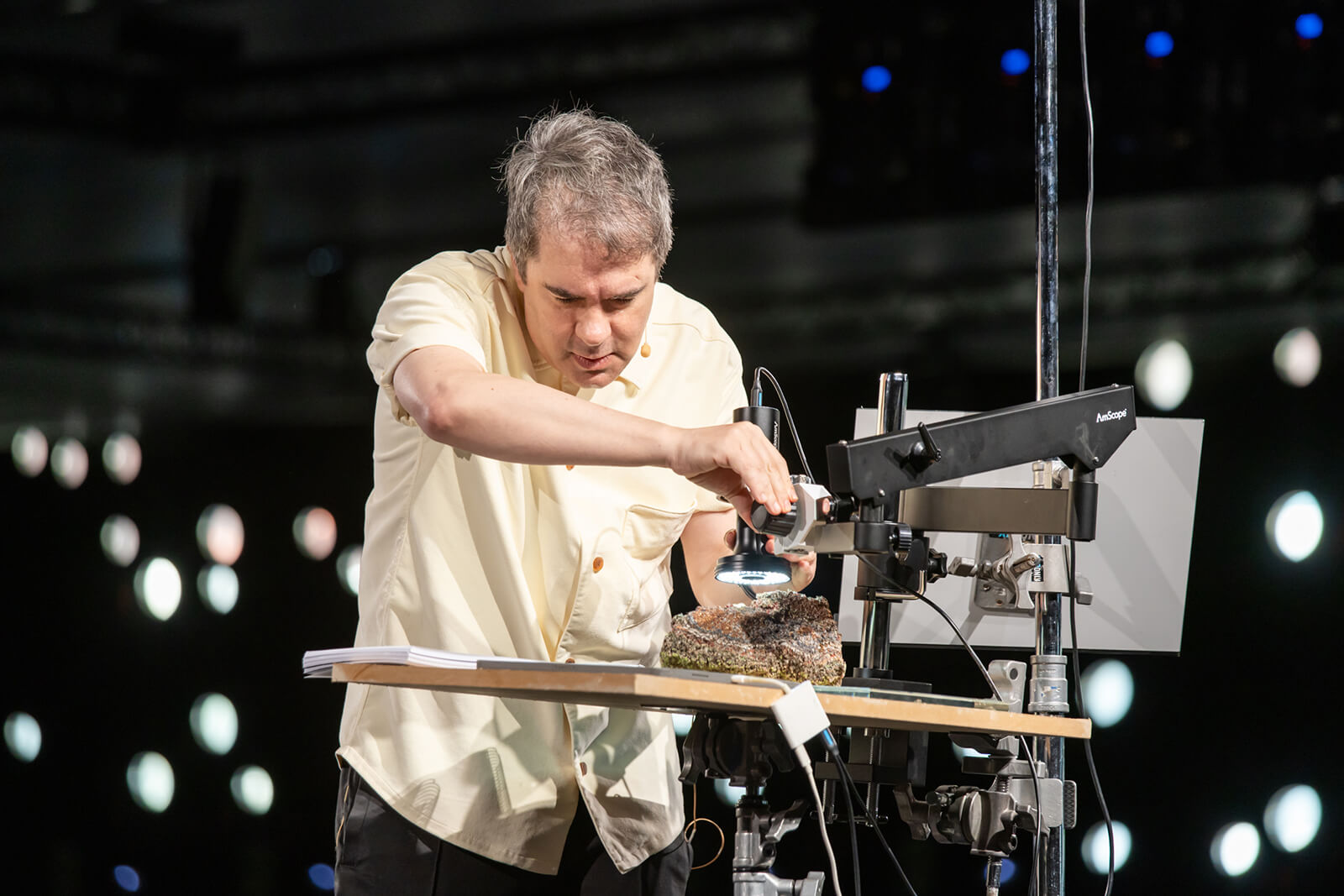
The first day’s opening plenary at CCIB, the principal venue for talks, centred itself on the notion of Becoming More Than Human, conceived as a wrestling match by architectural historian Mark Wigley and landscape architect Bas Smets. Wrestling here was a way of falling in love, as Wigley outlined, with other ways of seeing. Alongside the inevitable central question for the panellists—what it meant to hold a Congress at this time—the question of a different way of telling stories, and stories that were not only human, came to the fore with the wrestling.
For a conference of this nature, and especially one where the themes were centred on interdisciplinarity, on more than-ness, the insistence on Donna Haraway’s method of being in the world seems pointed, but feels ultimately irresolute. One cannot help but think of the fallacy of thinking in more-than terms when we can only offer perspectives that are human. A question broached during the plenary—if the apocalypse we’re living through is only for/about humans—then demands a shift in our understanding of the scale at which we operate and whose voices we listen to.
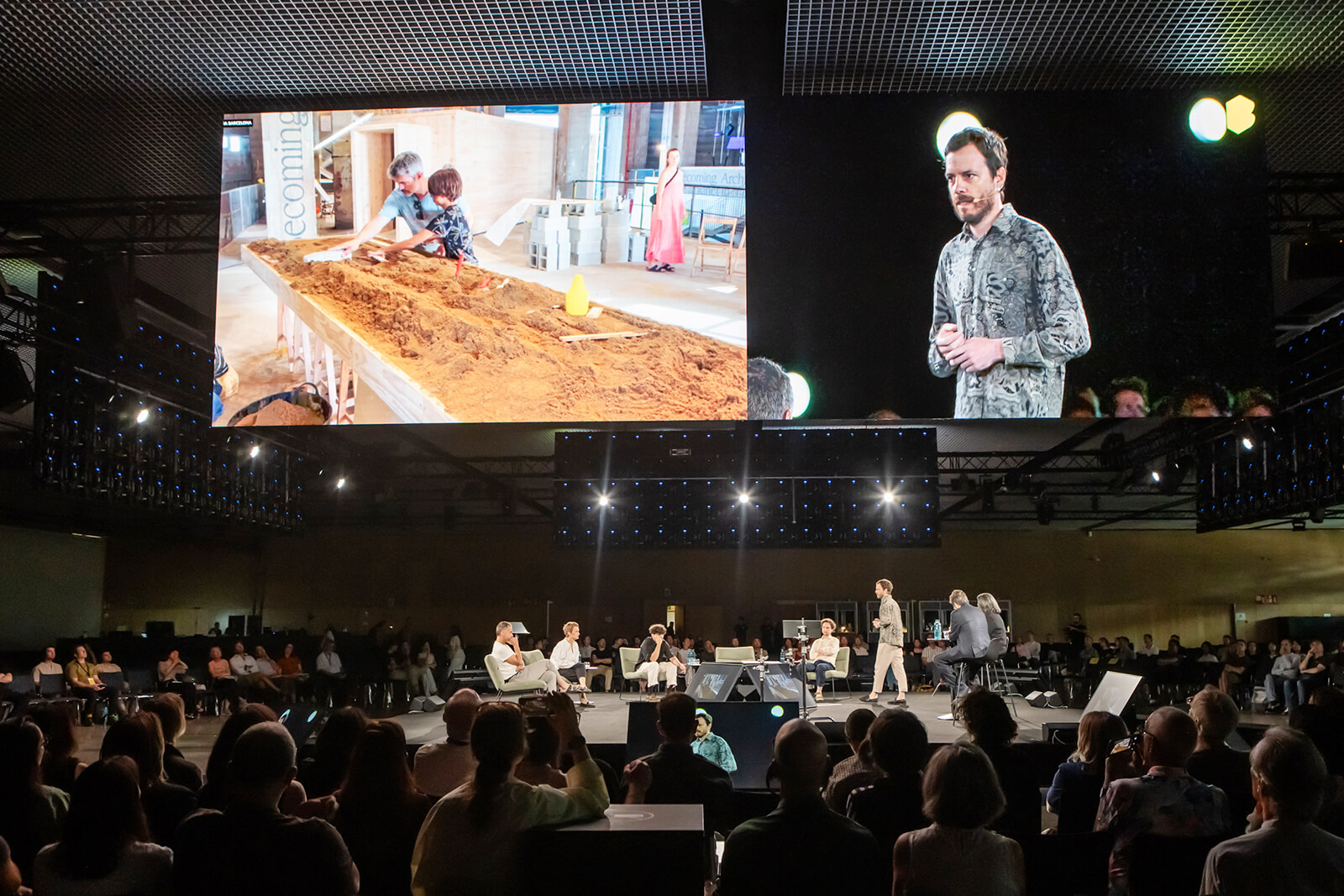
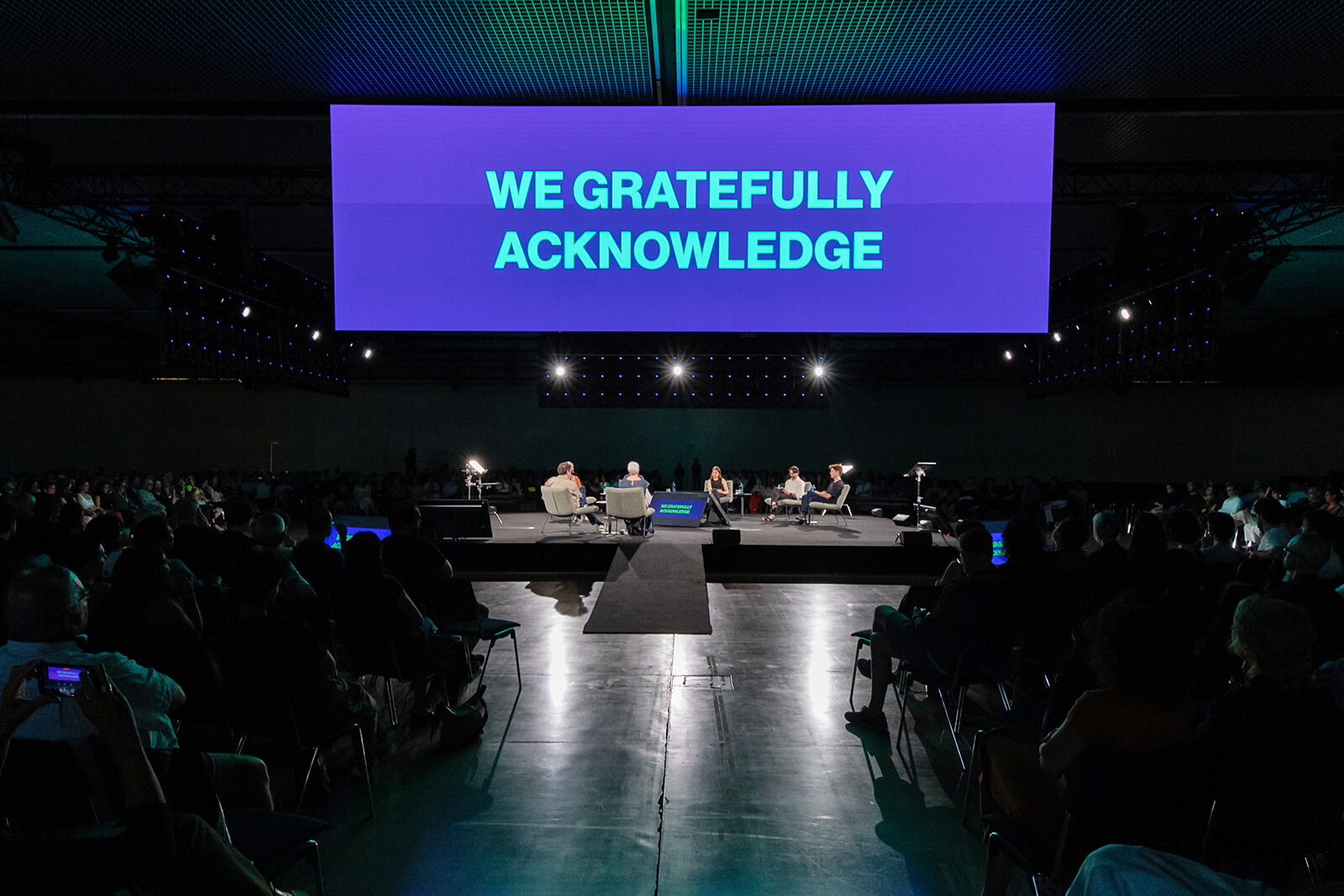
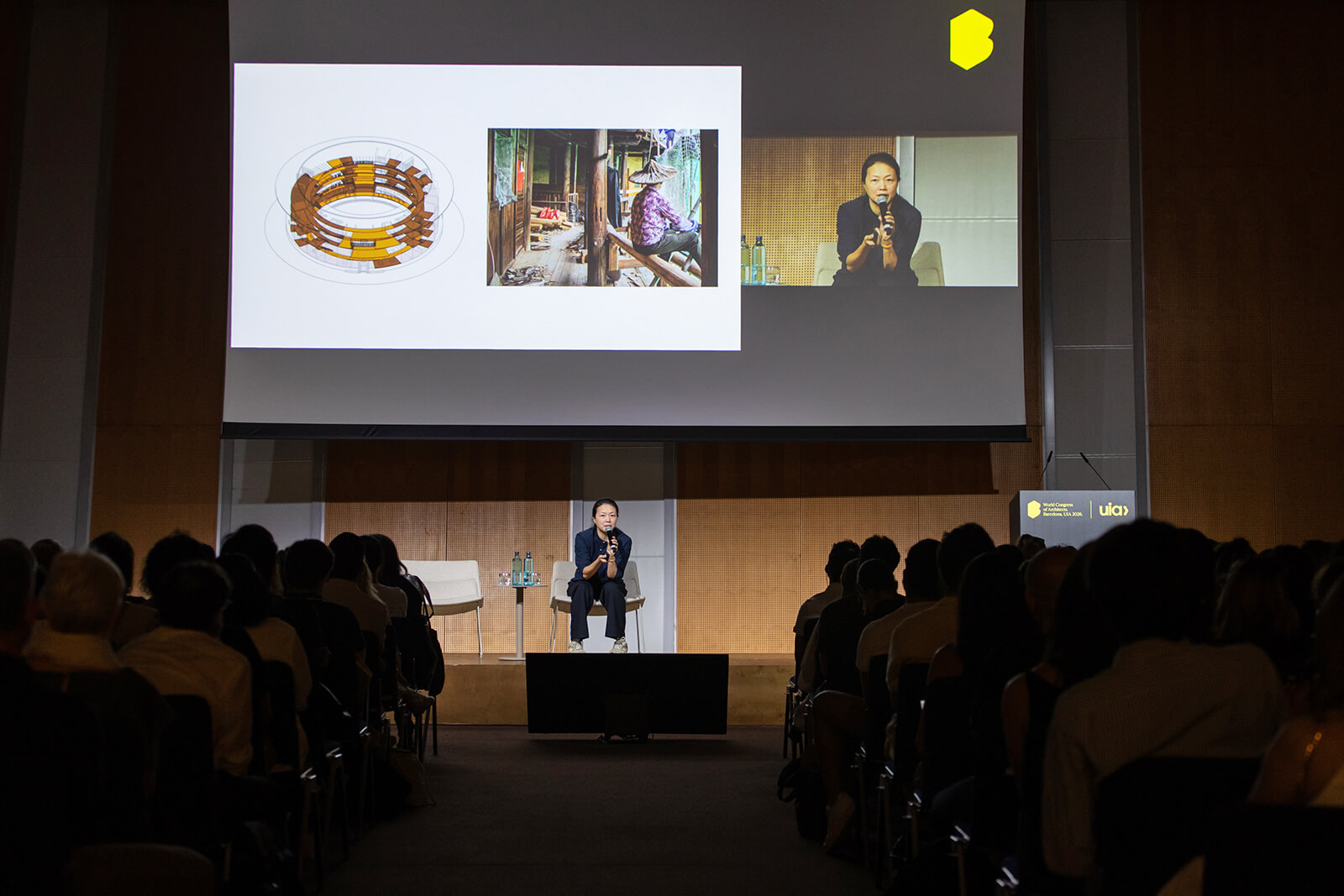
The scheduled talks for the first day further featured speakers who have worked for decades to enact a shift in architectural perspective that is all-encompassing—asking for a thinking that includes mycelium and forests, riverbeds and grains of sand. The other thematic threads similarly highlighted the perceptible shift in architecture’s relationship to materiality in the recent past—looking to adaptive reuse and circular design as a revision in value to biobased, regenerative and vernacular technologies—a reevaluation of embodiment. What undergirded all the sessions was the insistence that architecture is always part of networks of mutuality with the ecological and sociopolitical, often coming to the fore only when they fail.
It’s worth mentioning the dispersed scales at work here—of studios working with the micro: with microbes and lichen, with construction debris and discarded clothes, and their effect on the macro: on whole buildings, harbours, forests, migrant communities and indigenous populations. While pluralistic in nature, the curatorial programme cleverly attempted to bridge geographies and material practices. The work presented by Anna Puigjaner and Yasmeen Lari in a session that drew on the two architects’ practices around the kitchen as a site of care is a relevant instance. Bringing the two women together also suggests a crucial connection between design responses to social empowerment and the climate crisis. Such connections between vastly different contexts and situations were also made amply clear by the Open Forums at Three Chimneys that closed each day, with attendees given the stage to ask questions of the participants.
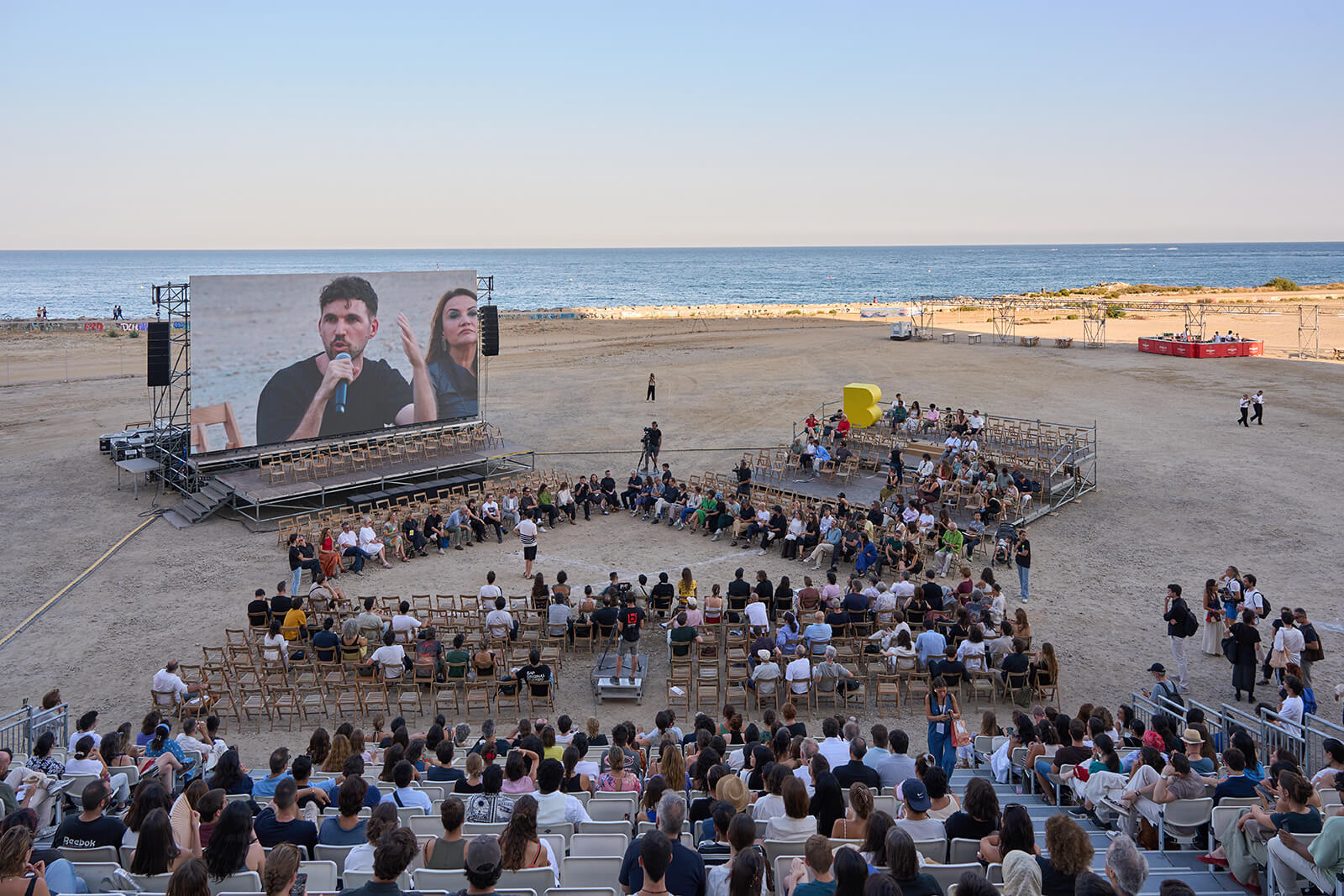
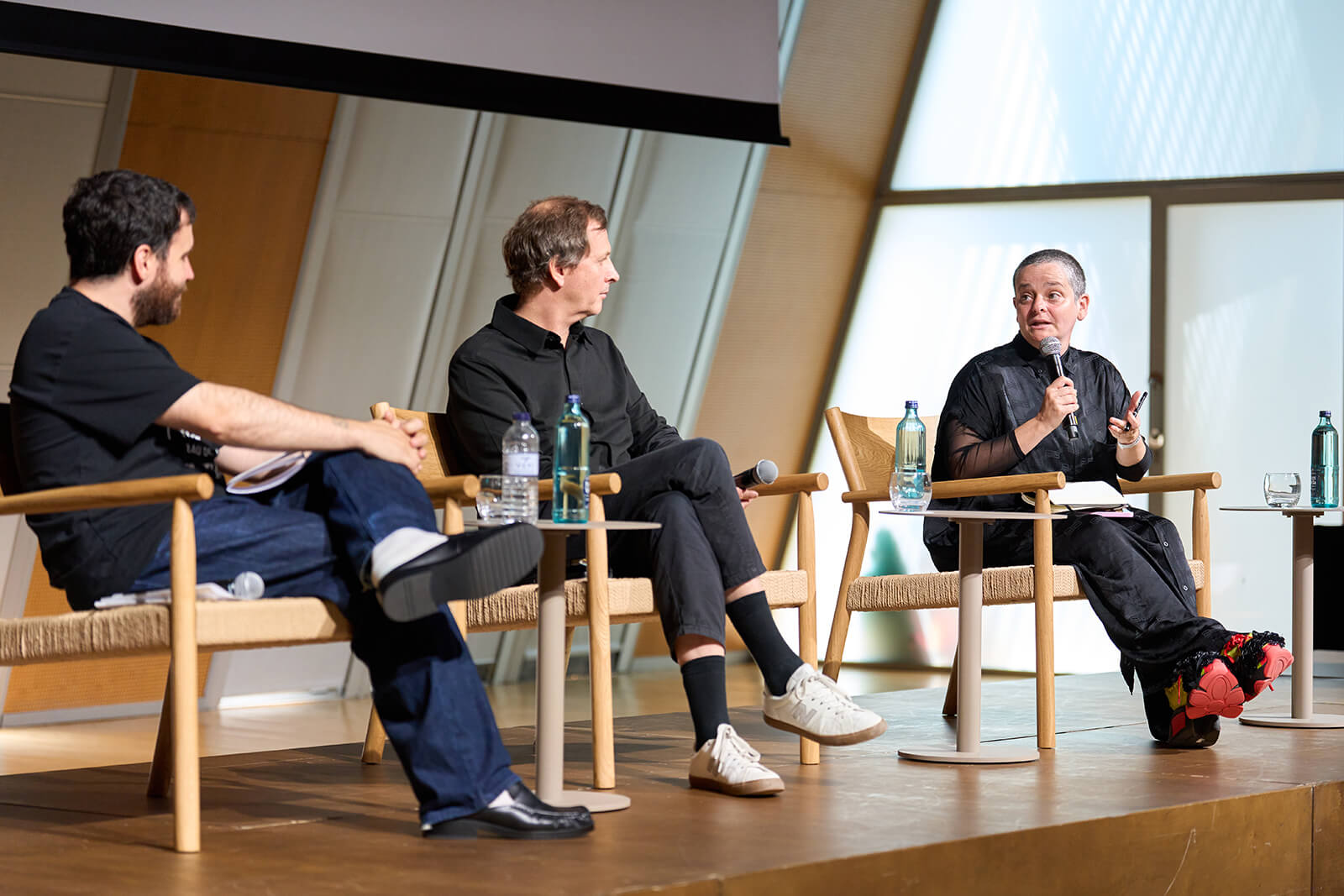
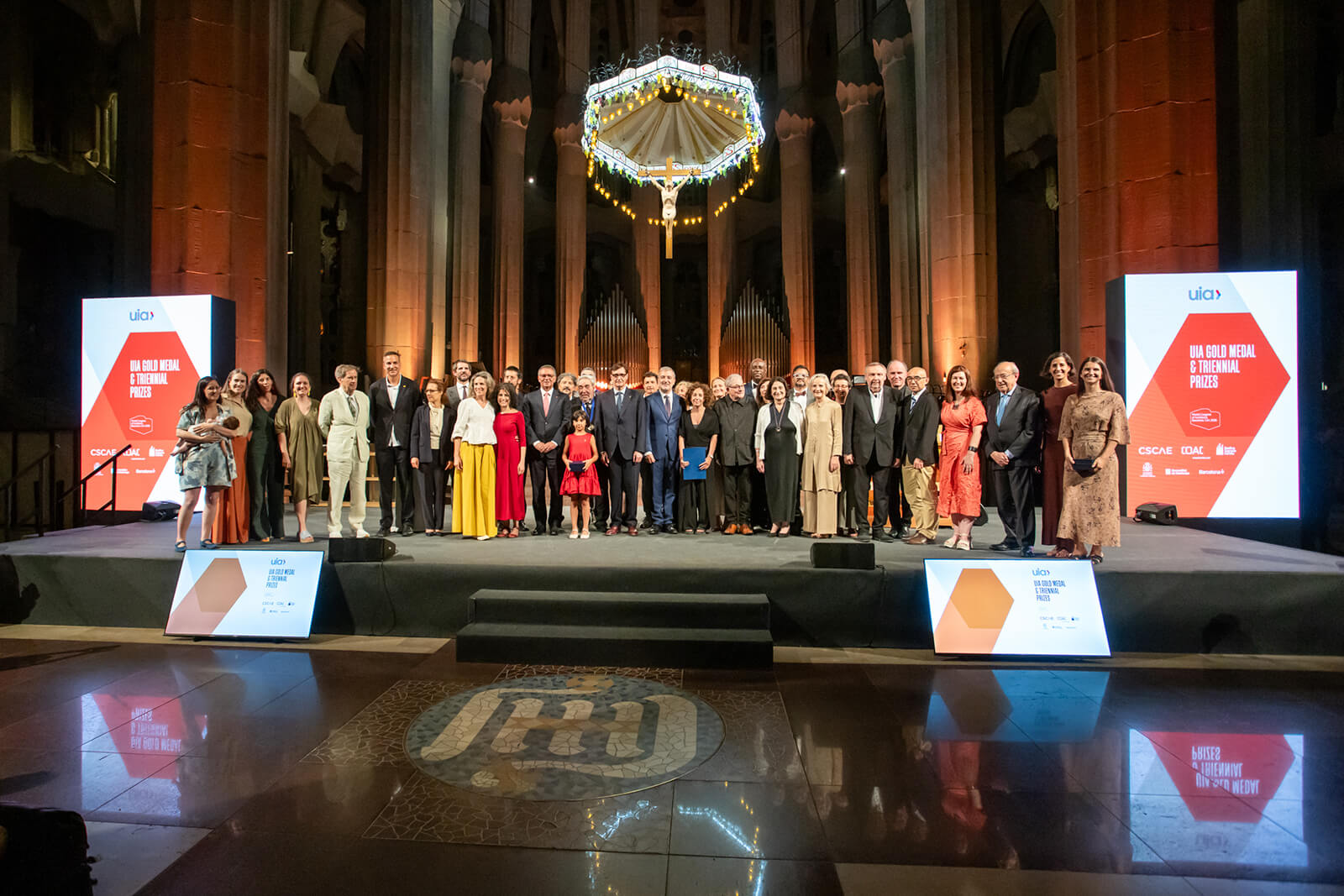
The structure for the sessions further insisted that architects can no longer—should never—only talk to architects, railing against the insularity of the industry. The presence of theorists, economists and policymakers among architects bolstered the vitality of research for any further action; as did the parallel threads of the event, Research by Design and the International Emerging Workshop, aspects of which are on view in the exhibition. Perhaps the best example of this dialogue is in Forensic Architecture’s display at Three Chimneys, Earthworks, which lays out the lethal conditions of life propagated through all means in Palestine.
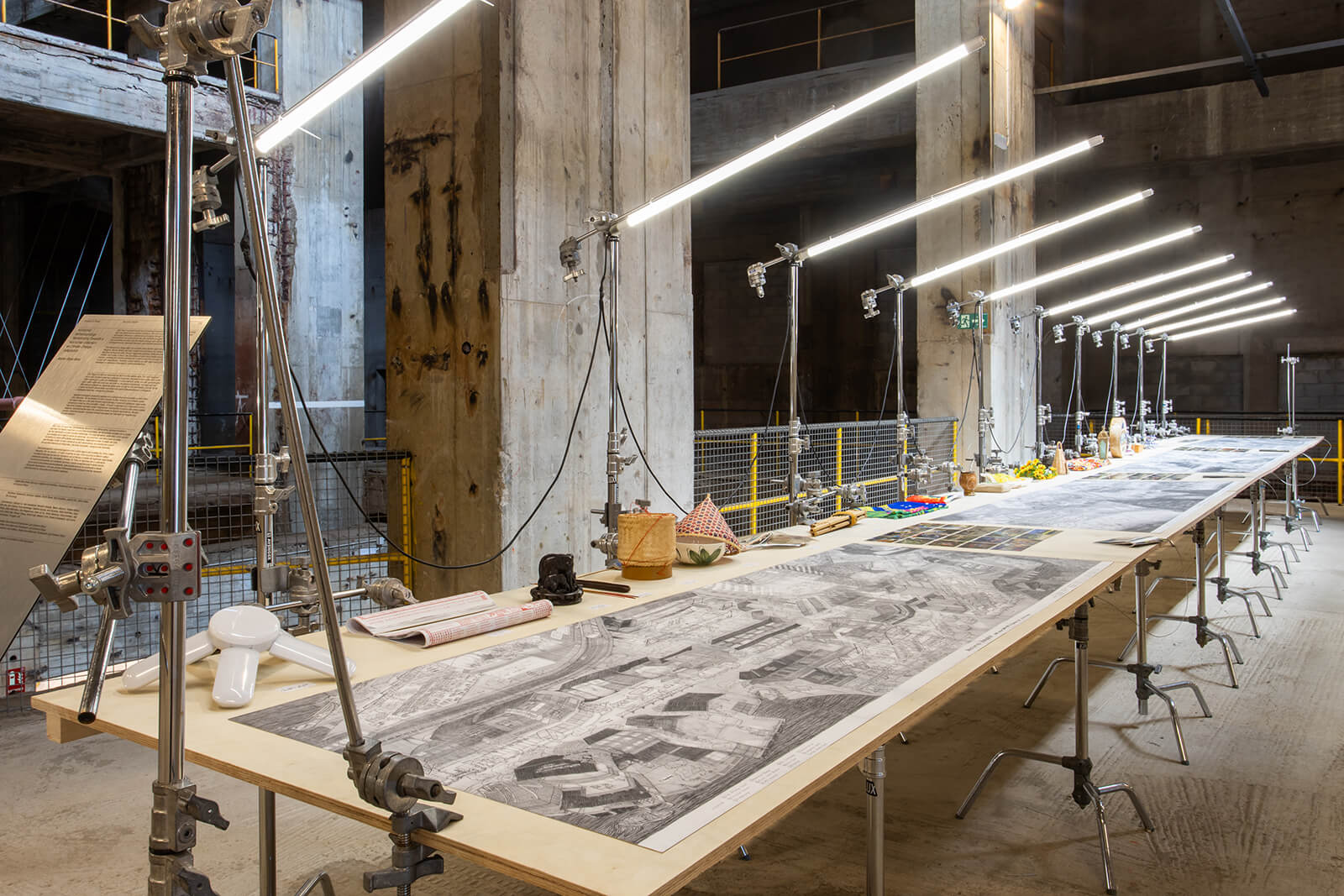
From Design Earth’s study of fossils at the Natural History Museum to Common Account’s exploration of parades in the city, each response expanded the concern of architecturing through the specific, ironically refuting the planetary trajectory threading through the Congress. This, then, begs the question of responsibility for addressing the planetary crisis: Where does it fall, and who responds to it? Is the responsibility to be equally shared or equitably distributed? With most installations in the exhibition being prototypes or developing models, the worry broached earlier—that of speculative fiction not being able to fully account for the current and persistent devastation of the Global South, also remains. Mere imagination does fall short in this instance.
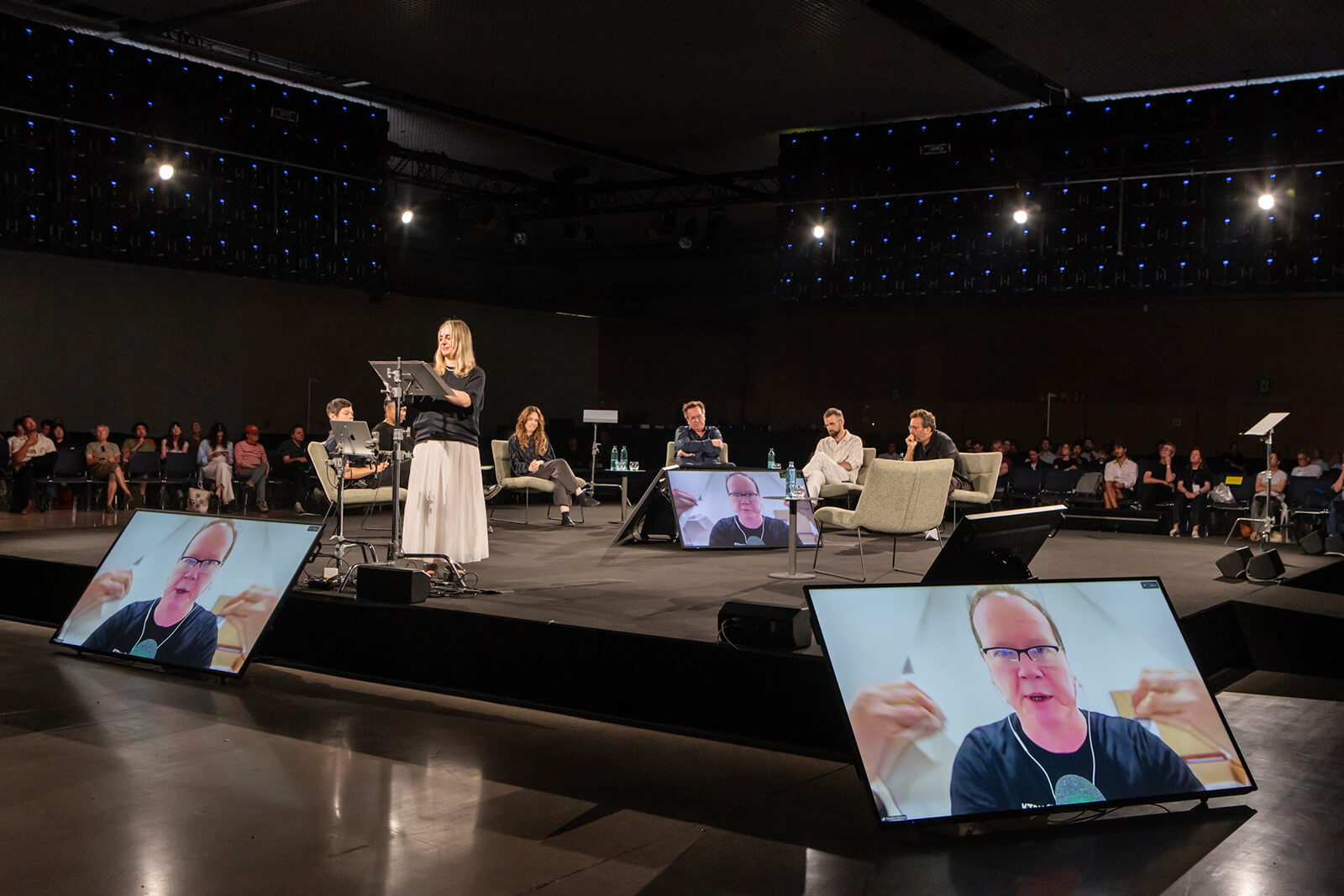
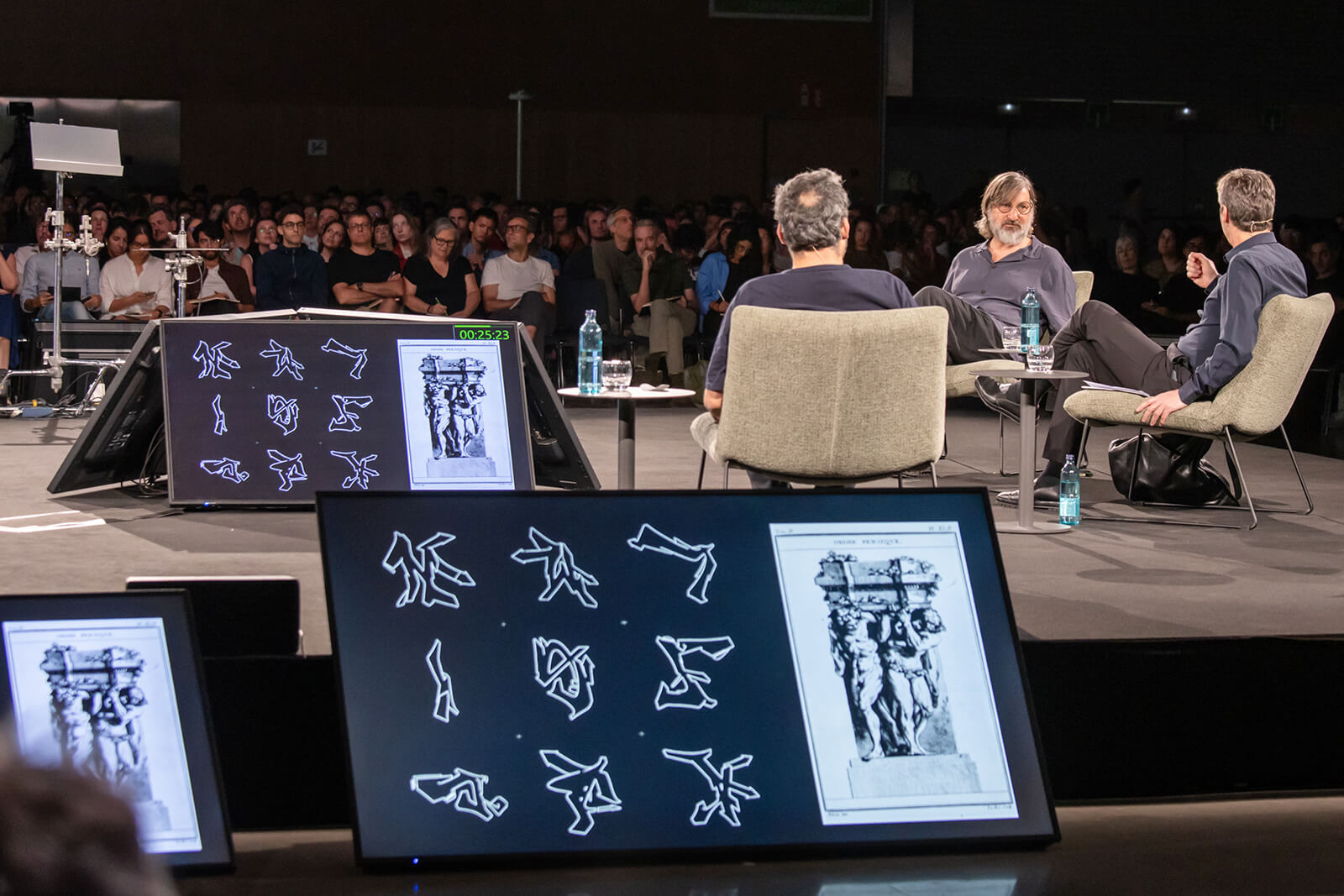
In the face of the disjuncture presented by the Congress—of scale, of method, of context and thus urgency—it’s then worthwhile scaling the line of enquiry back, first asking what we conceive architecture as. Is it, today, a practice that can be defined simply by its relationship to community and material; or in a world where we are more data than human, does practice demand an extra-architectural perspective? This provocation served as the starting point for the opening plenary on the last day with Becoming Hyperconscious, chaired by Marina Otero Verzier and Timothy Morton. The panel, focused on data, geopolitics and legislation, also tackled the spectre that haunts us all: AI, and how it is not just affecting the output of design, but the very questions we ask, the way some of us engage with the world.
If AI offers a blurry overview of the world, albeit with a sort of transparency, then to become hyperconscious (or more conscious), for Morton—the foremost thinker of Object Oriented Ontology—the opposite was more compelling: Becoming hypoconscious and paying more attention to the minute details. His remarks in the opening plenary were strangely the most earnest and unnerving. He spoke about rehabilitating his father-in-law (who had been missing for years) back home in Jamaica. It is systems enabled by architecture that allowed his invisibility in the first place. Another essential question becomes: How do we counter these infrastructures? The Congress offers a canvas, not image.
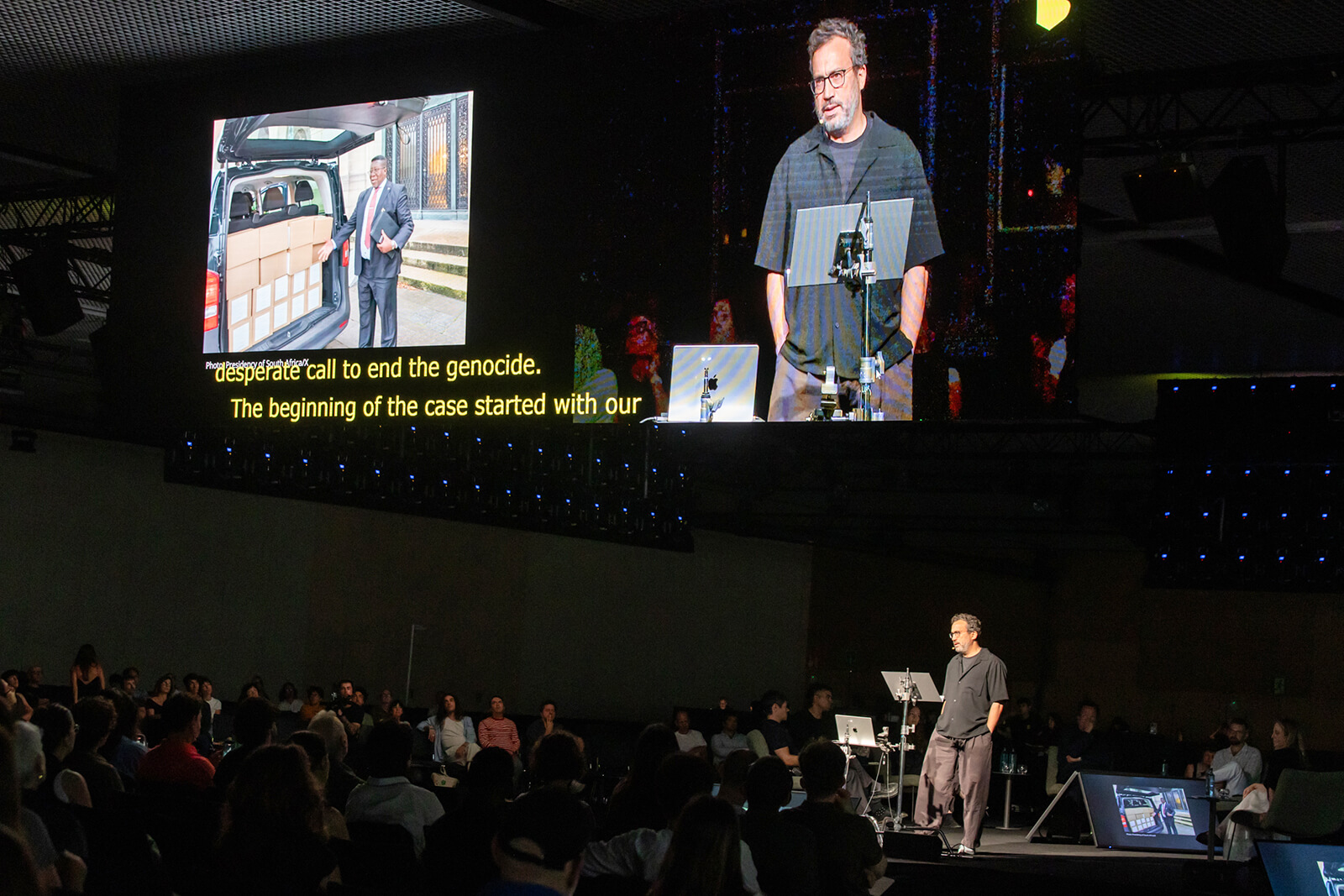
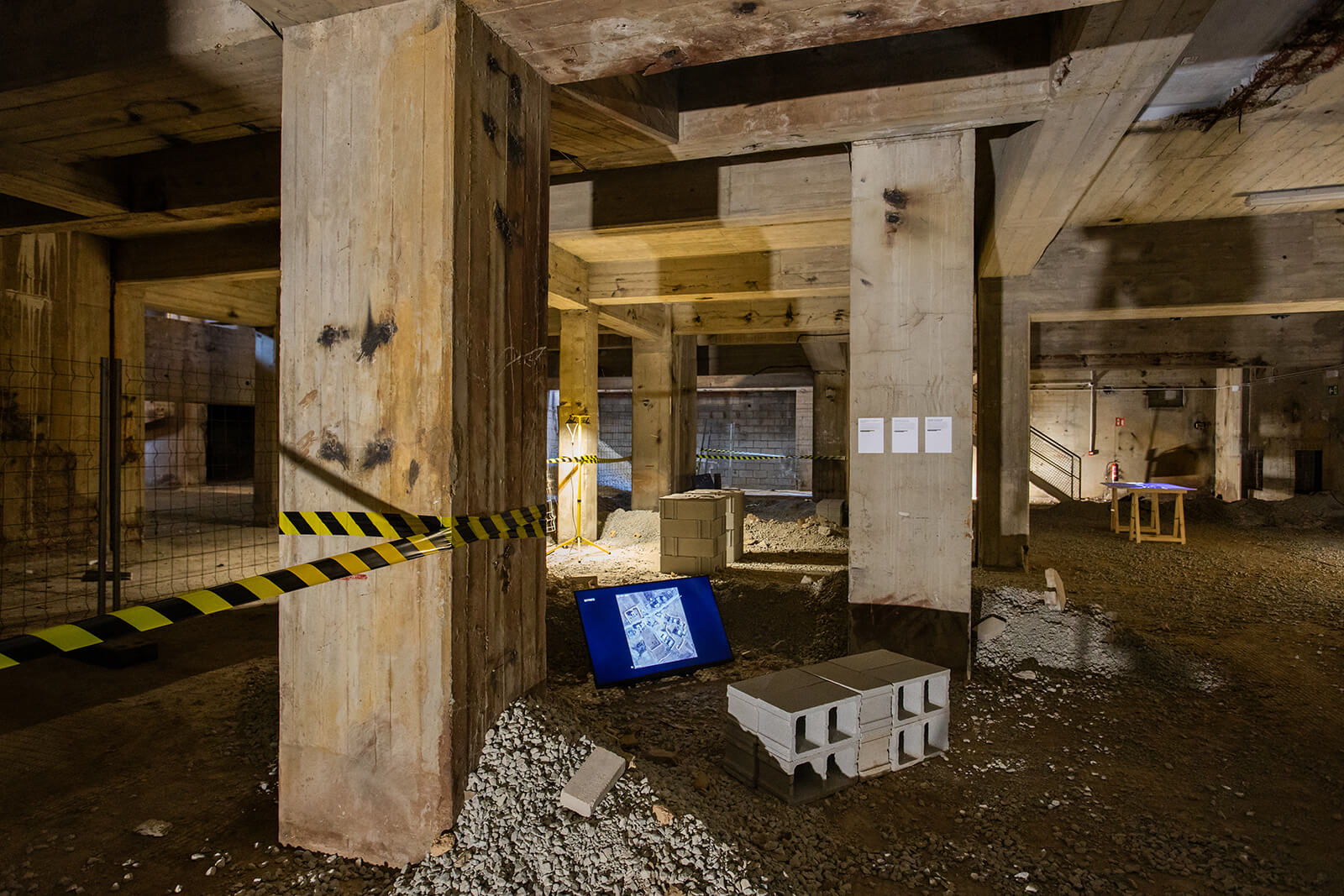
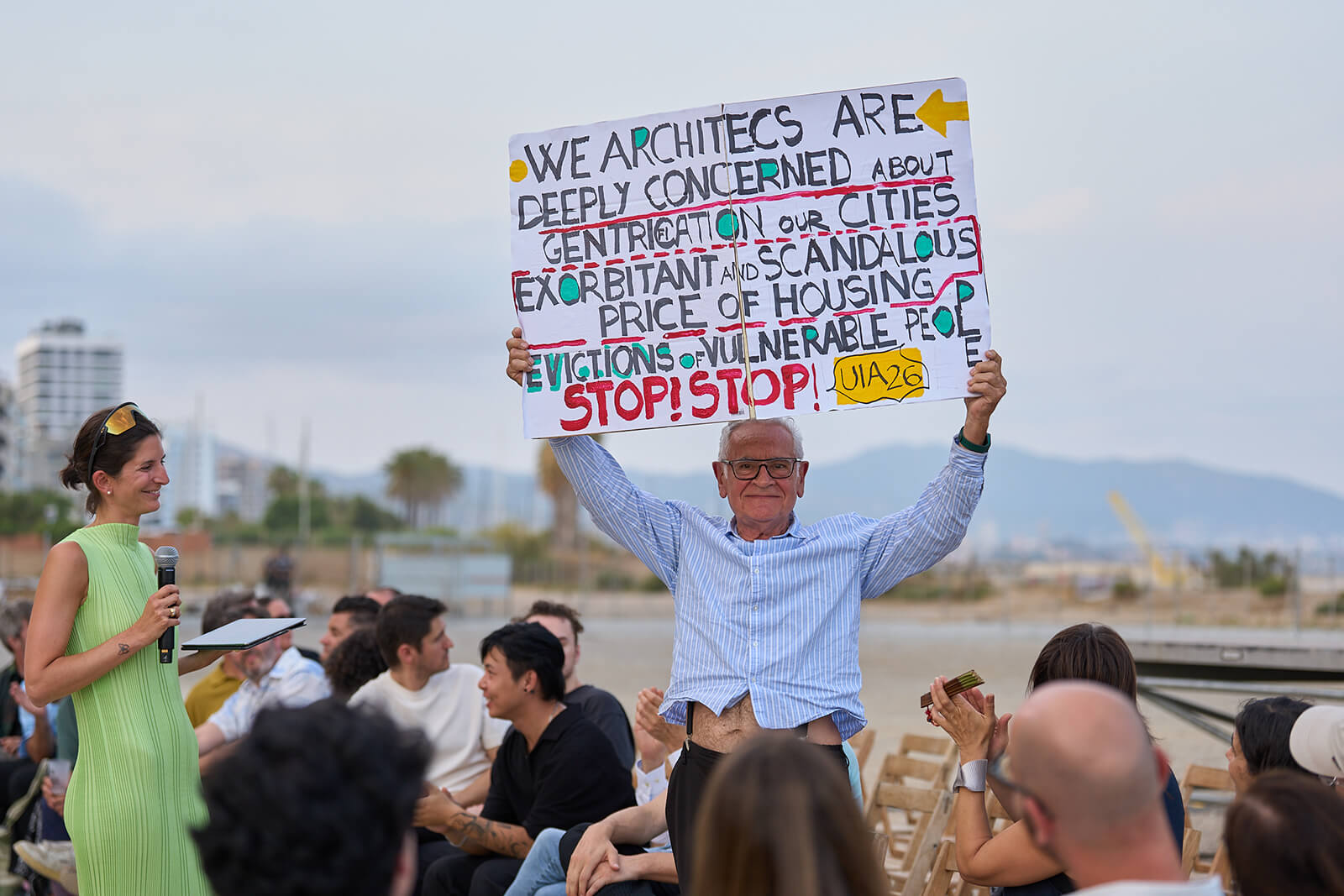
In what was the most popular session by far, Weizman further expounded Forensic Architecture’s ongoing research on Israel’s genocide and ecocide in Palestine, altering the very subaltern through its onslaught. Weizman had described this as the grim antithesis of modernism’s objectives in an intimate session at Disseny Hub earlier, marking the publication of his new book. That session began with him speaking about the dire nature of the work and the toll it takes on his team. There is, then, no greater instance of the breakdown of the imagination demanded by the Congress than demonstrated by the world’s continuing indifference to the annihilation of the state and the consequences of that for the world. Israel is still part of the UIA, and as one attendee hoped to make everyone aware of, has taken no steps or made any deliberations on this matter. Palestine, conversely, continues to be, and will always be, on our conscience, a mirror to the West.
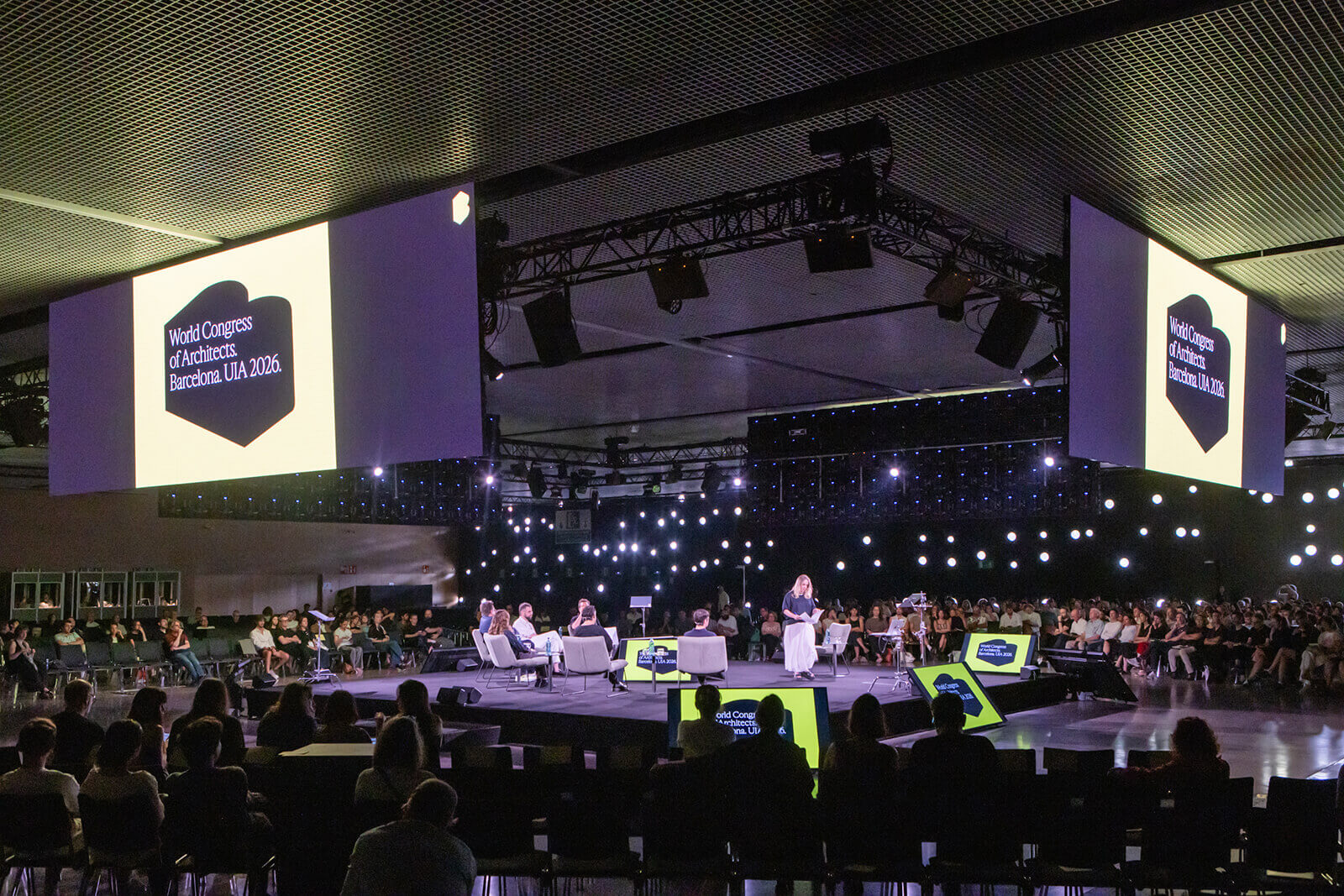
There was no dearth of avenues charged with the anger and heaviness activists carry at the Congress. Activism is a persistent struggle against the powers that be, but Morton and Weizman ask us to concurrently make space for grief. Grief confronts us with our place in all this, with the future and our own mortality. It asks: How do we know which fragments matter? How do we know how to create the future? Can grief, especially collective, be a generative condition in the face of planetary collapse?
These questions are also acknowledged by the Barcelona Declaration, prepared as the document summary for the Congress. Instead of providing instruction or structure for a discipline under duress, it only declares. It conceals any need for action with the language of urgency, which, for this Congress, feels inadequate. Perhaps that question goes beyond this discussion anyway. Instead, the best we can do is consider who is doing the work. In many ways, then, the exhibition at Three Chimneys offers the better summation of the Congress—alive and vibrant, solemn yet busy. It is not the end of imagination, but only the beginning.
The Congress’ ambitious theme was overwhelming in scope, but as the speakers highlighted, we cannot be planetary if we are not particular. Perhaps it’s only the immediate encounter that matters then. A dialogue between two people becomes the only starting point for any further rumination. On a balmy evening at the Mies Pavilion, a confession shared by Swiss architect Barbara Buser lingers. She admits that acknowledging a world defined by exacerbating technocratism and fascism, by exploitation and ecological collapse, by genocide, is one reason to carry on with her urban mining practice. It’s a step to reconfiguring the world, for her, as if it were always made by women.
Overused as Haraway might have become in architectural circles in the last few decades (Carlo Ratti’s felicitation of the philosopher for the Venice Architecture Biennale 2025 makes this point more sordid), these speculative fictions are all that keep us going. I can only end with what Morton said in his session: If you don’t see a solution, you are the solution. It’s trite and, in the face of the planetary, daunting. Yet what is any ocean, but a multitude of drops?

by Pranjal Maheshwari Oct 24, 2026
A consortium of Copenhagen’s 3XN, Toronto’s B+H Architects and Shenzhen’s Zhubo Design has designed the museum to mimic the surrounding riverscape, topped with a public park.
by Pranjal Maheshwari Oct 19, 2026
The Mumbai-based architects integrate courtyards, mesh screens and north light trusses to create a dining space that doubles up as a community hub at SR University, Warangal.
by Mrinmayee Bhoot Oct 17, 2026
The Rotterdam-based institute centres the Indian Ocean as a network for exploring material histories and transnational links shaping coastal cultures, positing them as future models.
by Pranjal Maheshwari Oct 16, 2026
At the 2026 Stirling Prize ceremony, Mary Duggan with RUFF Architects, MAKER Architecten and Nakshabid Architects were felicitated for proffering quality housing and social equity.

make your fridays matter with a well-read weekend
Enter your details to sign in
Don’t have an account?
Sign upOr you can sign in with
a single account for all
STIR platforms
All your bookmarks will be available across all your devices.
Stay STIRred
Already have an account?
Sign inOr you can sign up with
Verification link sent to check your inbox or spam folder to complete sign up process
Tap on things that interests you.
Select the Conversation Category you would like to watch
Please enter your details and click submit.
Enter the 6-digit code sent at


STIR at UIA World Congress: Can Becoming planetary address our uncertain present?
by Mrinmayee Bhoot | Published on : Jul 17, 2026


 Sign in with Google
 Sign in with email
What do you think?