Architecture09 mins. read
London Festival of Architecture 2026 probes belonging amidst multitudes
by Pranjal MaheshwariJun 09, 2026



by Jincy IypePublished on : Jul 08, 2026
Belonging is one of those words that arrives differently depending on where you are standing. It is personal: the language you brokenly speak now instead of the one your grandmother spoke with ease; the quiet recognition you find with someone without needing an explanation; an inherited identity co-existing with or colliding with the one you are trying to build. It is cultural, political, creative; claimed, contested, withheld, denied. Some of the most honest thinking about belonging happens at the edges of identity and place, between culture and self; in the gaps that open up when neither of these fully holds or defines you. Architect Sarah Featherstone’s notion of ‘baggy space’—spaces deliberately loose-fitting and unresolved—offers one way of reading this. Much of what creates space for all of us is precisely what is left incomplete and allowed to be lived into. This ‘in-between’ stretches across multiple directions and dimensions, resisting definition and taking on a life of its own. So perhaps the question doesn’t end at what this belonging looks like, but what it is made of and who gets to shape it.
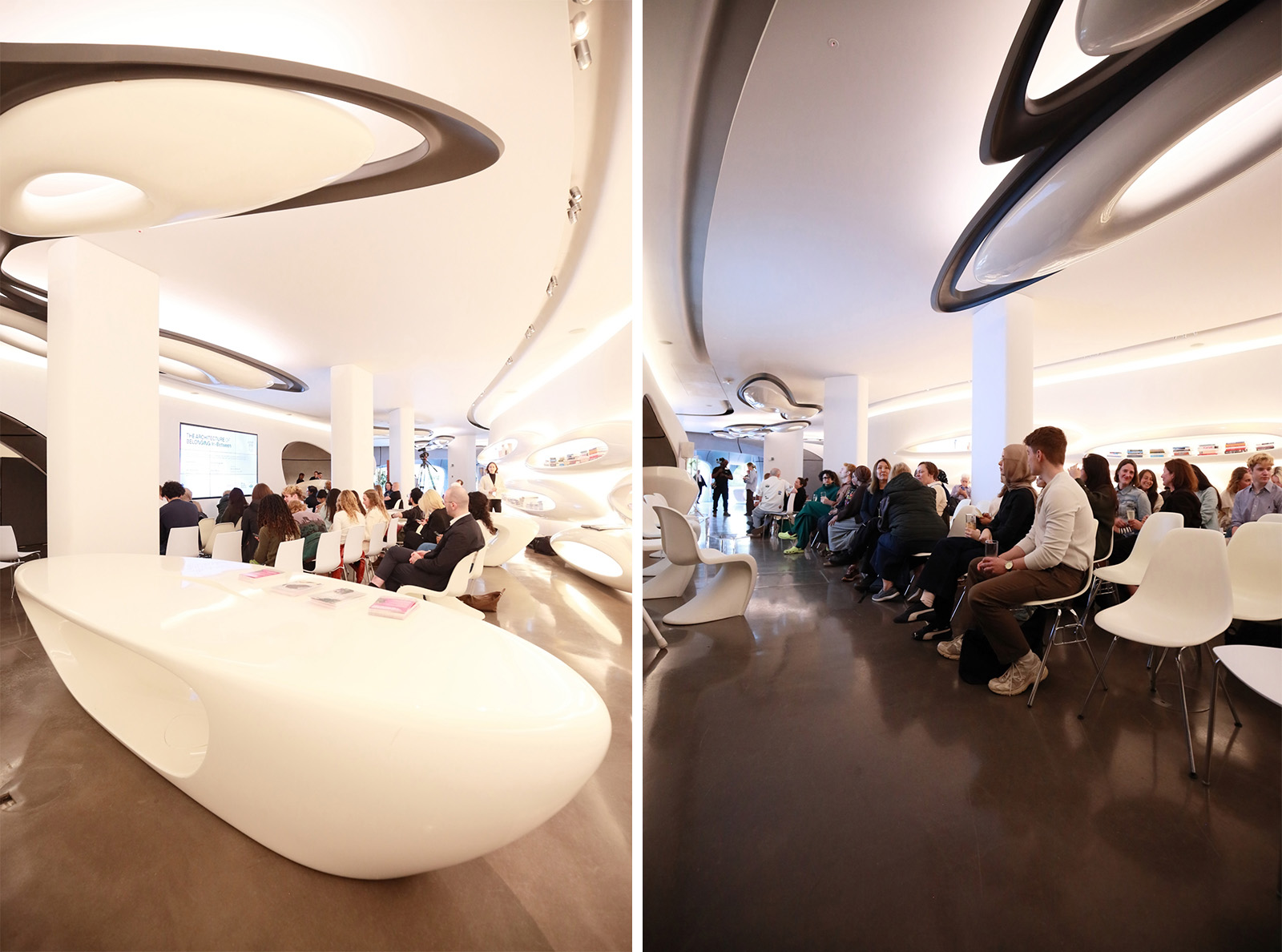
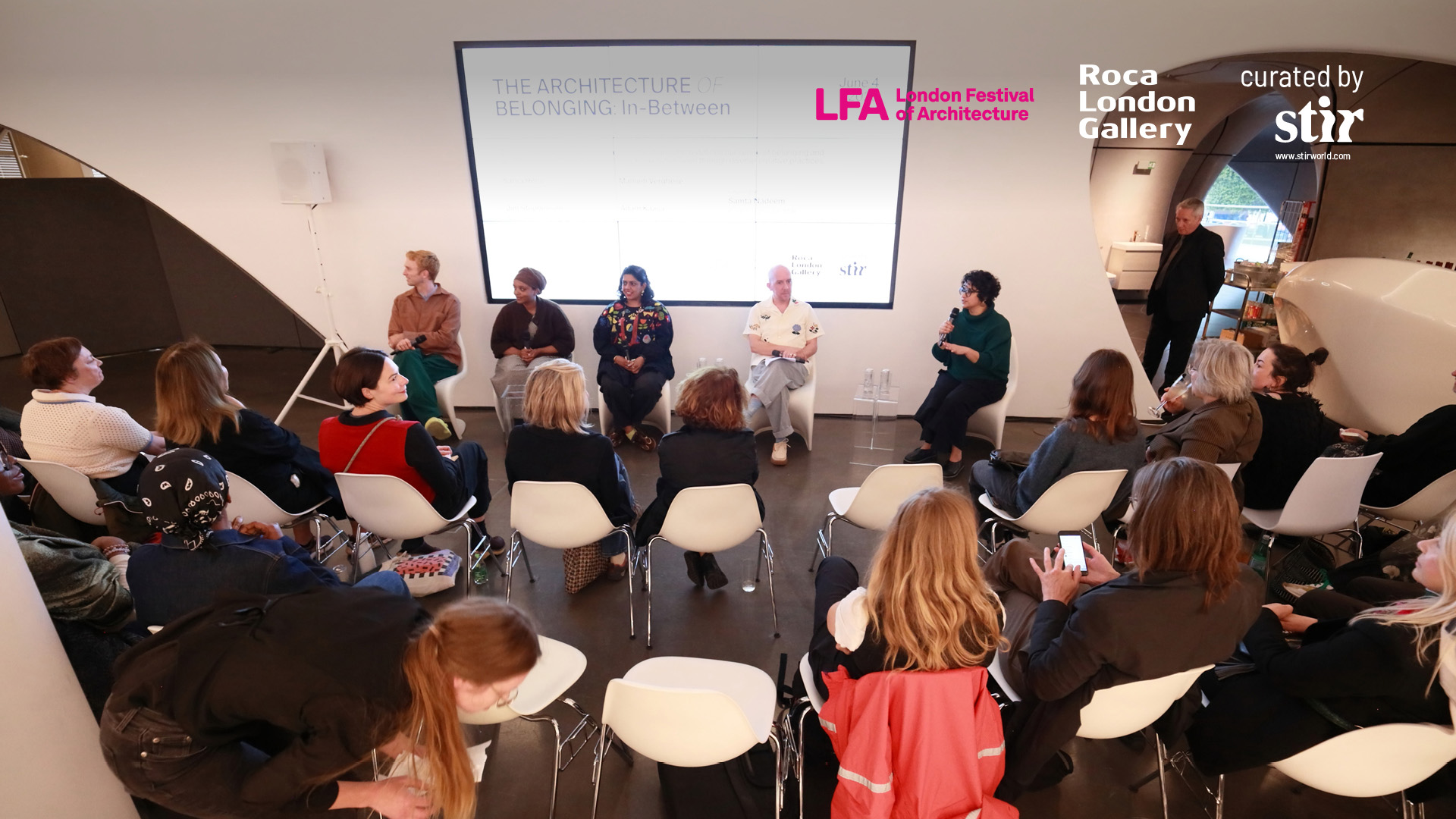
This was the animating enquiry of The Architecture of Belonging: In-Between, the first in a new public event series by STIR x Roca London Gallery, held on June 4, 2026, with the second one planned for September. The collaboration is an intentional expansion of the venue's cultural programming, pegged on a commitment to continually redefining what a gallery space can be asked to do. Roca London Gallery has been steadily operating as a platform for architecture, design, sustainability and innovation, as a space for dialogue and exchange with the wider design community, and particularly with the architects and designers shaping the future of bathroom spaces and the built environment. It seeks to cultivate a wider cultural life: one that draws in more practitioners, students and lovers of design, architecture and its intersections with art and music; one that offers its Townmead Rd outpost as a site of open encounter, creative exchange and genuine community and knowledge building. To hold these conversations inside the gallery's sinuous, iconic Zaha Hadid-designed building adds to this register.
"Initiatives such as this are an important part of [the gallery’s] broader cultural programming", Marija Bukal, gallery manager at Roca London Gallery, tells STIR on the significance of the evening and its programming. "The Gallery is not only a physical space, but also a platform for dialogue, exchange and collaboration across architecture, design, culture and the wider creative industries. Through our programme, we aim to create moments where different voices can come together—from architects and designers to artists, institutions, students, cultural organisations and the wider public. Events such as this help us explore relevant themes in a more open and collective way, encouraging conversations that go beyond a single discipline or format... Ultimately, our ambition is to support conversations that feel relevant, generous and forward-thinking, while strengthening the Gallery’s role as a cultural meeting point within London’s design community", she continues.
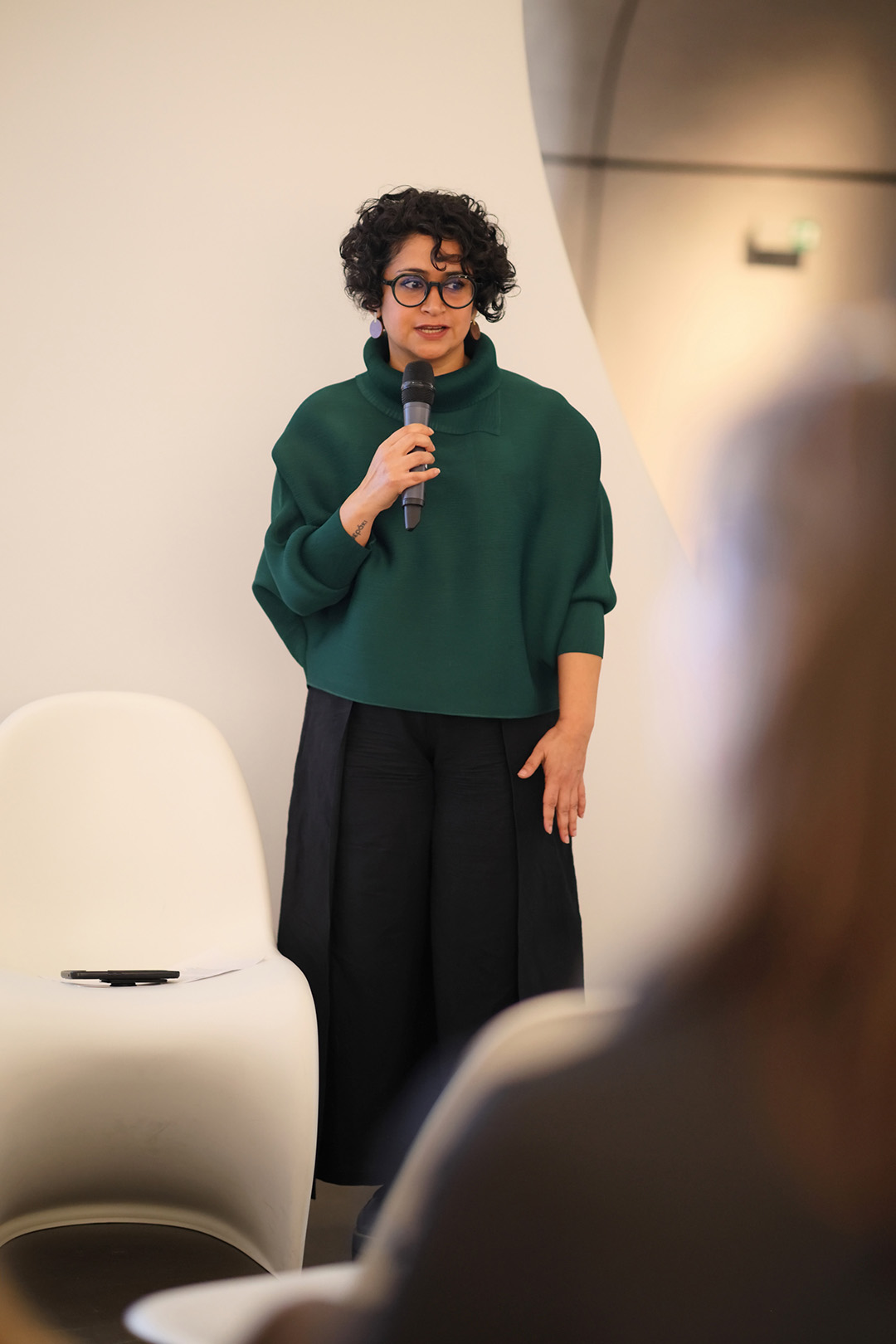
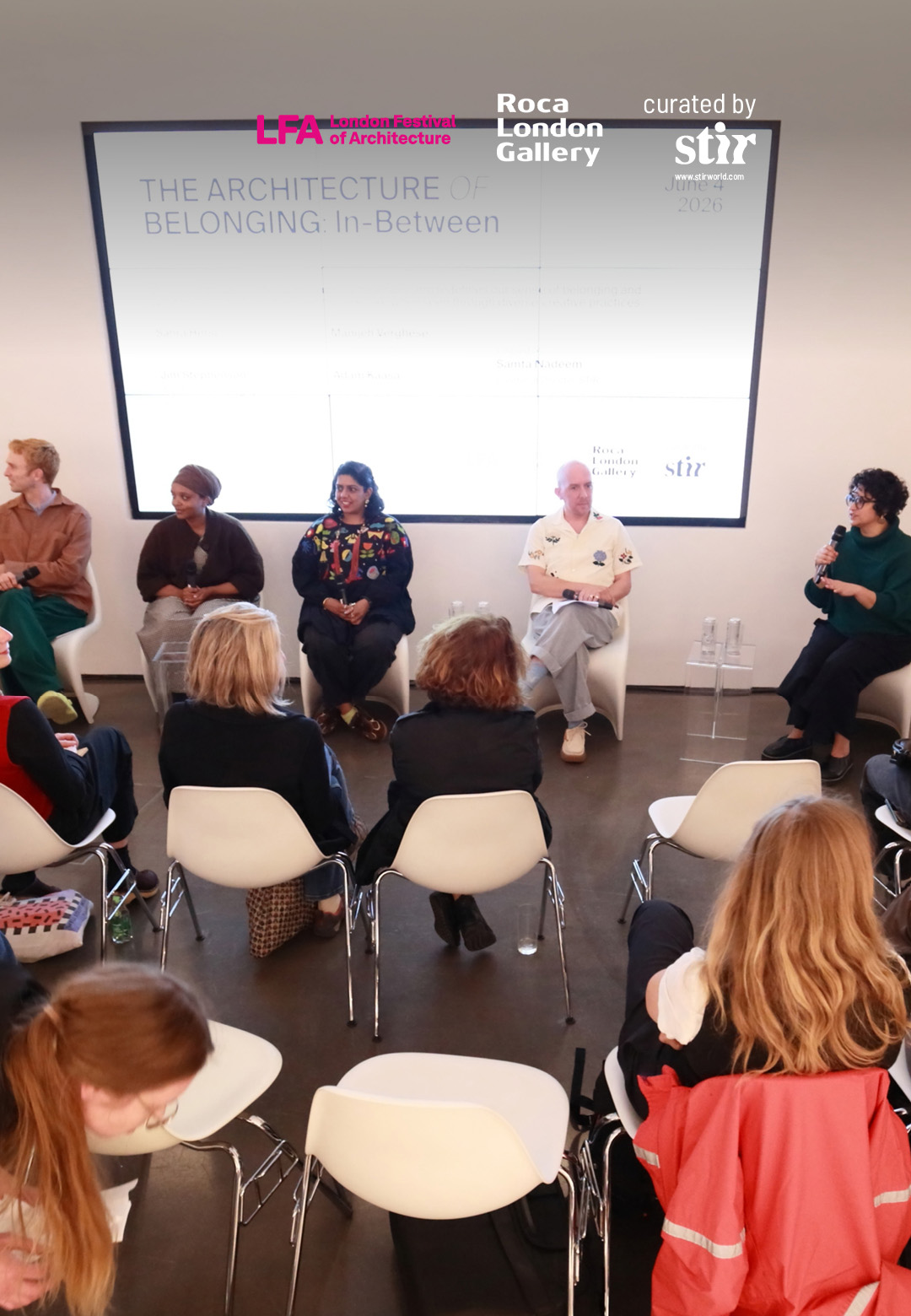
The first of these planned collaborations was done in partnership with the London Festival of Architecture (LFA) 2026, whose theme this year is 'Belonging'. Chaired by Samta Nadeem, curatorial director of STIR, the evening unfolded as a series of short monologues followed by an open panel: Four practitioners. One question: what does it mean to belong? Architecture, film, art & performance meet at the threshold.
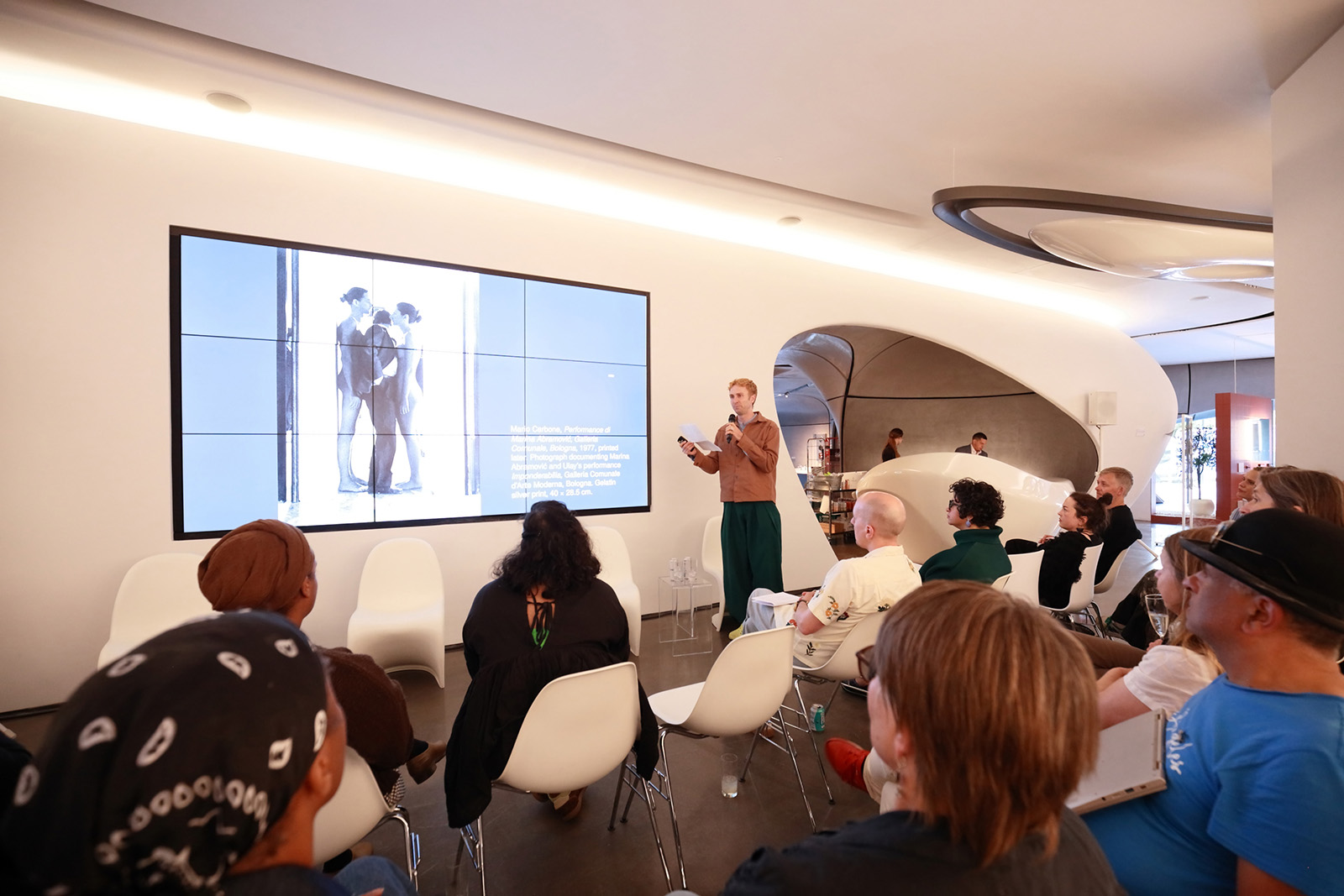
Scholar, artist and performer Adam Kaasa opened with a provocation. As a migrant married to someone who lives between places and languages, they asked at the onset: "How do you live between? The honest answer is that we do; we don't; we split; we fracture; we manage." Drawing on Marina Abramović and Ulay's 1977 doorway art performance Imponderabilia and on what they called the 'ethics of indifference' (the anonymous side-by-sideness of life), Kaasa moved the conversation away from the idea of belonging as warmth or recognition alone. "To be beside someone is not necessarily to be with them," they observed. "Closeness, it turns out, is not the same as relation." What interested Kaasa more was the hyphen itself—the gap—and what it is made of.
Architect, curator and CEO of Open City, Manijeh Verghese, opened with Lesley Lokko's provocation from the Venice Architecture Biennale 2023: 'that the story of architecture is incomplete; not wrong, but incomplete’; and professor Donna Haraway's reminder that it matters what stories we use to tell other stories with. "Culture is the collection of the stories we tell ourselves about ourselves," Verghese noted. Her curatorial work on the British Pavilion in 2021 moved through immersive installations inhabiting the space between public and private. Kevin Lynch's line from The Image of the City—"edges are often paths as well"—ran as a thread through her thinking, with Verghese arriving at her own conclusion: "Defining what your edge is and moving between all these different ways in which society wants to define you ends up becoming a definition in and of itself."
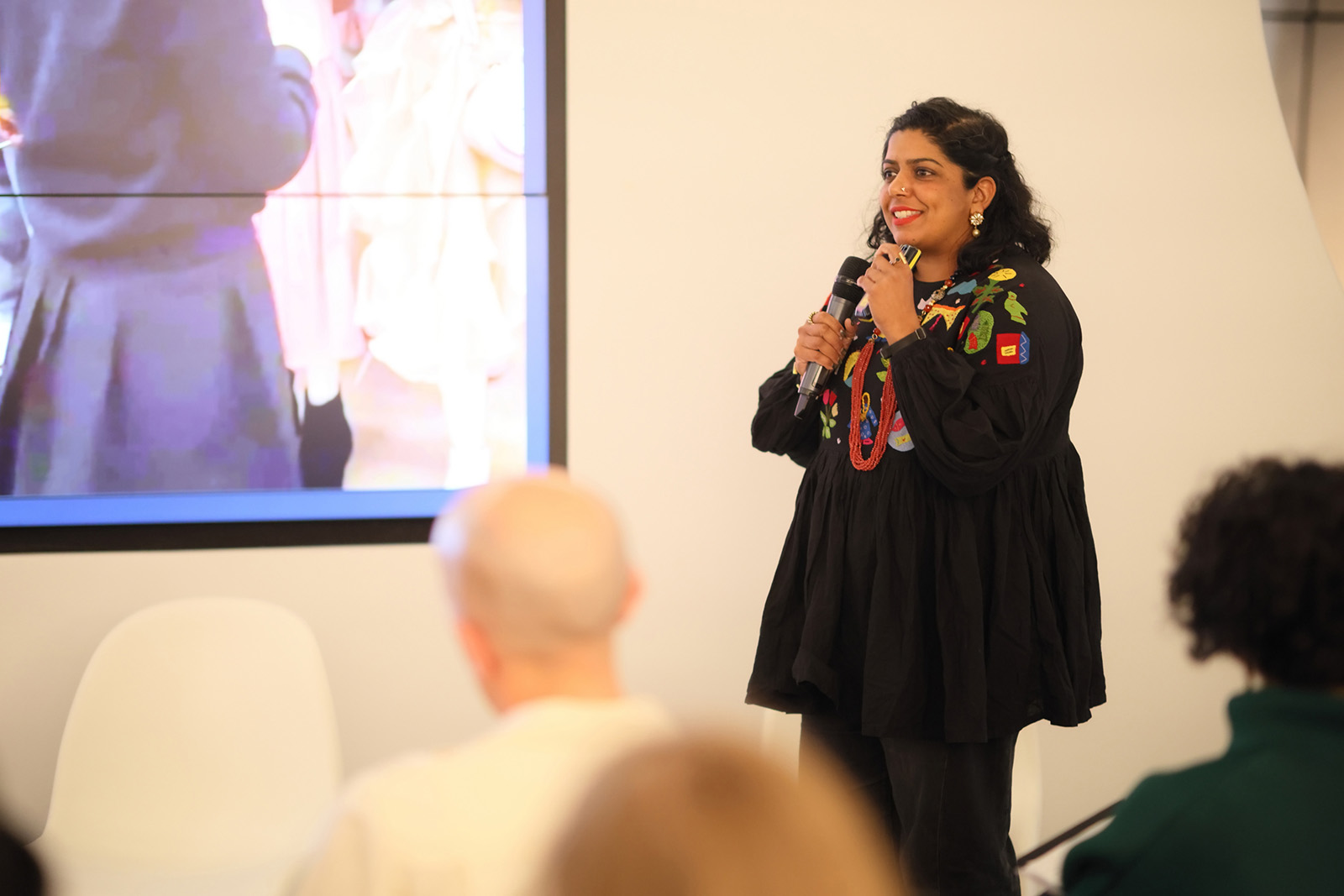
Artist and spatial designer Sahra Hersi moved through four of her projects, each touching the question of home at different scales. Her ‘civic carpets’ gave communities a permanent place to meet, claim and inhabit the public realm. She spoke of collective making as a space of belonging, "like thinking of belonging at a scale relationally rather than architecturally", through small acts of gathering, tea, conversation. A third project offered something starker, a gesture that said 'there is room for you here' in a country where arrival is often unwelcome. Her conclusion was clear-eyed and generous: "Belonging is produced at the intersection of systemic forces and intimate acts...thinking about belonging as a series of intimate acts rather than systemic policy."
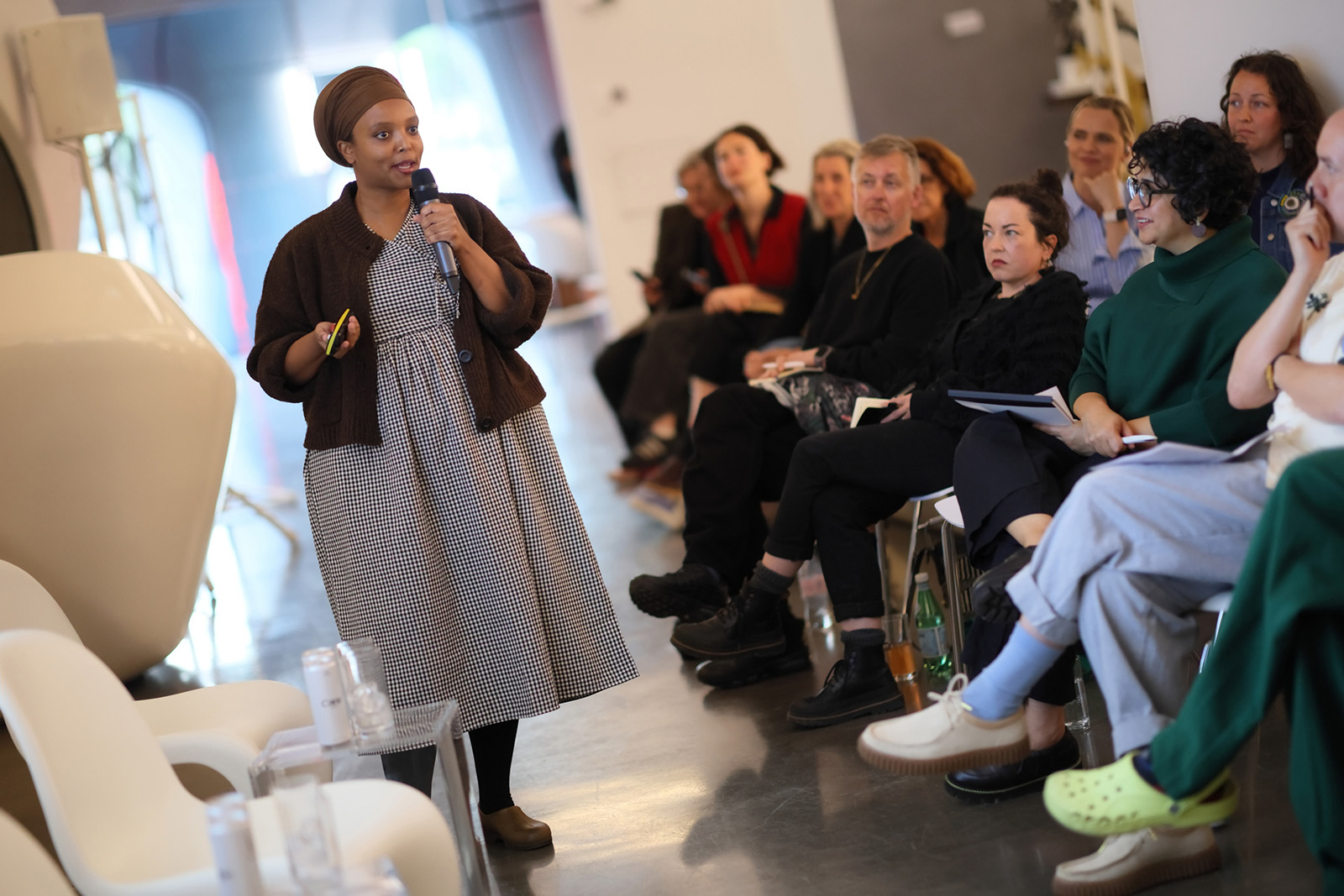
Architectural photographer and filmmaker Jim Stephenson arrived at belonging through the literal lens. For too long, he has argued how architectural photography rendered buildings devoid of people—"the risk with this kind of architectural representation is [that] it means that all of the spaces that we see in the press fall somewhere between belonging and exclusion". Cinema has always done it differently—the built environment is both protagonist and antagonist. His own practice is rooted in people first: "Architecture is the backdrop to the life that's happening in front of it." The absence of people in architectural images—or the presence of only one or two typically white models—sends its own quiet message about who a space is for. "I do genuinely believe that we need to be thinking about showing mess in our photographs and our documentation because that's how we're going to foster some sort of sense of belonging," he shared. His idea of the architectural macGuffin carried this further: a building that works so well that its form becomes almost incidental—it motivates, it holds and ideally, makes people feel they belong.
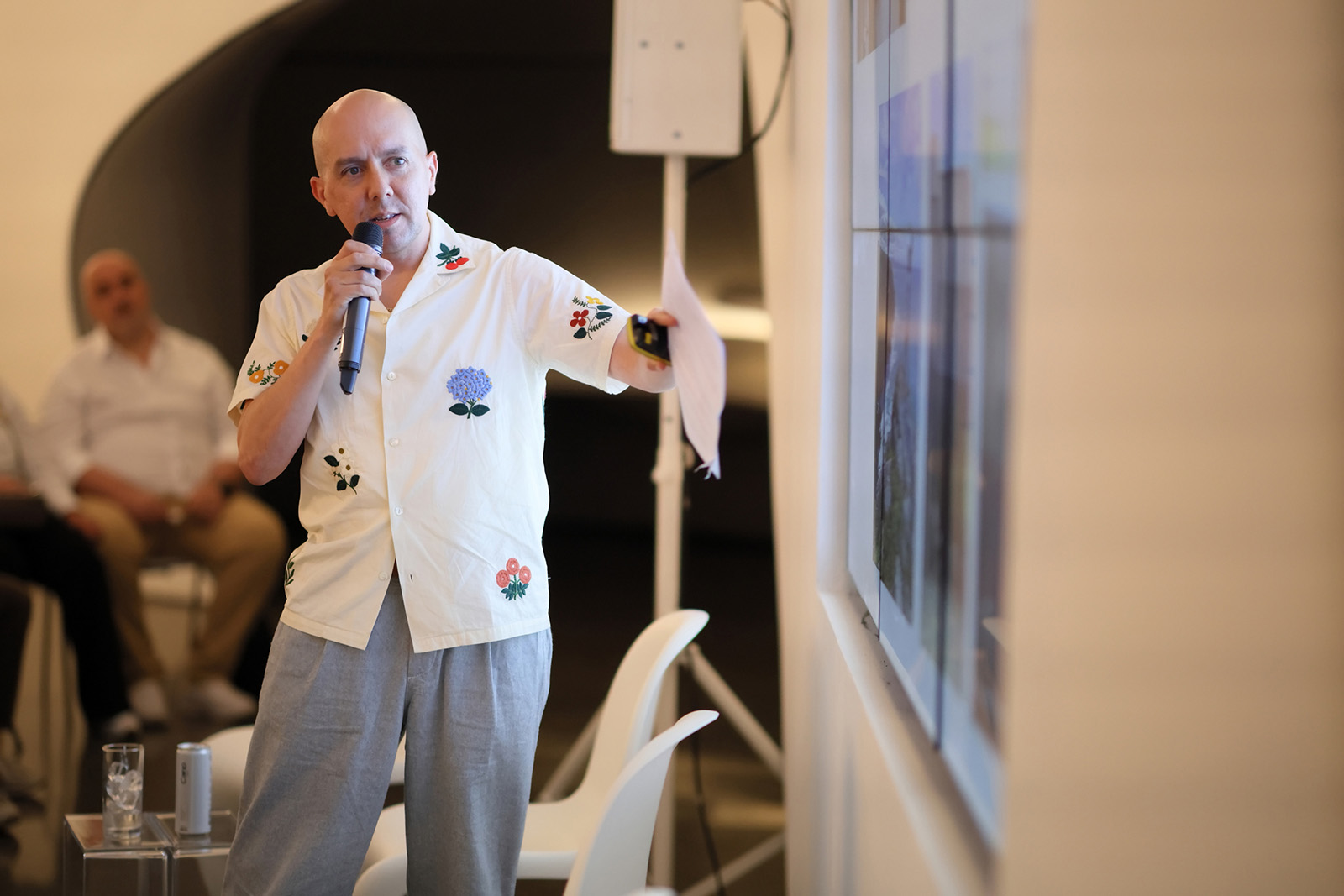
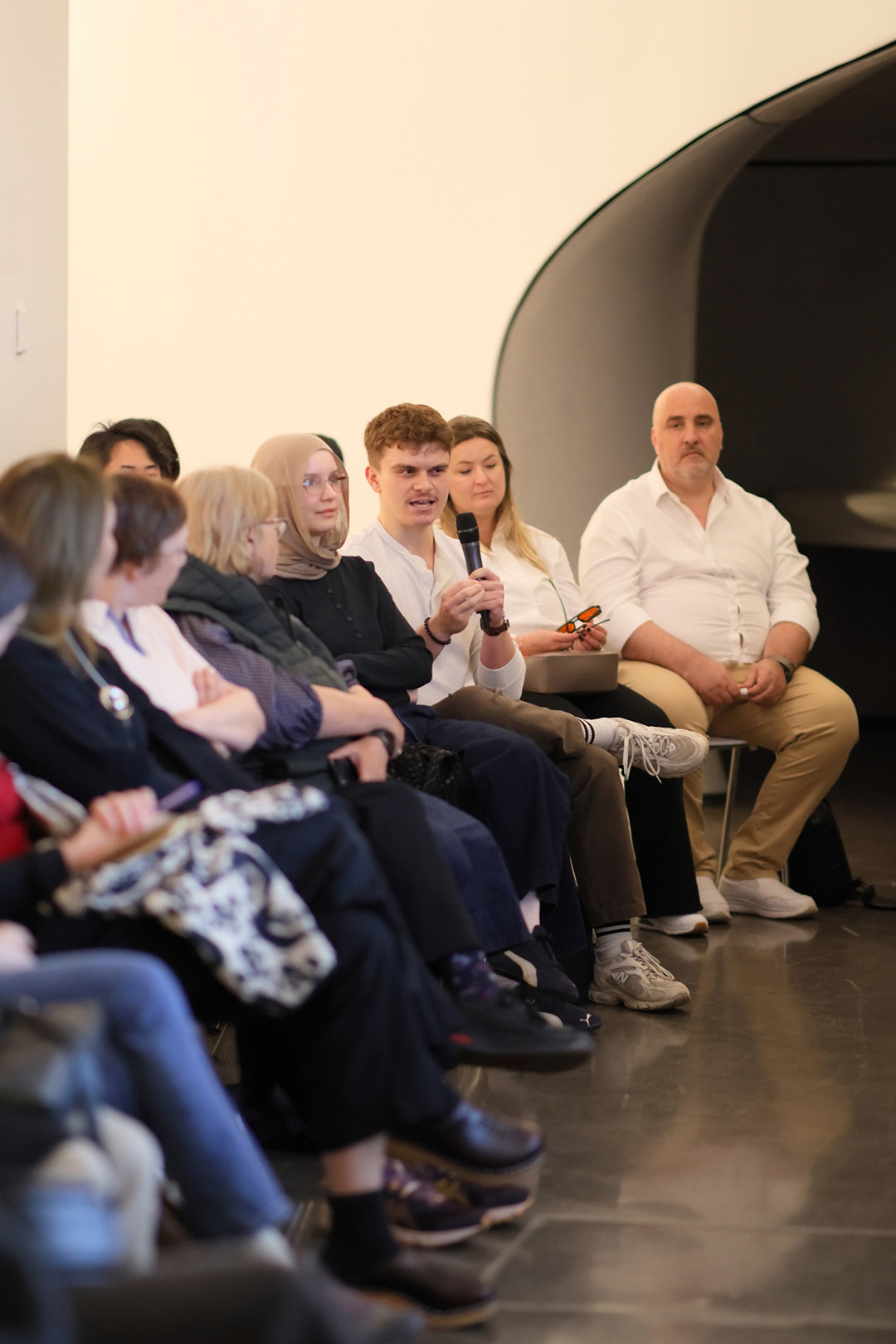
In the open panel that followed, Nadeem posed prompts that probed answers oscillating between the terror and freedom that can coexist in not belonging, especially for those othered by society, for whom belonging is urgent and daily, imposed rather than chosen. Kaasa brought in cohabitation and conviviality without demand. There are times, they noted, when communities are burdened with performing acts of intimacy to demonstrate a belonging they should never have to prove. Verghese widened the frame: edges, she cautioned, can become walls. Room, too, must be made for disagreement and difference, she said. From the audience came the question that grounded it all: How do we win this war against space and money? Hersi's answer was the most human of the evening: "I don't have the answer, but I can fight with you."
In the very spirit of the evening—heartening yet quietly radical—Xavier Torras, communications director of Roca Group, commented on how ROCA's galleries were established to go beyond the traditional showroom model—each one a meeting point between the brand, the design community, cultural institutions, architects and students, where product, architecture, research and cultural dialogue can co-exist coherently. With spaces across different cities, each reflecting its own cultural context, engaging with local design communities and existing "simultaneously as galleries, showrooms and cultural spaces," as Torras describes, they act as "open platforms—places where ideas can be shared, relationships can be built and the role of design in shaping everyday life can be explored more meaningfully."
Belonging, as the evening suggested, is never stable or coherent and is, in fact, a practice unfinished, relational, sometimes baggy at the edges. It can be revoked, negotiated, withheld at any moment. To be othered often sharpens questions of who gets welcomed and who gets managed; who remains visible and who is asked to translate themselves over and over, to stay. But the answer is not complete inclusion or total intimacy. Maybe, like baggy space, belonging requires room: for disagreement, for mess, for incompleteness, for standing beside and with—and for recognising that the spaces left open are sometimes where life, and belonging, take shape.

by Pranjal Maheshwari Oct 16, 2026
At the 2026 Stirling Prize ceremony, Mary Duggan with RUFF Architects, MAKER Architecten and Nakshabid Architects were felicitated for proffering quality housing and social equity.
by Mrinmayee Bhoot Oct 12, 2026
The new Centre for Contemporary Arts, fostering public engagement with art in Uzbekistan, is housed in a tram depot refurbished by the French studio, emulating local craftsmanship.
by Mirra Lynn Oct 10, 2026
The Shanghai-based architecture practice’s intervention in Suzhou transforms three abandoned houses into a bookstore, café, library and homestay.
by Pranjal Maheshwari Oct 09, 2026
The eighth edition of the international architecture and urban design showcase, themed How Much?, explores diverse implications of social, ecological and economic ‘cheapness’.

make your fridays matter with a well-read weekend
Enter your details to sign in
Don’t have an account?
Sign upOr you can sign in with
a single account for all
STIR platforms
All your bookmarks will be available across all your devices.
Stay STIRred
Already have an account?
Sign inOr you can sign up with
Verification link sent to check your inbox or spam folder to complete sign up process
Tap on things that interests you.
Select the Conversation Category you would like to watch
Please enter your details and click submit.
Enter the 6-digit code sent at


Reading the in-between: STIRxRoca London Gallery probes an architecture of belonging
by Jincy Iype | Published on : Jul 08, 2026


 Sign in with Google
 Sign in with email
What do you think?