Architecture09 mins. read
Concéntrico 2026 dissects urban fictions, temporalities and ecologies
by Mrinmayee BhootJun 18, 2026



by Samta NadeemPublished on : Jul 07, 2026
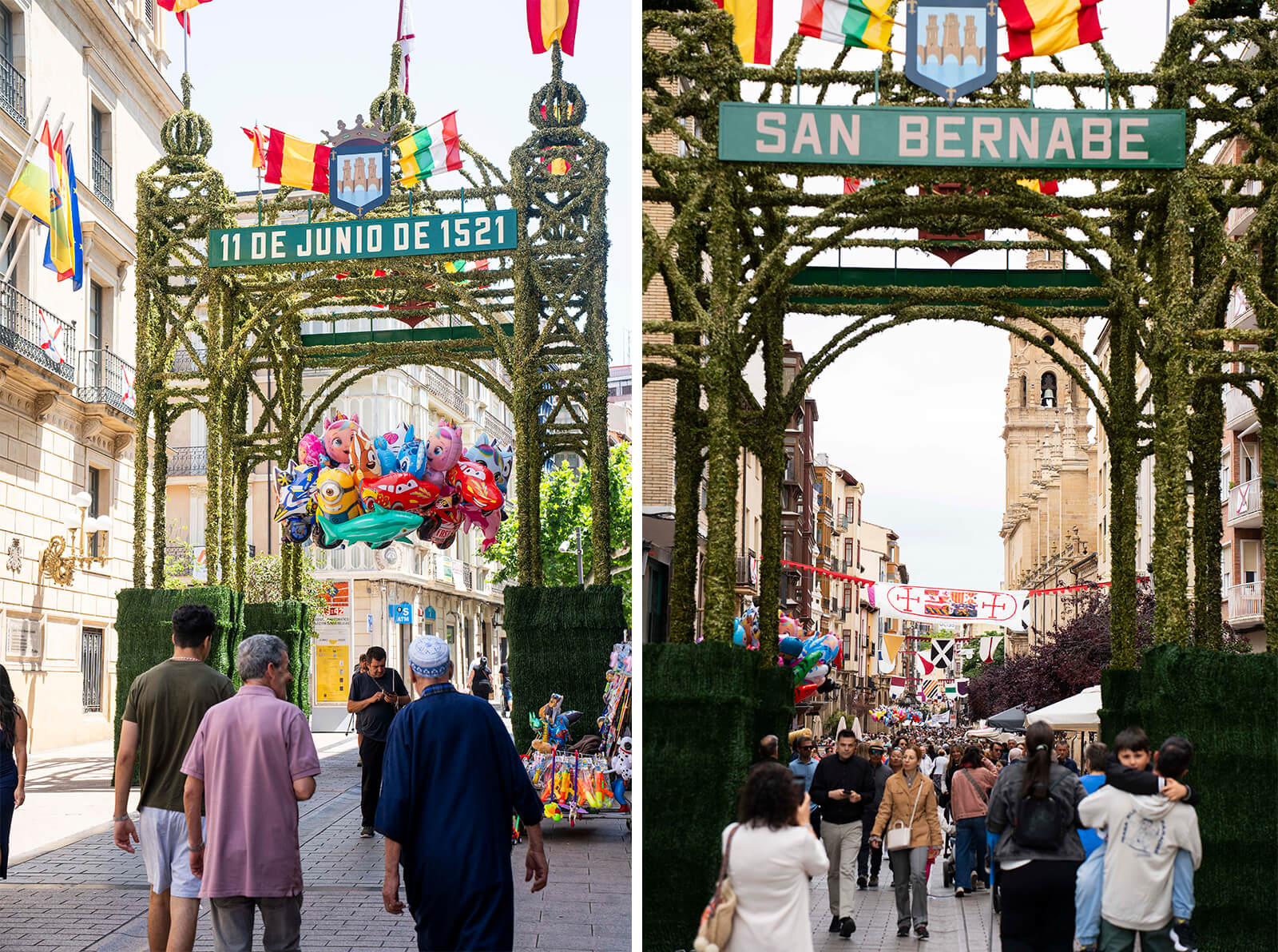
I had never been to Logroño before, and were it not for Concéntrico, I likely never would have. La Rioja’s capital is better known for the vineyards spilling into the horizon at its edges than for the city itself. Unsurprisingly, the wine gets the postcard; the town gets driven past. Arriving for the festival’s twelfth year, I expected the usual choreography of a small city rearranged for six days around visiting architects and their temporary monuments. What I did not expect was how little rearranging seemed necessary or felt apparent at all.
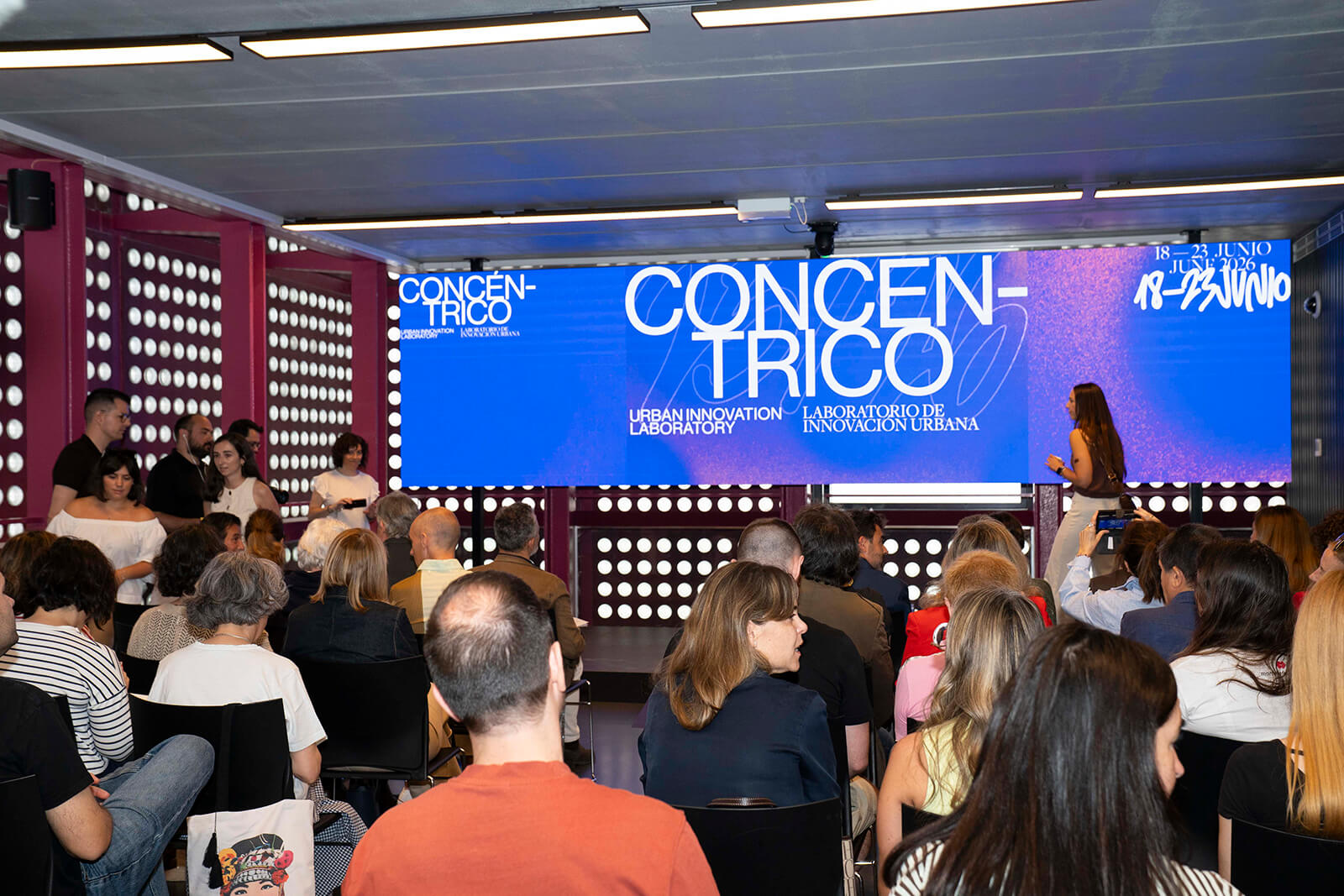
Logroño moves at a pace that is no longer typical of cities its size and larger. Mornings unhurried, conversations spilling past their allotted time, a town simply not taught to perform urgency. Its architecture matches this ease with no clean break between old and new, no historic quarter cordoned off like a museum, no visual argument staged on the skyline. The formal sits beside the informal without apparent anxiety about which one wins. It made me wonder whether Concéntrico—headed by its creative director Javier Peña Ibáñez—and its own ease with its installations slipping into plazas, car parks and vineyard paths without seeming to ask permission was less a curatorial triumph than a condition the city had already made possible.
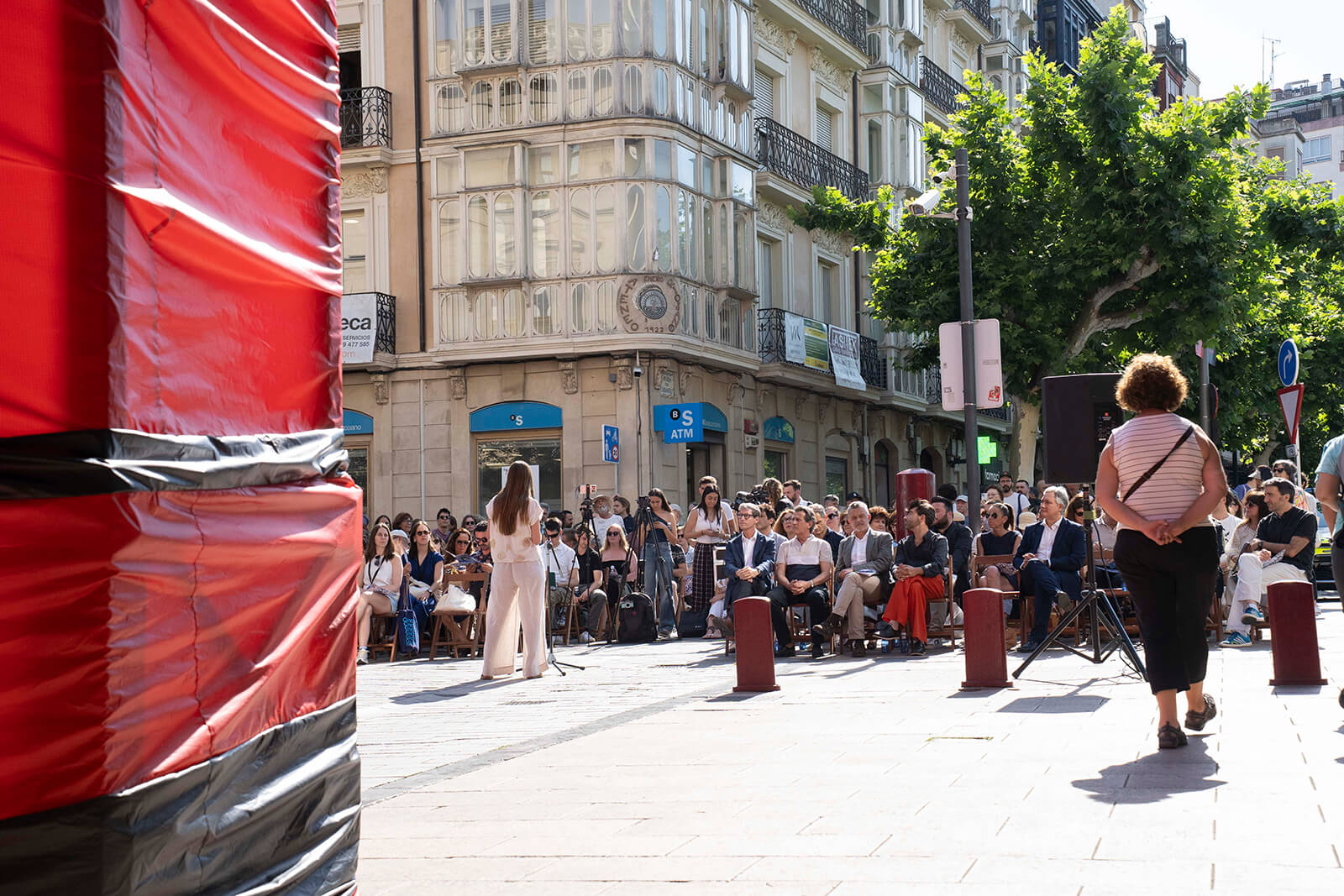
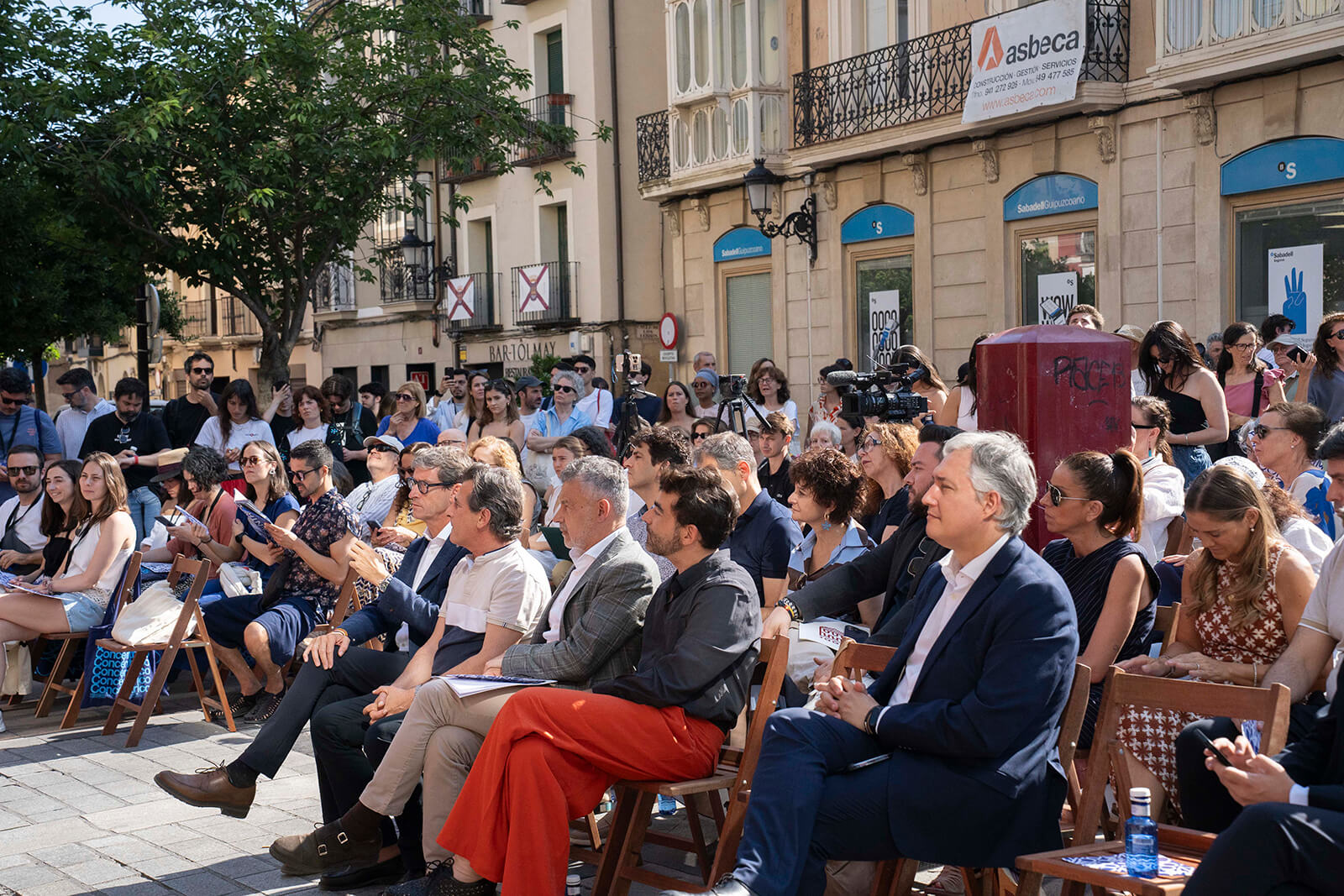
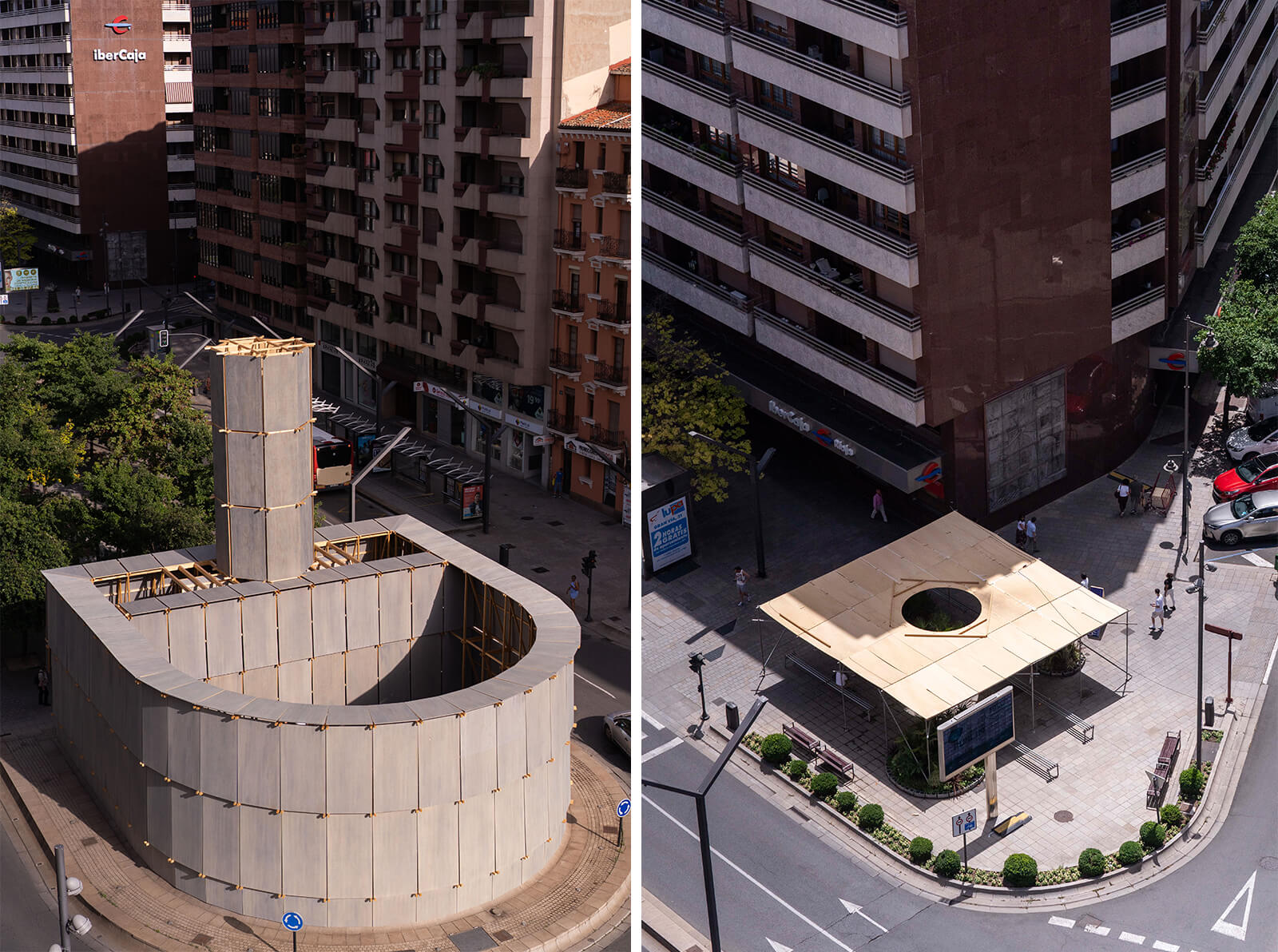
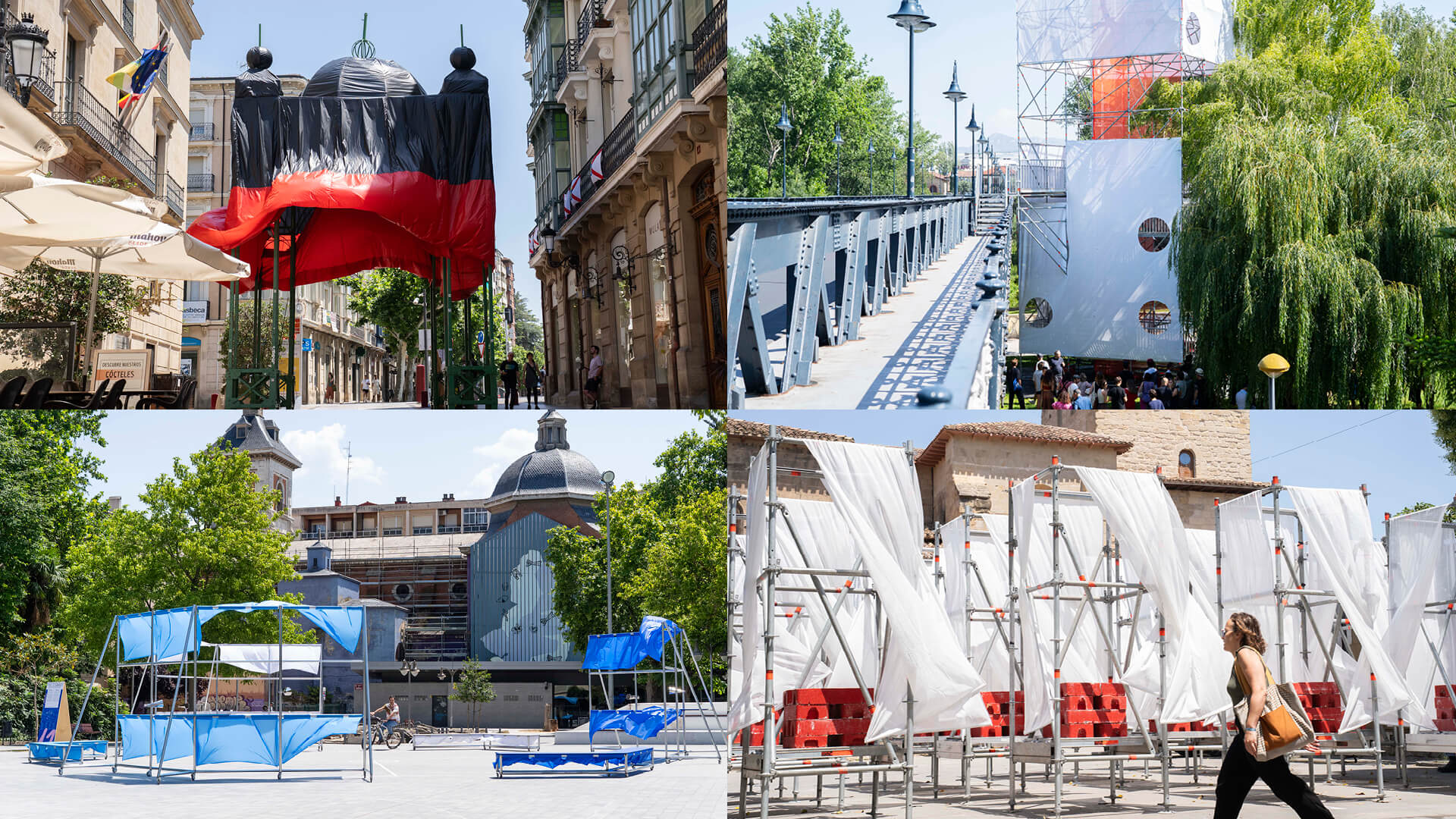
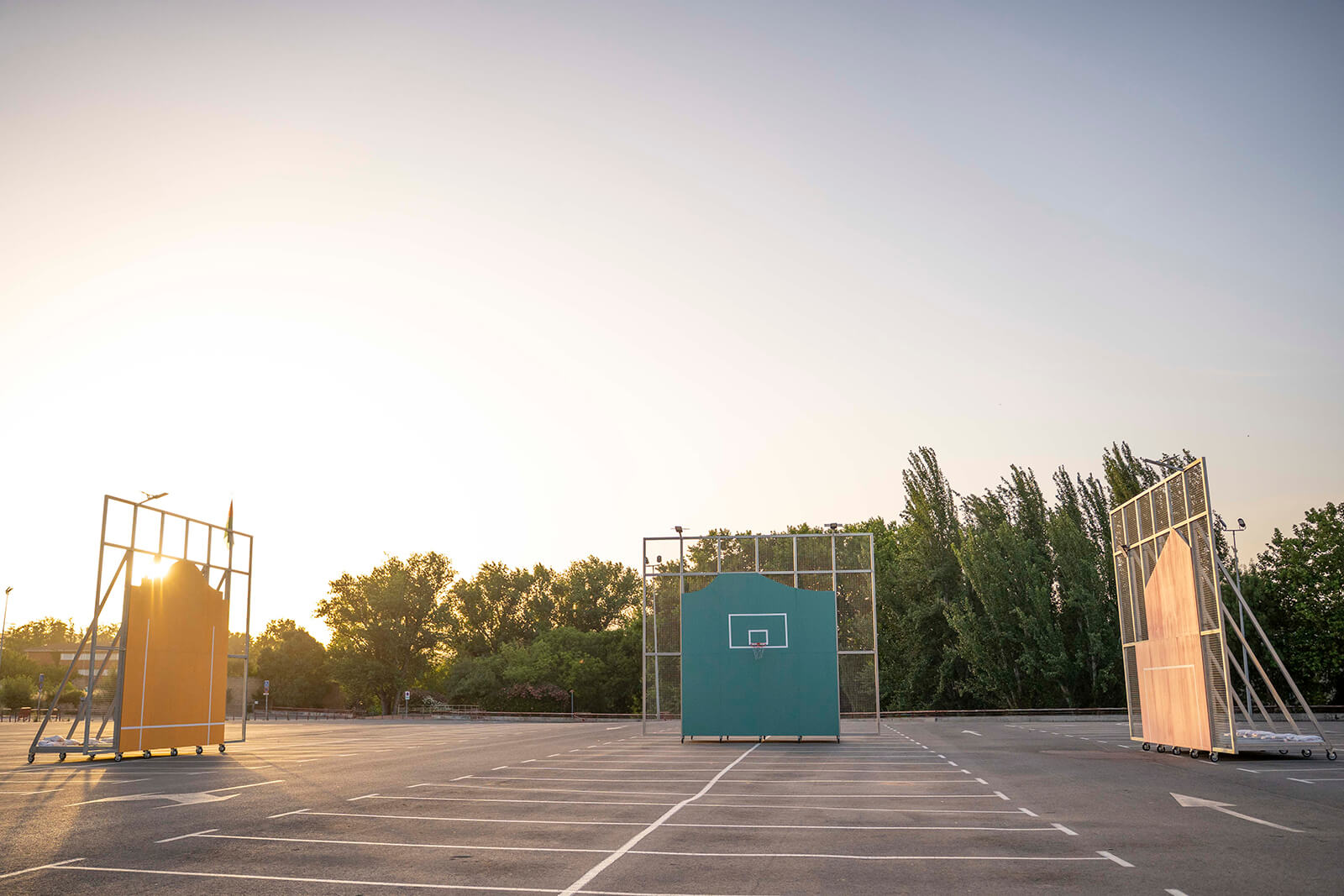
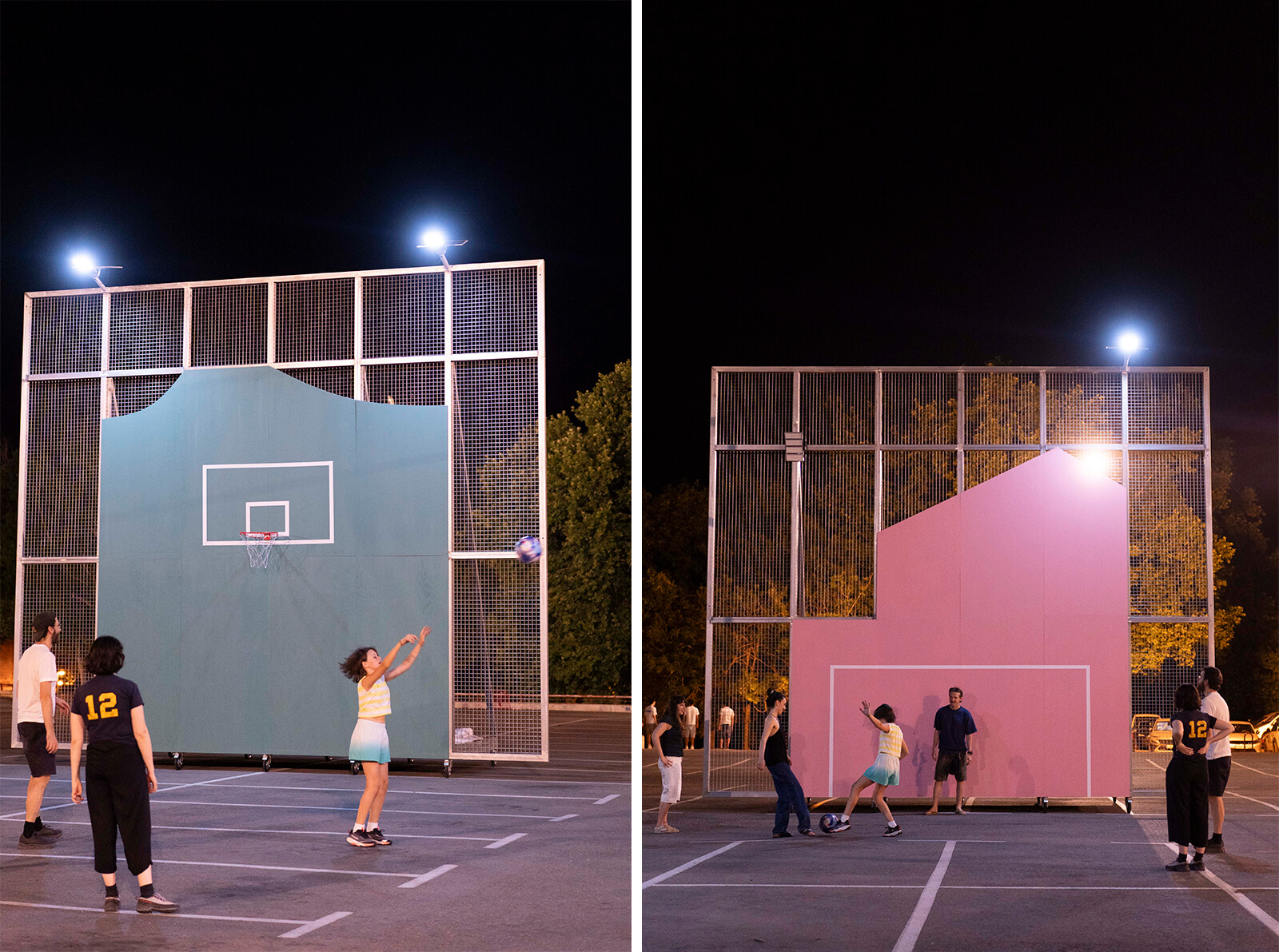
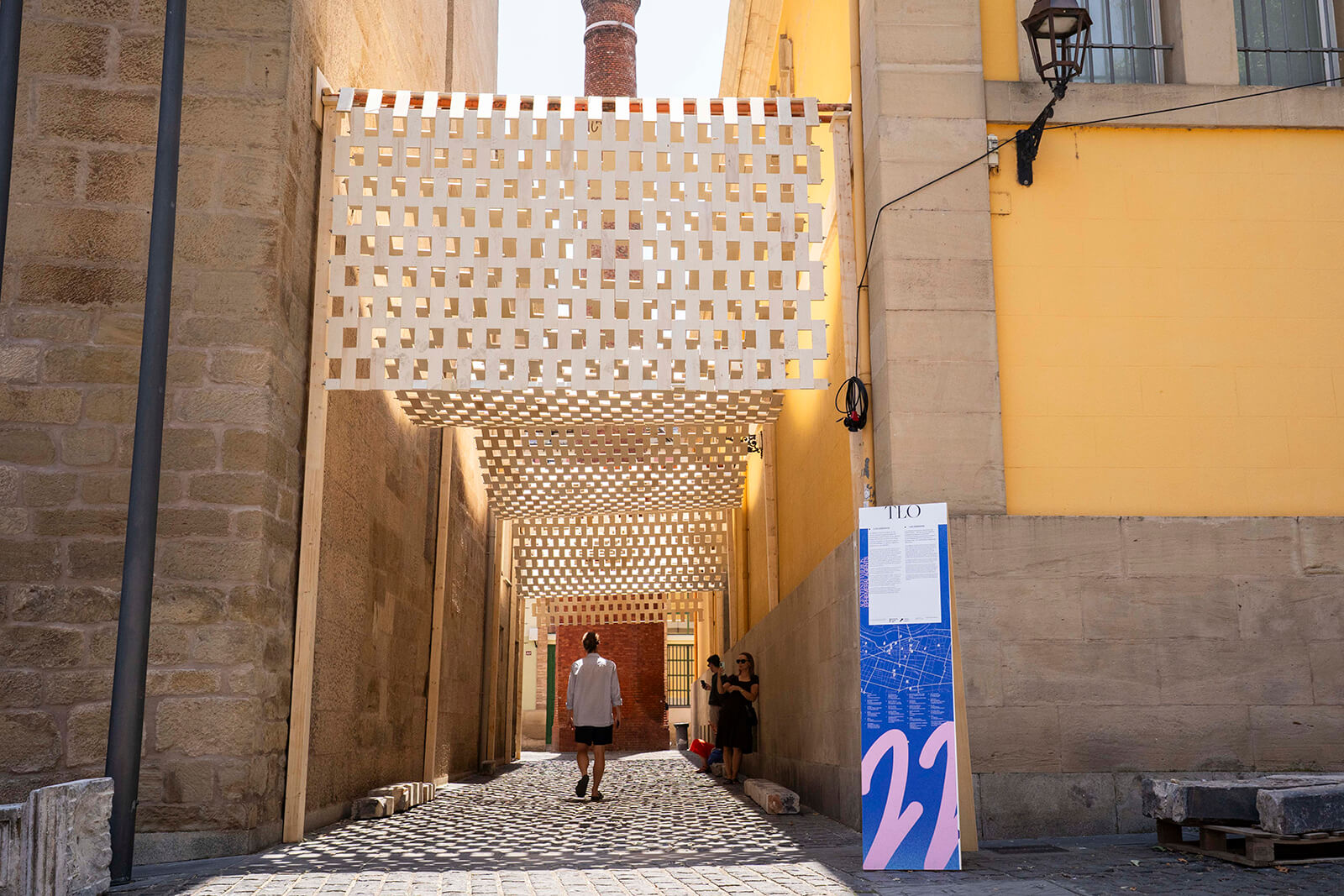
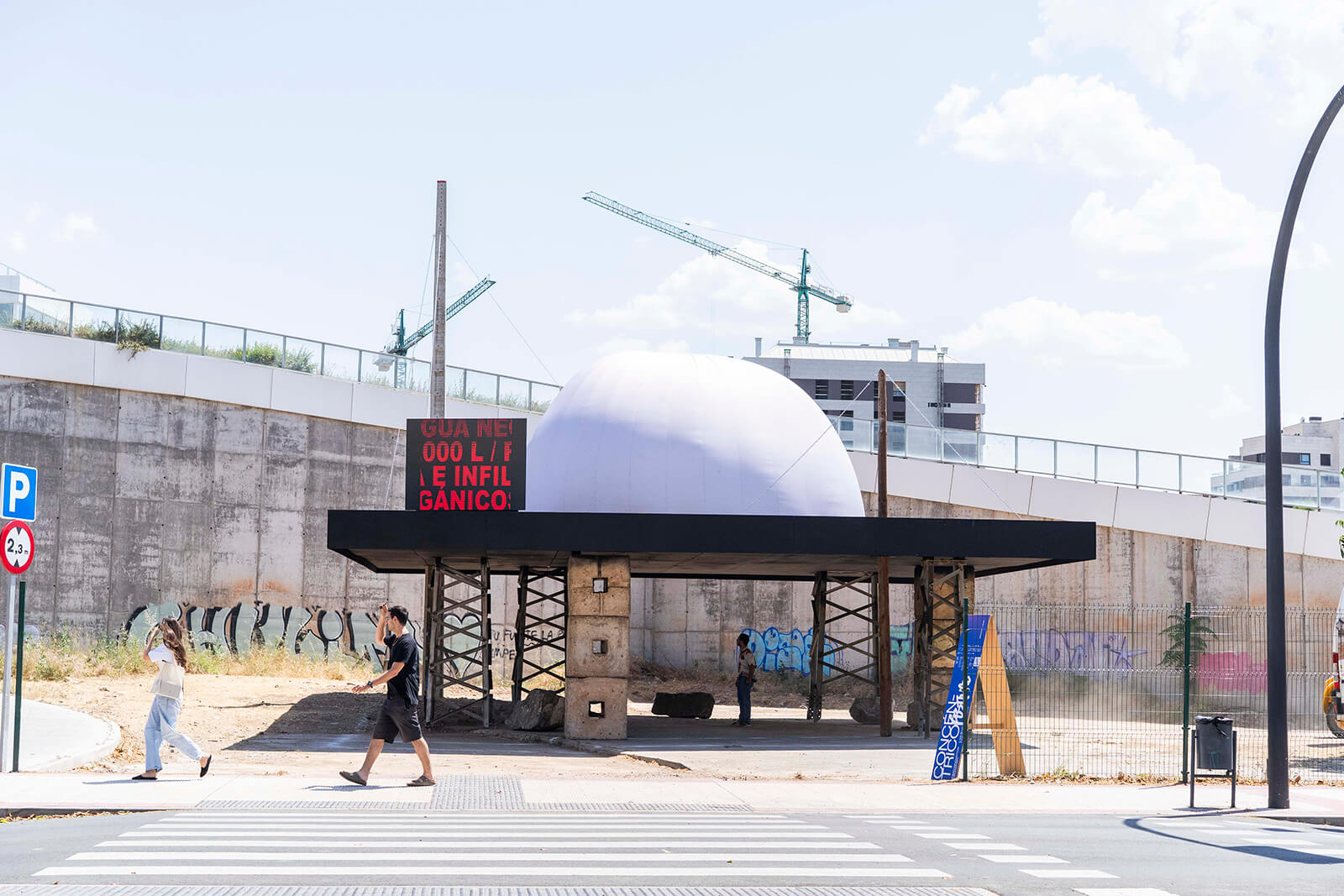
Twelve editions in—it showed. What struck me most was not any single intervention but the manner of the public around them: an unbothered, almost proprietary comfort that was far from the etiquette a city and a people usually reserve for visiting biennales. At the Revellín car park, 2050+’s Frontones Danzantes had already stopped being an installation and become a basketball court by the time I got there. The studio’s own framing of the piece, as an ephemeral infrastructure turning play into a tool of urban transformation, undersold how quickly Logroño’s teenagers made that argument for them. A few streets over, TAELON7’s Edge Assemblies was built with the support of the Austrian Cultural Forum in Madrid from a single pallet’s worth of timber joined without fixings. Deliberately transmitting immediacy and temporariness, it had become simply a kiosk with somewhere to sit and watch light move through the boards, which is exactly what a woman with her shopping bags was doing when I passed.
At Parque Gallarza, Amanda Pinatih and Gabriel Fontana’s Sidelined turned out to be another kind of playground entirely: a redesigned sports field and a set of transformable uniforms, developed with local schools, built to expose who gets left standing at the edge of a game and why. The project extends Sidelined: A Space to Rethink Togetherness, the pair’s 2025 commission for the Dutch Pavilion in Venice, produced by Nieuwe Instituut, acting as proof that not all of Concéntrico’s playgrounds are built from scratch; some are simply given a second, more public life.
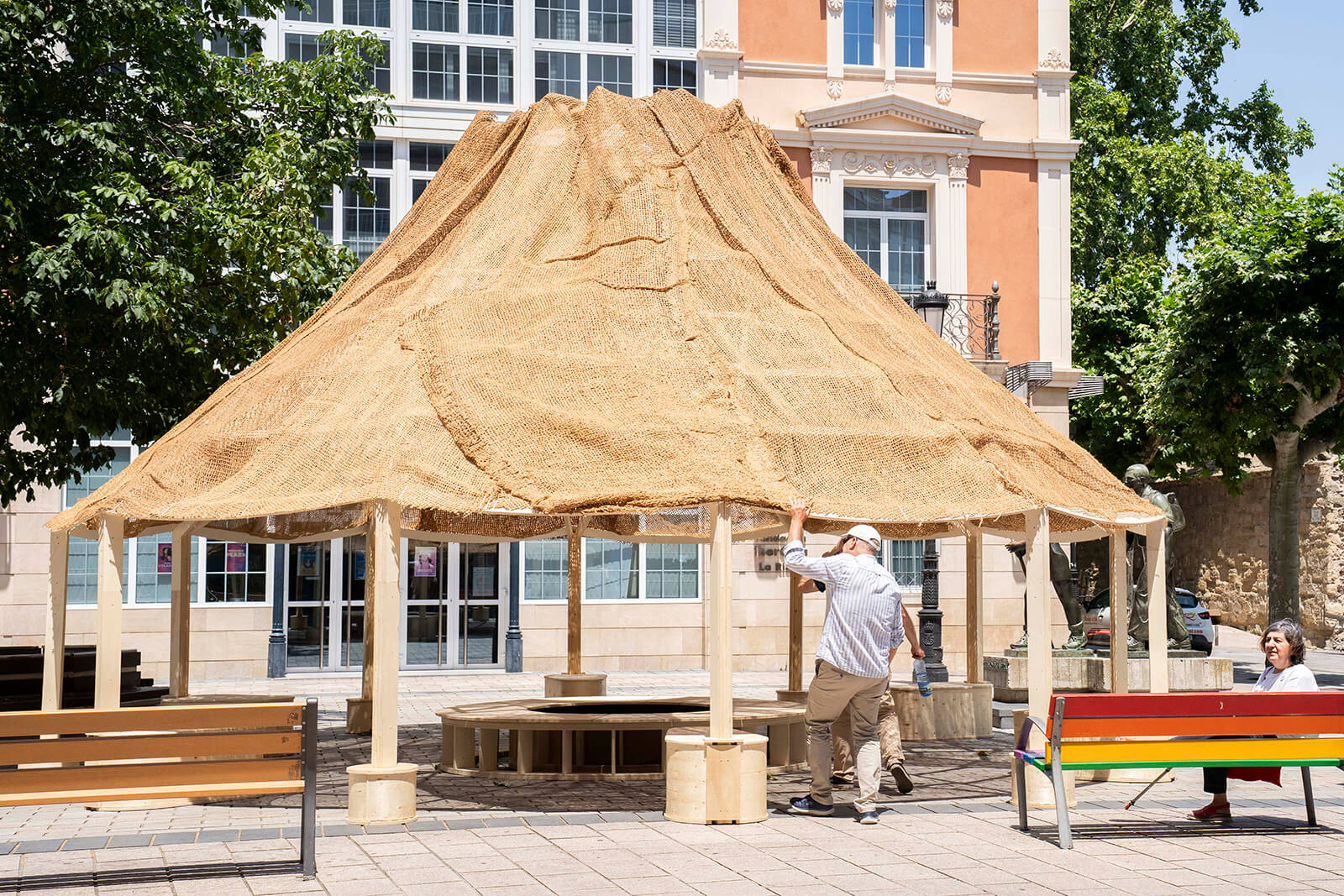
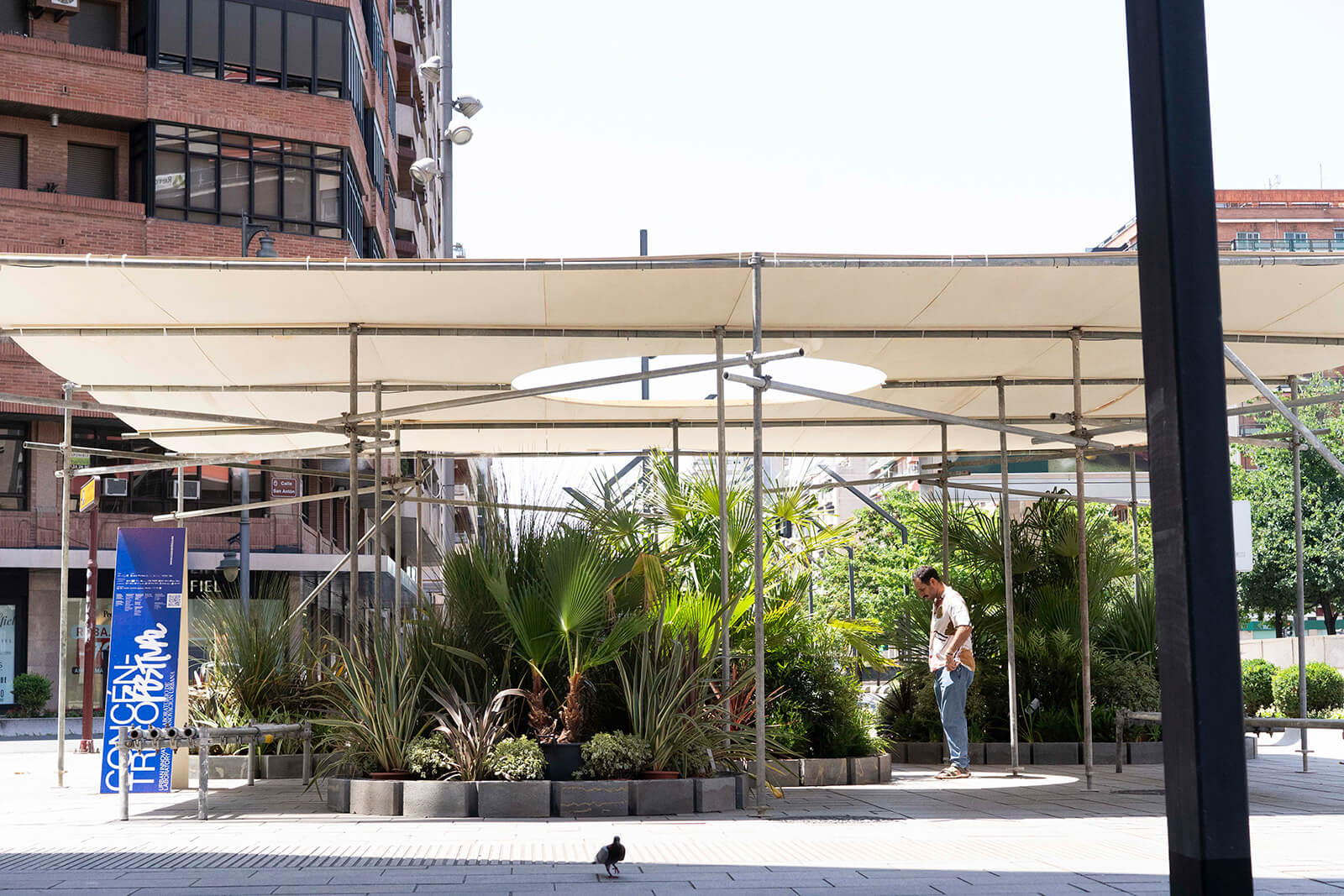
'Ritual', it turned out, was not confined to the festival’s own curatorial axis of that name. CENTRAL and Maxime Delvaux’s Architecture for Ritual, a sand dune enclosing a mast of painted timber in the Plaza del Mercado, was designed to accumulate handwritten wishes all week before the mast became the base of a communal bonfire on St John’s Eve, which this year was also the festival’s closing day. DF_DC’s A Soft Embassy, meanwhile, borrowed the scaffold—an architecture normally synonymous with restriction and access denied—and reprogrammed it to host a different action each day of the festival. Producing, meeting, playing, protesting, recirculating: which of those five verbs a passer-by encountered depended entirely on what hour they wandered past, which felt less like an installation than a small, honest admission that no single use of public space is more legitimate than another.
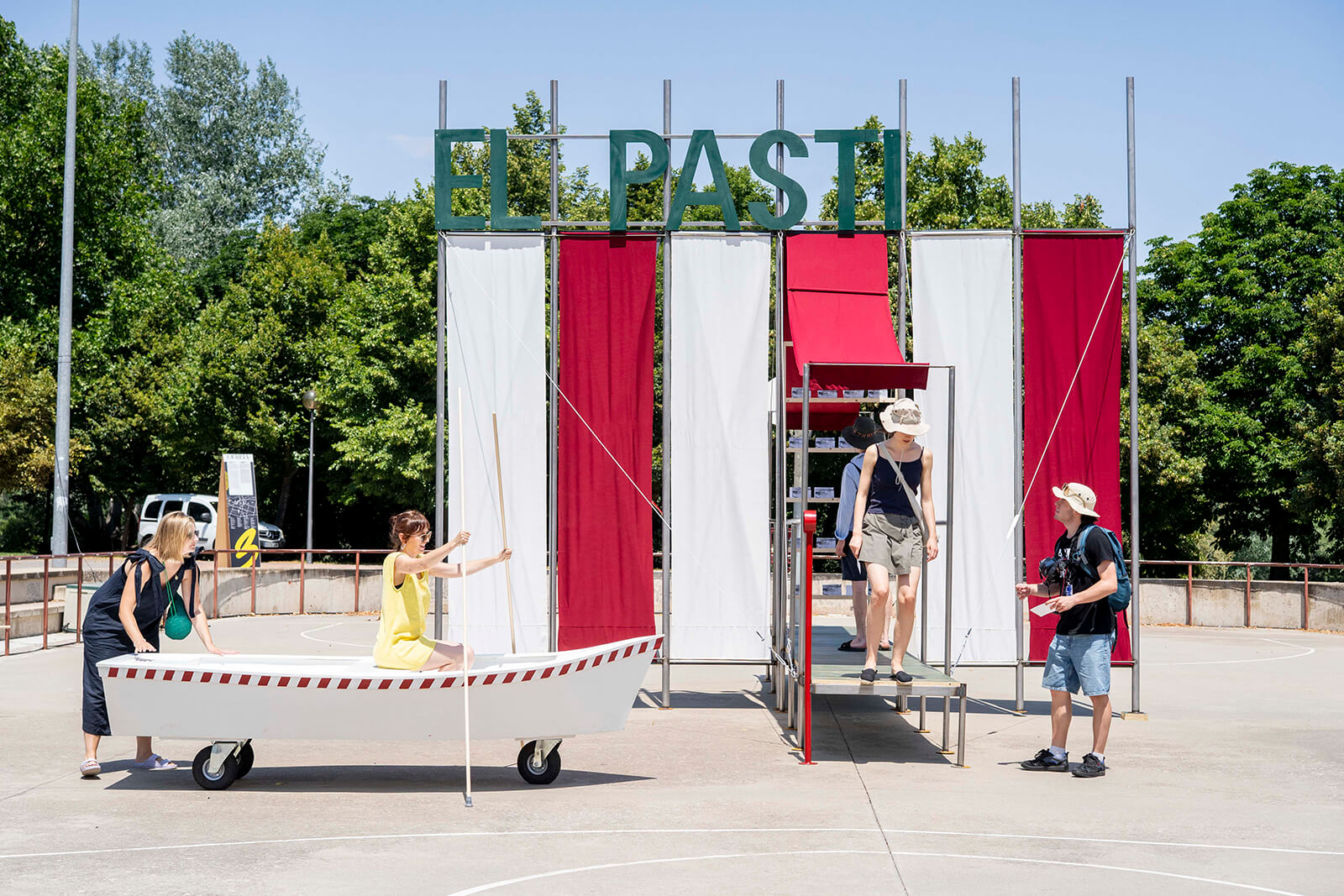
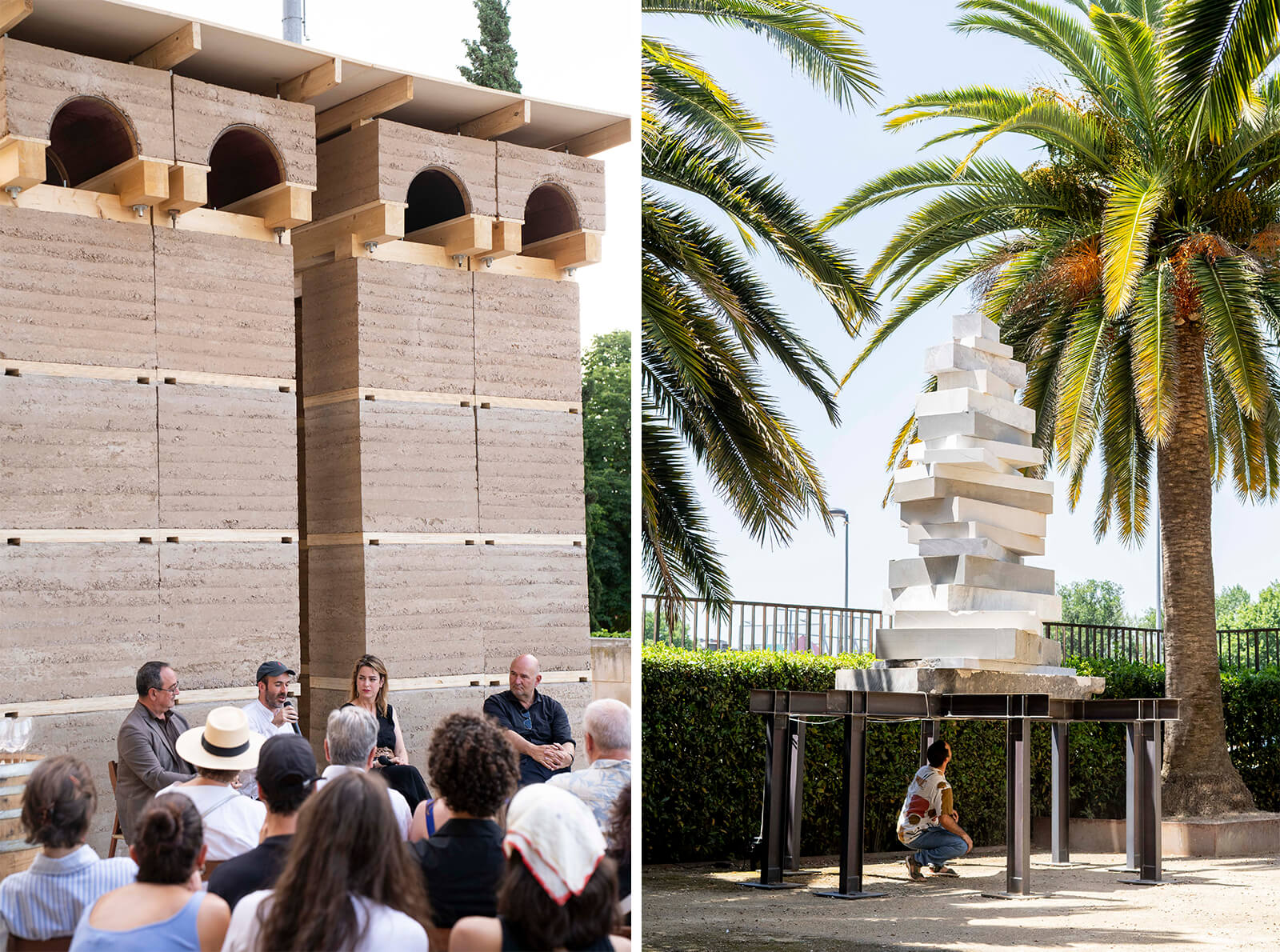
Material rigour ran through the works I found myself returning to. Boltshauser × Garbizu Collar’s Terroir, near the Church of Santiago, built its walls from rammed earth and its formwork from spent wine barrels. Once a barrel’s oenological life was over, it was put to work holding up a wall. During the festival run, the pavilion itself functioned as a tasting room where light, humidity and temperature became part of what you were drinking. AAU Anastas’ Cathedral for One took the opposite register with a stone cocoon built for a single visitor, discarded slabs repurposed into something briefly sacred, with a different sound piece piped in each day. I queued for it longer than I queued for anything else in Logroño, and the solitude inside felt entirely earned.
Future Firm’s intervention on the Puente de Hierro translated into a light, temporary addition to an existing bridge, meant to make the relationship between the city and the river Ebro more permeable. A short walk away, OFREIA’s Summer Shapes Memories, supported by Pro Helvetia, approached the same river from the opposite direction: a fog system turned El Cubo into a hazy artificial lake, with small boats drifting across a concrete court once used for exactly this kind of bathing, before the Ebro’s public swimming culture quietly disappeared. Where Future Firm made its case through restraint, OFREIA made an equivalent one through nostalgia—and both, oddly, arrived at the same conclusion: that the river was once as central to Logroño’s social life as its plazas are now, and has simply been waiting for someone to say so.
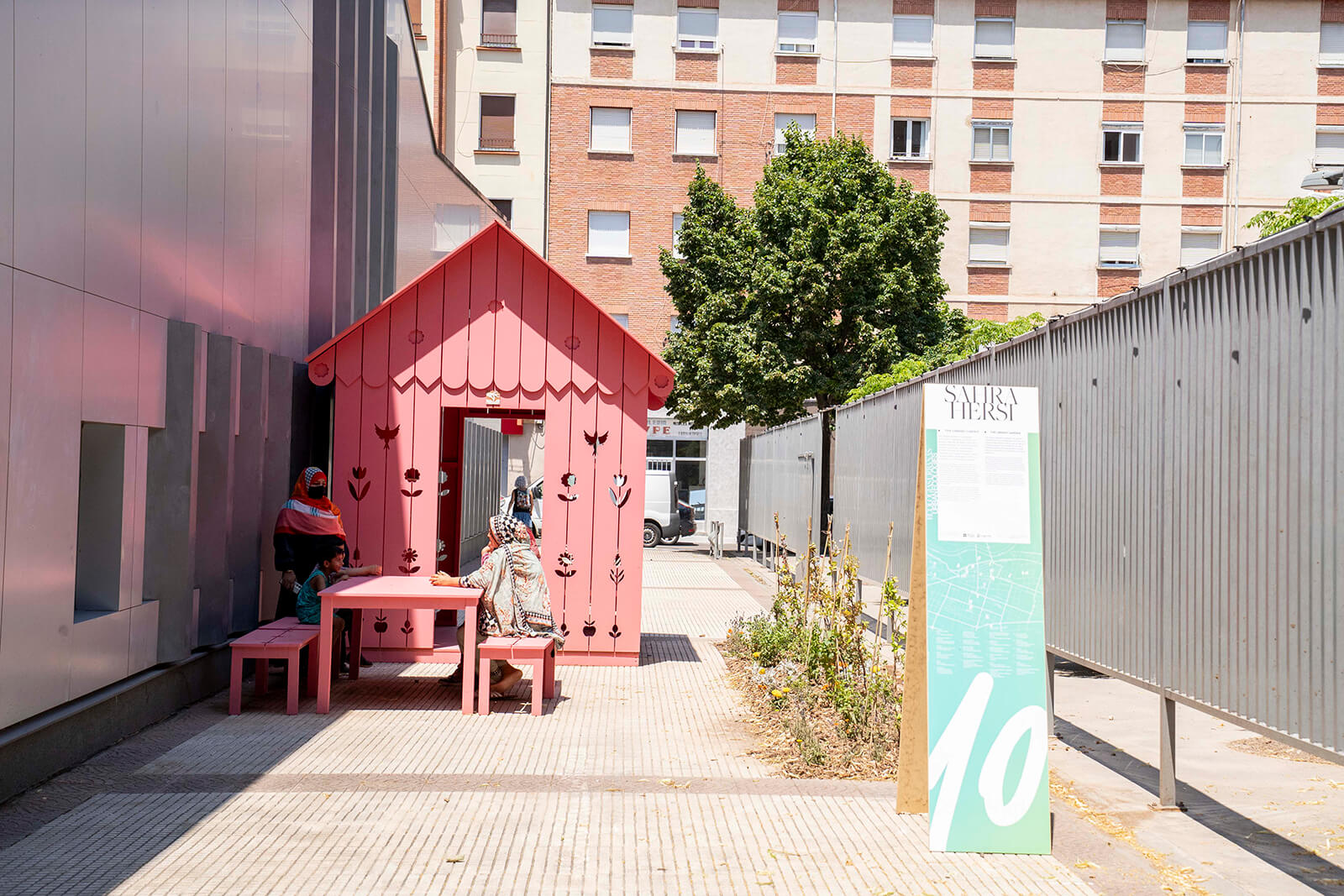
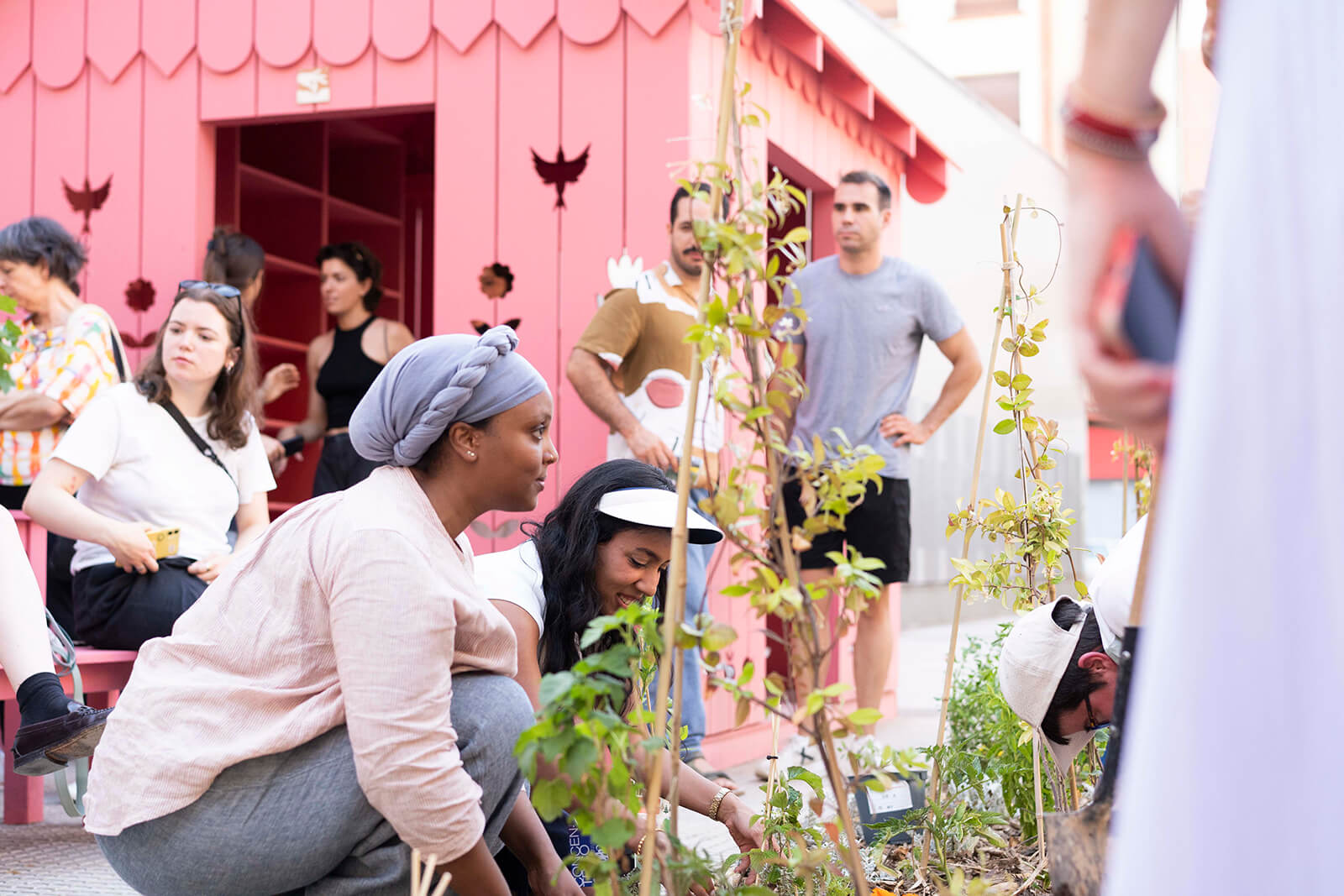
An evening stroll to Sahra Hersi’s The Library Garden, her participation in Concéntrico backed by the British Council, offered the clearest answer to a question the pre-event framing at STIR had already posed: whether anything forged during the festival’s six days could survive past them. Her intervention is conceived as a small civic garden of drought-resistant species around a shed and a seed exchange next to the Biblioteca Rafael Azcona, and is expected to stay—absorbed into the library’s own grounds rather than dismantled with everything else. If that holds, it will be the rare Concéntrico project that outlives its own festival week entirely—not as a monument but as a garden someone has to keep nurturing.
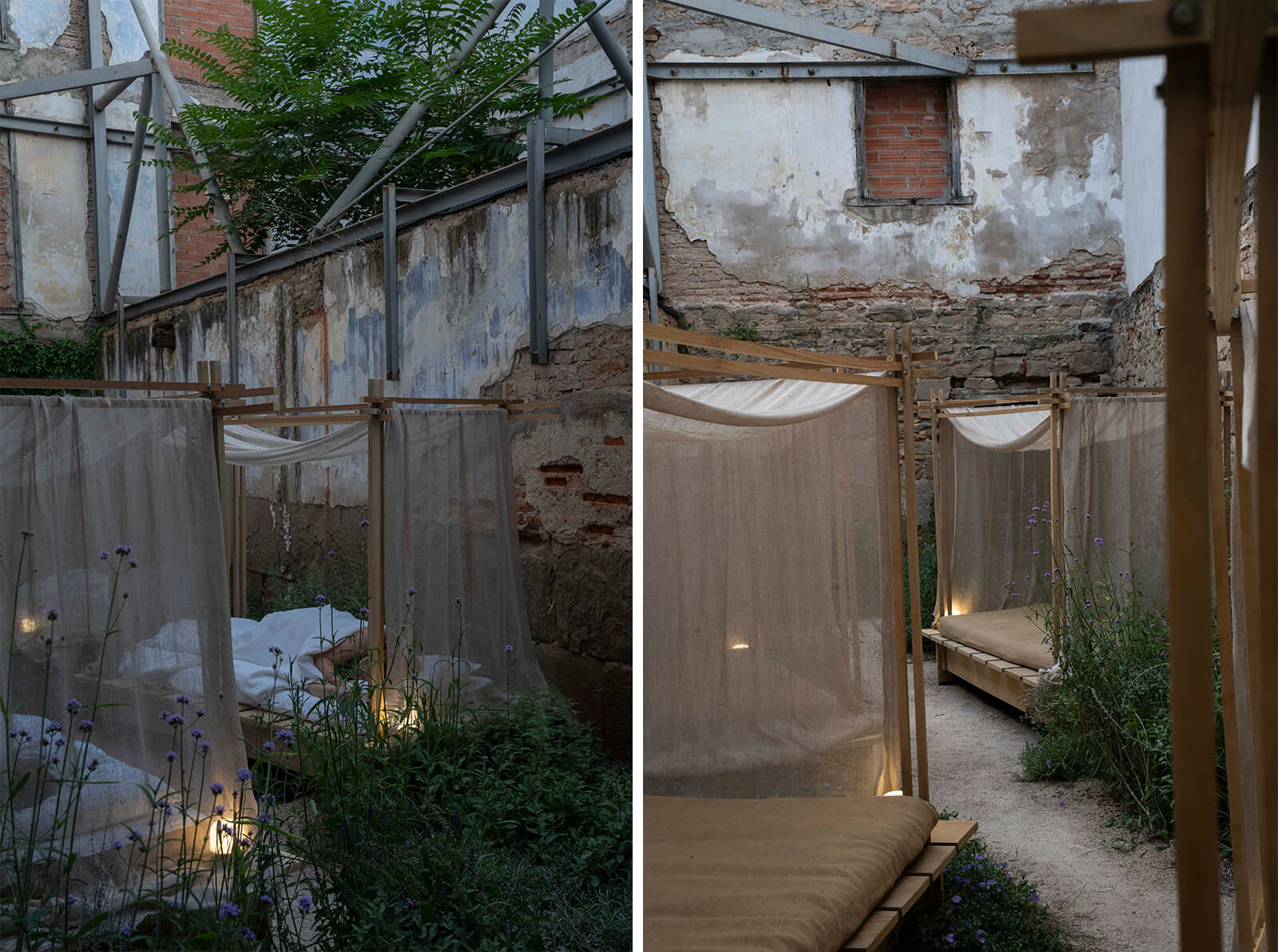
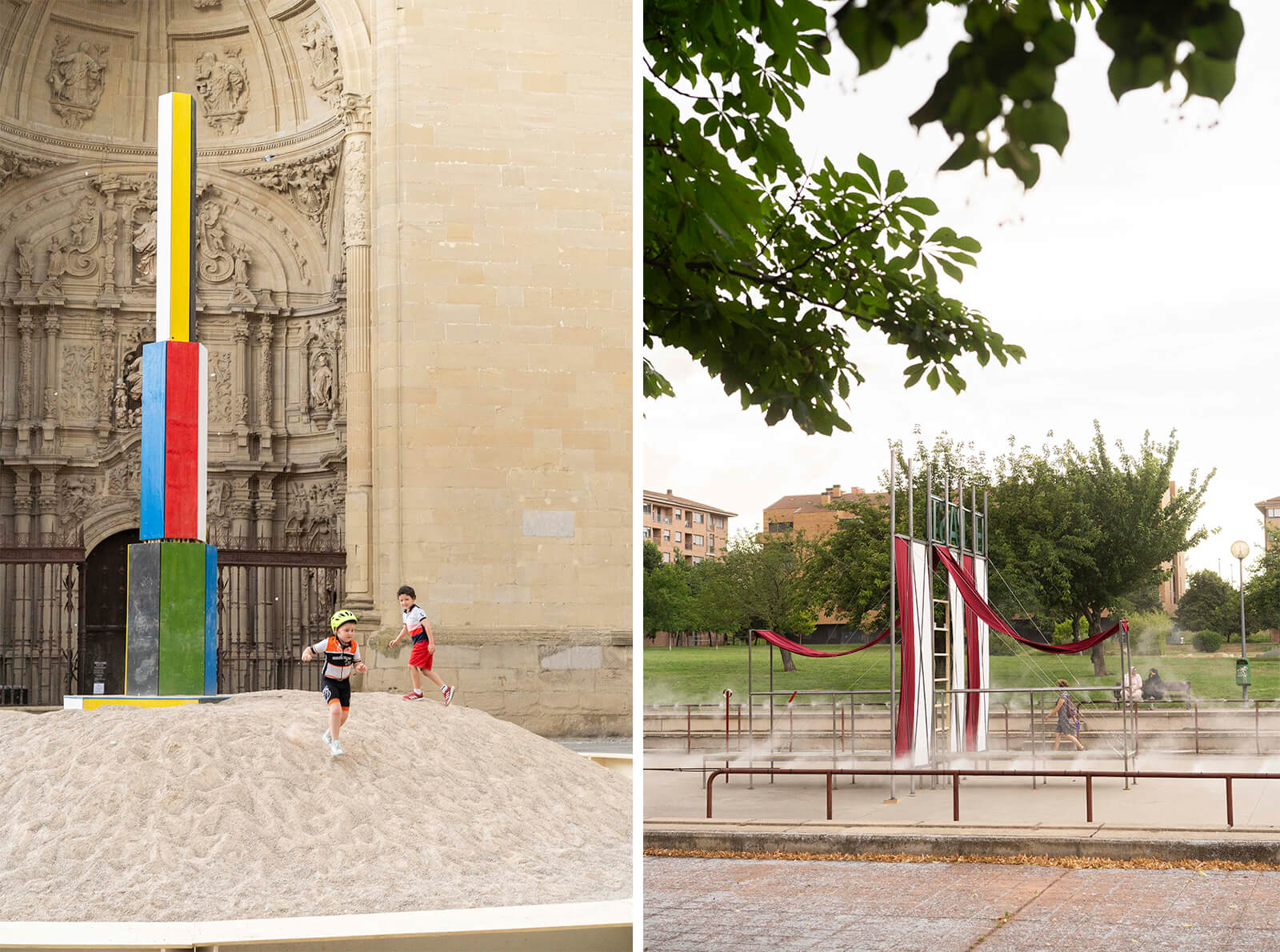
In the end, I found myself asking what a festival owes a city after over a decade of belonging and returning to it and, more pointedly, what the city has come to expect in return. Twelve years is long enough for a foundational myth to calcify or to loosen. In Logroño’s case, it seemed to have loosened into something closer to civic habit: not a spectacle imposed from outside but an annual permission the city grants itself to imagine its own streets differently for a week, through the eyes and hands of visitors from other cities and countries and cultures entirely. This is, after all, how Concéntrico has always worked—its international cohort of architects and designers arriving each year with the backing of national institutions like Pro Helvetia, the British Council and Het Nieuwe Instituut—and the festival quietly functioning as a standing exercise in cultural diplomacy as much as architecture. Whether this comfort is Concéntrico’s doing or simply Logroño’s temperament is difficult to discern, and perhaps it is not worth discerning at all. A festival dependent entirely on the character of its host city is, in a sense, more honest than one that imposes a single, exportable model onto wherever it lands. Bilbao’s or Barcelona’s ambitions do not translate here, and Concéntrico does not seem to want them to. What it offers instead is smaller and harder to replicate elsewhere: a city willing to be experimented with precisely because it does not feel it has anything to prove on grounds of urban image—perhaps because it already trusts what it has.
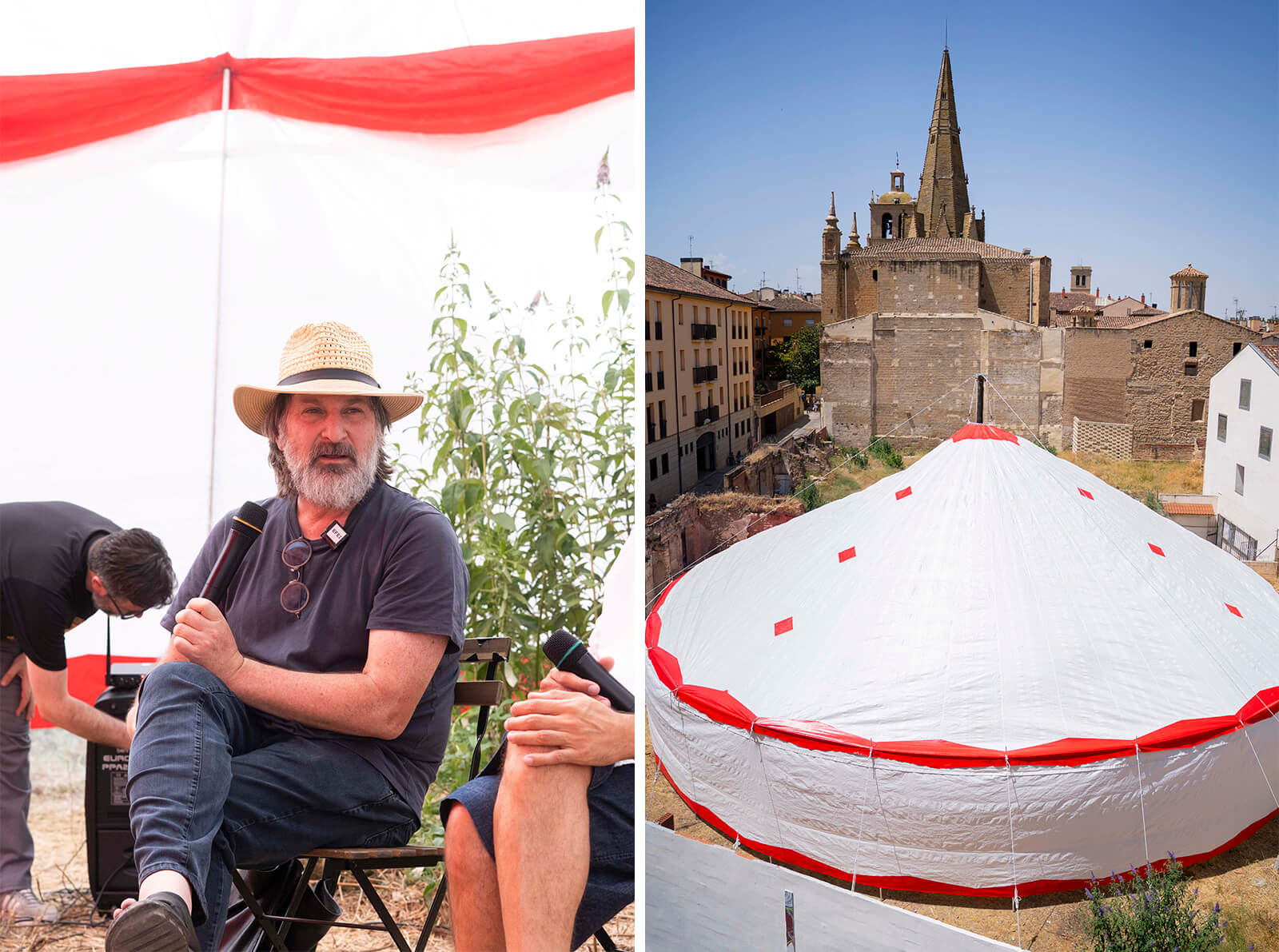
Before arriving in Logroño, we asked whether the relationships forged during the festival could be sustained once the ‘circus tent was dismantled’. Having now walked the city with the festival, I am inclined to answer differently than the question intends. In Logroño, it was never quite a circus tent to begin with. Almost everything I saw will be gone by the time this is read—the sand returned to wherever sand goes, the scaffold reused, the barrels perhaps back in a bodega. Only the Library Garden, if it holds, will still be there, quietly outliving the argument it was built to make. The tent, as it is, seems to have been pitched permanently; its canvas simply changing its shape and pattern once a year, which may be the only kind of permanence 'temporary' architecture can honestly claim. The one exception is perhaps the only proof that the claim was ever true.

by Mrinmayee Bhoot Oct 12, 2026
The new Centre for Contemporary Arts, fostering public engagement with art in Uzbekistan, is housed in a tram depot refurbished by the French studio, emulating local craftsmanship.
by Mirra Lynn Oct 10, 2026
The Shanghai-based architecture practice’s intervention in Suzhou transforms three abandoned houses into a bookstore, café, library and homestay.
by Pranjal Maheshwari Oct 09, 2026
The eighth edition of the international architecture and urban design showcase, themed How Much?, explores diverse implications of social, ecological and economic ‘cheapness’.
by Pranjal Maheshwari Oct 06, 2026
With a programme focused on biodiversity, accessibility and safety, the Rotterdam-based architects help the neighbourhood reclaim a barren landscape as an integral social node.

make your fridays matter with a well-read weekend
Enter your details to sign in
Don’t have an account?
Sign upOr you can sign in with
a single account for all
STIR platforms
All your bookmarks will be available across all your devices.
Stay STIRred
Already have an account?
Sign inOr you can sign up with
Verification link sent to check your inbox or spam folder to complete sign up process
Tap on things that interests you.
Select the Conversation Category you would like to watch
Please enter your details and click submit.
Enter the 6-digit code sent at


Concéntrico 2026 in Logroño: A festival the city has made its own
by Samta Nadeem | Published on : Jul 07, 2026


 Sign in with Google
 Sign in with email
What do you think?