Design10 mins. read
Logo Rhythm: hot lips, drop Ts and other marques that made rock music immortal
by Jincy IypeAug 14, 2025



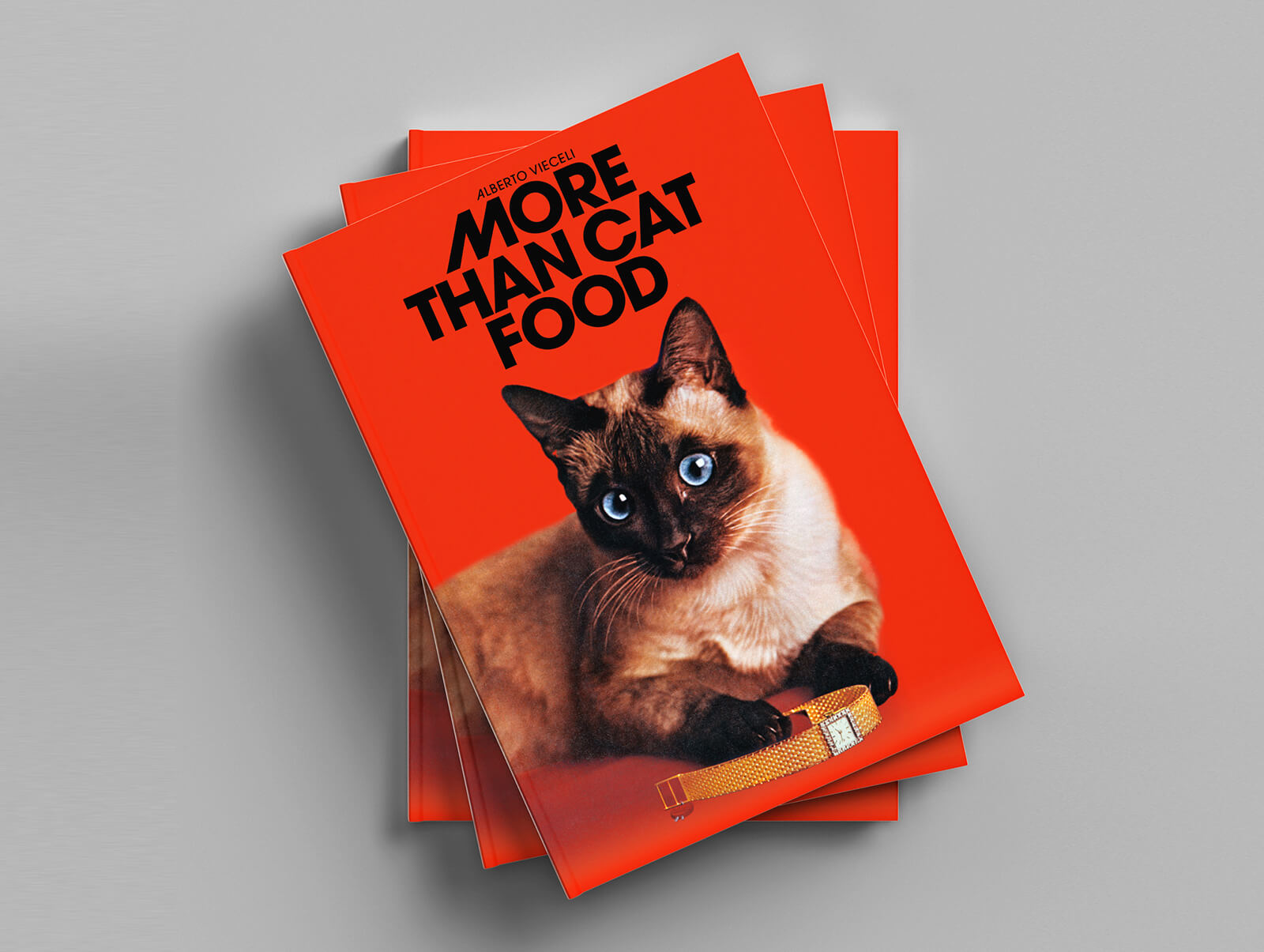
![(L–R) Front cover of More Than Cat Food by Alberto Vieceli, published by everyedition; Fuji FZ-500 Zoom camera, [AD], France, 1989; Amity Leather Wallets, [AD], USA, 1963 (adverts in the book) | Alber](https://www.stirworld.com/images/article_gallery/-l-ndash-r-front-cover-of-more-than-cat-food-by-alberto-vieceli-published-by-everyedition-fuji-fz-500-zoom-camera-ad-france-8202-1989-amity-leather-wallets-ad-usa-8202-1963-adverts-in-the-book-alber-260723023229.jpg)
by Jincy IypePublished on : Jul 23, 2026
There are surprisingly few things that refuse to be sold by a cat. Whisky? Certainly. Cameras? Apparently. Office chairs, leather shoes, internet browsers, speakers, carpets and cocktails? Why not?
Over the last few decades, many global brands and companies have repeatedly enlisted familiar figures to carry those associations —a celebrity, a baby, an athlete, a mascot. Cats, it turns out, have been particularly dependable collaborators. They proffer a ready-made, all-too-familiar vocabulary: elegance, charisma, curiosity, independence, comfort, mischief, a touch of mystery and beauty. Those registers have been culturally rehearsed for so long that designers scarcely need to explain them. They just put them to work. Cuteness has always been good business.
![(L–R) BAILEYS IRISH CRÈME, [AD], FRANCE, 1989; Johnnie Walker Black Label Scotch, [AD], UK, 1989 | Alberto Vieceli – More Than Cat Food | STIRworld](images/think/7276_MoreThanCatFood_14.jpg)
![(L–R) Kahlua Cream Liqueur, [AD], USA, 1988; Tomcat Kentucky Whisky, [AD], USA, 1976 | Alberto Vieceli – More Than Cat Food | STIRworld](images/think/7276_MoreThanCatFood_22.jpg)
Zurich-based designer Alberto Vieceli's latest book, More Than Cat Food, published by everyedition, stages this as its curious premise, following those borrowed associations across 168 pages of advertisements and product packaging collected over two years from flea markets, libraries, personal archives and the endless rabbit hole of online marketplaces. Roughly 20 countries are represented, with the largest share coming from the United States and Europe. More Than Cat Food follows Vieceli's growing catalogue of image-led publications, including Hello, we are here, Animal Greetings from the UK and 1–100 Musicians on 100 Postcards.
The result goes beyond an entertaining visual archive with minimal accompanying text, offering a glimpse into one of advertising's most recurring visual collaborators and the persistence of certain graphic ideas or figures.
![(L–R) Harry Winston jewelry, [AD], USA, 1948; Timex Watches, [AD], USA, 1992 | Alberto Vieceli – More Than Cat Food | STIRworld](images/think/7276_MoreThanCatFood_3.jpg)
![(L–R) The Cats Let’s Dance, Promo [AD], USA, 1972; (H)issey Miyake, [Parody Advertising], ‘Vanity Fur,’ USA,1988 | Alberto Vieceli – More Than Cat Food | STIRworld](images/think/7276_MoreThanCatFood_1.jpg)
![(L–R) Olivetti typewriter, [AD], Italy, 1986; Remington typewriter, [AD], USA, 1955 | Alberto Vieceli – More Than Cat Food | STIRworld](images/think/7276_MoreThanCatFood_4.jpg)
Asked to describe the book without mentioning its central protagonist, Vieceli, who describes himself as a ‘collector of nice visuals, book designer and art book author’, responds with a crisp slogan: "You'll sell it better with me." The line could almost belong to one of the advertisements themselves.
The archive conspicuously excludes the one category where cats might seem inevitable: cat food. "With one exception on page 102 (for gourmet cat food that is compared to luxury designs), I deliberately excluded typical cat food advertisements, showing only examples that are actually promoting other products—a concept I found much more interesting and appealing," he tells STIR. The decision deftly shifts attention away from animals as subject matter and towards animals as effective communication design devices. A cat selling cat food tells us relatively little and is also too on the nose. A cat persuading us to buy watches, vinyls, heels or even cigarettes opens up a far more curious conversation about branding and how much attention we end up paying to these creatures, whether online now or in print 50 years ago.
![(L–R) Craven Cigarettes, part of 2 pages advertising, France, 1990; Orgasmatron Electric Vibrator [AD], The Pink Pussycat BoutIque, ‘Playgirl Magazine’, USA, 1975 | Alberto Vieceli – More Than Cat Food | STIRworld](images/think/7276_MoreThanCatFood_6.jpg)
![(L – R) Packer's Tar Soap, [AD], USA, 1905; General Motors, Oldsmobile Cutlass Ciera, [AD], USA, 1987 | Alberto Vieceli – More Than Cat Food | STIRworld](images/think/7276_MoreThanCatFood_23.jpg)
“Cats in advertising are a popular and effective tool to capture consumers' attention,” the book’s blurb reiterates. “With their cuteness, elegance, charm and playful lightness, they can be positive associations with a brand or product, reinforcing its message. Their versatility and instant recognition make them an unbeatable marketing asset.”
Seen in isolation, many of the featured adverts feel witty, inventive or simply of their time. Read consecutively, another message seems to emerge, one of intrigue and persuasion in visual design. Different decades, different countries and entirely different industries return to remarkably similar visual strategies. The products themselves keep changing while the work assigned to the cat rarely does.
![(L – R) Bayer, textile fibre for Bouchara Fabrics, [AD], France, 1975; Harter Criterion, Office Chair, [AD], USA, 1963 | Alberto Vieceli – More Than Cat Food | STIRworld](images/think/7276_MoreThanCatFood_5.jpg)
![(L–R) Continental Can Company, folding cartons, [AD], USA, 1963; Tenneco, Packaging Corporation, [AD], USA, 1969 | Alberto Vieceli – More Than Cat Food | STIRworld](images/think/7276_MoreThanCatFood_8.jpg)
See, for instance, a snowy white cat sprawled across a Harter office chair beneath the line, ‘Trust a cat to find the most comfortable chair in sight!’ The feline replaces technical specifications with pure instinct. Elsewhere, a Siamese cat stretches across Bayer textiles with the composure of a seasoned interior stylist. A kitten peeks from inside Lady Baltimore luggage, turning travel into an extension of domestic comfort. Lady Buxton's handbag campaign borrows the image of a mother cat carrying her kitten to suggest care and safekeeping, while Yamaha relays an image of children enjoying the act of learning to play the piano with cats lounging on it. Elsewhere, Microsoft's Internet Explorer advert perhaps very knowingly taps into the internet's enduring fascination with cat pictures and videos, acknowledging and prophesying it as a metric of attention years ago.
![(L–R) Windows Internet Explorer 8, [AD], UK, 1987; Yamaha piano, [AD], USA, 1965 | Alberto Vieceli – More Than Cat Food | STIRworld](images/think/7276_MoreThanCatFood_9.jpg)
![(L – R) Music for the Millions—No. 4, Ccover LP Compilation, Netherlands, 1971; Fender Guitars, [AD], music magazine ‘Down Beat’, USA, 1957 | Alberto Vieceli – More Than Cat Food | STIRworld](images/think/7276_MoreThanCatFood_10.jpg)
Cats, then, have been advertising for us so frequently, and still remain instantly recognisable in branding, across media, products and messaging. Depending on the surrounding typography, photography or product, they somehow offer a seal of approval, a luxury cue, a surrogate consumer, a compositional anchor or simply a moment of humour and light-heartedness, speaking to our cuteness aggression (something many influencers employ for views in reels and shorts). Not much seems to have changed in that regard. The same visual motif keeps absorbing new responsibilities without losing its credibility.
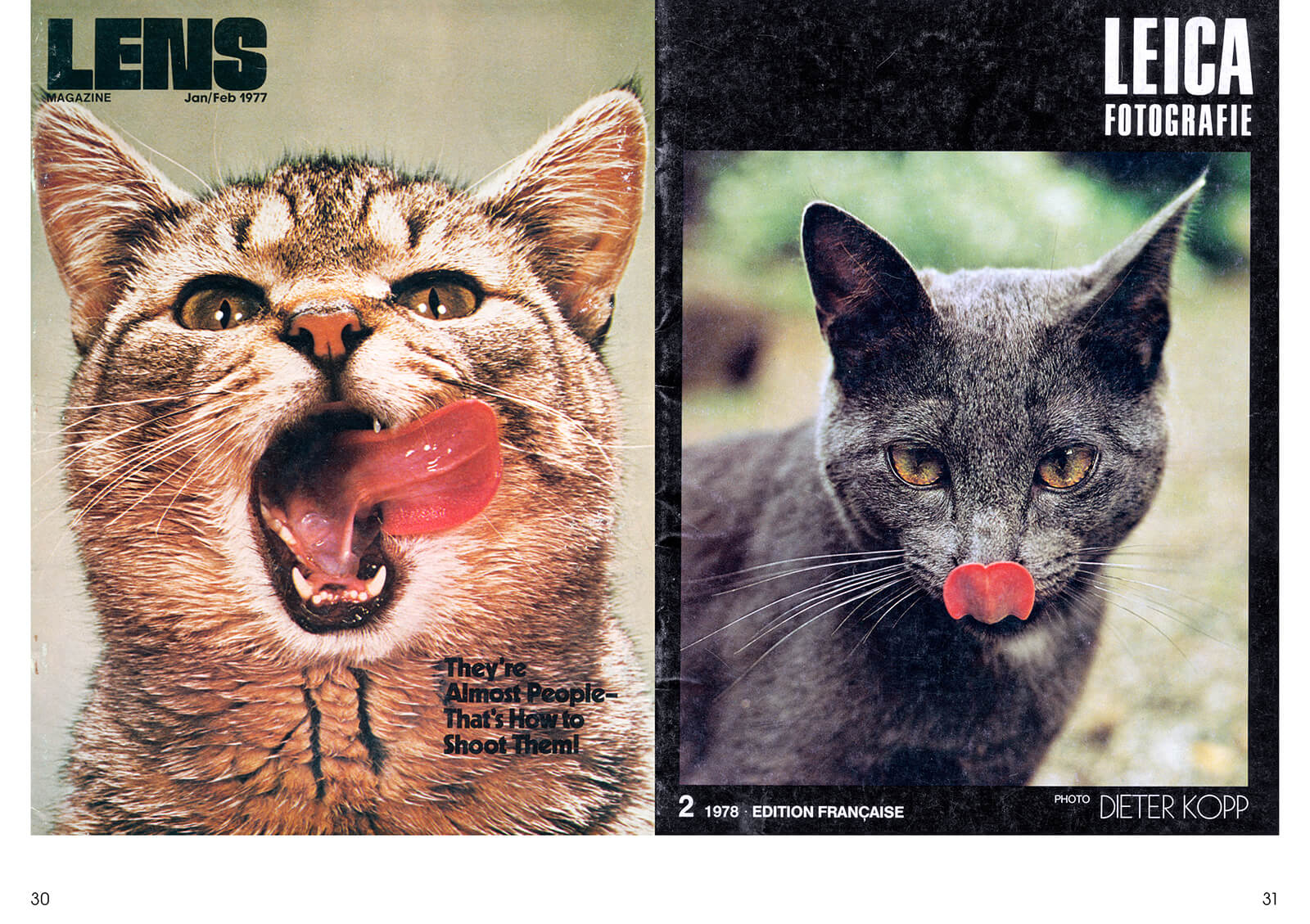
![(L–R) Benrus Watches, [AD], USA, 1960; Tchaikovsky piano concerto no.1, sleeve of the 10’ Vinyl Record, Netherlands, 1958 | Alberto Vieceli – More Than Cat Food | STIRworld](images/think/7276_MoreThanCatFood_12.jpg)
Advertising over the last five to six decades has also presented itself as a business of originality. Vieceli's archive suggests another possibility: certain visual ideas survive because they are endlessly adapted, refined and reassigned, because of their effectiveness. Cats function almost like a piece of graphic vocabulary, as this book attests, carrying meanings that audiences already understand. Brands simply borrow those associations instead of building them from the ground up, because their symbolic value remains surprisingly stable even as products, technologies and visual styles evolve around them.
![(L–R) Lady Buxton bill-purse, [AD], Canada, 1959; Lady Baltimore Luggage Set, [AD], USA, 1963 | Alberto Vieceli – More Than Cat Food | STIRworld](images/think/7276_MoreThanCatFood_13.jpg)
![(L–R) Chevrolet CORVETTE, [AD], USA, 1956; ESSO Research, [AD], USA, 1959 | Alberto Vieceli – More Than Cat Food | STIRworld](images/think/7276_MoreThanCatFood_2.jpg)
In More Than Cat Food, black-and-white editorial photography gives way to saturated commercial tableaux, with illustrations juxtaposed against carefully staged studio photography and product packaging. Vieceli first grouped the material into categories—watches, jewellery, alcohol, computers, furniture—before thinking about sequence. "Within each group, every spread is important—what goes next to what? The classic question for any book," he poses. The volume’s joy lies as much in the transitions as in the individual entries and, well, the cats themselves, of course. Furniture sits near fashion adverts; technology follows luxury goods. Similar compositional gestures begin surfacing across industries that otherwise have little in common.
![(L–R) Covergirl, [AD], USA, 2016; Soft Shave, [AD], USA, 1983 | Alberto Vieceli – More Than Cat Food | STIRworld](images/think/7276_MoreThanCatFood_15.jpg)
![(L–R) Ronson Escort hair dryer, [AD], USA, 1960s; Argus Chemical vinyl development, [AD], USA, 1962 (with Courtesy of Science History Institute, Philadelphia) | Alberto Vieceli – More Than Cat Food | STIRworld](images/think/7276_MoreThanCatFood_16.jpg)
Vieceli points out that Siamese cats appear with striking regularity throughout the archive, while women and cats repeatedly share the frame, particularly in campaigns for fashion and luxury products—food for thought. These recurring combinations hint at the cultural assumptions advertising has long relied upon.
![(L–R) Canon, cover, sales brochure, USA, 1987; Prest-o-lite Battery, [AD], USA, 1937 | Alberto Vieceli – More Than Cat Food | STIRworld](images/think/7276_MoreThanCatFood_17.jpg)
![(L–R) Dick Smith's CAT (Apple Clones), [AD], Australia, 1984; Olivetti Personal Computers, [AD], 1984 | Alberto Vieceli – More Than Cat Food | STIRworld](images/think/7276_MoreThanCatFood_18.jpg)
It's tempting to imagine these advertisements without their feline co-stars. "Certainly without a cat some ads would be much more boring or conventional; they would have to be replaced with other advertising ideas," Vieceli admits. He is also under no illusion that the visual economy hasn't changed in this regard. "AI opens up entirely new possibilities; where, in the past, a lot of effort was necessary to take a photo, now even impossible ideas can be realised in no time. But I guess these new possibilities also lose their power over time," he reflects. In that sense, he sees More Than Cat Food as “a documentary from time before the AI boom began”.
![(Z–R) Risqué Shoes, [AD], USA 1964, Photo: swedowsky & weiss; From an editorial article in the ‘US Vogue’, 1955 | Alberto Vieceli – More Than Cat Food | STIRworld](images/think/7276_MoreThanCatFood_19.jpg)
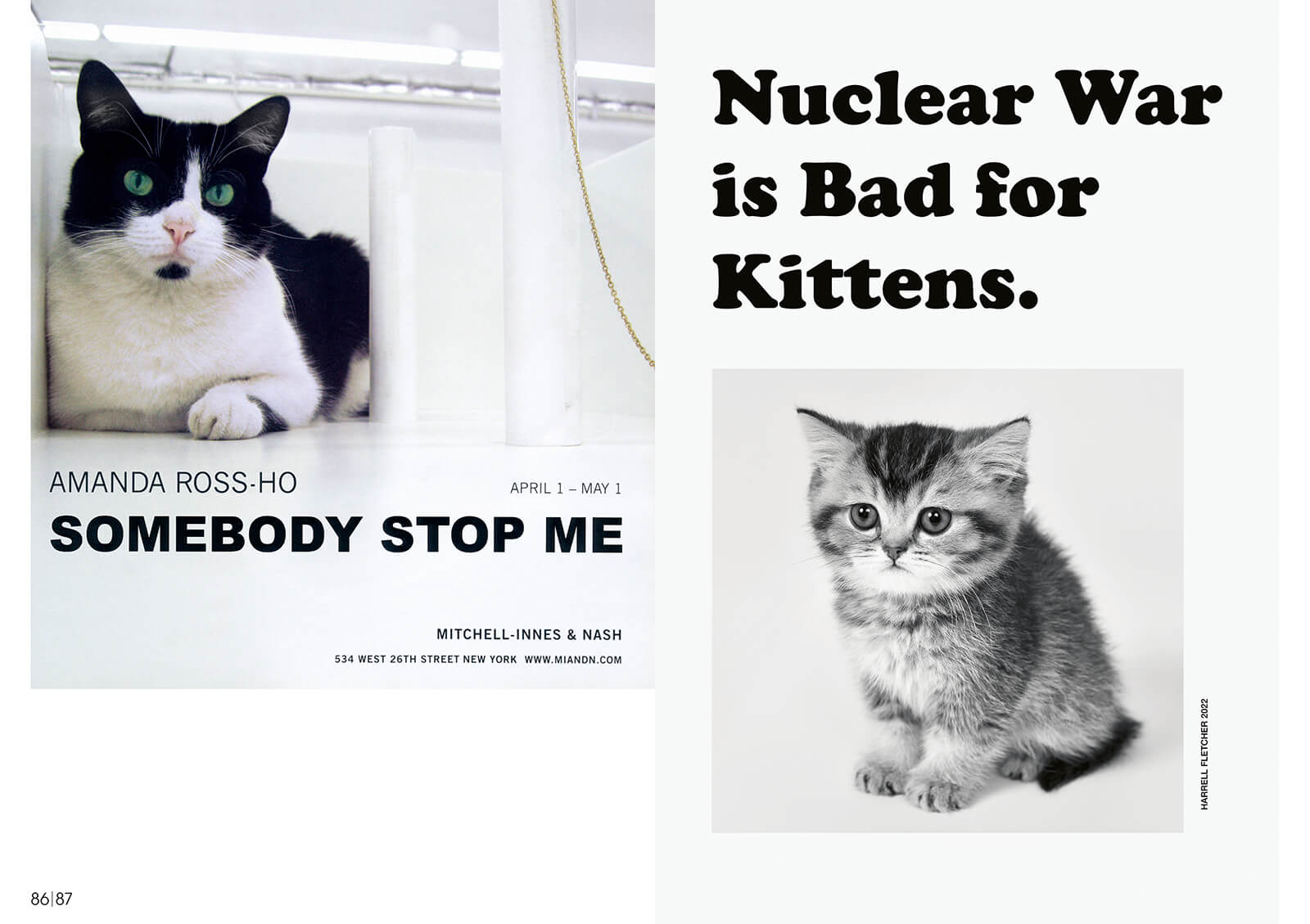
One of the more persuasive things in More Than Cat Food is that the cat almost never actually explains the product and that’s completely unquestioning, the way consent with them is understood in real life. Unlike many celebrity endorsements, cats rarely acknowledge the viewer. They lounge, stretch, sleep or wander through the composition with complete indifference in most of these images. That refusal to pose and perform lends a lot of these ads an odd, loving credibility of sorts, as though the cuddly gremlins had simply chosen the product of their own accord.
![(L–R) Sony Video recorder, [AD], USA, 1998; Nokia 6680, [AD], France, 2005 | Alberto Vieceli – More Than Cat Food | STIRworld](images/think/7276_MoreThanCatFood_21.jpg)
As visual shorthands, these charming four-legged accomplices appear next to makeup items, typewriters, perfumes, car seats, violins and purses without feeling out of place. As the book attests, across nearly a century of advertising, the cat has proved remarkably unconcerned with what it is selling. Which is why it still works in already saturated image economies.

by Chahna Tank Oct 08, 2026
Javier Guzman Cervantes and Ulises Morin Arzola tell STIR about their ‘open code’ approach to design, working through a process of stockpiling and the idea of ‘queering’ materials.
by Mrinmayee Bhoot Oct 08, 2026
The game designer discusses their work and its manipulation of scale, scientific data and non-human perspectives to create speculative futures in conversation with STIR.
by Pranjal Maheshwari Oct 07, 2026
Under the theme R.A.W. (Rebel Authentic Worth), one of Europe’s most awaited design festivals returns for its 26th edition to investigate solutions for a world in crisis.
by Chahna Tank Oct 03, 2026
Wooden chairs by the Chilean designer reveals handmade forms and painted details that weave memories, literary references and personal stories.

make your fridays matter with a well-read weekend
Enter your details to sign in
Don’t have an account?
Sign upOr you can sign in with
a single account for all
STIR platforms
All your bookmarks will be available across all your devices.
Stay STIRred
Already have an account?
Sign inOr you can sign up with
Verification link sent to check your inbox or spam folder to complete sign up process
Tap on things that interests you.
Select the Conversation Category you would like to watch
Please enter your details and click submit.
Enter the 6-digit code sent at


![(L–R) Front cover of More Than Cat Food by Alberto Vieceli, published by everyedition; Fuji FZ-500 Zoom camera, [AD], France, 1989; Amity Leather Wallets, [AD], USA, 1963 (adverts in the book) | Alber](https://www.stirworld.com/image.php?width=1920&height=1080&image=https://www.stirworld.com/images/article_gallery/-l-ndash-r-front-cover-of-more-than-cat-food-by-alberto-vieceli-published-by-everyedition-fuji-fz-500-zoom-camera-ad-france-8202-1989-amity-leather-wallets-ad-usa-8202-1963-adverts-in-the-book-alber-260723023229.jpg)
More Than Cat Food reveals advertising's longest-running visual accomplice
by Jincy Iype | Published on : Jul 23, 2026


 Sign in with Google
 Sign in with email
What do you think?