Design12 mins. read
The Milan Edit by STIR x The Third Space: Design and people beyond the Milanese fair
by Jincy IypeJun 19, 2026



by Pranjal MaheshwariPublished on : Aug 01, 2026
The idea of DIY is not new. It was, in fact, the way of life for early nomads, who frequently engaged in the acts of crafting tools to help them hunt and gather. As civilisation became more…well, civilised, it slowly distanced itself from these skills, categorised today as ‘bushcraft’, or skills for ‘surviving the wild’. Until recently, making one’s own tools or utility products had largely disappeared from everyday life, before commercial brands such as IKEA brought it back to the mainstream. The procedure, however, does follow a long chain: procurement, processing, refinement, packaging, delivery and then assembly of the various components, likely by the customer and assisted by a short manual. But what happens when this distance between the maker/user and the functional product is reduced—when procurement is directly followed by assembly and application, bypassing the conventional production chain altogether?
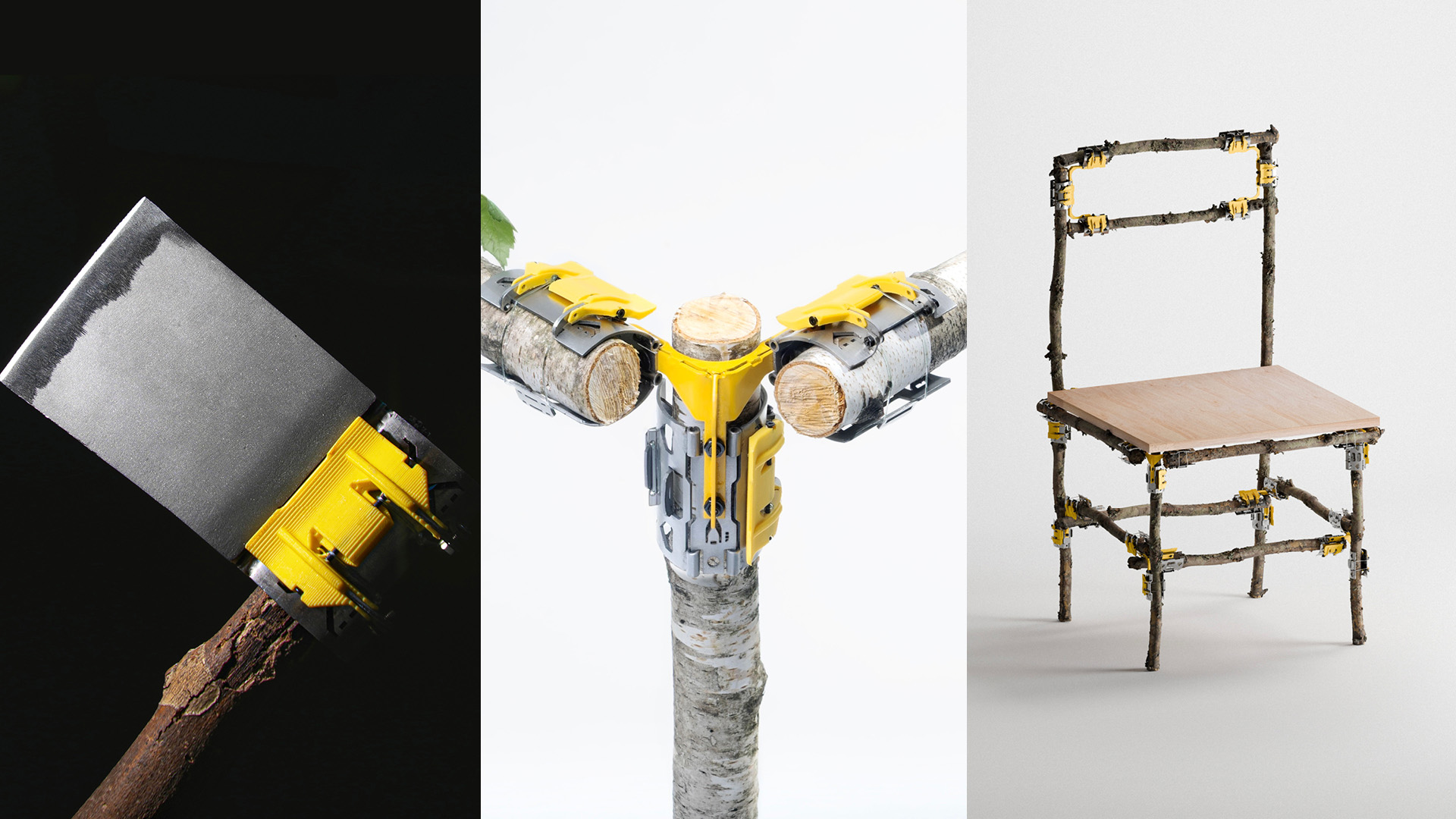
Somewhere along that inquiry, two Milan-based designers, Eugenio Costa and Nicolò Tallone, came up with the idea of a ‘universal joint' system, which they named Omnibite. Referencing Enzo Mari’s 1974 publication Autoprogettazione (self-design)—a series of furniture constructions built using standard wooden planks and a set of screws and tools—the project interpreted the idea of making-it-yourself that was as intuitive as 'fastening a ski boot' and which could work with found objects like tree branches. “Rather than asking people to learn construction techniques or rely on tools, we wanted to create a system that would make building with natural branches almost effortless," Costa tells STIR.
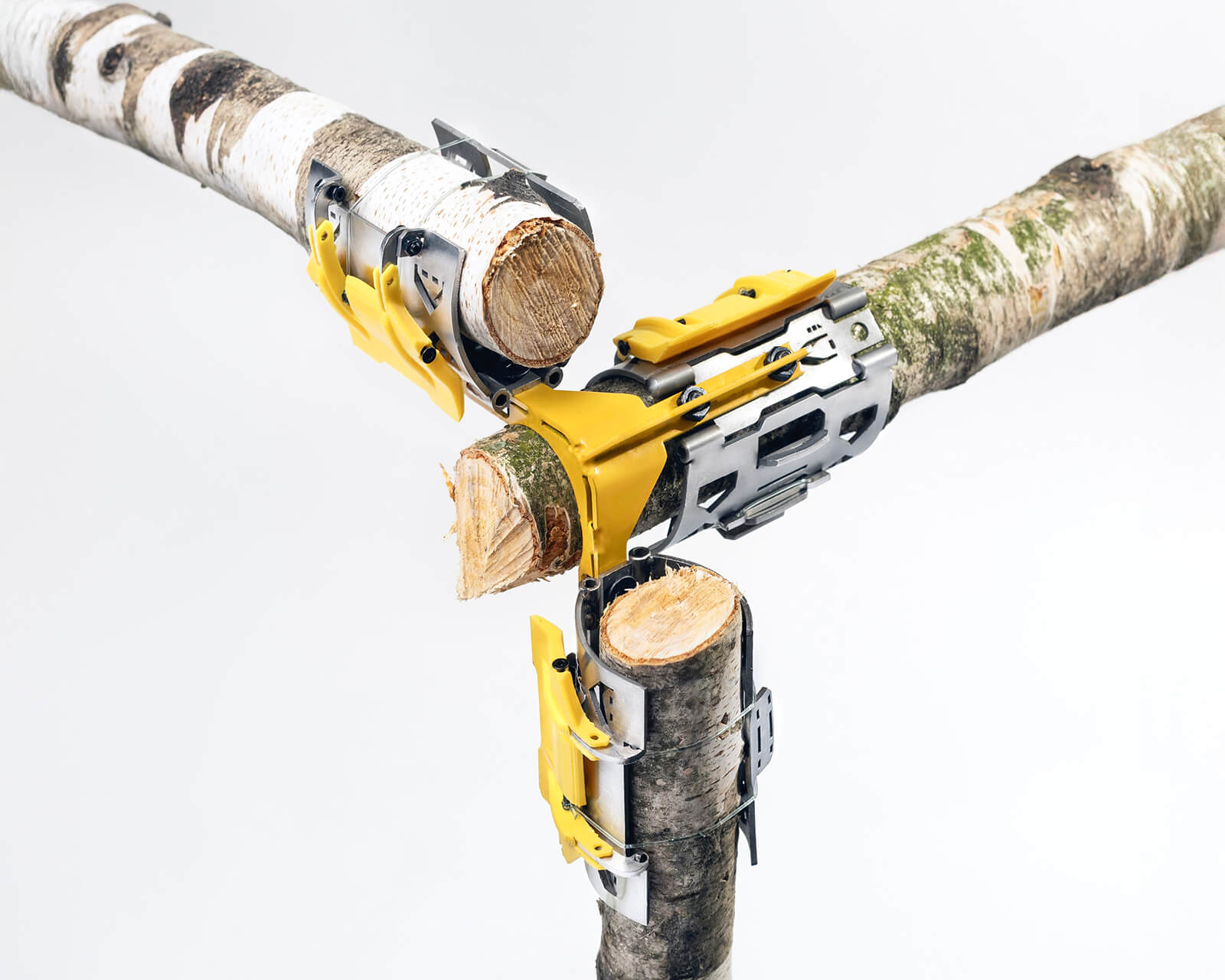
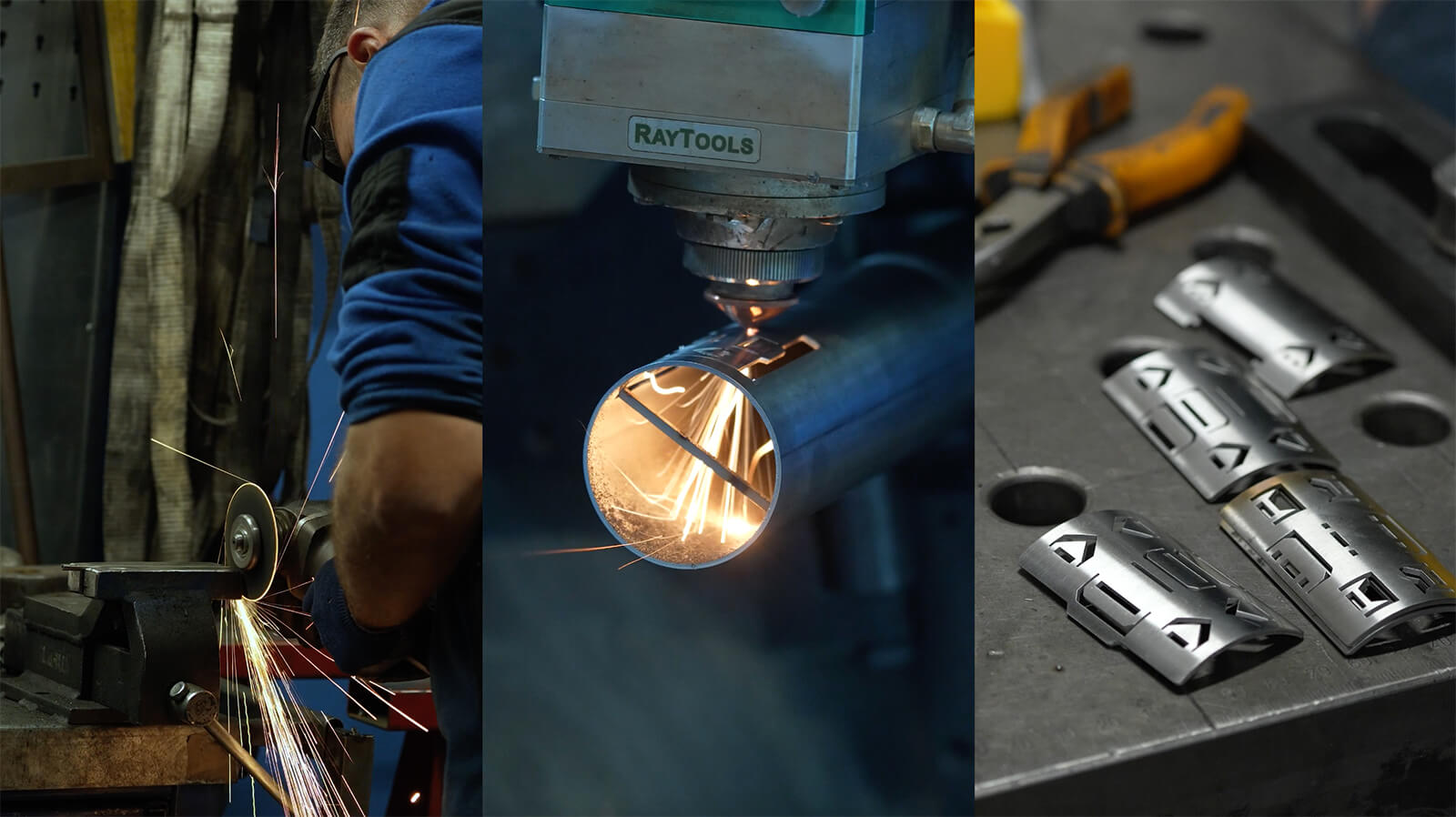
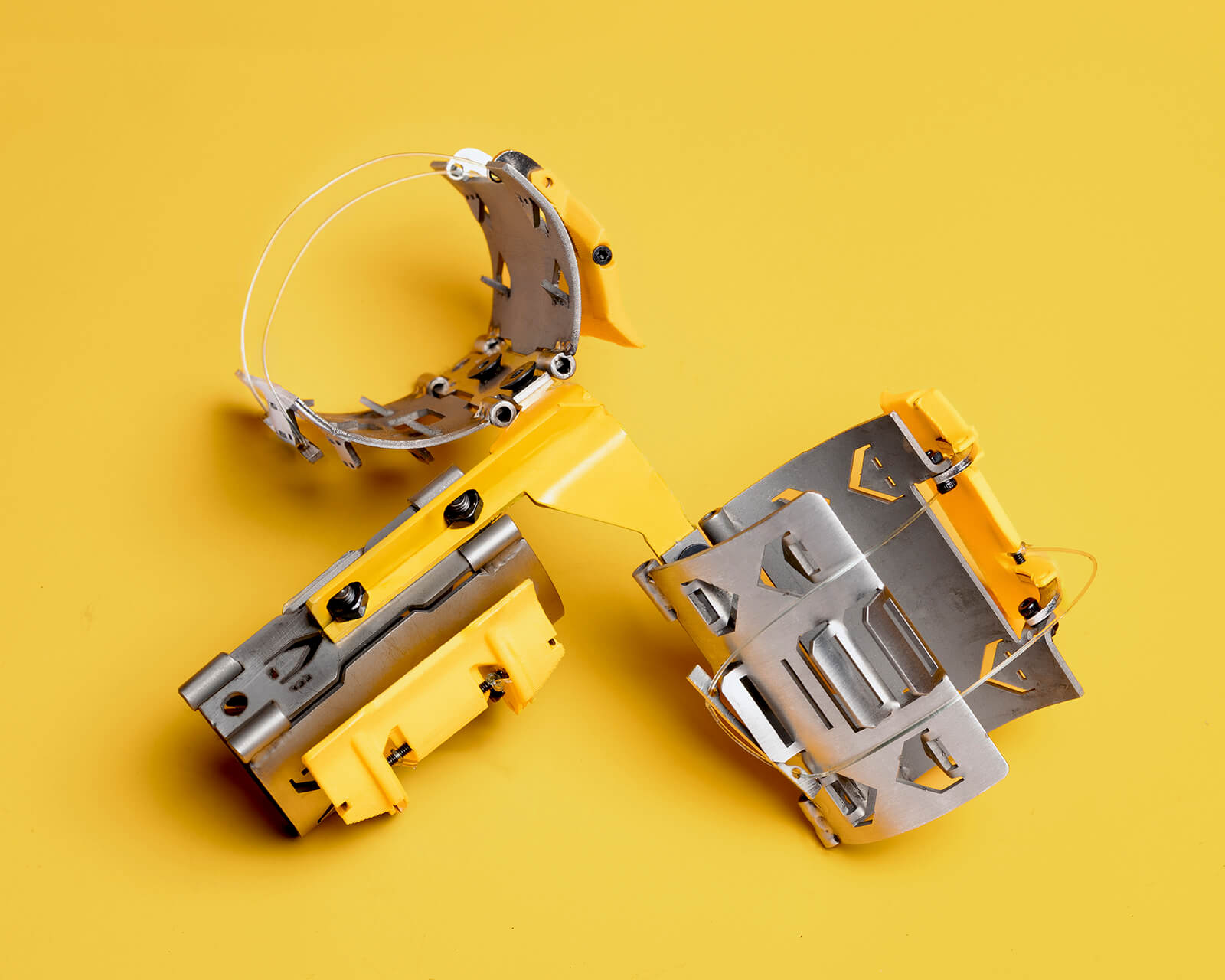
The design of the connector is based on a three-axis joint with a quick-locking system that is able to turn natural objects into structural elements. The joint itself is manufactured from a small portion of a round steel tube, by splitting it in half. A series of cuts are bent outwards, creating 1cm-long spikes that penetrate wooden surfaces and generate a secure grip. The variable opening of the cylinders allows the joint system be adaptable to natural irregularities of found objects such as branches ranging between 2.5cm to 5cm in diameter. This steel mechanism is then complemented with a plastic hook, adding a vibrant tactility to the user experience. The plastic elements are designed precisely around the points of a user’s interaction with the joint, introducing colour and intuitiveness to the product.
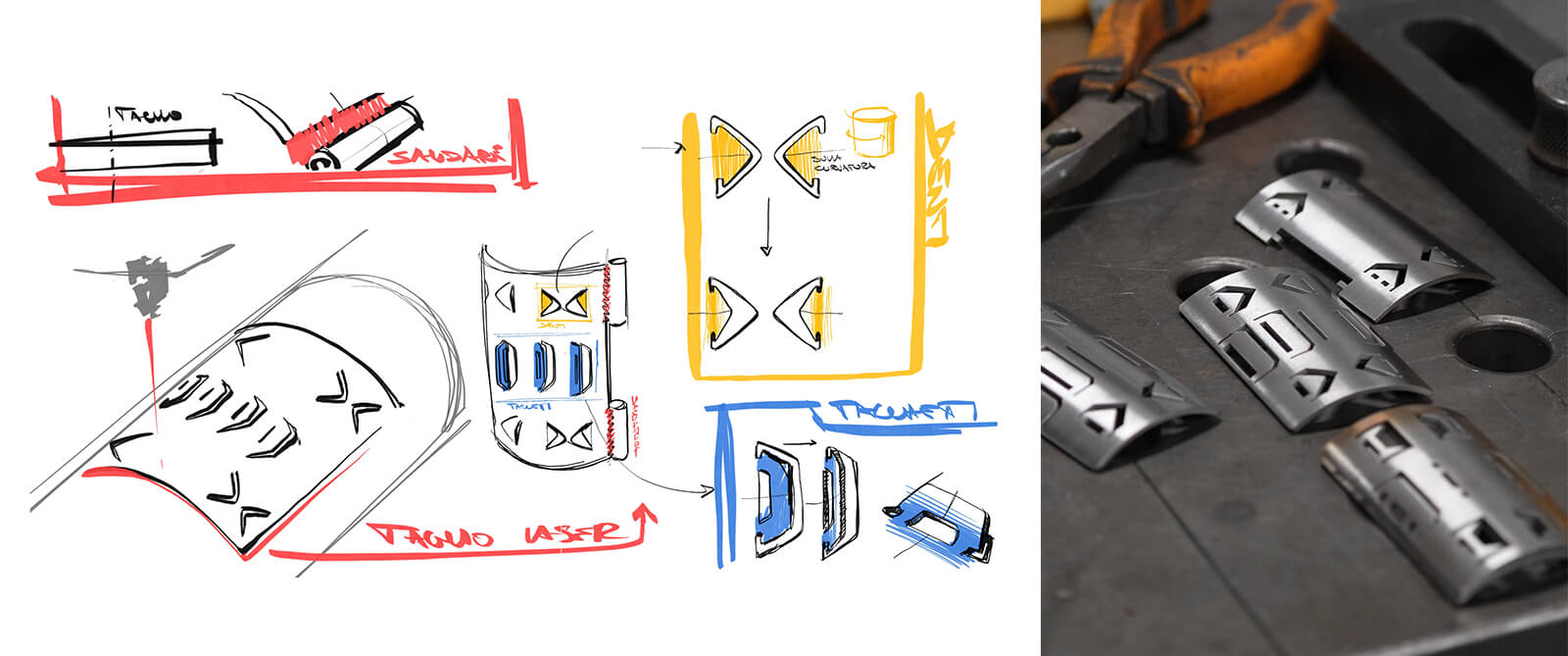
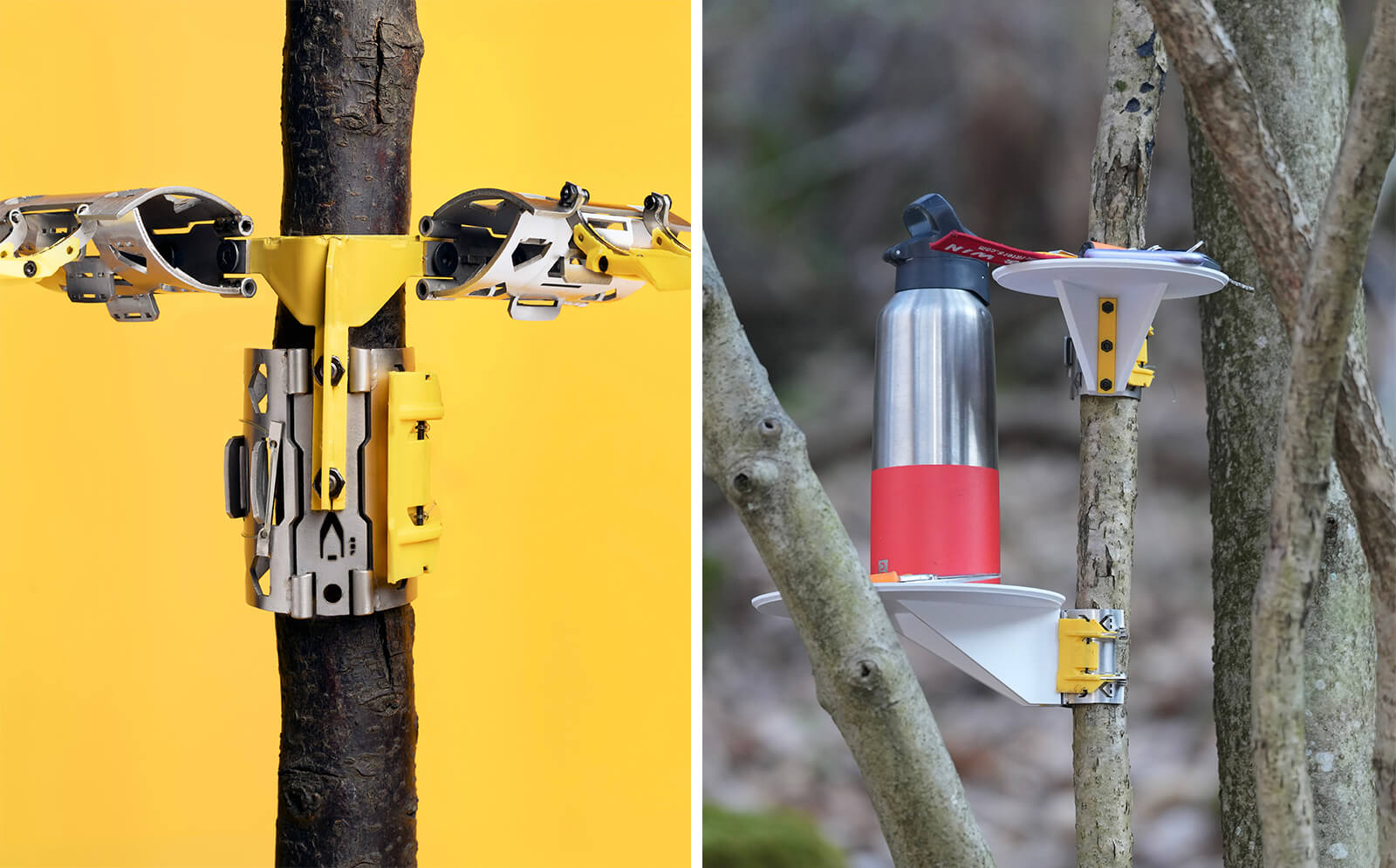
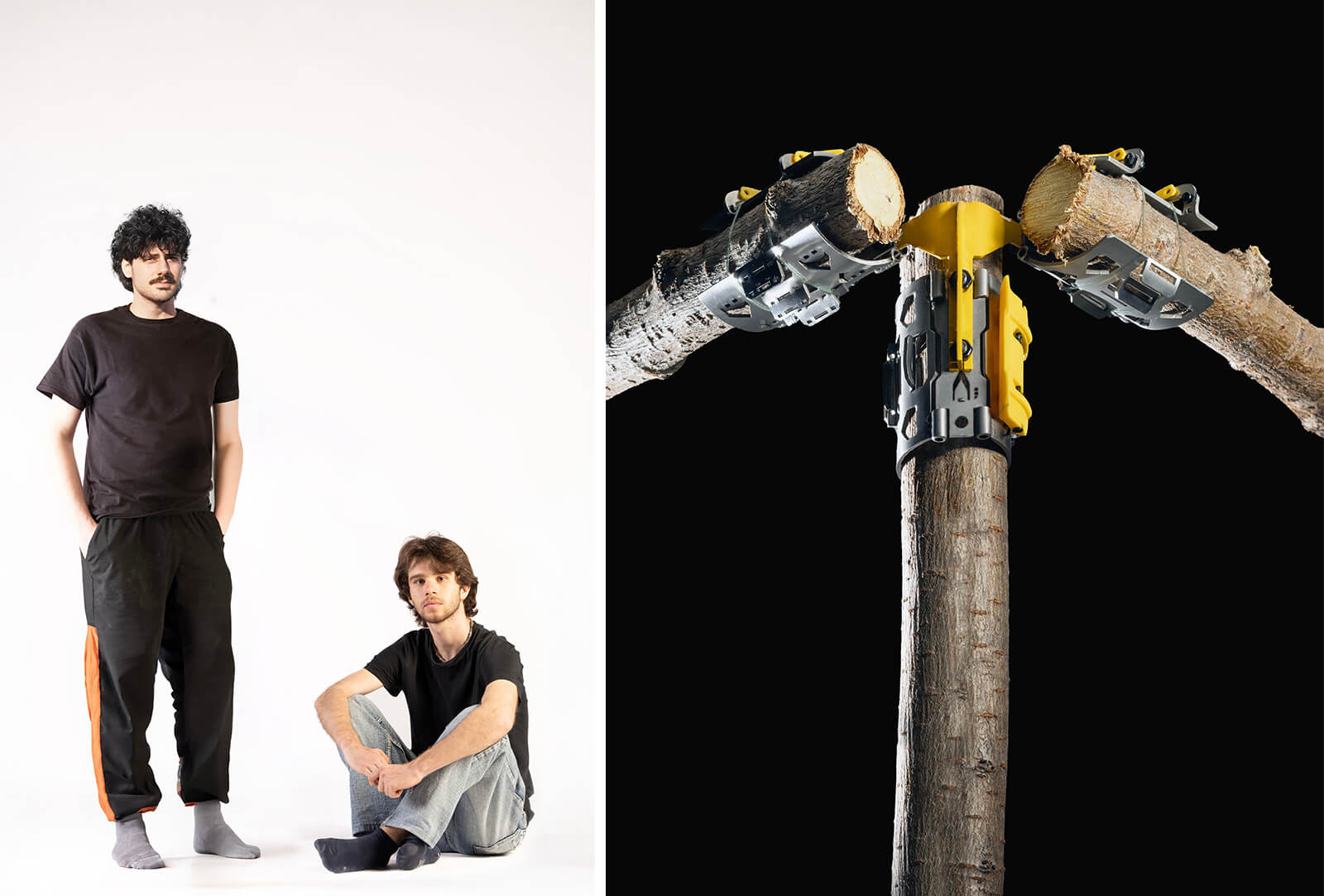
The designer duo imagined two main user groups for the product: a novice bushcrafter who wanted to build a temporary structure in the woods, and a homeowner, curious to create unique furniture pieces from natural found objects. Throughout the design development, Costa focused on the concept and experience while Tallone developed the mechanical logic that defined the adaptability and robustness of the joint and its connections. Tallone further leveraged his experience in automotive design when detailing the yellow locking hook: highly engineered yet immediately understandable, delivering, in Costa’s words, "a precise, satisfying mechanical action".
In a tragic turn of events, however, Tallone passed away in a road accident in June 2026. For Costa, furthering Omnibite and its vision has now also grown into a means of honouring his co-designer’s contribution to the project. “This September, the Omnibite chair will be exhibited during Paris Design Week, and later this year, IED Milan will host an exhibition celebrating Nicolò's work,” the Italian designer tells STIR. The project was conceived as a means to simplify the construction process while encouraging a different maker–material relationship. The response of the design community, however, brought forth some unforeseen—but welcome—use cases: “Designers and artists began contacting us for the connector’s aesthetic and structural potential for installation design,” Costa recalls. “Seeing Omnibite adopted as a tool for creating large-scale artistic structures was something we had not anticipated.”
It is worth noting the sheer potential of a DIY system that can use found objects directly. If we carry forward making products as an assembly and disassembly based on temporal purpose, it anticipates a dramatic reduction in the need for material processing and, therefore, its ecological burdens on the environment. In a sense, it might be like returning to the ways of our hunter-gatherer ancestors—an idea Costa and Tallone entertained as the ideal future of the joint system. “We believe the most sustainable version of Omnibite would actually be replacing it entirely with a piece of rope and the knowledge of how to use it through bushcraft,” Costa shares. “We don't see Omnibite as a replacement for those traditional skills. Instead, we hope it can become an accessible entry point. If our system encourages more people to discover building with natural materials and eventually learn bushcraft techniques, then it will have fulfilled one of its most meaningful purposes.”
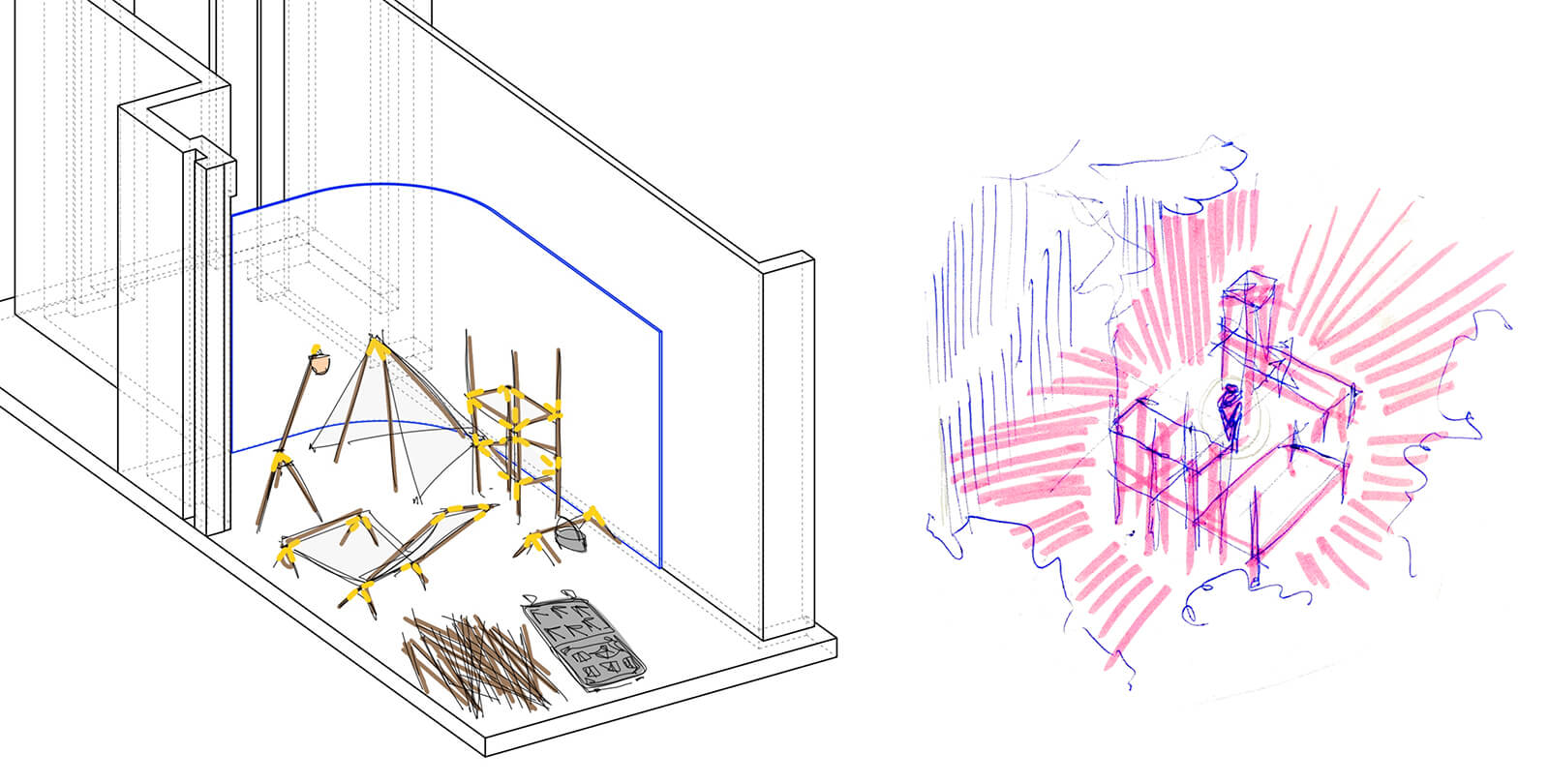
Alongside the many potentials that the joint system showcases at present, Costa considers Omnibite as an ‘open statement’; one rethinking the origins of ‘making’ and signalling towards freedom of creation and adaptation. “Omnibite was never intended to be a closed system with a definitive form. Instead, we see it as a manifesto that can continue to grow, adapt and inspire new ways of making,” Costa relays to STIR. “Whether that means developing new applications, collaborating with other designers, or becoming part of a broader ecosystem of design-and-make tools, we think its real value lies in remaining open to change. In that sense, Omnibite is always under construction.”

by Jincy Iype Oct 15, 2026
STIR explores craft, material intelligence and people shaping Indian design through dialogues with Design Democracy’s co-founders and the curators of its special exhibitions.
by Pranjal Maheshwari Oct 13, 2026
Through furniture, art and films, the showcase at the Ian Potter Centre in Melbourne advocates for biophilic material cultures as an antidote to planetary degradation.
by Pranjal Maheshwari Oct 12, 2026
The exhibition reimagines the 20th-century Scottsville residence of the American sculptor and his partner, ceramicist Nancy Jurs, curated by their daughter Alison Castle.
by Chahna Tank Oct 08, 2026
Javier Guzman Cervantes and Ulises Morin Arzola tell STIR about their ‘open code’ approach to design, working through a process of stockpiling and the idea of ‘queering’ materials.

make your fridays matter with a well-read weekend
Enter your details to sign in
Don’t have an account?
Sign upOr you can sign in with
a single account for all
STIR platforms
All your bookmarks will be available across all your devices.
Stay STIRred
Already have an account?
Sign inOr you can sign up with
Verification link sent to check your inbox or spam folder to complete sign up process
Tap on things that interests you.
Select the Conversation Category you would like to watch
Please enter your details and click submit.
Enter the 6-digit code sent at


Omnibite gives found branches new life as tools and furniture
by Pranjal Maheshwari | Published on : Aug 01, 2026


 Sign in with Google
 Sign in with email
What do you think?