Design04 mins. read
Not just a chair: Urs Fischer elevates the banal through absurdity in Shucks & Aww
by Bansari PaghdarJan 31, 2026



by Zohra KhanPublished on : Jan 30, 2026
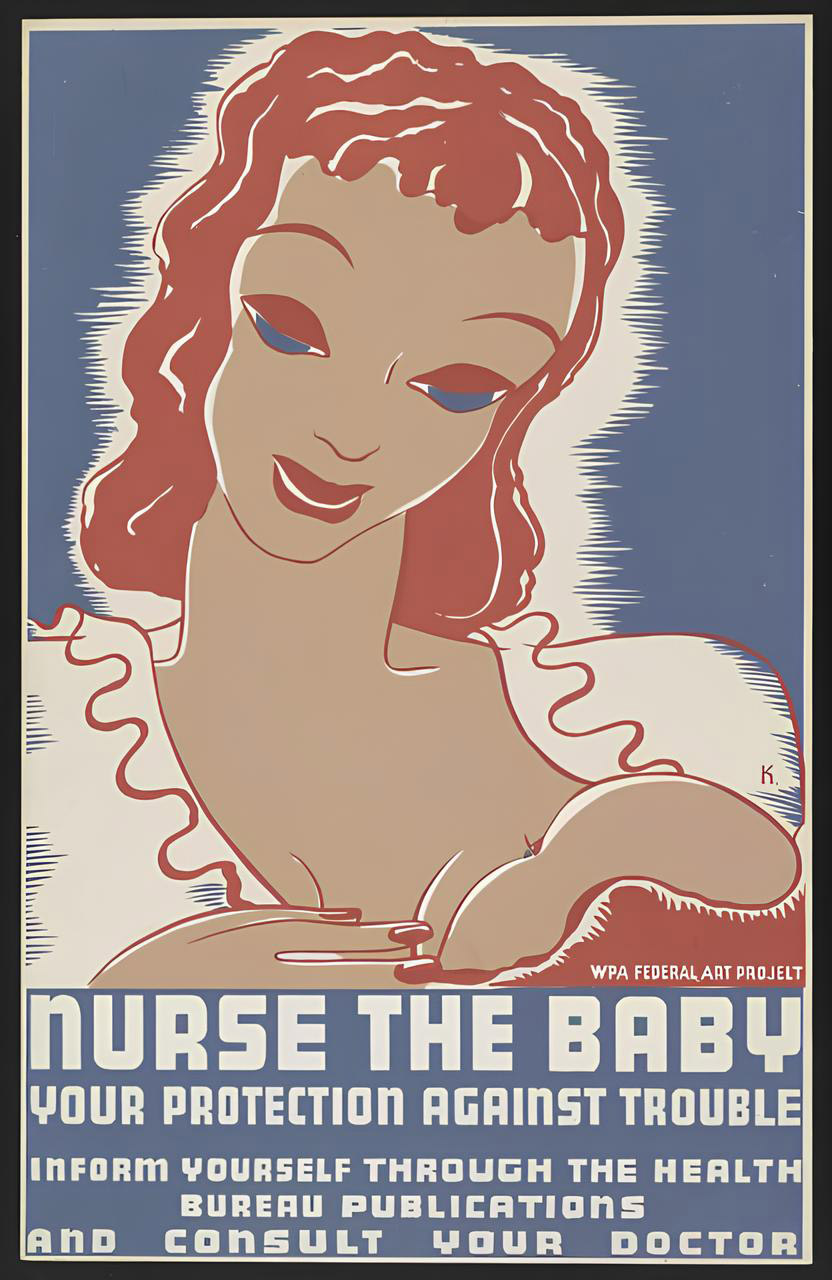
I have grown up hearing women in my family recount their dreadful birth experiences and labour mishaps, and how the memories sting even decades later. These stories were never linear or celebratory. They arrived fragmented, often unsolicited, folded into afternoon conversations and late-night confidences. An aunt who had to undergo an emergency C-section because her baby had passed meconium in utero. A cousin who delivered before she ever made it to the labour room. A distant someone who laboured for 36 hours to bring her only child into the world, after enduring multiple miscarriages before. Birth, as I came to understand it early on, was not a moment—it was an ordeal. A life-altering event that hovered somewhere between survival and transcendence. Women described it as coming close to feeling every bone in the body break at once, and yet, somehow, rising anew when the storm passed.
Years later, when I got pregnant with my first child in 2022, I found myself giving into the pains and perils of motherhood—unsure whether I’d ever enjoy the new me, a perennial doubt common with new moms. I realised only much later that I bought and wore and used and endured every possible thing that claims to help a new mother and her child be happy—right from getting myself a set of disposable postpartum panties and nipple leaking pads that did work like magic to this Cinderella in distress, to hoarding objects that claimed to help infants adjust to the new world like a pro (a white-noise machine, purchased with conviction, remains untouched in my closet), comprising a single-trial-run relic of anxious consumer hope. By the time my second child arrived in 2024, something had shifted. The trauma-inducing trials of conception, labour and postpartum did not disappear; they were replaced by a more consciously embodied experience. I found myself able—perhaps for the first time—to separate the rawness of lived reality from the possibility of joy within equally vulnerable moments. It was not ease, but awareness. Not resolution, but presence.
To be able to comprehend a world beyond one’s own position in it, one must look elsewhere. An ongoing design exhibition at the Museum of Arts and Design (MAD) in New York did precisely that for me, and more. Designing Motherhood: Things that Make and Break our Births is an exhibition with a phenomenal title, one that refuses reassurance. Drawing from the book of the same name, co-written by Michelle Millar Fisher and Amber Winnick and published by the MIT Press, the multivalent project unpacks motherhood as a continuum rather than a single moment, closely observing design’s intersection with the arc of human reproduction. Since its inaugural presentation at the Mütter Museum and the Centre for Architecture+Design in Philadelphia in 2021, it has travelled to Boston, Stockholm, Seattle and Houston, before arriving in New York in October 2025.
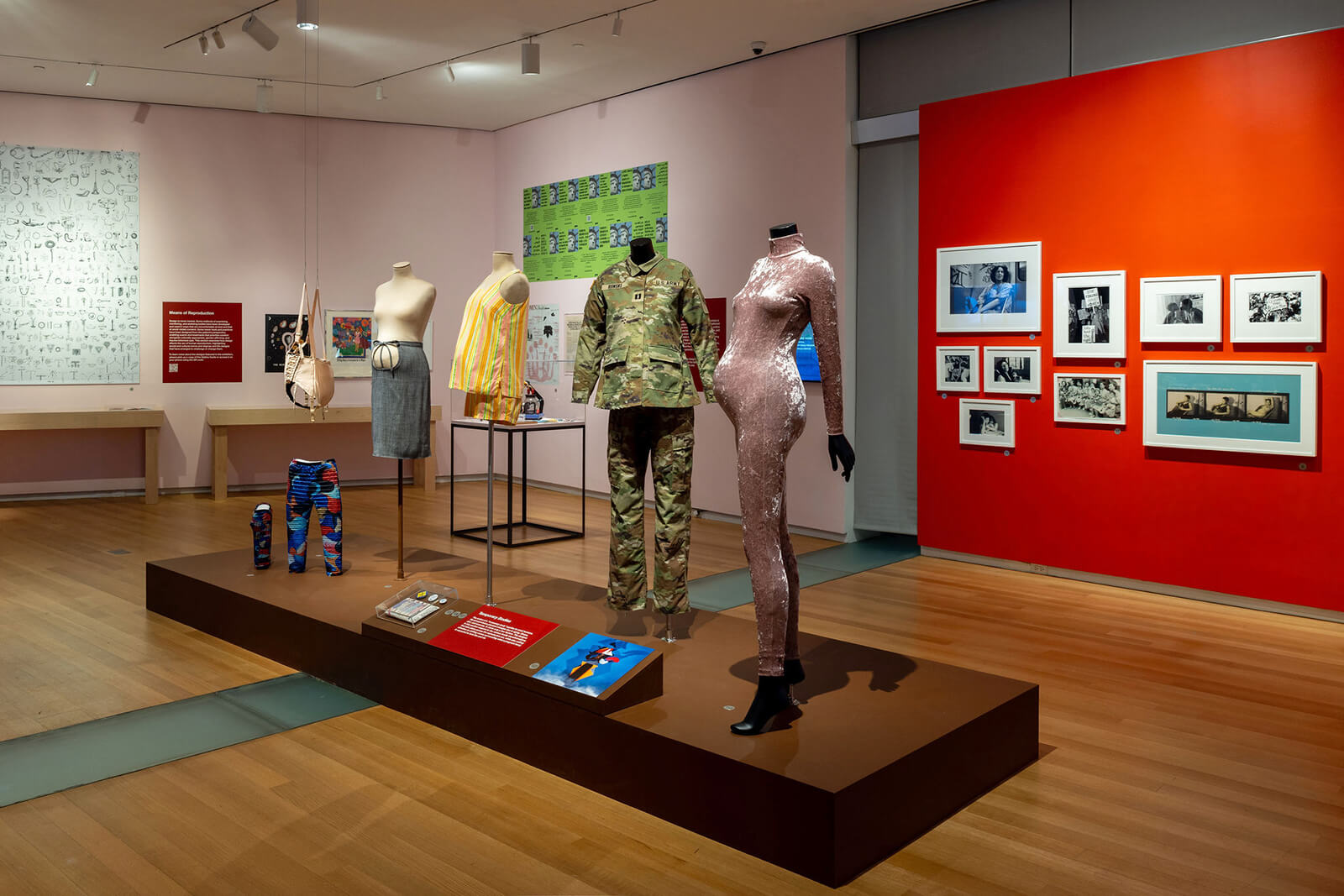
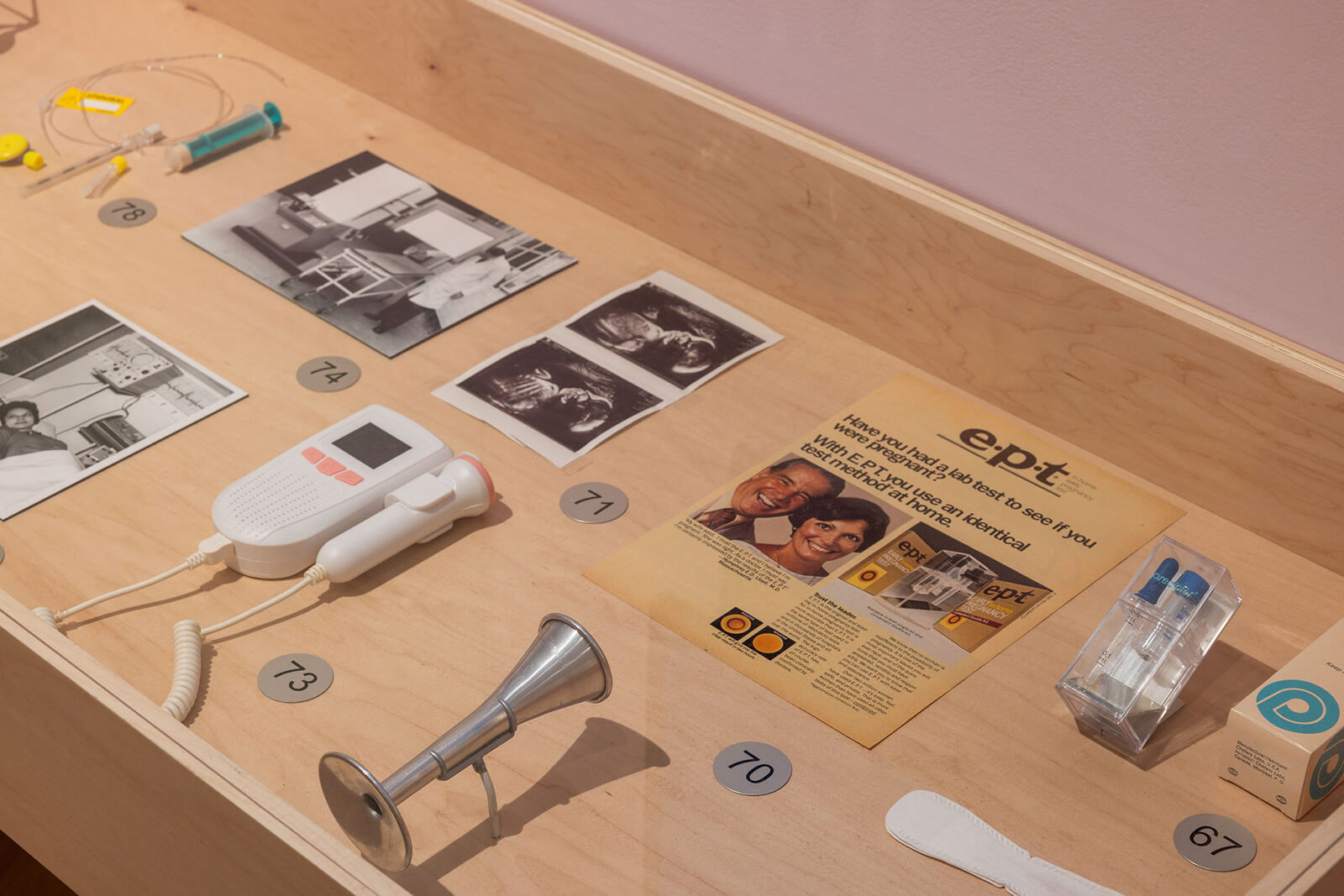
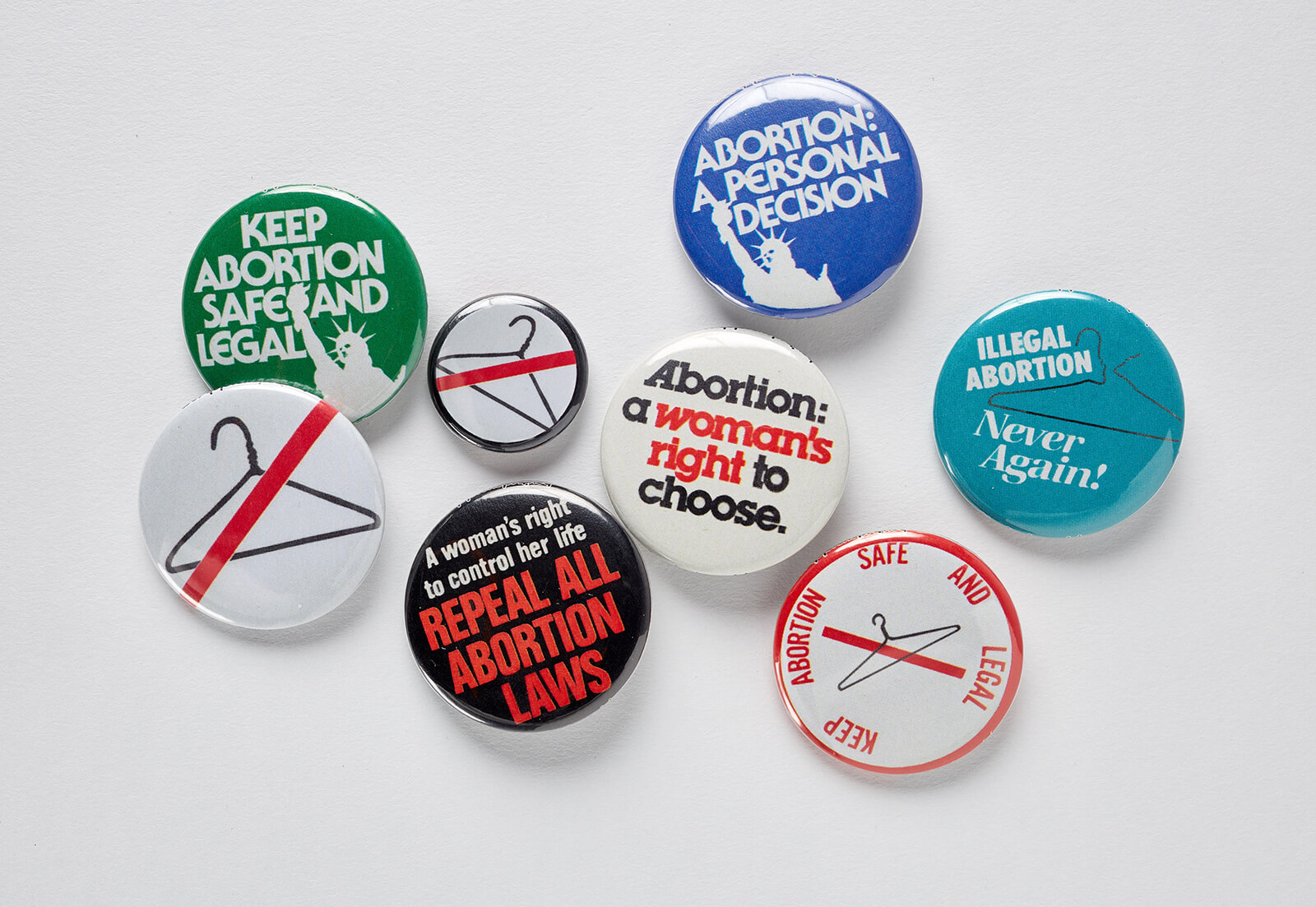
What distinguishes Designing Motherhood is not simply the breadth of objects on view—though there are over 250 of them—but the curatorial insistence on access as the measure of design’s success. Photographs, clinical tools, medications, protest paraphernalia, clothing, baby gear, furniture and speculative prototypes share space inside the museum. Together, they trace the way design has responded to pivotal moments in pregnancy and reproductive care in the United States over the years, while also foregrounding innovations—either in development or stalled—that are rooted in empathy, efficiency and comfort and deserve to lead.
To understand the curatorial lens more clearly, I spoke with Elizabeth Koehn, associate curator at MAD. “Design is approached with the broadest of perspectives here”, she explained, “not merely as discrete objects but as the creation of the systems, networks and policies through which these objects circulate.” It of course made more sense to discuss motherhood beyond products, with a particular (and rather refreshing) emphasis on the journey of motherhood to resonate not just with those who have experienced it but also those who, in the general sense of the world, “mother and care for others”, as Koehn put it.
The designs within the show are categorised within broader themes that chronicle the reproductive arc—right from the politics of reproduction and its effects on our day-to-day lives (Our Body, Ourselves), to the journey encapsulating motherhood, which includes Means of Reproduction, Labour, Temporary Bodies, Postpartum, Feeding, Baby Gear Industrial Complex and Reproductive Design Futures. Each section resists closure. Instead, it reveals how deeply design shapes not just bodily experiences, but social norms and power dynamics—often invisibly.
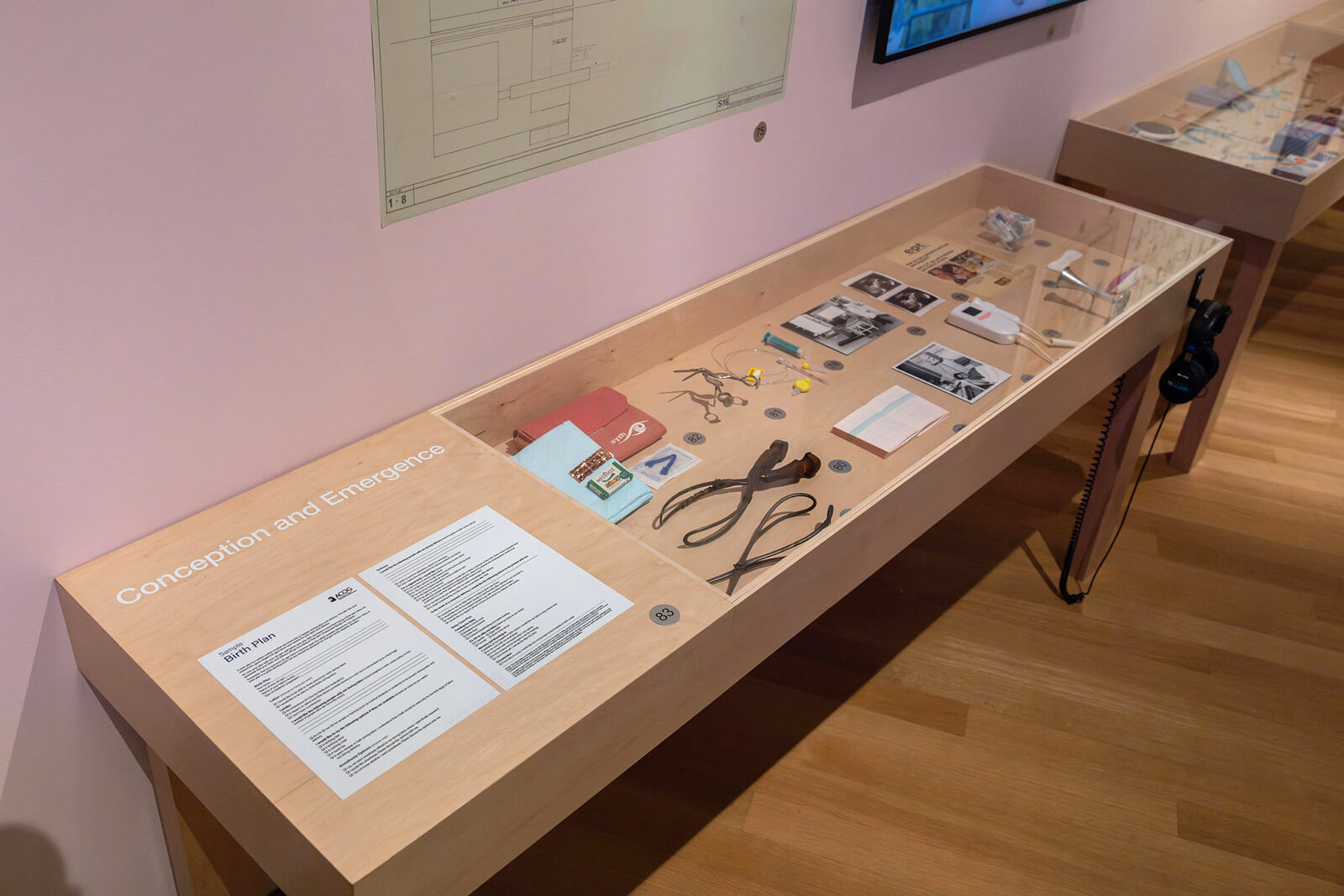
The exhibition text notes that for too long, people with vaginas had little voice in the design of the clinical tools that continue to be used for procedures such as pelvic exams. Designing Motherhood provides a stage to display as well as juxtapose designs, old and new, where one could assess how a product, once revolutionary when it came into being, harbours little to no empathy and immeasurable discomfort for those it is created for. One of the most arresting examples of this contrast, Koehn shares, is the mid-19th-century designed Lucy (Sims) speculum by physician J. Marion Sims and the Yona speculum prototype created by Yona Care in 2019. “Sims’ design—which is still in use today—is the result of his experimentation on enslaved African American women, a horrific fact that must be contended with when taking into account the ‘success’ of his design. Meanwhile, the Yona speculum represents a user-centric design approach aimed at making the experience of using a speculum more comfortable. Showcasing these two objects side by side is a moment where that duality is encapsulated—where you’re really seeing the two sides of how design can make and break our births,” she observes. The cold, steely discomfort of the former was replaced by a more flexible and soothing silicone form, striving to shorten the duration and lessen the horror of pelvic exams.
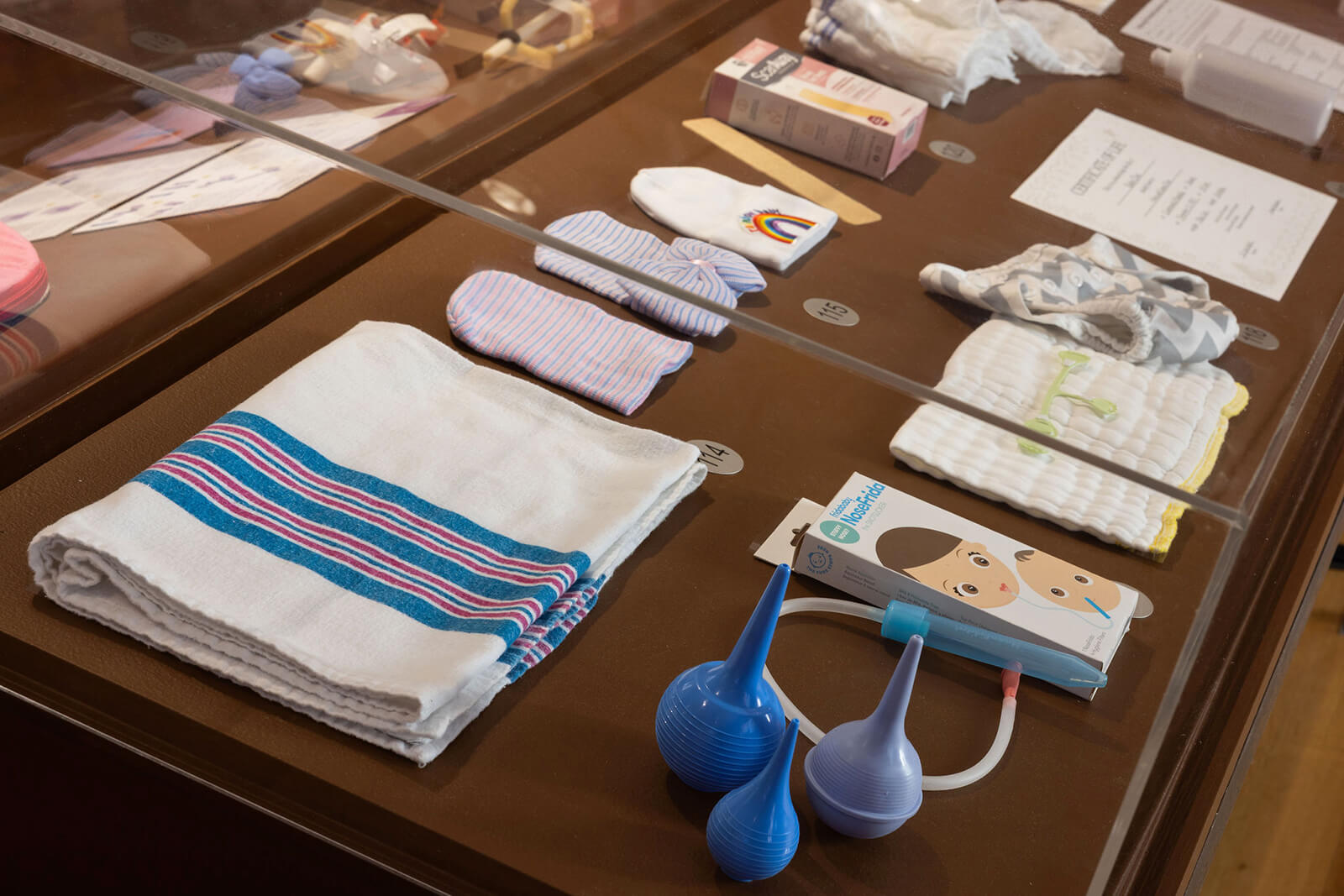
Access, again, emerges as a critical throughline. Early in the exhibition, visitors encounter the NYC Baby Box, a pilot program introduced by the mayor’s office that provides essential newborn supplies to parents giving birth at select public hospitals. The items inside—diaper rash cream, nursing pads, a thermometer—are unremarkable on their own. The innovation lies in distribution. Placed alongside Finland’s Äitiyspakkaus maternity package, which has been provided to all expecting parents since the mid-20th century, the NYC Baby Box exposes the absence of comprehensive federal support for new parents in the United States. As Koehn puts it, “Even the best design isn’t going to do you any good if you can’t get your hands on it.”
That same logic extends globally through the inclusion of the Janma Clean Birth Kit, designed in 2011 by Zubaida Bai. Developed after Bai encountered a midwife in rural India without access to sterile tools, Janma is a $2 kit containing off-the-shelf items—soap, a blade, cord ties, a clean sheet—that dramatically reduce the risk of infection during childbirth. Distributed across multiple countries through Bai’s company, ayzh, Janma exemplifies how design grounded in context and necessity can save lives without spectacle. In a gallery filled with polished prototypes and speculative futures, its quiet pragmatism is humbling.
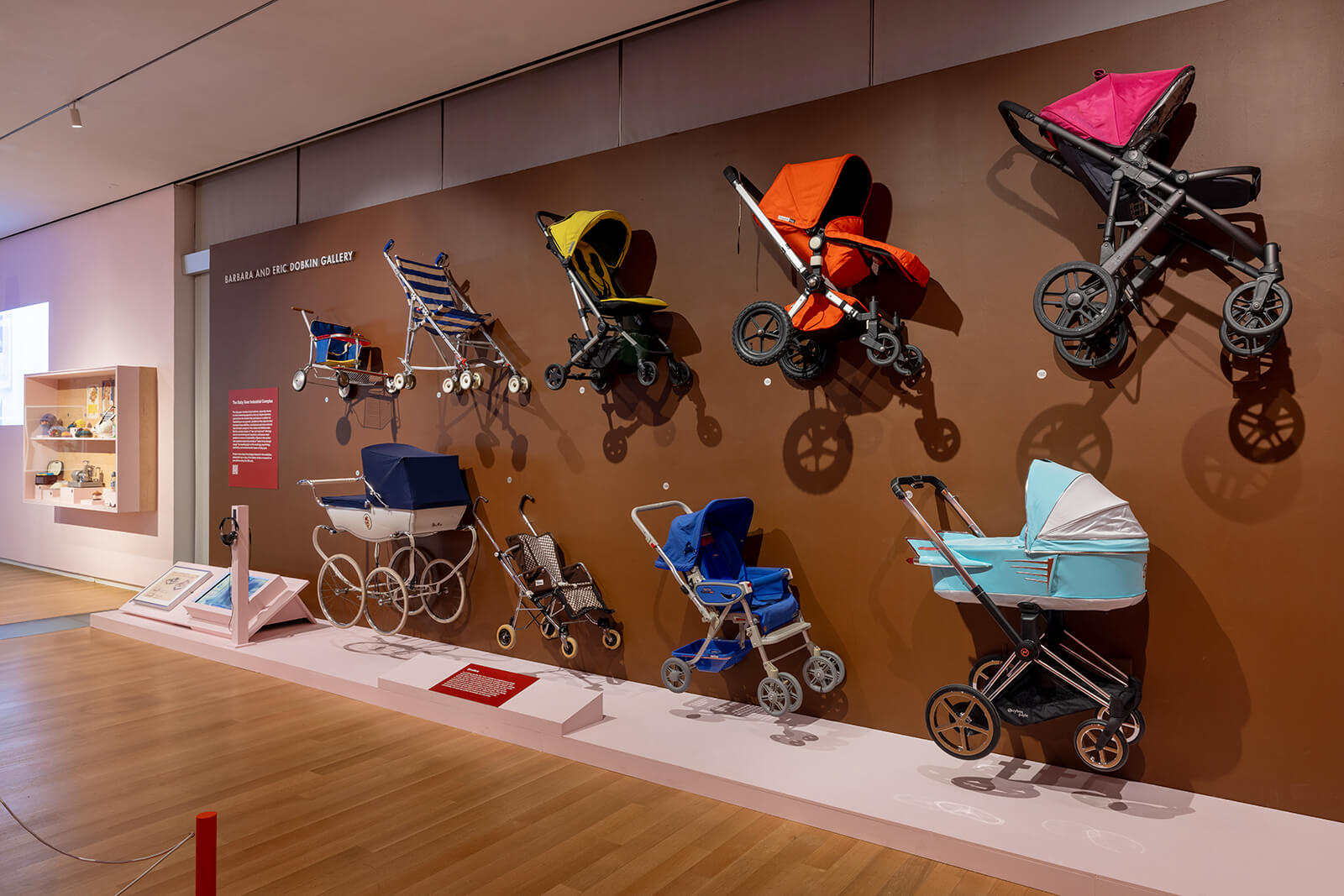
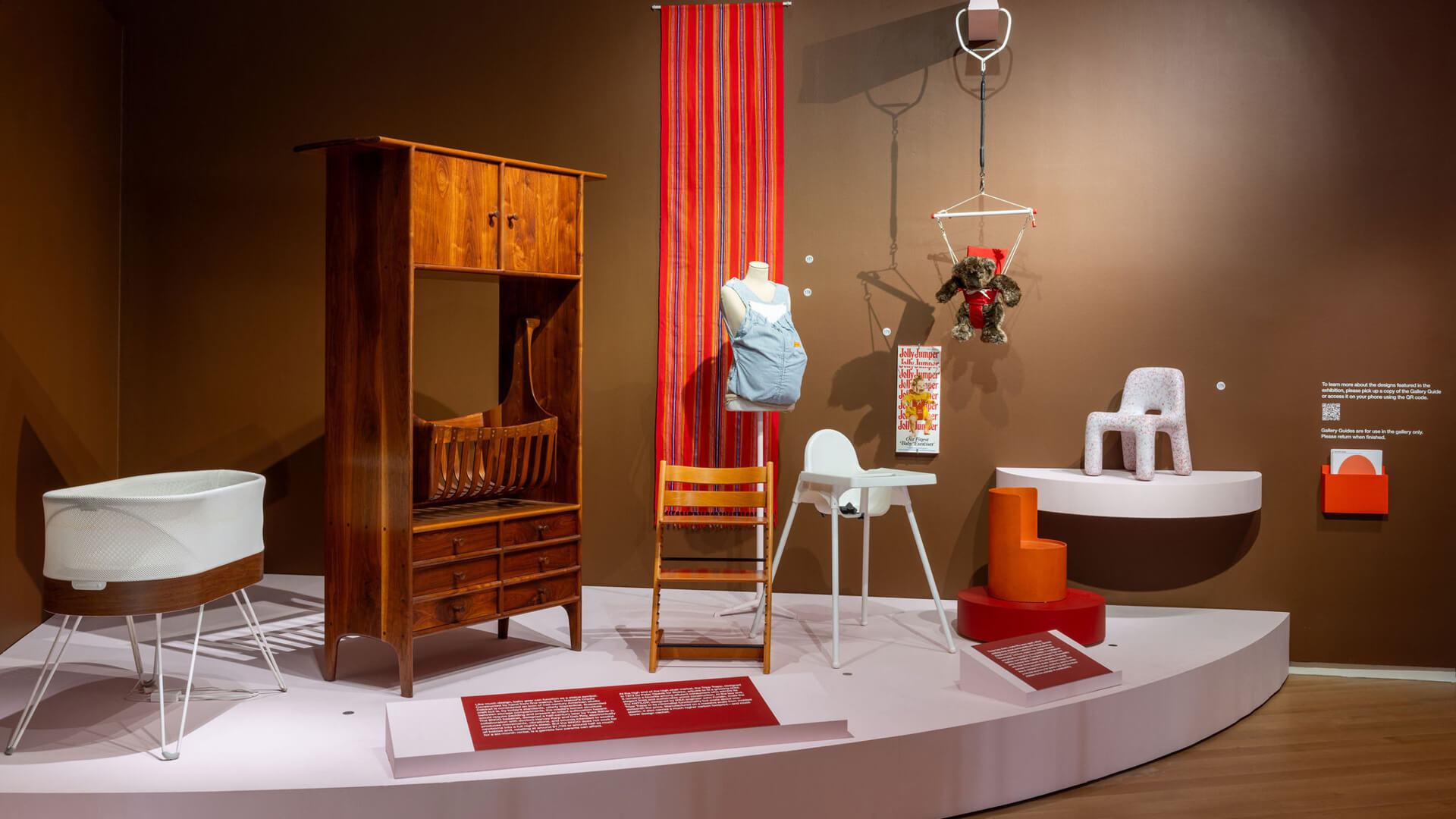
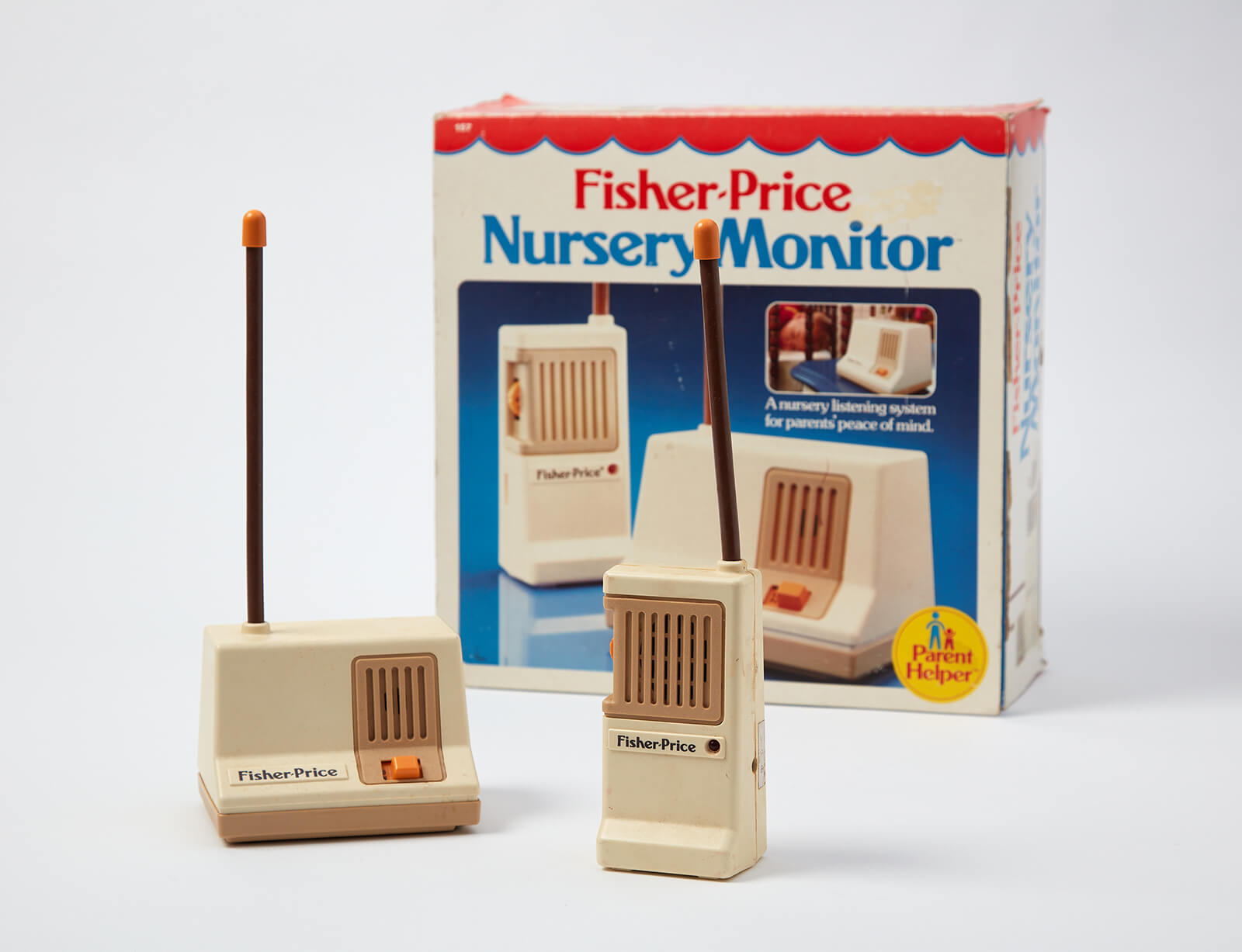
Yet Designing Motherhood is not uncritical of design’s promises. The section titled The Baby Gear Industrial Complex confronts the overwhelming churn of products marketed to anxious new parents. Here, design becomes inseparable from capitalism, sustainability and guilt. Parents are bombarded with messages about what their infants ‘must have’ to be safe and happy; responsibility is shifted onto individuals, while structural support remains scarce. I recognise myself uncomfortably in this space—surrounded by objects I had once believed essential, many of which now sit unused.
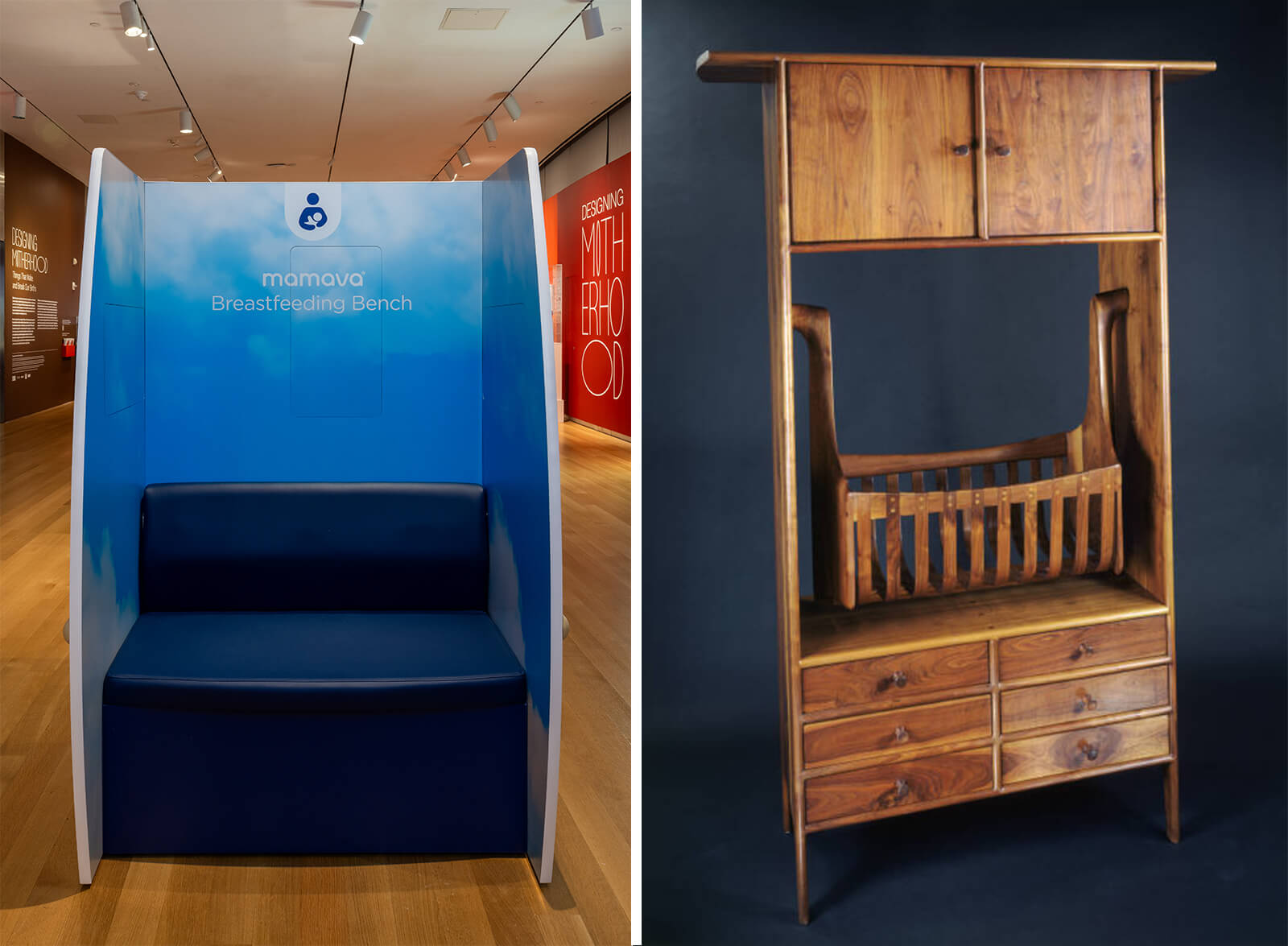
This critical lens also extends to well-intentioned designs. The Mamava lactation pod and bench prototype, for instance, is celebrated widely as a solution for public breastfeeding. And yet, looking at it, I feel a quiet resistance. I did not want to sit on a designated object, in a designated space, to feed my child. The very act of separation—of carving out a ‘safe’ zone—seems like a concession rather than liberation. The exhibition does not resolve this tension for us, nor should it. Instead, it allows space for dissent, for ambivalence, for the recognition that no design can universally serve every body or desire.
Photography throughout the exhibition deepens this emotional register. Zeva Oelbaum’s documentation of women and children at the Women’s Survival Space in Brooklyn captures caregiving under conditions of precarity, as resilience etched into everyday gestures. Tabitha Soren’s Motherload series layers images from the early postpartum months into hazy composites, evoking the erosion of boundaries between mother and child, self and other. These works resist aestheticisation; they sit with exhaustion, repetition and devotion without offering redemption.
When I asked Koehn how she hopes people with lived experiences of motherhood feel as they move through Designing Motherhood, her answer stayed with me. She spoke of visitors responding to different objects, of emotion surfacing unexpectedly, of a sense of shared recognition. “It’s my hope”, she said, “that visitors feel a sense of community while also seeing their own unique experiences reflected.” She shared a moment of watching a friend nurse her child on the Mamava bench during a visit—caregiving literally supported by a work on view. It was, she reminisced, a full-circle moment.
Perhaps that is the quiet power of Designing Motherhood. It does not promise solutions. It does not suggest that better objects alone can heal structural failures or personal wounds. Instead, it insists that design is never neutral—and that our bodies, stories and labour are already shaped by it. After all, no single design will ever be a panacea. What matters are the contexts in which designs operate and our collective role in bringing those contexts into being.
Engaging with the exhibition, I don’t arrive at a sense of resolution. Instead, I feel expanded—more attentive to the systems that have shaped my own experiences and more aware of those that continue to fail others. Motherhood, I am reminded, is not a moment we pass through and leave behind. It is a continuum—of care, of memory, of design—that we inhabit, negotiate and remake, again and again.
The views and opinions expressed here are those of the author(s) and do not necessarily reflect the official position of STIR or its editors.

by Pranjal Maheshwari Oct 23, 2026
Co-authored by Jareh Das, Chairman traces the British designer’s fixation on chairs as symbols of power and identity and as mediums of expression and community building.
by Mirra Lynn Oct 22, 2026
The curators behind Palestine Design Week 2026 reflect on its intent, considering how design holds memory, makes space for loss and imagines a future in Palestine.
by Chahna Tank Oct 22, 2026
STIR speaks with the Mumbai-based type designer about her practice, type walks and why she wants more people to have stronger opinions about Indian-script fonts.
by Jincy Iype Oct 15, 2026
STIR explores craft, material intelligence and people shaping Indian design through dialogues with Design Democracy’s co-founders and the curators of its special exhibitions.

make your fridays matter with a well-read weekend
Enter your details to sign in
Don’t have an account?
Sign upOr you can sign in with
a single account for all
STIR platforms
All your bookmarks will be available across all your devices.
Stay STIRred
Already have an account?
Sign inOr you can sign up with
Verification link sent to check your inbox or spam folder to complete sign up process
Tap on things that interests you.
Select the Conversation Category you would like to watch
Please enter your details and click submit.
Enter the 6-digit code sent at


Of motherhood as a continuum and things that make and break our births
by Zohra Khan | Published on : Jan 30, 2026


 Sign in with Google
 Sign in with email
What do you think?