|
An otherworldly aura pervades All Hallow's Eve; the air crisp at the edges of autumn-hued days. A time when reality seems particularly frail, and monsters lurk in the dark. It is believed that the past walks among us in the hours dedicated to the weird, if it ever truly left at all. Marking a celebration of the eternal cycle of life, death and eventual rebirth, the festival underscores renewal's potent necessity. The ancient symbol of the snake that eats its own tail rears its head in many myths spanning diverse time periods and geographies. The ouroboros reminds us of the cyclical nature of time, turning back onto itself, endlessly.

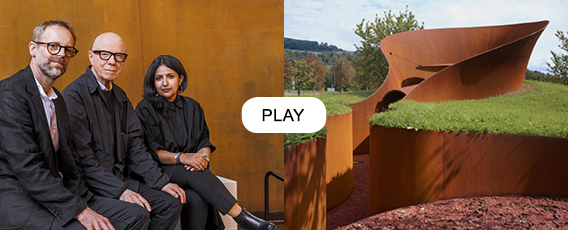
For this week's issue, this fertile allegory appears as twin snakes slithering through the Vitra Campus in Weil am Rhein. In revered Indian modernist BV Doshi's last project, memories of shrines give way to dreams, recast as a journey. In its culmination, his legacy will endure in the campus's restless landscape, framed anew with every subsequent commission. Just as the snake intermittently sloughs off its skin to attain new forms, to be is to transform. Endless repetition, ceaseless renewal and cyclical futures are similarly considered in the show
|
|
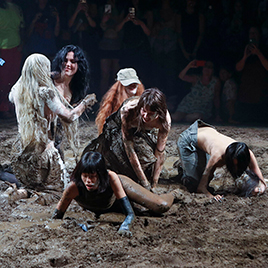
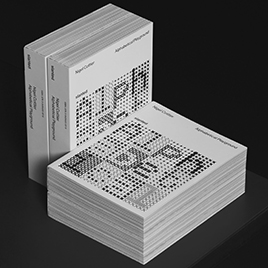
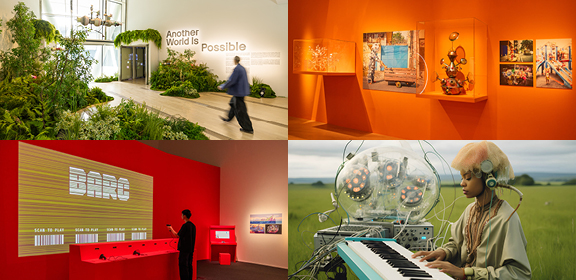
'Another World is Possible' at the ArtScience Museum. The displayed works present varying perspectives that highlight our responsibilities to recalibrate the future as a process, not destiny. In architect Michael Pawlyn's profile, we retrace the vitality of growth in natural systems and a responsibility towards regeneration in design, focusing on his exhibit at the Venice Architecture Biennale that draws on the wisdom of the coral reef. This call for more considerate practices of design is positioned as dirty work in 'Dirty Looks', an exhibition at the Barbican Centre that dwells in decay, signalling a reversion to muck, festering compost and chthonic beings.
Before the barren winter sets in, it is good to remember that the buried, dead world will awaken again. Just as we will one day return to the earth from whence we came, the stories this week chart paths that turn time and time again to the questions posed by the ouroboros: How do our journeys transform and renew us? American writer Ursula K. Le Guin counsels, true voyage is return.

|