Architecture04 mins. read
Balenciaga's New Bond Street flagship store emerges as a raw epoch of luxury in London
by STIRworldApr 27, 2022




by Mrinmayee BhootPublished on : Oct 28, 2025
- Vivienne Westwood, concept note for Nostalgia of Mud, Autumn Winter 1983
In 1982, British fashion designer Vivienne Westwood showcased Nostalgia of Mud, a collection inspired by 'primitive societies' as a reaction to the prim and proper power dressing styles of the time. In Martin Margiela’s eponymous fashion house, he crafted garments from used clothes and even plastic to expose the grimy labour of fashion production and consumption, rejecting popular notions of wealth and superiority tied to cleanliness. Griminess would also rear its ugly head with the luxury fashion brand Helmut Lang’s Painter Jeans from 1997 and Calvin Klein’s ‘dirty’ jeans two years later. This use of ‘dirtiness’ seen as appropriation of the working class would draw considerable flak when Gucci unveiled the Golden Goose sneaker (priced at $850) in 2007, and only became more fervent with Demna under Balenciaga releasing the “fully destroyed” sneakers (priced at a lowly $1895) in 2022. It was also Demna’s creative direction of the Spanish brand through rebellious runway collections that would make the dishevelled look (dirty jeans, tattered hems and moth holes in sweaters to boot) mainstream, with Acne Studio’s 2023 collection adding to this desire for disarray when their campaign with Kylie Jenner went viral on social media.
Fashion and dirt are ambivalent acquaintances, with the dirty, muddy and altogether filthy often invoked as symbolic gestures in fashion design as resistance to mainstream ideology, particularly pertinent for punk and grunge aesthetics. But apart from the symbolic connotations of dirt as disruptive, or more often as a reclamation of abject themes such as sex work, the grime of manual labour or the fetid nature of decay, what does the fascination with refuse, waste and decay tell us about the state of contemporary culture beyond surface level engagements? It is this question and the contradiction between luxury and dereliction in fashion discourse that the Barbican Centre's recent exhibition, Dirty Looks: Desire and Decay in Fashion, explores. As the curator of the showcase, Karen Van Godtsenhoven, tells STIR, the idea is to think about dirt beyond the surface of our garments, as “a source of artistic renewal and creative energy."
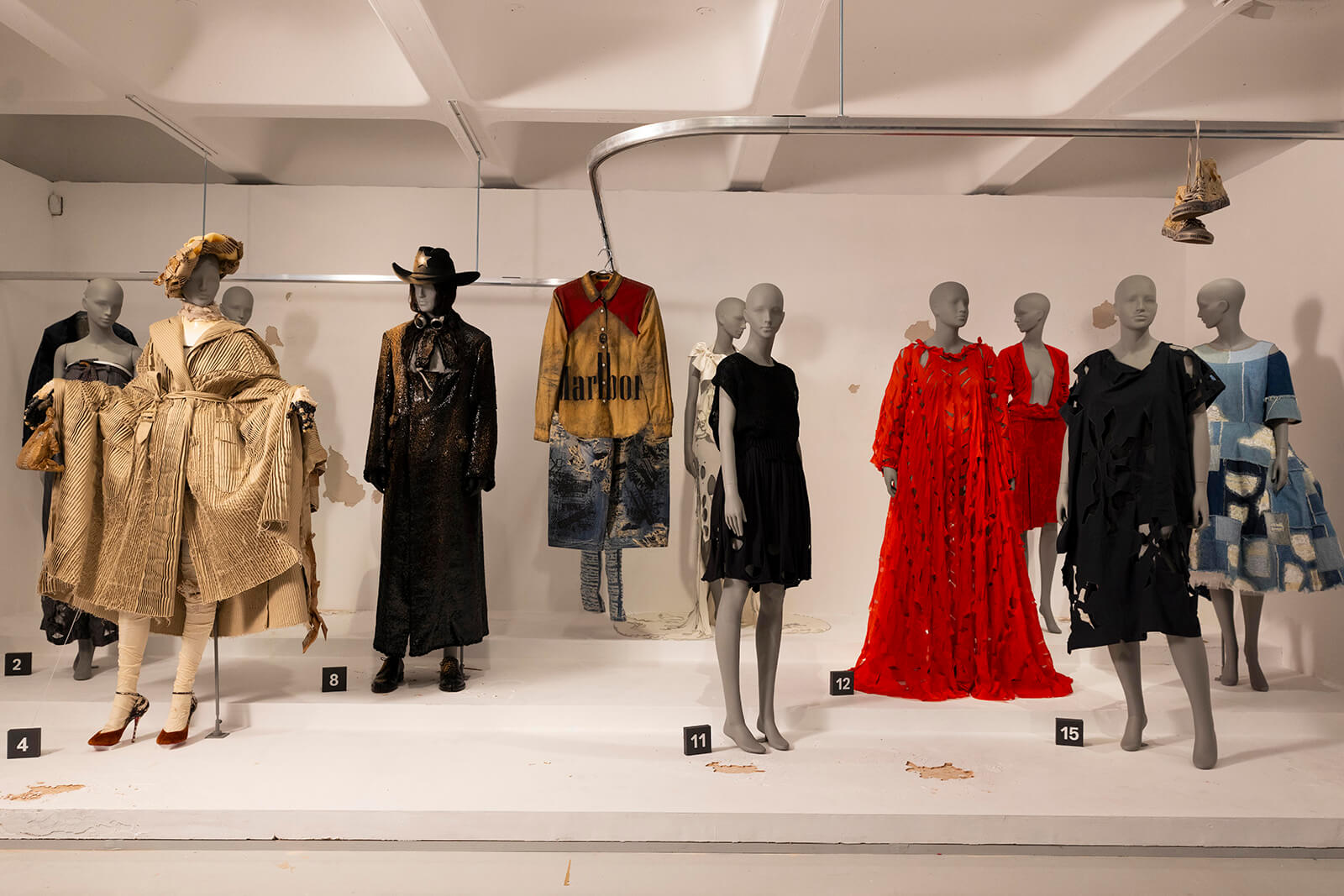
Dirty Looks brings together over 60 iconic and emerging fashion designers, houses and brands, including Westwood, John Galliano's Maison Margiela, Alexander McQueen, Acne Studios, Demna's Balenciaga, Helmut Lang, Viktor&Rolf, Robert Wun and Japanese designers like Rei Kawakubo and Yohji Yamamoto in an expansive showcase. Taking a broad look at the ‘dirty’—a concept that is always defined in its opposition to conventional ideas of ‘beautiful’—the exhibition offers three lenses through which to consider its meaning: in relation to the environment (dust, soil, mud and eventual natural degradation), our bodies (sweat, blood, wear and tear) and humankind (fast fashion waste, artificial materials, incessant resource extraction). Through these, it presents the idea of dirtiness as both transgression and rebellion, but also one ripe for practices of regeneration in luxury design that champion radical forms of craft. "[The show traces how] new works by emerging designers continue to challenge the status quo by breaking boundaries in terms of regenerative materials, raw beauty or bodily taboos," Godtsenhoven notes.

- Mary Douglas, Purity and Danger: An Analysis of Concepts of Pollution and Taboo (1966)
Perhaps the most cited academic work on the material semiotics of dirt has been Mary Douglas’ Purity and Danger. Her definition of it as an otherwise unspecified substance simply in the wrong place emphasises its perception as something that disturbs the pristine state of a thing. Conversely, the sweat stains that bloom around our armpits, the marks of makeup or blood, flakes of skin or hair clinging to a jersey act as a trace, a record of ourselves. If to sully something, then, is for the most part surface treatment (sometimes costing the wearer upwards of $1500), it is also representative of the trace of life. It’s this dialectical condition that the garments at the Barbican also embody, with a lot of the displays in glass vitrines, preserved from further deterioration.
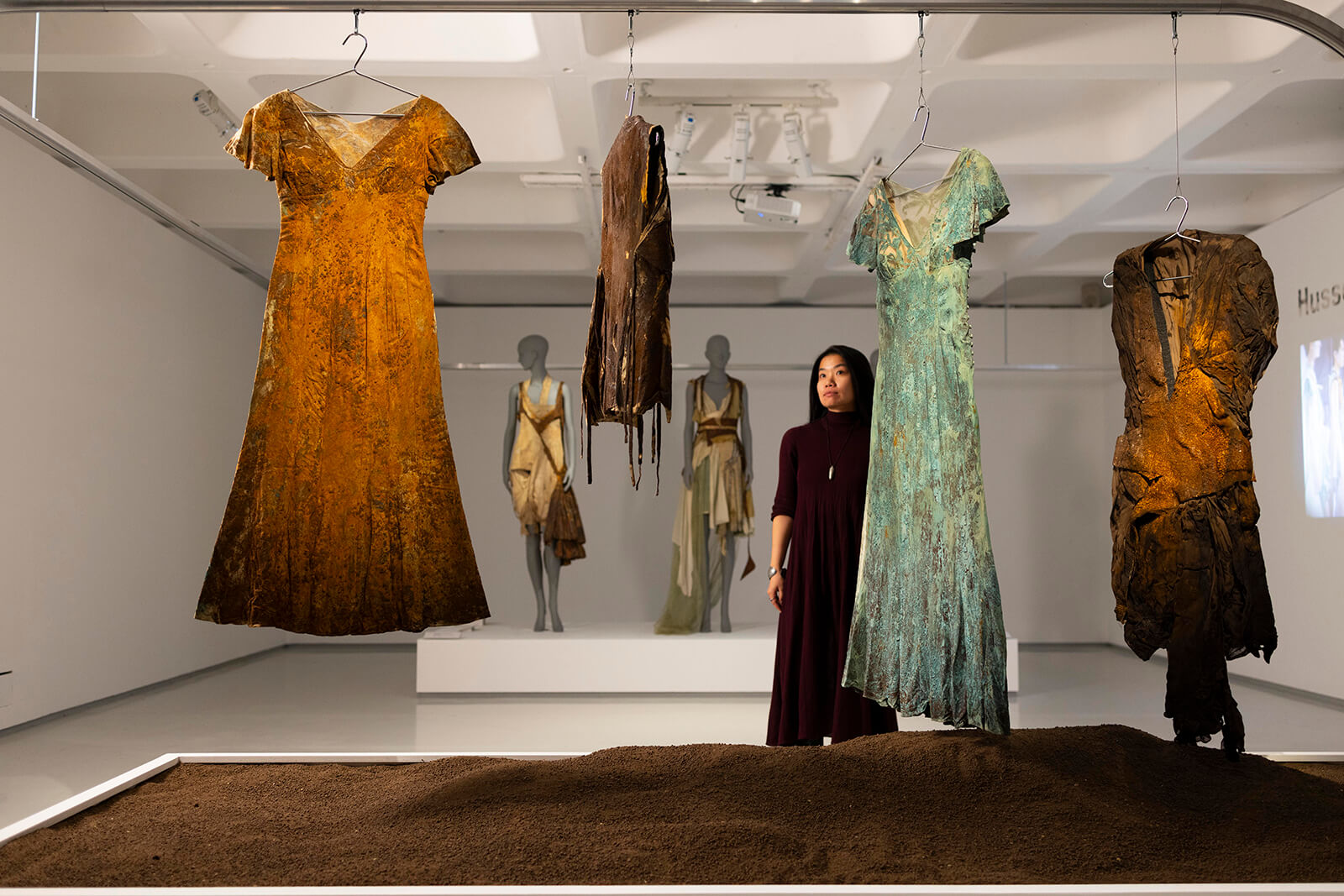
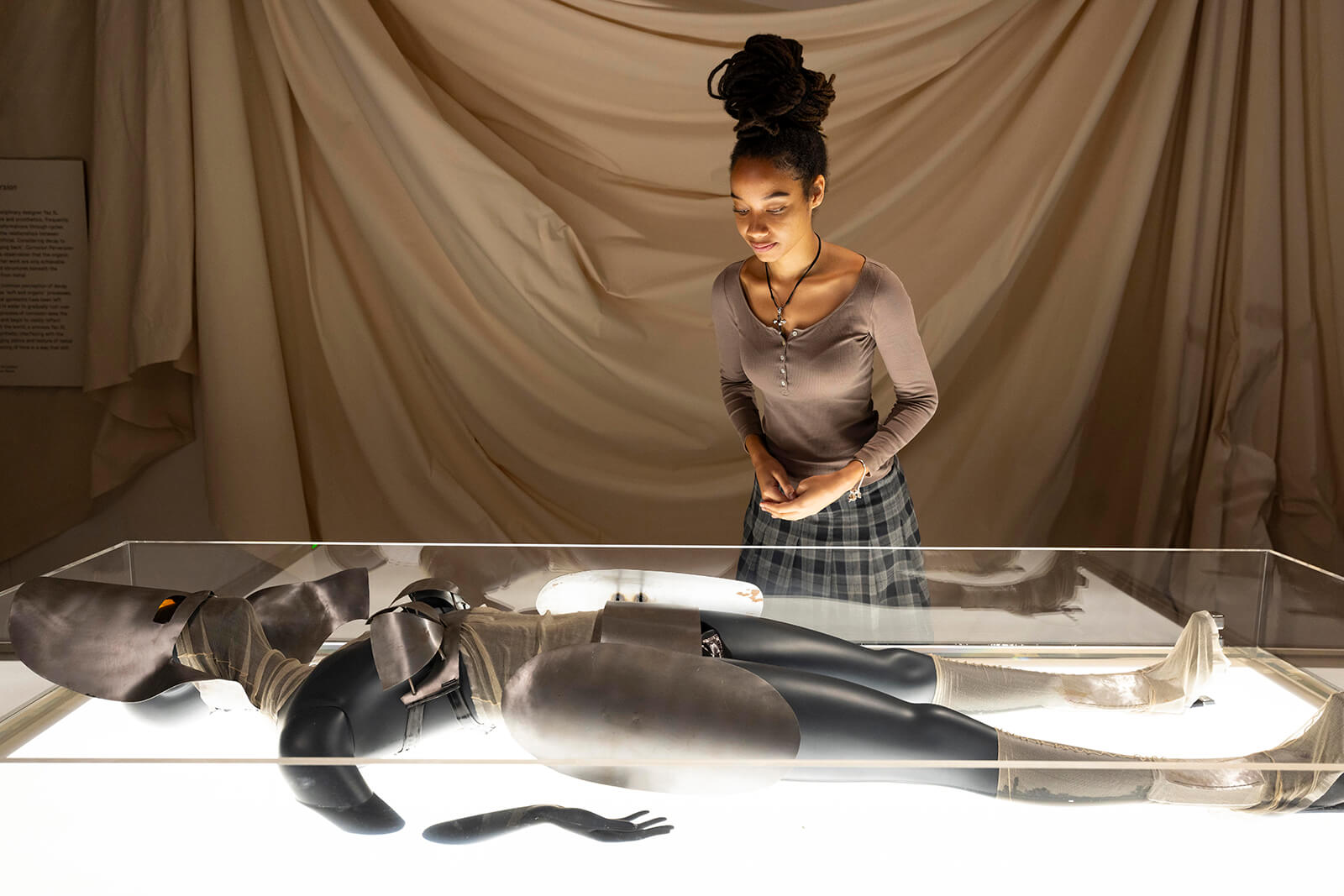
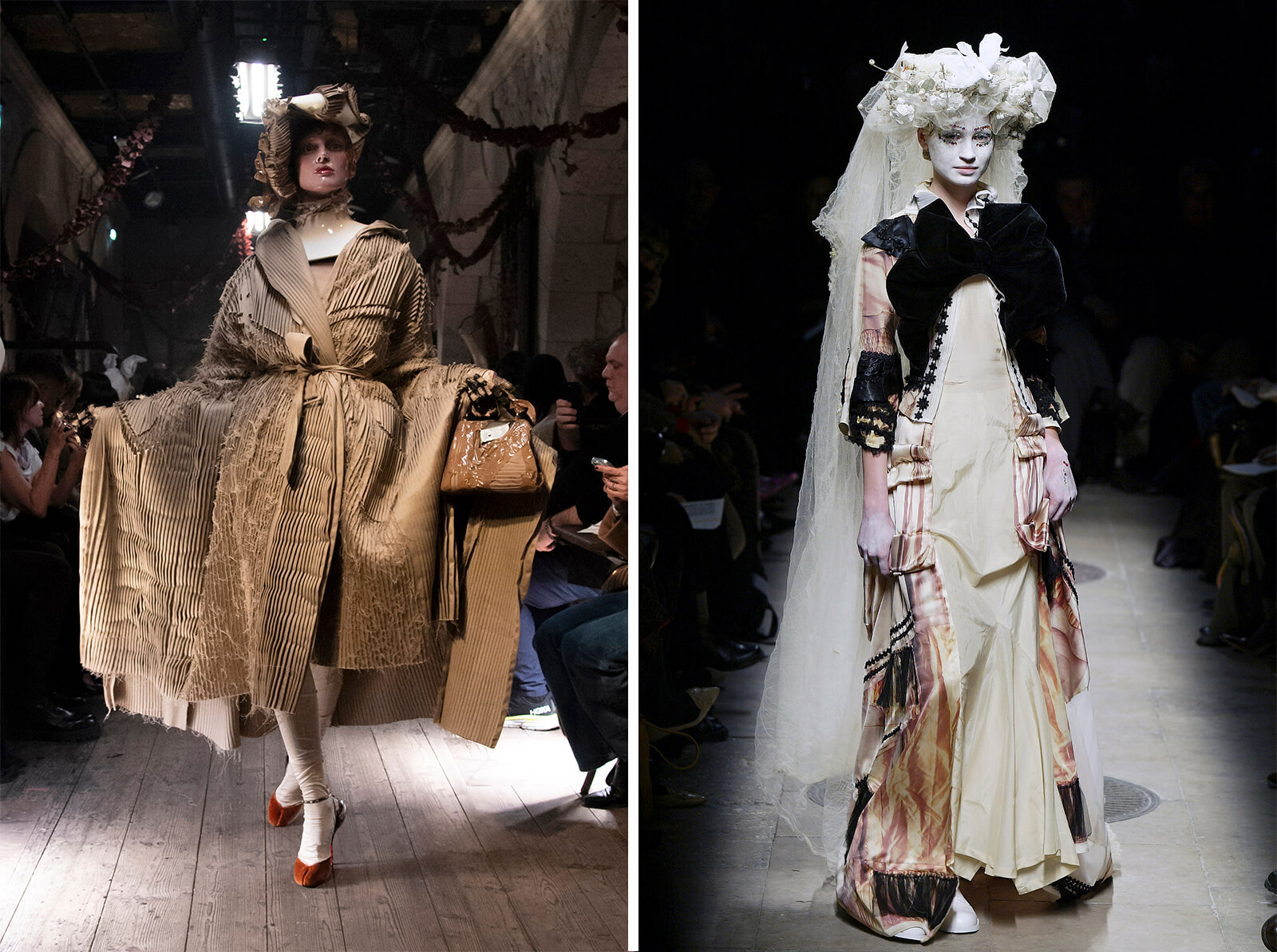
One of the first displays in the exhibition is Husein Chalayan's 1993 graduate show, The Tangent Flows. Burying the garments he’d designed along with iron fillings in a friend’s London backyard gave the dresses a distinctive rusted appearance, highlighting the idea that our garments are alive, that they are part of the cycle of ruination and renewal. Seven pieces from the show hang in tatters in a textile installation, too fragile to be put on mannequins. Rather than dirt as surface application, Chalayan’s treatment of fabric hints at a desire to experiment with new production techniques that lean towards discussions of sustainability in design practise. From this provocation, the show traces different interpretations (artifice as well as authentic) of muck, from Westwood's then subversive Nostalgia of Mud campaign to Chinese designer Ma Ke’s exploration of 'Mother Earth’, where the designer used several recycled pieces of polyester cloth for the garments.
Dirtiness has also often been conflated with Bohemian culture and their disregard for the properness of bourgeois society. The Bohemians would adopt the ragpicker and the prostitute as cultural symbols, cultivating gendered notions around dirt as noble, in the case of the hardworking ragpicker, or conversely, pejorative, as represented by the messiness of sex work. The exhibition presents these more ‘corrupt’ interpretations of griminess and its entanglement with questions of labour, appropriation and sanctity with the provocative works of the British designer Alexander McQueen, whose then controversial Highland Rape collection featured dresses that were stained with dyes to emulate the vaginal bleeding that would appear as a result of violent assault; or one of John Galliano’s last artisanal collections for Maison Margiela, which incorporated the sartorial cultures of sex workers with a collection meant to evoke ‘the underbelly of Paris’. Rather than upend the idea of luxury, they contest what body wears these garments altogether, and what cultures of beauty we uphold. In this vein, we could also consider works by Kawakubo, Yamamoto and Issey Miyake, whose garments were designed to challenge the image of an ‘ideal body’. To dirty here is not to render the garment as grimy, but to disrupt the 'normal' altogether.


- Donna Haraway, Anthropocene, Capitalocene, Plantationocene, Chthulucene: Making Kin
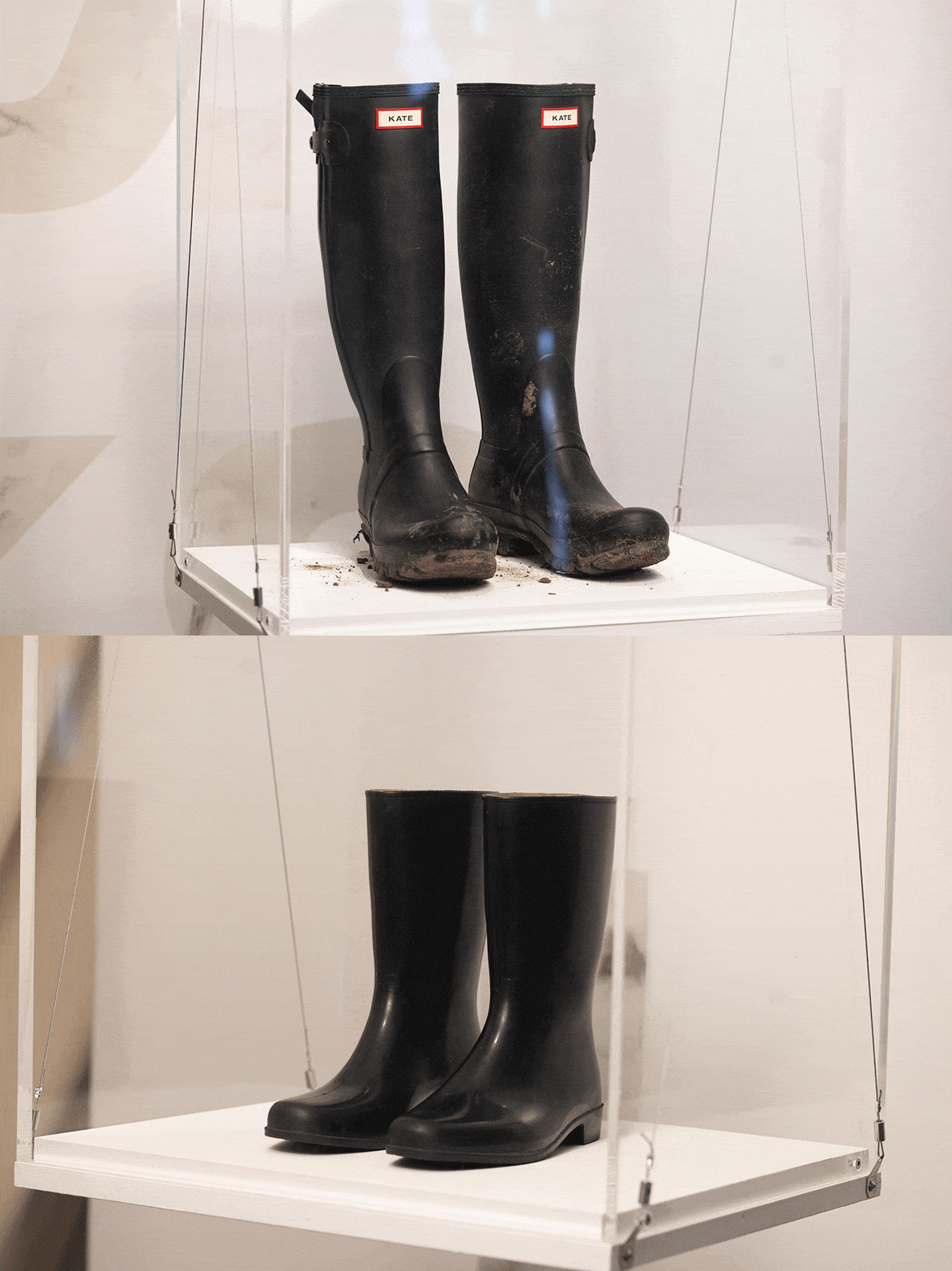
The exhibition design similarly mirrors this idea of dishevelment and neglect leading to ruin (and possible resurrection). The galleries for the show become an 'off-white' cube, if you will, conceived by Rotterdam-based Studio Dennis Vanderbroeck. Fabric nonchalantly drapes the railings of the first floor, falling messily onto the floor below. The pedestals on which the mannequins are arranged feature peeling paint, dried mud and crumbling plaster. The walls of the rooms are grimy, covered in unknown brown substances and chipped tiles, while soiled shoes hang off pipes. On the floor below are the displays by emerging creatives, including installations by designers such as Paolo Carzana, Alice Potts, Michaela Stark, Solitude Studios, Elena Velez and Yaz XL. These practices comment not only on notions of perfection and luxury embedded within the industry, but indict these assumed beliefs within systems that perpetuate wasteful, excessive lifestyles that are slowly degrading the planet.
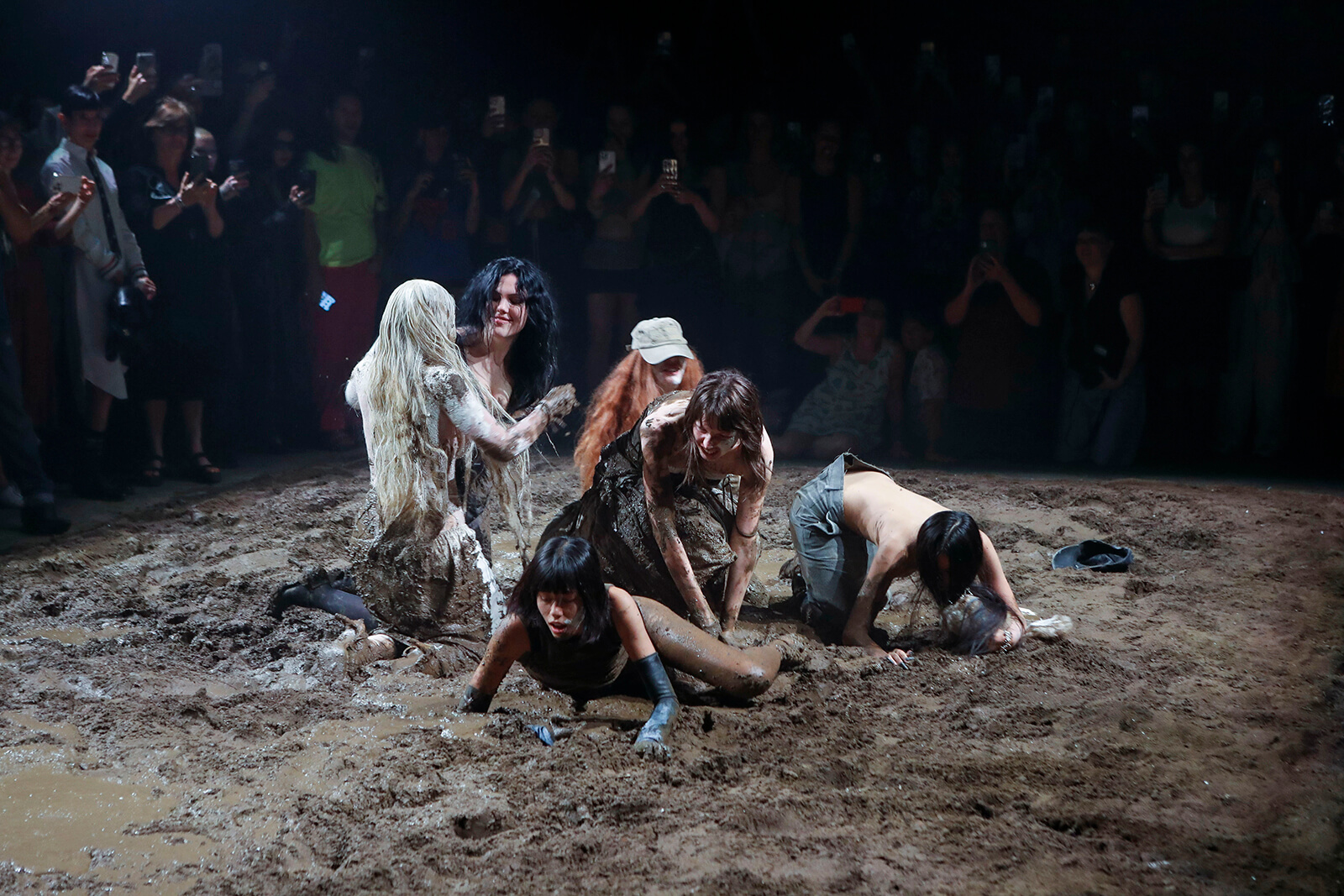
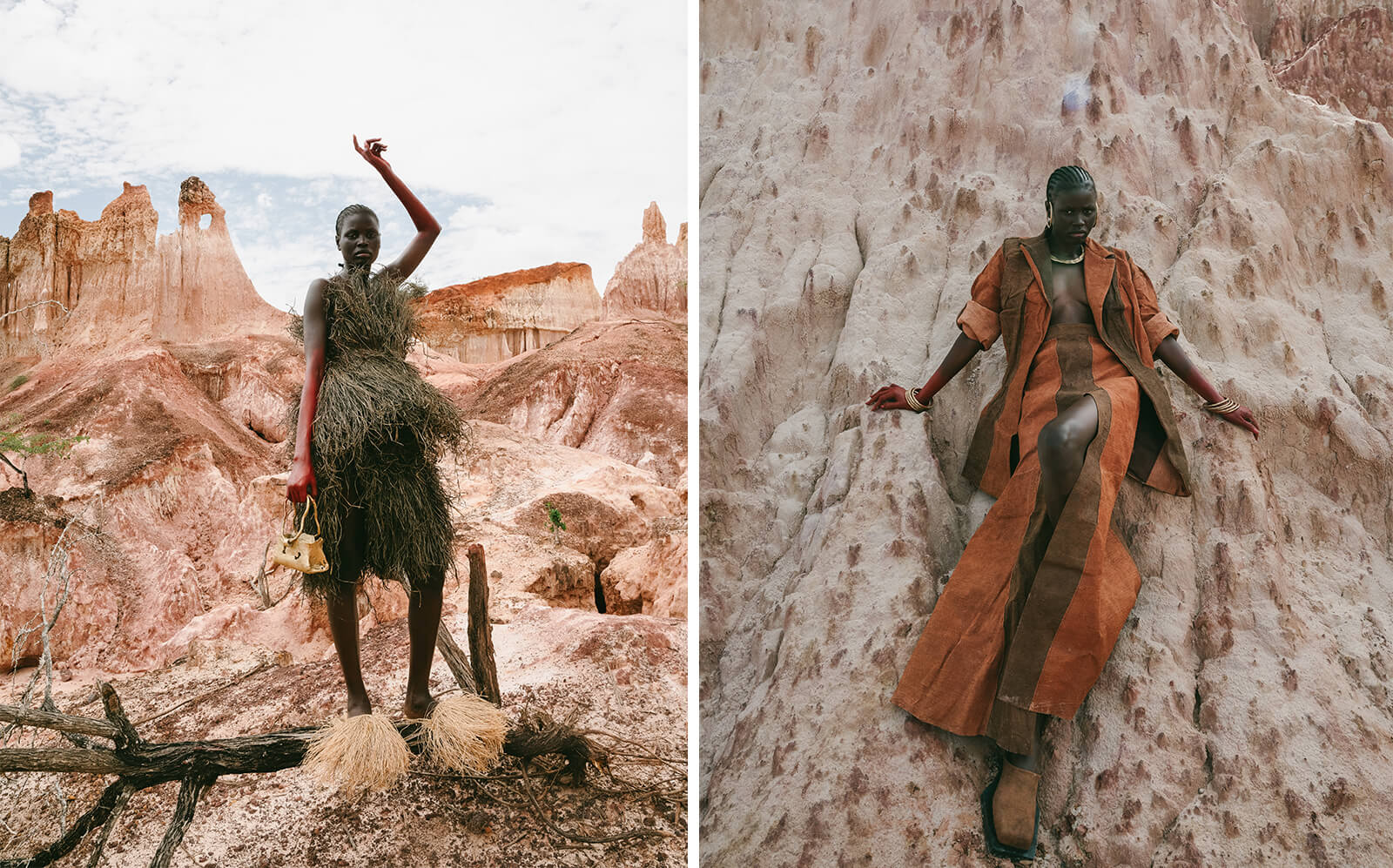
For instance, Bubu Ogisi’s recent creations for IAMISIGO, a Nigerian fashion label, emphasise the use of natural materials, often considered 'not trendy' in Africa. In reviving traditional techniques of craftsmanship with unconventional materials like plastic, Ogisi's Nigeria-based label hopes to revitalise connections to traditional heritage and kinships with the land that were destroyed by colonialism. It’s a design philosophy that is especially critical in a country that is treated as a dumping ground for the waste from the Global North. Similarly, Paolo Carzana’s three-season narrative Trilogy of Hope explores ideas of slowness and mindful consumption with handcrafted, naturally dyed garments made of repurposed materials. A return to nature—material rather than metaphoric—is also depicted by Solitude Studio's works in Dirty Looks. Referencing the understanding of Denmark’s bogs as a site of fertility and good luck offerings in the Iron Age, the designers process the fabric used for the garments by submerging it in mud and allowing it to be consumed by microorganisms.
Counterpoints to conventional notions of materiality and beauty in fashion not only allow for a more fertile consideration of sustainable design, but they also open up space for possibilities for experimentation and material innovation in an industry that has often shied away from such thought—at least in commercial spaces. Rather than considering the dirty as abject, the show asks in what ways can dirt be alluring? "By exploring our own attitudes to what we call 'dirty' and what we call 'beautiful' and indeed exploring unconventional materials and techniques, we can revolutionise fashion, what we make and wear, from the inside out," Godtsenhoven underscores. If to dirty implies an active return to the earth, to ways of being that divest from a pursuit of the modernist ideal of purity, as Donna Haraway argues, then the festering looks presented in the showcase remind visitors of the vitality that simmers in the depths of hot compost piles.
'Dirty Looks: Desire and Decay in Fashion' is on view from September 25, 2025, to January 25, 2026, at the Barbican Centre, London.

by Pranjal Maheshwari Oct 23, 2026
Co-authored by Jareh Das, Chairman traces the British designer’s fixation on chairs as symbols of power and identity and as mediums of expression and community building.
by Mirra Lynn Oct 22, 2026
The curators behind Palestine Design Week 2026 reflect on its intent, considering how design holds memory, makes space for loss and imagines a future in Palestine.
by Chahna Tank Oct 22, 2026
STIR speaks with the Mumbai-based type designer about her practice, type walks and why she wants more people to have stronger opinions about Indian-script fonts.
by Jincy Iype Oct 15, 2026
STIR explores craft, material intelligence and people shaping Indian design through dialogues with Design Democracy’s co-founders and the curators of its special exhibitions.

make your fridays matter with a well-read weekend
Enter your details to sign in
Don’t have an account?
Sign upOr you can sign in with
a single account for all
STIR platforms
All your bookmarks will be available across all your devices.
Stay STIRred
Already have an account?
Sign inOr you can sign up with
Verification link sent to check your inbox or spam folder to complete sign up process
Tap on things that interests you.
Select the Conversation Category you would like to watch
Please enter your details and click submit.
Enter the 6-digit code sent at


The dirty, rotten & alluring: Fashion and its transgressions on view at the Barbican
by Mrinmayee Bhoot | Published on : Oct 28, 2025


 Sign in with Google
 Sign in with email
What do you think?