Architecture17 mins. read
Imagined Communities: National Pavilions at the Venice Architecture Biennale 2025
by Mrinmayee BhootMay 07, 2025



by Ayesha AdonaisPublished on : Oct 23, 2025
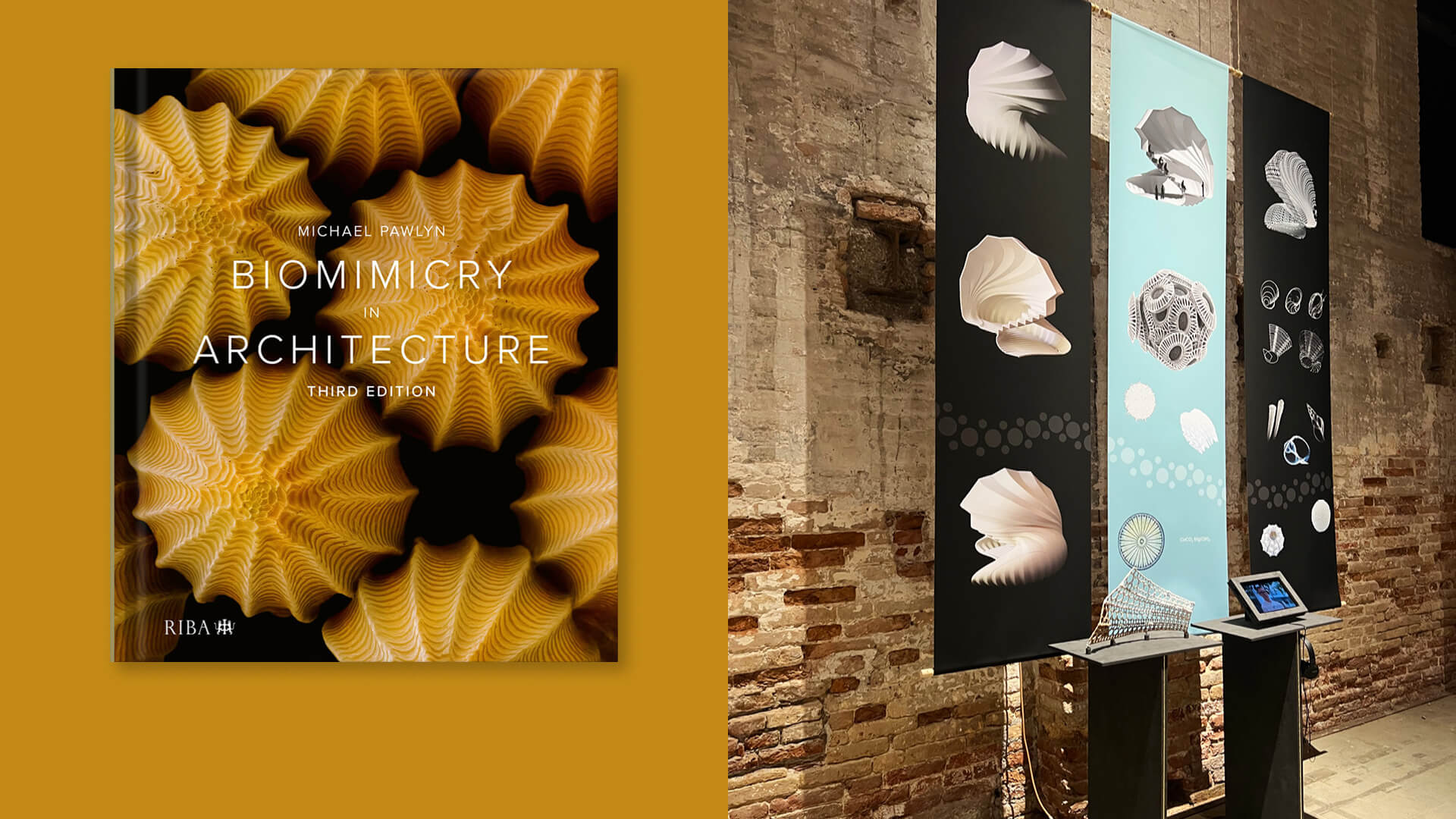
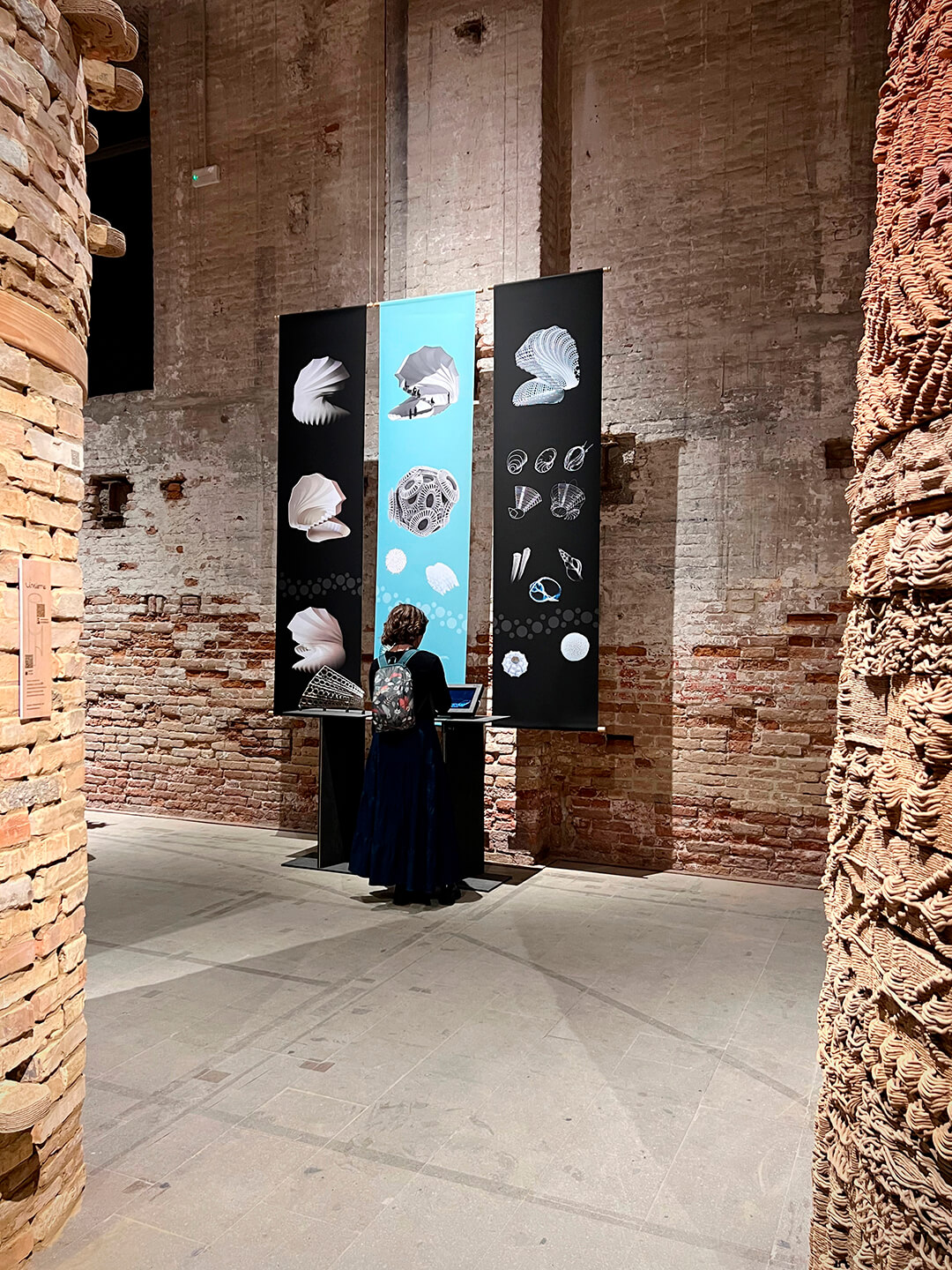
Unlike political cycles or business plans, buildings endure for generations. Every decision we make now will shape our futures, fixing today’s choices for decades to come. Now years into the 'age of sustainability’, its limitations are increasingly visible. Architecture, still bound by incremental thinking, requires a deeper shift, one that the British architect Michael Pawlyn’s work brings sharply into focus. Pawlyn’s third edition of the book Biomimicry in Architecture, published by RIBA (September 2025) and his BIOROCK Pavilion, developed in collaboration with Adam Holloway Architects, Arup and Charcoal Blue, and presented at the 19th Venice Architecture Biennale curated by Carlo Ratti under the theme Intelligens: Natural. Artificial. Collective., ask us to consider that sustainability framed as ‘less harm’ is no longer enough.
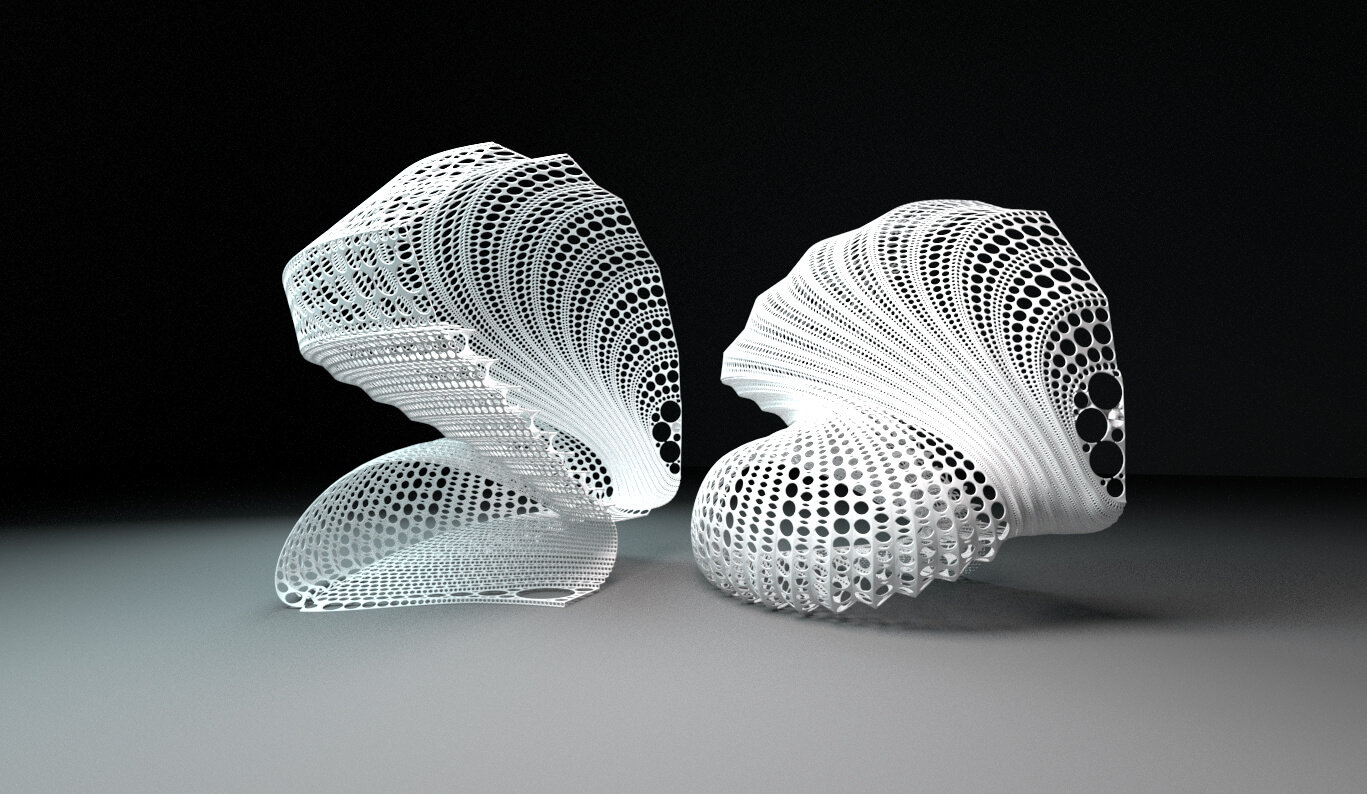
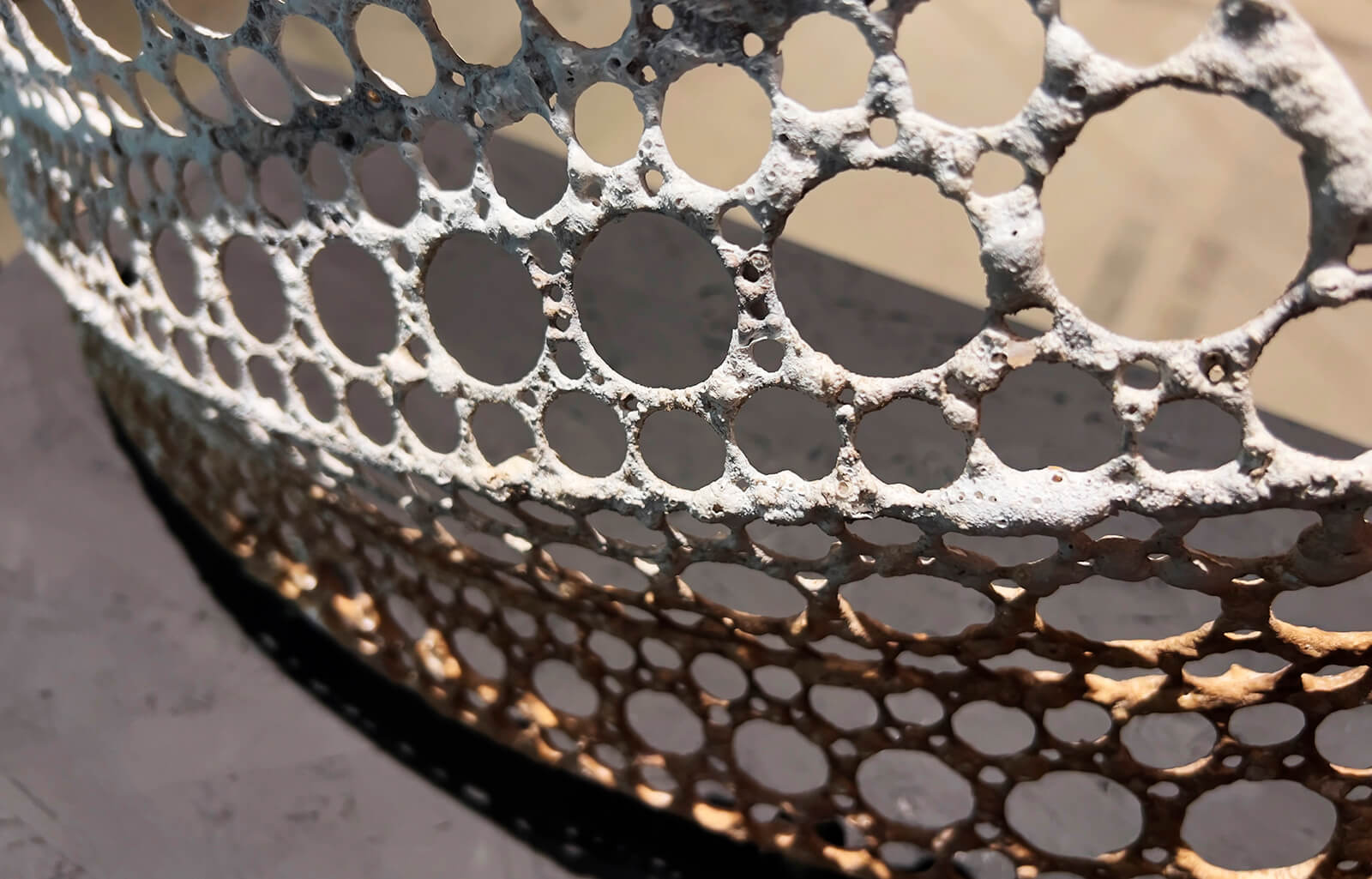
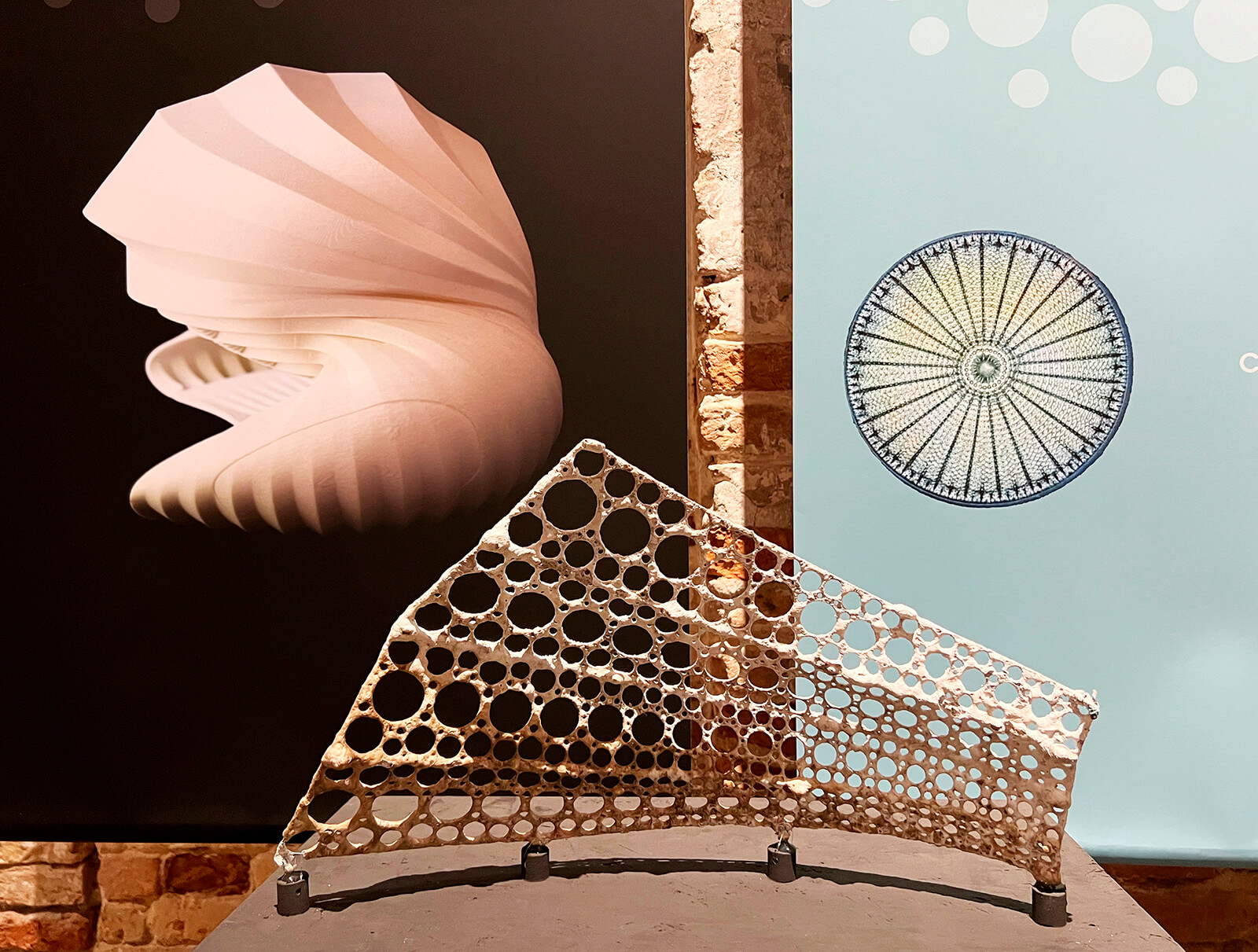
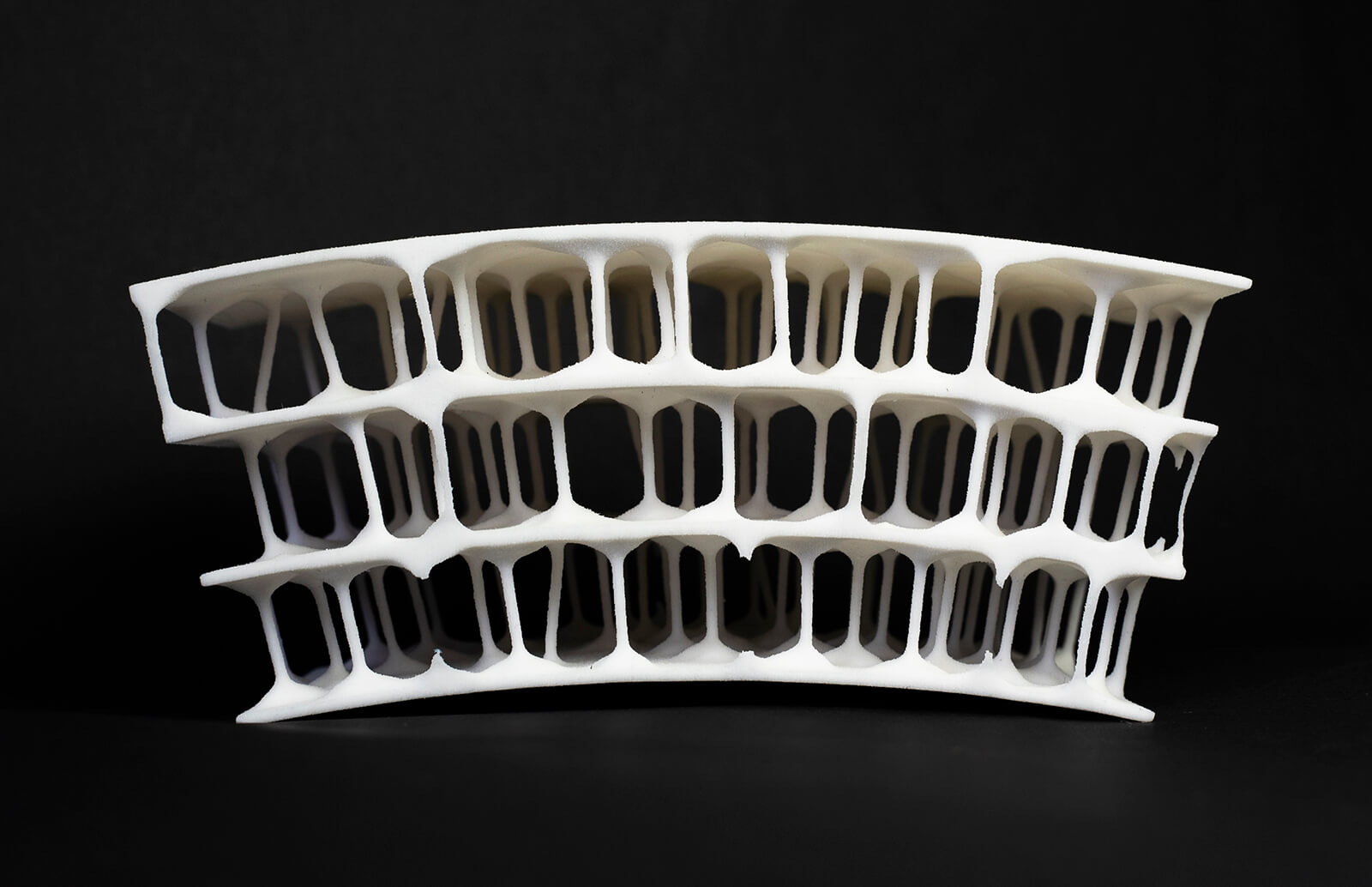
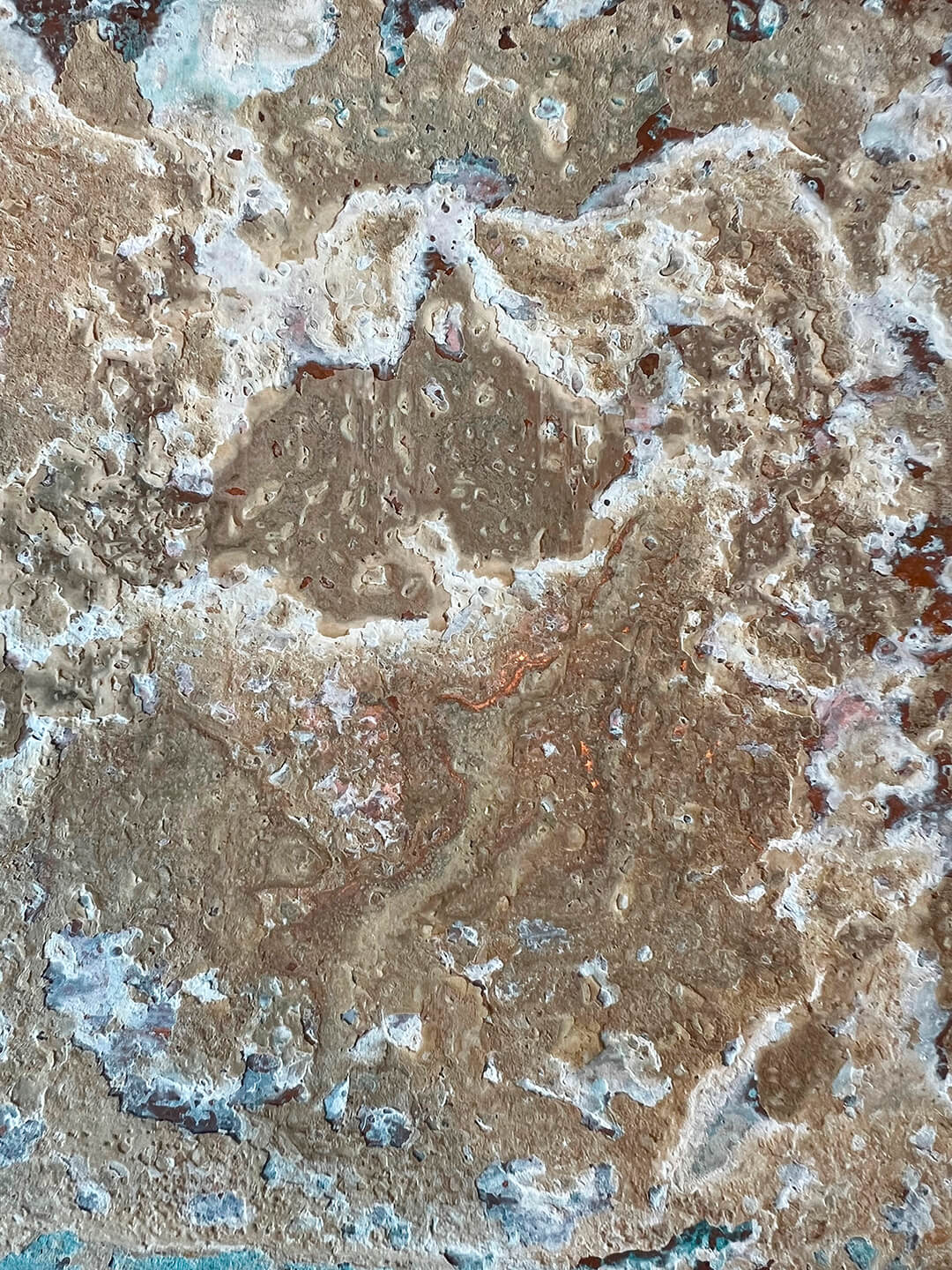
For Pawlyn, architecture’s role cannot stop at trimming carbon or greening façades. His book frames regenerative design as an ecological imperative. The pavilion, the first building 'grown' through processes comparable to biology, uses electro-mineral accretion—a method derived from coral reef restoration—to grow the structure from seawater and sunlight. Its ribbed amphitheatre form, inspired by seashells, demonstrates how architecture might self-assemble from locally abundant materials. It makes tangible the possibility of buildings that behave like living systems, enriching the environments they belong to. Together, they call for a move beyond designs that merely offset damage, toward transformation: architecture that restores, regenerates and positively participates in the wider metabolism of life.
Pawlyn is not dismissive of incremental progress. Optimisation still has a role, and scaling experimental projects like the BIOROCK Pavilion depends on such tools. Still, his writing and practise argue for more—an epochal shift in how architecture defines its purpose and measures success. He draws on American environmental scientist Donella Meadows’ 'Systems Thinking' to provide the framework; to explain that the real drivers of change are not technologies or incentives, but the goals and values that shape the system itself. For Pawlyn, that means moving from a global view centred on human systems to a planetary perspective, one that demands confronting uncomfortable truths.
He points to what he describes as ‘human supremacy’—the ingrained belief that we can carve roads, lay infrastructure or even drive species to extinction and somehow escape the consequences. As he puts it, even our language reflects this imbalance: “Muhammad Ali put it beautifully, we talk about a deer crossing the road, but really we should be talking about the road crossing the forest.” This, Pawlyn argues, requires a shift in mindset, from one of entitlement to a regenerative design practice grounded in a more respectful and reciprocal relationship with the living world. Both his book and the pavilion at Venice Biennale pose the same question, one that is as practical as it is philosophical: What if buildings did more than minimise harm? What if they actively enriched the ecosystems they inhabit?
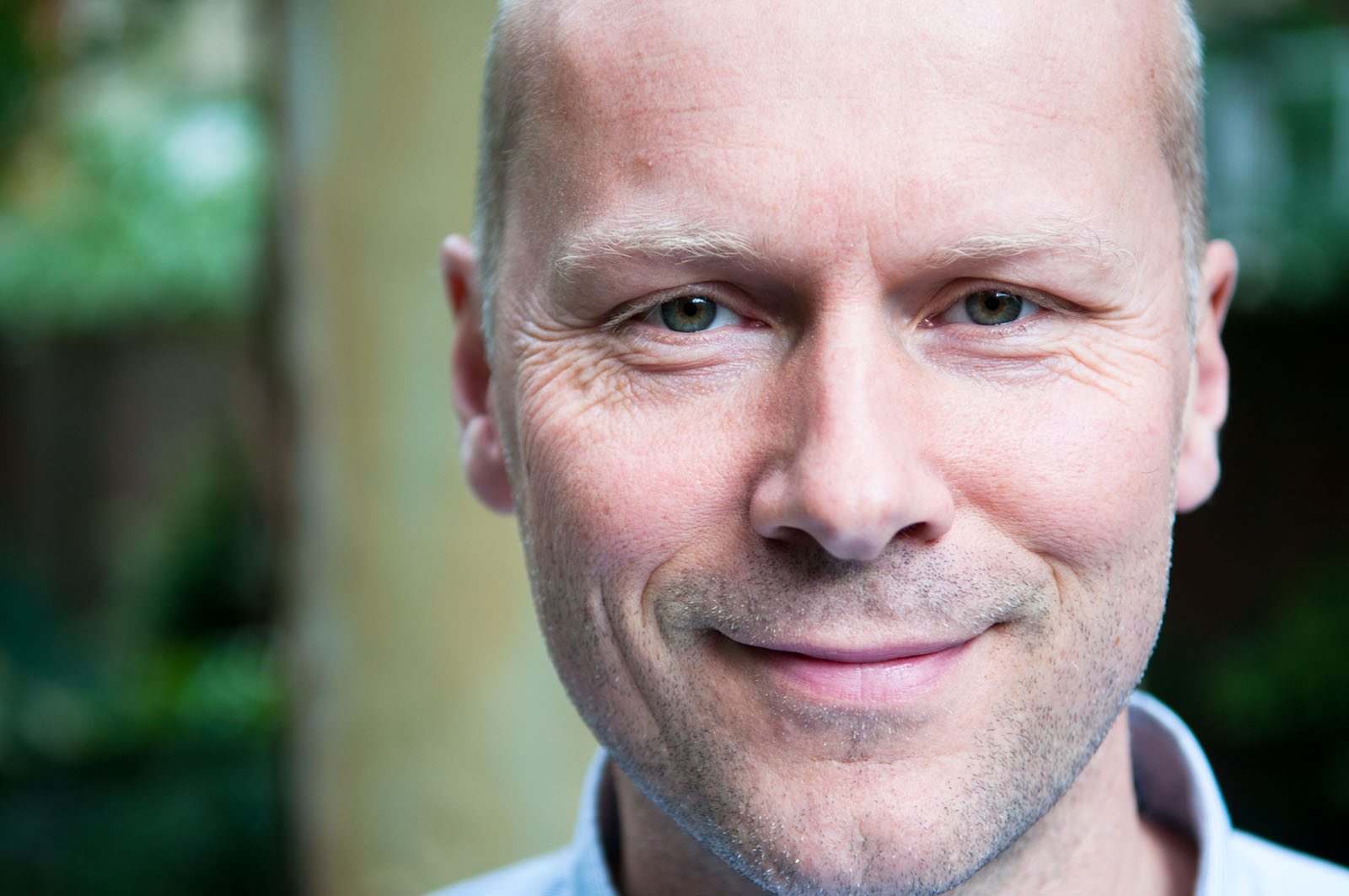
With these questions in mind, STIR spoke with Pawlyn about why systemic change may now be the only meaningful path forward. Edited excerpts from the conversation follow.
Ayesha Adonais: In the new edition of Biomimicry in Architecture, you call for more regenerative approaches. Where do you see architecture still implementing only incremental change?
Michael Pawlyn: I often return to Bill Reed’s diagram showing the difference between sustainable and regenerative. At the centre is the neutral axis: 100% sustainable, or 100% less bad. Above that line are the various levels of regenerative design, and many people are doing really interesting work trying to get into the realm of net positive. Sometimes that's tough. What I’ve been trying to do in my book is look at the ultimate aim. I’m not suggesting that’s better or more important than the work around the neutral axis, but both are important.
Unless we think carefully about where we want to get to, incremental work may be misdirected and lock us into suboptimal schemes. Buildings last a very long time and embed certain ways of performing and behaving. Many current schemes aim to enhance biodiversity so it’s net positive, or use materials that sequester carbon. Both of those are great. But a more transformative approach, I believe, is to establish what the deepest causal layer of our unsustainability is.
For me, that’s our separation from nature. Economically, we tend to see nature as something outside ourselves, a source of resources and a dumping ground for waste. That comes from a belief in human supremacy: the assumed right to impose infrastructure, disrupt ecosystems, even drive species to extinction. It’s uncomfortable, but more courageous to ask: How do we move away from human supremacy towards a respectful relationship with the rest of the living world?
Ayesha: You have mentioned Meadows’ leverage points. Which ones are architects using too often, and which are we not engaging with enough?
Michael: Some of the lower-level leverage points in her list, things like incentives or new technologies, are where architects and businesses often focus, and they do make a difference. The most powerful points, though, are higher up: shifting the paradigm that drives the system, and shifting its goals. At this stage in the planetary emergency, we need to be serious about our theories of change. Simply advocating for good solutions hasn’t been systemic enough, and the ‘trailblazer theory’, which hopes big companies will lead and others follow, has shown its limits. What we need instead is cooperation, even between competitors, to push for government policies that allow them to compete within planetary limits. Without that, we won’t meet the challenge.
There are inspiring examples. Faith in Nature, for instance, became the first company to appoint nature to its board of directors and shared the model, so others could follow. Lawyers, too, are advancing the rights of nature and pushing ecocide law internationally. Those are the kinds of paradigm shifts we need more of.
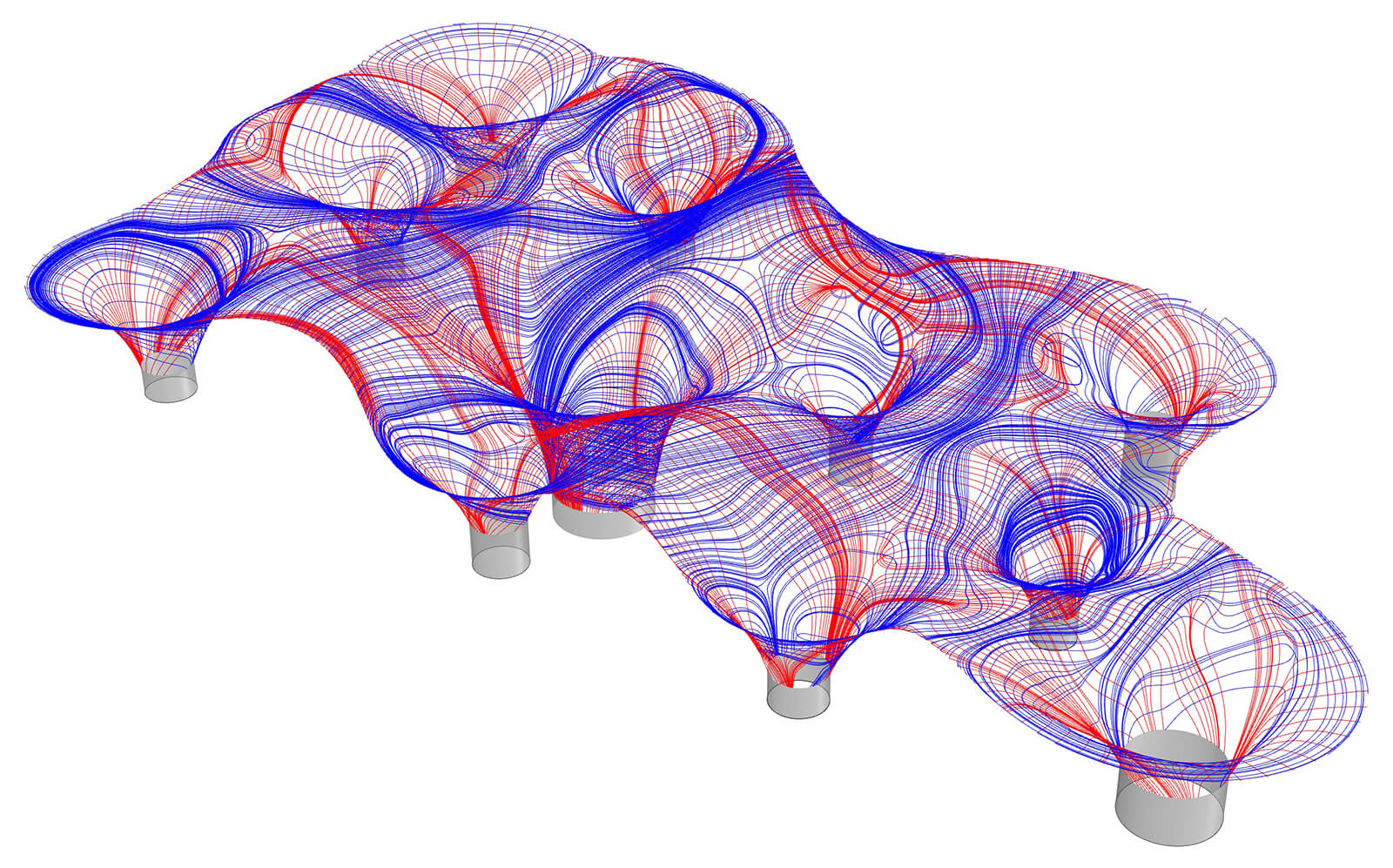
Ayesha: What does the BIOROCK Pavilion reveal about the possibilities and challenges of scaling regenerative projects without losing their vision?
Michael: First, I want to acknowledge my collaborators: Adam Holloway Architects, Arup and Charcoal Blue. Projects like this don’t fit neatly into conventional budgets or timelines. Clients rarely have the appetite for that kind of experimentation. So BIOROCK has had to be more like R&D, supported by research and philanthropic funding. That gives the freedom to test ideas thoroughly, through small prototypes, larger ones and eventually full-scale.
The principle is very elegant: you grow limestone-like material from seawater using minimal energy from freely available resources. We’ve already grown pieces on the Sahara Forest Project and created a scale model for Expo Dubai. The potential is broad. You could grow panels or structural elements. You could grow structures that remain in the sea to create marine habitats. You could even protect undersea cables, a major vulnerability, while simultaneously generating biodiversity.
Ayesha: How does the Regenerative Architecture Index shift the goals of the system within practice?
Michael: This came out of discussions in Architects Declare, where I was involved for five years. We talked a lot about Meadows’ leverage points. Changing the goals of a system is just below changing its paradigm. Some of the goals shaping architecture today are deeply unhelpful. Magazines often glorify unsustainable projects. Award systems too often reward growth, size and profitability. That encourages practices to take on projects just to climb rankings.
The Regenerative Architecture Index was designed as an alternative. Run with Architecture Today, it has no overall winners or rankings. It shares best practices, highlights progressive work and encourages knowledge exchange. It’s doing what we hoped: creating a platform for regenerative practice and shifting the goals of the system.
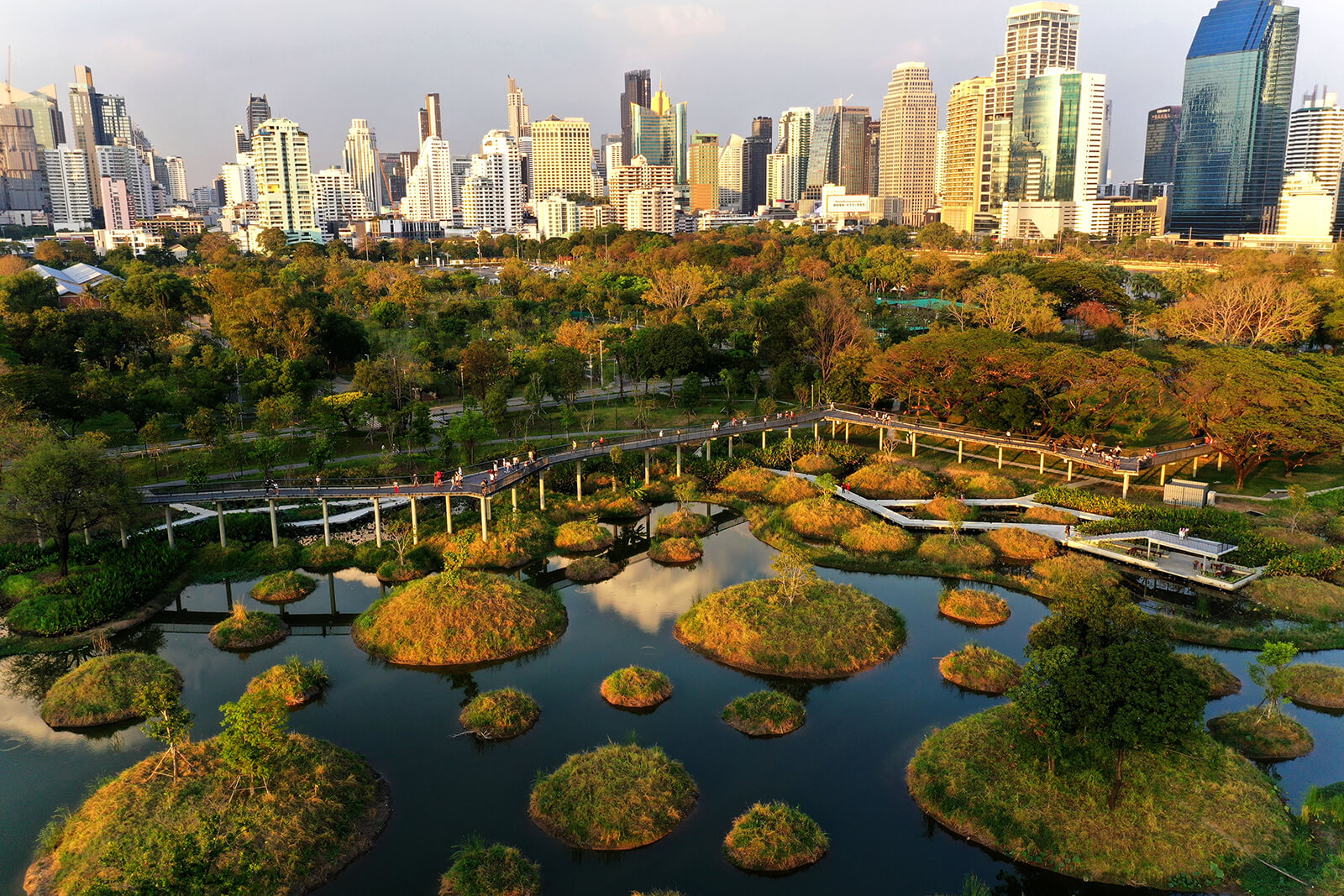
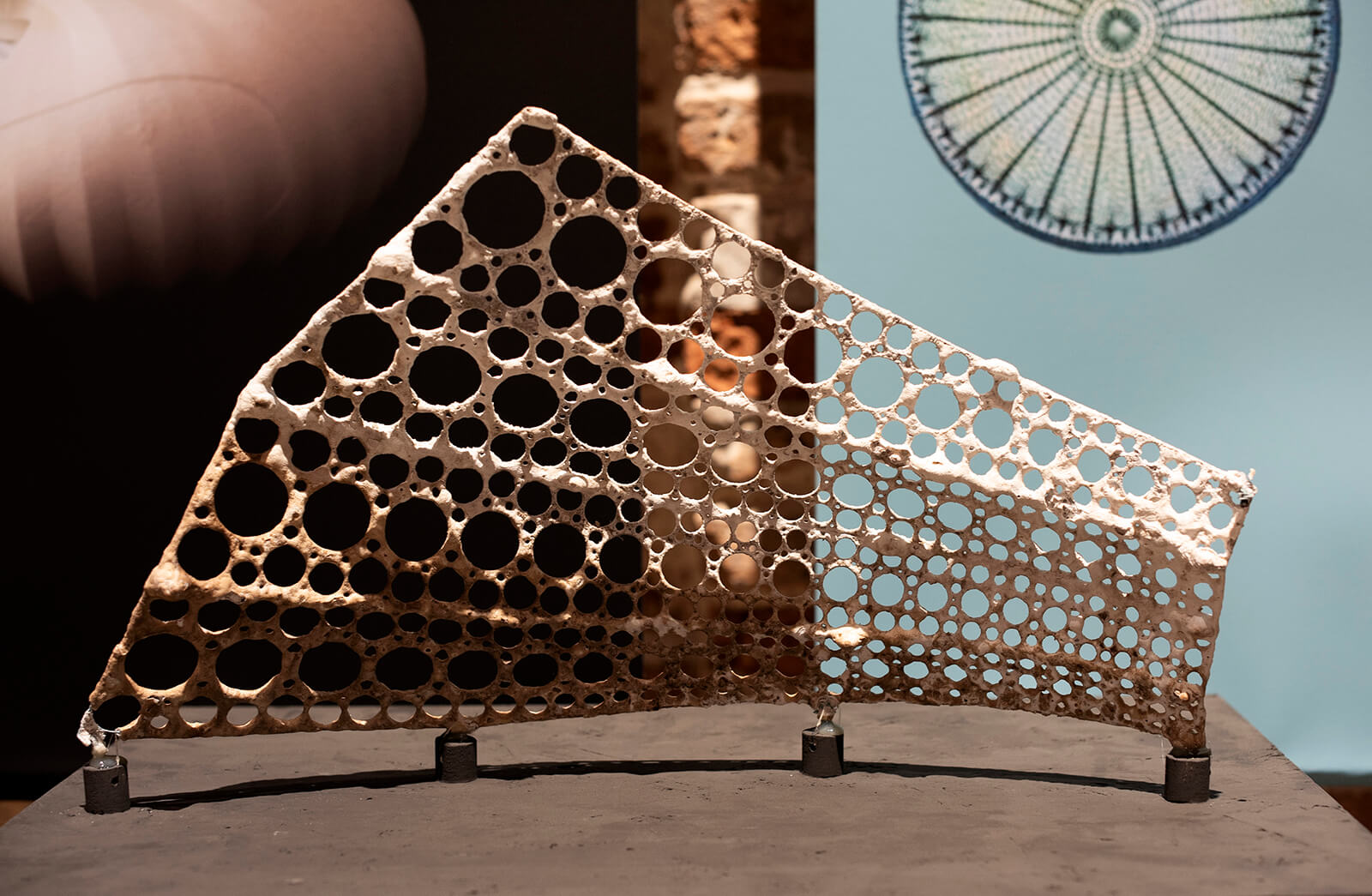
Ayesha: How did your belief, ‘we are nature’, shape both the book’s new edition and the BIOROCK Pavilion?
Michael: Biomimicry is often misunderstood as an aesthetic. For me, it’s always been functional. With this edition, I wanted to make a more transformative case, influenced by the philosopher Freya Mathews. She critiques biomimicry as too shallow and proposes a deeper approach. One provocation she makes is: instead of asking, “What does the river want from my hair gel?” we should ask, “What does nature want us to desire in the first place?” I’ve argued that this could be one of the most fertile provocations in 21st-century design.
Mathews also sets out two principles of living systems: conativity and least resistance. Conativity is the idea that species evolve not just for their own survival, but to enhance the systems they’re part of. Least resistance is that species tend to flourish within systems with minimal waste or disruption. The BIOROCK Pavilion reflects this shift. It isn’t just a building in nature, but a building of nature, grown, not built, as a habitat as much as structure.
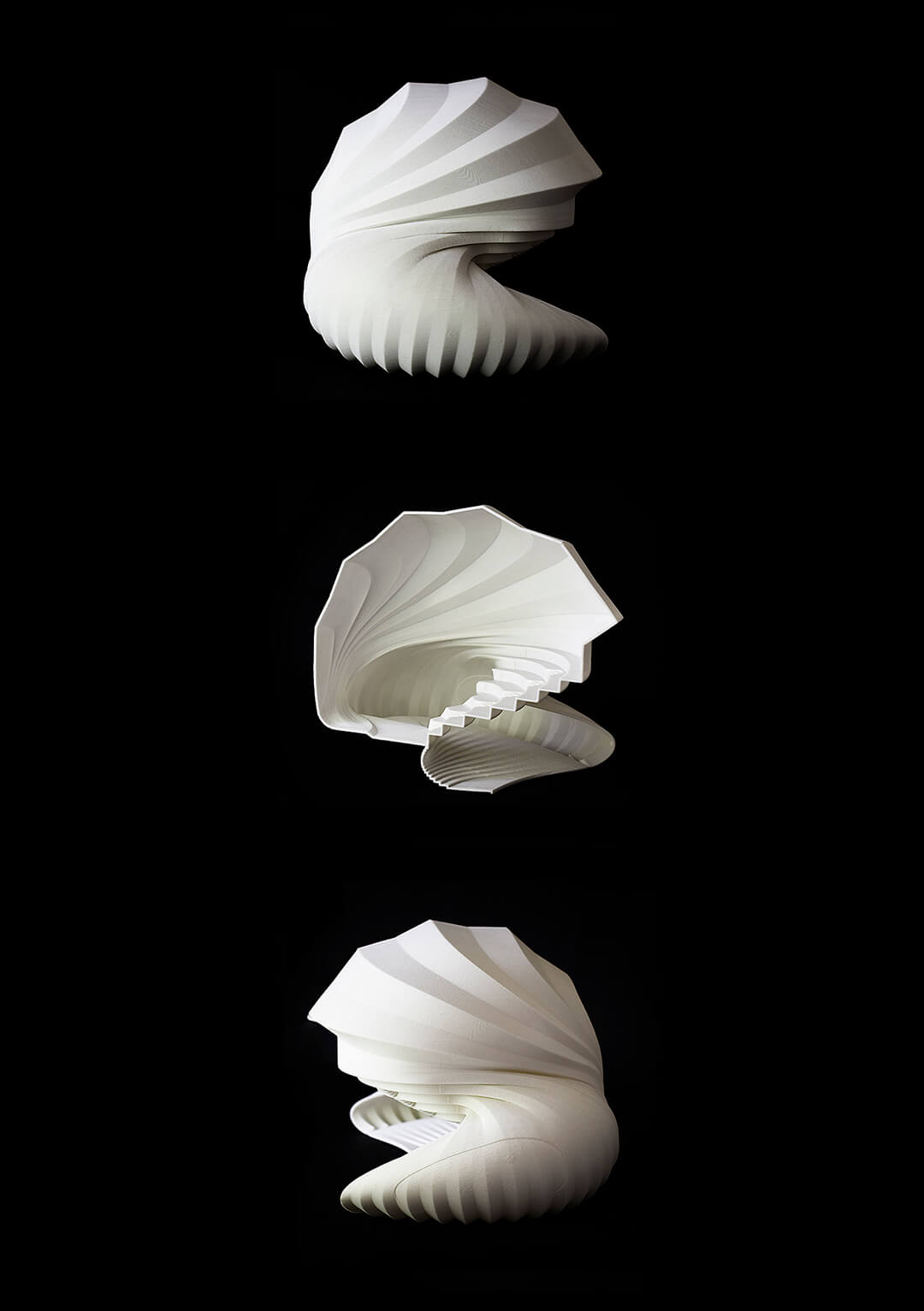
Ayesha: Looking at your book and the Pavilion, which opportunities do we need to scale urgently before it’s too late?
Pawlyn: We need a leap to the next epoch. Gus Speth once said he thought the big problems were biodiversity loss, ecosystem collapse and climate change, and that thirty years of science could solve them. He realised instead that what’s needed is cultural and spiritual transformation. Future generations will be amazed that it took us so long to see that being ‘less bad’ wasn’t enough. Everything we do—building, living in cities, producing materials—must align with life. Otherwise, we’re diminishing future prospects.
That means scaling biomaterials, shifting to a safer palette of elements and making more from atmospheric carbon. Nature shows us how coccolithophores, for instance, regulate carbon by growing skeletons from calcium carbonate and sequestering it in rock. One way nature would address climate change is by making more stuff from carbon. So the question is: How do we make architecture that is not just less harmful, but fully aligned with life? I believe biomimicry offers some of the best ways to do that, because it draws directly from life itself.

by Pranjal Maheshwari Oct 19, 2026
The Mumbai-based architects integrate courtyards, mesh screens and north light trusses to create a dining space that doubles up as a community hub at SR University, Warangal.
by Mrinmayee Bhoot Oct 17, 2026
The Rotterdam-based institute centres the Indian Ocean as a network for exploring material histories and transnational links shaping coastal cultures, positing them as future models.
by Pranjal Maheshwari Oct 16, 2026
At the 2026 Stirling Prize ceremony, Mary Duggan with RUFF Architects, MAKER Architecten and Nakshabid Architects were felicitated for proffering quality housing and social equity.
by Mrinmayee Bhoot Oct 12, 2026
The new Centre for Contemporary Arts, fostering public engagement with art in Uzbekistan, is housed in a tram depot refurbished by the French studio, emulating local craftsmanship.

make your fridays matter with a well-read weekend
Enter your details to sign in
Don’t have an account?
Sign upOr you can sign in with
a single account for all
STIR platforms
All your bookmarks will be available across all your devices.
Stay STIRred
Already have an account?
Sign inOr you can sign up with
Verification link sent to check your inbox or spam folder to complete sign up process
Tap on things that interests you.
Select the Conversation Category you would like to watch
Please enter your details and click submit.
Enter the 6-digit code sent at


Michael Pawlyn on regenerative design and a planetary vision for architecture
by Ayesha Adonais | Published on : Oct 23, 2025


 Sign in with Google
 Sign in with email
What do you think?