Art06 mins. read
Automatons and lit mushrooms enchant at Mika Rottenberg’s Basel retrospective
by Hili PerlsonAug 20, 2024



by Pranjal MaheshwariPublished on : Jul 23, 2026
“Why should public sculptures not talk,” asked electroacoustic sculptor Benoît Maubrey. But where did he say this, and to whom? Perhaps to himself, or out loud, in a public space, much like how his sculptures do. The 74-year-old Berlin-based multidisciplinary artist has been building speaker sculptures for more than three decades now, placing them in public areas, festivals and events across different parts of the world. Maubrey considers air as his canvas and sound as pigment—an approach that manifests in multiple ways, across sound installations, sculptures, performances and clothing.
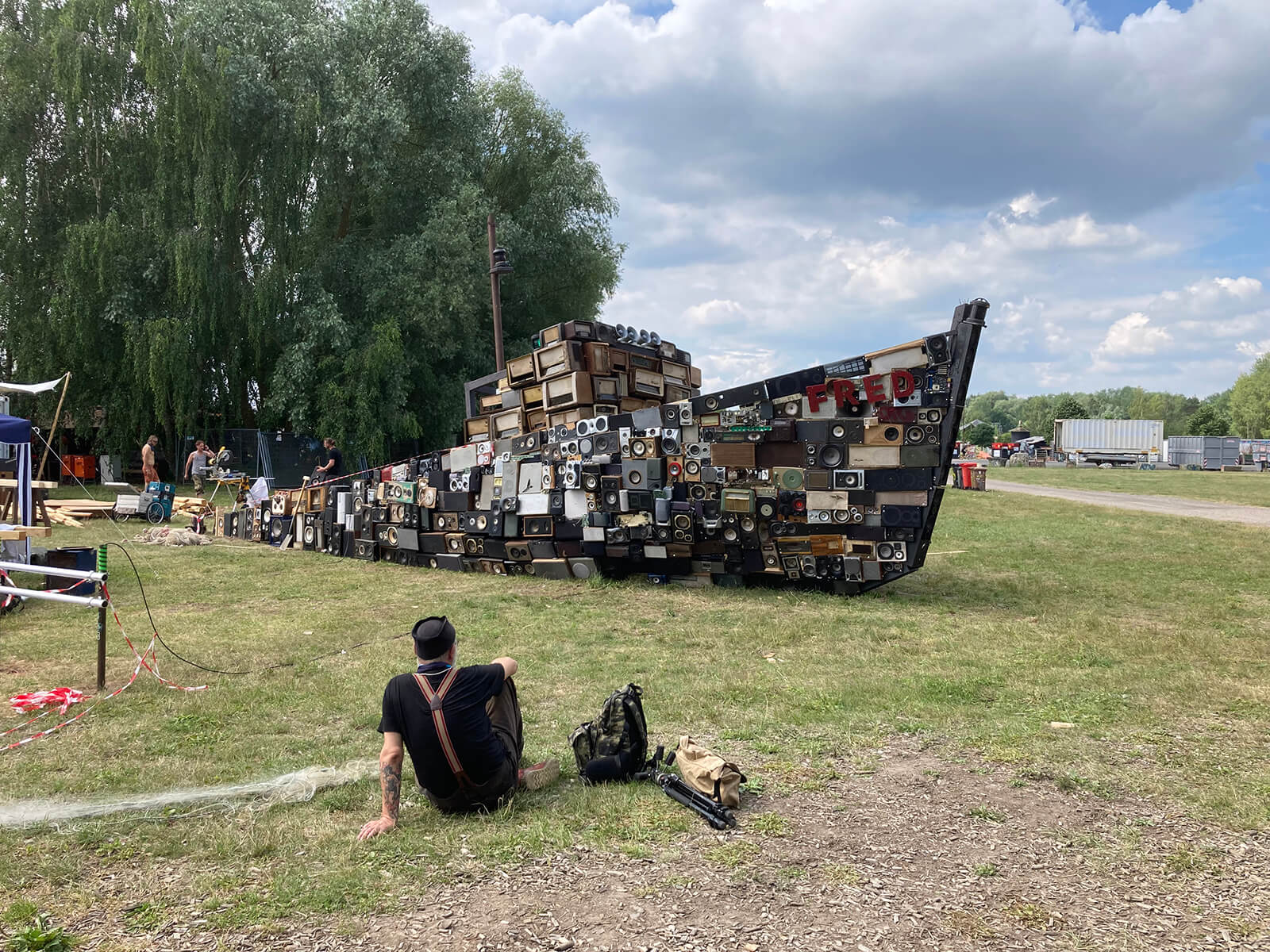
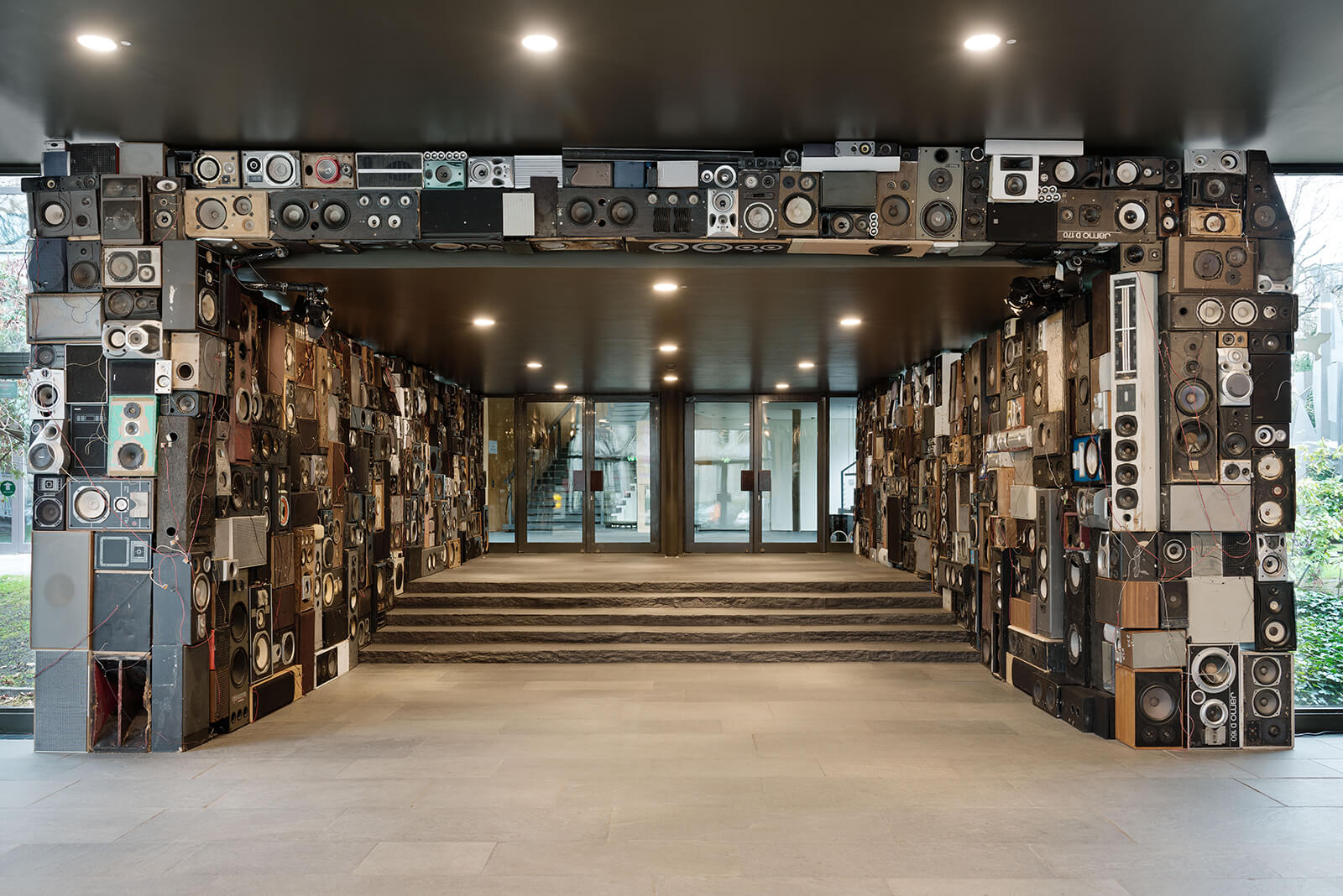
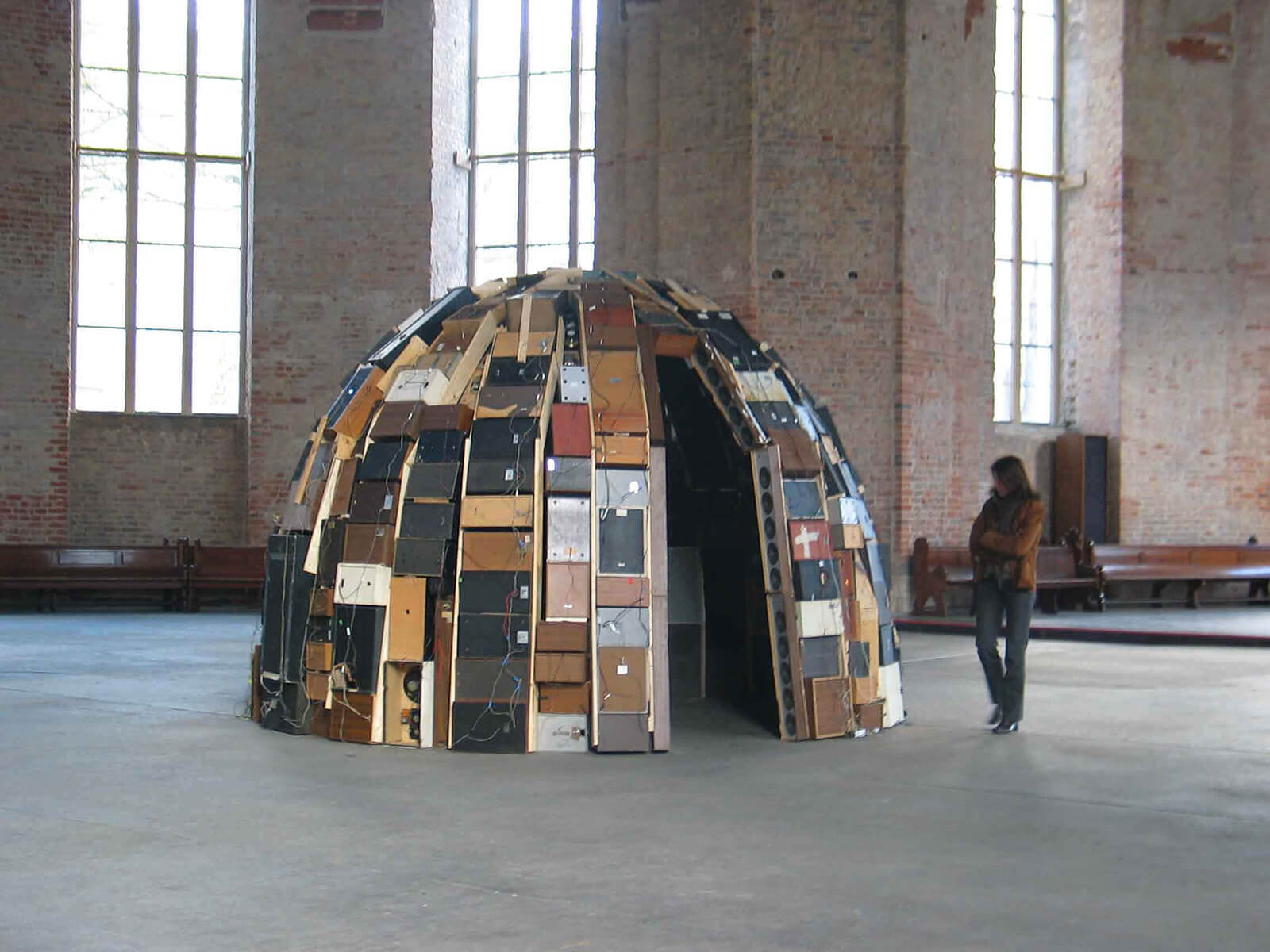
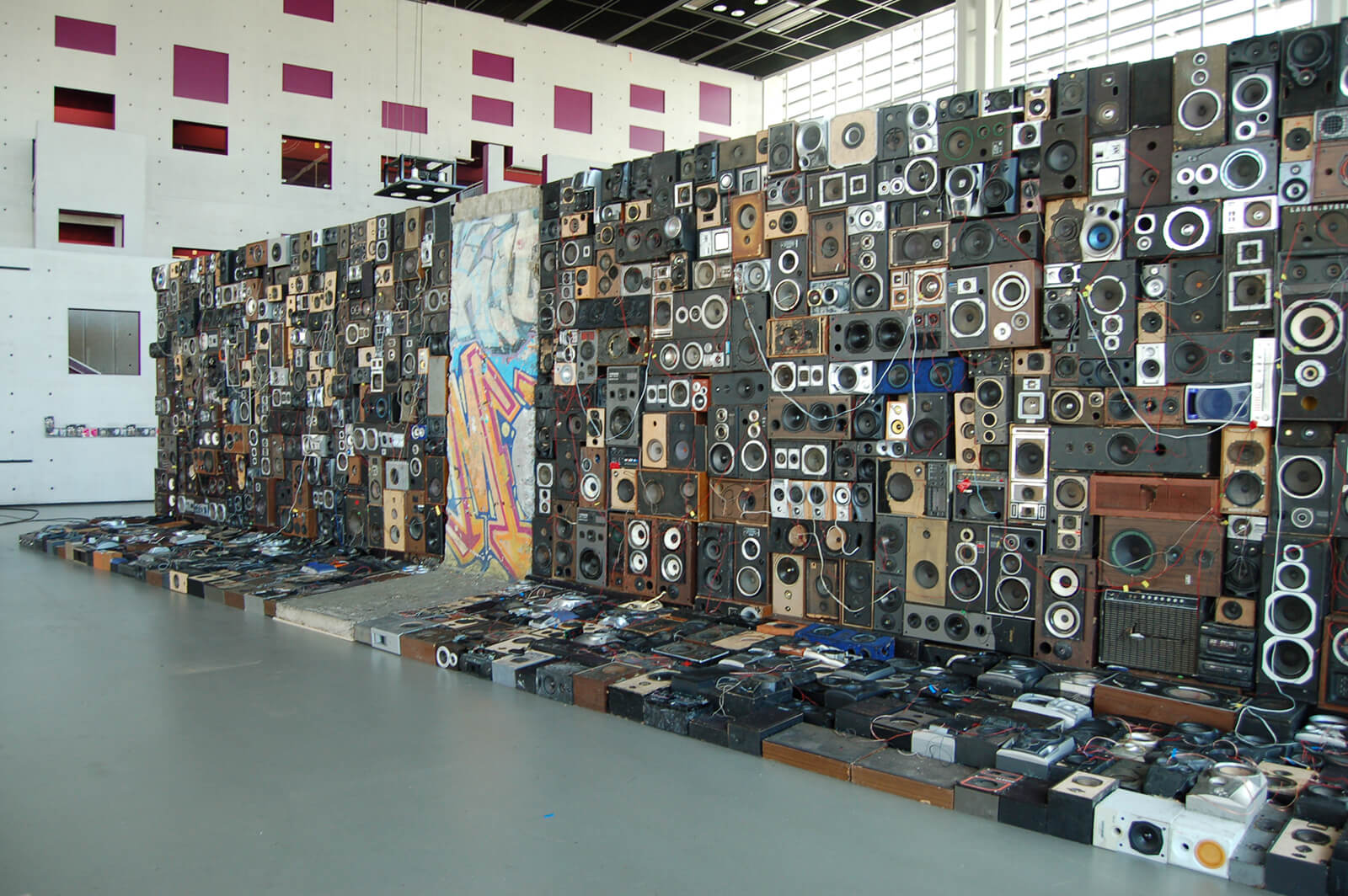
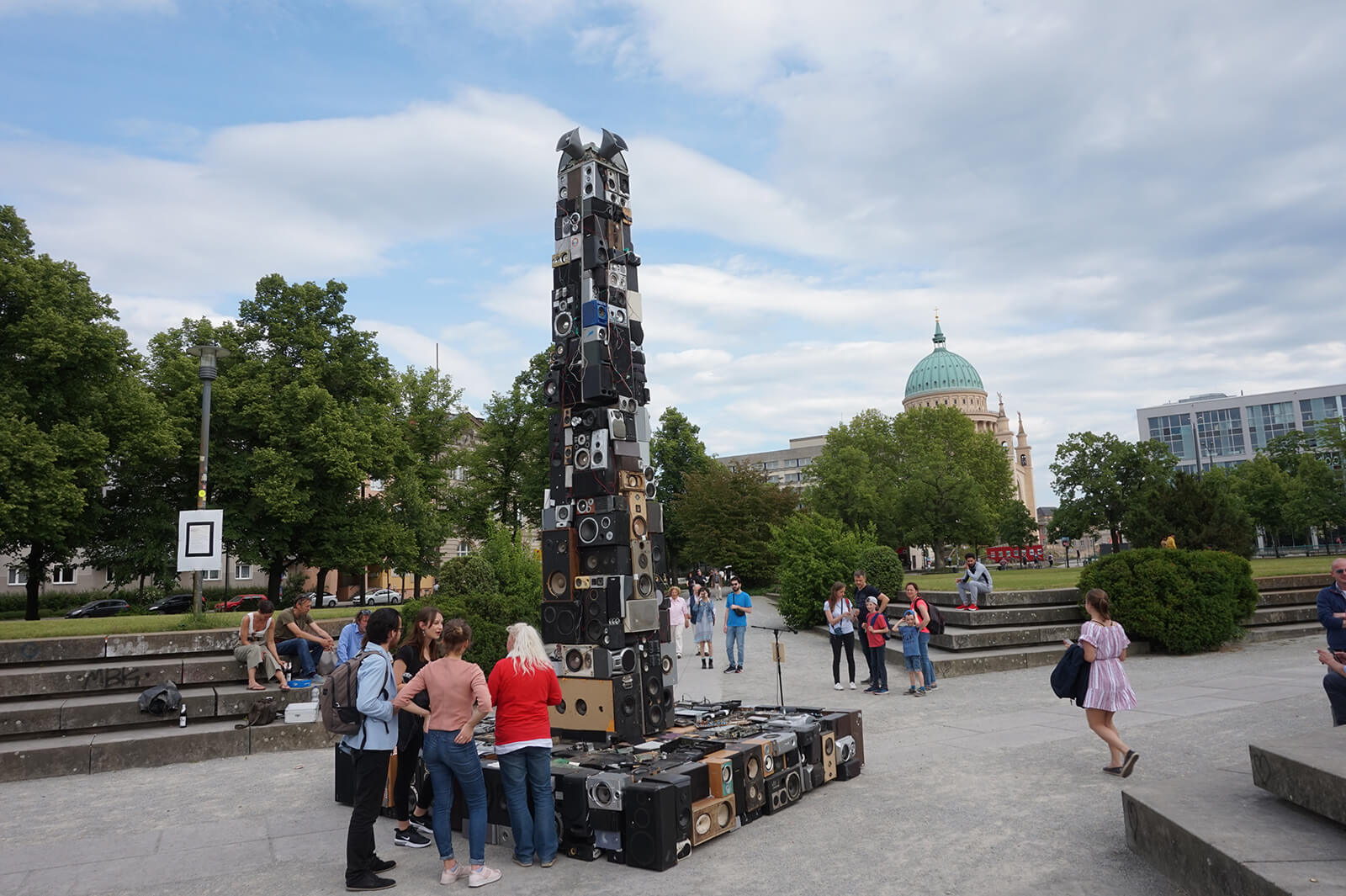
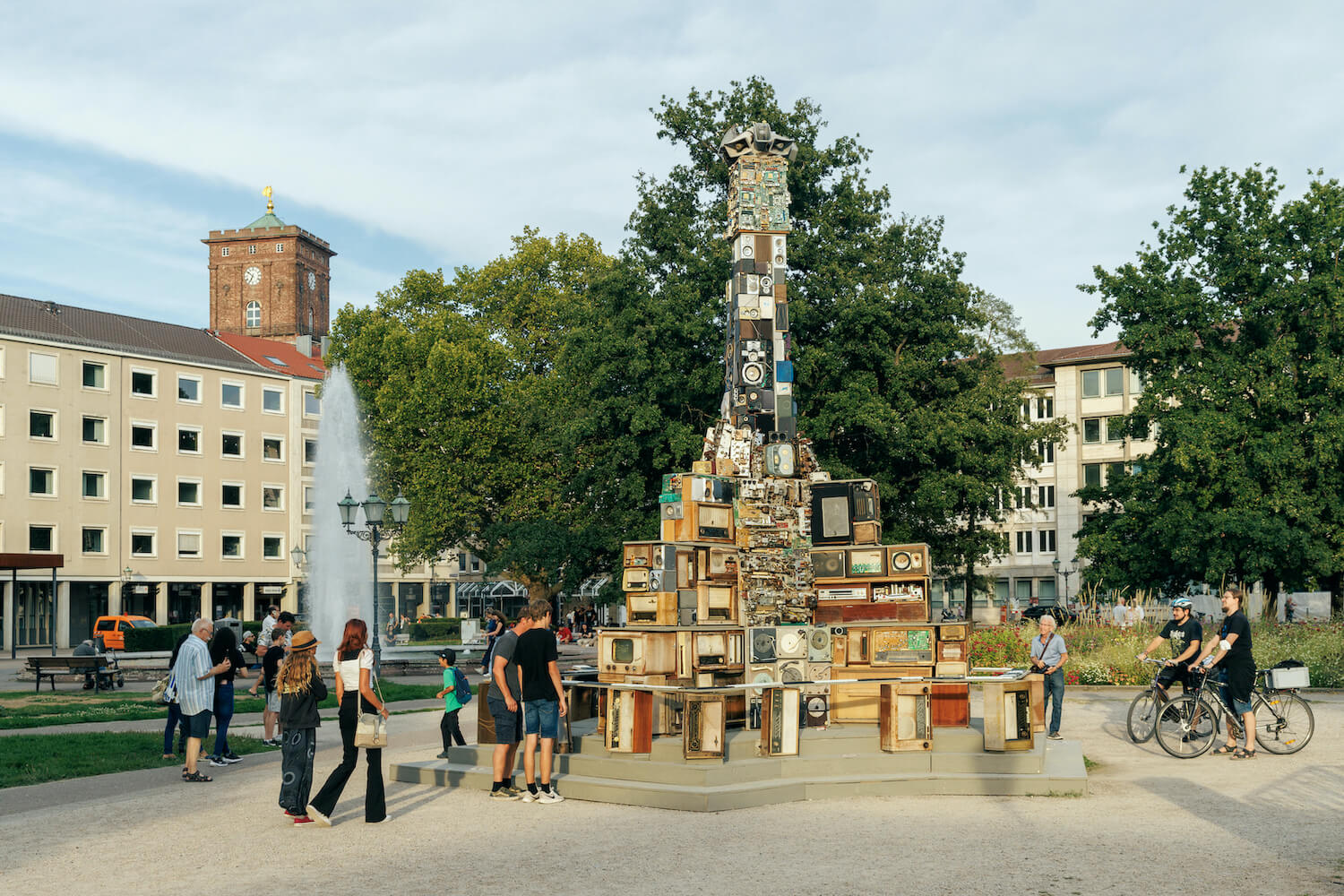
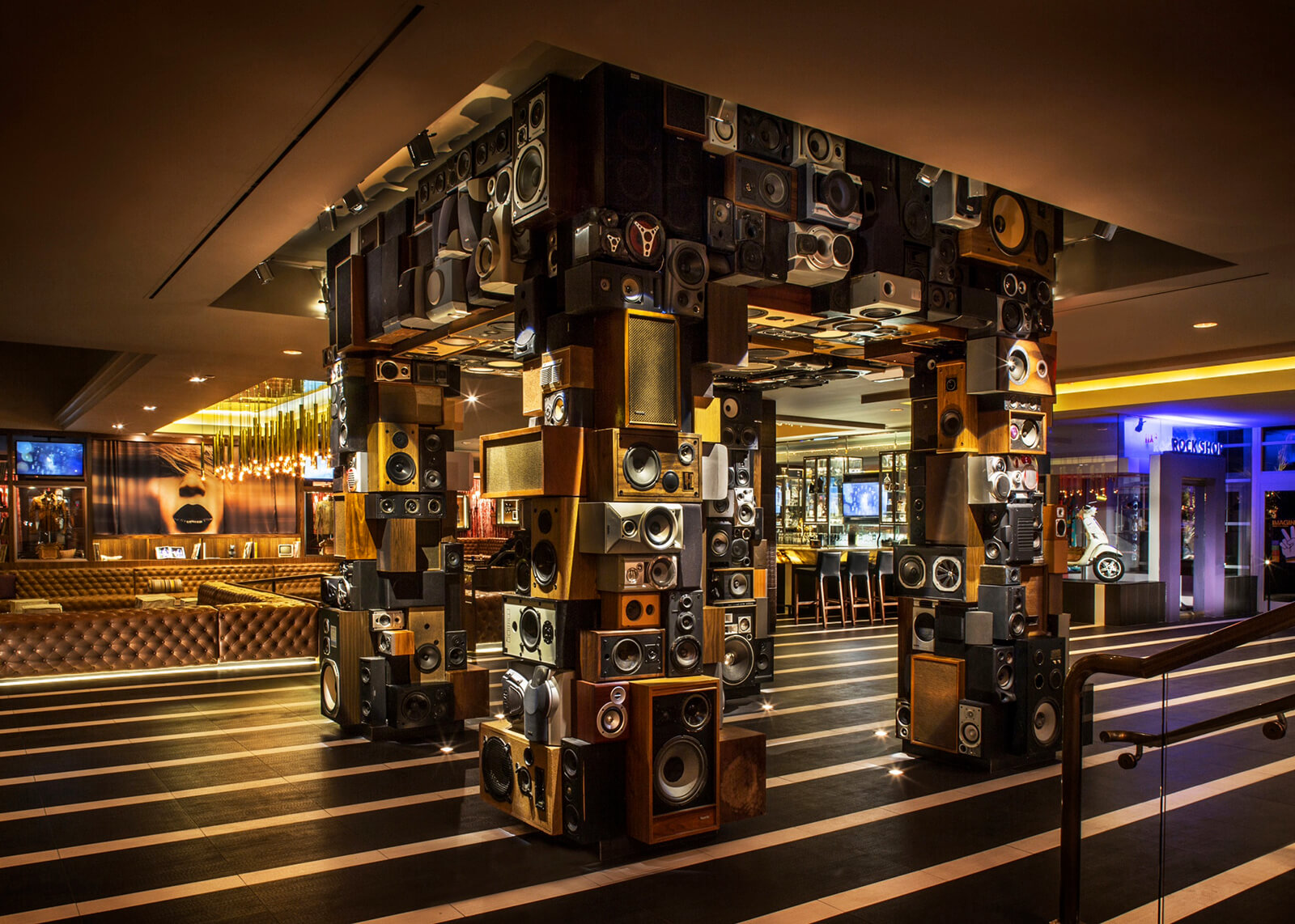
The interactive sculptures are assembled as inhabitable architectural forms—including gateways, amphitheatres, temples and igloos—and are equipped with amplifiers, mixing boards, microphones, Bluetooth receivers and even telephone answering systems. This gives people an array of opportunities to interact with the sculptures: they can stream music directly from their phones, speak through them by calling the built-in telephone system, or connect a microphone for live interaction. The installations feature a constellation of loudspeakers, of diverse sizes and lifespans, recovered from local scrapyards, donations and recycling agencies, and assembled by workers and carpenters from within the region. Maubrey calls this process a ‘democracy of ohms’ that renders the public installations communicative, cooperative and collaborative.
Curious to understand what drives him to keep creating, even 15 years after his purported retirement, STIR engaged Maubrey in a conversation that unfolded across his decades-long journey of harnessing the ‘goodness’ of people and amplifying their voices through his work. Edited excerpts follow.
Pranjal Maheshwari: How creatively inclined were you as a child? Could you have imagined that your practice would eventually take the form it has today?
Benoît Maubrey: Apparently, from a very young age, I was really interested in disturbing public spaces. I was actually a writer, and then I got involved with art, and then one day I discovered that I liked working outdoors. At the very basic level, I wanted to work with public spaces. The question was, what kind of medium does one use in order to work in those spaces?
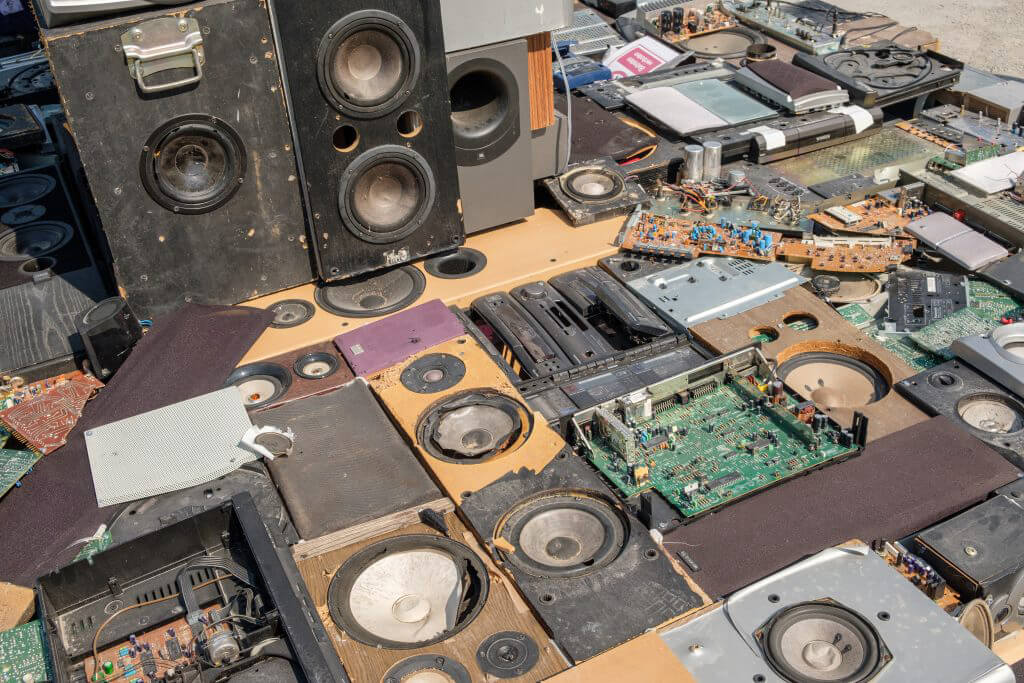
I eventually decided that loudspeakers are a good way to work in public spaces because it's art that's perceived via the ear. Especially upcycled loudspeakers: they are beautiful, they have patina and people develop associations with electronics.
Pranjal: You’ve probably been asked this a lot: Why did you shift your focus from visual art to acoustics? What potential did you find in sound as a medium that pigments could not achieve?
Benoît: When you're painting, you're using canvas and pigment. I use air [as canvas], and sound as pigment. It's a very basic transformation of the medium. And also, when you're a young artist, it's a lot cheaper to use. So essentially, I'm spreading my pigment through the air in these public spaces.
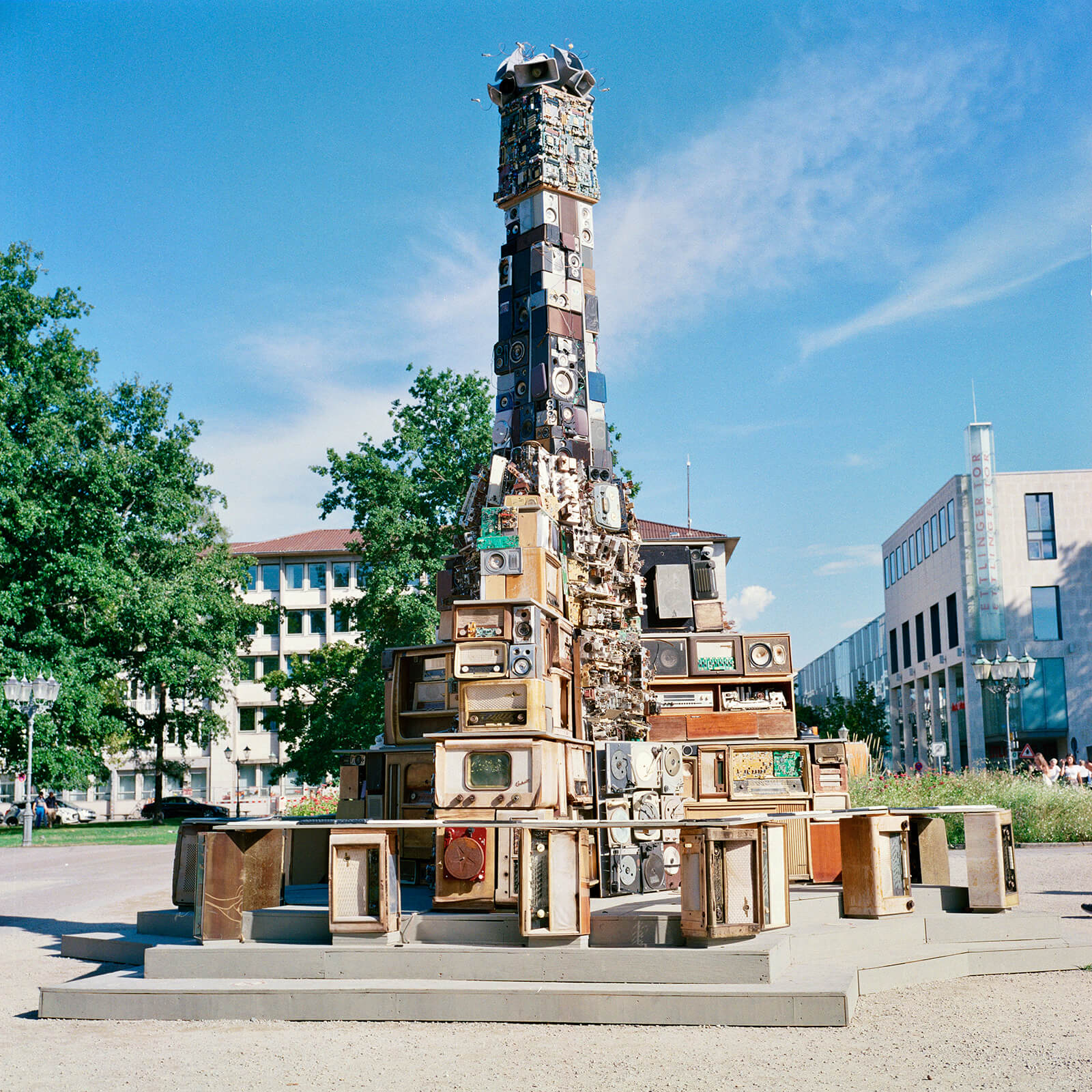
What I particularly enjoy is the fact that people express themselves through the loudspeakers. Everyone's happy, and they just love playing their music through these gigantic monumental structures that are usually site-specific. Also, why should public sculptures not talk? Why should public sculptures be made of concrete, cement, wood or whatever they're built of? Why not build them out of modern junk that our civilisation produces, which is loudspeakers and electronics in general? What's better than to allow the local populations to involve themselves with the sculpture?
Pranjal: How did you first begin working with loudspeakers?
Benoît: I was actually walking through a department store one day in former West Berlin when I heard these sounds coming through a loudspeaker. I thought, that's an interesting way of working because the air is there, for free, and if I just get my hand on a microphone, I can talk through the whole loudspeaker system inside this store. Of course, since I was a little-known artist, people did not allow me to use loudspeakers.
So I started building wearable loudspeaker systems. I was building audio clothes, and I had a lot of different projects. One of them that became really famous was the AUDIO BALLERINAS. It was not just an idea for dancers, but about using solar energy to power the audio clothes. We used the tutus and put solar cells on them, and that turned into a group of dancers taking over public spaces and sharing sounds simply by moving around. Without being attached to a stage, they interact with the environment through various kinds of sensors. It has become a very successful project that travels around the world. We are now building the third generation of audio tutus.
Anyway, [BALLERINAS] supplied me with a certain amount of success. I was soon offered a residency in Hull Time Based Arts in England, who wanted to have the AUDIO BALLERINAS. So I said, okay, if I bring the AUDIO BALLERINAS, I also want to be able to build a sculpture. So I came up with the idea of the AUDIO IGLOO. The structure held itself together just via the loudspeakers, without the need for a substructure. We built the first AUDIO IGLOO in 1999, and I realised, hey, this is fun. This is great. This is trash that makes sound! We used radios with white noise playing through them; it was recycling loudspeakers, but also recycling invisible sounds from the air. We gathered the electronics from the recycling systems, and then, after the festival, took them apart and put them back into the system. I found that to be really neat.
Pranjal: You call your process 'a democracy of ohms'. Can you tell us more about what makes it democratic?
Benoît: We get loudspeakers of all kinds, and I don't choose. I just accept all of them. When you get into electronics and technical stuff, each loudspeaker has a resistance, which is called ‘ohms’. Through our system, we can connect a series of parallel loudspeakers, and we can control the ohm-age. So when you hear the sculpture, it works as a single unit. That's why I say democracy of ohms, because they share the ohms between them, and they all actually play.
What I like is that my sculptures are democratic. Anybody can use them. Sure, we have certain limits and systems for controlling the sound level, but it's also a democracy: a democracy of structures, a democracy of people, a democracy of electronics.
The important thing is for people to have a monument, an edifice they can see and talk through, and enjoy. – Benoît Maubrey
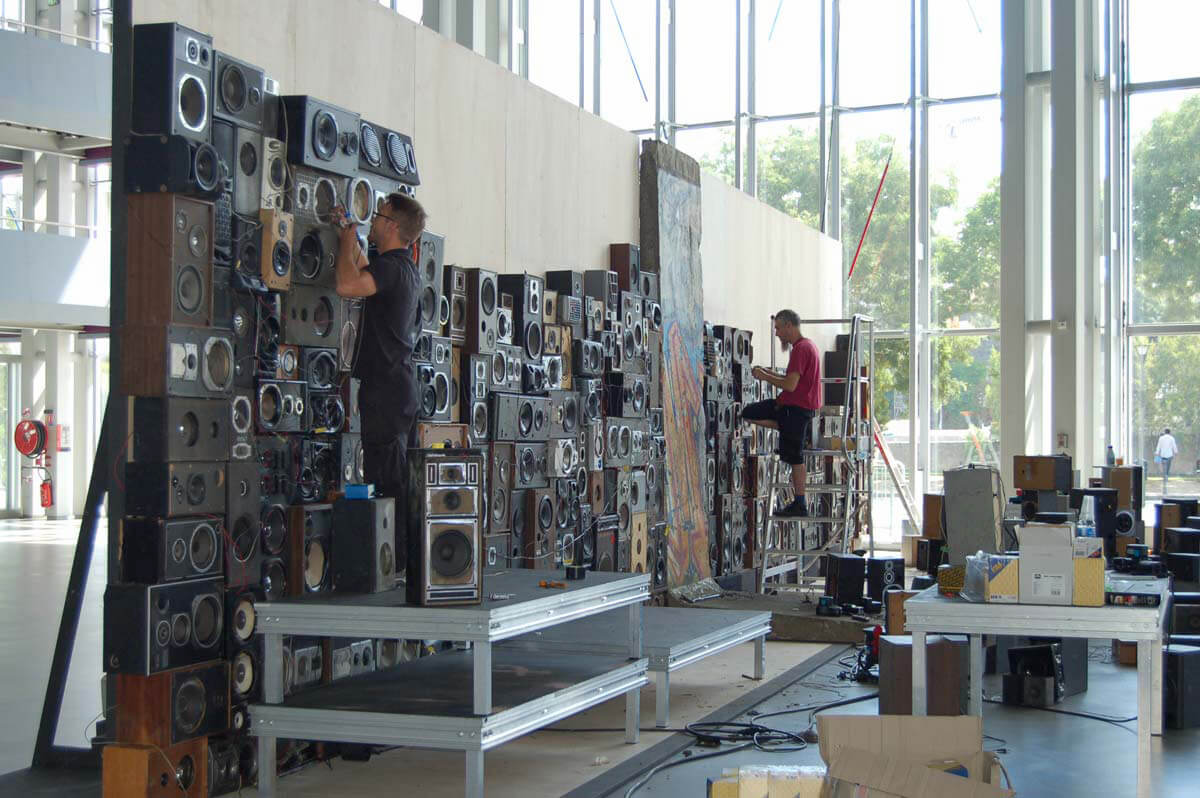
Pranjal: Could you describe how a typical installation develops structurally—from initial ideas to fabrication, wiring to the final assembly? At what point does collaboration with engineers or fabricators become essential?
Benoît: I have a team of electronic guys; I call them ‘pirates’. They fit in perfectly with my ideas and projects. Every time we look at a sculpture, we wonder what more we can do, what can we integrate? In the beginning, we used to work with Walkmans for audio clothes. Instead of carrying ghetto blasters, we'd just use Walkmans, a little amplifier and a couple of batteries. Of course, now Walkmans have disappeared. Now there are iPhones. [Wireless connectivity using] Bluetooth is also an example. So we integrate all these electronics into our sculptures. It's just not being used egocentrically through earphones, but through the sculptures that let sound explode in public spaces.
I studied English literature, so that's how much I know about electronics. But I've found great pirates who love bringing these pieces to life. I'm also just working with the times and using what's available.
Pranjal: How do you conceive the forms of your sculptures? Is it always drawn from the site context, or are there some external influences as well?
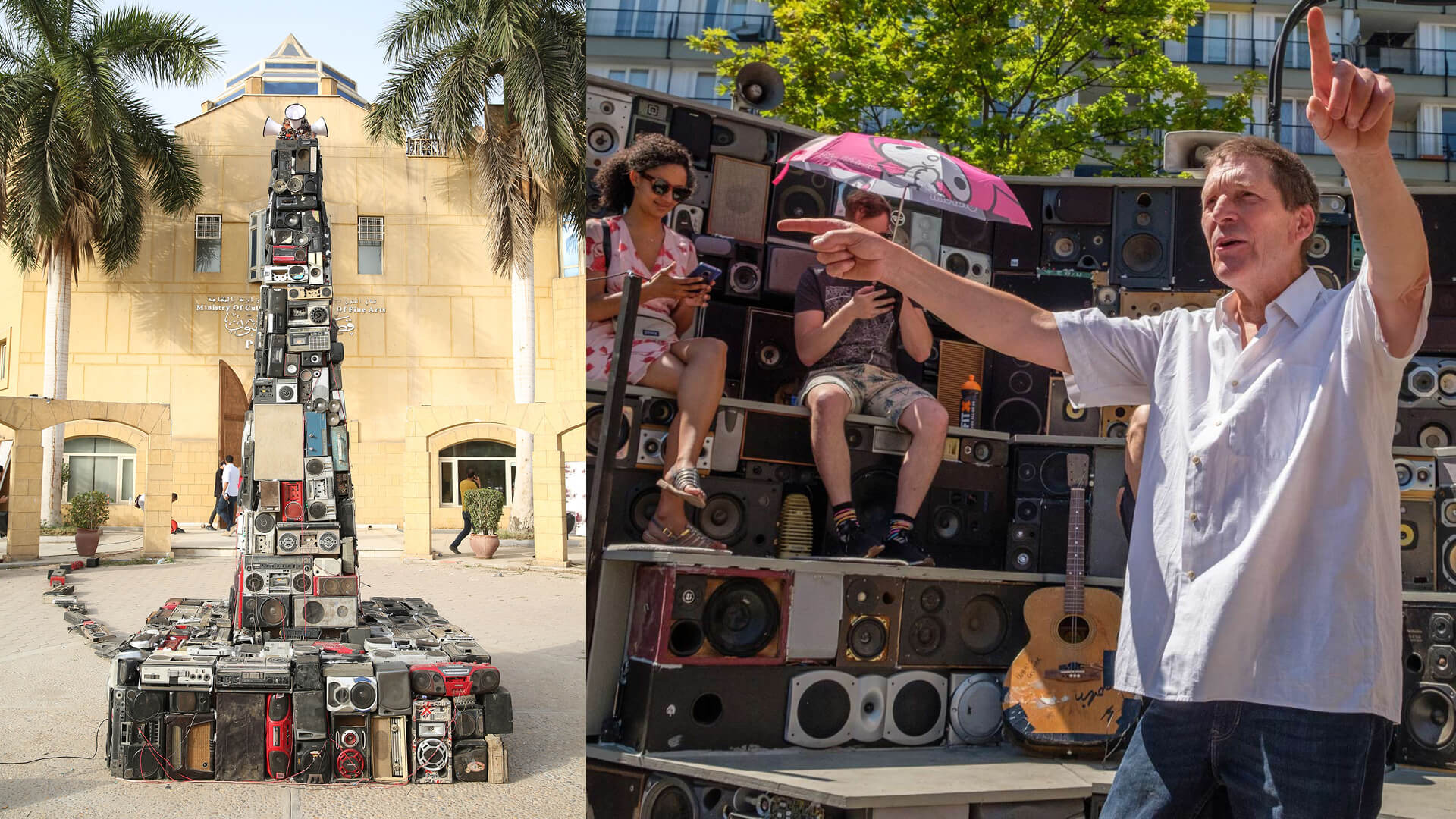
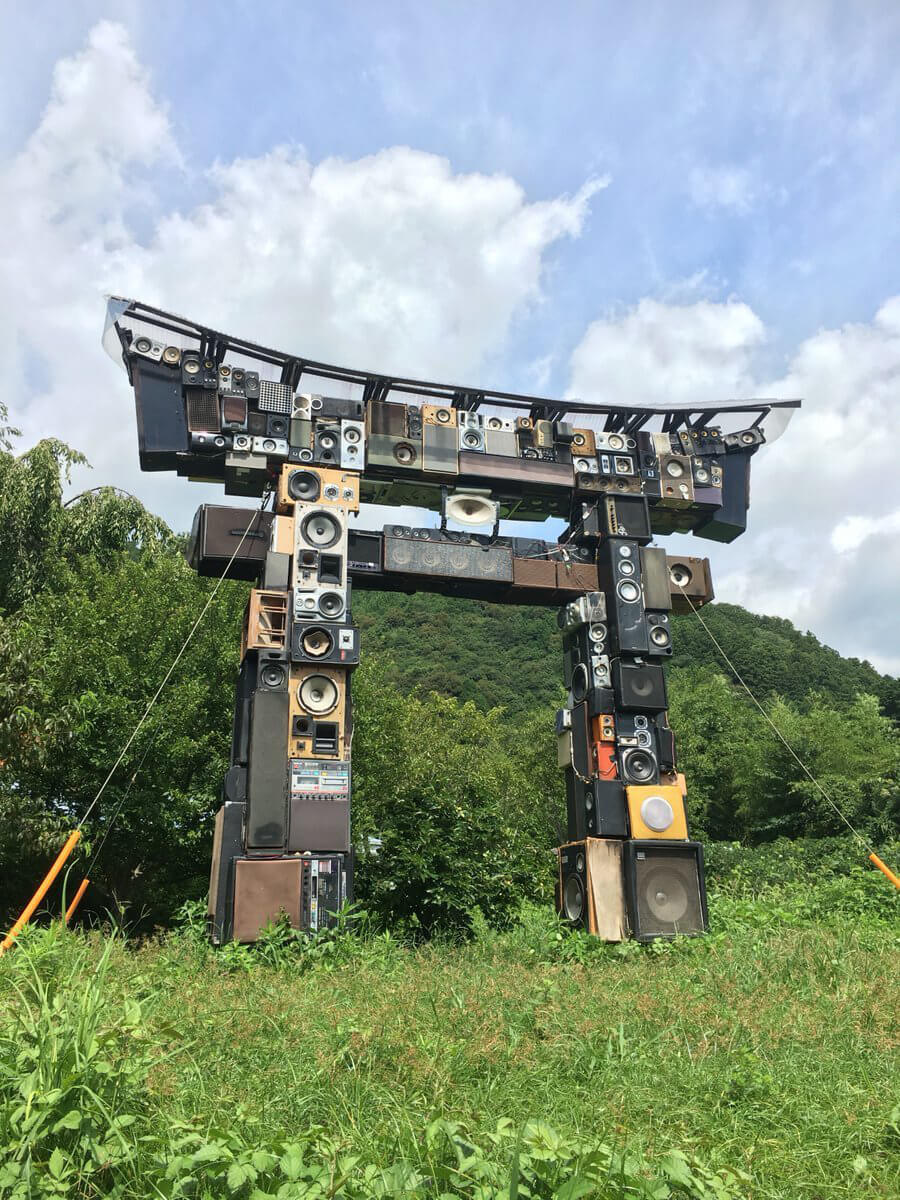
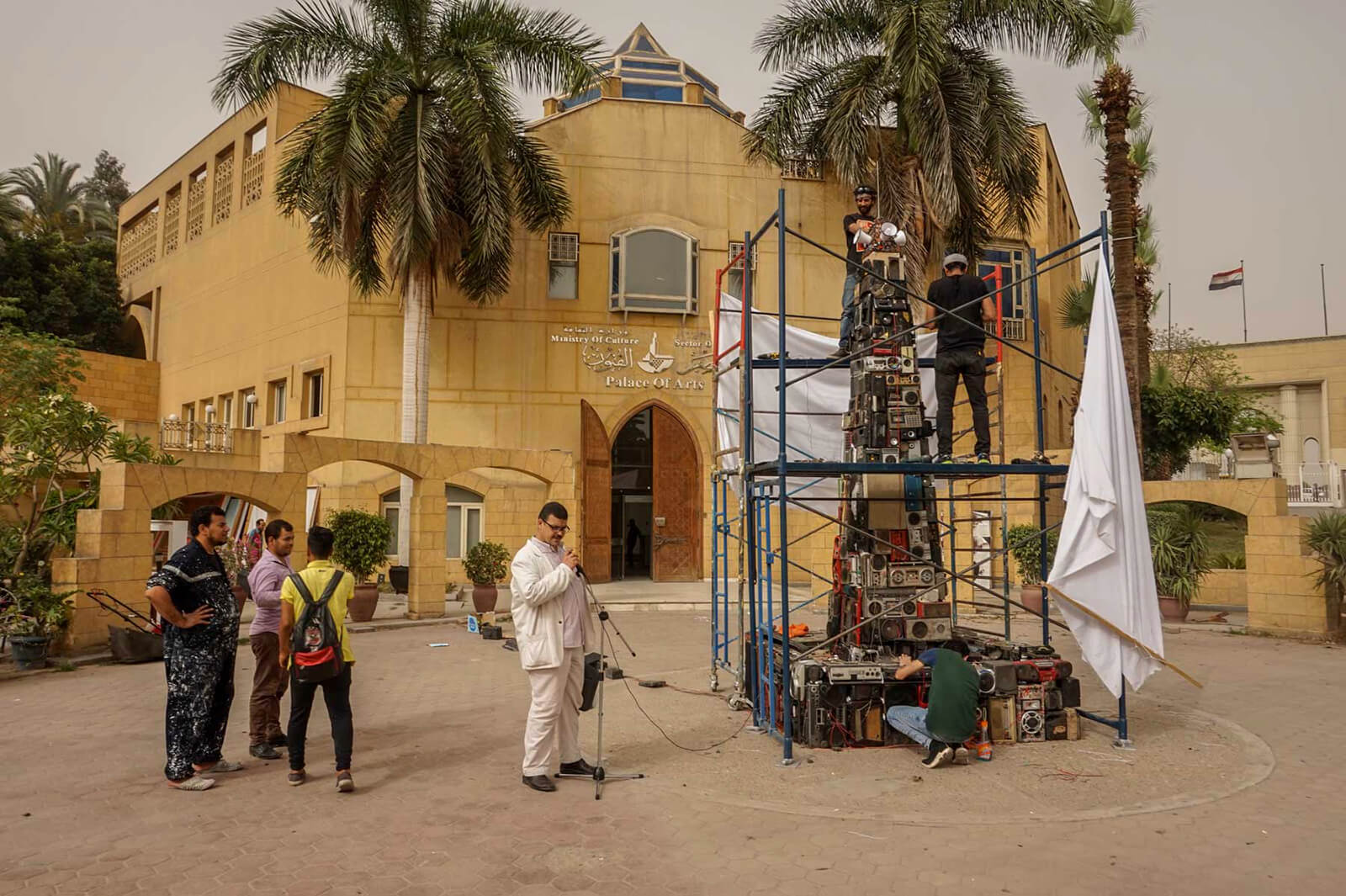
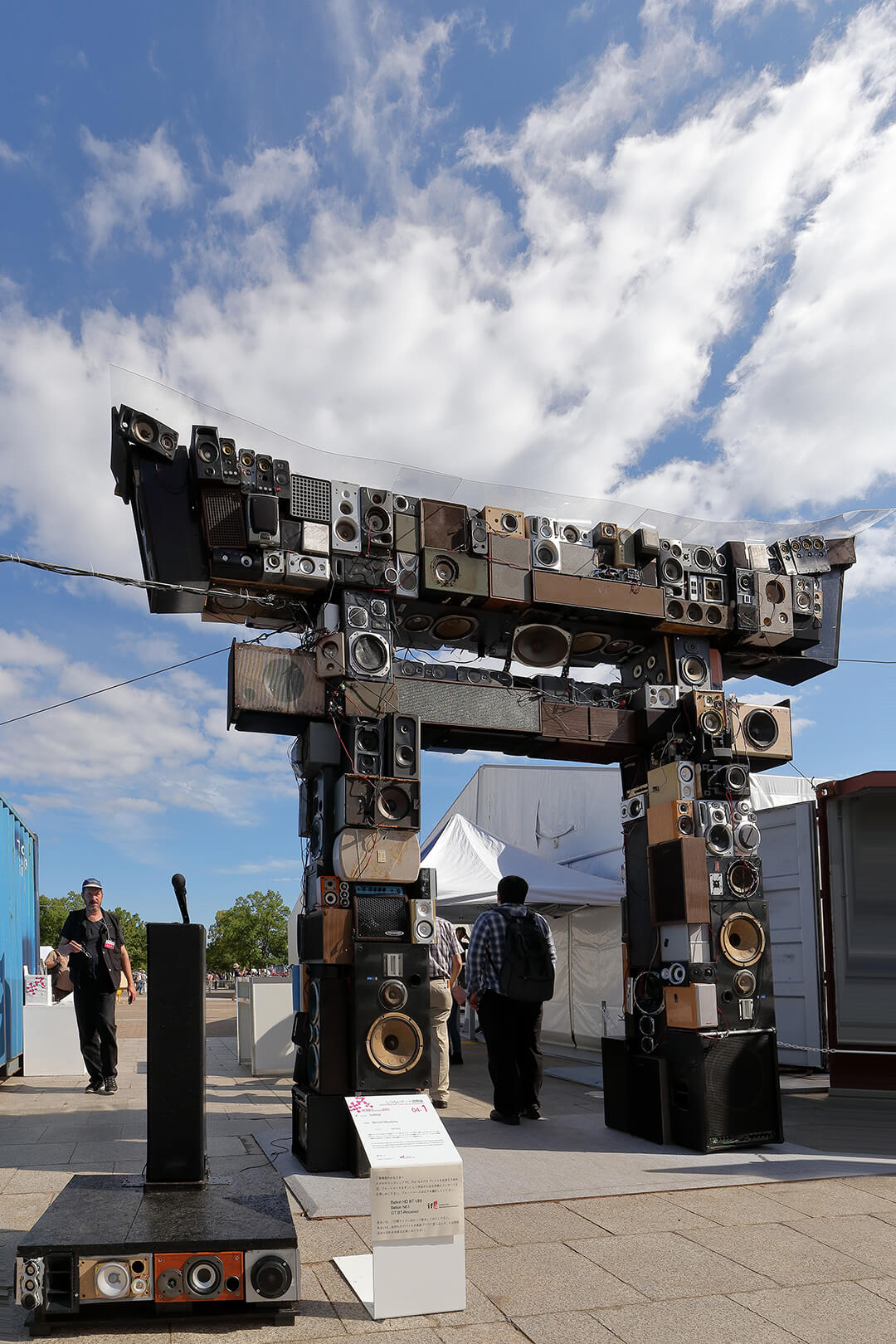
Benoît: Generally, I have brochures and concepts. I look around for competitions for sculptures or for public spaces, and I apply. Or people discover me on the internet and then commission a sculpture. For example, we built the KARAOKE TORII gate in Japan on the site of a former torii gate. In Cairo, during a preview visit, my taxi driver suggested I build an obelisk, because that's their national symbol. For ARENA, we decided that it would be great to build something for festivals that would be easily transportable. Then we could work with festivals and get rich and happy for the rest of our lives, which I'm still waiting on! (laughs)
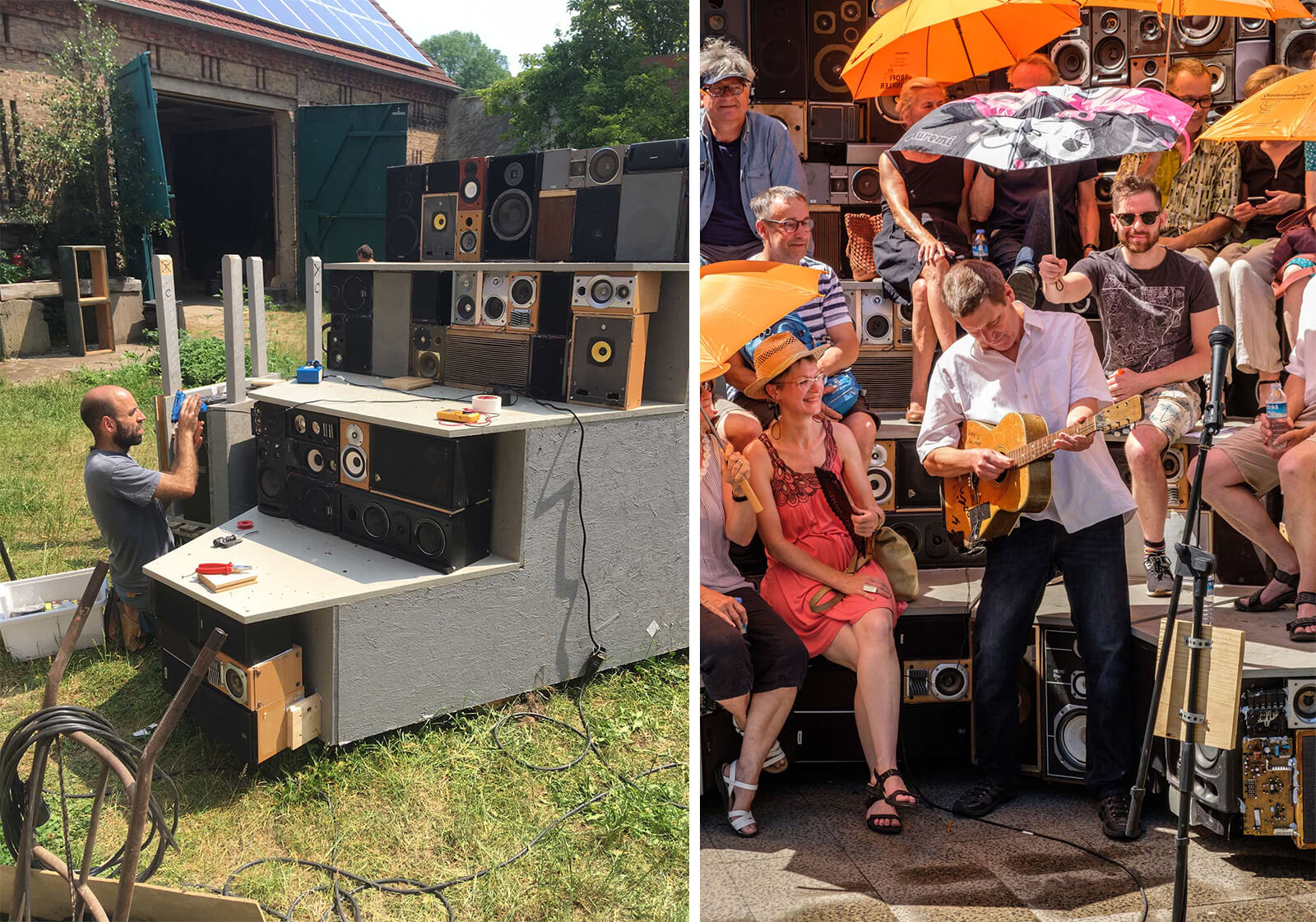
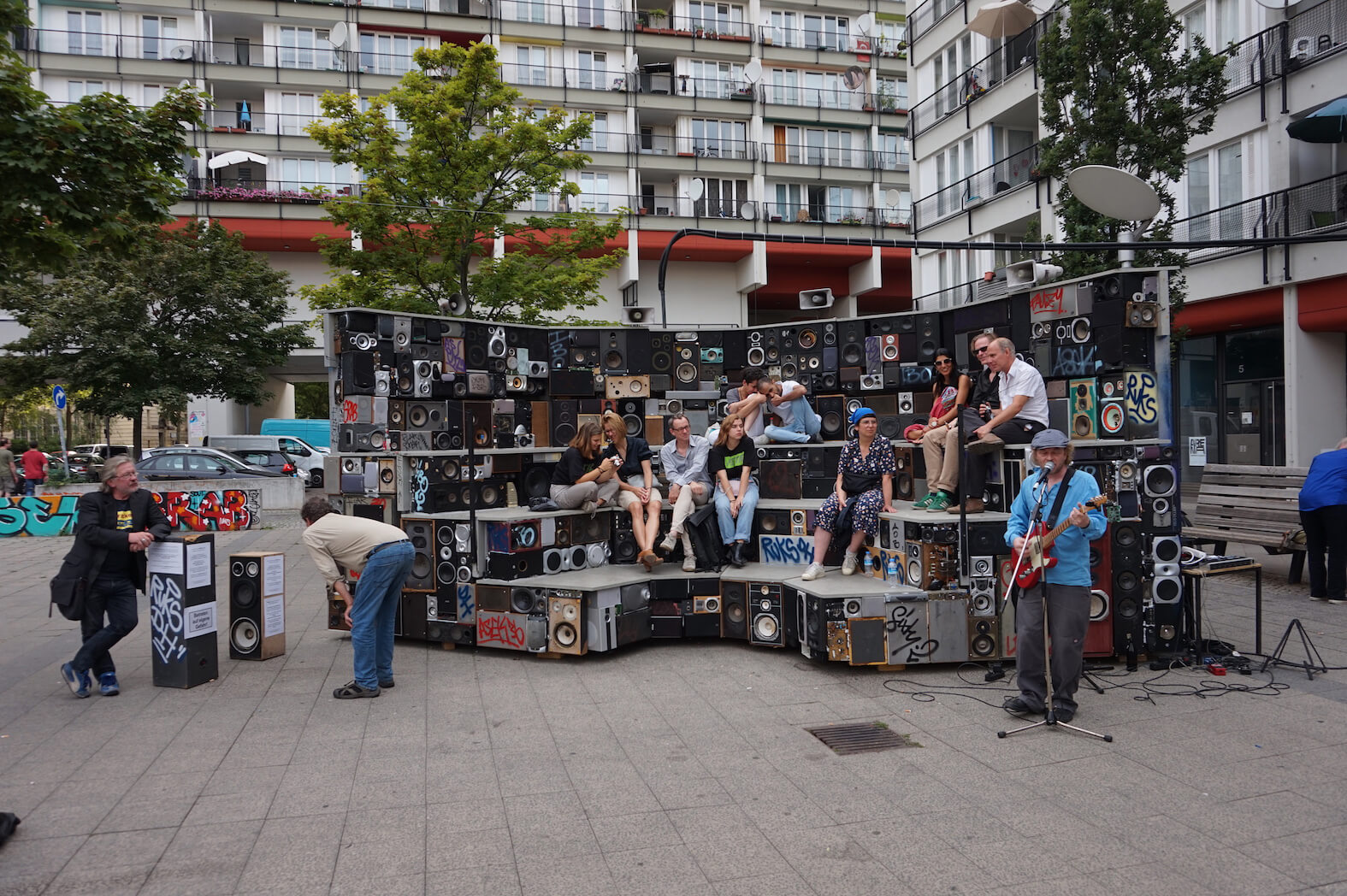
I work on a site specifically to create things. I don't come with a standard design. ARENA is not working that way, but when it was first built, in Kitchener, Canada, it was with their local carpenters and a collection of loudspeakers. The sculpture was then transported to Quebec for a festival, and now we're considering getting it down to Washington. But generally, I like to start from scratch. The important thing is for people to have a monument, an edifice they can see and talk through, and enjoy.
Pranjal: When using upcycled speakers to produce fully functioning sound systems, how do you ‘untangle’ the many technical and practical challenges that arise in the process?
Benoît: There's another theme, really, that we're diminishing the carbon footprint by recycling e-waste into sculptures and giving these old loudspeakers a new life. I live in a little village, about an hour outside of Berlin, with 150 inhabitants. Sometimes when I wake up in the morning and look out on the street, there's a little pile of loudspeakers with a little message attached: ‘We're looking for a home.’ My barn is a home for homeless loudspeakers, so people bring them to me, and that's why I have 3,000 of them. The thing is, almost all loudspeakers work. There might be a faulty amplifier, but you could throw a loudspeaker into a pool of water, take it out, dry it and it'll still work because the membrane's okay. It is a very friendly material to work with.
I have been retired for the last 15 years, but you don't really retire as an artist. I have just learnt to deal with that. – Benoît Maubrey
Pranjal: What do you find to be the most liberating aspect of your work?
Benoît: It's all about energy. I'm a certain age right now. I look at a project, the people, the resources, and I think…how do I get all this together? It has to be bundled together as energy. I guess I'm an energy artist. Energy is important to our lives. When I see that there's energy and cooperation, I agree to do the project. And I leave it up to the people to find the money and other resources. In the end, it's all about energy and how we use it for positive things. What else are we gonna do in our lives?
Pranjal: And the most frustrating?
Benoît: Money. You can agree on everything, but as soon as money gets involved, it can get very frustrating. Unfortunately, the whole world is run by money. I try to keep away from it, but money is always the big problem. We should not lose sight of the fact that energy is what is going to create the beautiful things in this world.
Pranjal: Over the last many years, what have been some of the best, or perhaps bizarre reactions of people who have interacted with your sculptures?
Benoît: What's great about the ARENA is that people use it not just to talk but also to sit on. And I've seen people even get married in front of these structures. I've seen people on dates, just sitting there and kissing each other. They consider it normal to sit on a bunch of loudspeakers. Whether they use it or not is another question.
Pranjal: What do you feel is most lacking in the public realm today, and how, if at all, does your practice seek to respond to or address that absence?
Benoît: In the beginning, I was a little worried about letting people talk directly into public spaces. But what I've learned after having built a certain number of these things across the world is that people are inherently good. They're using their energy and expressing it through the sculptures. They're mesmerised at being able to play music through these monumental sculptures. People can also talk, although only for three minutes. We have an SD card at the end with a record of around 400 calls. It's basically people really enjoying themselves and getting poetic. Sometimes bands come and play through them.
If you build the sculpture with the local people, then it actually belongs to them. I think this is what's very unique about it: I'm using and spreading the energy of the people through the sculptures.
Pranjal: What is NEXT for you?
Benoît: There's this Washington project with grants for art in public spaces. Most of the work happens way in advance because you have to talk to local workers, etc. Then we have these people in Utah who want to build a mountain resort in the middle of the desert. Then the people in Kitchener who built the ARENA 10 years ago want it back. It's a local arts community celebrating its 25th anniversary. It needs to be renovated, and should all be ready by September. I'm so delighted by the fact that the people, from their own experience and knowledge, asked their local population: We want the ARENA sculpture back. It was so much fun, and we enjoyed it!
You always need four or five pots on the stove if you expect two of them to work. I have been retired for the last 15 years, but you don't really retire as an artist. I have just learnt to deal with that. People sometimes email me, out of nowhere, and say, “I just wanted to tell you to keep up the good work.” So I'm gonna keep up the good work.

by Srishti Ojha Oct 09, 2026
In his ongoing exhibition, the South African artist creates two post-apocalyptic futures to explore society’s relationship with textiles, patterns and technology.
by Srishti Ojha Oct 07, 2026
The Kolkata-based film festival shone a spotlight on local and international filmmakers and artists who are pushing the boundaries of what a film can encapsulate.
by Samar Jodha Oct 05, 2026
Looking at Ahmed Ali’s photographs of workers and industry within the wider history of industrial photography, from Soviet state imagery and Sunil Janah to Lewis Hine.
by Srishti Ojha Oct 02, 2026
The Indian artist’s exhibition at the Bruce Museum in the US thinks through fundamental questions of humanity by focusing on the Sun and the cosmological timescale.

make your fridays matter with a well-read weekend
Enter your details to sign in
Don’t have an account?
Sign upOr you can sign in with
a single account for all
STIR platforms
All your bookmarks will be available across all your devices.
Stay STIRred
Already have an account?
Sign inOr you can sign up with
Verification link sent to check your inbox or spam folder to complete sign up process
Tap on things that interests you.
Select the Conversation Category you would like to watch
Please enter your details and click submit.
Enter the 6-digit code sent at


Benoît Maubrey’s sound sculptures are an ‘ohmage’ to the inherent goodness in people
by Pranjal Maheshwari | Published on : Jul 23, 2026


 Sign in with Google
 Sign in with email
What do you think?