Art10 mins. read
Performance and lived reality animate Abhishek Khedekar’s Tamasha at NCPA
by Srishti OjhaJun 15, 2026



by Samar JodhaPublished on : Nov 19, 2026
I was still in my 20s when I arrived in Delhi from Boston in the early 1990s. Not long afterwards, a schoolboy arrived, full of enthusiasm, to ask if he could assist me. Bharat Sikka was about 16. He had brought strips of black-and-white 35mm negatives in sleeves, which we held up to the daylight as he spoke about fashion photography. He wanted to assist me in fashion, but I had moved to India to work in publishing and documentary photography. My answer was that learning from me would be a total waste of his time.
There was little around him then to explain where his interest came from. There was no internet, none of the television we have now, no glossies beyond Femina, a women's magazine, and a couple of film magazines. There was little way of knowing what a life in photography, particularly in fashion and popular culture, might even look like. And, yet, he was sure. I had assisted in enough studios in the US to recognise that passion to learn, but at that age, the clarity was entirely his own. One day, he turned up to tell me I should meet Prabuddha Dasgupta, the fashion photographer. Sometime later, the late fashion designer Rohit Khosla introduced me to him.
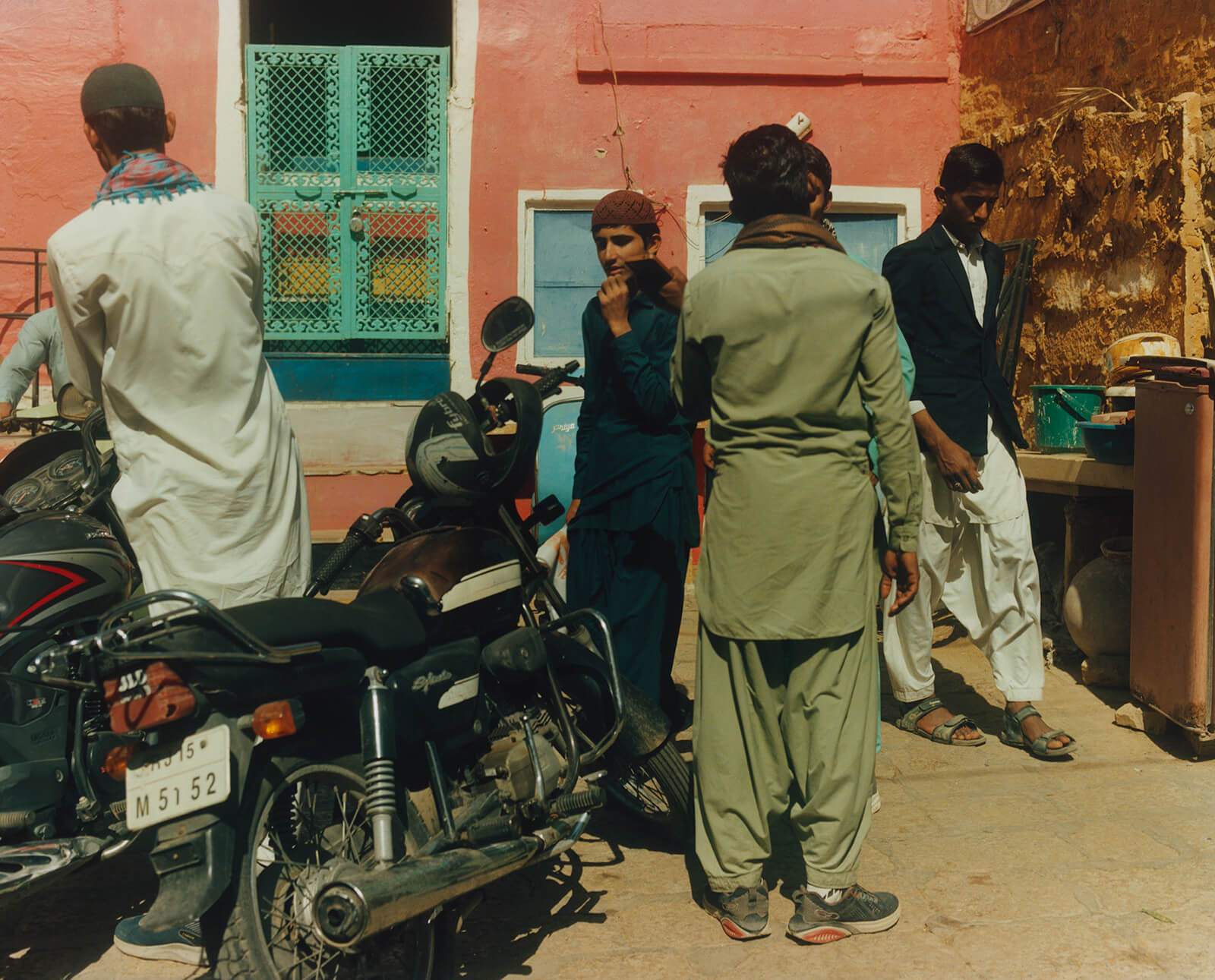
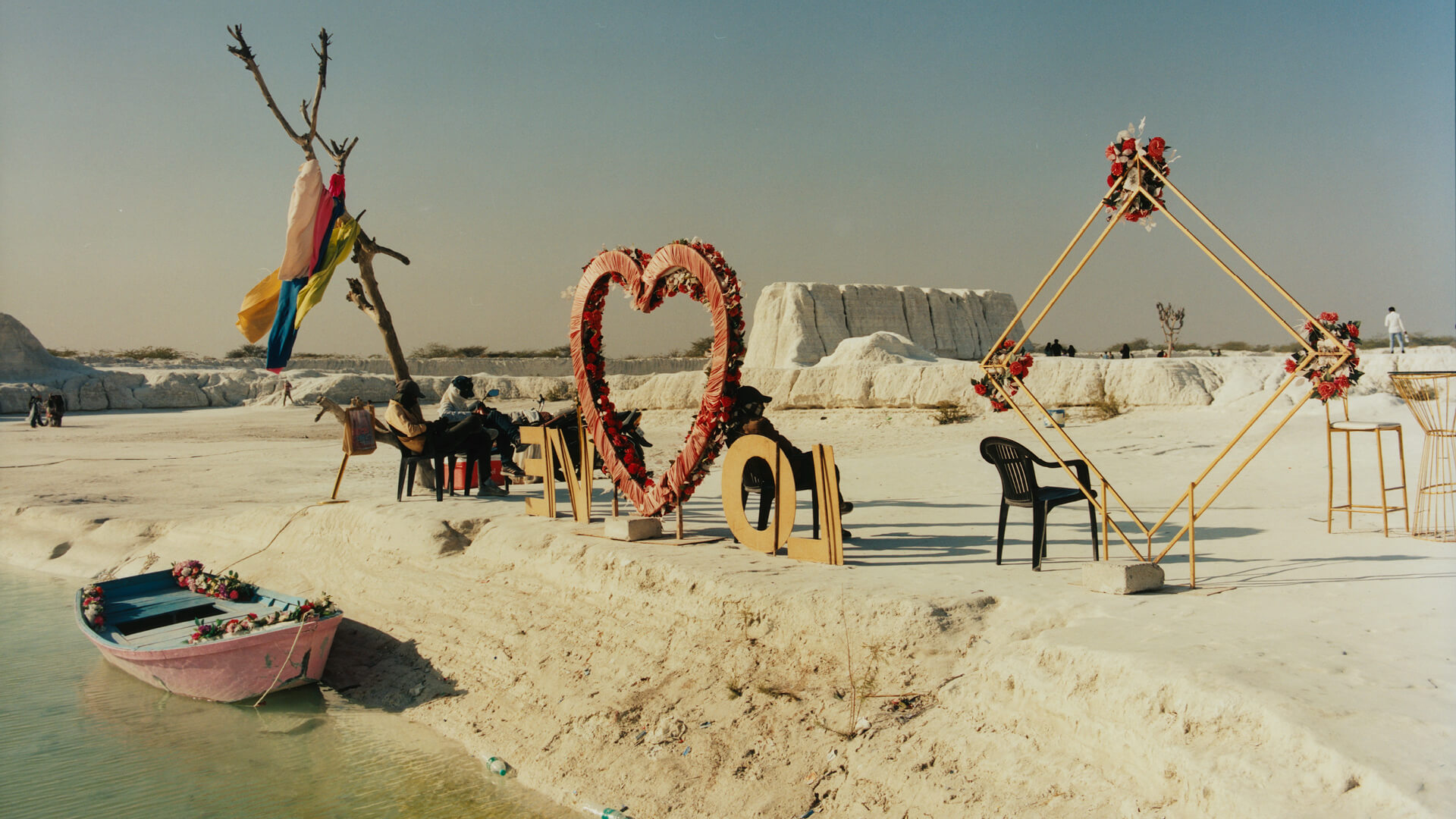
That passion is still what I see first, more than 30 years on, in 24 Weddings, his exhibition with Nature Morte, which opened in early November at Bikaner House in New Delhi. Once the residence of the Maharaja of Bikaner during colonial times, the building is now a home to several art galleries. The photographs emerged from a journey through Rajasthan for a book in Louis Vuitton's Fashion Eye series, in which each destination is entrusted to a photographer. The title came from something Sikka encountered along the way: 24 weddings taking place in one village at the same time, with 24 baraats (the groom's wedding processions) moving through the same lanes. He was not there at the invitation of any of the families. An Indian wedding today comes with a circus of drones, LED screens and camera crews. What he brought back from the middle of it is quiet.
Some of that quiet comes from time. Even on a commission, when the trade demands a quick turnaround, he stays longer with a place. On his own projects, he has said he spends "at least three or four years". Speaking to LensCulture about returning to a slow, large-format camera, he once said, "If I want to slow things down, I'll work with a process that's slower."
Colour is the other part of it, and in Rajasthan it is hard to handle. I am from there, and I know how the land works on a photographer. The desert is flat and pale and runs on for miles, so anything bright—a turban, a wedding, a painted doorway, the whole blue old city of Jodhpur—leaps out and pulls every camera towards it. All of this has been photographed so many times, by people arriving from abroad and just as often by Indian photographers, that it is difficult to see past the familiar imagery. Sikka has stepped away from that pull before. When Nature Morte showed his series Matter, the gallery described him as "eschewing India's clichéd bright hues". Here, he lets the colour back in, on his own terms, through subtraction. I would call this his real skill: taking things out of the frame, sometimes the face, often a second colour, until one thing is left to look at.
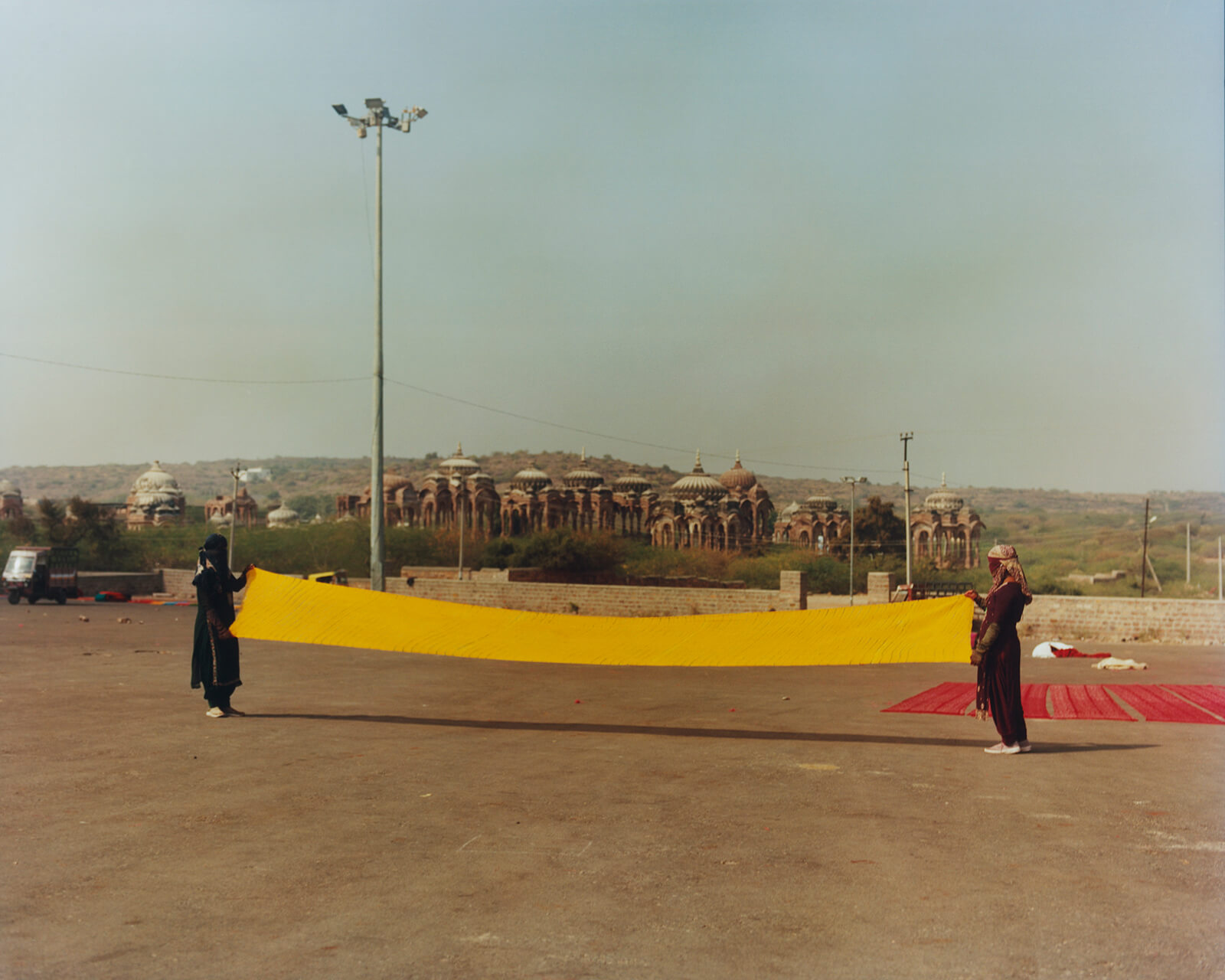
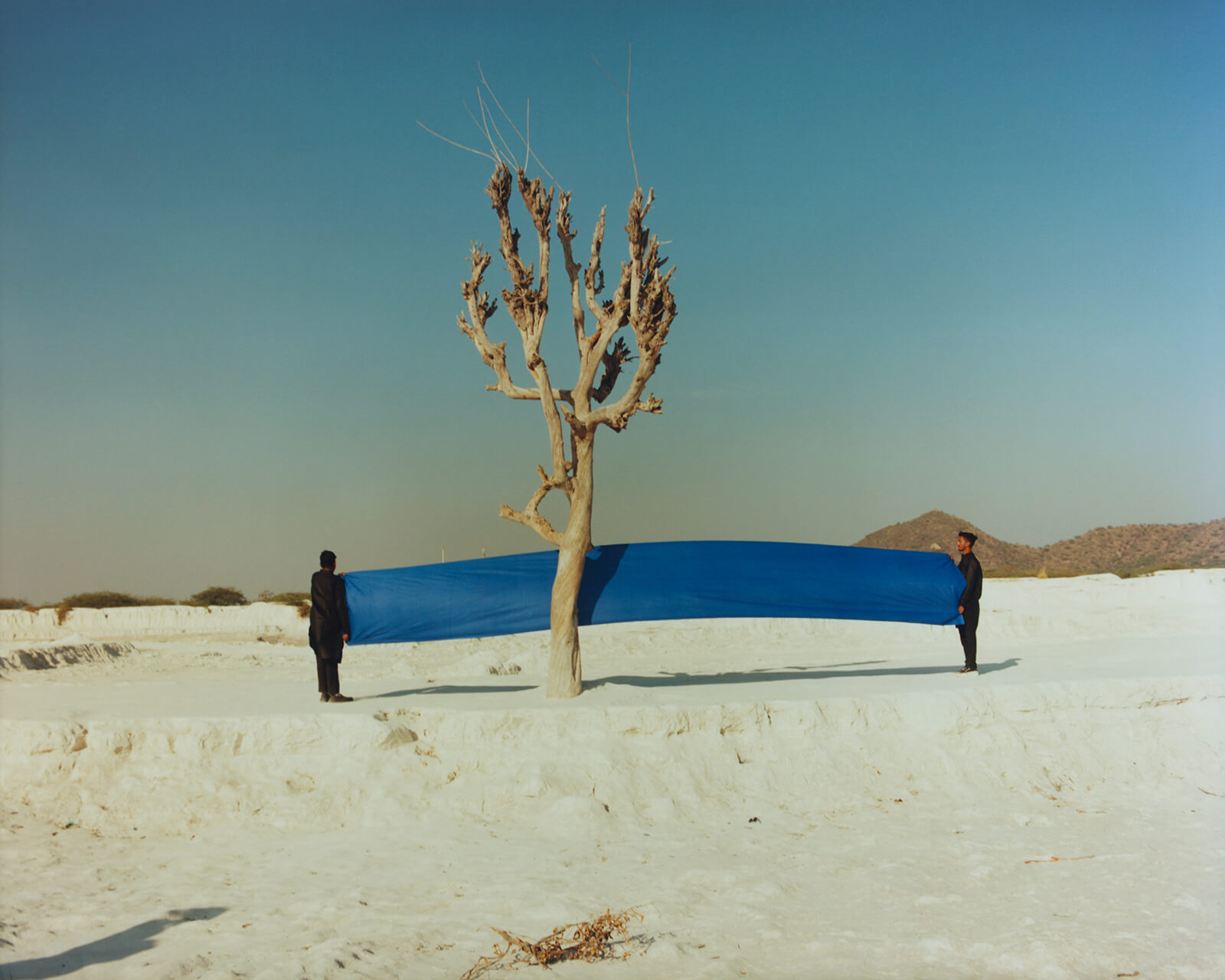
One vertical frame carries two pictures: two women holding a yellow cloth across dusty ground in the harsh Rajasthan sun, and, below, two men stretching a blue one behind a bare tree, in a similar landscape, now cool. Warm is stacked over cold. It took me back to film, when daylight and tungsten stocks each responded to light in their own way, and a roll shot under the wrong light came back washed in blue or orange. Today, any of this can be done on a screen, but the picture feels as though it has been found in the light. Yellow and blue each have a presence of their own, something like the Rajasthan of photographer Raghubir Singh, but without his crowds. Unlike Singh, Sikka also stages some of his pictures, and the staged and the found sit together without strain.
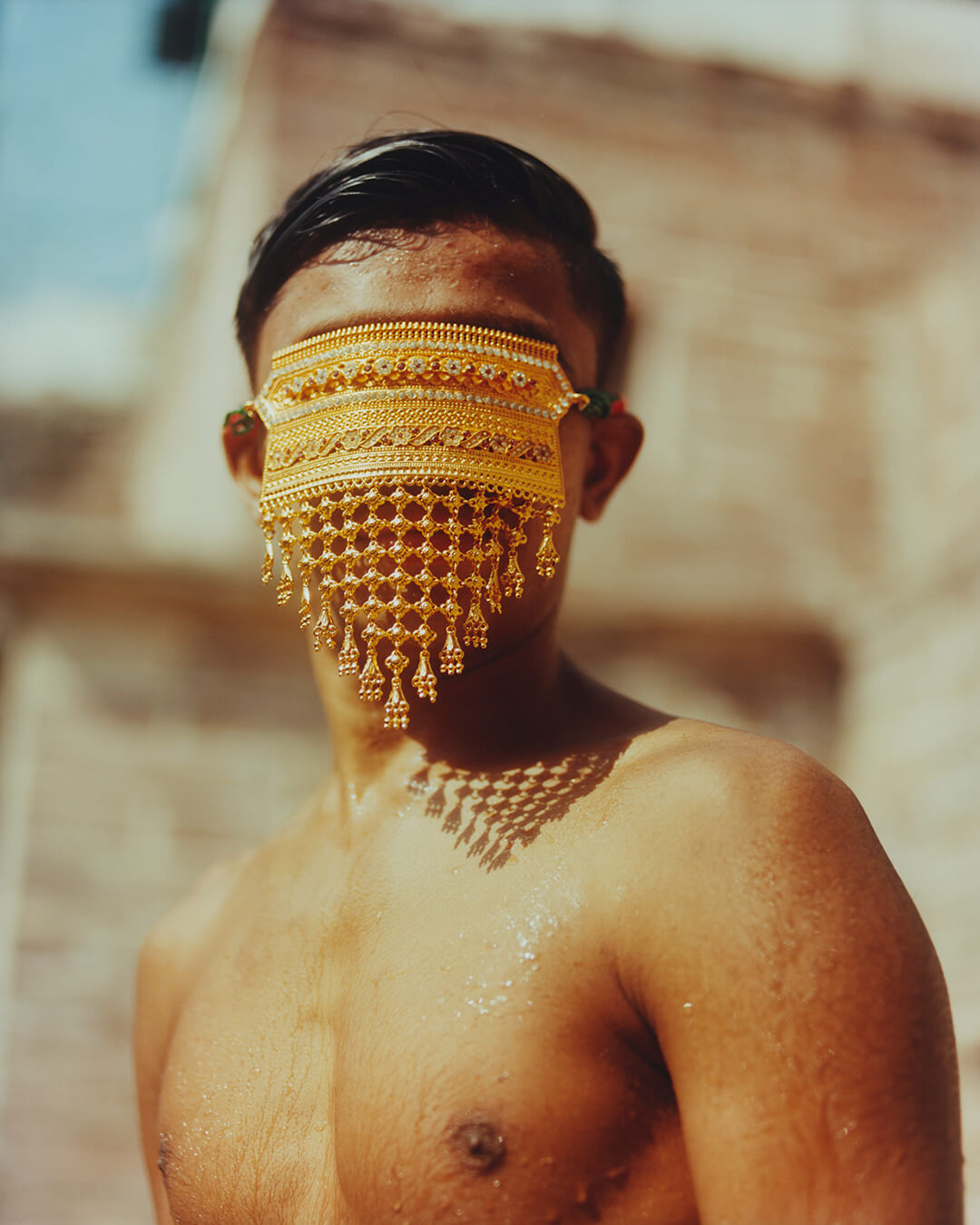
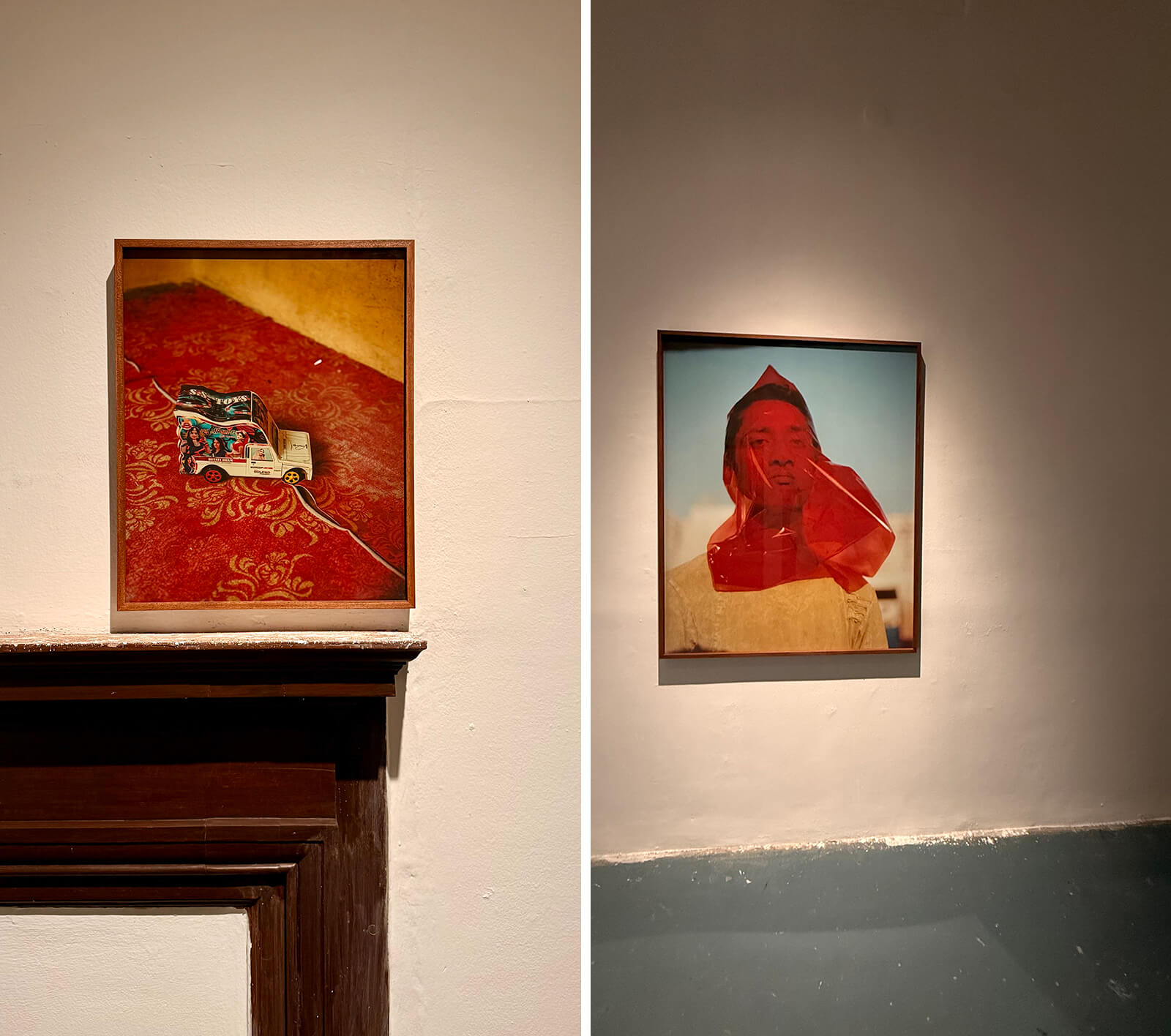
He handles people the way he handles colour. A young man's face is covered by a veil of gold jewellery; another sits behind a sheet of red cellophane; three boys on a motorbike wear monkey masks. The face, the feature Rajasthan is most photographed for, is withheld. It feels like an act of respect, as though the subject is keeping something for himself.
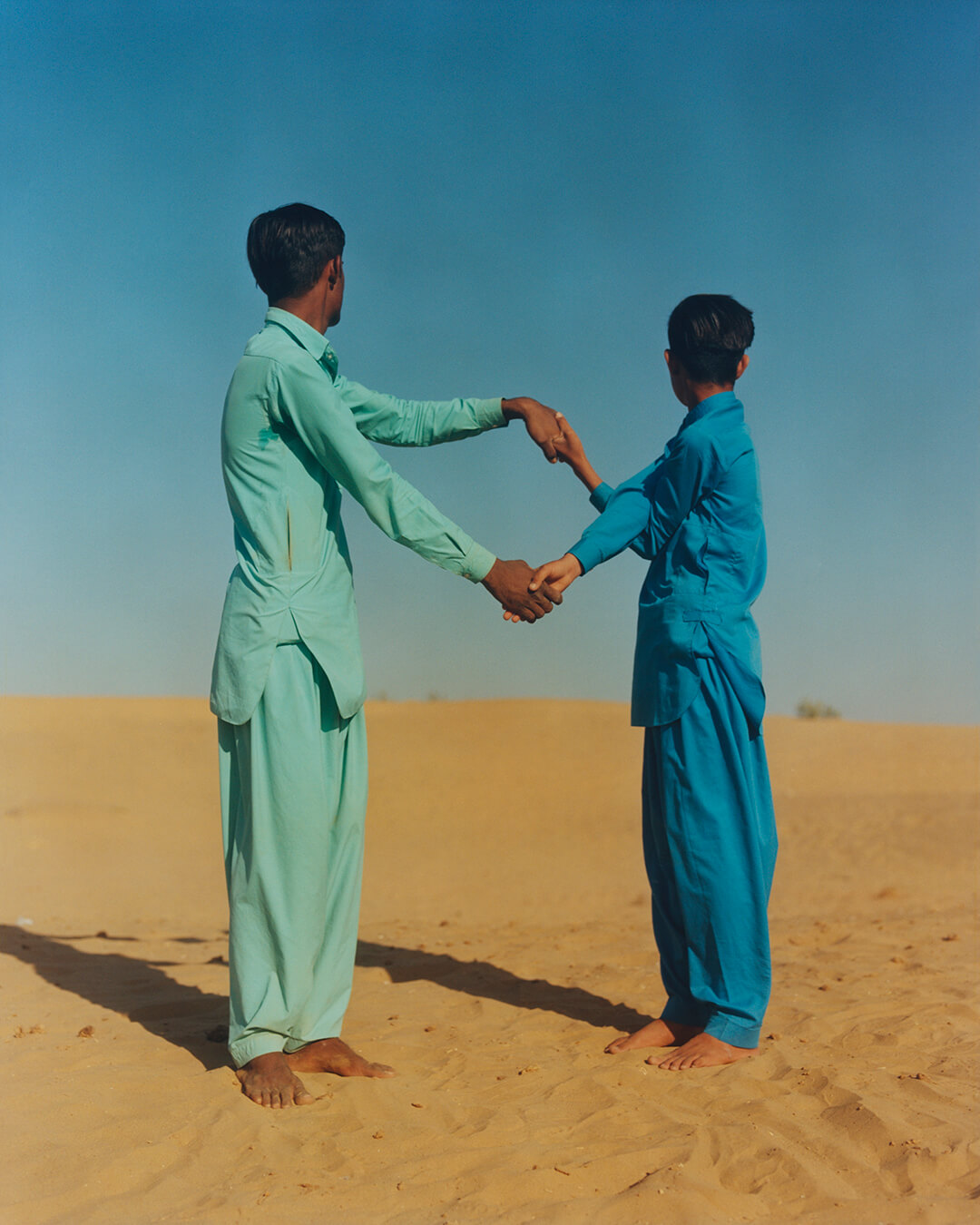
That sense of the subject as an equal goes back to his beginnings. Sikka came up before every phone made a photographer, when the gaps in the visual record were easier to see. His first project, Indian Men, began while he was studying at Parsons in New York. When he came home, he photographed his father, his uncles and his friends, mostly older men from the Indian middle class, who filled family albums but had little place then in exhibitions, photobooks or documentary work. Of his New York years, he has said, "I felt very isolated."
For my part, I read that distance as the source of his freshness. He comes to his subject from outside, even when he is standing in the middle of it, amid all the noise and the pull of yet another picture made for the outsider's gaze. It is what allows him to give one person, or one object, a frame to itself. I recall reading the economist Herbert Simon, who said that "a wealth of information creates a poverty of attention". In today's noisy world of visuals, pictures that make you stop are rare. Yet, his do, whether on a gallery wall, a printed page or a phone screen in one's hand.
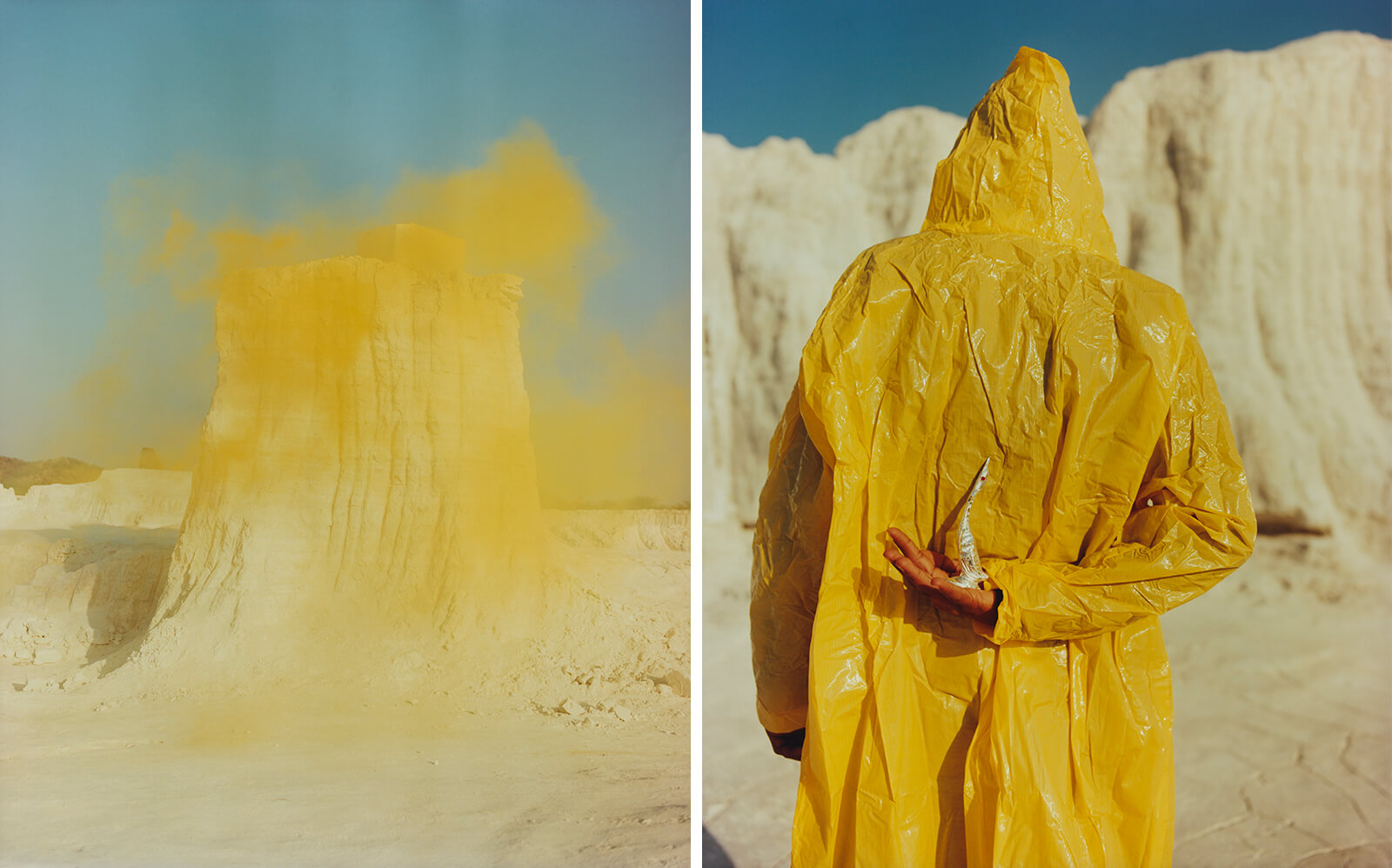
Peter Nagy, who founded Nature Morte and died in October 2026, once suggested that some pictures of mine were street photographs made indoors. The phrase fits Sikka even better. His is street photography made in courtyards and rooms as much as on the street, moving across the social, economic and cultural lines that usually determine who gets photographed and how. Our cameras have mostly looked up, at palaces and weddings that can afford a crew, or down, at poverty that travels well in pictures. Sikka keeps to eye level, taking the ordinary of everyday life, its materials and its landscape, and letting it stand alone, without exotica or pity. A plastic toy jeep printed with film-poster faces sits on a red patterned carpet, given the same attention as any of his portraits.
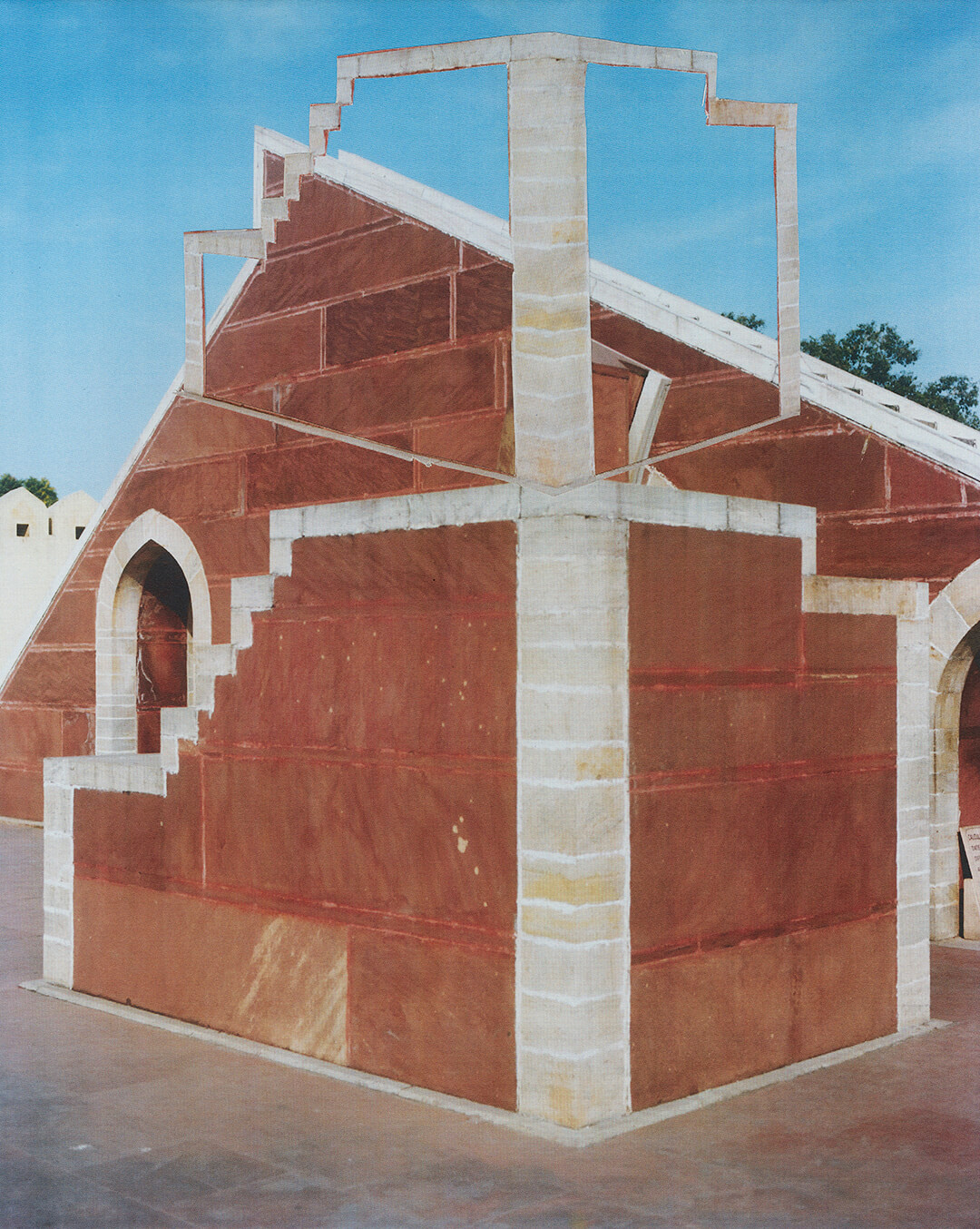
In the collages, he goes further. He splits a red stone instrument at Jaipur's Jantar Mantar, the 18th-century observatory, and rejoins it so that the steps no longer meet. In another, he sets a cut-out blue hand against flat fields of colour, as if one photograph could not contain the place.
There was no curator. Sikka hung the show himself, with Vidisha Aggarwal and Garima Jha of Nature Morte gallery, and it shows in the way the works are spaced, some prints standing alone on the old fireplace mantels. The same space he gives a subject within the frame is carried into the gallery. The choices that begin behind the camera, what to leave out and where to stop, continue in the way the pictures meet the viewer. "Every person reads these images in their own way," Sikka has said, and the hang allowed for that.
In a corner of one of the galleries sat a wedding bandsman. Every now and then, he got up and played for whoever was looking at the pictures, then sat down again.
The views and opinions expressed here are those of the author and do not necessarily reflect the official position of STIR or its editors.

by Srishti Ojha Nov 16, 2026
The second edition of Ahmedabad Cultural Week brought contemporary art on climate change into closer conversation with the realities of those most affected by it.
by Vandana Kalra Nov 12, 2026
Doryun Chong, Kamini Sawhney and Raphael Chikukwa, among others, expand on ways museums can better connect with audiences and acknowledge colonial histories.
by Mirra Lynn Nov 10, 2026
The Chilean artist’s first major UK show traces six decades of work shaped by exile, ecology and Indigenous cosmologies.
by Srishti Ojha Nov 05, 2026
In conversation with STIR, the Bhutanese artist speaks about her continuing evolution and experimentation following her win of the 2026 Rubin Art Prize.

make your fridays matter with a well-read weekend
Enter your details to sign in
Don’t have an account?
Sign upOr you can sign in with
a single account for all
STIR platforms
All your bookmarks will be available across all your devices.
Stay STIRred
Already have an account?
Sign inOr you can sign up with
Verification link sent to check your inbox or spam folder to complete sign up process
Tap on things that interests you.
Select the Conversation Category you would like to watch
Please enter your details and click submit.
Enter the 6-digit code sent at


Bharat Sikka’s 24 Weddings and a different view of Rajasthan
by Samar Jodha | Published on : Nov 19, 2026


 Sign in with Google
 Sign in with email
What do you think?