Art07 mins. read
Sustaina India’s second edition seeds community-oriented work for climate action
by Mrinmayee BhootFeb 27, 2025



by Srishti OjhaPublished on : Nov 16, 2026
When I landed in Ahmedabad for the second edition of Ahmedabad Cultural Week (ACW), the weather was unseasonably warm. This descriptor, given the direction global ‘development’ and climate trends are taking, seems hopelessly dated—so universally true and self-evident that it hardly bears remarking. Still, as I dragged my suitcase’s wheels over dust and gravel on the short walk from cab to hotel room, I was struck by the plenitude of highways and the dearth of shade in Ahmedabad’s new city on the west bank of the Sabarmati River.
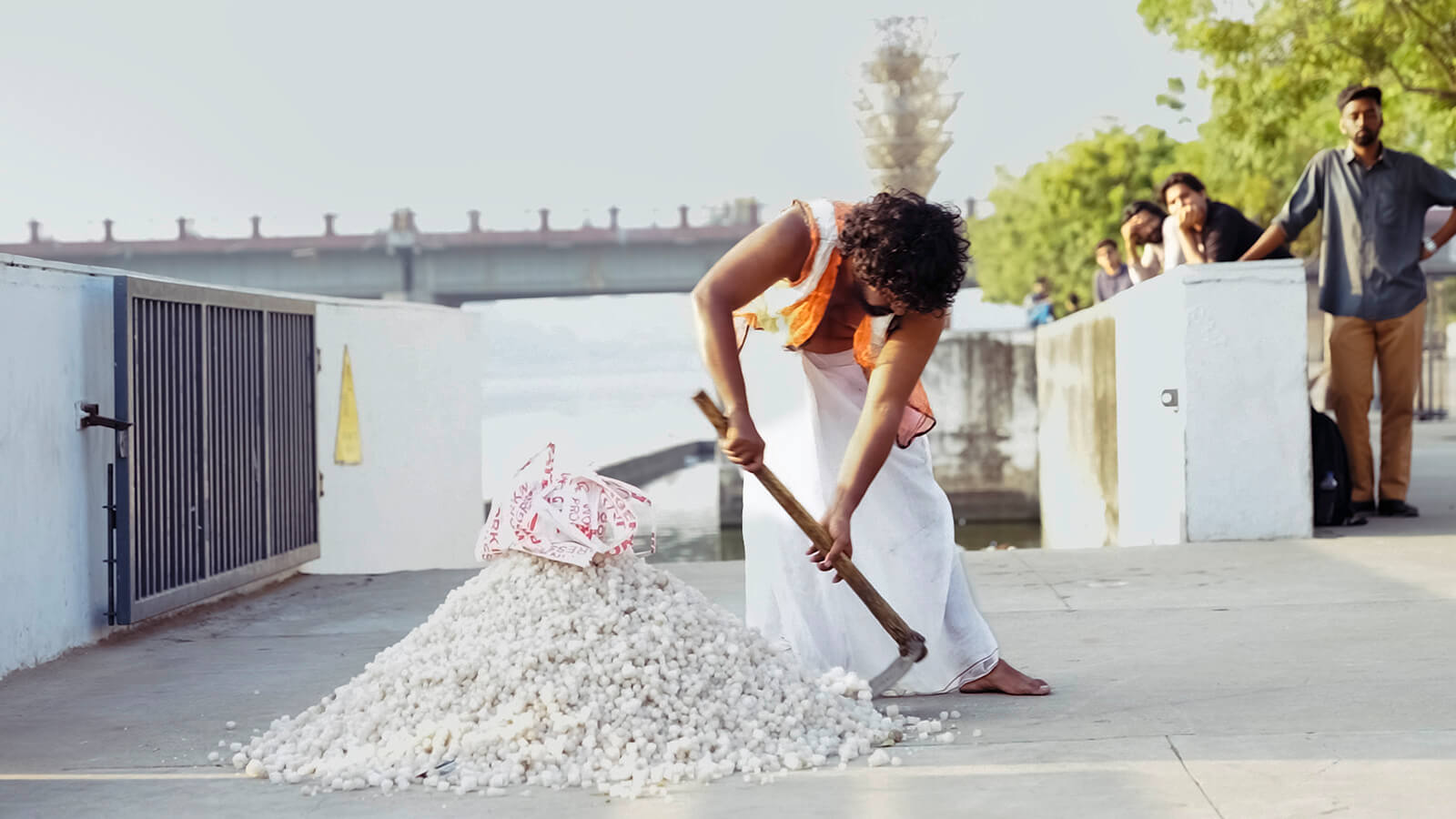
From its inception in 1411 and through colonial, independence-era and contemporary India, Ahmedabad has remained a city of great cultural and economic import and a national model for urban development. However, as instances like the city’s deadly 2010 heat wave have shown, this has not guarded against the dangerous consequences of the global climate emergency and its impact on the living standards and conditions of citizens. Recently, the city ranked 2nd out of 205 global cities in a 2026 ranking of cities at risk of extreme heat.
Cognisant of the issue’s unique impact on Ahmedabad’s local fabric, this year, the ACW team trained the focus of its many invited local and international artists, performers, ceramicists, curators, journalists and experts onto the subject of climate change. Over 18 venues and with activations throughout the city, ACW aimed to address environmental and climate issues by exploring solutions rooted in art, design, architecture and community.
Of course, at this point in late-capitalist society, the spectre of the climate crisis has been dissected, intervened and interrogated to death in art galleries far separated in context and geography from the people most disproportionately affected. At ACW, however, local communities, infrastructure gaps and folk knowledge weren’t swept into familiar generalities; they were at the heart of solutions thinking and future imaginaries rooted in ground-level specifics.
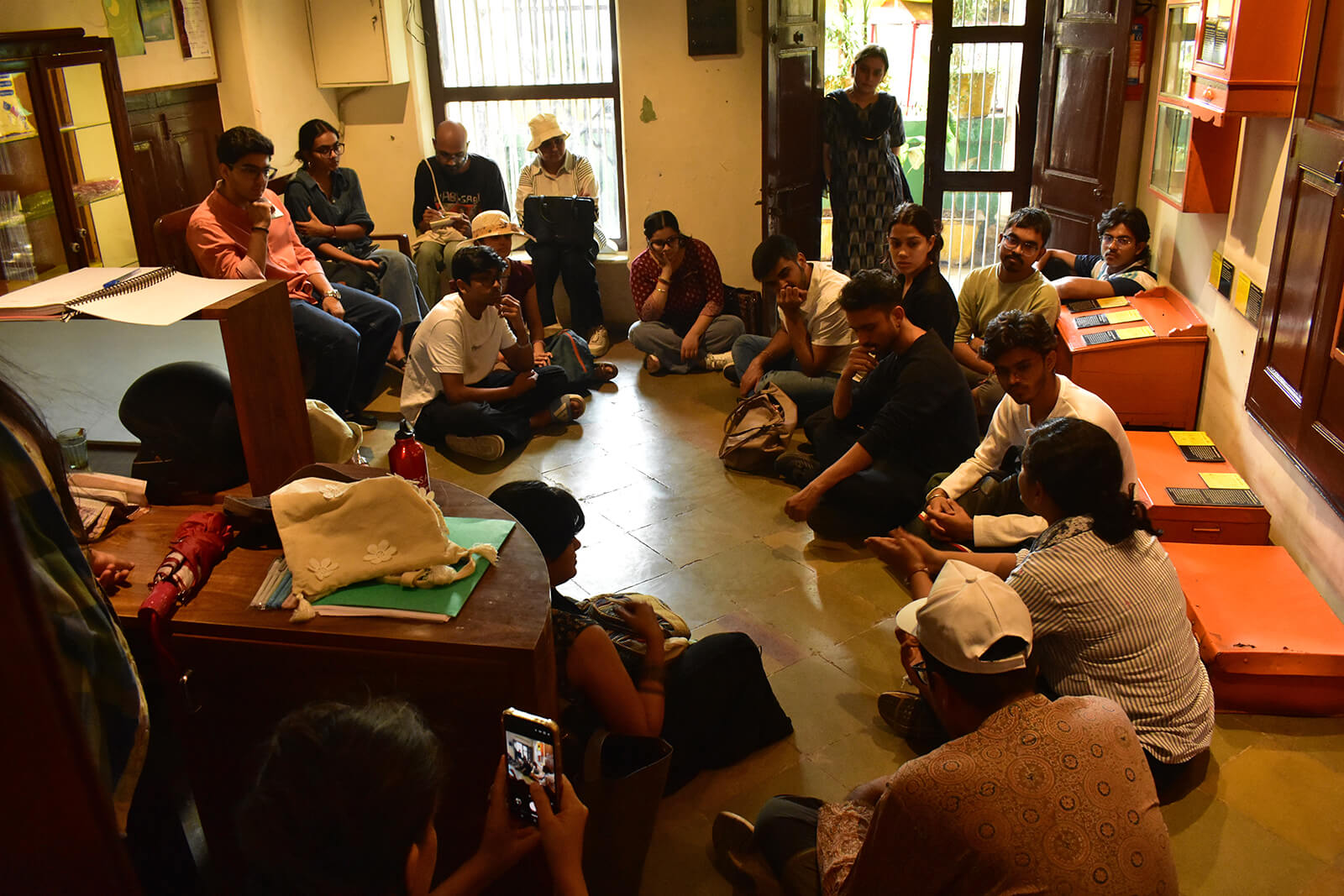
Arthshila Ahmedabad, a design and architecture centre, presented HYPERLOCAL: Architecture of the Immediate, approaching the climate crisis through the eyes of architects, designers and the citizens who live within their choices. Here, discussions focused less on materials and logistics and more on the care, community and cohabitation sustainable architecture can embody. This is exemplified by the vernacular architecture of Ahmedabad’s pols—condensed, self-sufficient neighbourhoods with shared walls, stepwells and courtyards constructed on narrow streets that create their own shade. The exhibition reframed sustainability, climate-responsive design and heat action not as Western hand-me-downs but as local technologies with deep, historical roots.
Nowhere was this better demonstrated than in Mehnat Manzil: Museum of Work, a nondescript building tucked away in an alley too narrow for cars to enter. Shristi Sainani, the curatorial director for the ACW, led me in, sharing her encyclopedic knowledge of Ahmedabad’s culture, contemporary art scene and the work of the people who enliven it. Many thinkpieces have been devoted to the intimidating, often elitist interiors and vibe of art galleries and museums in metropolises—white cubes steeped in jargon and ‘quiet luxury’ clothing. Mehnat Manzil is cut from a different cloth—the interior was simple and matched the small family houses around it. Children from the neighbourhood gathered in the space’s living room, waiting to do a performance for ACW goers.
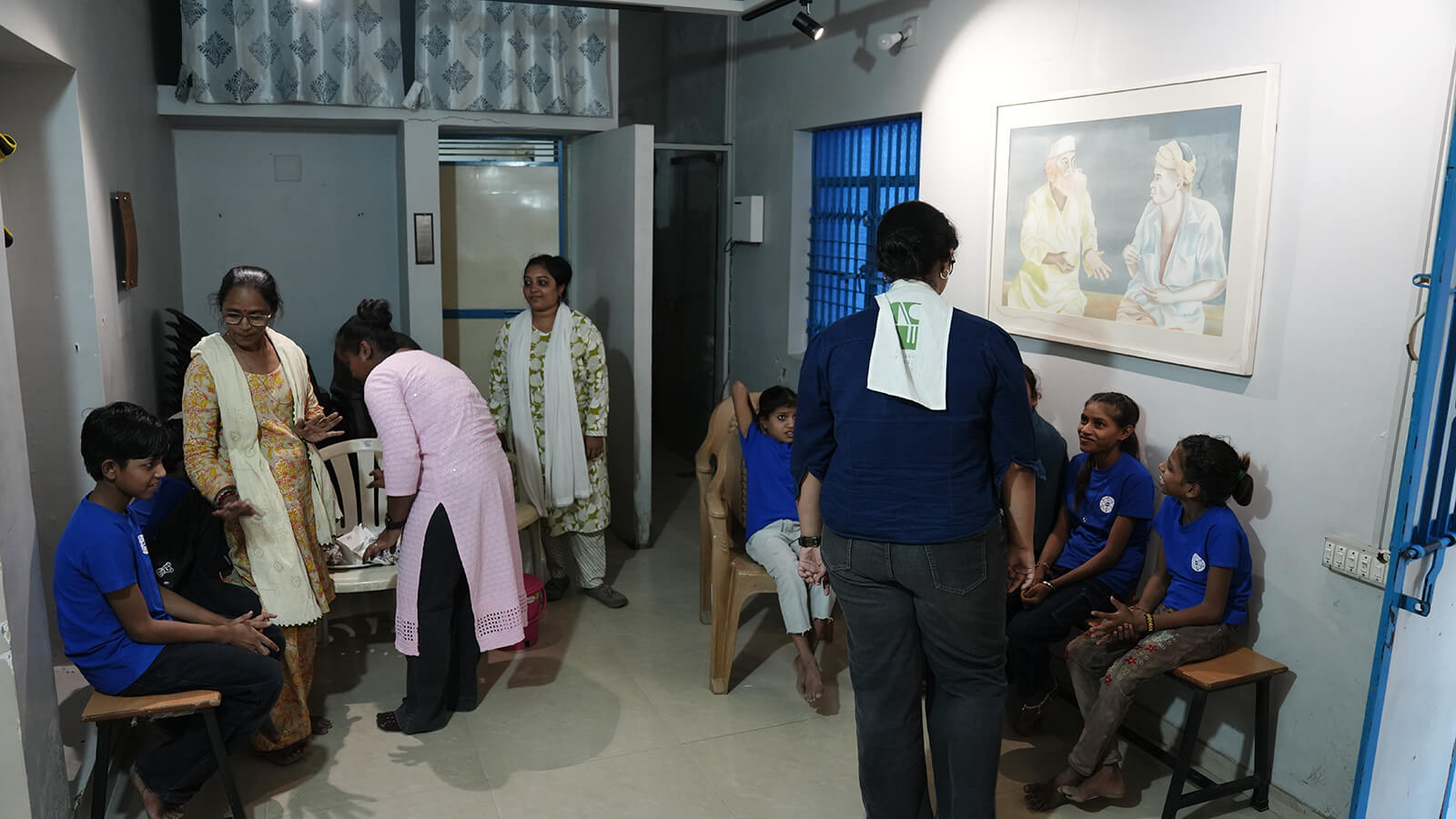
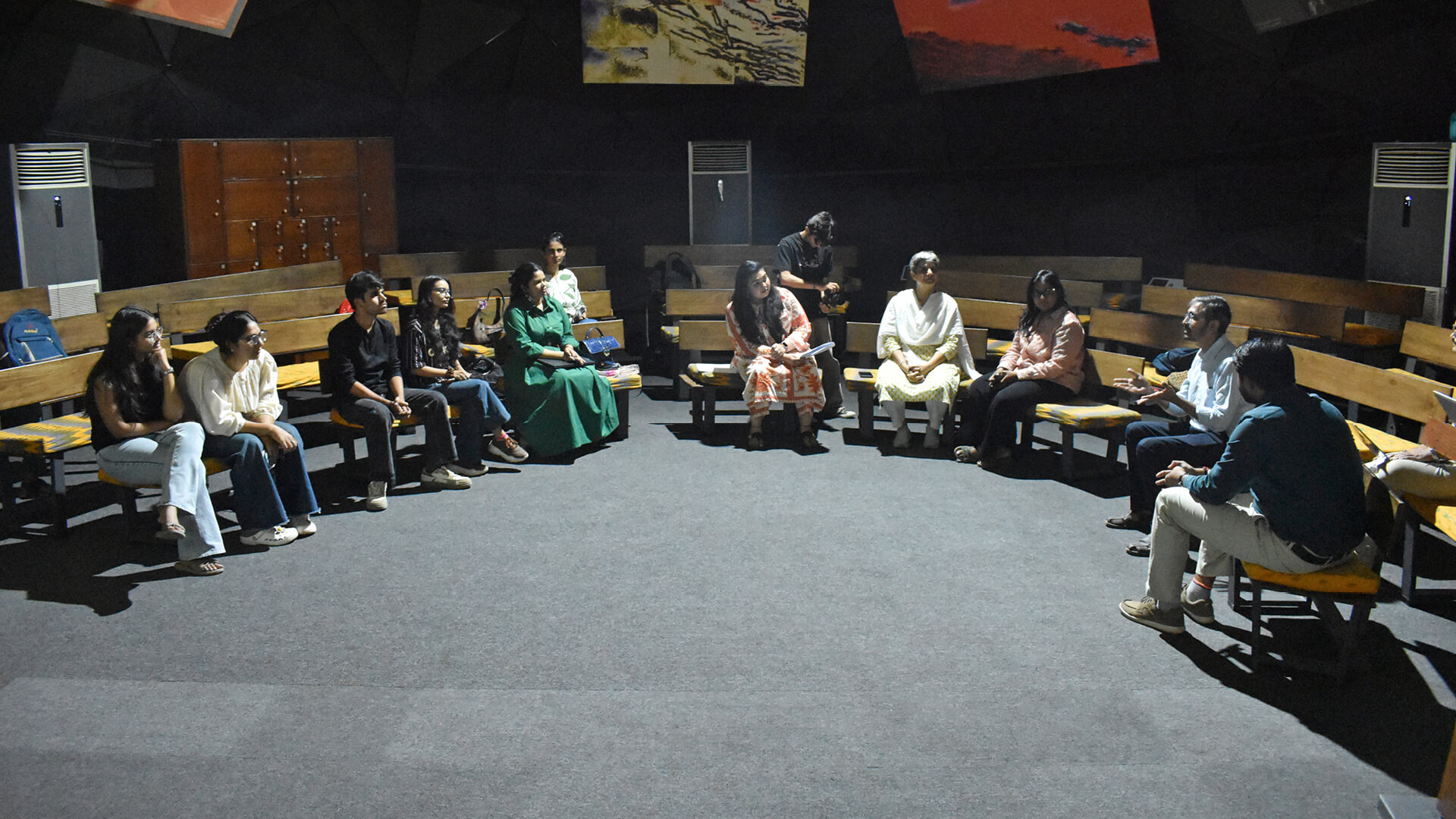
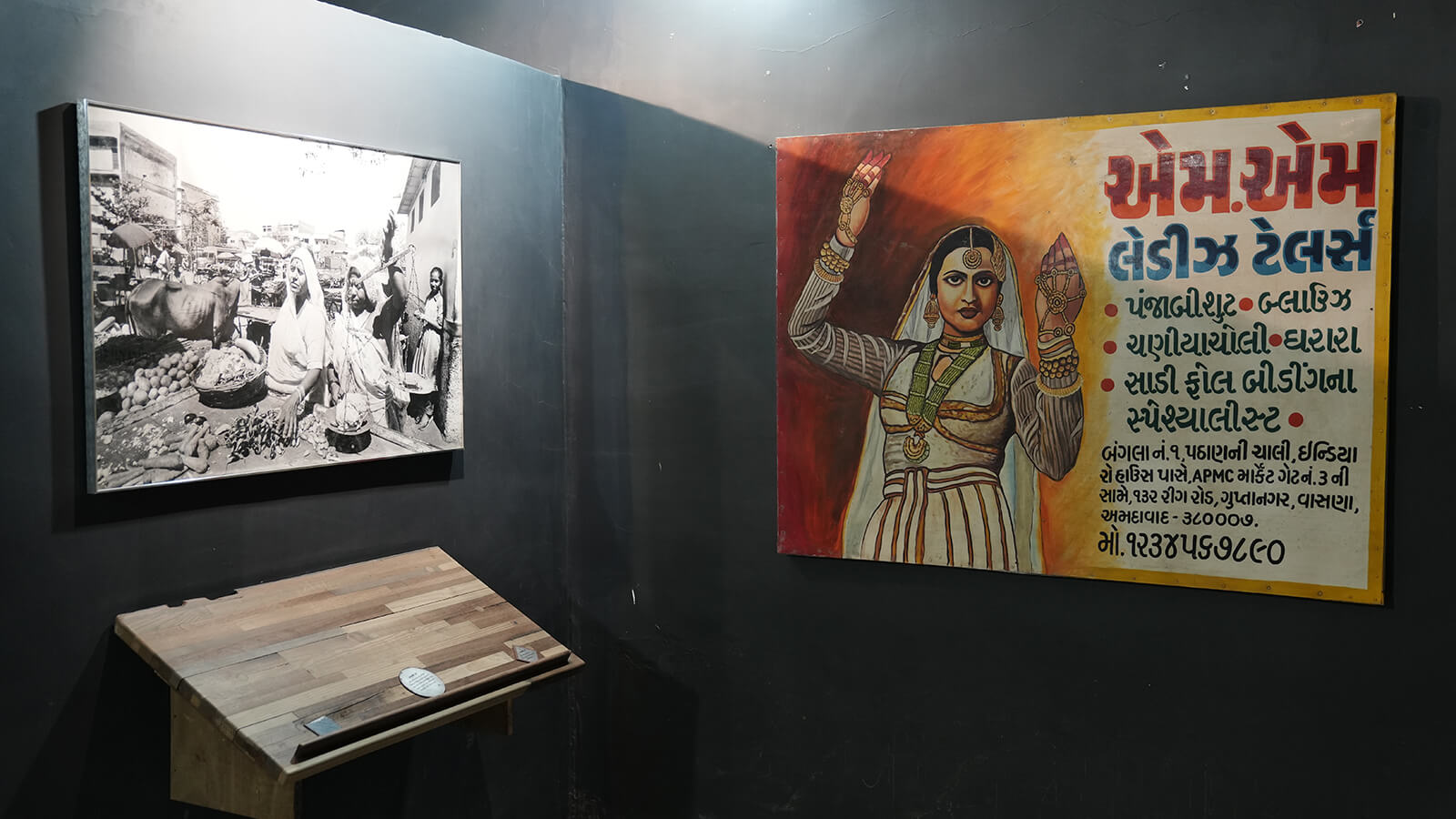
Guiding me around the space was Gautam Solanki, community expert and field facilitator for Saath Charitable Trust, the NGO responsible for the space. Mehnat Manzil, he explained, exists as a tribute to the invisible labour and lives of the 92 per cent of Indians who work in the informal sector as labourers, merchants and more. At their exhibition, titled Heat & Hope – Climate. Community. Care., instead of contemporary art and sculptures, there were interactive games, historical records of the building and surrounding community and experiential elements that elicited an embodied empathy. Instead of wall text, there was Solanki—explaining, questioning and narrating.
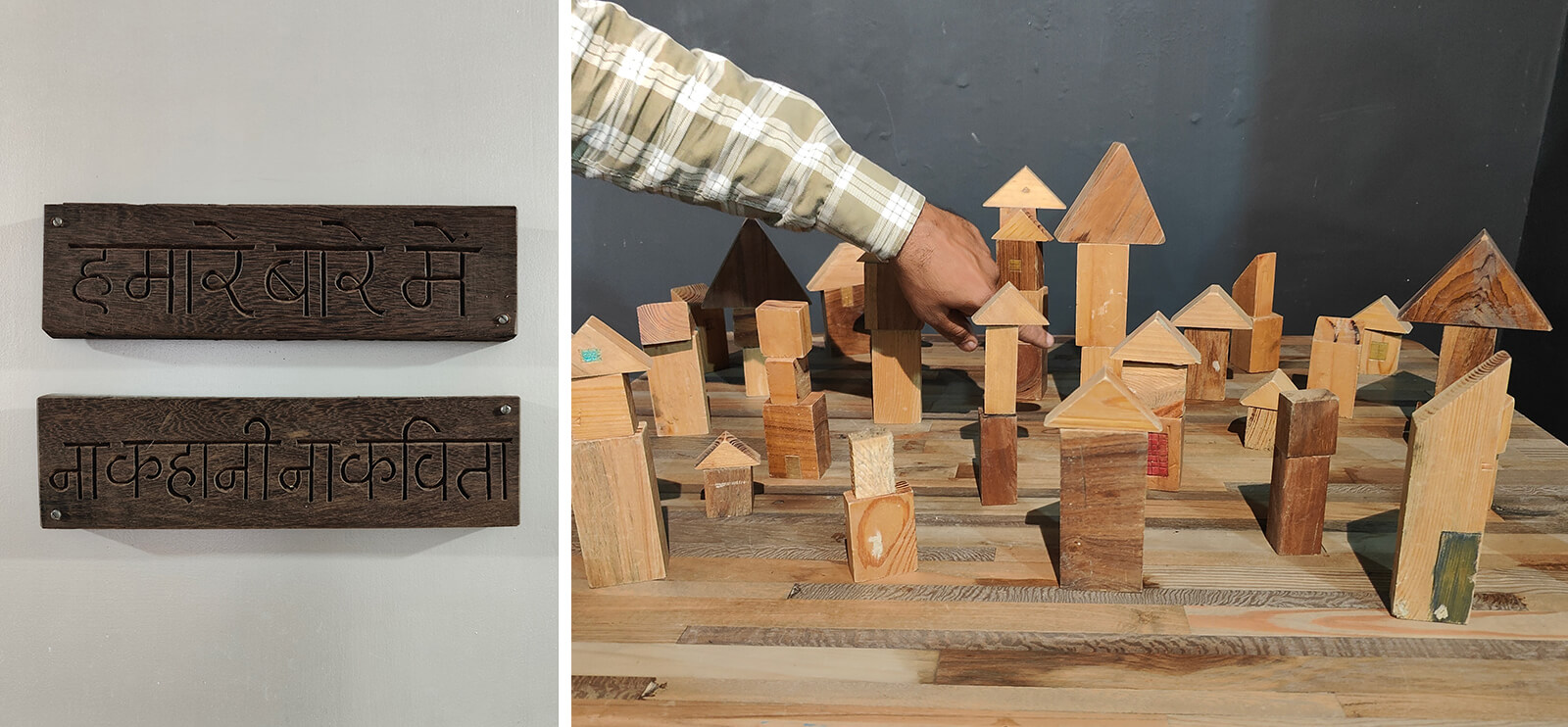
He spoke about the strife faced by those living in informal settlements, of the precarity of a labourer’s future, of the gap—in circumstance and understanding—between the 92 per cent and the privileged 8 per cent who depend on their labour. I wore a weighted band throughout the tour, designed to evoke the bodily impact of physical labour; I sat with my eyes closed, surrounded by speakers blaring the noise of a main road market to feel the overwhelm of working outside; I climbed a ladder into a pipe to make eye contact with photographs of manual scavengers who do the thankless and deadly labour of sewage work in inhumane conditions.
Climate has a direct economic impact on labourers. – Paresh Sakariya, associate director, Saath
Here, climate change and climate justice were inseparable subjects. Heat, noise, displacement, alienation, migration and exploitation were not keywords alluding to faraway injustices, but immediate realities with direct, visible human costs. Paresh Sakariya, associate director of Saath, said, “If you look at Ahmedabad, there has been so much development over the last 10 years. But through this development, forests and natural spaces have been destroyed, bringing huge change to the local climate. The labour that drives this development suffers the worst of this change—they work in direct sun and high heat, often causing health issues and reducing the amount they can work and earn.” (translated from Hindi)
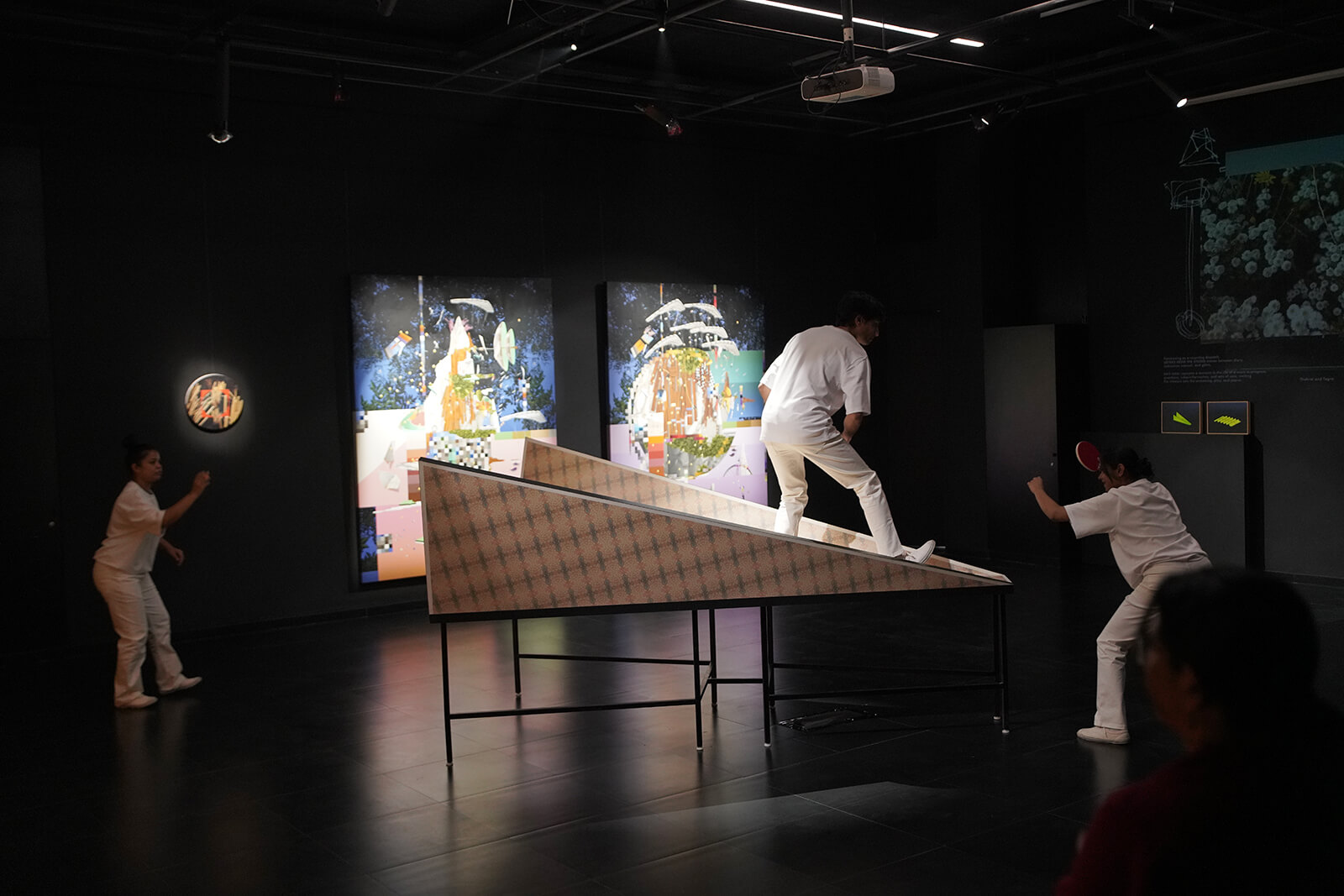
Artist duo Jiten Thukral and Sumir Tagra zero in on similar disparities with a series of clever installations and their signature large, multi-segmented paintings at Games People Play at the Kanoria Centre for Arts. The painting Smoking Gaze V (2025) is a succinct interrogation of the scapegoating of farmers and stubble burning as the greatest perpetrators of air pollution that conceals the outsize impact of large corporations. A lopsided table tennis table with defunct rupee notes sneaks the highly politicised issue of demonetisation and its consequences for those in the informal economy into a playful, interactive installation.
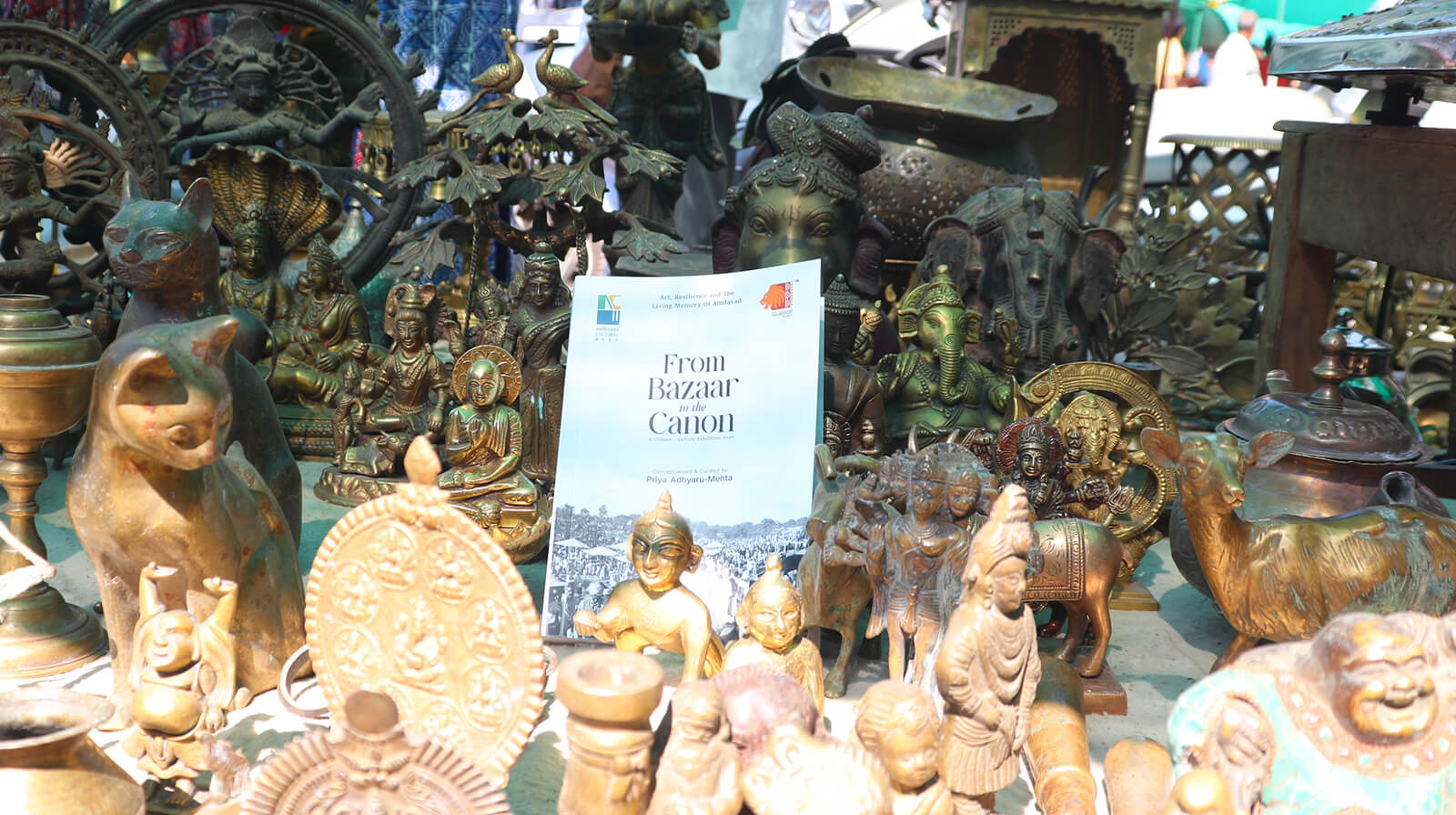
A short scooty ride away, at the Gujarat Vishwakosh Trust, curator Priya Adhyaru Mehta dove into the city’s lived, everyday history through an artistic exploration of Ahmedabad’s famed Gujari Market in From Bazaar To The Canon: Art, Resilience and the Living Memory of Amdavad. The market, established in the 15th century, was, and still remains, a place where the city’s used and discarded objects went to be reimagined, reworked and resold by artisans, tradesmen and merchants. Mehta, a researcher whose expertise spans from modern to contemporary Gujarati art and history, presented the work of local modern masters like Maganlal Sharma and Ravishankar Raval alongside 20th-century painters like Manu Parekh and Esther David on the building’s first floor.
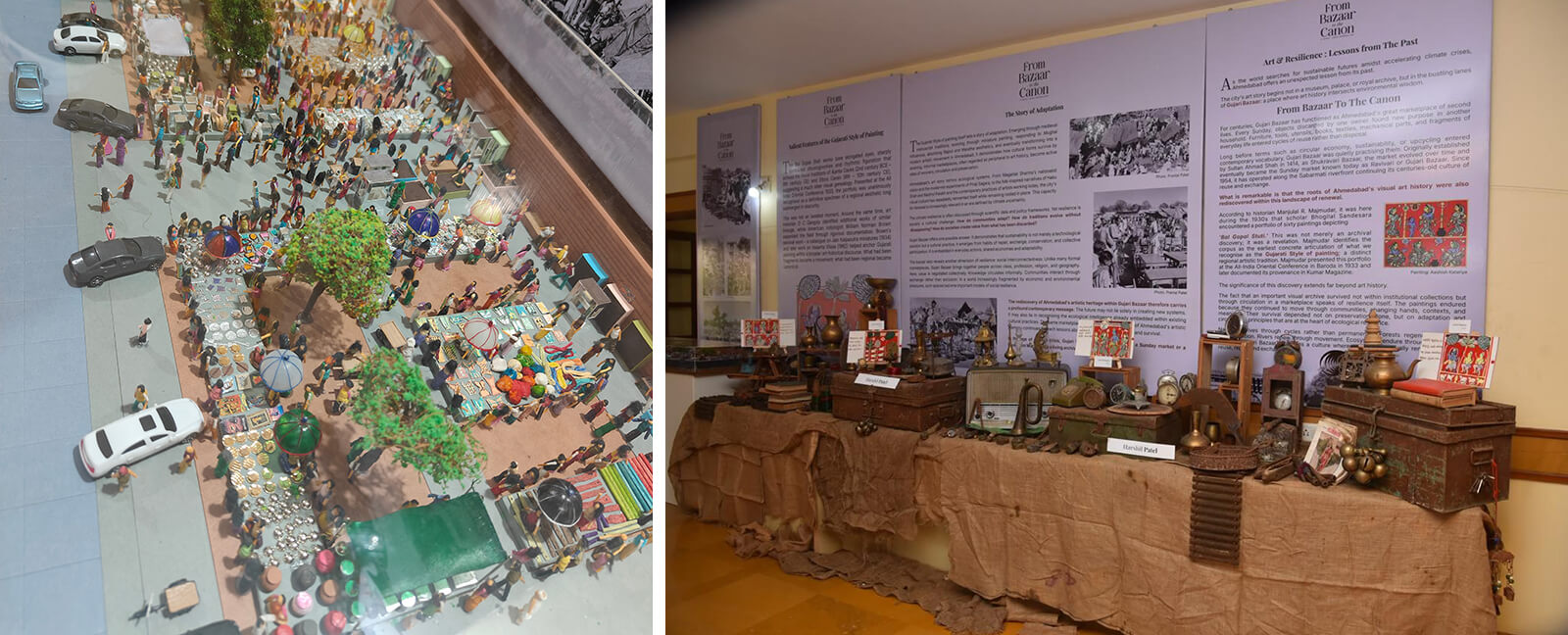
Just outside, miniature artist Mukesh Pandya painstakingly recreated the modern Gujari Bazaar underneath photographer Pranlal Patel’s historical photographs while a staged tableau recalled a crowded bazaar table and its anachronistic patchwork of offerings. The connection between the two parts of the exhibition may seem tenuous—from high art to high street—but Mehta highlighted a pivotal historical connection. It was at this very bazaar in 1930, among a pedestrian pile of folios and papers, that a scholar discovered the Bal Gopal Stuti portfolio—described by Mehta in the exhibition catalogue as “the earliest concrete articulation of what we recognise as the Gujarati style of painting”. This nearly lost secondhand market find would reenter academic discourse and redefine the state’s art history and canon.
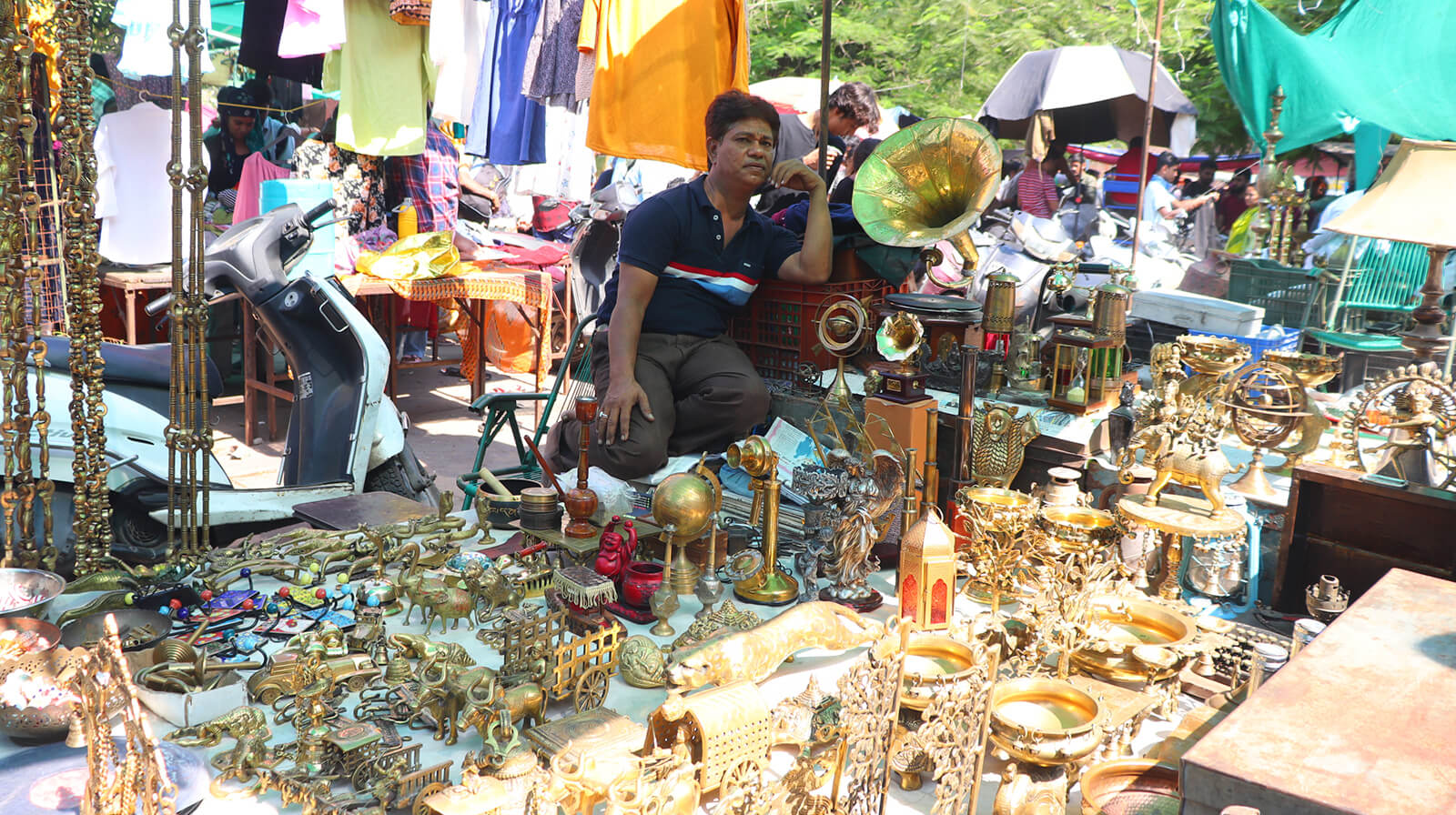
To Mehta, this perfectly illustrated the early sustainable principle on which Ahmedabad’s circular economy ran (before either term existed)—one of reuse, recirculation, repair and reinterpretation. Used objects, rather than being regarded as waste or landfill fodder, had infinite potential and thousands of hands willing to find and create value. This went beyond an economic model, illustrating a different way of existing in relation to the world that was not rooted in endless extraction; a way that still exists, as seen in a walkthrough that took visitors through the actual bazaar as part of the exhibition.
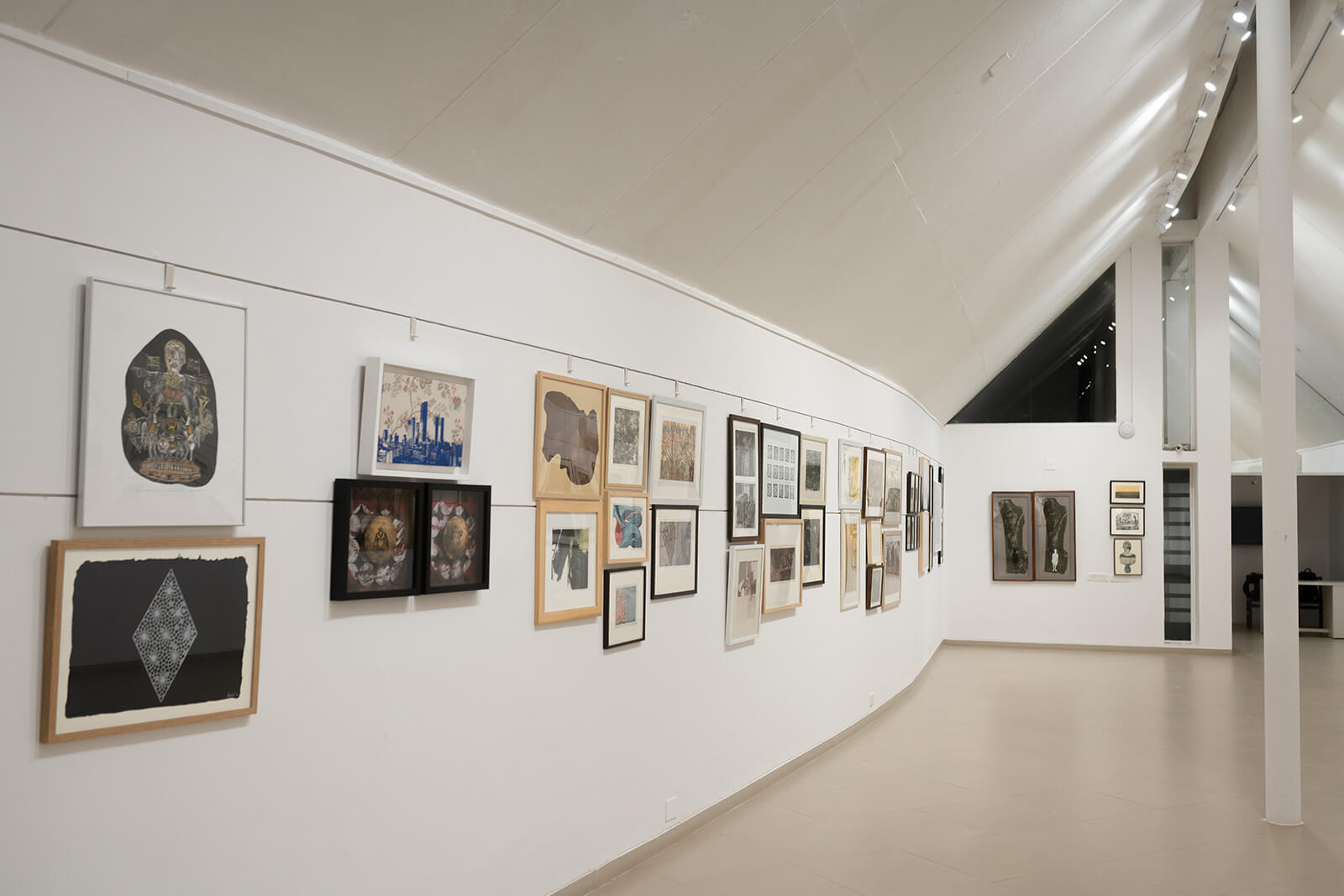
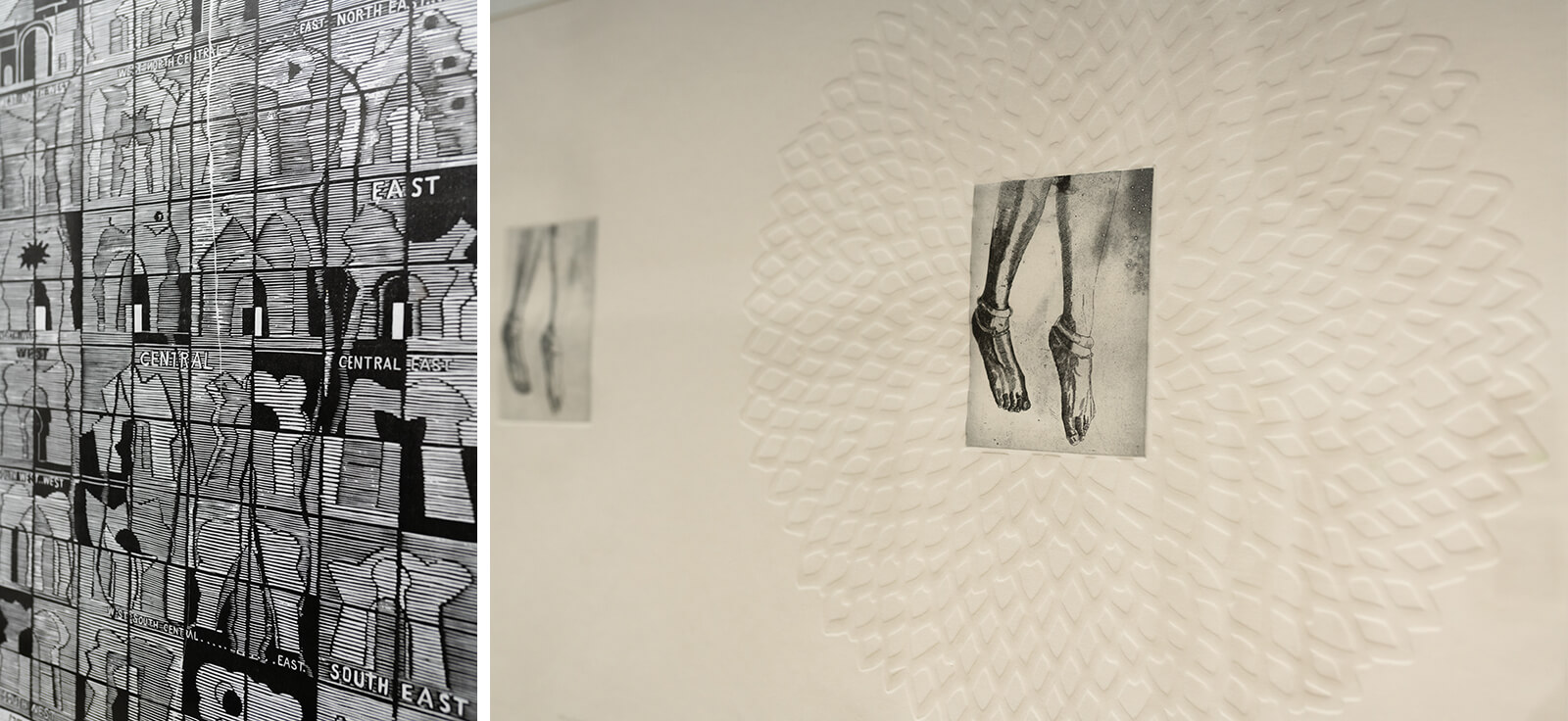
Also at the Kanoria Centre for Arts, IMPRESSIONS: The Human Footprint on a Warming Earth took on a broad scope, inviting 81 artists—lithographers, etchers, printmakers and mixed media artists—from across the country to explore the festival’s theme. The tactile nature of the medium made it particularly effective in creating visceral portraits of change, loss and the degradation of environmental and human conditions. The small gallery space offered a dizzying bird’s-eye view of contemporary Indian printmaking practice.
The strength of the second edition of ACW, and what separated it from similar showcases on the impact of climate change, was its refusal to abandon the specific, local, material and marginal in favour of the sweeping, abstract and poetic. Rather than catering to art market clients and trends or to intelligentsia, every aspect of the festival, from the exhibitions to performances, wall text and activations, was designed to appeal to everyone regardless of their age, art education or socioeconomic status.
Rajendra Joshi, co-founder of Saath, summed up the gap the festival fills in global artistic forums on climate change, saying, “The conversations between those in the informal sector and the organised sector, or those in between [the] more and less well-to-do people are not happening at all. The more stakeholders that are included—the private sector, academic institutions, municipal corporations, etc.—along with communities, would make these conversations more enriching. The organisers of Ahmedabad Cultural Week are very well-placed to [facilitate] that.”
This is a festival that was as much an introduction to the city and its people—its workers, artists, scholars, artisans, volunteers and performers—as it was a celebration of climate-aware contemporary art. ACW took Gujarati culture, technology, art and craft to the mainstream, but strictly on its own terms.

by Vandana Kalra Nov 12, 2026
Doryun Chong, Kamini Sawhney and Raphael Chikukwa, among others, expand on ways museums can better connect with audiences and acknowledge colonial histories.
by Mirra Lynn Nov 10, 2026
The Chilean artist’s first major UK show traces six decades of work shaped by exile, ecology and Indigenous cosmologies.
by Srishti Ojha Nov 05, 2026
In conversation with STIR, the Bhutanese artist speaks about her continuing evolution and experimentation following her win of the 2026 Rubin Art Prize.
by Samar Jodha Nov 04, 2026
The exhibition in Delhi explores how colonial records and land classifications have shaped our understanding of shared resources and the communities that depend on them.

make your fridays matter with a well-read weekend
Enter your details to sign in
Don’t have an account?
Sign upOr you can sign in with
a single account for all
STIR platforms
All your bookmarks will be available across all your devices.
Stay STIRred
Already have an account?
Sign inOr you can sign up with
Verification link sent to check your inbox or spam folder to complete sign up process
Tap on things that interests you.
Select the Conversation Category you would like to watch
Please enter your details and click submit.
Enter the 6-digit code sent at


ACW 2026: The political, marginal and on-ground side of environmental art
by Srishti Ojha | Published on : Nov 16, 2026


 Sign in with Google
 Sign in with email
What do you think?