Design05 mins. read
Design Democracy returns to Hyderabad with an intersectional programme
by Jincy IypeSep 04, 2026



by Chahna TankPublished on : Oct 08, 2026
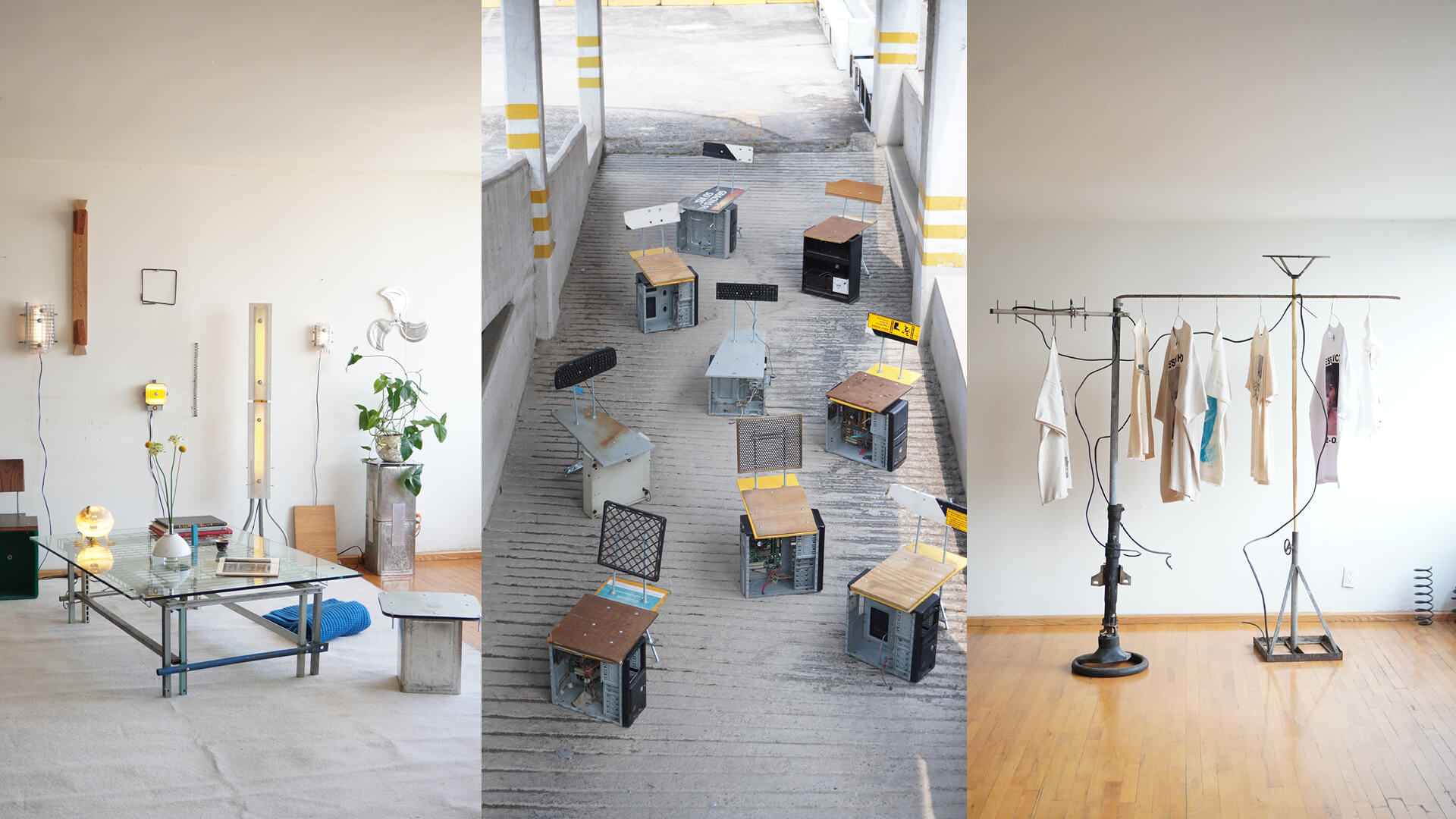
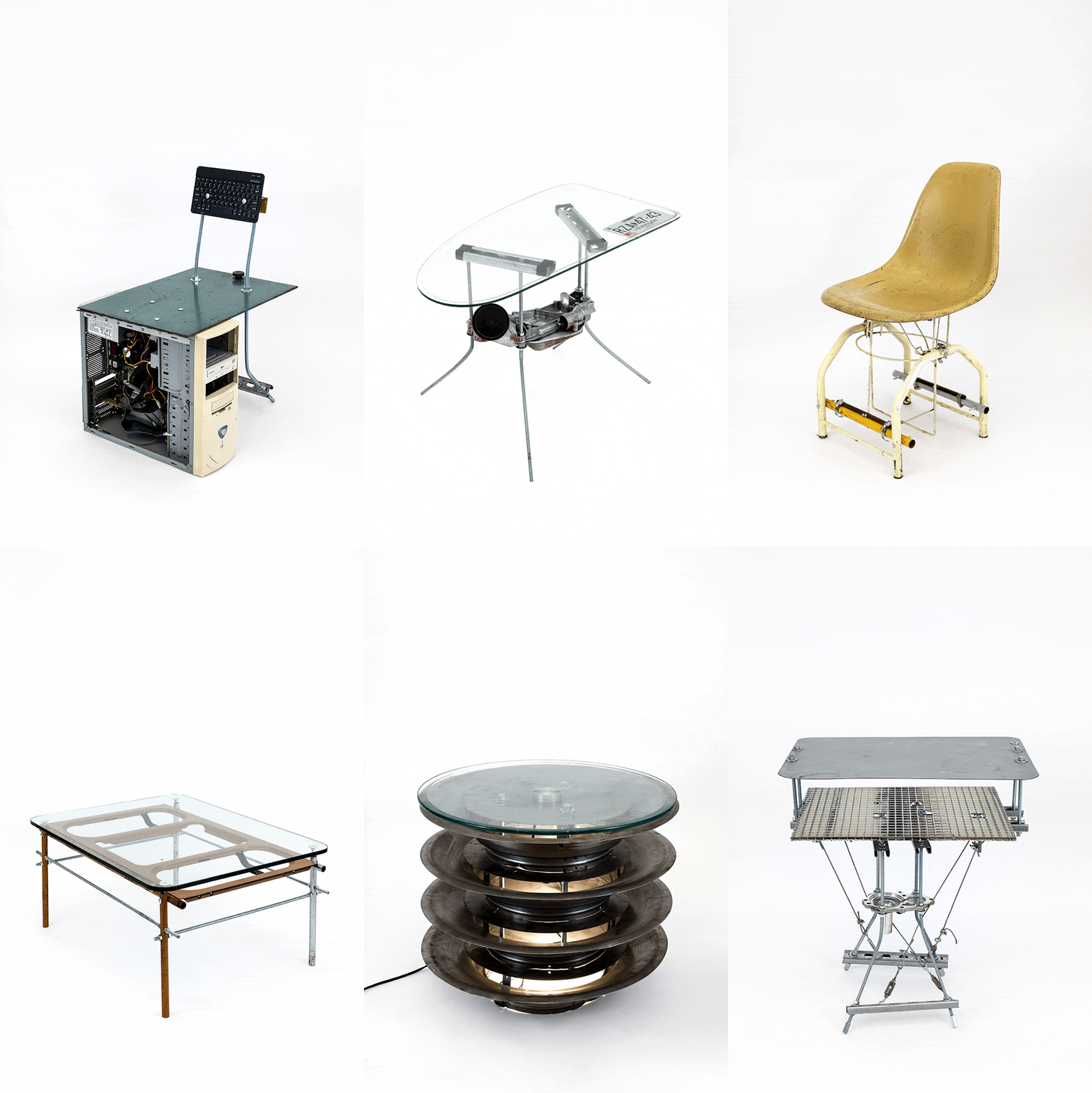
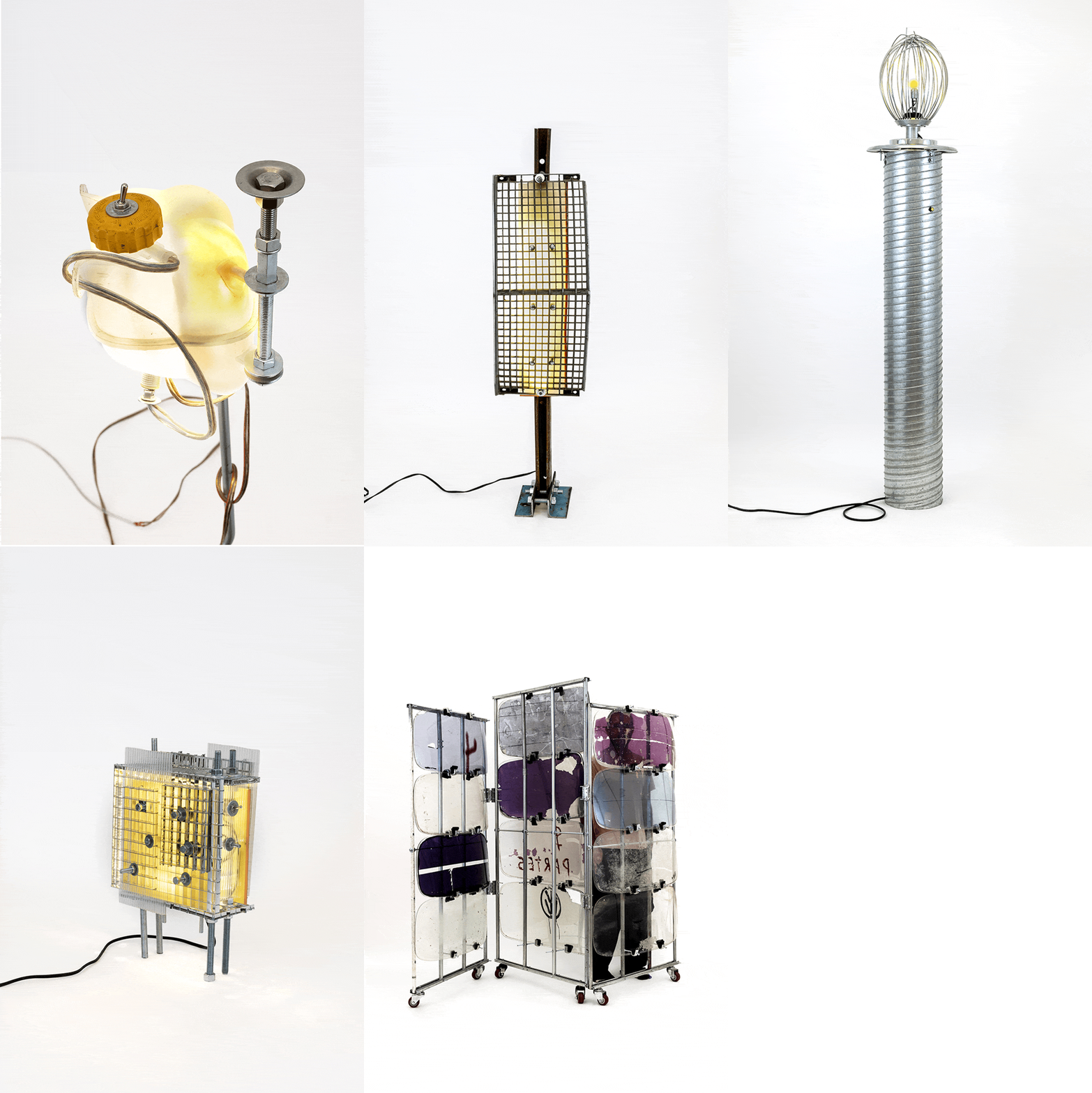
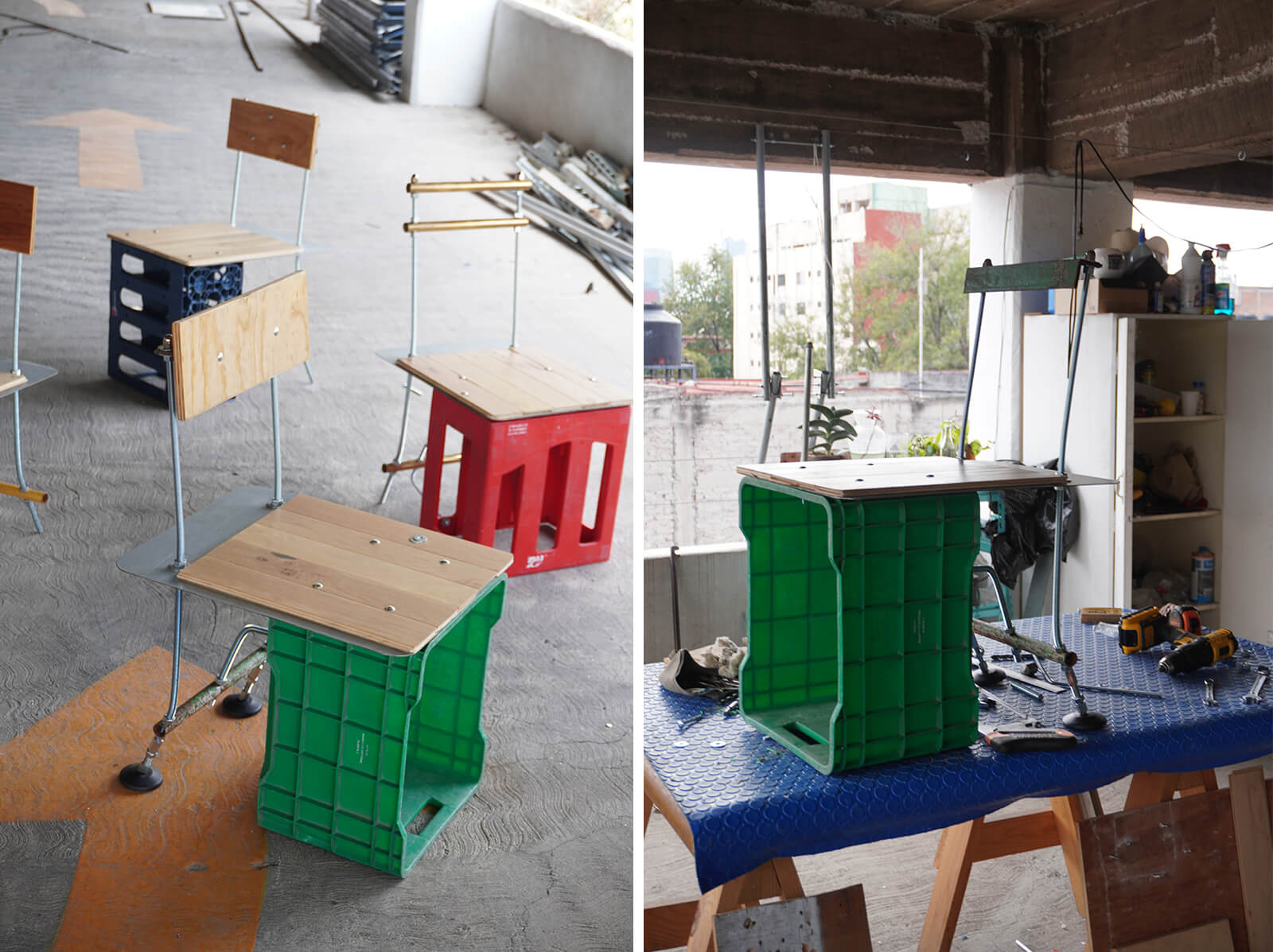
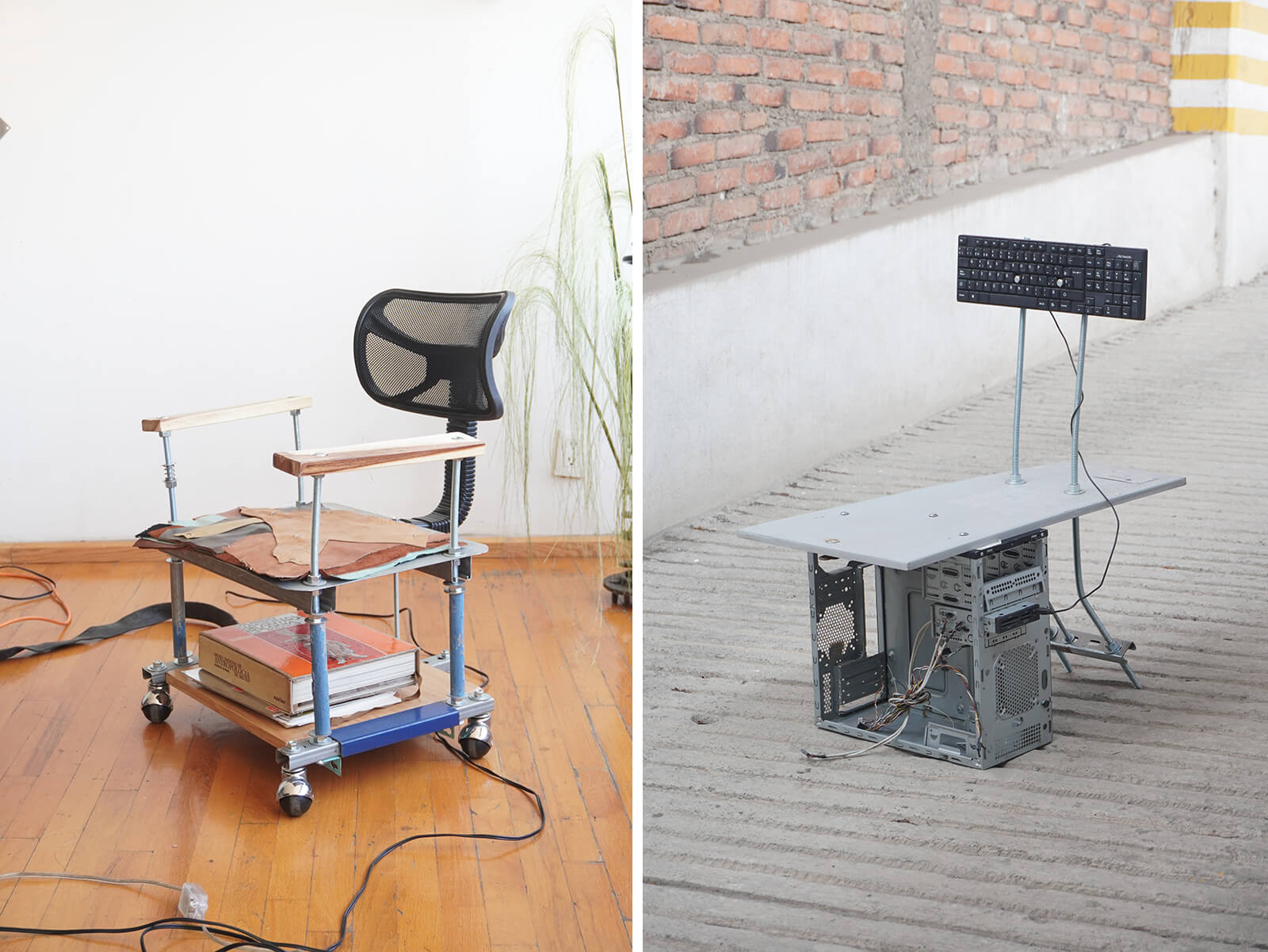
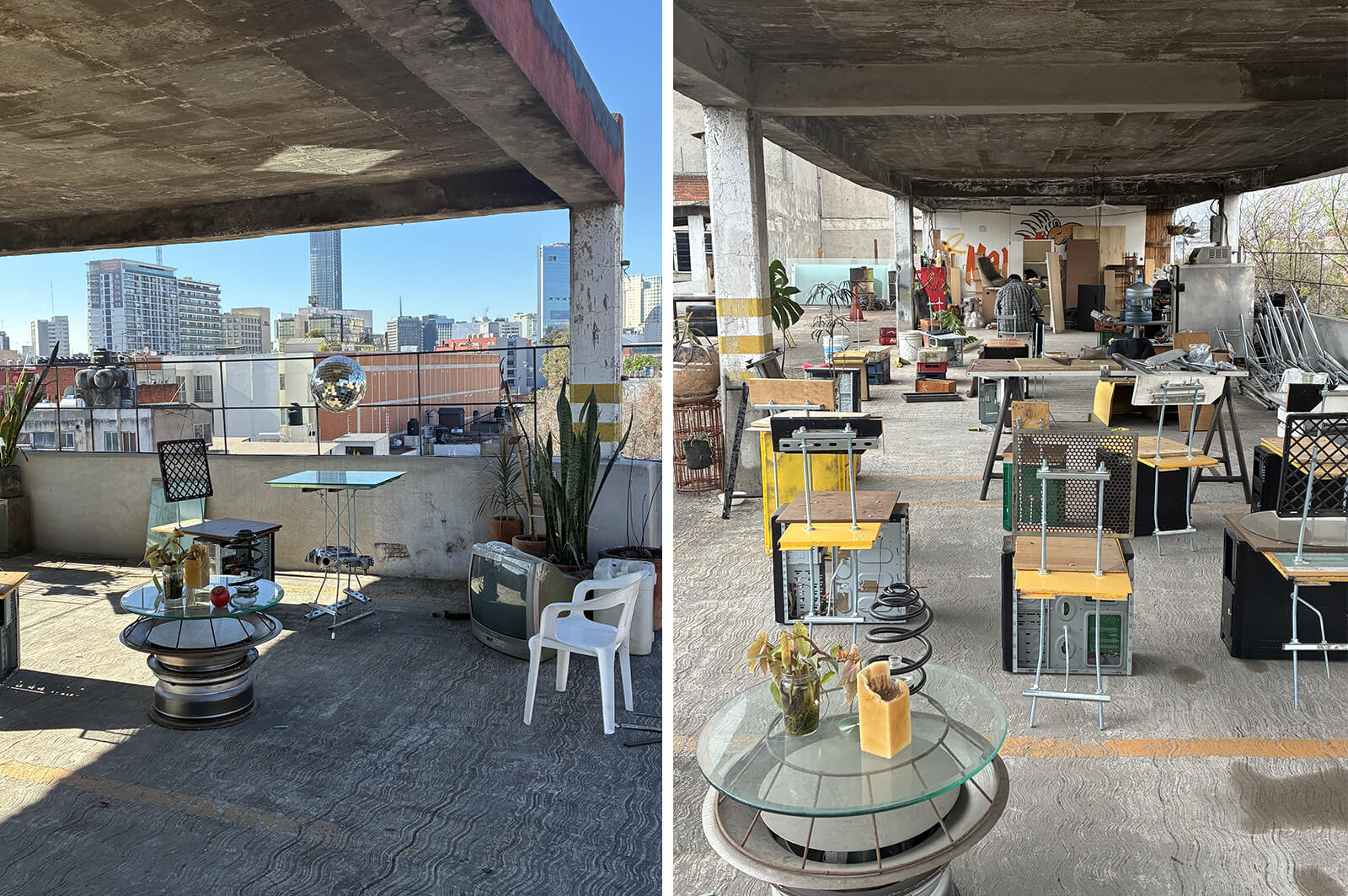
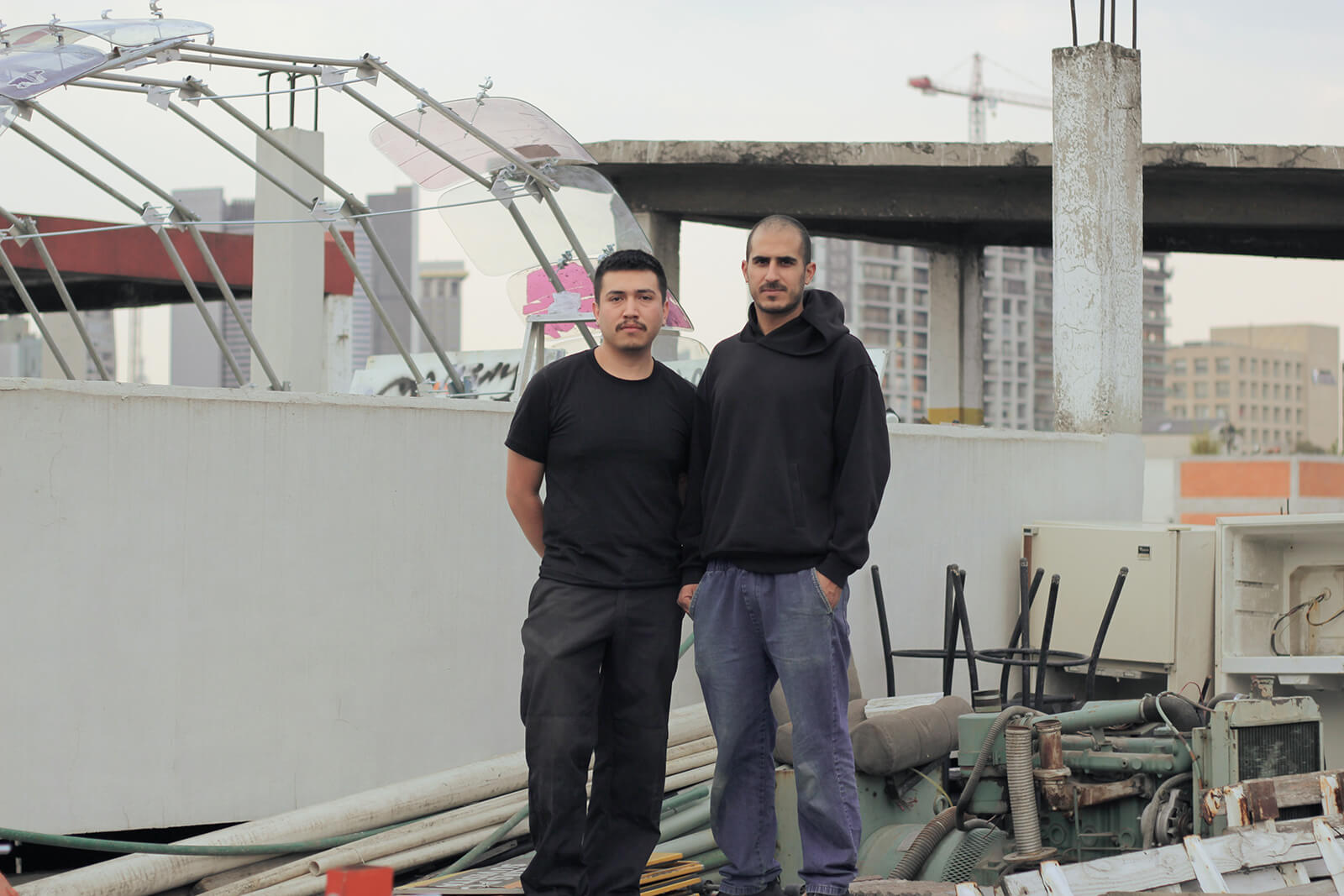
Metal, automotive parts, electrical conduit, glass and other discarded fragments find their way into the work of Javier Guzman and Ulises Morin, founders of Mexico City-based design studio Ex Soup. Founded in 2023, the practice began as a furniture project—creating products such as chairs, couches, tables and other everyday objects assembled from materials collected in the cities they work in—but has since expanded into lighting design, objects, museography and large-scale installations. Rather than treating residual materials as waste to be concealed or simply replaced with new ones, the Mexican designers work with them: reusing, repairing and reconfiguring components while allowing their previous lives to remain visible.
The duo is interested in design that begins not with a predetermined form, but with what is made possible by working with these materials. For Guzman and Morin, one material leads to another, one decision generates the next, and the final form emerges somewhere along the way. Their work has taken them across Mexico to London, from creating furniture to building their first museography project at Casa Lago UNAM. Their recent projects include Vochorama, a large-scale assembly of salvaged electrical conduit and 56 Volkswagen Beetle rear windows made with Parabase, and the debut solo exhibition Stirring the Broth: Recipes for Chewing and Digesting Persistent Matter showcased at the MASA Galería in Mexico City.
For us, open code is not only about making an object open to modification; it is about making its logic of construction accessible enough that someone else can intervene in it. – Javier and Ulises
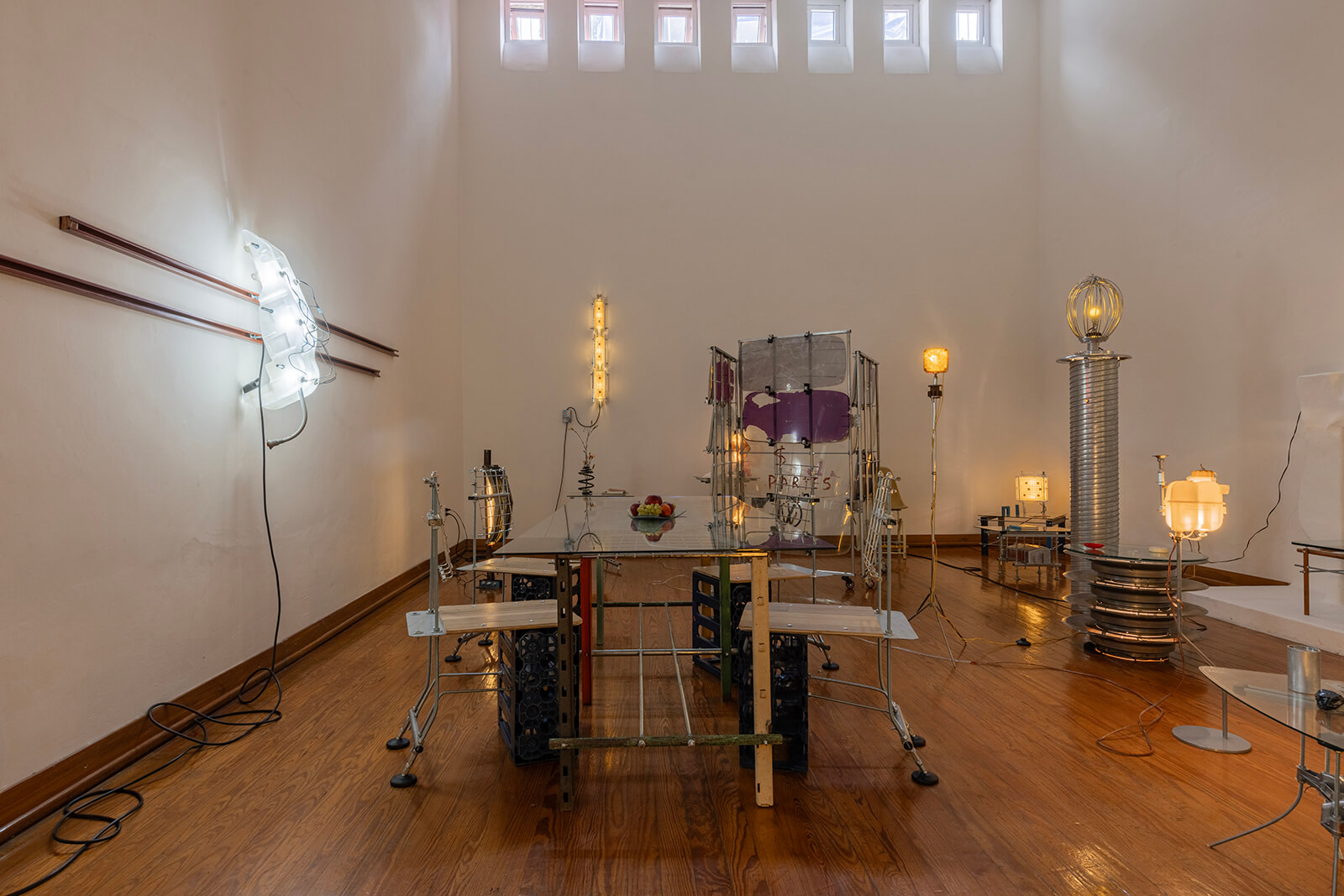
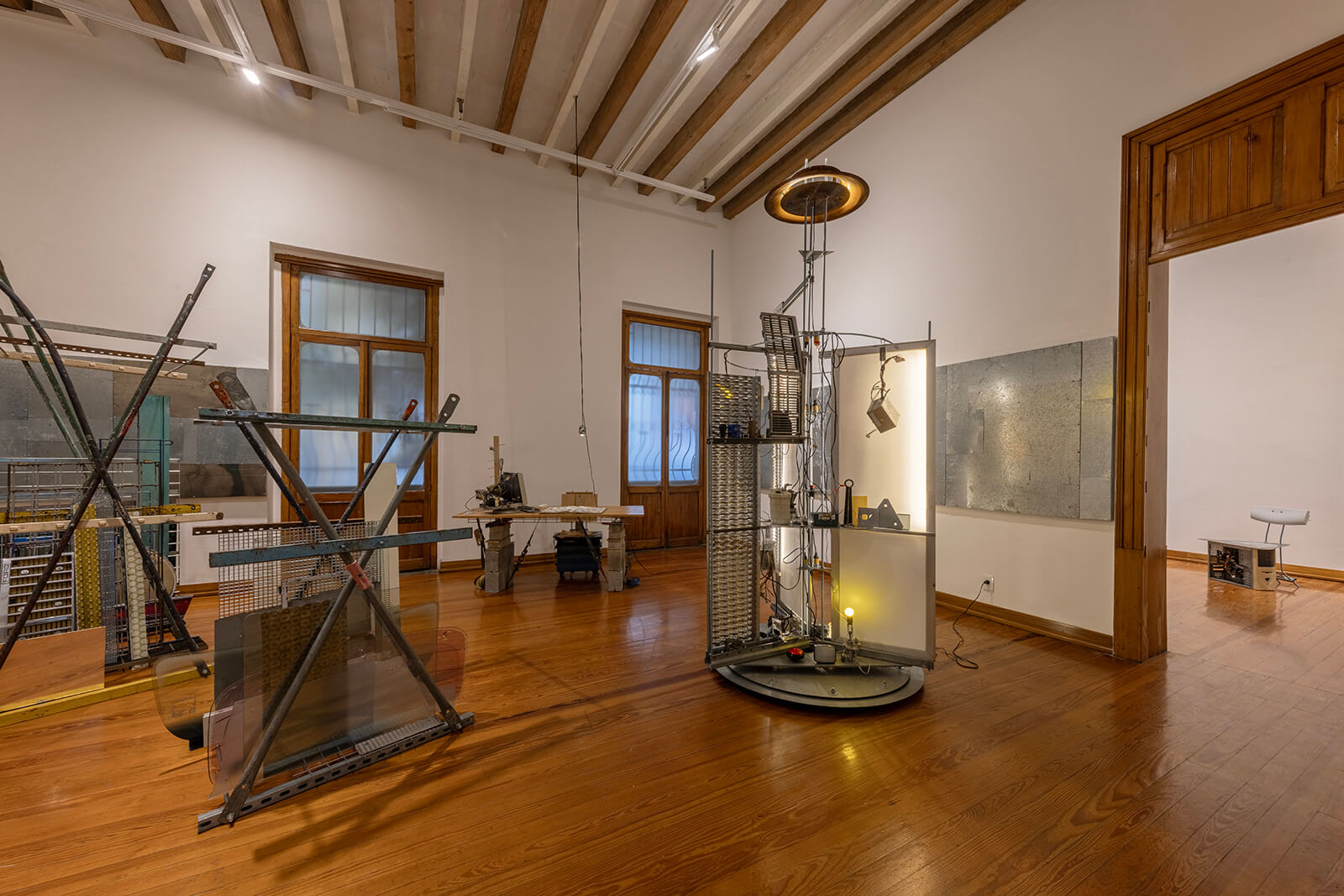
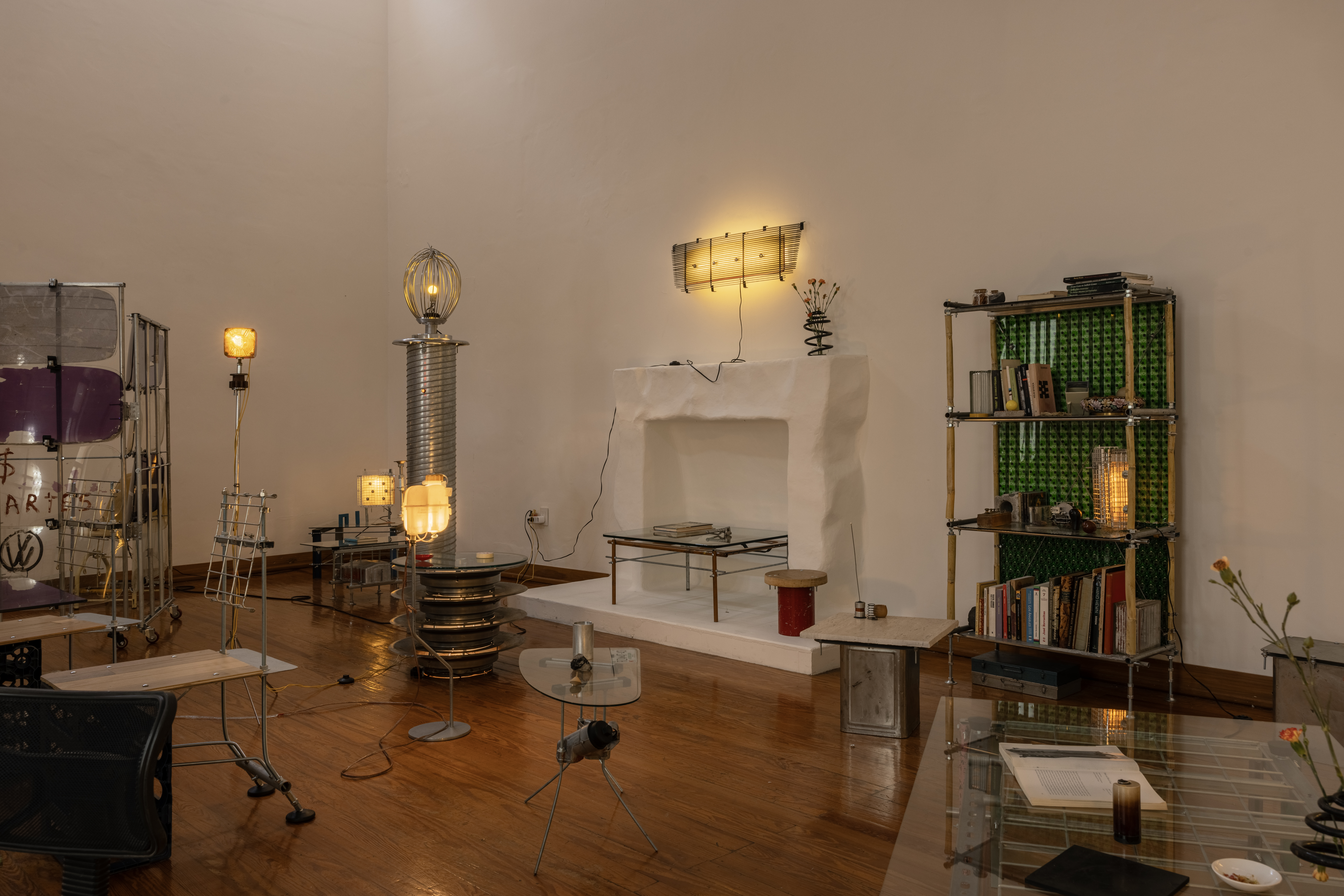
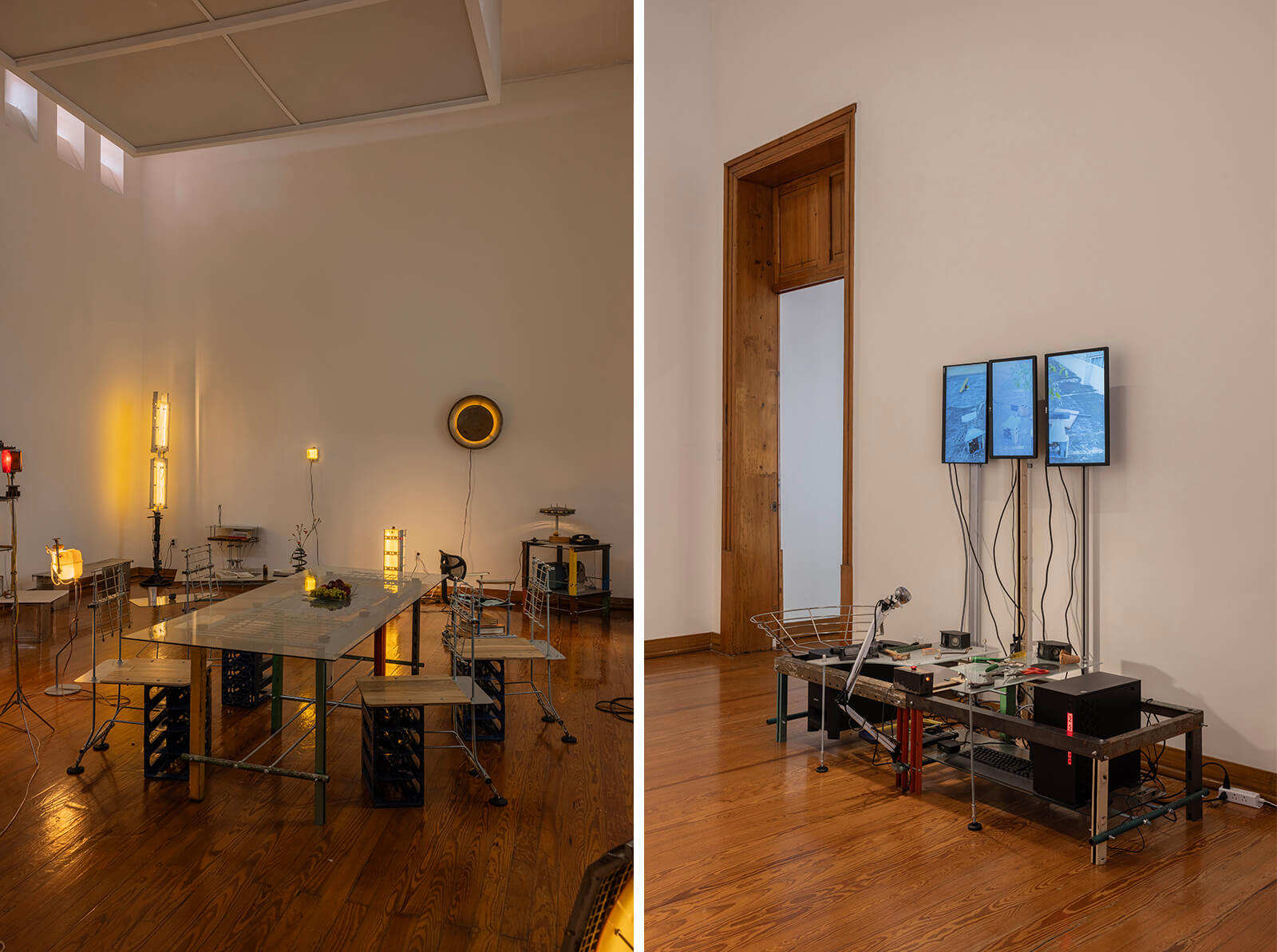
STIR spoke to the designers about Ex Soup’s ‘open code’ approach to design, the story behind its name, their ideas around reuse and assembly and ‘queering’ materials. Edited excerpts from the conversation follow:
Chahna Tank: How did Ex Soup begin? Can you tell us how you both met and what you were both doing before you started the practice?
Javier Guzman: Ex Soup began in 2023 through a grant from FONCA, a Mexican government program that supports artists. That year, I was experimenting with furniture made primarily from construction debris and other discarded materials. Ulises and I met at a party and started connecting through making. We would get together and build couches, chairs and other objects simply as a form of play and experimentation. What initially felt quite informal gradually became a shared way of working.
At the time, Ulises was finishing his studies in architecture at UNAM and had been working extensively with artists, producing and building their work. I had been practising architecture in Malinalco and Tepoztlán, particularly working with natural materials such as bamboo and adobe. Although we came from somewhat different material contexts, both of our practices were strongly grounded in building, improvising and working directly with our hands and bodies. I think that shared relationship with making is what allowed us to connect so naturally and eventually led to Ex Soup becoming a practice we could develop together.
Soup describes both a condition of matter and a way of working with it. It is a mixture in constant transformation, where things lose some of their previous identities and acquire new possibilities through combination. – Javier and Ulises
Chahna: How did the name Ex Soup come about? What does ‘soup’ mean to you, and how does it relate to the way you work with materials?
Javier and Ulises: The name came from thinking about material processes behind the built environment. We were reading about industrial materials being extracted from the Earth’s crust—subjected to extremely high temperatures, becoming liquid, then cooled and transformed into things like glass, metal profiles, aluminium and other construction components. In this sense, we started thinking of the built environment as being made from former soups—ex soups.
We also think of the city itself as a kind of material soup: a constantly moving accumulation of persistent matter that circulates through the territory as objects, cháchara, waste, surplus and fragments, often without the possibility of being reabsorbed into the soil. In Mexico City, this material soup is especially visible through the informal economy and the network of tianguis (open-air markets) spread throughout the city, where things are continuously stirred through commerce, exchange, repair, reuse and necessity.
The idea of soup also relates to the way we understand design through cooking. We are interested in cooking as a domestic practice in which the body, intuition, perception and available ingredients are central to the process. You don't necessarily begin with a fixed recipe or a predetermined outcome; you work with what is at hand, tasting, adjusting, combining and transforming things along the way. For us, then, soup describes both a condition of matter and a way of working with it. It is a mixture in constant transformation, where things lose some of their previous identities and acquire new possibilities through combination. Ex Soup is, in a sense, about entering that process and stirring it again.
Chahna: Why do you describe your practice as an ‘open code design practice’?
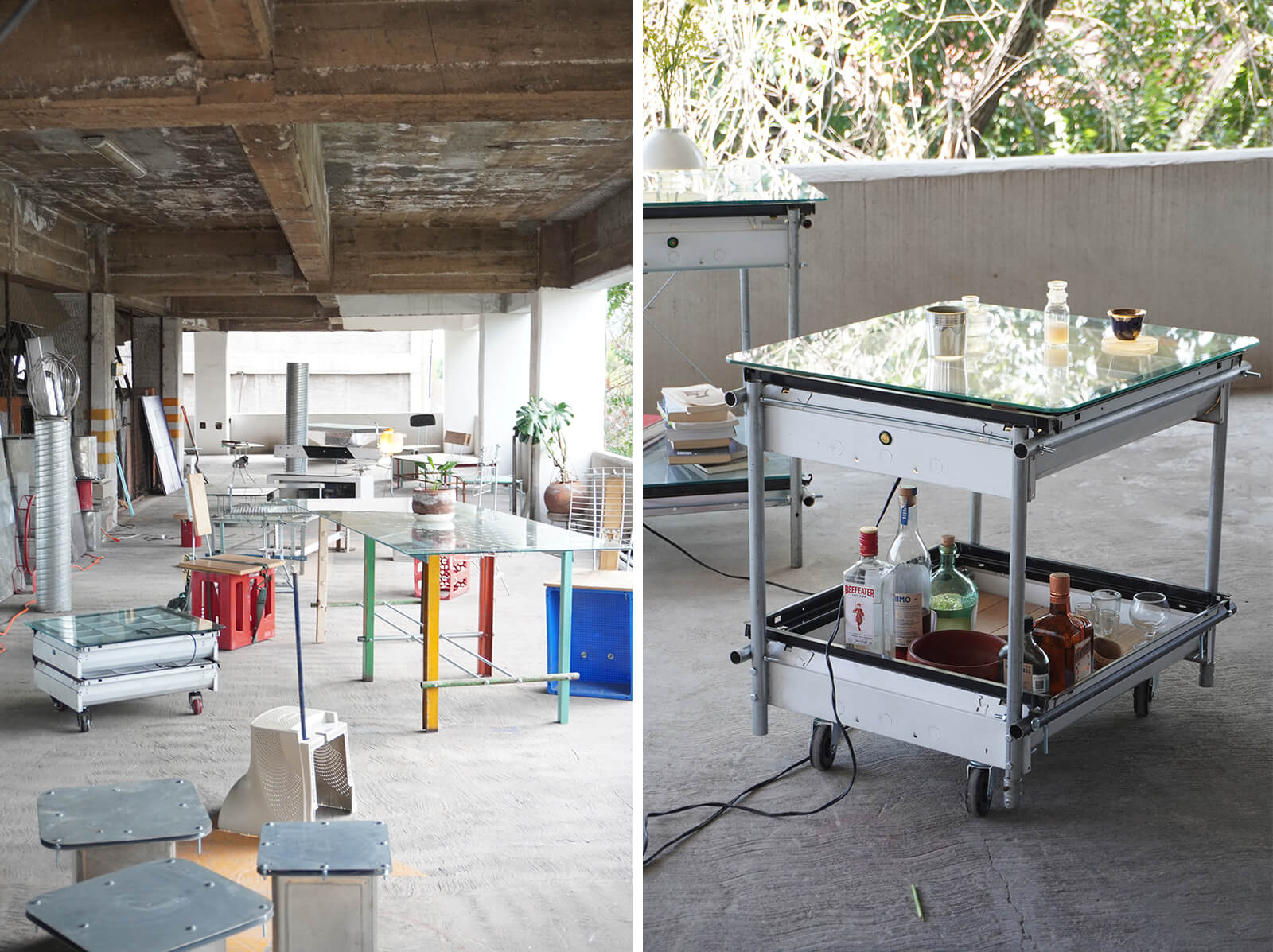
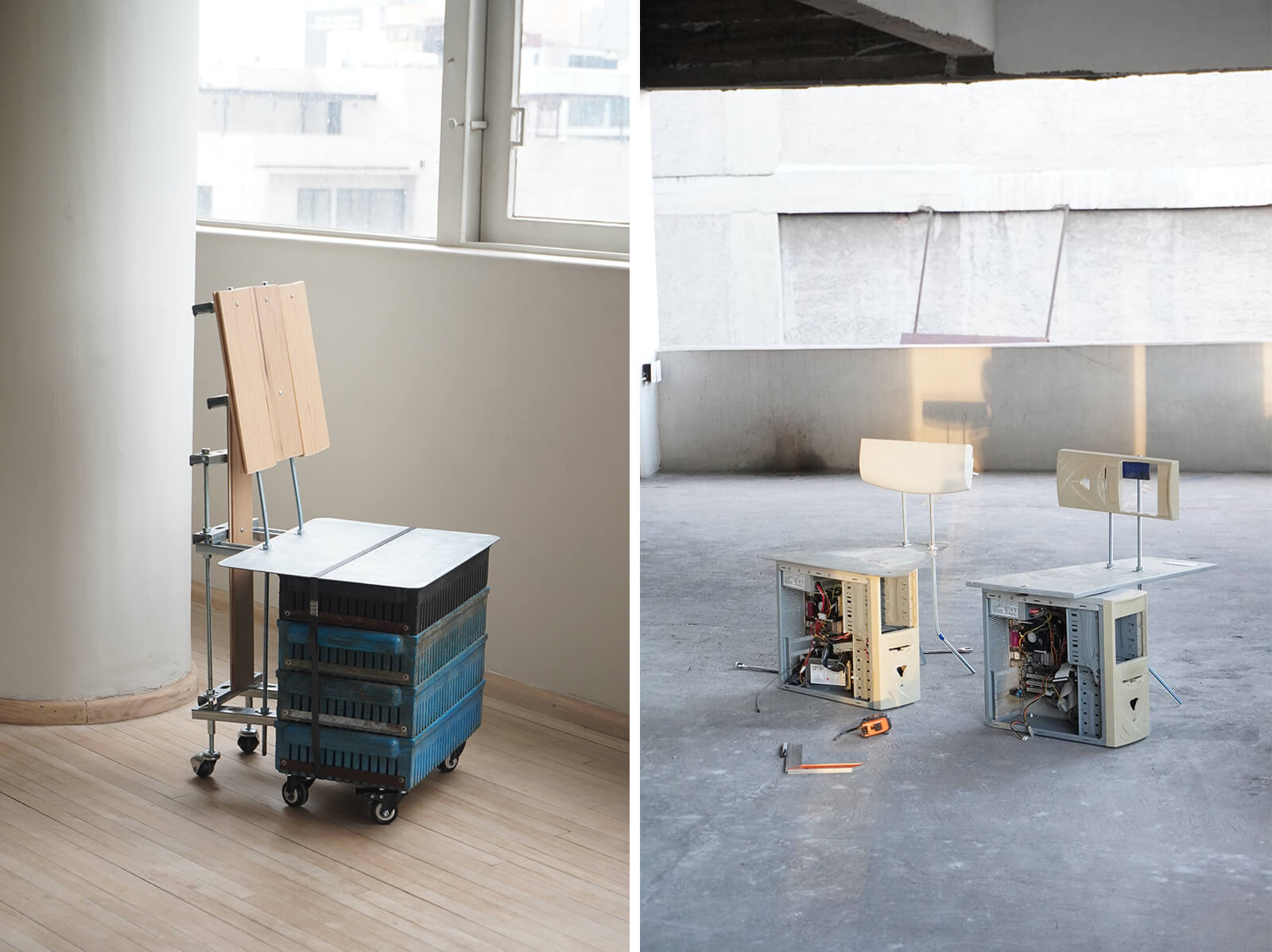
Javier and Ulises: We think of each object not as a finished and fixed form, but as a system that can be understood, modified and built upon. We work mainly through assemblage. One of the main principles of our practice is to avoid glue and welding, which keeps the structures reversible and the components interchangeable. We also try not to hide structure or functionality. Connections, screws, supports and the different components remain visible, making both the object and the process through which it was made apparent to the user. In this sense, the ‘code’ of each device is exposed rather than concealed: it can be read, understood, edited and built upon.
Accessibility is central to this. We rely on simple, commonly available tools—such as a drill, hacksaw, screws, wrenches and other tools found in almost any hardware store—and on materials and fastening systems that do not require specialised machinery or industrial fabrication. This makes the objects easier to repair, adapt or reinterpret, and allows their construction logic to circulate beyond the studio. For us, open code is not only about making an object open to modification; it is about making its logic of construction accessible enough that someone else can intervene in it.
Chahna: A lot of your work starts with the material rather than a predetermined design. You’ve spoken about not drawing the objects beforehand and discovering their forms through handling them. How does that process work for the two of you?
Javier and Ulises: We like to think of our work as an infinite game. An infinite game is played to keep the game going, rather than to reach an outcome or determine winners and losers. We are less interested in arriving at a predetermined form than in keeping the process open and letting each decision generate the next. We begin by handling, testing, combining and assembling the materials we have available. We work through experimentation and play, trying different positions, connections, proportions and ways of putting things together. A material might suggest a particular joint, which leads to another component, which in turn changes the way the whole structure can work. The form gradually emerges through this sequence of decisions. This also means the process differs for each project. We don't necessarily know what the final object will look like when we start building it. In that sense, handling materials is a way of thinking. Building is also a form of drawing for us: instead of representing an object beforehand, we discover it through making. The process remains open for as long as possible, and the final form is the temporary result of that ongoing game.
To ‘queer’ a material means to divert it from its predetermined use and allow it to acquire new meanings and possibilities. – Javier Guzman and Ulises Morin
Chahna: How do you find and source the materials you work with? Is it a matter of actively looking for certain things, or do projects often begin with something you happen to find?
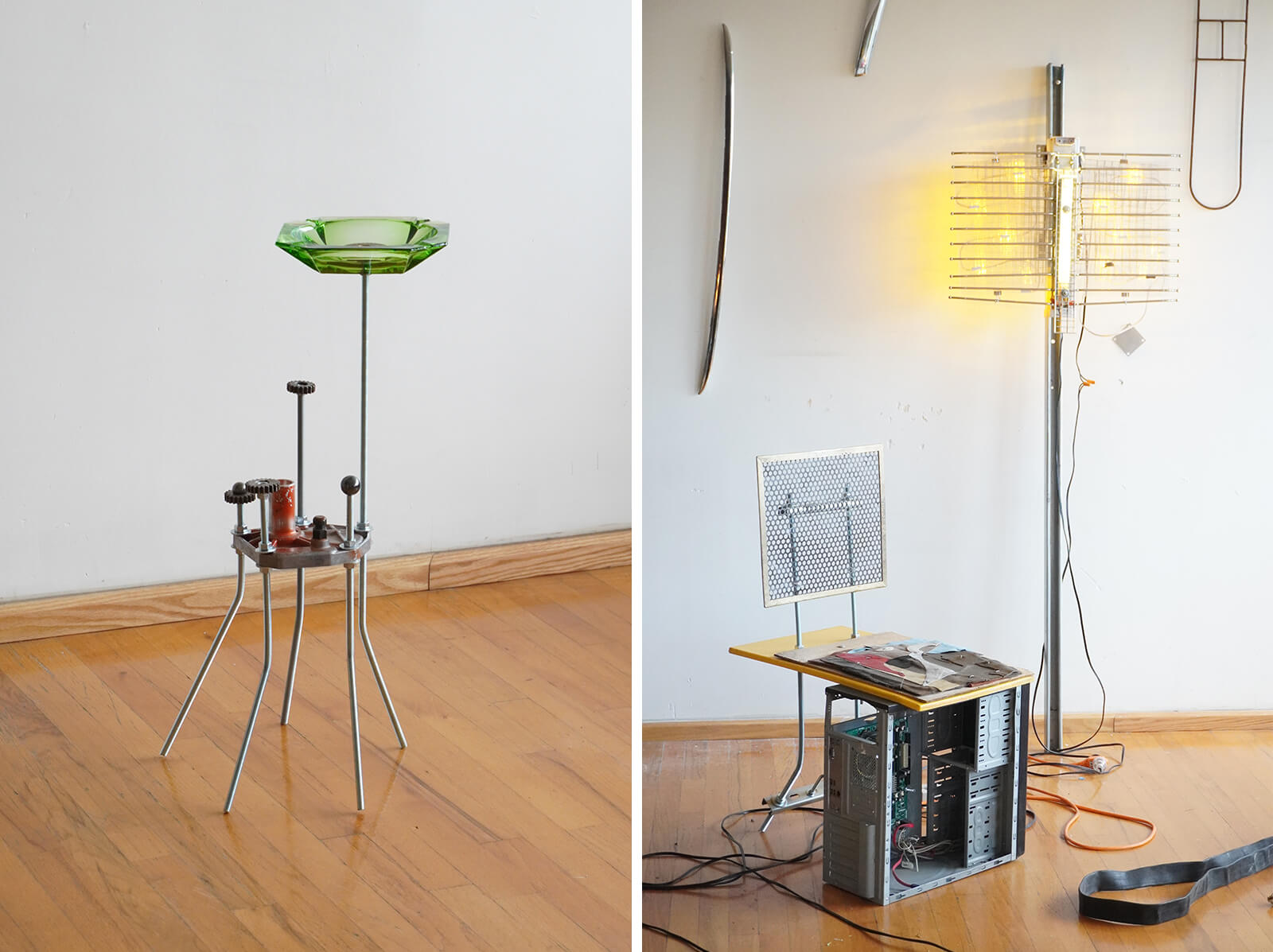
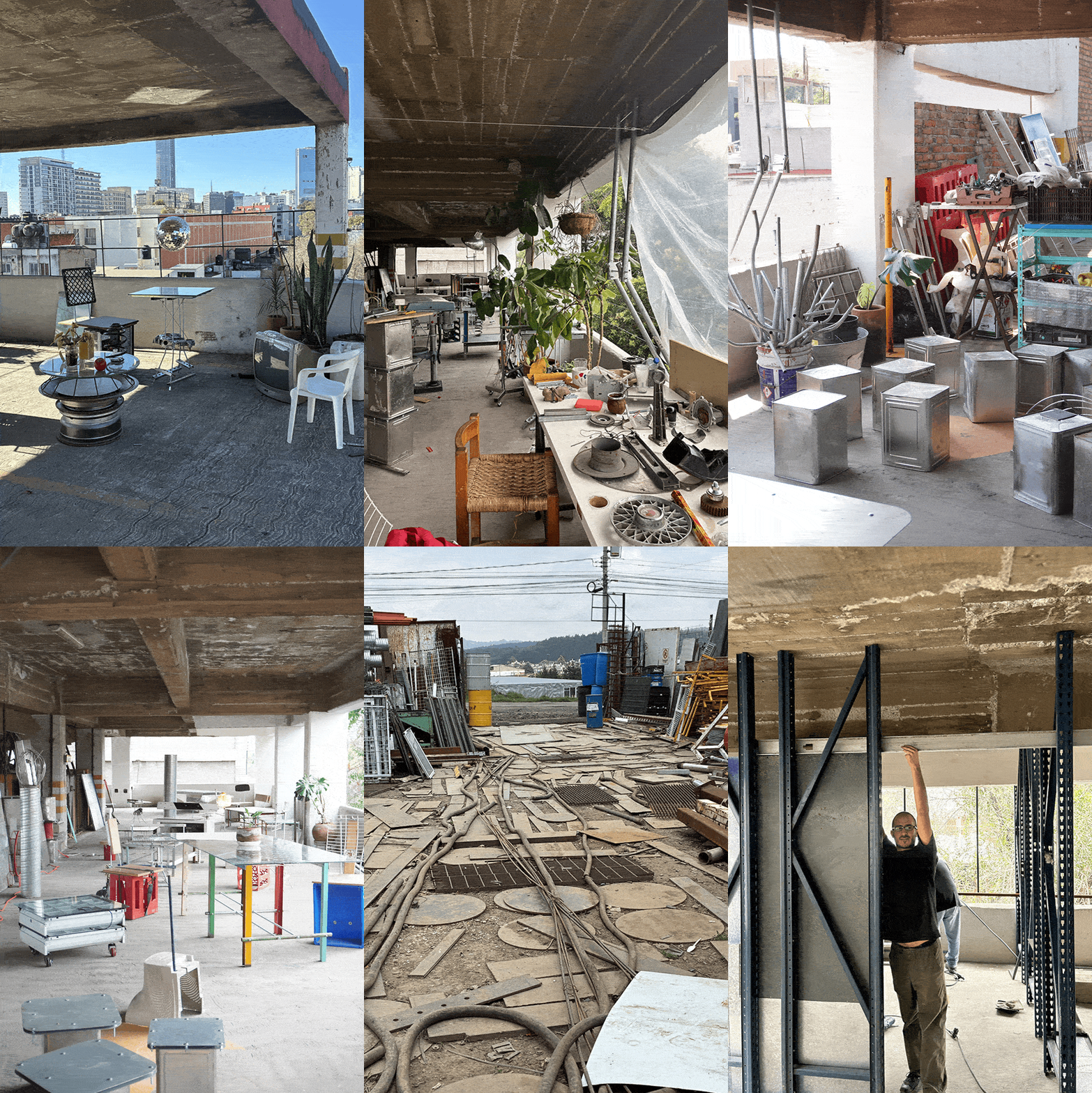
Javier and Ulises: Our practice is made possible, to a large extent, through a process of stockpiling—or what we call in Spanish, hacer bodega. We gather and store materials through what we think of as opportunistic supply chains: non-linear, decentralised networks of collection, exchange and logistics governed by contingency. These networks emerge through fortuitous findings, encounters with obsolescence and tracking urban surpluses and materials that have fallen outside conventional distribution systems. We move through the city looking for these materials in tianguis, junkyards, construction sites and sometimes through friends or acquaintances trying to get rid of things.
Our bodega therefore becomes a discontinuous inventory system, where stock is determined by situational availability and by what we can access through the cracks and excesses of larger economic and industrial systems. What we find—and what we can accumulate—often becomes the starting point for a project.
Chahna: What does it mean to ‘queer’ a material in your practice?
Javier and Ulises: For us, to ‘queer’ a material means to divert it from its predetermined use and allow it to acquire new meanings and possibilities. We are interested in taking objects away from the functions they were designed for and placing them into new relationships and structures. In this process, we often feel that we are somehow liberating objects. An object arrives with a certain function concealed within its original form, but by diverting it from its expected use, we try to open up what it can become. We are interested in these more open structures, where a material's original identity remains present but no longer determines what it has to be. In this sense, queering creates deviations from established uses and allows materials to participate in structures that are more open, provisional and full of possibilities.
Chahna: You describe the aesthetic of your work as ‘constructive transparency’—leaving the history of a material visible rather than hiding it. Why is that important to you?
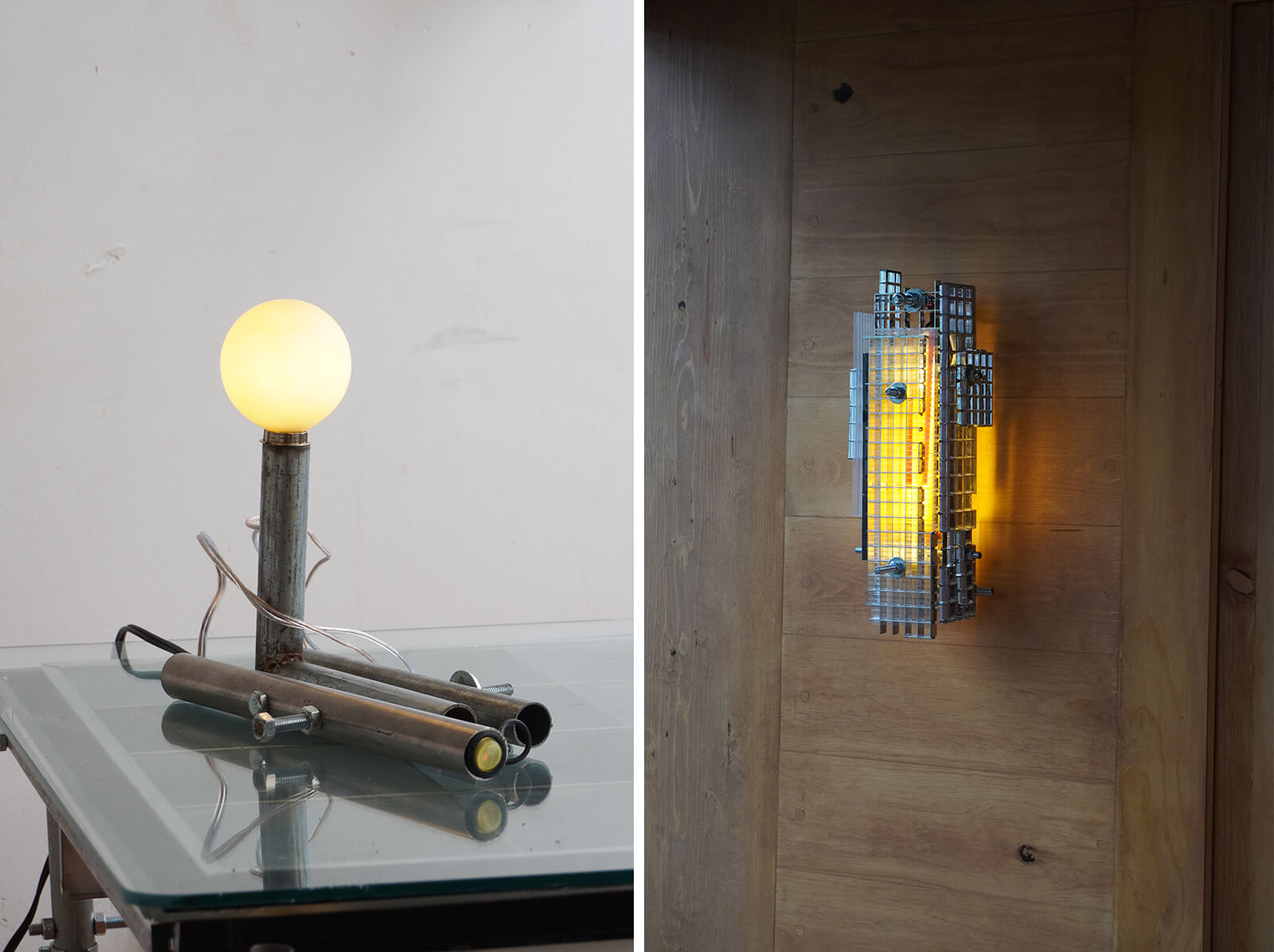
Javier and Ulises: Because we work with found and repurposed materials, each component arrives with a previous life. A scratch, a hole, a layer of paint, a particular shape, or a trace of its previous use can tell us where the material came from and what it was before becoming part of the piece. We don't want to erase these traces to make the object look new. Instead, we see them as part of the material's identity and as information that can participate in the new construction. Transparency matters because we want the object to communicate something about how it was made. In a conventional finished product, much of the labour, infrastructure and decision-making behind the object tends to disappear. We are interested in doing almost the opposite: making those processes visible.
Chahna: You’ve now worked with different materials in very different contexts, from the streets of Mexico City to East London, and from individual furniture pieces to your museography project at Casa Lago UNAM. What was it like moving between these different contexts and cities, and did it change the way you worked?
Javier and Ulises: What has been interesting for us is that, even when the context changes, the basic process remains quite consistent. What changes considerably is the material culture surrounding the objects we work with. In that sense, each context gives us a different kind of material soup to work with.
In Mexico City, for example, many of the things we work with are still part of active commercial and informal economies. Objects circulate through tianguis, junkyards, repair shops and second-hand markets, and there is a strong culture of repairing, reusing, modifying and giving things a second or third life. In London, we encountered a somewhat different situation. We found many objects simply left on the street because someone no longer wanted them. That changes how we encounter materials: instead of entering an established network of exchange, sometimes the street itself becomes the point of collection.
Casa Lago at UNAM introduced another kind of difference: scale. As the work grows, the possibilities and limits of what we can do ourselves change. We have to bring other people and forms of knowledge into the process. For this project, we collaborated with Óscar Gutiérrez, a metalworker who has become a very dear friend of Ex Soup and someone we now work with regularly. His knowledge and way of working became part of the process rather than simply a service we commissioned.
What often forces us to innovate are actually the limitations we impose on ourselves through the protocols we work with: we don't weld, we don't glue, we use reversible assemblies, and we work with persistent materials that are already circulating in the city. – Javier Guzman and Ulises Morin
Chahna: When you’re assembling a product from unexpected materials, are there moments when something forces you to innovate in ways that are completely surprising or take you in unexpected directions?
Javier and Ulises: What often forces us to innovate are actually the limitations we impose on ourselves through the protocols we work with: we don't weld, we don't glue, we use reversible assemblies and we work with persistent materials that are already circulating in the city. These constraints make certain conventional ways of designing and manufacturing impossible, but they also open up other possibilities. Because the materials we find are inconsistent, we cannot really produce objects that are completely standardised or perfectly repeatable. A piece of conduit might be a different length, a crate might have slightly different dimensions or a found object might have an unexpected hole or deformation—we try to incorporate all of that into the logic of the design. This means that we often end up designing systems rather than fixed objects.
The unexpected doesn't necessarily come from a single surprising material or accidental discovery. It emerges from the negotiation between our protocols and the variability of what we find.
Chahna: What are you most curious about exploring NEXT?
Javier and Ulises: We have been exploring several new directions. One is introducing more kinetic qualities into our objects: things that move, rotate, oscillate or otherwise change through use. We have also been increasingly interested in working with light and sound, and in exploring ways for pieces to be activated through interaction and programming. We are curious about what happens when simple, accessible construction methods and found materials interact with electronics, movement, sound and code. In a way, we want to expand what an assembly can do.

by Mrinmayee Bhoot Oct 08, 2026
The game designer discusses their work and its manipulation of scale, scientific data and non-human perspectives to create speculative futures in conversation with STIR.
by Pranjal Maheshwari Oct 07, 2026
Under the theme R.A.W. (Rebel Authentic Worth), one of Europe’s most awaited design festivals returns for its 26th edition to investigate solutions for a world in crisis.
by Chahna Tank Oct 03, 2026
Wooden chairs by the Chilean designer reveals handmade forms and painted details that weave memories, literary references and personal stories.
by Mrinmayee Bhoot Oct 01, 2026
As the European Central Bank concludes a public survey to determine the new designs for Euro notes, the discourse expands to how currency could signify shared values and identity.

make your fridays matter with a well-read weekend
Enter your details to sign in
Don’t have an account?
Sign upOr you can sign in with
a single account for all
STIR platforms
All your bookmarks will be available across all your devices.
Stay STIRred
Already have an account?
Sign inOr you can sign up with
Verification link sent to check your inbox or spam folder to complete sign up process
Tap on things that interests you.
Select the Conversation Category you would like to watch
Please enter your details and click submit.
Enter the 6-digit code sent at


Ex Soup on stirring new possibilities of making with what cities leave behind
by Chahna Tank | Published on : Oct 08, 2026


 Sign in with Google
 Sign in with email
What do you think?