Art06 mins. read
'Personal Structures: Beyond Boundaries' makes a strong case for plurality
by Eleonora GhediniApr 29, 2024



by Beth CitronPublished on : Aug 22, 2024
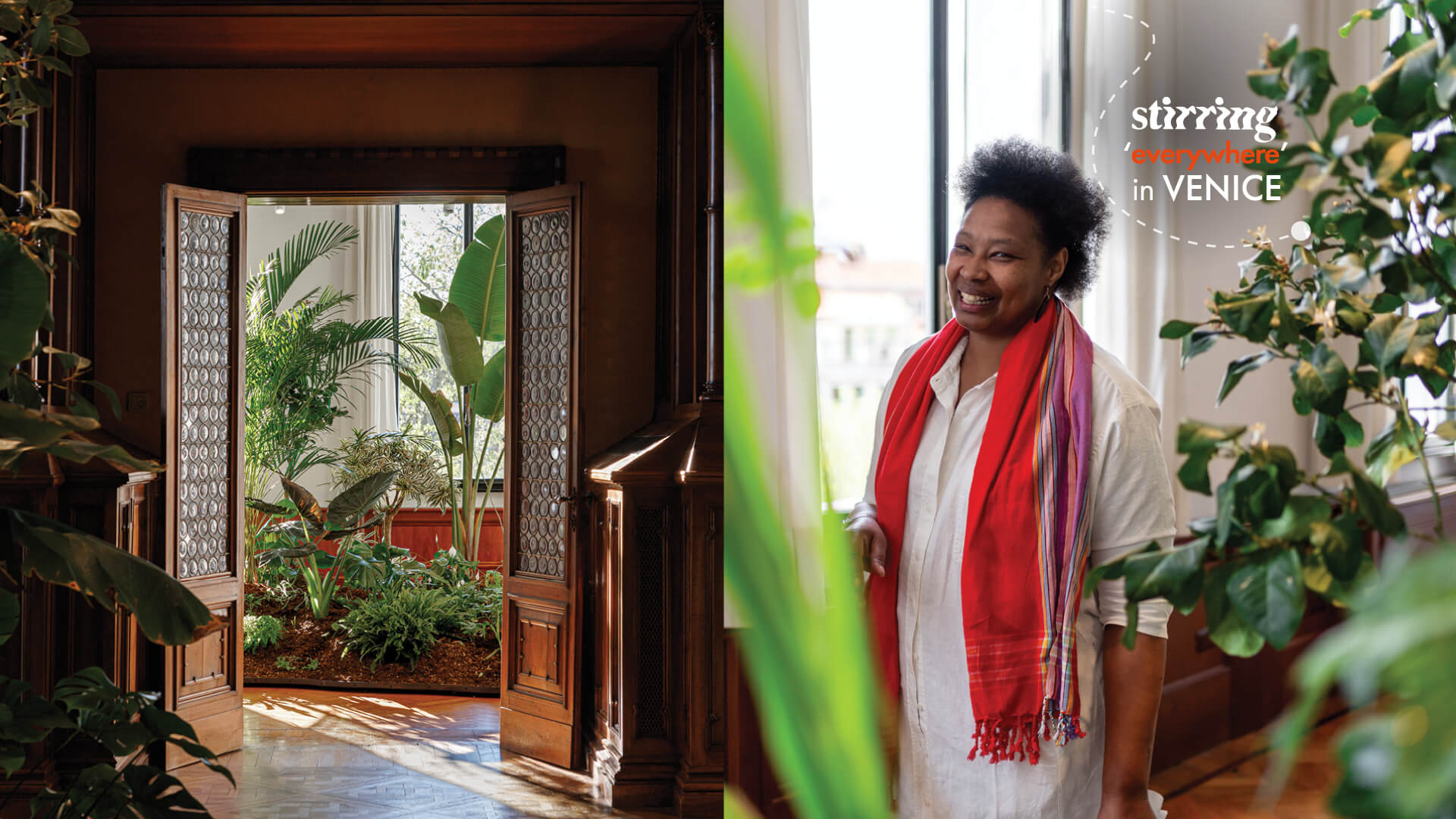
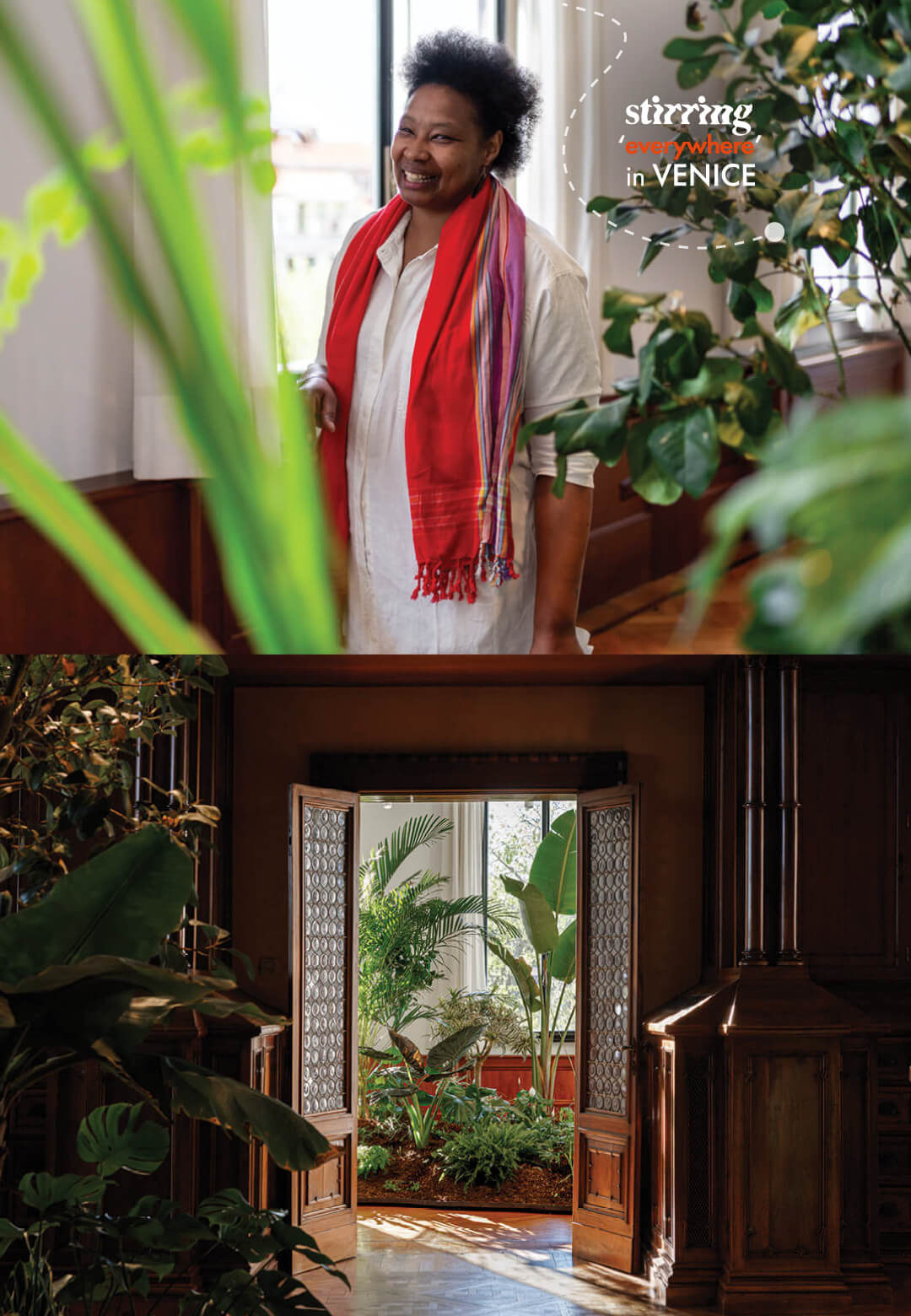
Amidst the saturation of art and culture of the 60th Venice Biennale and the winding alleys and canals of the floating city, a garden aptly tucked into a palace would seem to be an idyllic spot to pause and reflect. Yet, for the collective Greenhouse—composed of artist-curators Mónica de Miranda, Sónia Vaz Borges and Vânia Gala—the garden instead becomes a catalyst for collective action, in their novel and challenging contribution to this year’s event as they helm the Portugal Pavilion. The trio sought—as they put it—to explore "interconnections of practice, theory and pedagogy," presenting the exhibition space as a place of experimentation and reflection. They embark on this through the elaboration of a “Creole Garden” within Palazzo Franchetti, which integrates sculpture, stage, installation and areas for gathering, holding space for discourse and discovery as visitors co-create its program and break the traditional hierarchies between artists, curators and audience.

Greenhouse includes an artist (de Miranda), a researcher (Vaz Borges) and a choreographer (Gala) and their interdisciplinarity is intersectional as they work through distinct fields on different subjects. This has facilitated a fertile range of programs in the Pavilion, ranging from talks around ecologies of care by activists such as Vandana Shiva, to workshops/performances on abolition as emancipation in the struggle for land rights. Earlier this summer, STIR spoke to Vaz Borges about the collective’s radical and pluralistic hopes for the Portuguese Pavilion, which continues to host major speakers and incisive pedagogical workshops through the run of the Biennale this autumn.


Greenhouse divides its rhizomatic program into four “actions”: Garden, Living Archive, Schools and Assemblies. The Garden is a physical site that speaks to historical acts by enslaved people, who would tend diverse soil as an act of resistance, subsistence and gathering that countered plantation culture. Greenhouse’s lush garden introduces a range of tropical plants that are cared for according to permaculture and syntropic principles (which create order) and it sets the stage for urgent and evergreen questions around home, diaspora and exile. This extends even to the indigeneity and transposition of various plants; in planning the garden, the collective intentionally chose plants from across Italy. This also connects to the collective’s goals to mitigate the ecological impact of the Pavilion, as they intend to donate the plants and soil to the community after the biennial ends, extending its life and reinforcing the intended social impact of their work.

Greenhouse’s lush garden introduces a range of tropical plants that are cared for according to permaculture and syntropic principles (which create order) and it sets the stage for urgent and evergreen questions around home, diaspora and exile.
The Garden is set amidst Monica de Miranda’s sculptures, two of her films (one produced with Vaz Borges) and one sound installation broadcasting selections from the magazine The Funambulist, which is focused on the politics of space and bodies. The Living Archive, the Schools and Assemblies jointly comprise the Pavilion’s public program, each with a different take. The Living Archive incorporates choreographed performances and installations, guided by the diversity of sounds emanating from the exhibition’s sound installation. The School, curated by Vaz Borges, proposes a series of provocations through workshops, ranging from Silent Speaking to Dragon Dreaming, in part seeking the transformation of collective and individual behaviours. The Assembly hands over the forum to guest artists and intellectuals, ranging from theorist Denise Ferreira da Silva to curator Bonaventure Soh Bejeng Ndikung, further decentralising and decolonising the Pavilion’s intellectual scope and inviting audiences into the life of its collective reflection and work.
Tap the cover video to watch the full conversation.
Video script by Harshali Pagare

by Mirra Lynn Nov 10, 2026
The Chilean artist’s first major UK show traces six decades of work shaped by exile, ecology and Indigenous cosmologies.
by Srishti Ojha Nov 05, 2026
In conversation with STIR, the Bhutanese artist speaks about her continuing evolution and experimentation following her win of the 2026 Rubin Art Prize.
by Samar Jodha Nov 04, 2026
The exhibition in Delhi explores how colonial records and land classifications have shaped our understanding of shared resources and the communities that depend on them.
by Mrinmayee Bhoot Nov 03, 2026
The Pakistani-American artist’s first solo show in Europe brings together paintings that explore queer and immigrant lives, human connection and the complexities of cultural belonging.

make your fridays matter with a well-read weekend
Enter your details to sign in
Don’t have an account?
Sign upOr you can sign in with
a single account for all
STIR platforms
All your bookmarks will be available across all your devices.
Stay STIRred
Already have an account?
Sign inOr you can sign up with
Verification link sent to check your inbox or spam folder to complete sign up process
Tap on things that interests you.
Select the Conversation Category you would like to watch
Please enter your details and click submit.
Enter the 6-digit code sent at


Exploring the Portugal Pavilion: Collective work within a 'Creole Garden'
by Beth Citron | Published on : Aug 22, 2024


 Sign in with Google
 Sign in with email
What do you think?