Art10 mins. read
Purvai Rai’s cartography of care, shared ecology, culture and divinity
by Srishti OjhaAug 03, 2026




by Srishti OjhaPublished on : Nov 26, 2025
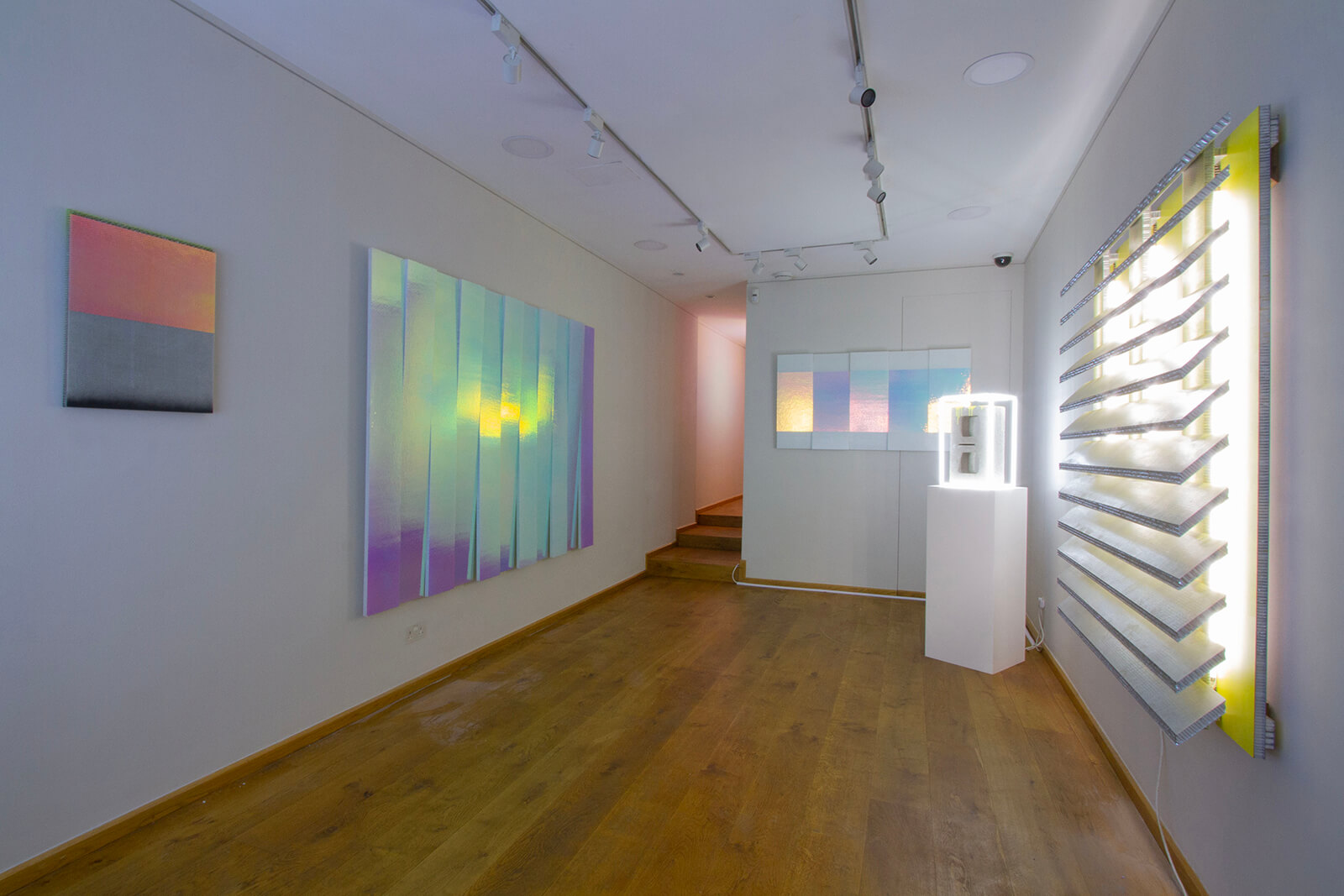
“I consider this series to be my version of landscape painting,” says British artist Nathaniel Rackowe as he speaks with STIR. He is referencing Passing Through, a series of abstract works made using dichroic film that shift and change with the light and the viewer’s position. The long, multicoloured panels sticking out from the wall at various angles don’t seem to fit the mould of landscape painting, but this is Rackowe’s world, where the shifting colours bring to mind sunsets reflected off asphalt, and day shifting into brilliantly lit-up urban night. The vertical cuts stand in for the buildings and towers that dominate his hometown of London, and other cities worldwide. The multimedia artist transforms mass-manufactured and familiar materials—concrete, timber, glass, bitumen, aluminium—into poetic ruminations on urban life and structures that are as industrial and abstract as they are emotional and personal.
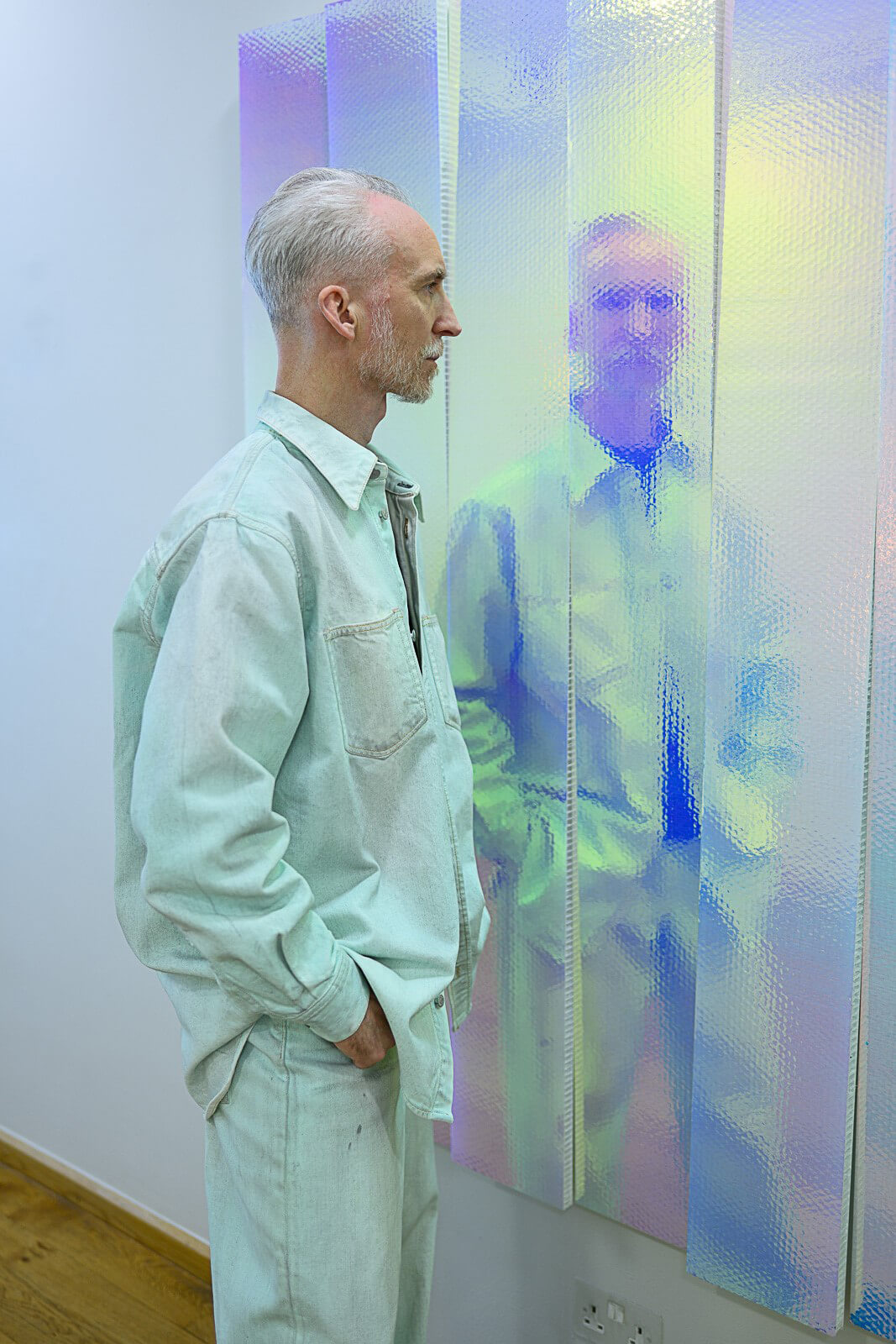
Rackowe’s solo exhibition Asphaltos Phos at Varvara Roza Galleries, highlights his search for beauty and connection amidst the mundane, unsightly and unnoticed parts of cities and urban infrastructure. His first solo show in London in six years is a culmination of his thoughts and search for hope during the COVID-19 pandemic and his recovery from cancer. This exhibition coincides with his major public light installation in London, Desire Lines, part of the Southbank Winter Light Festival. Simultaneously, Yves Saint Laurent shopfronts in major cities around the world will display commissioned industrial and raw works from Rackowe’s Drift Point series. Rackowe is at home regardless of the setting, inviting viewers and general passers-by alike into his works to question the materials and spaces they are surrounded by and to become aware of the paths of movement they are beholden to. While to some, searching for nature, beauty and connection in a concrete jungle may seem like an oxymoron, this tension defines Rackowe’s practice.
Excerpts from STIR’s conversation with Rackowe follow:
Srishti Ojha: Often, materials are seen as merely a means to the end of creating an artwork or conveying a certain idea. In your practice, materials are more primary and central. Could you describe the significance of everyday and mass-manufactured materials in your work, such as concrete, bitumen, glass, aluminium, etc. and how they shape your process?
Nathaniel Rackowe: The place many artists will go to stock their studios would be an art shop; my equivalent is a builder’s merchant. That’s my playground. If I chose materials that people didn’t understand or weren’t familiar with, I feel it would create a barrier to the work. Even if someone doesn’t know the specific timber or metal I’m using, there is a familiarity on some level because they are so surrounded by such materials.
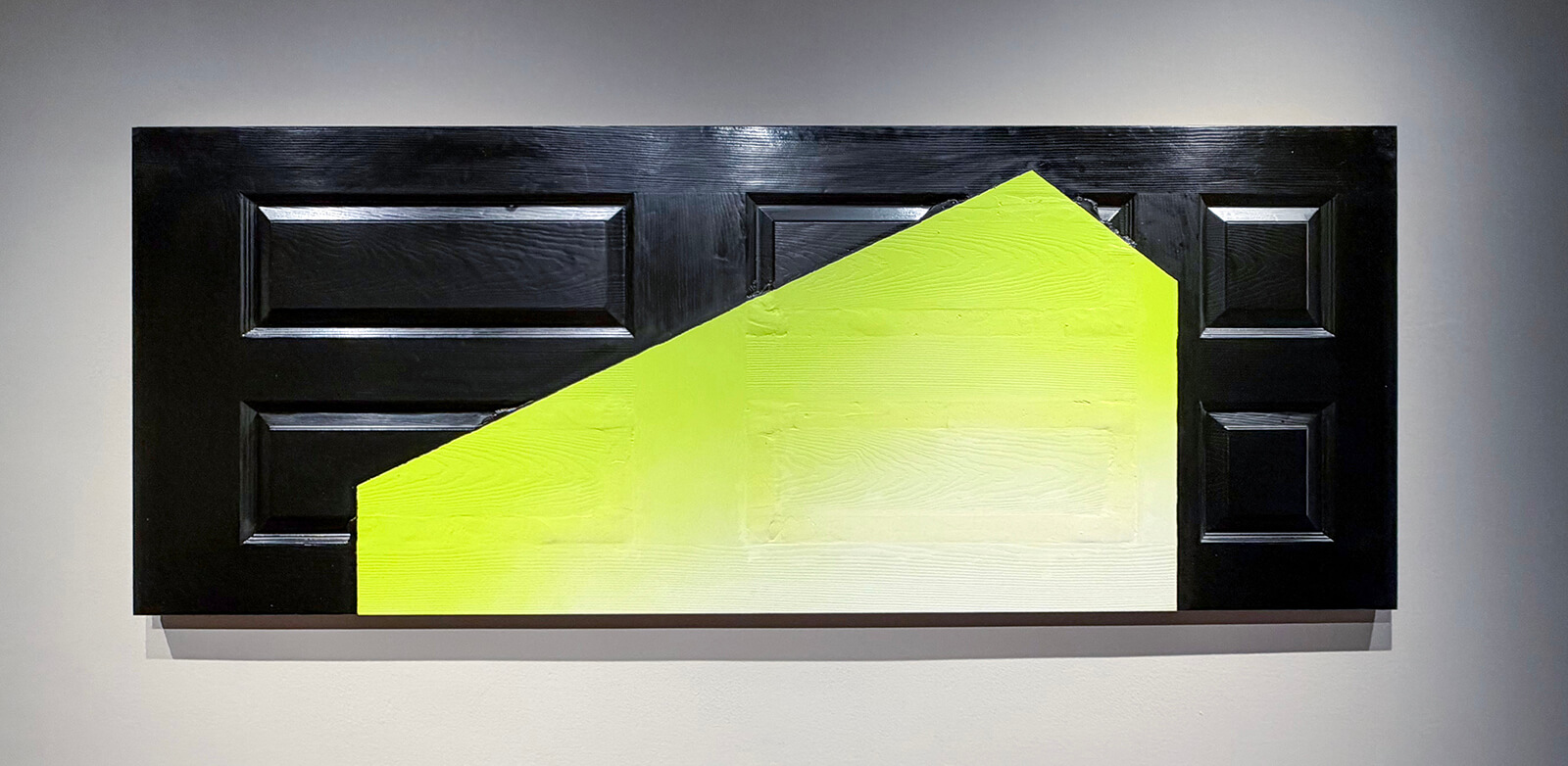
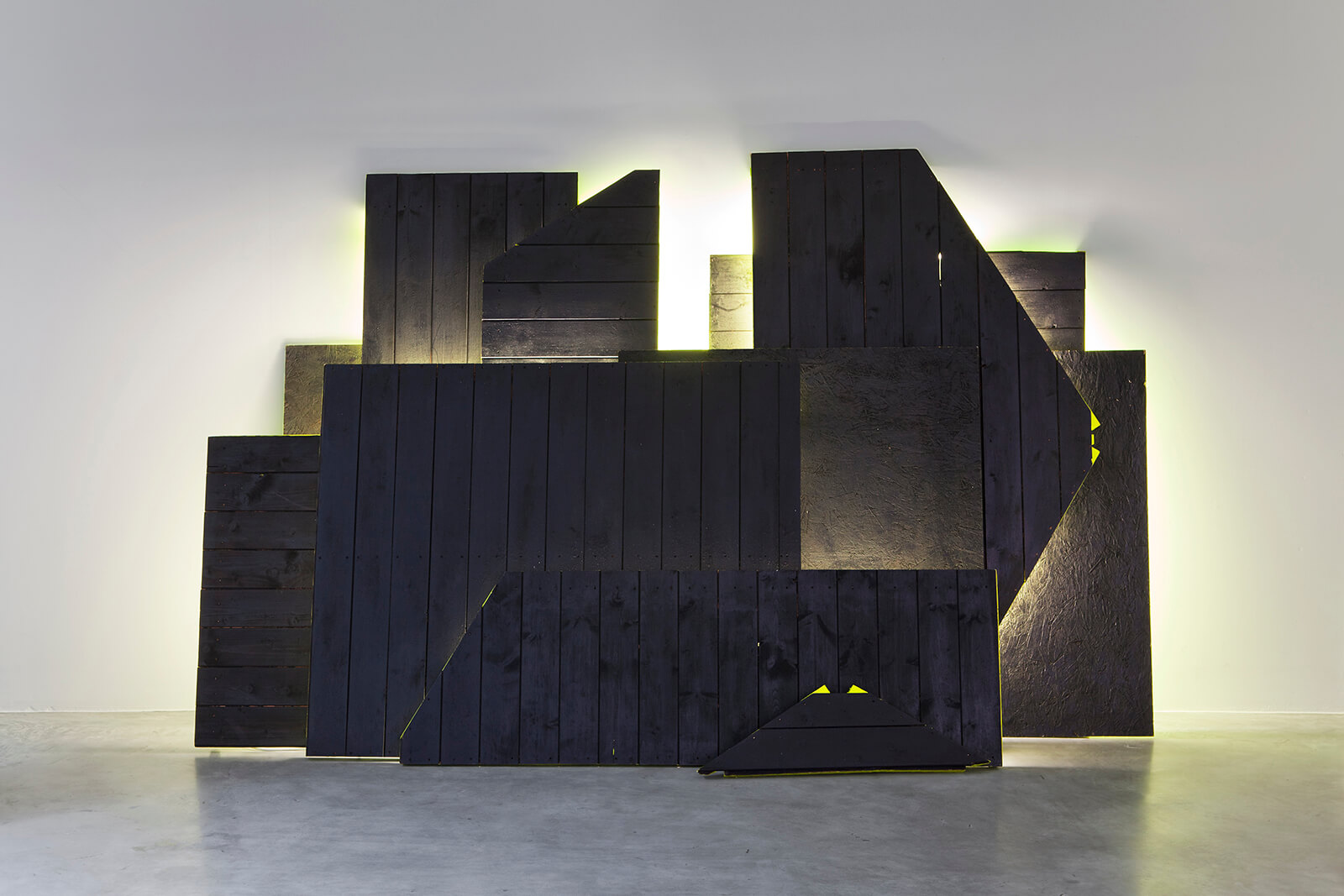
I also consciously tend not to use reclaimed materials. There is a lot of great artwork that relies on materials that have had a previous life, but I didn’t want to use that as a crutch in my own work. I wanted to use materials that had a familiarity but not their own history. I wanted to create the history and its framework from scratch. The doors in the exhibitions aren’t reclaimed; they’re mass-produced hollow-core doors that I chopped into and pulled apart to reveal their inner structure, coating sections in plaster. I sprayed them with aerosol and painted them with bitumen. That is the transformation and combination process. Then it is up to the viewer to pick apart all the elements. Every single material in the work is part of what it is communicating. Nothing is accidental, and nothing is taken for granted.
Srishti: Could you talk about Drift Point and Passing Through in particular?
Nathaniel: The Drift Point series that had been commissioned by Yves Saint Laurent was an interesting one, because I was aware that those works were at the more raw and hard-edged spectrum of my work…Light becomes the glue, the binding material for the work that allows me to combine opposing materials in a really effective way.
The Passing Through pieces with the dichroic films were exciting in a different way because they’re mainly wall-based works. At my core, I’m a sculptor who is fascinated by space and movement. The challenge becomes achieving that in a wall-based piece, which has quite constrained parameters. But by using a surface that literally changes colour as you move, that has infinite reflections of the light that’s hitting it, there is no way to understand or see that piece from one viewpoint. It’s the absolute opposite of standing in a fixed point in front of a painting and moving into the world the painting depicts. The worlds of my paintings, if you want to call them that, aren’t within the work, they’re around the work… I consider that series to be my version of landscape painting, but an urban landscape.
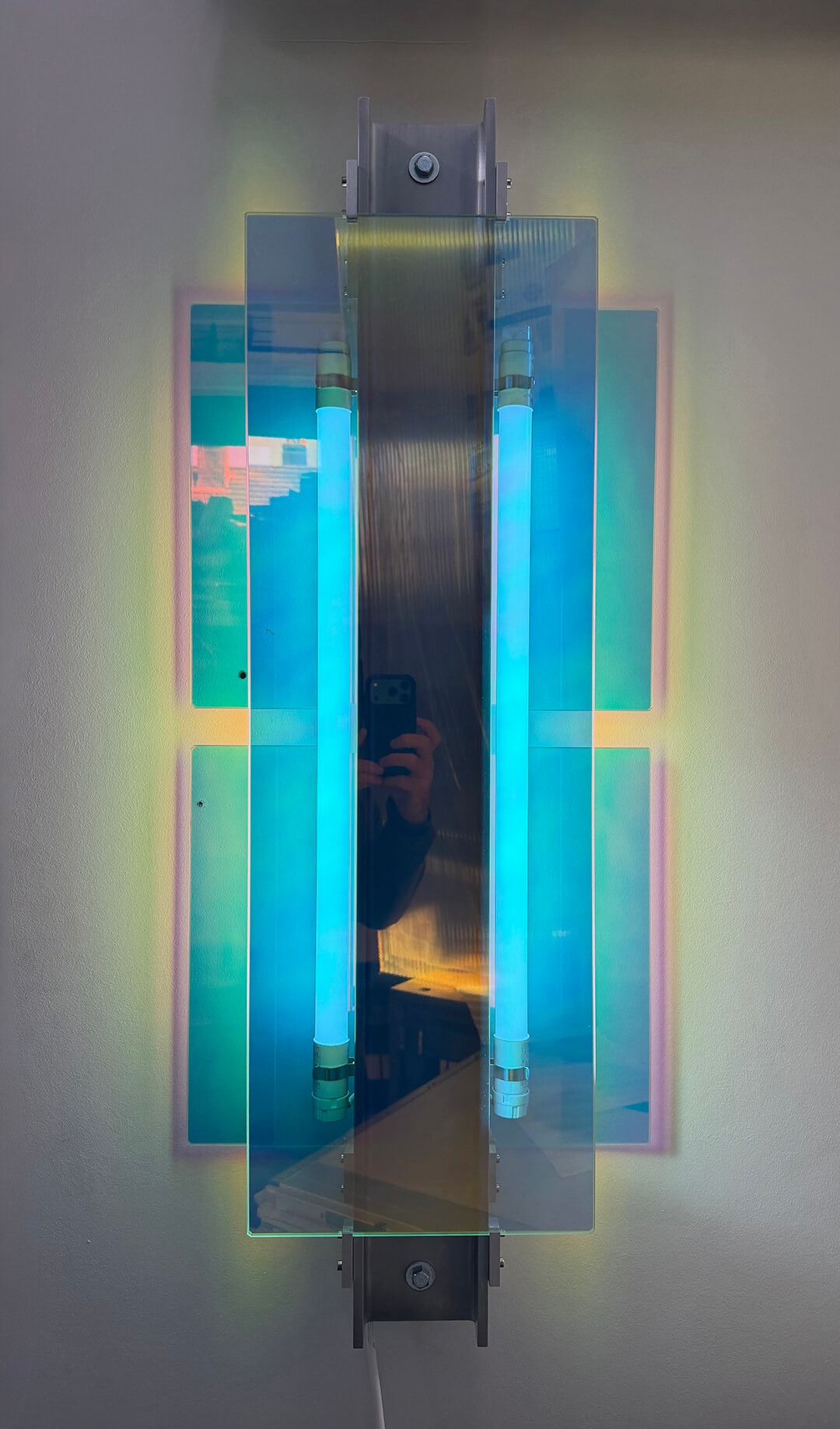
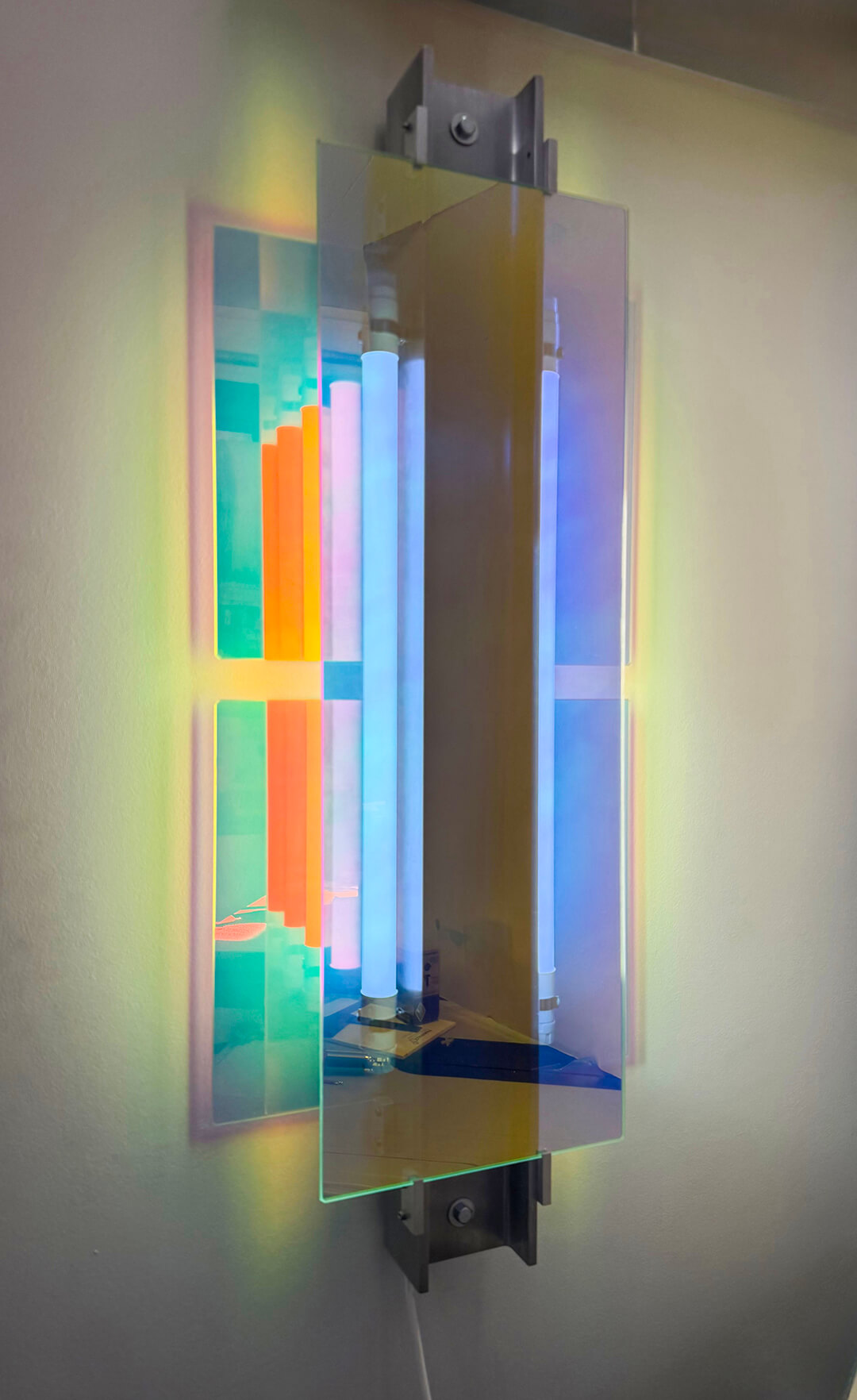
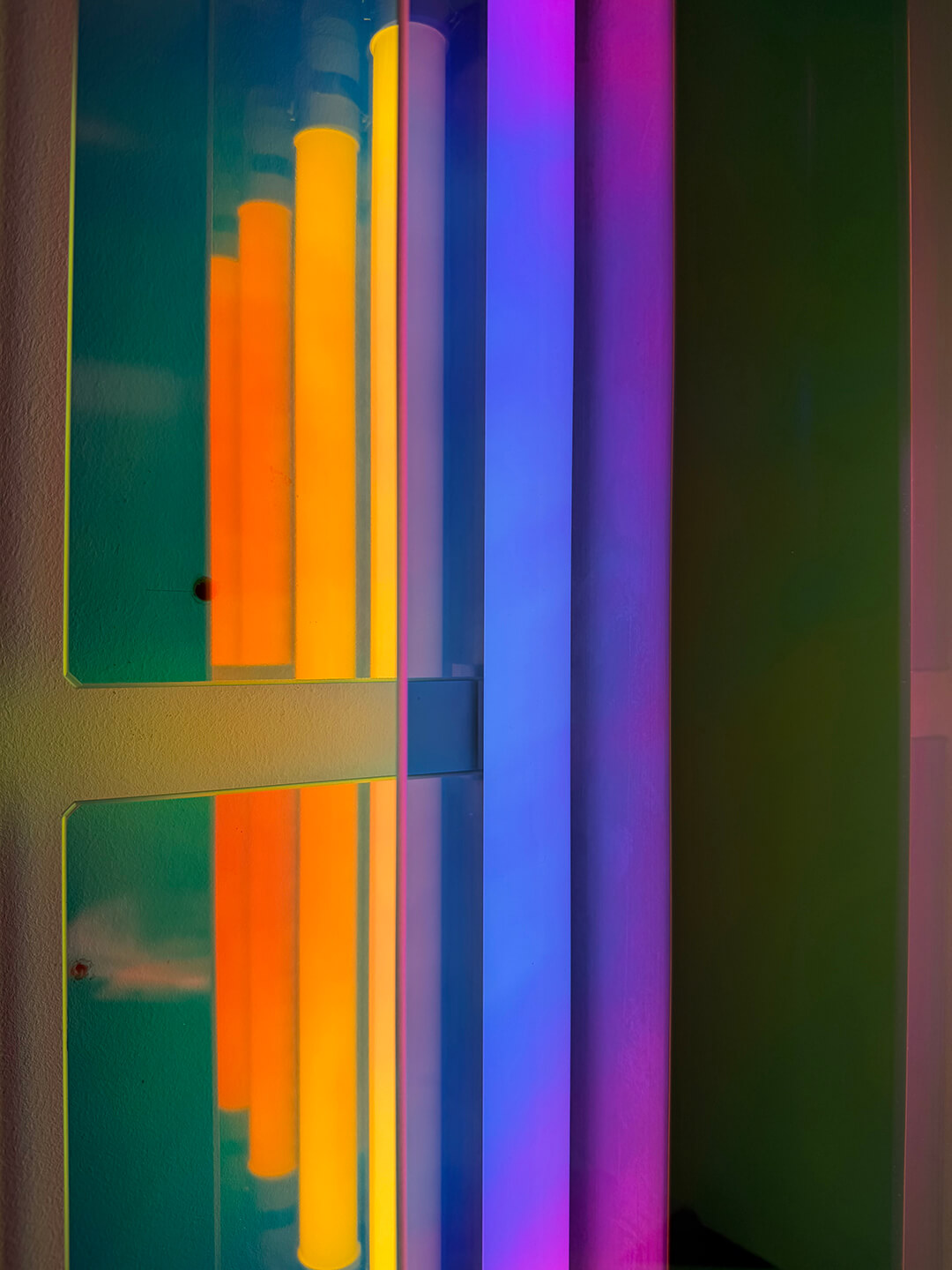
Srishti: There is a throughline in your work, particularly in these three series—the idea of liminality, thresholds between the urban and the natural, places we ‘pass through’ without notice. What is it about this idea that lends itself to your artistic practice?
Nathaniel: The question of these in-between spaces gets down to the core of what I’m trying to do with my art. It’s very important to me that an artwork invites the viewer in and that they can have a dialogue with that artwork. The function of the artwork, ultimately, is to lead the viewer to ask questions. Having paintings and sculptures with this material familiarity gives the viewer an anchor point into the work. The materials and forms become the invitation in, but pulling apart and reassembling their known appearances and functions gives an ability to surprise viewers by things not being quite what they should be. That’s where the questions start to arise.
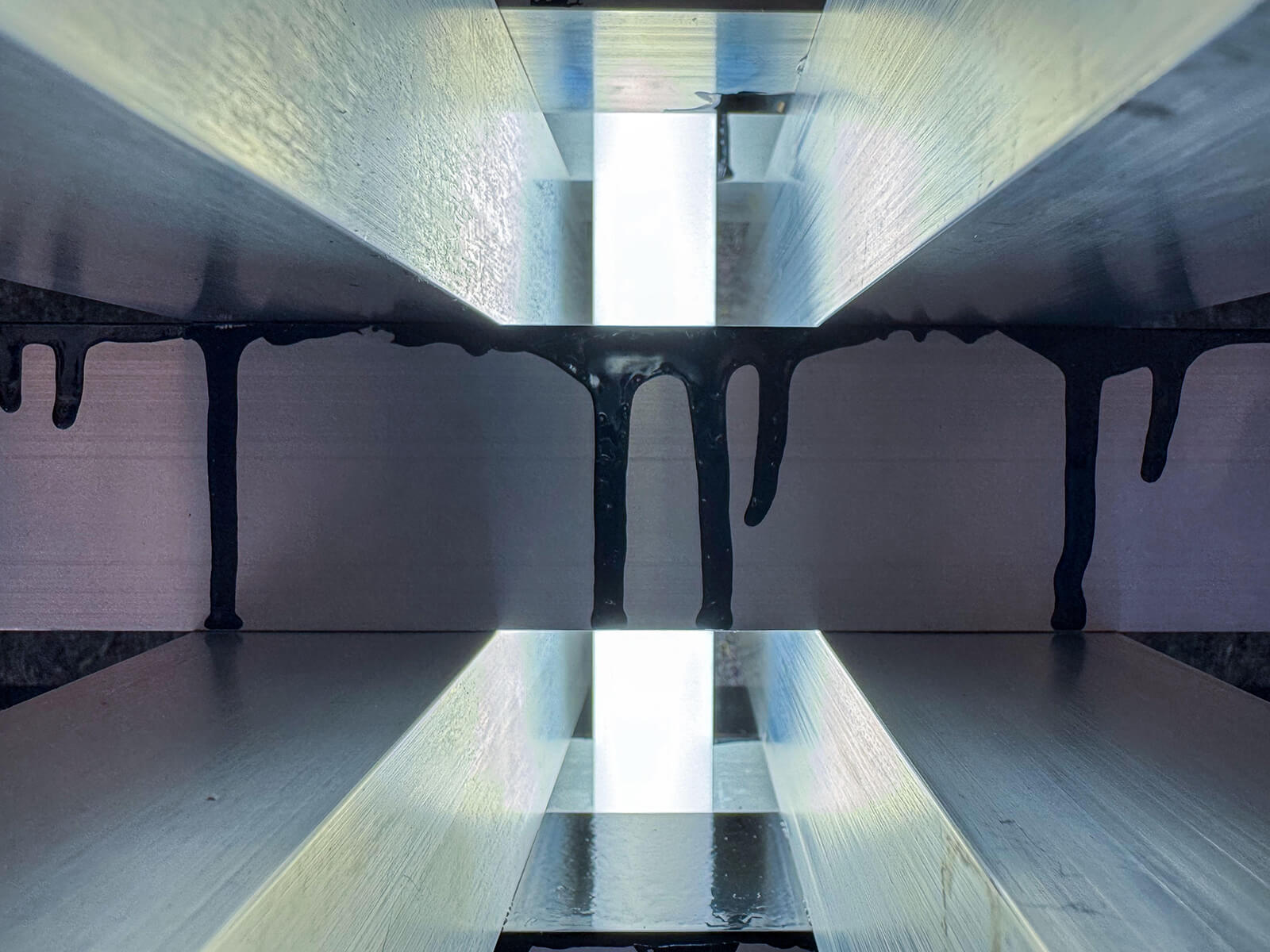
Srishti: How does your process differ when creating artworks for a gallery versus creating artworks for a public space, such as in the Desire Lines series?
Nathaniel: With public art, you have an even greater responsibility to think about the viewers and how the works are being unravelled. It’s important for the artist to remember that in a gallery space, people have made the decision to come in and engage with the artwork. But with public art, they haven’t made that choice…Often, my works in the public realm refer to something quite specific to that environment.
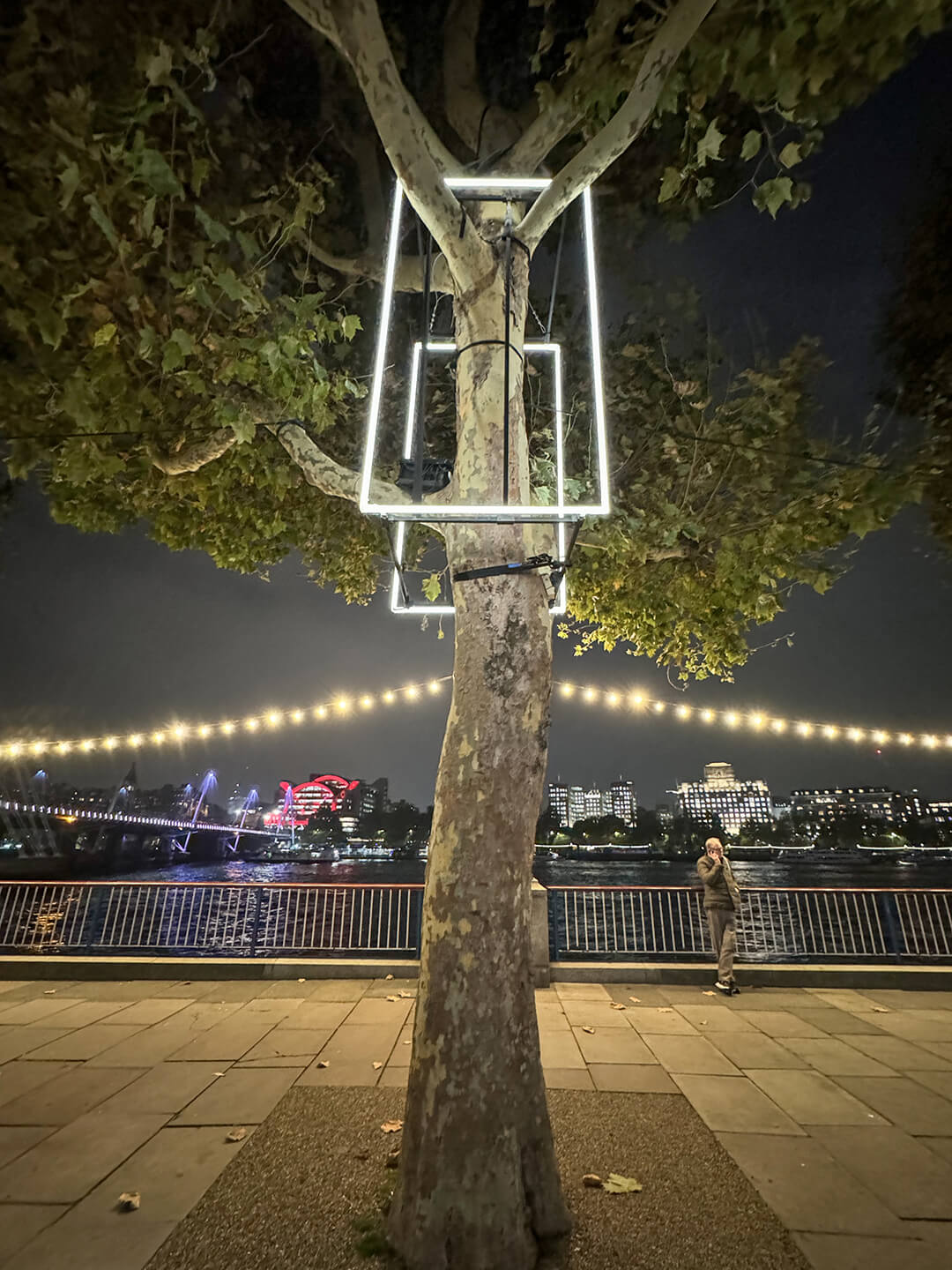
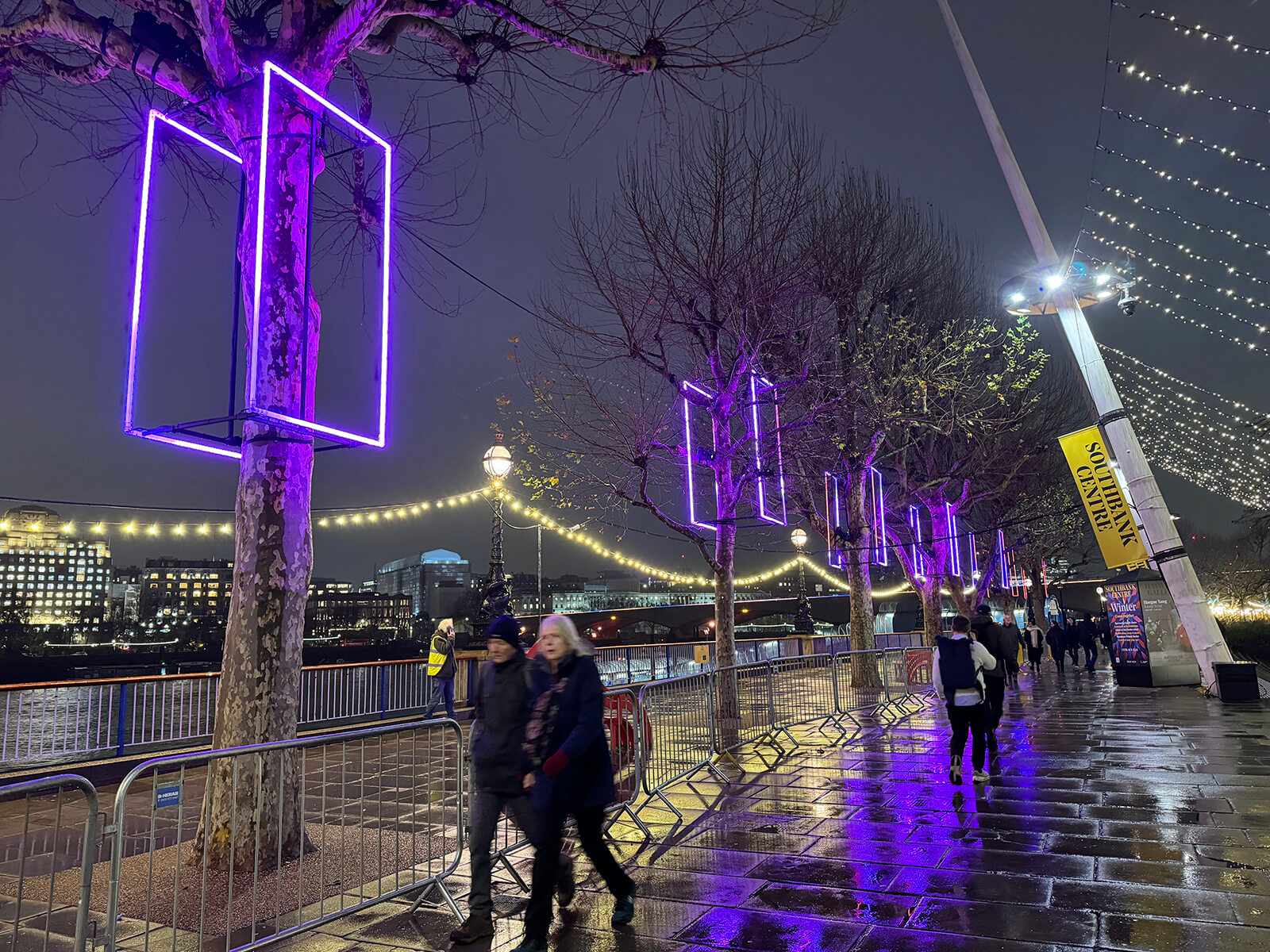
Desire Lines was such an exciting project because of that location on the South Bank outside the Royal Festival Hall, especially during the winter period. It’s an area that’s so loved and visited by both Londoners and tourists. I wanted to enhance the feeling of walking by the river and passing through and by the buildings. The light in the installation is always shifting, moving back and forth across all the streets. It also mirrors the movement of the people below it, which they realise quite quickly.
The other aspect of it is the fascination I have had, beginning around the time of the COVID lockdown, of looking at the intersection between natural and built spaces. The trees that are supporting the geometric light forms end up being as much a part of the sculptural object as the light itself—they both come together as one.
Srishti: When describing Desire Lines, you talk about your ‘emotional perception’ of urban space. How have overarching events like the pandemic, or your own recovery from cancer, manifested in your practice, perception and work?
Nathaniel: This focus on the urban world really came into the fore in the period I was coming to the end of my treatment and towards the end of lockdown. It was a very challenging time for me. I wasn’t able to be in the studio, I wasn’t able to make work and I was having to spend a lot of time alone in very challenging circumstances.
It gave me a lot of time to think and tune into my emotional responses, such as how the different spaces I was in were affecting me, either positively or negatively. I find it important to say that my work, even though it’s grounded in a sort of harsh and gritty materiality, is ultimately hopeful. The challenge for me is to create moments of beauty from unexpected materials and places.
Srishti: Your artworks brush up against design and architecture, even using similar materials and working in similar spaces. How have these fields impacted your understanding and use of light in creating artworks and intervening in built Spaces?
Nathaniel: Coming out of art school, this architect, Will Alsop, discovered my postgraduate show and immediately recognised that architectural sensibility and asked me to come and work for him. I worked for him part-time while developing my art practice. It taught me one very important thing—that I did not want to be an architect, I didn’t want to be a designer. I wanted to make work that was a creative commentary on both those things, despite the materials and forms of my works being very close to architecture and design. As artworks, they have to inhabit a different space where I can talk about the objects and spaces we engage in day in and day out, but do it in a way where I’m not actually adding to those objects or buildings. I’m making something very separate, which allows us to reflect on those things, to reflect on our experiences and emotional responses to those things.
‘Asphaltos Phos’, presented by Varvara Roza Galleries and curated by Vassiliki Tzanakou, is on view from November 10 – 29, 2025, at Gallery Eight, London.
by Srishti Ojha Oct 21, 2026
Increasingly, artists, filmmakers and activists are turning to VR to create more personal, tangible accounts of the climate emergency and its impact on vulnerable communities.
by Mirra Lynn Oct 20, 2026
The Indian artist paints the old wadas of central Pune, capturing the traces of everyday life that cling to these structures, battered by time but unbowed.
by Anmol Ahuja Oct 15, 2026
How do heaps of souvenirs and relics with racist Aboriginal motifs and features become art? MCA Sydney’s winter showcase—the artist’s largest to date—beckons a possibility.
by Vandana Kalra Oct 14, 2026
With his latest exhibition as a point of departure, the modernist discusses his decades-long practice, the spontaneity of drawing and the social responsibility of artists.

make your fridays matter with a well-read weekend
Enter your details to sign in
Don’t have an account?
Sign upOr you can sign in with
a single account for all
STIR platforms
All your bookmarks will be available across all your devices.
Stay STIRred
Already have an account?
Sign inOr you can sign up with
Verification link sent to check your inbox or spam folder to complete sign up process
Tap on things that interests you.
Select the Conversation Category you would like to watch
Please enter your details and click submit.
Enter the 6-digit code sent at


Nathaniel Rackowe turns industrial materials into a love letter to cities
by Srishti Ojha | Published on : Nov 26, 2025


 Sign in with Google
 Sign in with email
What do you think?