Art09 mins. read
Skin of Dreams sees Shezad Dawood at his multimedia, multipassionate best
by Srishti OjhaSep 15, 2026



by Srishti OjhaPublished on : May 08, 2026
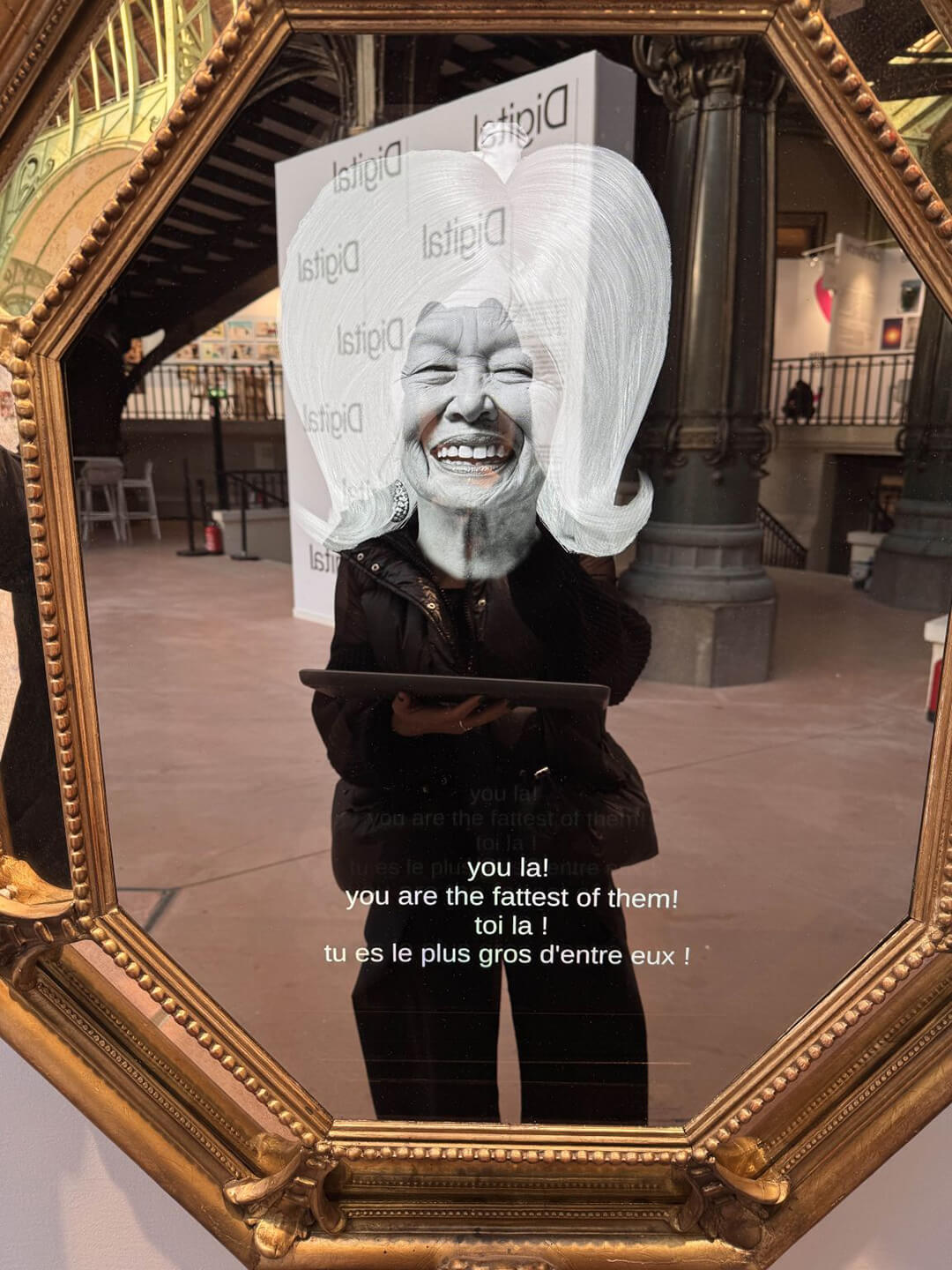
‘Oh my god, you look so tired, are you okay?’ ‘Have you eaten?’ ‘You looked better the last time I saw you. What happened?’ These are a few questions you can expect from the central installation at the Auntiescapes exhibition at Load Gallery in Barcelona. A gilded mirror uses artificial intelligence to transform the viewer’s appearance into the disapproving but loving face of an Asian aunty (both a familial term and a common term used for older women, primarily in Asia). Your new reflection looks you up and down before replacing your internal commentary with the kinds of blunt remarks that aunties are known (and feared) for. Looking away from the mirror and out into the gallery, one steps into a world of aunties—funnily termed the Auntiverse—where they are the daring, courageous protagonists, caretakers and inhabitants of fantasy worlds like Auntlantis, Auntiecity and even the moon—the home of NASA (the Nice Aunties Sushi Academy).
These expansive, surreal works are all created by niceaunties, the moniker of Singaporean artist Wenhui Lim. The new media artist broke away from her work as an architect to begin creating speculative images of aunties using AI and editing software. She fleshes out complex and full characters that move beyond the often negative connotations that being an ‘auntie’—old-fashioned, elderly, backwards or nagging—carries. Through her imaginative landscapes, Lim is creating a living archive of a specific culture that may fade away in only a few generations amid changing economic circumstances and gender norms. The Mirror into the Auntieverse installation, for example, highlights an important and misunderstood aspect of auntie culture—the probing questions and overly direct comments which are, according to Lim, “the love language of aunties”. The centring of the aunties’ perspective in this installation reflects the mantra at the heart of Lim’s practice and the guiding force behind her vast multiverse back to viewers, asking—What Would Aunties Do?
In a conversation with STIR, Lim talks about the inception of the Auntieverse and her creative process, saying, “Working in architecture, you're always working with a developer, building spaces for imaginary people, designing from a very hardcore concrete shell inwards. But in the Auntieverse, it didn't start from that place. I wasn't even thinking about architecture. I was thinking about this character of the auntie and how to reframe her. It started from the issues the auntie was encountering, like her love language, how she communicates—maybe she’s lonely and is often seen with a cat. What would their environment look like, and what stories can come from that? It’s a reverse process where you work on the character, and the environment expands from her. Gradually, as the stories build up, they start to happen in more imaginary places as well.”
Lim’s practice is part of a new wave in art and architecture that has risen since the popularisation of free AI image generation and editing tools. By cutting out some of the labour-intensive and technically tricky parts of an artistic workflow, they free creators to spend more time on the imaginative aspects of their work and take on projects whose scope would be impossible without AI. The Auntieverse is defined by its multiplicity and expansiveness, which is translated in a hyperreal visual style and undergirded by Lim’s knowledge and construction of architecture, which she describes, saying, “It started to look very architectural, it came out as a natural extension of my training. Architectural drawings are my favourite kind—using sections to show relationships and planning how spaces would look from the front, above and side—came naturally to me.”
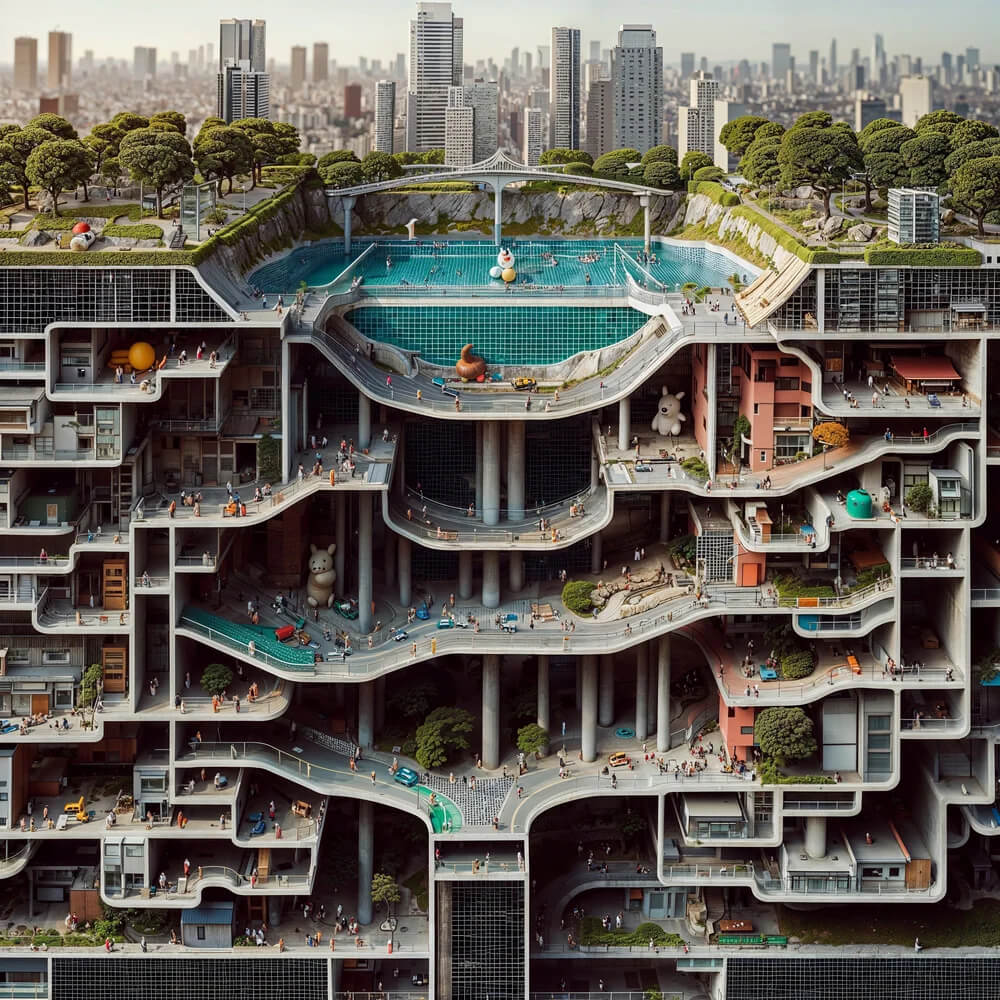
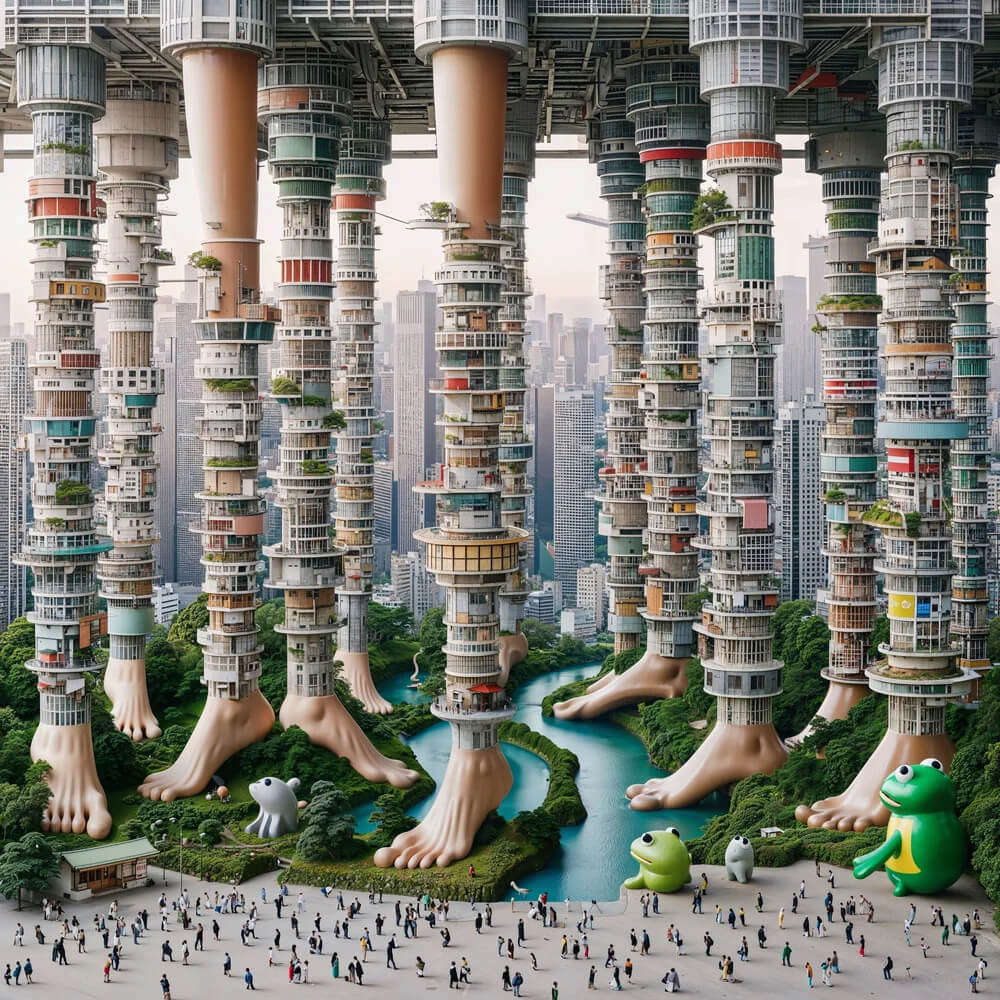
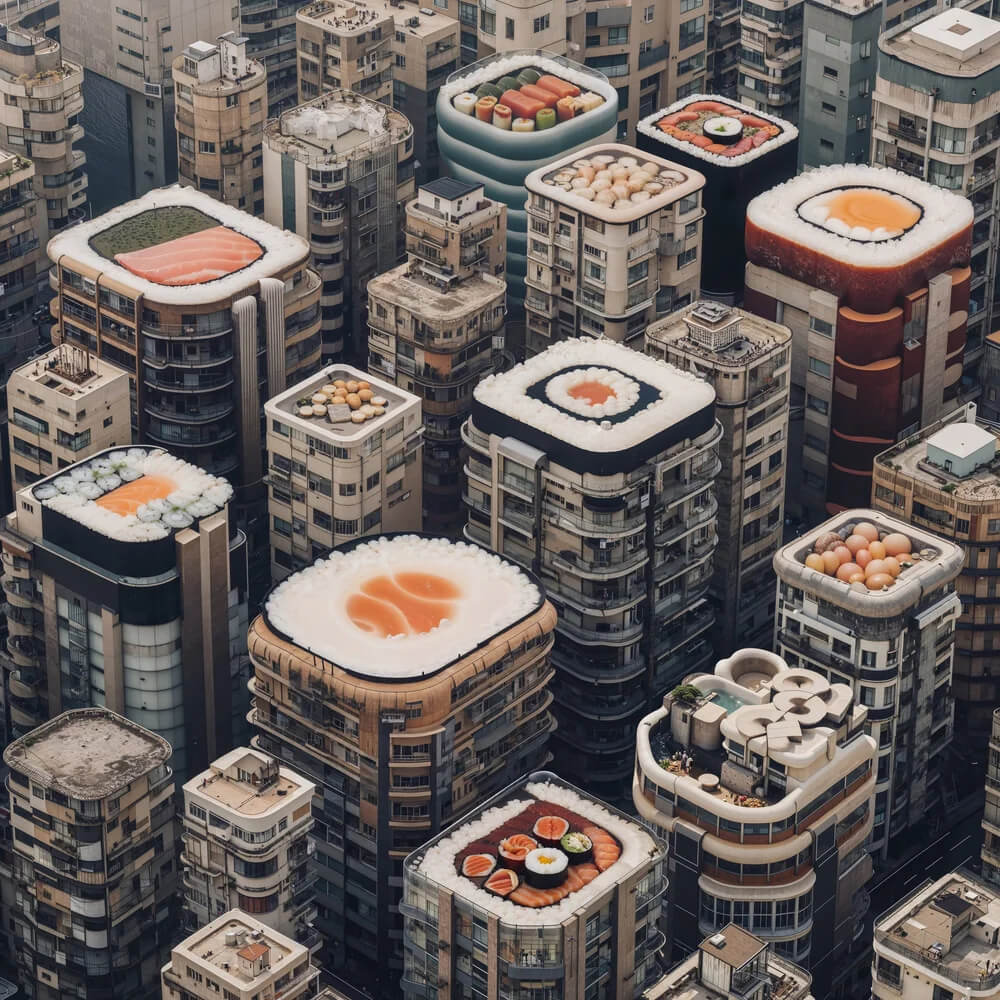
In the non-geometric infinite space offered by a digital canvas, Lim’s sections are free to define relationships between characters and symbols, while literal spatial relations become secondary. This presents a host of opportunities for artists, designers and architects to create speculative, imaginative environments that look and feel realistic without being concerned with their viability as constructions or technical drawings.
The environments in the Auntieverse are as fun, poppy and surreal as the auntie characters that populate them. While some of Lim’s work reimagines homes (inhabited by two cats, a popular figure of the auntieverse), most of her practice sees the characters move out of the domestic sphere and into increasingly fantastical places. The freedom and lack of social, physical or logical restraints that aunties embody extends into the visual world they inhabit. To describe one of these whimsical settings is like describing a dream to a friend: there was a city, and it was made of sushi; the cars all had legs; there were aunties with grey hair hanging out above the highways, floating. This dreamlike quality expands the once-narrow sphere of life endured by aunties and brings familiar environments to new life in a style permeated with community and playfulness.
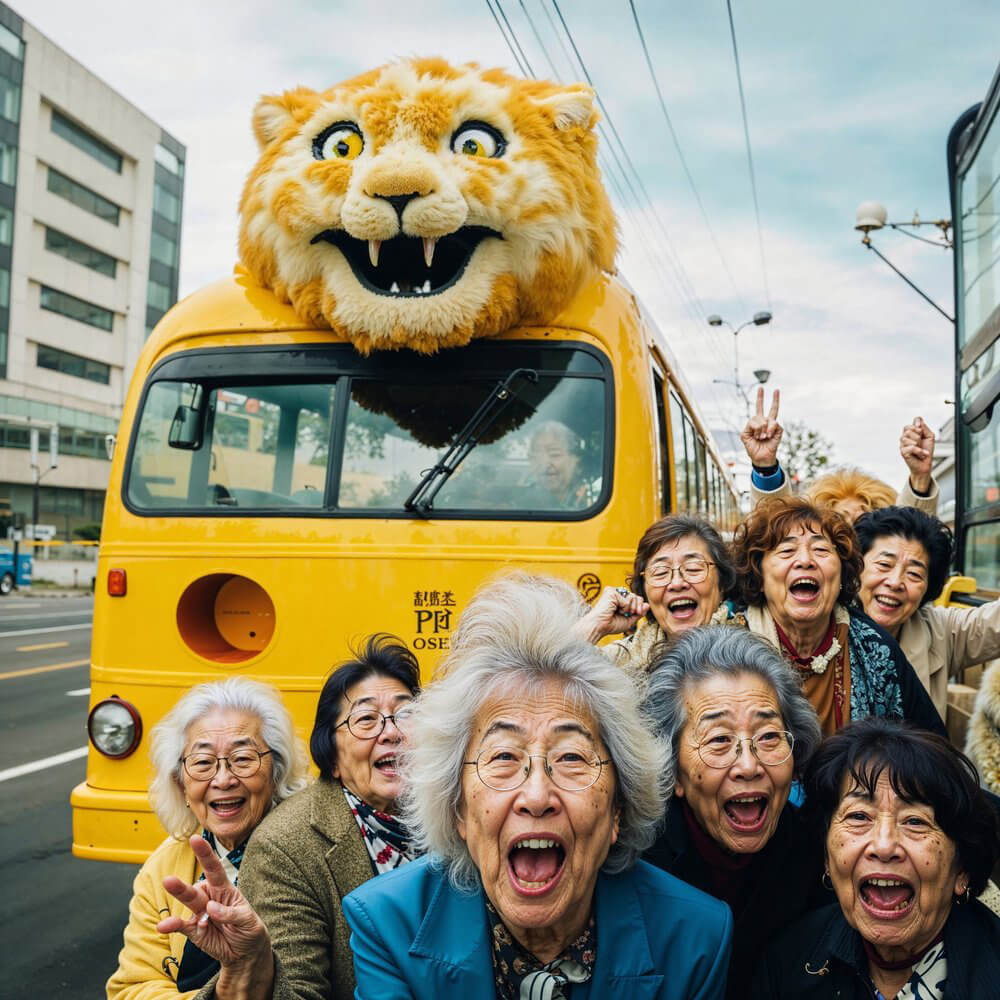
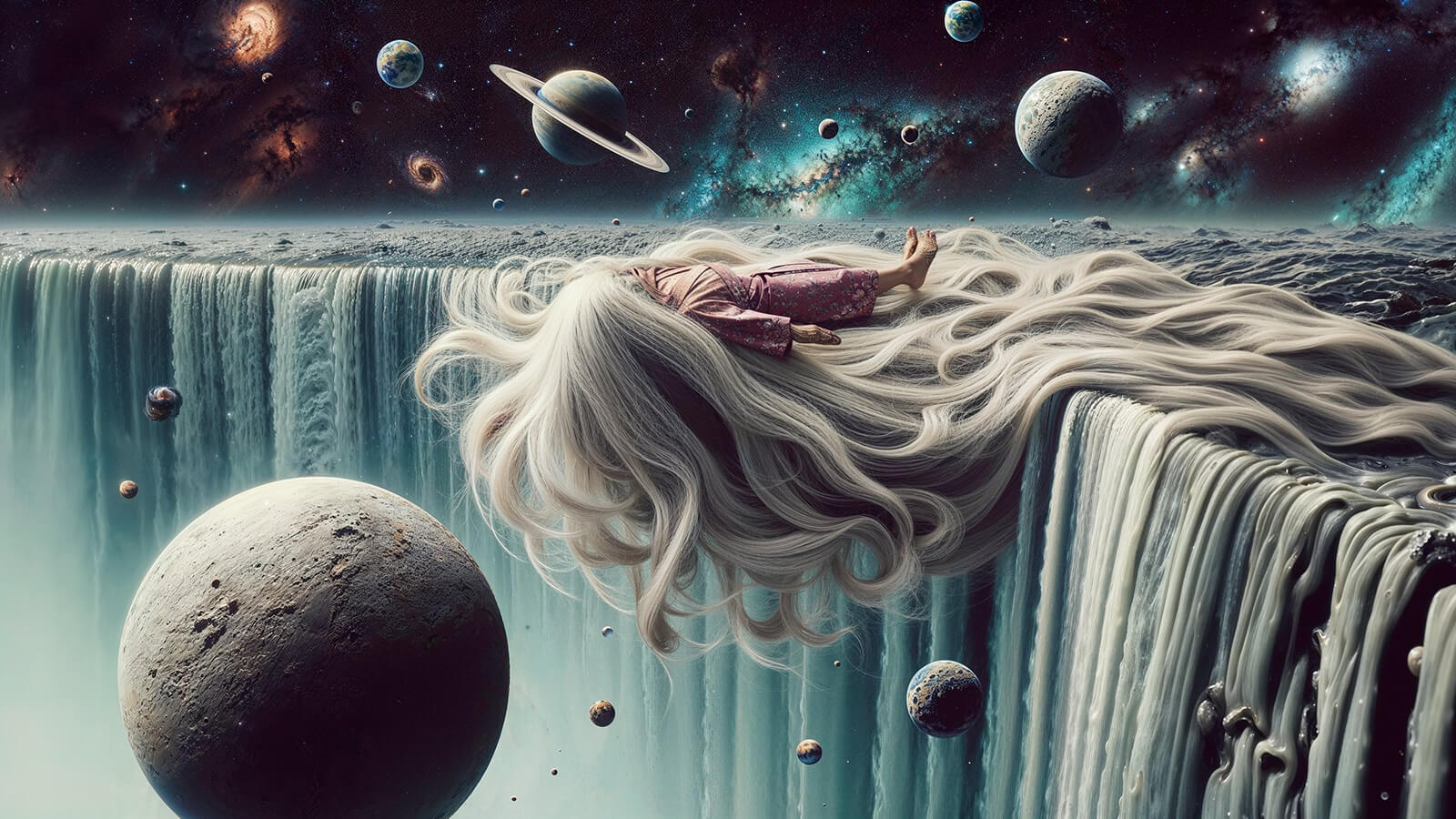
At the same time, the selection of these landscapes is far from random—many of the spaces see aunties focused on teaching, relaxing and community building, bringing the perspectives and priorities of aunties to the forefront of urban planning, highlighting those demographics that are often left out of visions of prospective cityscapes and built environments that do not cater to them. These landscapes are an equally important part of archiving auntie culture, preserving spaces (often communal ones) that may have catered to ‘old-fashioned’ lifestyles and habits that are vanishing or becoming unrecognisable under capitalism, which hungrily desires and constructs the new.
During our conversation, Lim talks through the Auntieverse chapters that are more openly concerned with changes in the real world, such as urbanisation, climate change and pollution. The latter is the subject of Auntlantis, which arose from Lim’s time as an architect on a pro bono project constructing beach huts out of plastic waste from the Great Pacific Garbage Patch. While some would limit the Auntiverse to issues and themes tied closely and literally with aunties, to Lim, it is boundless—“It is about a speculative future. My grandmother and my aunties had no freedom or choice. They were stuck at home doing housework and serving the family at home, which was a reflection of their era. In my Auntieverse, the women are completely free to choose their own lives. They are having the greatest time. I am like the filter between the real world and the Auntieverse, which is like a mirror of our world. It's a parallel reality seen through my perspective and includes topics I’m interested in, like beauty standards, or ones that are a result of my life and experiences from before.”
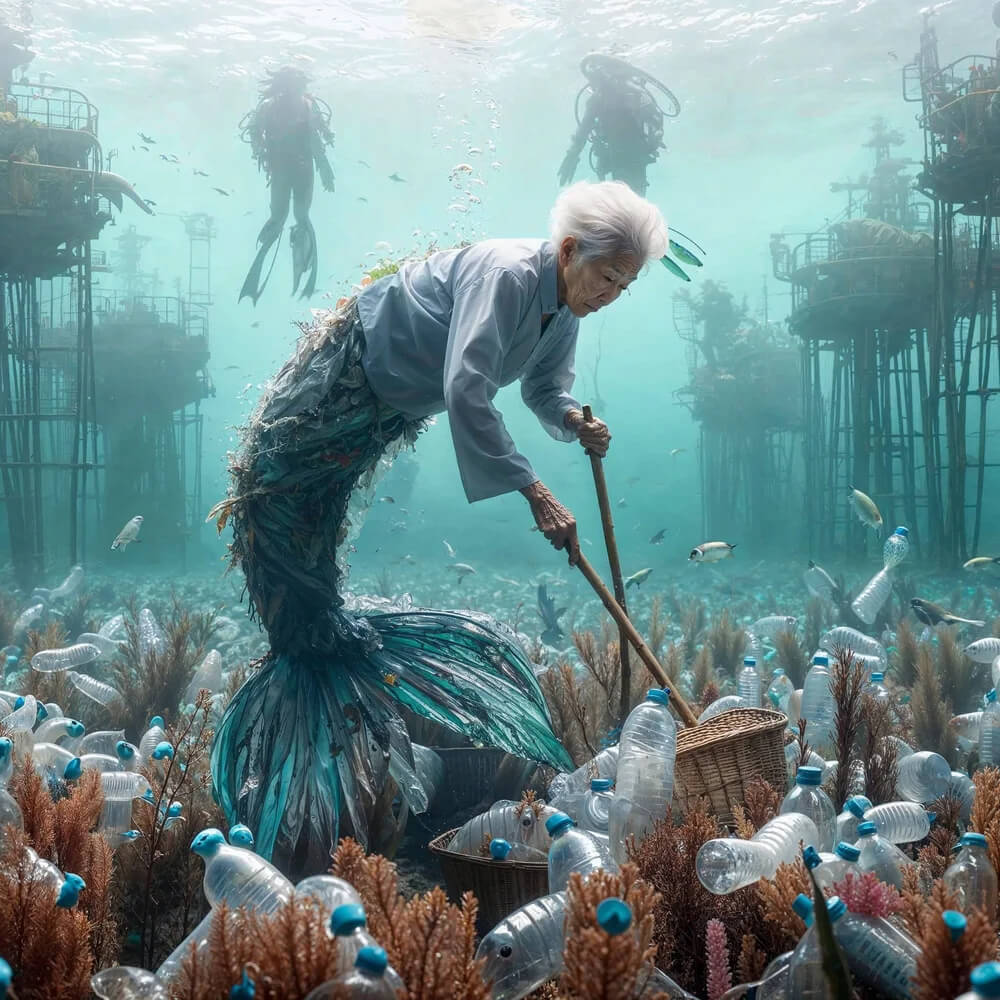
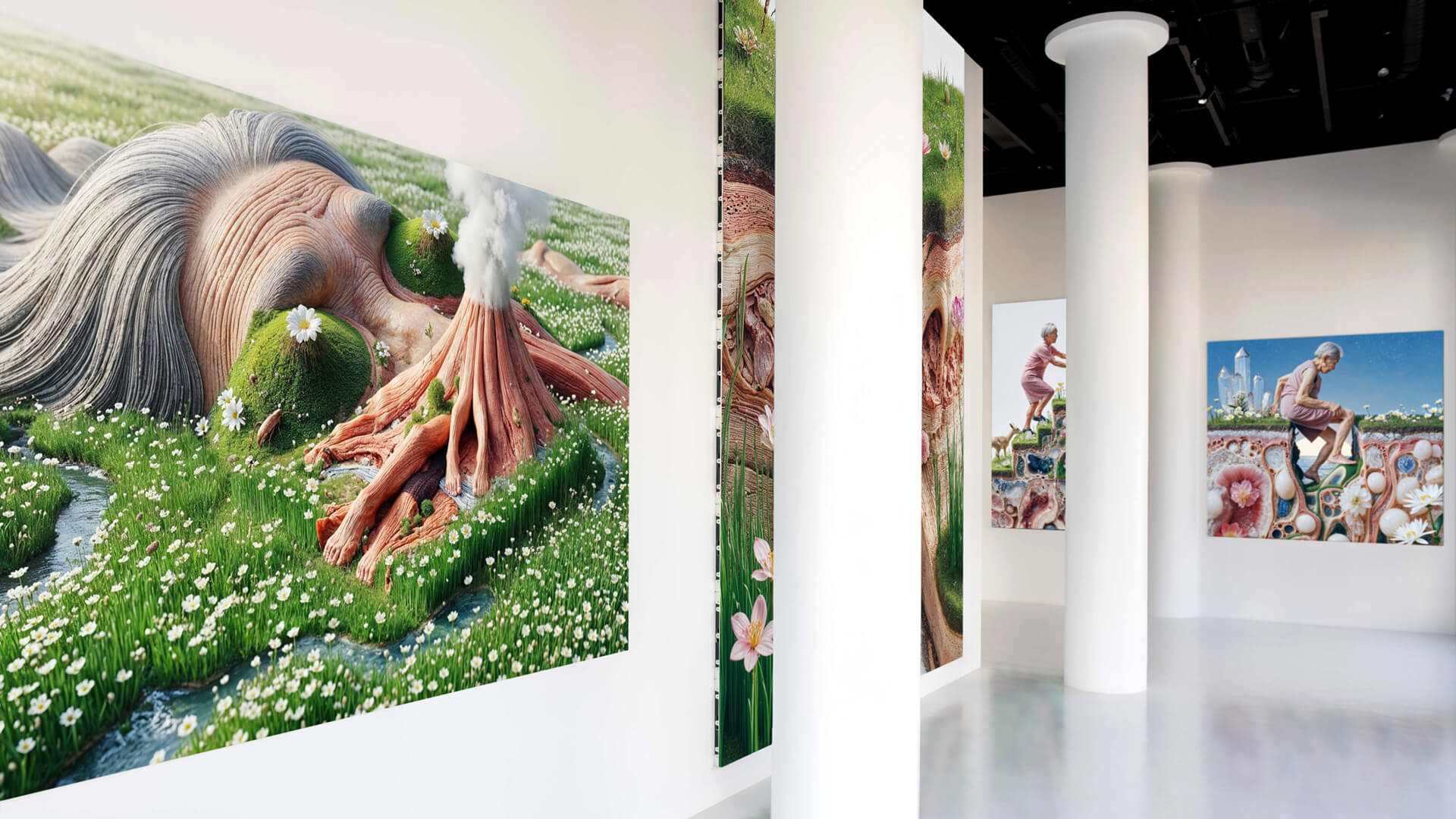
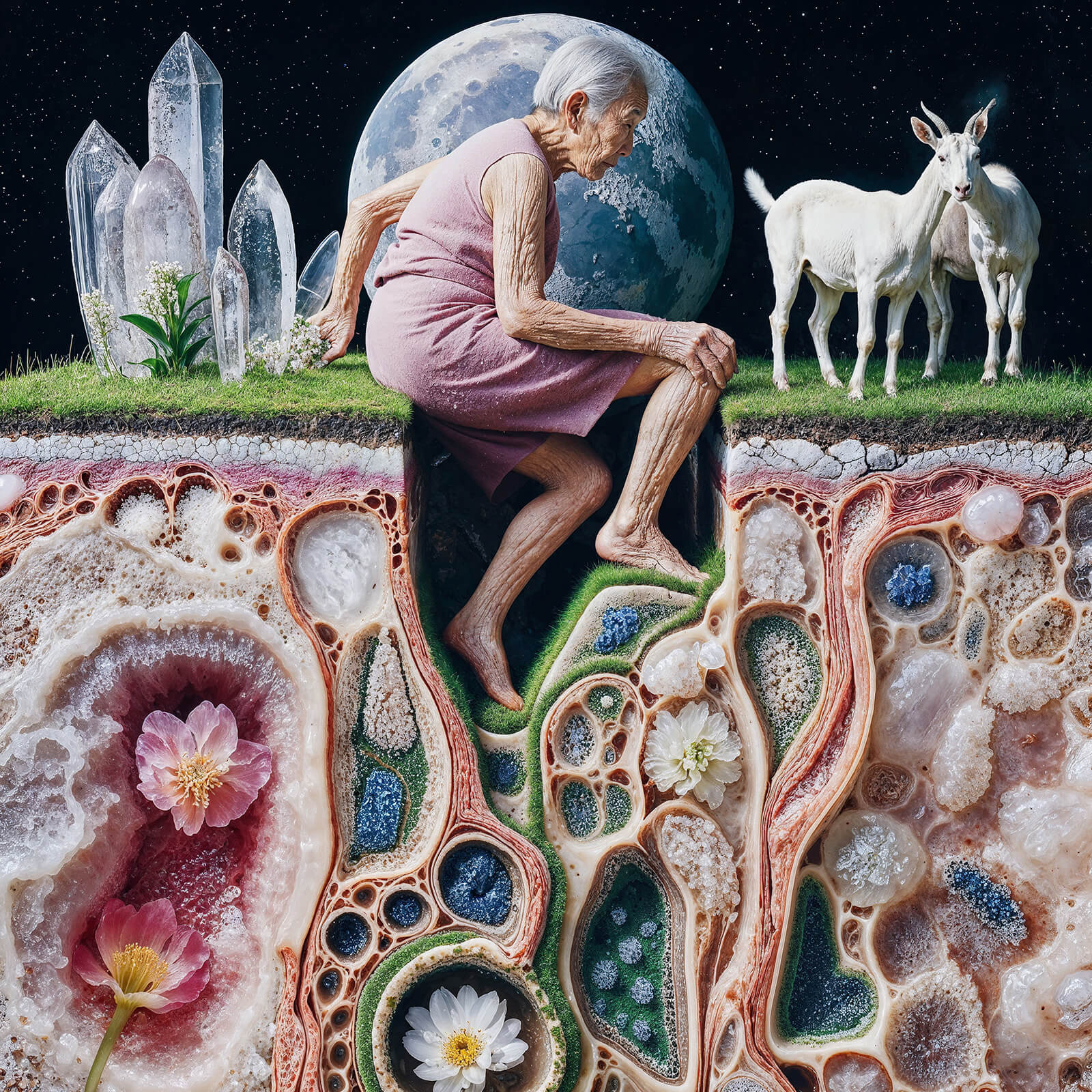
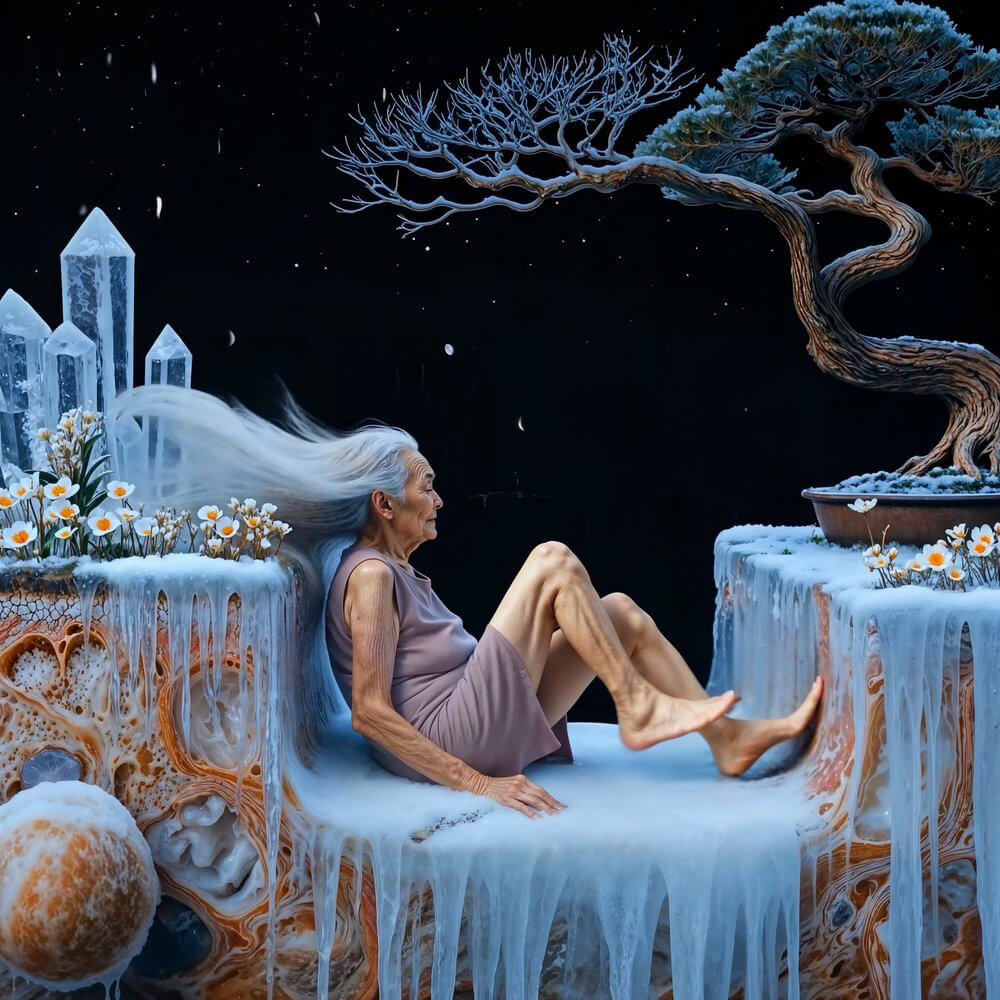
The exhibition at Load focuses on the more environmental and philosophical aspects of Lim’s practice, depicting aunties who explore and rest in seasonal natural landscapes surrounded by crystals, flora and fauna. The ‘earth’ below plays on the parallels between diagrams of the Earth’s inner layers and those of layers of human skin tissue, drawing a clear connection from the taboos against ageing to the desecration of ancient ecosystems and the erosion of humans’ relationship with the environment. The Earth is depicted sometimes as hollowed and polluted, its inhabitants rushing to new things, discarding and littering ancient environments like oceans and forests. Landscaping and construction are likened to the surface work of plastic surgery, as the fates of aunties and the world become more intertwined. Lim riffs on the Mother Earth archetype, creating deific aunties who live in their environment in harmony, acting as a protective ‘Auntie Earth’ figure bringing a kind of feminist environmentalism to her practice as she takes the auntie as a synecdoche for the planet, and for life itself.
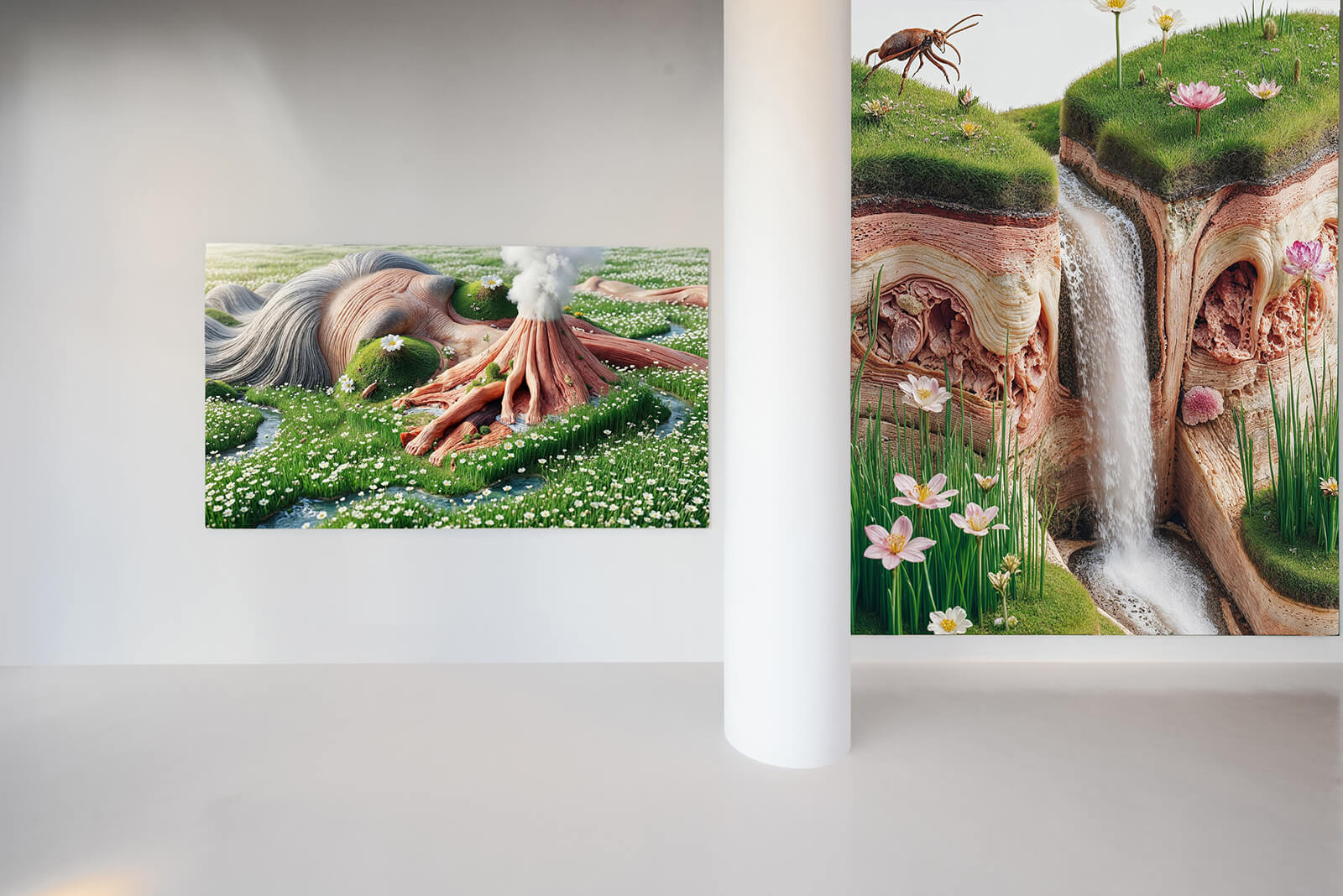
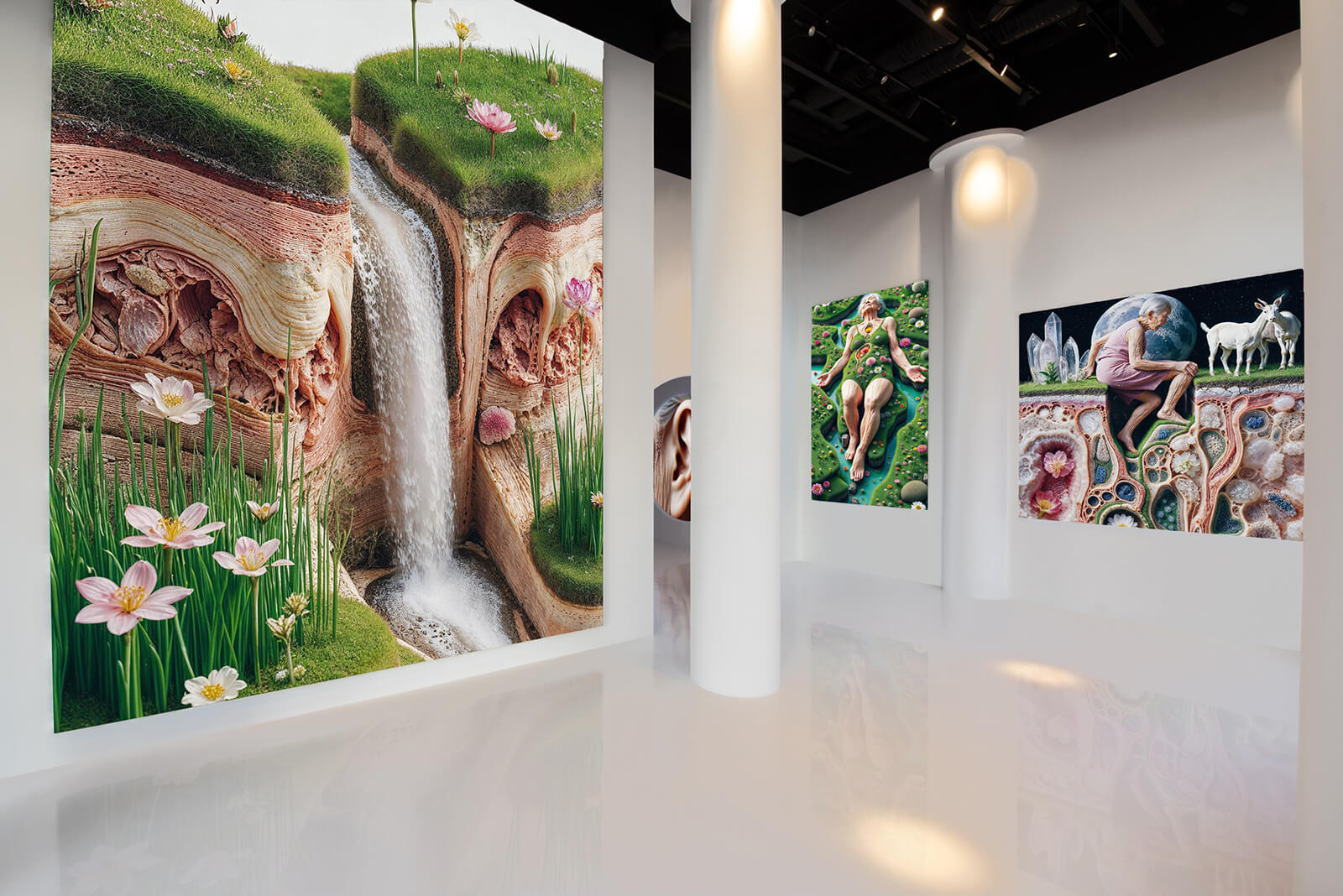
Talking about the role the AI visuals have played in creating this archive of spaces, characters and relationships that are threatened by modern life, Lim said, “I want people to ask questions about ageing and how they see it, how they want to age and the things that will make you go even at 85. That was the vibe I wanted to project, and it ended up looking very colourful, light and full of sunshine. That gives you an entry into talking about more heavy, difficult topics.” It is this thin line that the Auntieverse (and AI-generated visuals more broadly) walk—able to reap the narrative benefits of an idealised, glossy, fictional world while the images’ realism lends the world and its message credence.
The ability of AI to create visuals that trouble the boundary between the real and imagined has been a large part of the controversy that has enveloped the young technology since its release to the public. Philosophers and others thinking in the line of French cultural theorist Jean Baudrillard posit AI as a prime example of the collapse between simulations and reality created by these hyperreal simulations. ‘Hyperreal’ here refers to simulations that become more exciting, preferable and more intensely real feeling than reality itself. The threats presented by this have become evident through the rampant use and spreading of deep fakes to manipulate media and achieve dangerous political trends.
In the same vein, most discussions of AI art focus on instances where the technology is used to imitate the style and techniques of art forms, mediums and works, eliminating the need for a human artist (who would require time and payment) from the artistic process. However, artists like Lim, who use AI as a medium in its own right, with its own aesthetic, tropes and artistic, social and political potential possibilities, reorient the technology away from primarily capitalist ends to artistic and even prosocial ends. The Auntieverse takes advantage of the hyperreal aesthetic of AI images—overly perfect and bright, an almost airbrushed look—to lend real credibility to the possibility of the imaginary world it presents.
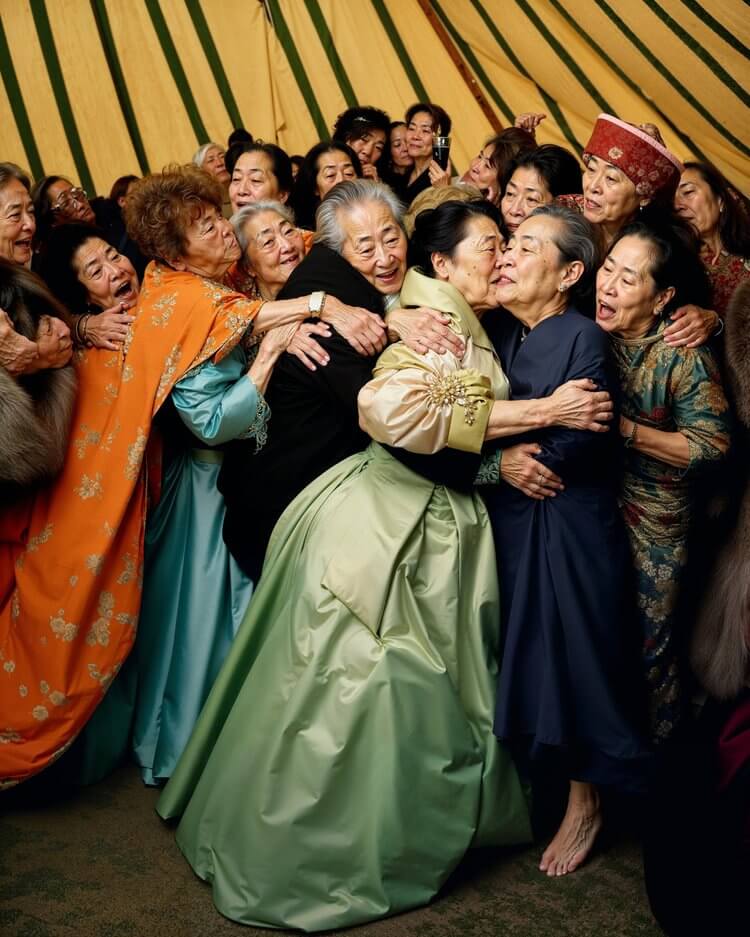
For an undeniably feminist project like Lim’s, this ‘better than real’ verisimilitude is part of the artwork’s ability to deliver its message and story in a way that can impact social reality. By showing a world close to ours in which ageing women are the lively, active, humorous main characters of the world, the Auntieverse normalises these images, making this whimsical world seem realistic, tangible and achievable. It is a ‘détournement’ of the medium—it mimics the qualities of mainstream images and alters and subverts them so their meaning challenges the status quo instead of supporting it. Here, the overperfect style of generative AI is used to push back against the valuing of the ‘perfect’, showing the wrinkled faces of aunties who are living full lives at the centre of a world that is built for them. In the same way, deepfakes of protests, attacks, etc., can make manufactured events effectively ‘real’ in perceived reality while positive depictions of social change in a hyperreal style can move the needle in a progressive direction.
Using the specific opportunities presented by generative AI as an artistic medium or tool expands the scope of projects an artist or a team of artists could have taken on, creating room for more sprawling fictional worlds like Lim’s or archives that take the form of something else. The same hyperreal quality that generates politically threatening deepfakes can also elicit acceptance and consent for an alternative reality or speculative future by making it look ‘already real’. While much has been made of AI’s power to distort/replicate ‘truth’, could projects like the Auntieverse represent a new frontier for political art made with the medium?
‘Auntiescapes’ by Wenhui Lim is on view from May 7 – August 15, 2026, at Load Gallery, Barcelona.
The views and opinions expressed here are those of the author(s) and do not necessarily reflect the official position of STIR or its editors.
by Srishti Ojha Oct 21, 2026
Increasingly, artists, filmmakers and activists are turning to VR to create more personal, tangible accounts of the climate emergency and its impact on vulnerable communities.
by Mirra Lynn Oct 20, 2026
The Indian artist paints the old wadas of central Pune, capturing the traces of everyday life that cling to these structures, battered by time but unbowed.
by Anmol Ahuja Oct 15, 2026
How do heaps of souvenirs and relics with racist Aboriginal motifs and features become art? MCA Sydney’s winter showcase—the artist’s largest to date—beckons a possibility.
by Vandana Kalra Oct 14, 2026
With his latest exhibition as a point of departure, the modernist discusses his decades-long practice, the spontaneity of drawing and the social responsibility of artists.

make your fridays matter with a well-read weekend
Enter your details to sign in
Don’t have an account?
Sign upOr you can sign in with
a single account for all
STIR platforms
All your bookmarks will be available across all your devices.
Stay STIRred
Already have an account?
Sign inOr you can sign up with
Verification link sent to check your inbox or spam folder to complete sign up process
Tap on things that interests you.
Select the Conversation Category you would like to watch
Please enter your details and click submit.
Enter the 6-digit code sent at


Auntiescapes at Load Gallery asks: Can the hyperreal impact social reality?
by Srishti Ojha | Published on : May 08, 2026


 Sign in with Google
 Sign in with email
What do you think?