Design09 mins. read
London Design Festival 2026 rethinks tradition as an enduring design resource
by Pranjal MaheshwariSep 07, 2026



by Jigyasa Sharma, Zohra KhanPublished on : Jun 02, 2026
What do worlds mean in the context of design and how do they make contact with the political, the ecological, the colonial and the deeply personal? This was the question that brought together the inaugural Global Design Forum Istanbul, held from May 13 – 16, 2026, within the historic grounds of the Topkapi Palace, and presented under the artistic direction of Melek Zeynep Bulut. Developed in collaboration with People Places Ideas, it was London Design Festival's first forum held outside London for the first time. STIR, a media partner of GDF Istanbul, was invited to experience the programme as it unfolded across the city as part spectacle, part reverie. Istanbul, a city that has absorbed and outlasted successive worlds and a place that feels strangely familiar, to the point of nostalgia, seemed almost natural for the forum's curatorial theme, Worlds in Contact, to find its first international home.
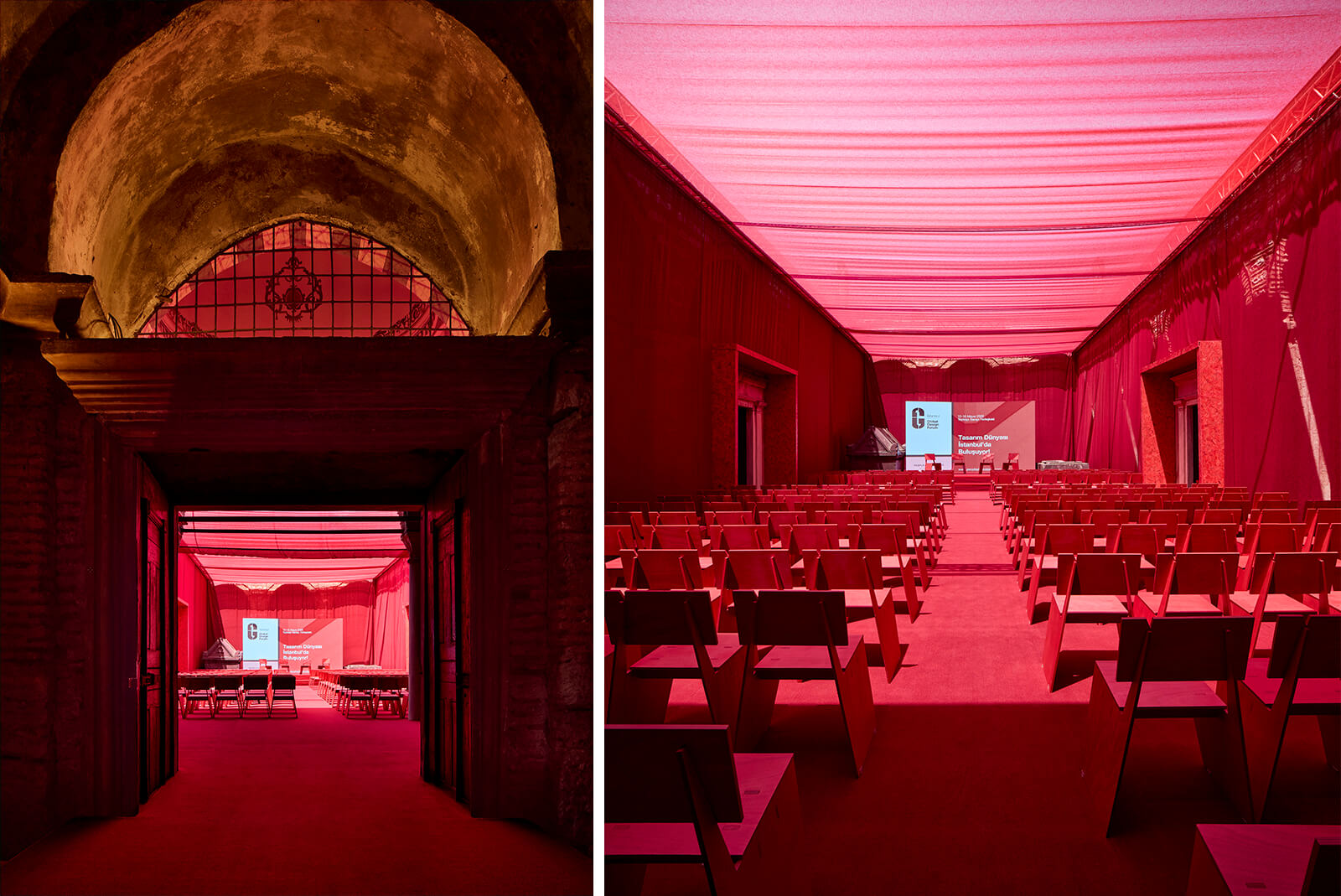
Convening within Hagia Irene, one of the only two Byzantine churches still standing in the city, was an experience akin to witnessing conversations about design's present inside a space where multiple pasts remained both visible and unresolved. "While wars continue, we can no longer talk about their separation from public life or ecology. While migration continues, we can no longer talk about its independence from technology," said Melek Zeynep Bulut, the artistic director of GDF Istanbul and founder of creative industries platform People Places Ideas (PPI), framing Worlds in Contact as a response to the condition of the world as it actually is.
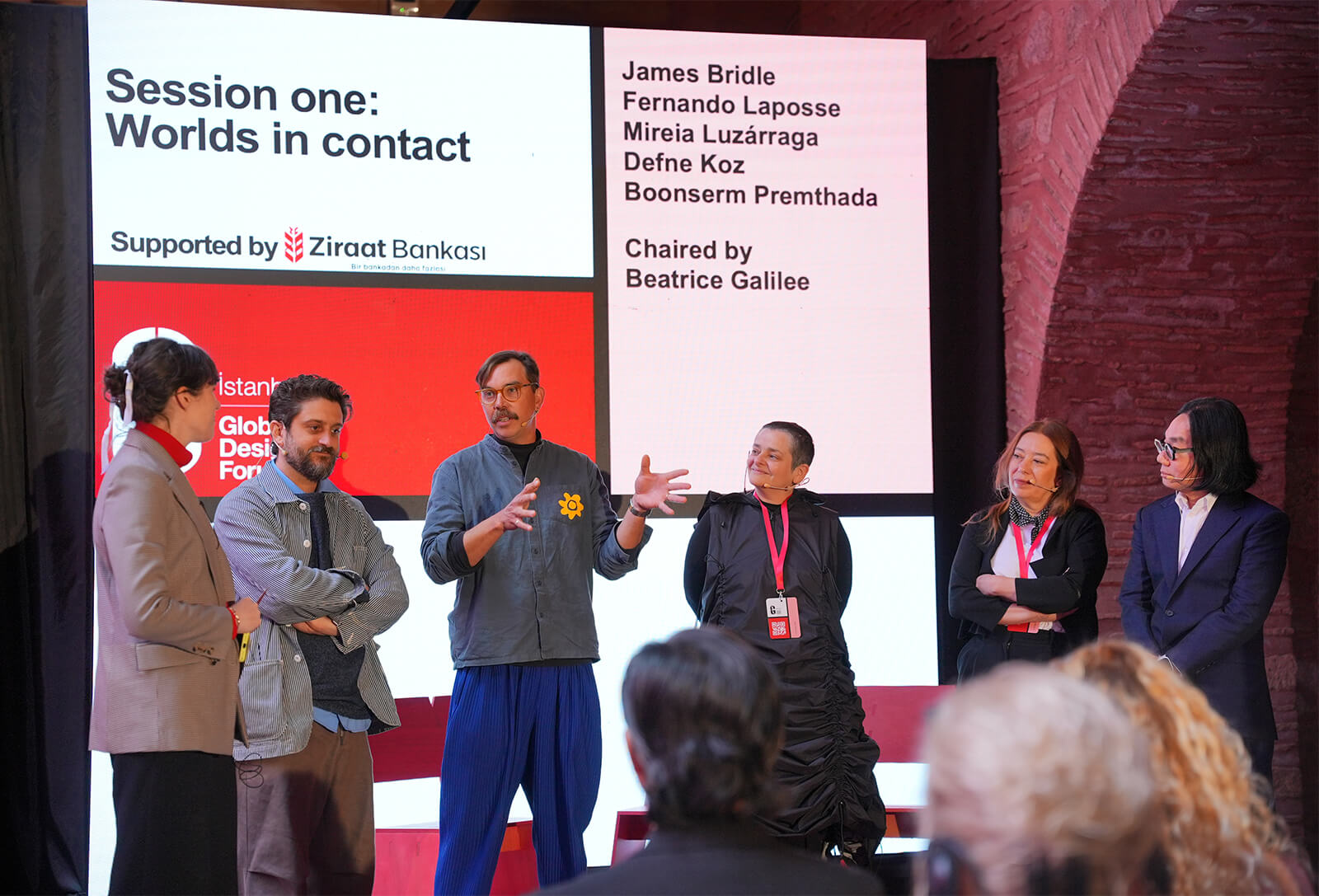
The core talks programme was hosted inside The Red Room, a cinematic-looking space studded in layers of translucent red tulle. Conceived by NUN Architecture, Celaleddin Çelik and People Places Ideas, the room transformed the historic atrium into a temporary forum setting where the old and the new coalesced. The dialogue sessions—developed by GDF content advisor Beatrice Galilee—opened with Worlds in Contact as a tightly sequenced set of provocations that brought together voices from landscape, design and architecture from across Turkey and beyond. Artist and technologist James Bridle encouraged DIY (Do-It-Yourself) experimentation, highlighting the process as one charged with history, political and social dimensions. Mexican designer Fernando Laposse spoke about material reality, stressing that sustainability cannot exist without economic stability and viable community systems. Turkish designer Defne Koz shifted the focus toward experience, asking how environments shape human sensitivity itself, whereas Thai architect Boonserm Premthada offered perhaps the session's most radical inversion, proposing slowness as a design position and describing the elephants at his Elephant World museum in Thailand as co-authors. "I had to unlearn architecture to design with elephants,” he said.
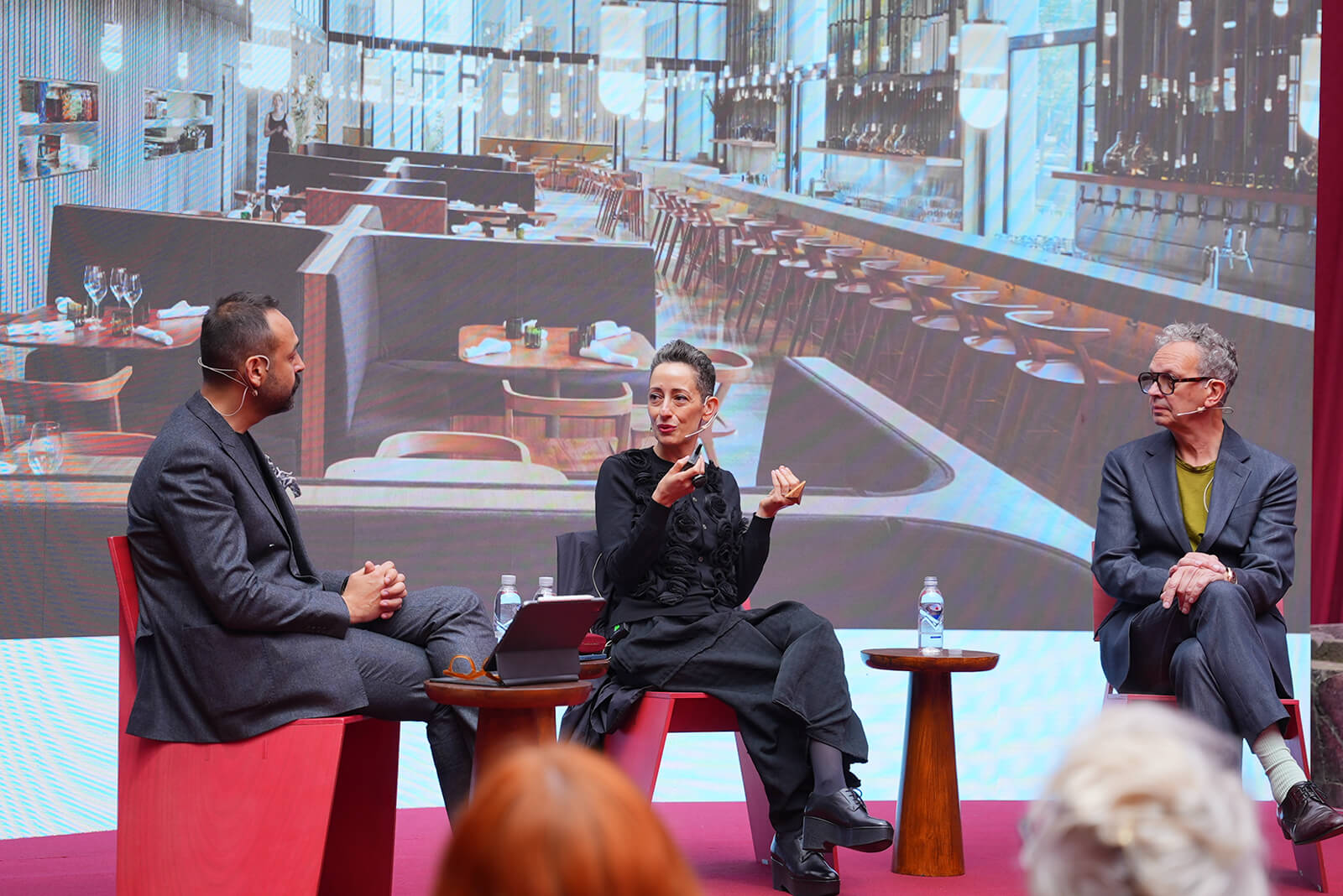
In Design of Our Time—Material Worlds, moderated by Turkish architect Celaleddin Çelik, British industrial designer Tom Dixon CBE and Lebanese architect Lina Ghotmeh offered two distinct but complementary readings of contemporary design, framed through materiality, technology and time. Dixon reflected on how AI is beginning to shift its role from passive instrument to active participant in the design process. He described it as something that can appear to act like an ‘employee or a boss’, raising questions about authorship and control, yet ultimately insisted that it remains a tool—an extension of design intelligence rather than a replacement for it. Ghotmeh's position was oriented differently, emphasising on continuity and memory. "There is a sense of memory and a sense of meaning that emerges in places", she said, "and those meanings travel through time, and they allow emotions to be always present."
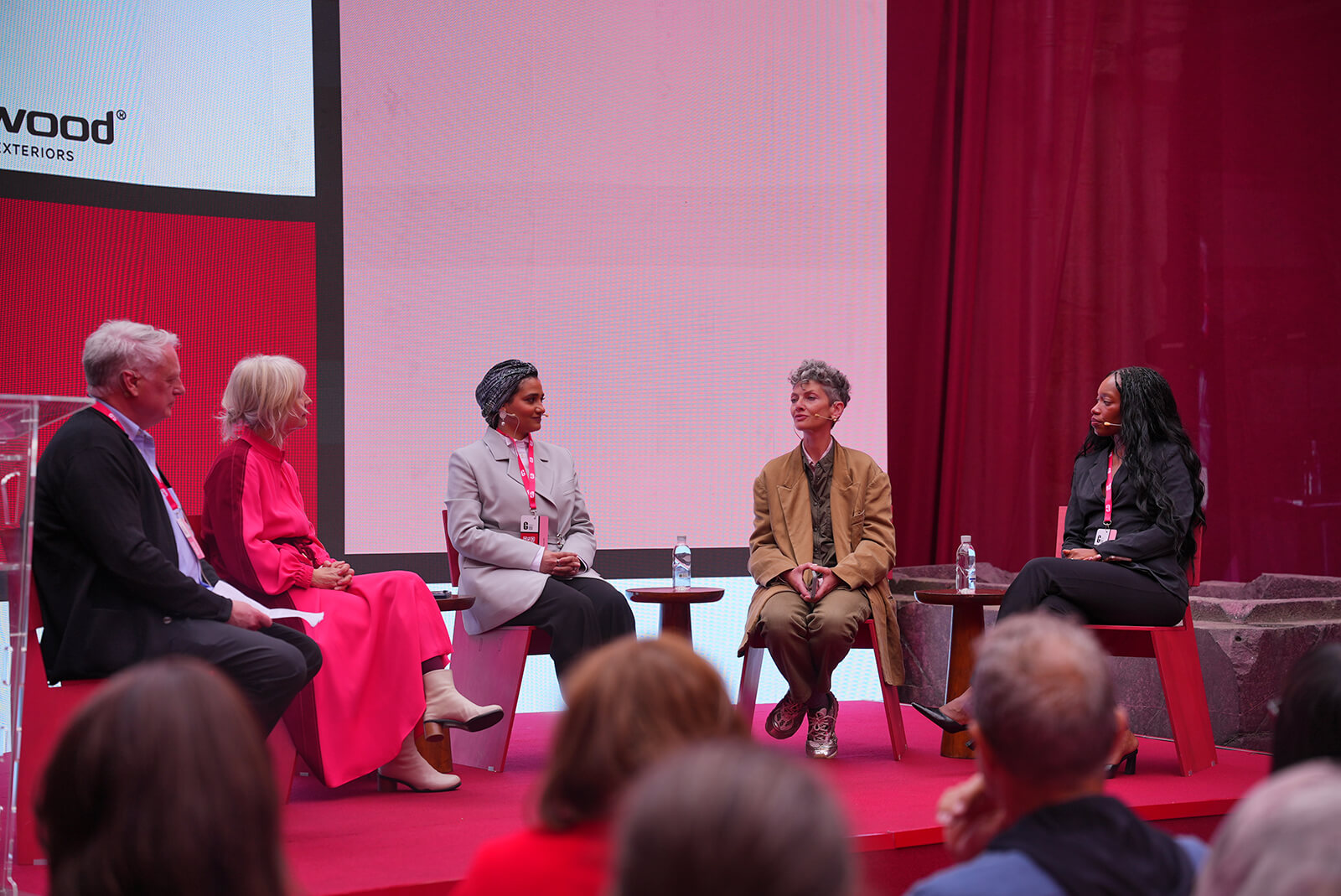
A pivotal moment came with Designing Design Worlds, an all-woman panel featuring Dominique Petit Frère, Beatrice Leanza, Justine Simons OBE and Sheikha Reem Al Thani. The discussion shifted focus away from objects and practices toward the infrastructures of legitimacy that shape the global design field itself. Biennales and cultural institutions were examined not as neutral platforms, but as active filters—deciding which narratives enter the canon and which remain peripheral. Leanza was the most pointed on this, pushing back against what she saw as the design world's tendency toward accommodation. "I really don't believe in this idea of adaptation," she said. "I think it makes people lazy. It stifles completely the way in which we can thrive, by confronting ourselves with truly new challenges—and that's where creativity plays its best role." The exchange left open a broader question about who design serves and how its boundaries are continually redrawn.
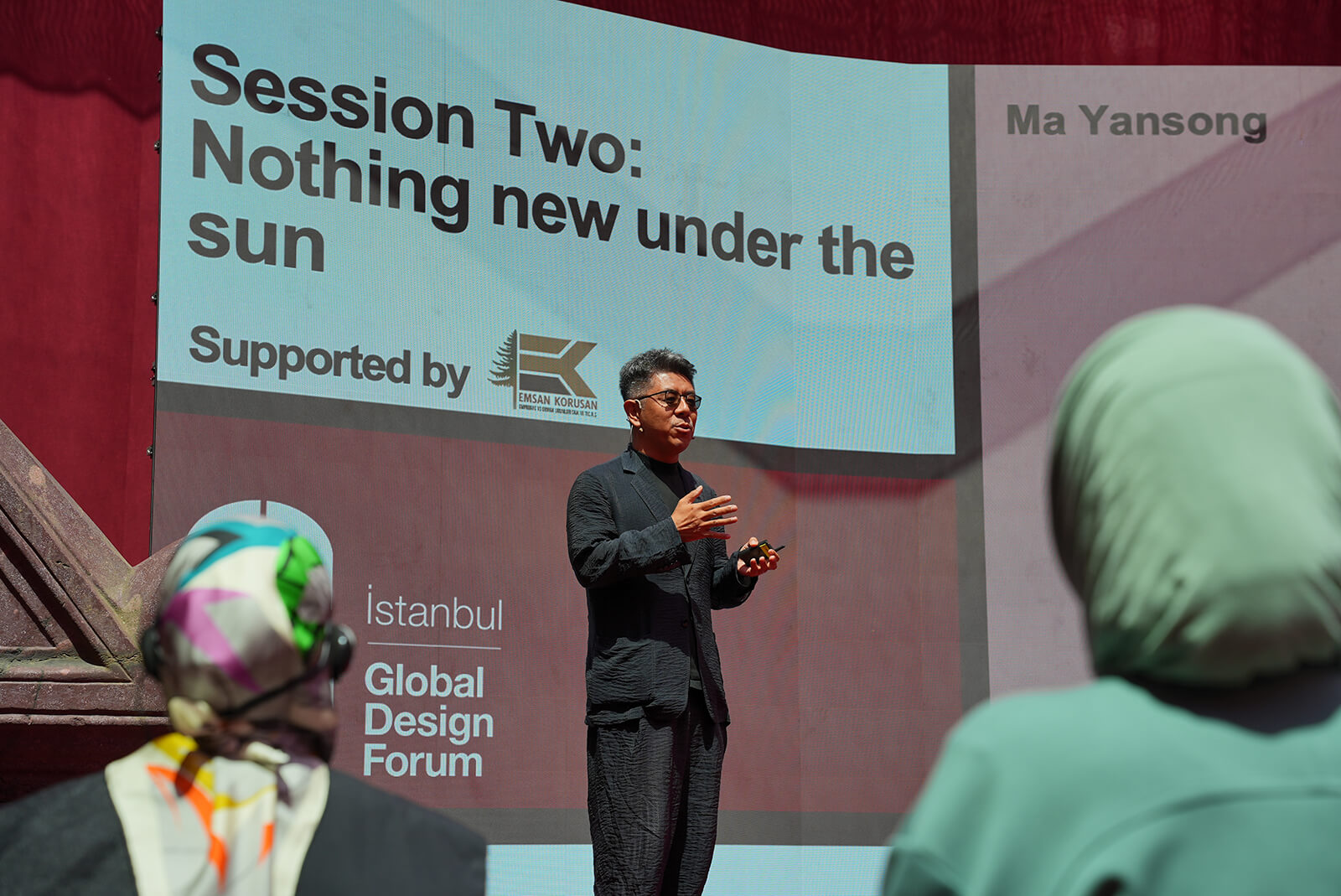
The dialogues of the forum expanded on its second day into a sharper interrogation of systems: of who gets to design, who gets represented and what design is ultimately for. Th e critical thread carried into Nothing New Under the Sun, where Olaf Grawert, Ma Yansong, Andrew Waugh and Han Tümertekin challenged the assumption that innovation must mean novelty. They proposed that some of the most urgent design work today lies in reuse, adaptation and restraint—working intelligently with what already exists rather than defaulting to demolition and replacement.
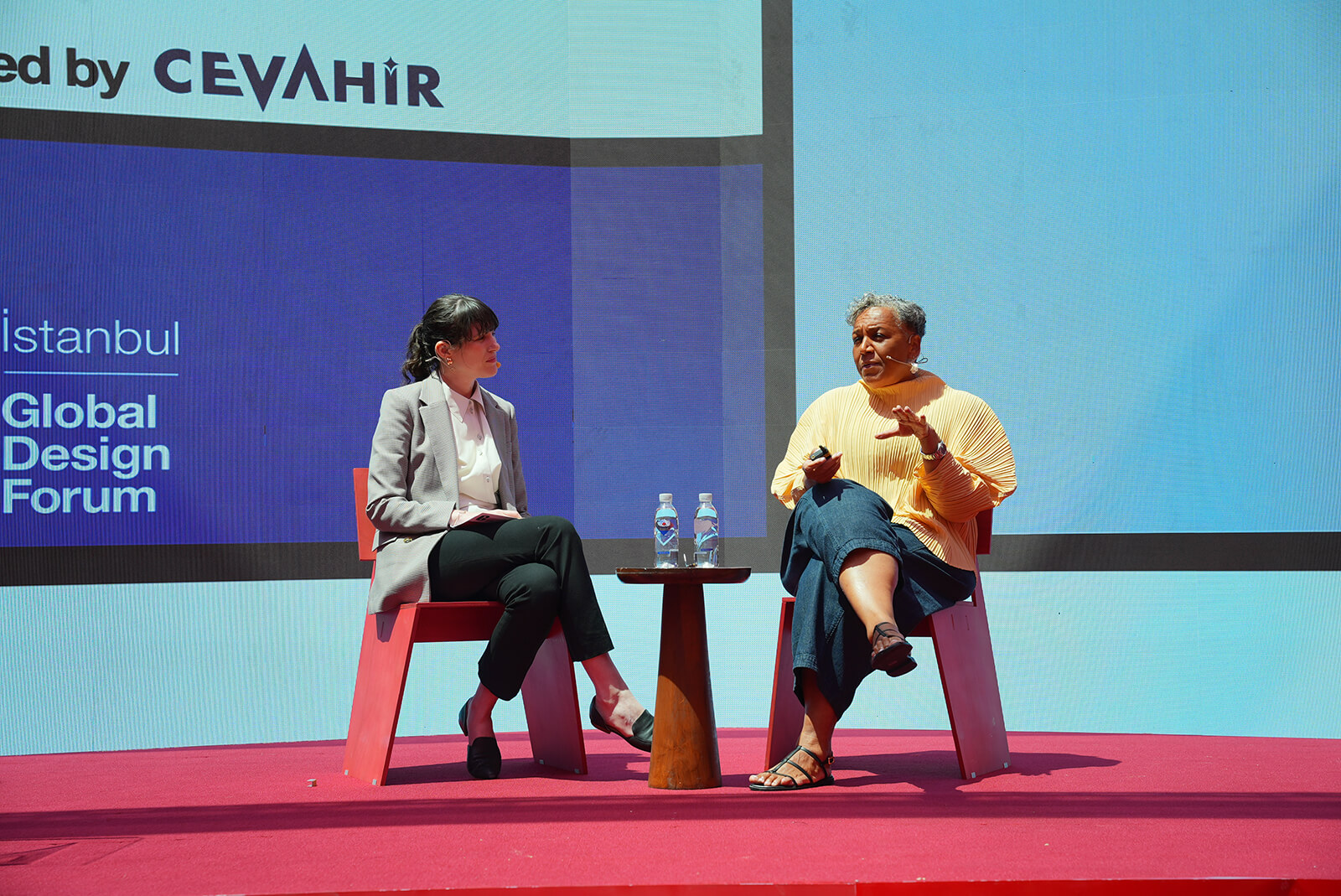
It was Professor Lesley Lokko OBE's conversation with Galilee that most directly confronted the structural conditions underlying all of these discussions. Lokko addressed the colonial histories embedded within architectural education and practice, tracing how they continue to shape what is taught, funded and valorised. "There's a really beautiful phrase in archaeology called an argument from silence, which means that if you dig somewhere and you don't find anything, it is not proof that it was not there," she said. "That part of your job as the generator of the idea is to fill in those gaps."
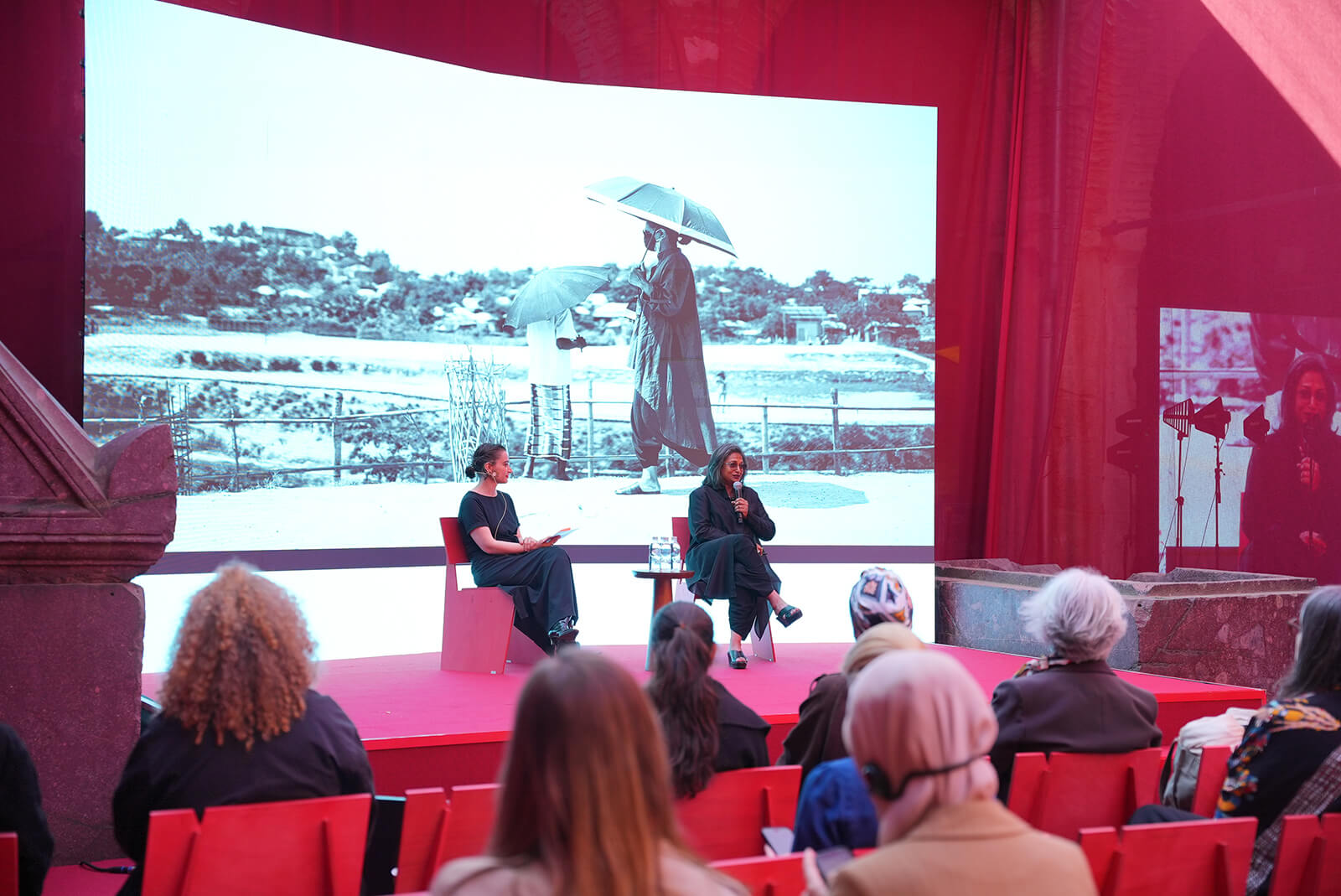
The forum closed with a conversation between Bangladeshi architect Marina Tabassum and Zeynep Bulut, which drew the preceding discussions toward a more personal register. "You also have another identity as a global citizen, and we are here together from all different parts of the world, but at the same time we are speaking in one language, which we all understand, a kind of universal culture that has bound us together," she said. "You need to bridge them together, create a balance where you do not lose your localness, but at the same time you do not shy away from your universality that exists." It was a hopeful note on which to close.
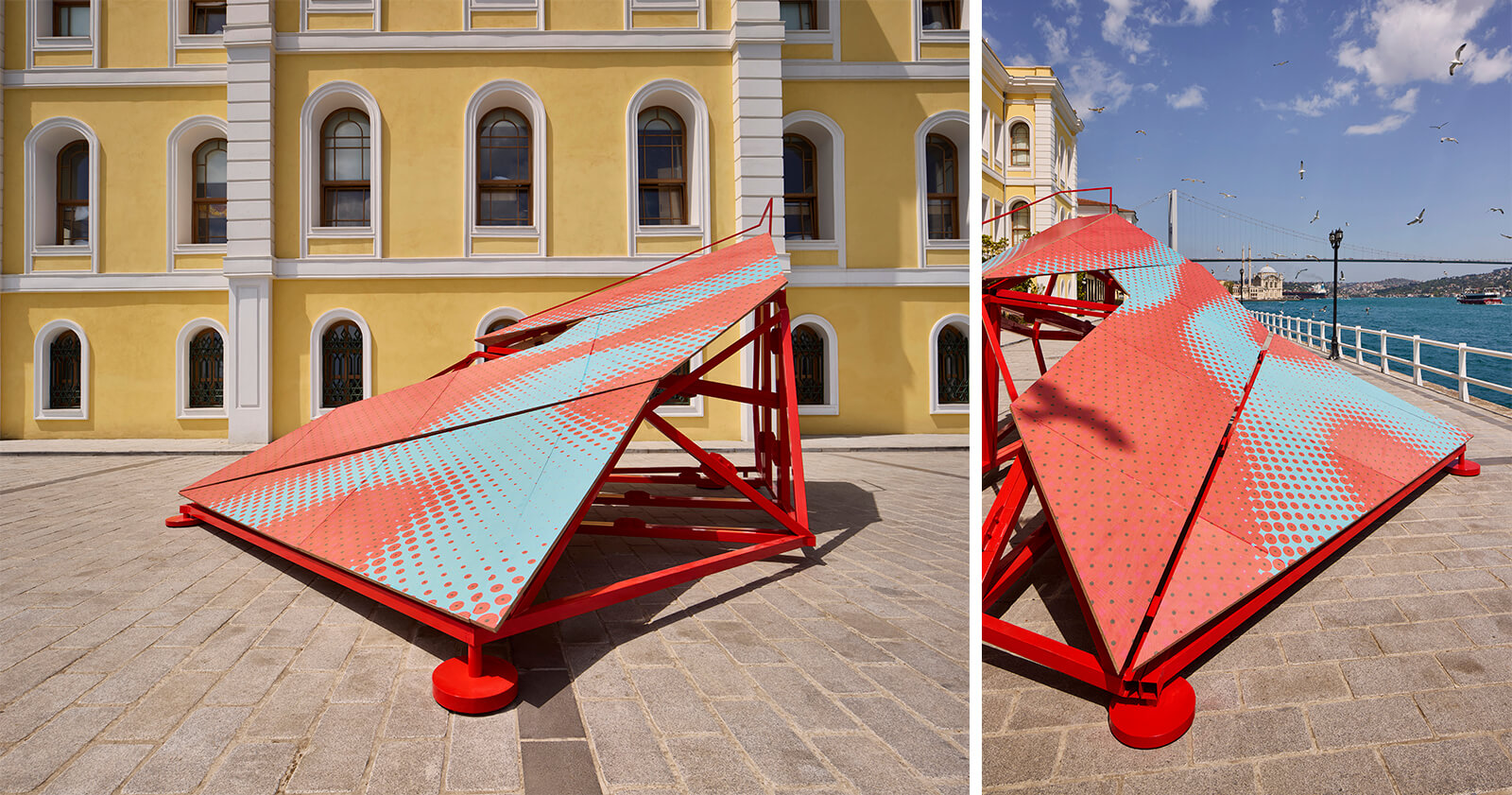
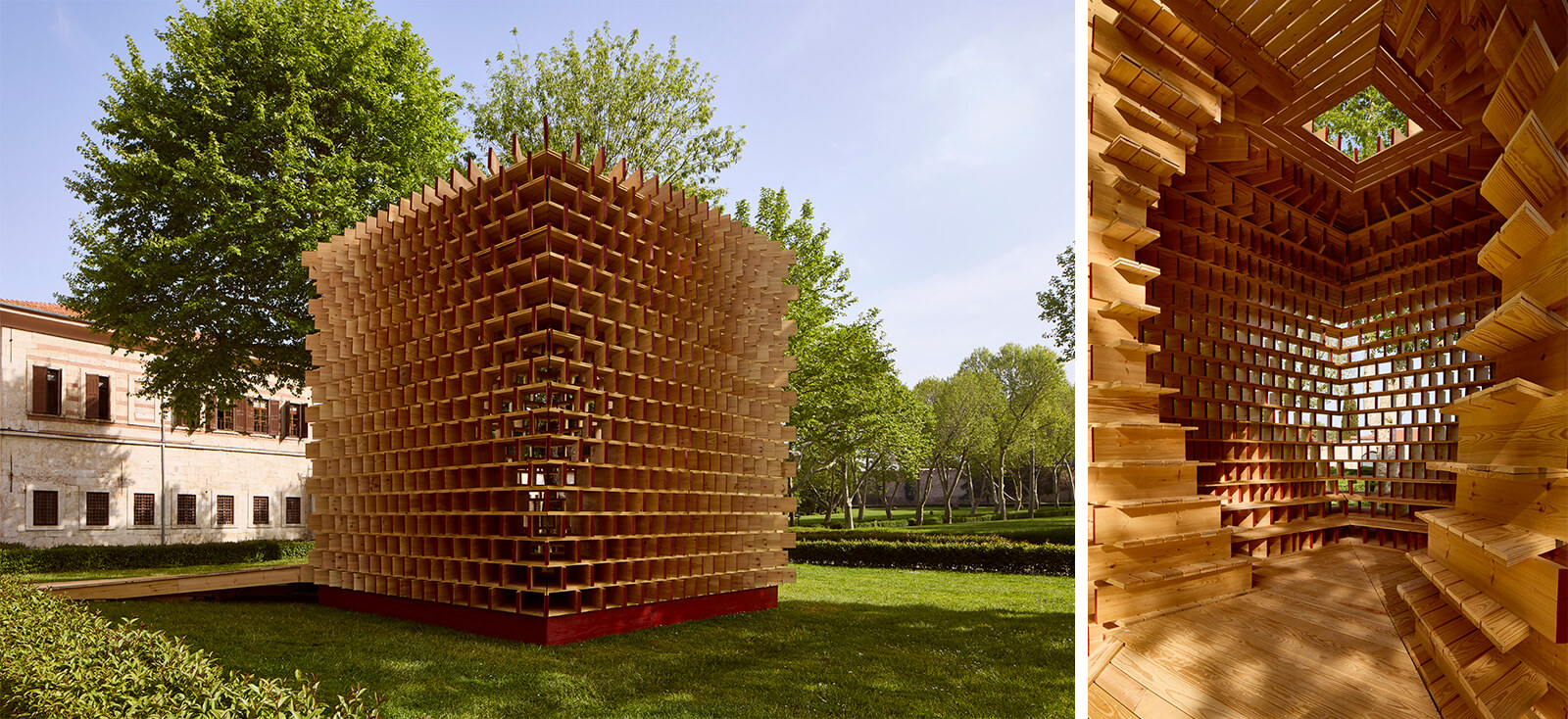
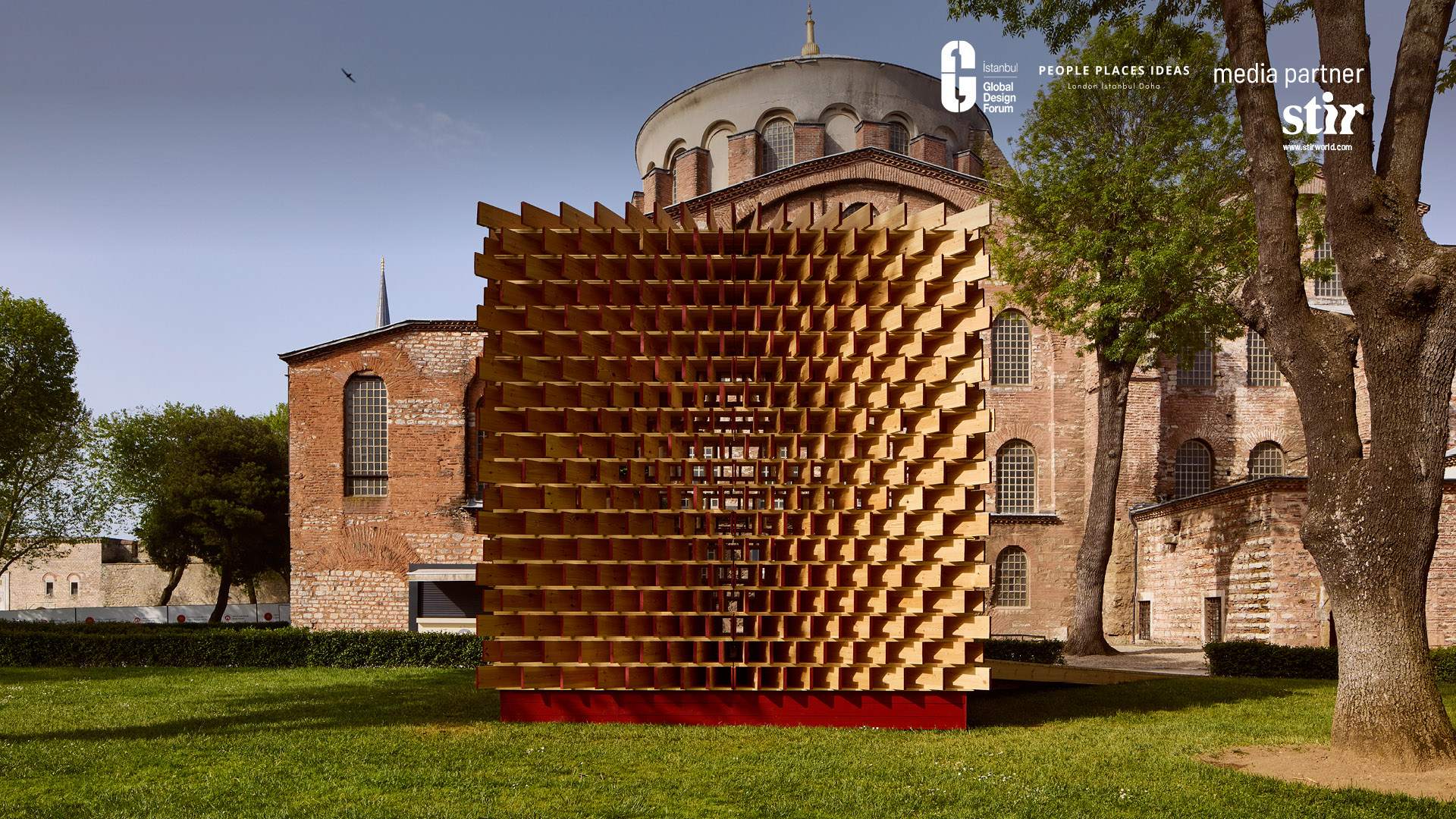
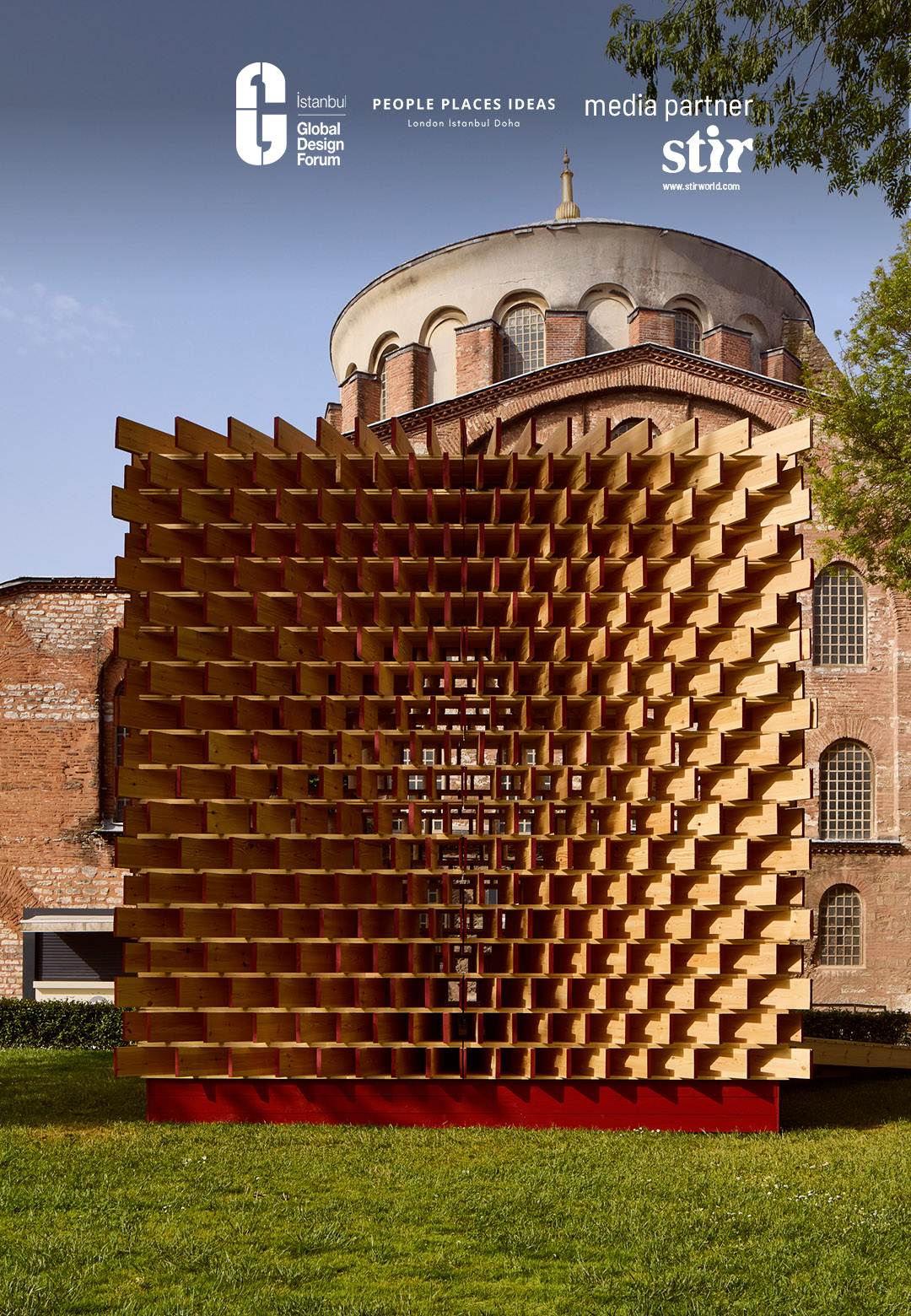
Across the city, temporary public installations were developed by Zeynep Bulut, structured under her placemaking framework, Praise of Transience. A pavilion in Turkish black pine by Waugh Thistleton Architects and National Timber Association was presented as a porous lattice—doubling as a threshold, viewing platform and a gathering space. The skeletal dome titled Pavilion of the Moment was staged next to Hagia Irene, offering an interesting contrast between its wooden framework and the stone architecture surrounding it. Oblique Land by Alper Derinboğaz and Salon Architects stood on the Bosphorus-facing grounds of the Kabataş High School as an inhabitable inclined plane. As visitors walked across it, they were forced to adjust their balance and posture. Something as ordinary as standing and looking was transformed into a physical experience. Adding another introspective layer to the offerings was YAKIN Kolektif and Marmara University students’ collaboration, inspired by Islamic mysticism. Composed of semi-transparent silk curtains hanging in sequences, the textile layers of Yakîn created a gradual transition through space that felt like moving through changing densities of atmosphere.
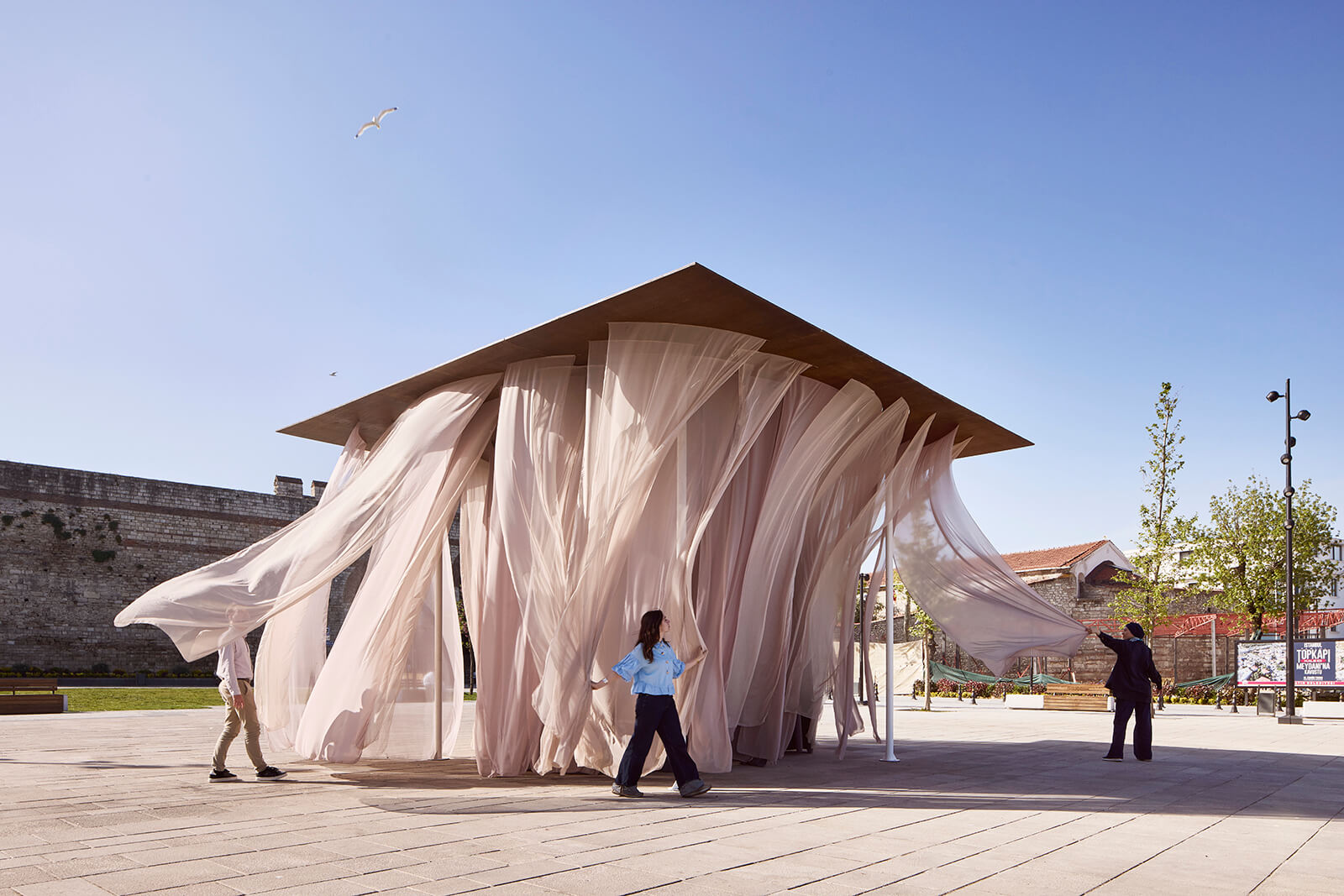
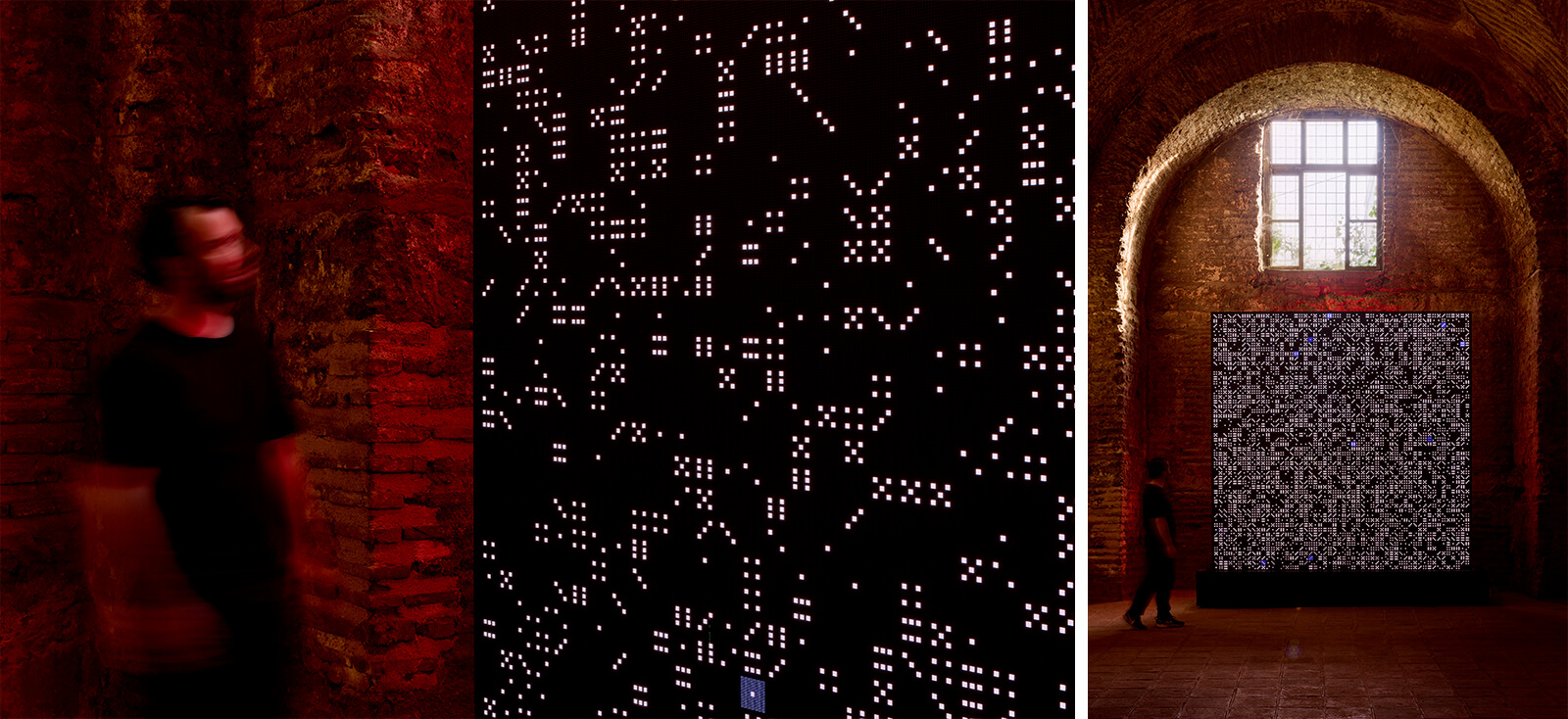
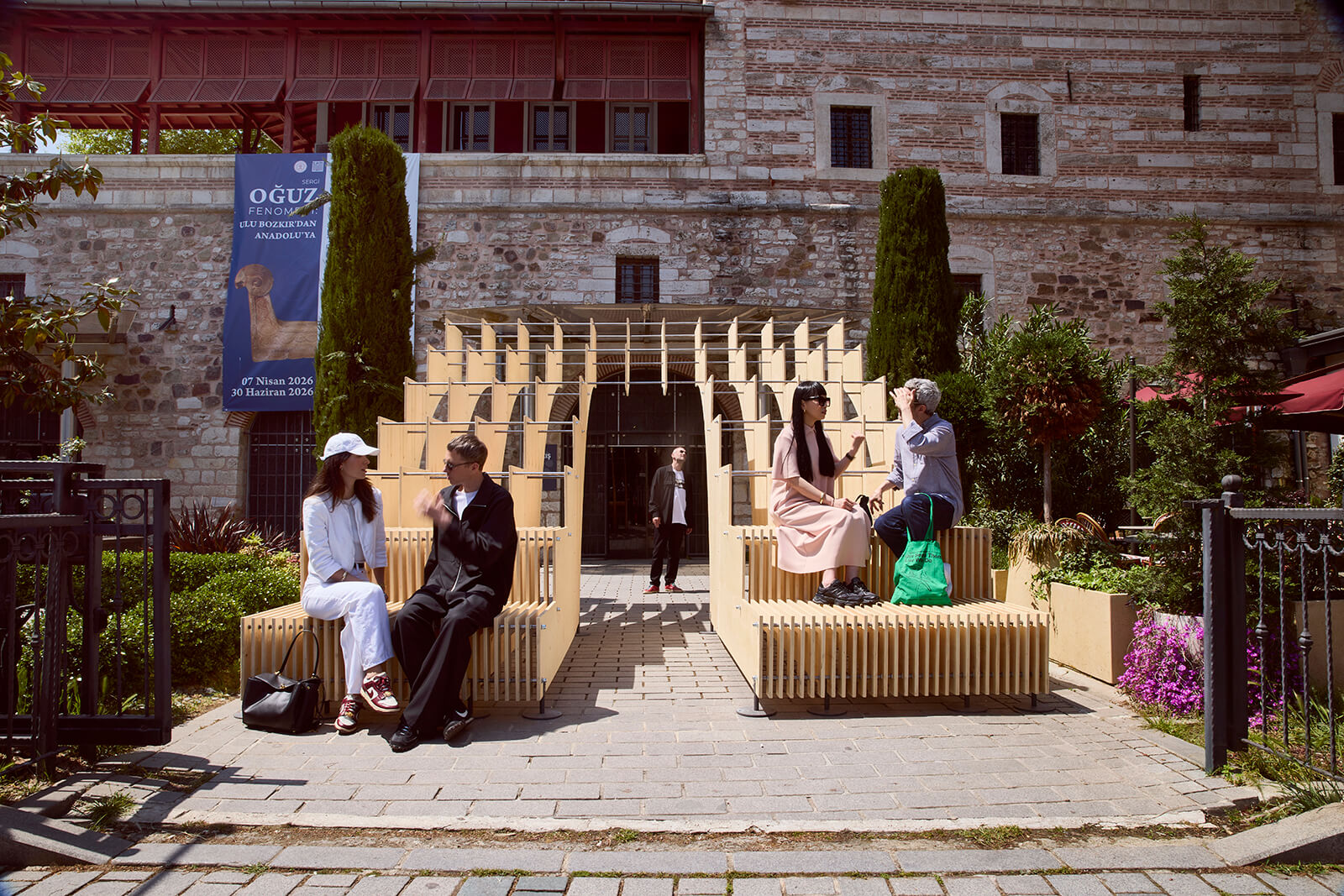
Each project worked through a different register—light, slope, timber, textile—but all of them asked the same question in different ways: what happens when space stops being stable? If the installations tested perception through body and movement, the conversations tested it through language.
GDF Istanbul ultimately circled back to a simple but expansive idea: that design is most powerful when it leaves the room and enters the city, when it stops speaking only to specialists and begins to meet the passerby. Speaking with STIR, the curator of Global Design Forum 2025, Ben Evans—Director of the London Design Festival—reflected on the idea behind bringing GDF to Istanbul. He said, “We have been operating the Global Design Forum as part of the London Design Festival for 15 years. We have long harboured a desire to take this event to other parts of the world. I believe in the democratisation of design; it's an everyday experience. [...] The passerby is who I'm interested in. Not the design groupie. I've got them already.” That provocation became the forum’s most lasting residue.
To close the experience, STIR asked participating creatives and voices on the ground a simple question: What kinds of worlds come to mind when you think of Worlds in Contact? Their responses form a set of fragments—intuitive, personal and sometimes unexpected—that extend the forum beyond its programmed spaces and into lived imagination. Tap on the cover to watch what they said.

by Pranjal Maheshwari Oct 23, 2026
Co-authored by Jareh Das, Chairman traces the British designer’s fixation on chairs as symbols of power and identity and as mediums of expression and community building.
by Chahna Tank Oct 22, 2026
STIR speaks with the Mumbai-based type designer about her practice, type walks and why she wants more people to have stronger opinions about Indian-script fonts.
by Mirra Lynn Oct 22, 2026
The curators behind Palestine Design Week 2026 reflect on its intent, considering how design holds memory, makes space for loss and imagines a future in Palestine.
by Jincy Iype Oct 15, 2026
STIR explores craft, material intelligence and people shaping Indian design through dialogues with Design Democracy’s co-founders and the curators of its special exhibitions.

make your fridays matter with a well-read weekend
Enter your details to sign in
Don’t have an account?
Sign upOr you can sign in with
a single account for all
STIR platforms
All your bookmarks will be available across all your devices.
Stay STIRred
Already have an account?
Sign inOr you can sign up with
Verification link sent to check your inbox or spam folder to complete sign up process
Tap on things that interests you.
Select the Conversation Category you would like to watch
Please enter your details and click submit.
Enter the 6-digit code sent at


Global Design Forum Istanbul framed multiple lived worlds of design in contact
by Jigyasa Sharma, Zohra Khan | Published on : Jun 02, 2026


 Sign in with Google
 Sign in with email
What do you think?