Architecture06 mins. read
Kadre Architects transform a dilapidated motel into an inviting housing complex
by Bansari PaghdarJun 17, 2026




by Aarthi MohanPublished on : Dec 10, 2025
In Compton, California, a once-neglected building on East Compton Boulevard has found a new purpose. The structure, once two ordinary storefronts, now serves as a vibrant community hub, offering case management and social services to residents of a nearby transitional housing facility. Designed by Los Angeles–based Kadre Architects, the Compton Community Center is modest in scale but profound in intent, an example of how thoughtful design can create dignity and connection in places that have long gone overlooked.

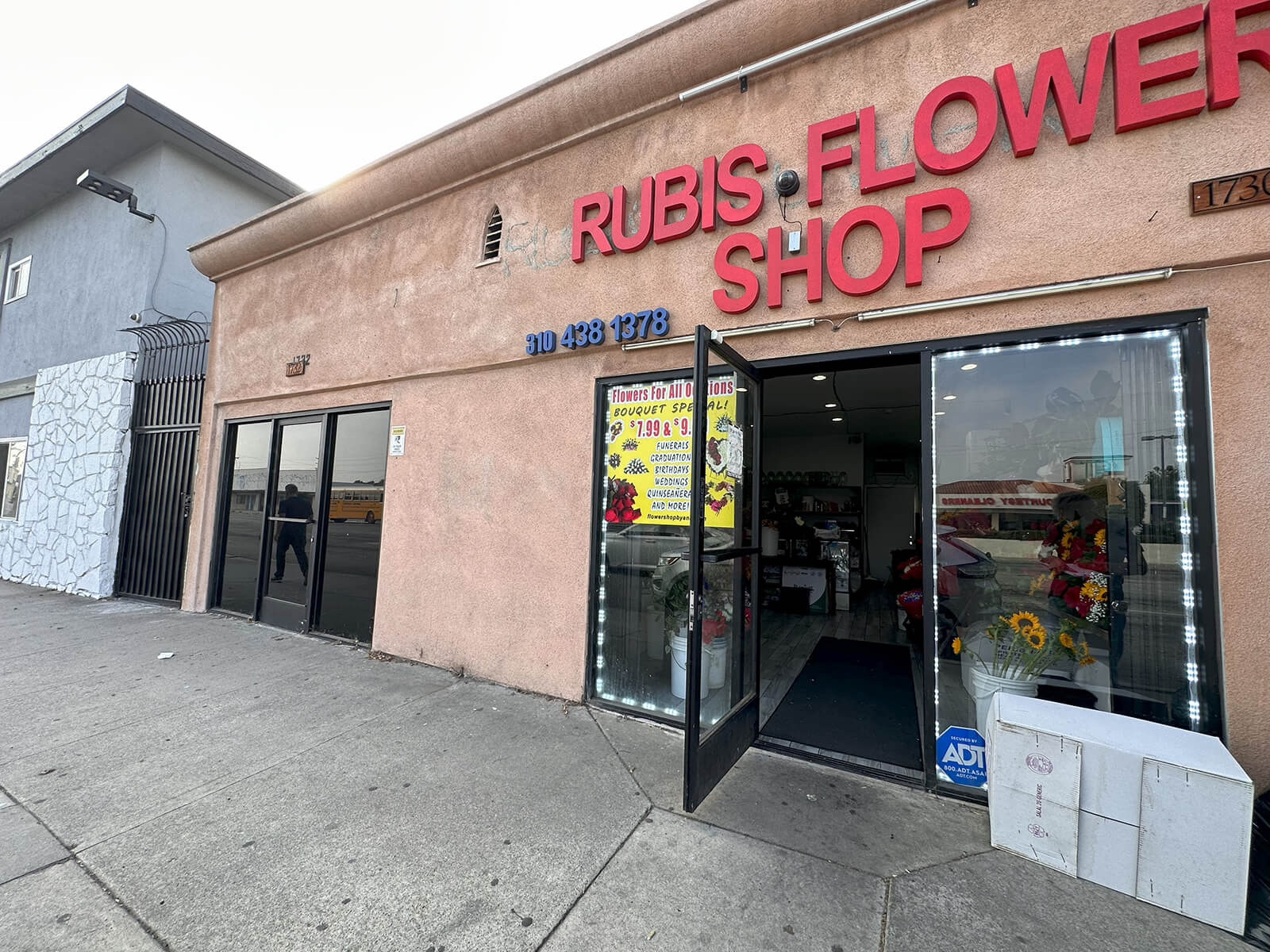
When architect Nerin Kadribegovic, founder of Kadre Architects, first stepped into the existing space, the challenge seemed plain. “When I first visited the project site, from the exterior, the interior and the parking lot, I thought the space was as unremarkable and blighted as they come,” he tells STIR. “The client also did not have a mandate for design. However, we knew that the population served was severely underprivileged and that their use of the centre must be an uplifting experience.” That conviction that design can elevate without excess became the foundation of the project.
The community architecture project was commissioned by HOPICS, a homeless non-profit organisation that manages housing and rehabilitation programs across Los Angeles County, United States. Their brief was pragmatic: to create a facility where residents could meet with case managers, access medical and behavioural health resources and receive assistance with employment, documentation and other critical services. Kadribegovic and his team saw an opportunity to make the experience of seeking help as something that feels humane and restorative.
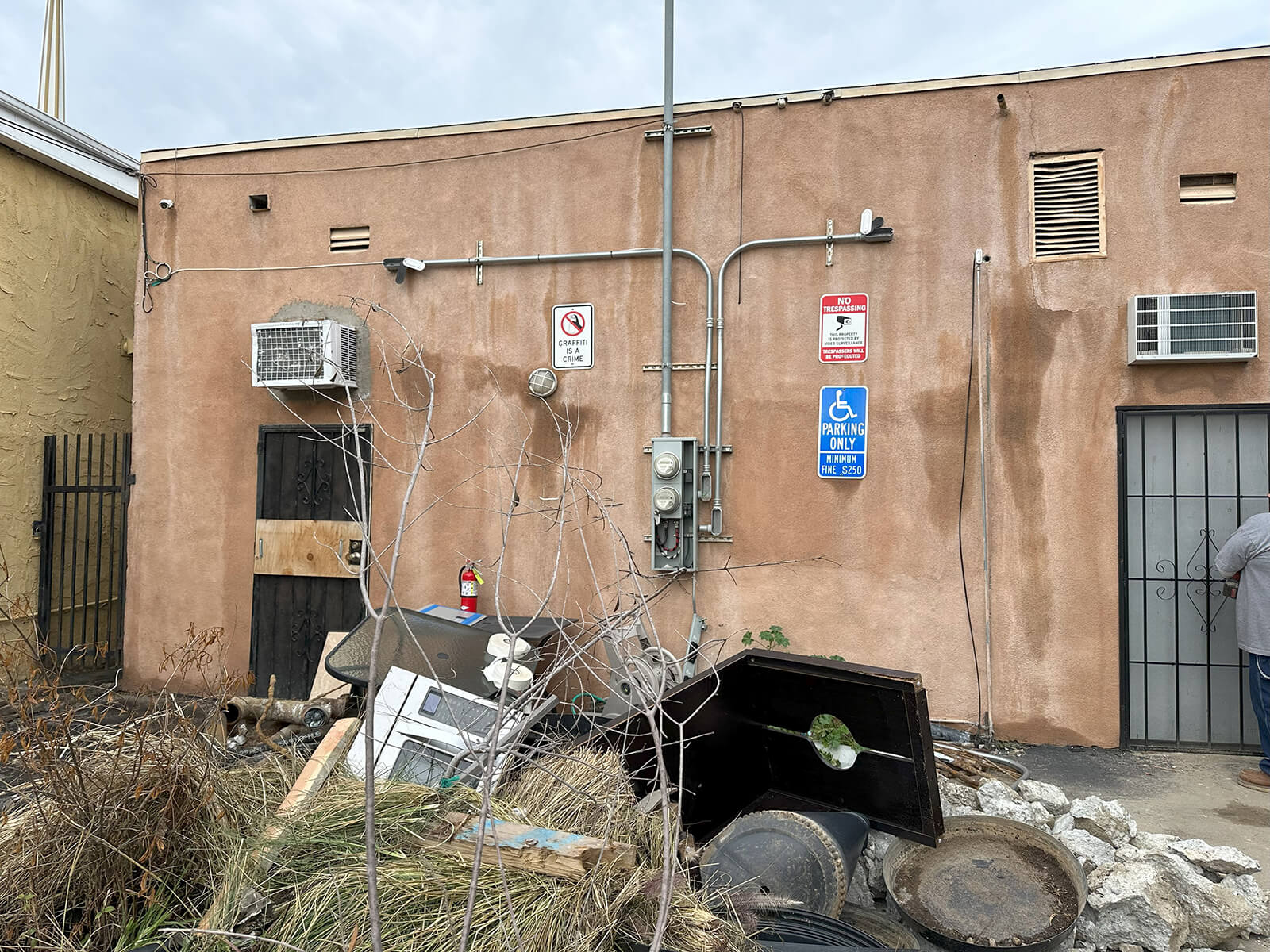
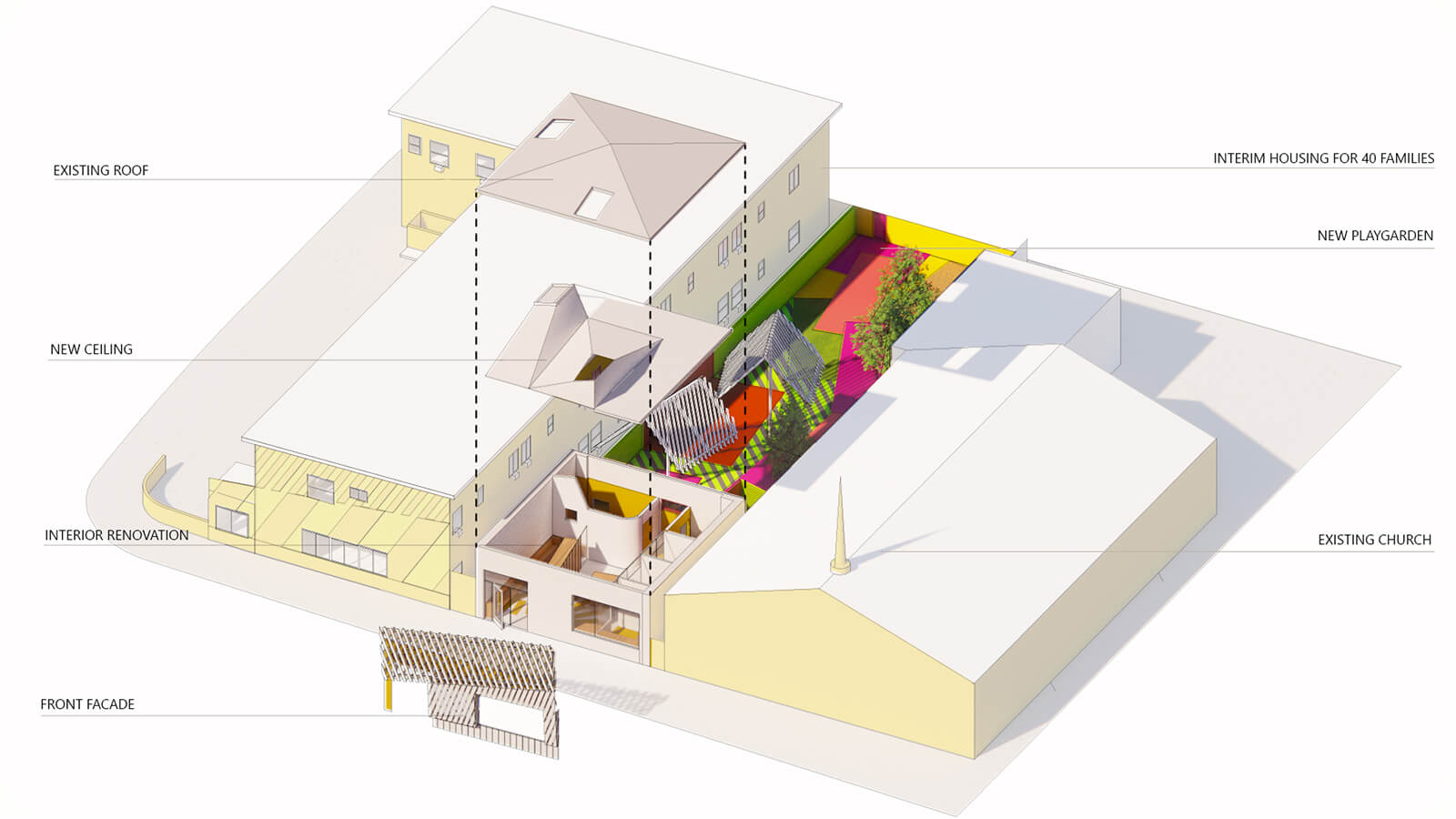
The original 1,000 sq. ft. building offered little to work with. It consisted of two compact storefronts beneath a low, false ceiling. Searching for possibilities, Kadribegovic climbed into the attic and made an unexpected discovery: a burnt roof structure and nearly 10ft of concealed space between the ceiling and the roof. Once the team confirmed these enclosures were non-structural, the plan saw a complete overhaul. Removing them opened the interior to its full height, revealing the potential for daylight to enter through new skylights.
Compton’s story gives quiet weight to this transformation. Once agricultural land on the old Rancho San Pedro, the city grew rapidly after its incorporation in 1888, becoming one of Los Angeles County’s earliest suburbs. Over the decades, waves of migration reshaped its streets with African American families moving in during the 1950s and ‘60s, later joined by Latino and immigrant communities. Economic neglect and the city’s reputation for hardship often overshadowed the strength of its residents. Against that backdrop, a project like the community centre feels less like an architectural upgrade and more like an act of repair—a small, visible gesture of care within a place too often left behind.
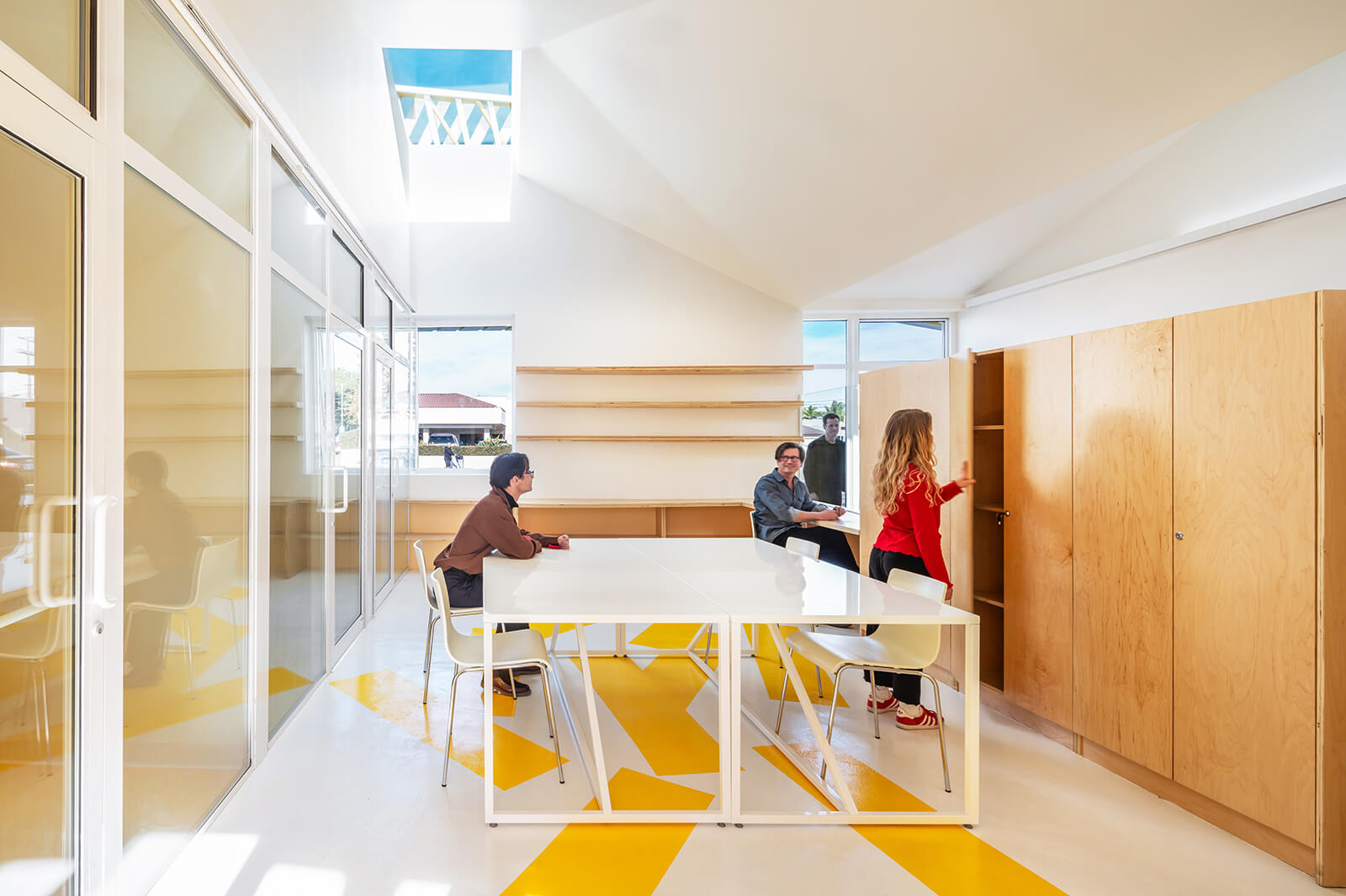
That sense of repair began with a closer reading of what the building was already holding. When the team investigated the cramped interior, they found out that the low ceiling was only the surface of a much deeper, concealed volume. Above it lay two older roof layers and nearly 10ft of unused height, a remnant of the structure’s long and improvised life. Reclaiming this hidden space changed the project’s trajectory; the room opened into a tall, continuous volume where the roof’s geometry could finally be understood. The new height gives the interior a quiet clarity, allowing natural light to settle across broad planes and shifting surfaces throughout the day. What was once a dim, compressed storefront now feels unexpectedly open, calm and perceptive to its occupants; a reminder that restoration can come from uncovering what was already there rather than adding more.
The design builds on Kadre Architects’ belief that limitations can sharpen purpose. Working with minimal budgets and reused structures, the practice searches for beauty in the essentials of light, space and proportion. As the Bosnian architect often explains, constraints force architects to look deeper and find meaning in what cannot be bought, like the way sunlight moves through a room.
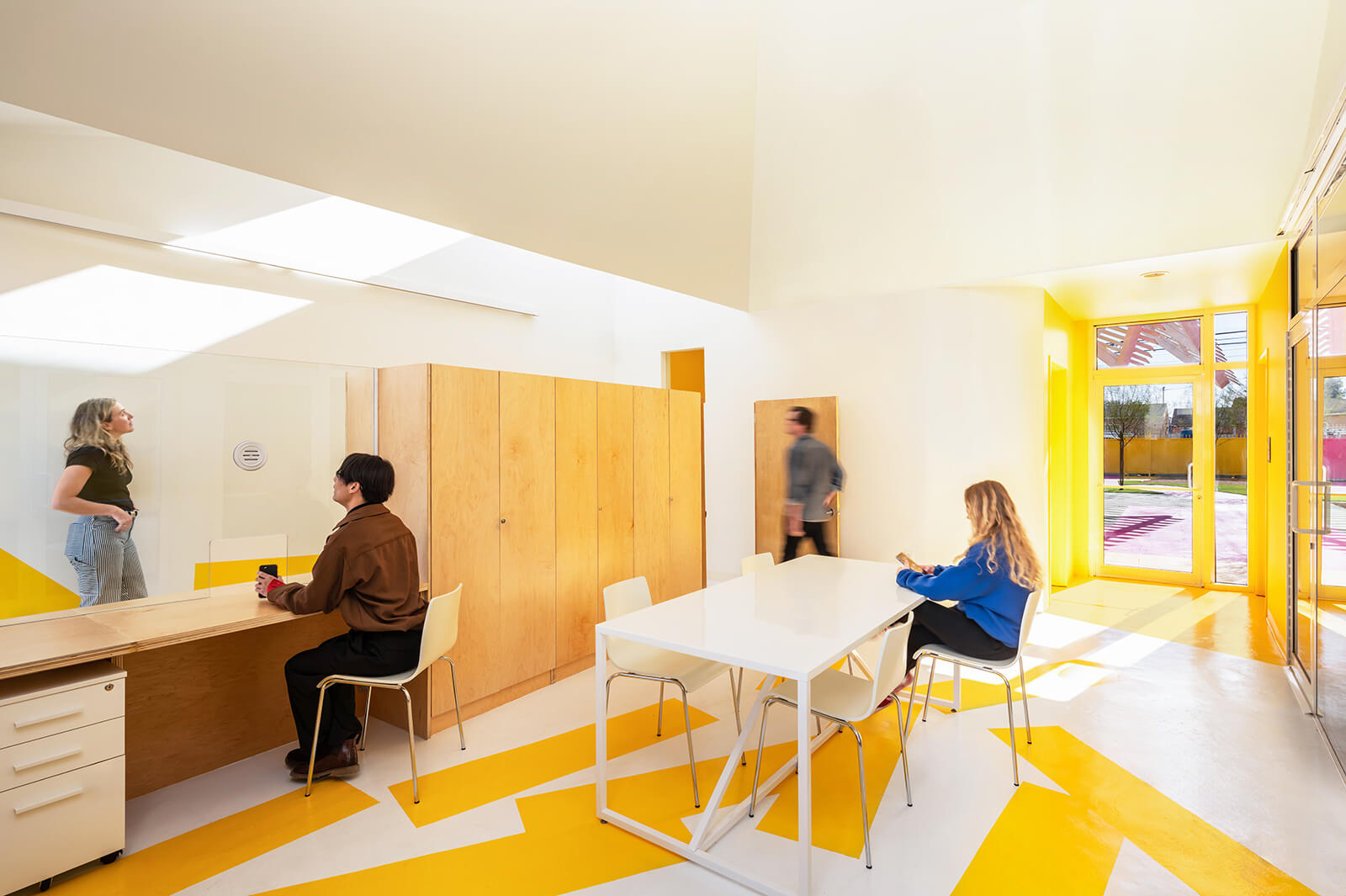
Inside, the colour palette strikes a balance between brightness and restraint. The architects used white and yellow, referencing HOPICS’ brand colours, to amplify the daylight and introduce warmth. The scheme was applied with the studio’s graphic precision, with large planes of colour reflecting light dramatically across the vaulted surfaces. Custom plywood desks and shelving continue this rhythm, their asymmetric forms echoing the pattern of the floor and bringing order through repetition.
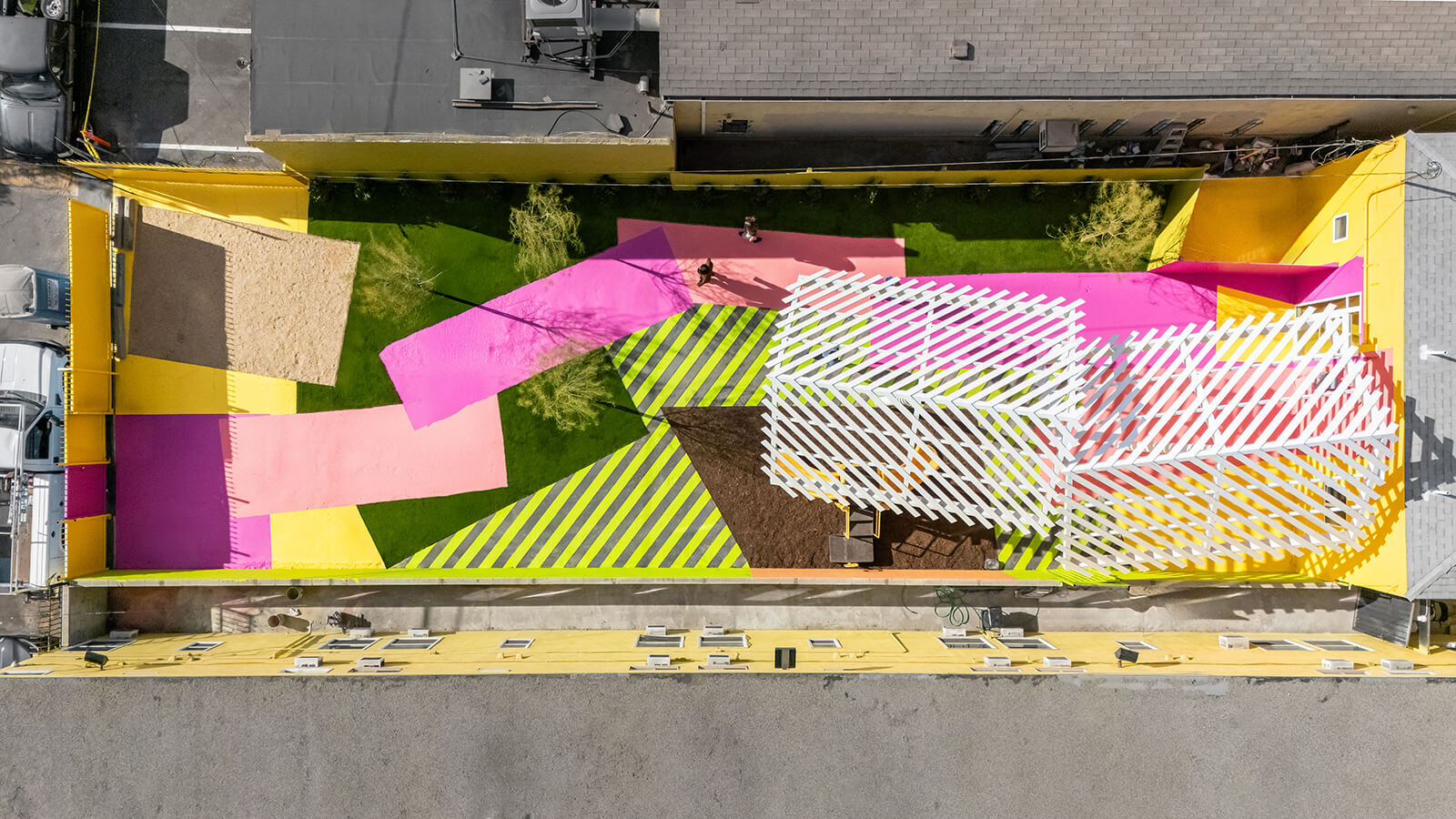
At the back, the design extends into what was once a neglected parking lot. The team replaced patches of asphalt with artificial turf, forming playful green islands. The layout, first developed with coloured paper collages layered and rearranged by hand, translates into the built version with a natural, spontaneous rhythm. Trees and repurposed playground equipment from a nearby Kadre housing project create a modest but joyful civic landscape, offering shade, softness and pause for families waiting to meet case managers.
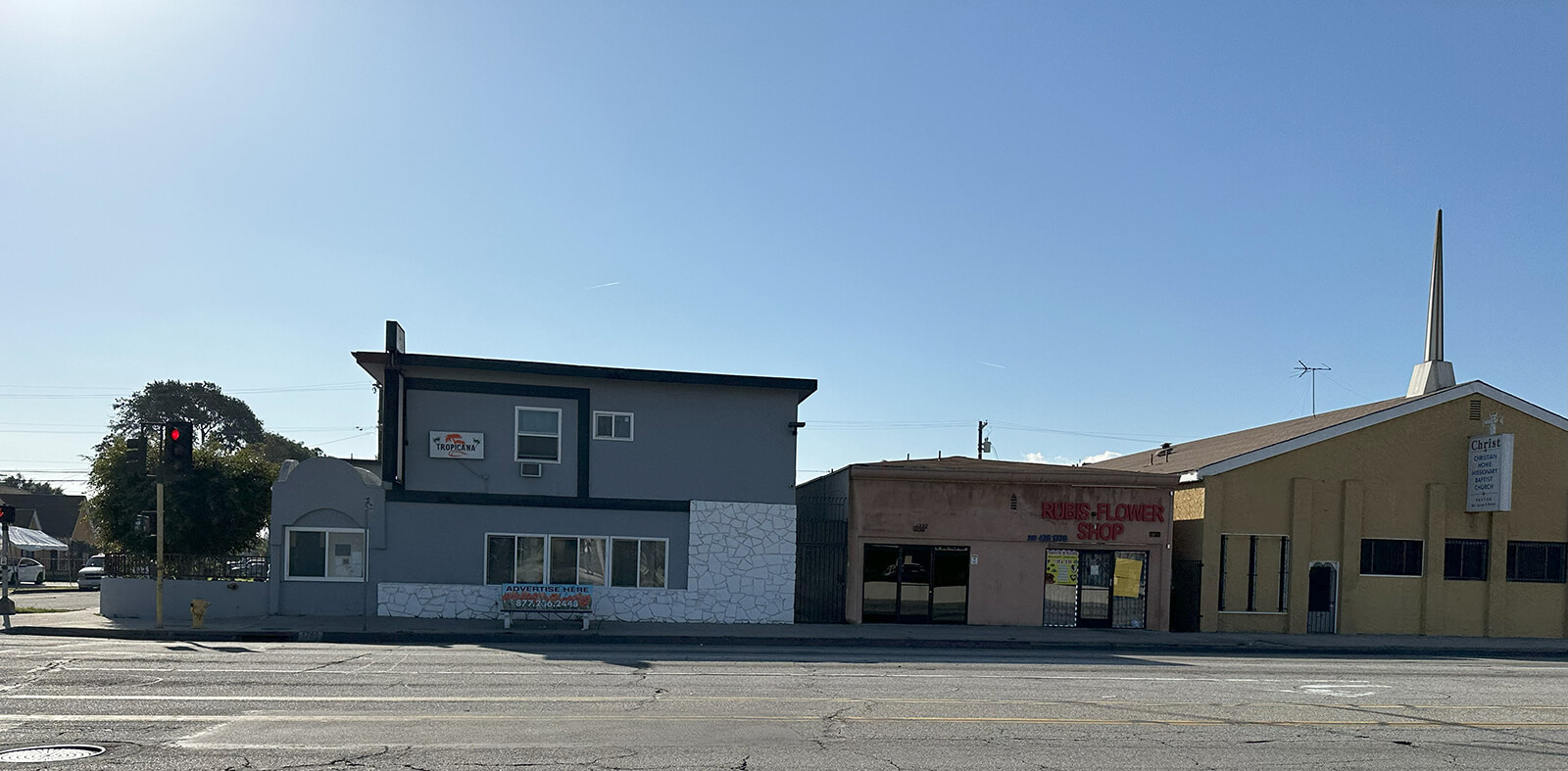
The building’s front façade posed a different challenge. Lacking context and without a client mandate, the architects studied the street. The block included three buildings: Kadre’s housing project, the new community centre and an old church with a prominent gable roof. If the façade could echo the church architecture and colour while tying into the housing project’s tones, the buildings might read as a unified ensemble. As the architect recalls to STIR, “We realised that with a single move, we could unify the entire city block by playing off the church roof geometry. I love that an interiors project was the catalyst for the transformation of an entire city block.”
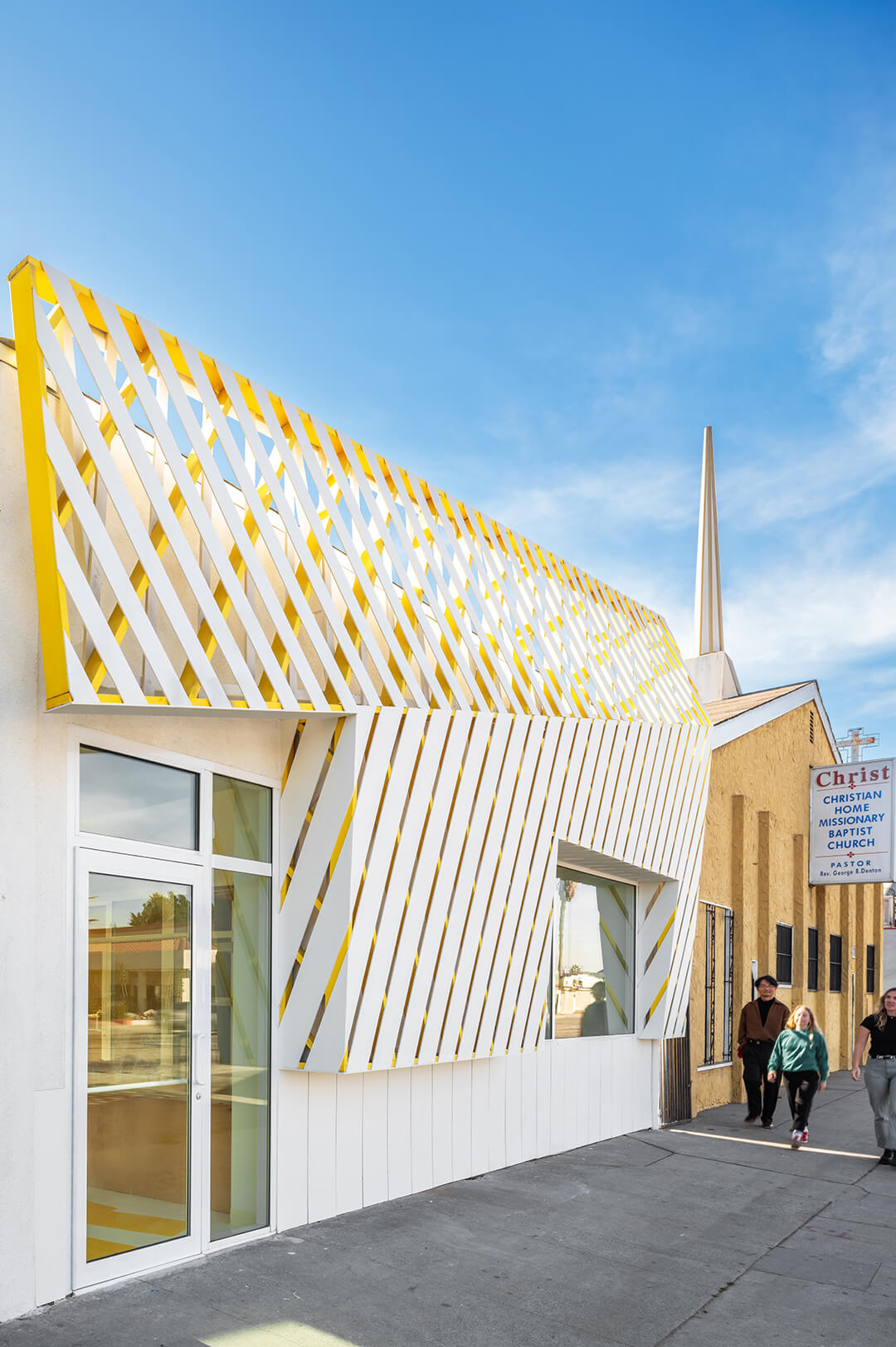
The final façade introduces a north-facing lattice that filters daylight into the interior while reflecting light outward, creating a gentle luminosity visible from the street. The pattern draws on the church’s roofline and picks up the project’s colours, establishing a visual continuity across the block. At dusk, the interior glow turns the storefront into a literal and symbolic gesture of openness in a neighbourhood often defined by barriers.
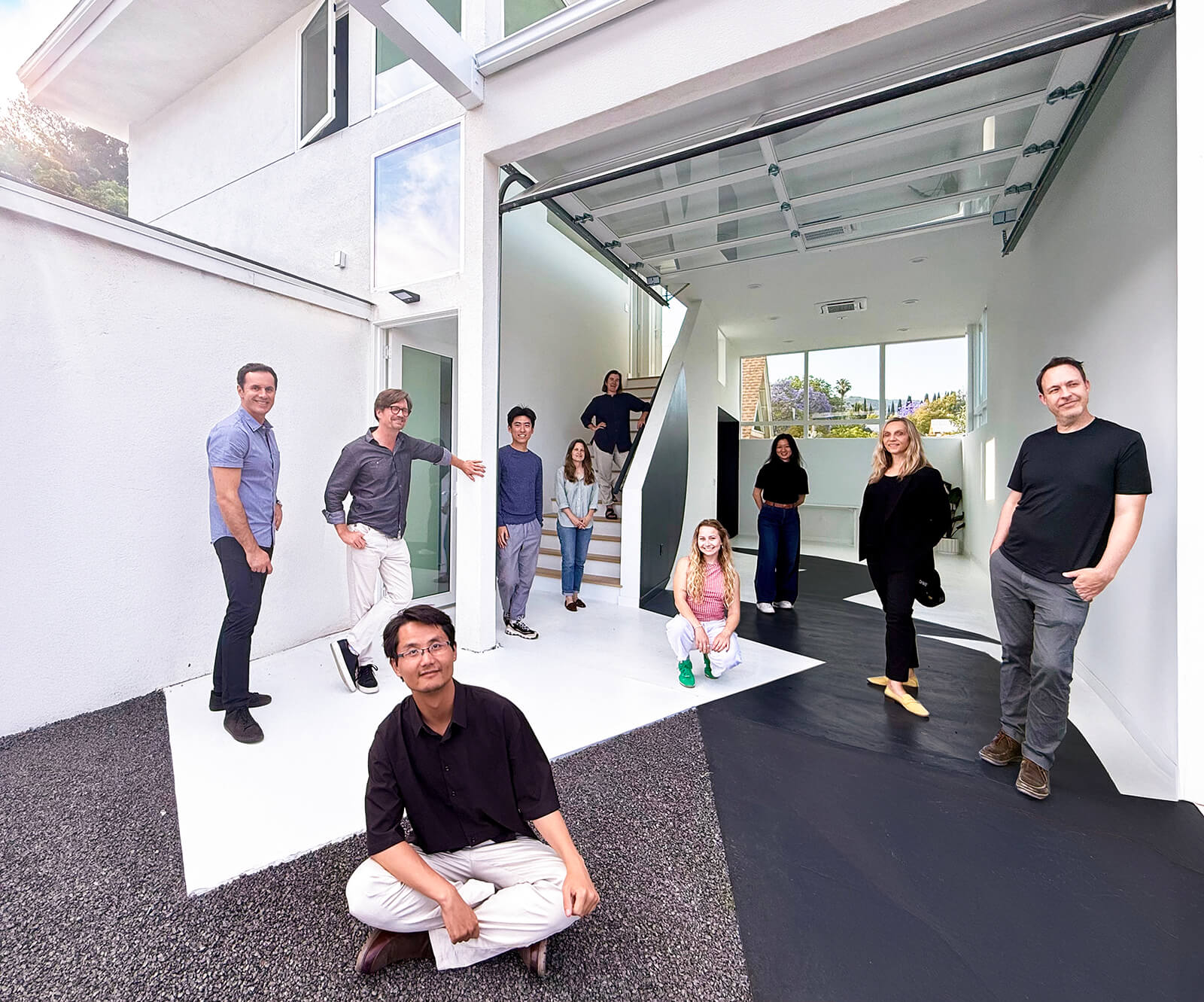
Founded in 2022, Kadre Architects has built a reputation for creating civic and housing projects across Southern California that respond to social needs with spatial intelligence. Many of its commissions come from public agencies and non-profits working within severe budget constraints. For Kadribegovic, who was born in Bosnia and immigrated to the United States, such work carries personal resonance. He understands the fragility of belonging and how architecture, when handled with care, can signal inclusion and respect.
When STIR asked Kadribegovic about his guiding principles for designing spaces for communities with the least say in their environments, he shared, “The most important principle”, he says, “is that the spaces be uplifting and that they acknowledge the population they serve by providing a dignified environment. The folks who use our buildings often occupy the lowest rungs of the social ladder. If, through a bit of care in design, we can make them feel honoured and respected, it could start a virtuous cycle of change, ultimately resulting in them becoming contributing members of society. Architecture has the power to transform much more than the built environment, and we try to extract every bit of good it can offer”
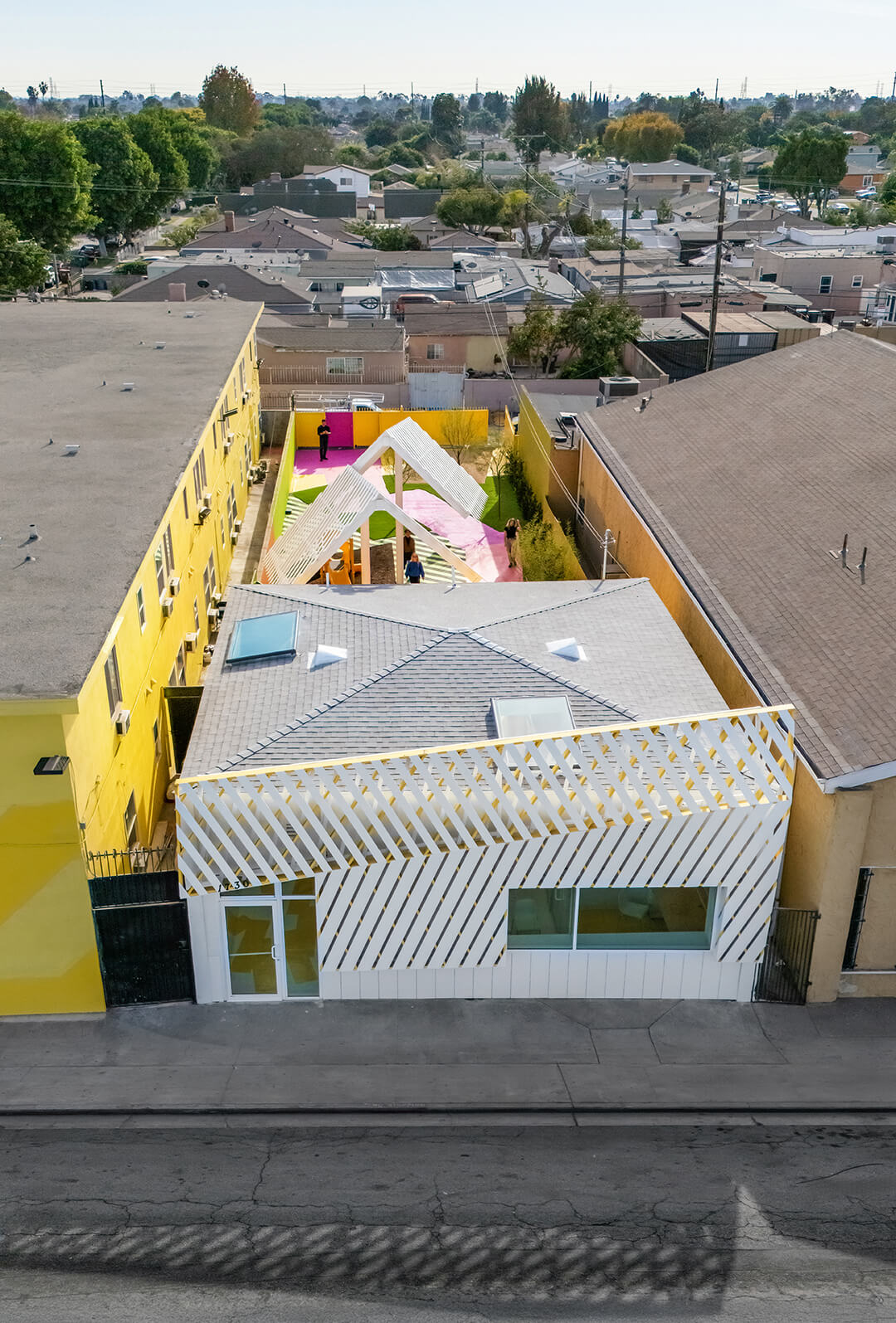
The Compton Community Center distils that belief into form. Its success lies not in spectacle but in precision; in the way spatial clarity, openness and considered detailing reshape how people experience an ordinary building. Through careful attention and modest means, Kadre Architects has turned a once-forgotten structure into a cornerstone of community life. At 1730 East Compton Boulevard, the new building now stands open to residents, offering more than services, proving that empathy, when translated into space, can change what a city feels like.

by Mrinmayee Bhoot Oct 12, 2026
The new Centre for Contemporary Arts, fostering public engagement with art in Uzbekistan, is housed in a tram depot refurbished by the French studio, emulating local craftsmanship.
by Mirra Lynn Oct 10, 2026
The Shanghai-based architecture practice’s intervention in Suzhou transforms three abandoned houses into a bookstore, café, library and homestay.
by Pranjal Maheshwari Oct 09, 2026
The eighth edition of the international architecture and urban design showcase, themed How Much?, explores diverse implications of social, ecological and economic ‘cheapness’.
by Pranjal Maheshwari Oct 06, 2026
With a programme focused on biodiversity, accessibility and safety, the Rotterdam-based architects help the neighbourhood reclaim a barren landscape as an integral social node.

make your fridays matter with a well-read weekend
Enter your details to sign in
Don’t have an account?
Sign upOr you can sign in with
a single account for all
STIR platforms
All your bookmarks will be available across all your devices.
Stay STIRred
Already have an account?
Sign inOr you can sign up with
Verification link sent to check your inbox or spam folder to complete sign up process
Tap on things that interests you.
Select the Conversation Category you would like to watch
Please enter your details and click submit.
Enter the 6-digit code sent at


A forgotten Compton storefront gets a bold new life in its redesign by Kadre Architects
by Aarthi Mohan | Published on : Dec 10, 2025


 Sign in with Google
 Sign in with email
What do you think?