Architecture04 mins. read
K Studio’s extension to the Dexamenes Hotel in Greece softens its industrial past
by Pranjal MaheshwariApr 01, 2026



by Aarthi MohanPublished on : Oct 21, 2025
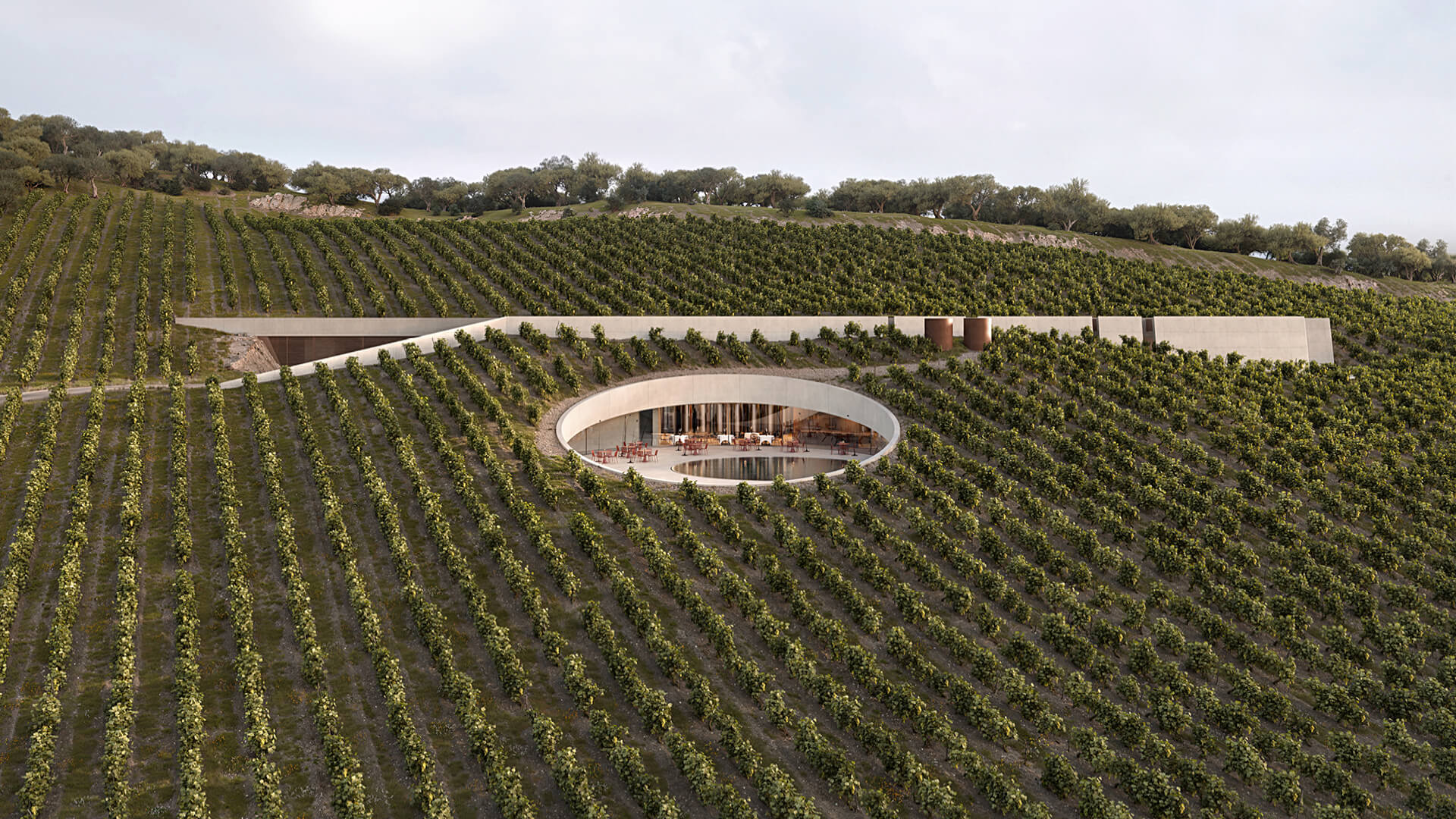
The hillsides of northern Evia in Greece are etched with vineyards, their linear rhythm broken only by the contours of the earth. It is here, on the slopes above Aidipsos—a historic spa town known since antiquity for its thermal springs—that a new winery by Fotis Zapantiotis Associated Architects takes form as a structure cut into it. What appears from above is little more than two traces—a line and a circle—yet, beneath lies an entire subterranean world of winemaking, tasting and ritual descent into shadow.
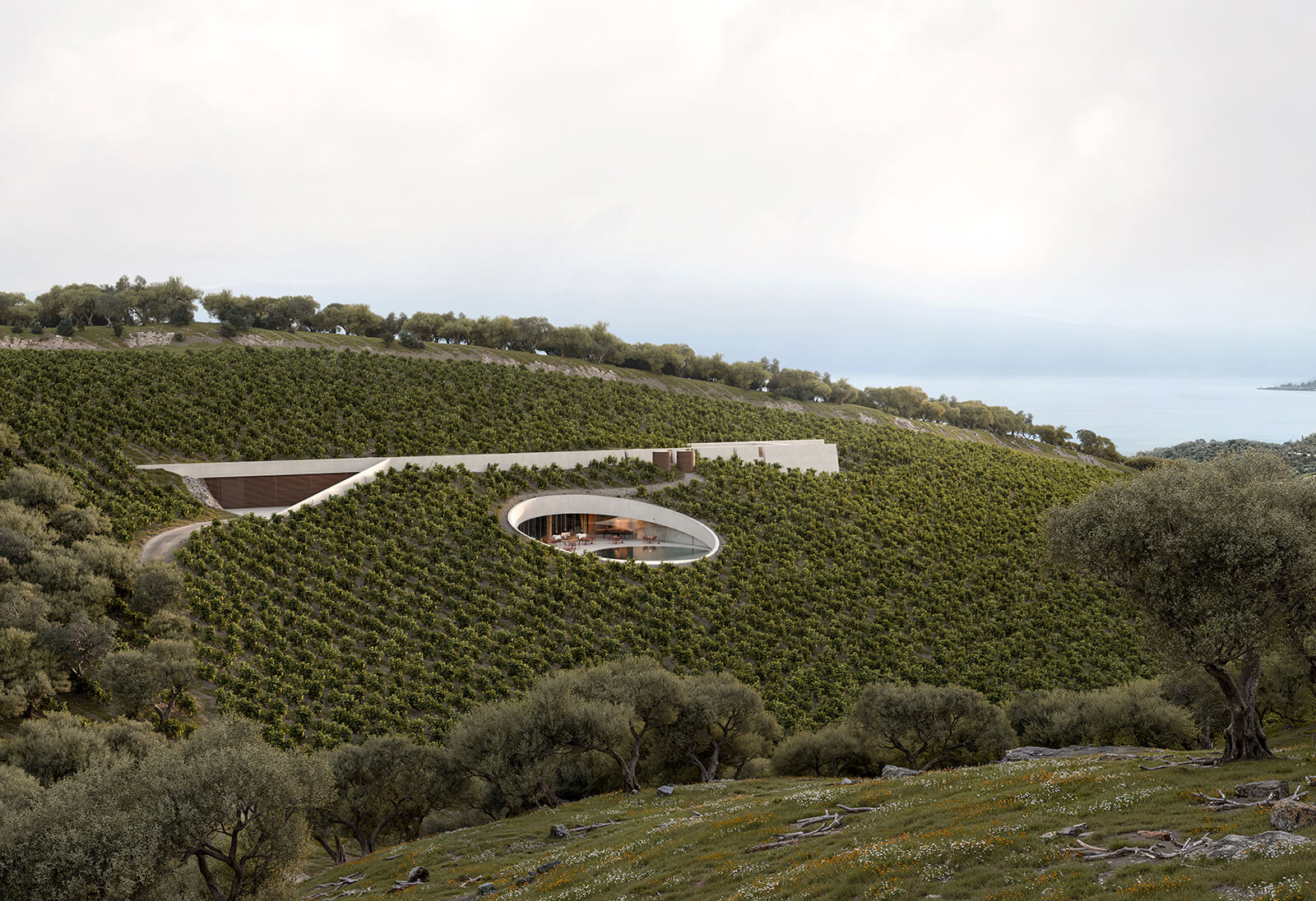
Right at the outset, the Greek firm was confronted with the practical challenges of navigating scale. Winemaking facilities are vast, demanding both storage and production space, as well as areas for visitors. On a continuous slope with no natural hollows or contours, placing a large external structure would have disrupted the topographic flow and the visual order of the vineyard. To address this topographical constraint, the design team decided to embed the building into the terrain. In doing so, the architecture avoids spectacle while gaining a second, essential advantage: the earth itself provides the stable temperature and humidity crucial to the process of fermentation and ageing.
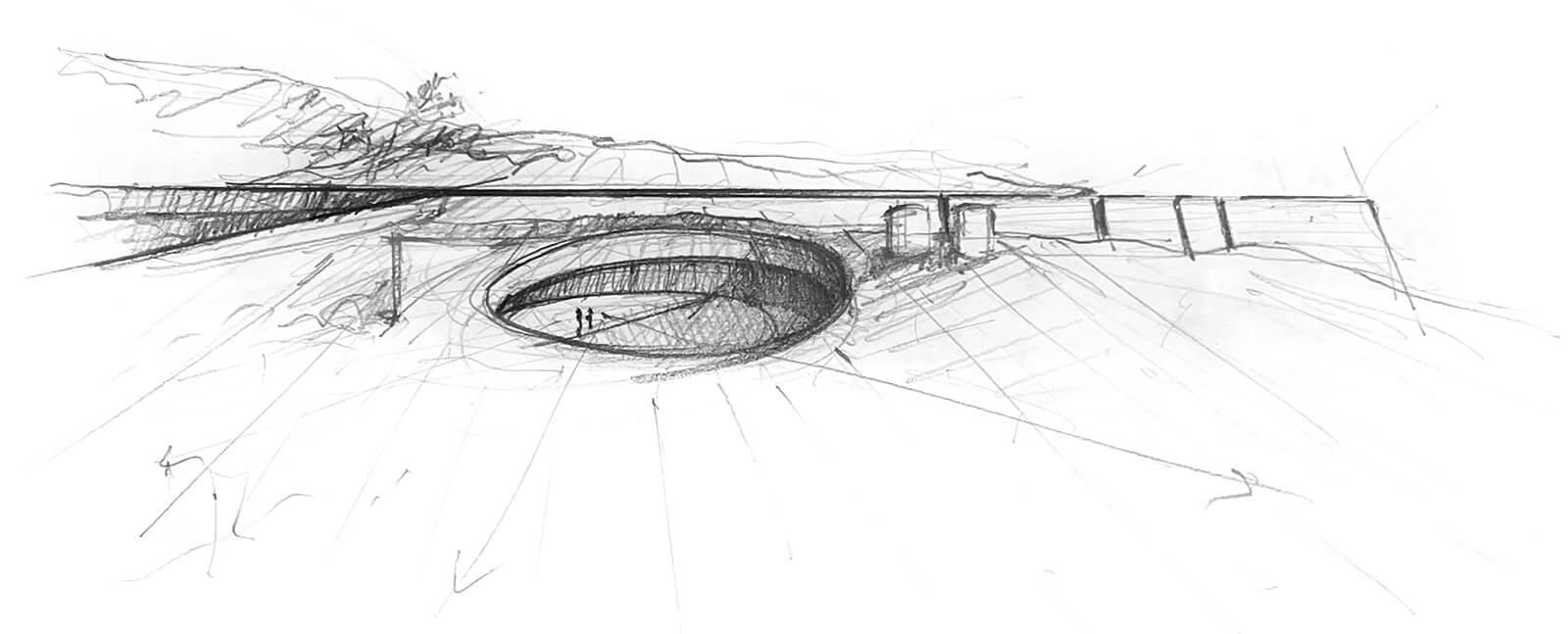
What reveals the hidden winery to the eye are two primary inscriptions in the landscape: a linear cut and a circular void. The line is the elongated façade that fronts the production facility, a slit in the ground that also acts as the entrance for visitors. The circle is a crater-like opening, cut out at the heart of the composition. Here, a plaza is formed as a place of pause and gathering that offers panoramic views across the vineyard. The building thus announces itself not through mass or height, but through subtraction; its presence is felt precisely in the traces it leaves behind.

When asked how he approached the delicate balance of disappearance and presence in the built fabric, Fotis Zapantiotis, founder of the Athens-based eponymous practice, explained to STIR, “What concerned me was not form, but a return to the essential, to the archetypal familiar, to what emerges through structure, light and the gravity of materials. For me, the essence of any architectural solution lies in its structural clarity, in the backbone that gives it meaning and keeps it standing. In this project, I wanted the building to be stripped of anything superfluous or formalistic, leaving only the most primary inscription: the line and the circle.”
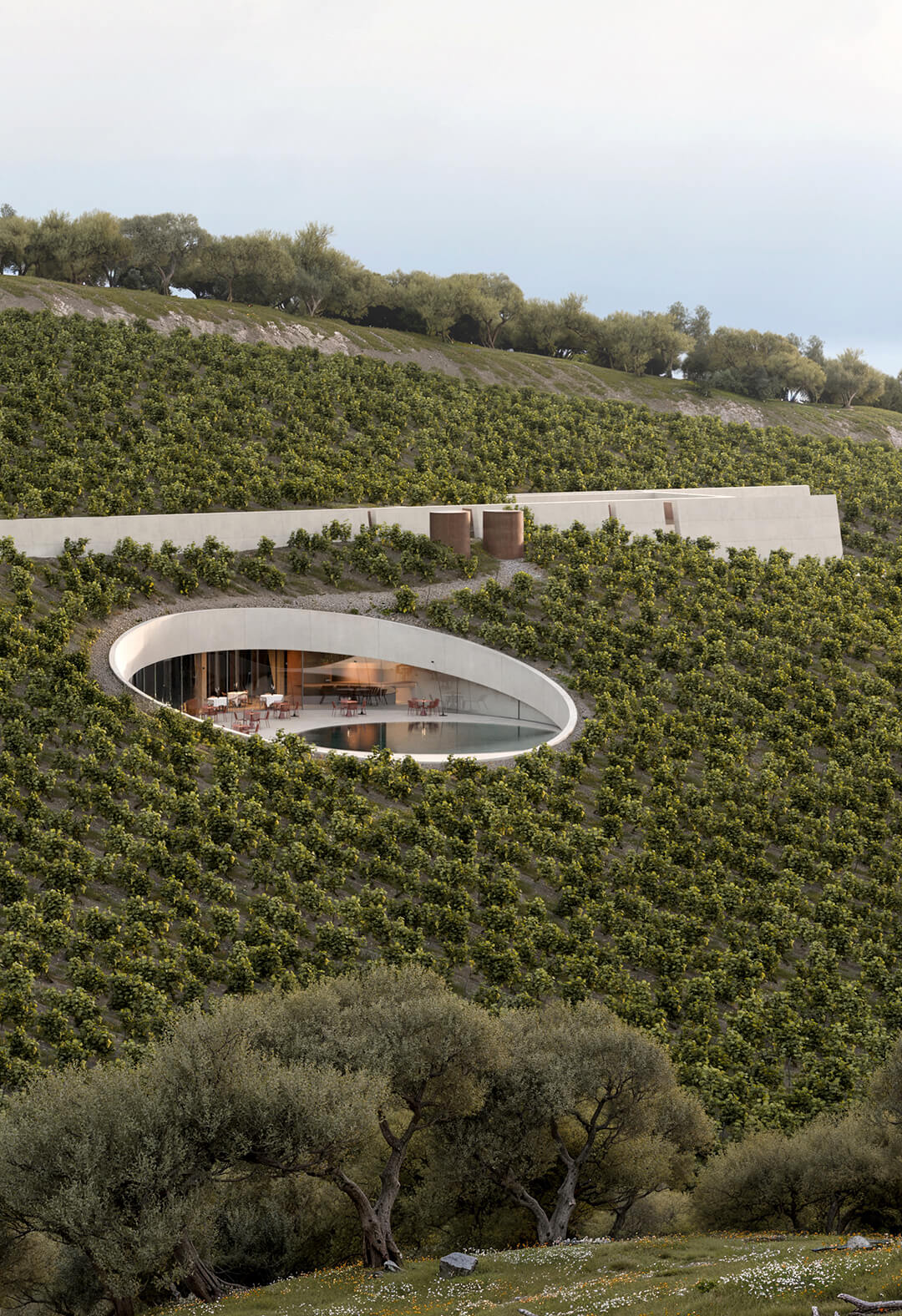
This idea of stripping back finds a parallel in the experience conceived for visitors. Entry into the winery is not grand or obvious but concealed, announced only by a cleave in the ground. Walking through the rows of vines, the visitor encounters a subtle incision that draws them downwards. Light guides the descent, and slowly the exterior world slips away. Inside, the linear path extends alongside the production line, past the fermentation room with its tall stainless-steel tanks, and into the quiet cool of the cellaring hall.
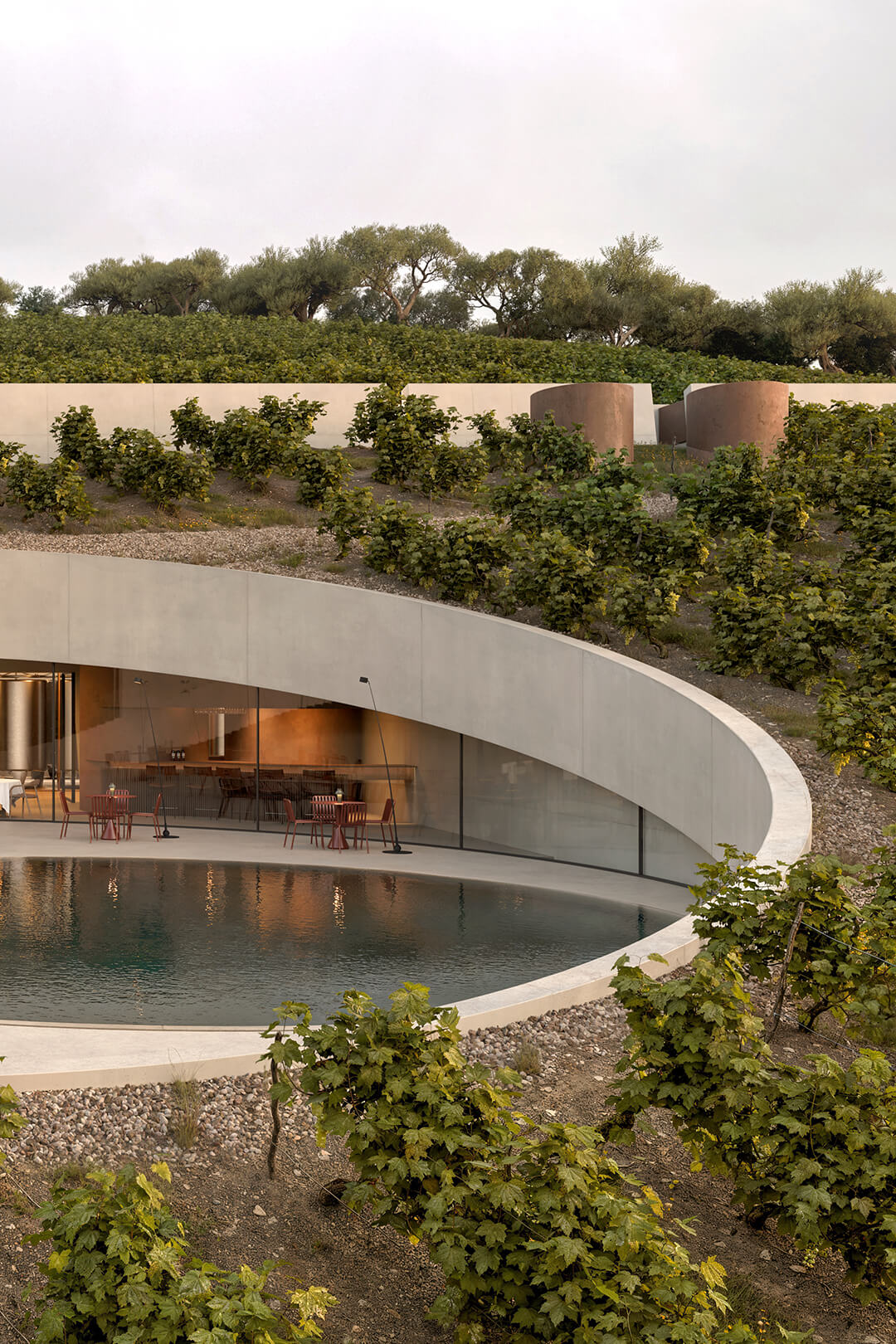
The architectural journey is a translation of the vineyard’s own cyclical character. “The vineyard itself was never to be imitated through form,” Zapantiotis observes, adding that “rather, its essence is captured in the rhythm of movement, the ritual of descent and re-emergence.”
He continues, “One arrives from light into shadow, passing through silence and humidity, before returning to daylight in the circular crater. The trajectory mirrors the seasonal cycle of the vines, a ritual of immersion and renewal.”
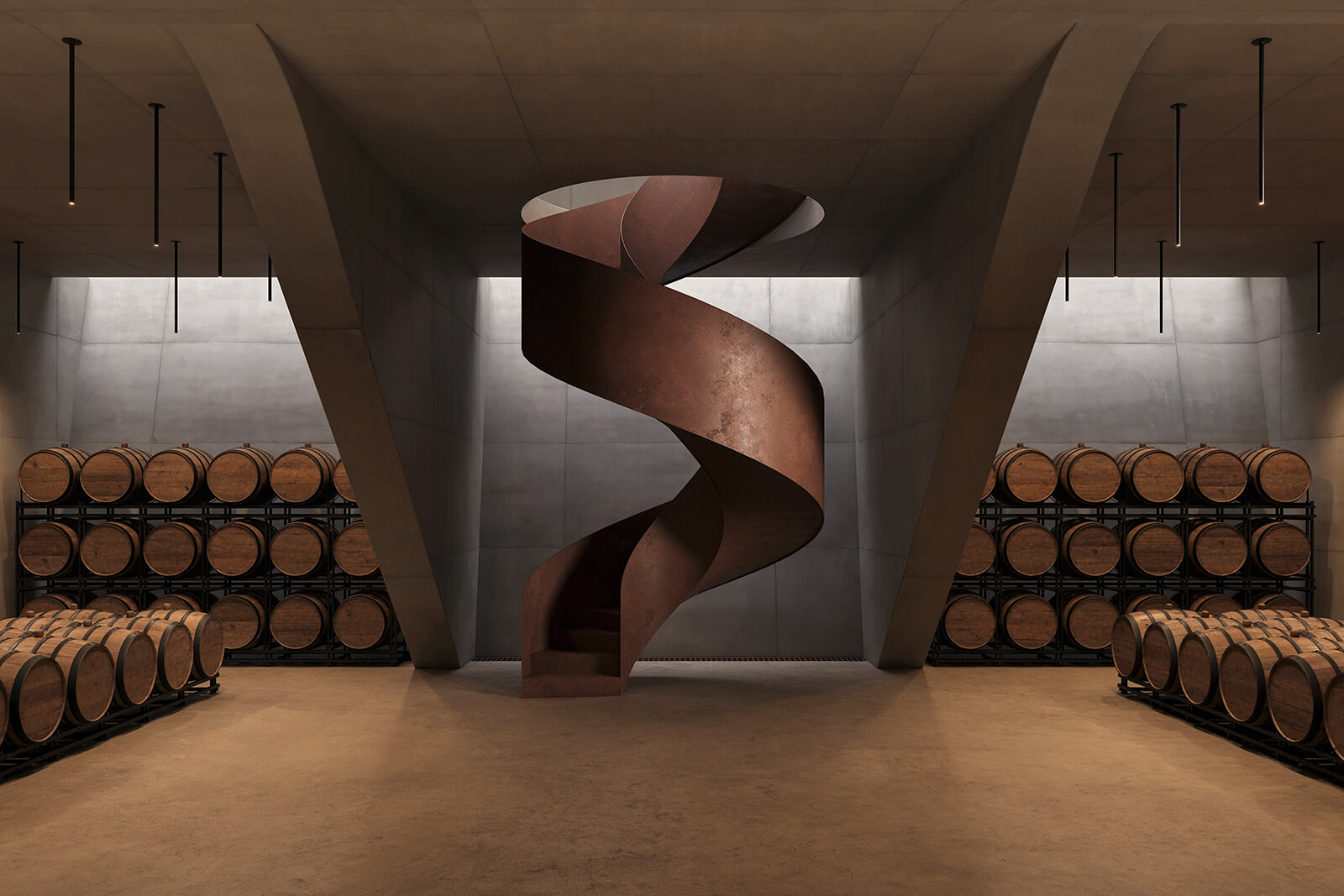
The culmination of this landscape architecture journey is the tasting hall. Vaulted ceilings, sloping walls and carefully diffused natural light create a cavernous, almost mystical chamber. Here, the sensory world of wine, with its woody aroma, the coolness of the stone walls and the subtle crunch of gravel underfoot, becomes heightened by architecture. The space acts as a retreat from distraction, amplifying the act of tasting into a slow, contemplative encounter.
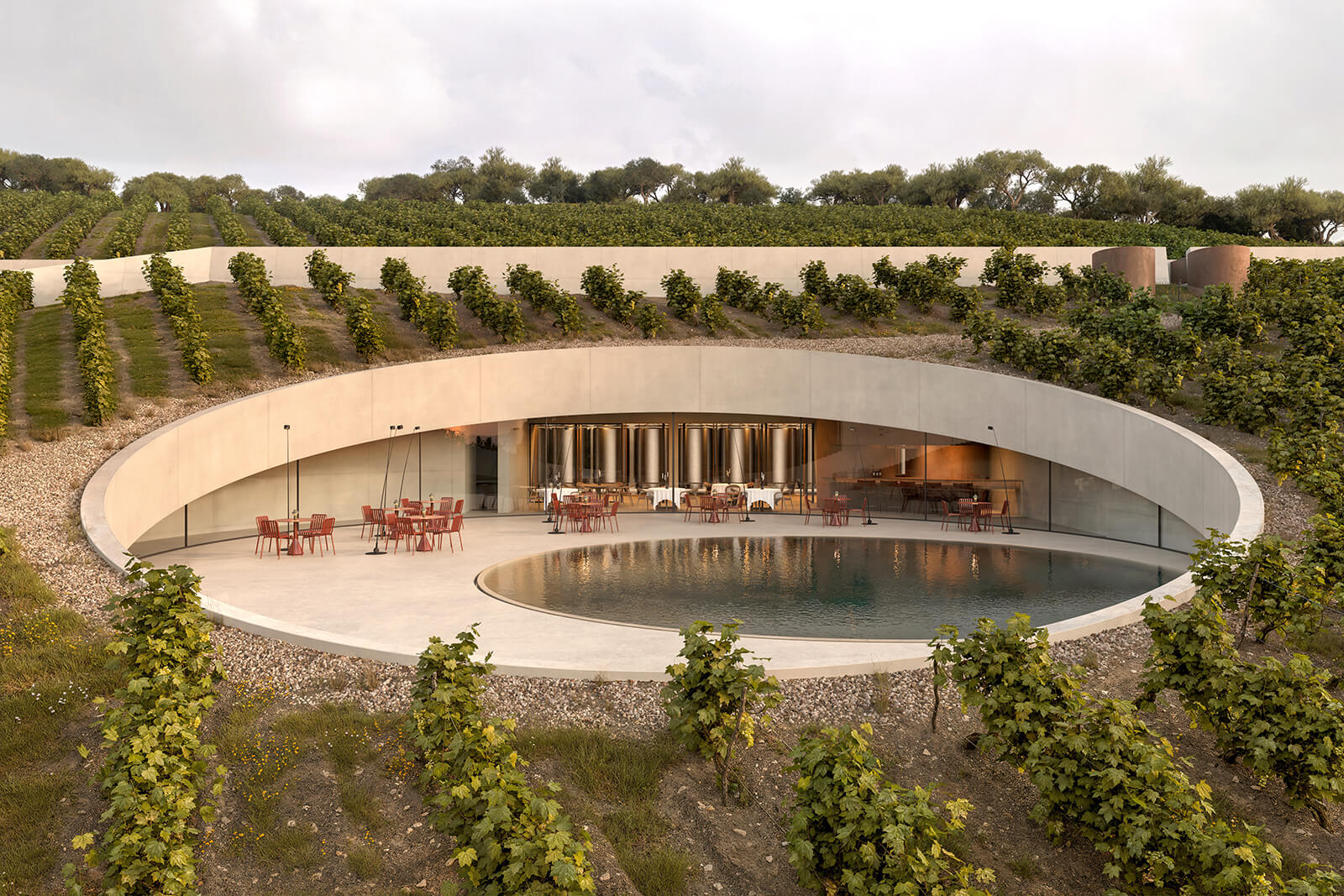
Emerging at last into the circular plaza, visitors find themselves reconnected with the vineyard, framed now by the geometry of the crater. The moment is designed as revelation, a sudden return to the expanse of light and the continuity of cultivation lines. The architecture is not just a backdrop to wine but a structured ritual that stages the act of discovery.
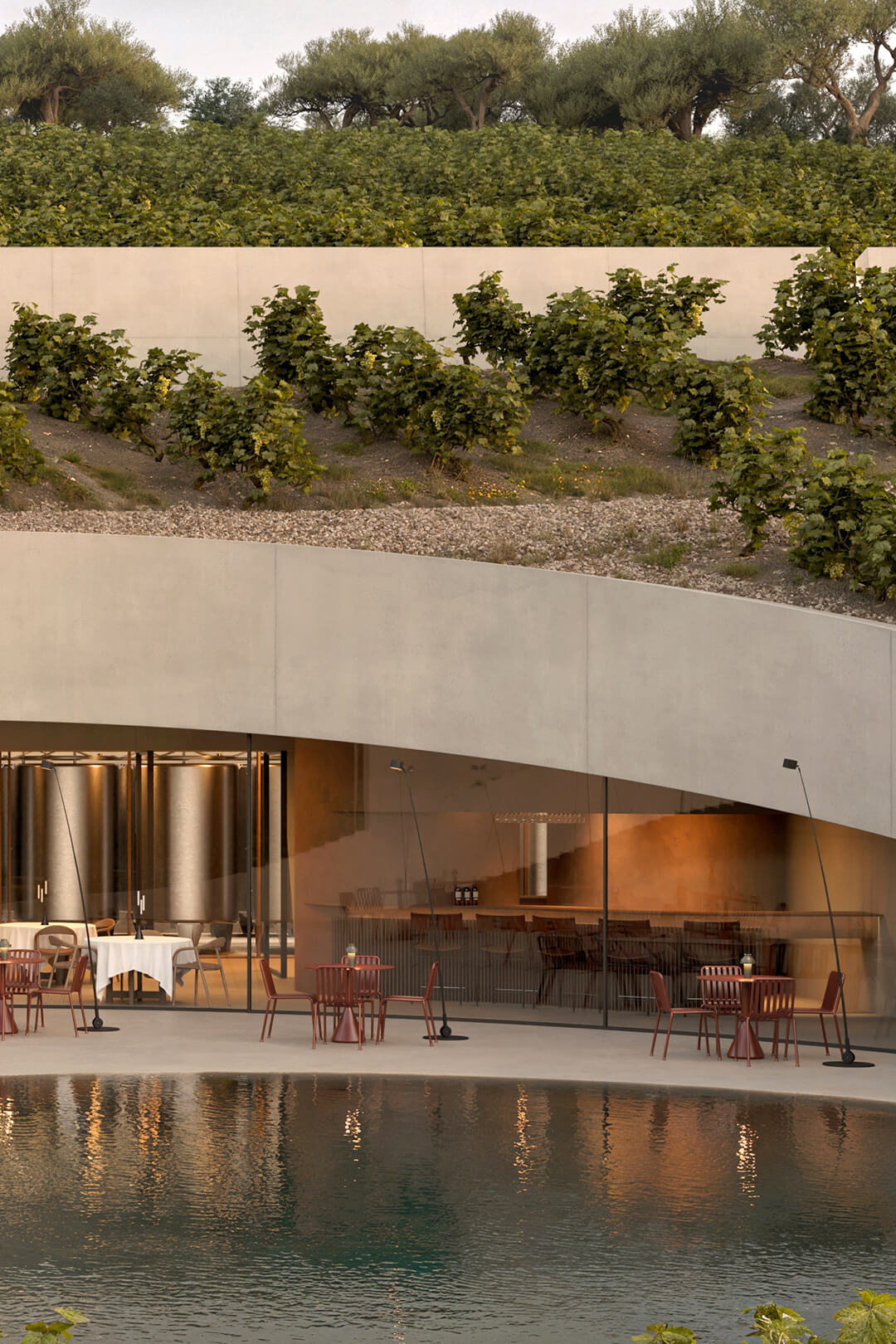
It is in this contrast between concealment and revelation that the hospitality architecture project defines its character. Many contemporary wineries embrace the opposite strategy, leaning heavily on expressive gestures or flamboyant forms to establish identity. At the Winery in Aidipsos, restraint prevails. There is no surface spectacle; instead, the design withdraws to let the vineyard assert its presence. Zapantiotis noted when speaking to STIR, “The site was a pure, continuous slope. Without natural folds or cavities that could embrace a building, any attempt to place an external volume upon it would have felt alien, almost violent. The vineyard itself is profoundly imposing. Its presence is so strong that I did not want the architecture to steal the scene or disturb the silence of the landscape.”
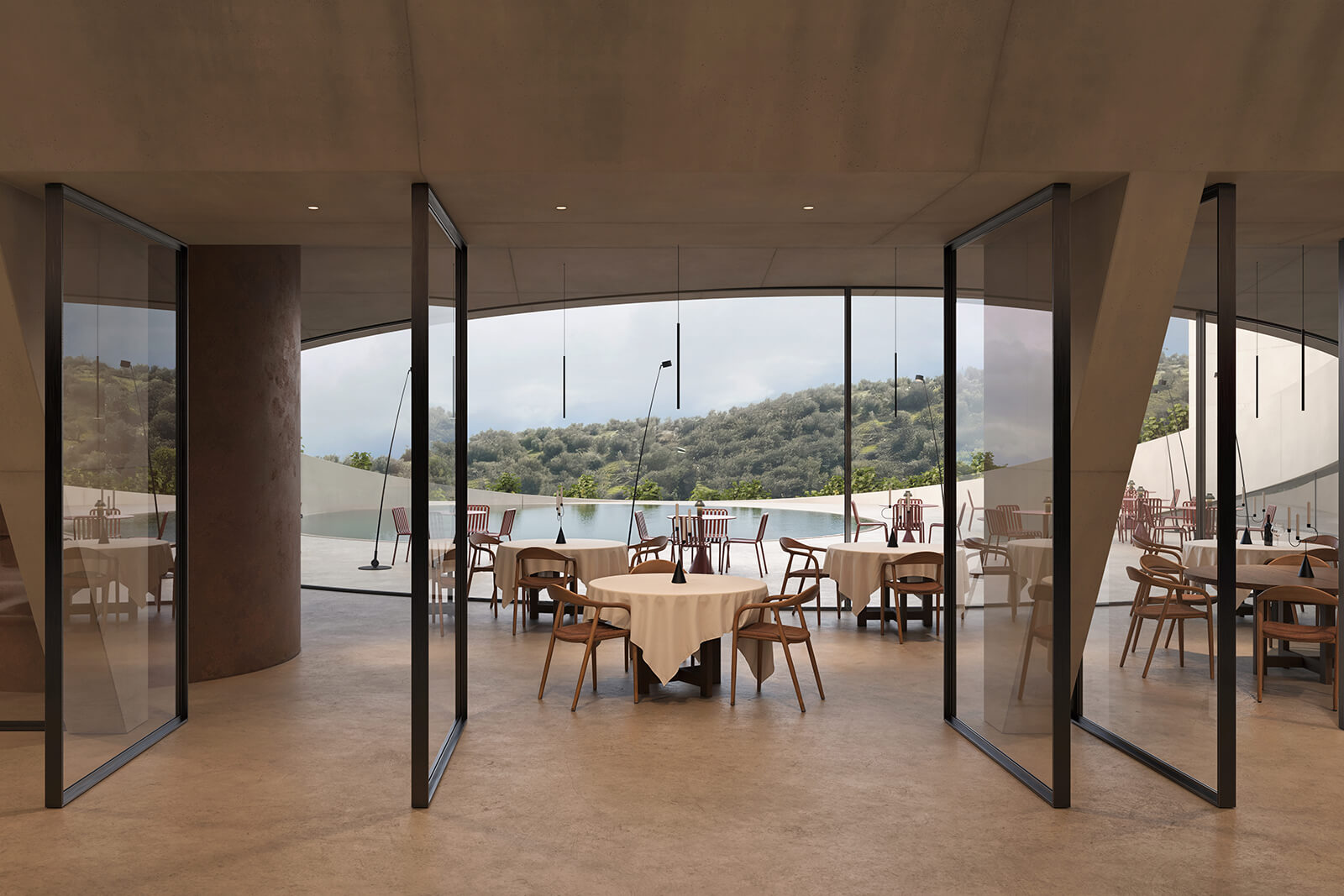
This refusal to impose or compete with the vineyard’s natural order is perhaps the industrial architecture project’s most striking quality. Yet, it also raises questions about the current architectural impulse toward embedding buildings within their terrain. Increasingly, wineries and cultural facilities alike seek to vanish into hillsides or hide within topographies, as if the landscape were the ultimate legitimising gesture. While such approaches avoid the pitfalls of spectacle, they also risk becoming formulaic, reducing architecture to the act of concealment. What distinguishes Zapantiotis’s design is not simply that it disappears, but that it carefully frames absence as a form of presence: the line and circle that mark the land are not signs of retreat, but of inscription.
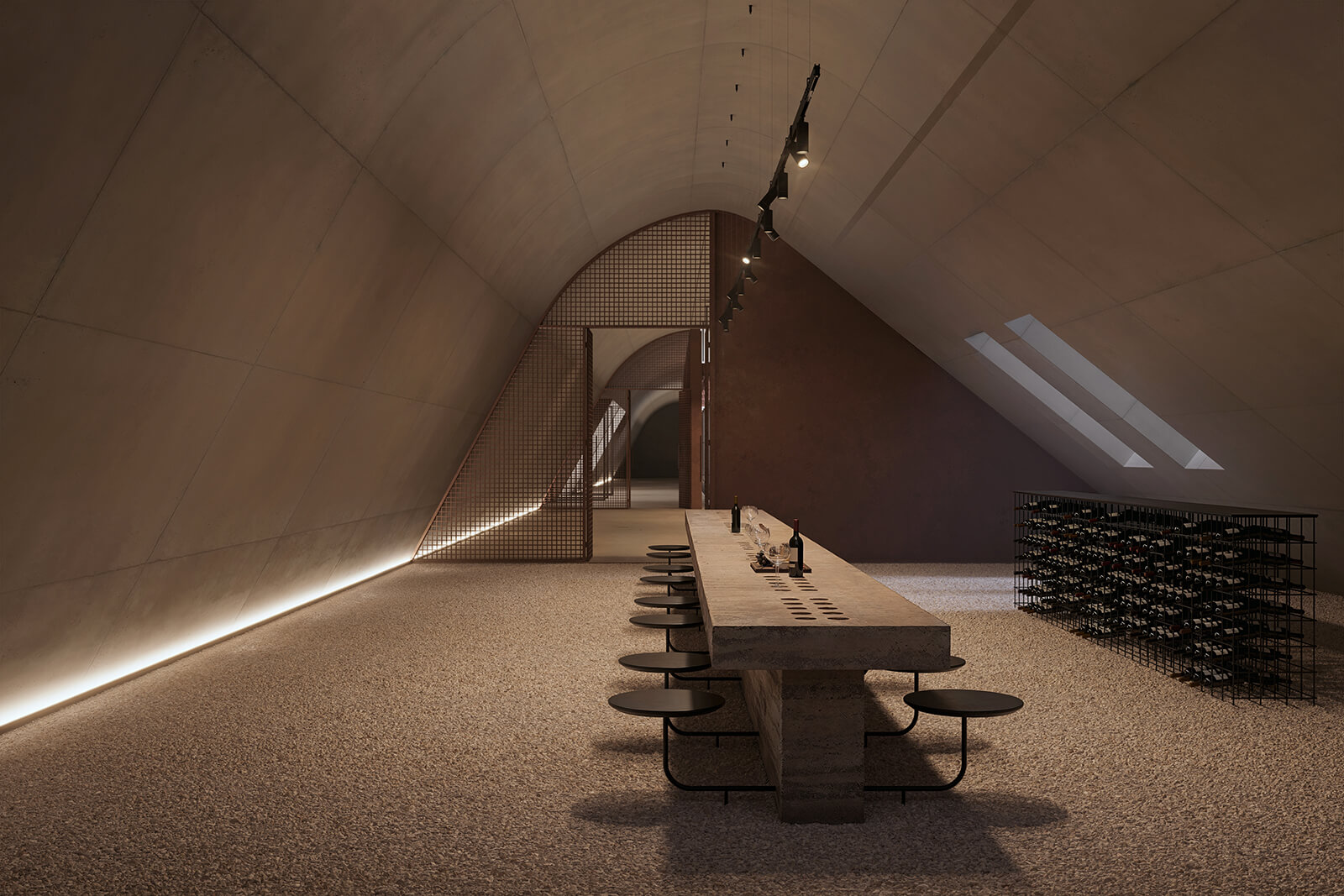
The emotional arc of the winery echoes this philosophy. The descent is staged to slow the visitor, stripping away external stimuli until only the essential remains: shadow, silence, the earthy scent of crushed grapes, the feel of cool stone. In this subterranean world, time itself seems to thicken, echoing the slow maturation of wine. Re-emergence into light then carries the weight of release, a return to continuity but with heightened awareness. The vineyard, framed anew by the circular crater, appears both familiar and transformed, seen now through the lens of immersion and return.
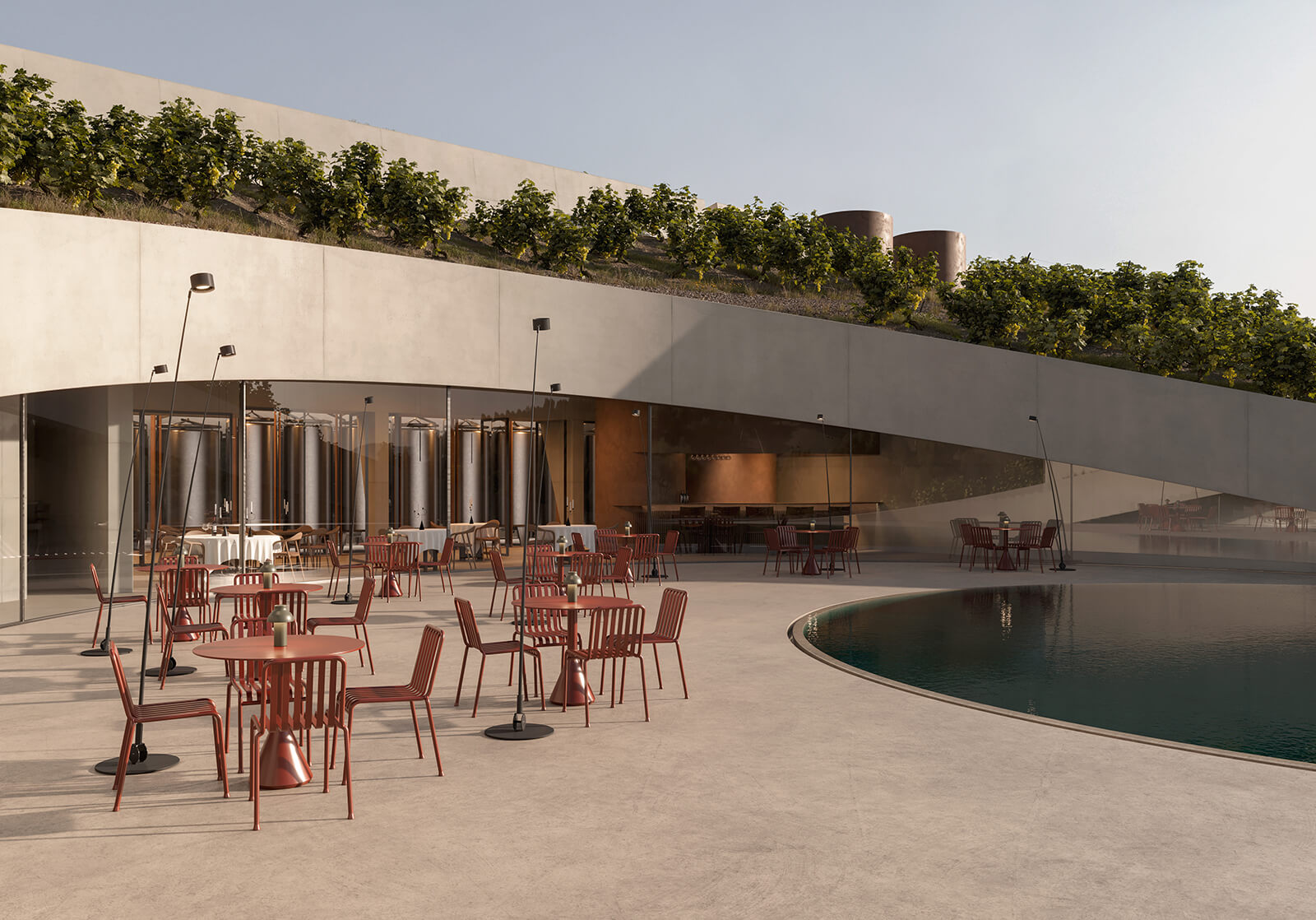

This sense of ritual is what ultimately grounds the project. The architecture does not impose a form, but rather orchestrates the experience. By embedding itself, the winery becomes both absent and intensely present, a chthonic vessel that translates the cyclical life of the vines into a journey of descent and re-emergence. The vineyard remains the protagonist, yet the architecture gives it a new narrative; a space where the act of winemaking and the act of visiting are both inscribed in earth and memory. In Ktima Aidipsos, the line and the circle are enough.
Name: Ktima Aidispsos Winery
Location: Aidipsos, Evia, Greece
Typology: Industrial
Architect: Fotis Zapantiotis Associate Architects
Principal Architect: Fotis Zapantiotis
Design Team: Zapantiotis Fotis, Zarani Alexandra, Agapaki Maria
Collaborators: STUDIO TAF
Built Area: 1,45,000 sq m
Site area: 45,000,00 sq m
Year of Completion: 2024

by Pranjal Maheshwari Oct 19, 2026
The Mumbai-based architects integrate courtyards, mesh screens and north light trusses to create a dining space that doubles up as a community hub at SR University, Warangal.
by Mrinmayee Bhoot Oct 17, 2026
The Rotterdam-based institute centres the Indian Ocean as a network for exploring material histories and transnational links shaping coastal cultures, positing them as future models.
by Pranjal Maheshwari Oct 16, 2026
At the 2026 Stirling Prize ceremony, Mary Duggan with RUFF Architects, MAKER Architecten and Nakshabid Architects were felicitated for proffering quality housing and social equity.
by Mrinmayee Bhoot Oct 12, 2026
The new Centre for Contemporary Arts, fostering public engagement with art in Uzbekistan, is housed in a tram depot refurbished by the French studio, emulating local craftsmanship.

make your fridays matter with a well-read weekend
Enter your details to sign in
Don’t have an account?
Sign upOr you can sign in with
a single account for all
STIR platforms
All your bookmarks will be available across all your devices.
Stay STIRred
Already have an account?
Sign inOr you can sign up with
Verification link sent to check your inbox or spam folder to complete sign up process
Tap on things that interests you.
Select the Conversation Category you would like to watch
Please enter your details and click submit.
Enter the 6-digit code sent at


A line and a circle define this Greek winery by Fotis Zapantiotis Associated Architects
by Aarthi Mohan | Published on : Oct 21, 2025


 Sign in with Google
 Sign in with email
What do you think?