Architecture06 mins. read
Jadgal Elementary School by DAAZ Office is wrapped in a perforated annular wall
by Anmol AhujaJan 28, 2022



by Bansari PaghdarPublished on : Jul 04, 2026
Iran's architectural and vernacular milieu is observing a renaissance and renewed global attention owing to its experiments with brick architecture contemporaneously. However, ethnic and religious minorities in the country are often systematically excluded from the country’s centralised and homogeneous development system, which often inspires grassroots initiatives as a response, aimed at reclaiming cultural and historical pride. One such non-profit project has emerged in the remote village of Kahnanikash of the Sistan and Baluchestan Province, home to the Sunni-Baluch community. From land allocation and fundraising to its construction and operation, the region's locals have contributed to making Nedarag Guesthouse a reality. Designed by Alireza Taghaboni-founded Iranian architecture practice NextOffice, the hospitality architecture is built by and belongs to the very people of Kahnanikash.
Based in Tehran, NextOffice is known for approaching the traditional architecture of Iran from a contemporary standpoint, responding to climatic, economic, socio-political and cultural constraints in architecture. Ever since its founding in 2004, the practice has undertaken a variety of projects, ranging from residential, commercial and mixed-use architecture to urban planning. For Nedarag Guesthouse, the Iranian architects turned to Kapar, a traditional dwelling typology often seen in southeastern Iran and the Baluchi-inhabited regions of Pakistan and Afghanistan.
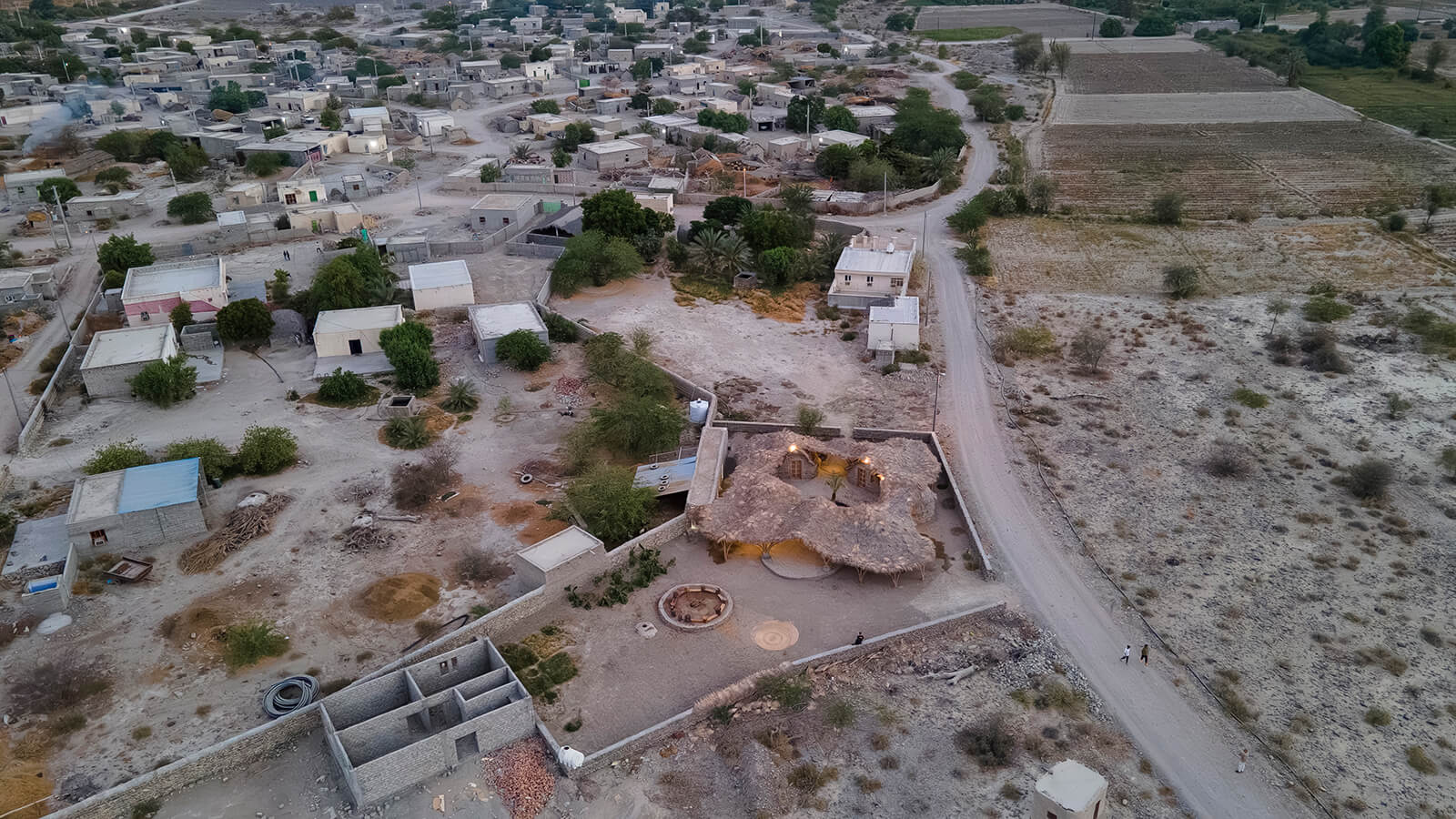
The site, donated by villager Heybatan Baluch, overlooks swathes of farmland and is in proximity of the village council and the residence of the guesthouse host Shanbeh Dehghani. The project sits in harmony within the rural landscape, blending in through its materiality and construction methods, both drawn from local labour and resource conditions. Its architectural character resembles a shelter more than a building, prioritising public gathering and flow within the site.
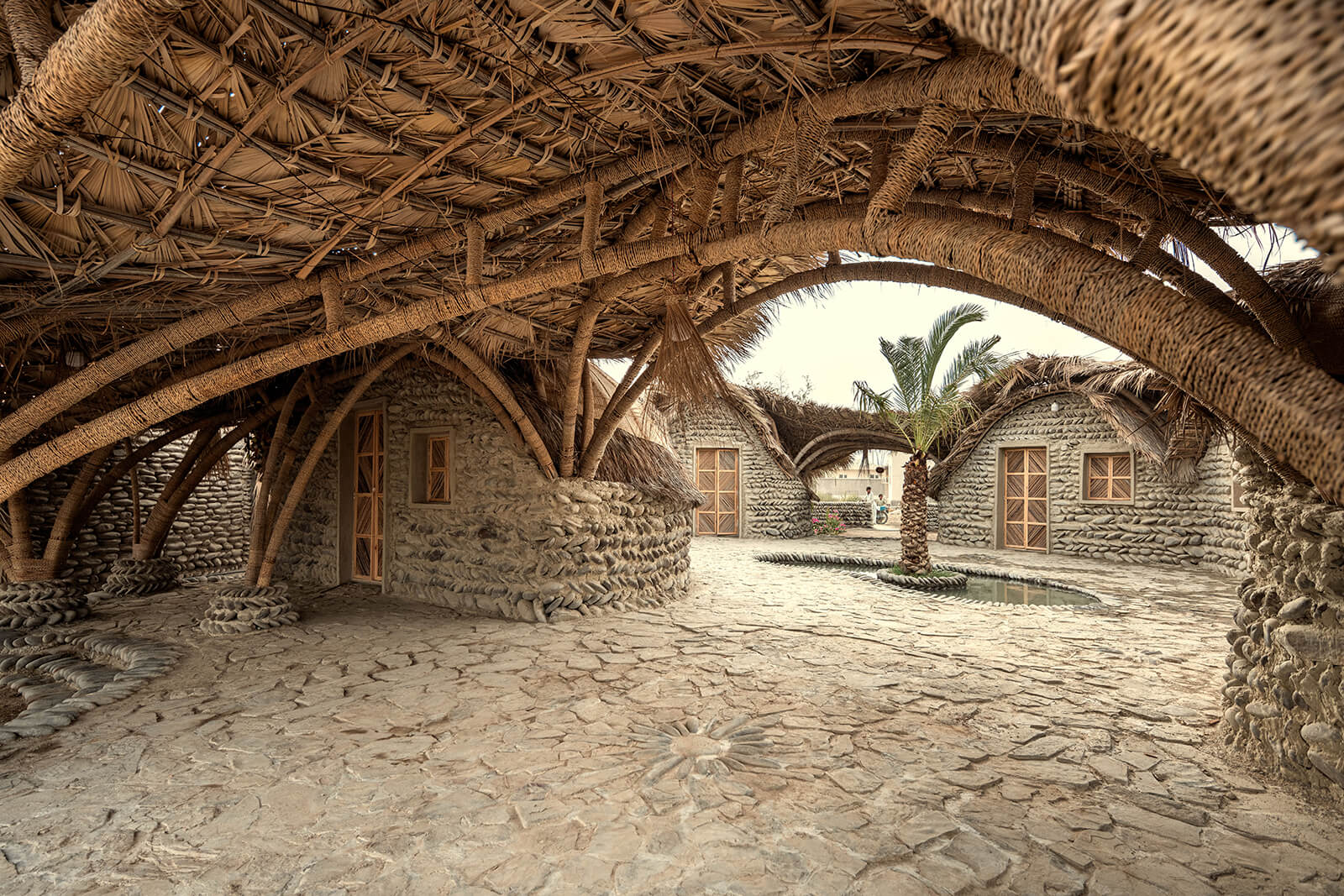
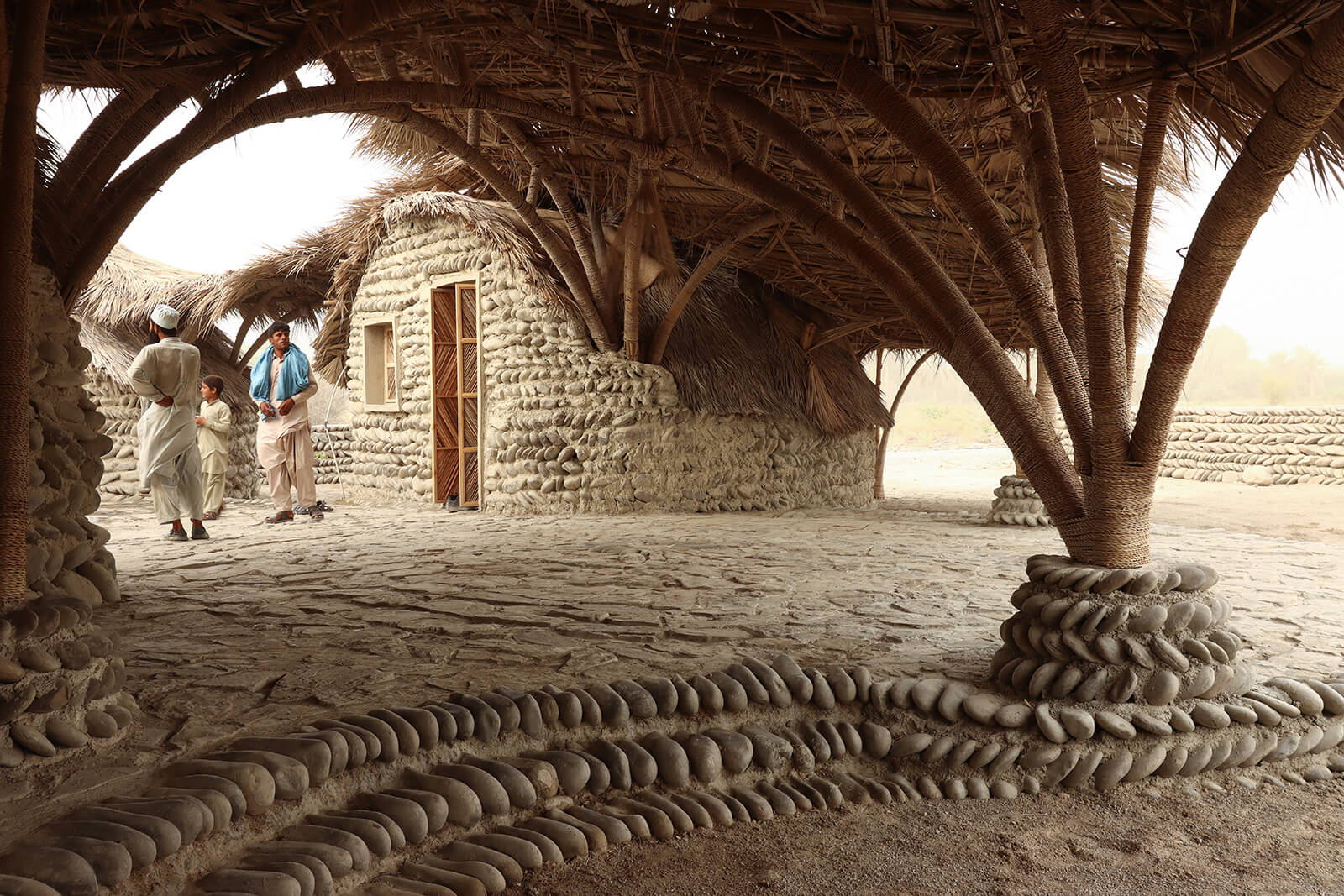
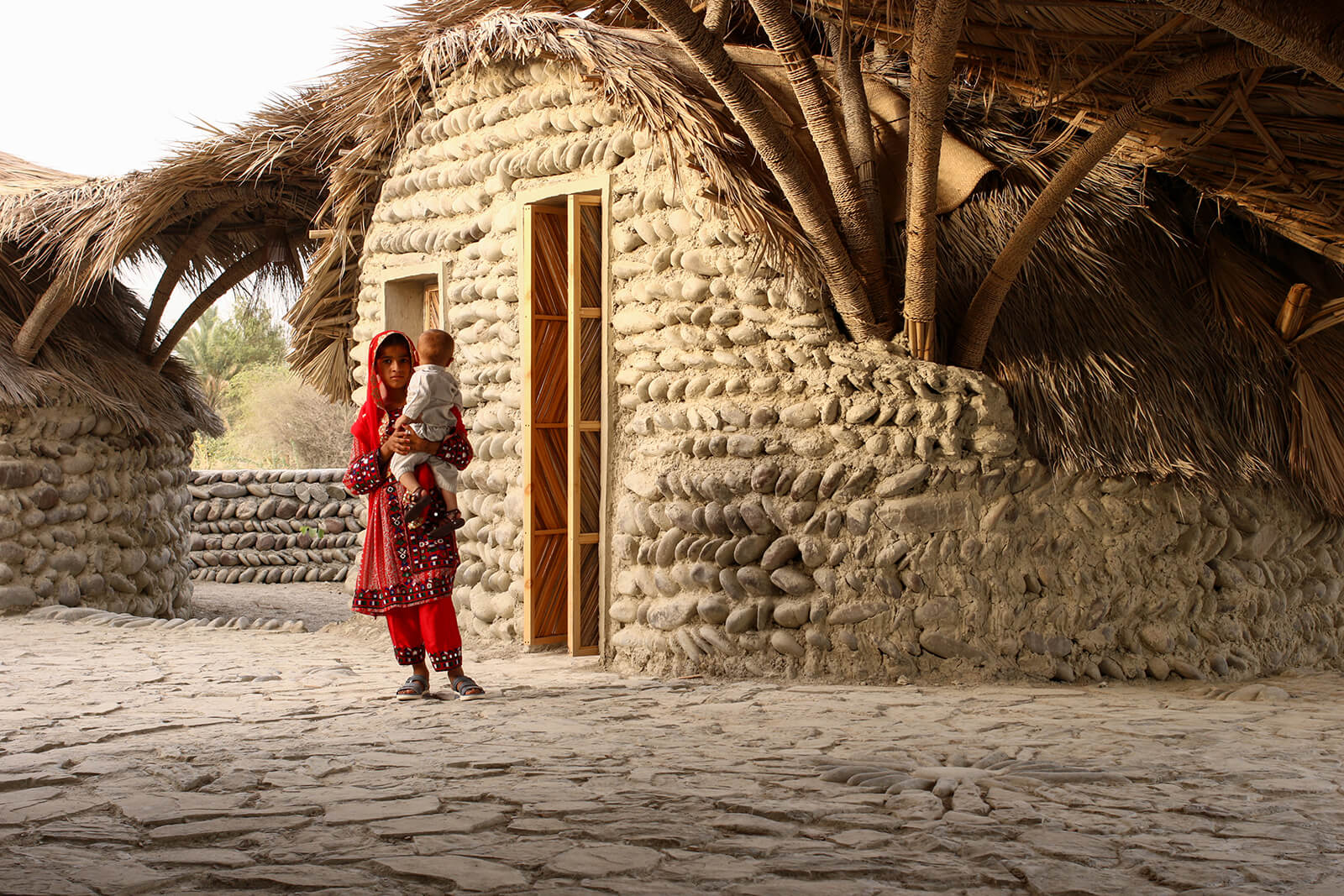
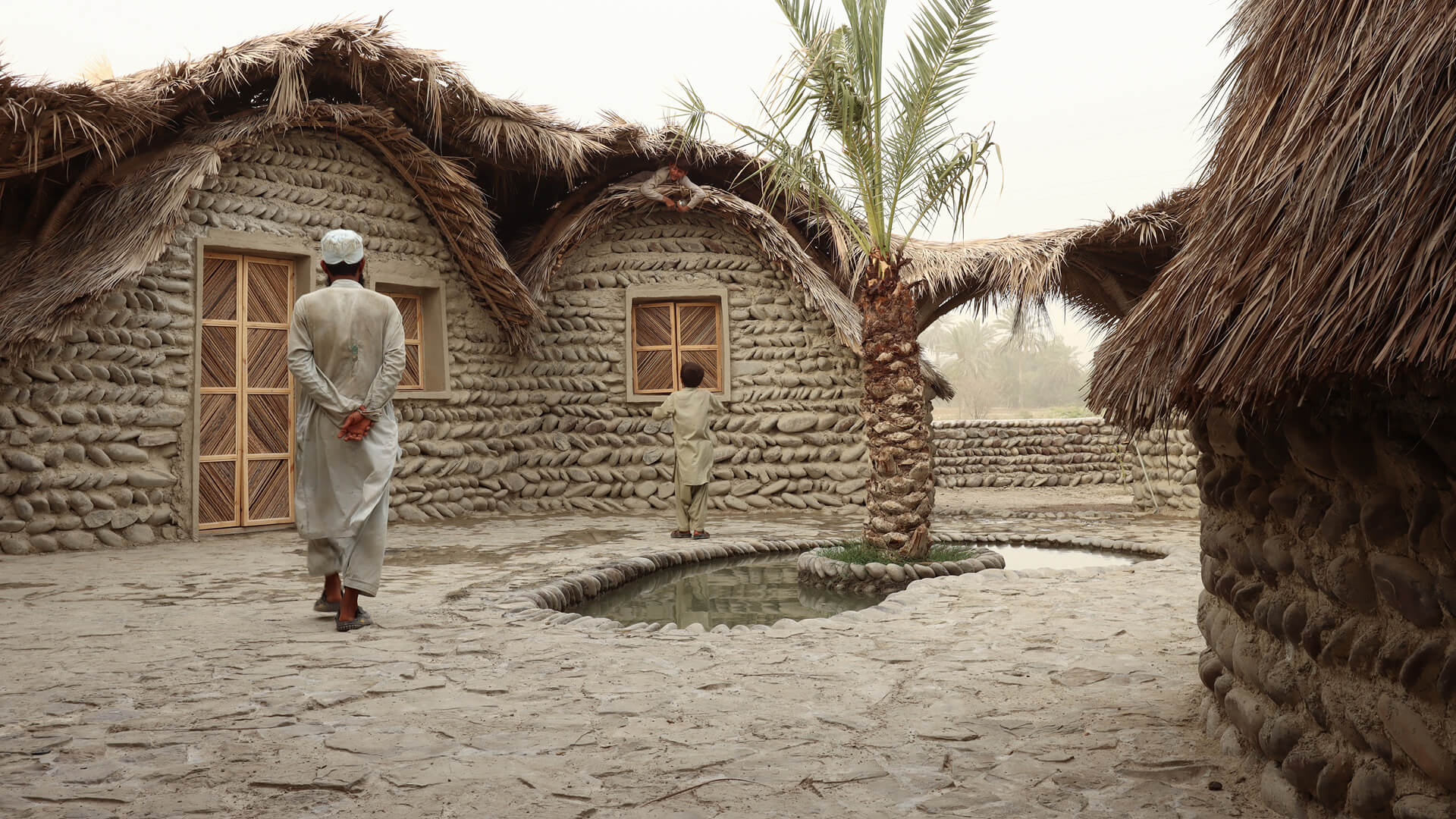
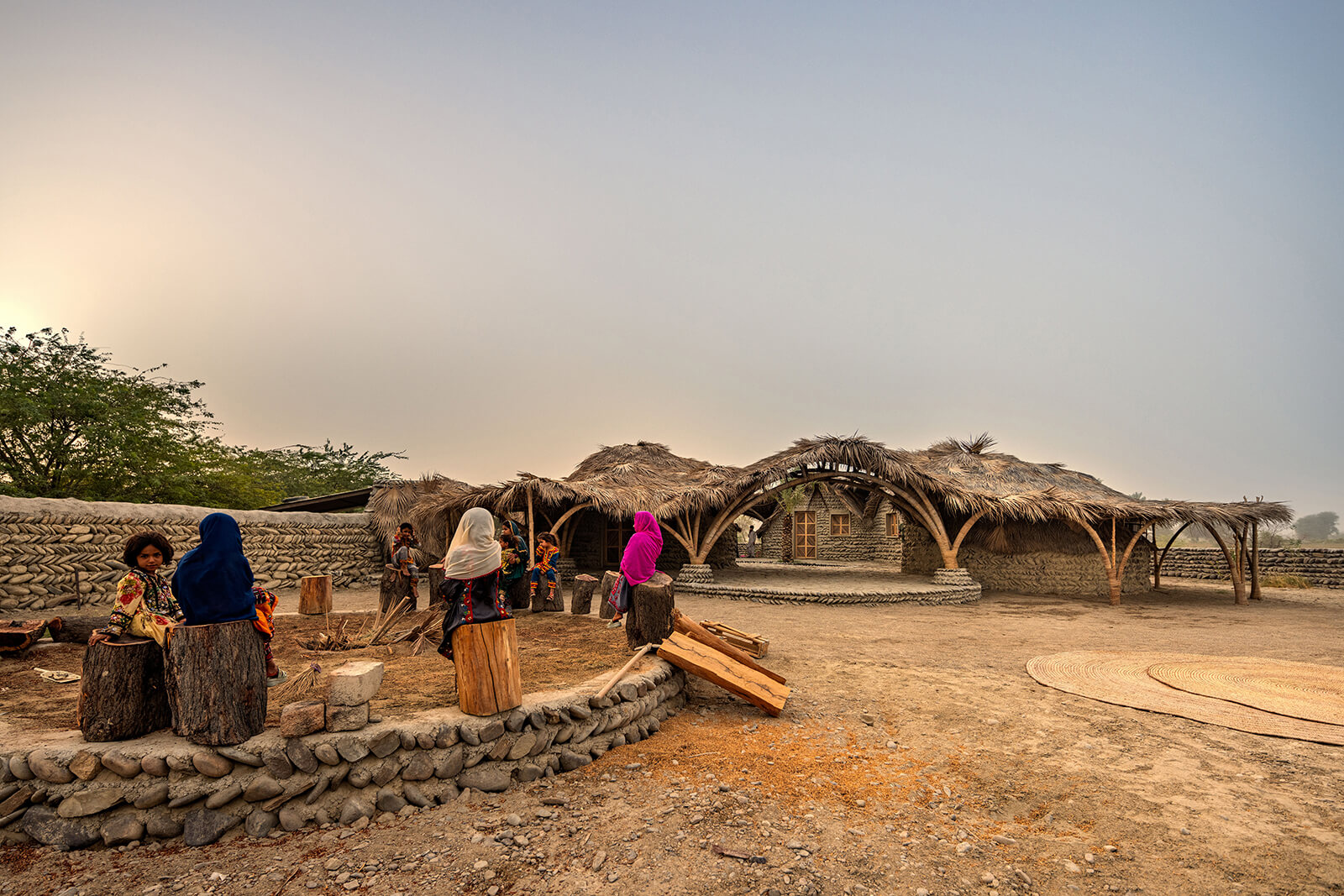
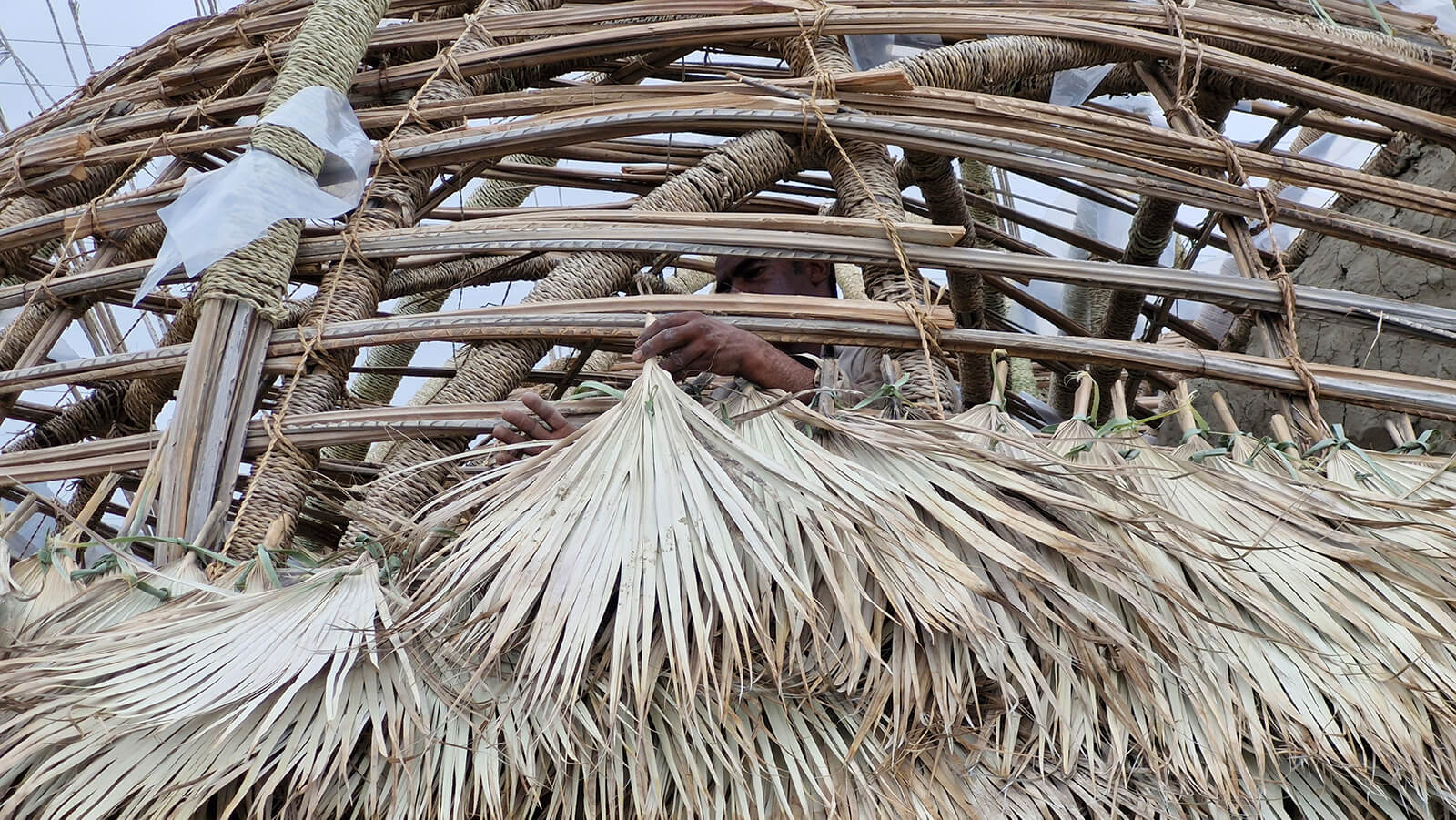
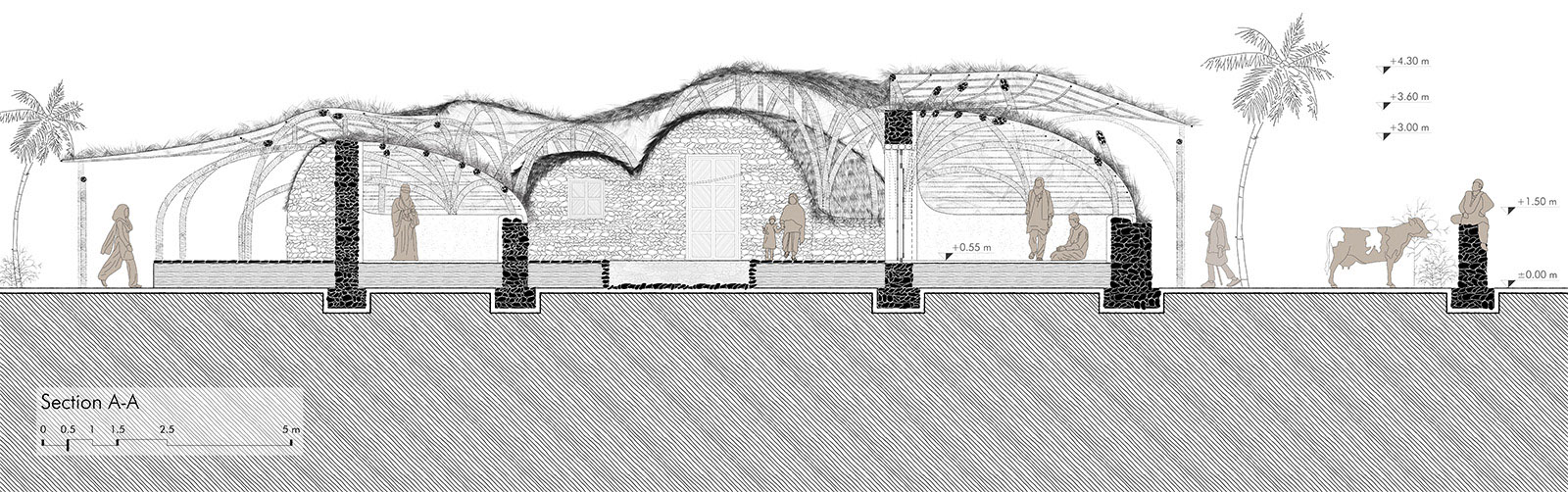
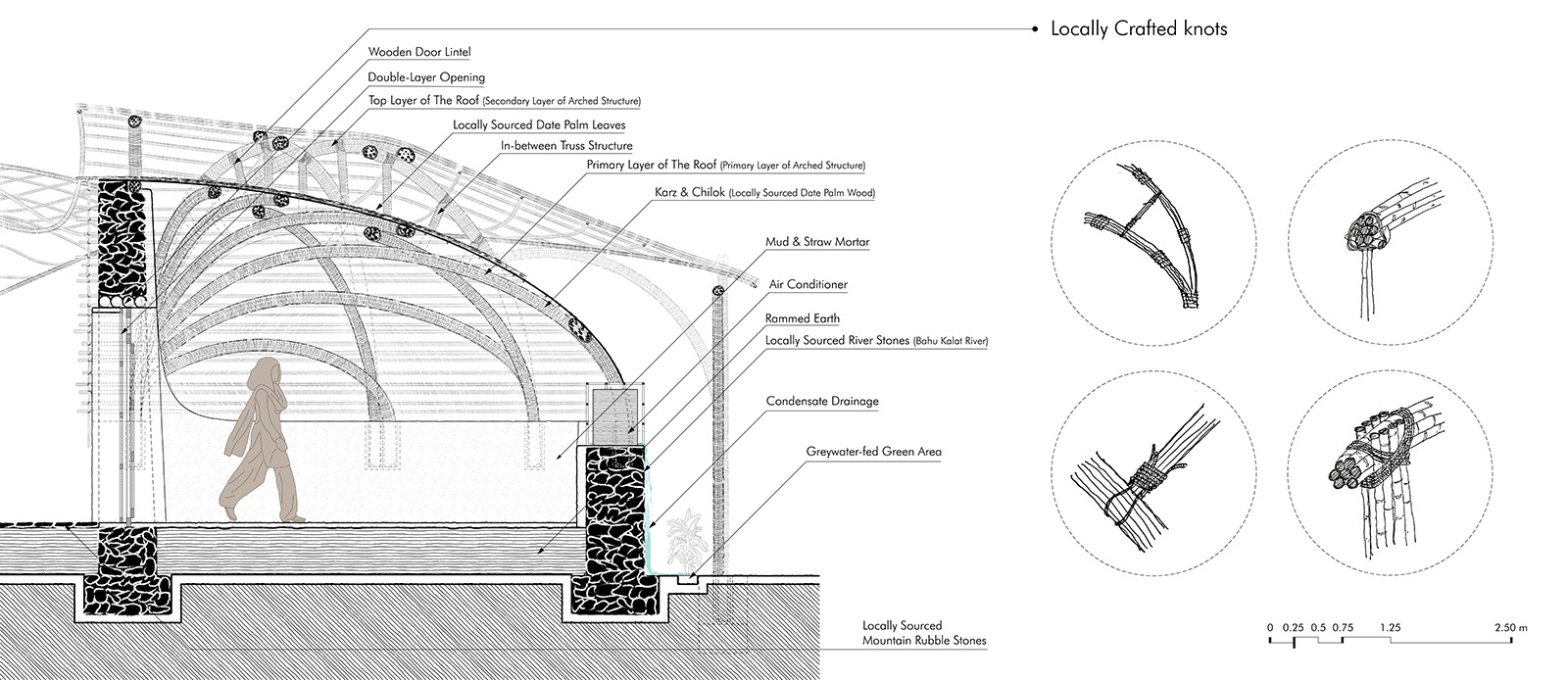
A cluster of four built masses sits under a double-layered roof, reminiscent of the dome-like geometry of Iranian vaults, ensuring passive cooling while enabling ventilation within the spaces. Supported by a series of handmade trusses in bamboo and date palm tree waste, the roof forms a charming courtyard in the centre with the welcoming sight of a water body, overlooked by the three accommodation units. The units are constructed with thick stone walls, the texture of which adds visual interest to the exterior surfaces, embracing their raw composition.
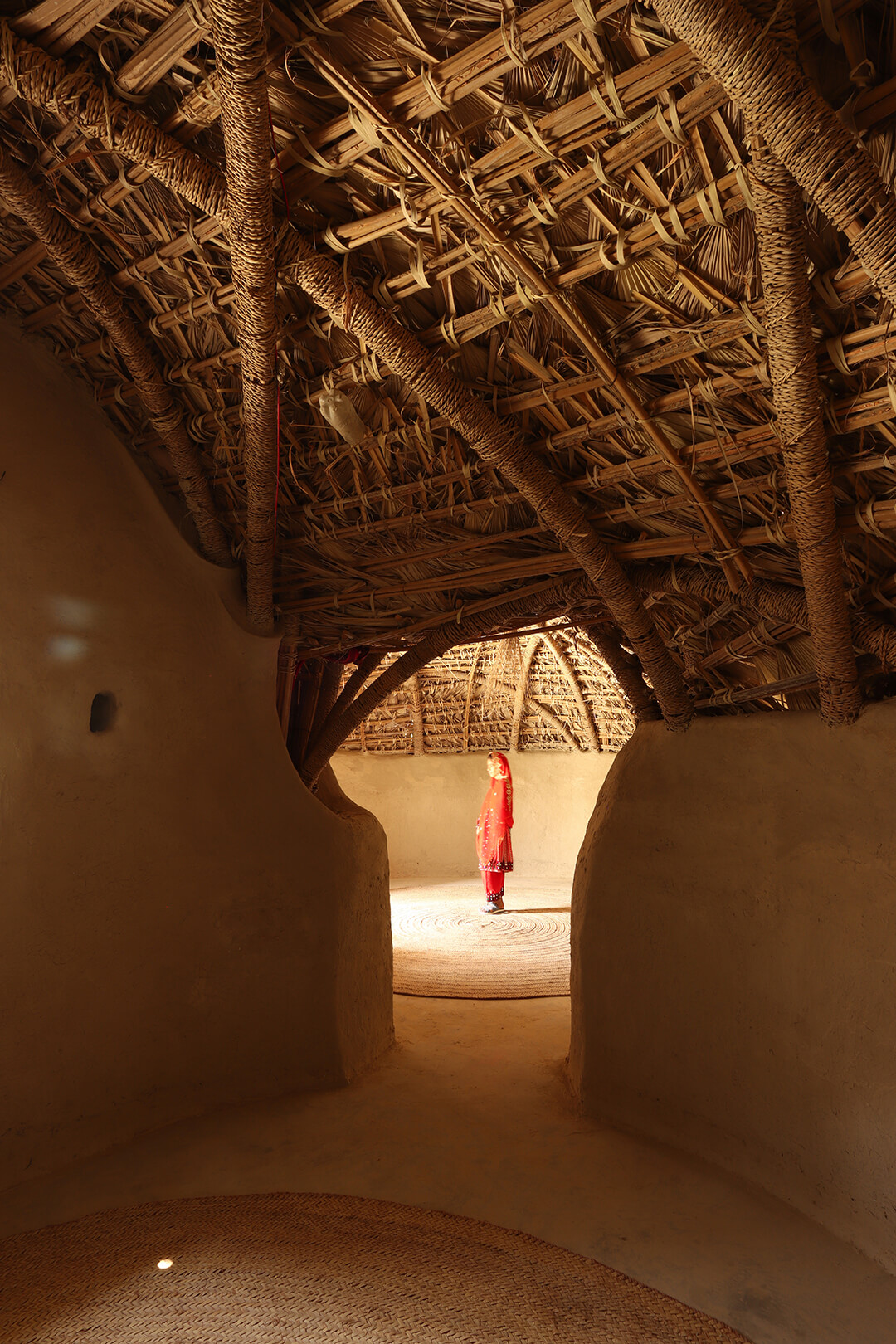
As executing these designs required expertise in vernacular architecture, local workers and artisans contributed to the project every step of the way. The construction was an entirely collaborative effort, in which the villagers raised the walls over four months and completed the roof over the following year. The site was marked with strings and triangulations instead of conventional surveying tools, while the palm-fibre ropes employed in the roof and elsewhere were woven by the elders. The women prepared daily meals, along with sewing curtains, plastering mud and weaving mats.
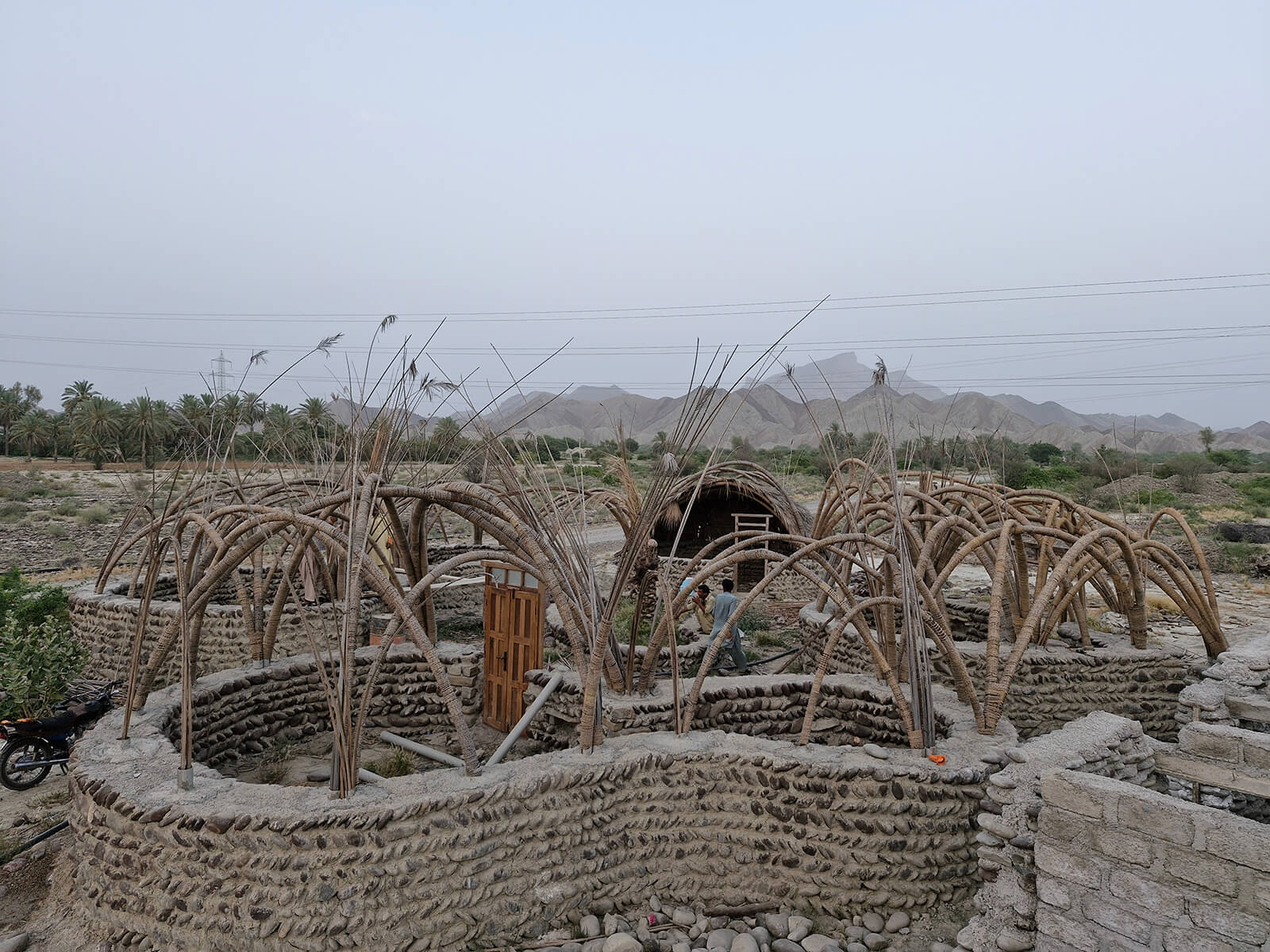
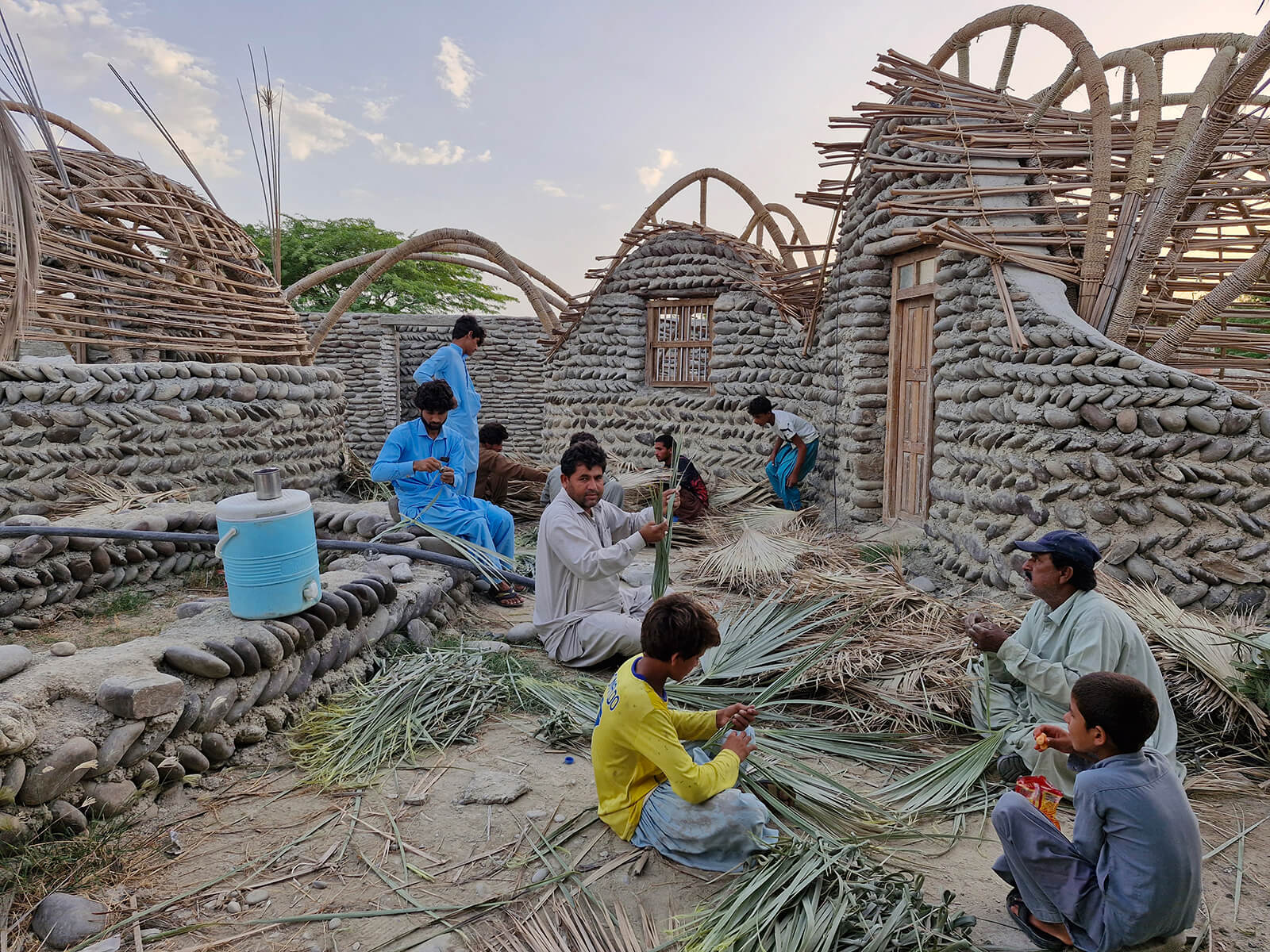
The story of the project’s inception is equally inspiring, spotlighting the community’s strength and resolve to elevate local hospitality. The project's initial idea was suggested by social facilitator Mina Kamran, who had previously worked with Dehghani to realise other local interventions, including a library, a water purifier and a bridge—centred around his interest in hospitality and hosting. The project was ultimately realised on a small budget of approximately £8,000, comprising funds from a bank loan, a donation from Dehghani and NextOffice.
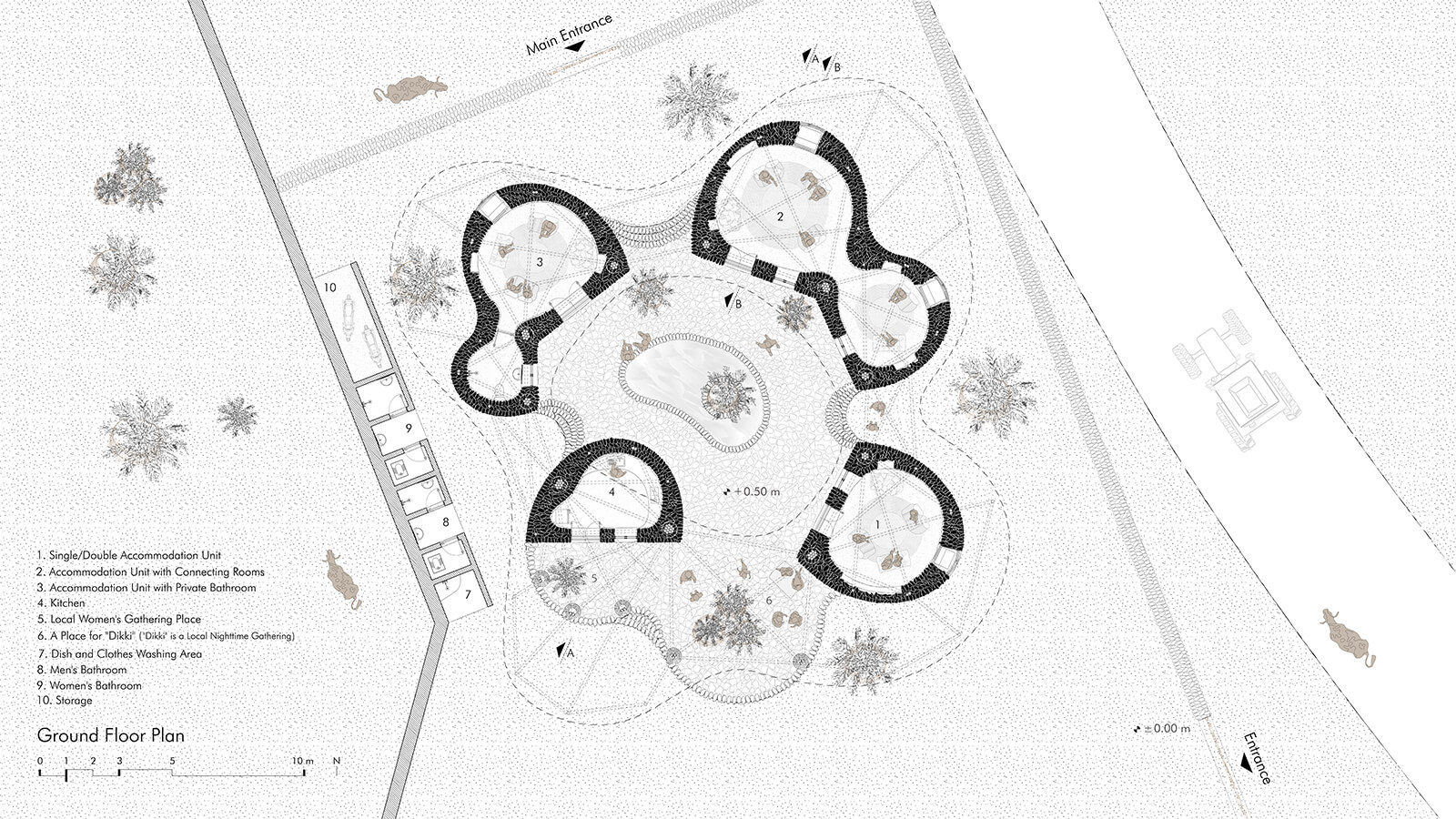
While the project is fundamentally designed to serve tourists, it also serves as an anchor for the locals to ground, gather and grow. The imperfections across the project are remnants of the community’s hard work, reflecting its traditions and culture, while contributing to a sense of belonging. Embodying their hopes and aspirations, the rural architecture has supported several livelihoods and is a regular gathering place for locals. Architecture here, empowered by community and the vernacular, emerges as a beacon—a container of culture and a reclamation of identities.

by Mrinmayee Bhoot Oct 12, 2026
The new Centre for Contemporary Arts, fostering public engagement with art in Uzbekistan, is housed in a tram depot refurbished by the French studio, emulating local craftsmanship.
by Mirra Lynn Oct 10, 2026
The Shanghai-based architecture practice’s intervention in Suzhou transforms three abandoned houses into a bookstore, café, library and homestay.
by Pranjal Maheshwari Oct 09, 2026
The eighth edition of the international architecture and urban design showcase, themed How Much?, explores diverse implications of social, ecological and economic ‘cheapness’.
by Pranjal Maheshwari Oct 06, 2026
With a programme focused on biodiversity, accessibility and safety, the Rotterdam-based architects help the neighbourhood reclaim a barren landscape as an integral social node.

make your fridays matter with a well-read weekend
Enter your details to sign in
Don’t have an account?
Sign upOr you can sign in with
a single account for all
STIR platforms
All your bookmarks will be available across all your devices.
Stay STIRred
Already have an account?
Sign inOr you can sign up with
Verification link sent to check your inbox or spam folder to complete sign up process
Tap on things that interests you.
Select the Conversation Category you would like to watch
Please enter your details and click submit.
Enter the 6-digit code sent at


A network of palm trusses and a double-layered roof define a guesthouse in rural Iran
by Bansari Paghdar | Published on : Jul 04, 2026


 Sign in with Google
 Sign in with email
What do you think?