Art09 mins. read
Emami Art Experimental Film Festival 2026: Rethinking what film can be
by Srishti OjhaOct 07, 2026



by Mrinmayee BhootPublished on : Aug 13, 2026
In Christopher Nolan’s grand scheme for his latest film, The Odyssey, Odysseus becomes a proto-Oppenheimer. Many have noted resonances between the two—and in a number of ways, the majority of Nolan’s oeuvre—as especially pertinent to understanding the renowned filmmaker’s aspiration to tackle the unwieldy epic poem. It is his decades-long reflection on the tortured, specifically male, protagonist and the destruction they have wrought on the world through their sheer hubris. Relentless modern progress has failed humanity when it is in service of violence against another; Nolan seems to insist through his filmmaking. In doing so, he offers a reading of the Homeric epic that is distinctly contemporary, though at times conservative when compared to the complexity of the original.
The ‘foundational text’ for Western civilisation—recorded with the help of the relatively new technology of the written alphabet—was a tale of veteran homecoming that reckoned with then-contemporary concerns of migration, colonisation and urbanisation. As noted translator of the Greek epics and classicist Emily Wilson writes in her review of the film1, the poem “explored a fantasy of going back in time as well as space, while also showing its dangers and costs”, acknowledging Homer’s desire for civilisation to return to the seemingly more advanced Bronze Age.
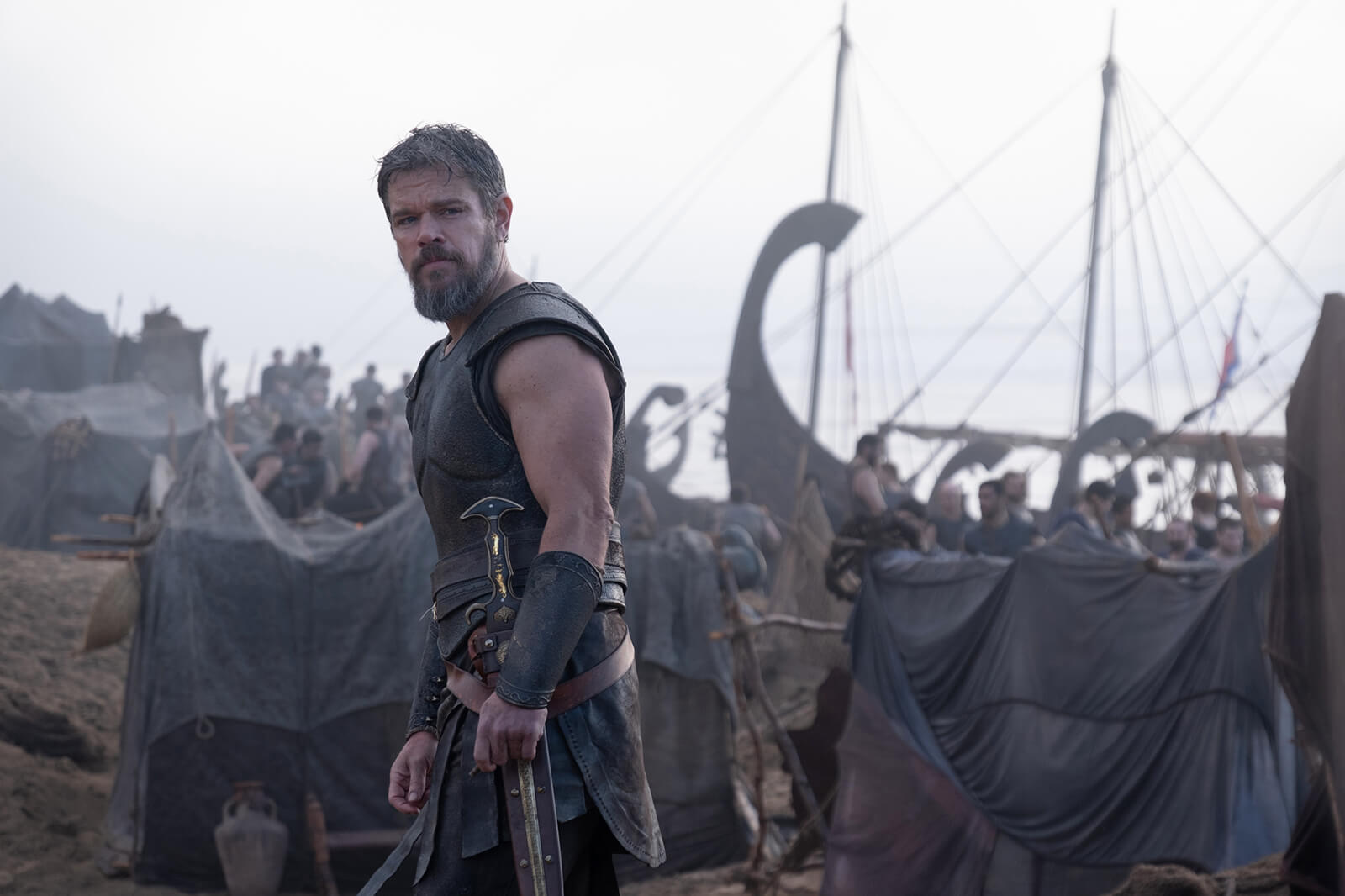
It’s this aspect of nostalgia—a distinctly conservative sentiment in the current age—and a return to a ‘civilised’ past that Nolan seems to urge us to consider as he reflects on how our technocratism, a certain aggressiveness towards and mistrust of the ‘other’, have led us to the brink of civilisational collapse. Much of the promotional imagery of the film hinges on this breaking point where civility is transgressed, through the figure of the Trojan Horse. To Nolan, the Trojan Horse is representative of a relentless desire for technology—with him likening it to artificial intelligence in several promotional interviews—and the convenience it promises. It is exactly a form of technology that conceals its true purpose.
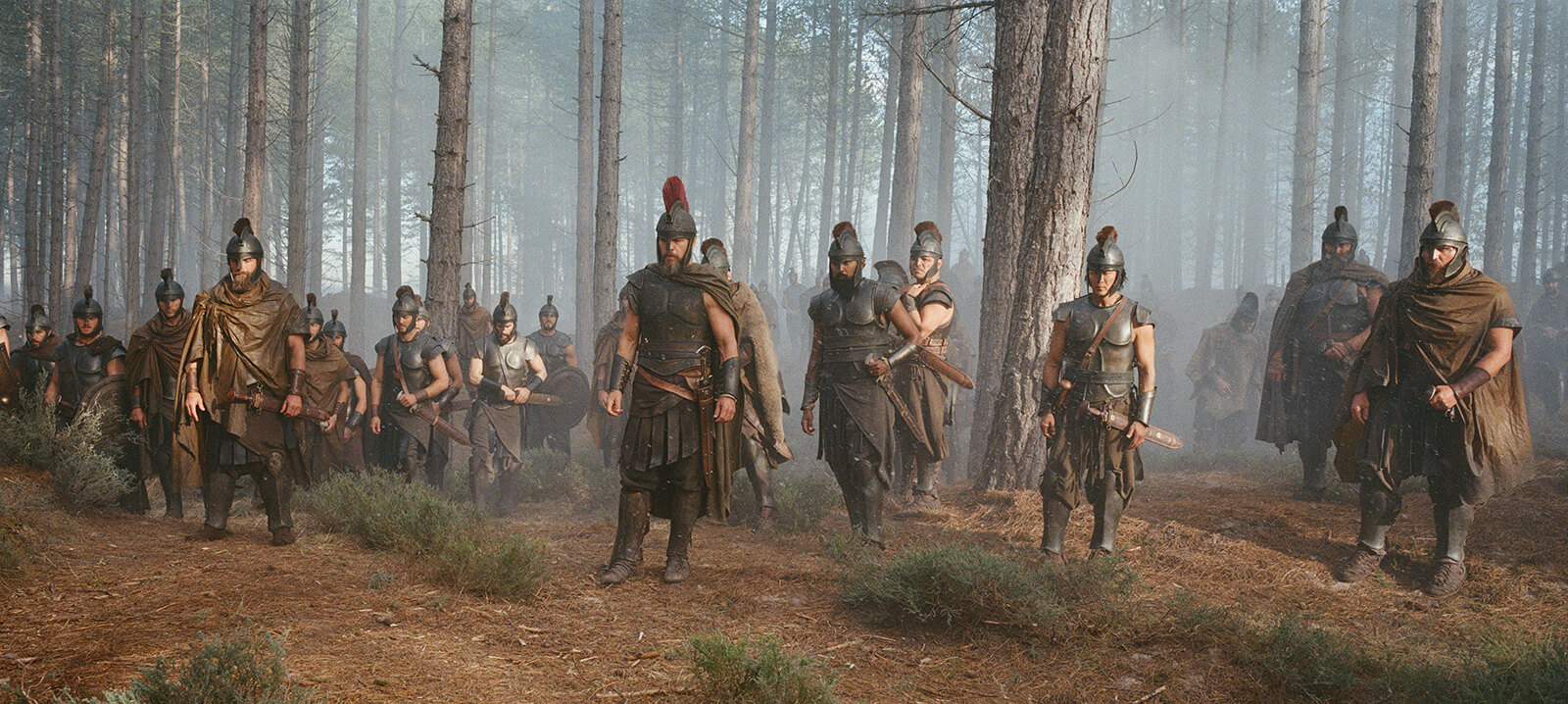
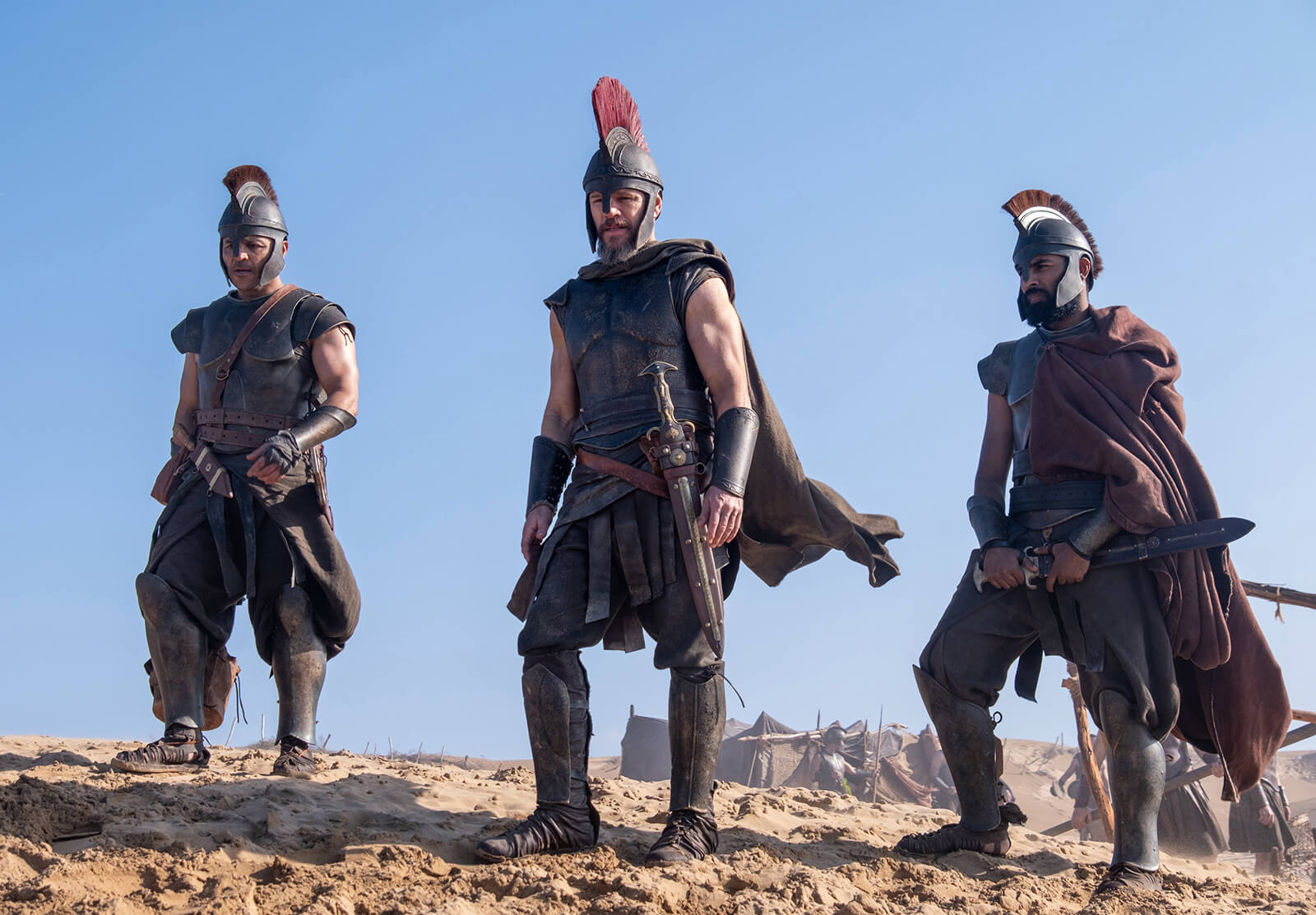
His Odysseus is tortured by his ingenuity, through which the ‘fragile bonds between men have been broken’. The sacredness of these fragile bonds is a central theme for the film, conveyed by Nolan through an emphasis on the Greek notion of xenia, or the idealised relationships between hosts and guests fostered through mutual respect. Nolan interprets xenia through a Catholic perspective, treating it like the Golden Rule: Treat people the way you want to be treated. The emphasis on this idea and what it says about contemporary attitudes towards strangers becomes apparent in a scene in the first act as the war-weary Odysseus and his army are trying to return home. The soldiers stop on an island where they raid the local community under the aegis of hospitality, demanding the villagers give them food. All while burning their houses. Odysseus’ second-in-command, Eurylochus, is even confused when one of the locals begs for mercy, instructing his fellow to tell this pleading villager that they come in peace; that they mean no harm and are only looking for a little hospitality. To Eurylochus, it’s as simple as saying:
That equation of civility with ‘Greekness’ is particularly troubling since such rhetoric calls to mind the inherent logic of colonialism. Colonisers have historically viewed the annexation of foreign lands through that very lens: that they were bringing civilisation to barbarians. While this scene seems to imply a critique of the colonial mindset, xenia is otherwise treated like a plot point to be exploited conveniently. Nolan’s Golden Rule does not apply to ‘barbarians’ apparently, as evidenced by the very next encounter with the cyclops Polyphemus. The crew assumes he is savage—he does not welcome them into a home they have broken into—but he can converse in a civilised tongue (English for the film), as they later discover, complicating his identity as an ‘Other’ to be civilised through education. Polyphemus then is a threat to be murdered, with Odysseus acting on instinct and shedding his yet unrealised guilt over the bloodshed in Troy by shooting an arrow at the giant. Do unto others as you wish to be treated.
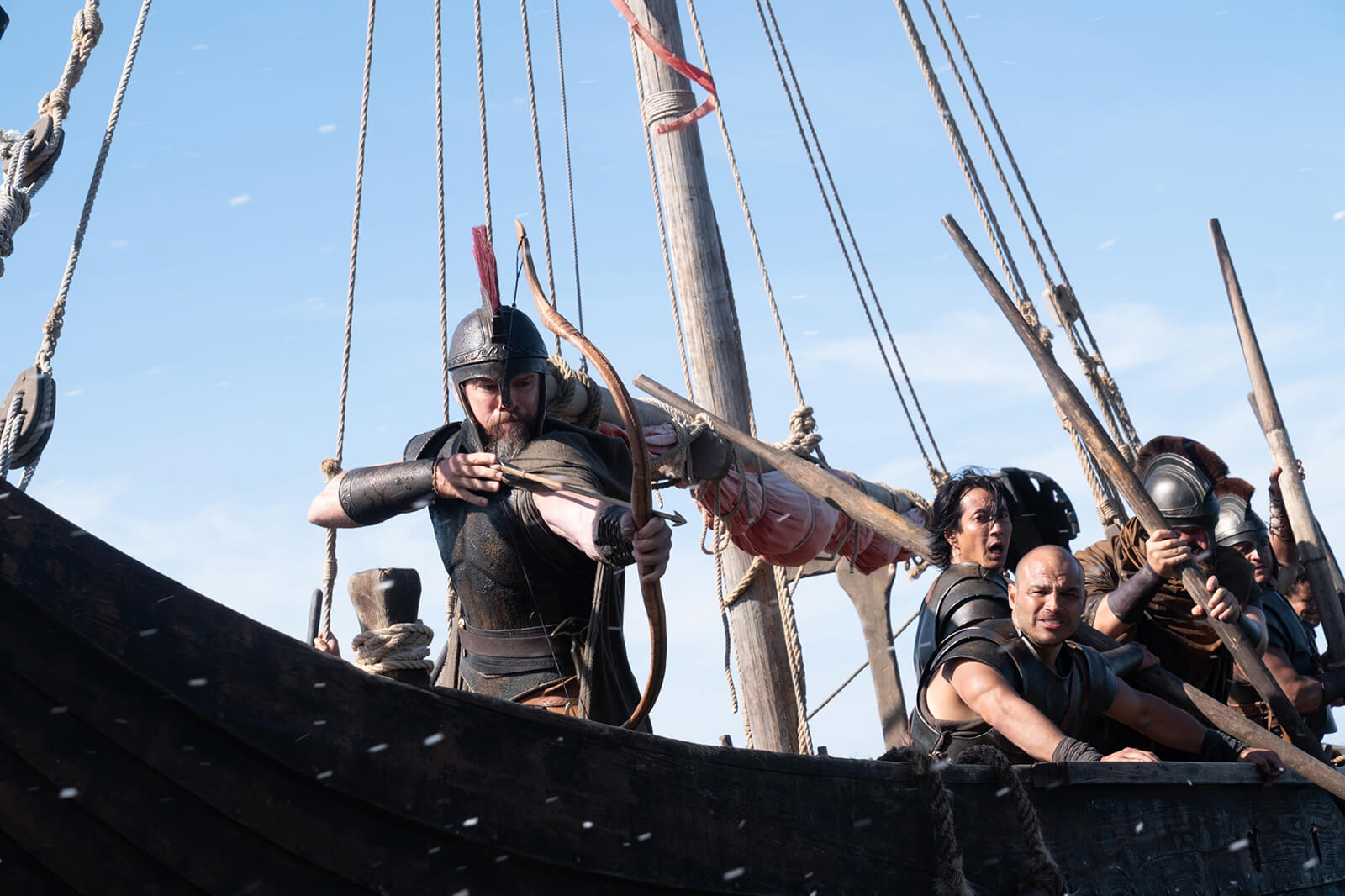
Nolan does, however, try to explicitly hint at the savagery of the so-called civilised. In one of the best scenes in the film, Samantha Morton’s Circe turns Odysseus’ men into pigs, revealing their true forms. But the fact that this Odysseus can only feel sorry when it’s convenient is most blatant in the third act, when he returns to Ithaca and recounts the horrors of the Trojan War to his waiting wife, Penelope. While tearfully admitting to her that his crew are the sea people who precipitated the fall of the Bronze Age, he only truly seems to mourn the plunder of Troy. After all, the West can only justly repent the destruction of Ukraine and not Palestine.
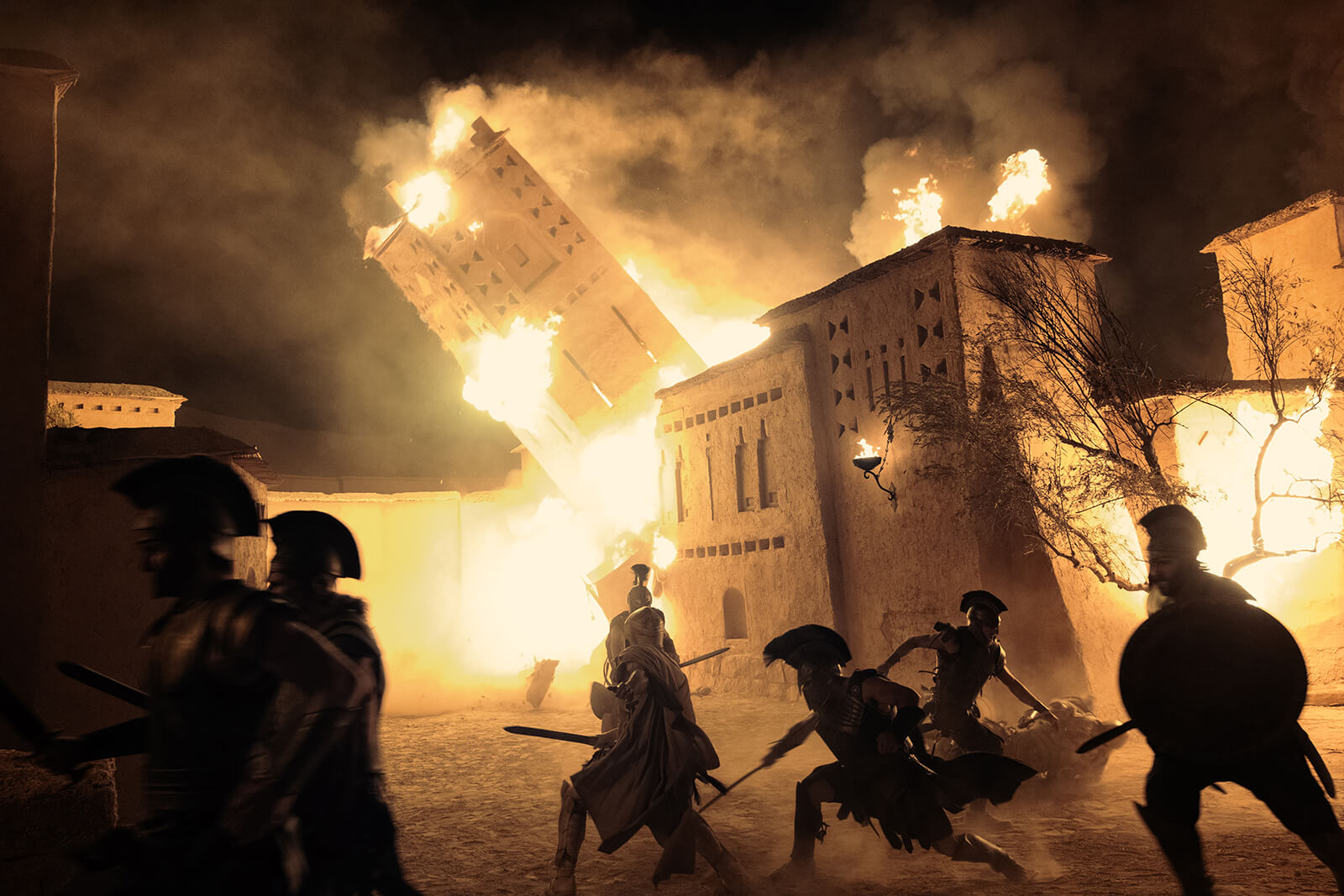
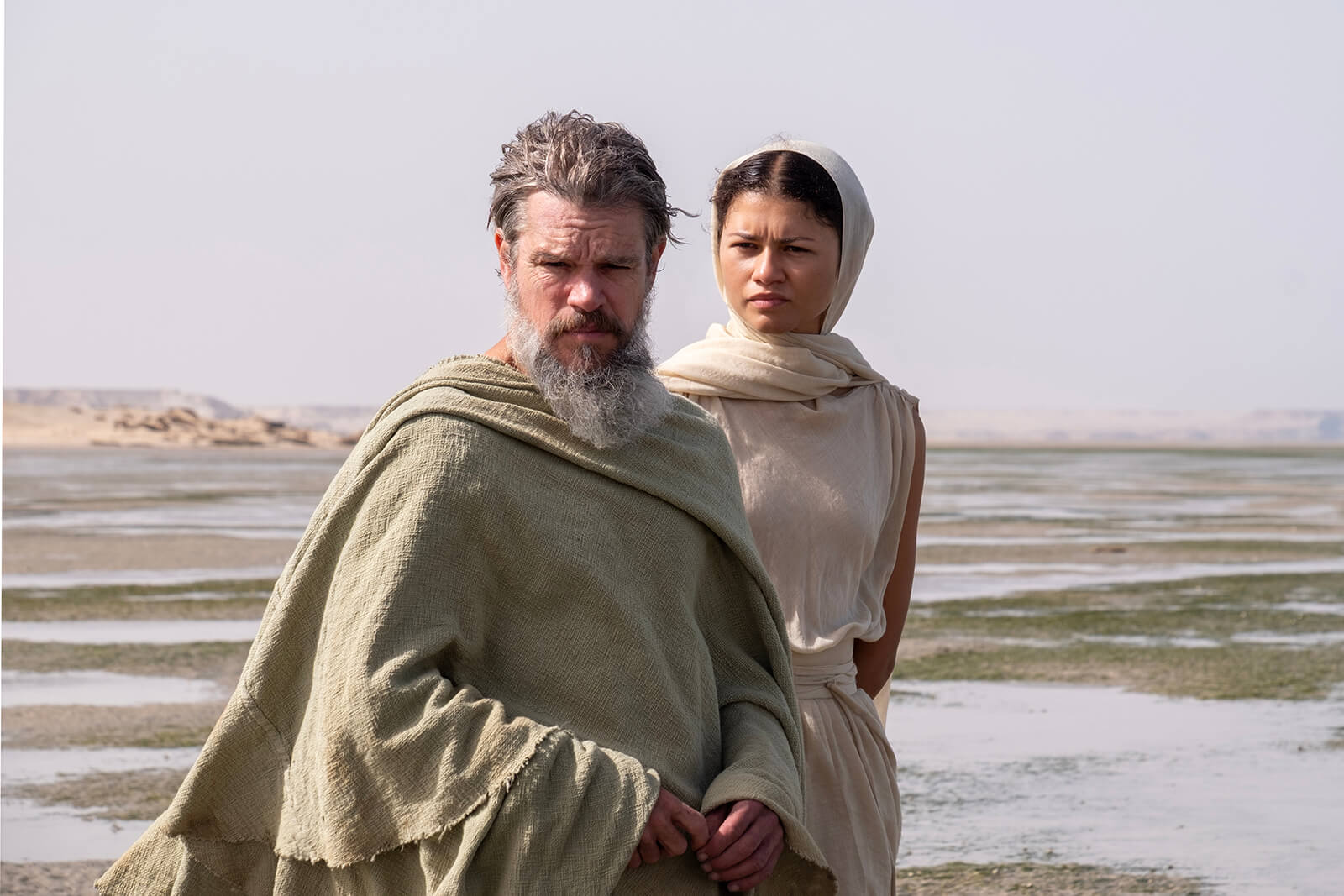
While the dichotomy between savage and noble is part of the epic's core DNA, it is inescapable for a film that insists on mutual respect while still being shot on the occupied territory of Western Sahara; its contemporary musings remain unquestioned. Still, in invoking the fragile bonds between men in the guise of ‘the law of Zeus’, the story forges a connection between what makes us human and what distinguishes us from the Gods—or what the Greeks believed were the gods. We could also read these fragile bonds and the breaking of them as our discordant relationship with natural ecosystems. Zendaya’s character Athena suggests as much to Odysseus when he questions how we understand godly intent. To this, Athena responds:
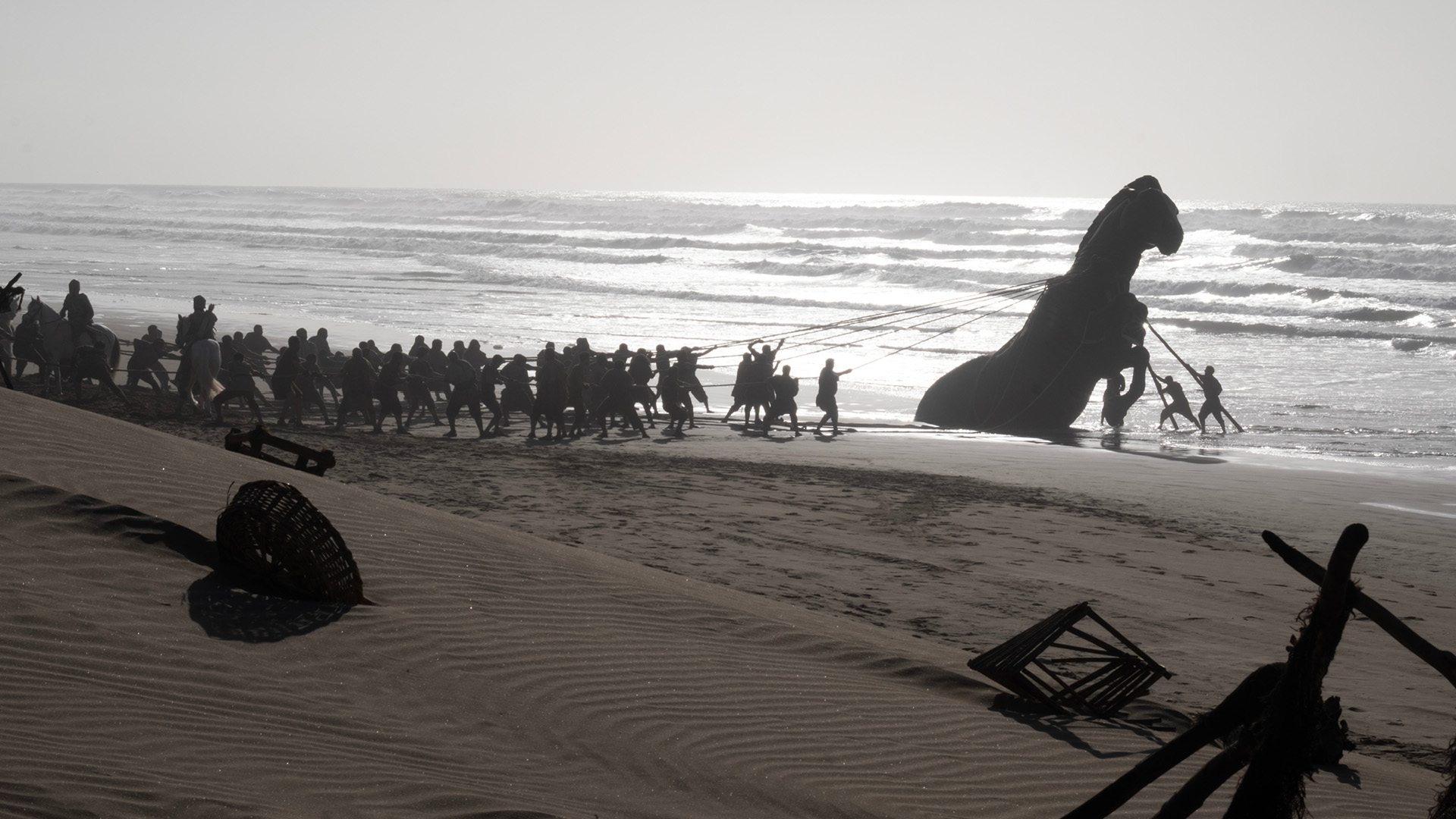
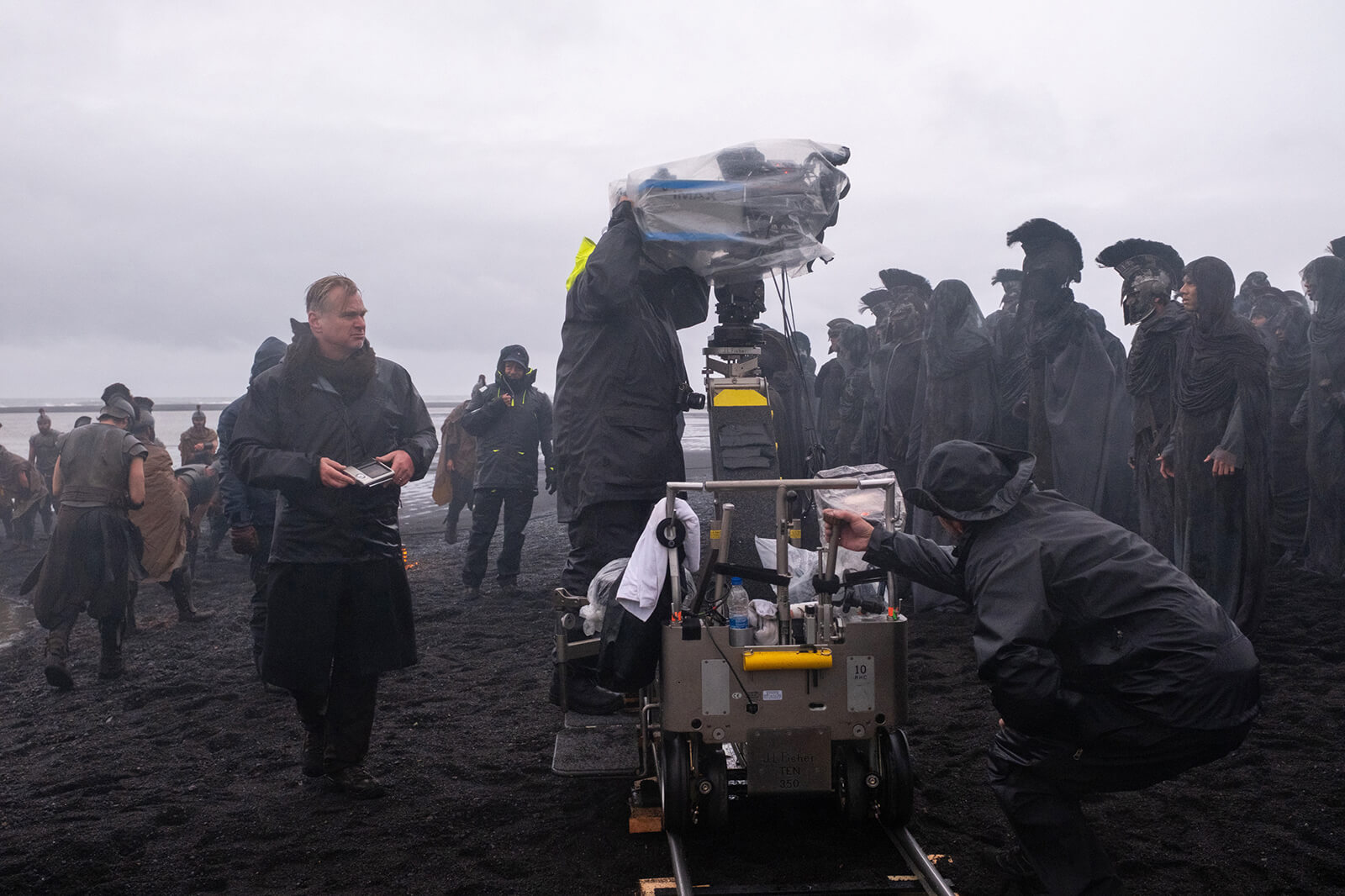
That idea of the divine as manifested in our connection to the natural world is particularly interesting, and quite explicitly portrayed in the visual language of the film. Shot entirely on IMAX 70mm film, the cinematography of the film juxtaposes the monumental and intimate: desolate beaches with a marooned Horse in the opening scene, tiny boats against the sloshing wine-dark sea: a reminder of our ultimate minuteness in the face of the natural. Many of the locations in the film, bereft of people and vegetation, suggest that they were lush and teeming before Odysseus’ conceit broke the bonds between men. The set designs are minimal in comparison to the locations of some of the film’s settings. Hades, filmed in Iceland, is particularly chilling, with practical effects adding to the tangibility of the fantastical settings. Speaking about the production design, Nolan notes, “Extreme climates and landscapes were essential; I wanted to create a world where you [...] can understand a worldview that interpreted the conditions of nature as embodiments or expressions of stormy, mercurial gods.”
That worldview is confirmed by the story when it depicts Odysseus’ men being punished when they defy the gods. We are punished for the defiance of our sacred bond with nature. We are cursed to live through climate collapse, all because of our wrongly assumed human exceptionalism. It’s a stupendous metaphor—whether intended intentionally or unintentionally—that Nolan expands on with Calypso’s advice to Odysseus. When he remembers who he is while stuck on the goddess’ island, rather than stopping him as in the original epic, Calypso tells him to submit to Poseidon’s wrath. She suggests that it is only by reinforcing his connection to the natural (by submitting to the gods) and embracing uncertainty that Odysseus will be able to return home. Inasmuch as xenia is the scaffold for the story’s structure, the idea of nostos is its true engine. In the story, the two become intertwined in the implication that our civilities and relationships make our institutions fair. Penelope reinforces this idea in a conversation with Telemachus about the suitors overstaying their welcome in Ithaca, contemplating:
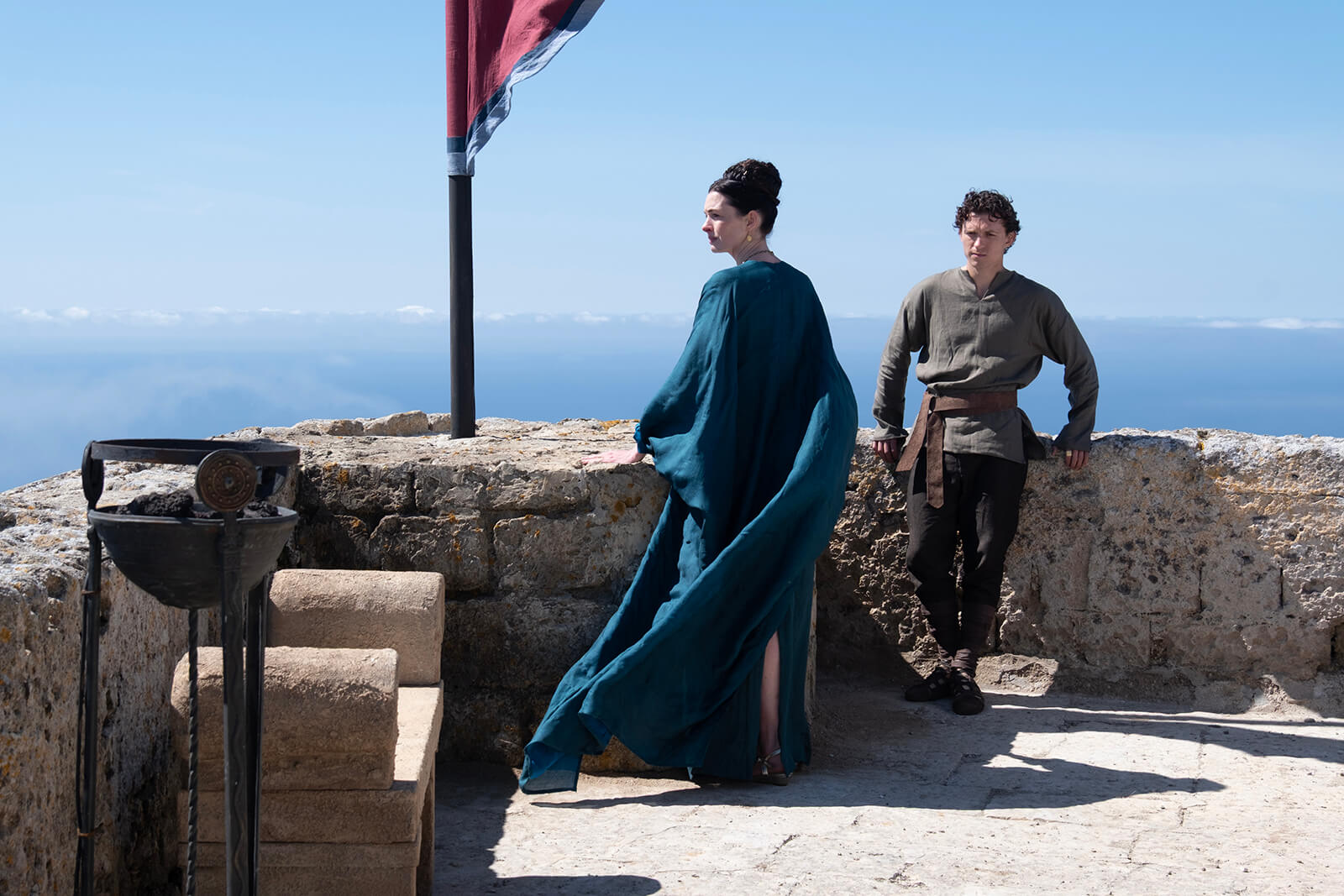
If we think of Odysseus as the model migrant—like Derek Walcott’s retelling Omeros suggests—the idea of home and hospitality in particular becomes all the more pertinent. We could look at Odysseus’ desire to undo what he has done through the journey he takes, hoping to return to a stable hearth. It’s a desire for enclosure, for refuge from annihilation and chaos. Even the structure Nolan adopts for the film—a now-signature non-linear format—suggests this. The Homeric epic is a carrier bag, a container for all our messy entanglements with the world; it is a story that has been told time and again, warped through retelling and projection.
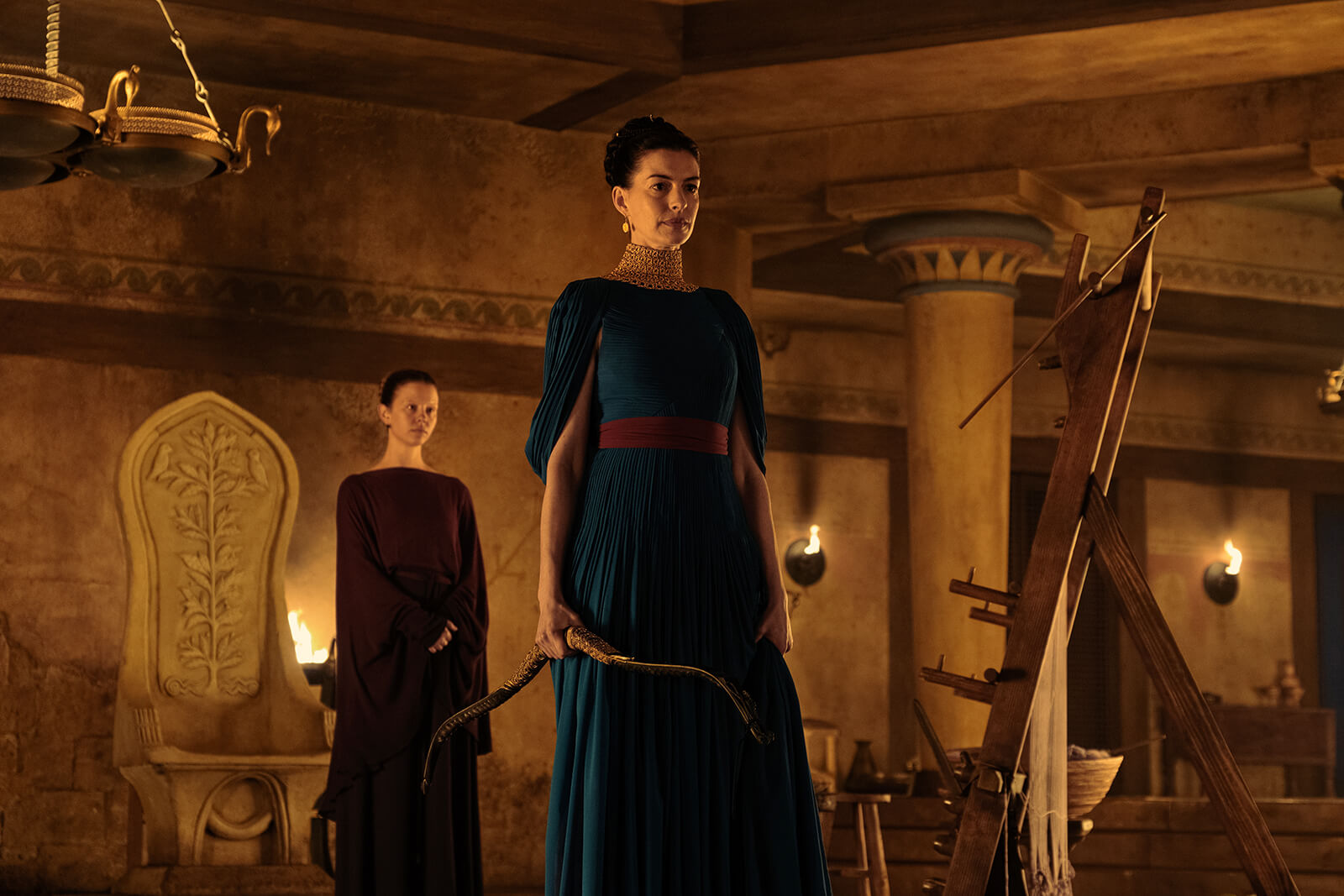
“All we know of the world is travelers’ tales,” Penelope says at one point; a sobering note about how the migration of bodies and stories is what helps us make sense of the scale of the world in the first place. That oscillation between the yearning for stability in the home (usually represented through female bodies), the demand for greatness (the hero’s journey that only male warriors can experience) and the inherent dynamic therein makes the epic a compelling story to explore today. Yet, Nolan eschews any actual reflection on how we understand this dialogue when he chooses to pivot and almost entirely tether to the hero’s journey in the third act. Odysseus reclaims his rightful place on Ithaca’s throne by drawing the legendary bow and arrow and defeating his adversaries, those vile men who could not understand xenia. In undoing the idea of guilt Odysseus was meant to portray with this final reckoning, the film complicates how we might think of xenia. Is the return to an ideal past possible? Can xenia be reestablished in a world burdened with the destruction wrought by the West?
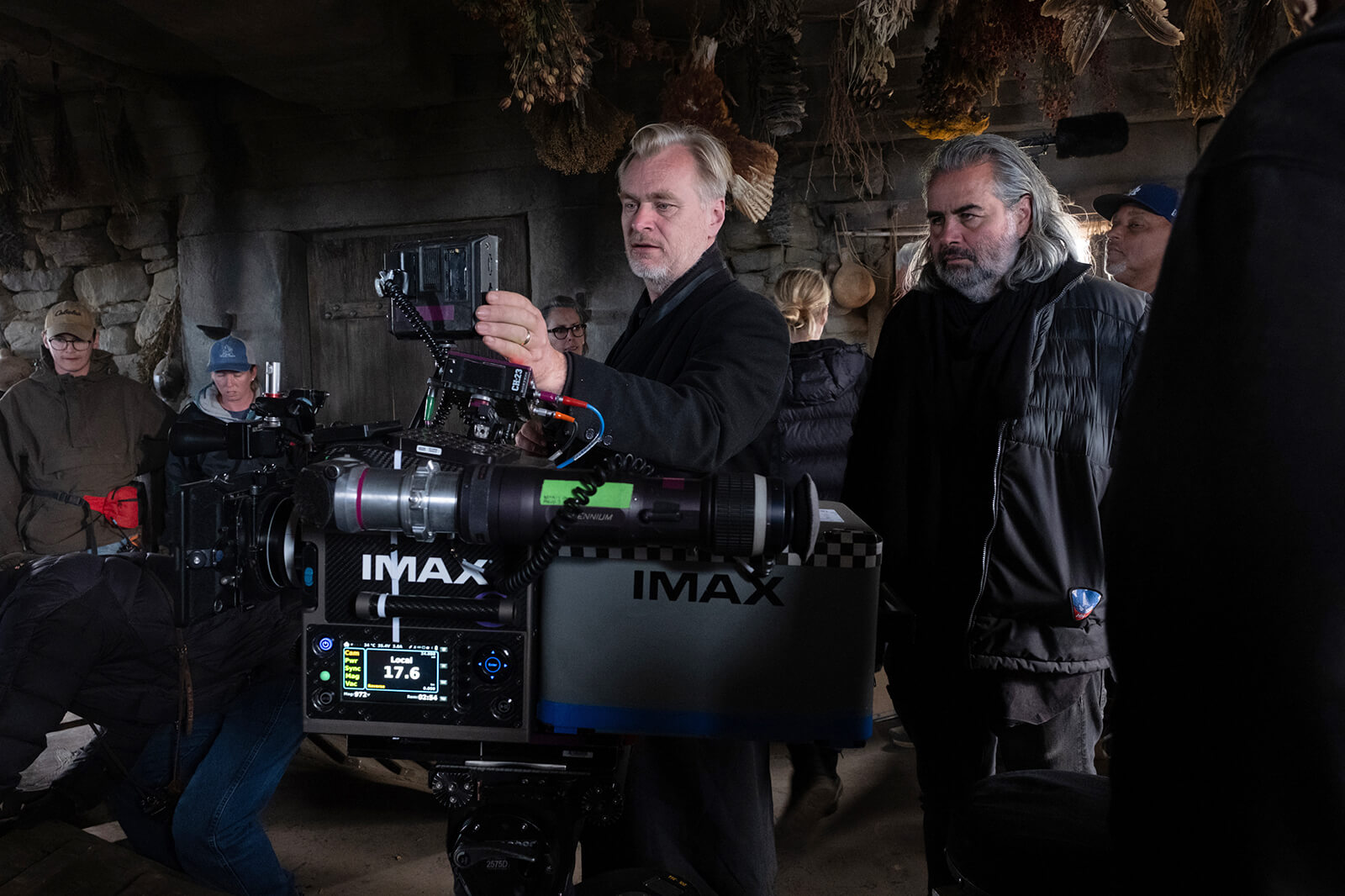
Mythologies and the way we interpret them show us what we value as a society. They are plural by their very nature. It is the task of the translator to present the myth in a way that becomes intelligible to their audience. Much has been made of Nolan’s metis in producing a film shot entirely in IMAX, the new technology that transforms an old story for the new world. Yet that reproduction by film of what was inaccessible does not guarantee equality, as Walter Benjamin hoped, when the format the work is presented in and to be experienced in (‘as Nolan intended’) is inherently exclusive to a certain class. All of the 41 theatres capable of projecting 70mm IMAX film are situated in the West as we understand it today, with Melbourne being the only exception in the southern hemisphere.
As much as the work of the translator (or adaptor) is to present a work of literature that is relevant to the audiences it is meant to be read by, it is also the work of the critic to sift through the aesthetic and the formal to arrive at the foundational, to look at the structure and wager at its meaning; to understand why it matters at all. The hope for stability and home, the wariness towards technology that undoes humanity are questions worth asking today; but are ultimately undone by Nolan giving his Odysseus a clean slate, vesting Telemachus with the burdensome work of creating a world where “Songs will only be sung, and dawn will break [...and] our mistakes will be forgotten.” It’s worthy in this light to keep in mind Zeus’ assessment of us at the beginning of Homer’s epic:
"Ah, how shameless – the way these mortals blame the gods.
From us alone, they say, come all their miseries, yes,
but they themselves, with their own reckless ways,
compound their pains beyond their proper share."
References
1.An Uncomplicated Man by Emily Wilson, published as a review of The Odyssey (2026) in the London Review of Books, Vol. 48, no. 14.

by Mrinmayee Bhoot Oct 12, 2026
The new Centre for Contemporary Arts, fostering public engagement with art in Uzbekistan, is housed in a tram depot refurbished by the French studio, emulating local craftsmanship.
by Mirra Lynn Oct 10, 2026
The Shanghai-based architecture practice’s intervention in Suzhou transforms three abandoned houses into a bookstore, café, library and homestay.
by Pranjal Maheshwari Oct 09, 2026
The eighth edition of the international architecture and urban design showcase, themed How Much?, explores diverse implications of social, ecological and economic ‘cheapness’.
by Pranjal Maheshwari Oct 06, 2026
With a programme focused on biodiversity, accessibility and safety, the Rotterdam-based architects help the neighbourhood reclaim a barren landscape as an integral social node.

make your fridays matter with a well-read weekend
Enter your details to sign in
Don’t have an account?
Sign upOr you can sign in with
a single account for all
STIR platforms
All your bookmarks will be available across all your devices.
Stay STIRred
Already have an account?
Sign inOr you can sign up with
Verification link sent to check your inbox or spam folder to complete sign up process
Tap on things that interests you.
Select the Conversation Category you would like to watch
Please enter your details and click submit.
Enter the 6-digit code sent at


The Odyssey oscillates between the implications of home and the world
by Mrinmayee Bhoot | Published on : Aug 13, 2026


 Sign in with Google
 Sign in with email
What do you think?