Art10 mins. read
Performance and lived reality animate Abhishek Khedekar’s Tamasha at NCPA
by Srishti OjhaJun 15, 2026



by Mrinmayee BhootPublished on : Dec 08, 2025
Beginning in 2010, Alive with the Dreaming! Songlines of the Western Desert was an initiative by the Anangu, traditional custodians of Australia’s central western desert. With a desire to preserve their traditional knowledge systems, the custodians of Country—First Nations traditional owners, knowledge holders and artists—worked in collaboration with archaeologists, anthropologists and museum curators at the National Museum of Australia to set down the epic stories that shape the Anangu's understanding of ‘Country’ and all that that implies. Songs, stories, ecologies and dreams: all these are interwoven into Australian Aboriginal communities’ sense of the land that they inhabit, forming a vital worldview in which the human is imbricated into the natural landscapes it shapes, and that shape us. It's this that drives their sense of responsibility towards Country, an acknowledgement of mutual care. The project, through the documentation and creation of artworks, showcases how Indigenous knowledge systems integrate cartography, ecology, archaeology, visual arts and performance, mapping the creation myth of the Seven Sisters songlines across three deserts, three states and more than 7,000km, covering the territories of the APY (Anangu Pitjantjatjara Yankunytjatjara), Ngaanyatjarra and Martu peoples.
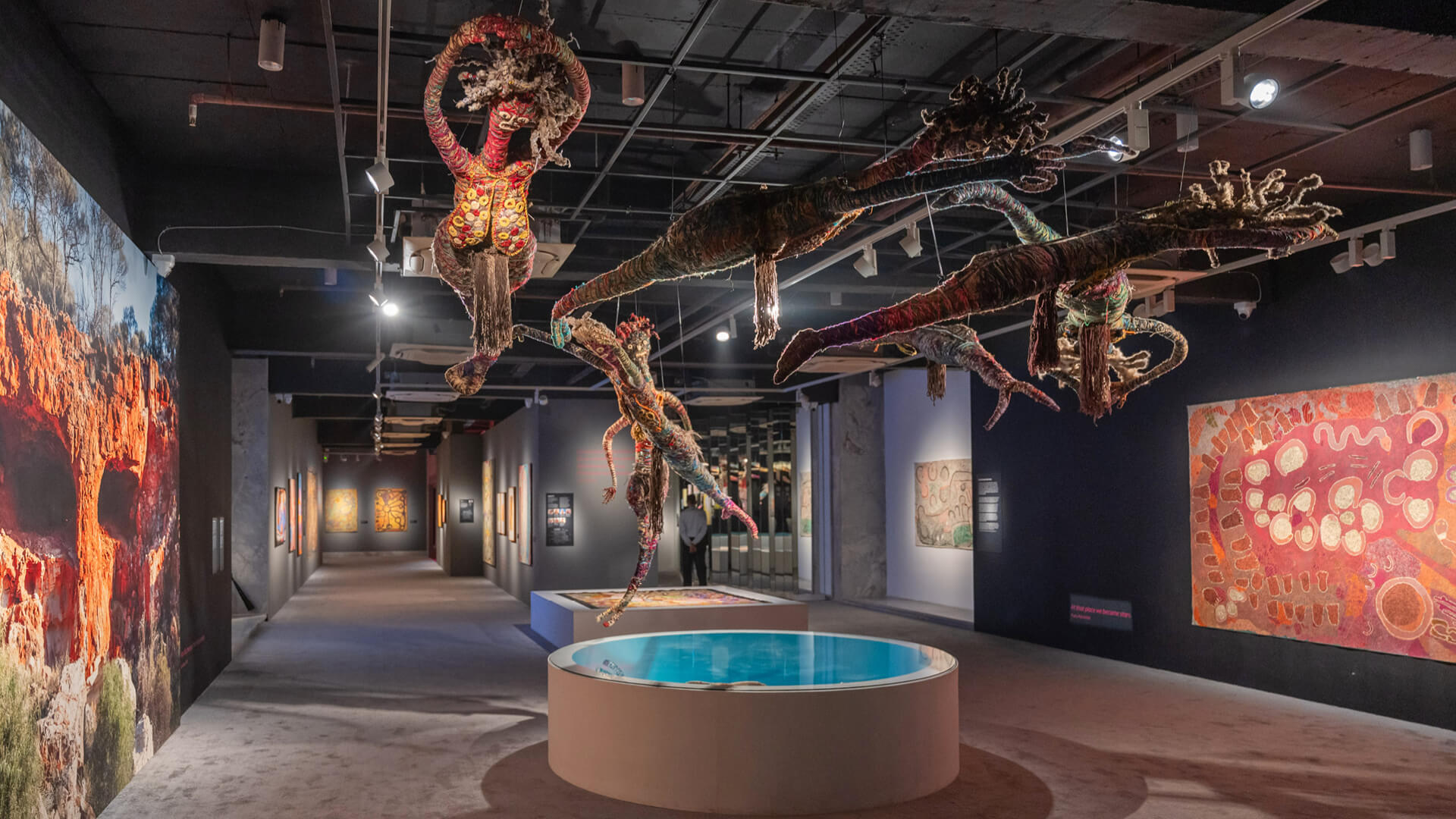
It's the profound yet inexplicably simple way of being that the exhibition—Songlines: Tracking the Seven Sisters—resulting from the project Alive with the Dreaming! seeks to underscore. Initially showcased at the National Museum of Australia, the exhibition, featuring nearly 300 paintings and objects, song, dance, photography and multimedia works, is being showcased in New Delhi by the Kiran Nadar Museum of Art. "By merging ancient storytelling traditions with cutting-edge technology, the exhibition invites audiences in India to experience a journey that transcends geography and time. Through collaborations like these, we aim to deepen understanding and appreciation of shared human heritage, celebrating the timeless wisdom of communities and their connection to the land," Kiran Nadar, founder of Kiran Nadar Museum of Art, notes in the official press release.
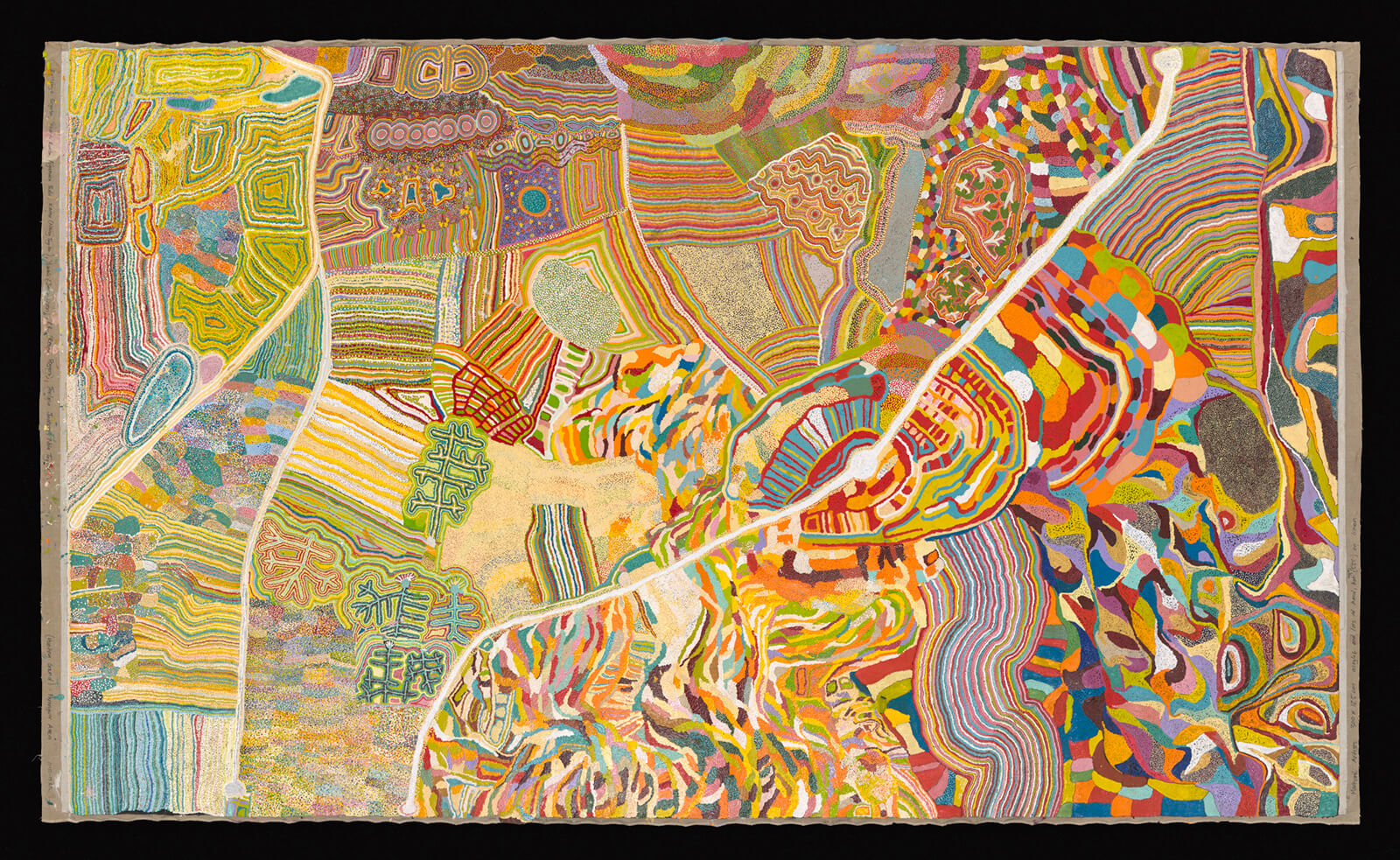
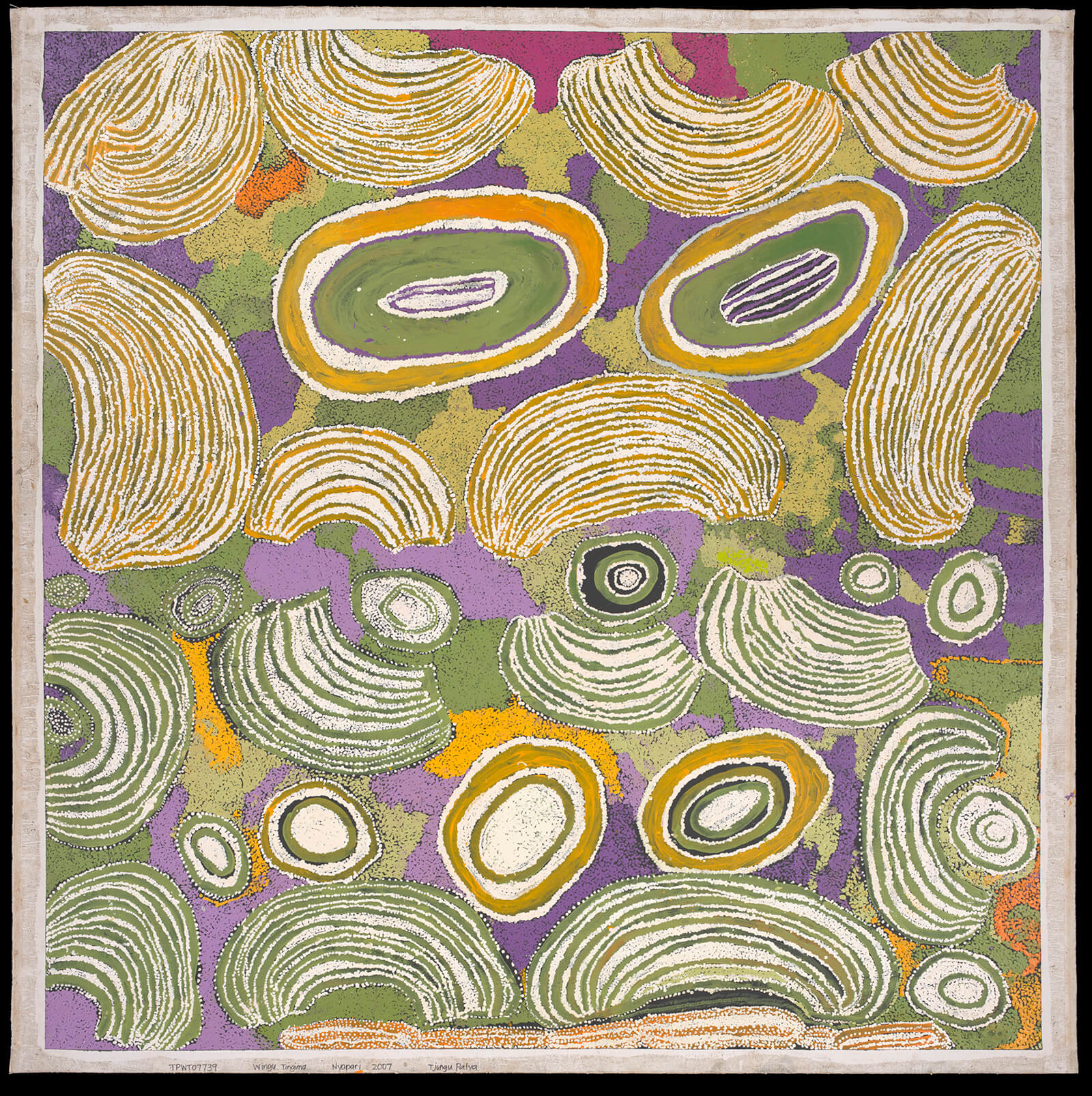
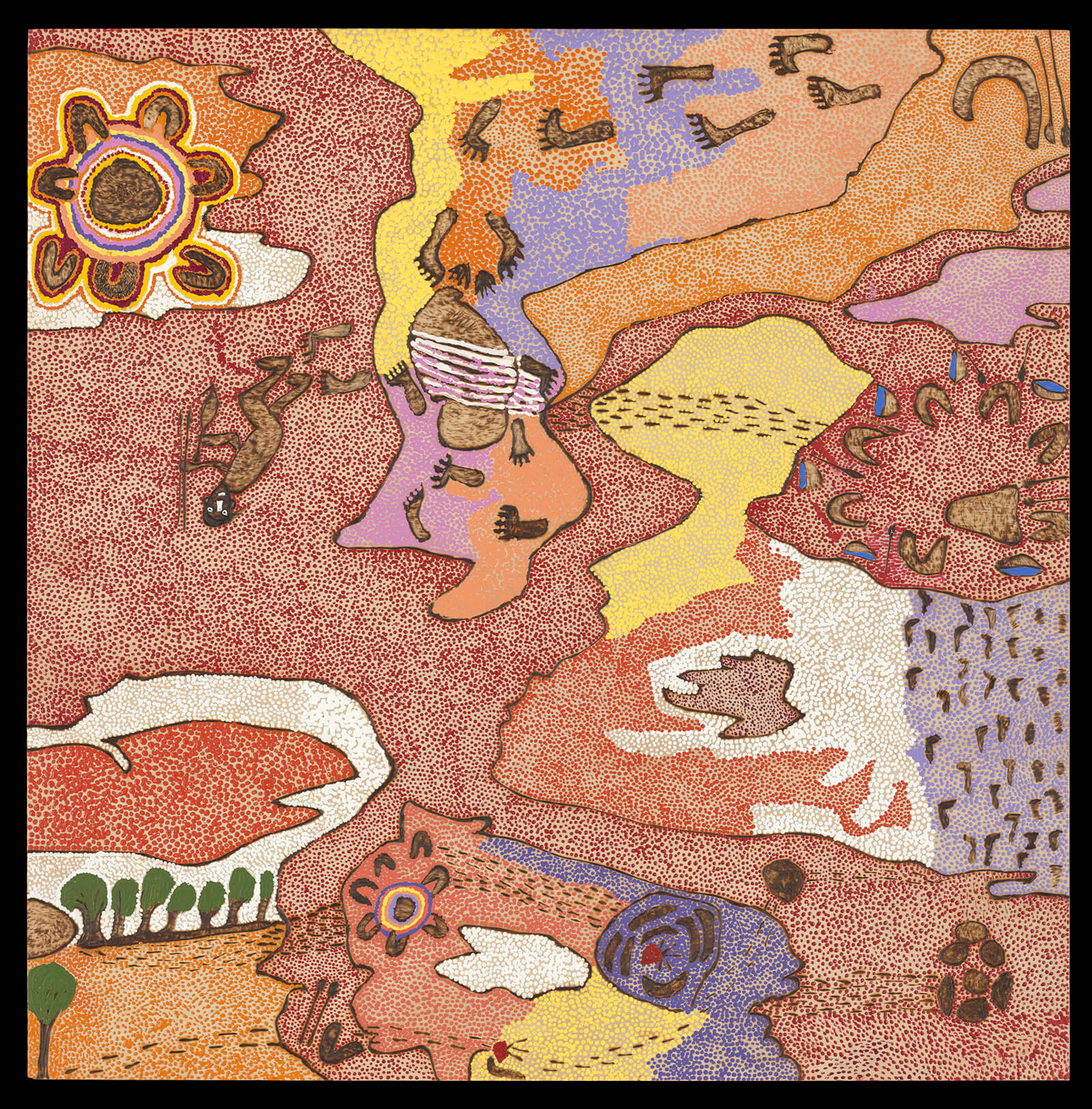
The vast scale of the project has been divided into three distinct sections for the showcase, displayed at the Humayun's Tomb World Heritage Site Museum. Speaking about contextualising the show for Indian audiences, Roobina Karode notes in conversation, “Our attempt was not to dilute or reconceptualise the exhibition for the Indian context. The challenge was to create contexts of exchange and invite audiences who are unfamiliar with Aboriginal Australian cosmology into a complex, embodied and sensitive engagement that does not require prior knowledge as a precondition for meaning making.” She underscores the intention of the show to assert indigenous sovereignty and defy Western museums' traditional logic of collection and control.
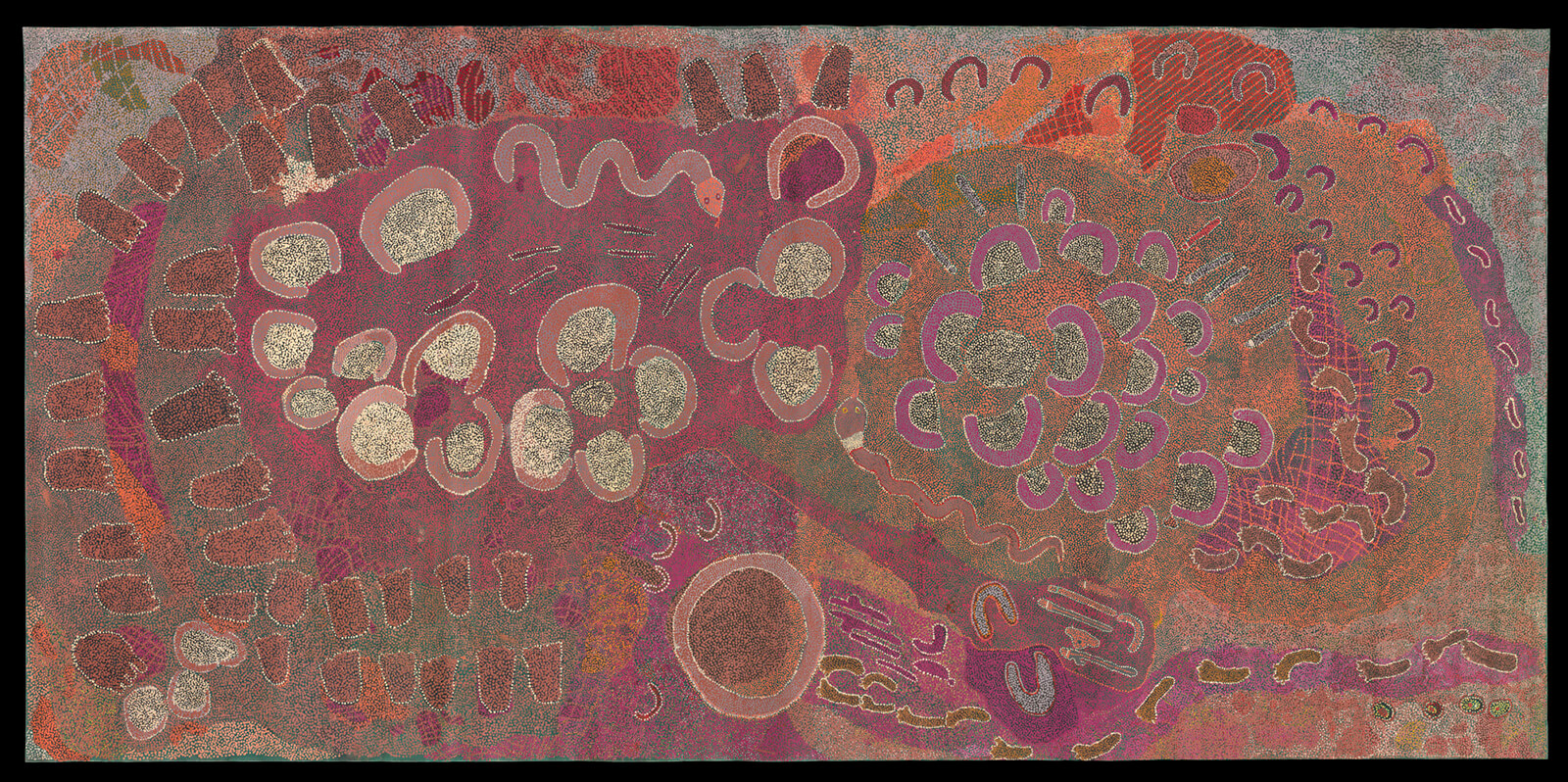
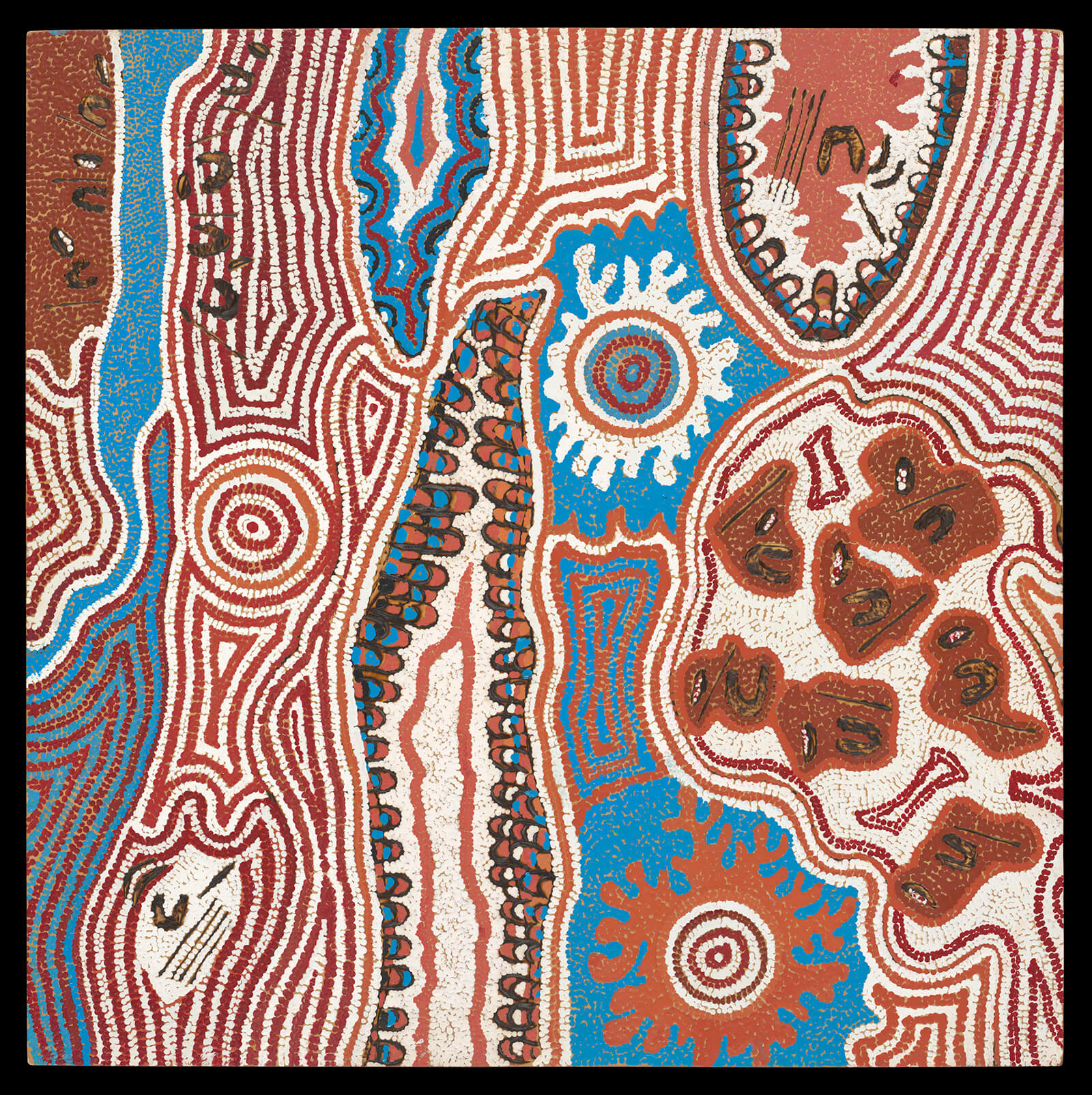
Through three galleries, visitors traverse different lands, travelling along with the Sisters—walking along the deserts of the Martu, Anangu, Pitjantjatjara, Yankunytjatjara and Ngaanyatjarra peoples—travelling east to west across the island nation. Along with the Minyipuru fleeing the vile, lustful man Yurla, they trace water sources, camping sites and vast, barren landscapes. This experience is enhanced by a soundscape where women continue to chant the songs that relay this tale. To call such an immersive installation profound feels trifling, but it also highlights how much the act of drawing and the performance of it all are interconnected within the APY traditions. As the chase intensifies, the tone of the paintings and songs shifts, becoming darker and more intense. Two major songlines have been depicted: the Pangkal songline, which spans 100km to the north of Telfer and Punmu, and the second, the Parnngurr songline, which follows 600km of the Canning Stock Route, from Parnngurr to Pangkapini, where it leaves Martu country.
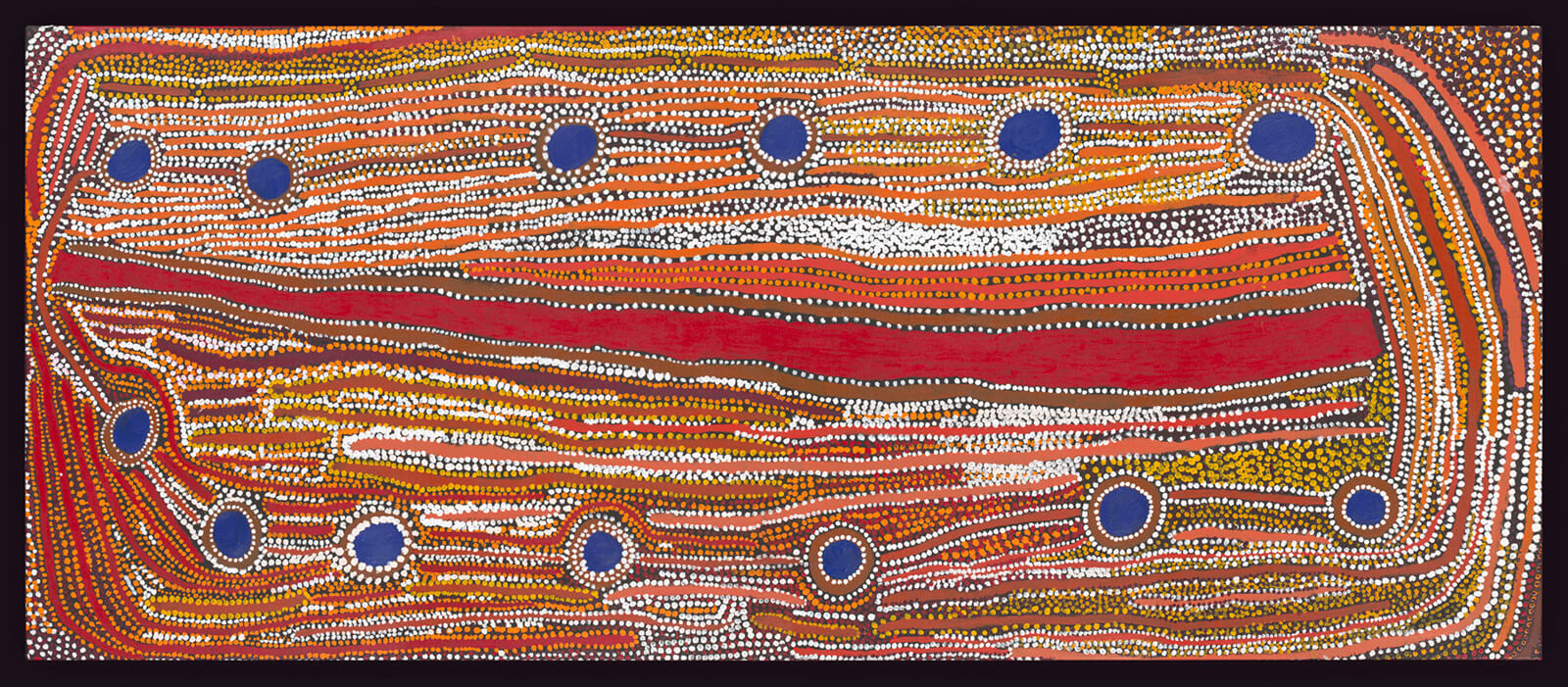
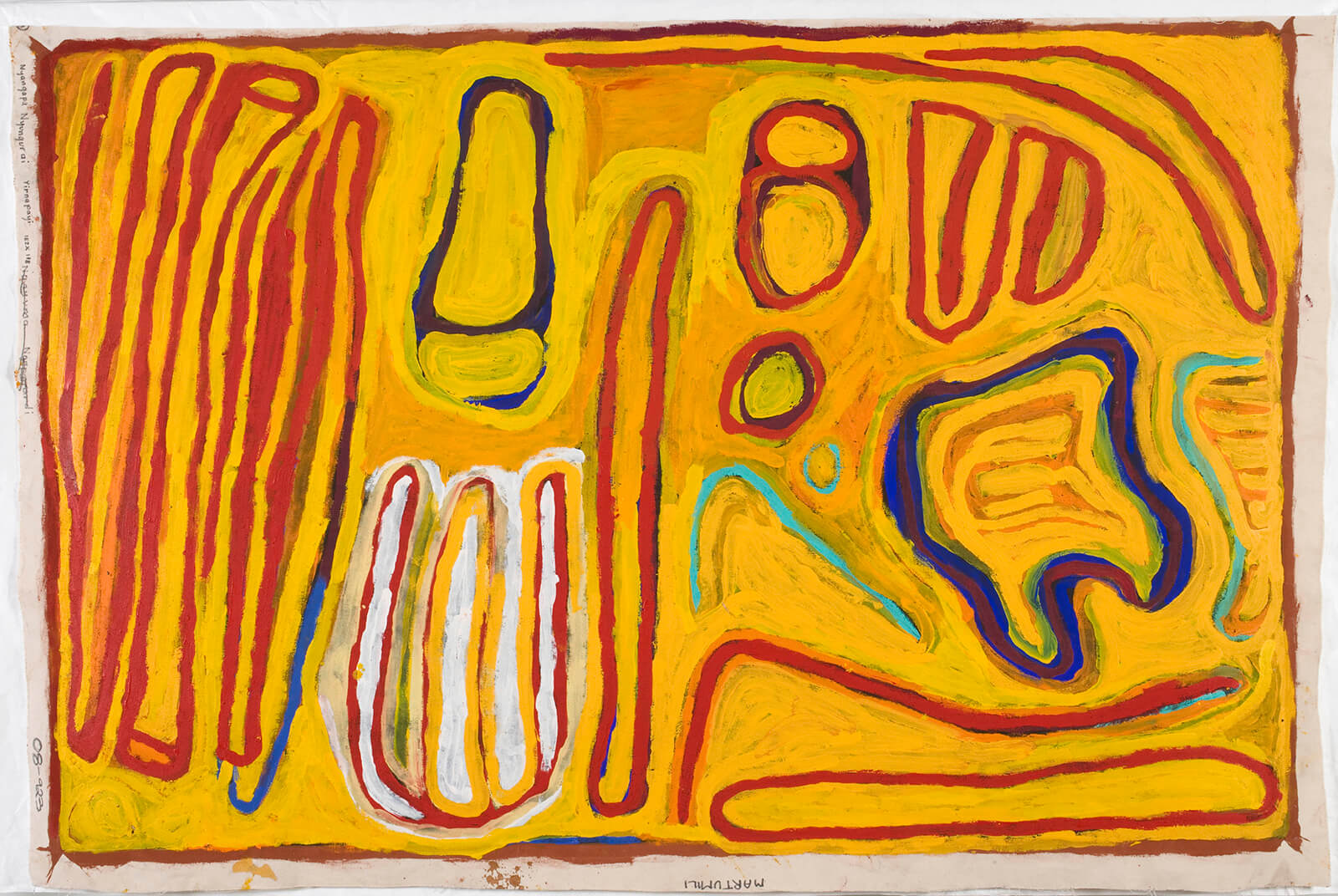
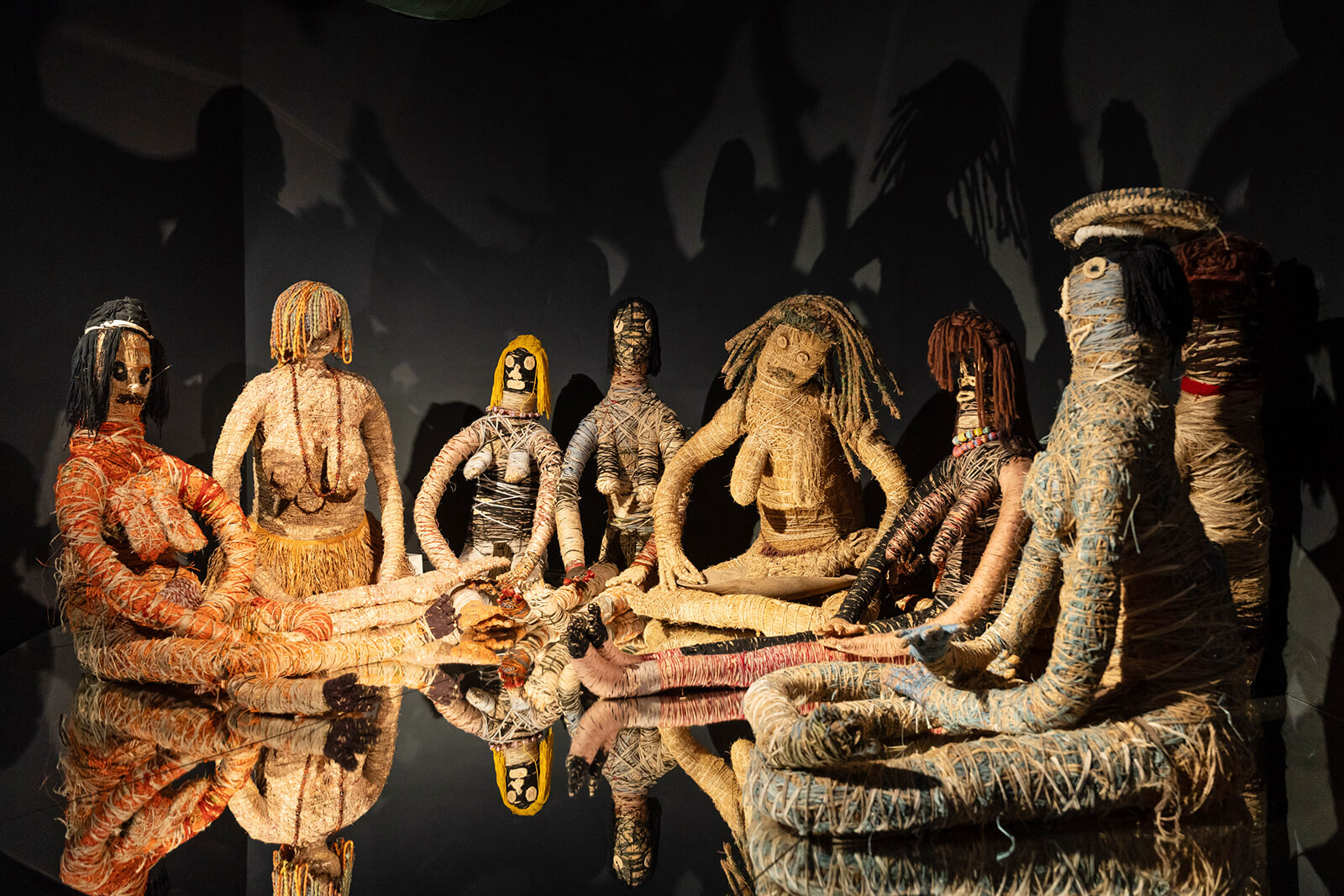
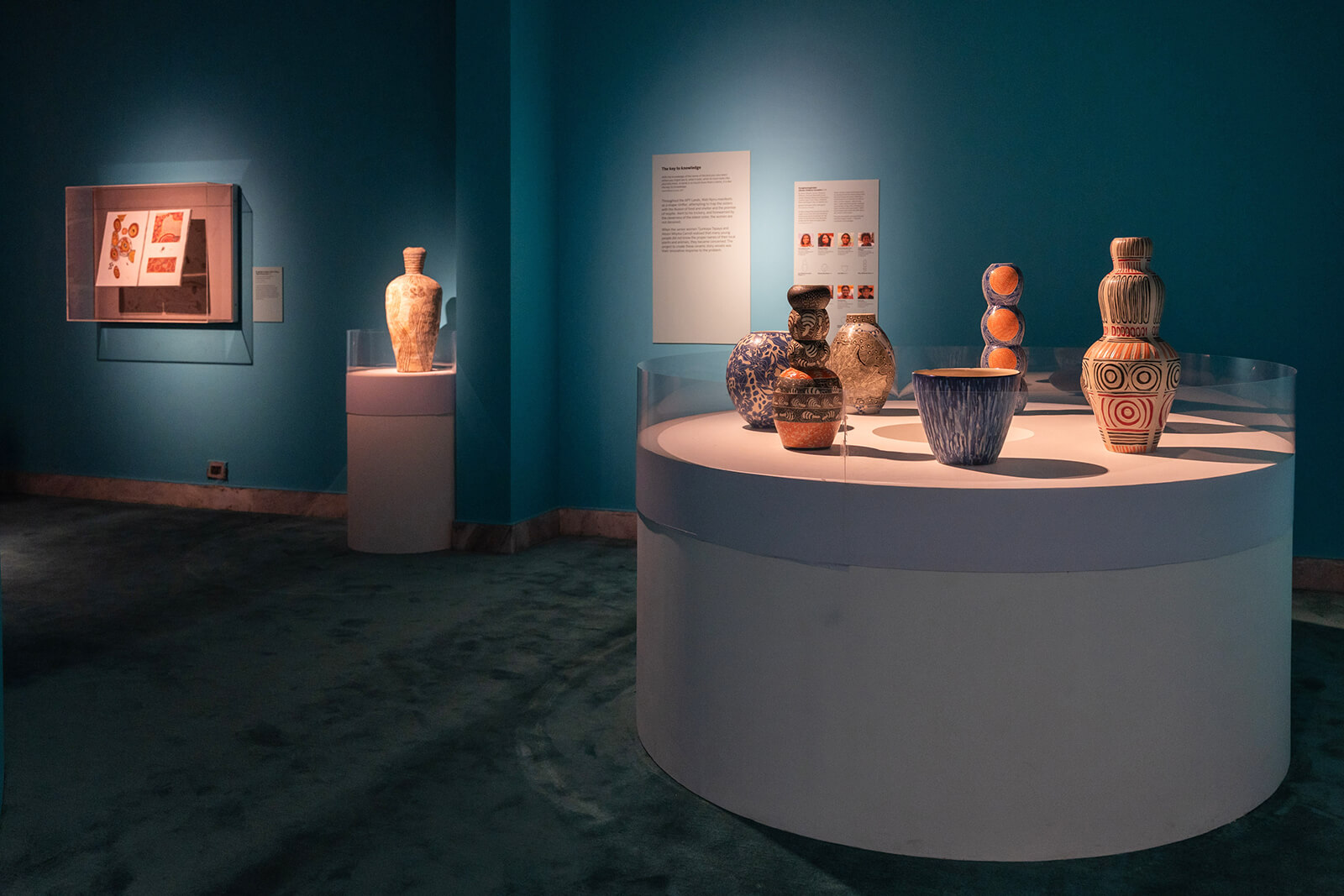
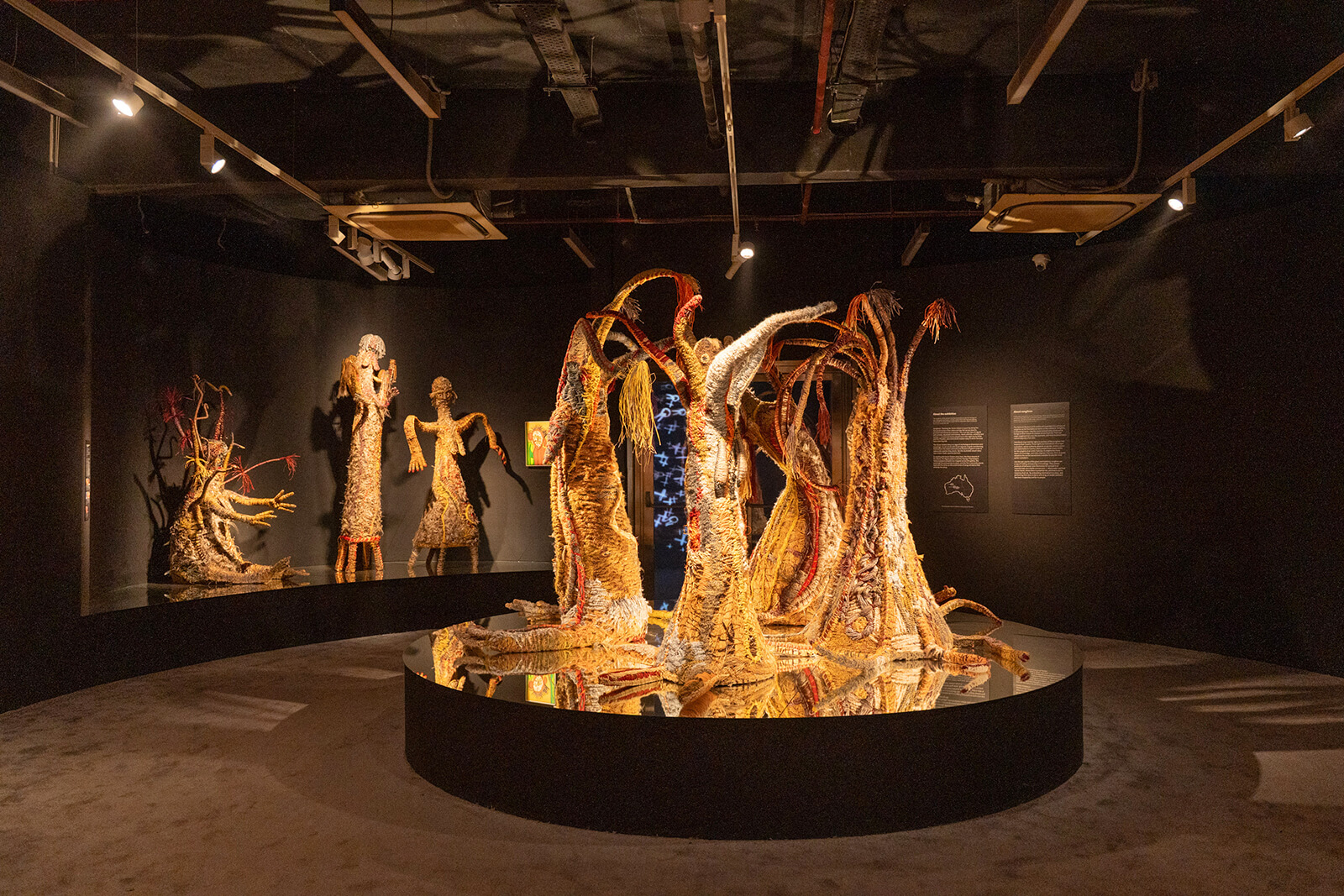
The final scenes of the saga are quieter, with paintings created by senior artists who ‘whisper the tjukurrpa (dreaming)’. It’s a way to demonstrate how these narratives—that not only depict kinships between different tribes, place and ecology, but also represent a living system of knowledge, law and morality—continue to be passed down through generations. The large canvases stretch across terrain, with bold lines, concentric circles and wave forms depicting the Sisters’ travels. Concentrated dots in vibrant colours map out a terrain that is lived in; the paintings feel like they’re breathing. For example, the enormous canvas Yarrkalpa (Hunting Ground) by the Martumili Artists (3x5 metres) was painted collectively by eight artists, to be an encyclopaedia of seasons, burning practices, resources and their uses. The painting is a topographic replica of the landscape of the Martu people. At the outset of the show, a series of life-sized woven tjanpi (grass) sculptures by the Tjanpi Desert Weavers depict the sisters, in the first gallery as stationary, in the second as setting up a camping site while they’re fleeing and in the third as they transform into stars. The first section also includes ceramics crafted by the Elders to imaginatively represent the Seven Sisters and the bush food into which Wati Nyiru transforms himself.
To call such a showcase powerful and deeply immersive feels similarly reductive as calling the digitalisation of it profound, but there is something indescribably extraordinary in the pulsating, almost syncopated paintings where land carries traces of the Sisters’ sleeping forms, their footsteps and their flight from the snake, whose figure also dominates some of the canvases. The intention, perhaps, is to underscore the vital notion that art here is not as a commodity or object, but as a way of being, as a medium of transcendence, of connecting across time, place and creating kinships that tie us to the lands we walk every day.
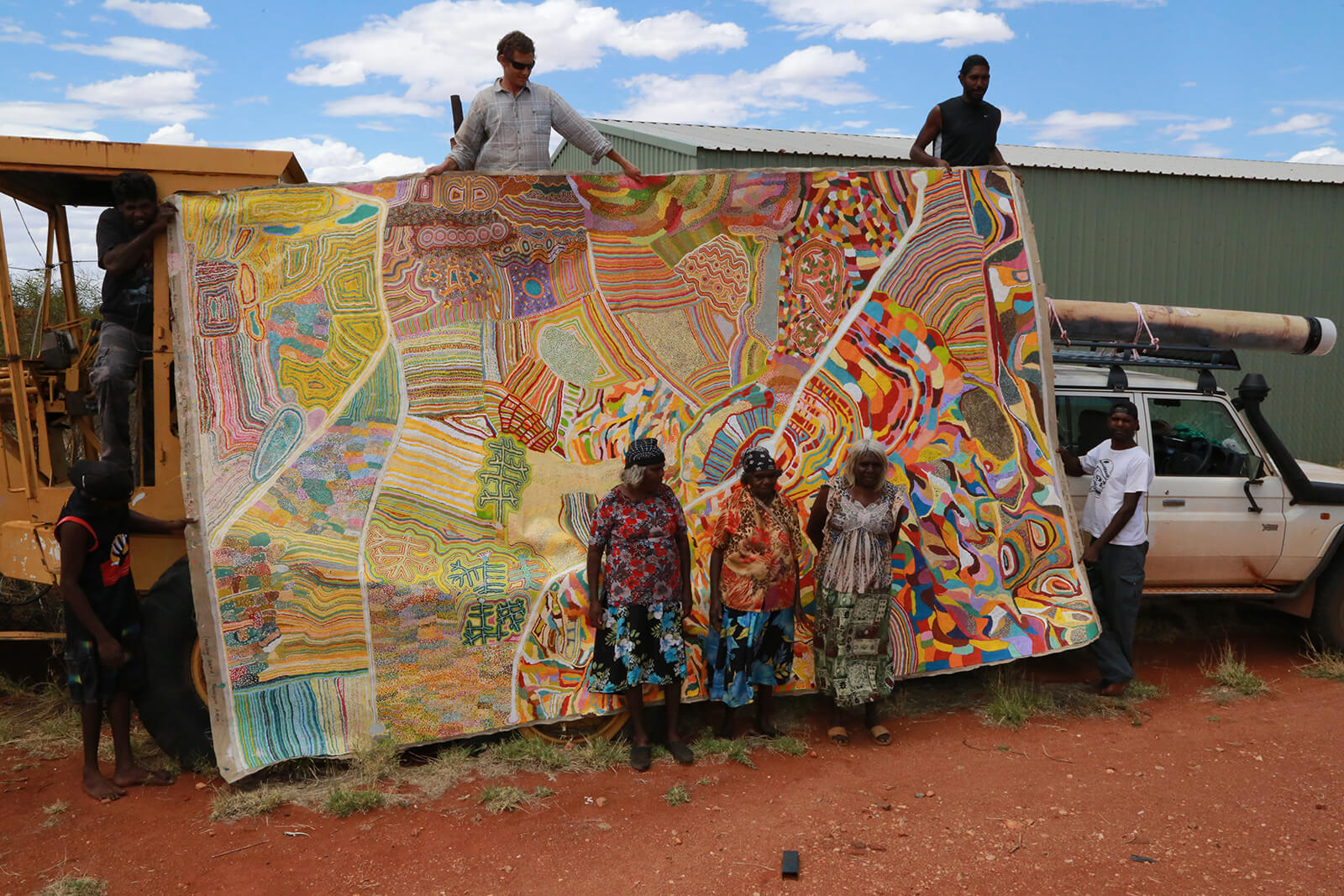
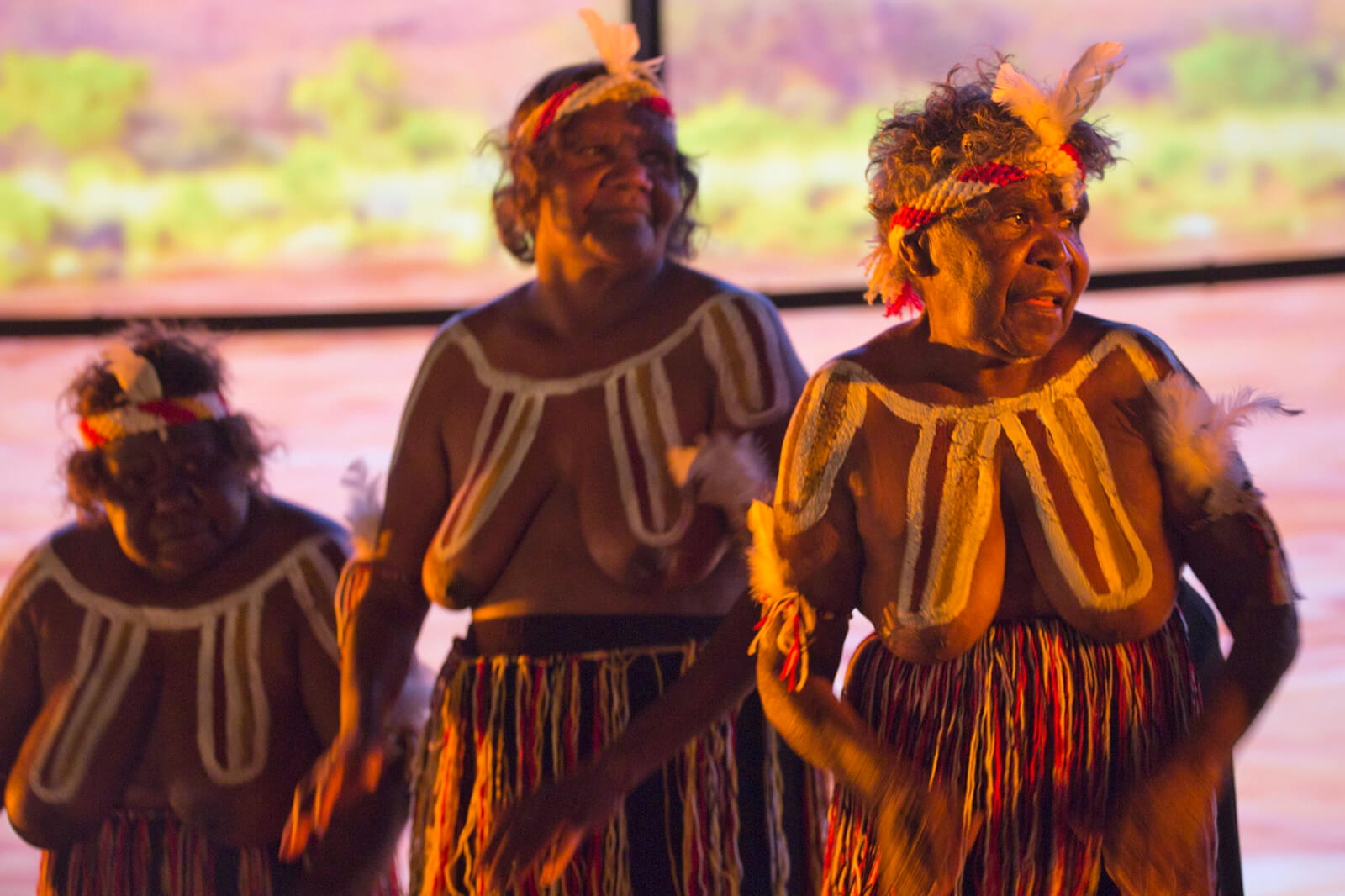
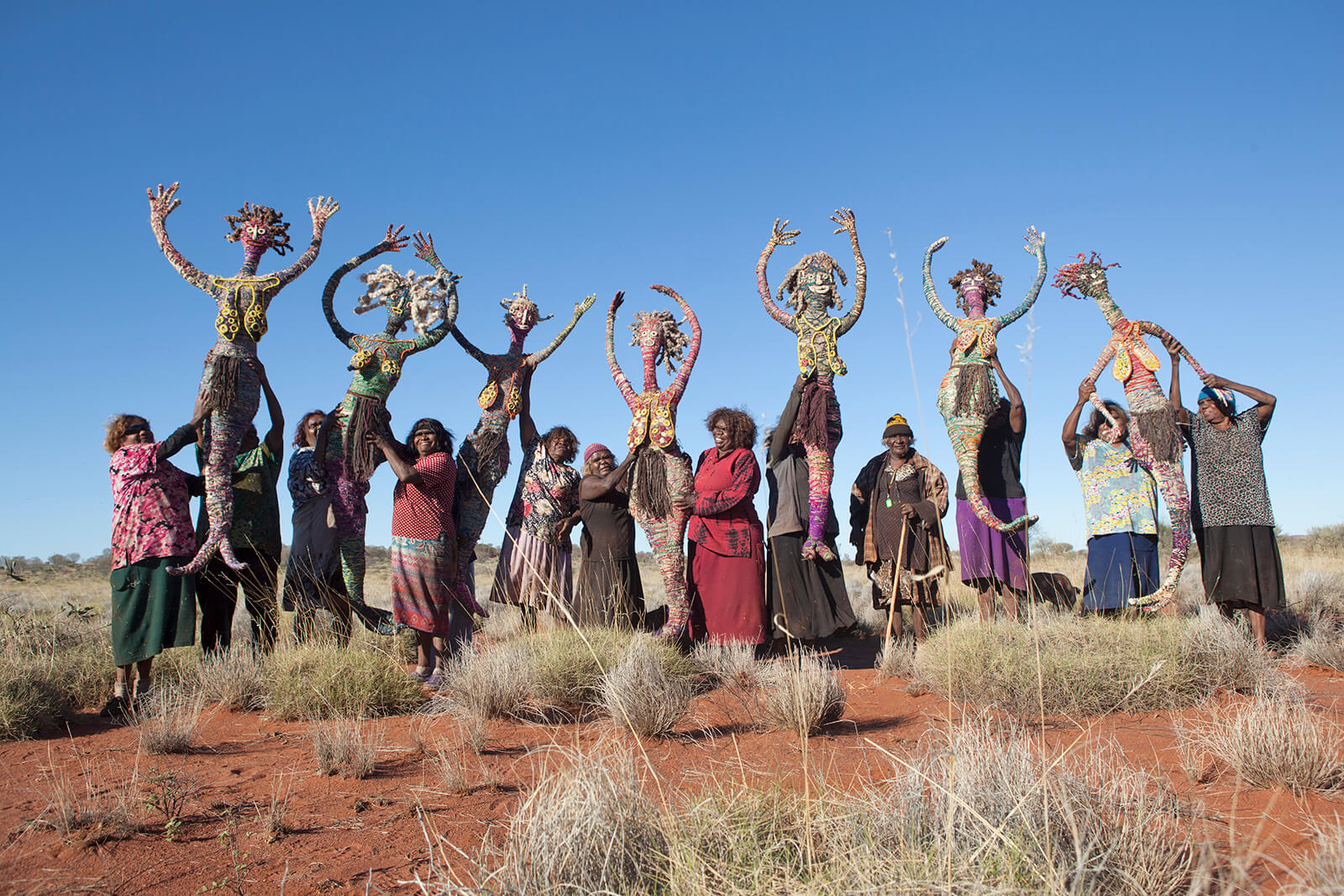
For the project, as detailed in the exhibition booklet, custodians travelled to ancestral sites to reactivate the master archive, creating works on Country instead of the art museum acquiring the objects from the Elders. The world can become known through dreaming, through song, through a way of traversing Country that is collective, that is shared across generations. When engaging with works that reflect Indigenous worldviews, one must necessarily acknowledge and dismantle the inevitable commodification of Indigenous art and its display through an extractive mentality. Instead, what the platforming of these cultural practices demands is relations of care and responsibility towards what is being steadily depleted. In its very layered understanding of indigenous traditions of the original inhabitants of Australia, the exhibition is, in fact, quite simple. It will be something you carry with you, whether consciously or in your dreams.

by Srishti Ojha Oct 21, 2026
Increasingly, artists, filmmakers and activists are turning to VR to create more personal, tangible accounts of the climate emergency and its impact on vulnerable communities.
by Mirra Lynn Oct 20, 2026
The Indian artist paints the old wadas of central Pune, capturing the traces of everyday life that cling to these structures, battered by time but unbowed.
by Anmol Ahuja Oct 15, 2026
How do heaps of souvenirs and relics with racist Aboriginal motifs and features become art? MCA Sydney’s winter showcase—the artist’s largest to date—beckons a possibility.
by Vandana Kalra Oct 14, 2026
With his latest exhibition as a point of departure, the modernist discusses his decades-long practice, the spontaneity of drawing and the social responsibility of artists.

make your fridays matter with a well-read weekend
Enter your details to sign in
Don’t have an account?
Sign upOr you can sign in with
a single account for all
STIR platforms
All your bookmarks will be available across all your devices.
Stay STIRred
Already have an account?
Sign inOr you can sign up with
Verification link sent to check your inbox or spam folder to complete sign up process
Tap on things that interests you.
Select the Conversation Category you would like to watch
Please enter your details and click submit.
Enter the 6-digit code sent at


An exhibition at the Humayun's Tomb Museum traces ingrained Songlines
by Mrinmayee Bhoot | Published on : Dec 08, 2025


 Sign in with Google
 Sign in with email
What do you think?