Art10 mins. read
Lubaina Himid’s British Pavilion on creating home against the odds
by Srishti OjhaJun 16, 2026



by Rosalyn D`MelloPublished on : May 18, 2026
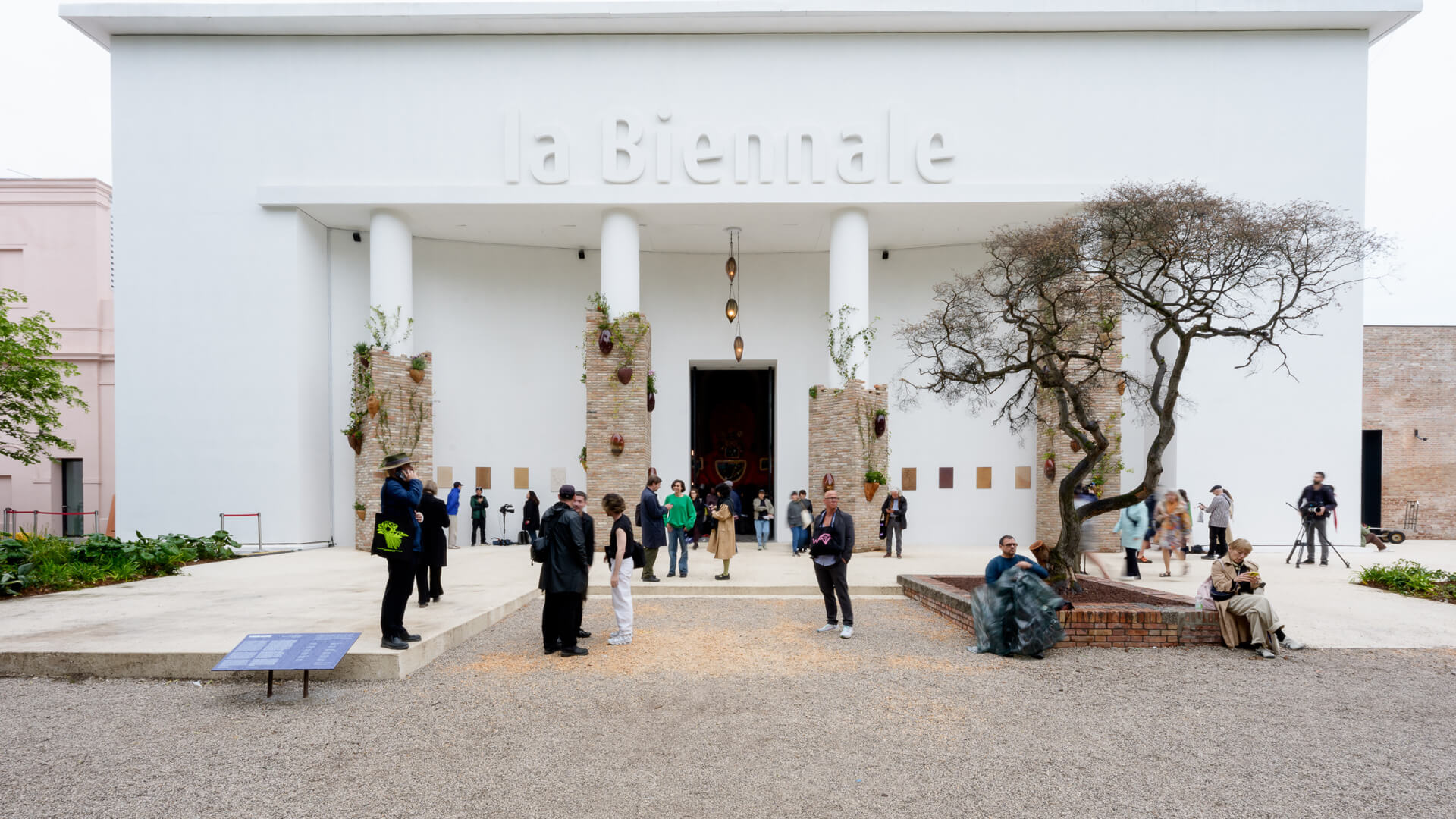
I should not have come. I’m not equipped to endure the chaos of the pre-opening—scandalously long queues everywhere, for every conceivable reason—to enter, to pee, to buy a coffee, to visit a national pavilion, to board the vaporetto. This is no place for a mother-and-child dyad. Were the child in question a mostly dormant infant content to be tethered to a carrier, the fieldwork I was audaciously here to perform wouldn’t have felt so daunting. My 13-kilo second-born, who recently taught himself to walk, is no longer content with such stillness. He is compelled to use his feet as sensory organs, making his will my occupational hazard. How do you attune your body to minor keys when your toddler vocally protests against your non-permissiveness? Why did I choose this moment to break my postpartum hiatus from art criticism?
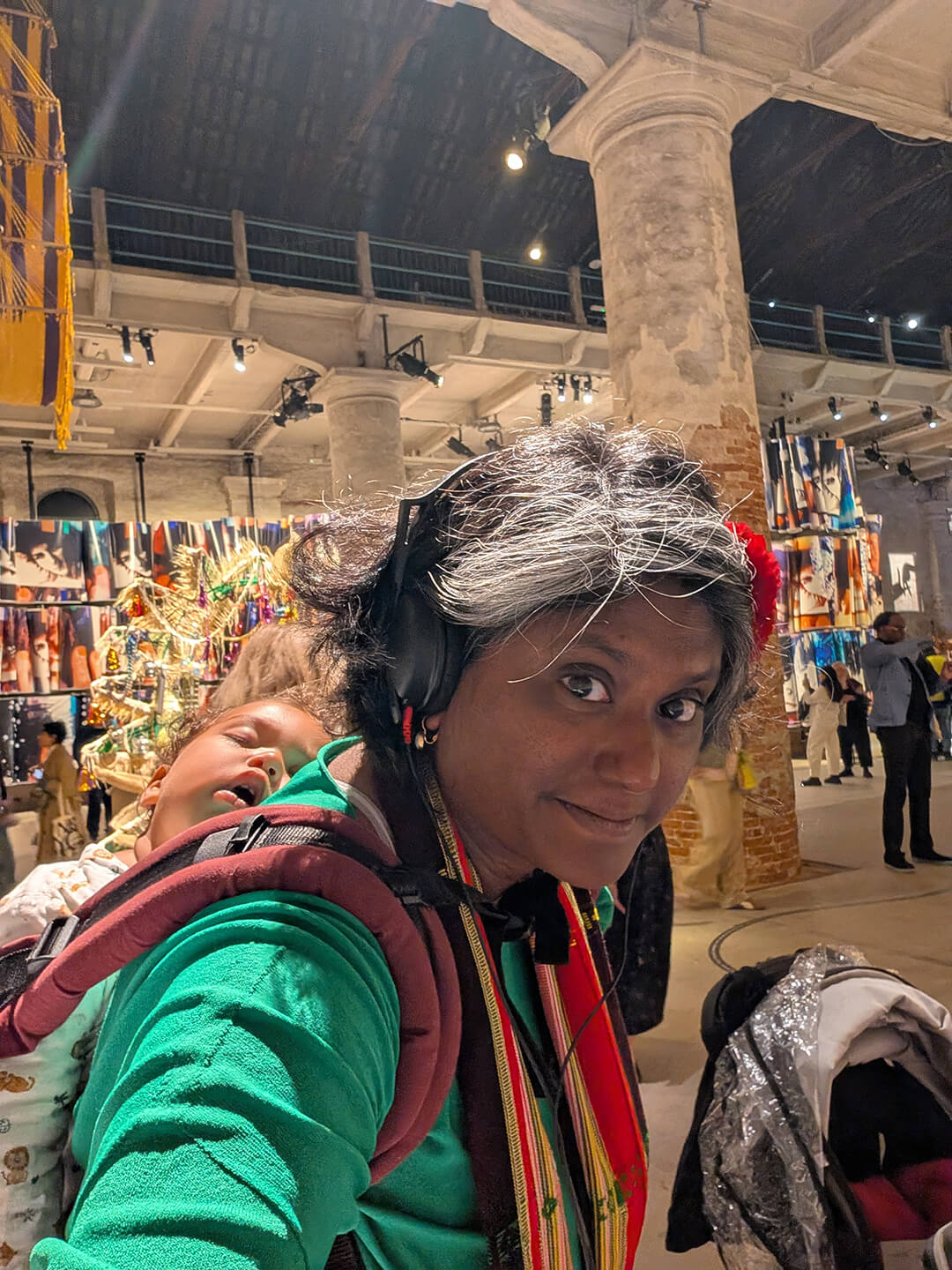
I try to brush off my rustiness. Surely the muscles remember how to navigate such expansiveness. I needed only to step into the field to gather my impressions of this forum. This is not meant to be a review. Just a record of my unprocessed first impressions. How hard could it be? I am reminded of the word forensis. In his introduction to Forensis: The Architecture of Public Truth (2014), Eyal Weizman reminds us that the divisions of the ‘field’ as the site of investigation and the ‘forum’ as the place where the results of an investigation are presented and contested are not so straightforward. The field is dynamic and elastic, a force field that shapes and is shaped by conflict. The forum is a shifting triangulation between three elements: a contested object or site, an interpreter tasked with translating ‘the language of things’ and the assembly of a public gathering. Within this definition, forensis establishes a relation between the animation of material objects and the gathering of political collectives.
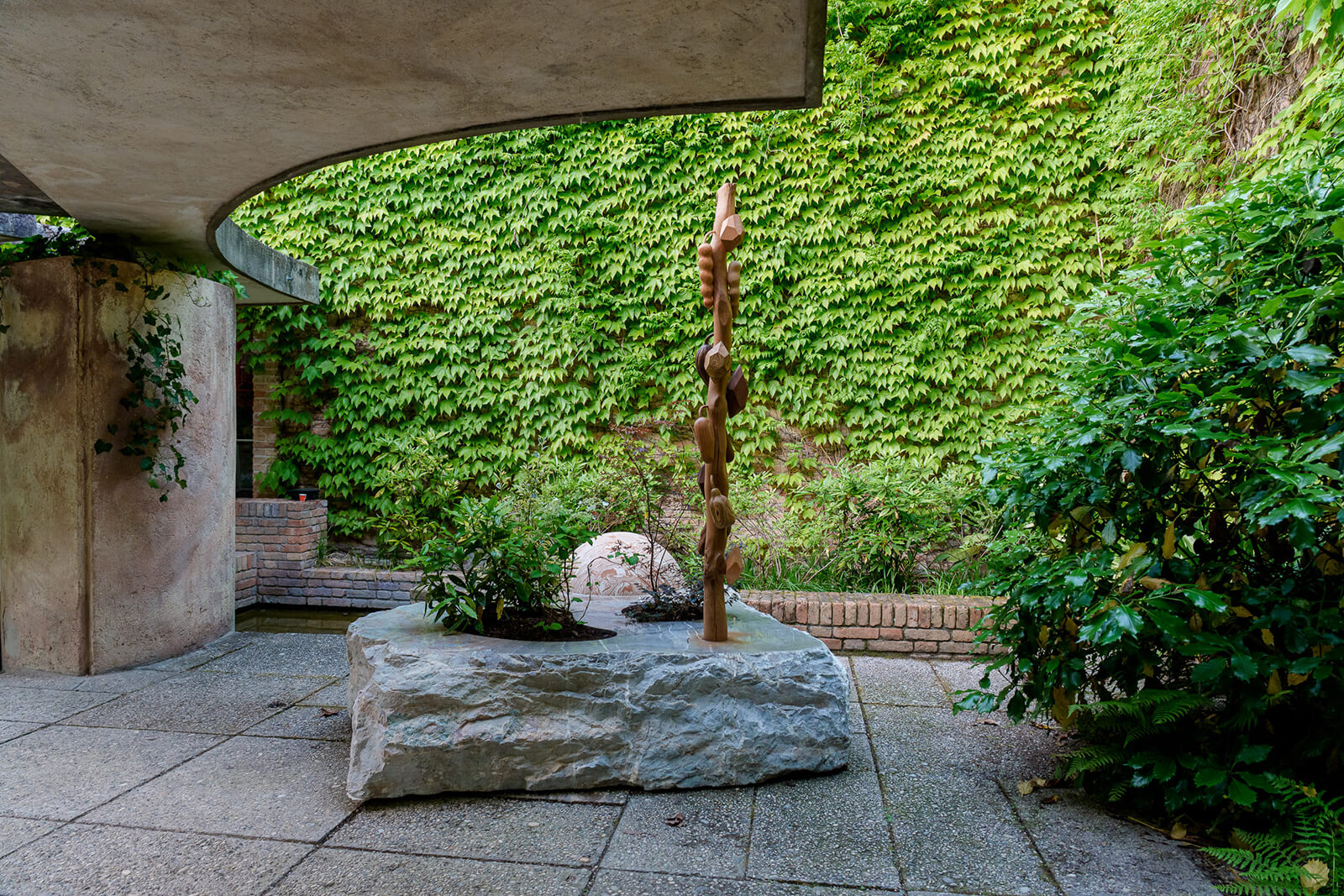
I want to heed the curatorial instruction from Koyo Kouoh, the visionary behind this 61st edition, to take a deep breath, exhale, drop my shoulders and close my eyes, but there’s every chance my toddler will walk headlong into a canal if I look away. Questions I hadn’t dared to articulate when I accepted this assignment now buoy to the surface—Is it even possible to effectively practice art criticism, postpartum? If attention is a form of prayer, a kind of presencing, an act of radical listening, how do I split my attentive faculties between tending to my toddler and also tending to the art on display? How do I immerse myself in such a lavish exhibition amid the threat of constant interruptions, amid the penetrating, potentially hostile gazes of other visitors whose experience is being unsettled by my toddler’s exuberance and belligerence? More importantly, would it be appropriate to change his soiled diaper while communing with Otobong Nkanga’s artwork within Carlo Scarpa’s sculpture garden at the Central Pavilion?
I should not have come. I could easily have scrolled through first-hand Instagram accounts for Biennale highlights from the comfort of my home office. Instead, I’m risking disapproving glances from high-network individuals in the art world, the ones who trade daily in the trendy semantics of the word ‘care’ without necessarily committing to its ethical implications.
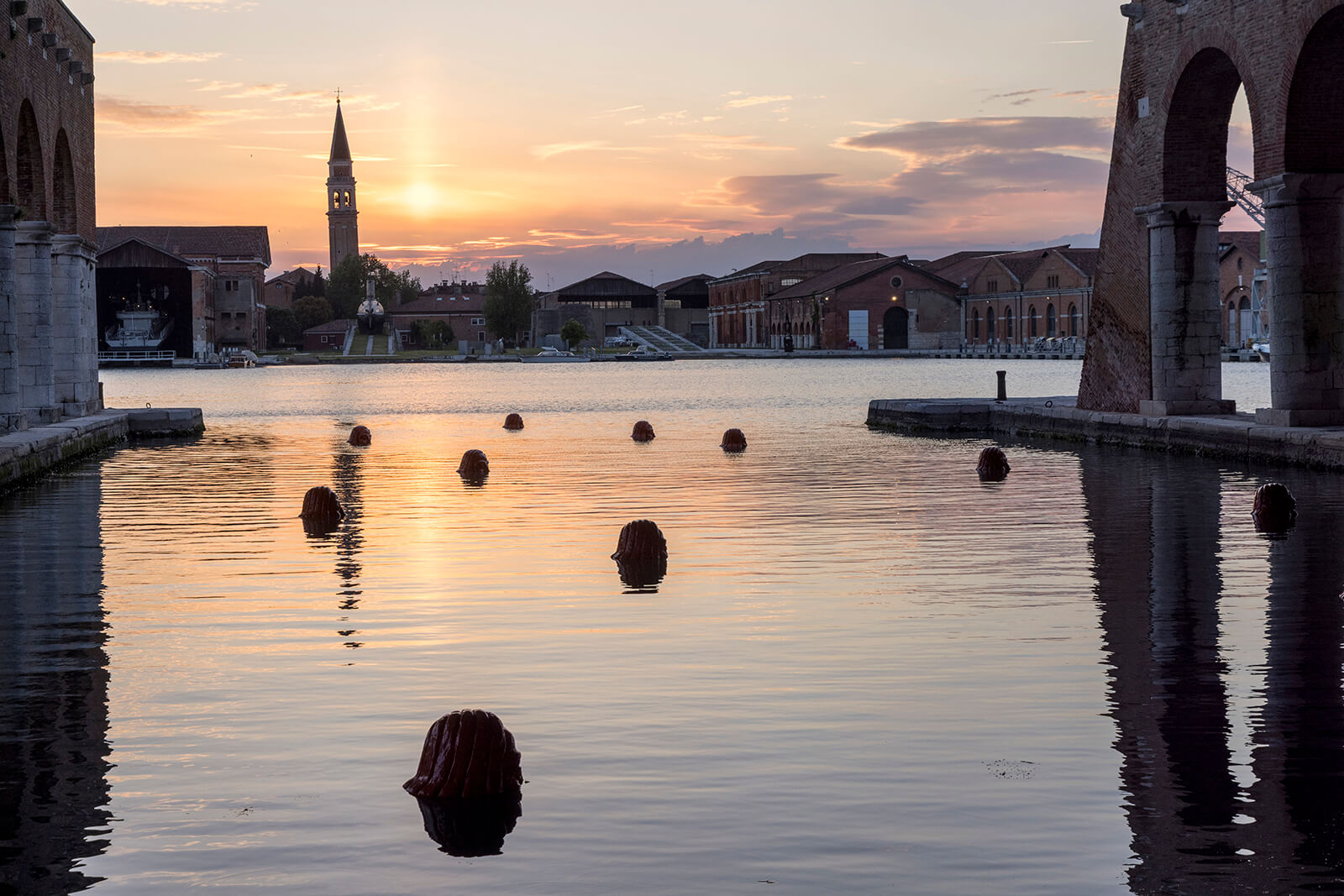
Why did I come? As far-fetched as it may sound, I believe I was summoned by the spirit of Kouoh. Is it possible to be haunted by someone you never met? I feel in my bones this strange conviction that I was meant to be here, at this precise moment in time. I was called upon to bear witness, as an art critic and as a mother. By queering both venues with my frequently stubborn cutie pie, I was, like much of the art, contributing to the exhibition’s sacralising impetus, despite the absence of institutionalised holding space. I decided to follow a set of basic instructions:
1. Keep moving, except when you need to rest
2. Do not read the wall labels
3. Feel
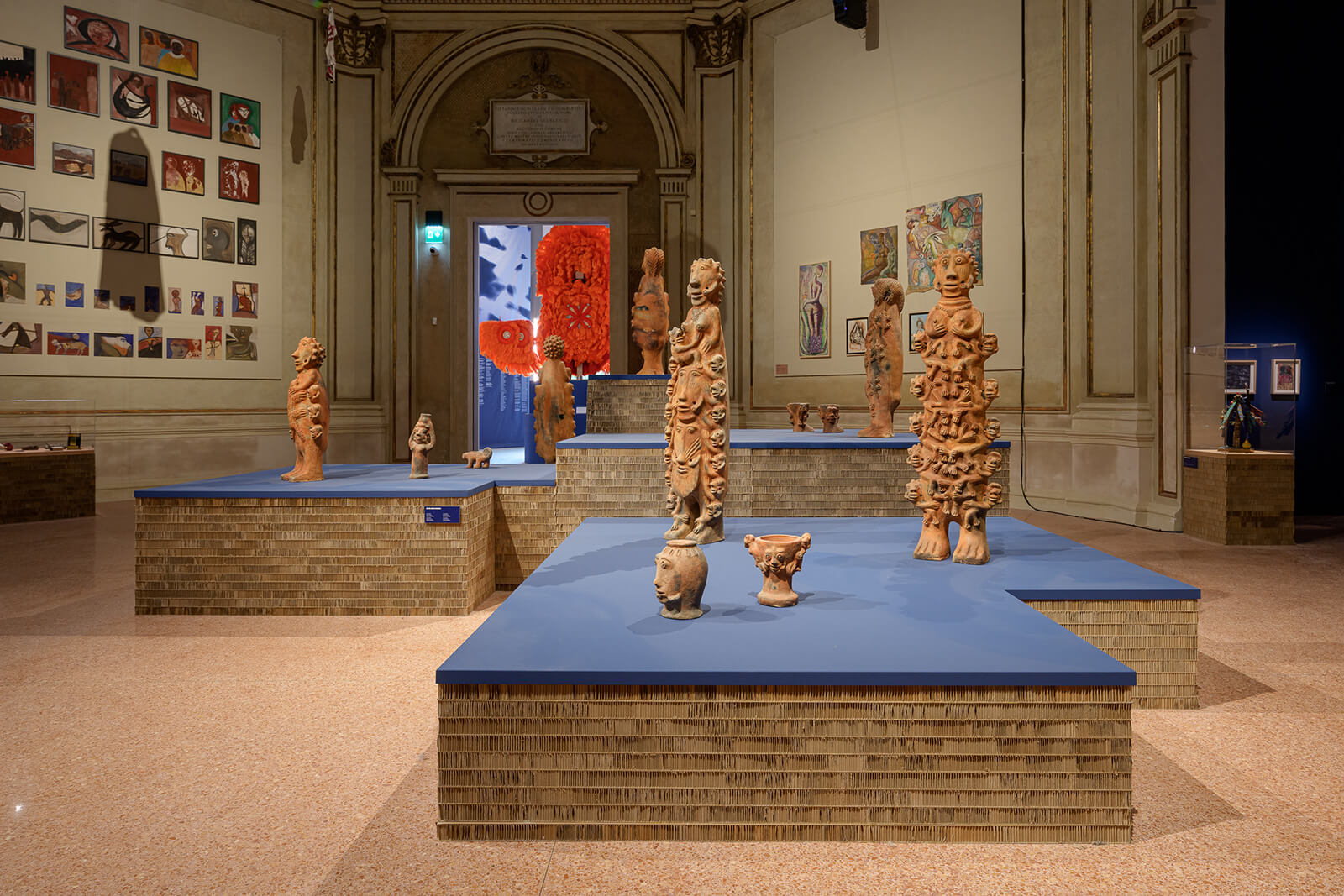
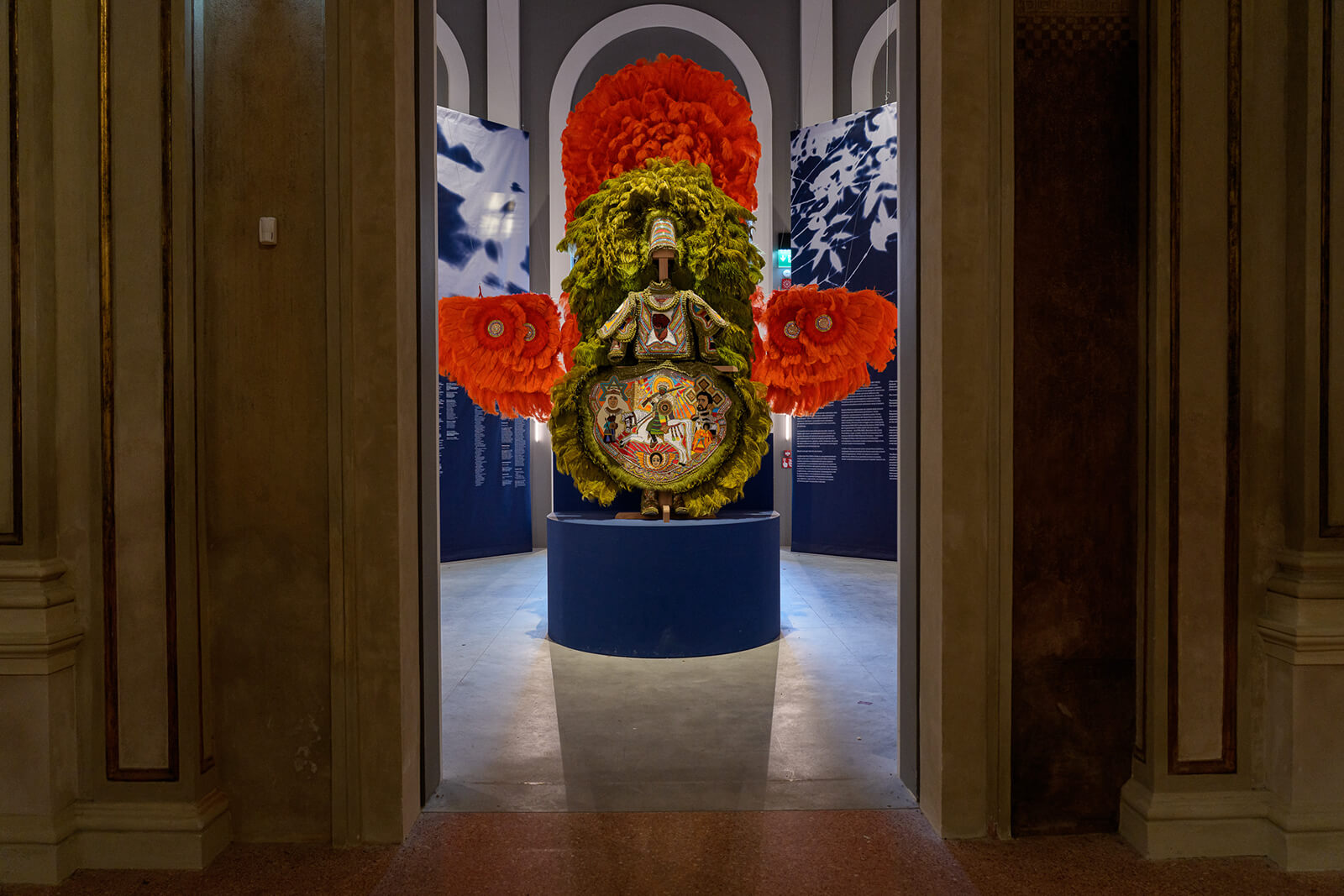
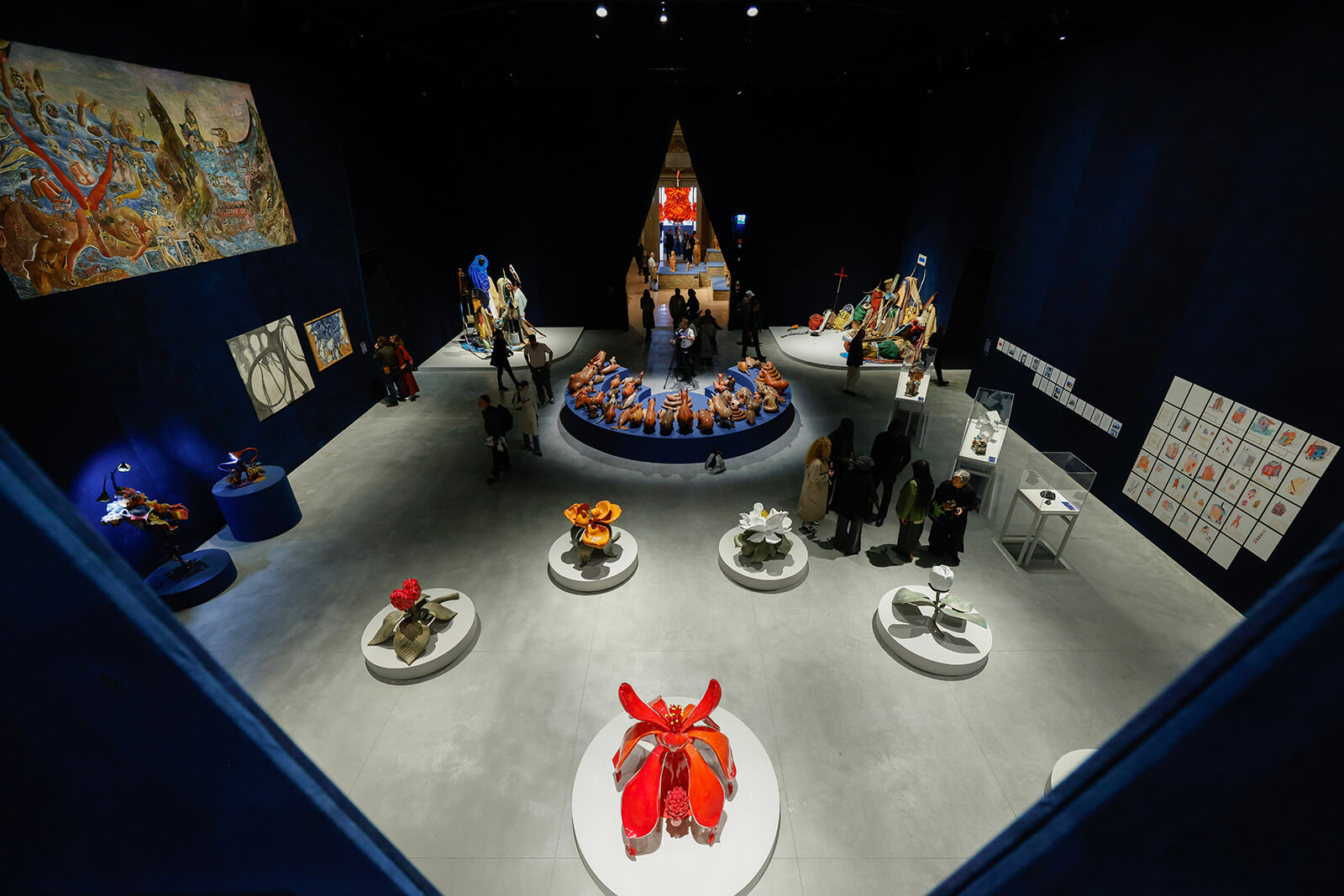
Navigating the space with a toddler drew attention to my presence, making me as public as Seyni Awa Camara’s arresting assembly of many-limbed terracotta sculptures placed in the centre of the first gallery of the Central Pavilion. The cardboard-constituted pedestals upon which they stand signal the exhibition’s eco-friendly aesthetic. These immense works hold their own, yet, placed as they are in immediate dialogue with Big Chief Demond Melancon, Beverly Buchanan, Werewere Liking, Rose Salane and Issa Samb, their mystical undertones are amplified. I discovered later that Camara learned pottery from her mother when she was six years old. She traces her lineage to a long line of potters from Basse-Casamance, Senegal. Her practice moved from the moulding of objects of utility for sale at local markets to the sculpting of bestiaries.
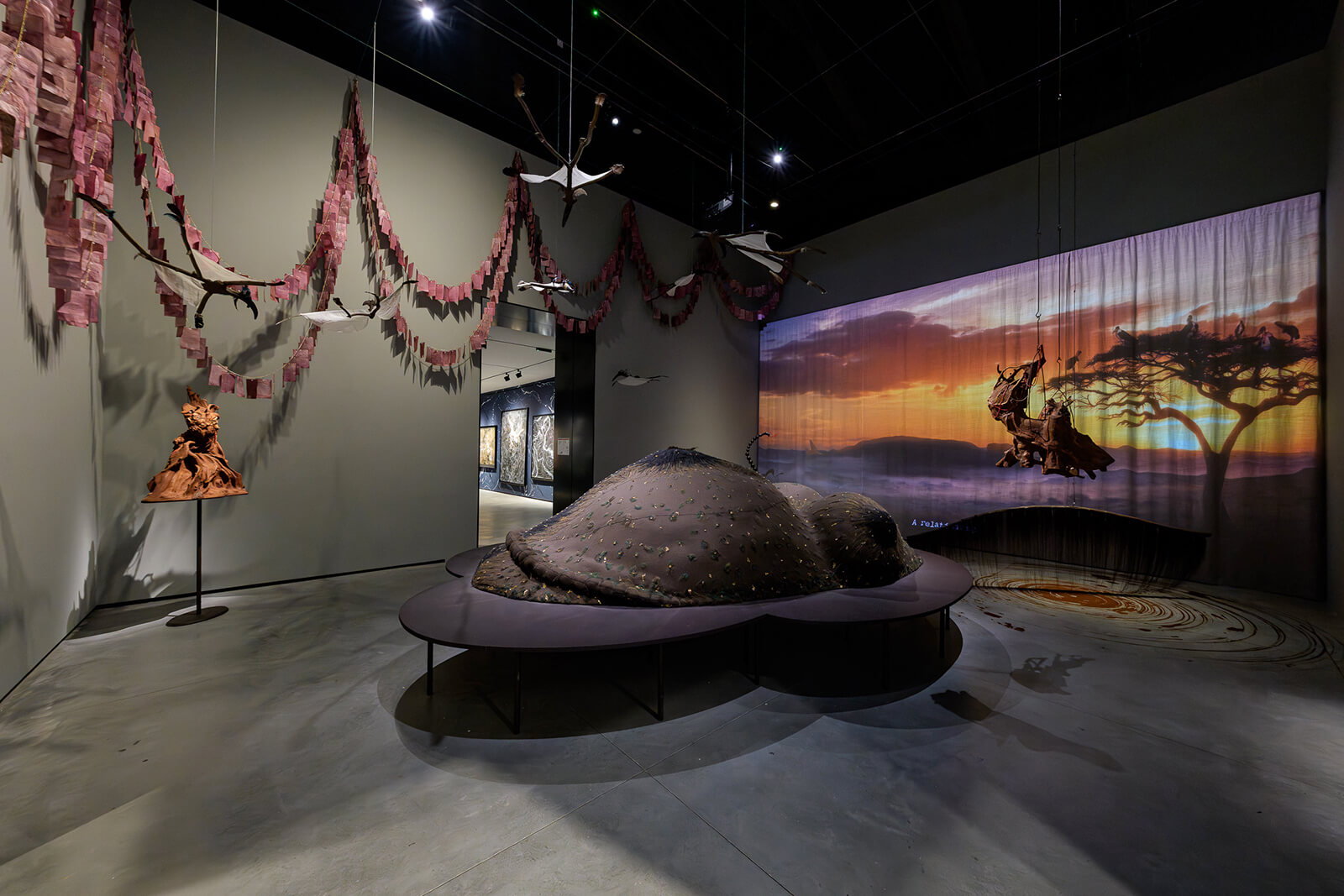
As I wrestle my toddler away from the pedestals, which he has decided to summit, I am led by him towards the chamber that holds Wangechi Mutu’s ‘cosmological installation’ In the End, Where All Began, EdEN. I sit myself on the bench-like fringes of the life-sized hummock I later read was called MothersMound—a pregnant belly with breasts topped by teats as black as my own. As I breastfeed my child—not so much to comfort him as to build for myself a potentially immersive moment—a German-speaking visitor, perhaps elated at the sight of such an act of nurture within an exhibition space, decides to play cheerleader. “Das ist das beste Kunstwerk!” (“This is the best work of art!”), she exclaims. Around this moment, the credits rolled on Mutu’s video narrative Mumbi,centred on Kirinyaga, the Kikuyu name for Mount Kenya, where the first humans were created, according to mythology. I spotted the dedication: ‘To my late Mother, And to anyone who has mothered, and to Koyo, the phenomenal mind and mother of In Minor Keys’.
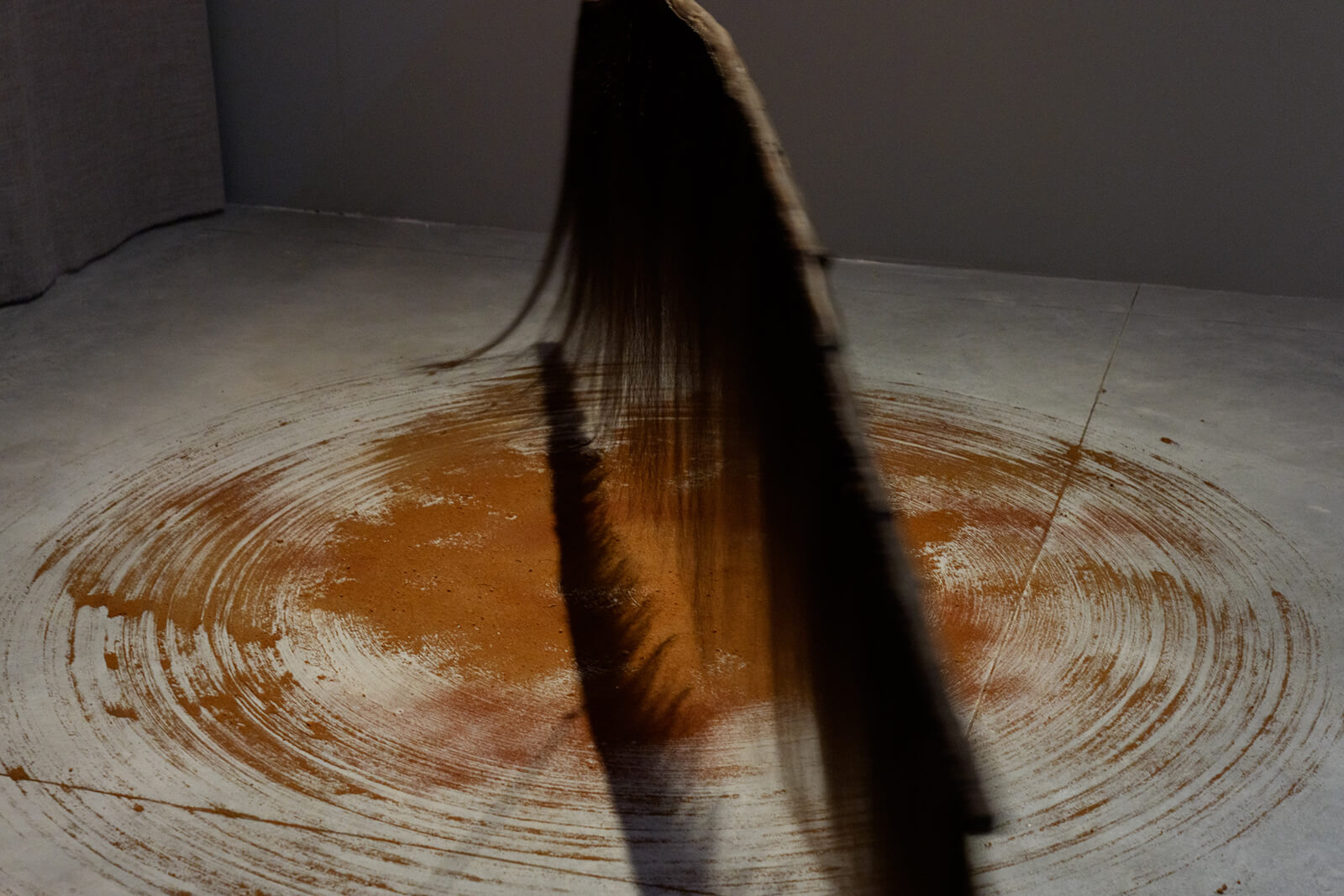
As I type out this piece, my cell phone nestled between my thumb and the other fingers of my right hand, navigating the contours of uphill and downhill in Tramin/Termeno, my marital hometown in South Tyrol, an Alpine region bordering Austria, north of Veneto, pushing the stroller with my left hand, I wonder if this marginalia is what I had been summoned to queer. Mutu doesn’t refer to Kouoh as the curator or the engineer of this 61st edition; she calls her its mother, with the word appearing thrice in the three-line dedication. This evocation feels significant within the aura of this maternal chamber, where the kinetic sculpture Sweeper, a suspended broom made of tree branches and human hair, continually makes, unmakes and remakes concentric circles by moving red earth and coffee grinds.
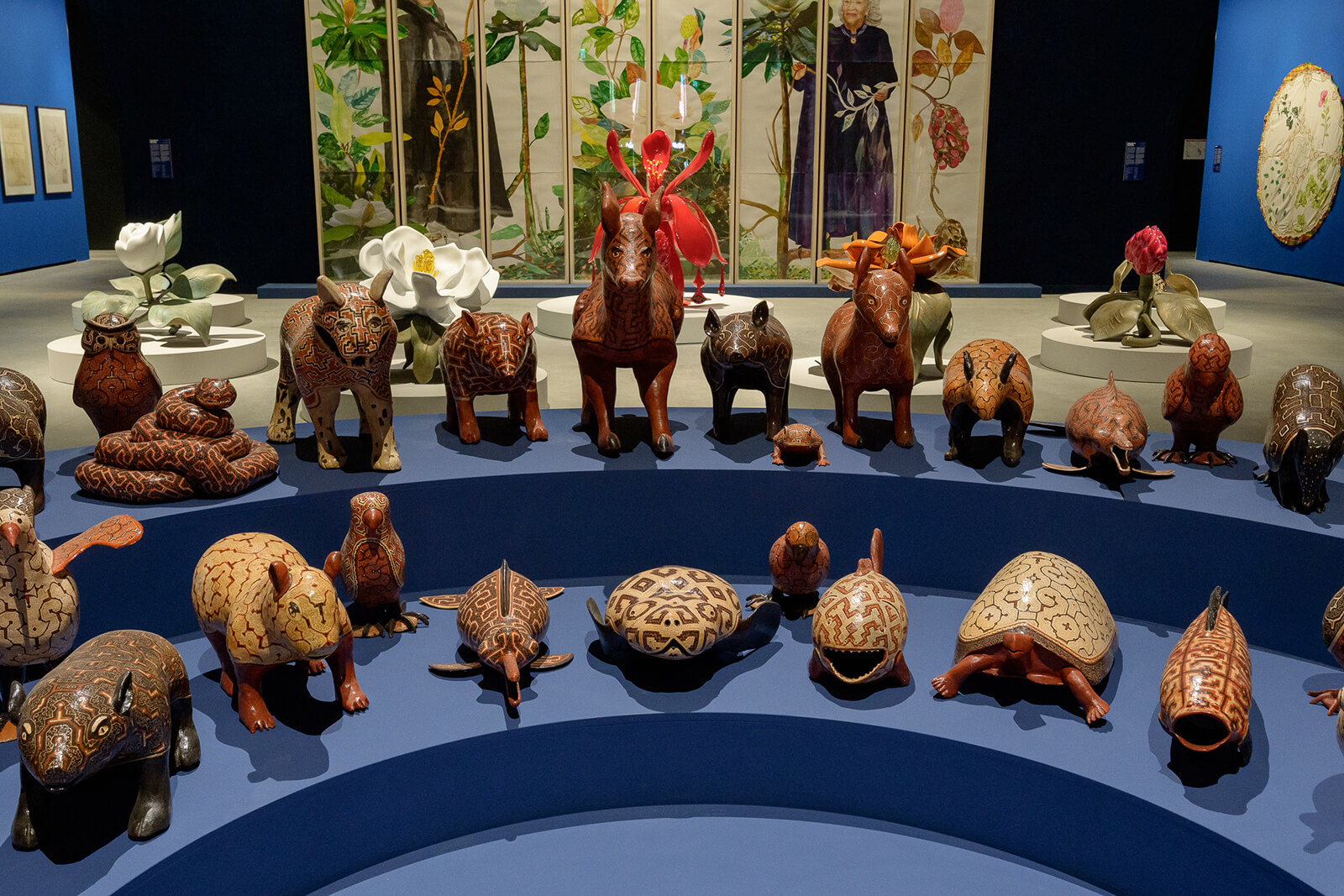
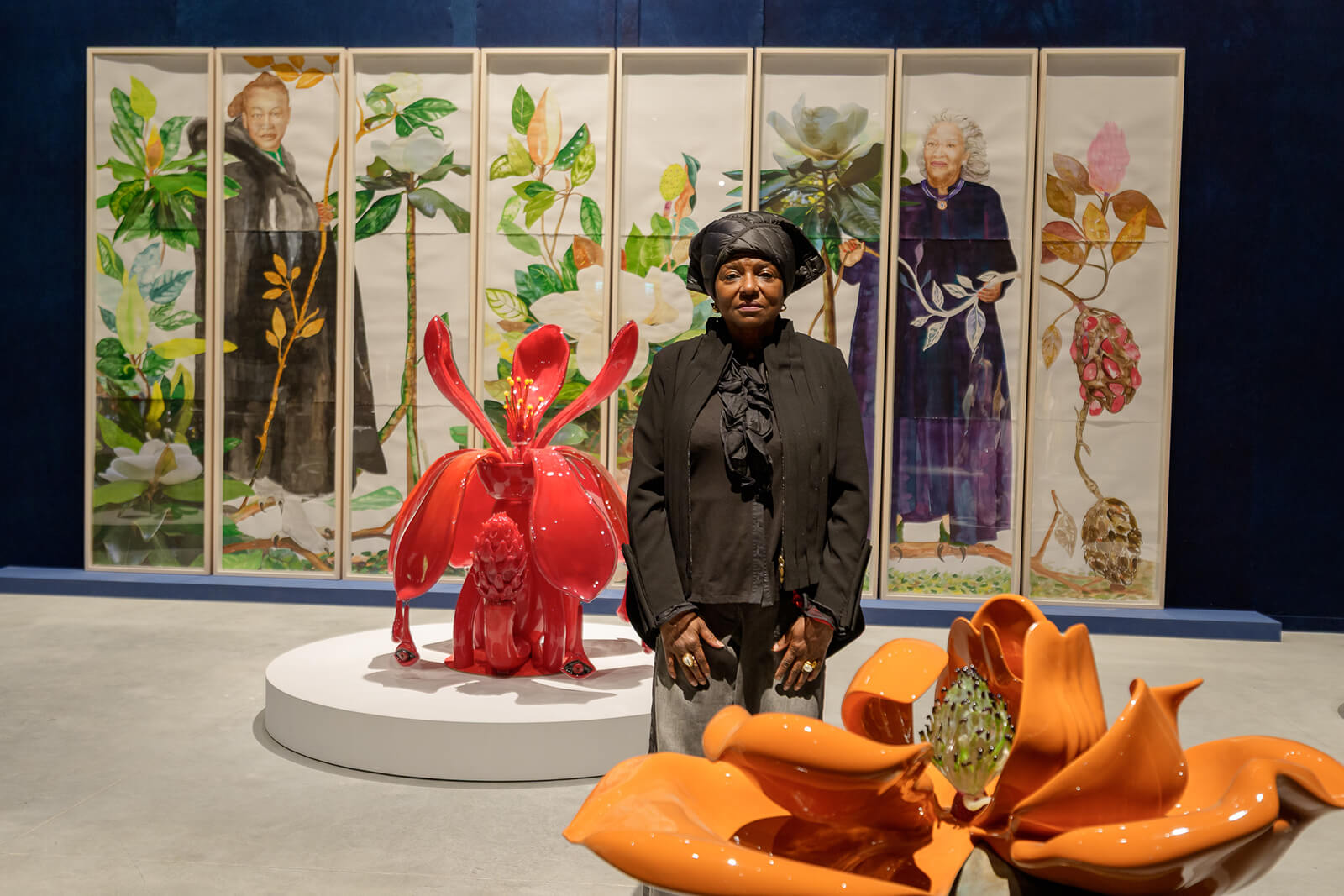
Over the span of my two-day visit, I found no dearth of pregnant beings, mermaid-like creatures, zoomorphic forms and hairy sculptures communing with instances of vegetal consciousness, embroidered prayers and elegiac acts of mourning. Having liberated myself from the task of viewing the exhibition ‘professionally’, which usually involves making copious notes and pictures and rigorously reading wall labels, I found it exhilarating to embrace a purely affective approach premised on intuitive feeling. It was my way of letting my shoulders drop, of exhaling, allowing the works to reach me, move me, relate to me. My ecstasy reached a kind of crescendo when I found myself in the vicinity of Celia Vásquez Yui’s The Council of the Mother Spirits of the Animals (2020 – 23)—a glazed symphony of zoomorphic forms made with coil-built pre-fire slip-painted clay and vegetal resins, followed by Maria Magdalena Campos-Pons’ remarkable suite of resin-PLA filament-based flower works that elevate the scale of the minor into the realm of the symphonic. My toddler was asleep in the carrier on my back. I was imitating the work mode of tea leaf pickers who labour with their children in tow. By the time I got to Uriel Orlow’s offerings, I was already primed to hear the tonal frequencies within the range of the minor keys.
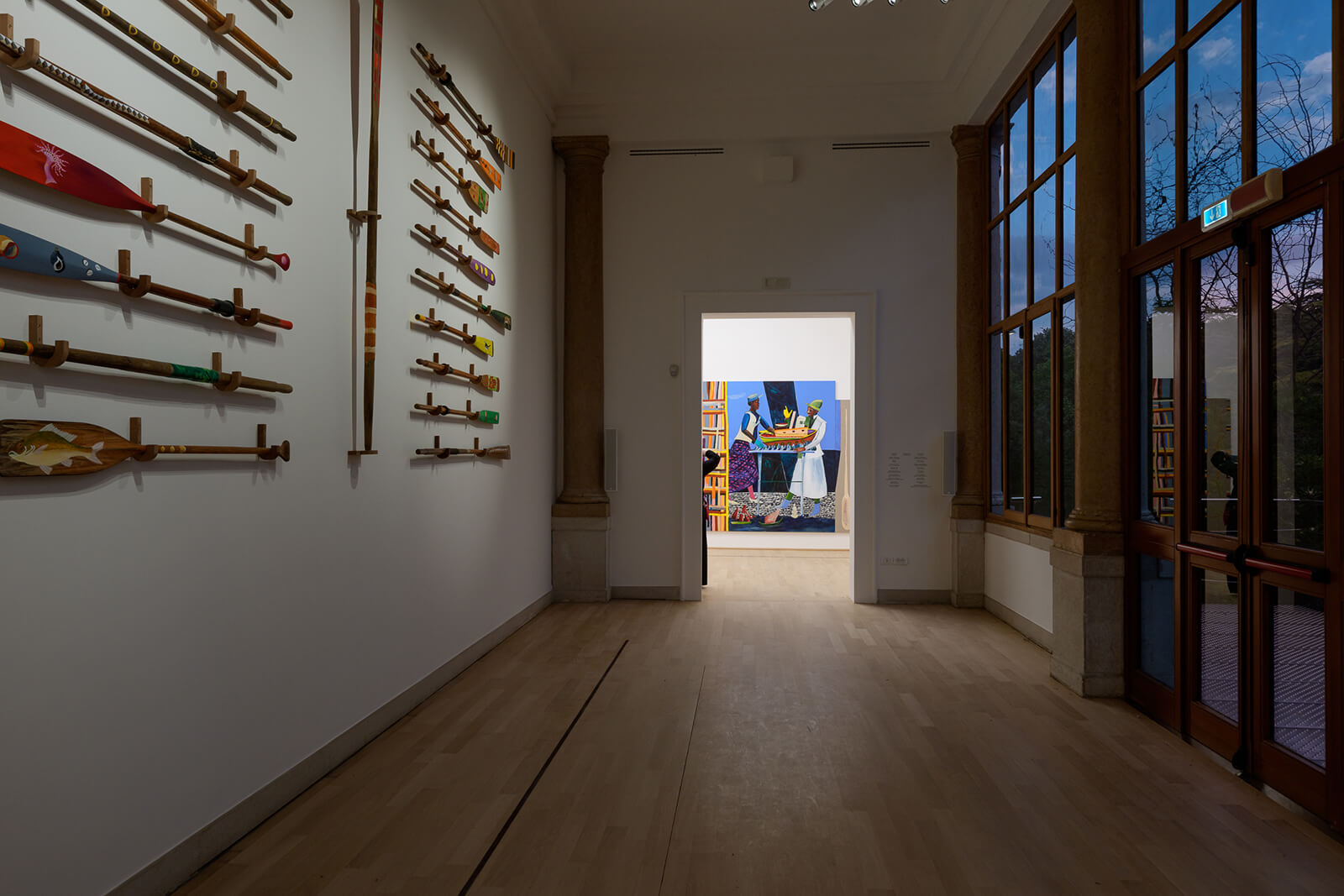
The rage I felt initially about having to marry the domestic conditions of my maternal subjectivity within the public realm of the ‘field’ began to dissipate. The disquieting anger towards the dichotomy of my sudden visibility because of my noisy, restless toddler against the continuing erasure of my subjectivity from public discourse, courtesy the racist-capitalist-hetero-patriarchal nature of our present, began to dissolve. For the first time, I had found myself in a large-scale exhibition that not only reflected the lusciousness of my maternal experience but also held it in reverence, in awe, in ceremony. I felt ‘seen’ to the extent of feeling exposed. I happened to be in front of the British Pavilion when Lubaina Himid chose to read what she had written for the catalogue accompanying her presentation there. How did she know? How had she accessed the inner regions of my mind?
We who come from somewhere else deal every day with questions of belonging.
…
We spend our lives building homes in the new place, which, when we were young, we thought we might build in the old place.
In private, we surround ourselves with real and invented memories, artefacts, recipes and music, which reassures us that we belong in the new place and reminds us that, despite this, the old place can never be erased entirely.
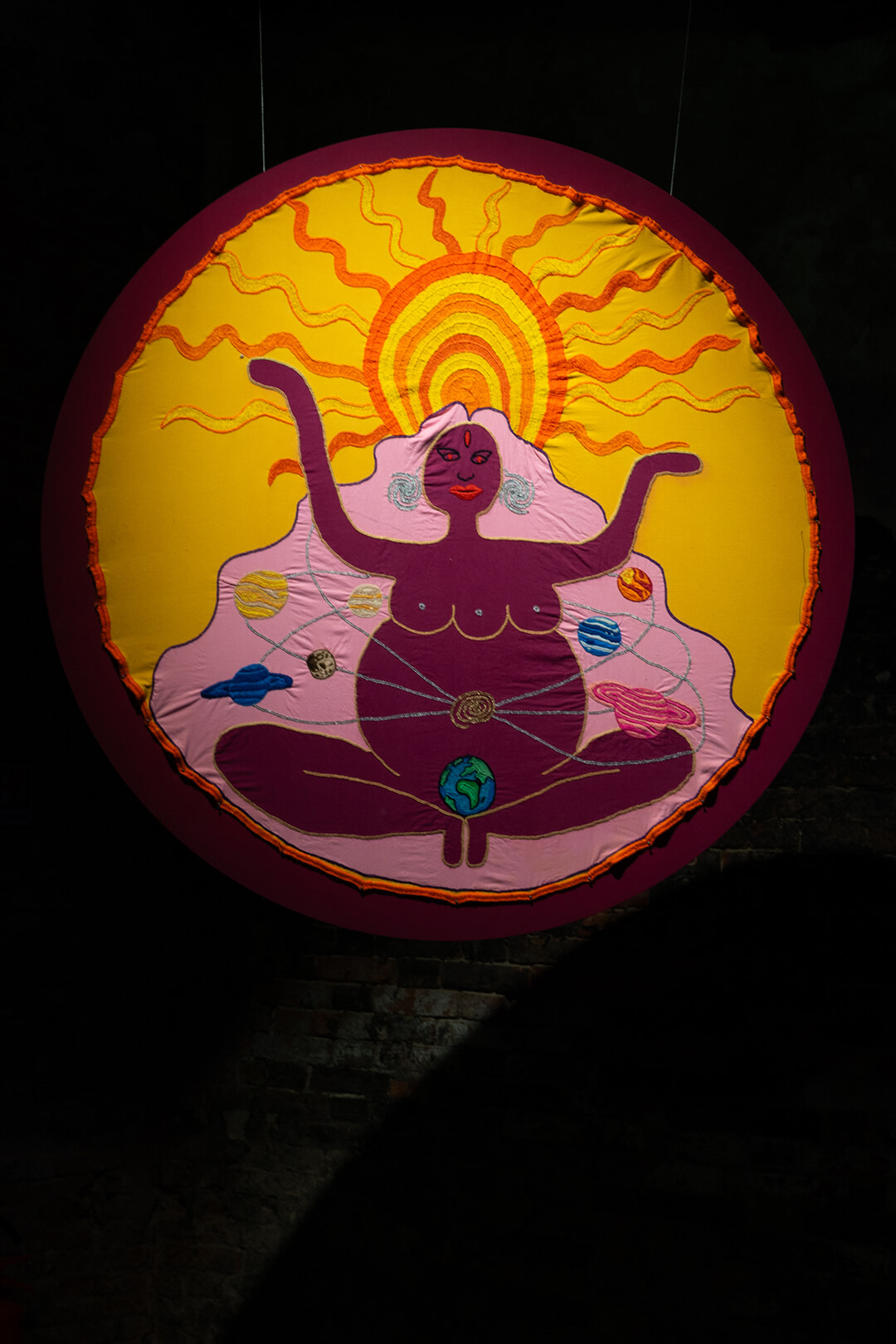
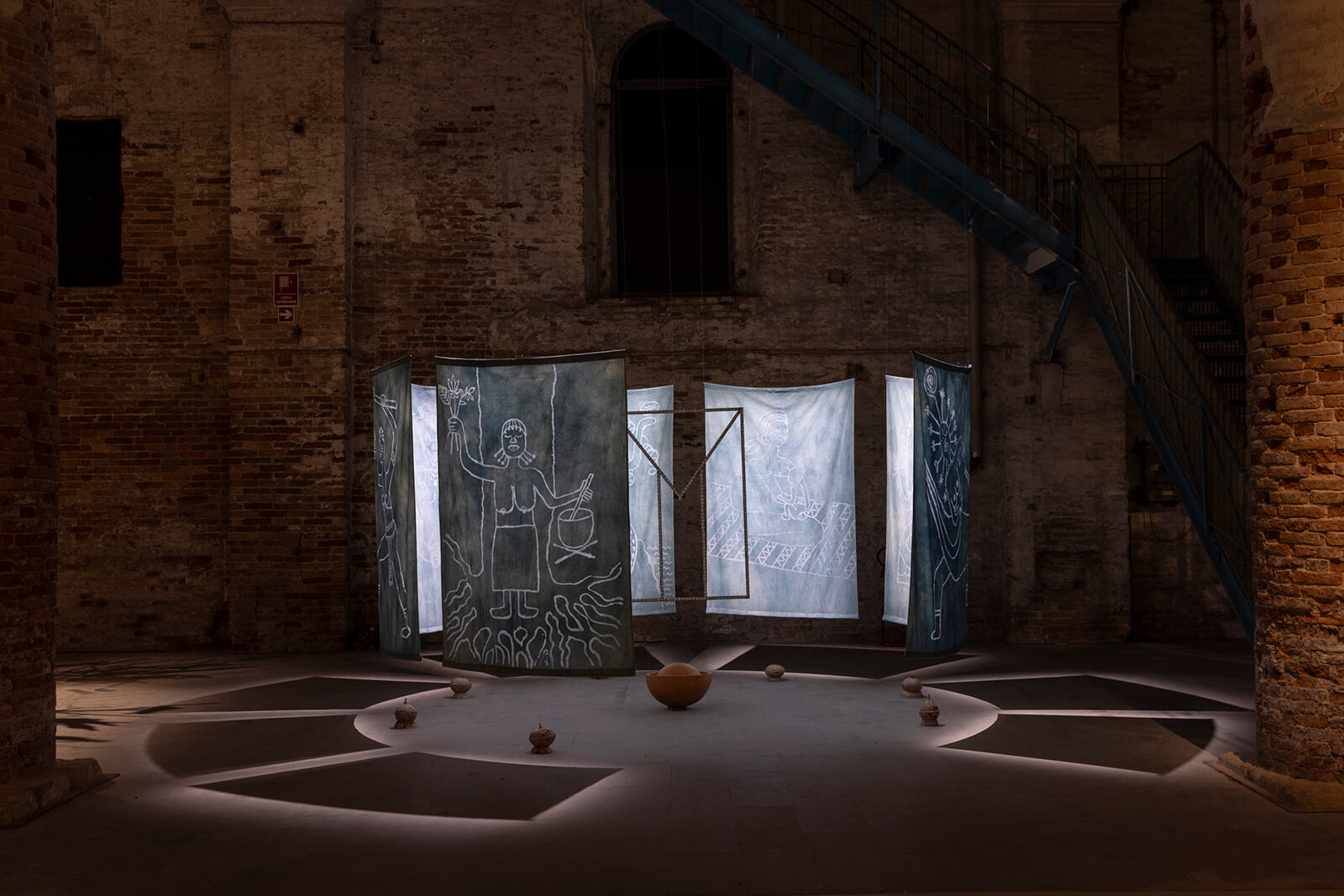
To truly inhabit the realm of motherhood is to be in the trenches; to contend daily with emotions as messy, sweaty beasts and to fully embrace radicality—because even when you don’t actively let it, motherhood radicalises you, because it is inherently radical and queer. Within racist-patriarchal-capitalist systems, or the military industrial complex, it is also marginalising, because the system seems intent on challenging your right to survival and your children’s right to thrive. For that reason, among so many others, it is necessary to locate oneself within the margins, in that profound edge where, as bell hooks reminds us, radical openness lives. It is not a safe place. One is always at risk. “To be in the margin is to be part of the whole but outside the main body,” hooks says. I suspect Kouoh arrived at this revelation the same way as hooks, through her unique version of a maternal trajectory coupled with embodied activism centred on care-giving practices; for one can debate endlessly whether the exhibition is ‘authentic’ to her vision or not. The fact remains that among the things she mothered is an orientation towards conscientious truth-telling and slow listening within the discursive site of the exhibition, birthing sites of alterity for those whose artistic lives draw their grace from the spiritual power of speculation, prayer, ceremony and community.
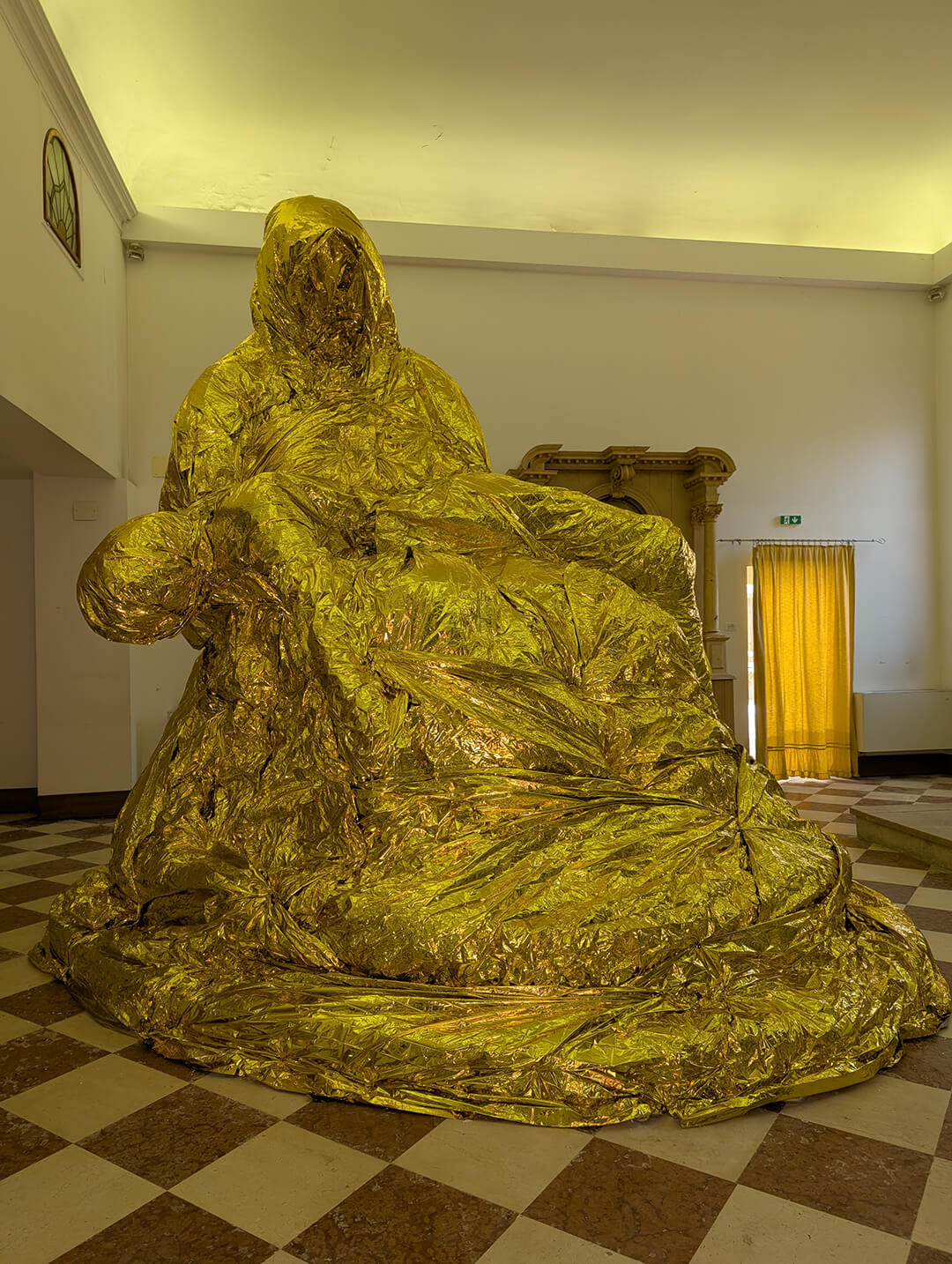
Utterly exhausted yet triumphant at how much ground I was able to cover despite my limitations, on the vaporetto ride home, I spotted a fellow mother of colour with her baby strapped to her. It was nearing 6 pm. We were both heading to our rooms in Mestre in time for our kids’ bedtime rituals. We slipped effortlessly into conversation. When she—an academic and scholar—asked what I thought about the exhibition, I didn’t hold back, like the many people I met who were still forming an opinion. “I loved it,” I said unabashedly.
I’m glad I came.
The 61st International Art Exhibition of La Biennale di Venezia, 'In Minor Keys’, curated by Koyo Kouoh, runs from May 09 – November 22, 2026, at the Giardini and the Arsenale venues, as well as various other locations around Venice. To read STIR’s exclusive coverage, conversations and highlights from the biennale, click here.
The views and opinions expressed here are those of the author(s) and do not necessarily reflect the official position of STIR or its editors.

by Srishti Ojha Oct 27, 2026
The 13th edition of the Gyeonggi Ceramics Biennale in South Korea, Earth Makes, explores ceramics from around the world, spanning ancient traditions and contemporary experimentation.
by Srishti Ojha Oct 26, 2026
The Taiwan-based artist shares his opinion on exhibition rituals, protests and his search for ‘fragmented beauty’.
by Srishti Ojha Oct 21, 2026
Increasingly, artists, filmmakers and activists are turning to VR to create more personal, tangible accounts of the climate emergency and its impact on vulnerable communities.
by Mirra Lynn Oct 20, 2026
The Indian artist paints the old wadas of central Pune, capturing the traces of everyday life that cling to these structures, battered by time but unbowed.

make your fridays matter with a well-read weekend
Enter your details to sign in
Don’t have an account?
Sign upOr you can sign in with
a single account for all
STIR platforms
All your bookmarks will be available across all your devices.
Stay STIRred
Already have an account?
Sign inOr you can sign up with
Verification link sent to check your inbox or spam folder to complete sign up process
Tap on things that interests you.
Select the Conversation Category you would like to watch
Please enter your details and click submit.
Enter the 6-digit code sent at


The 61st Venice Biennale as a sensuous joyride and a triumphant odyssey
by Rosalyn D`Mello | Published on : May 18, 2026


 Sign in with Google
 Sign in with email
What do you think?