Design09 mins. read
On the money: Assessing the cultural value of currency with the Euro redesign
by Mrinmayee BhootOct 01, 2026




by Aarthi MohanPublished on : Jan 13, 2026
Before children built dream houses out of plastic bricks or filmed intricate stop-motion cities on their phones, they learned to imagine worlds through far quieter mediums. In the late 19th century, construction toys were closer to architectural studies than to the bright, collectible kits familiar today. Blocks were pressed from stone mixtures or carved from wood, and play followed a thoughtful rhythm: build, observe, adjust and begin again. By the early 20th century, shelves across Europe and the United States held an astonishing variety of kits, each shaped by the architectural ideas of its time. A box from the 1880s might echo Wilhelminian ornamentation. A kit from the 1930s might follow interwar modernism. A set from the GDR in the 1950s carried political ideals that faded within a few years. And although everyone today recognises Lego as the universal symbol of building play, the decades before its rise were filled with hundreds of other systems, many now forgotten, that reflected the architectural imagination of their era.
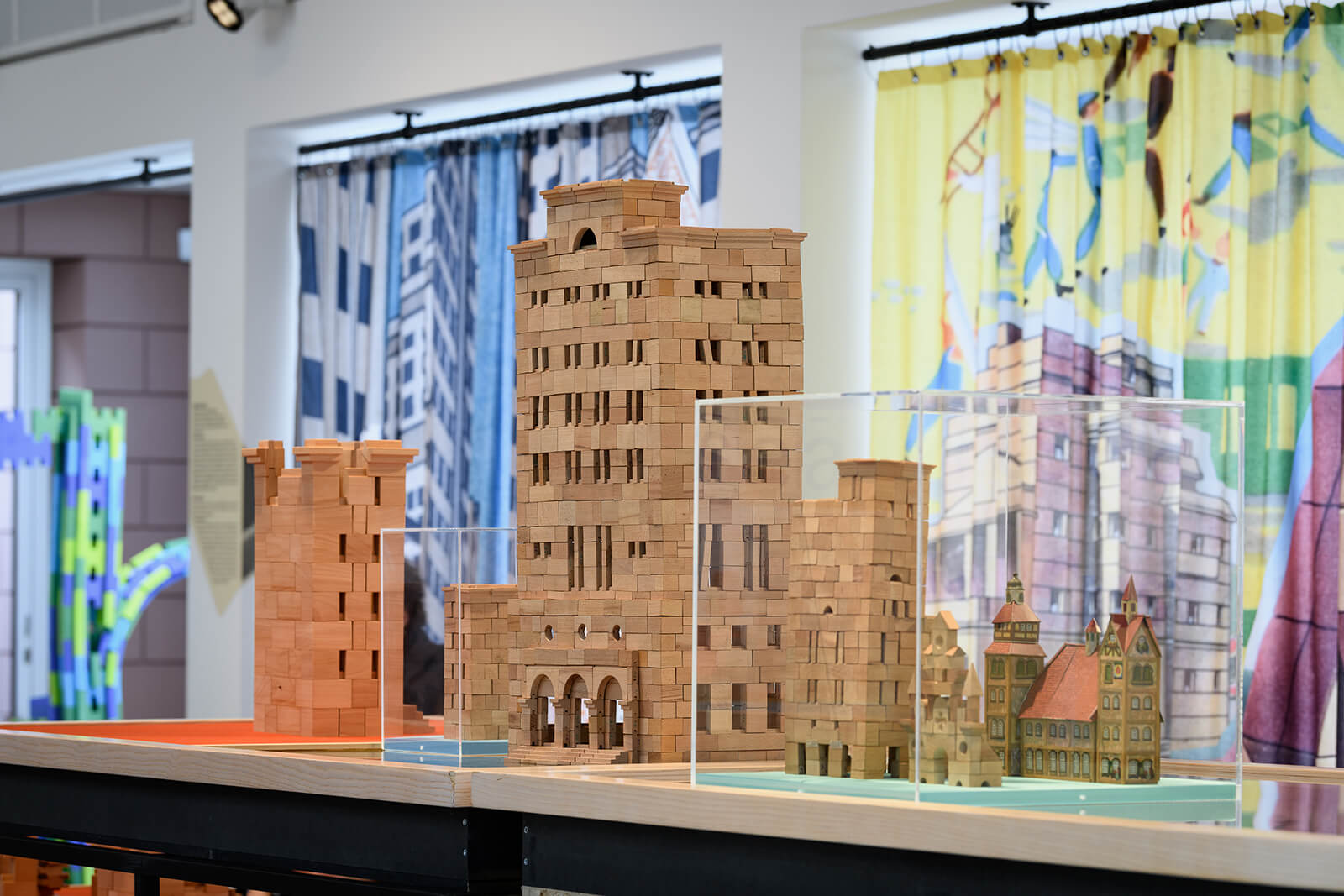
This rich and expressive lineage forms the backdrop for Architectural Construction Kits 1890 – 1990: Plenty to play with!, the new exhibition at Deutsches Architekturmuseum in Frankfurt, Germany. The showcase draws from the extensive private collection of graphic designer Claus Krieger, who has spent decades tracking, preserving and studying construction kits that would otherwise remain scattered across attics and flea markets. His dedication gives the exhibition a breadth that is rarely possible, offering a view of building toys not as childhood curiosities but as cultural artefacts that reveal how architecture has been interpreted, simplified and absorbed over a century.
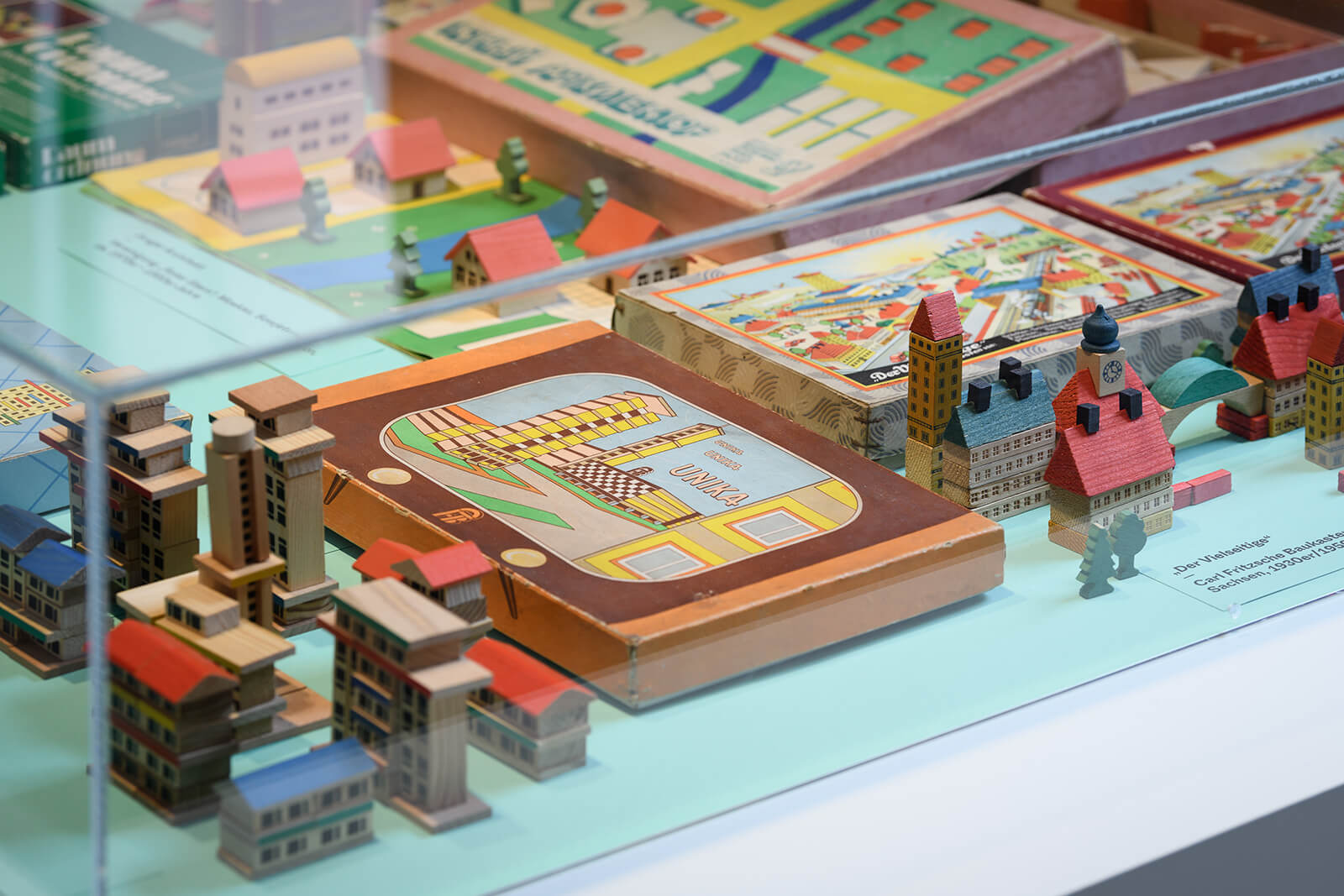
Curator Oliver Elser brings both rigour and warmth to the project. He has long explored how museums can make architectural thinking accessible to people without professional training, and this exhibition fits naturally into that work. It is lively, generous in spirit and genuinely curious about the space between expert knowledge and everyday creativity. As Elser explains to STIR, “The exhibition offers a hands-on experience: discover for yourself how diverse the world has been before the Lego brick became popular.”
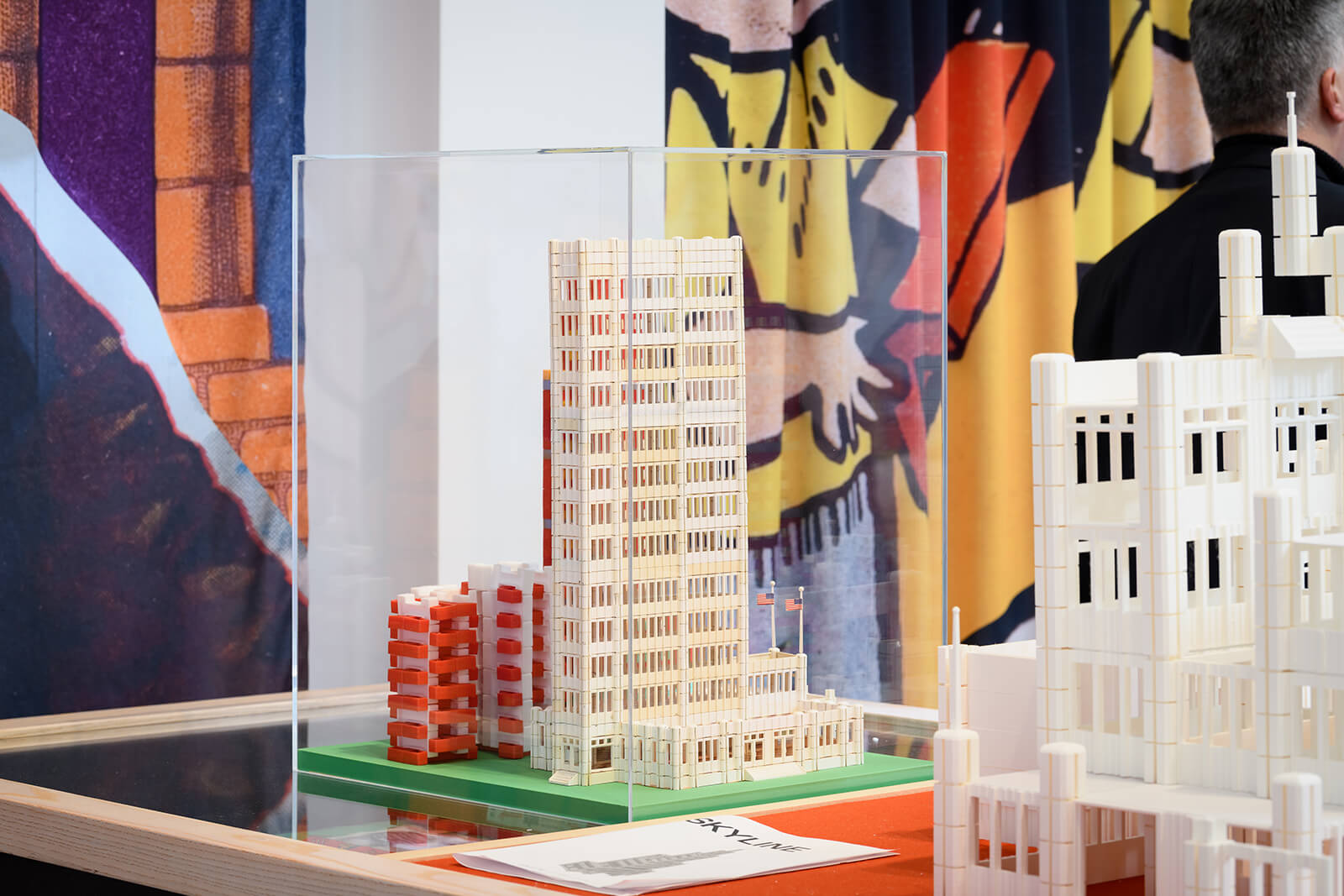
That diversity greets visitors immediately. Rather than containing every kit behind glass, the museum enlarged several systems so people can actually build with them. Professor Andreas Kretzer and his students at the Stuttgart University of Applied Sciences (HFT), Germany, recreated elements from the Ingenius, Bâtiss and Skyline sets at a larger scale, helping visitors feel the logic of early 20th century construction through touch and movement. Enlarged components from Minibrix, Tetek, Dusyma and the GDR’s Little Large Block Builder reveal the mechanical principles behind each system. One of the most engaging stations is the expanded American Skyline kit, originally produced by Elgo Plastics in the 1950s and 1960s. Skyline allowed children to build skyscrapers inspired by the steel frame towers of the United States from the 1920s to the 1940s. Unlike the heavy, solid elements common in European kits, Skyline used a skeletal system that made assembly faster and more efficient. The enlarged version, created in collaboration with Kretzer’s team, captures that mid-century confidence and clarity.
The architecture exhibition also extends into the digital world. Visitors can explore the American Skyline VR environment created by students of Professor Philipp Reinfeld at HFT Stuttgart. With VR glasses, guests step into a virtual city built entirely from Skyline components, moving between physical play and digital interpretation in a way that bridges the past and present of architectural modelling.
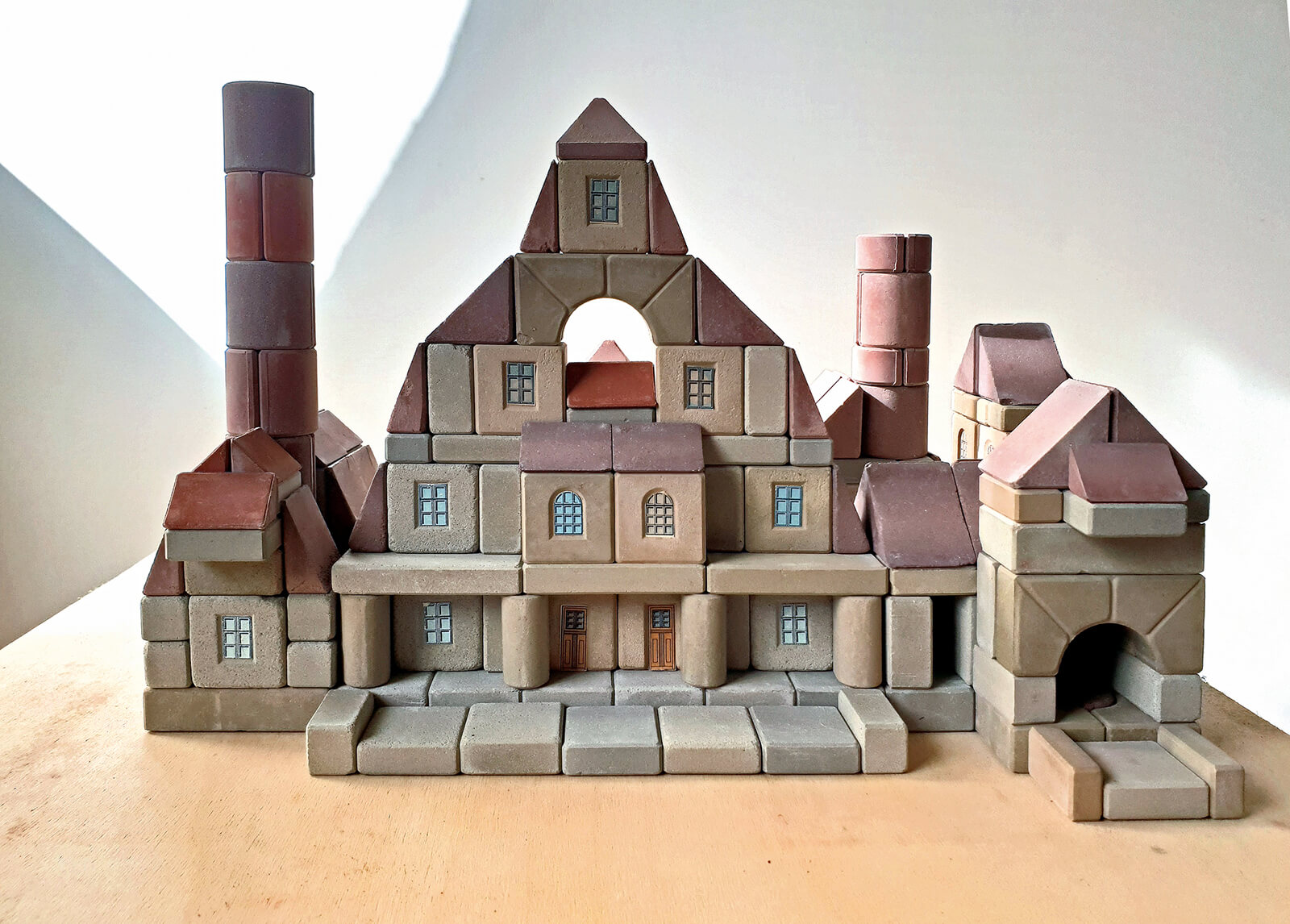
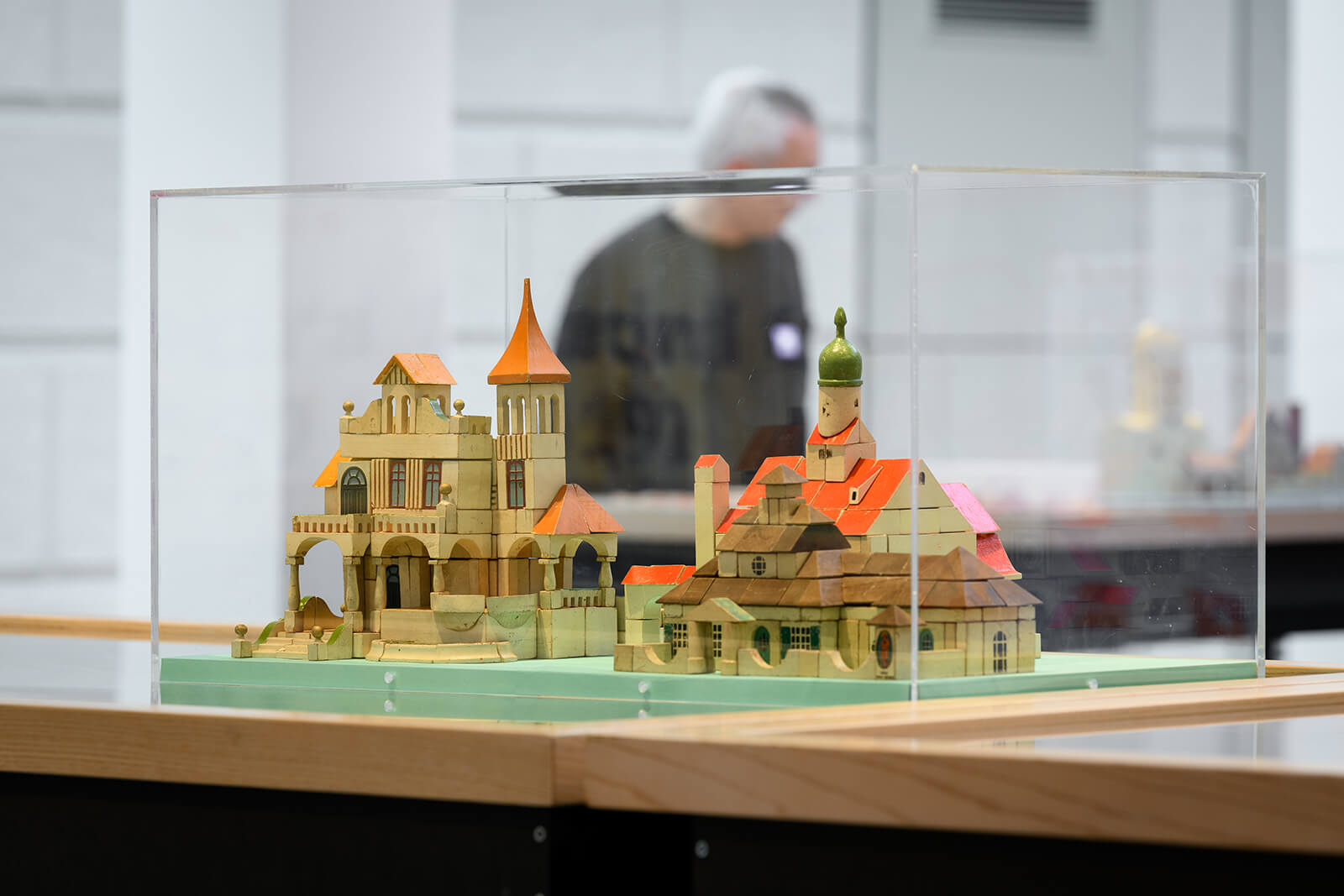
The exhibition organises the history of construction toys into thematic chapters. In the section on architectural styles, the Anker Steinbaukästen takes an early place. Produced from 1884 onward, Anker blocks were made of sand, mud, chalk and linseed oil, and their forms echoed the ornate Wilhelminian buildings of late 19th-century-Germany. The system grew from ideas developed by Friedrich Fröbel, whose educational philosophy championed learning through play, long before the concept became a global norm. The Lilienthal brothers, who contributed to the development of Anker stones, were also pioneers of early flight, adding a historical dimension.
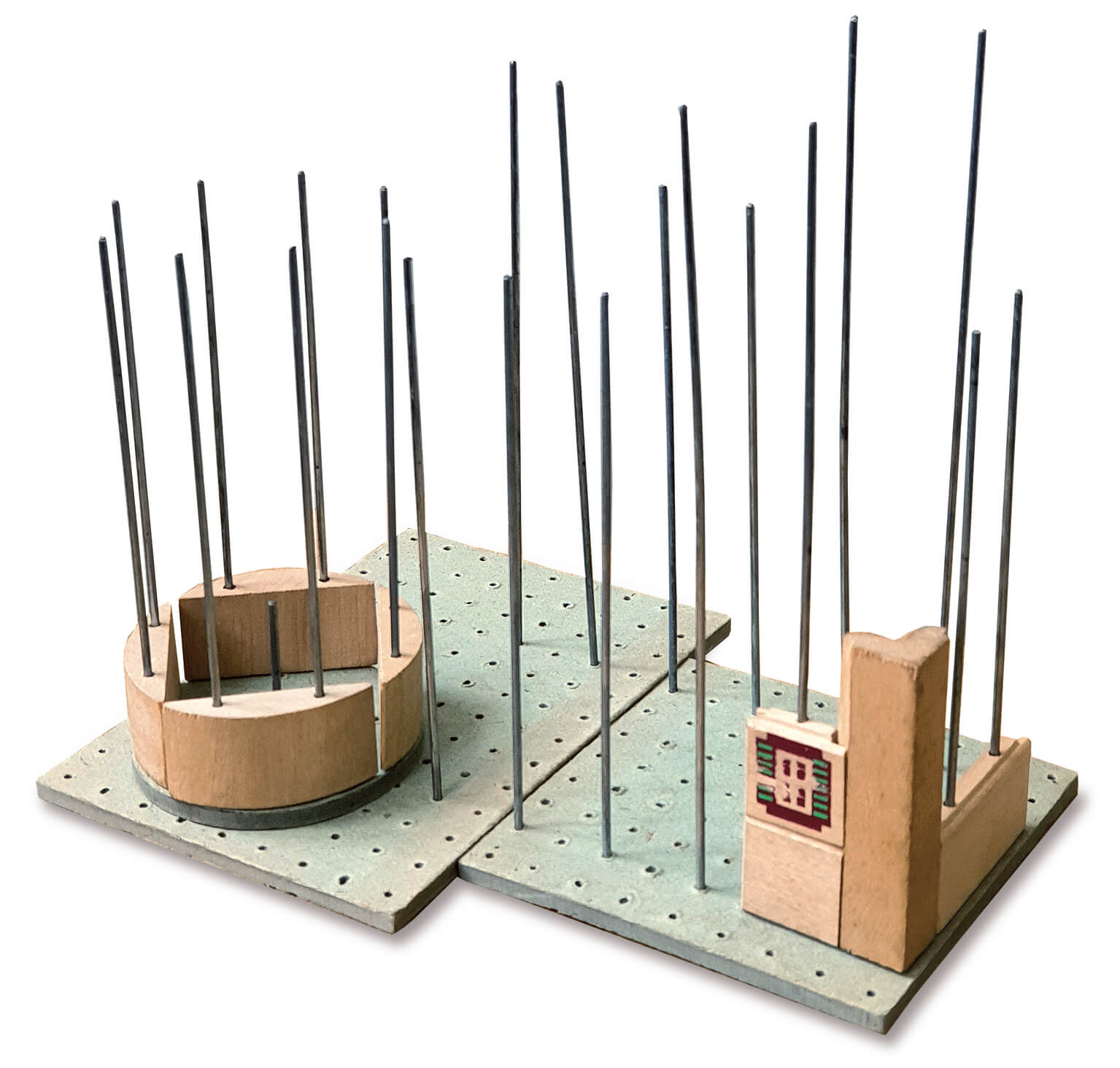
Nearby is the French Bâtiss kit from the 1930s and 1940s. Its wooden blocks are threaded with thin metal rods, creating a system that is both intriguing and slightly awkward to handle. This difficulty reflects the era’s experimental search for new structural possibilities and the uncertainties of interwar architectural thinking. A later version for younger children, called Baticlub, removed the metal rods to encourage more intuitive play. In the exhibition, the enlarged Bâtiss station created by HFT Stuttgart lets visitors experience how innovation and complexity coexisted in the original set.
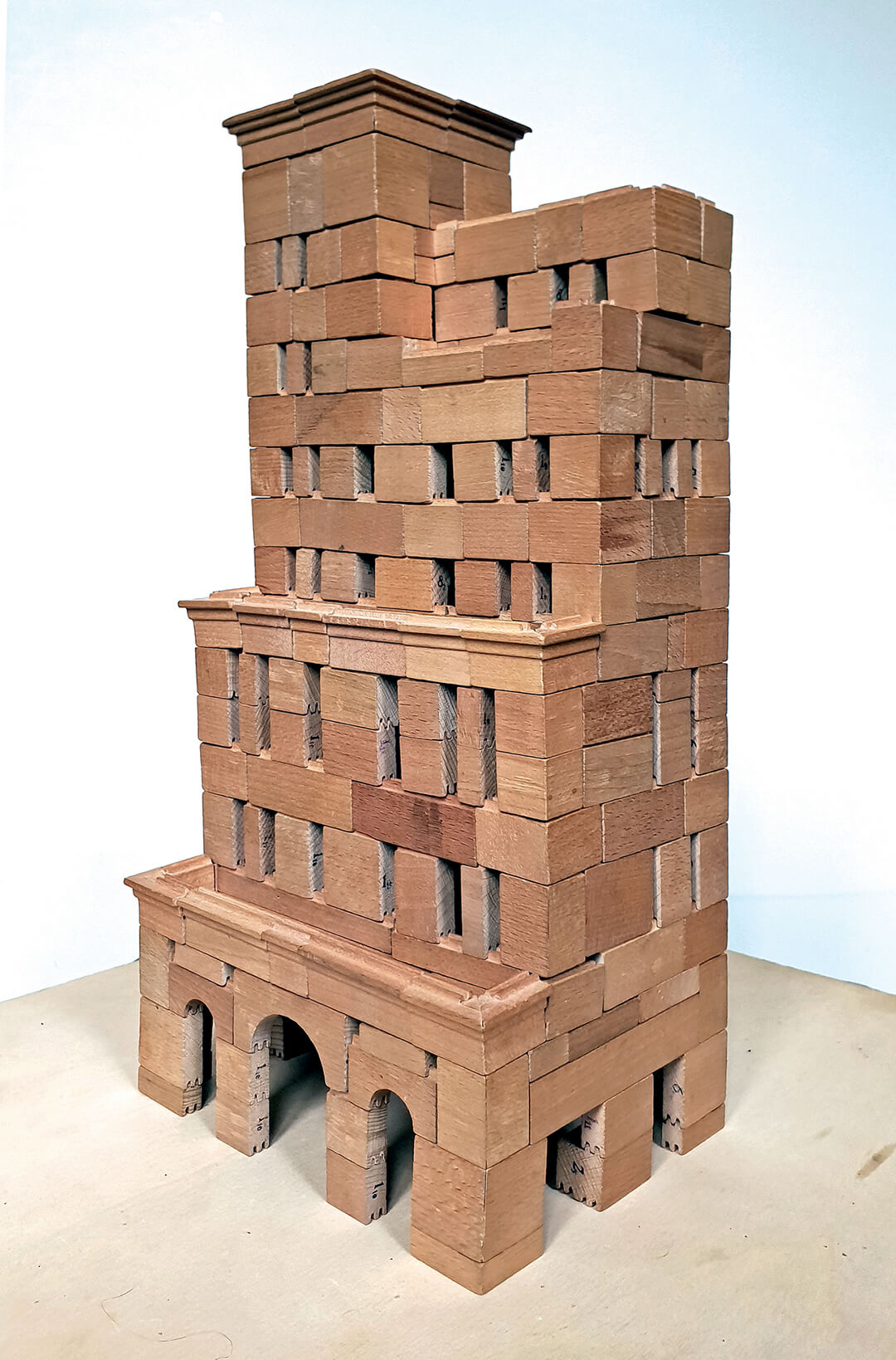
The Austrian Ingenius kit, developed between 1924 and 1929 by German architect Wilhelm Kreis and Carl August Jüngst, stands out for its clean grid and sharp geometry. It was marketed not only as a children’s toy, but also as a practical tool for designing film sets, offering a modular alternative to constructing large physical environments. The exhibition presents this history clearly and also acknowledges Kreis’s later involvement with national socialist architectural culture. This context adds necessary nuance to an object that appears innocent at first glance. The enlarged station encourages visitors to explore the system’s potential for imaginative and professional use.
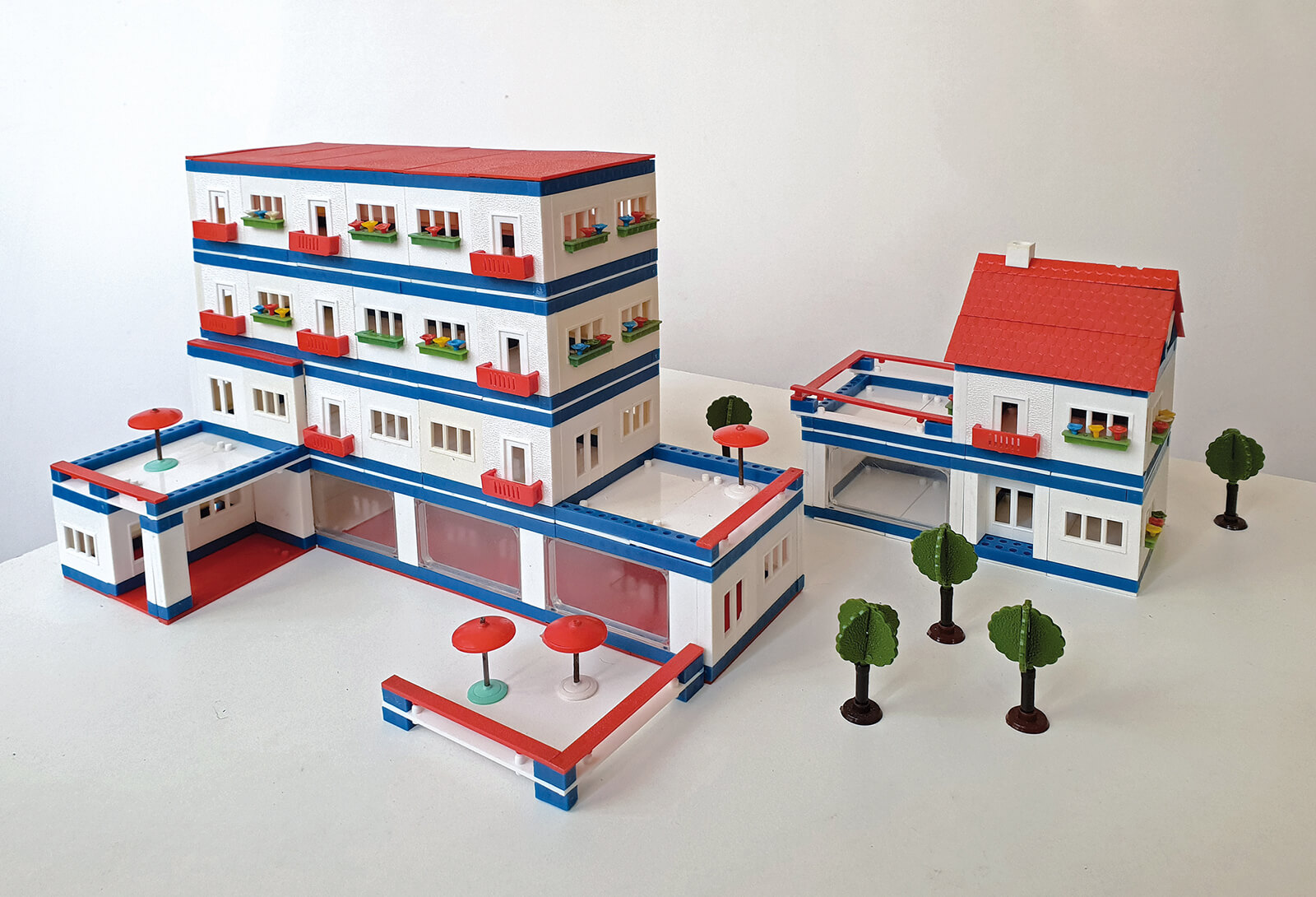
The exhibition also traces building kits shaped by specific political environments. The early GDR kit titled Wir bauen auf! reflects the socialist classicism of its moment, although its architectural references became obsolete within five years once Soviet policy shifted to industrialised prefabrication. The Plaspi kit from around 1980 returns to that era of prefabricated architecture. Its large plastic blocks encouraged children to build idealised versions of the slab buildings typical of East German housing. These models offered a variety of possibilities that real housing estates rarely delivered.
One of the exhibition’s most memorable installations is the Architecto kit from Switzerland, first produced in 1944. The museum worked with students to scale its plug-in system to three times its original size. They cut more than 4000 individual components from insulating felt normally used for acoustic and thermal panels. These were then assembled into a cathedral rising more than three metres high. Elser describes the process with characteristic candour: “With the largest object in the exhibition, we have realised a dream. If only our parents were willing to invest in hundreds of building sets of the same type. But how do you produce 4,000 building blocks? The model of the cathedral is not made of wooden sticks, but of a felt material normally used for insulation boards, which was cut into shape using a computer-controlled cutting machine.”

The museum also recognises that many early construction systems were challenging. Instruction booklets from the early twentieth century can be intricate or cryptic. To encourage participation, the museum created new assembly guides in a clear, IKEA-style language, allowing visitors to engage with the playable stations without hesitation. This contrast between historic and contemporary expectations highlights how building toys have shifted from open-ended experimentation to more curated results designed for display. As Elser notes to STIR, “Many construction kits are designed to provide an unboxing effect, which we are familiar with from Apple products. Unboxing means: Wow, how beautifully the bricks are sorted when you lift the lid. But it also means: "Please tidy up just as nicely after you finish playing.”
Beyond the galleries, the museum invites visitors to participate in the competition, ‘How small can architecture be?’, by creating tiny models on a 16 x 16 stud base. Selected entries are displayed during the exhibition and shared on the museum’s social channels, opening the project to broader creative engagement.
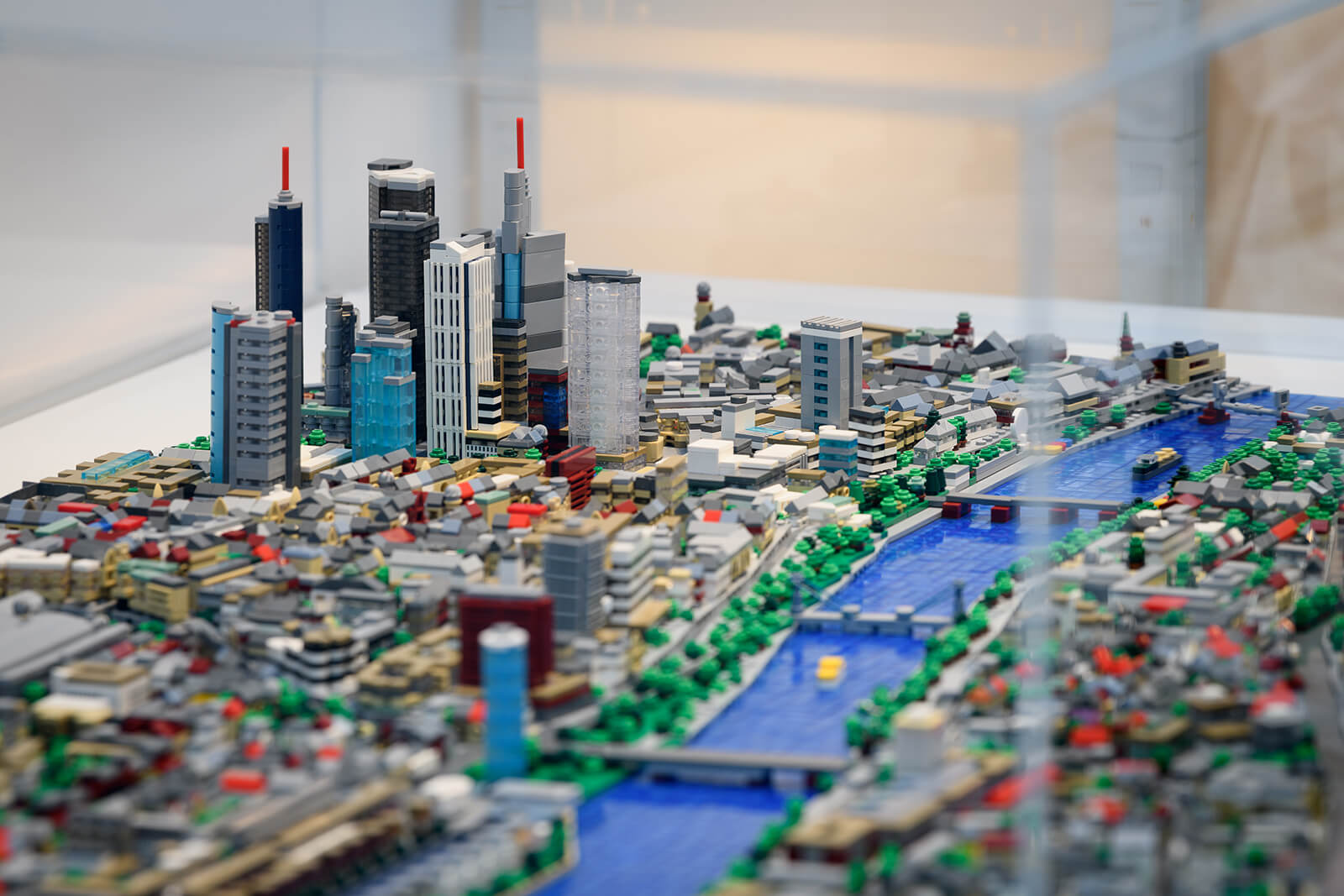
Moving through the exhibition, visitors begin to see construction kits not as simple childhood amusements but as reflections of shifting cultural ideals, political climates, technological changes and evolving dreams of the city. The interactive displays restore the physical pleasure of making, the quiet concentration of trial and error, and the joy of seeing how small pieces come together to form something larger.
Architectural Construction Kits 1890 – 1990: Plenty to play with! remains on view at the Deutsches Architekturmuseum in Frankfurt till February 08, 2026.

by Mrinmayee Bhoot Oct 12, 2026
The new Centre for Contemporary Arts, fostering public engagement with art in Uzbekistan, is housed in a tram depot refurbished by the French studio, emulating local craftsmanship.
by Mirra Lynn Oct 10, 2026
The Shanghai-based architecture practice’s intervention in Suzhou transforms three abandoned houses into a bookstore, café, library and homestay.
by Pranjal Maheshwari Oct 09, 2026
The eighth edition of the international architecture and urban design showcase, themed How Much?, explores diverse implications of social, ecological and economic ‘cheapness’.
by Pranjal Maheshwari Oct 06, 2026
With a programme focused on biodiversity, accessibility and safety, the Rotterdam-based architects help the neighbourhood reclaim a barren landscape as an integral social node.

make your fridays matter with a well-read weekend
Enter your details to sign in
Don’t have an account?
Sign upOr you can sign in with
a single account for all
STIR platforms
All your bookmarks will be available across all your devices.
Stay STIRred
Already have an account?
Sign inOr you can sign up with
Verification link sent to check your inbox or spam folder to complete sign up process
Tap on things that interests you.
Select the Conversation Category you would like to watch
Please enter your details and click submit.
Enter the 6-digit code sent at


Architectural Construction Kits 1890 – 1990 and the evolution of building play
by Aarthi Mohan | Published on : Jan 13, 2026


 Sign in with Google
 Sign in with email
What do you think?