Architecture09 mins. read
Architecture Hunter Awards 2025 winners champion social and environmental impact
by Bansari PaghdarOct 16, 2025




by Mrinmayee BhootPublished on : Dec 03, 2025
A gash in the earth; a discordant cleaving of the landscape. Jagged, rough emanations that separate the living land from something absent—Brumadinho Memorial, erected to honour the 272 victims of the Córrego do Feijão dam collapse in Brumadinho, seems to echo some of the violence of the infrastructure-defying tragedy that the land was witness to. Designed by Brazilian architecture studio Gustavo Penna Arquitetos Associados, the memorial is located on the very site of the rupture. Resisting its deterioration and the eventual dismissal of the event from collective memory, the public building is meant to serve as a symbol of 'memory and resilience', as the official release states.
Water gently flows through the now reformed landscape, opposed to the memory of mud slashing through concrete as the tragedy played out. The memorial project transforms the site and the fracture into a meditative space—a space for processing grief—while at the same time becoming a symbol of the indignation at the existence of such a manmade disaster. As Gustavo Penna, the principal architect for the project, notes poignantly, the project, unlike other traditional memorials, was being conceived as the families of victims were still looking for them, and that it became a means to work through an irreparable loss. "The Brumadinho Memorial is a space where architecture meets memory. It embraces pain and transforms it into resistance against forgetting, reimagining the site of the tragedy," he states.
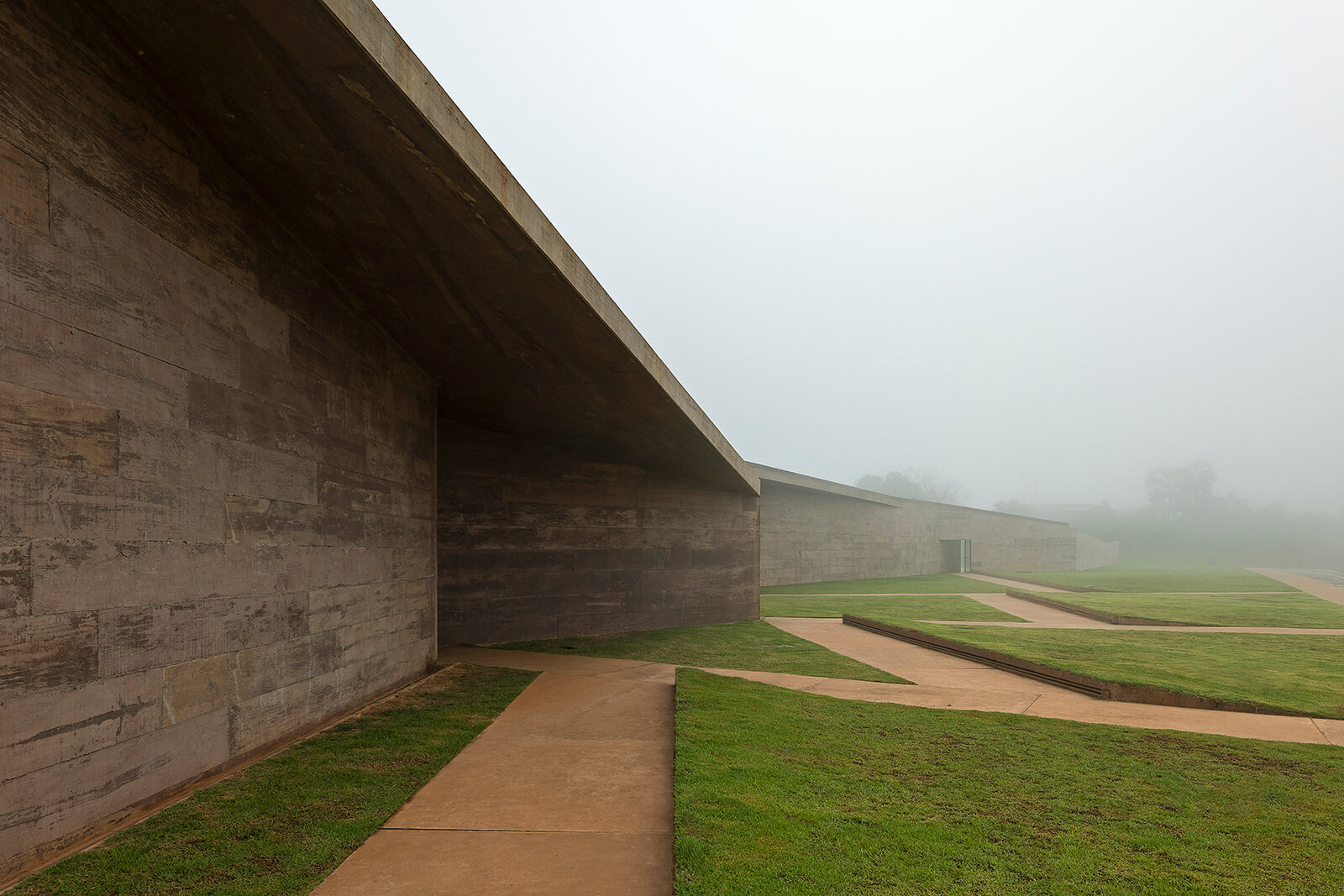
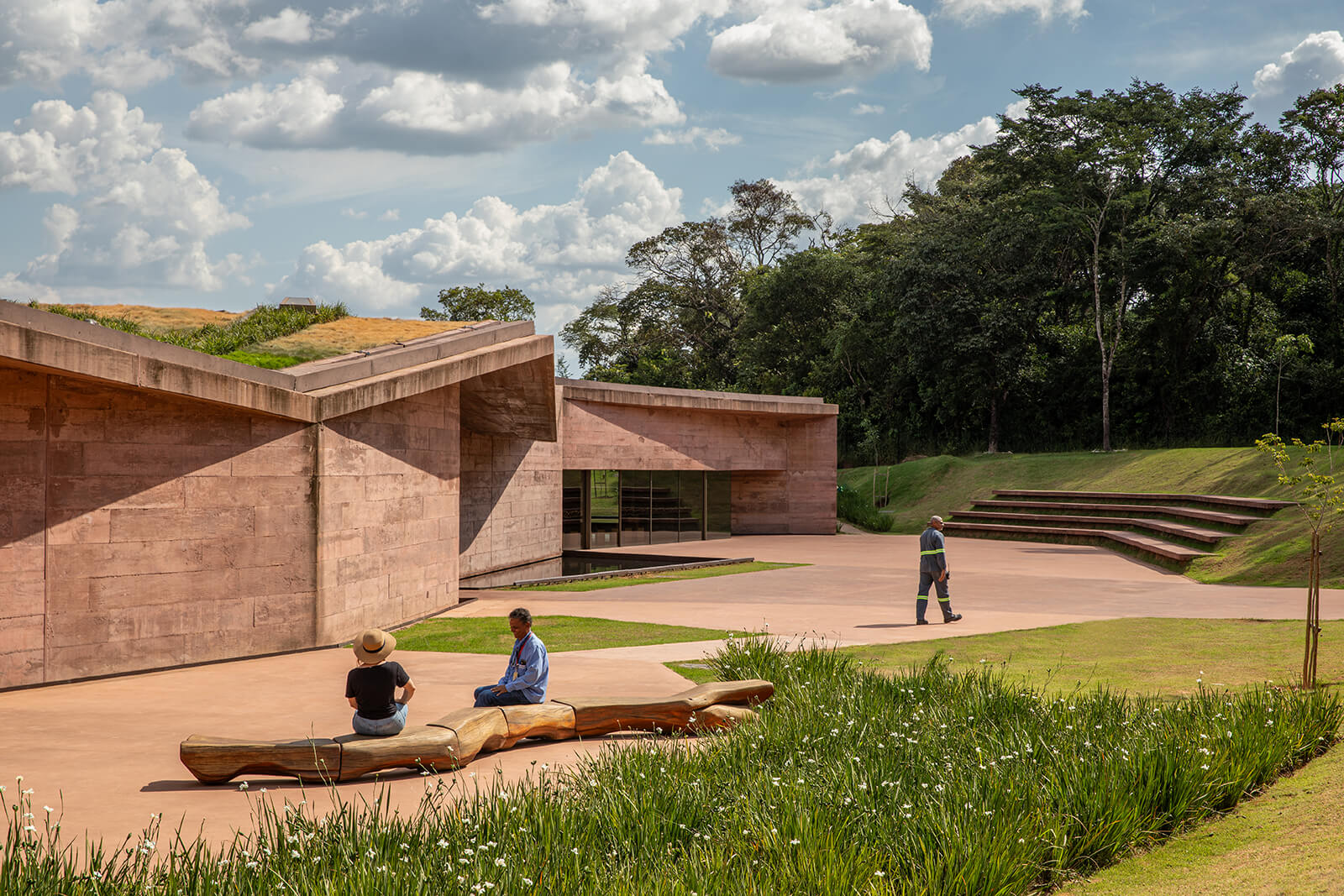
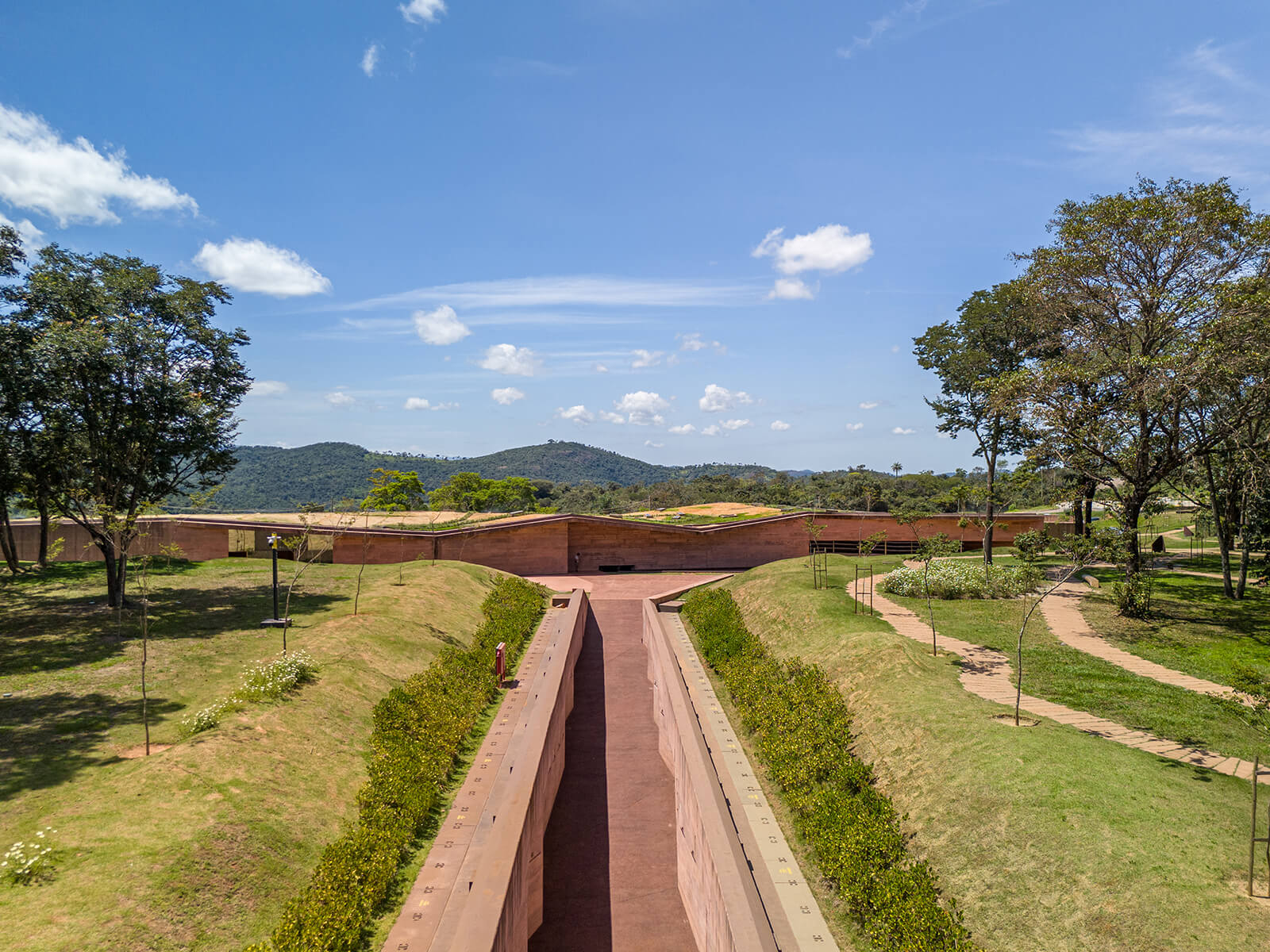
It's also worth noting that this non-traditionality defines the project itself, a memorial to the failure of the manmade enterprise. The 2019 collapse of the Córrego do Feijão dam in Brumadinho—deemed to be Brazil's worst humanitarian tragedy—was, by all means, a preventable one. Within seconds, as the concrete gave way to the force of mud, the whole terrain was engulfed, wiping out people, residences, roads and surrounding forests. Already an incursion on nature, the failure of the dam—which, as reported, the company bore knowledge of, owing to faulty sensors designed to monitor the dam's structural integrity—underscores the folly of excessive reliance on technology. The unearthly force of the mud, the discordant nature of it, is what prompted Penna to conceive the entrance as an avenue of clashing surfaces. The first emotion evoked by the fragmented form—made from concrete mixed with pigment from mining waste—is a sense of discomfort, a sense of the uncanny. This is juxtaposed with the otherwise serene spaces that the brutalist architecture holds.
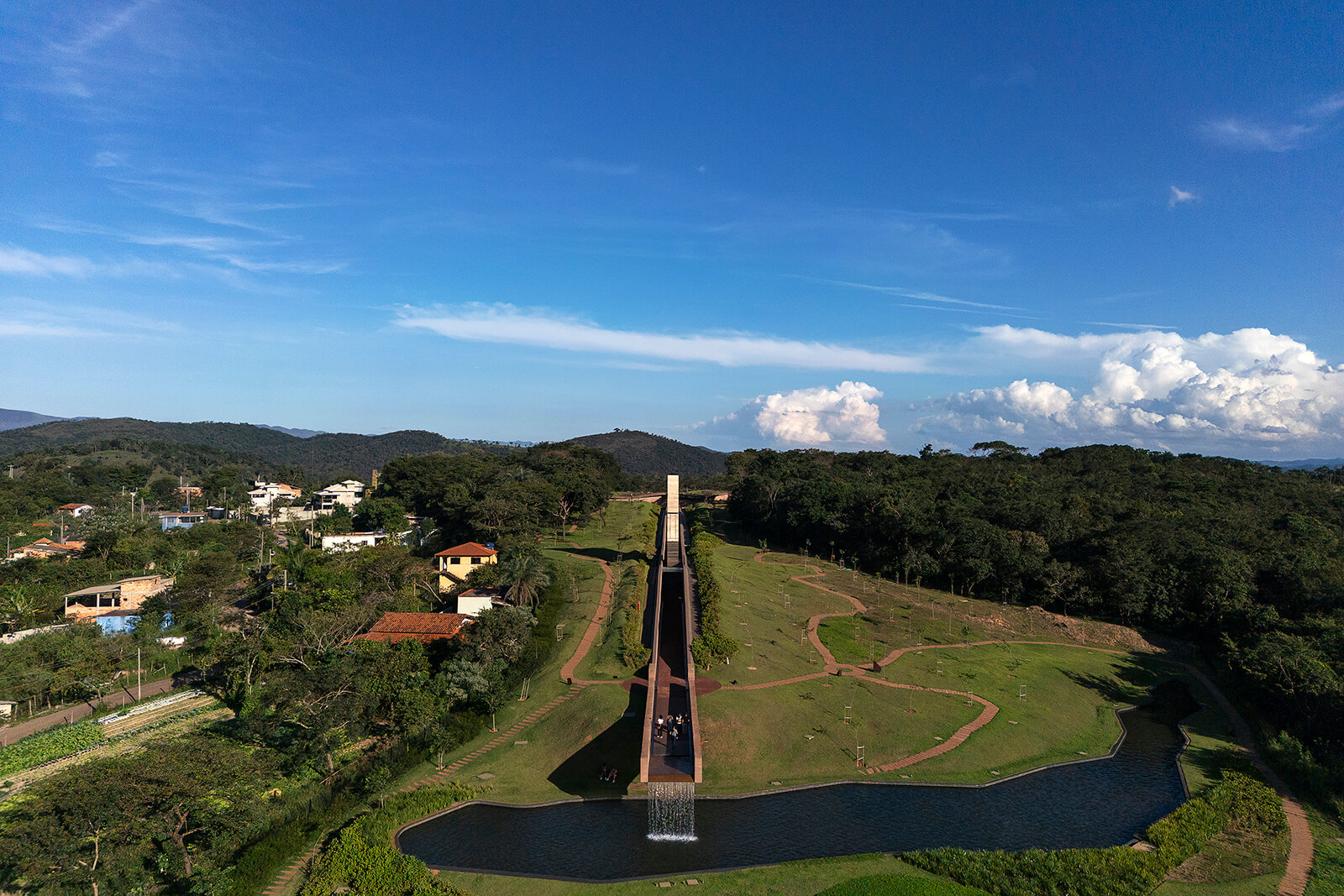
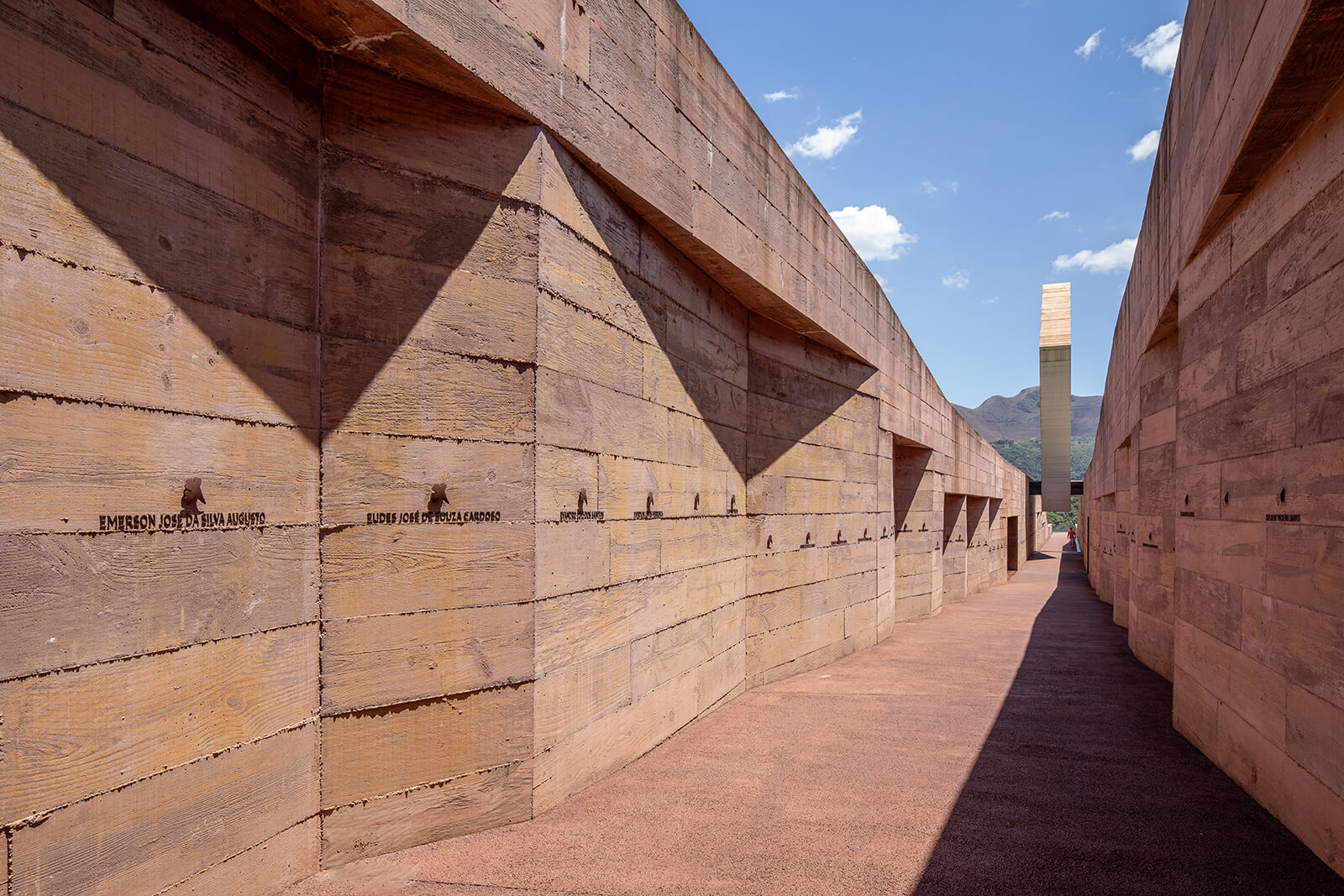
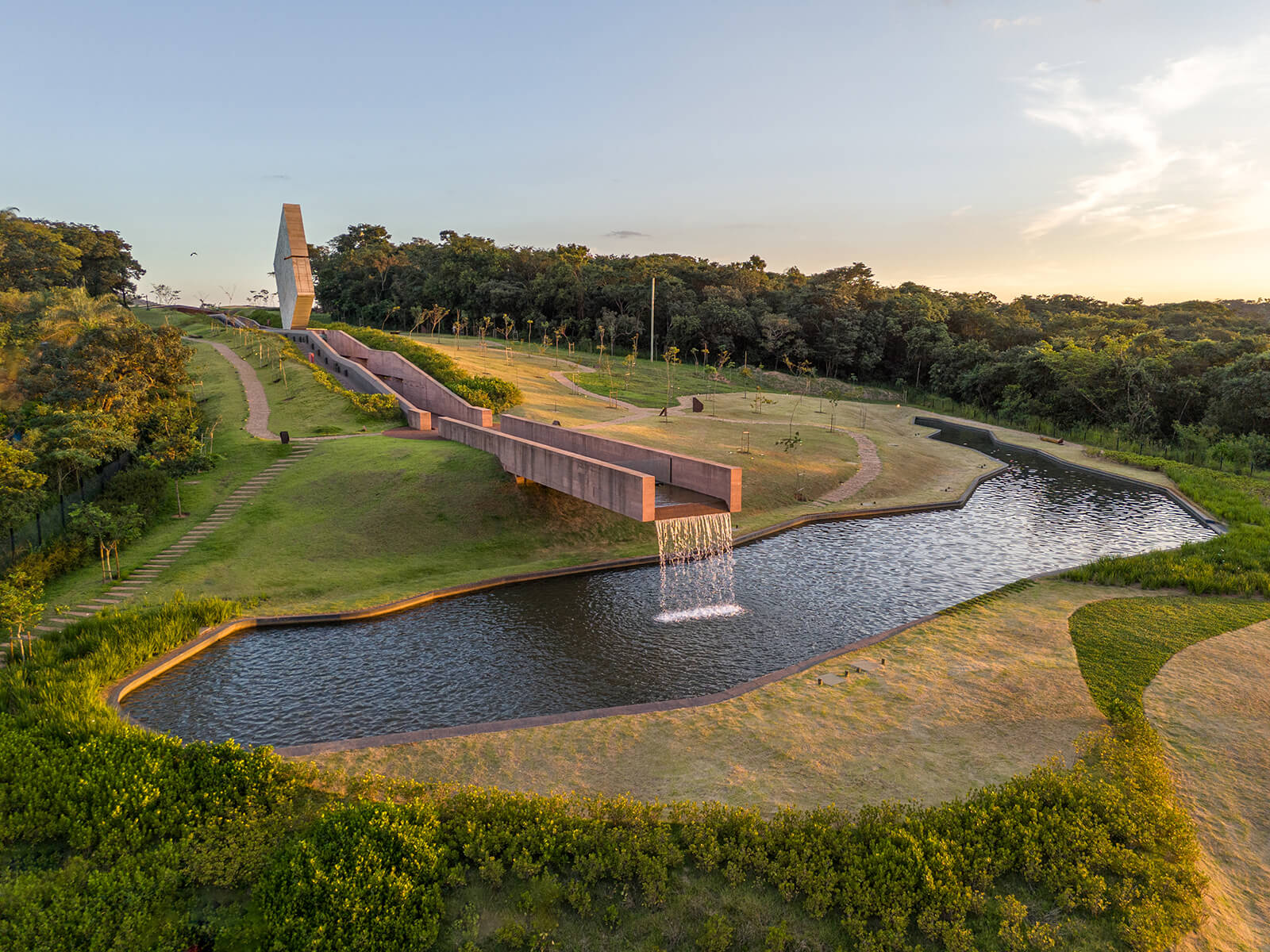
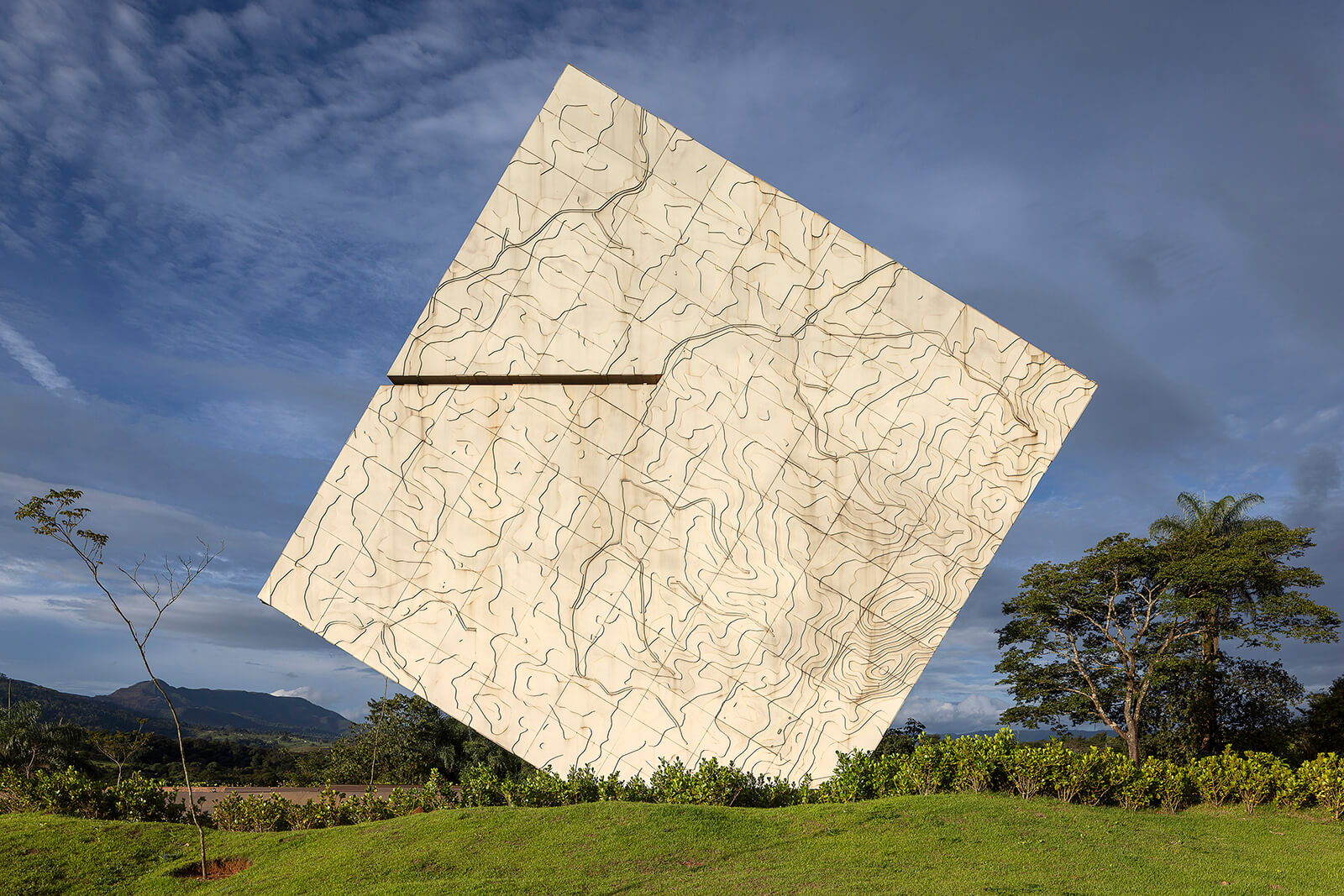
The memorial architecture incorporates a meditative space at the outset of what is foreseen as a commemorative journey. With a large hall that extends into the outdoor amphitheatre and flows into the garden, the public space offers a site for gathering. From this moment of pause, a 230m pathway leads to a viewing point looking out at a natural landscape transformed by dam activity (and its eventual collapse). It incorporates the names of the 272 victims, weaving them into the fabric of the land. The pathway—jagged, winding—was meant to symbolise the fissure, as Penna notes; a crack that will remain for eternity, etched into the earth. As one winds their way uncertainly through the concrete-clad corridor, they will eventually encounter a monumental square sculpture that sits precariously atop the path. To Penna, the square was symbolic of the folly of man, a metaphor for order that fails to resolve itself; with nature forcing through. "With memory, love becomes eternal. I love you with my imperishable memories," reads a quote by Brazilian writer Adélia Prado as one enters the pathway. The site, and the building that now stands on it, have then been created as remarkable acts of love, with design deployed to act both as an exclamation, a charge against those who manufactured the inevitable tragedy. Ultimately, it is a space to keep the loving memories of those lost to the disaster alive.
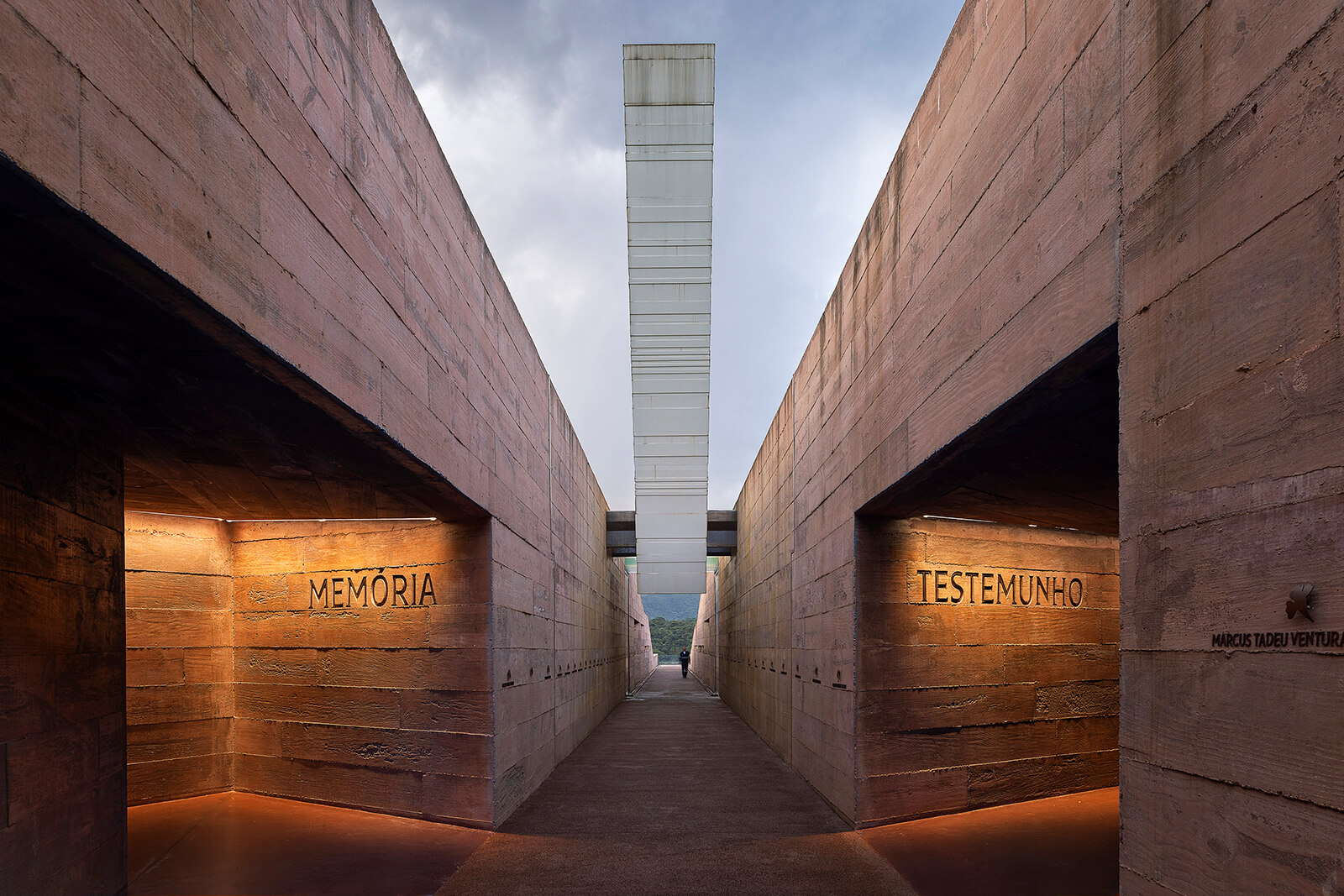
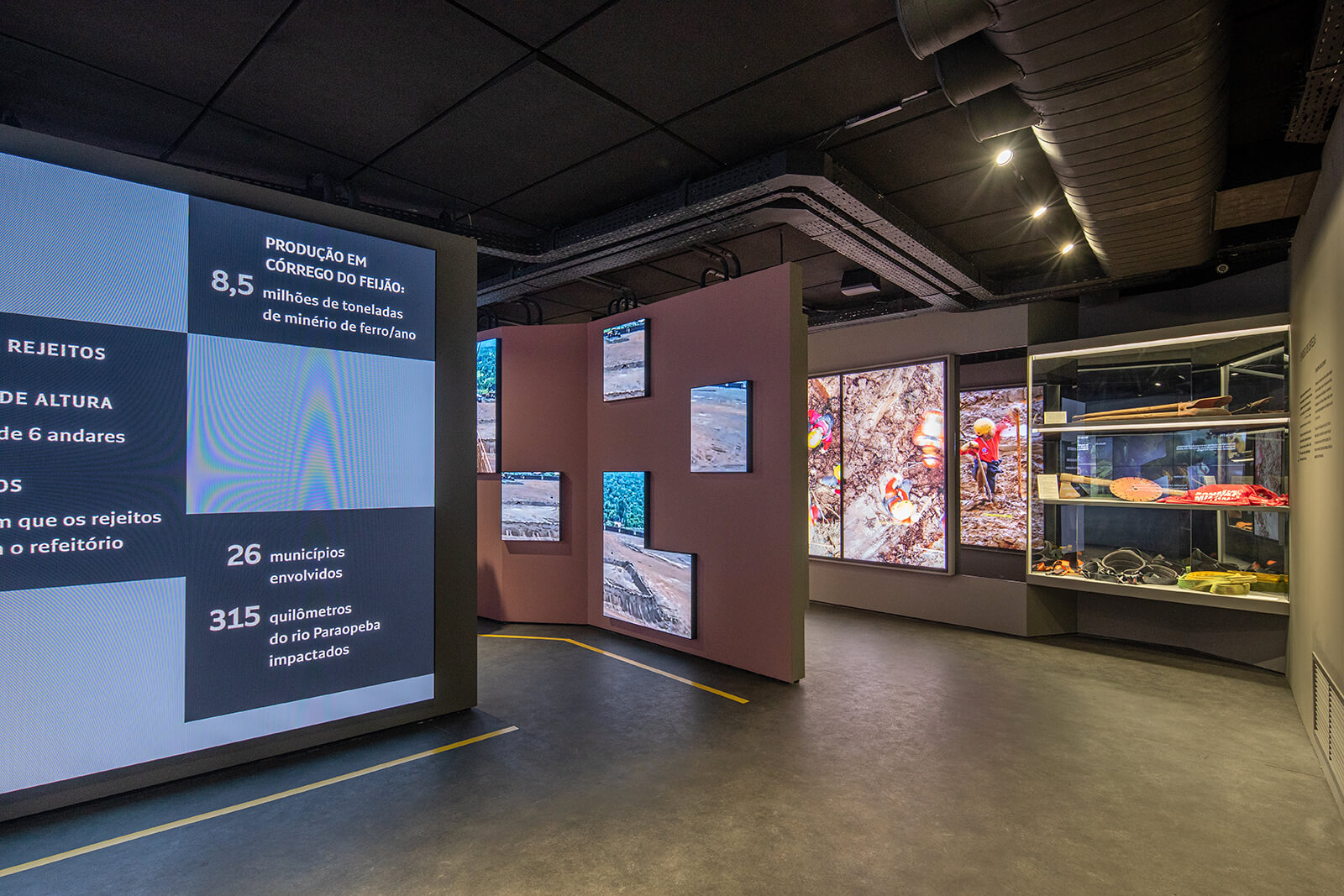
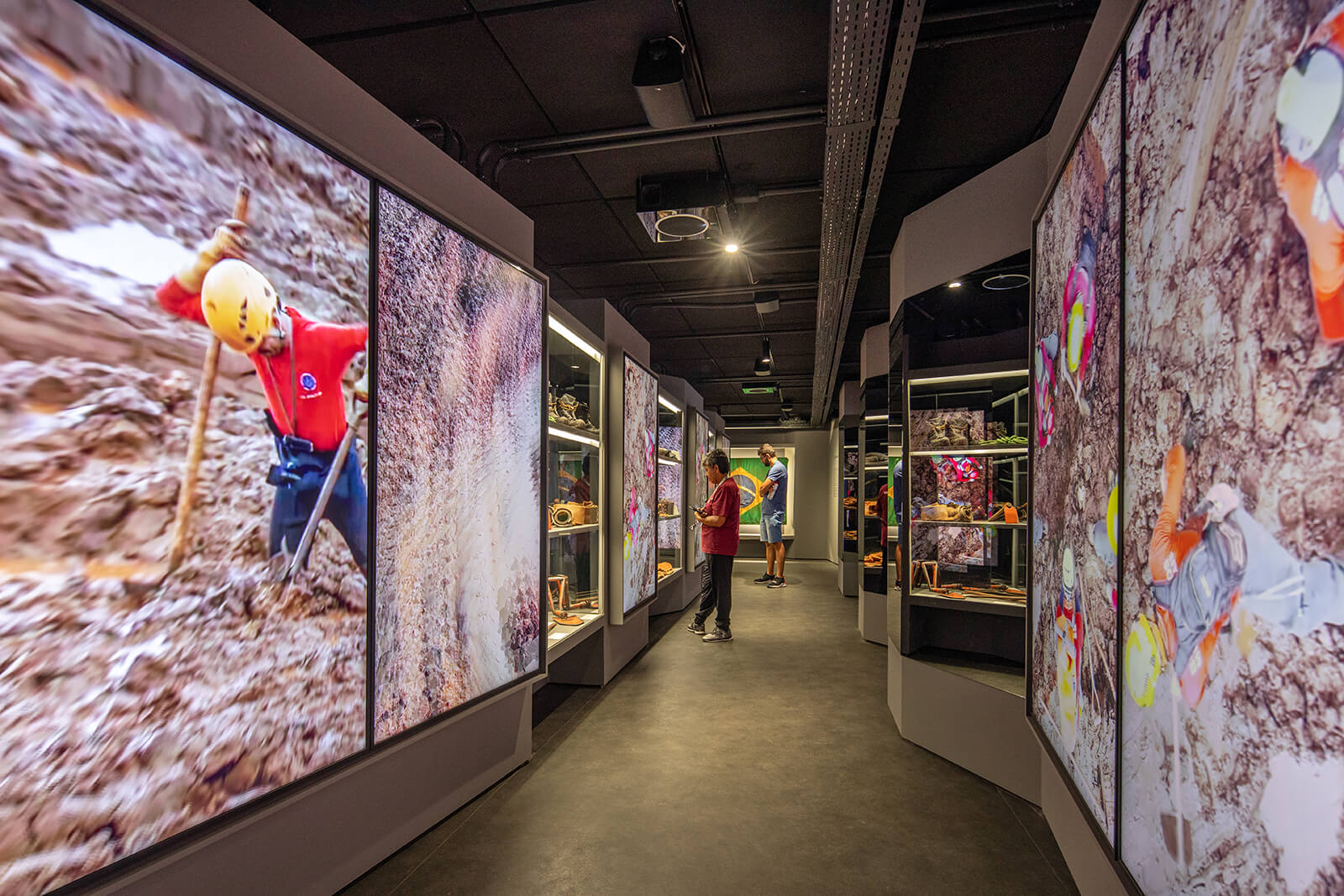
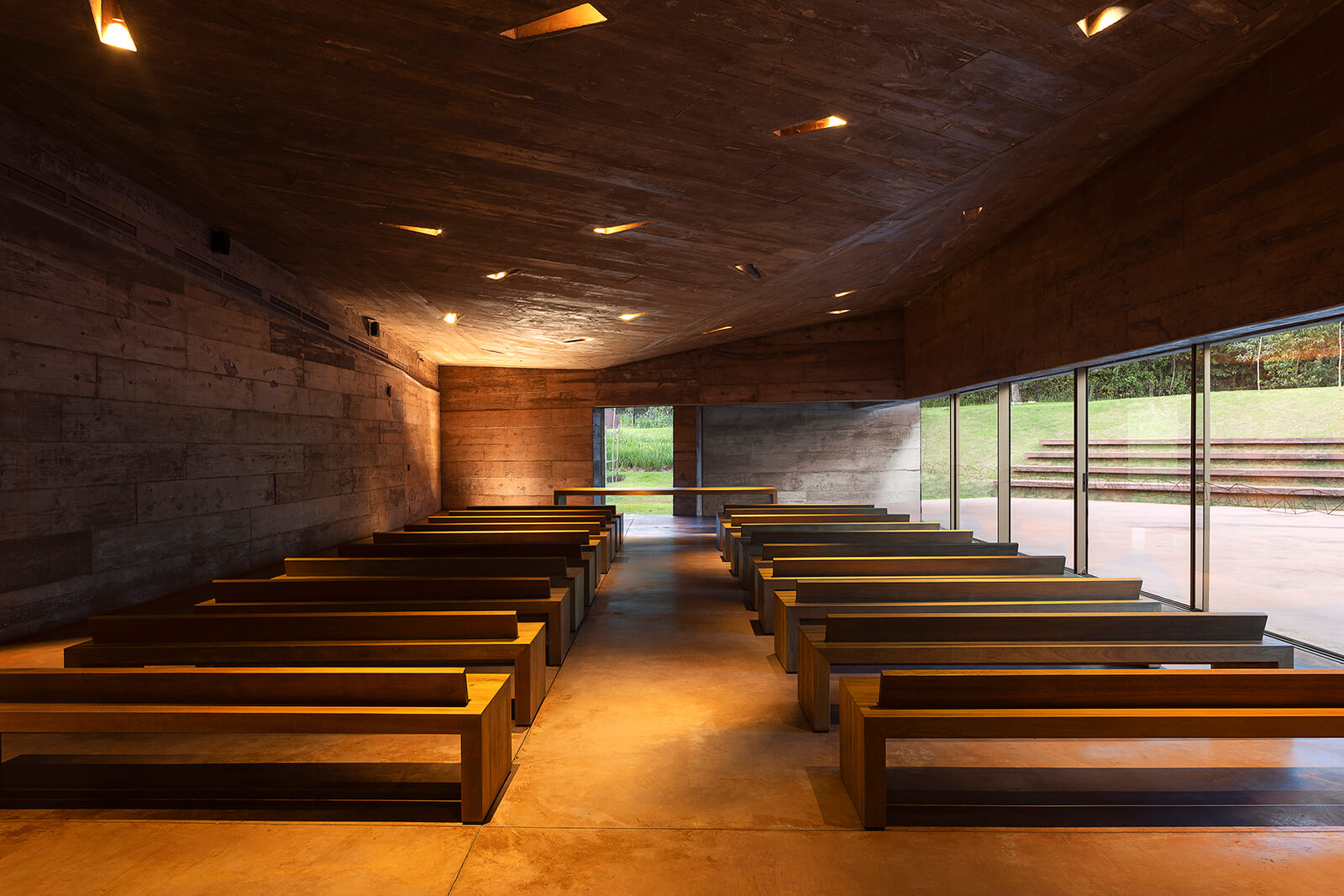
Apart from the more commemorative interventions on site that transform the real facts of disaster into symbolic, even abstract form, the stories and memories of the victims have also been preserved in two permanent galleries that can be accessed through the pathway. The Memory Space and the Testimony Space were designed by scenographer Júlia Peregrino, in collaboration with the families. These are dedicated to preserving the history of the tragedy and honouring the lives of the deceased, with the exhibition spaces displaying their personal belongings. At the end of the path, a reflecting pool and sweeping views of a still verdant context offer visitors a moment of calm, an introspective pause. In this vein, landscape design became a crucial part of the project, allowing for a transition from the sparsely but definitively built to the natural. A grove of 272 yellow ipê trees was planted for the public architecture project, acting again as symbols of resilience and rebirth, implying that the land is recovering. These trees, placed along organic trails, create different routes for visitors through the space, and as the design team hopes, reinforce the inextricable relationship between architecture and nature.
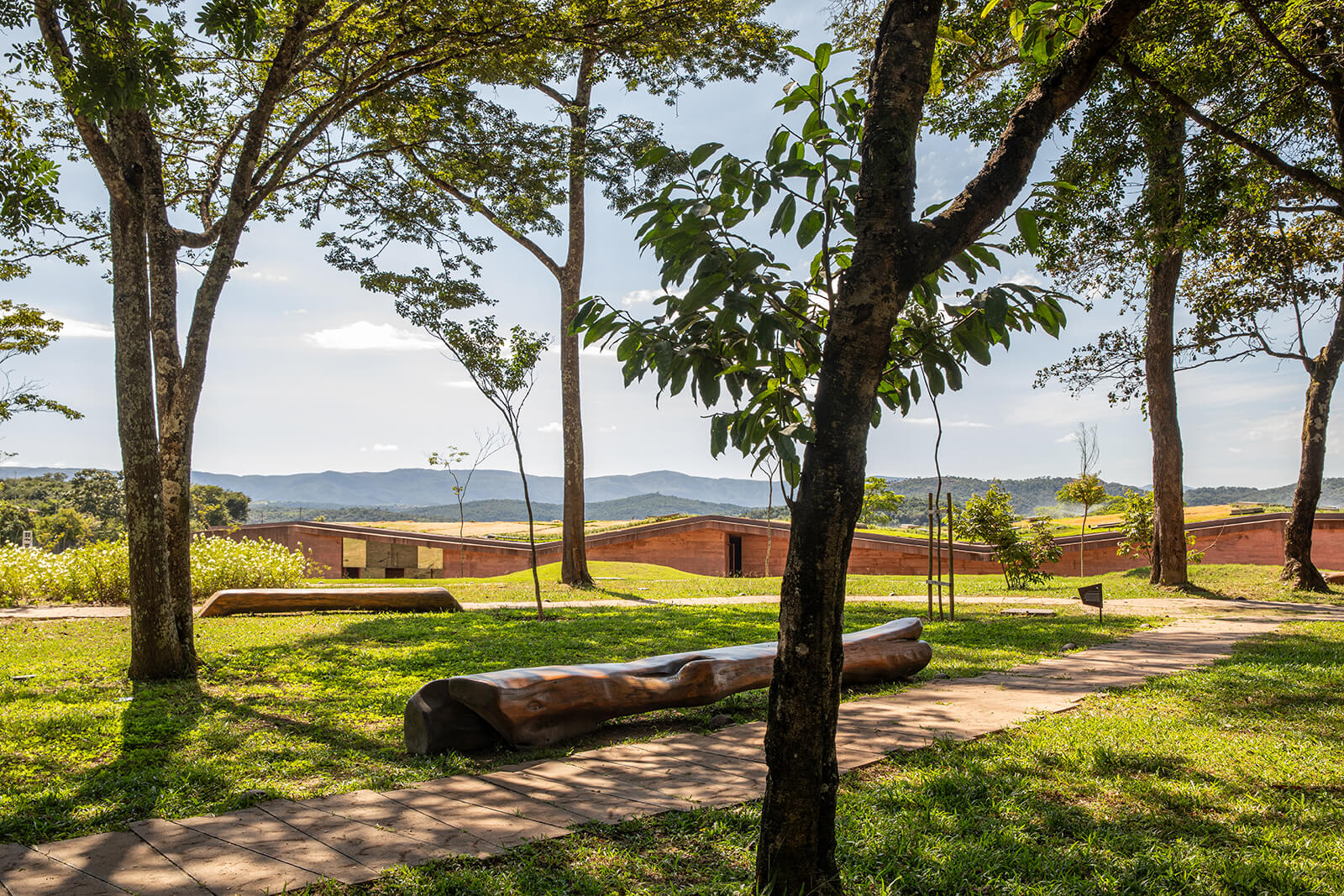
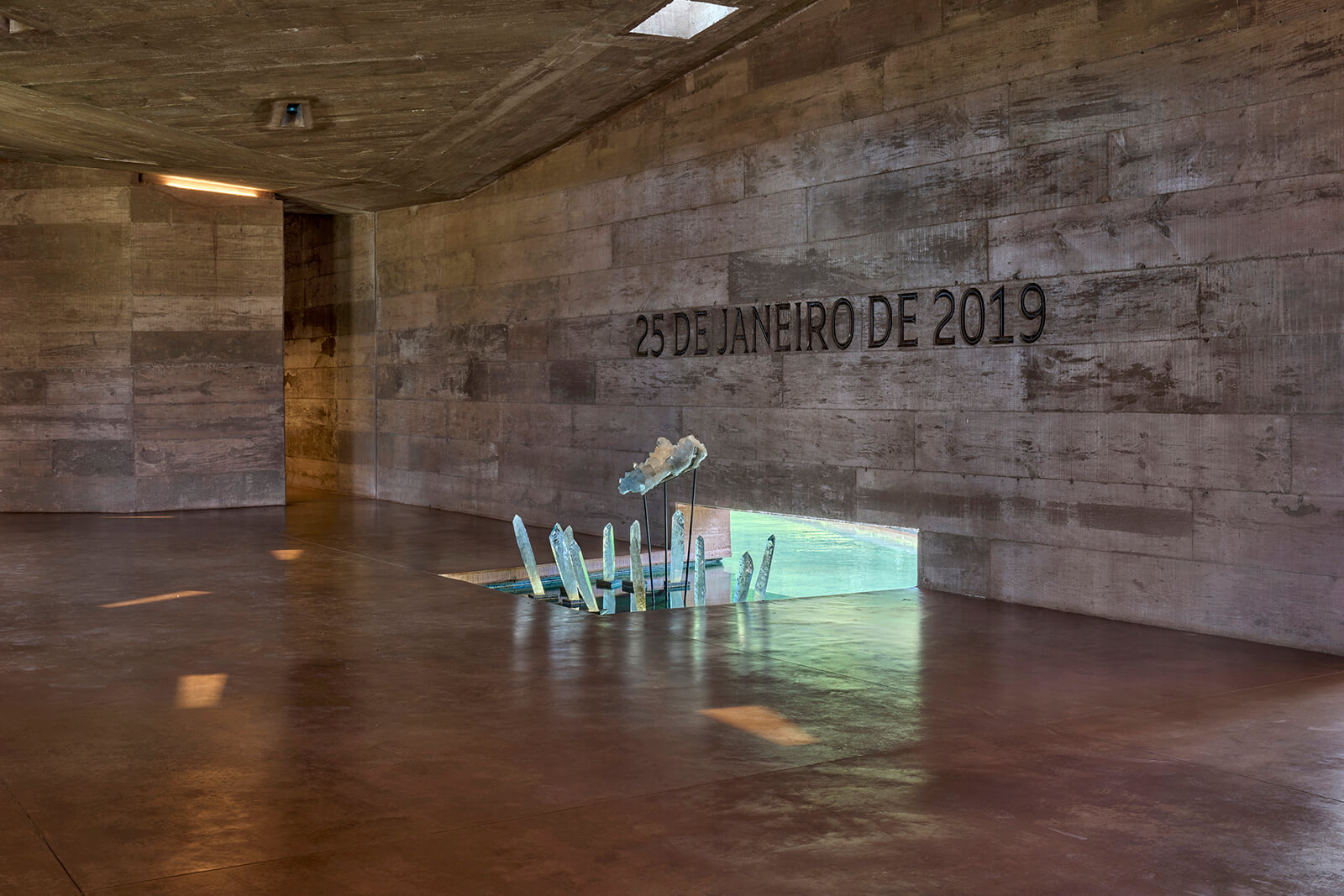
The design for memorials such as these always proves to be a sensitive topic for architects. How do we practice care retrospectively? How do we keep the memory of a tragedy alive, while demanding that the consequences, the aftermaths of it, are not forgotten? The discordant, often jarring, yet ultimately peaceful design of the memorial brings to mind (only partially) the narrative and symbolic gestures of Daniel Libeskind, for whom architecture was the most potent carrier of memory. The landscape at Brumadinho has tragedy woven into it; in transforming it into a contemplative space, the Brazilian architects then seek to offer the families some peace through what’s built and not; through what’s said and not. "It is a place to remember stories that cannot be erased, but also to move forward with the certainty that these voices continue to echo within us,” as Penna says.

by Mrinmayee Bhoot Oct 12, 2026
The new Centre for Contemporary Arts, fostering public engagement with art in Uzbekistan, is housed in a tram depot refurbished by the French studio, emulating local craftsmanship.
by Mirra Lynn Oct 10, 2026
The Shanghai-based architecture practice’s intervention in Suzhou transforms three abandoned houses into a bookstore, café, library and homestay.
by Pranjal Maheshwari Oct 09, 2026
The eighth edition of the international architecture and urban design showcase, themed How Much?, explores diverse implications of social, ecological and economic ‘cheapness’.
by Pranjal Maheshwari Oct 06, 2026
With a programme focused on biodiversity, accessibility and safety, the Rotterdam-based architects help the neighbourhood reclaim a barren landscape as an integral social node.

make your fridays matter with a well-read weekend
Enter your details to sign in
Don’t have an account?
Sign upOr you can sign in with
a single account for all
STIR platforms
All your bookmarks will be available across all your devices.
Stay STIRred
Already have an account?
Sign inOr you can sign up with
Verification link sent to check your inbox or spam folder to complete sign up process
Tap on things that interests you.
Select the Conversation Category you would like to watch
Please enter your details and click submit.
Enter the 6-digit code sent at


Brumadinho Memorial in Brazil incises the land in remembrance and reverence
by Mrinmayee Bhoot | Published on : Dec 03, 2025


 Sign in with Google
 Sign in with email
What do you think?