Art11 mins. read
Dior Haute Couture show in Paris creates a unique blend of fashion, art and craft
by Rahul KumarFeb 09, 2022



by Mirra LynnPublished on : Oct 20, 2026
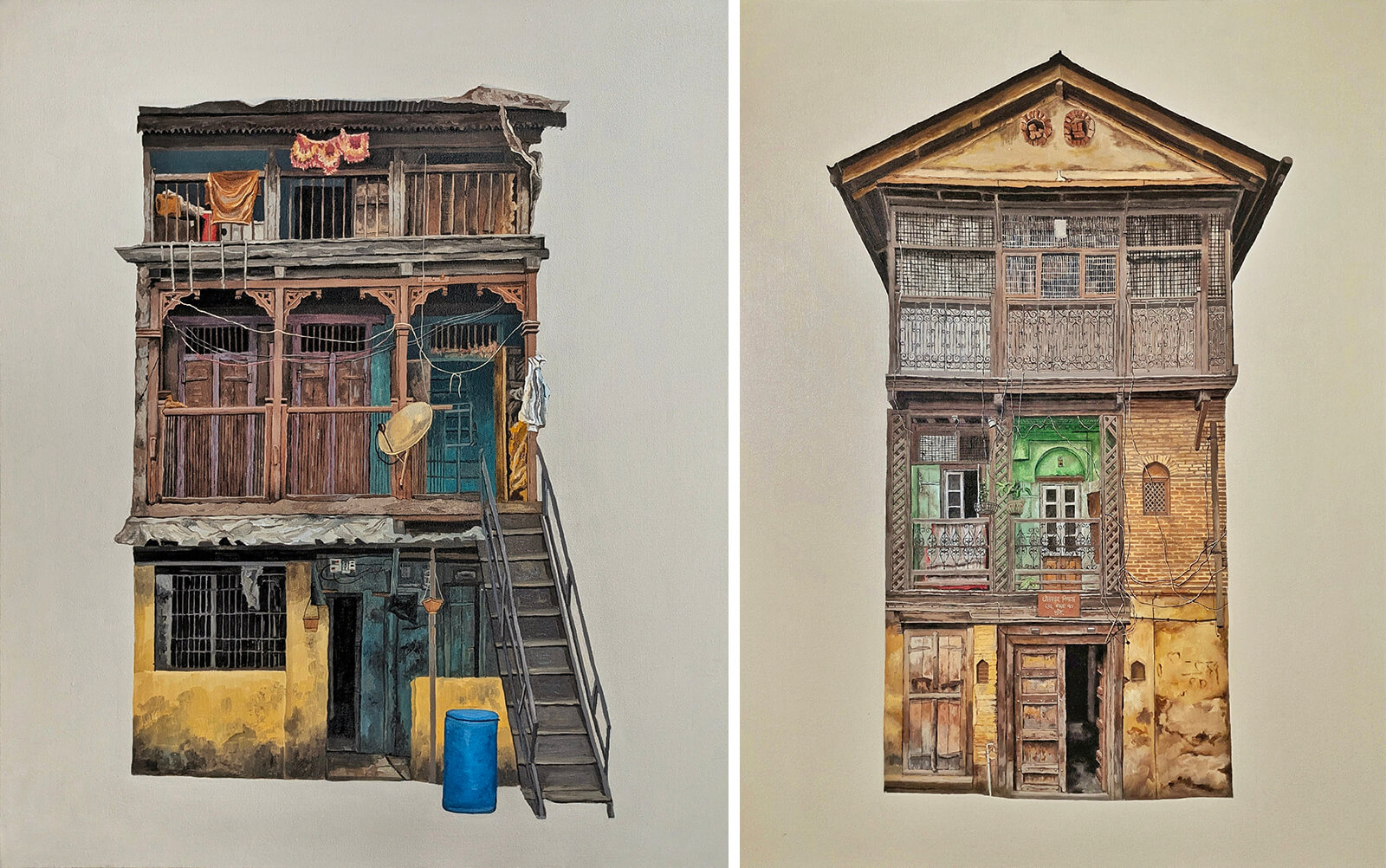
A three-storey wada appears frozen in time against an empty expanse in one of Charudatt Pande’s paintings, lifted out of its street like a portrait sitter. Its lower walls are washed yellow, stained dark and fungal where damp has crept up from the ground. Above, the house is built in timber, as wadas traditionally were, with verandahs lined with carved, scalloped arches, painted doors shut behind them and each floor leaning out over the one below to keep out the rain. The house bears the traces of more recent adaptations. A satellite dish sits clamped to the verandah rail, electrical cables loop and sag across the arches, and a steel staircase is bolted to the side, so the upper floors can be reached without passing through the rooms below. A grey tarpaulin is draped over the corrugated metal roof of the ground floor like a tired awning. At the very top, a ragged lip of the roof begins to sink down the corner, and a lone shirt hangs from the balcony beneath it, bright against the old brown wood. This is a present-day wada in Pune.
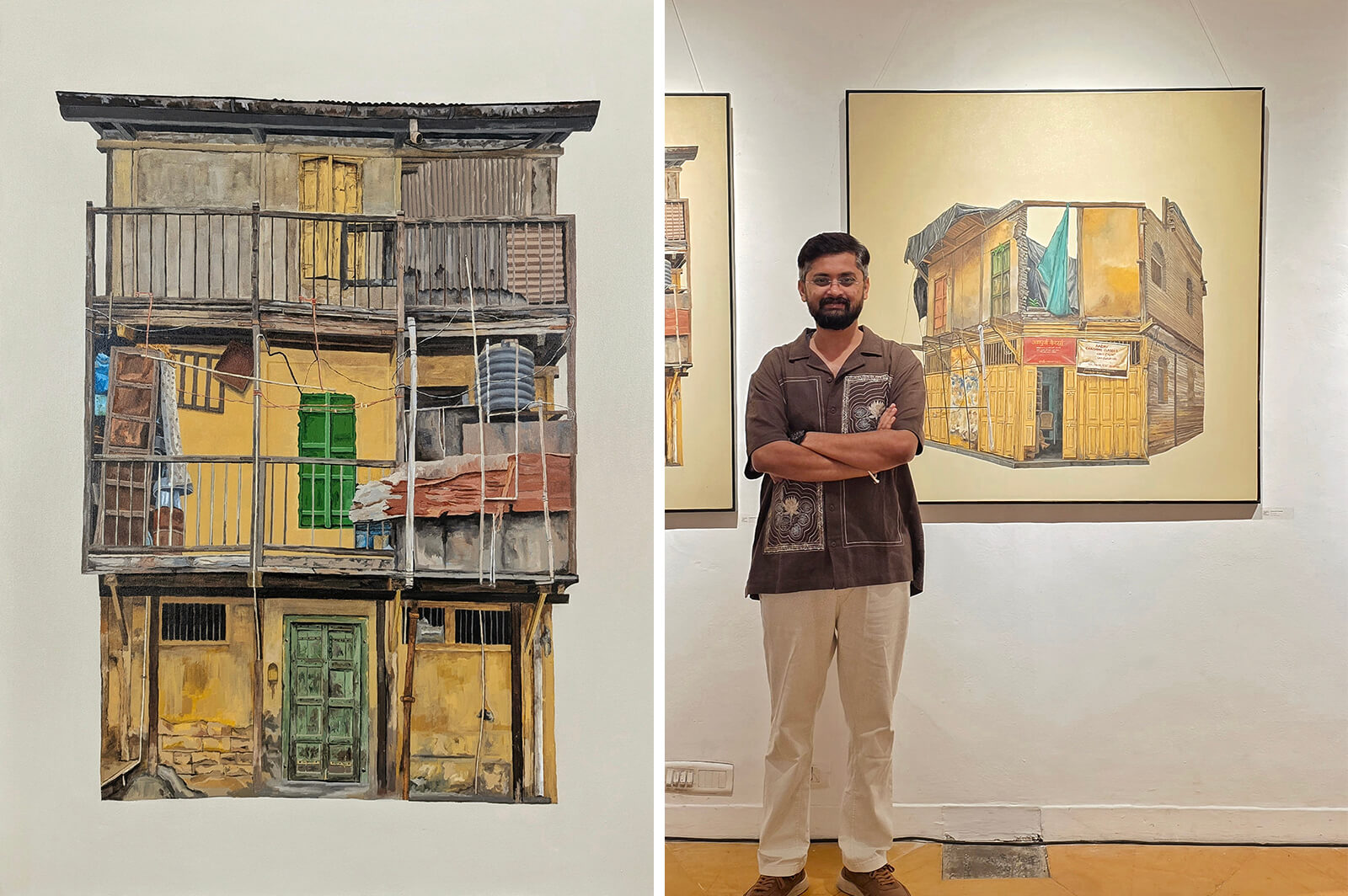
Charudatt Pande’s paintings refuse the box they are put in. Historic buildings in India tend to be spoken of in two ways: as heritage, a sanitised relic to be preserved behind a plaque, or as ruin, a romantic casualty to be mourned from a safe distance. Pande’s wadas subvert both ways of cultural appropriation; they are neither softened by nostalgia nor scrubbed clean for display. His wadas exist completely in the present moment, with wiring, laundry and satellite dishes galore, as places where people are still living.
Built during the 18th and early 19th centuries in the Peshwa era as the mansions of noble families, bankers and courtiers, the wadas were once symbols of power and status in the city of Pune. Today, their owners’ descendants have multiplied, rents have barely risen, and the peths (neighbourhoods) have evolved into wholesale markets. For Pande, the buildings have changed hands in a larger sense. He says they no longer belong to a particular social class but have been taken into the everyday life of the city, with shopfronts and signboards on their façades. They are still lived in, though no one is quite sure whose job it is to hold them up. Most wadas are now shared among tenants, which is partly why the question around their ownership and upkeep has become so muddled.
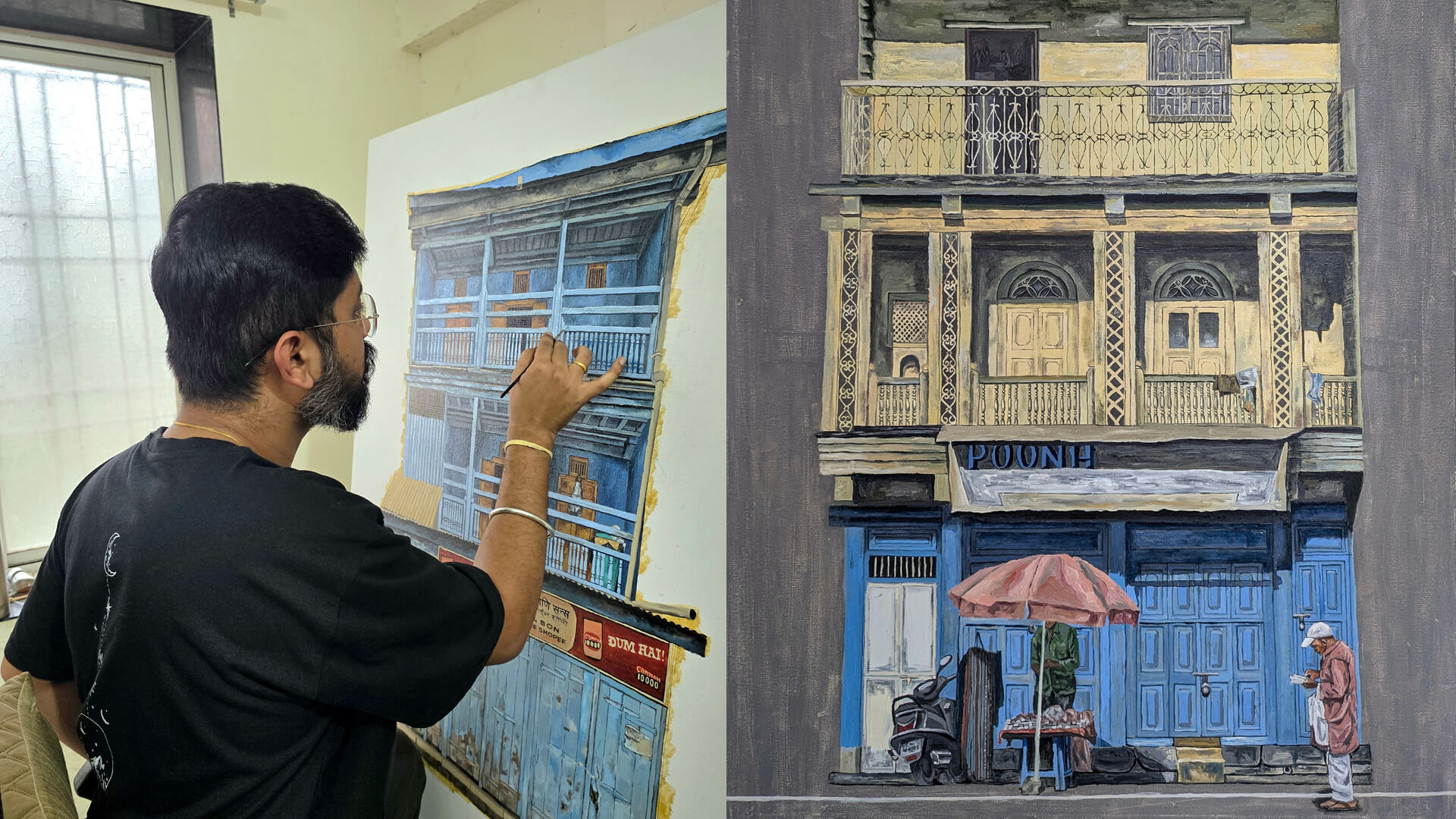
The Indian artist’s studio once stood near Alka Chowk in central Pune, in a neighbourhood ringed with old wadas. His early works explored the inner lives of ordinary people through portraiture. As he came to learn that some of his subjects inhabited these homes, he gradually shifted his attention from people to the walls that surrounded them.
In a conversation with STIR, Pande discusses his practice and shares why his wadas deliberately omit the human figure. “For me, these structures themselves are already living evidence of human existence,” he says. “In many of the paintings, you can see clothes hanging out to dry, personal belongings, a parked vehicle, shop signs and many other small details that quietly indicate the presence of people. So, even when the human figure is absent, human life is still very much present.” The lived traces, as the artist observes, don't require a face. A portrait needs presence, and the wada, with all its evidence of use and decay, sits for Pande just as a person would.
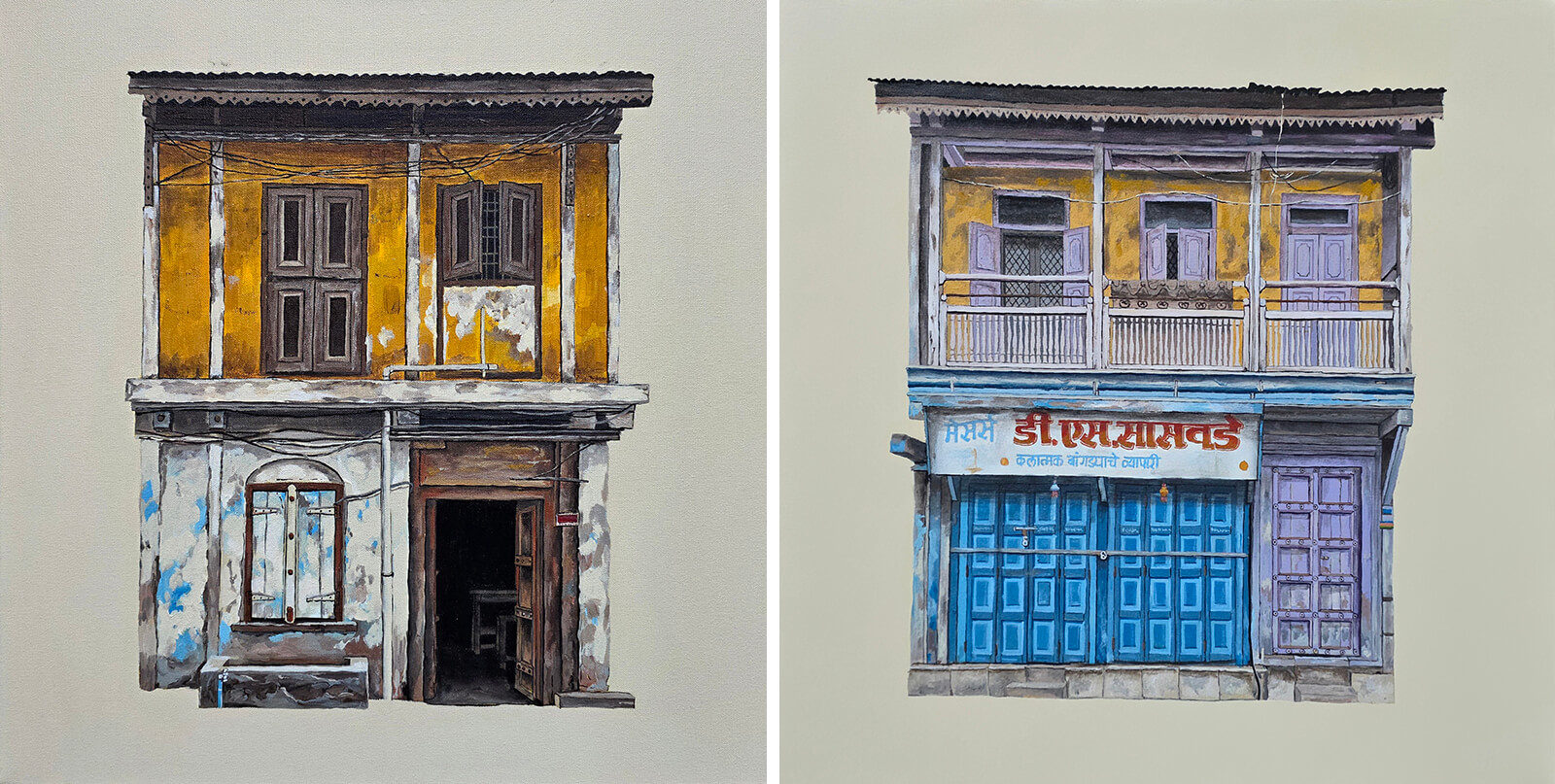
Wadas in Pune have been falling apart for decades, and following several incidents of collapse reported in the Somwar Peth region, the question of who may live in them and for how long has only grown more contested. Tenancy arrangements, legal disputes and demolition notices from the Pune Municipal Corporation gnaw at the various wada foundations, each wearing it away a little more. Neglect, litigation and the monsoon leave their marks in the way the plaster flakes and the walls darken, in the damp that rises from the ground, and in repairs and makeshift additions that never become permanent.
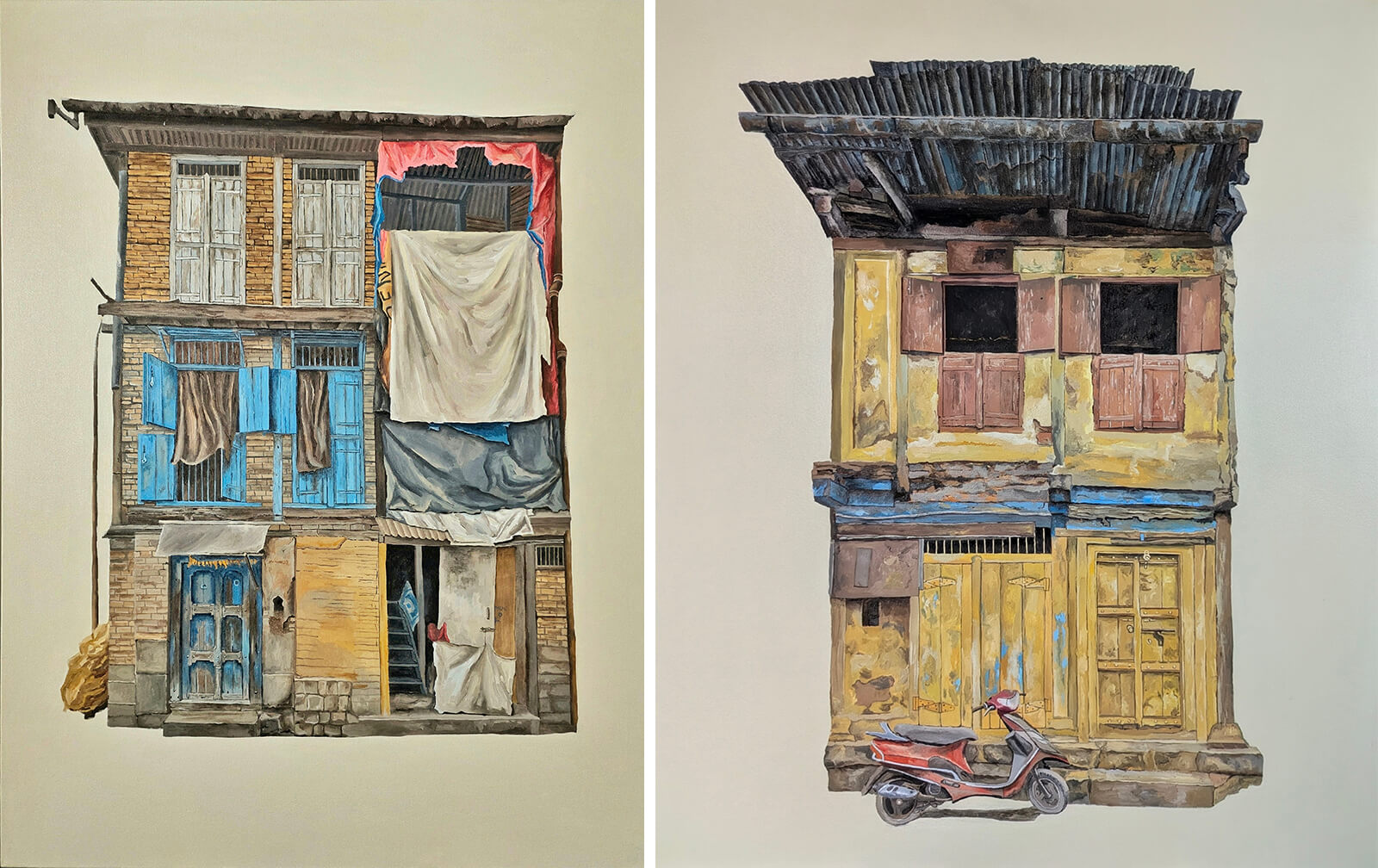
It is this accumulation of damage and continued habitation that Pande brings into focus in his paintings. He situates his facades in blank space, tuning out the surrounding city and creating a sense of silence around the structure. “Nothing competes with it for the viewer’s attention, allowing us to look at the wada more closely and for a longer period of time,” he says.
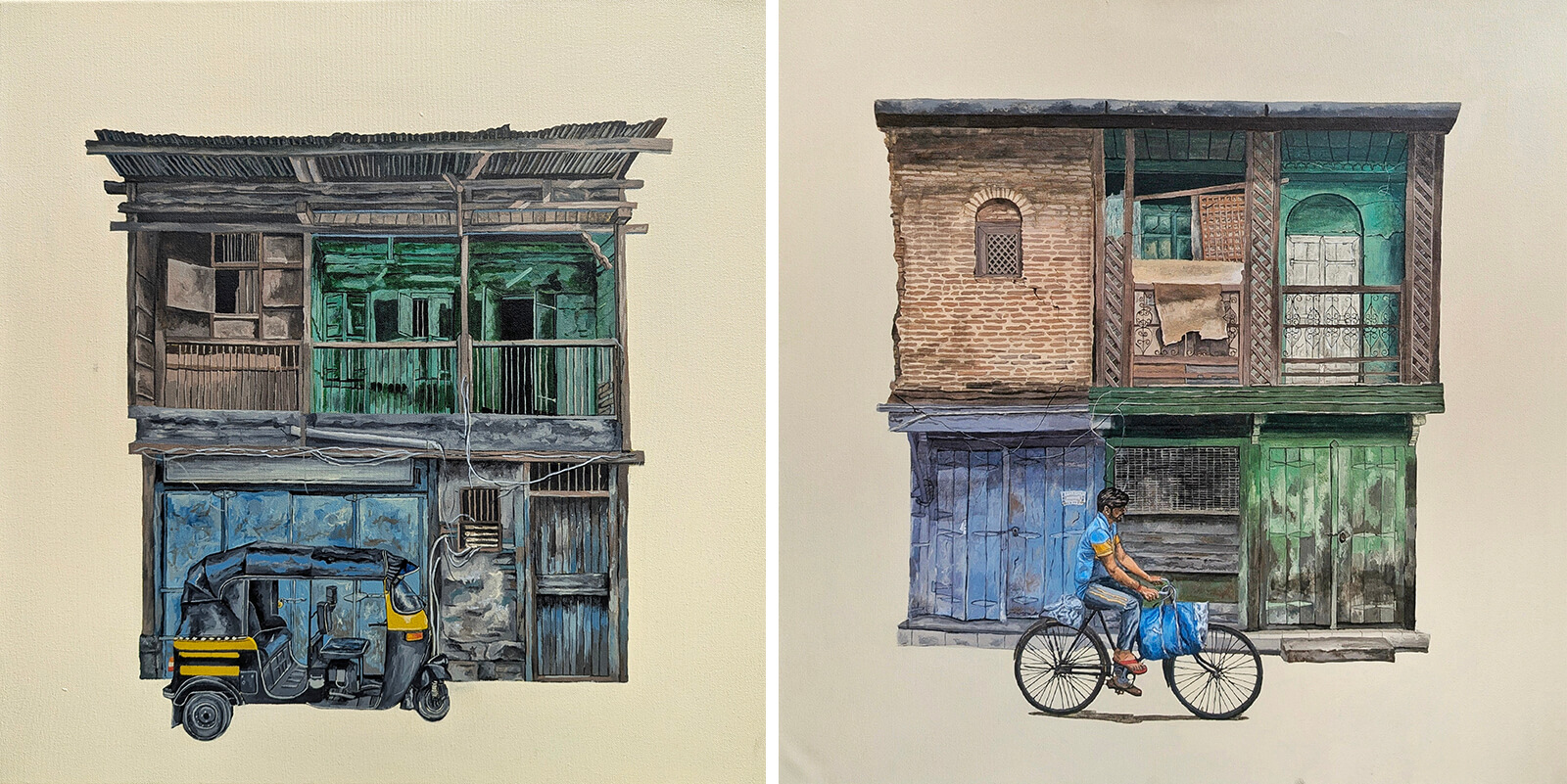
Pande’s paintings are read as more than just a record of the city. Pune has close to 2,800 old wadas, and before each monsoon the municipal corporation surveys them and ranks how likely each is to give way. In 2025, the PMC’s building department sent notices to 36 wadas judged dangerous, and 15 of them have since been pulled down. In Pune, as in other cities where the old quarter is priced out of itself, historic neighbourhoods face the same pincer: of either their preservation into a museum or a redevelopment that treats residents as an obstacle to either plan. Pande’s renditions of wadas suggest a third possibility: continued use. A building that is old and damaged and still occupied, rooted in the present. The wadas work as a reminder of what a city risks when it allows a place to become either a memory or an artefact, but also a home.
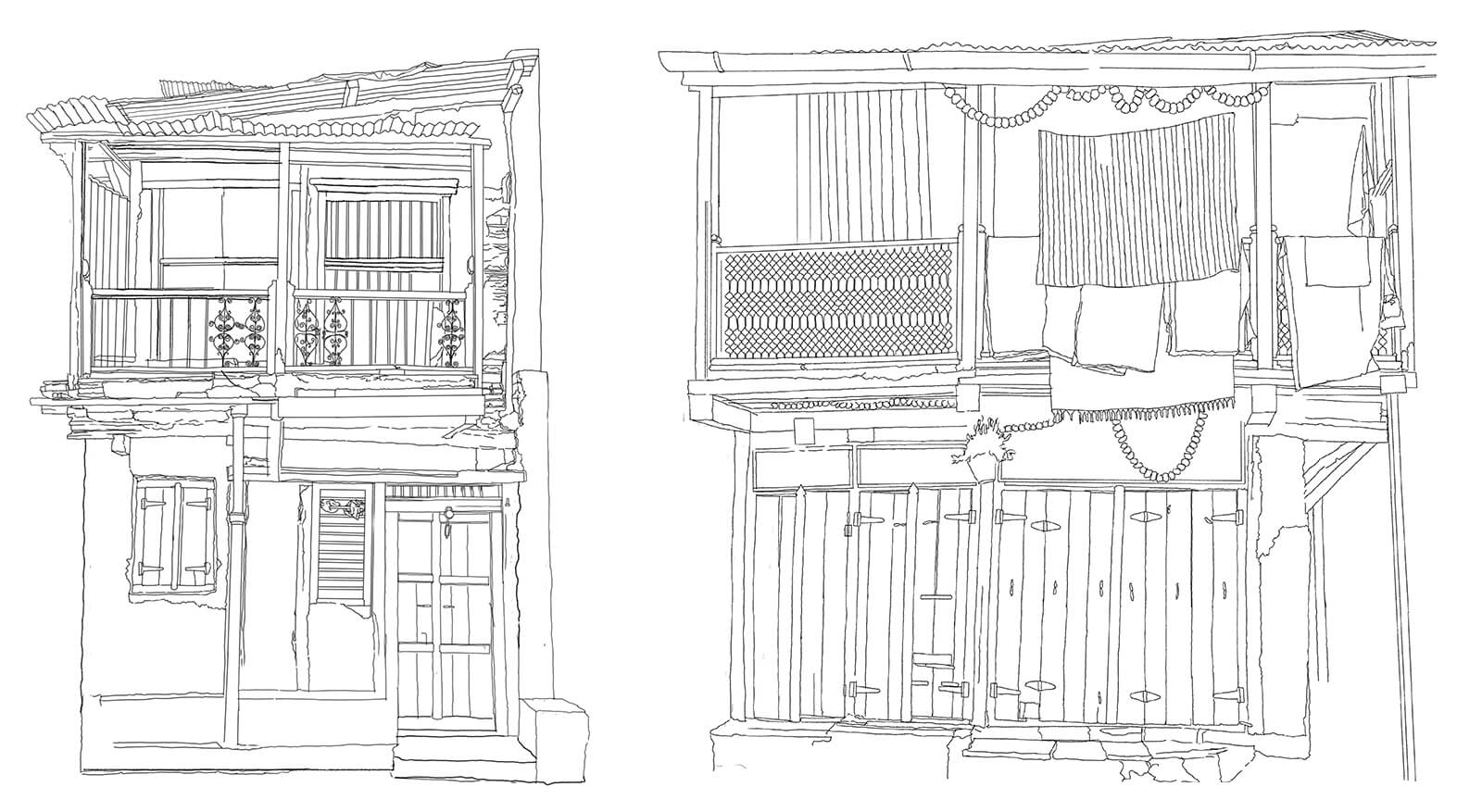
Lifting an object onto a blank canvas, separated from its context, lit and given room to breathe, is also how museums present what they have chosen to preserve and display, and there is a risk that the empty space turns the wada into the monument Pande’s wires, steel jalis and stains resist. What saves the paintings from that fate is what he refuses to (re)move; he deletes the city but keeps its layers, and most of its damage. It is also what separates Pande’s silence from the silence of abandonment: the laundry is out to dry, and someone, we understand, will be back to bring it in.
The cable still runs across the facade, taut against the weathered plaster. Somewhere inside, a light is on; a television hums, or a mixer buzzes. The wada is not yet a memory but remains a resident, trying to survive.
by Anmol Ahuja Oct 15, 2026
How do heaps of souvenirs and relics with racist Aboriginal motifs and features become art? MCA Sydney’s winter showcase—the artist’s largest to date—beckons a possibility.
by Vandana Kalra Oct 14, 2026
With his latest exhibition as a point of departure, the modernist discusses his decades-long practice, the spontaneity of drawing and the social responsibility of artists.
by Srishti Ojha Oct 14, 2026
The first Dutch publication on the Turkish artist, the eponymous book centres on Refik Anadol: Latent City, his living data sculpture of Bruges, exhibited at BRUSK gallery.
by Srishti Ojha Oct 09, 2026
In his ongoing exhibition, the South African artist creates two post-apocalyptic futures to explore society’s relationship with textiles, patterns and technology.

make your fridays matter with a well-read weekend
Enter your details to sign in
Don’t have an account?
Sign upOr you can sign in with
a single account for all
STIR platforms
All your bookmarks will be available across all your devices.
Stay STIRred
Already have an account?
Sign inOr you can sign up with
Verification link sent to check your inbox or spam folder to complete sign up process
Tap on things that interests you.
Select the Conversation Category you would like to watch
Please enter your details and click submit.
Enter the 6-digit code sent at


Charudatt Pande’s wadas are portraits of a city between memory and ruin
by Mirra Lynn | Published on : Oct 20, 2026


 Sign in with Google
 Sign in with email
What do you think?