Design06 mins. read
DUDD LITE at The Future Perfect reimagines the nightlight as an object of whimsy
by Chahna TankJun 22, 2026



by Pranjal MaheshwariPublished on : Jul 06, 2026
‘Nothing’ can indicate an absence, a dismissal or suggest the possibility of something. After all, every creation starts from a blank canvas. In Korean culture, the idea of yeobaek-mi describes how this ‘emptiness’ is integral to existence. It is not where presence stops or meaning is exhausted, but a conscious, deliberate space between the object and the observer that facilitates engagement. It finds beauty in empty spaces, emphasising that it doesn’t necessarily mean a void, but an entity in its own right—one that is as important as substance. Together, ‘something’ and ‘nothing’ narrate existence.
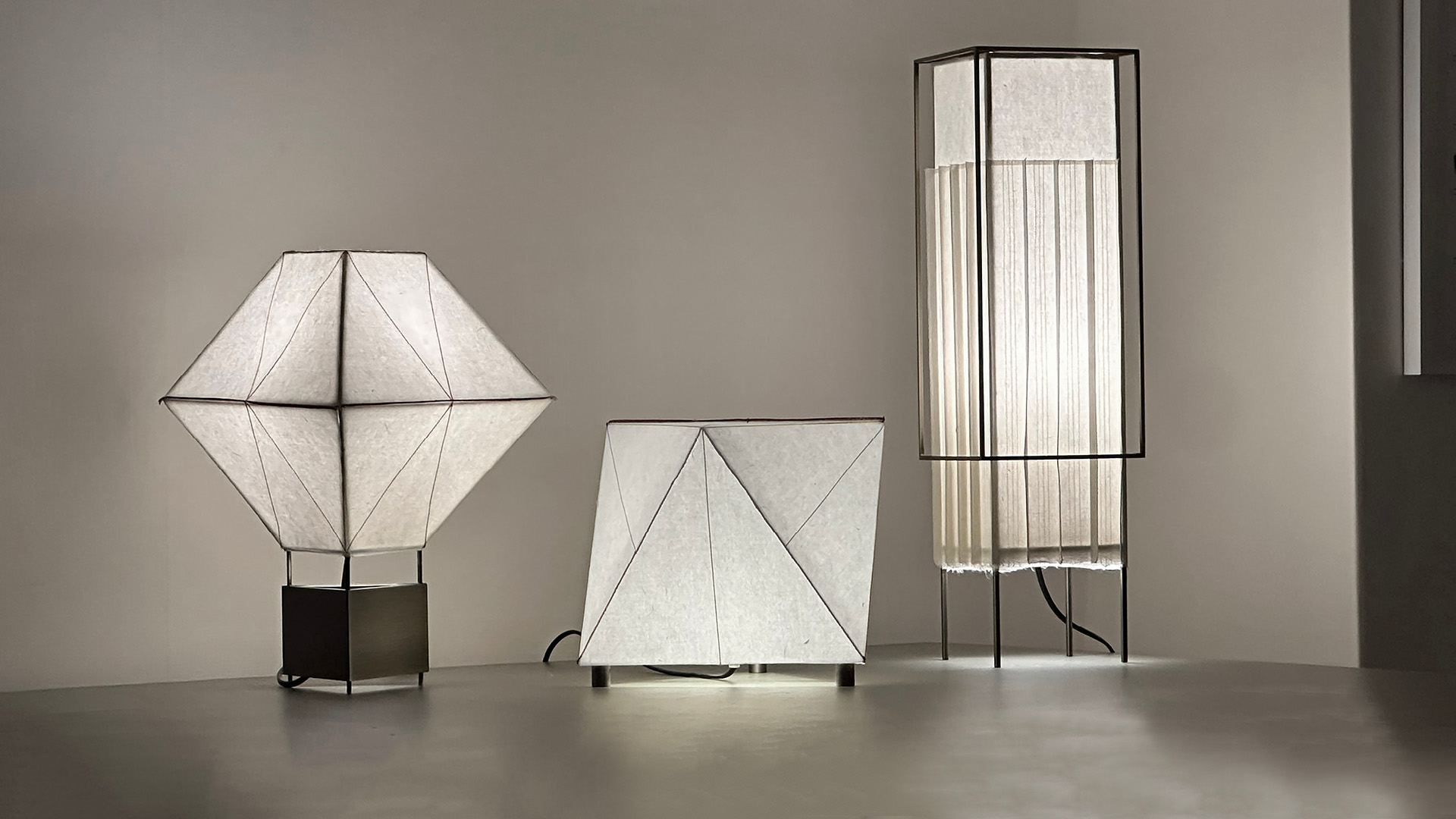
This is also how Seoul-based product designer Bo Ah Kim interprets light. In itself, light is immaterial, but its presence illuminates the surrounding space, shaping the viewer's observation, understanding and interaction. She illustrates this understanding through her recent lighting collection, biiit.
Unsettled by the monotony and standardisation in the contemporary design landscape—forms often smooth, polished and devoid of any memory of its place or maker—Kim established MANO Design Studio, her lighting and product design practice in South Korea, back in 2016. The studio strives to produce, as the designer puts it, ‘things with thingness’: objects that reach beyond their functional obligations to find meaning by anchoring themselves in their place and time.
The eleven lighting designs comprising the biiit collection (with biiit009 still under production) embody this ethos: equalising material, expression and function. The first indication lies in the nomenclature itself: the root, bit, Korean for light, is expanded to incorporate the lamp collection’s three defining constituents (the three ‘i’s): hanji, the traditional Korean paper; stitch; and light.
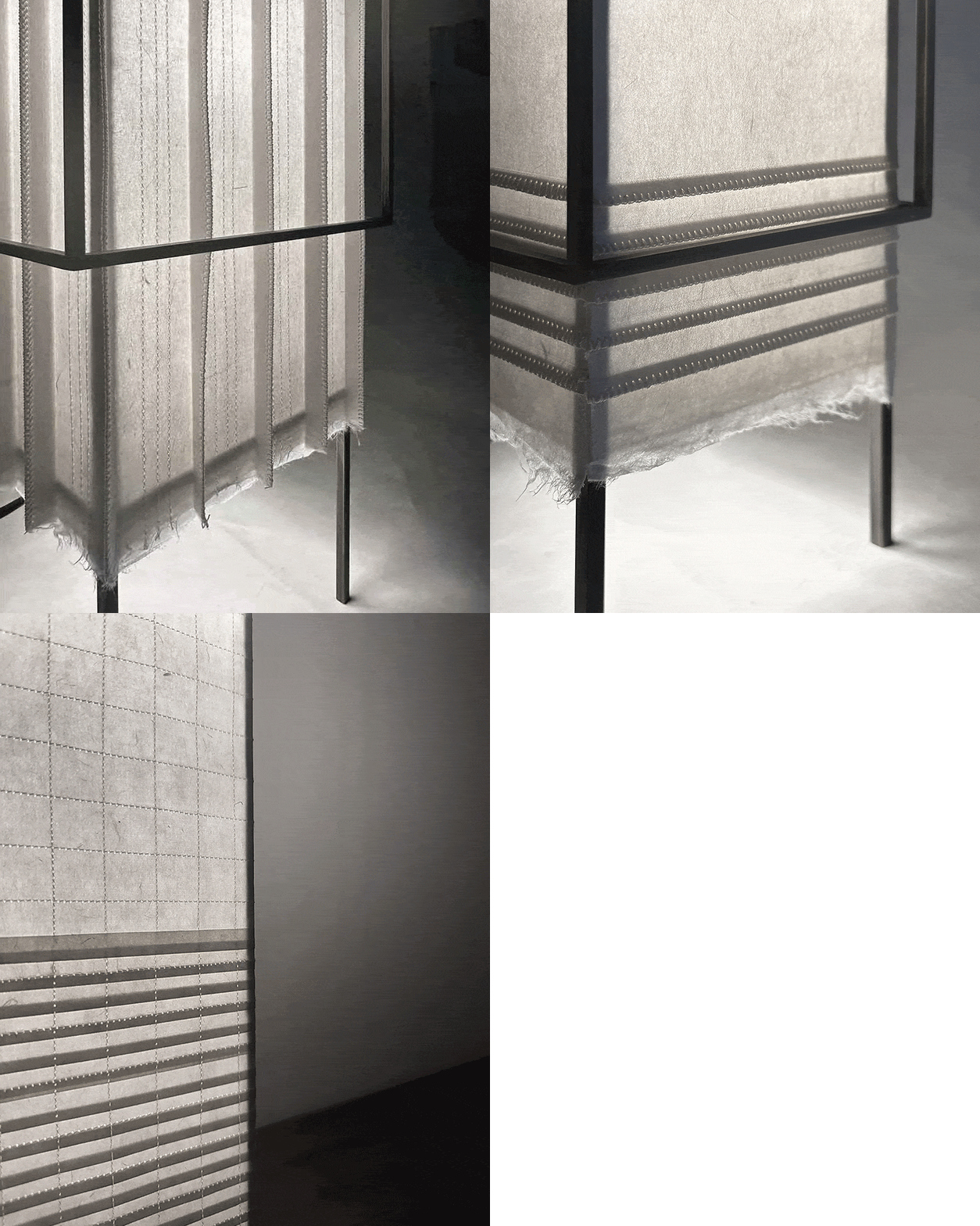
According to the project’s description, rather than positioning the maker as the dominant force manipulating the material, the process is rooted in reciprocity. The first element, hanji, is handcrafted from the paper mulberry tree and is known for its durability and breathability. Its production is largely labour-intensive, giving each sheet a unique texture. “The entire process of making moves within a framework of a reciprocal relationship. Nothing exists outside of nature; nothing stands above it. By acknowledging this, the intrinsic characteristics of the material are preserved as a distinct trace on every finished piece. Ultimately, it is not just the essence of the paper that is unveiled, but the true nature of the maker," the release states.
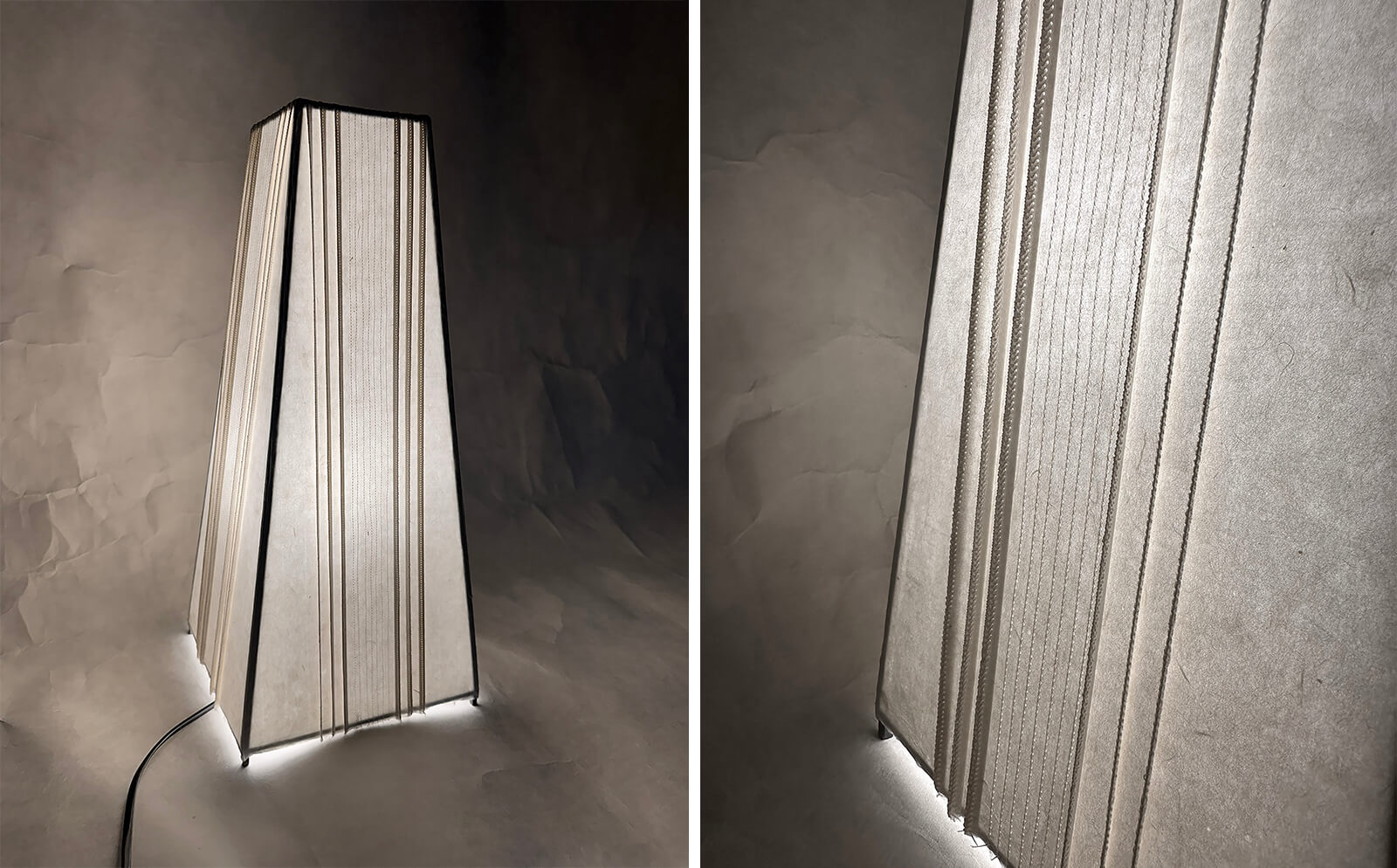
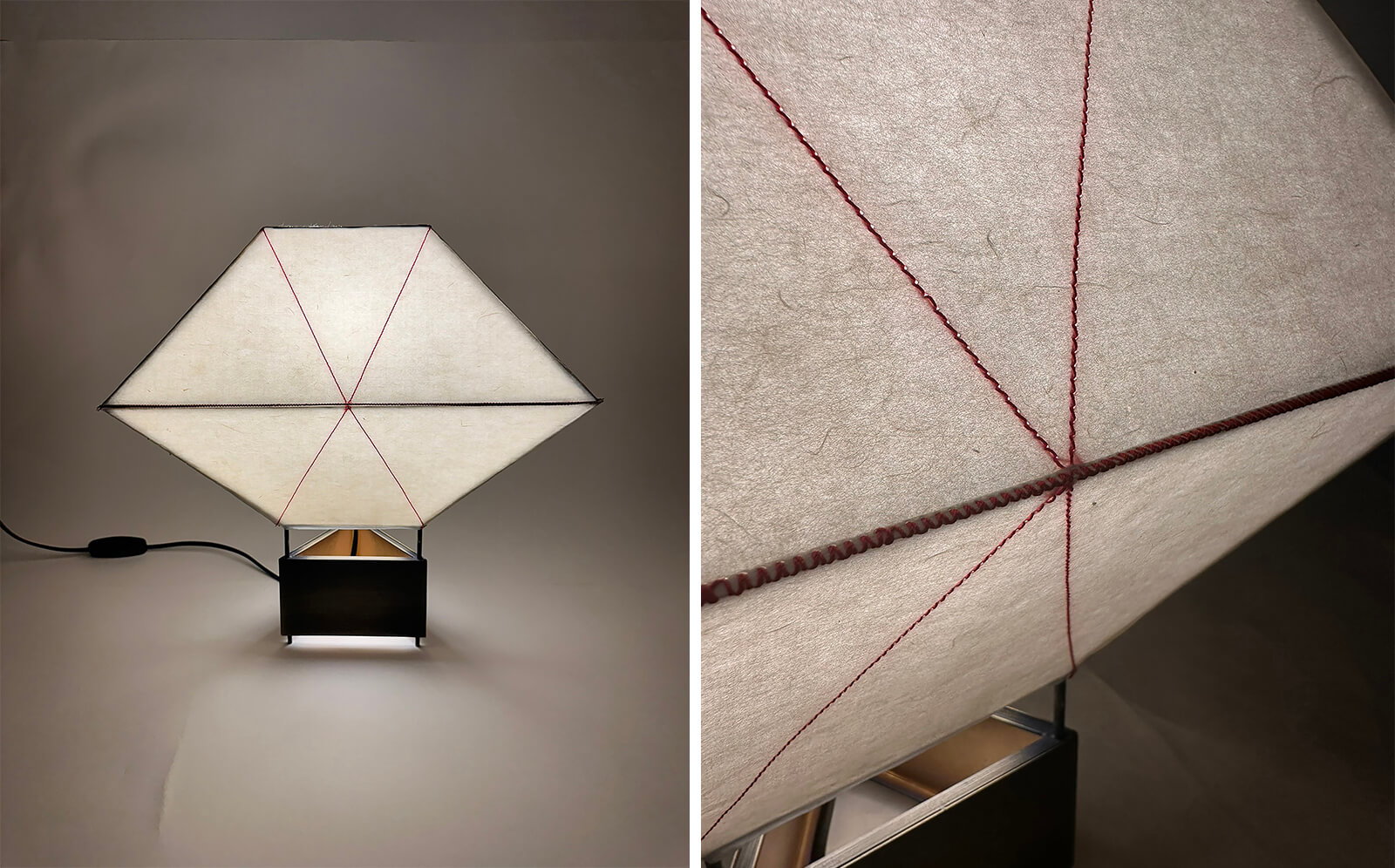
Over centuries, hanji has been used across a variety of functions within the realms of fine arts, interior design, architecture, fashion and more. When used as a screen in windows, doors and lighting fixtures, its inherent textured translucency lends a distinct warmth to the light that permeates it. It was this relationship between hanji and light that drew Kim to employ it for this collection. “The light filtered through hanji is quiet,” she tells STIR. “Rather than filling a room with brightness, it leaves room for shadows to settle. Darkness and light coexist; darkness is as essential as light”.
In an era of excessive homogenisation, I choose to preserve the small differences that naturally emerge in handmade products—the traces of the human hand, the presence of time, the imperfection that fractures uniform perfection. – Bo Ah Kim, MANO Design Studio
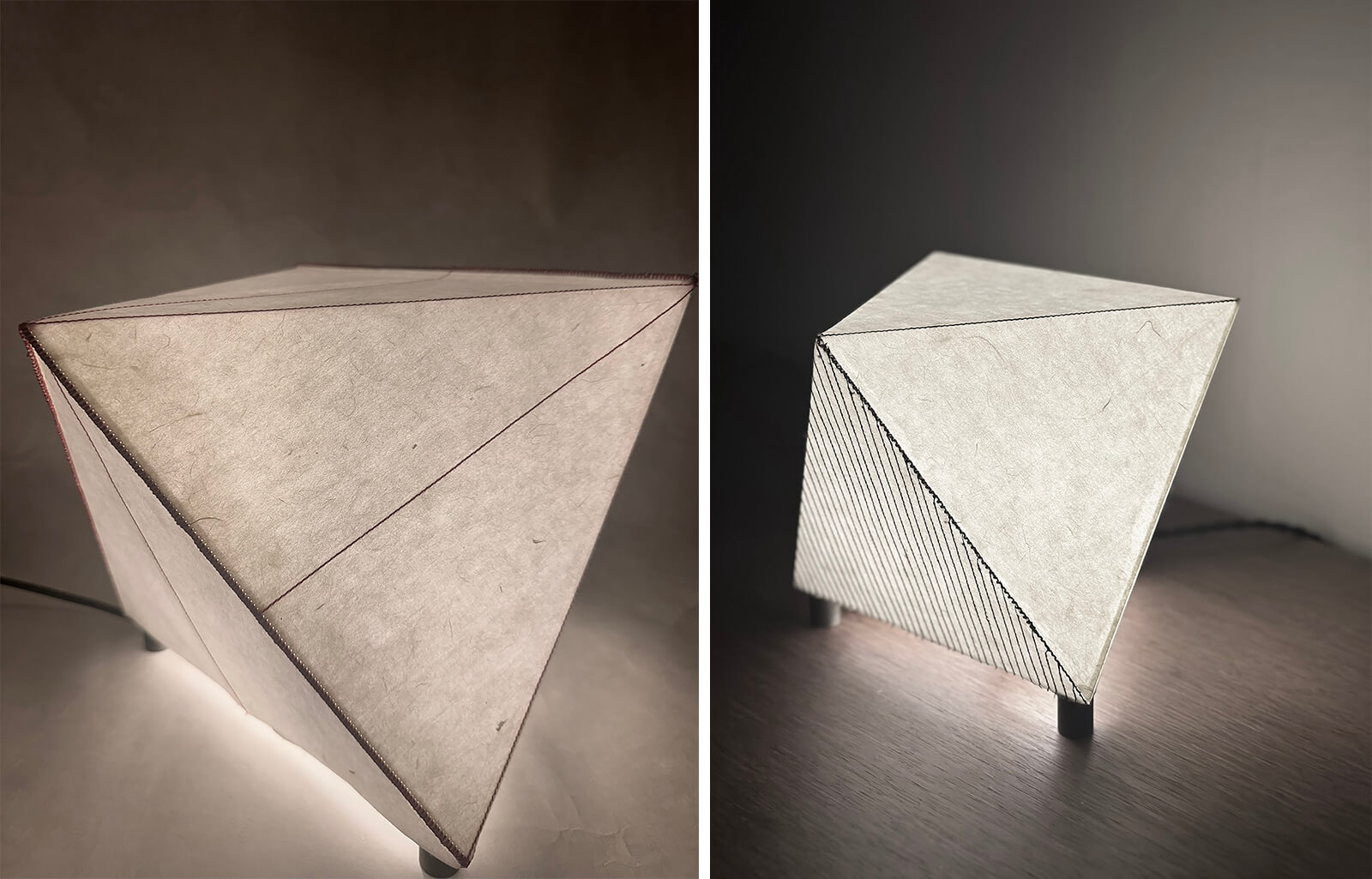
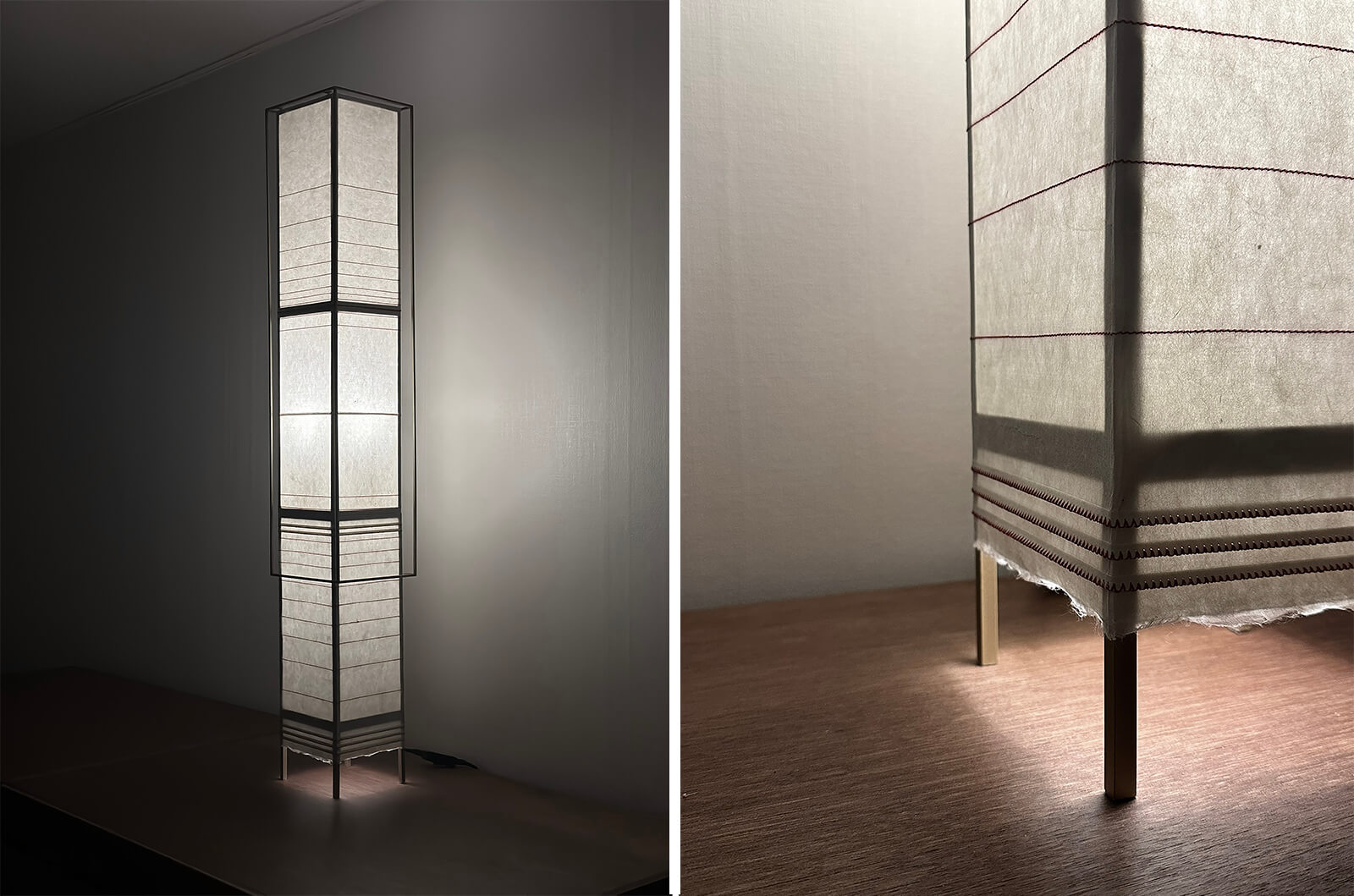
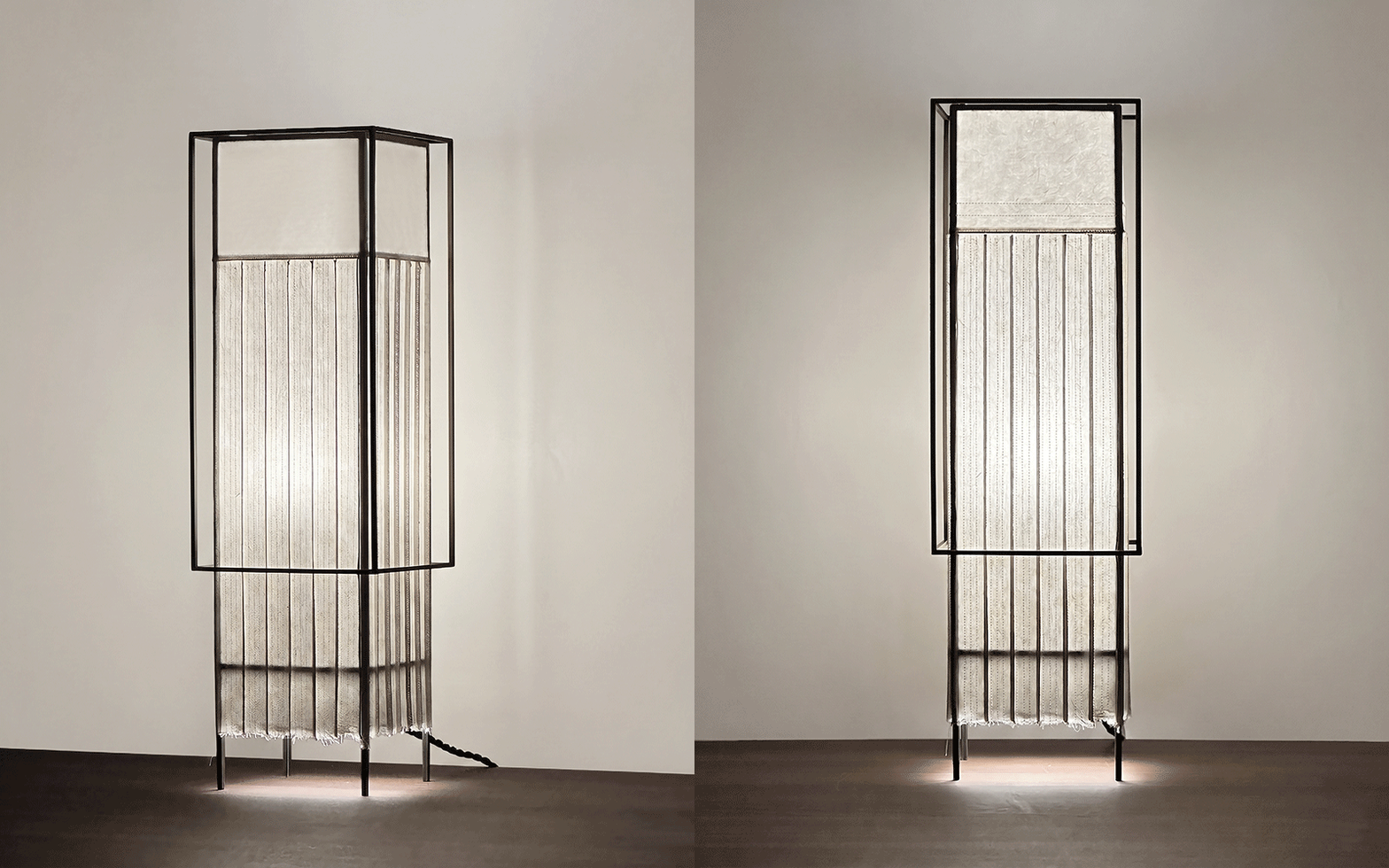
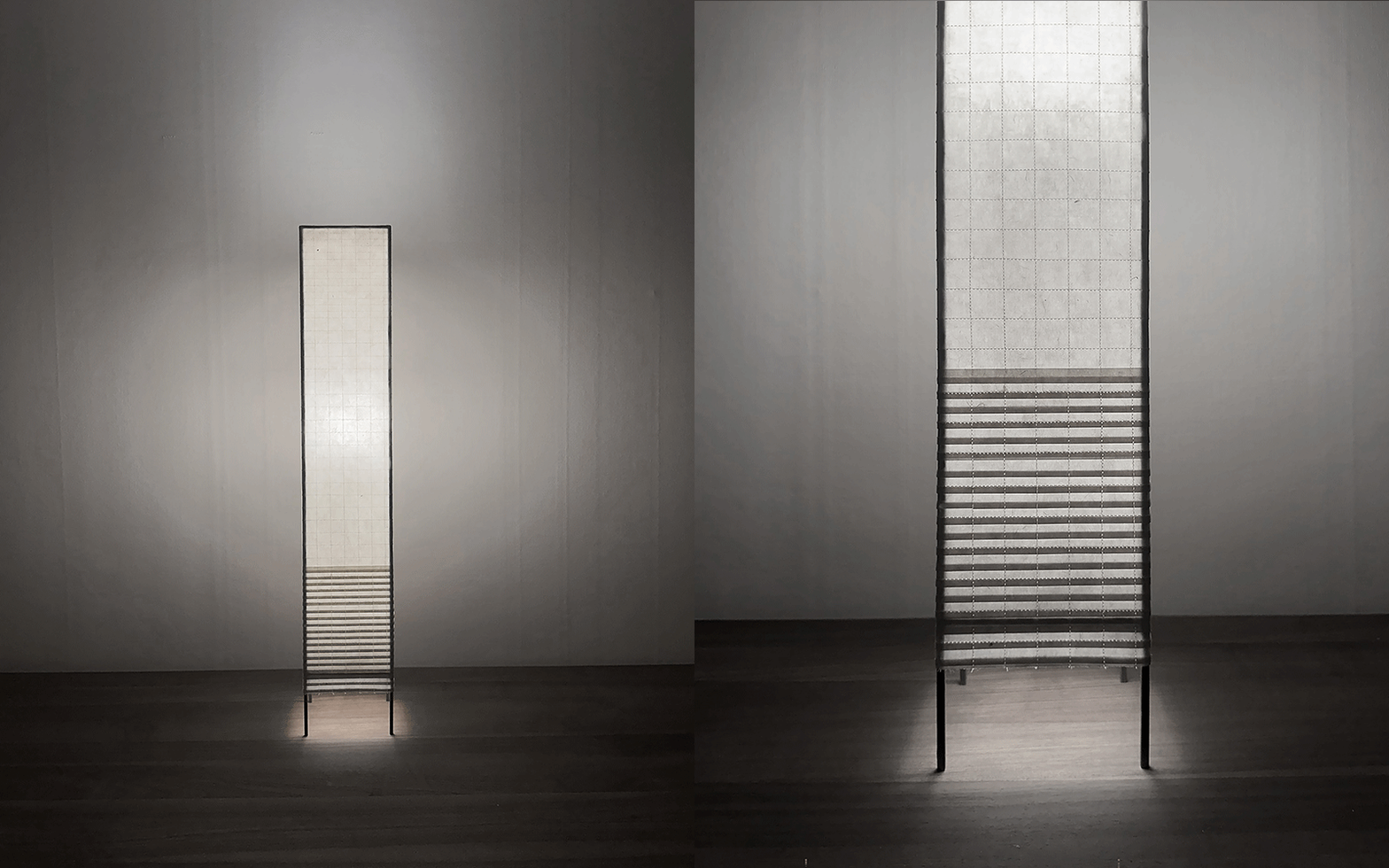
While hanji gives the lamps an unassuming, restrained character, the second element— the stitch—defines their distinct expression. Kim explores hanji’s fabric-like elasticity and softness with stitching patterns and techniques used to make traditional Korean attire. biiit 001 – 004, 008, 010 and 011 integrate the linear rhythms of Saekdong, a patchwork pattern usually made with colourful strips of cloth. Here, the patterns are reinterpreted in plain stripes of hanji, which are pleated, sewn together and then wrapped around steel frames. Meanwhile, biiit 005 – 007 take the form of polyhedra composed of triangles—a traditional symbol of ascent, movement and continuous transformation. The geometric compositions recall Jogakbo, a traditional patchwork technique that repurposes fabric offcuts into wrapping cloths.
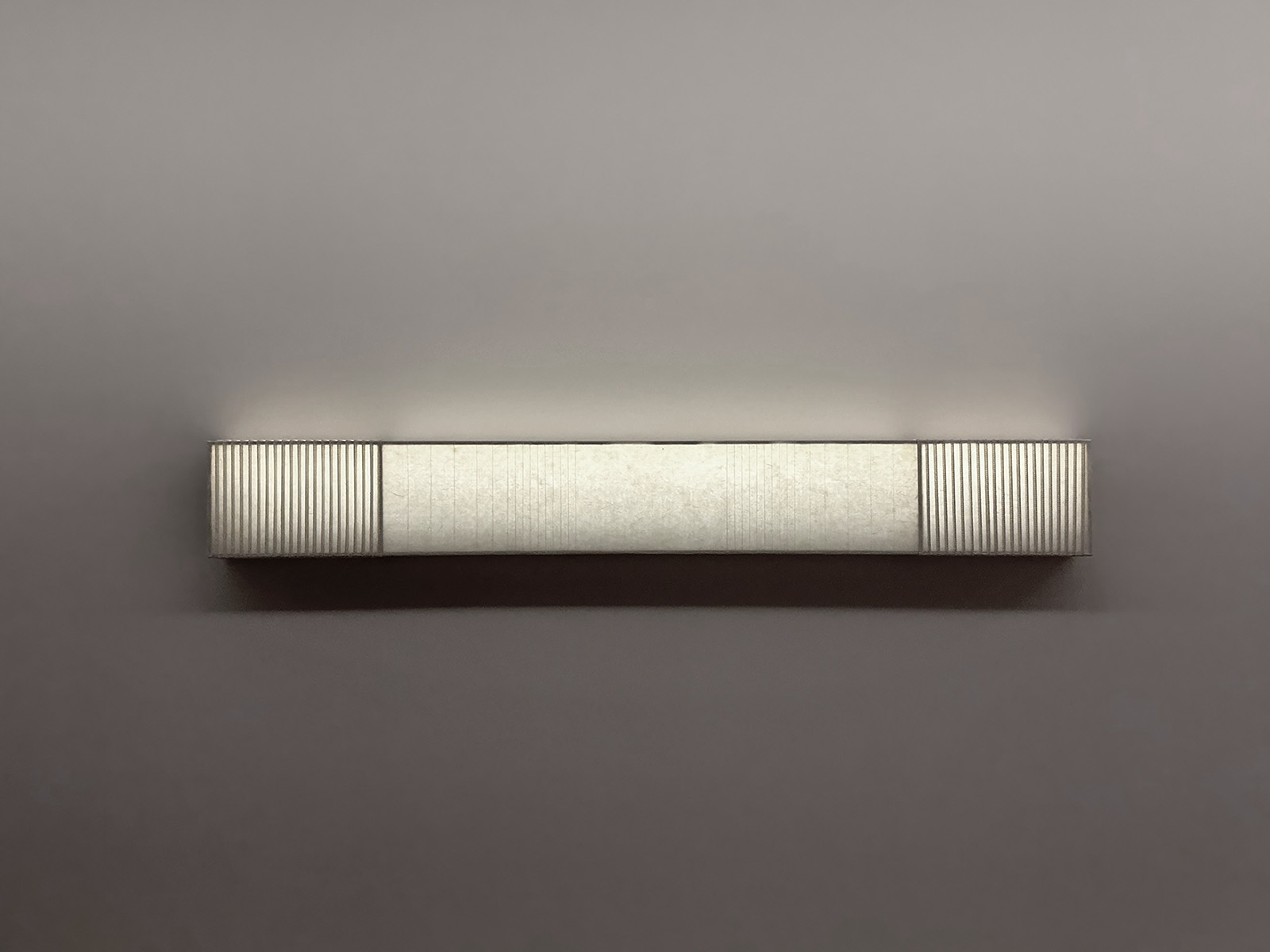
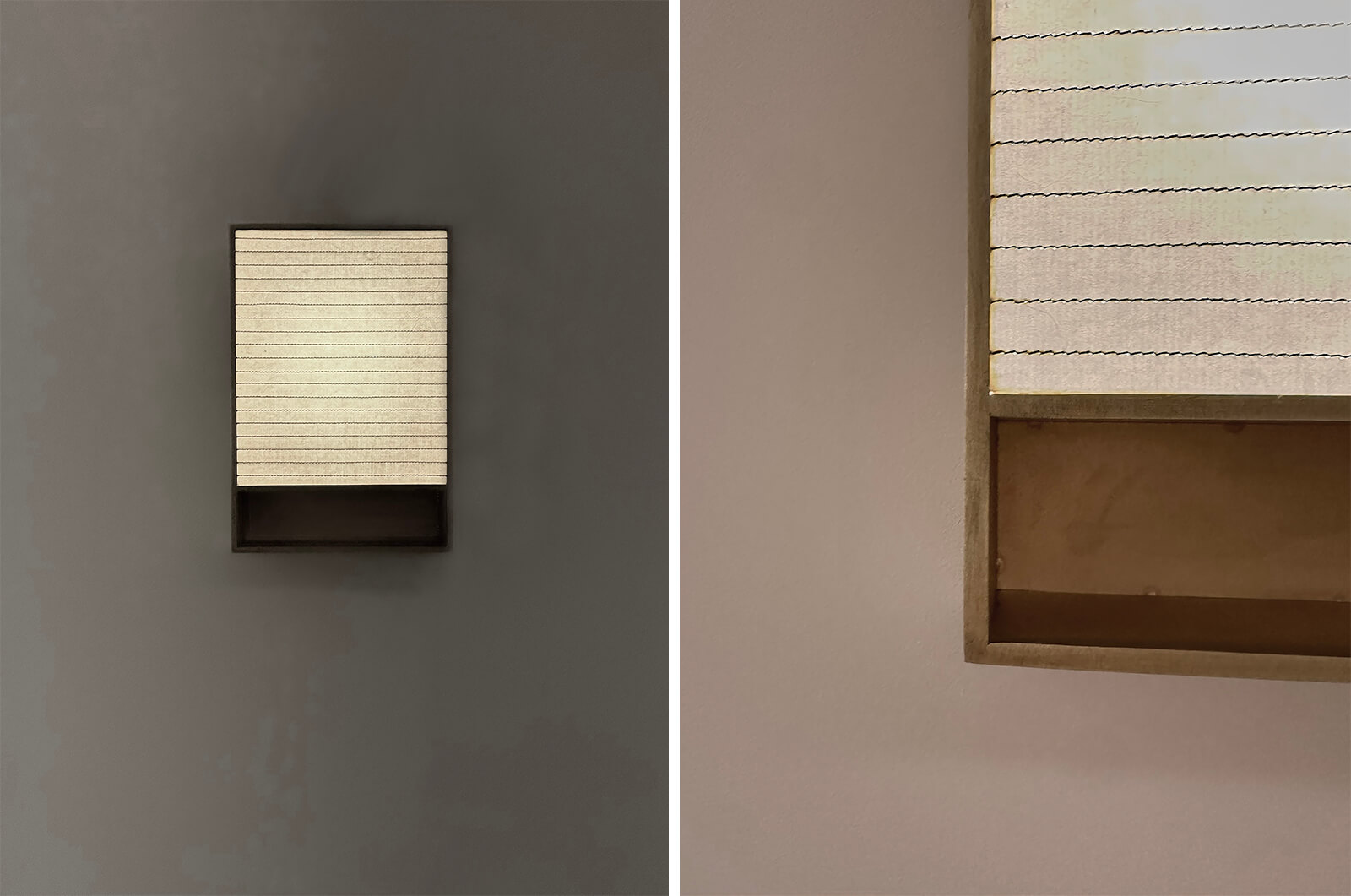
The stitch marks run as a distinguished, defining aesthetic across the seams and surfaces of the collection, which was displayed at the Milan Design Week 2026 and 3daysofdesign this year, as part of Soft Monuments, a curated exhibition hosted by Tadamia. The precision in each stitch is accentuated further by the third element—light—as if in celebration of the craft and cultural lineage integrated in the design. “Each stitch comes to mean something through the empty space between one line and the next. The stitch leaves only what is necessary and reveals the emptiness around it,” Kim says, emphasising how the expression embodies the idea of yeobaek-mi—the beauty in emptiness; meaning in the space that remains.
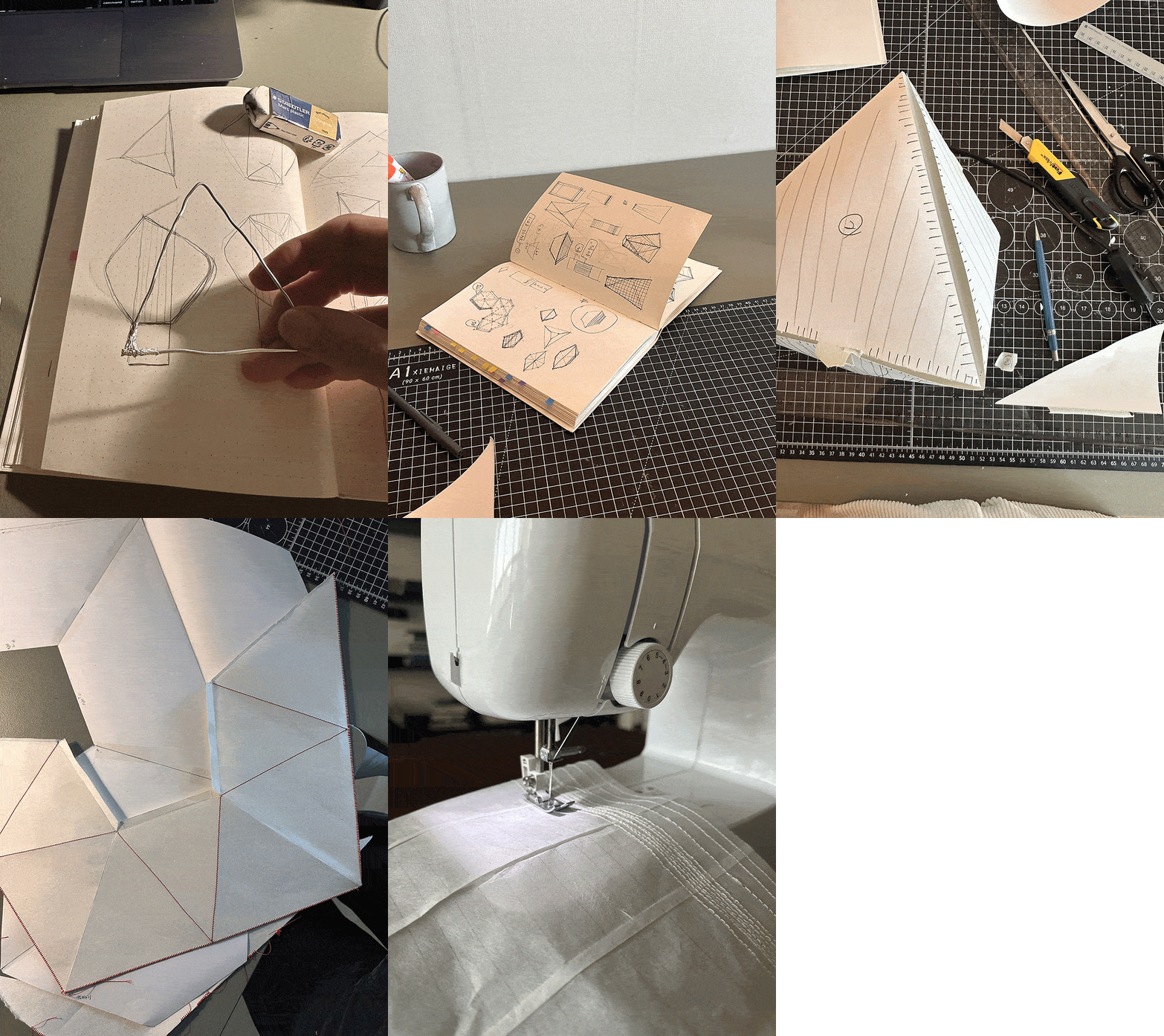
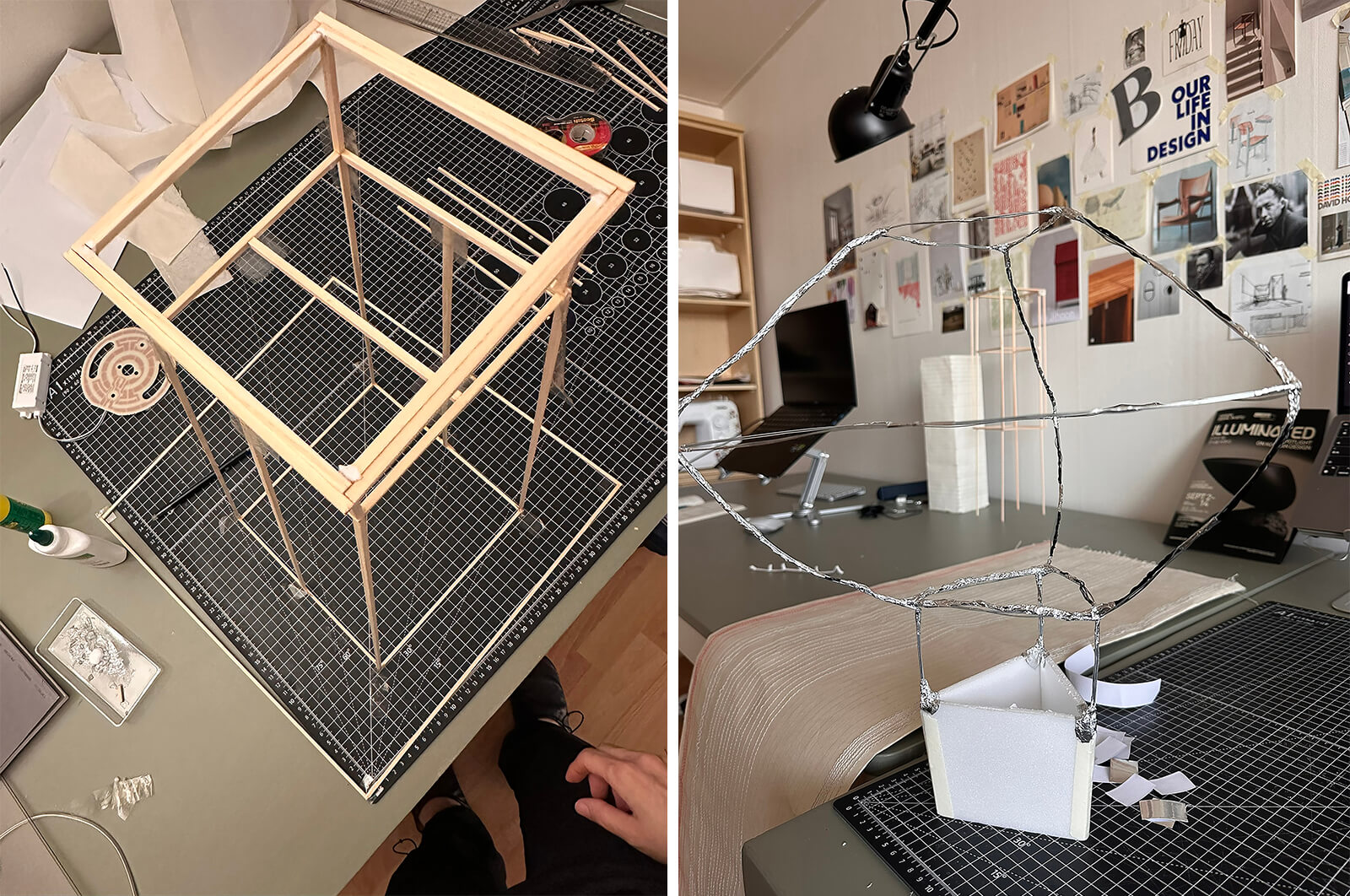
Featuring LED sources, the light is fixed on the sleek steel frames with a matte brass finish. Traditionally used to make candlesticks, brass here becomes the skeletal support for hanji, the designer relays. “The frame gives form to its soft, luminous skin. The firm, cool metal and the soft, light paper meet as two opposite natures,” Kim shares with STIR. She uses an eco-friendly adhesive to fix the paper, which is stretched taut and evenly across the frame to soften the light that passes through it. “Because LED light gives off almost no heat, the hanji can sit close to the source while keeping its delicacy and translucency intact,” she elaborates.
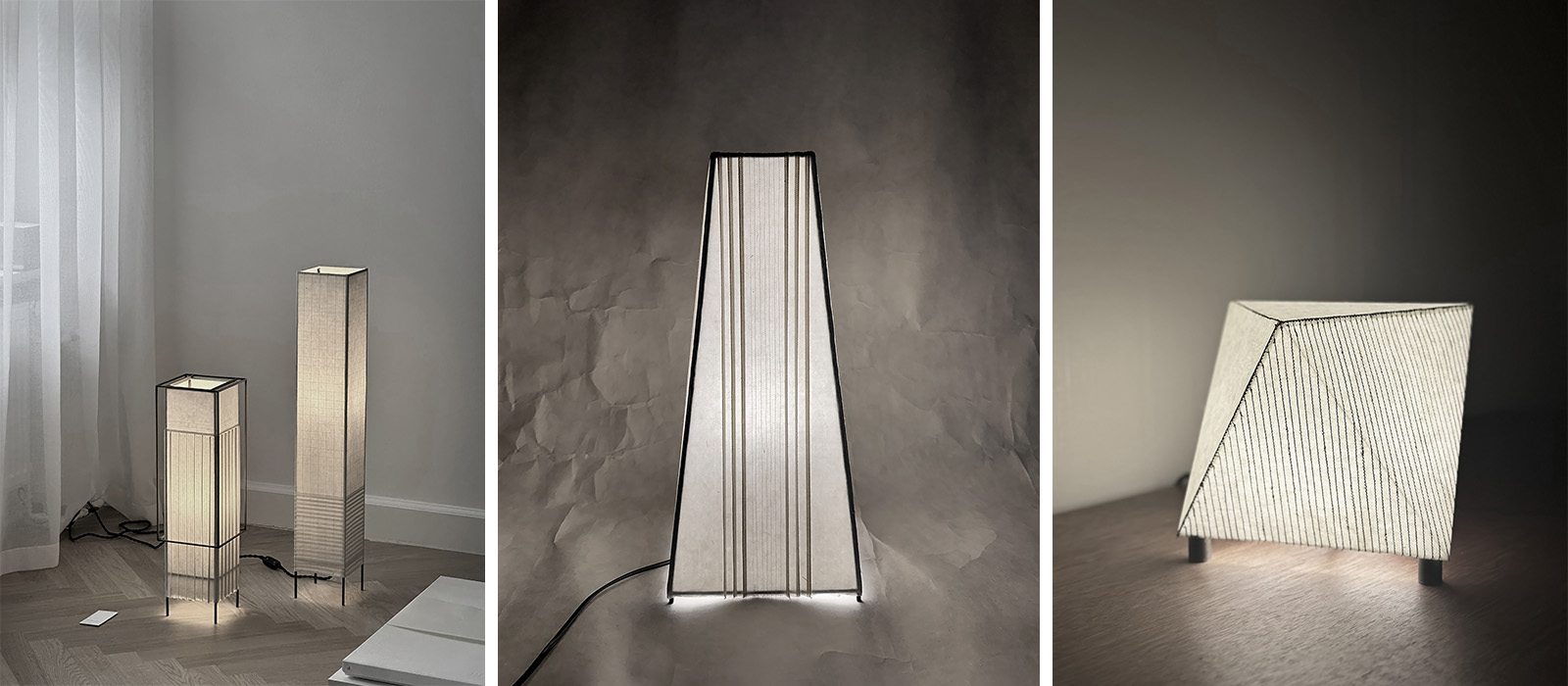
Light, in its essence, is immaterial. The lamps then become vessels of apparent emptiness—made of tangible materials, hanji and metal, yet ultimately giving form to ‘nothing’—epitomising the fascinating paradox that light presents as: a massless, immaterial phenomenon that enables us to experience physical reality tangibly. Luminance here manifests in different, unique ways, guided by the subtle contours and organic shadows of the textured paper. “Light transcends a mere function and is reborn as a 'presence', constructed through the cumulative accumulation of deliberate action,” Kim describes in the project’s description. “By revealing the trajectory of time and the profound beauty of imperfection, I strive to fracture the uniformity of contemporary objects and restore their true 'thingness'.”

by Pranjal Maheshwari Oct 13, 2026
Through furniture, art and films, the showcase at the Ian Potter Centre in Melbourne advocates for biophilic material cultures as an antidote to planetary degradation.
by Pranjal Maheshwari Oct 12, 2026
The exhibition reimagines the 20th-century Scottsville residence of the American sculptor and his partner, ceramicist Nancy Jurs, curated by their daughter Alison Castle.
by Mrinmayee Bhoot Oct 08, 2026
The game designer discusses their work and its manipulation of scale, scientific data and non-human perspectives to create speculative futures in conversation with STIR.
by Chahna Tank Oct 08, 2026
Javier Guzman Cervantes and Ulises Morin Arzola tell STIR about their ‘open code’ approach to design, working through a process of stockpiling and the idea of ‘queering’ materials.

make your fridays matter with a well-read weekend
Enter your details to sign in
Don’t have an account?
Sign upOr you can sign in with
a single account for all
STIR platforms
All your bookmarks will be available across all your devices.
Stay STIRred
Already have an account?
Sign inOr you can sign up with
Verification link sent to check your inbox or spam folder to complete sign up process
Tap on things that interests you.
Select the Conversation Category you would like to watch
Please enter your details and click submit.
Enter the 6-digit code sent at


Designer Bo Ah Kim stitches the beauty of emptiness in the biiit lighting collection
by Pranjal Maheshwari | Published on : Jul 06, 2026


 Sign in with Google
 Sign in with email
What do you think?