Design09 mins. read
Isamu Noguchi was never a designer, affirms High Museum of Art, Atlanta
by Sunena V MajuMay 21, 2026



by Chahna TankPublished on : Aug 08, 2026
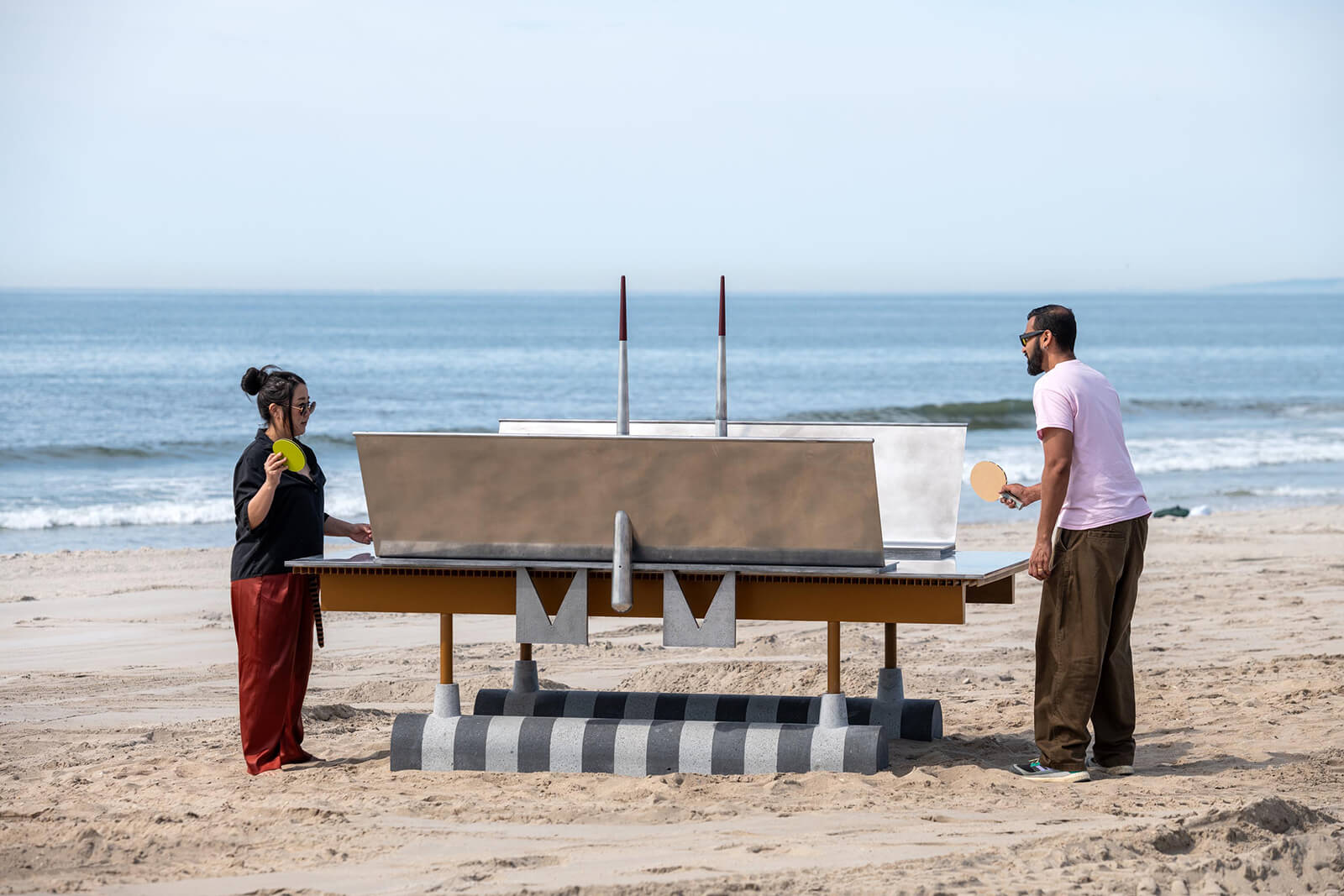
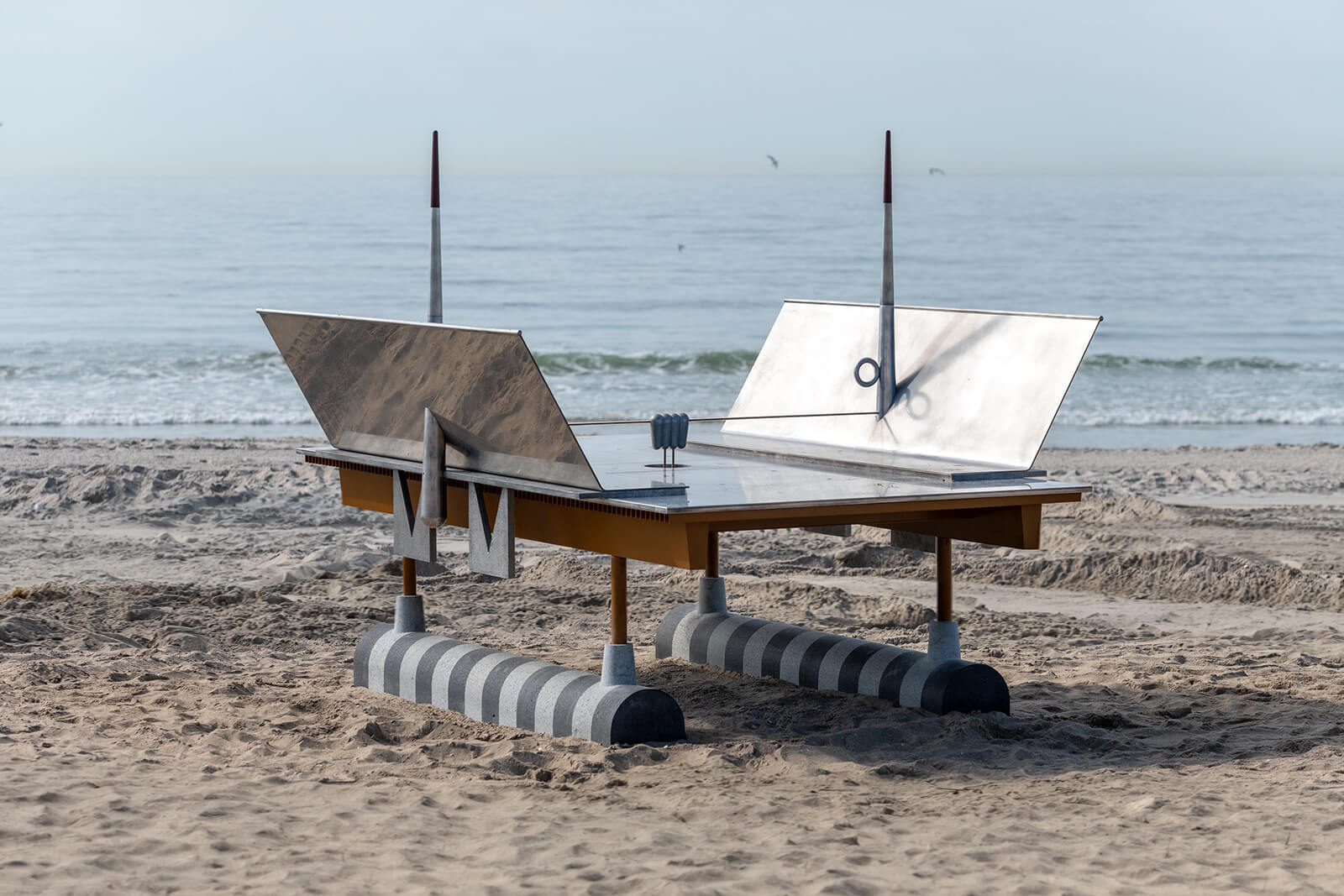
Ping-pong tables are not something people might expect to see on a beach, as they arrive to escape the summer heat. Yet, that's exactly what one would find if they're at Beach 67, Rockaway Beach in Queens, New York, from June 27 – September 13, 2026. Playful and seemingly outlandish, six sculptural ping pong tables by six contemporary artists and designers have been installed by Public Art Fund—an independent, non-profit arts organisation dedicated to bringing contemporary art to public spaces across New York—as part of their outdoor exhibition, Between Tides, transforming the shoreline into an open-air playground, “expanding the boundaries of play, participation and fun”, as the project’s press release notes.
Rockaway Beach turned out to be the perfect site for this interactive exhibition. One of New Yorkers' favourite summer destinations, it is hardly a place where one might expect to find the opportunity to interact with contemporary art and design. "It is a place where people already gather to swim, play, exercise, socialise and spend long stretches of time during the summer. This allowed the artworks to enter into the rhythms of everyday life rather than asking visitors to seek them out," Gabriela López Dena, associate curator of public practice at Public Art Fund, tells STIR.
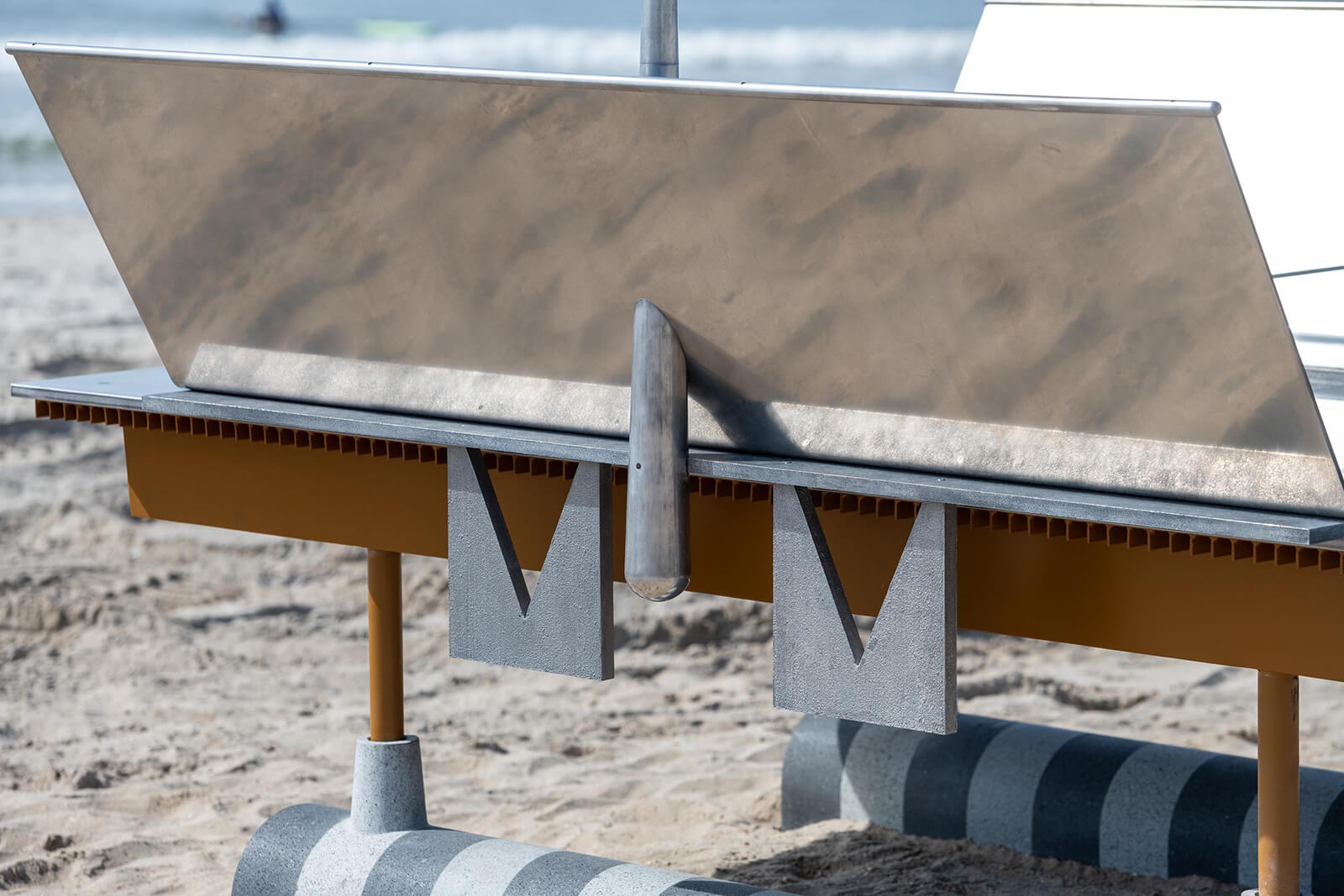
The ping-pong table as the exhibition’s central object is an unexpected yet unsurprising choice to ‘catalyse social connections’. "I was interested in an object that was immediately recognisable and already carried an invitation to participate," López Dena explains. "Unlike many forms of public furniture, a ping-pong table does not simply accommodate people; it creates a structure for interaction and play among strangers, friends and spectators." Visitors are encouraged to interact with the tables and play to their heart’s content, with Public Art Fund providing paddles and balls free of charge on weekends. The six local and international creatives stretch the known form of the ping-pong table in sportive and unexpected directions, reimagining them as a sea legend, an interspecies habitat, a musical instrument, a multiplayer experience, a ceramic sculpture and a modern interpretation of the ancient Mesoamerican ballgame.
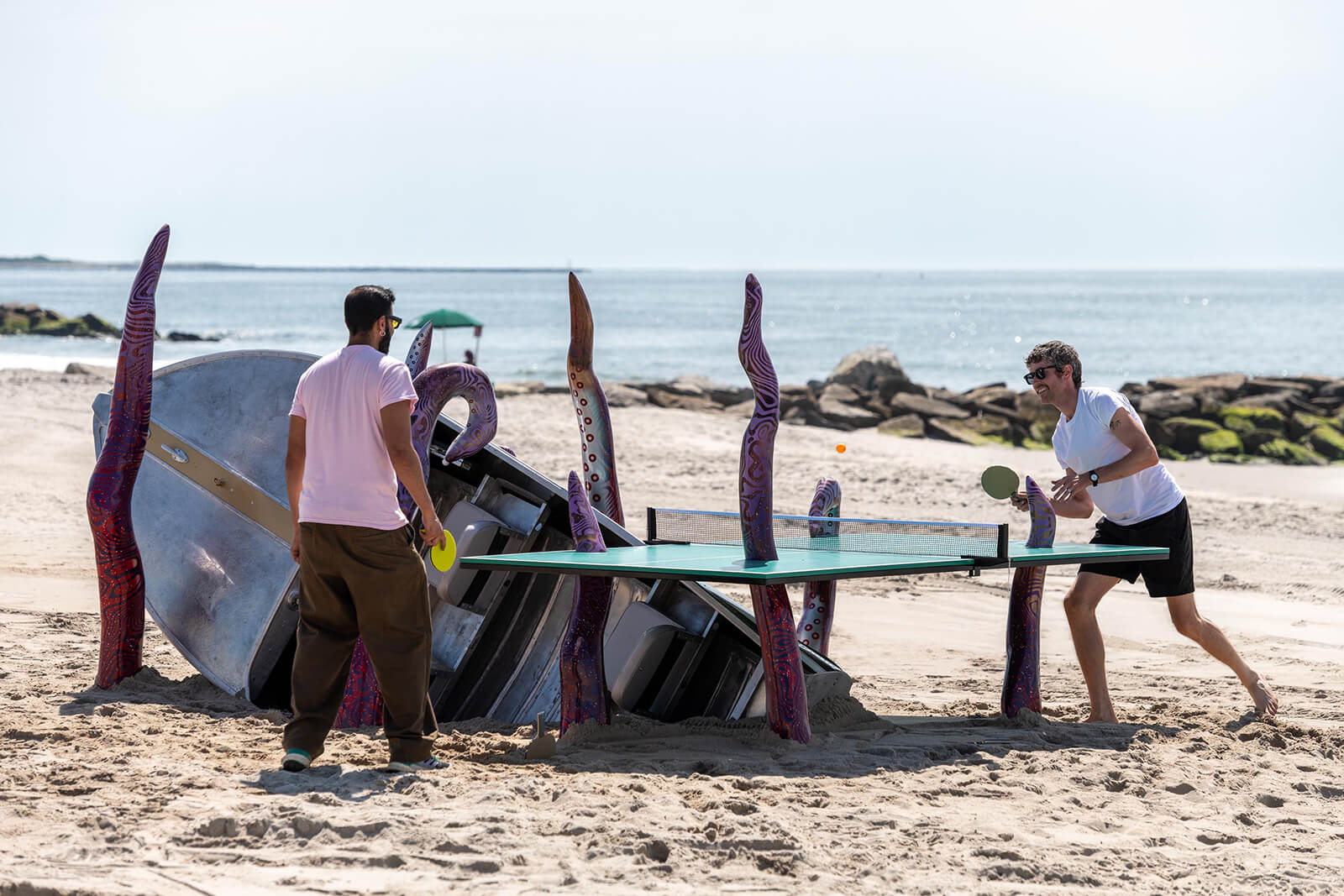
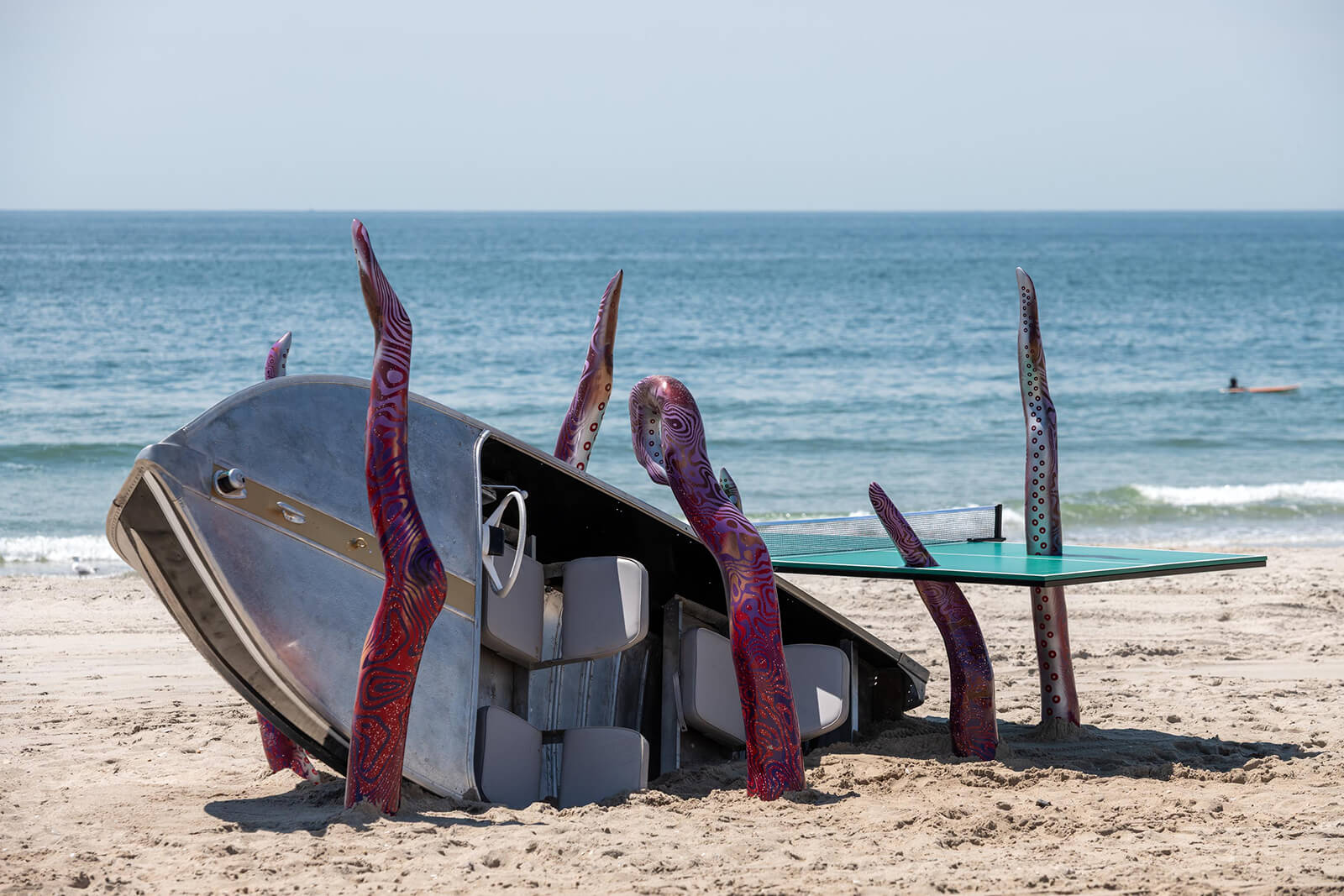
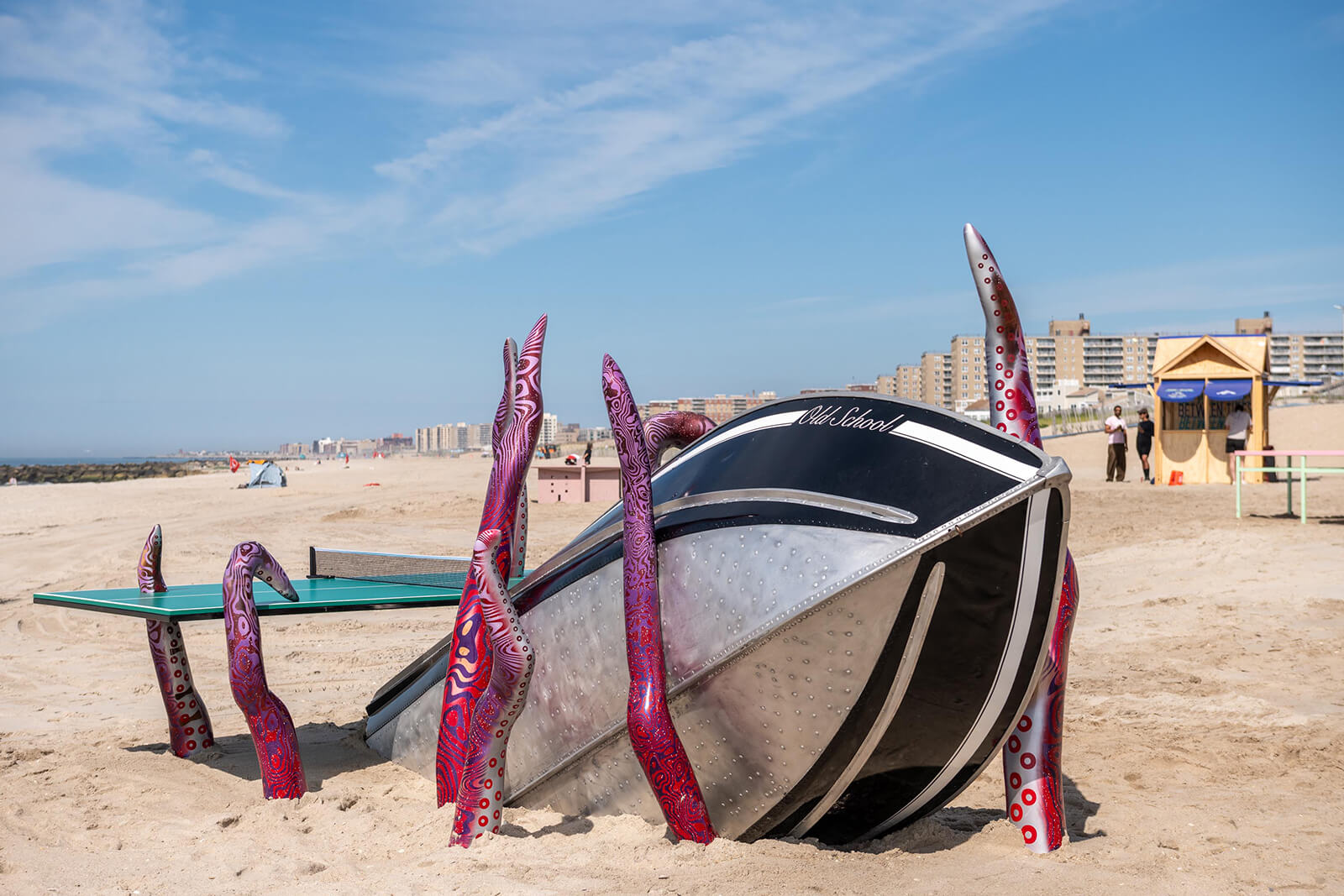
Japan-born, Brooklyn-based multidisciplinary artist Moko Fukuyama's Old School sees a ping-pong table and a salvaged Marina 59 boat gripped together by the tentacles of a giant sea monster—perhaps the mythical Kraken, or the Japanese sea deity Akkorokamui, said to turn calm waters tumultuous. Crafted from reclaimed walnut wood and finished in vivid automotive paint, the tentacles take on an almost otherworldly presence, while the capsized boat reinforces the idea of nature's eventual reclamation of even the most enduring human-made objects. As the curator explains, Fukuyama connects the "immediate maritime environment to mythology and imagination".
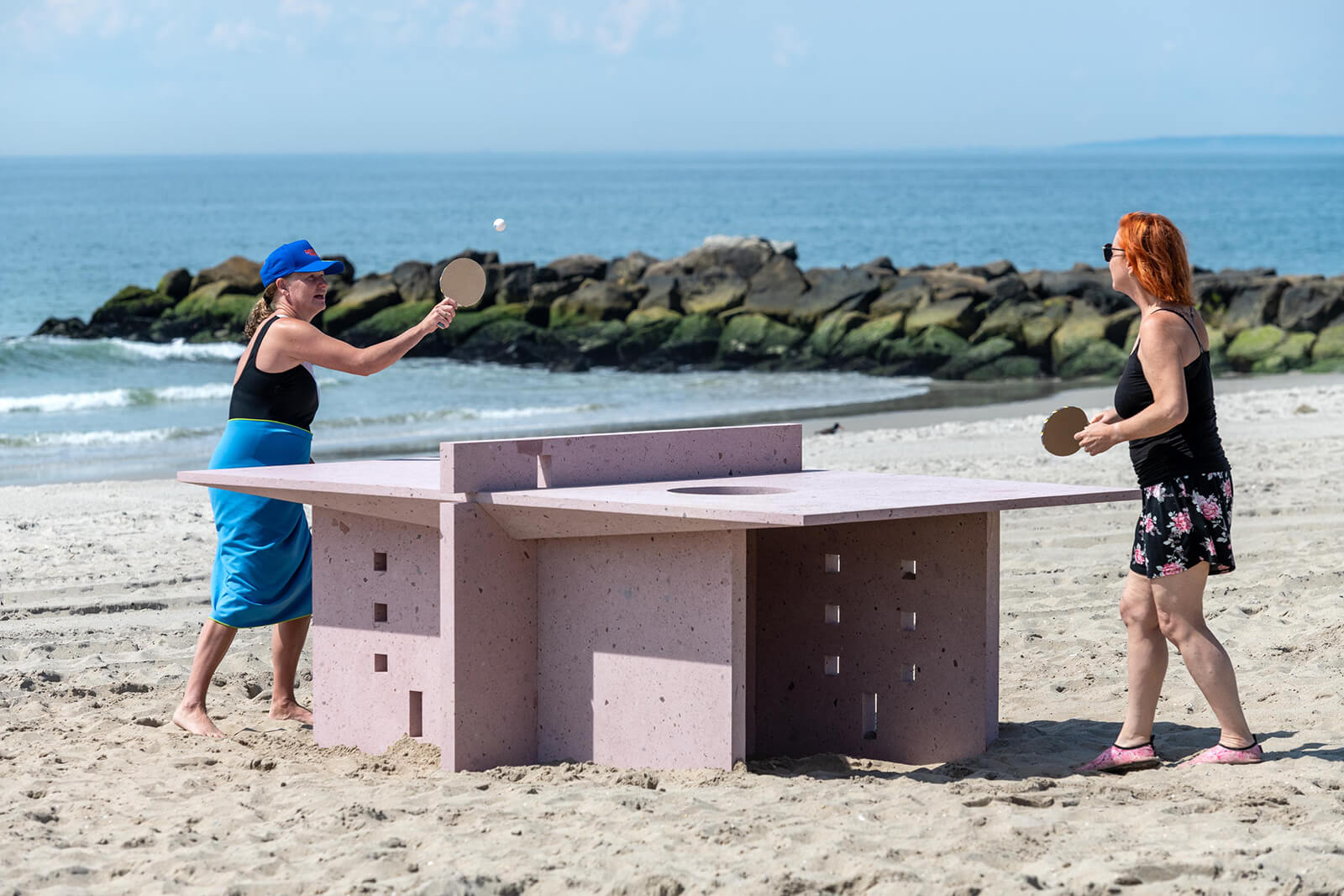
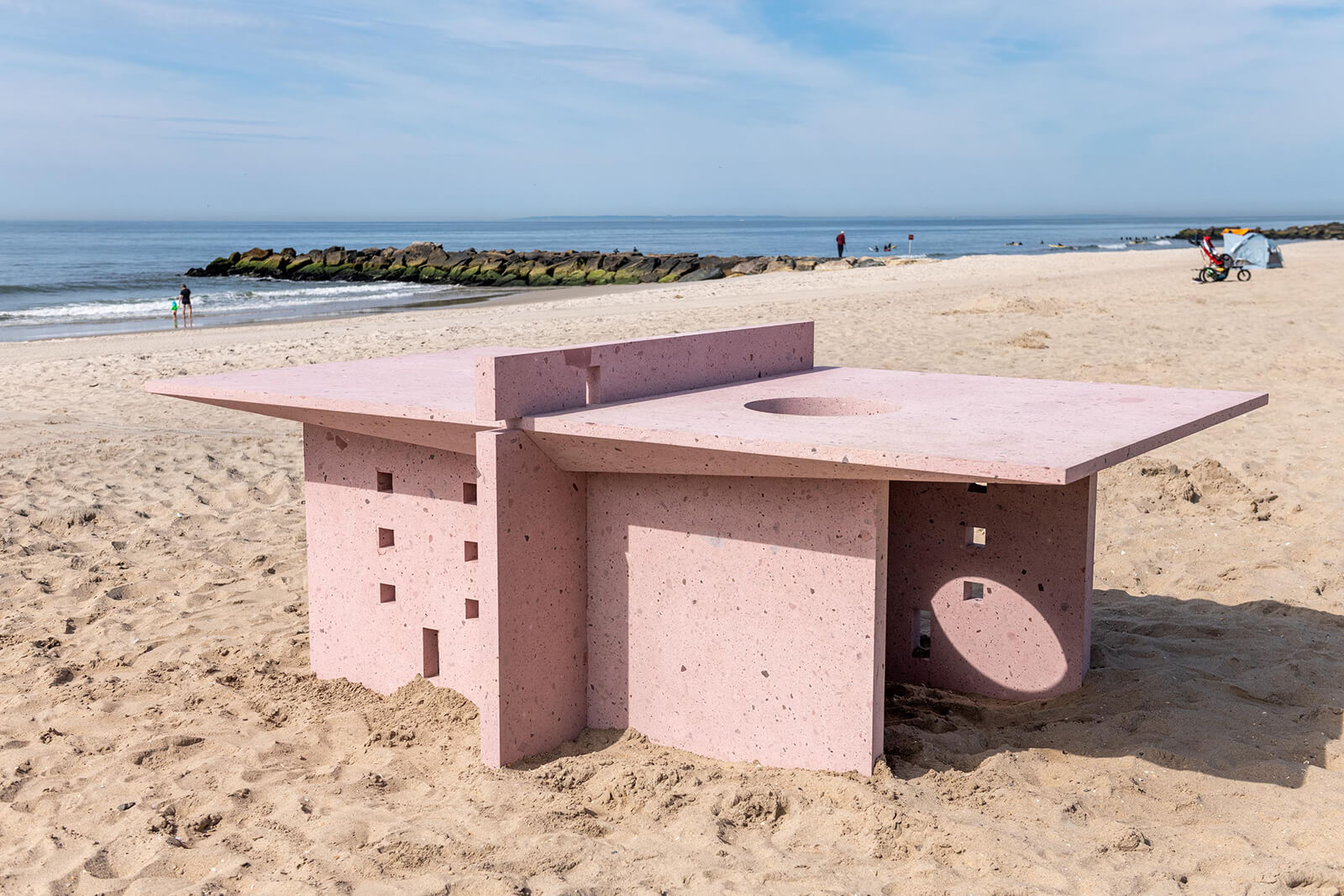
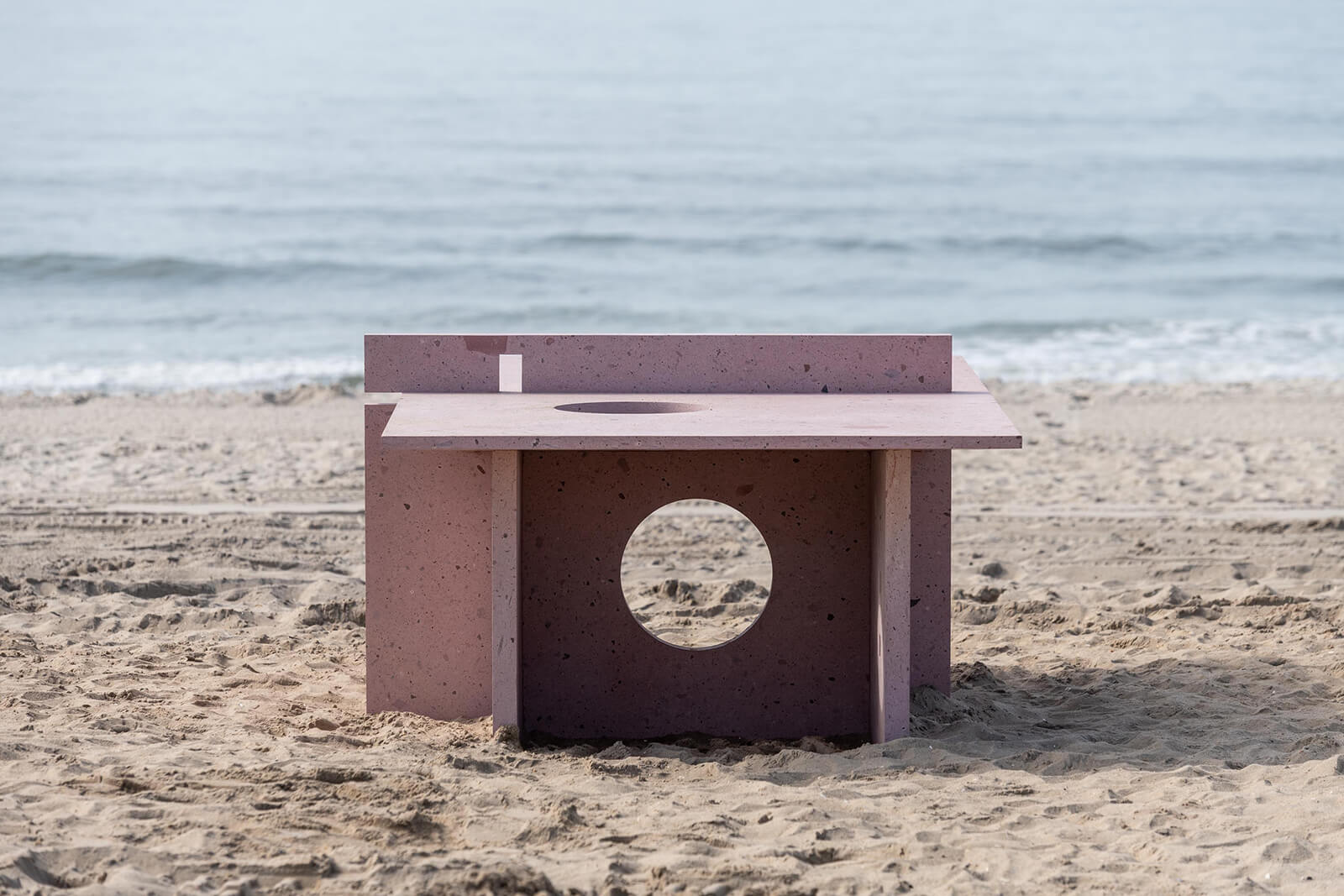
A similarly site-responsive approach appears in Fish Ping-Pong by the Denmark-based collective SUPERFLEX, a pink stone sculpture inspired by the brutalist architecture of the housing blocks of Rockaway. "It draws on the collective’s longstanding interest in marine environments and interspecies research. The pink colour of their piece draws on scientific findings that coral polyps prefer to settle on pink surfaces and may therefore help foster biodiversity," López Dena shares with STIR. Designed with two large holes and multiple porous openings, the public art piece could, if submerged, become an ideal habitat for marine life by allowing for microorganisms like plankton and algae to thrive and grow on it.
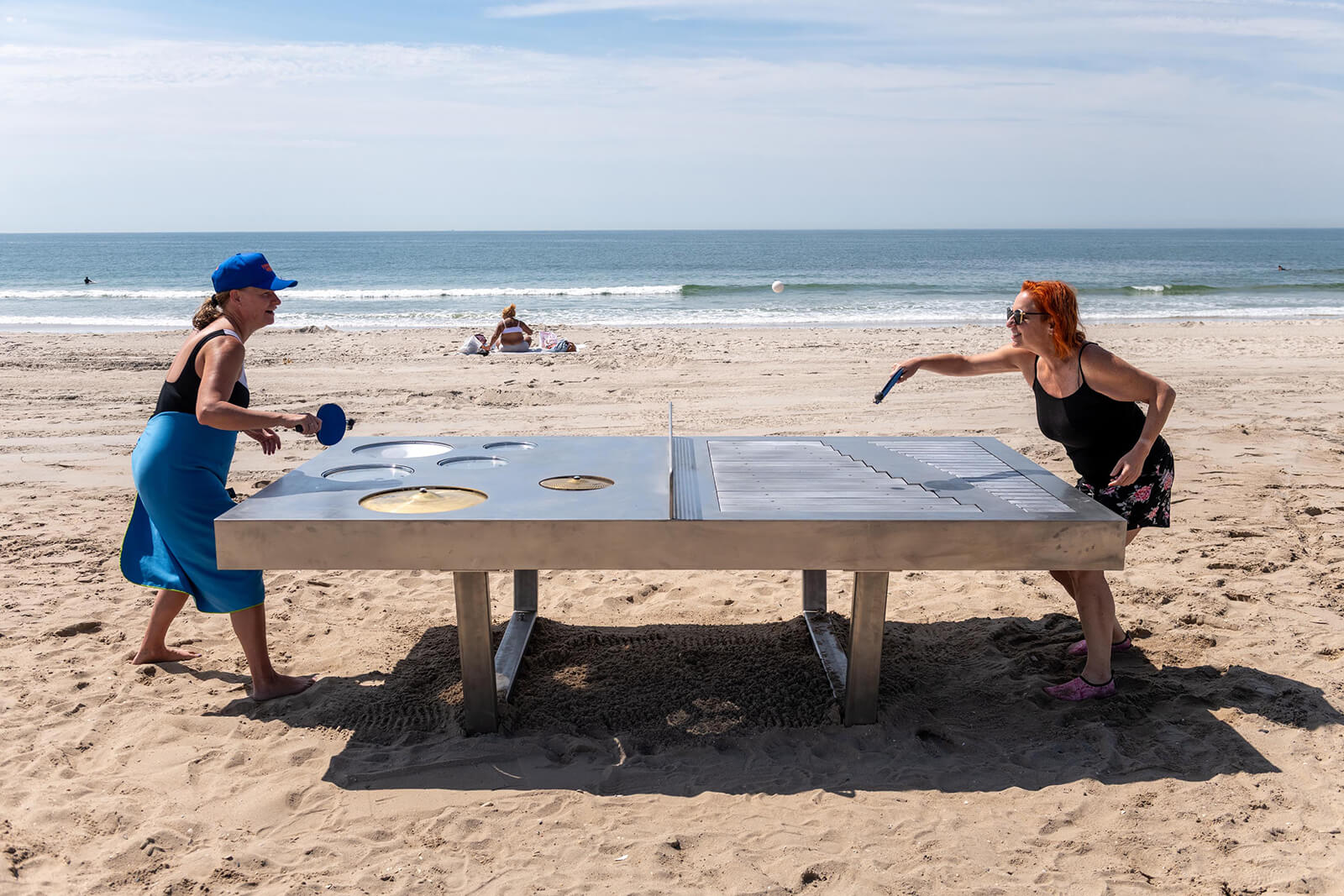
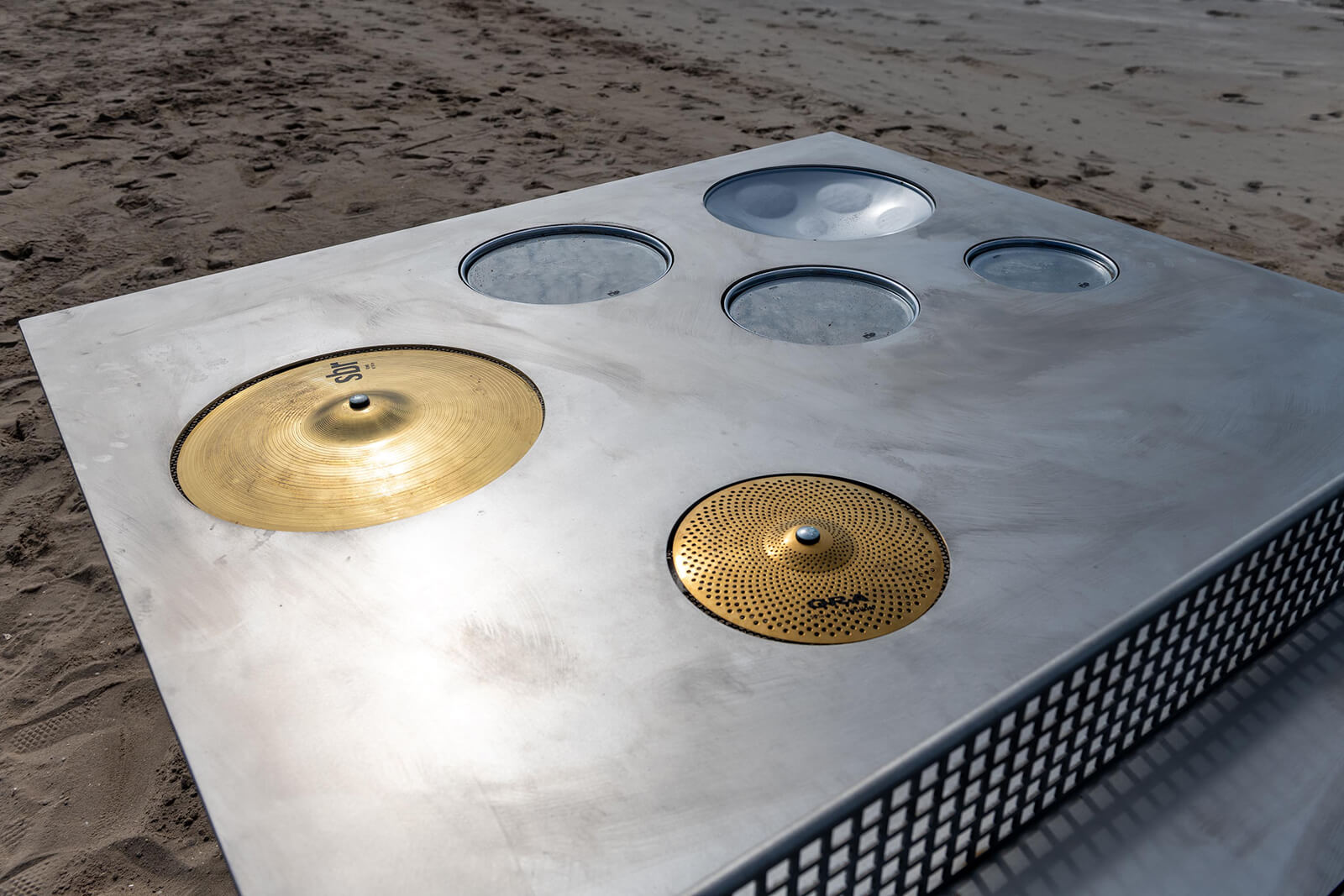
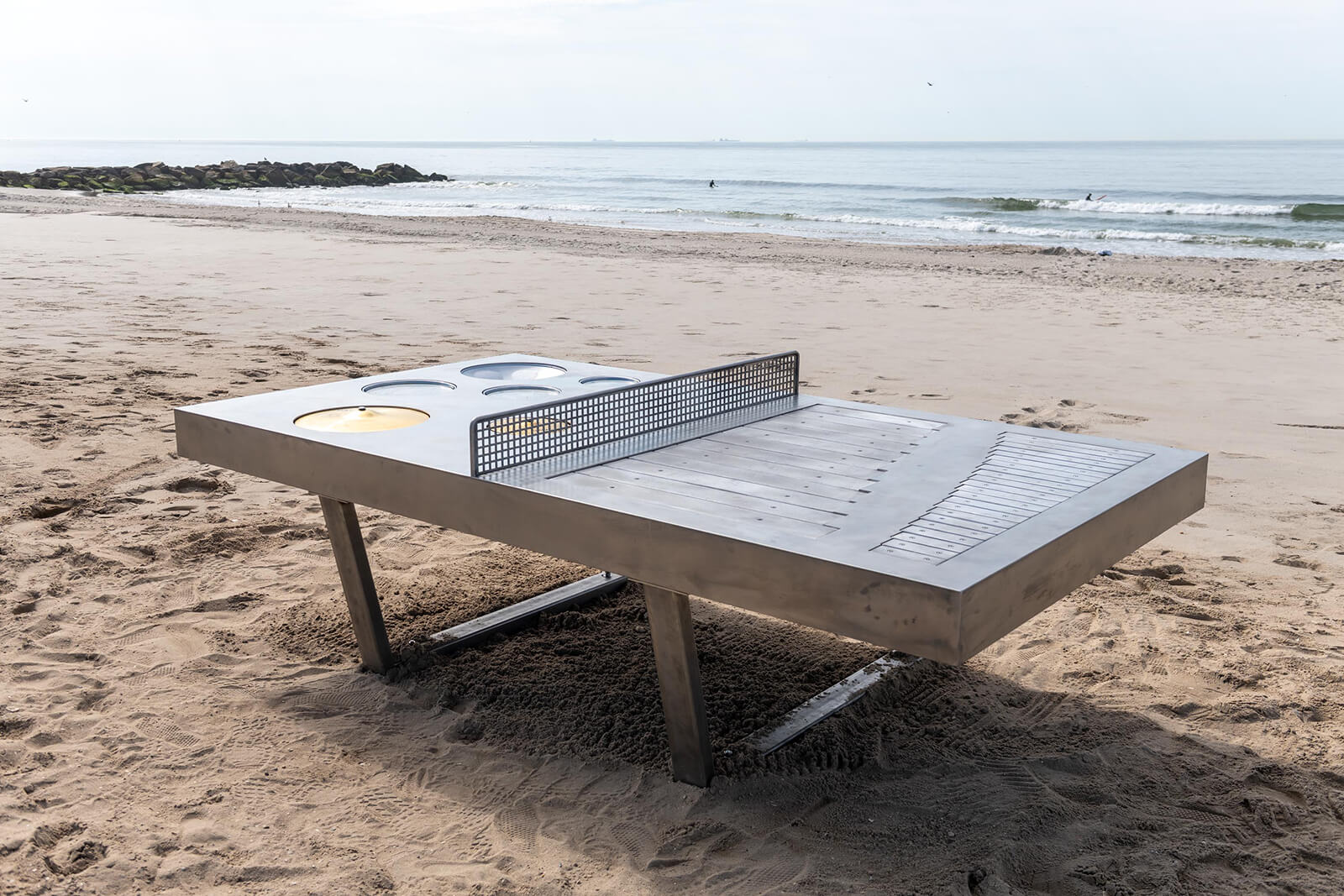
Other designers shift the focus to playful participation. Las Hermanas Iglesias, the collaborative duo of sisters Lisa and Janelle Iglesias, presents DiMeLo, a ping-pong table imagined as a musical sculpture with percussion instruments embedded into its surface, turning the sporting object into a musical, collaborative instrument. One side of the table incorporates a custom-made glockenspiel, while the other features instruments such as a handpan, tom drums and cymbals. Each gameplay becomes a live musical composition, encouraging beach-goers to improvise the sound as they play.
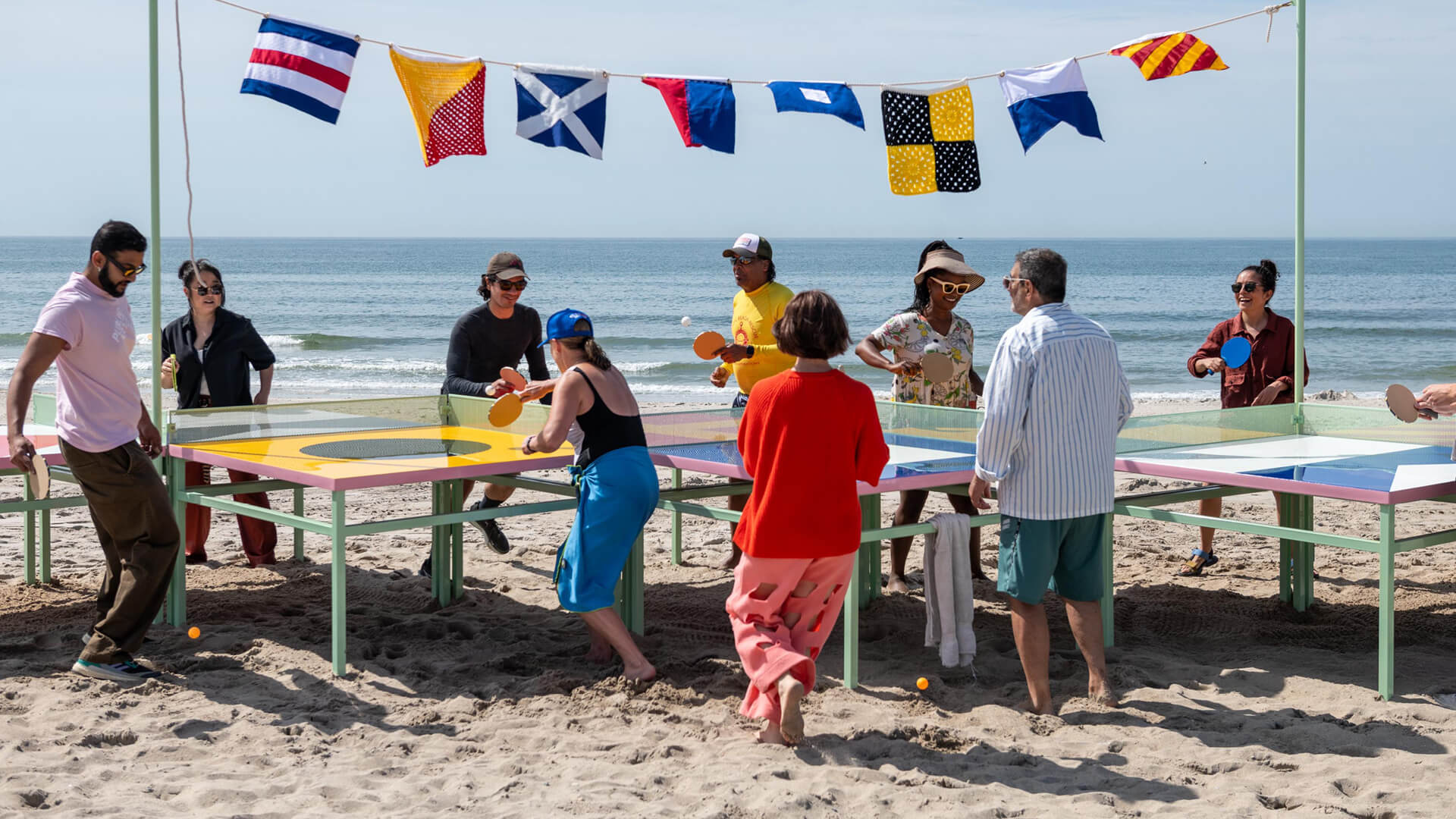
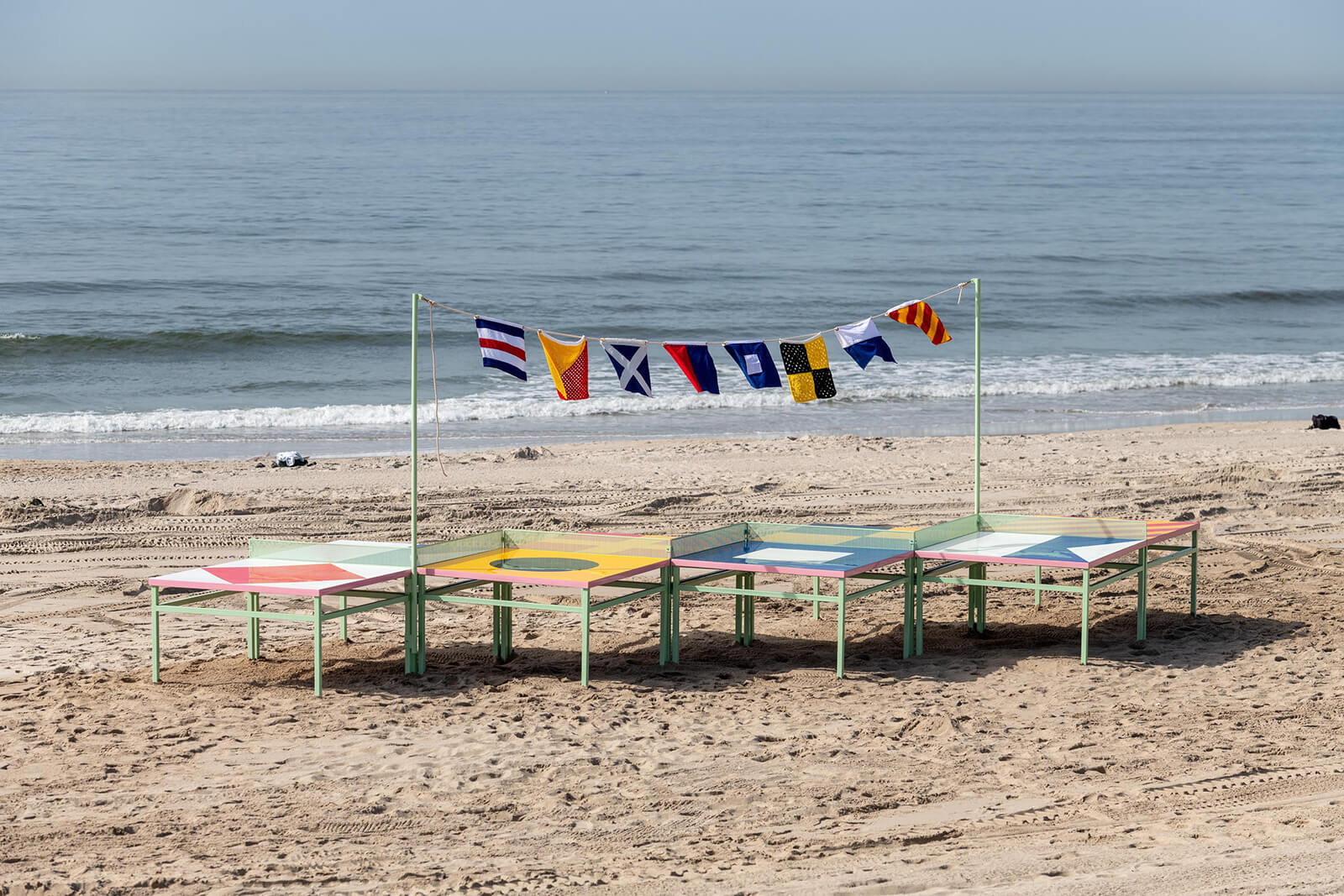
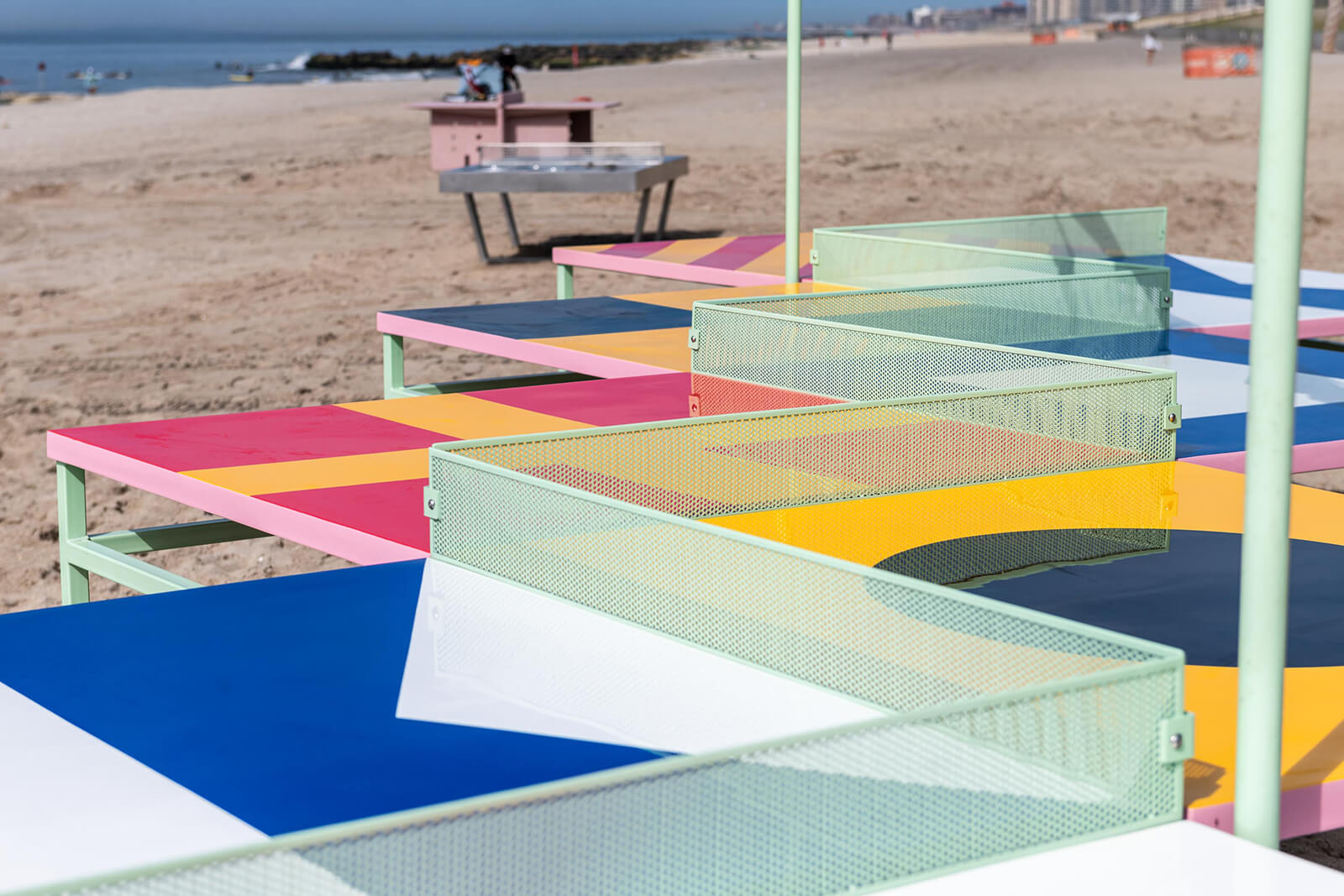
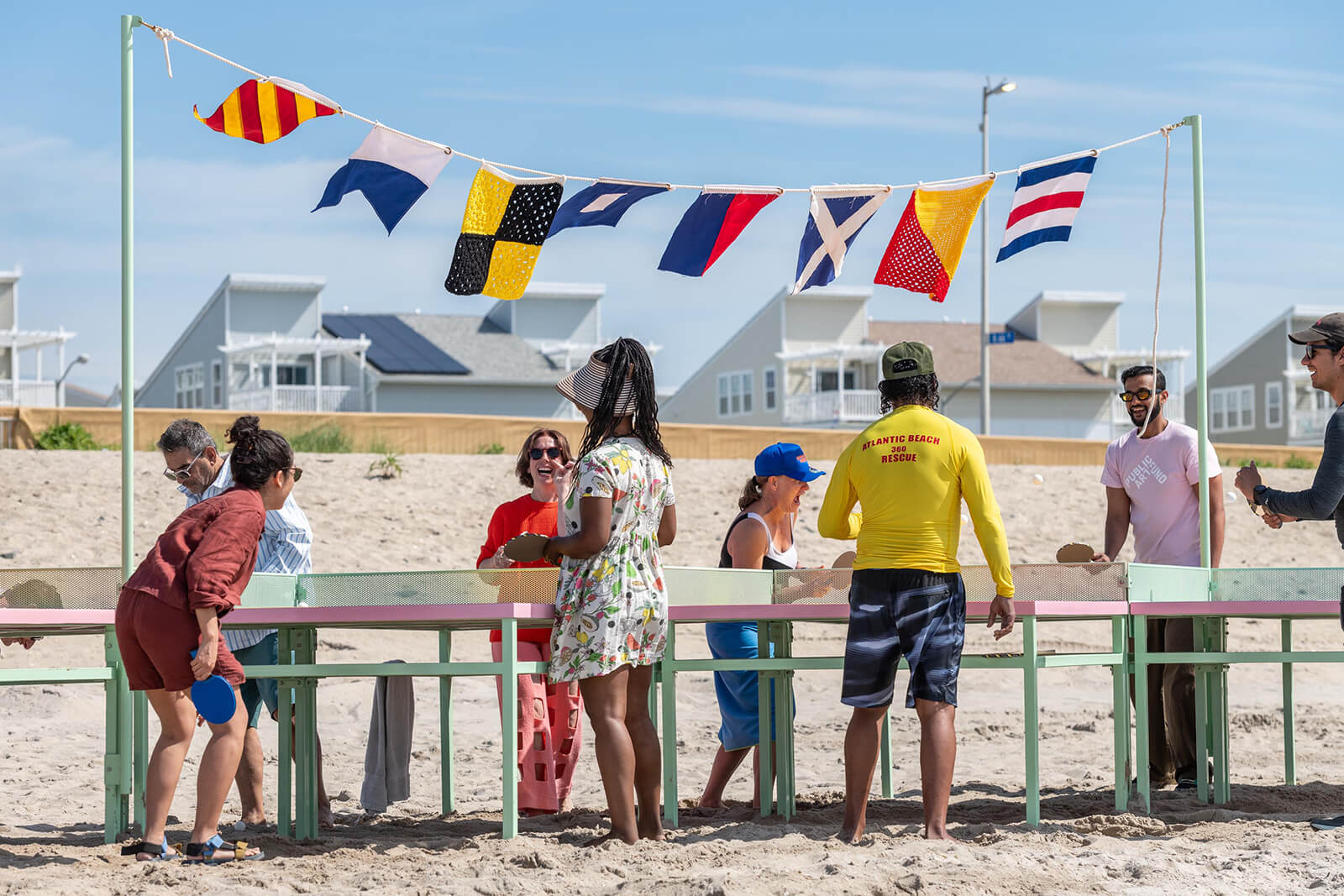
Similarly, Fair Play by London-based Argentine artist Amalia Pica reimagines the game’s mechanics. Her table consists of a series of eight tabletops arranged in a zig-zag pattern, allowing multiple people to play simultaneously and turning what is typically a 2-4 player game into a multiplayer experience. The table is decorated with flags that represent the International Code of Signals, a colourful communication system sailors use, which reads ‘COME PLAY’, an invitation to the visitors. They are made in collaboration with RISE, a Rockaway organisation helping local communities to care for their environment.
History and community underpin the remaining works. American artist and sculptor Ilana Harris-Babou's for those of us who live at the shoreline—its title borrowed from the opening line of Audre Lorde's poem A Litany for Survival—imagines the shoreline as a space of possibility. Punctuated with beach accessories made of ceramic, such as books, bottles, flip-flops, sunglasses and more, this table disrupts the game’s natural flow, while a shaded seating bench placed nearby allows people to gather, rest and enjoy the game even if they do not want to play.
Meanwhile, Tlachco by Mexican architect Carlos H. Matos merges the familiar form of the ping-pong table with Ulama, the ancient Mesoamerican ballgame, considered one of the oldest sports in the world. Echoing the architecture of its ceremonial courts—once regarded by the Aztec and Maya as portals to the underworld—the work invites players to encounter a modern game through the lens of an ancestral sporting tradition and engage with history.
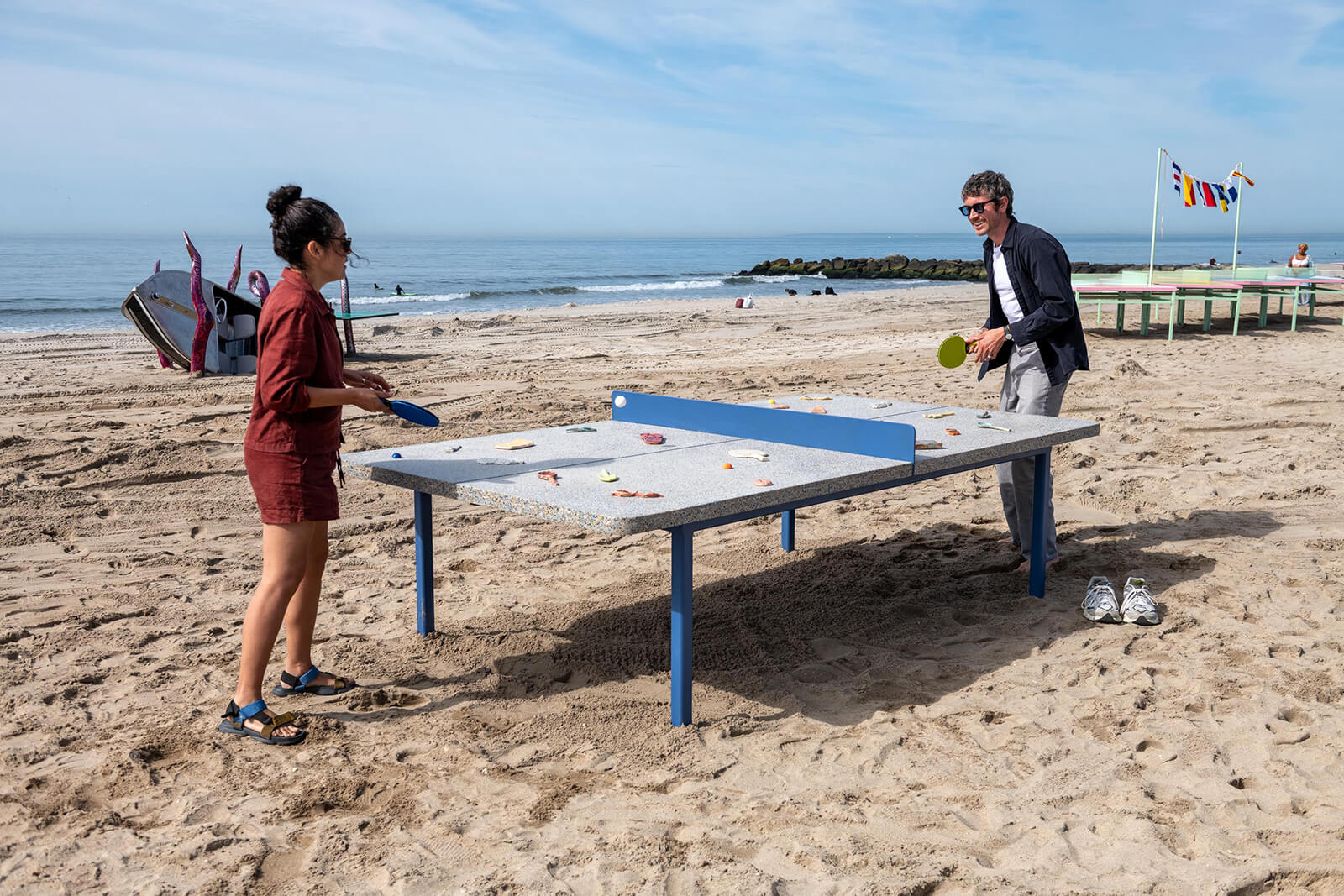
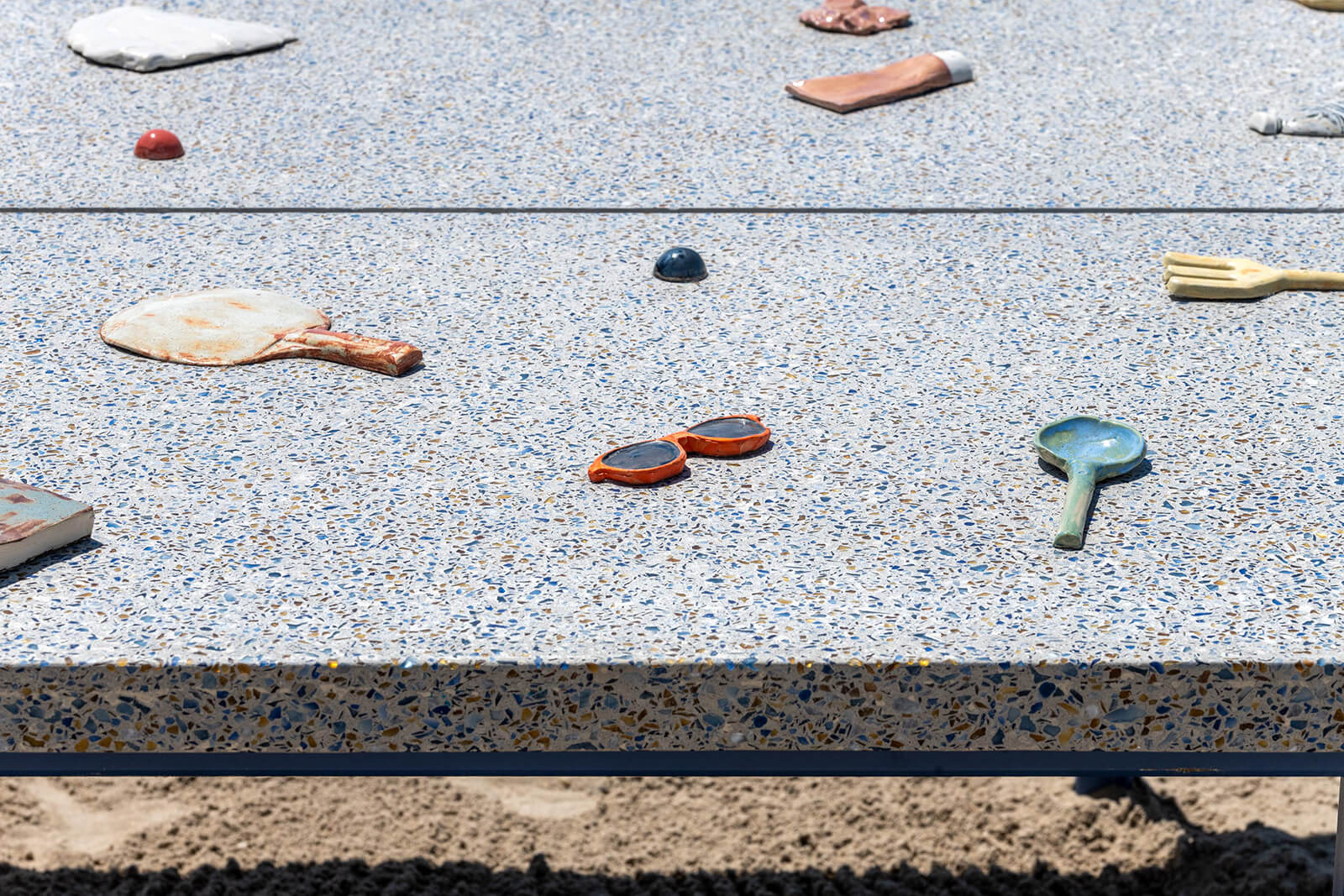
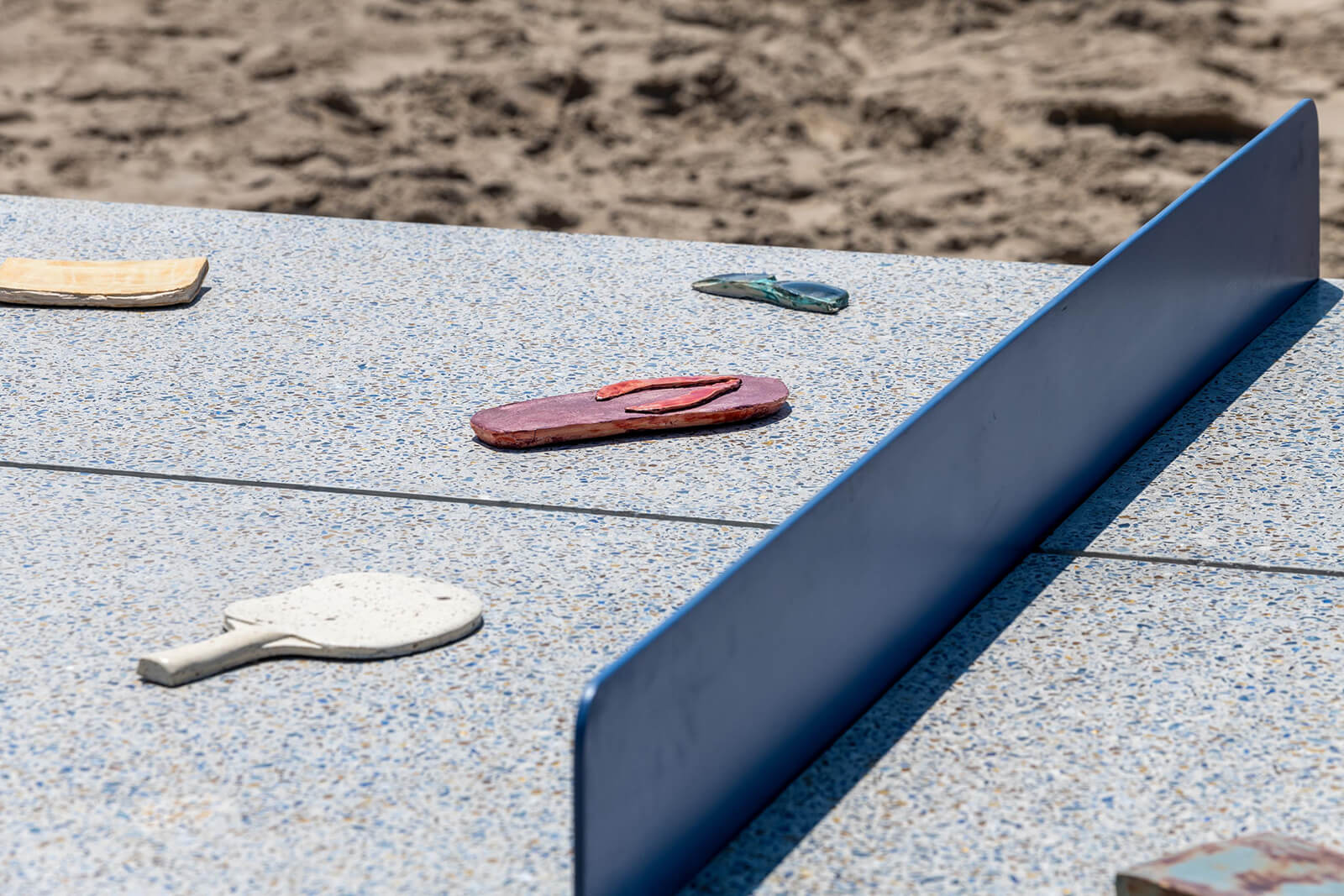
Despite their vastly different expressions, materials and ideas, the six installations are united by one simple condition: they remain playable. As López Dena relays, each artist was free to alter the table's shape, materials, rules and playing conditions, allowing visitors to engage with the work in new and inventive ways. “That balance between familiarity and disruption was important to me. Through ping-pong, the artists were able to explore broader questions about access, competition, play, collaboration and public space," she says.
The show’s site plays an equally important role. Situated between the Atlantic Ocean and New York City's dense urban fabric, Rockaway Beach embodies one of the exhibition's core tensions: between nature and the built environment. Rather than serving as a picturesque backdrop, the beach’s ecological context continually defines how the beachgoers encounter these works—directly on the sand, affected by changing winds and weather as much as by the rich social life unfolding there. "The materials and installation methods were also selected to minimise the exhibition’s impact on the beach, with particular attention to the site’s sensitive coastal conditions," the curator shares.
Between Tides demonstrates how familiar objects and familiar places can be reimagined through artistic and design interventions, making collective participation the lens through which public art is accessed, understood and experienced. The exhibition does not treat the works as something to be admired from a distance, and instead, it invites visitors to engage with them—to play, improvise, linger and occasionally, even struggle with them. After all, there are few places better suited to play than the beach, and Between Tides makes a convincing case that interacting with art and design can become just as much a part of a summer afternoon as the sand and the sea.
‘Between Tides’ by Public Art Fund is on view from June 27 – September 13, 2026, at Beach 67, Rockaway Beach, Queens, New York.

by Pranjal Maheshwari Oct 23, 2026
Co-authored by Jareh Das, Chairman traces the British designer’s fixation on chairs as symbols of power and identity and as mediums of expression and community building.
by Mirra Lynn Oct 22, 2026
The curators behind Palestine Design Week 2026 reflect on its intent, considering how design holds memory, makes space for loss and imagines a future in Palestine.
by Chahna Tank Oct 22, 2026
STIR speaks with the Mumbai-based type designer about her practice, type walks and why she wants more people to have stronger opinions about Indian-script fonts.
by Jincy Iype Oct 15, 2026
STIR explores craft, material intelligence and people shaping Indian design through dialogues with Design Democracy’s co-founders and the curators of its special exhibitions.

make your fridays matter with a well-read weekend
Enter your details to sign in
Don’t have an account?
Sign upOr you can sign in with
a single account for all
STIR platforms
All your bookmarks will be available across all your devices.
Stay STIRred
Already have an account?
Sign inOr you can sign up with
Verification link sent to check your inbox or spam folder to complete sign up process
Tap on things that interests you.
Select the Conversation Category you would like to watch
Please enter your details and click submit.
Enter the 6-digit code sent at


Between Tides becomes a playground fostering community through public art
by Chahna Tank | Published on : Aug 08, 2026


 Sign in with Google
 Sign in with email
What do you think?