Design06 mins. read
DUDD LITE at The Future Perfect reimagines the nightlight as an object of whimsy
by Chahna TankJun 22, 2026



by Pia BhatiaPublished on : Sep 14, 2026
In the grid-like frame of a plantation, rubber trees stand, often equidistant to each other, like columns or soldiers. Solemn, monocultural repetition lasts for miles. Look closer, and each tree is marked with a uniform incision that allows milky sap to drip into an attached bowl in a slow, unrelenting extraction. Rubber is a material whose history is inextricable from colonial violence that has endured well into the present. Plantations, which originated as global industrialisation projects, are predominantly found in South America, Southeast Asia and Africa. The material’s malleability and ubiquity make rubber commercially viable but also contribute to the difficulty of tracing its supply chain. As a result, rubber has become an anonymous component of everyday life, and the ethical implications of its production are obscured.
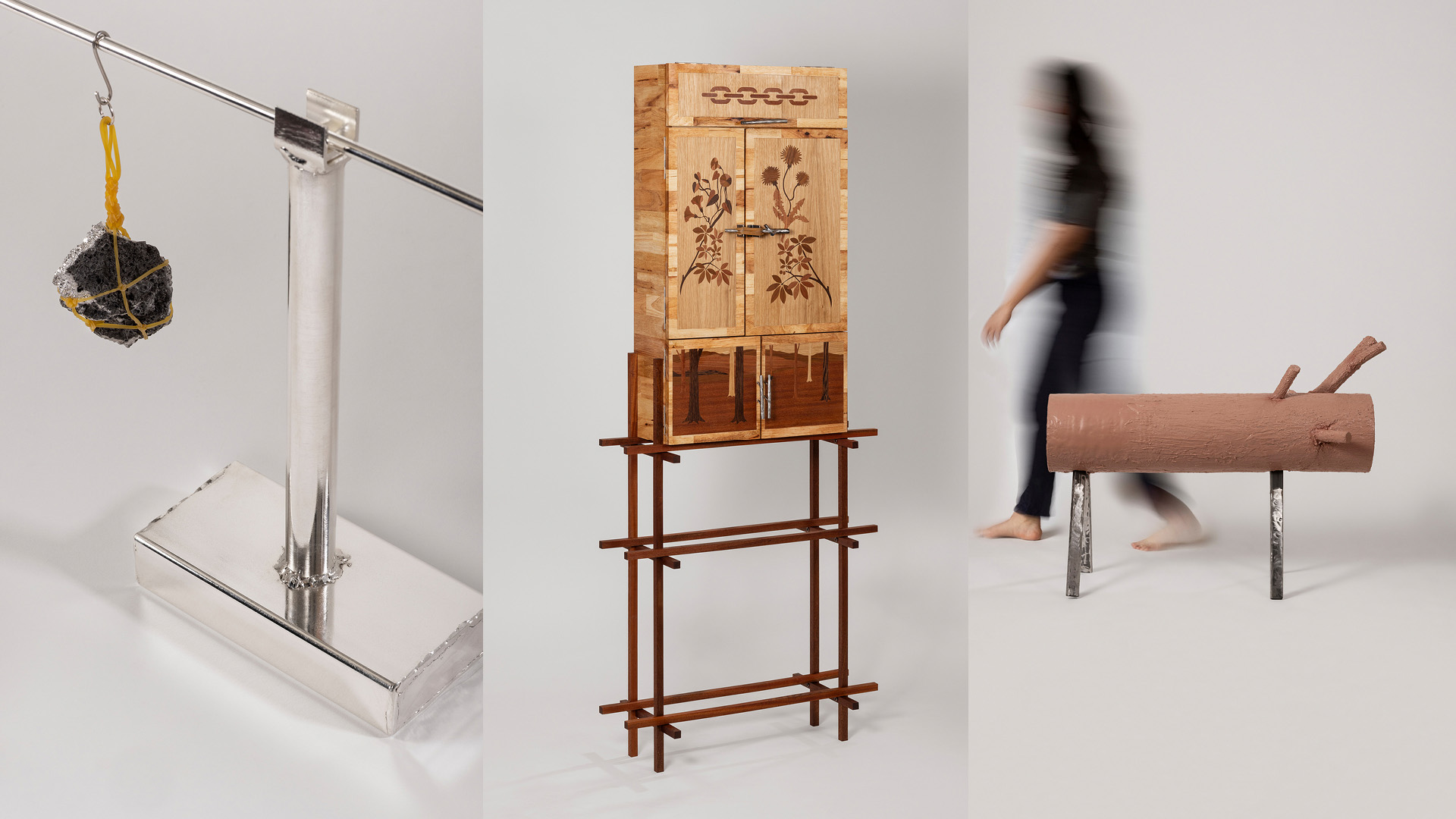
This charged paradigm is the driving force behind conceptual material designer Shahar Livne’s latest project, The Devil’s Milk, a series of three objects—a scale, a cabinet and a bench. The project was named after historian John Tully’s 2011 book of the same name, which explores the social history of rubber production. “I found a lot of parallels between the botanical body and the human body throughout the history of rubber and its current uses, from scarring and abuse to forced labour,” Livne tells STIR. Livne's previous projects, whether ocean-plastic jewellery for Balenciaga or sneakers made with the blood of factory-farmed animals, reflect her broader ethos of investigating the use (or overuse) of materials while considering those who consume them. “Many of Livne's projects engage with materials at the edge of cultural imagination—blood, man-made fossils, crystallisations approaching them as archives of time, place, and our evolving relationship with natural resources,” her website says.
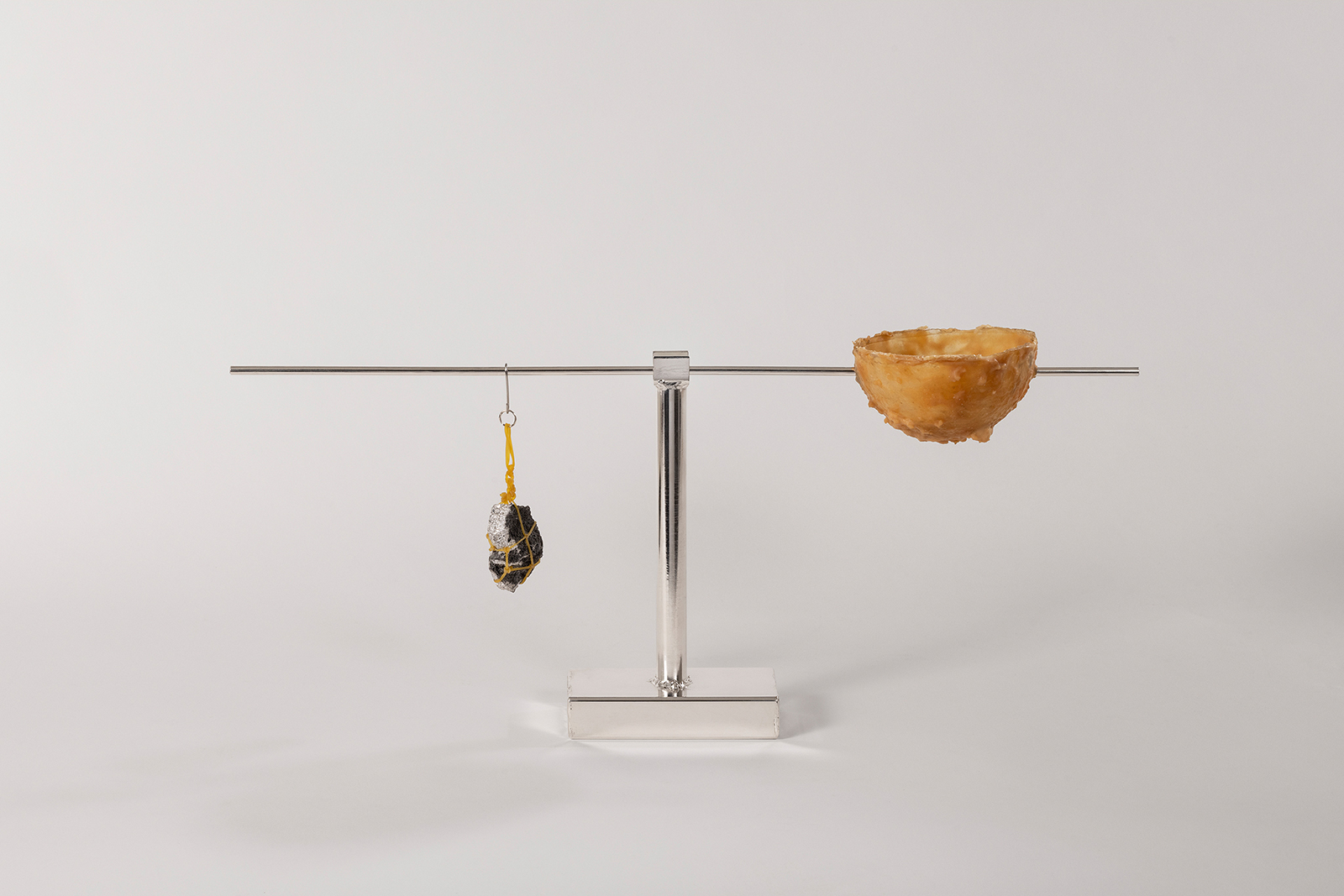
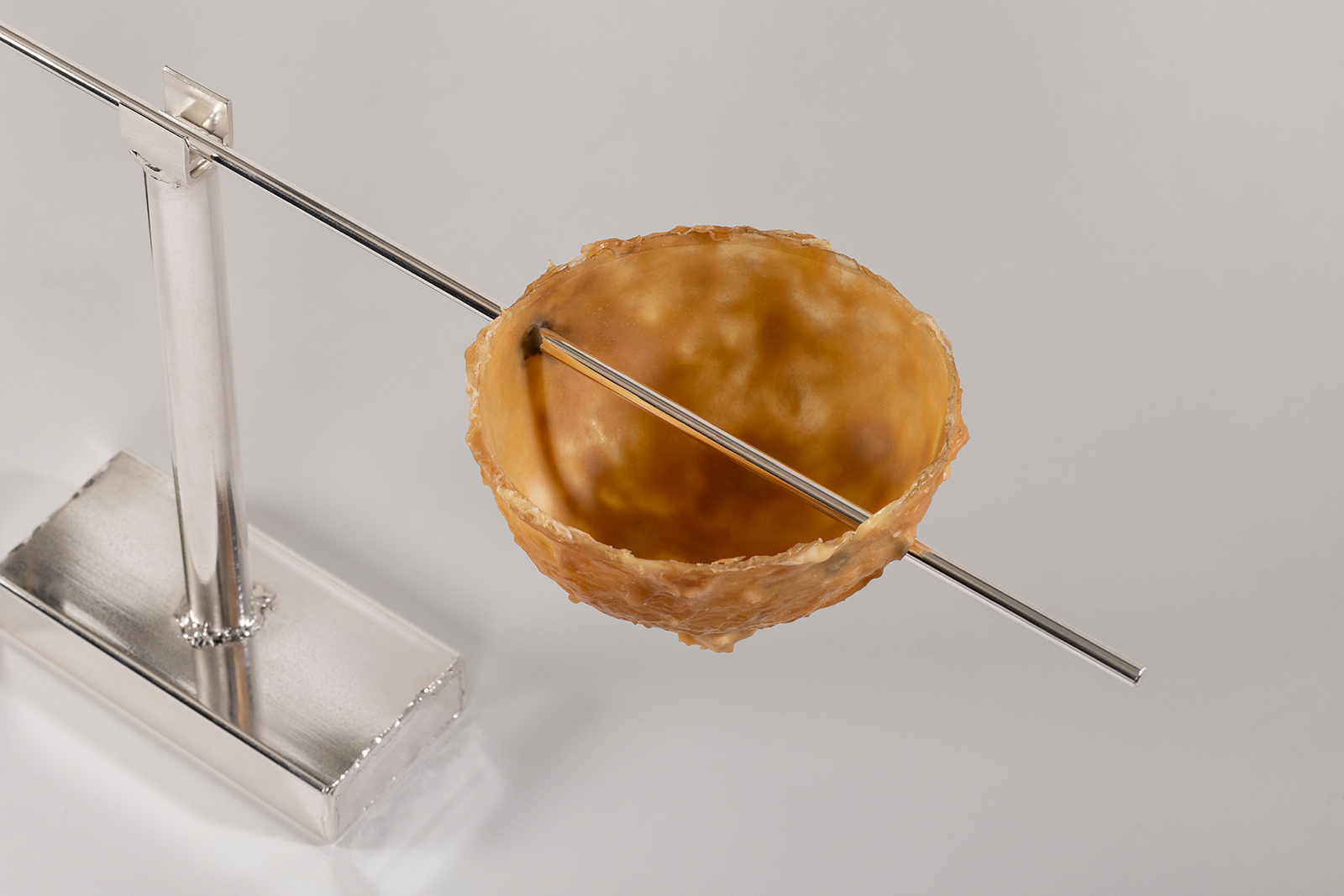
The first object in The Devil’s Milk triptych is a scale—a spare metal structure that tilts in neither direction. On the right is a bowl that resembles the latex collection cups attached to rubber trees during the harvesting process. The bowl’s appearance, puckered and organic, sits in contrast to the single metal rod piercing it. On the left, a silver rock with glinting and dark faces is tied up and hung, suspended by what appears to be an elastic thread.
The scale has the clearest metaphorical representation of the three objects in the series. Symbolically, it seems to suggest that the material extracted from the plantation cannot be separated from the industrial wealth it produces. As Livne explains: “The scale interrogates the instruments used to translate human labour into abstract economic metrics. During the 19th-century rubber booms, natural latex was valued as equal to its weight in precious metals. Rather than a neutral tool of trade, the scale functioned as a mechanism of colonial enforcement, weighing raw yields to dictate strict labour quotas.”
The materiality introduces another dimension to this discussion of balance and extraction. Rubber is chemically hostile to precious metals such as silver (from which the rock is made), and over time, the material tarnishes the piece’s silver surfaces. “The object becomes a site of perpetual friction, physically marring its own components with black ‘scars,’” says the designer based in Eindhoven, The Netherlands.
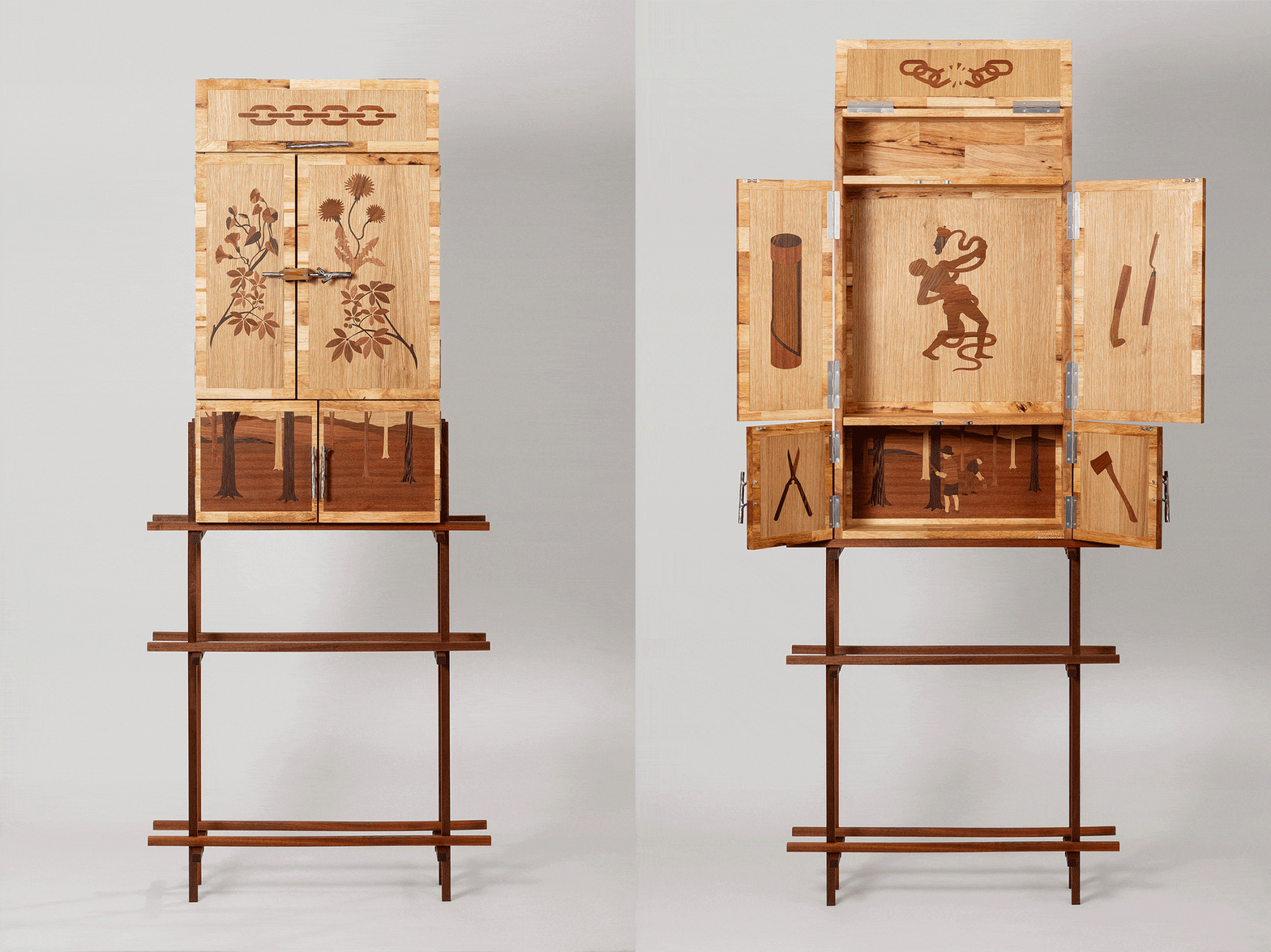
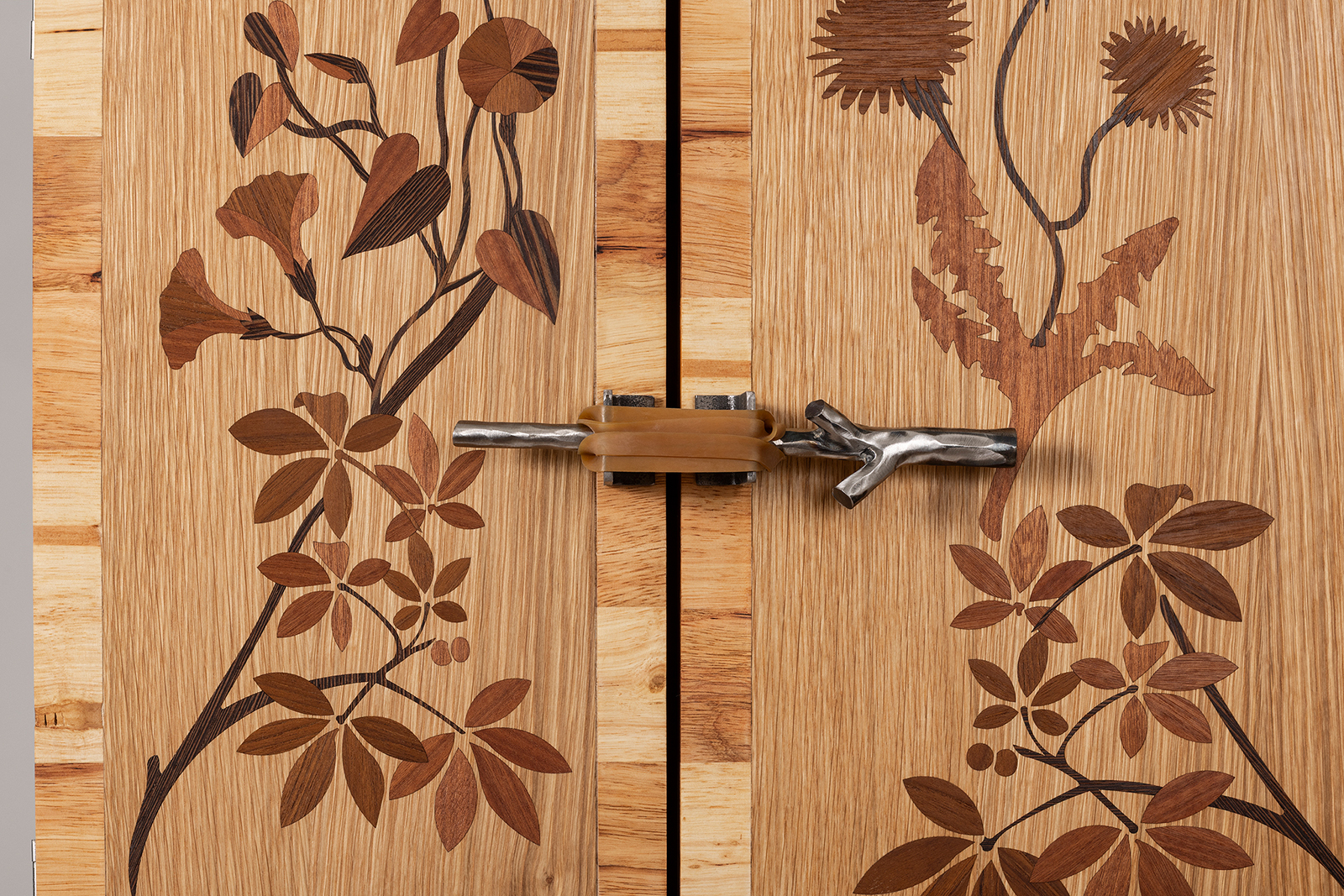
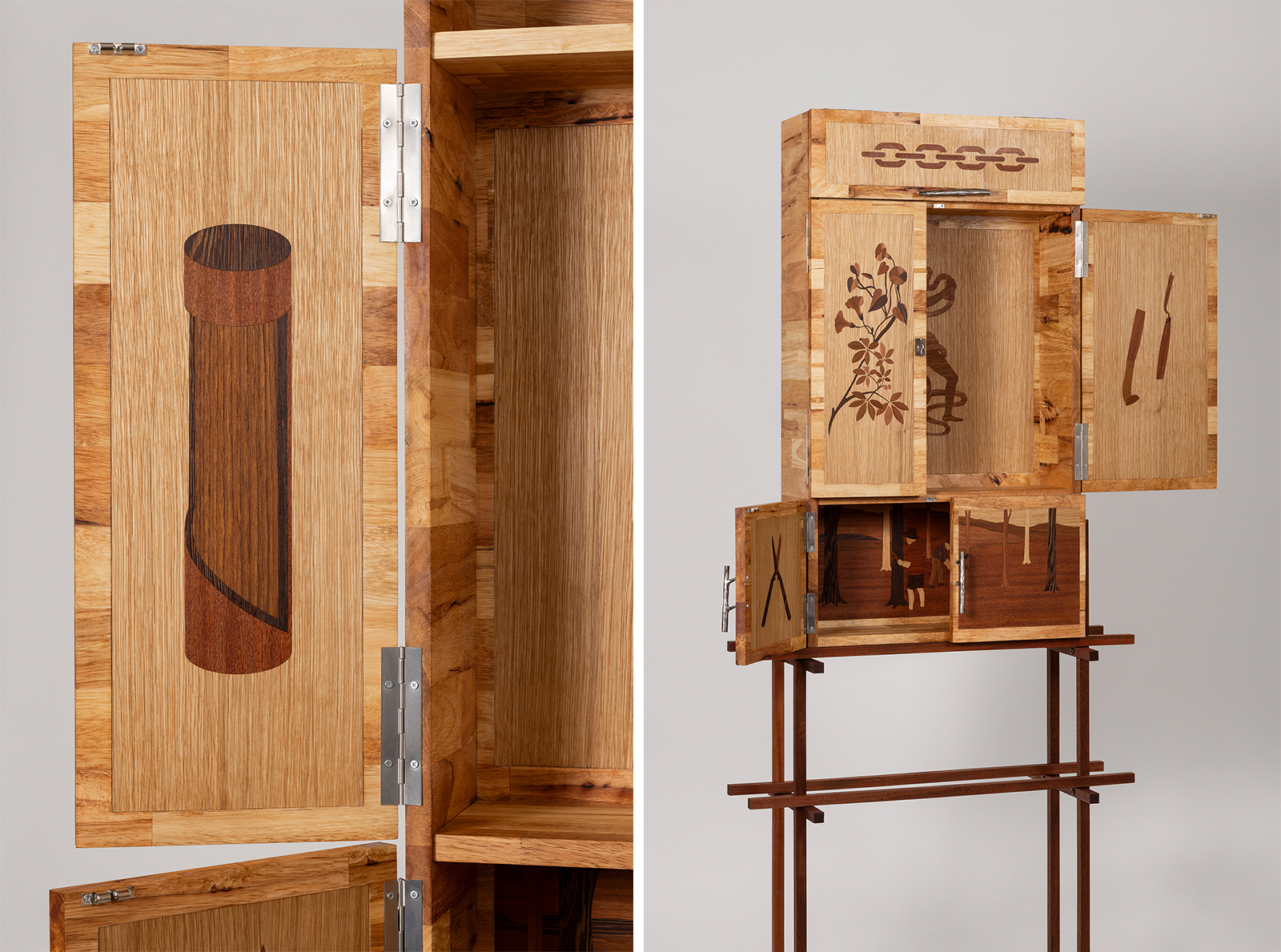
The second object is a cabinet constructed from the bark of rubber trees. It has three shelves, each carved with a distinct pattern or design. On the top shelf, for example, a pattern of links is carved into the wood. But the seemingly decorative surface is transformed when the cabinet opens, revealing another story underneath—in the pattern on the flip side of the same panel, the links are broken. “The cabinet draws direct inspiration from the typology of the colonial cabinet and the wunderkammer (German for ‘chamber of wonders’),” the product designer elaborates. “Historically, these furniture pieces functioned as domestic instruments designed by Western collectors to classify, contain and display dominance over the natural resources of colonised territories,” she adds.
Rubber is both sacred and violent. It heals, and it harms. It’s a shape-shifter, physically and symbolically. That tension is what drew me in. – Shahar Livne
The cabinet seeks to subvert this hierarchy, both through its material substrate and its decorative elements. Botanical patterns outside are contrasted with carvings of tools inside. On the lowermost shelf, the trunks of trees are innocuous until the opening reveals depictions of plantation workers. There’s a notion of history as something partially concealed, which is reinforced by the apparent stratification or hierarchy of the cabinet’s shelves. “Through precise marquetry, the dominant European veneer is physically invaded and ‘colonised’ by inlays of Amazonian, African and Asian veneers. The piece does not merely store artefacts; its outer skin maps the historical flow of forced labour, botanical displacement and capital from the Global South into the European domestic interior,” Livne notes.
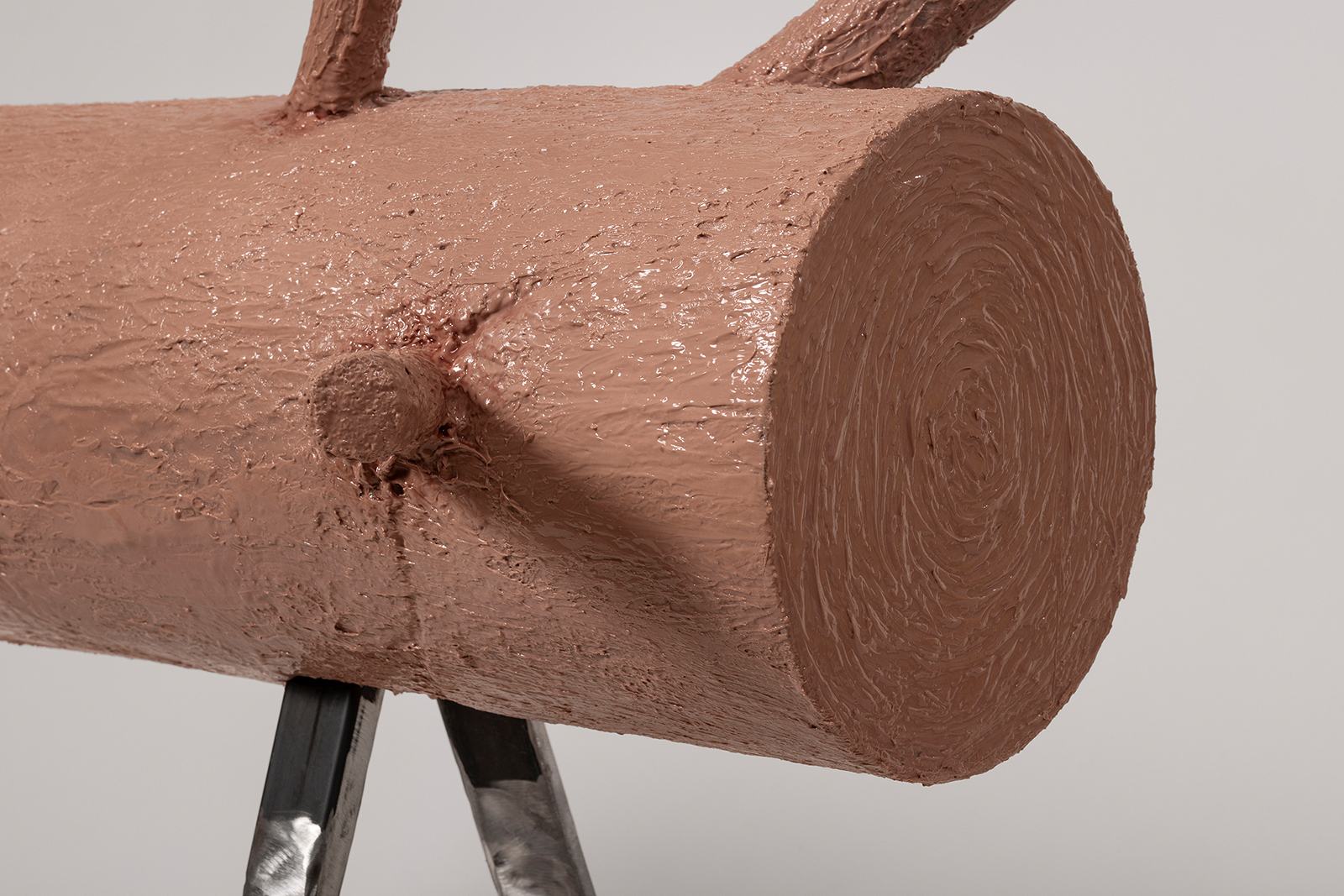
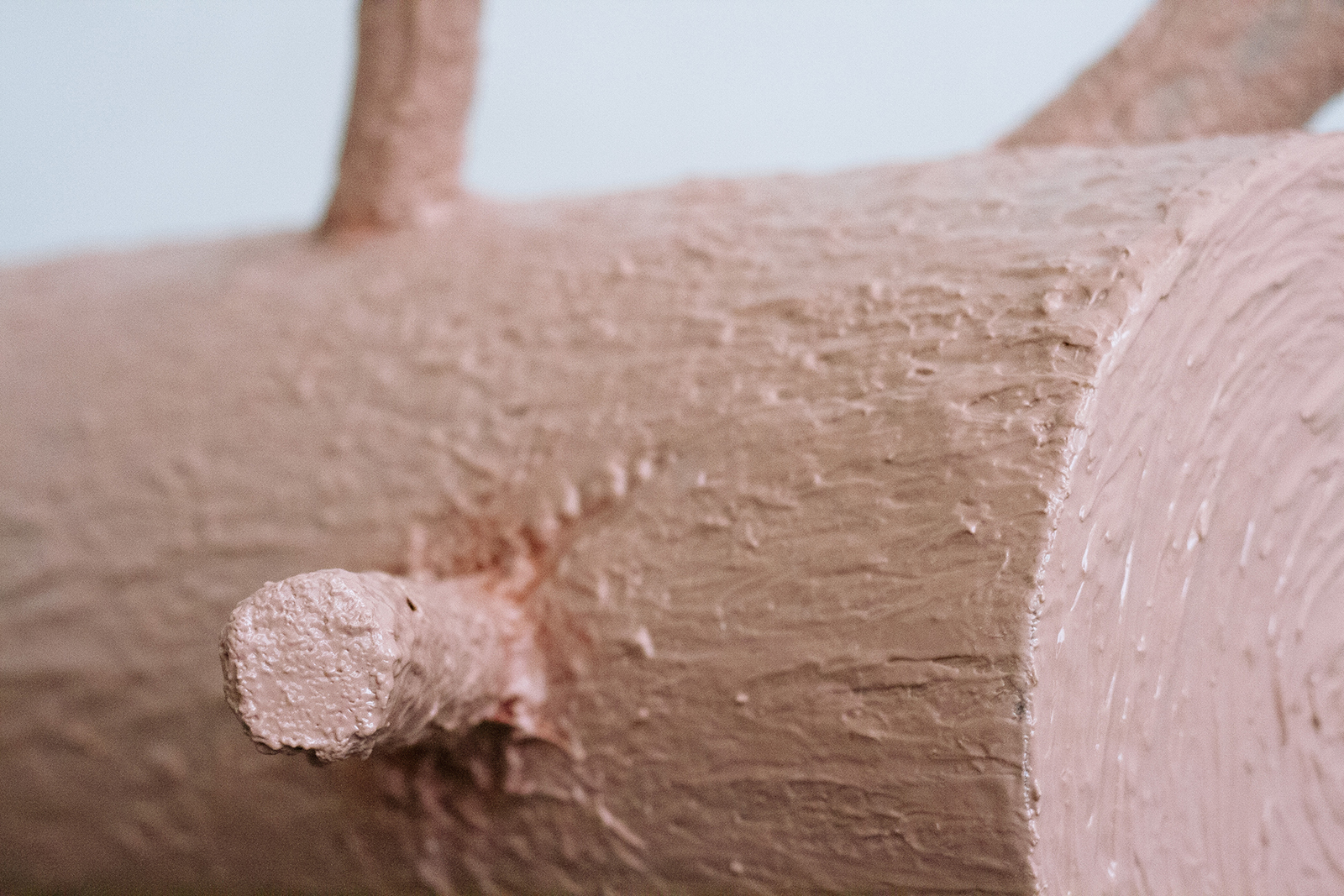
The final product in the series, showcased at DESIGN PARADE, the 20th International Product Design Festival in Villa Noailles, Hyères, France, from June 25 – August 30, 2026, is a bench shaped like a tree log. Of the three, it appears to be the most unsettling in its materiality. A cut tree is transformed into something inviting and comfortable, a place of rest and pause—all while the ‘tree’ itself is artificial. The bench is also painted to resemble human skin, further collapsing the distinction between person and plant, or organism and product. As Livne explained, “The piece conceptualises rubber not as an inert commodity, but as a surrogate skin, exploring the parallel between the ‘wounding’ of the tree during latex extraction and the trauma inflicted upon the physical body.”
Through this contradiction, comfort takes on an underlying violence. This one blurs the boundaries between the living and the material, implicating users in the systems of extraction and consumption that make such comfort possible. “The design references the material’s multi-layered contemporary and historical roles: from its use in fetish culture as a tool of bodily constraint and tactile intimacy, to its application in the cinematic industry, where rubber props and prosthetics facilitate physical metamorphosis and simulate artificial flesh,” the designer states. According to Livne, the bench contrasts Western industrial simulations and Indigenous animism that acknowledges the tree’s agency and vitality. In doing so, it becomes a kind of meeting point or a ‘site of physical and conceptual confrontation’ that erodes the distinction between human and non-human matter.
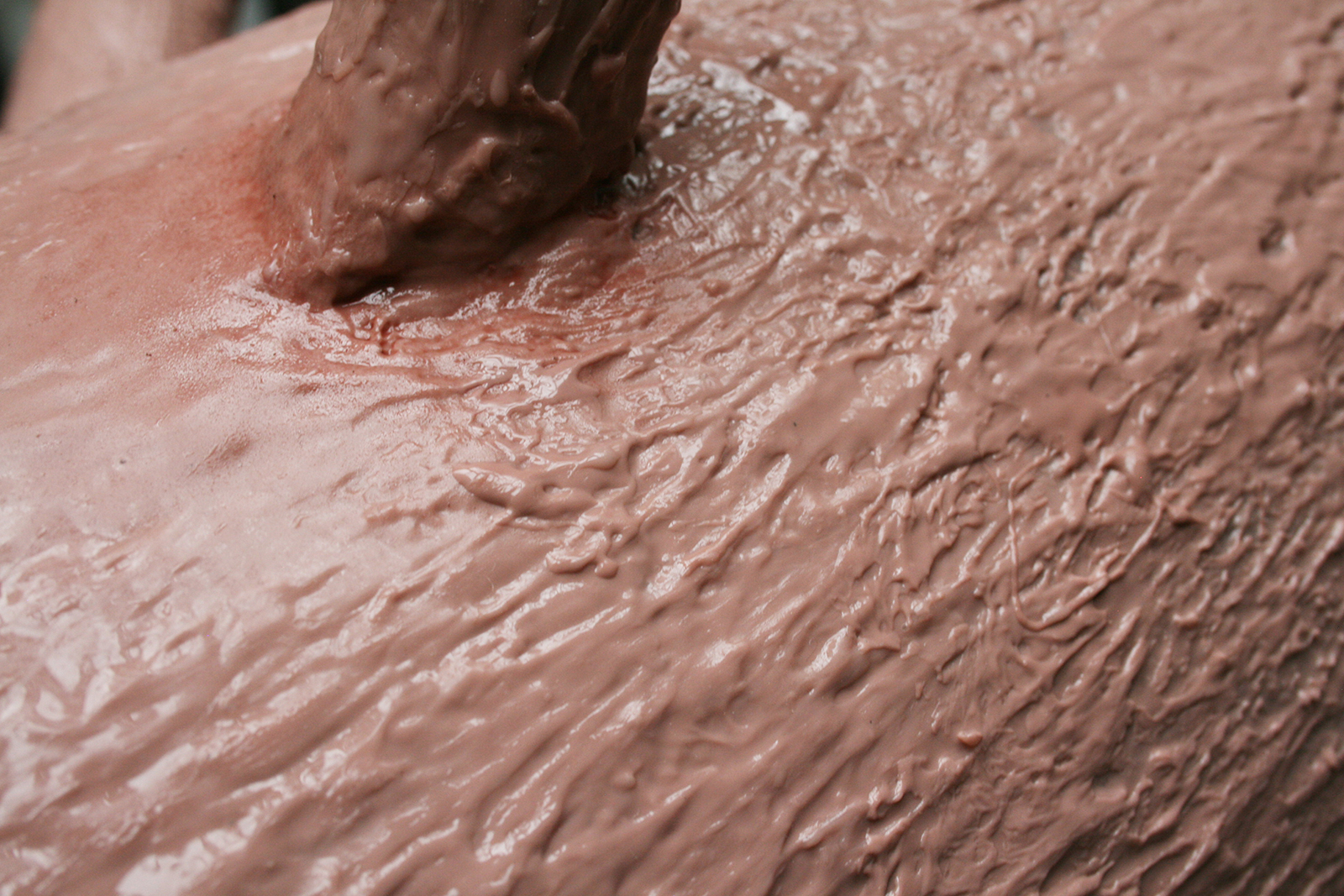
The emotional potency of each distinct object in the collection is clear—but can they be read in a sequence, as, say, a story, sentence or argument? In their original order, one may connect them this way: the scale speaks of imbalance; the cabinet excavates the hidden layers behind the material and the bench asks what happens when that history is absorbed into everyday comfort.
Even the aesthetically pleasing elements of The Devil’s Milk stand for what the material and those involved in its production have endured. Rather than resolving rubber’s contradictions, Livne makes them visible, transforming familiar forms of utility and comfort into reminders of the histories they conceal. The triptych reveals how easily a material’s personal and collective histories disappear once it becomes an object of design.
But a certain degree of opacity persists—to an onlooker, Livne’s latest works comprise benign objects with practical and decorative qualities. Her designs, contained and elegiac, pose an uncomfortable question: If an object is elegant, can it convey violence without turning the violence itself into aesthetic experience?

by Pranjal Maheshwari Oct 23, 2026
Co-authored by Jareh Das, Chairman traces the British designer’s fixation on chairs as symbols of power and identity and as mediums of expression and community building.
by Mirra Lynn Oct 22, 2026
The curators behind Palestine Design Week 2026 reflect on its intent, considering how design holds memory, makes space for loss and imagines a future in Palestine.
by Chahna Tank Oct 22, 2026
STIR speaks with the Mumbai-based type designer about her practice, type walks and why she wants more people to have stronger opinions about Indian-script fonts.
by Jincy Iype Oct 15, 2026
STIR explores craft, material intelligence and people shaping Indian design through dialogues with Design Democracy’s co-founders and the curators of its special exhibitions.

make your fridays matter with a well-read weekend
Enter your details to sign in
Don’t have an account?
Sign upOr you can sign in with
a single account for all
STIR platforms
All your bookmarks will be available across all your devices.
Stay STIRred
Already have an account?
Sign inOr you can sign up with
Verification link sent to check your inbox or spam folder to complete sign up process
Tap on things that interests you.
Select the Conversation Category you would like to watch
Please enter your details and click submit.
Enter the 6-digit code sent at


Designer Shahar Livne examines the violence of rubber in The Devil’s Milk triptych
by Pia Bhatia | Published on : Sep 14, 2026


 Sign in with Google
 Sign in with email
What do you think?