Design04 mins. read
ORGATEC WORKSPACE reflected Saudi Arabia’s emphasis on workplace wellbeing
by Bansari PaghdarSep 27, 2025



by Pranjal MaheshwariPublished on : Sep 28, 2026
The phrase best-out-of-waste invariably conjures an image of an object or an installation as a collage of seemingly disparate elements, somehow glued together to achieve a certain aesthetic or functional appeal. If it the product is well finished, it may lose its association with waste altogether; if it is visibly makeshift, its appeal is restrained to the fringes of functional design. But do we really have time to ponder these things when the climate crisis is upon us? The state of our environment is getting worse, while the construction industry continues to produce up to a third of the global waste. As we wait for the discourse around conscious consumption and circular economy to filter into the practical workflows of the industry, another question demands attention: What do we do with the humongous wastelands created in the wake of development over the last many decades? Bangalore-based design studio, Multitude of Sins, may offer some insights into resolving this conundrum with their recent studio extension—a space built entirely out of architectural waste.
Over two years, a growing palette of discarded prototypes, samples, mistakes and excess led to the making of Material Lab, also known as Requiem of Ruins, as an almost fantastical bricolage of the studio’s past projects, desires and ideas. The interior design itself is rendered as a material library, almost wholly built from rejected samples, material leftovers, broken prototypes and so much more. “A large part of the design was dictated by what was already available to us, the leftover materials, their quantities, their textures, their limitations,” shares Smita Thomas, founder and designer-in-chief of the studio. The process began with an extensive documentation exercise in which each tile, doorknob and conduit was digitally modelled and catalogued. “What interested us was figuring out how to make these disparate remnants feel as though they belonged together, rather than making the space look like a collection of leftover materials,” she says.
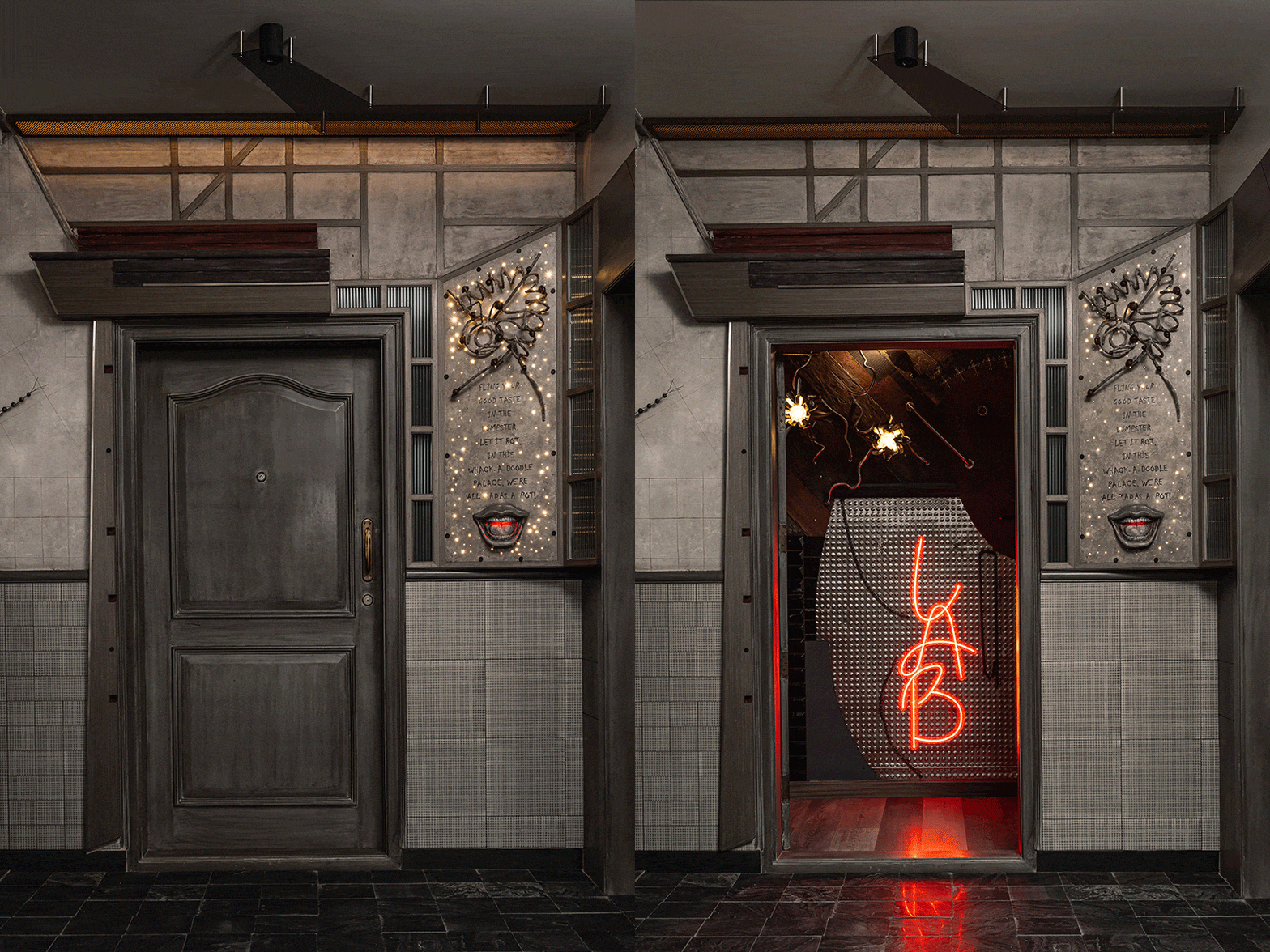
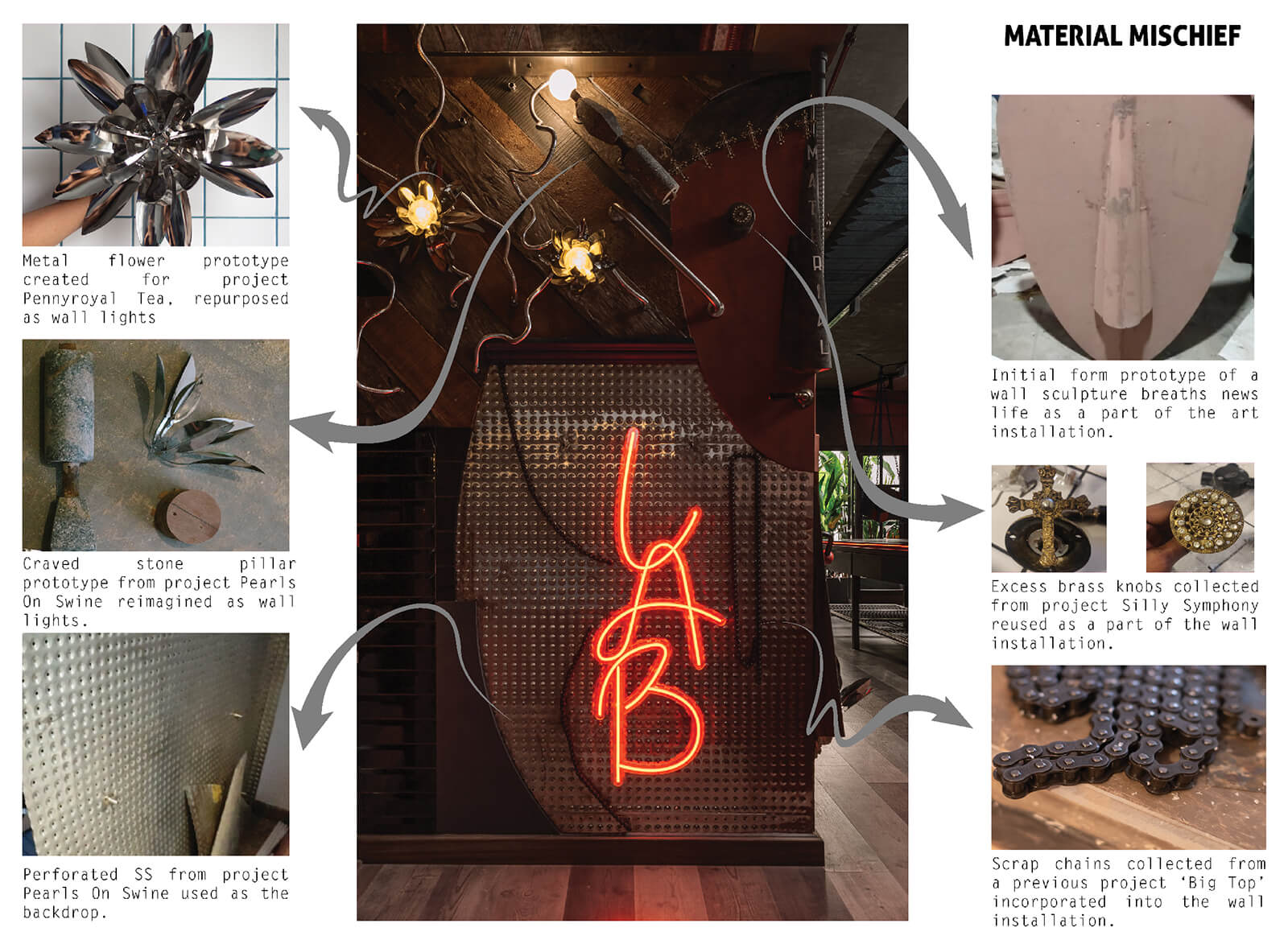
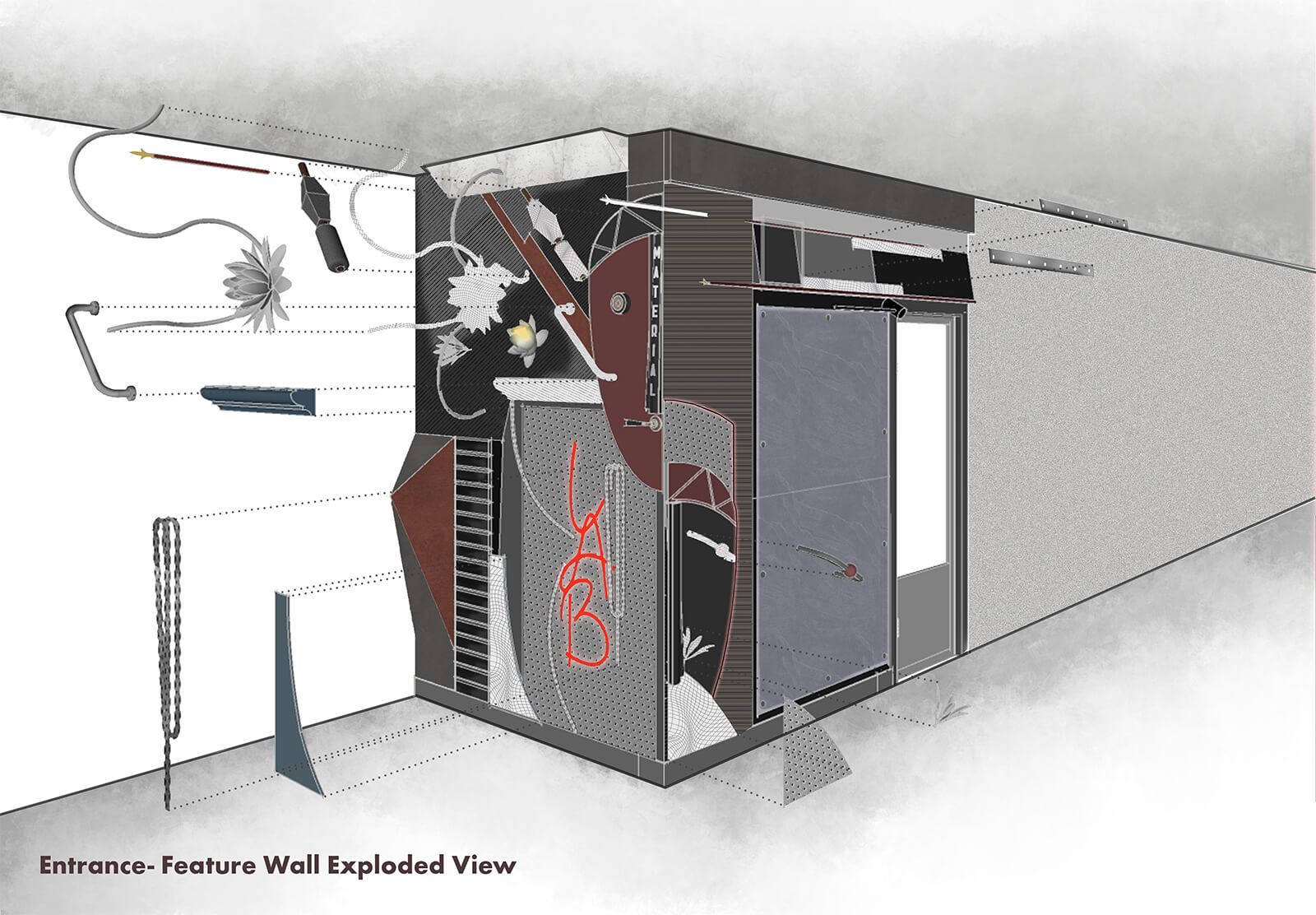
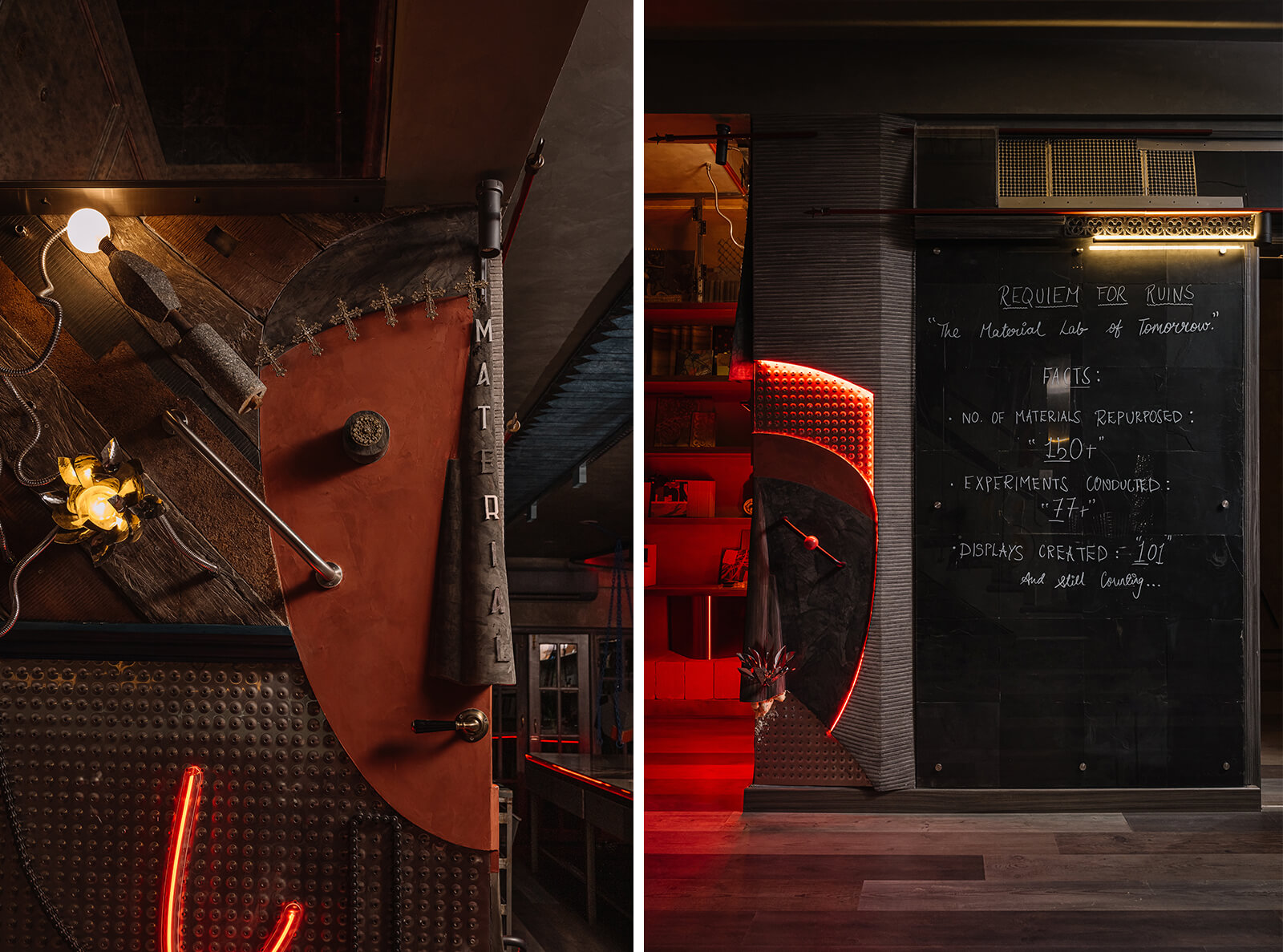
Material Lab is a kaleidoscope of multi-coloured waste items presented as a spatial experience that is both a library and a memoir. The programme is oddly modest, comprising a lounge, a material library, a few discussion rooms, a pantry and a storeroom. The spatial narrative is driven by the materials, right from the entrance. The matte charcoal offers a slow transition from the seemingly prevalent world order and biased notions of beauty into a tapestry of disorder and chaos, as announced by the hovering cornice and an adjoining panel.
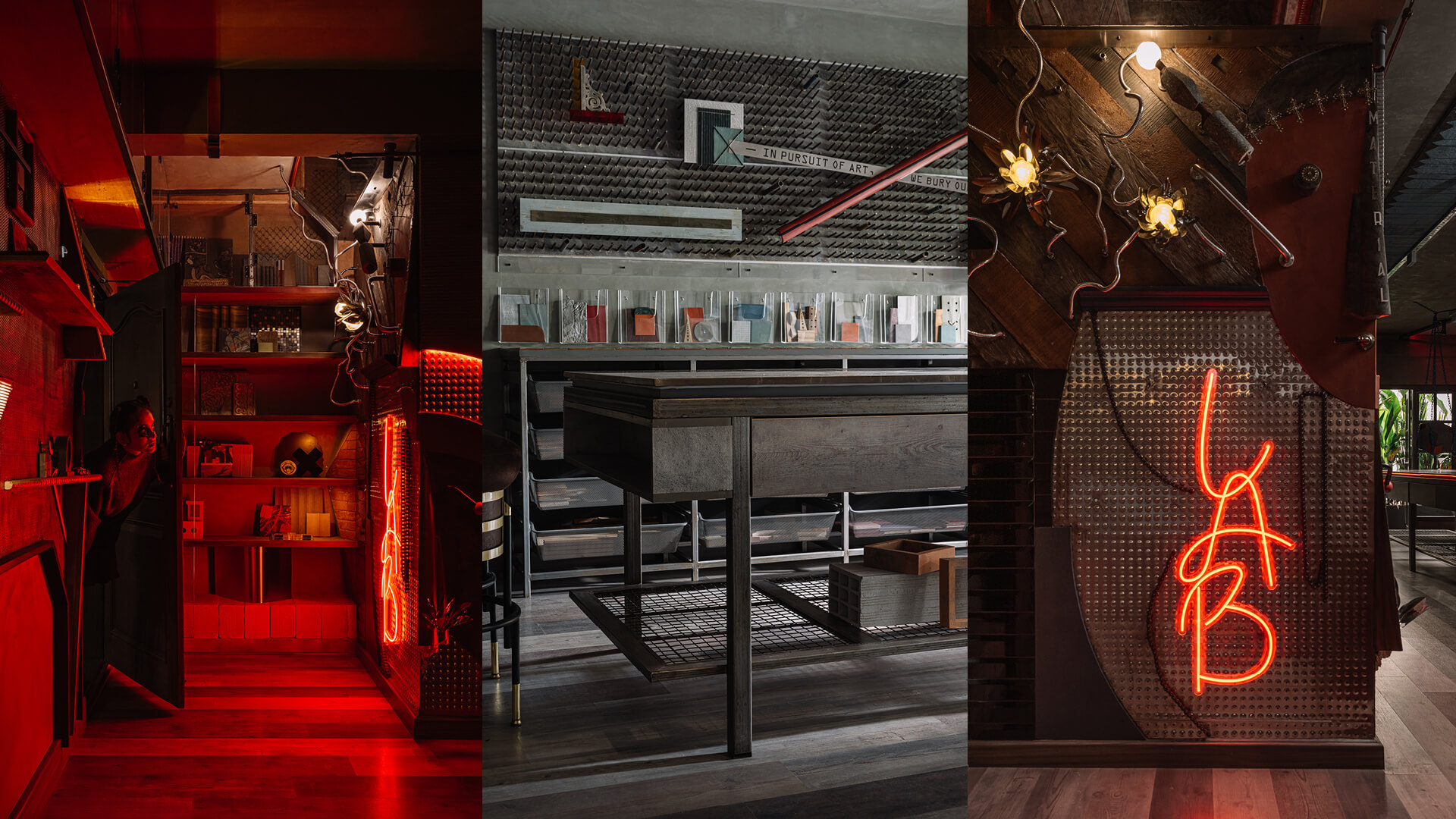
Once inside, the absurd ingenuity of the spatial design almost lunges at you, as if eager to offer everything all at once. The wall across announces ‘L-A-B’ in bold red neon; metal display flowers illuminate the different fixtures slithering across the surface. The wall on the left is adorned with display shelves sporting publications, awards, material samples, models, prototypes and countless mundane yet intriguing items, the accumulation of artefacts creating a layered visual field across the entire lab.
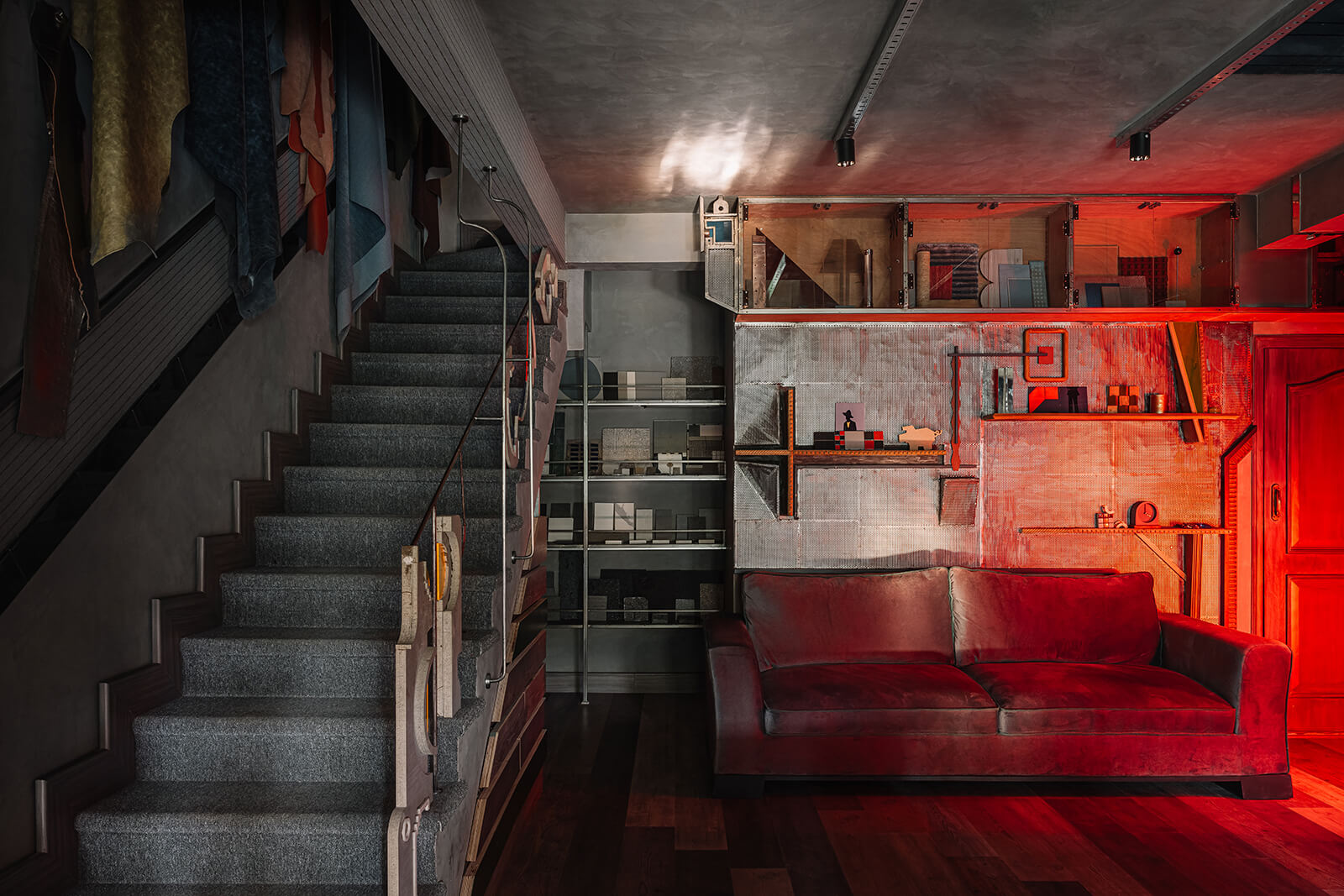
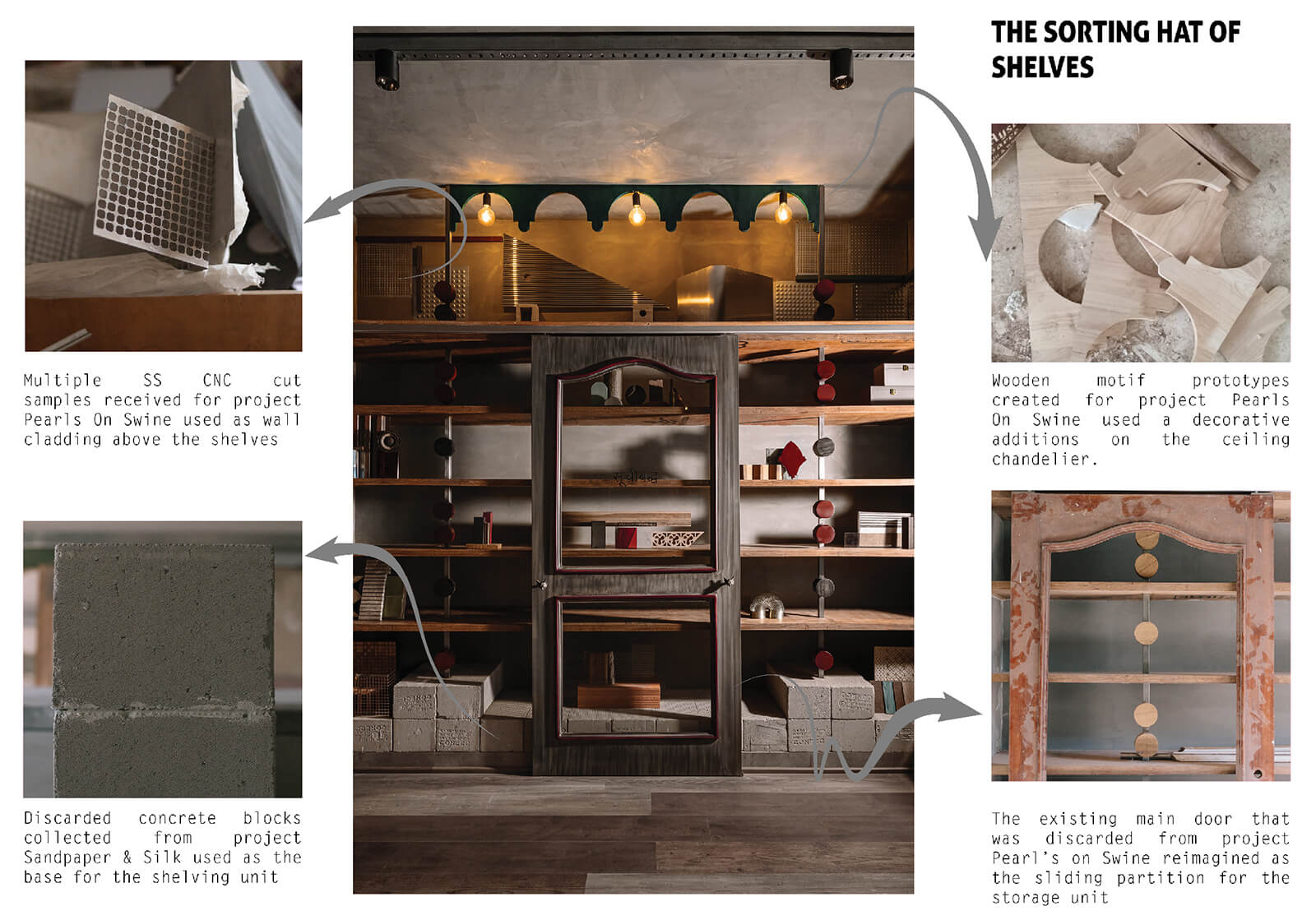
Further in, at the Director’s Lounge, a charcoal-hued couch sits against another display wall clad in perforated MS sheet from the studio’s Pearls on Swine project. The shelf itself hosts a potpourri of materials in diverse embellished geometries, perhaps signalling a prelude to the adjoining staircase. At first, the railing might appear only suggestive of support, a gesture held by the oblique steel pipe resting precariously over a deconstructivist composition of matte composite panels and multicoloured acrylic inlays, interjected by two curved steel pipes descending directly from the ceiling.
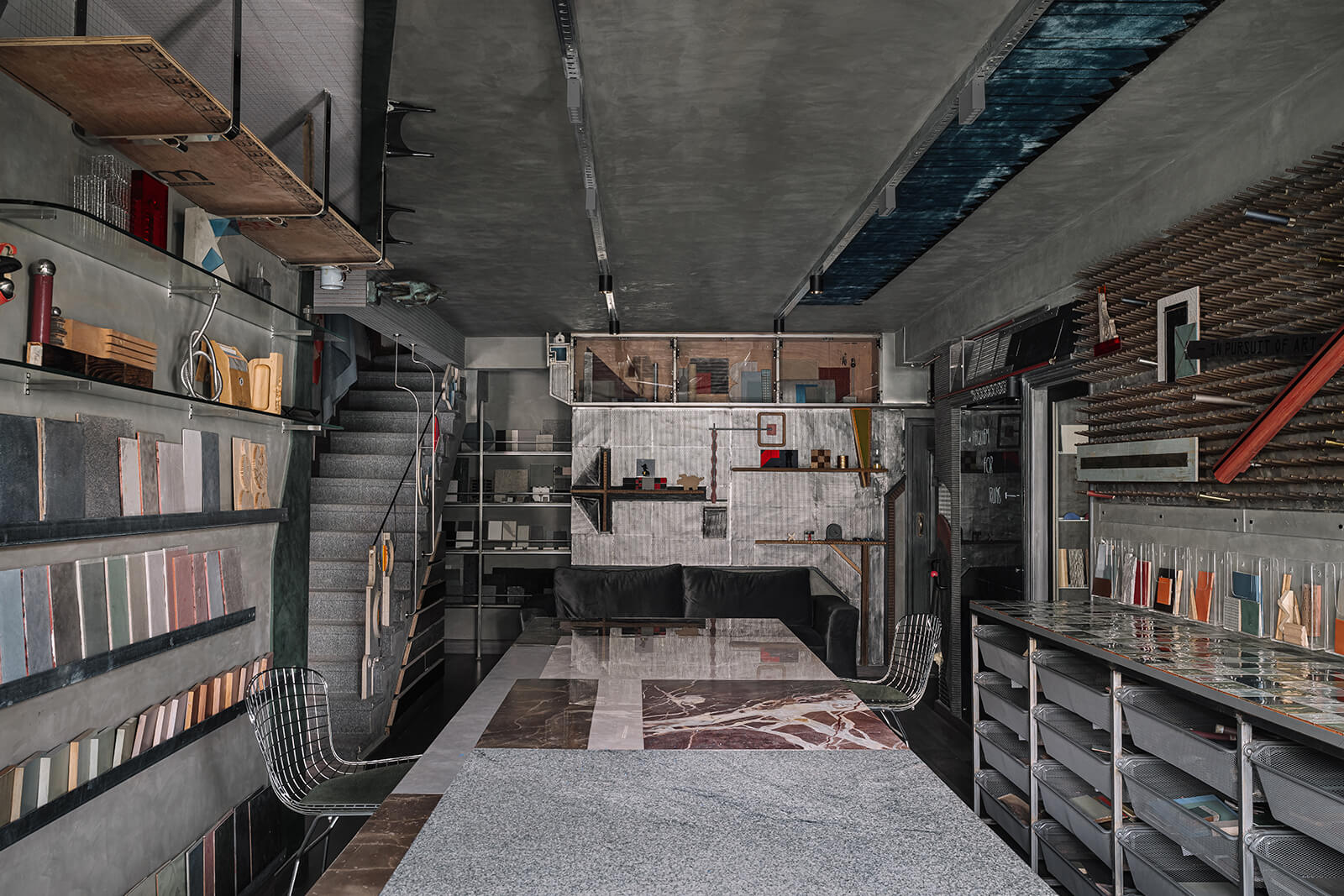
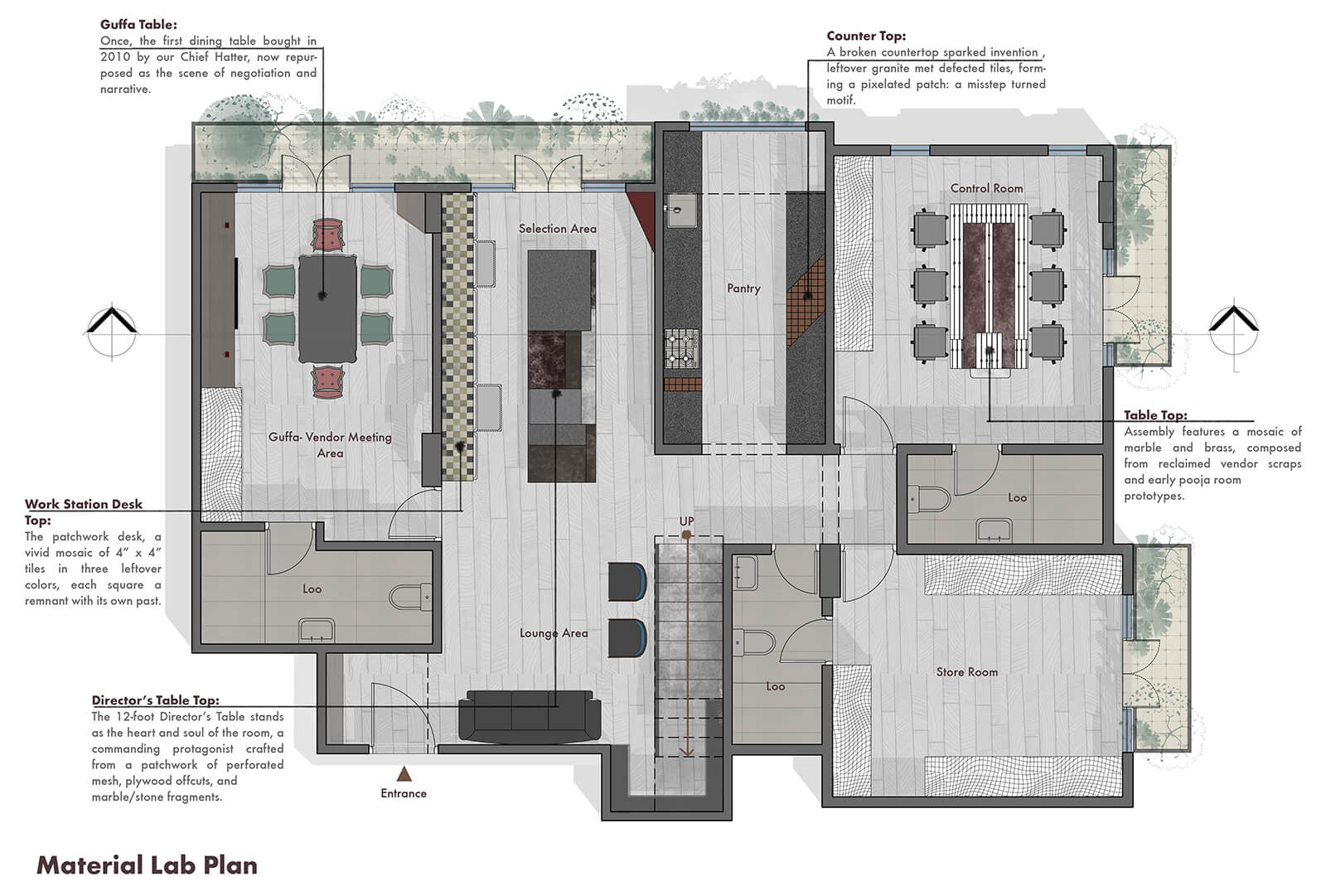
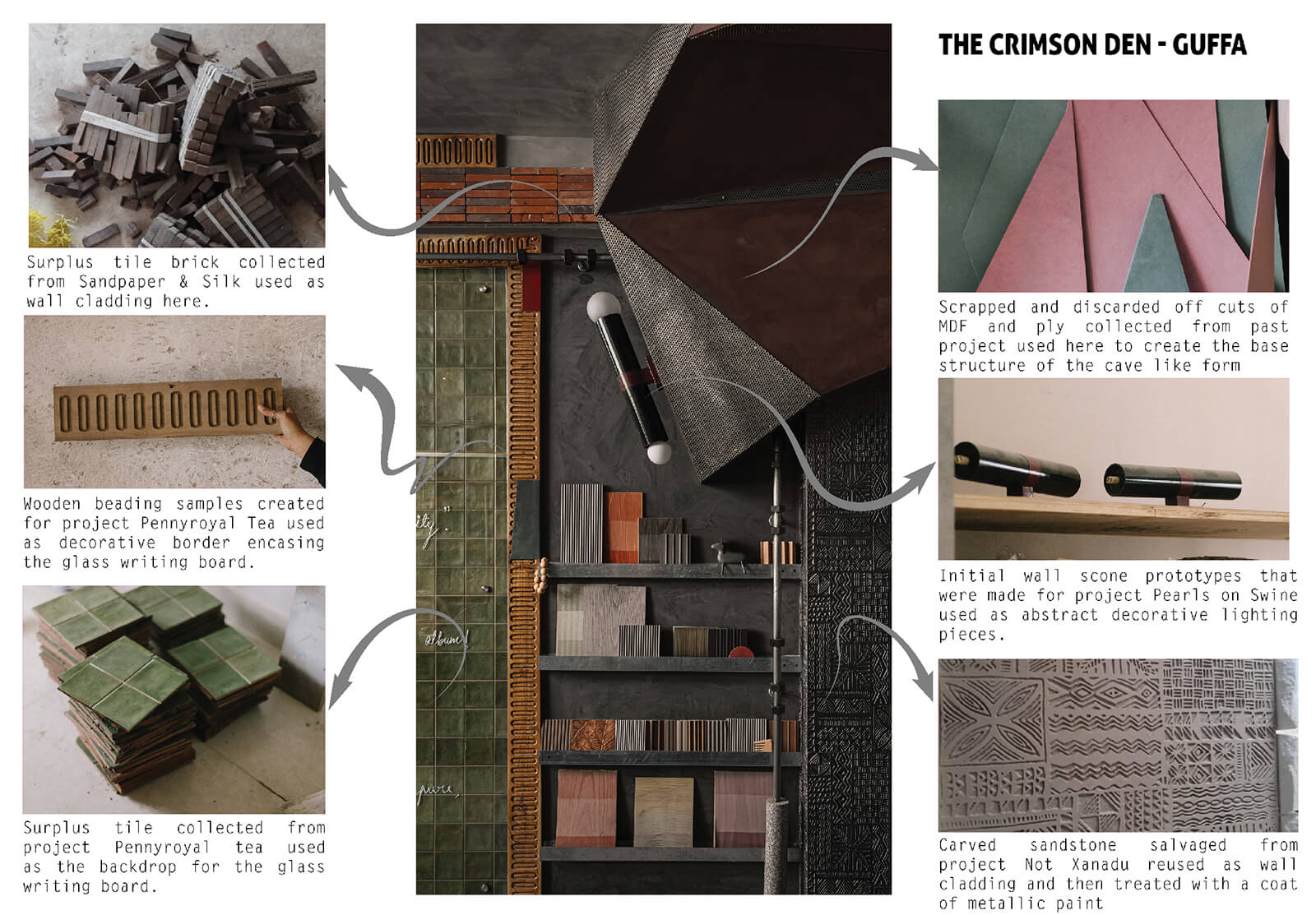
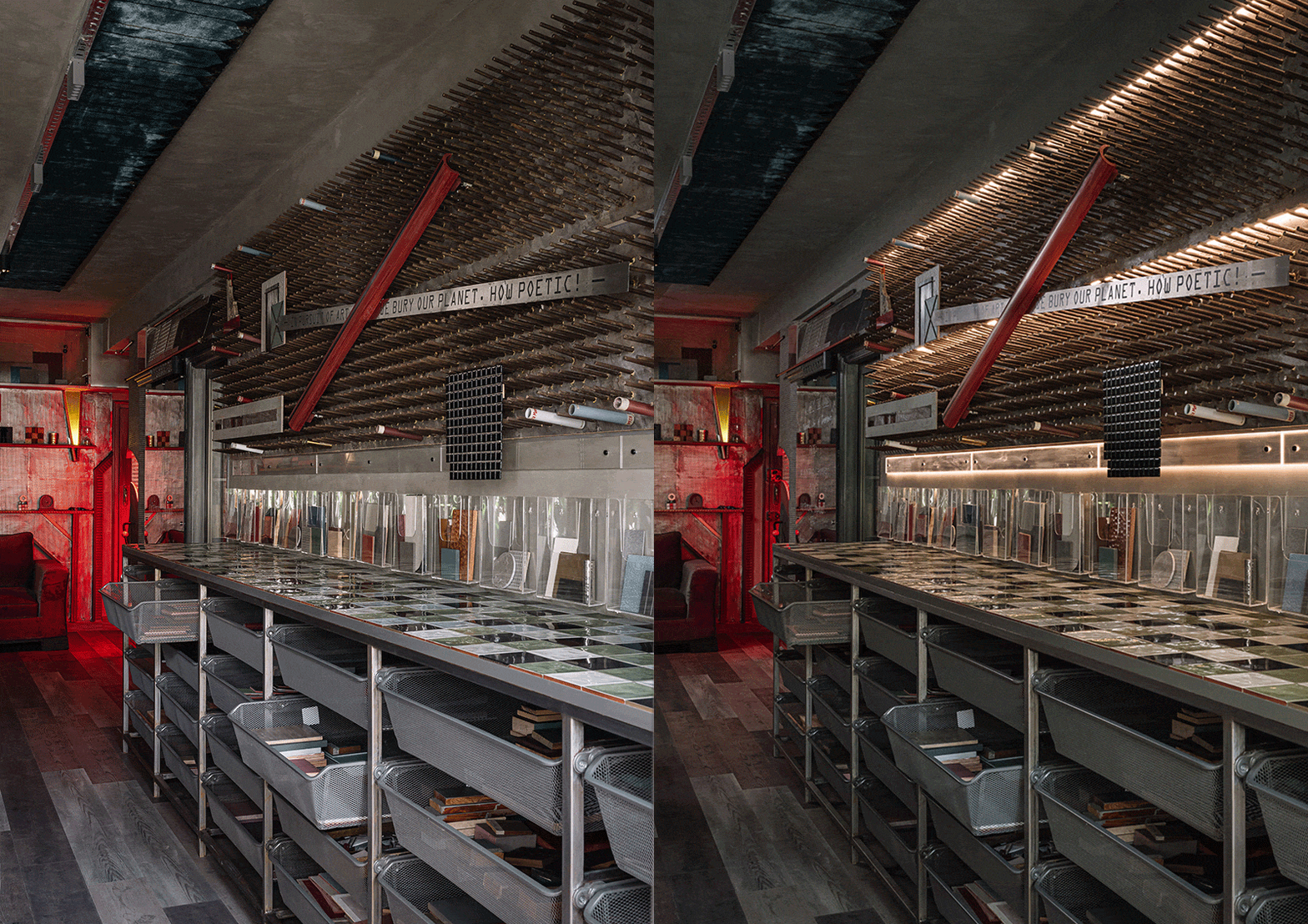
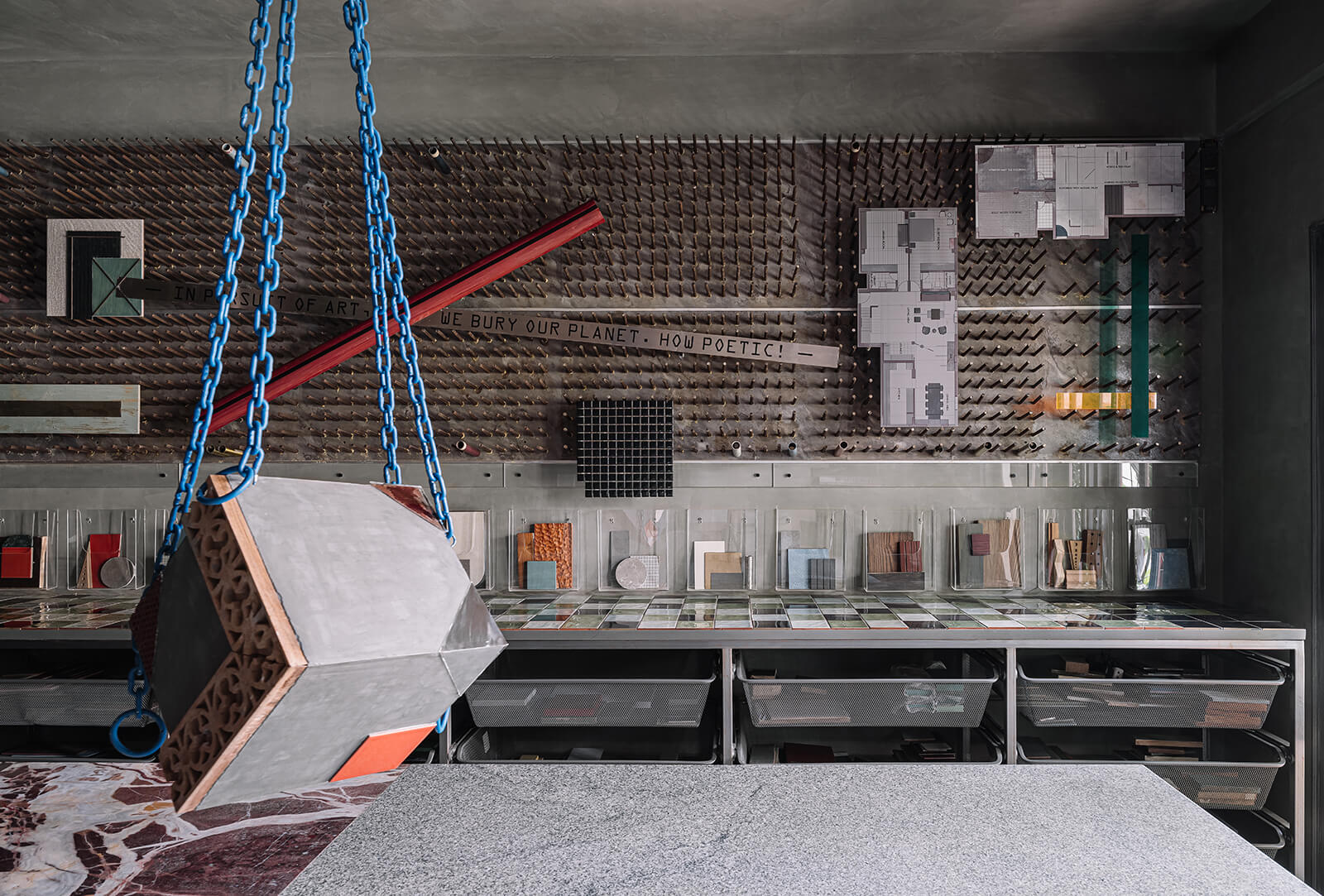
On the other side of the long hall—its expanse further accentuated by the 12ft-long director’s table at the centre—lies the material library featuring an exhaustive collection of paints, tiles and material samples in varied shapes and sizes, laid immaculately over cable-tray displays and a grid network of two dozen mesh drawers balanced on scrap metal legs. The wall above features a large pegboard prepping itself to hold other samples; its highlight remains an artwork that quietly announces a harrowing fact: ‘In pursuit of art, we bury our planet, how poetic!’ In one corner, the pegboard makes way for the metallic door leading into the meeting room called Guffa (Hindi for cave). A series of abandoned journeys find new beginnings here: from carved stone tiles, discarded MDF boards and glossy scones to a zig-zag motif once dismissed as a calculation error. The central focus of the room, however, goes to the meeting table made by repurposing a dining table bought by Thomas in 2010. Countless (but well accounted for!) interventions shape the Material Lab, traversing purpose, function and artistic expression to form a cohesive whole.
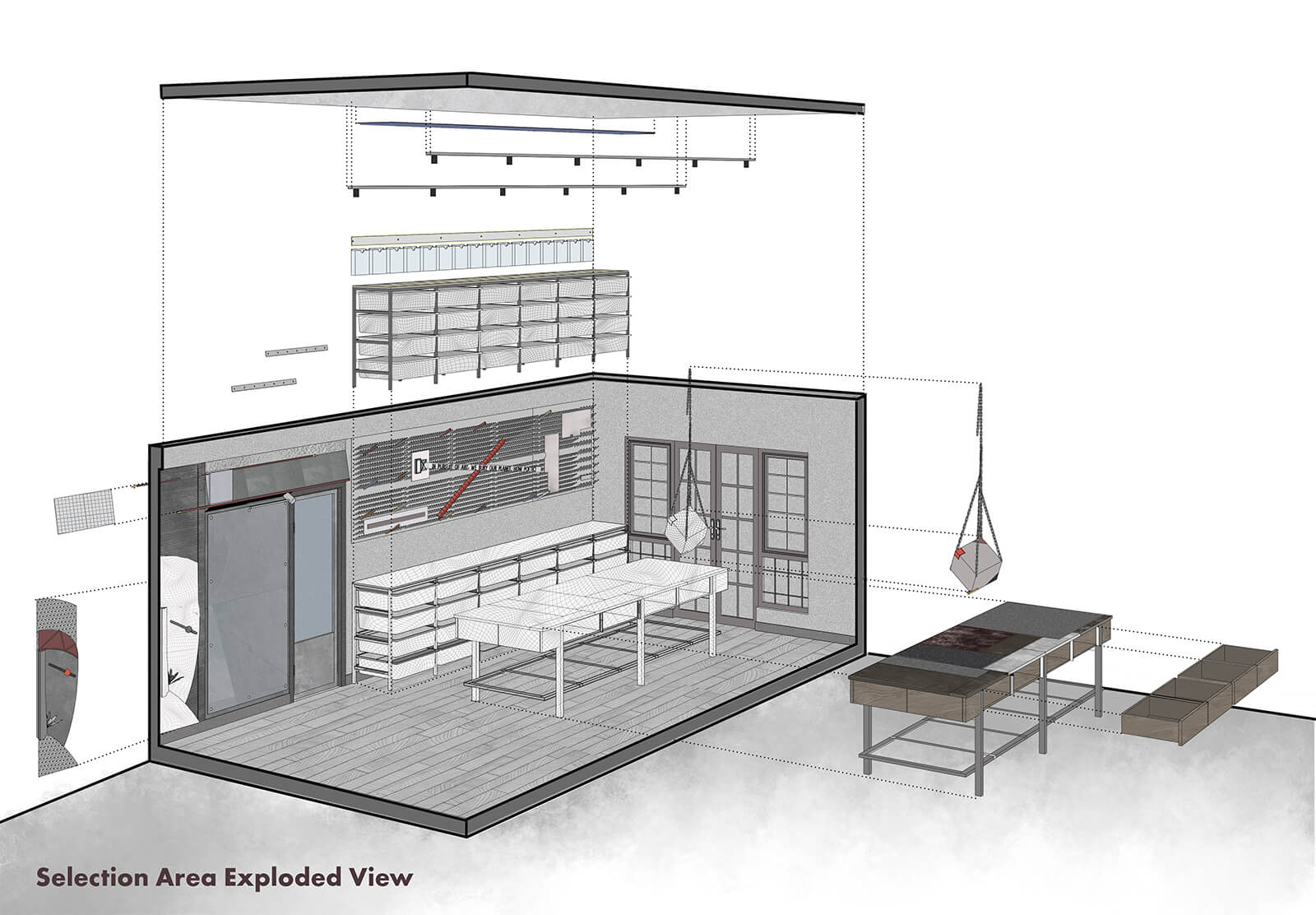
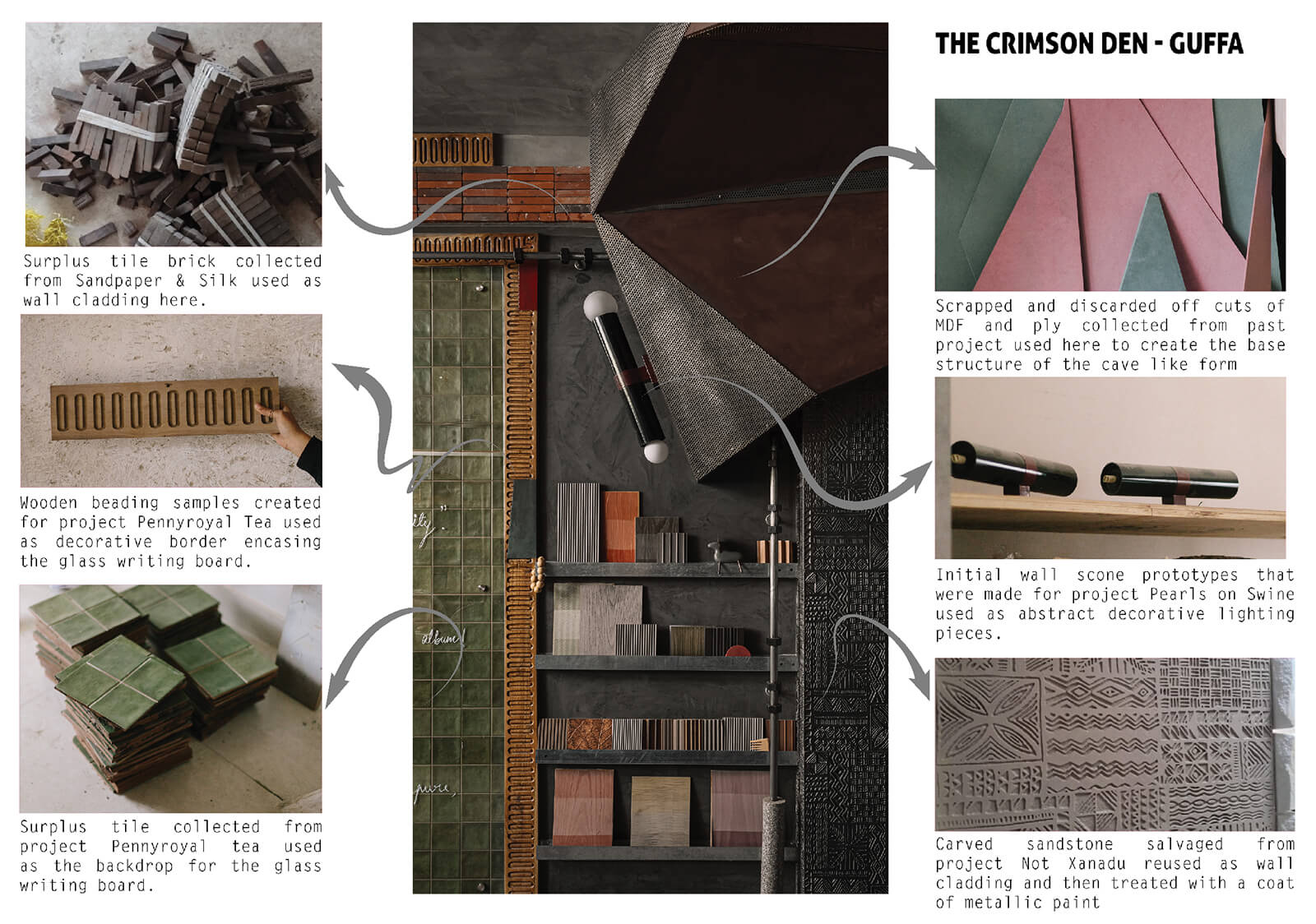
From shelves to walls to chandeliers, everything within Material Lab is designed and adapted to create compositions that meticulously fit in with objects and materials never originally intended to be paired. And yet, despite the diversity of its material palette, the lab shares a particular sense of unease, forming an inexplicable part of the spatial experience. “When you take materials that are familiar in isolation and place them in an unfamiliar relationship with one another, they begin to acquire a different character,” Thomas tells STIR. “The controlled lighting and darker, more immersive spatial composition further exaggerate that quality.”
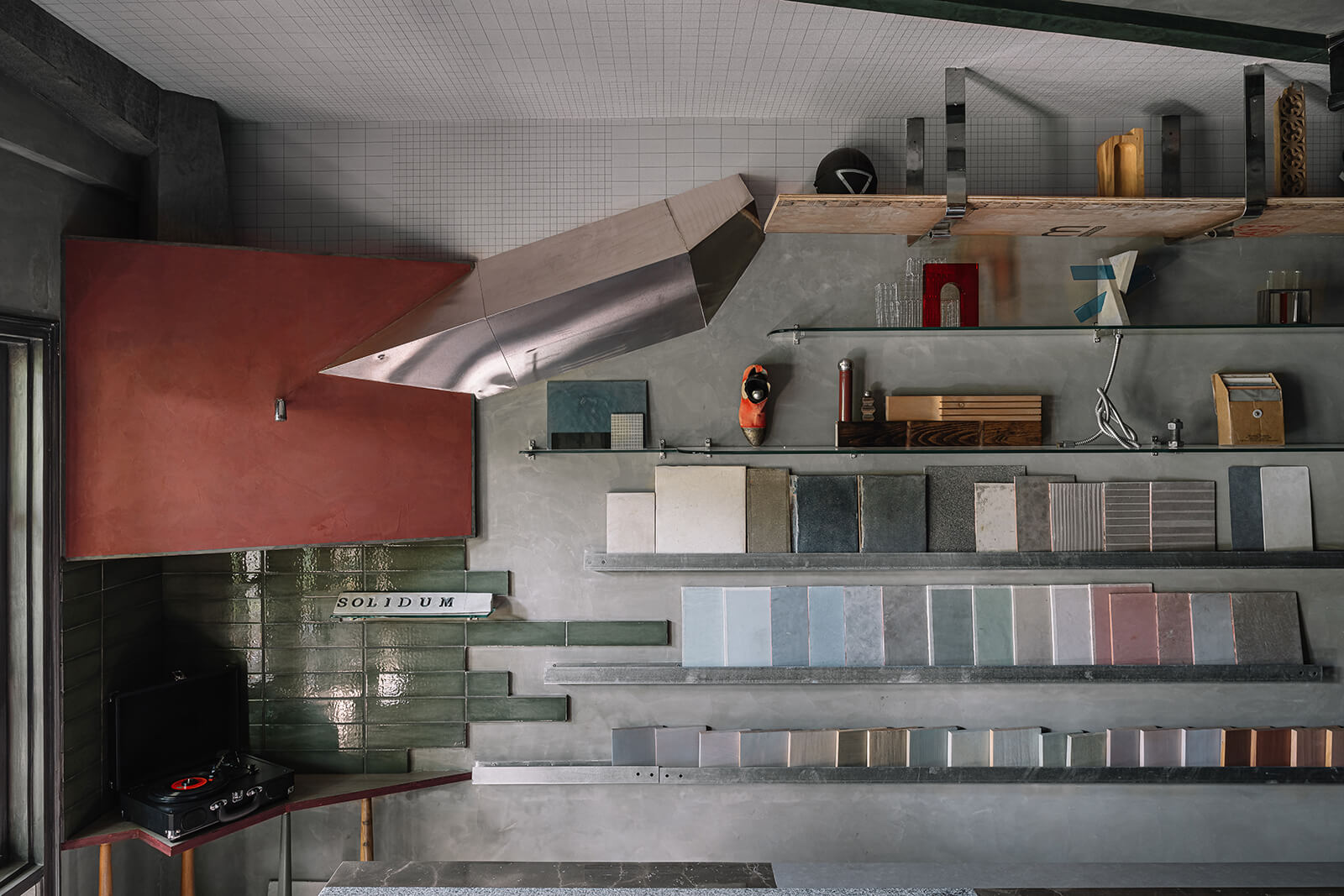
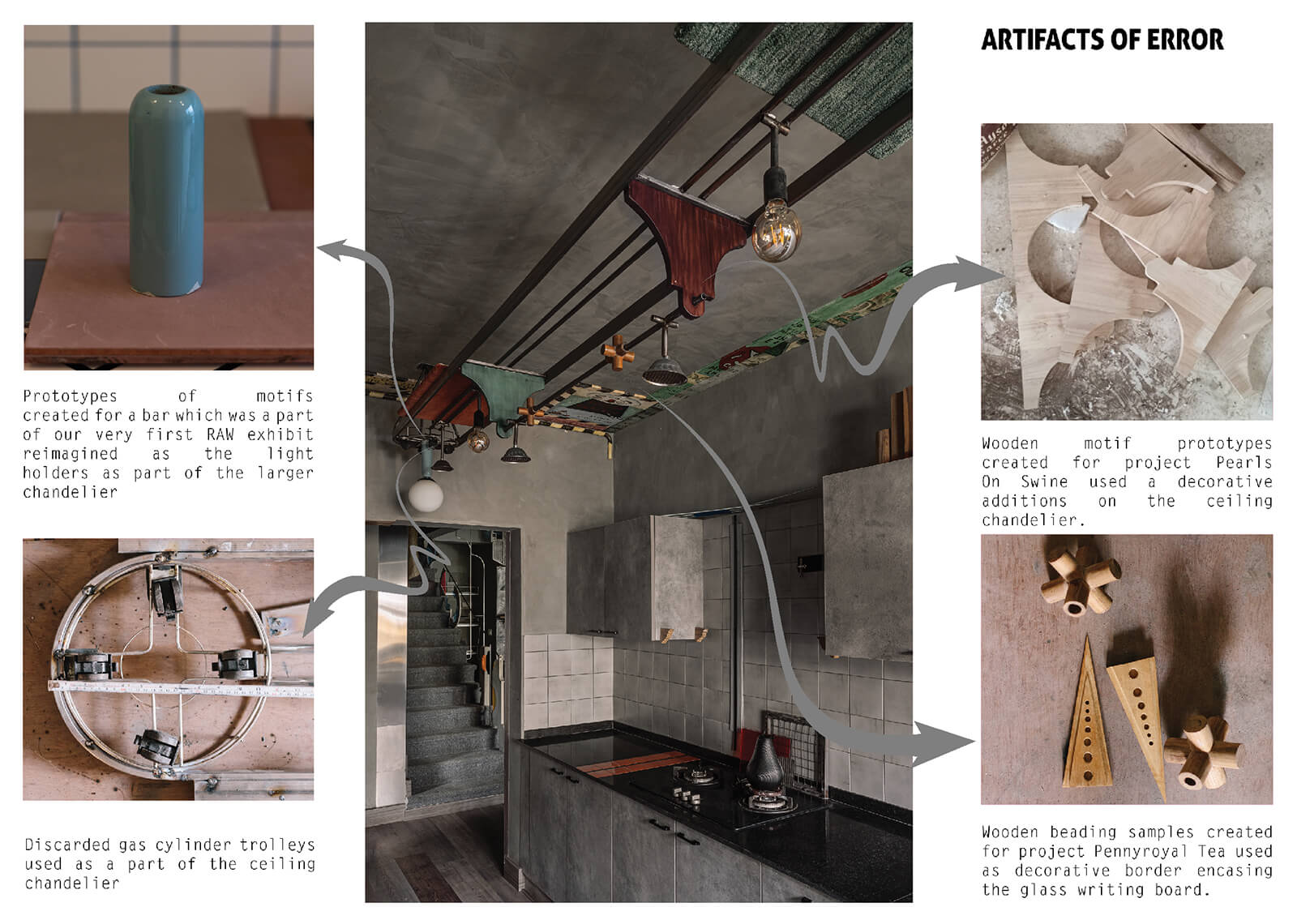
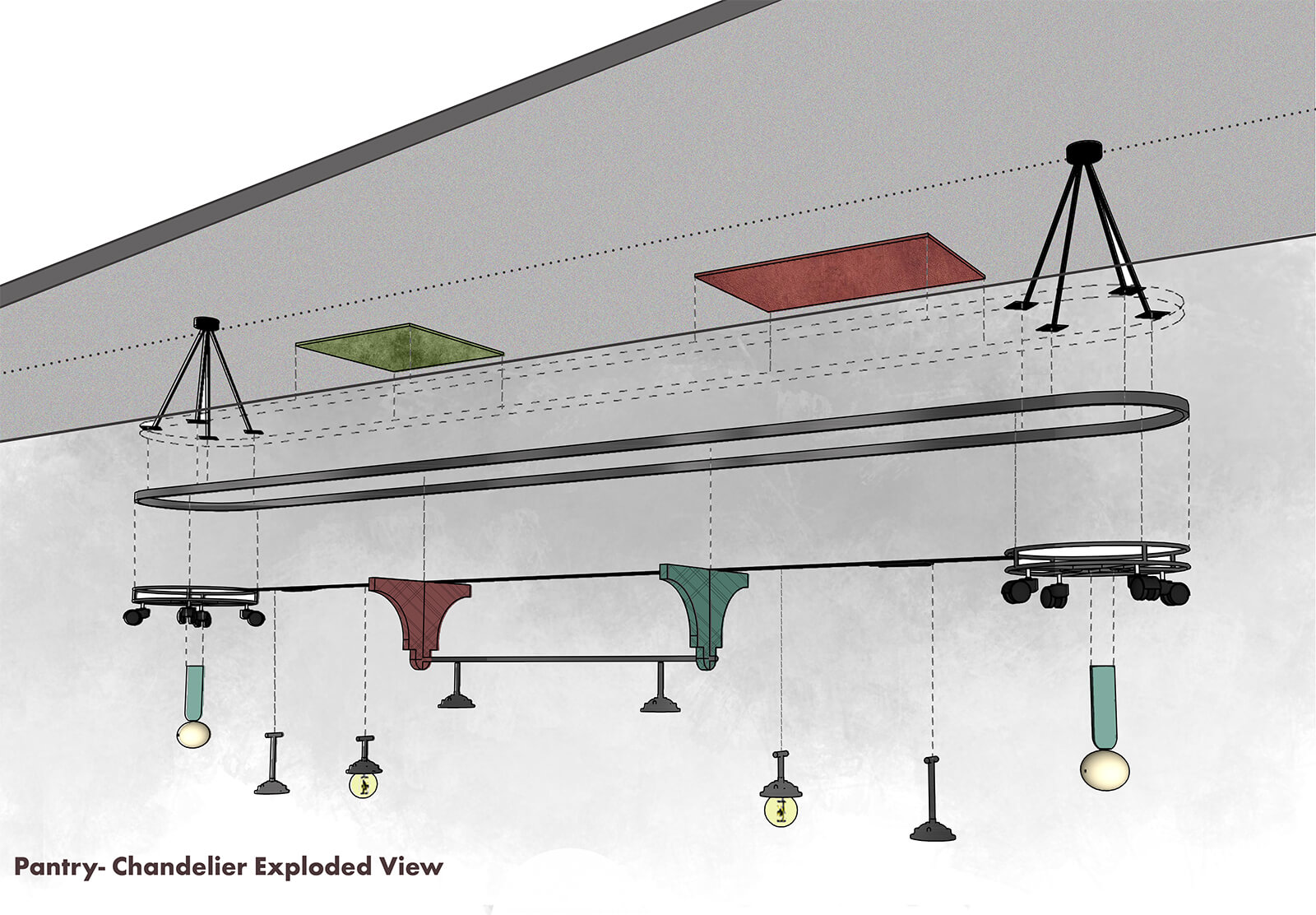
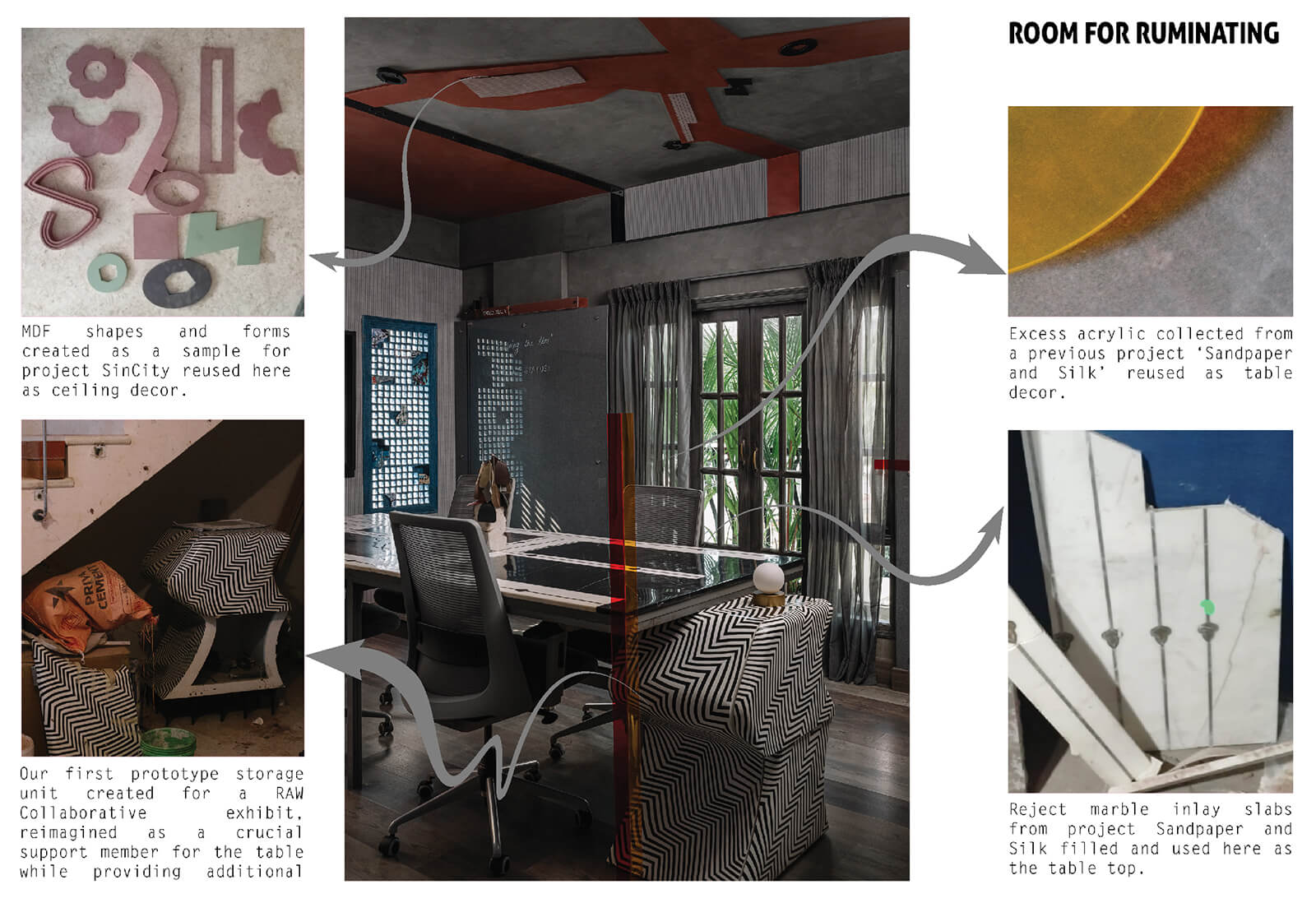
It is amusing to see how dealing with project discards became a project in itself, creating a fractal loop in which ideas and elements emerged as by-products of the space. “I don't really think of them as things that were rejected,” Thomas remarks. “The project doesn't really have a full stop. Something that didn't work here isn't necessarily a failed idea; it may simply be an idea waiting for a different context, a different combination or a different moment.”
The pressing question, however, remains whether this pursuit should be understood as material consciousness or artistic expression; for where lies a space that can appeal to both? “I would say the project was very deliberately rooted in sustainable thinking. We wanted to question the conventional cycle of material use and explore how they could be given another life. But I think the artistic pursuit very strongly comes into the picture once you ask: what do you actually do with all of it?” Thomas ponders. “It is one thing to reuse a material, and quite another to make that reuse feel intentional, beautiful and spatially meaningful. The project isn't sustainable instead of being artistic; its sustainability is what allowed us to approach the design artistically in the first place.”
Name: Material Lab
Location: Bengaluru, India
Interior Designer: Multitude of Sins
Area: 1500 sq ft
Year of Completion: 2025

by Jincy Iype Oct 15, 2026
STIR explores craft, material intelligence and people shaping Indian design through dialogues with Design Democracy’s co-founders and the curators of its special exhibitions.
by Pranjal Maheshwari Oct 13, 2026
Through furniture, art and films, the showcase at the Ian Potter Centre in Melbourne advocates for biophilic material cultures as an antidote to planetary degradation.
by Pranjal Maheshwari Oct 12, 2026
The exhibition reimagines the 20th-century Scottsville residence of the American sculptor and his partner, ceramicist Nancy Jurs, curated by their daughter Alison Castle.
by Mrinmayee Bhoot Oct 08, 2026
The game designer discusses their work and its manipulation of scale, scientific data and non-human perspectives to create speculative futures in conversation with STIR.

make your fridays matter with a well-read weekend
Enter your details to sign in
Don’t have an account?
Sign upOr you can sign in with
a single account for all
STIR platforms
All your bookmarks will be available across all your devices.
Stay STIRred
Already have an account?
Sign inOr you can sign up with
Verification link sent to check your inbox or spam folder to complete sign up process
Tap on things that interests you.
Select the Conversation Category you would like to watch
Please enter your details and click submit.
Enter the 6-digit code sent at


Multitude of Sins turns building waste into eerie funk at Material Lab
by Pranjal Maheshwari | Published on : Sep 28, 2026


 Sign in with Google
 Sign in with email
What do you think?