Design08 mins. read
Vitra Design Museum stirs form, colour and space for Verner Panton’s birth centenary
by Pranjal MaheshwariJul 14, 2026



by Pranjal MaheshwariPublished on : Oct 13, 2026
It may be unfair to hold the design industry solely responsible for the staggering volume of waste by the contemporary world, including the 300 million metric tons of plastic waste that the United Nations Development Programme estimates we produce annually. But if recent trends, technological advances and design innovations suggest anything, it is the potential of thoughtful design to eliminate biophobic materials from production chains and, consequently, from the wastegrounds. Looking closely, the problem is even more nuanced: plastic, non-renewables and other synthetic materials have seeped deep into production chains as integral additives and adhesives, even in products made primarily from natural materials. From furniture and industrial design to fashion, many creative industries use microplastics and other synthetic supplements to enhance the quality of their output—which then ends up in landfills and water sources. In light of these complexities, what possibilities can design offer to impact the ongoing ecological crisis? The National Gallery of Victoria (NGV) sheds some light on this inquiry with its ongoing showcase, Plant Life: The Nature of Design, running at the Ian Potter Centre in Melbourne, Australia, until February 7, 2027.
Developed through a collaboration between NGV, one of Australia’s oldest galleries, and the Royal Melbourne Institute of Technology (RMIT), the exhibition brings together an array of proposals exploring the future of the design industry, and by extension, the planet—through plant-based alternatives to plastics and non-renewable materials. Curated by Ewan McEoin, senior curator of Contemporary Design and Architecture at NGV, the presentation makes its case through more than 60 works across a range of disciplines, including furniture design, architecture, decorative arts, photography, film and craft from the world over including Australia, Southeast Asia and Europe. “Plants do not recognise the boundaries between furniture, architecture, textiles and film,” McEoin tells STIR, when asked about the inclusion of multiple disciplines in the showcase. “The discipline is almost incidental. The question is: What is the relationship between the person who made this and the plant it came from? An exhibition that tried to look at our relationship with plant-based materials through only one disciplinary lens would have missed most of the story.”
Plant Life traces the journey of biophilic design across time. Spread across five chapters, the exhibition journeys from First Nation practices of making involved in borrowing from the natural environment and knowledge systems developed centuries before the advent of synthetic materials, to speculative technologies and workflows that offer an alternative vision for the future of architecture and design.
The Planted Cloth section recalls the intimate relationship between human civilisation and plants through the history of textile design. Against the grave predicament of the contemporary consumerist world—marked by petrochemical fibres, synthetic dyeing and rampant consumption that piles up as major environmental polluters—the displayed works present traditional systems rooted in centuries of accumulated knowledge of craft, agriculture and manufacturing that remain relevant. Culturally, design landscapes across regions such as Asia until the early 20th century have relied on material properties of plants and the know-how of working with them. Some of the works illustrating these lived knowledges displayed at the exhibition include Yukata with frogs, an indigo-dyed garment prevalent in Japan; Pojagi, a traditional Korean wrapping cloth developed by sewing hemp offcuts; and men’s underjackets made from bamboo in China. Films such as Black by Nature Lãnh Mỹ A Silk document the traditional practice of plant-based dyeing of Vietnam’s Lãnh Mỹ A silk, while The Avocado Legacy (2023) by Mexican designer Fernando Laposse confronts the viewers over the ecological disruption inflicted by avocado trade in Mexico.
“Early design was predominantly plant-based,” McEoin explains. “The Industrial Revolution, expansion of colonial trade networks and, above all, the rise of petroleum-based synthetic materials in the 20th century produced a world in which synthetic alternatives were cheaper, more uniform and easier to scale.”
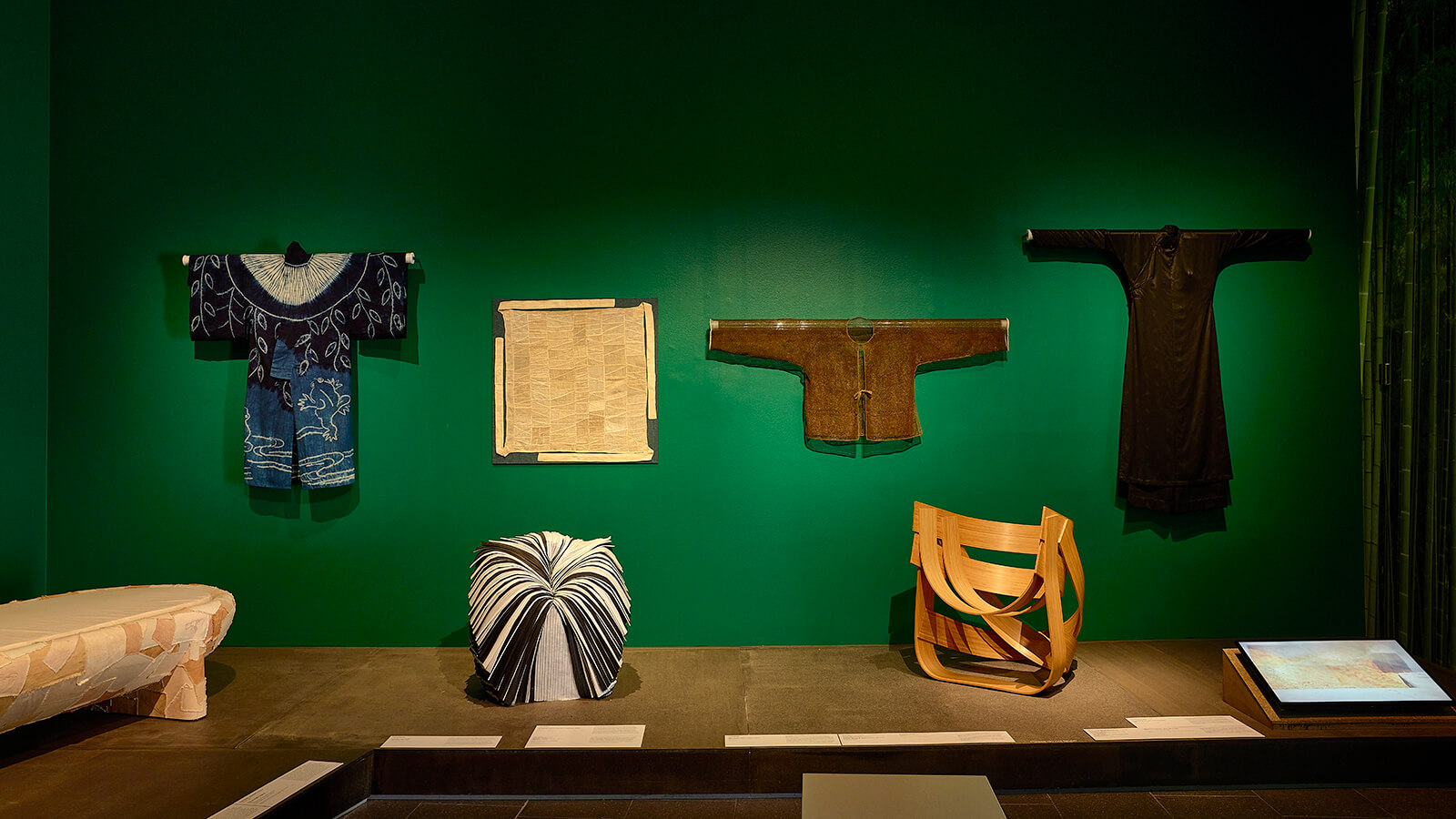
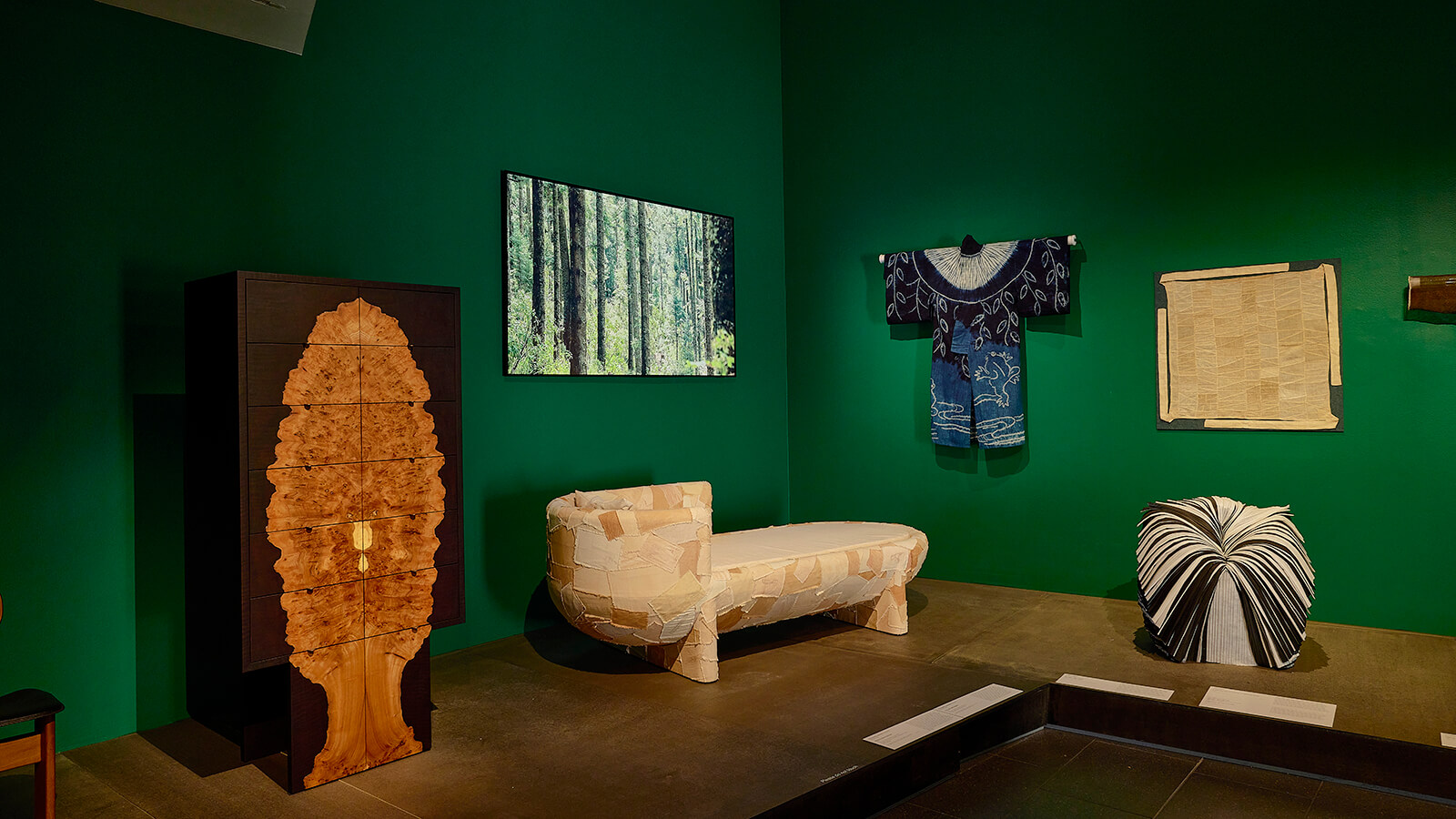
The displays grouped under Forests and Industry contemplate the shift in processing natural materials such as wood, brought about by industrialisation and colonisation. It recalls how mid-century furniture-making, driven by profit-led extractive practices, took a heavy toll on forests by eliminating more than a billion hectares of tropical hardwoods such as mahogany, rosewood and satinwood; a malpractice that continues even today. Among the prominent furniture and product designs reside an English guitar (cittern) from the 18th century made of maple and ebony;the walnut and ebony Artona chair (1975) by Afra and Tobia Scarpa; a Leg Splint (1943) made of mahogany and moulded plywood by Ray and Charles Eames; Bamboo chair (designed in 2007) by Dutch design studio Atelier Remy & Veenhuizen; and Australian designer Anton Gerner’s Tree Cabinet (2025) made in ebonised red gum, poplar plywood, elm and maple plywood.
“Modernism’s democratic ideals were bound to ideas of material abundance, industrial efficiency and visual uniformity,” remarks the curator. “Today, however, it is difficult to separate those ideas from the 21st-century concerns of deforestation, mineral extraction and industrial waste. When encountering modernist objects, we must question how they were designed and what systems made them possible.”
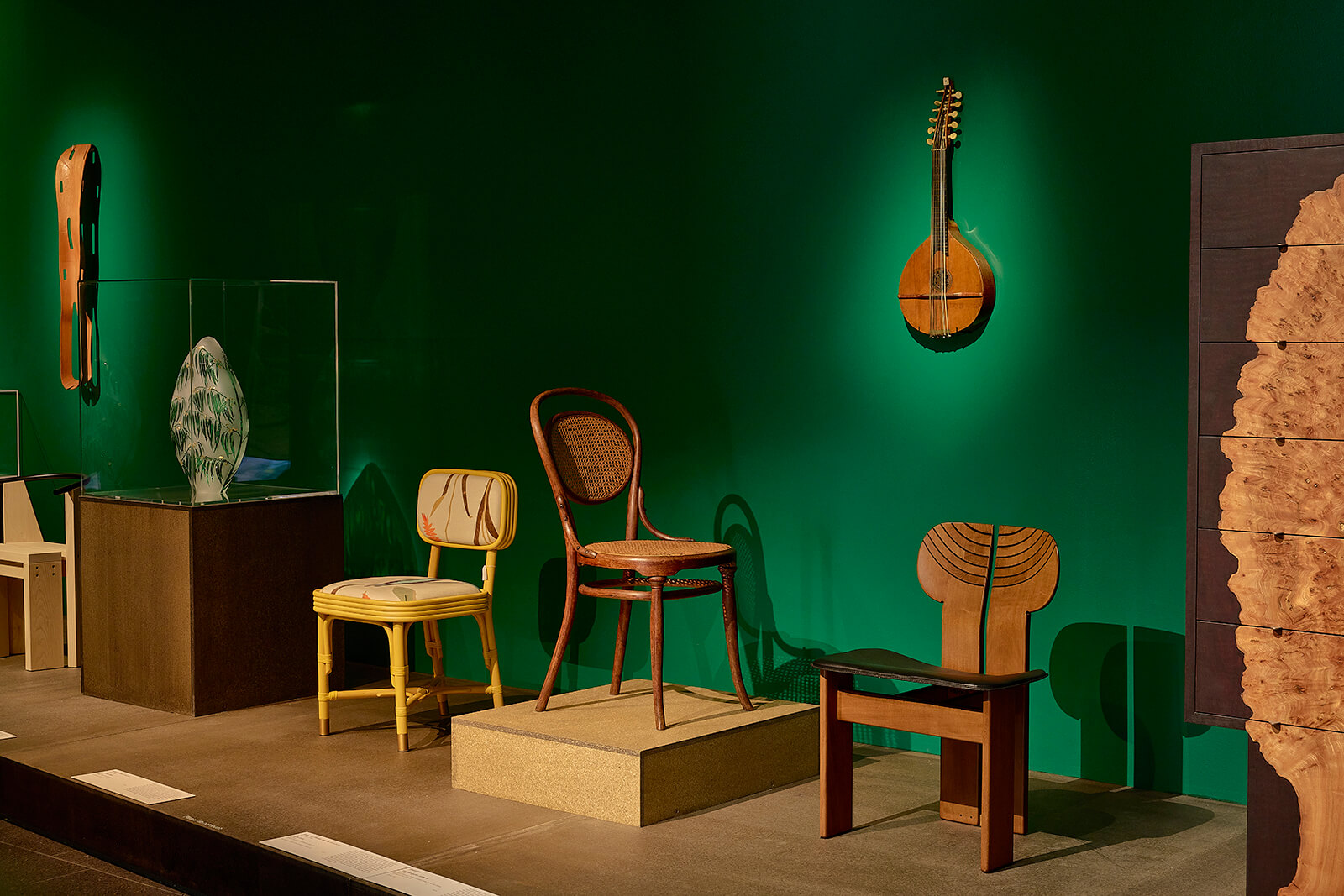
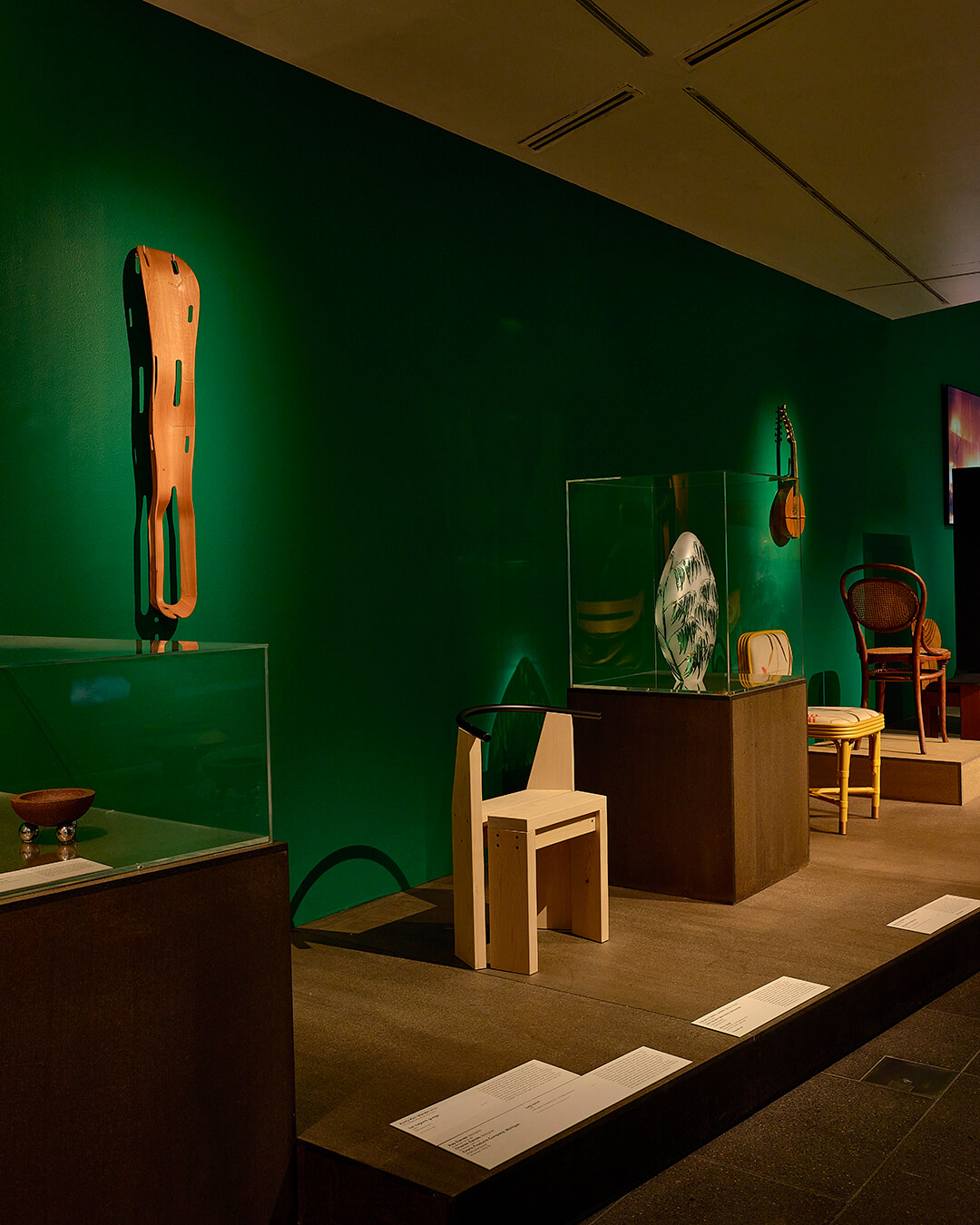
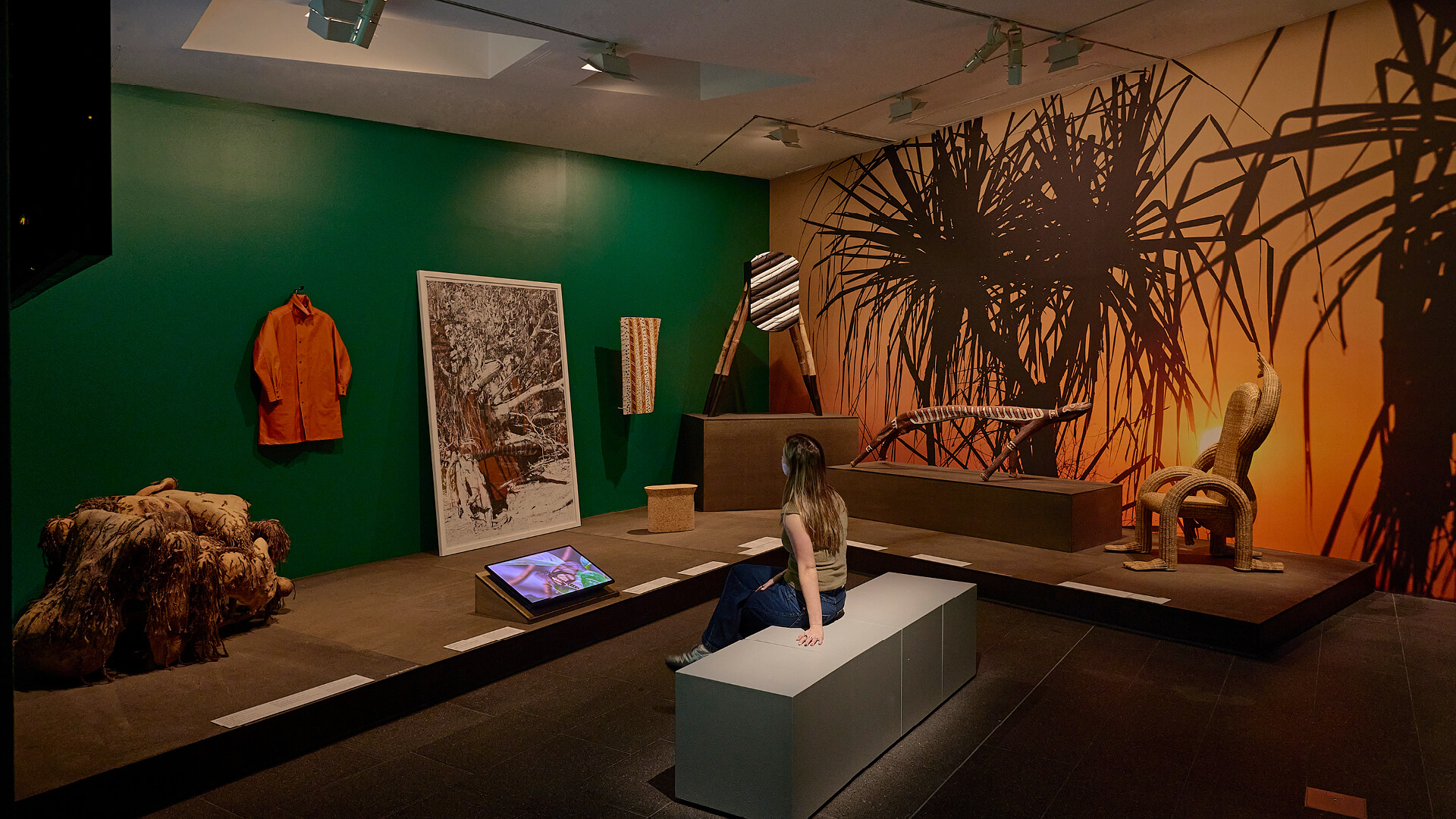
With Enduring Relationships, the exhibit describes the paradigm of design and making as the establishment of a symbiotic relationship between humans and nature rather than a prevalent one-way system of extraction and use. The featured pieces belong to practices striving to encourage propagation of endangered indigenous knowledge systems across the world. With Kelp water carrier (2004), Trawlwoolway-based artist Julie Gough harnesses the resilience of the Bull Kelp plant as one of the oldest material knowledge systems in Australia, while Jangarra armchair (2017) by designers from Trent Jansen Studio and Mangkaja Arts embodies a cautionary tale told to children in the desert region of Fitzroy Crossing. From Amazonia in South America, Ecotono shringa bio-leather jacket (2024) and documentary film SHIRINGA: Fashion Regenerating Amazonia (2025) argue for plant-based material economies through the case of traditional extraction systems surrounding shiringa (rubber trees).
“The most sophisticated model for how to work with plant material in a genuinely sustainable way may not be the latest biomaterial startup. It may be the knowledge embedded in an eel trap woven from flax on Wurundjeri country, or in the understanding of which kelp from which shore in which season can be worked into a vessel. These are not historical curiosities, but living practices,” McEoin tells STIR. “What I hope visitors take from this exhibition is a genuinely different understanding of what a relationship with plant material can look like when it is built on attention, reciprocity and responsibility rather than extraction.”
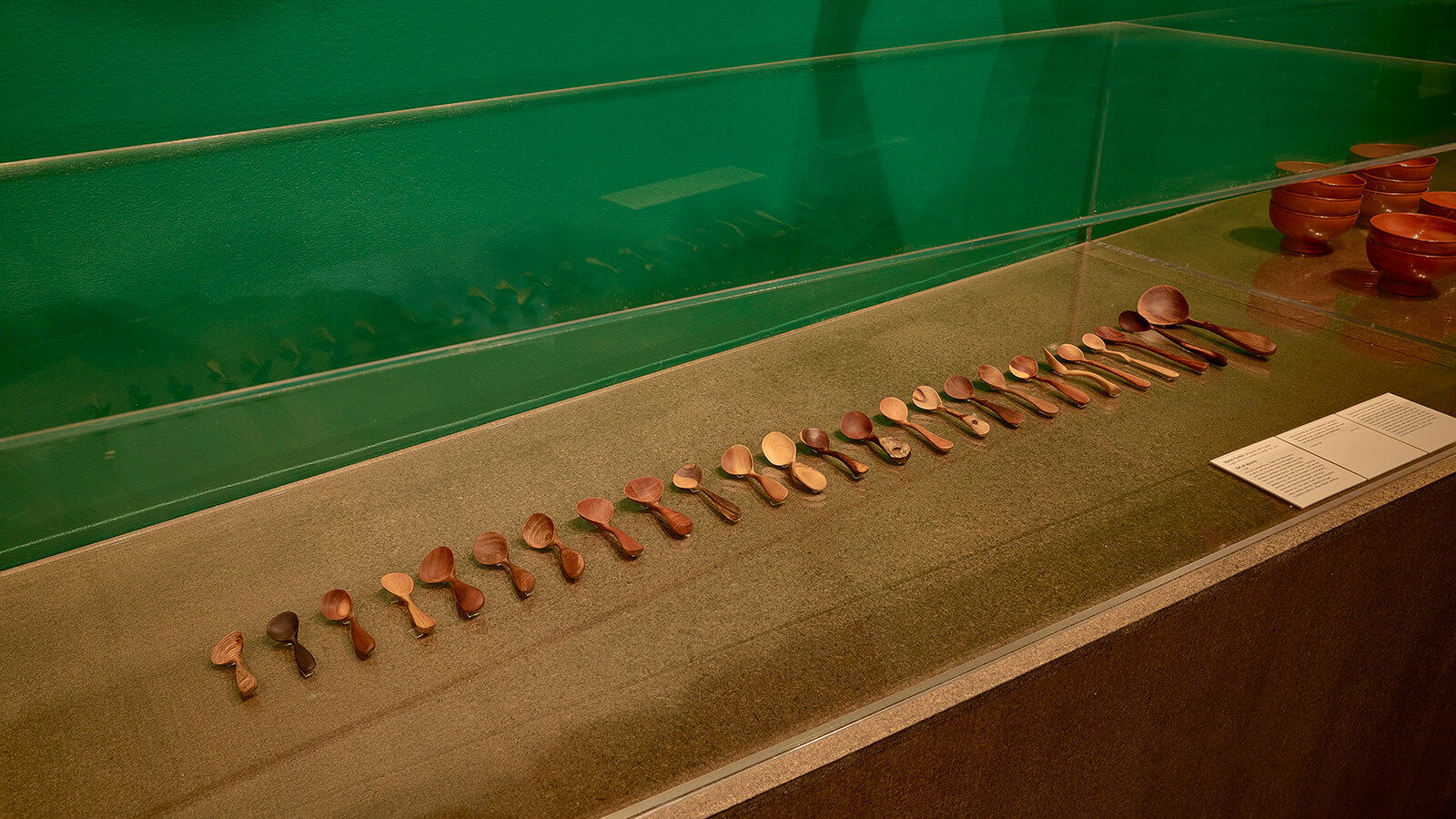
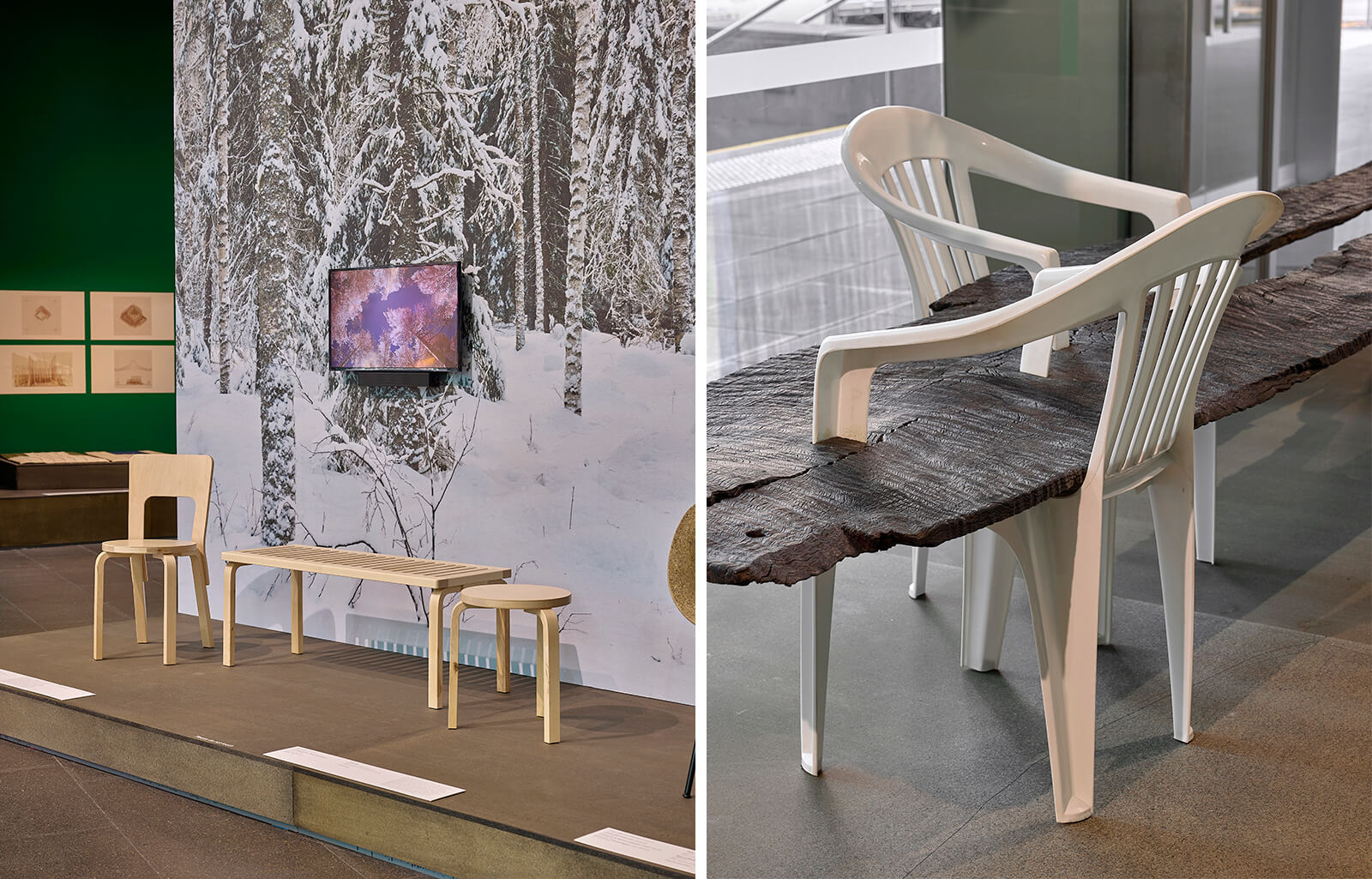
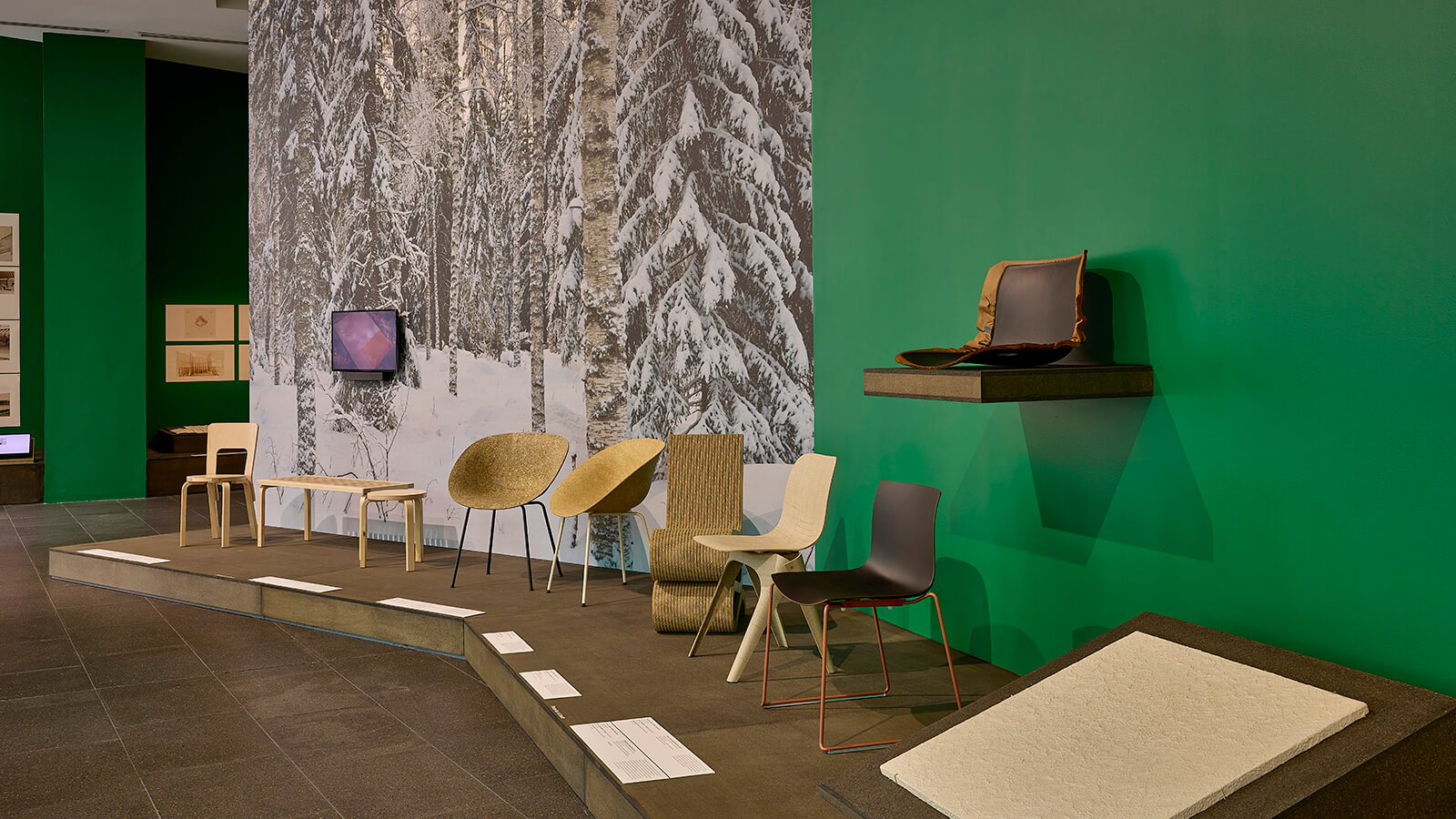
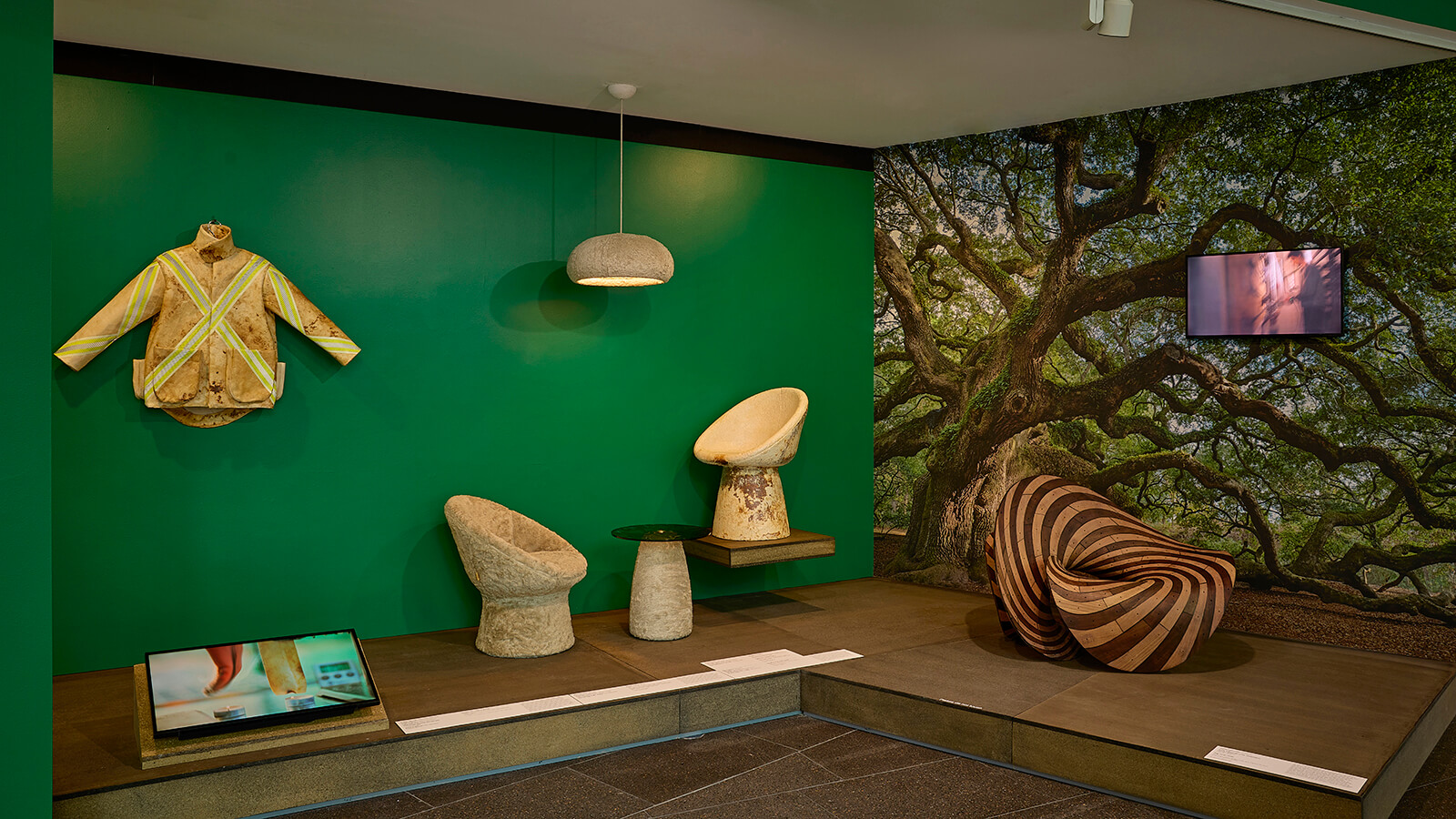
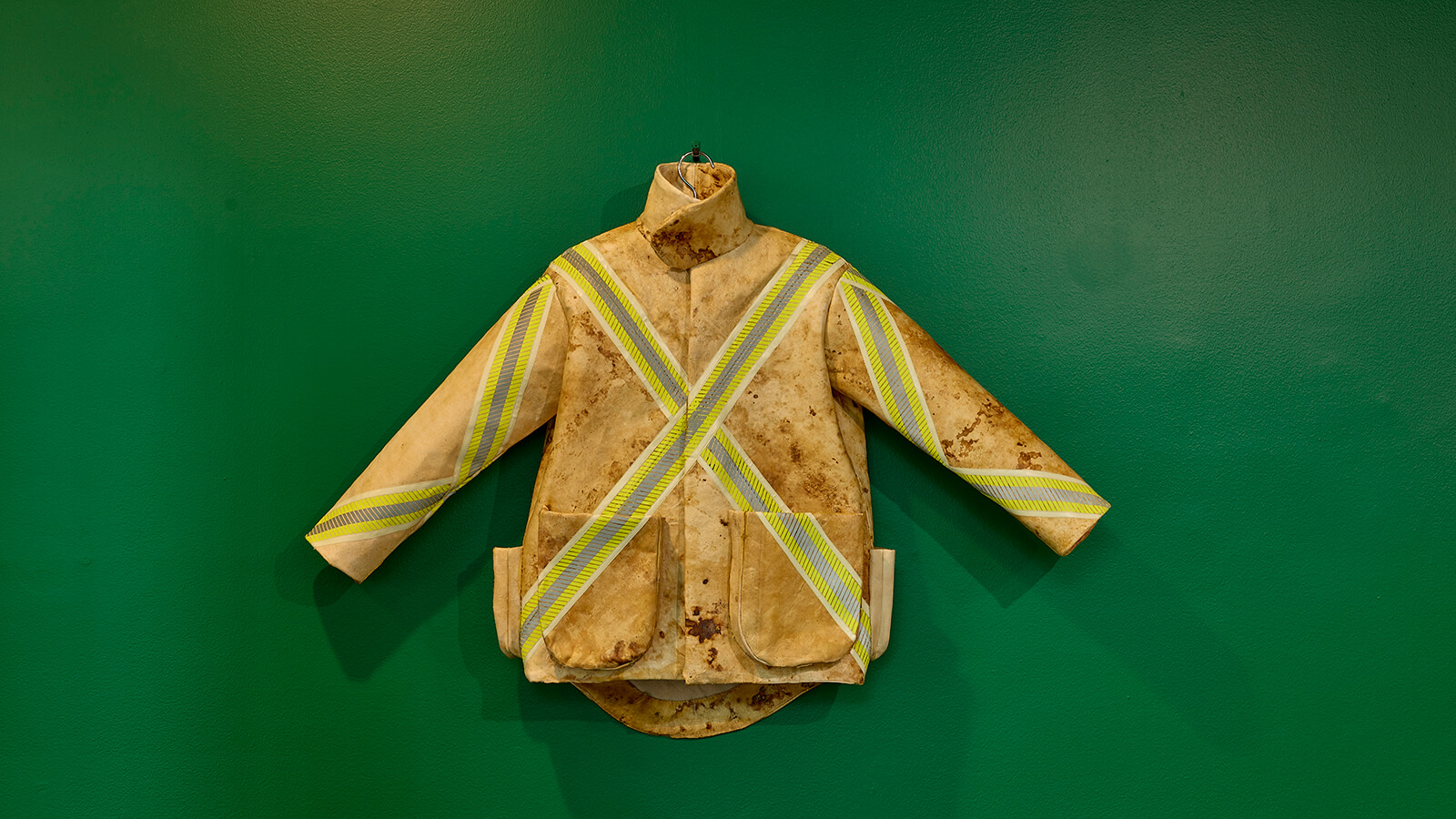
By transcribing these paradigms and alternative material ecologies onto the contemporary design landscape informed by ecological impact and circular economies, New Growth presents the latest developments in plant-based craft and manufacturing. Mycelium Wildfire Jacket (2026) prototypes the protective capabilities of fungi and its derivatives in human clothing; Christien Meindertsma’s Flax chair (2017) demonstrates the utility of the composite of woven flax textile and organic biodegradable plastic; Mat (2023) by a group of Danish designers offers a collection of plant-based chairs made from hemp and seaweed; while MACA set of trays and vessels repurposes discarded macadamia shells, blended with a bio-based resin by Australian designer and manufacturer Avant Mater Mills. The chapter also includes material-conscious renditions of iconic designs such as Stool 60 (2023), Chair 66 (2023) and Bench 153B (2023) from Alvar Aalto’s 1933 Forest collection and Canadian architect Frank O. Gehry’s Wiggle side chair (designed in 1972), in addition to recent pieces including multidisciplinary Dutch designer Joris Laarman’s Ply Loop chair (2026), unveiled earlier this year at his solo exhibition, Symbio.
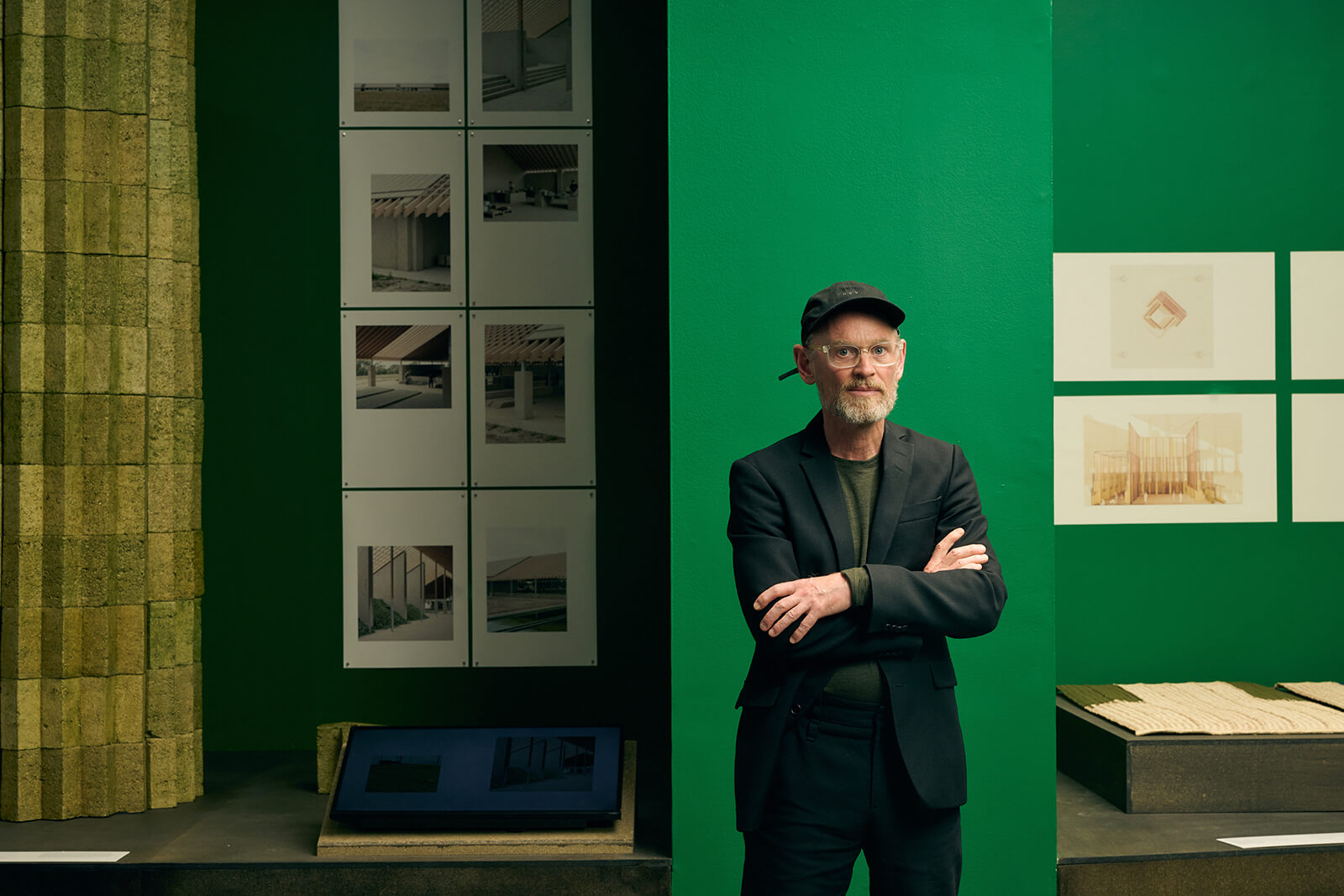
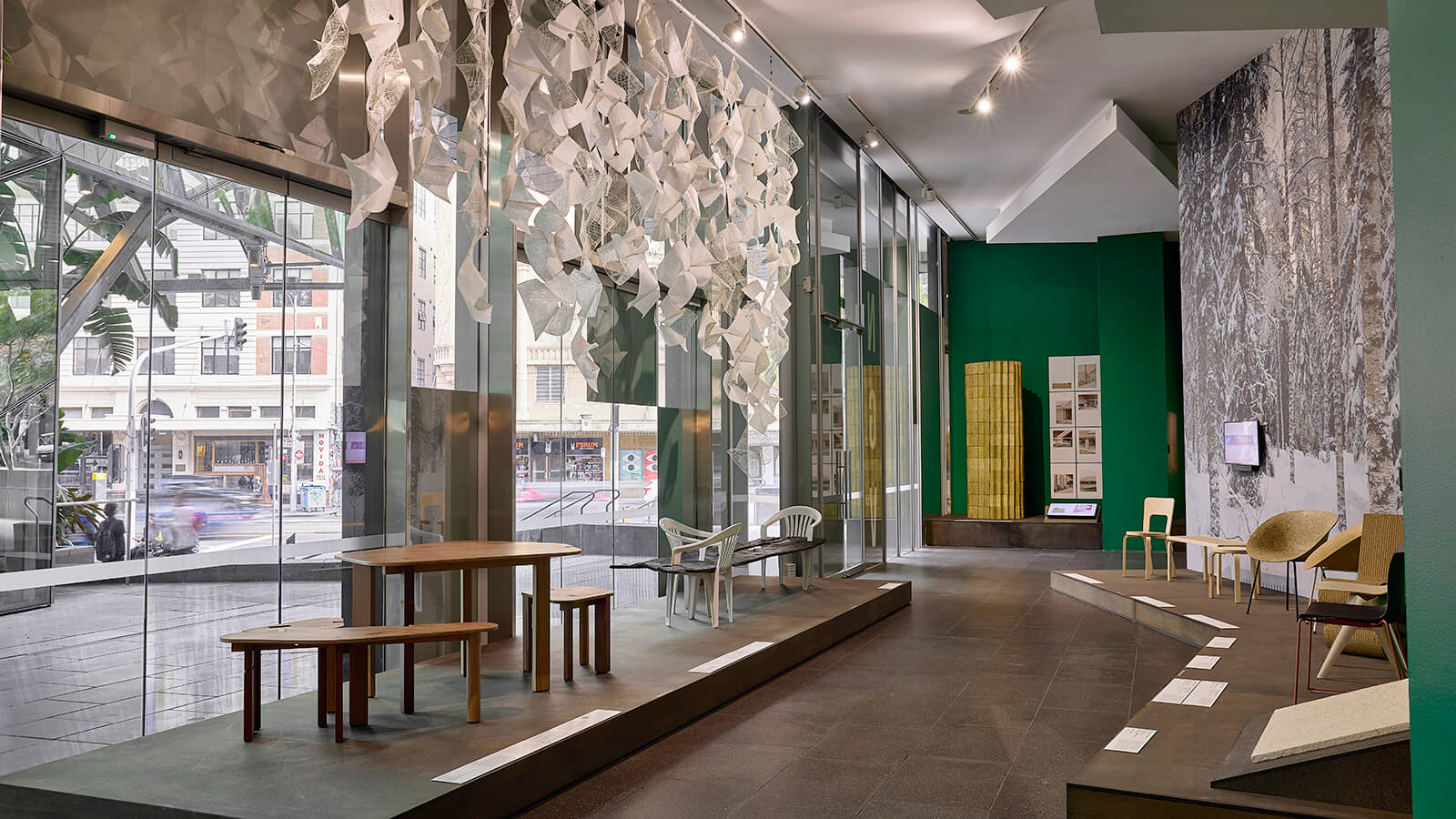
The chapter Living Structure further expands the narrative to an architectural scale, proposing solutions using novel bio-resources like date-palm waste, algae biomass, oyster shells and farmed biological matter. The display plinths and surfaces within the exhibition design are crafted from Plantbord, a material developed by Arnhem-based company Plantics, made from hemp hurd bound with a novel bio-resin.
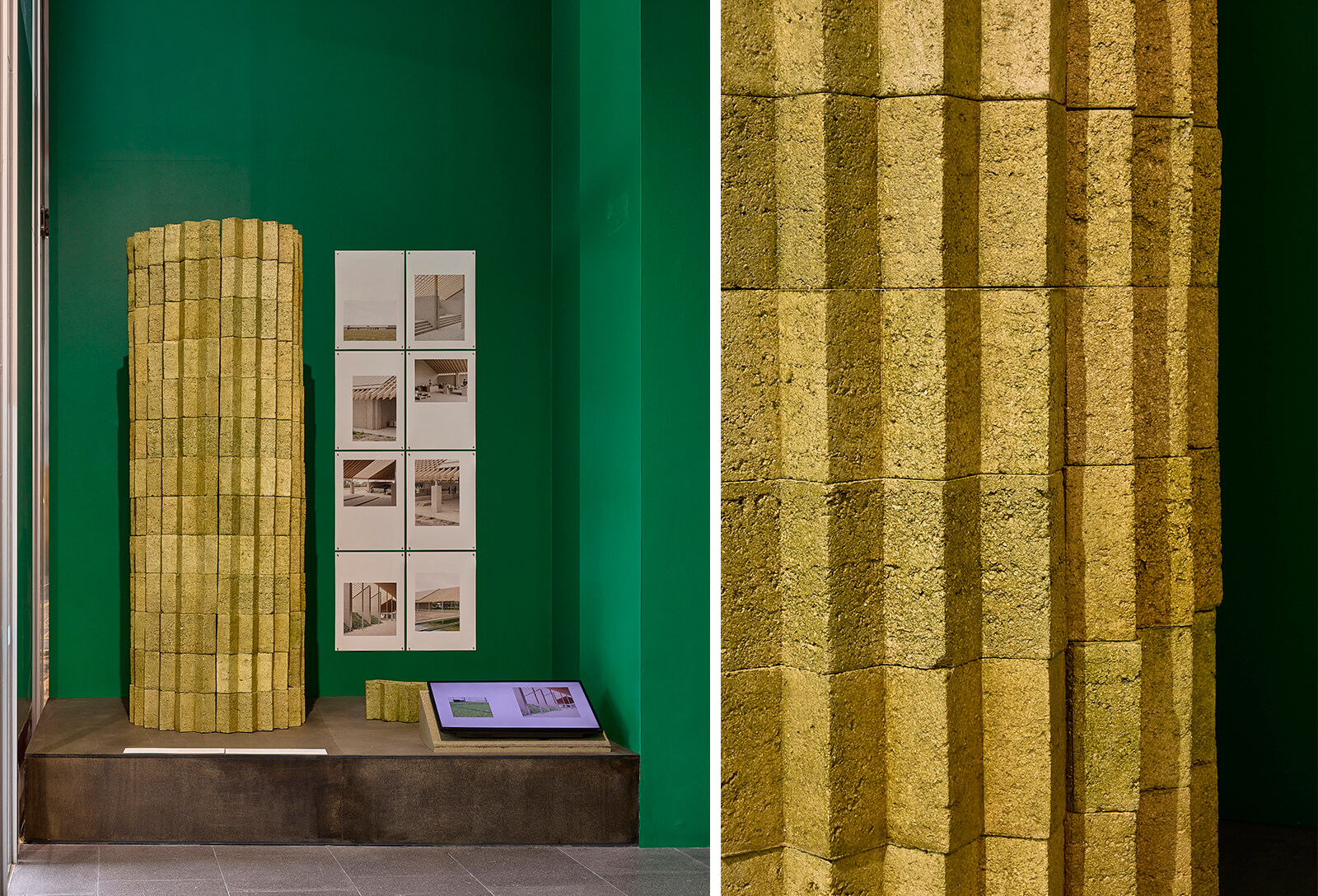
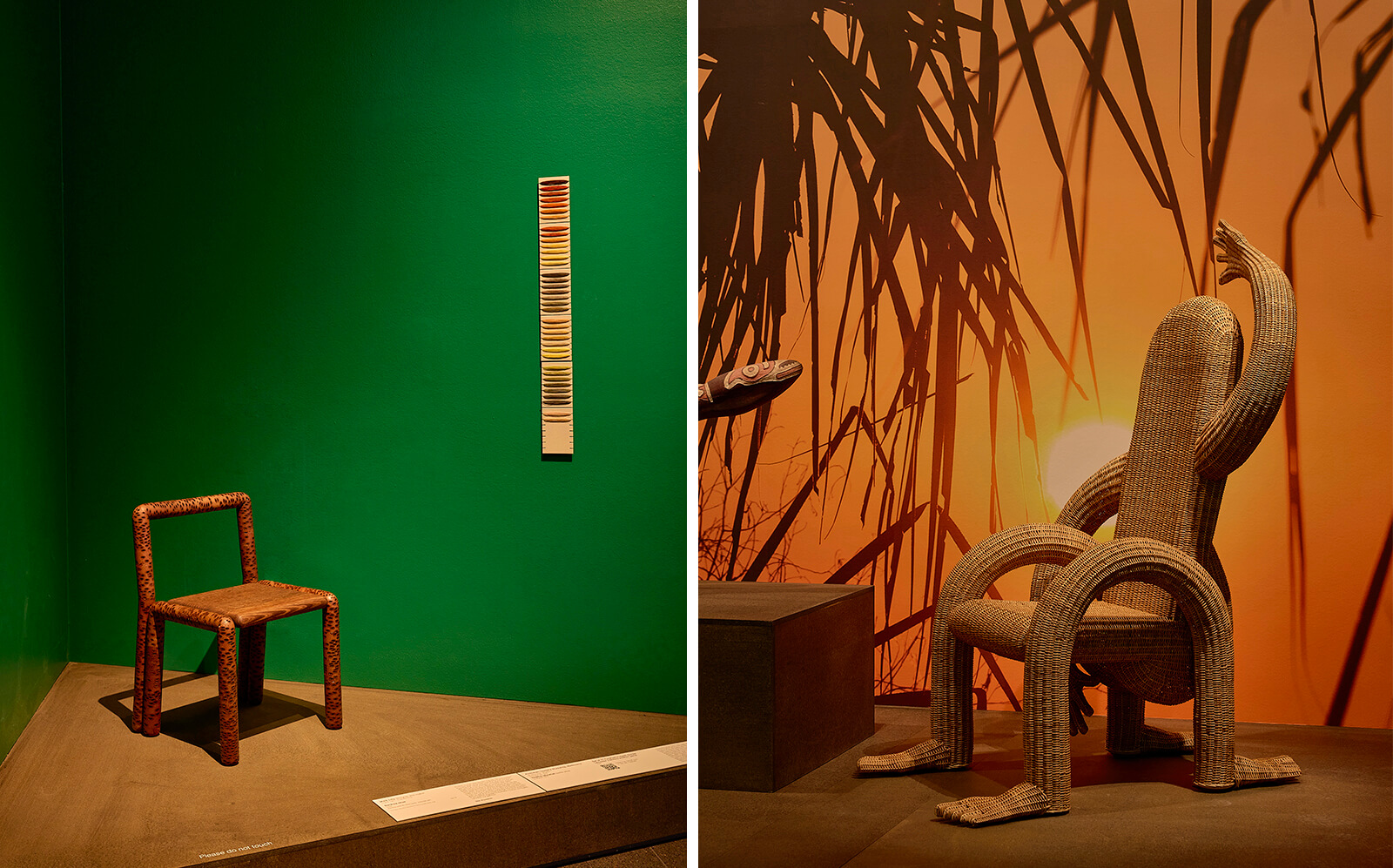
Amid this cornucopia of biophilic design ideas, one cannot help but wonder what deterred designers from embracing these systems in favour of the very ones that are proving catastrophic for the planet today. “Formaldehyde in glue binding every sheet of plywood. Microplastics shedding from every synthetic garment. These were not hidden. They were just not part of the brief. So, the question is not really why the design industry did not take the plant-based route from the beginning. It is why the brief did not include the full consequences of the materials being specified. That is what this exhibition is partly asking the designers, makers and institutions—including the NGV itself—to reconsider.”
‘Plant Life: Nature of Design’ is on view until February 7, 2027, at the Ian Potter Centre: NGV Australia in Melbourne.

by Pranjal Maheshwari Oct 12, 2026
The exhibition reimagines the 20th-century Scottsville residence of the American sculptor and his partner, ceramicist Nancy Jurs, curated by their daughter Alison Castle.
by Chahna Tank Oct 08, 2026
Javier Guzman Cervantes and Ulises Morin Arzola tell STIR about their ‘open code’ approach to design, working through a process of stockpiling and the idea of ‘queering’ materials.
by Mrinmayee Bhoot Oct 08, 2026
The game designer discusses their work and its manipulation of scale, scientific data and non-human perspectives to create speculative futures in conversation with STIR.
by Pranjal Maheshwari Oct 07, 2026
Under the theme R.A.W. (Rebel Authentic Worth), one of Europe’s most awaited design festivals returns for its 26th edition to investigate solutions for a world in crisis.

make your fridays matter with a well-read weekend
Enter your details to sign in
Don’t have an account?
Sign upOr you can sign in with
a single account for all
STIR platforms
All your bookmarks will be available across all your devices.
Stay STIRred
Already have an account?
Sign inOr you can sign up with
Verification link sent to check your inbox or spam folder to complete sign up process
Tap on things that interests you.
Select the Conversation Category you would like to watch
Please enter your details and click submit.
Enter the 6-digit code sent at


NGV’s Plant Life traces the past, present and possible futures of plant-based design
by Pranjal Maheshwari | Published on : Oct 13, 2026


 Sign in with Google
 Sign in with email
What do you think?