Design12 mins. read
Yinka Ilori’s first monograph is an anthology of stories embedded in his chairs
by Pranjal MaheshwariOct 23, 2026



by Pranjal MaheshwariPublished on : Jul 14, 2026
It was somewhat of a revolution when, in 1967, Danish designer Verner Panton (1926 – 1998) unveiled the Panton Chair to the world. In many ways, the revolution began even before its public unveiling. The chair design, first proposed around 1957, had proven to be extremely difficult to produce by virtue of its curvilinear monolithic form, and, over five years, had been reportedly rejected by at least 15 manufacturers until it was picked up by Vitra for mass production in 1963. Even so, when it was finally launched in 1967, it became the world’s first chair moulded from a single, continuous piece of plastic with no back legs.
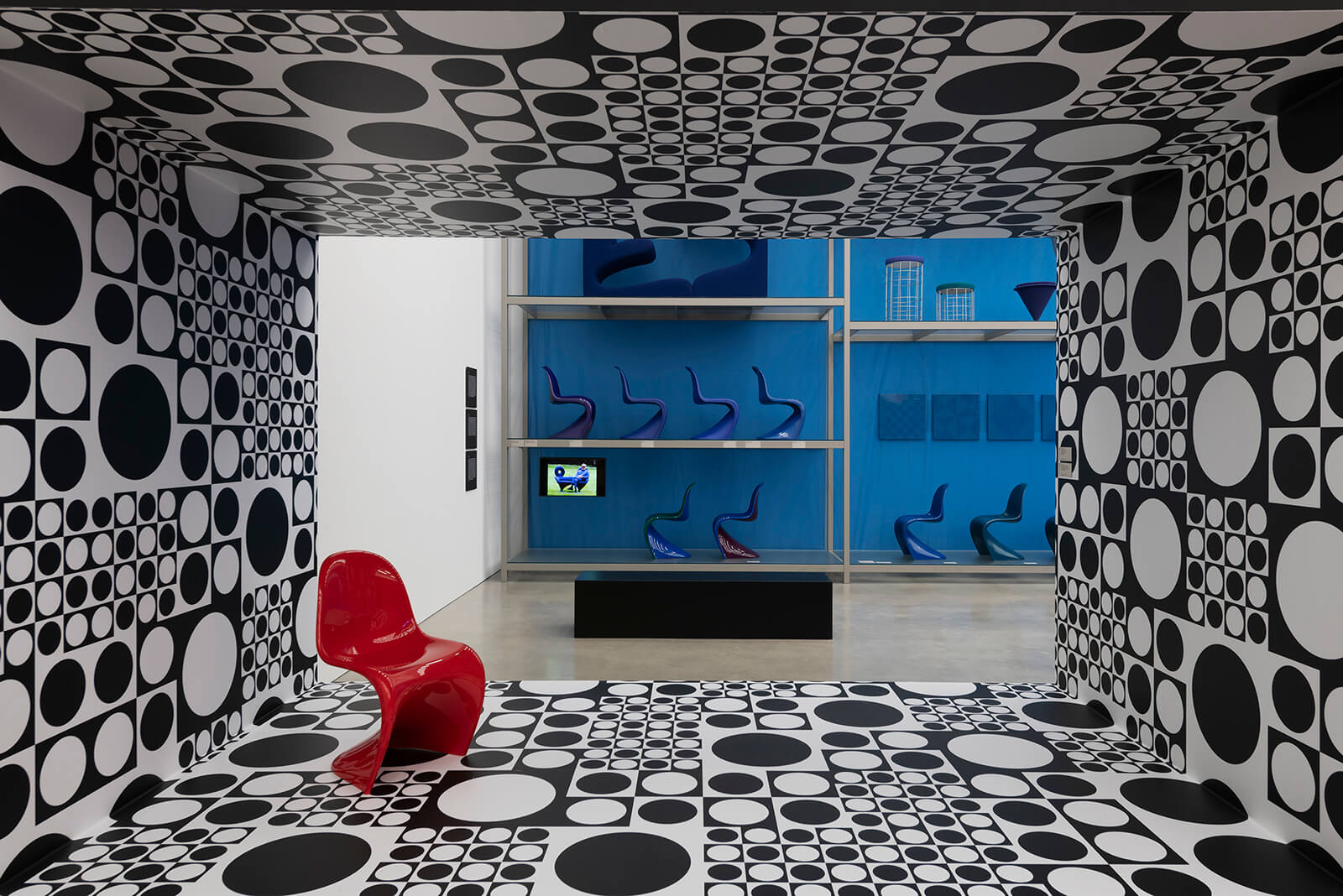
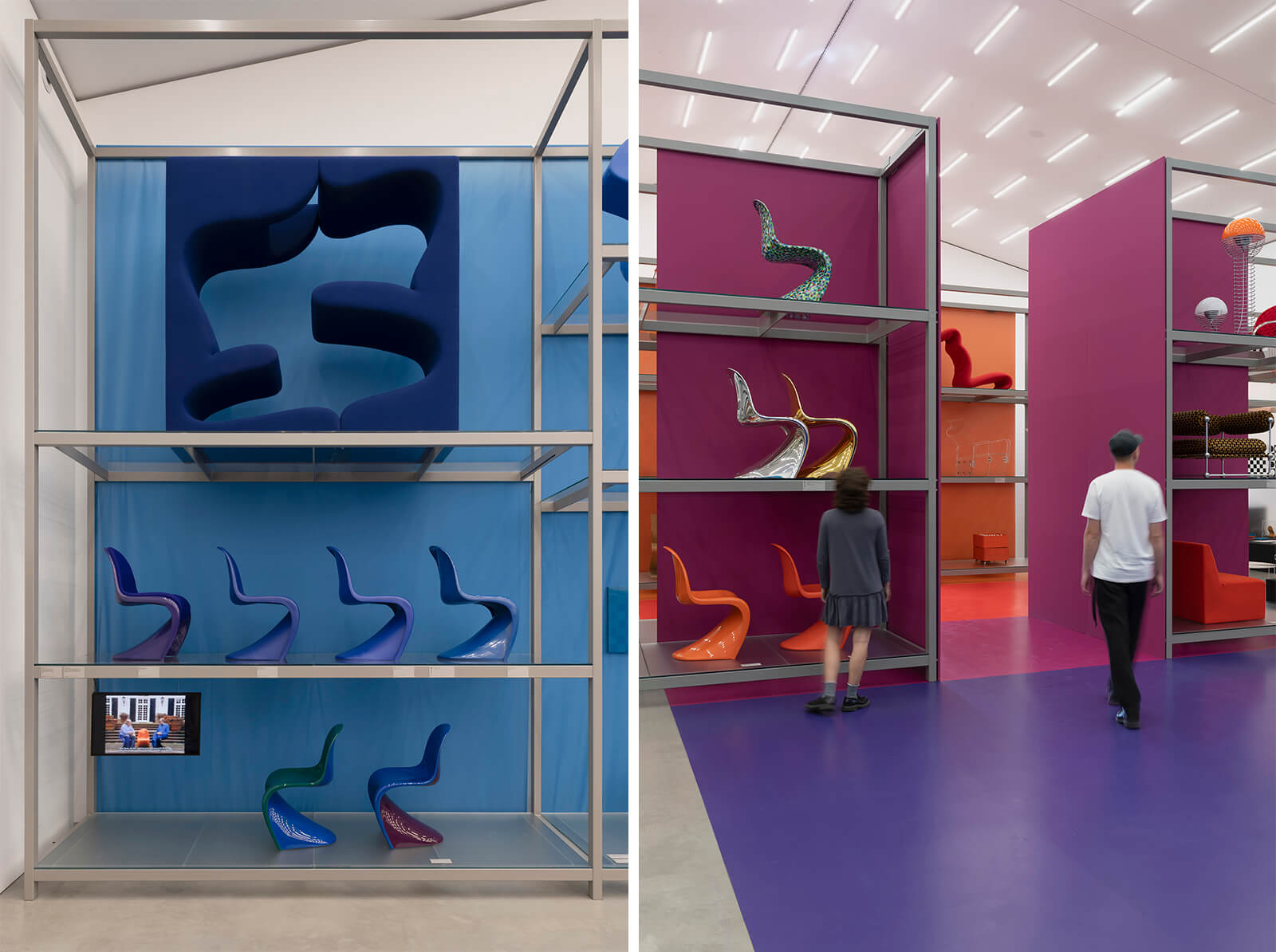
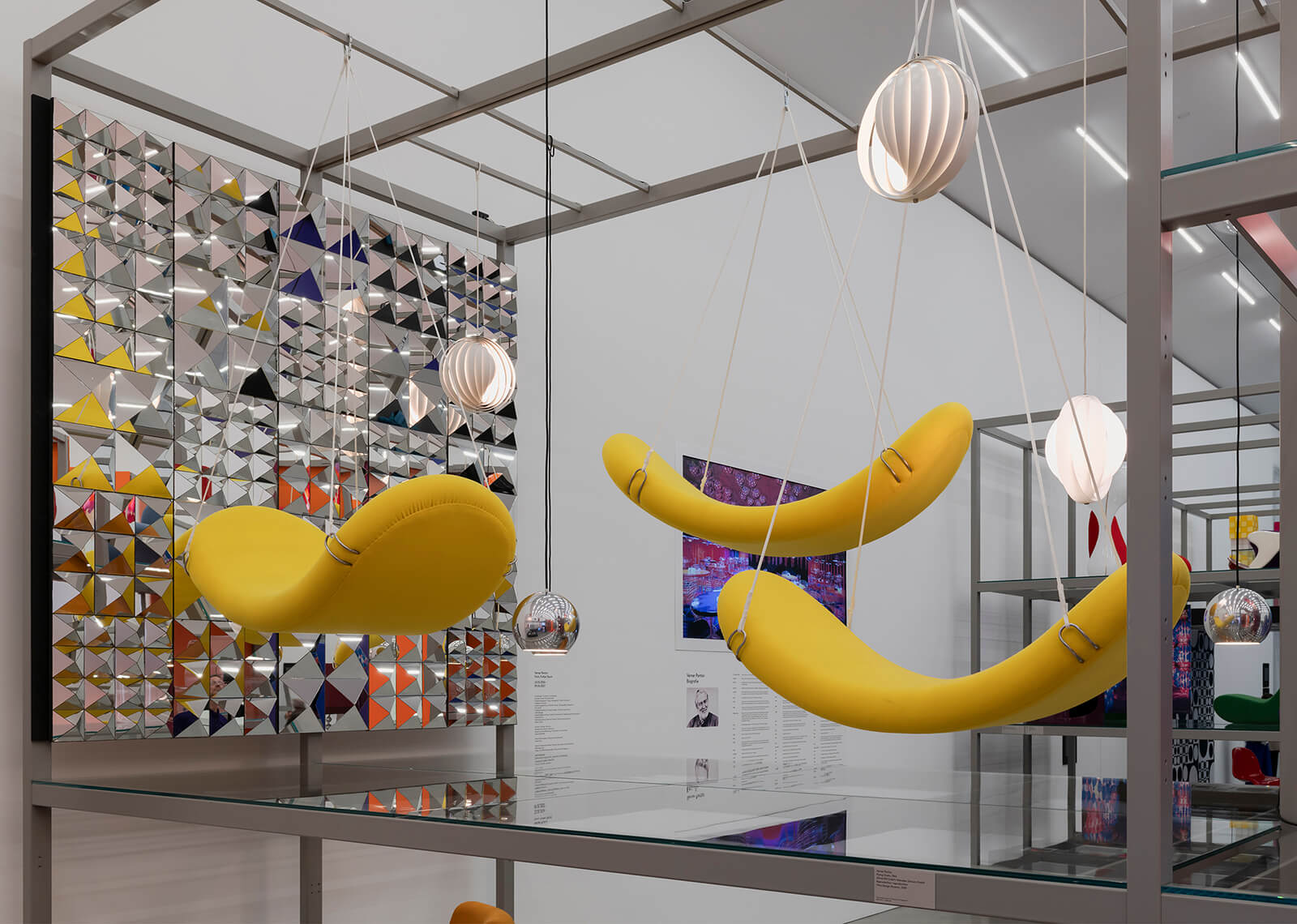
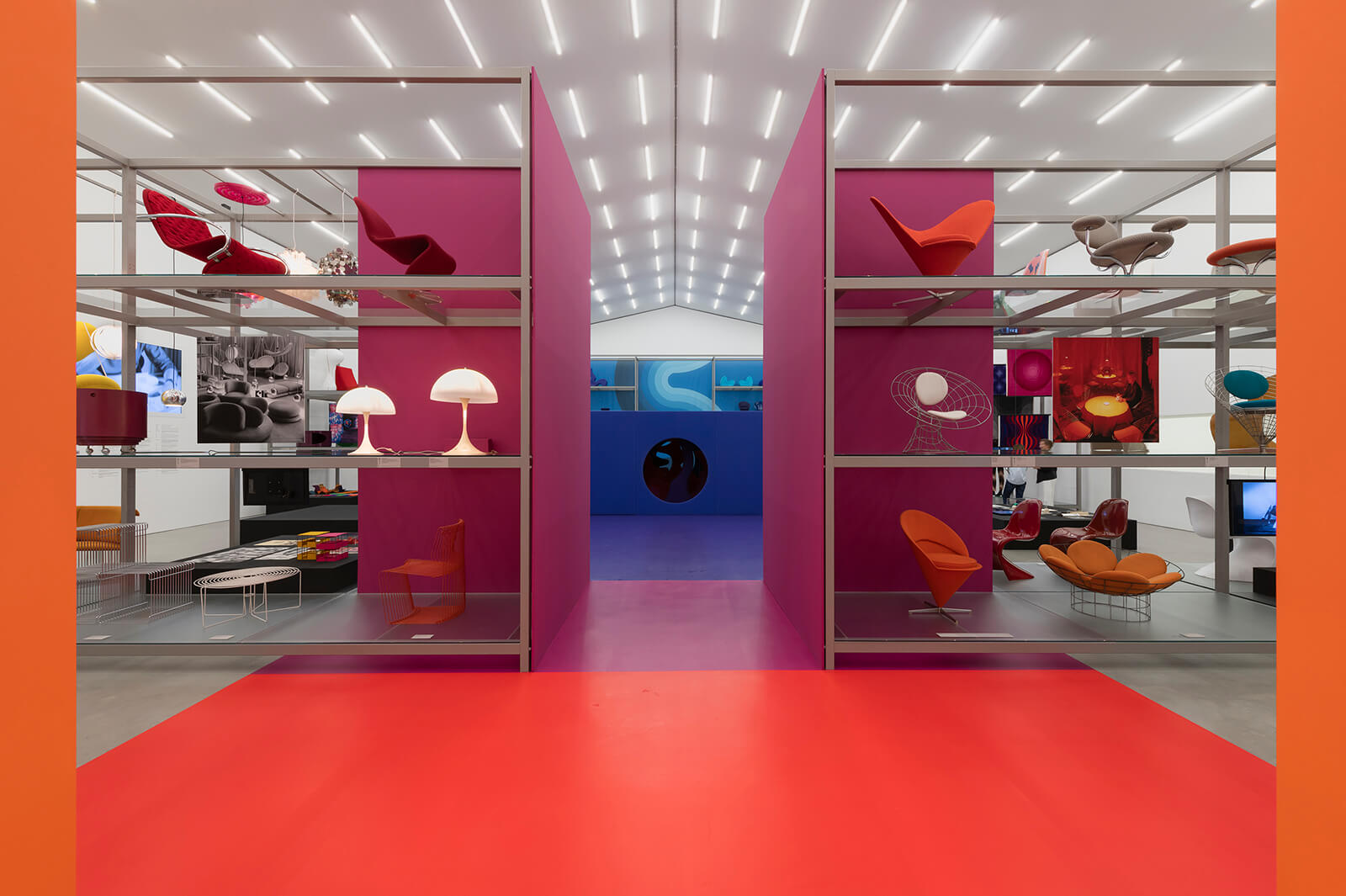
Across his four-decade-long career, Panton developed groundbreaking ideas that left an indelible impression across disciplines—including furniture design, architecture, interior design, lighting design and textiles—throughout the latter half of the 20th century, until his passing. To celebrate the visionary’s extensive contributions to modern and contemporary design, alongside commemorating his birth centenary this year, Vitra Design Museum is presenting a comprehensive retrospective of his work titled Verner Panton: Form, Colour, Space, which is on display at the Vitra Schaudepot in Weil am Rhein, Germany from May 23, 2026 – May 9, 2027.
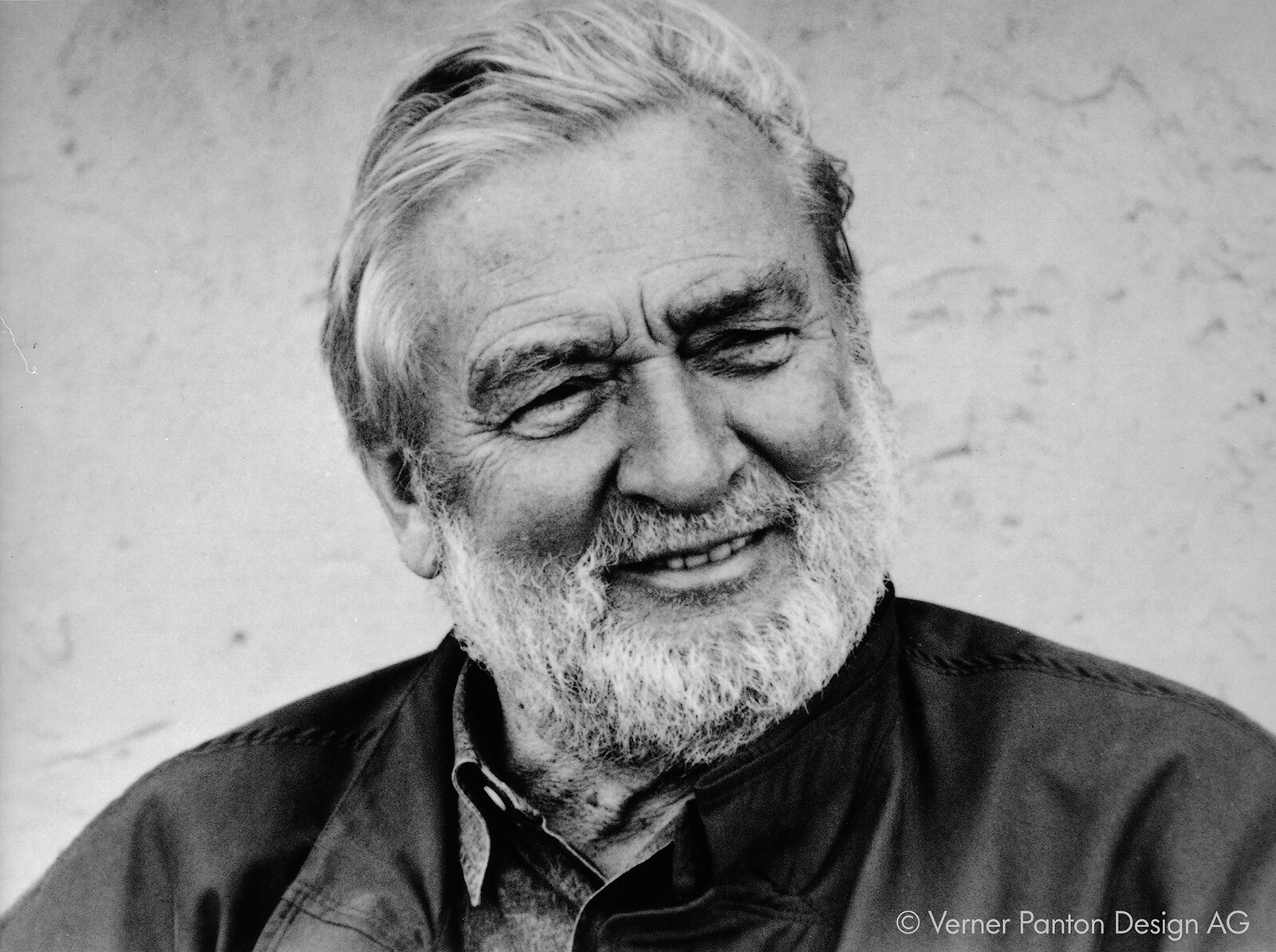
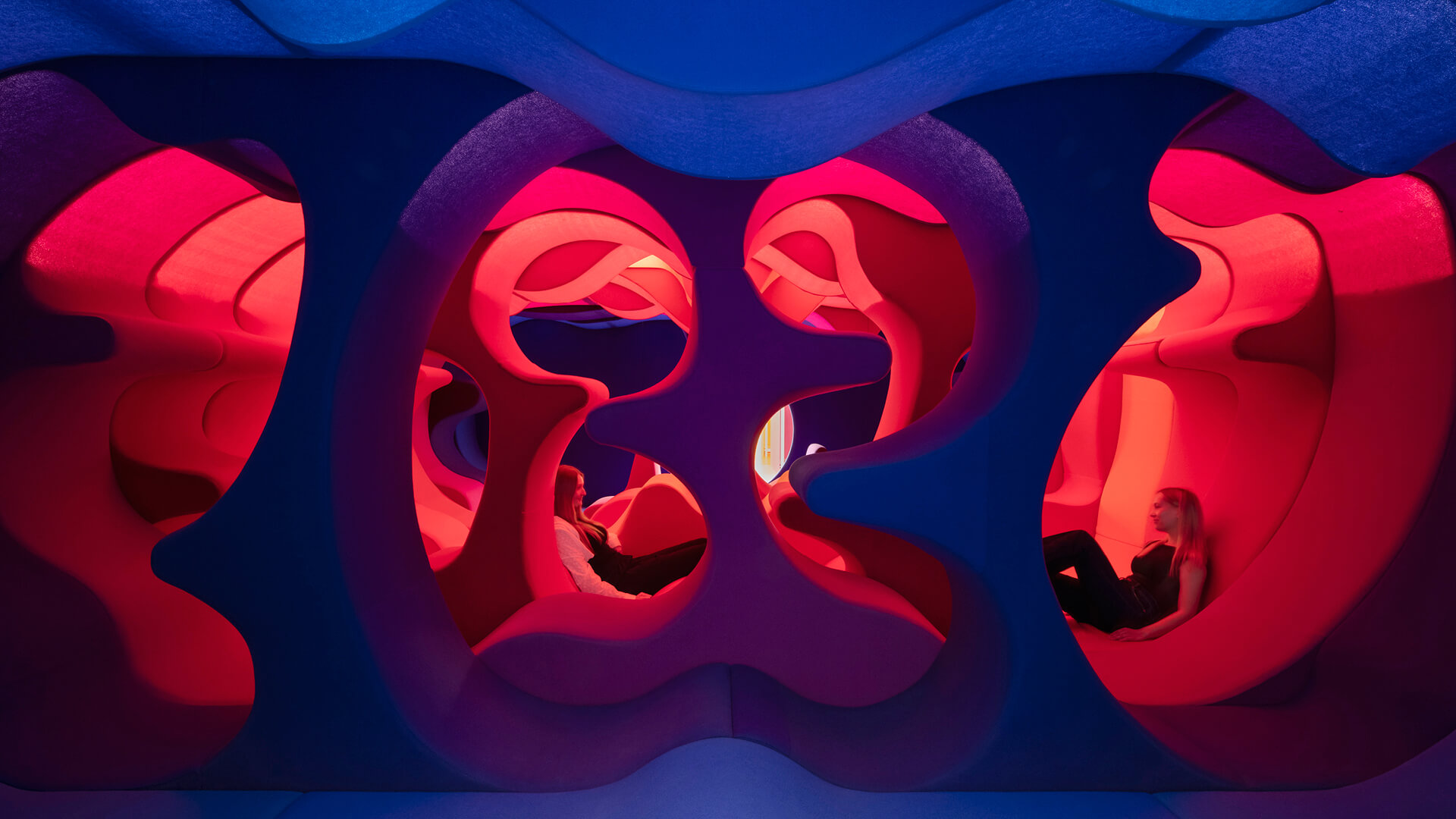
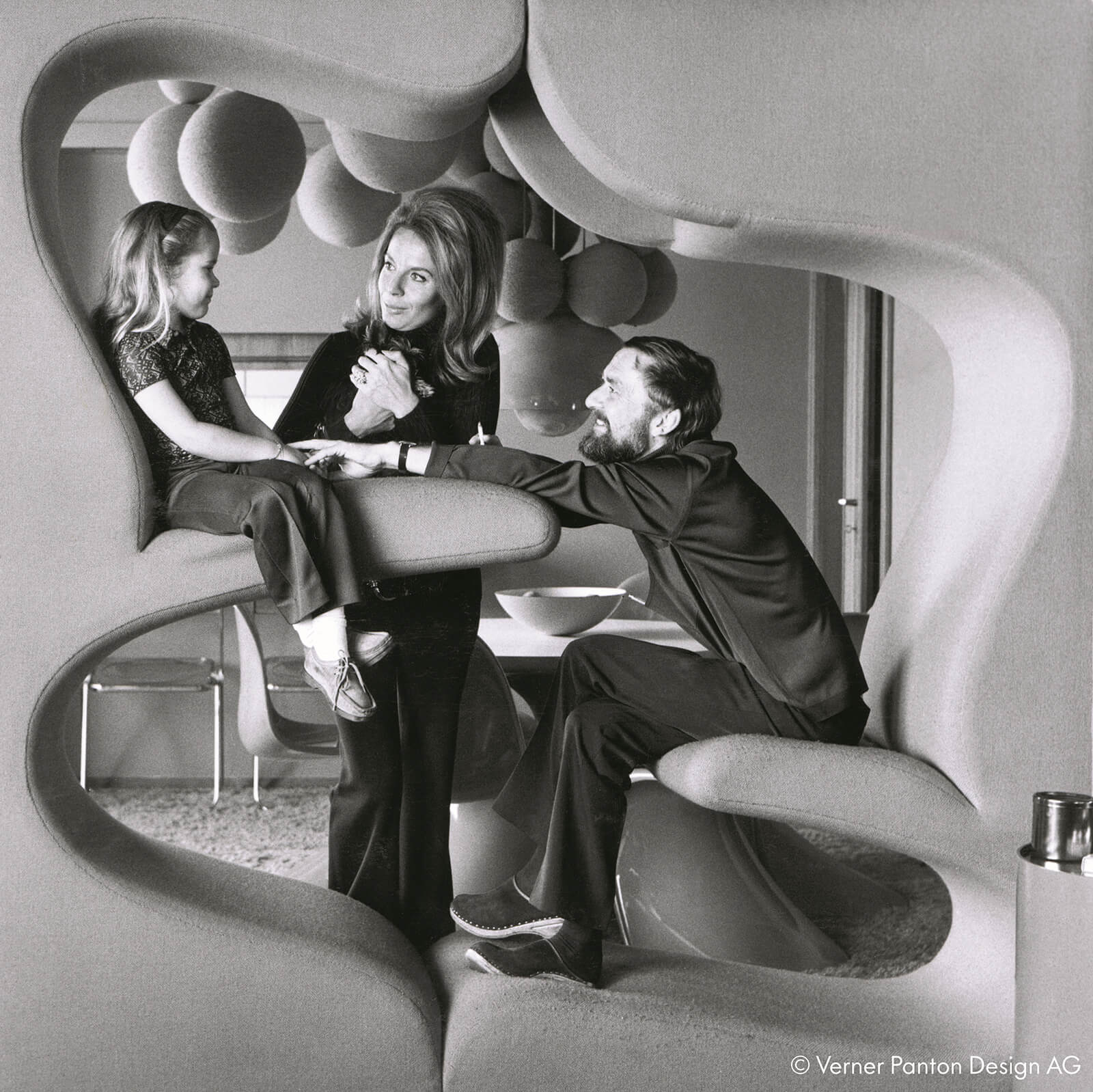
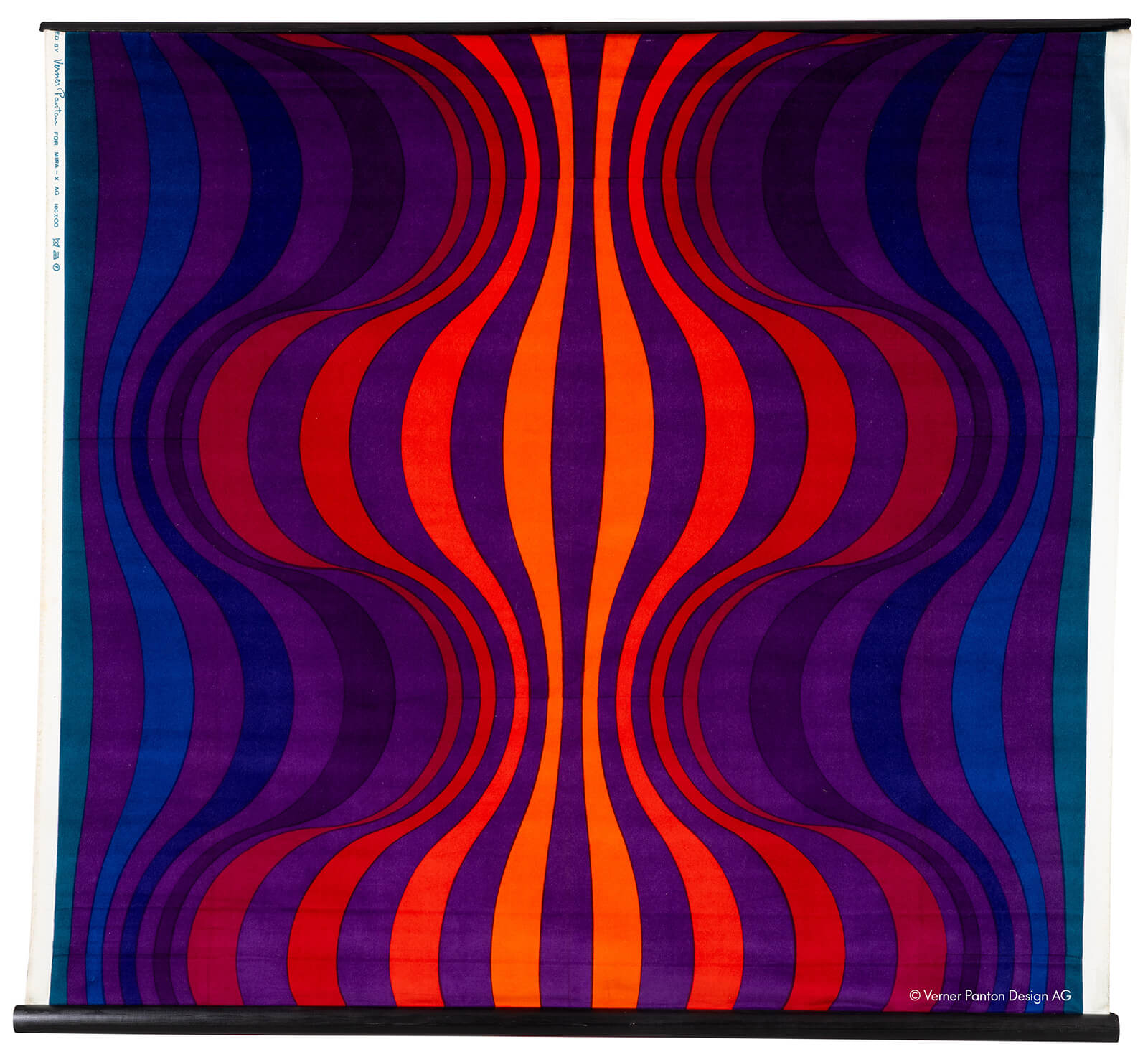
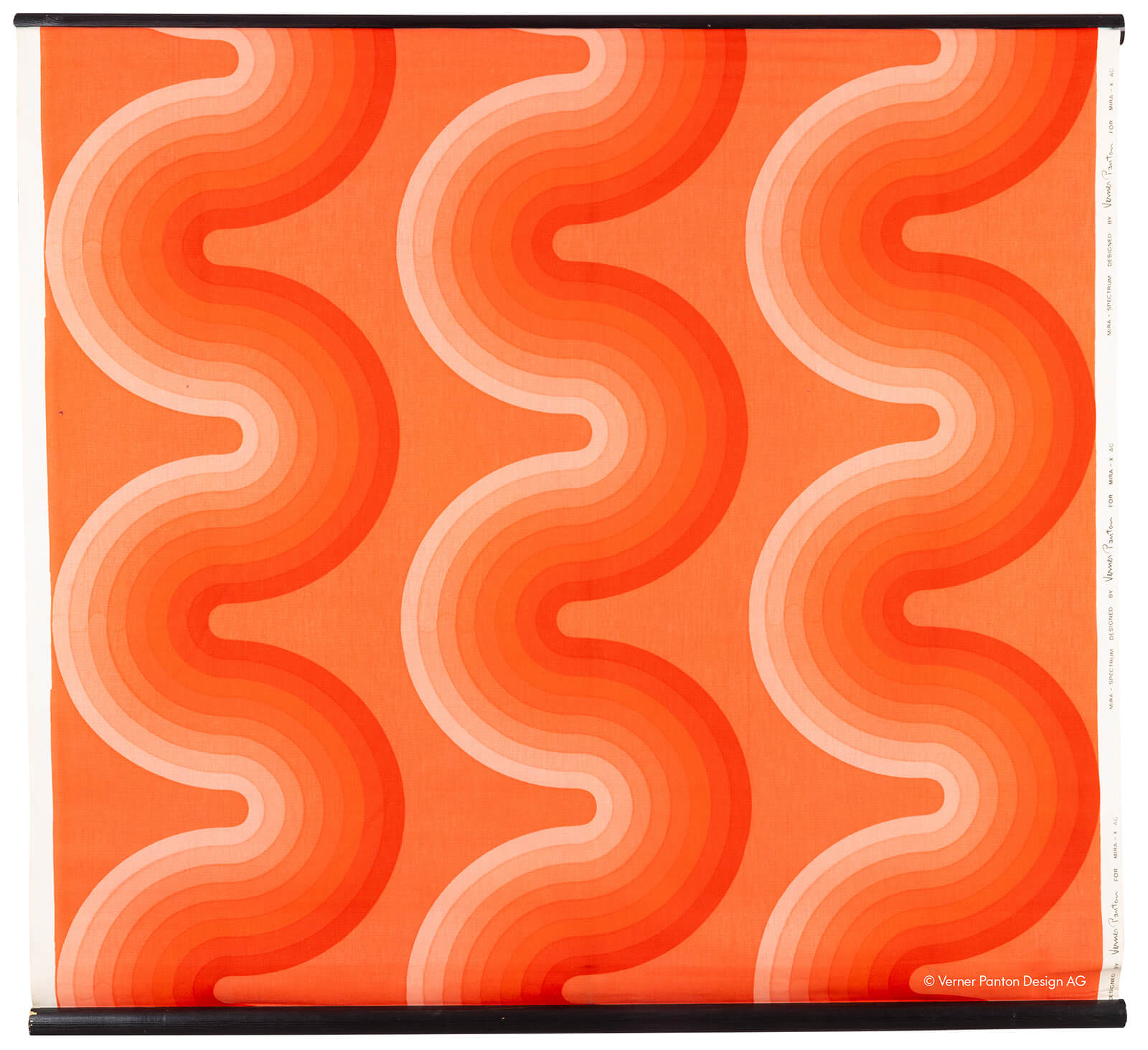
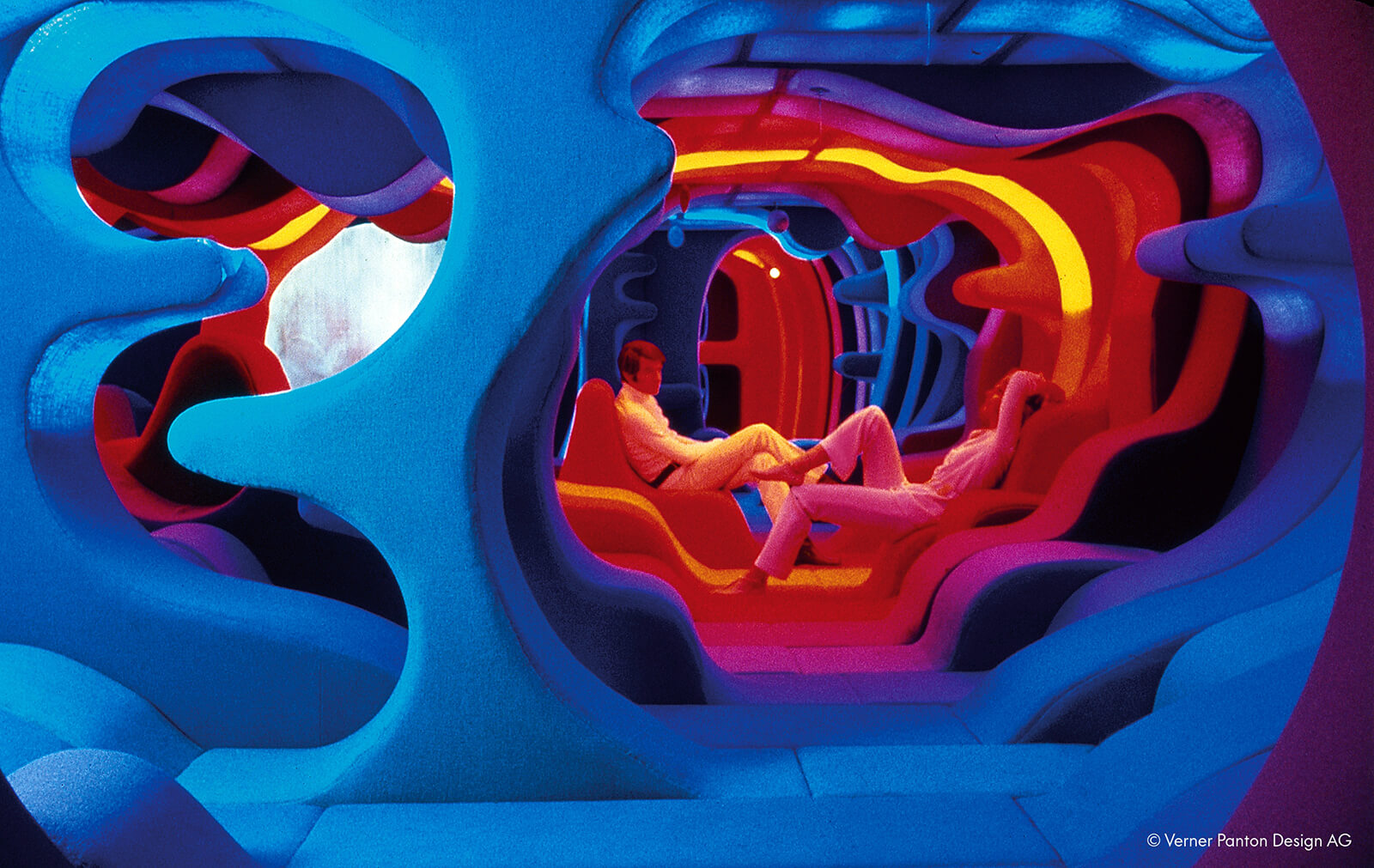
As a graduate in architecture from the Royal Danish Academy of Fine Arts in Copenhagen, Panton’s professional journey started in the office of renowned Danish architect and furniture designer Arne Jacobsen. Despite his early exposure to minimalist Scandinavian design sensibilities, in the mid 1950s, he turned away to develop new spatial concepts that featured a use of vivid colour, geometric forms, textiles and lighting. His work strived to embody the principle of Gesamtkunstwerk, German for ‘total work of art’, where different elements—such as furniture, light and interiors—blend into a singular spatial experience. This principle is perhaps most concisely captured by Panton’s Fantasy Landscape, an installation he created for the 1970 exhibition Visiona II that combined floors, walls, ceilings and furnishings into a single mould, produced across a spectrum of his signature bright colours; an experience that makes it rather difficult to be strictly categorised under architecture, interior, product or any other archetype.
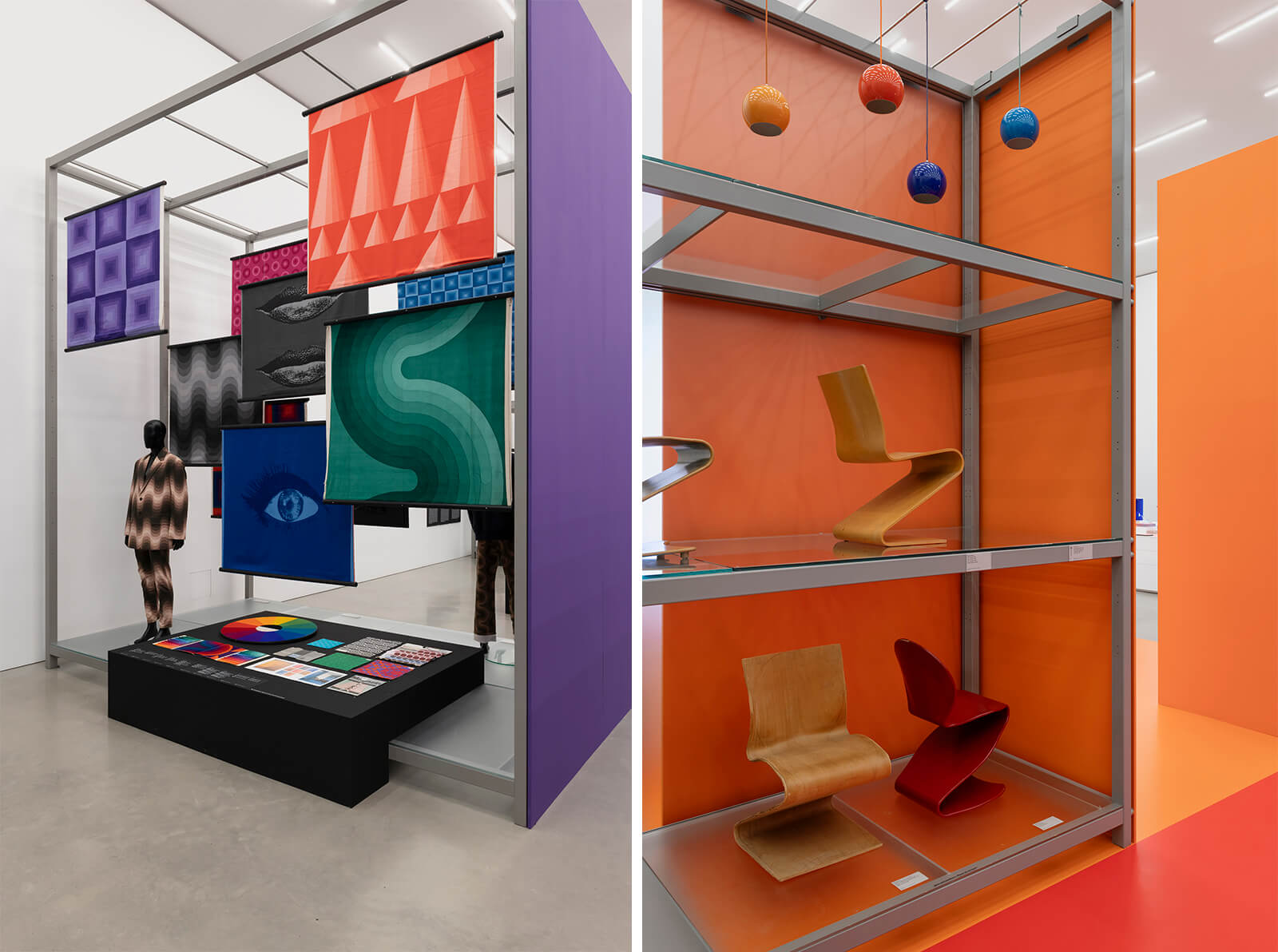
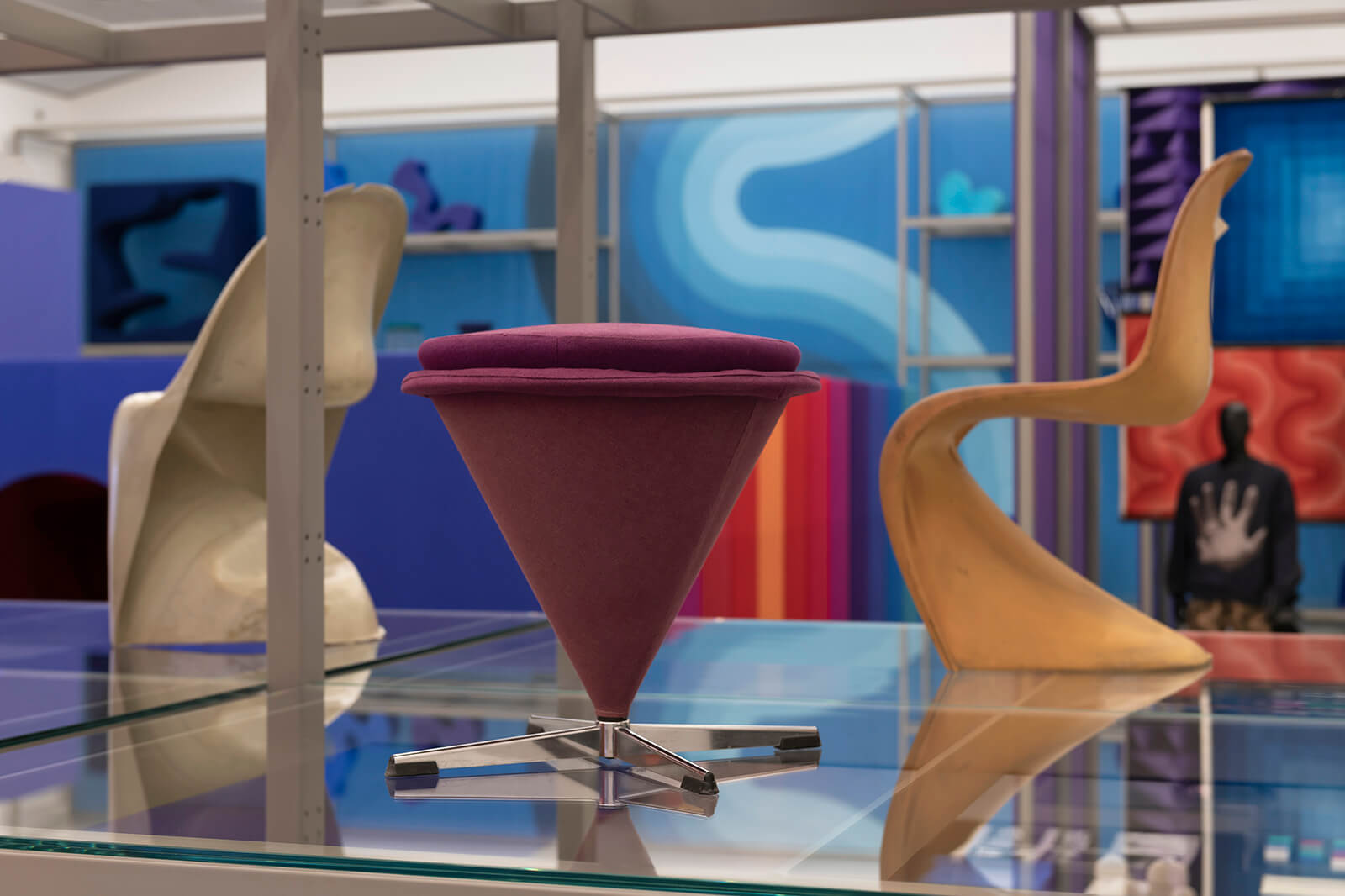
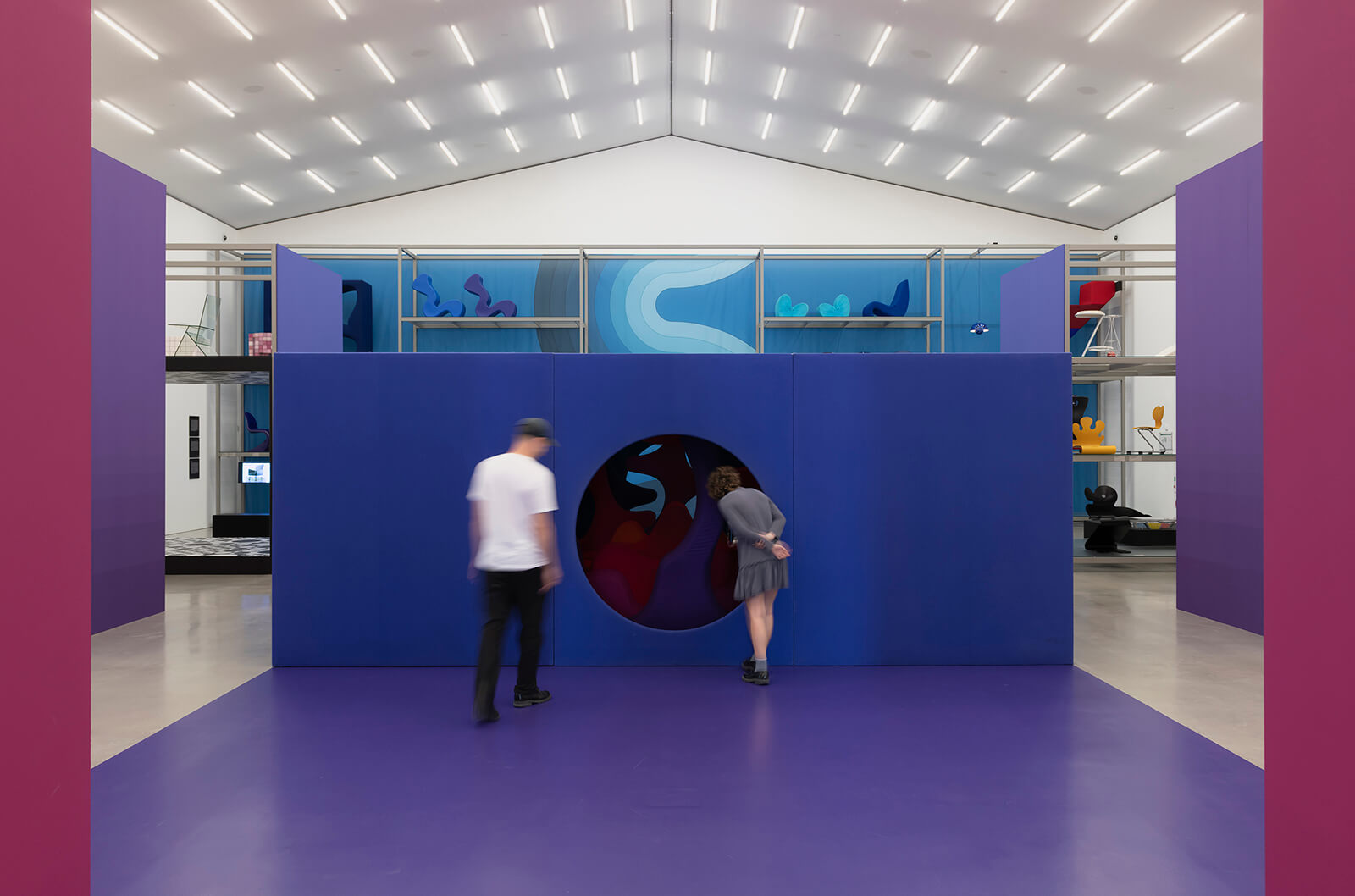
The exhibits at Vitra Schaudepot—curated by Susanne Graner, head of collections at the museum and the museum’s collections curator Nina Steinmüller—cover a vast range of Panton’s works, arranged chronologically to showcase his creative journey more comprehensively. These range from the 1950s’ interior projects, collaboration with Plus-linje that led to the Cone Chair, to the following decades which featured corporate interiors, furniture systems, textiles and lighting, including iconic pieces like the Panton Chair and Flowerpot lamp, immersive spatial concepts such as a walk-in reconstruction of Fantasy Landscape and even his lesser-known furniture and unrealised architectural projects.
STIR reached out to Steinmüller to find more about the experience of bringing this extensive exhibition to life. “The exhibition is based on the extensive Verner Panton collection at the Vitra Design Museum, including several models and design drawings, but also over 500 pieces of furniture and lighting,” she shares. Despite such a broad catalogue, the exhibits are carefully embedded in scenographic references from Panton’s spatial concepts. As Steinmüller tells STIR, “The main aim was to show the breadth of his oeuvre and to highlight as many facts as possible, from furniture to textiles, from children’s toys to architectural concepts.” Beyond the curation, the conversation also explores some of Panton’s works individually and the significance of his oeuvre for designers in the 21st Century.
The following are edited excerpts from the conversation.
Pranjal Maheshwari: Curating works across a diversity of disciplines and scales must have been an overwhelming task. How did you navigate this endeavour, given the experimental, experiential and immersive nature of Panton’s works?
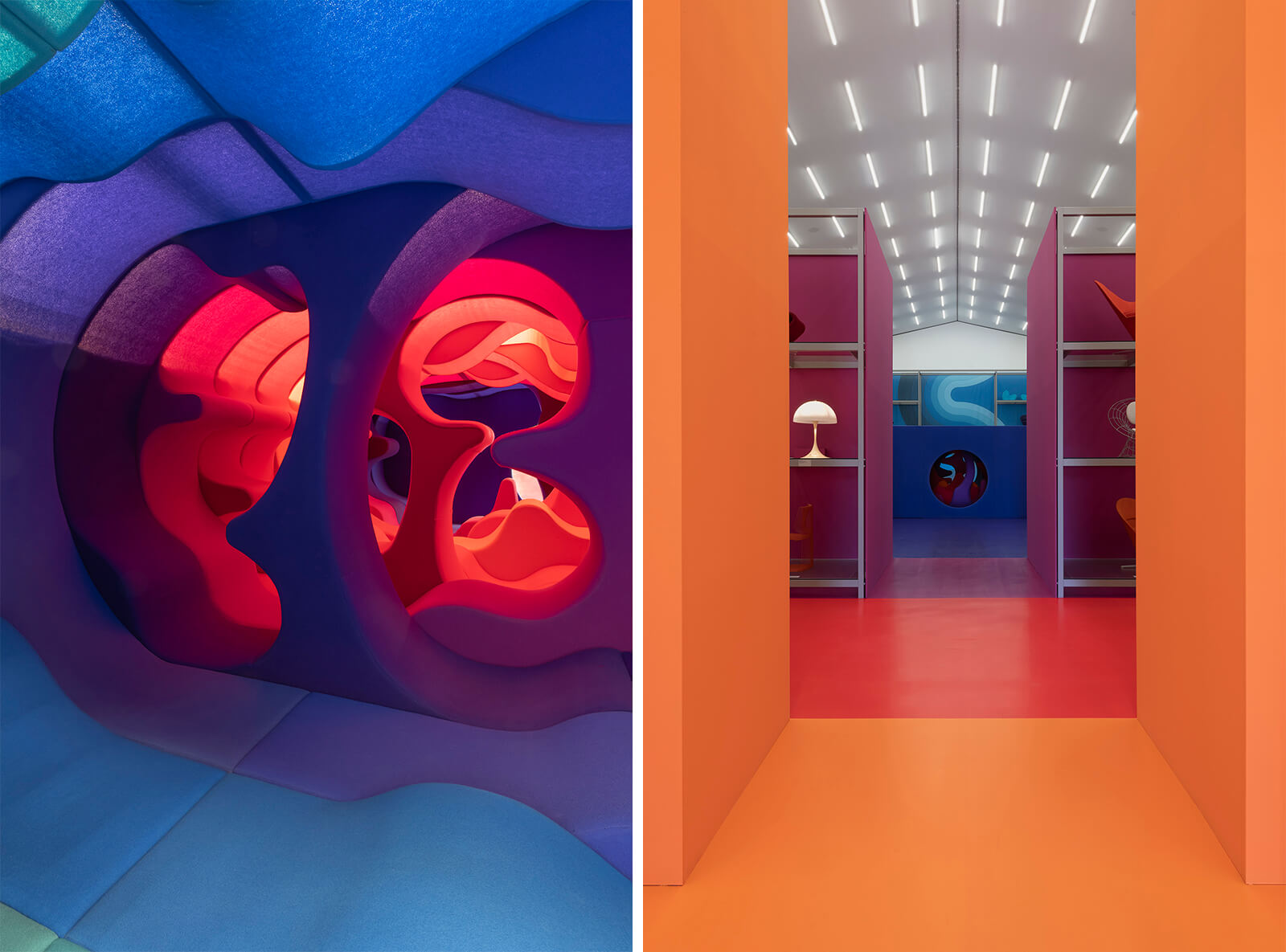
Nina Steinmüller: A particular challenge was the architecture of the Vitra Schaudepot itself, which gives a relatively rigid framework for presentation. Looking closely at the archive made clear how consistently Panton worked across scales, from small design details to large spatial concepts. The task was to make Panton’s worlds of colour tangible within this space while also giving individual objects enough room to stand on their own. The exhibition design, therefore, takes up the sequence of colours from the Fantasy Landscape and draws it through the building as a broad brushstroke. Rather than recreating complete Panton interiors, the exhibition introduces visitors to the scope of his work and the different fields he was active in. This allows visitors to experience both the immersive qualities of Panton’s interiors and the individual objects as independent design works.
Pranjal: If the exhibition has altered your understanding of Verner Panton in any meaningful way, where do you think the shift has been most significant?
Nina: It was especially rewarding to have the opportunity to work extensively with the museum’s archive. The material allows us to look beyond the iconic images and objects and instead trace Panton’s way of thinking, his experiments and his long-term interests. It became clear how consistently he pursued innovation, how he worked across disciplines and scales and how much attention he paid to details while always thinking in terms of larger spatial concepts. We learned that the concept of modularity runs through his work and can be found in furniture, textile designs and architectural projects.
Pranjal: Among Panton’s exhibited works, which one resonates with you the most?
Nina: One of the works that I find particularly fascinating is the Fantasy Landscape. It was designed for the Cologne Furniture Fair in 1970 and was one part of a larger exhibition that Panton designed. We show a recreation that our visitors can actually use and sit in. The concept of the Fantasy Landscape breaks down traditional spatial boundaries and redefines seating, movement and bodily perception as fluid and non-hierarchical. At the same time, it illustrates Panton’s understanding of the Gesamtkunstwerk: furniture, textiles, light, colour and architecture come together in one coherent spatial concept. It also makes clear how important colour was to him, as a spatial and emotional tool, perhaps even more important than form alone.
Pranjal: What lessons do you think Panton’s design process carries for designers of the 21st Century?
Nina: Verner Panton consistently thought out of the box and beyond conventions; he also broke established design norms. Panton understood colour, form and space as a holistic experience and demonstrated that design can be more than mere function—it can express ideas, challenge habits and shape the way we live. His work reminds us that design is not only about objects, but also about attitude, imagination and vision. At the same time, his oeuvre shows a remarkable openness towards experimentation, new materials, industrial production and collaboration across disciplines.
Pranjal: What do you hope for the visitors to take away from the exhibition?
Nina: With this exhibition, we want to convey the sense of excitement and change in art and design during the 1960s and 1970s—a time when new materials, colours and technologies made ideas possible that would have seemed impossible in the 1950s. We hope visitors leave with an understanding of who Verner Panton was beyond iconic pieces such as the Panton Chair. The exhibition presents him as a highly reflective designer and architect who constantly questioned conventions of design, space and colour. We hope visitors gain an appreciation for the scale of his work, his holistic approach and the stories behind both realised projects and unrealised visions. Above all, the exhibition shows that design can be more than function: it can express ideas, shape experiences and change the way we think about living and space.
‘Verner Panton: Form, Colour, Space’ will be on view from May 23, 2026 – May 09, 2027, at Vitra Schaudepot, Weil am Rhein, Germany.

by Pranjal Maheshwari Oct 23, 2026
Co-authored by Jareh Das, Chairman traces the British designer’s fixation on chairs as symbols of power and identity and as mediums of expression and community building.
by Mirra Lynn Oct 22, 2026
The curators behind Palestine Design Week 2026 reflect on its intent, considering how design holds memory, makes space for loss and imagines a future in Palestine.
by Chahna Tank Oct 22, 2026
STIR speaks with the Mumbai-based type designer about her practice, type walks and why she wants more people to have stronger opinions about Indian-script fonts.
by Jincy Iype Oct 15, 2026
STIR explores craft, material intelligence and people shaping Indian design through dialogues with Design Democracy’s co-founders and the curators of its special exhibitions.

make your fridays matter with a well-read weekend
Enter your details to sign in
Don’t have an account?
Sign upOr you can sign in with
a single account for all
STIR platforms
All your bookmarks will be available across all your devices.
Stay STIRred
Already have an account?
Sign inOr you can sign up with
Verification link sent to check your inbox or spam folder to complete sign up process
Tap on things that interests you.
Select the Conversation Category you would like to watch
Please enter your details and click submit.
Enter the 6-digit code sent at


Vitra Design Museum stirs form, colour and space for Verner Panton’s birth centenary
by Pranjal Maheshwari | Published on : Jul 14, 2026


 Sign in with Google
 Sign in with email
What do you think?