Art08 mins. read
Doug Aitken’s Under the Sun takes viewers on a journey through time
by Bansari PaghdarDec 24, 2025



by Srishti OjhaPublished on : Jul 18, 2026
Like many other popular art forms, films are best enjoyed while watching and sharing the responses with others—from gasping to applauding, laughing and crying with strangers in the dark of the theatre or with friends from your couch at home. Music, too, rarely feels complete until people have tied their own experiences to it, have hummed, sampled or sung along as a performer pointing the mic at a crowded venue. This centrality of living, collaborative practice that invites social interaction, play and projection, is at the heart of many art forms but has long been missing from the world of visual art. It is no wonder—when you see the ‘Do Not Touch’ signs and passive artworks in white rooms of art galleries (in comparison to womb-like movie theatres or sweaty moshpits)—that visual art remains one of the most inaccessible and intimidating art forms, with even its most prominent names known only in particular circles.
However, the increased alienation created by technology and the virtual world, magnified manyfold by the COVID-19 pandemic, has finally brought in-person, interactive, live experiences back to the art world in the form of immersive art. Finally, the pendulum of history has swung back towards accessibility, democracy and legibility in the realm of visual art, the change sweeping its way through Europe and East Asia and this July, alighting at the Nita Mukesh Ambani Cultural Centre (NMACC) in Mumbai, India, in the form of arguably the city’s most experimental and layered immersive exhibition yet—Second Nature. Curators Mollie Dent-Brocklehurst and Margot Mottaz unite global multimedia artists who have been developing unique ways of meshing nature, humanity and technology since the 2000s, waiting for the rest of the world to catch up.
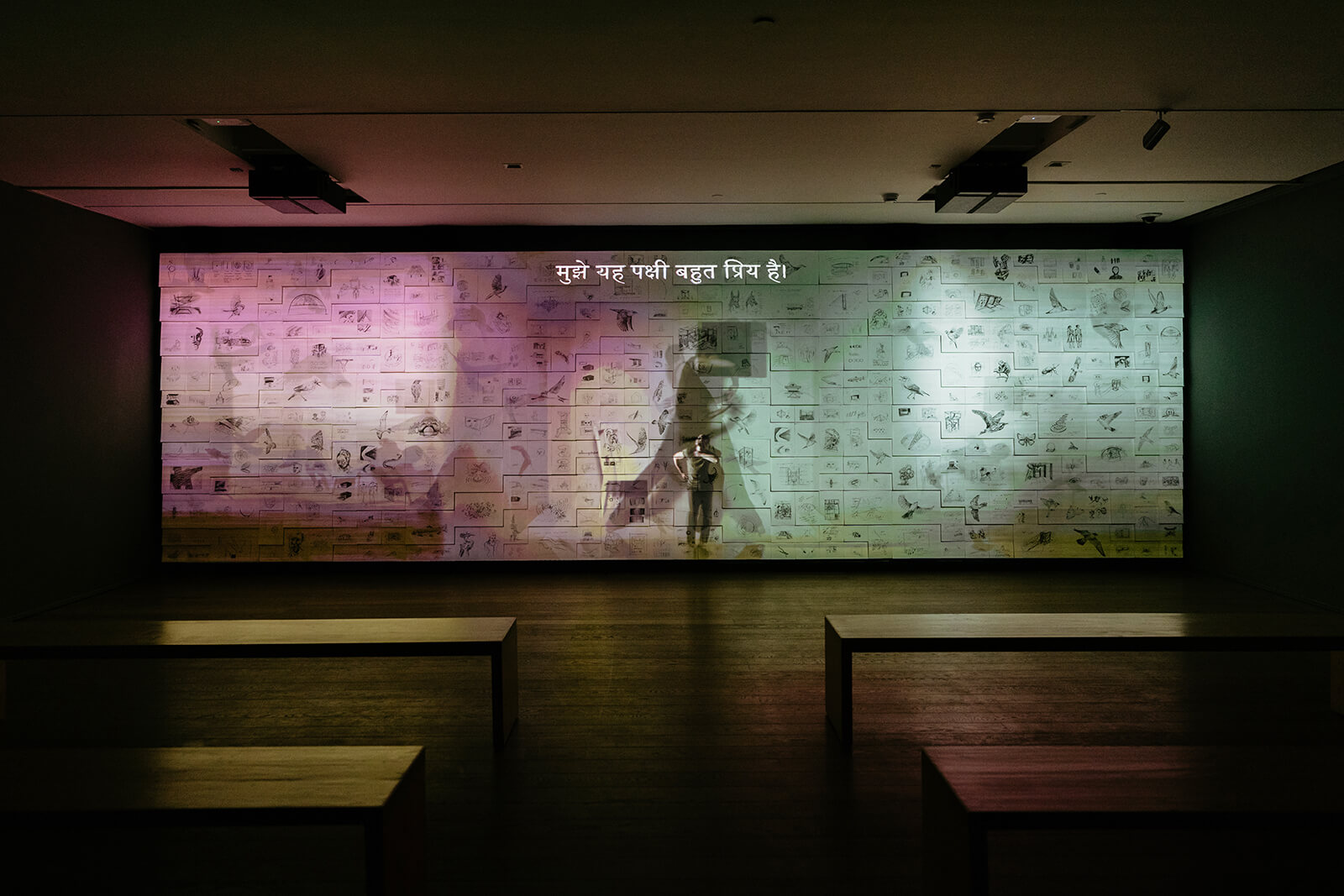
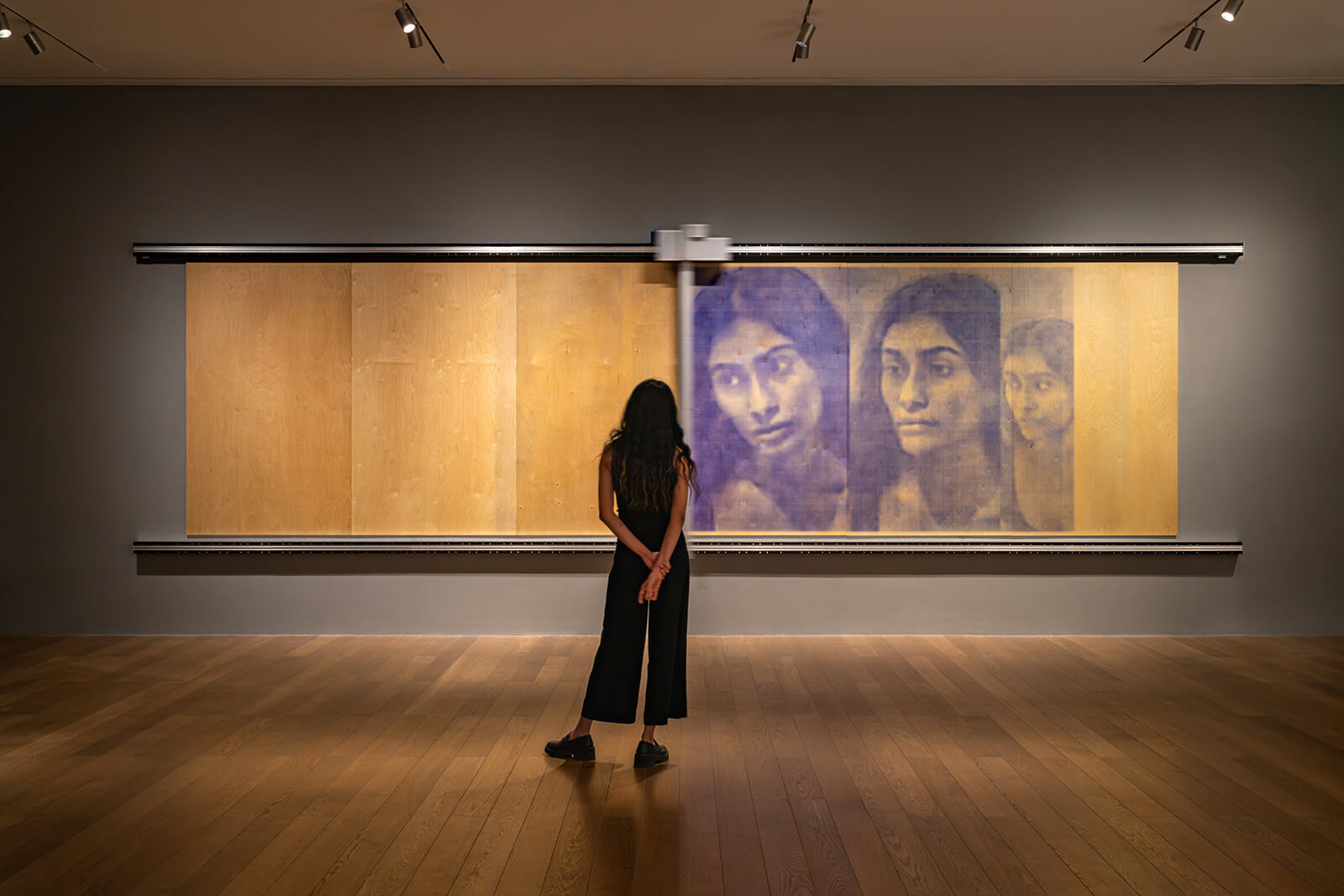
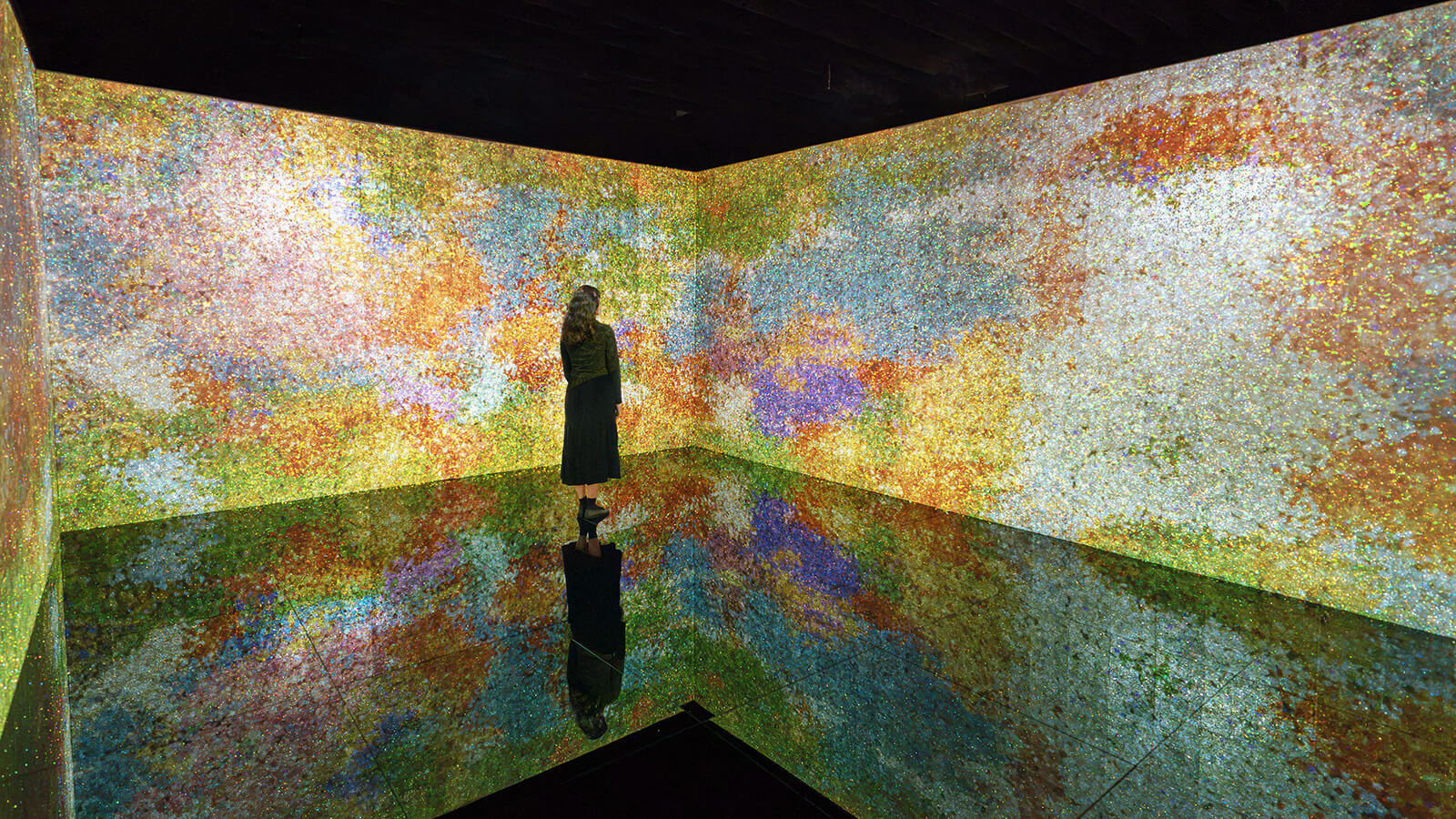
The interactive exhibition welcomes rambunctious young children, teens with phones, couples old and young, groups of friends, parents and grandparents to NMACC’s Art House. On the first floor, dedicated to the European artist collective Random International, they delight in seeing their moving silhouette copied in lines of light, being tracked by small, playful mirrors. In another work called Presence and Erasure (2019), they see their faces—captured by a discrete camera—printed onto plywood coated in UV-sensitive material. Moving up the stairs and through a black curtain, they step into a secret garden made of pixels, so all-encompassing it hardly seems to exist within our familiar physical reality. People trace their hands across the floor-wide interactive installations created by international art collective teamLab in Flowers and People, Cannot be Controlled but Live Together (2014 – Present), in which flowers bloom and wither in their wake. In another room, visitors see Resonating Microcosms - Solidified Light (2022 – Present) defined by pendulous shapes on the floor that light each other up and create musical notes as they are pushed around by visitors.
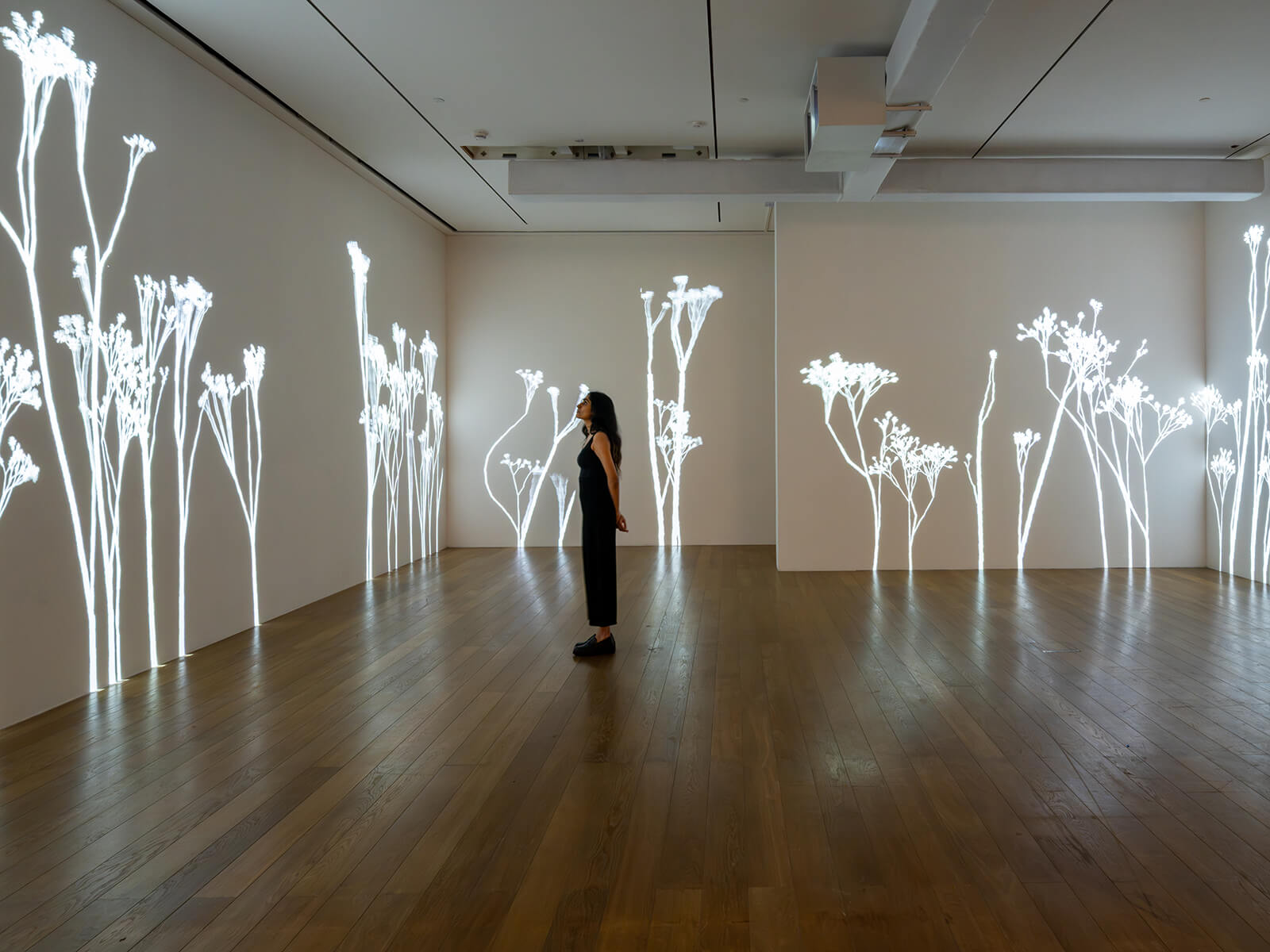
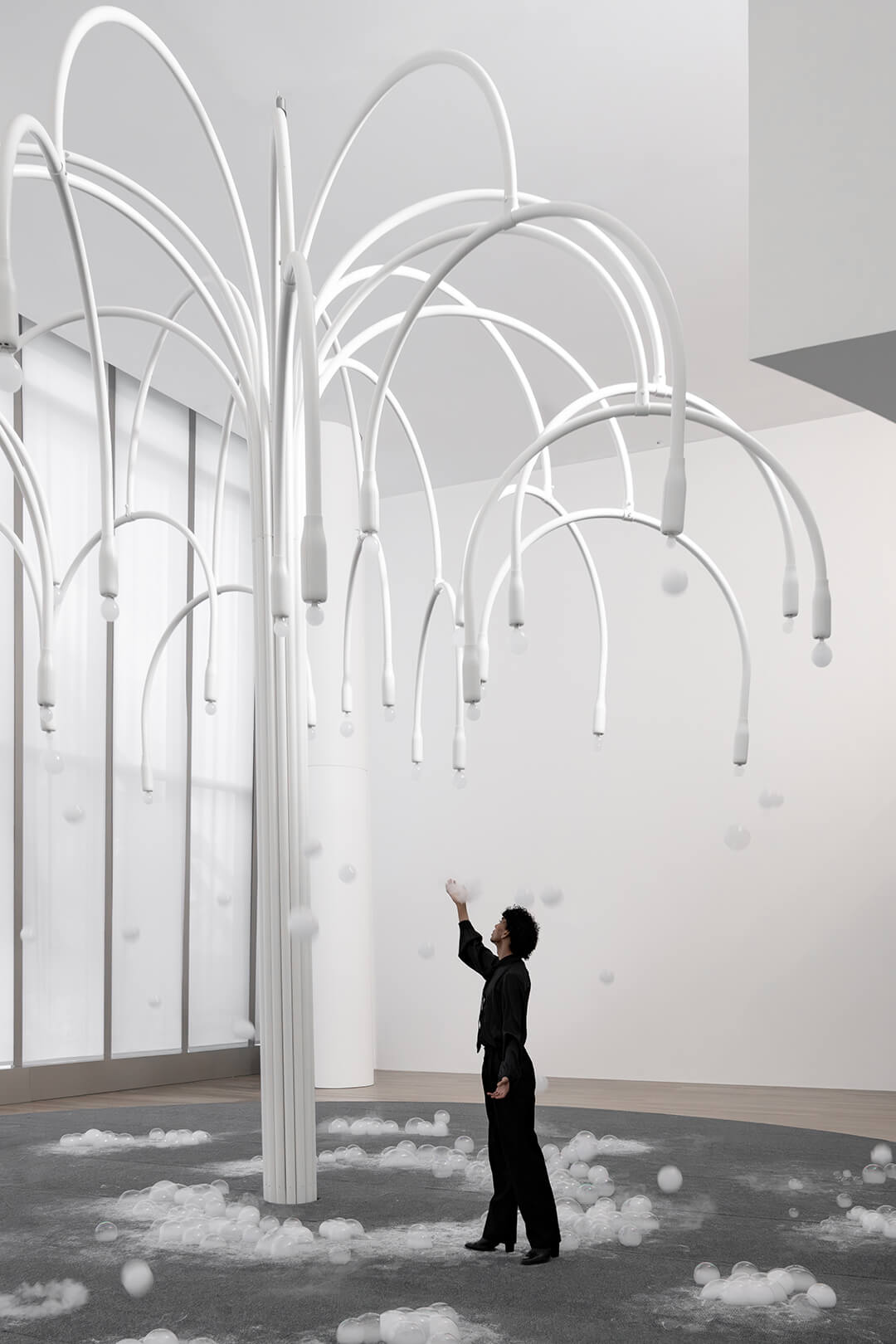
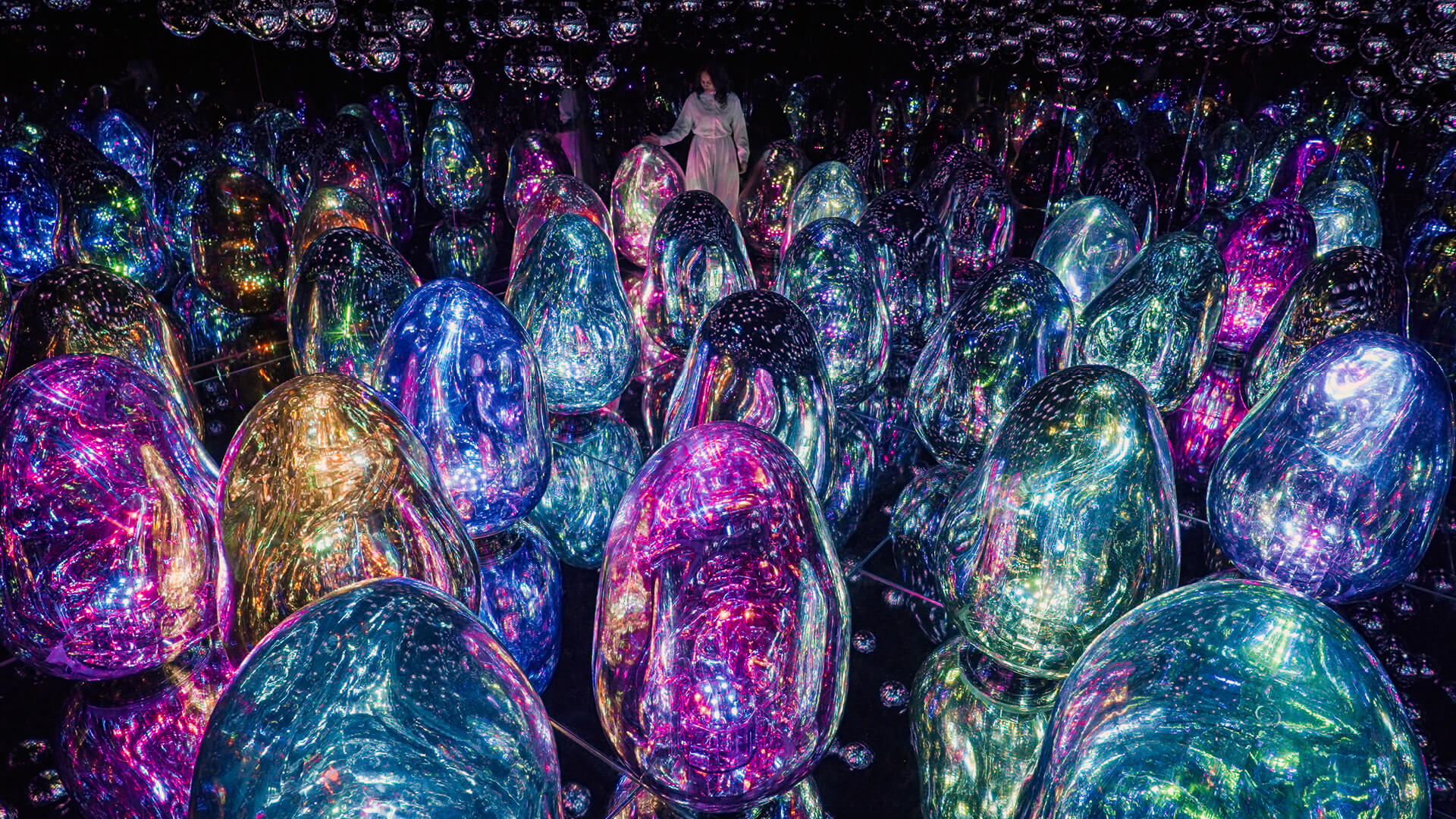
Still upward, visitors move from the dark into the vast, light space of a room with vaulted ceilings flooded with natural light. Lightweeds (2005 – Present) by the Dutch artist Simon Heijdens projects plants onto one wing of the room, moving, growing, pollinating and dying as people move past them and as the tempestuous Mumbai monsoon rages outside. In the centre of the room, a fabricated white tree drops large, shiny soap bubbles like fruit or blossoms, living up to the artist duo A.A Murakami’s promise of a New Spring (2017 – Present). Some watch, some record videos and others, particularly younger viewers, run up to the bubbles, popping them and leaving with soapy residue on their hands. Up a final staircase, visitors sit on benches, watching British artist Es Devlin’s short film Screenshare (2025), which shows dancer Dam Van Huynh dancing beside past recordings of himself. The ‘screen’ is made of 365 sketchbooks with drawings and sketches by Devlin. As visitors finally reach the conclusion of Second Nature, they are invited to pull a page they like, taking a part of the exhibition home with them.
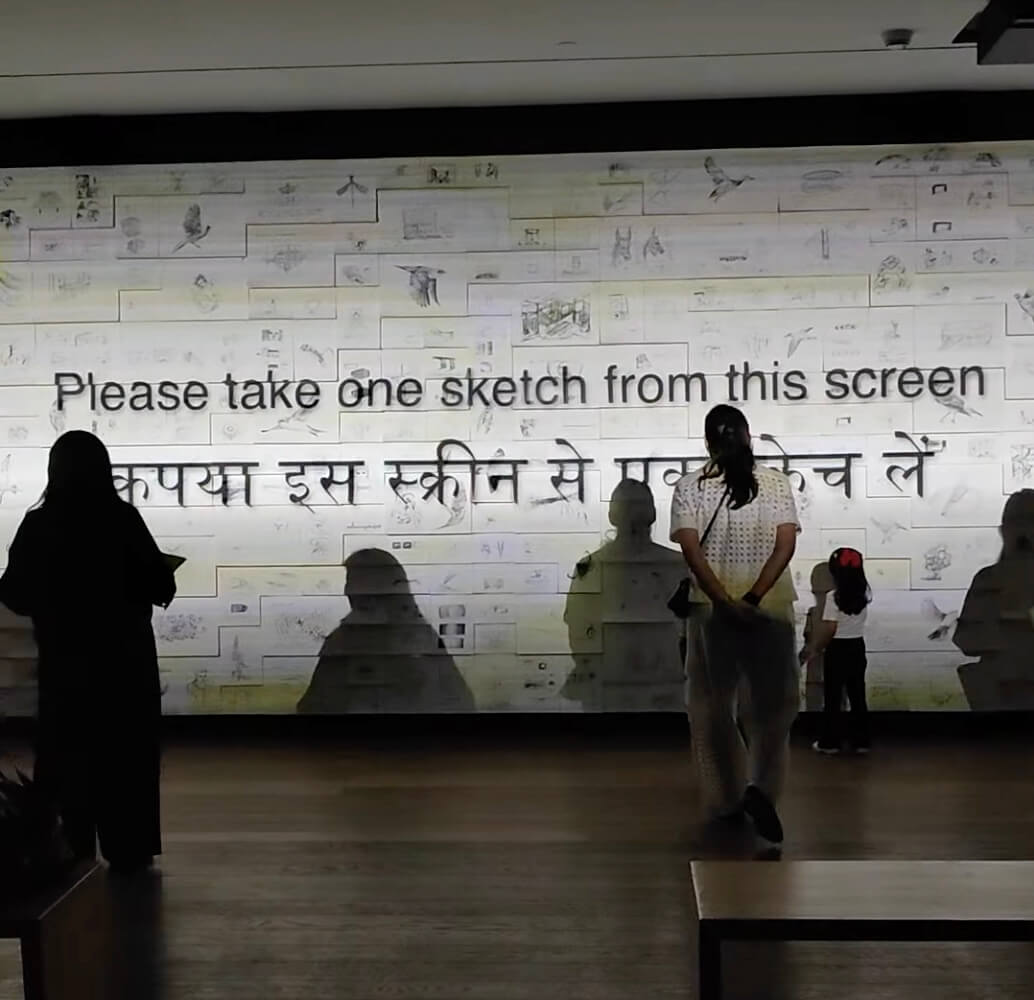
The ambitious undertaking—the first of its scale and depth in India—is organised by immersive art company, Superblue, whose founder and the exhibition’s co-curator Mollie Dent-Brocklehurs spoke to STIR during the walkthrough. She said, “We wanted it to be really accessible. You can go into the exhibition; you don’t need to know anything about the artists or the technology; you just experience it firsthand. Then it layers—there is the disquiet of the Random International floor, you feel the poetry of the teamLab floor, the interactions between Simon Heijden’s and A.A. Murakami’s work and then you take this drawing home and start to think of the things that are being spoken about in the exhibition. That’s our hope—that seeing art makes you feel a sense of awareness and the multiple layers of everyday life.”
The gathered artists, including Takashi Kudo of teamLab and Alexander Groves (one half of A.A. Murakami) echoed her thoughts, talking through the heady layers of their pieces—Buddhism, surveillance, coding, the physics of entropy, the Japanese philosophy of mono no aware (the embrace of the ephemeral). However, the conversations did not centre on their processes, research and themes. They focused instead on the diverse experiences of the spectators they watched interacting with their works.
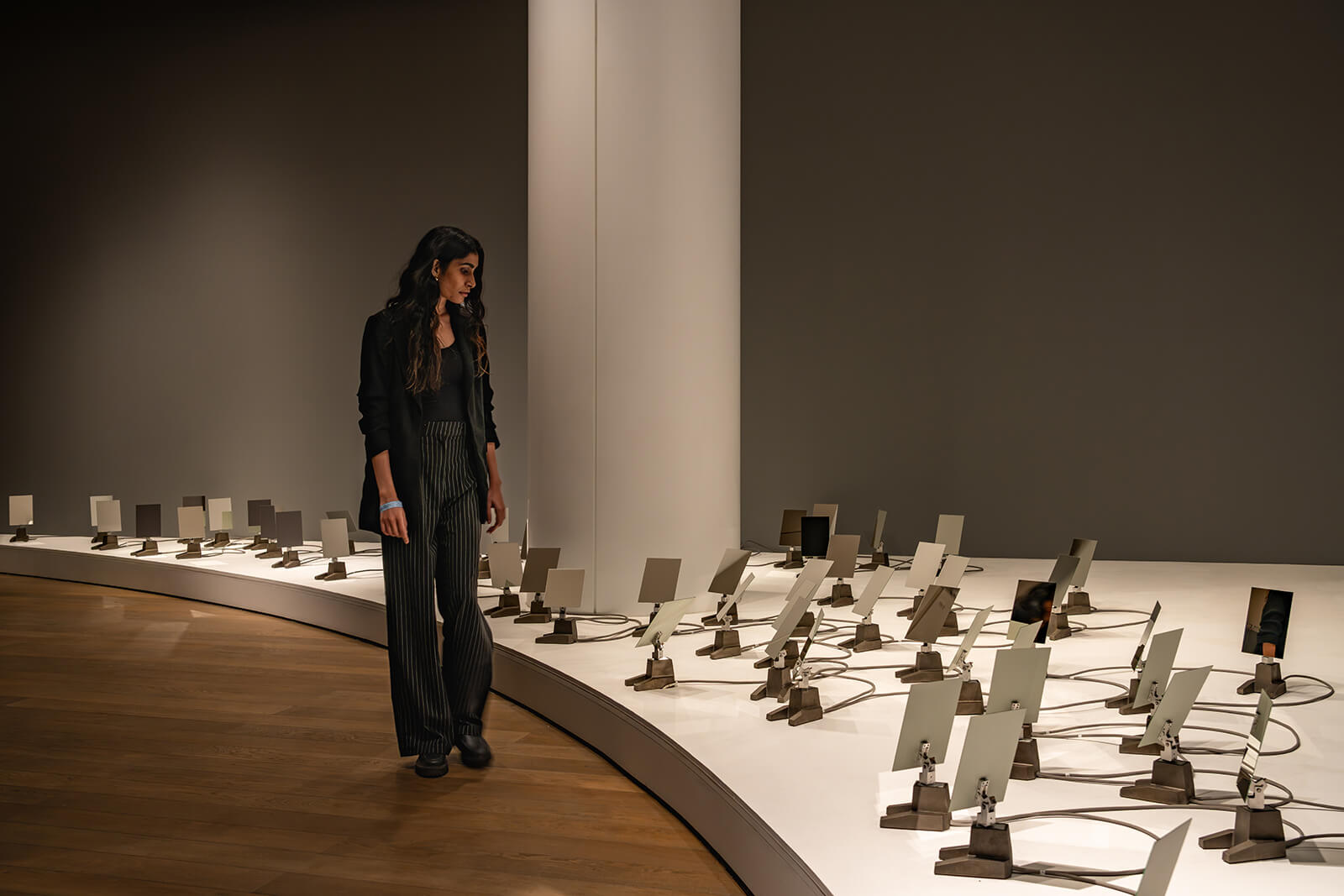
Hannes Koch from Random International spoke about the response to Audience (2008) and what people’s reactions to the anthropomorphised tracking mirrors taught him. He said, “That’s one of our oldest works, almost 20 years old now. There’s a big difference between what we imagine and what’s actually happening. We imagine that people would get creeped out by the focus on them and being followed. What actually happened is that people get irritated if the work shifts its focus away from them. They start to really perform for the installation, which was a complete role reversal. [Audience] taught us so much about human beings—how in love they are with their own image, the narcissism, the playfulness, the power of movement, the sense of loss in not being seen.” This exchange and evolution of the relationship between spectator and artist, work and audience, is what makes immersive art important.
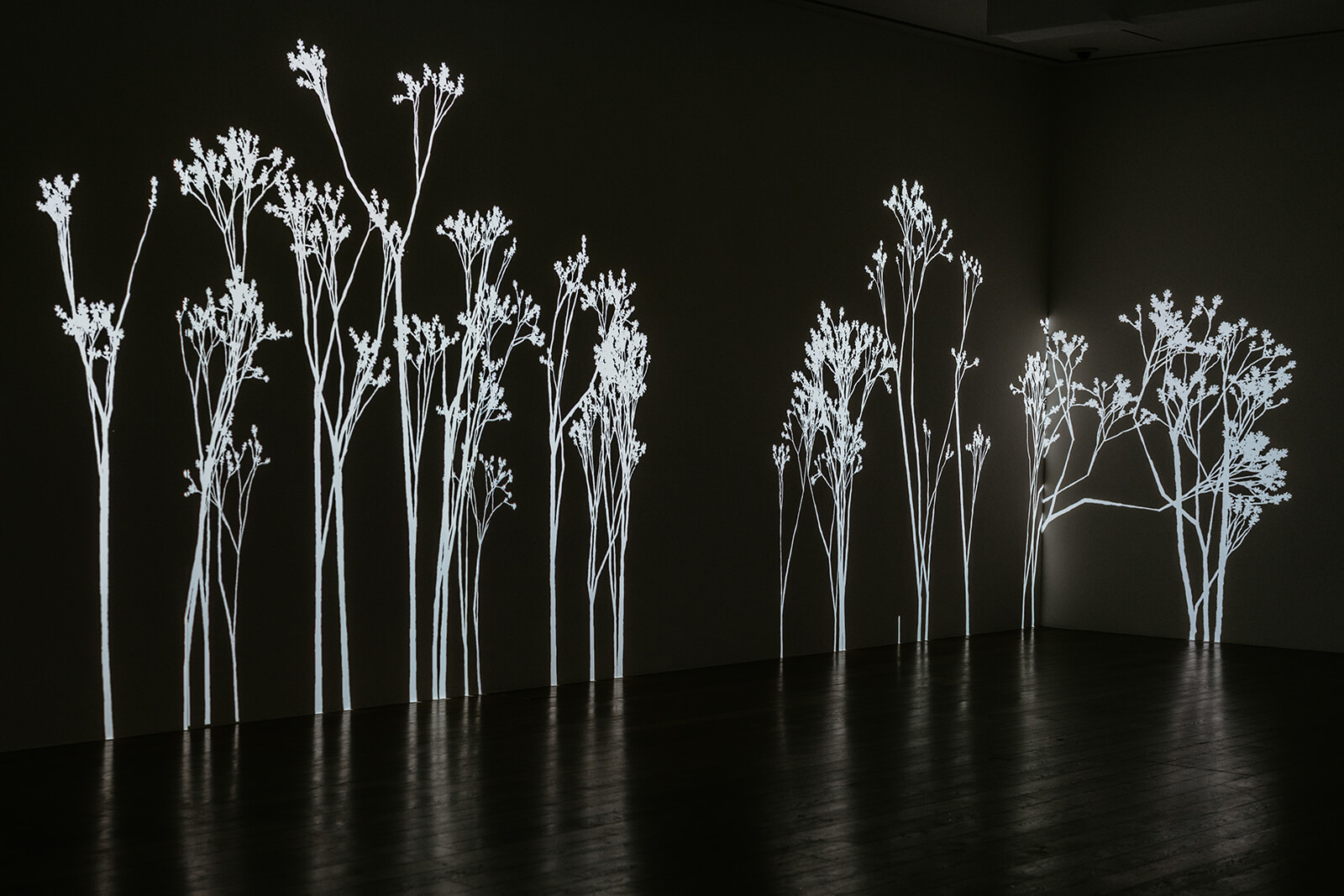
For this exchange to occur, a visceral in-person connection between the audience and the artwork is essential, allowing spontaneous reactions and interactions to spring up within the space. In some ways, this primacy of the physical seems counterintuitive for an exhibition so centred on technology, both in the mediums of its artworks and its themes. London-based Simon Heijden's work, for example, relies on code-based visualisation of data collected by external sensors measuring sunlight, rainfall, wind speed and more, to determine the behaviour of the projected plants. Speaking with STIR, he explains his decision to represent nature through technology, saying, “I didn’t know coding before I started this, but it seemed the best solution for the story I was trying to tell. I think technology is to our generation what oil paint was to a few generations before. There's no need to understand the technology part of it—plant language is so universal that everybody understands and reads into it immediately. Even people who are normally not so interested in going to museums, etc., can see and connect to the work as it slowly reveals itself over time. You can actually be a part of the work as you see it slowly grow and evolve.”
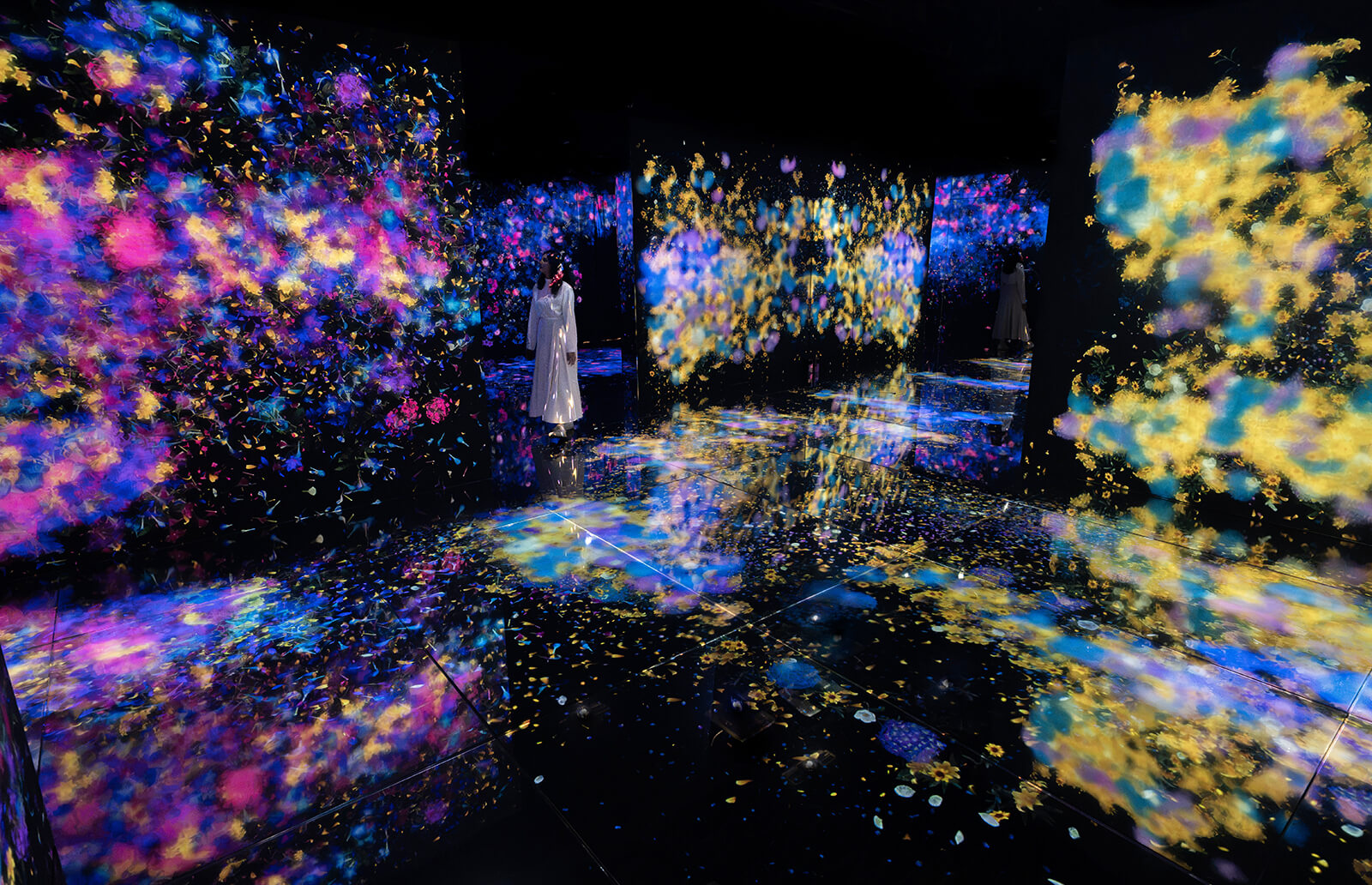
The exhibition explores the continuum from nature to technology through the reactions, thoughts, actions, movements and emotions of people, which are central to the showcase. Each artwork traces how humanity navigates this continuum, imagining a future in which nature and technology are not opposed, but symbiotic, forming a literal post-technological ‘second nature’. Standing in a room full of digital flowers, teamLab’s Kudo explains this interdependence and co-evolution in conversation with STIR. He said, “Now, there are cherry blossoms, but after 30 minutes it will be completely different. If you touch it, you can upset the life and it can die; if you stay still, a new life could show up. There is no boundary between the artworks and us—you are a part of it. This is a lot like a garden. Any garden is artificial, but there is still an essence of nature.
A.A Murakami were also inspired by cherry blossoms when creating New Spring—in particular, by Hanami, the Japanese practice of viewing cherry blossoms and their ephemeral beauty. They take the same spectator-centred approach as the other artists, focusing attention on creating a space that elicits particular reactions from people rather than on the artwork in isolation. Groves explains, “Our material is existence. You’re watching these bubbles come into and dissolve out of existence, and it makes you aware, just like Hanami, that you’re watching a fleeting moment that you can't hold forever and cannot last; that you yourself are a fleeting moment in the great span of the universe and that we are all in this moment together that will never come again. That's an important philosophy in our work, and it is a part of a body of what we call ephemeral tech.”
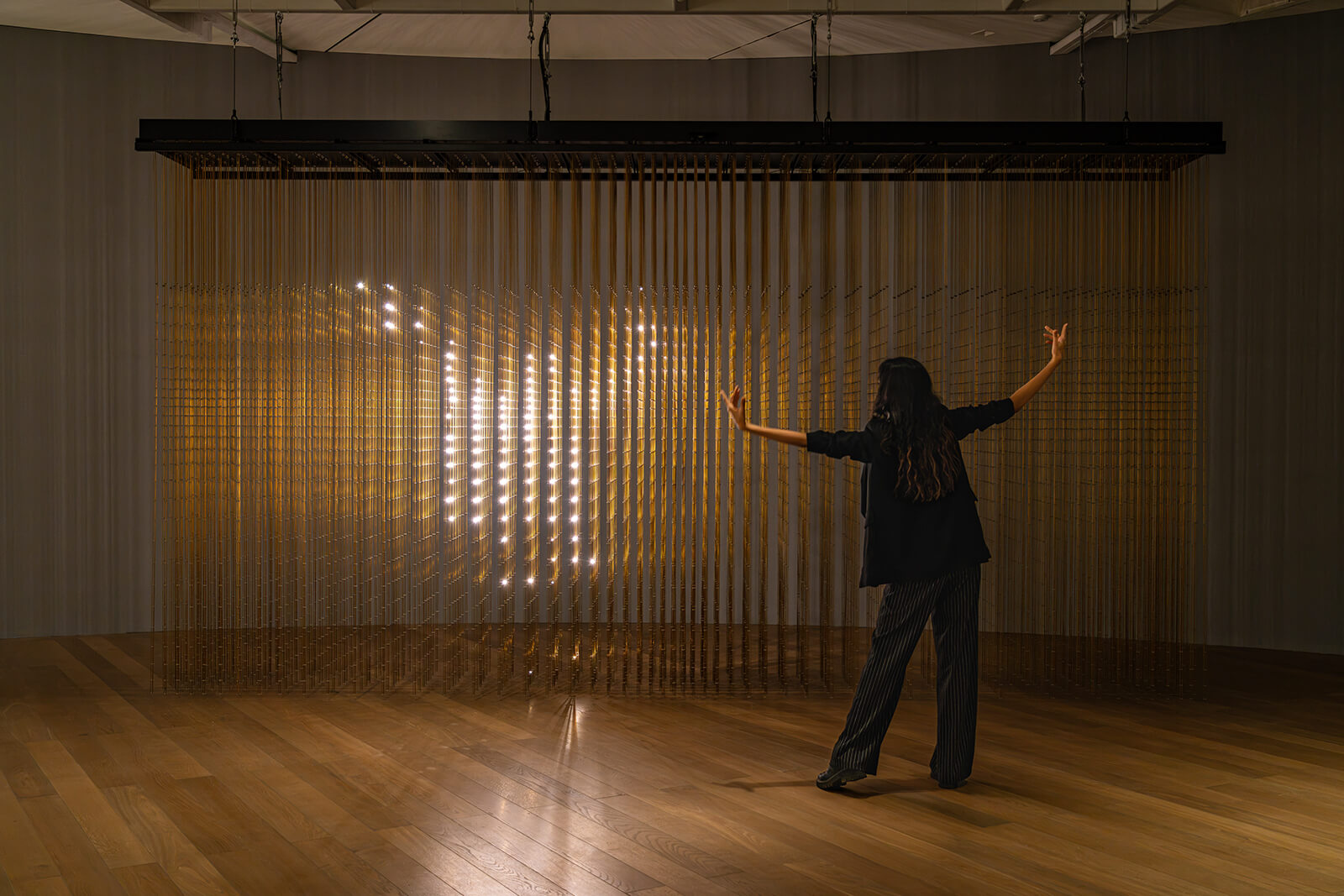
While much of commercial technology seeks to shorten wait times and attention spans, to lull viewers into dissociative, passive states through overwhelming sensory input and lure them away from the real to the virtual world, the artists here do the opposite. They use technology to make spectators more aware of their bodies, the people around them and the natural and built environments that often fade into the background of the world. Kudo sums up this approach to creating embodied in-person experiences using technology, saying, “The digital world is another world, but we are watching from these small windows that create a kind of boundary. We don’t want to be limited by those boundaries; we want to be able to become one with other worlds, other people. Instead of accessing the digital world through the very few ways we have—screens, monitors, smartphones—we try to make the physical world connected to the digital world. The way that we understand the world is physical; it is through our physical bodies, and we shouldn’t lose that.”
Second Nature is part of a new approach to exhibition design that makes the spectator, rather than the artist or the artwork, its protagonist. Each of the artists in the exhibition, through their specific, varied approaches, is focused on creating a field of opportunity for spectators to actively interpret, understand and engage with the work. This shift away from static artworks to participatory, interactive and immersive art reinforces the relationship between spectators, artists and art galleries through offering trust, freedom and an interdependence that brings everyone to an equal plane. Judging by the exhibition's physical and digital success since its opening, even in a country with a slowly emerging mainstream contemporary art scene, this ambitious approach may be the best way forward for art galleries to survive and flourish in a fast-changing world.
Second Nature will be on view until January 10, 2027, at the Nita Mukesh Ambani Cultural Centre in Mumbai, India.

by Srishti Ojha Oct 27, 2026
The 13th edition of the Gyeonggi Ceramics Biennale in South Korea, Earth Makes, explores ceramics from around the world, spanning ancient traditions and contemporary experimentation.
by Srishti Ojha Oct 26, 2026
The Taiwan-based artist shares his opinion on exhibition rituals, protests and his search for ‘fragmented beauty’.
by Srishti Ojha Oct 21, 2026
Increasingly, artists, filmmakers and activists are turning to VR to create more personal, tangible accounts of the climate emergency and its impact on vulnerable communities.
by Mirra Lynn Oct 20, 2026
The Indian artist paints the old wadas of central Pune, capturing the traces of everyday life that cling to these structures, battered by time but unbowed.

make your fridays matter with a well-read weekend
Enter your details to sign in
Don’t have an account?
Sign upOr you can sign in with
a single account for all
STIR platforms
All your bookmarks will be available across all your devices.
Stay STIRred
Already have an account?
Sign inOr you can sign up with
Verification link sent to check your inbox or spam folder to complete sign up process
Tap on things that interests you.
Select the Conversation Category you would like to watch
Please enter your details and click submit.
Enter the 6-digit code sent at


Second Nature at NMACC: The democratic future of exhibitions comes to India
by Srishti Ojha | Published on : Jul 18, 2026


 Sign in with Google
 Sign in with email
What do you think?