Art09 mins. read
Heshoram Hoshiyaar is a chaotic, goofy take on a childhood Bengali classic
by Srishti OjhaOct 01, 2026



by Srishti OjhaPublished on : Jul 31, 2026
“The India taught in school was not my India. My real education happened outside. Under trees. On rooftops. At funerals and feasts. My history was oral, emotional, scattered. Passed through stories, warnings, jokes, songs. Through silences that said more than books ever could.”
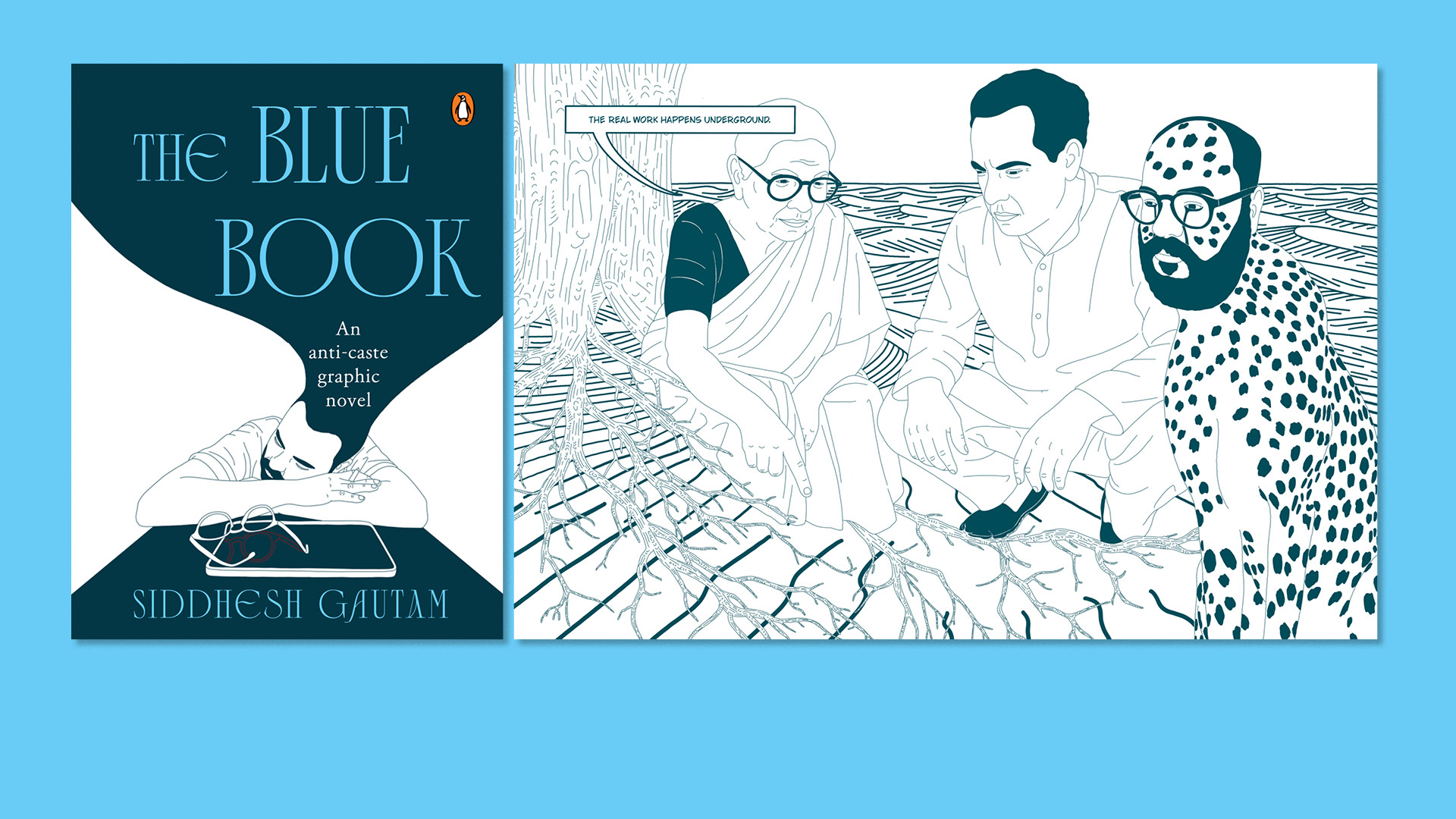
With his first book, The Blue Book: An Anti-Caste Graphic Novel, published with Penguin India, Siddhesh Gautam sets out to bring the histories, lives and experiences of India's diverse non-Savarna communities, including Dalits and Adivasi social groups to the forefront. As both author and protagonist of the book, the artist and Ambedkarite—a follower of Indian political leader and economist Dr. B.R. Ambedkar's anti-caste philosophy of equality for all—lays out a journey of education, questioning structures and finding solidarity through dreams.
The graphic novel adds to the growing body of anti-caste literature that challenges the millennia-old hierarchical structure of caste (characterised by Ambedkar as a system of graded inequality which, by assigning fixed roles to individuals at birth, made equality and social mobility impossible and dehumanised those considered ‘lower caste’) and the ongoing systematic oppression of communities it facilitates. The anti-caste movement calls for the annihilation of the caste system and equality, fraternity and liberty for all people. In the blue often associated with Ambedkar and the anti-caste movement, Gautam enlivens the historical figures who shaped it by driving mass social change, for example, activist and educator Savitribai Phule, Bhakti saint, poet and social reformer Ravidas, B.R. Ambedkar and the Buddha.
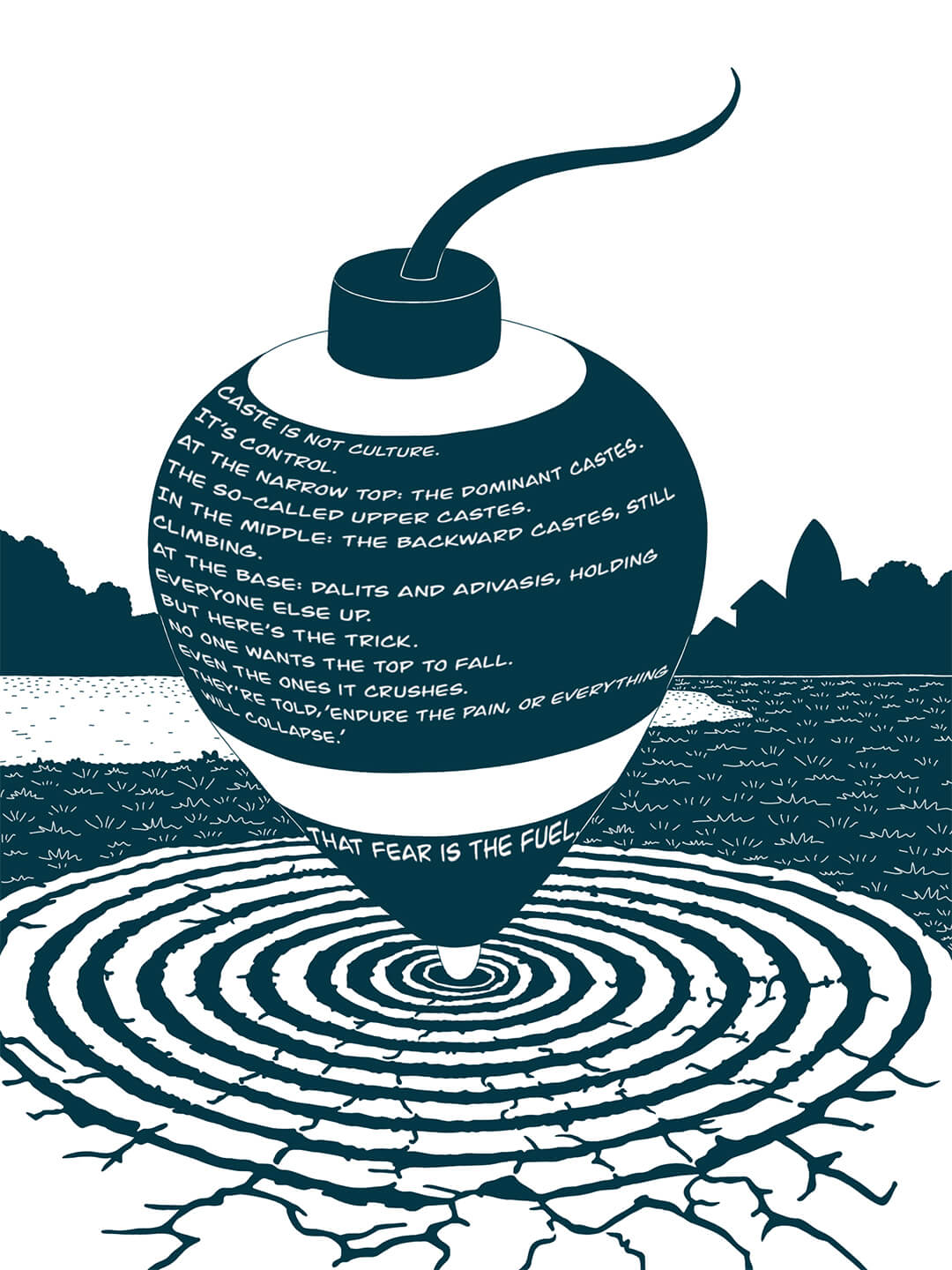
The book, its characters and conversations, pulse with vulnerability. Gautam humanises these figures in intimate scenes where they are freed from the mantle of being leaders and icons and become interlocutors, friends and comrades in the struggle to dismantle caste and end caste-based oppression. In imaginative, surreal, full-page spreads and dream sequences, Gautam renders the history and philosophy of the anti-caste struggle without ever veering into the language of academia.
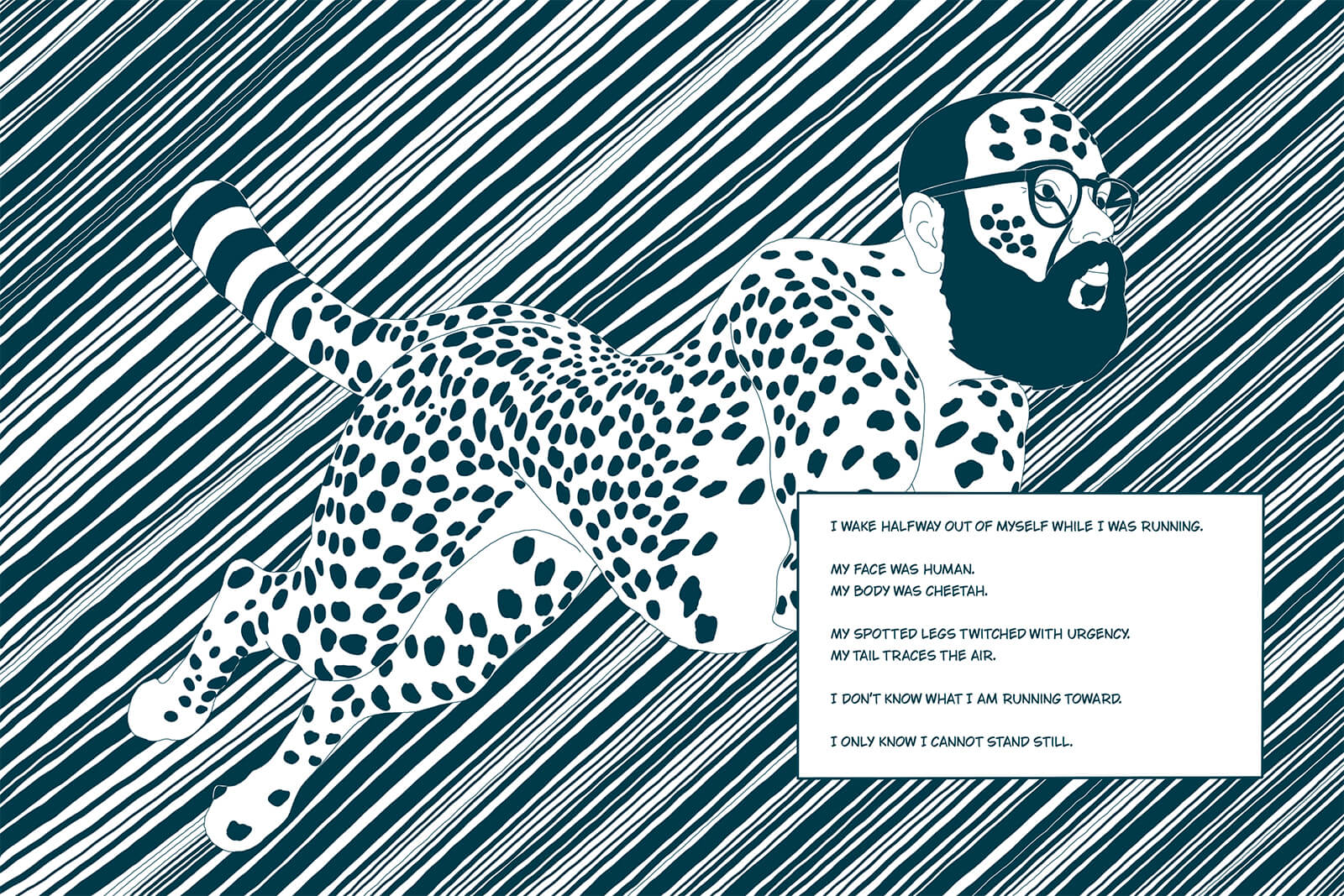
Gautam breaks down caste as ‘a lie given form’, step-by-step in this book that is at once political, philosophical and deeply personal. As protagonist, he transforms into animal hybrids—an ant cooking with Ambedkar in his kitchen, a deer watching the waves on a beach with the Buddha, a cheetah sprinting to the tree of life—embodying the transformative and emancipatory powers of the philosophies he encounters.
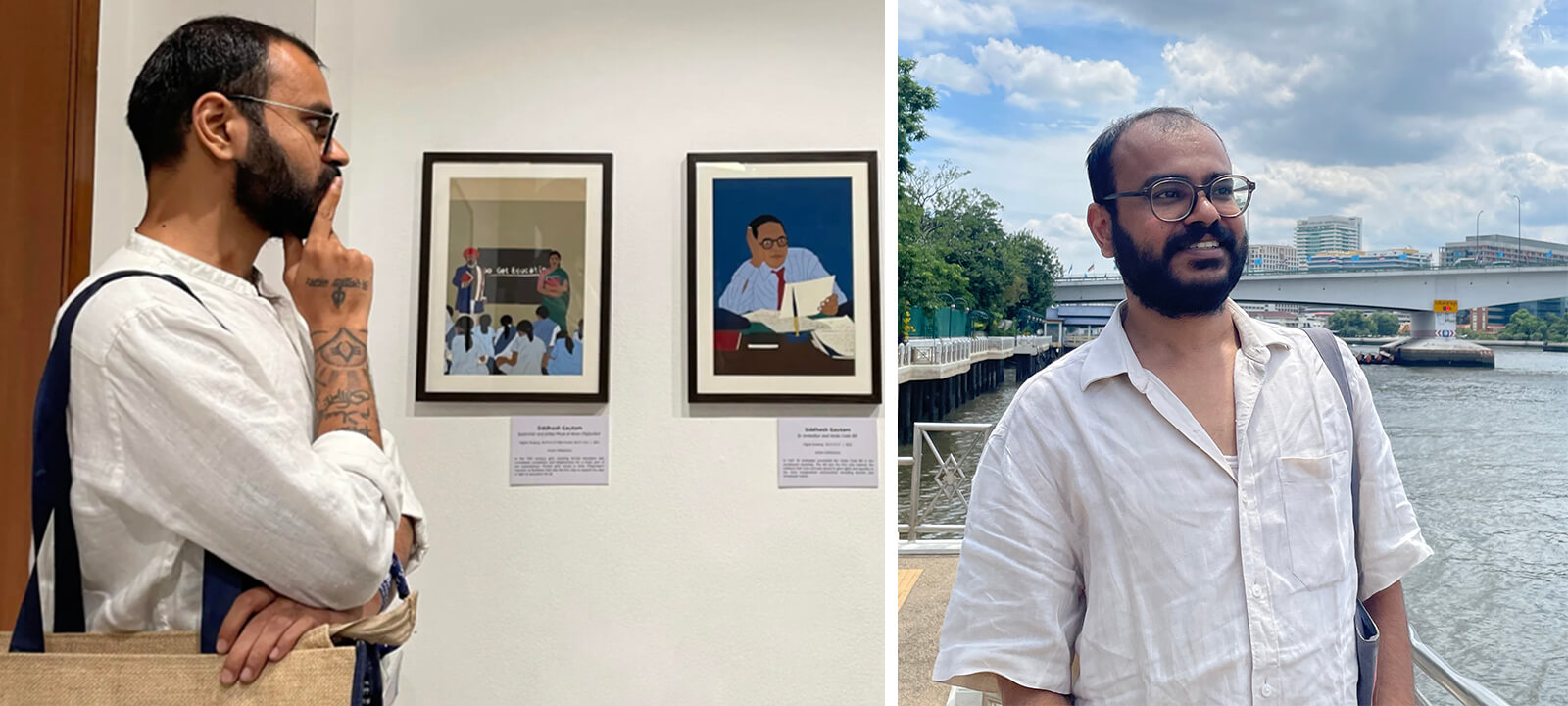
In a conversation with STIR, Gautam talked through the process of moving from illustrations on his Instagram, @bakeryprasad, to the sprawling pages of his first graphic novel. In the following excerpts from a much longer conversation, we discuss childhood, dreams and the pursuit of liberty, equality and fraternity.
Srishti Ojha: What drew you to the form of the graphic novel?
Siddhesh Gautam: I started telling stories through individual illustrations or short series, and this was the next step—moving to longer formats of narrative where I can say more without being limited. Even as a child, my dreams were very surreal. They were so visual they were something I had to bring onto a screen and weave together. You remember dreams in such an abstract way and get a very scattered skeleton of something, and then you weave a story around it. The drawings came to me very organically. I did so many redrawings because I could not resist the new ideas coming, even if I had to scrap 20 pages. I really enjoyed the organicity of the process.
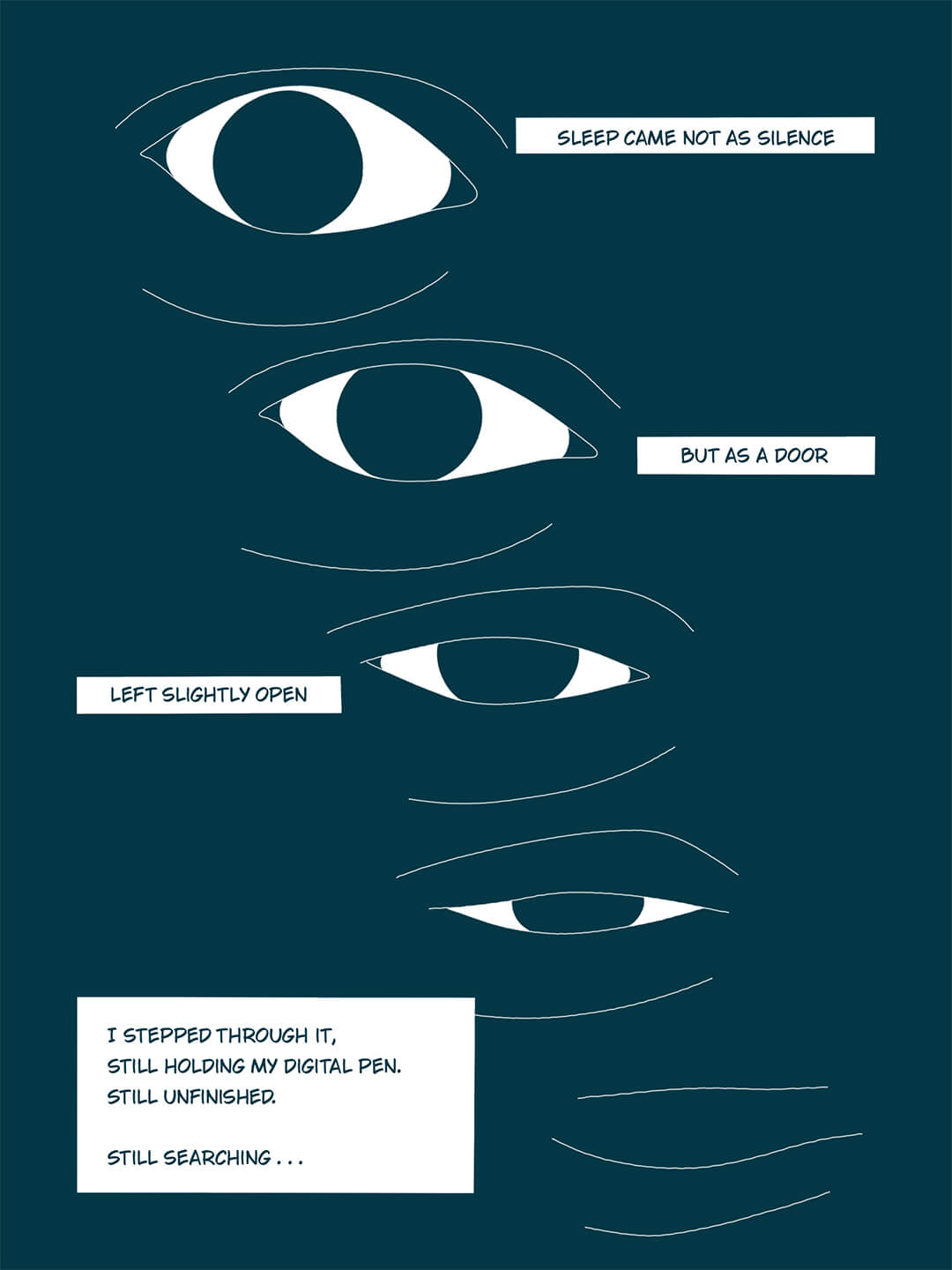
There was a point in time when I was into abstraction too much and had to bring myself out of it because my viewers and consumers are different. My artwork needs to reach out to people, to make sense to people. The beauty of those dreams laid a framework for the visuals, and the textual framework was led by the eightfold path of the Buddha, which I tried to play around with metaphorically.
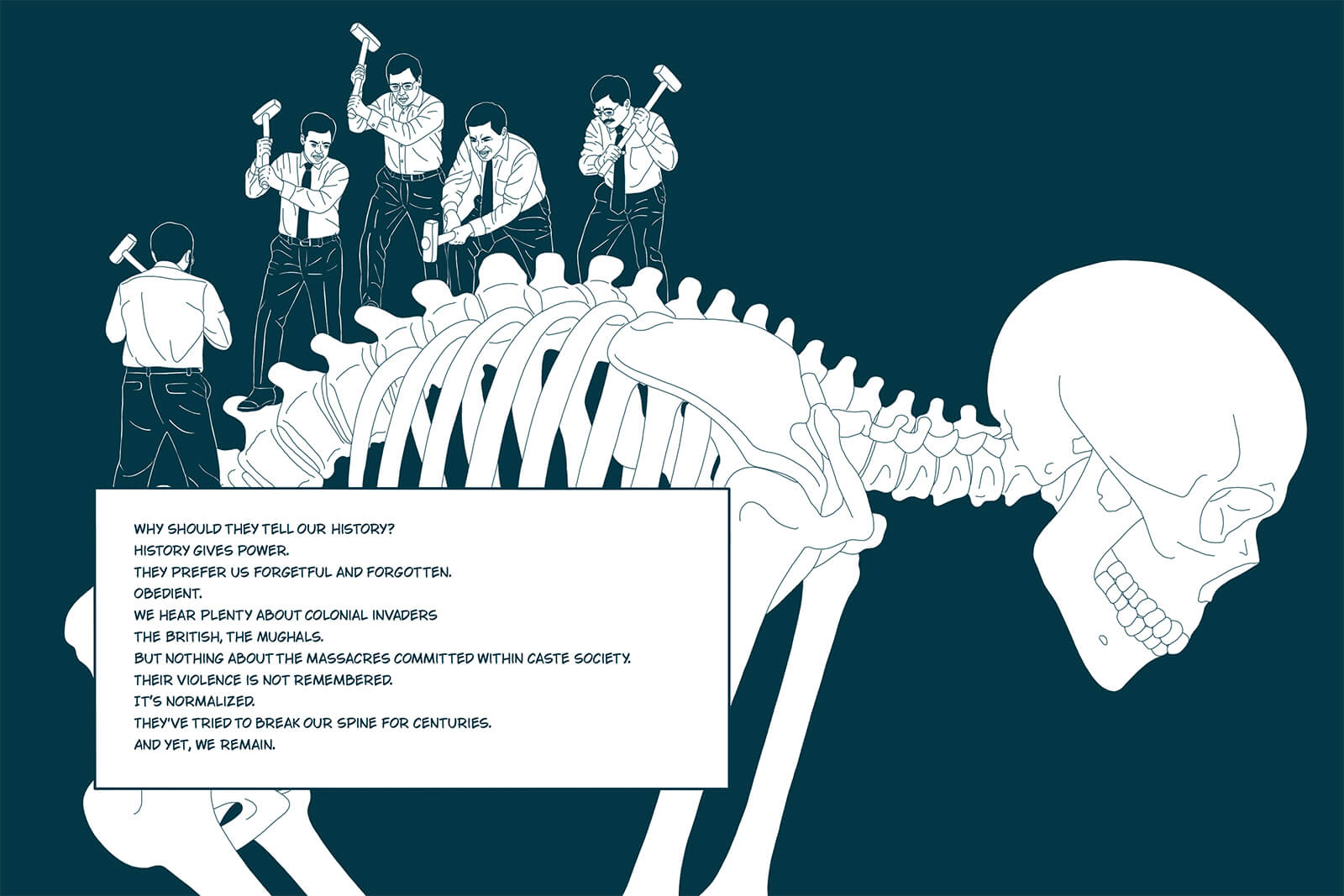
I started with this spine, but it is not possible for an artist to just stay with one spine. I began with something that looked like the spine of a human, but as it took shape, forming muscles and matter, it did not look human anymore.
This is a book of queries, of insecurities, of learning. I am not giving any solutions because I don’t have any. – Siddhesh Gautam
Srishti: The novel shows great vulnerability, as you depict the process of learning from historical icons of the anti-caste movement. What made you position yourself as a student instead of an authority figure?
Siddhesh: Something that my movement and community have taught me is that everyone can learn from each other and respect each other. We do not have the culture of touching each other’s feet; we do not bow down to people. Even my father and I are equals who can have agitated conversations together. I take [the student’s position] because I am still learning, and learning can stop when you become a teacher and become more critical about things. I don’t work in that way.
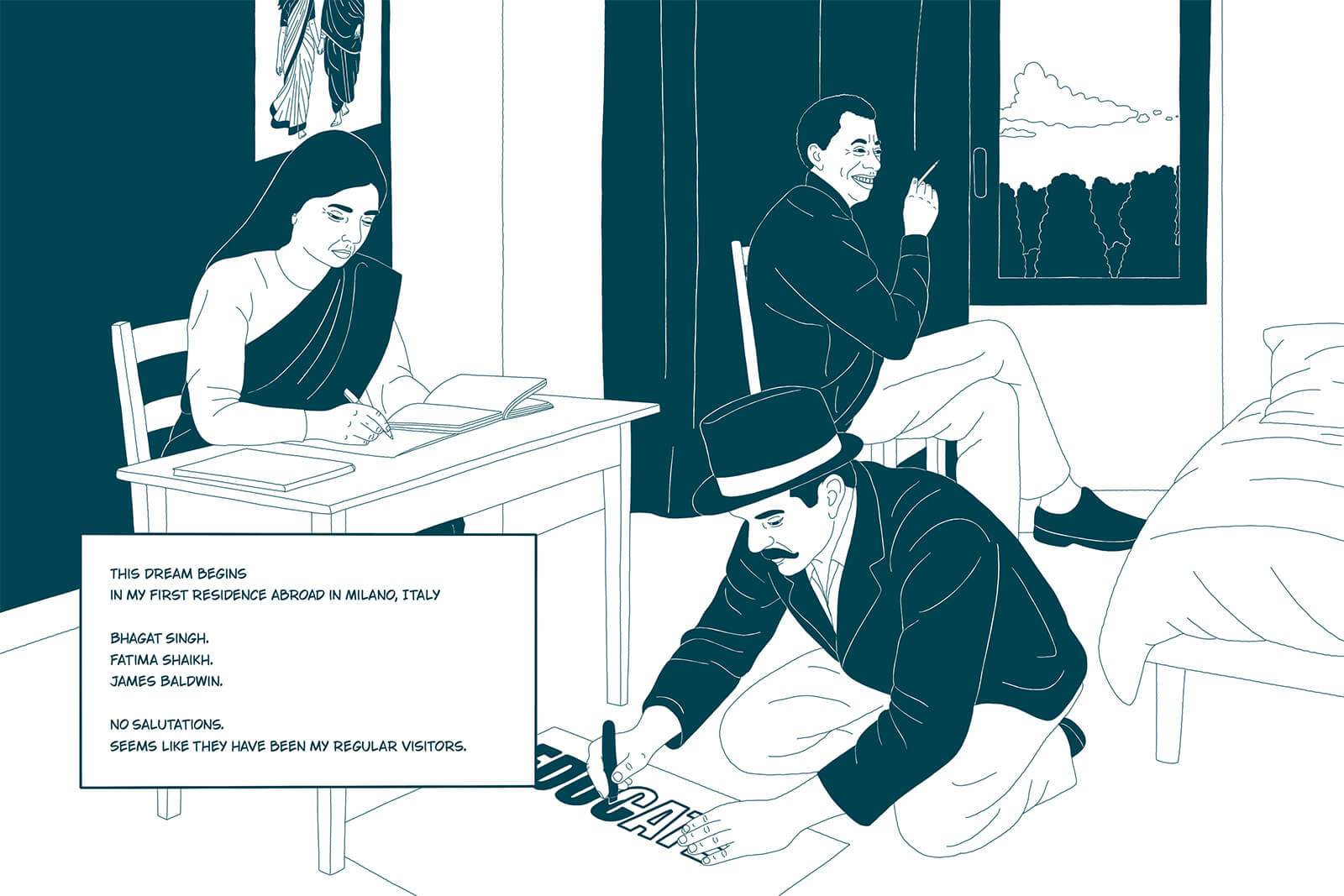
I was sick of seeing people like Savitri Mai and Ambedkar as just faces from portraits. I have never met any of [the historical characters from the book], but they have been in my life for a long time. It seemed unnatural that they would not speak to me. It’s not even surreal; it just becomes a part of your life, makes it more colourful.
I have always been an observer, and I think this book is the aesthetic of an observer—being astonished by things, having questions and confusions rather than ideas. This is a book of queries, of insecurities, of learning. I am not giving any solutions because I don’t have any.
Srishti: You work extensively with history and enlivening its figures for contemporary times. In a world where the past is inextricably linked with fascism, how do you reclaim history without falling into the trap of romanticising it?
Siddhesh: To be a human means to make errors, and our society’s evolution is a result of the errors that we have made. When we talk about idealising people, we think they have to be very pure, bina daag ke (without stains). But with a bit of rationality and imagination, you can know their shortcomings and their good deeds. You get this power to befriend them just by reading about them or seeing the imagery created around them.
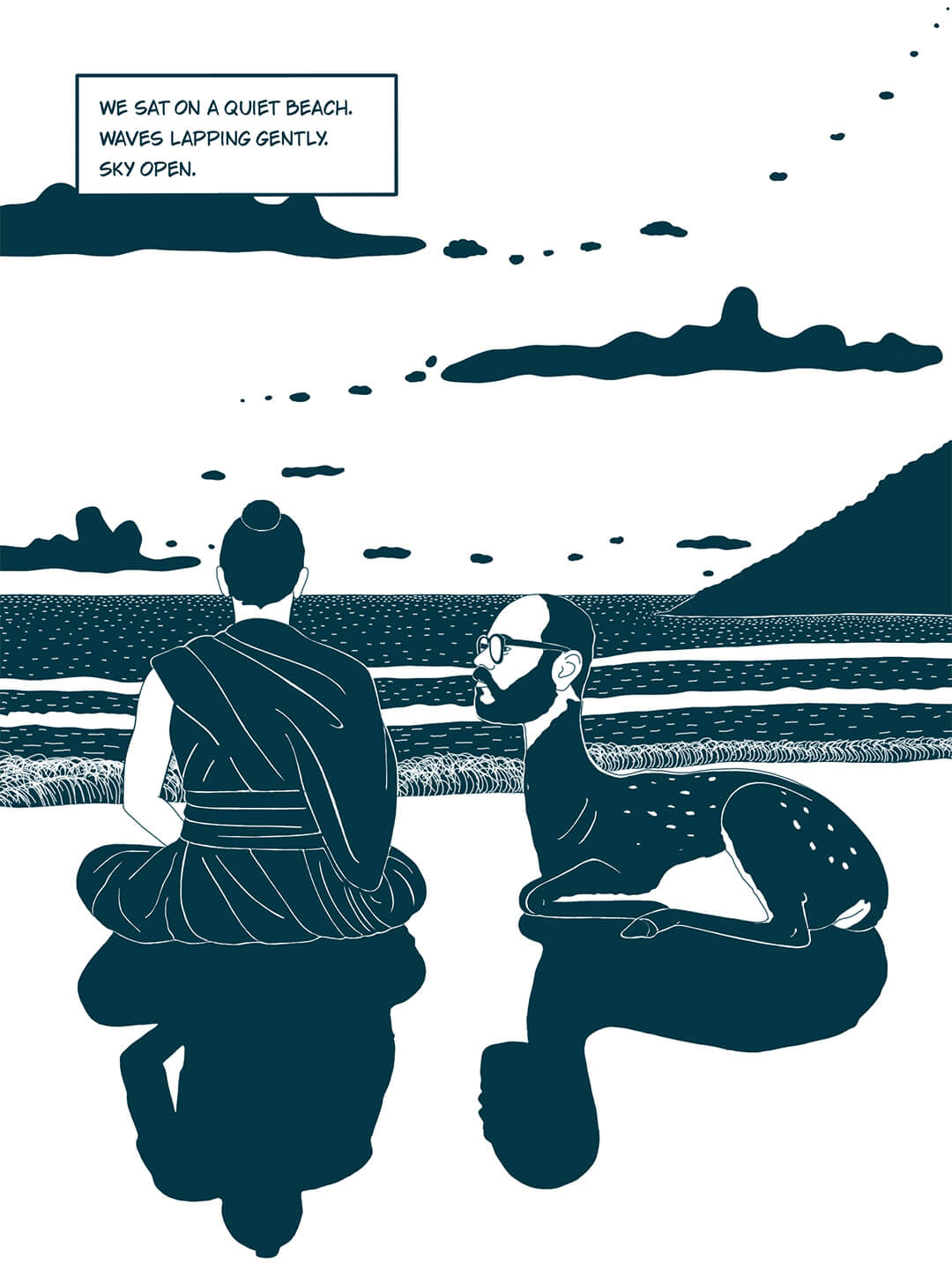
I was brought up to be excited about history; my parents would make us travel around India as per our history book. To go to the places you are reading about as a kid changes something in you.
My childhood was fascinating. I was born in a family that was slowly transforming from Ravidas’ Hinduism to Buddhism. They created a new sect in Buddhism because they did not have access to [mainstream] Buddhism. There was an excitement in knowing that they were building their own culture in front of me. It really gave me this idea that there is no permanence—no culture, no ritual is permanent to you.
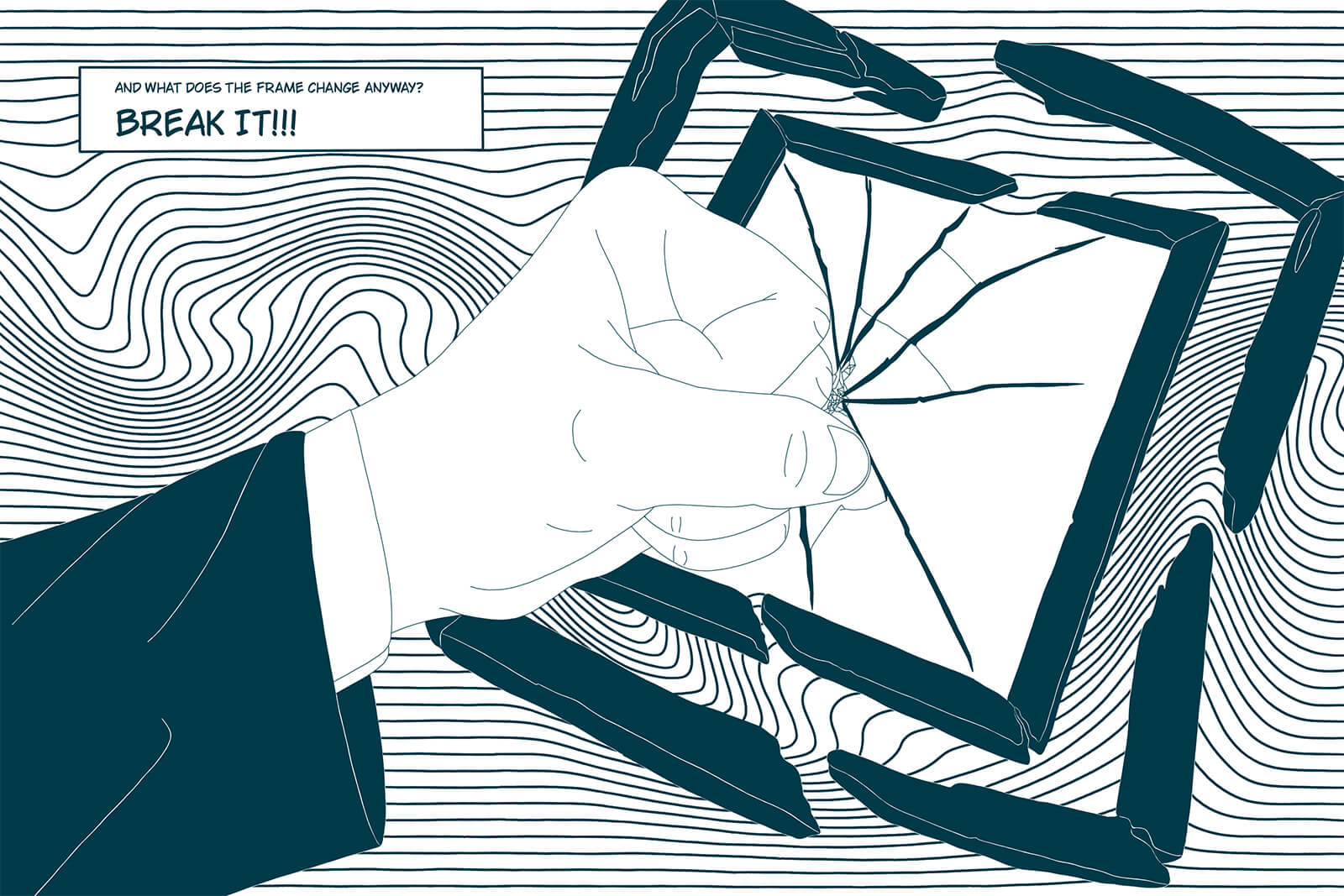
Srishti: Can you talk about how the form of the book—the changing scale, interrupted backgrounds and the broken frame—is influenced by your moral and political beliefs?
Siddhesh: [The changing scales] are part of the organicity of life—you expose yourself to big things, then limit yourself, then expose yourself again. Most of it was subconscious in nature. I am a very confused person, not totally inside myself, not totally outwardly either. I try to keep a balance because I know people can lose check with reality when they are too inside themselves and can lose themselves when they are too outwardly. That balance I feel and want somehow was reflected in the book.
I did not start my book with full pages and spreads. It was full of panels where things are repeated, a dialogue is said, and the head moves here or there. I was spending more time making those boxes than drawing inside them, and I realised, what the hell am I doing? I broke from those panels and worked with full spreads. They give people the freedom to move their eyes around, to read the text as prose.
Through this book, I have also tried to go back to the days of the people I really relate to—the cave people. I find my ancestry with those people, the hunter-gatherers, the people who would make cave drawings. Those drawings were observational; they were stories, points of caution, celebrations. They had a mix of a lot of emotions in one place. I have always been fond of this commotion and coexistence of emotions in one place.
I am very inspired by Frida Kahlo, the agitation she had and how she brought it out. That is why I do so many self-portraits. I am not afraid of bringing myself and my image out there. I see bringing my image the same way people write ‘I’, ‘me’ or ‘you’ in their sentences. She gave me that freedom. She taught me that you are a subject too; you are a result of the consumerism and the politics that are around you.
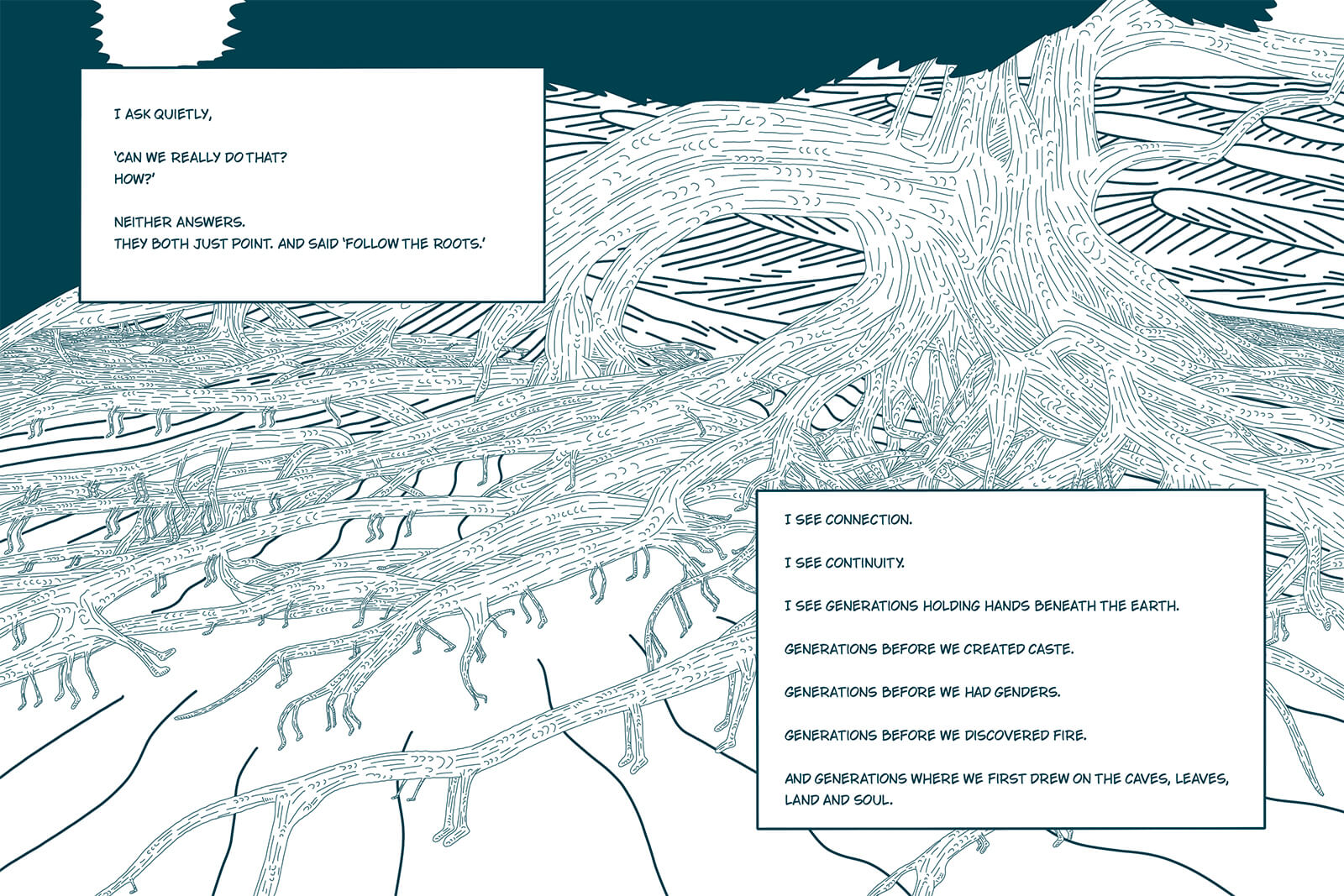
Srishti: Many conversations on politics centre the material rather than the ephemeral. What made you focus on dreams and the intangible? What emancipation awaits in the ephemeral?
Siddhesh: For me, equality and fraternity are as material as resources like land and houses. I seek it for my community because historically, it was snatched from you.
Surrealism is the easiest way for people to digest complicated ideas. So many modern stories are fantasies, ways of telling complicated stories in an easier way. I chose that path because it would be really boring and difficult to have a book without these surreal and intimate elements. There would always be this distance, this worshipping because it would be a biography of people.
Since it is a dream sequence, it has [my] originality with their teachings.
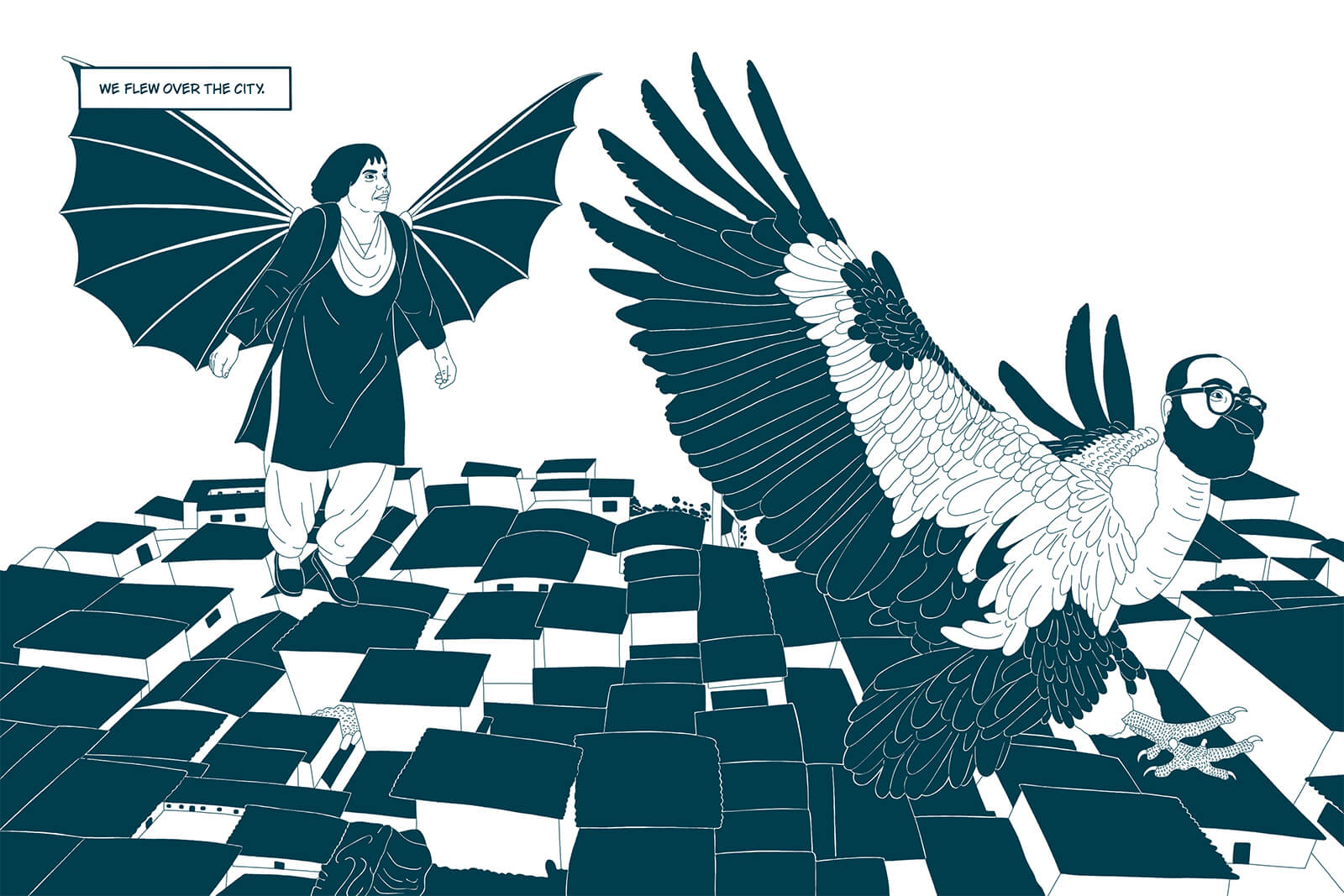
Srishti: Increasingly, ‘embodiment’ is seen as a tool for liberation. What made you move away from literal embodiment to creating fantastical versions of yourself, hybridised with animals like crows, ants and cheetahs?
Siddhesh: I really enjoyed the process of moving from one body to another, from one mind to another. It gets me excited because human beings are very boring. To think from their perspective is boring because we are very goal-centric. I feel a sense of escape when I get into the body of some other animal. Even if it is just a thought, it is good enough for me to run like a cheetah or be laborious like an ant or proud like a crow. This is a way to escape my own boringness.
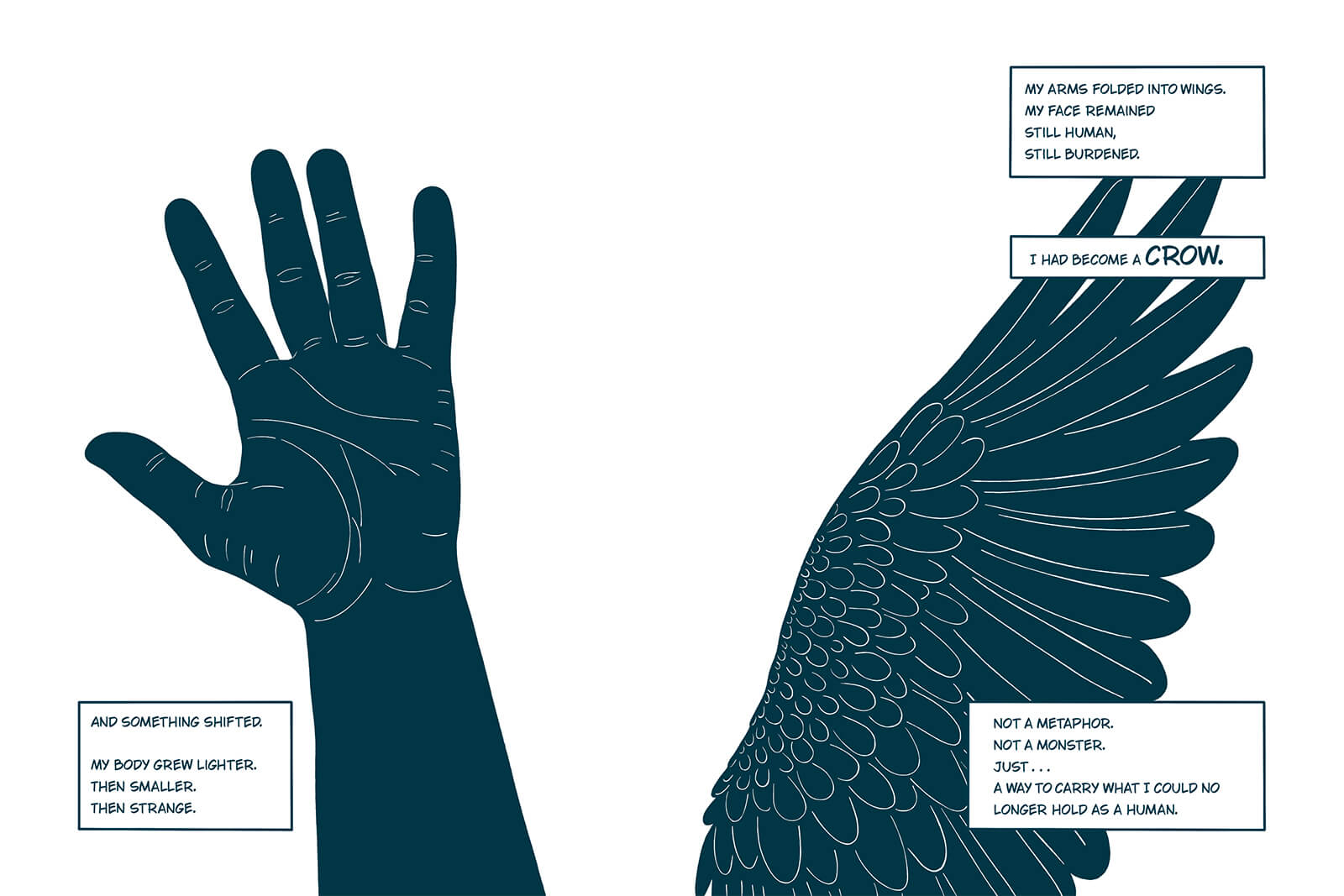
In the book, it is Savitri Mai who gives me the freedom to become an animal. She says that you do not have to perform, you do not have to do it for me, you do not have to show it to anybody; we are already doing the work, come join us if you want to. That gives me the freedom to be anything.
Before that, I’m just a human being in a shirt and pants feeling underconfident, feeling like I’m not doing enough. A lot of the time, people think that things aren’t working and that brings despair and pessimism to movements, even though things are moving, just not from your perspective or as per your view.
I give myself the freedom to not be a human being and to take on the attributes and properties of other animals, of other things. Even then, I am still there—the face is mine, the head is mine.
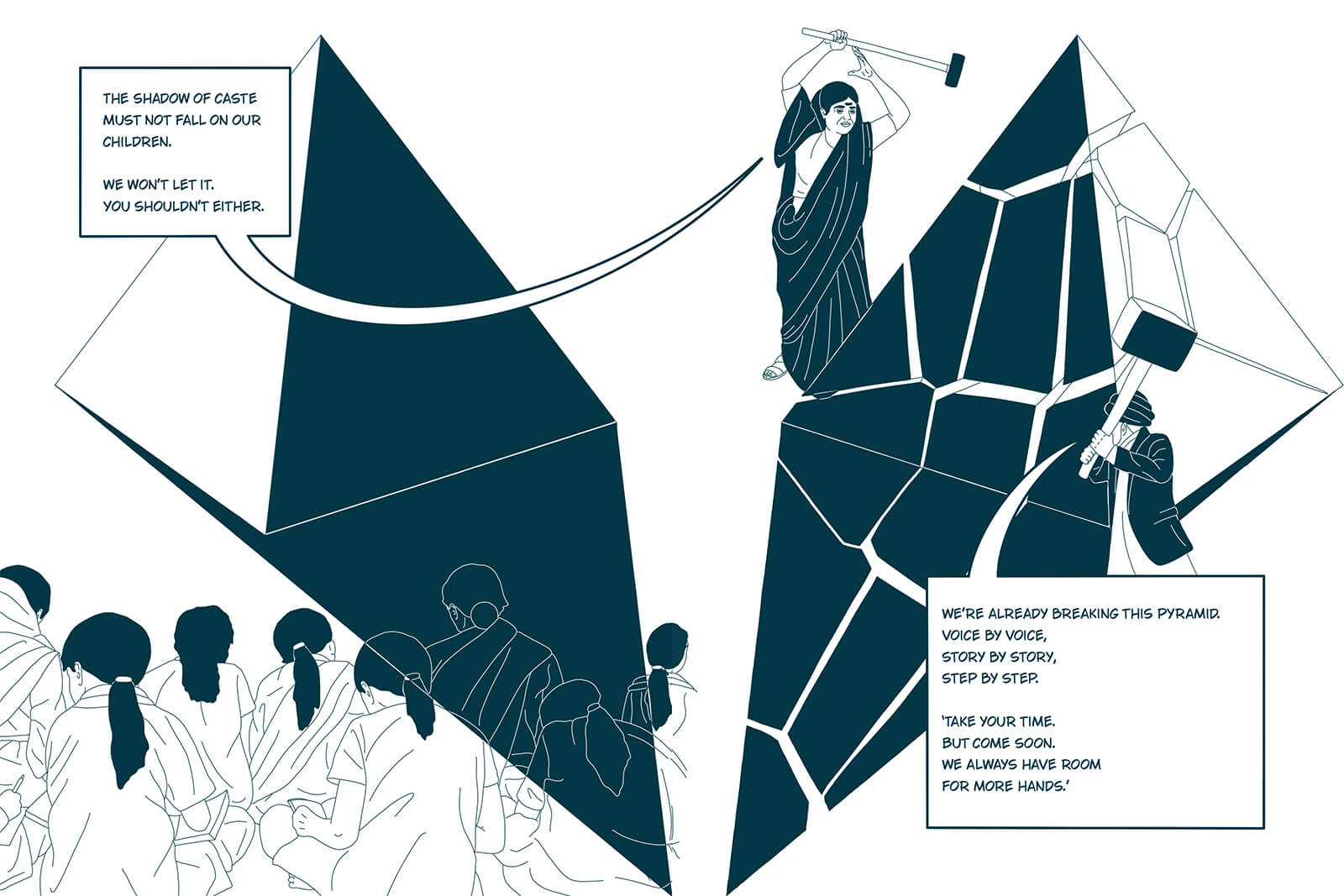
Srishti: In Chapter 4, Ambedkar posits facelessness as radical and democratic, while the last chapter of the book focuses on moving beyond symbols to a more universal solidarity. Why is this shift significant and how could it be mobilised for social progress?
Siddhesh: Every identity card is based on your face. Your face is your only identity. People do not recognise you for your hands, legs or any other body part. People do not even recognise you for your mind. We spend a lot of time thinking about our faces and what they represent. Faces do have more connotations beyond your features—it’s what colour you are, how clean or healthy your face is, how contemporary or beautiful it is. Your face tells your race, your class. I see facelessness as an eradication of identity that will maybe then force people to see everyone as equals.
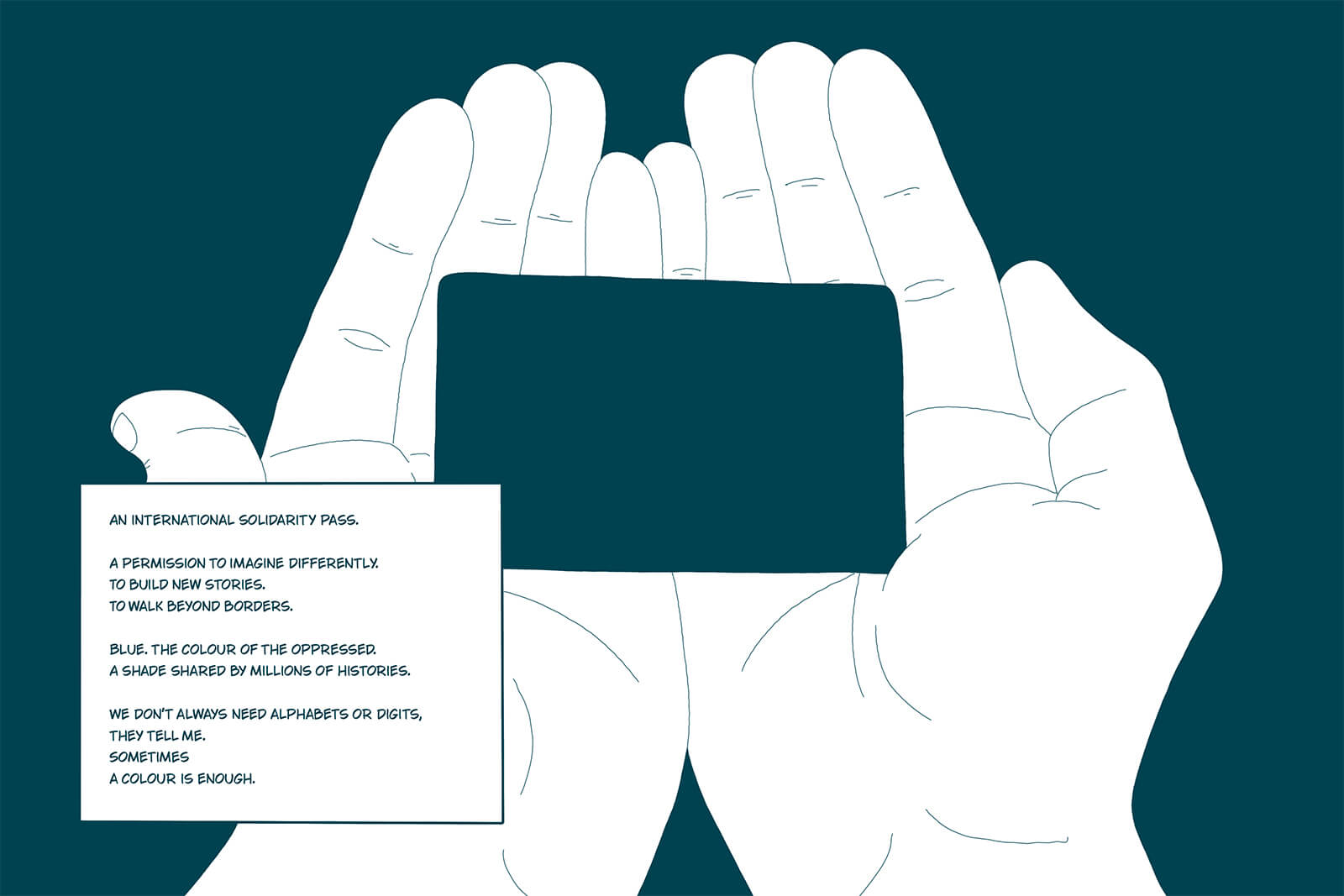
It is the same thing with symbols, with which fascist governments are ruining lives everywhere around the world. In India, people do not really fight about ideology; they fight about the symbols they are seeing. Most of the Hindus who hate Muslims or Dalits hate symbols—the symbol of Ambedkar or Shaheen Bagh, etc. They are not reading the ideology. It is a war of symbols.
Symbols were not made for that. Symbols that the minority communities have created were made to feel like a part of a community. The symbolism of the majority makes them oppressive in nature.
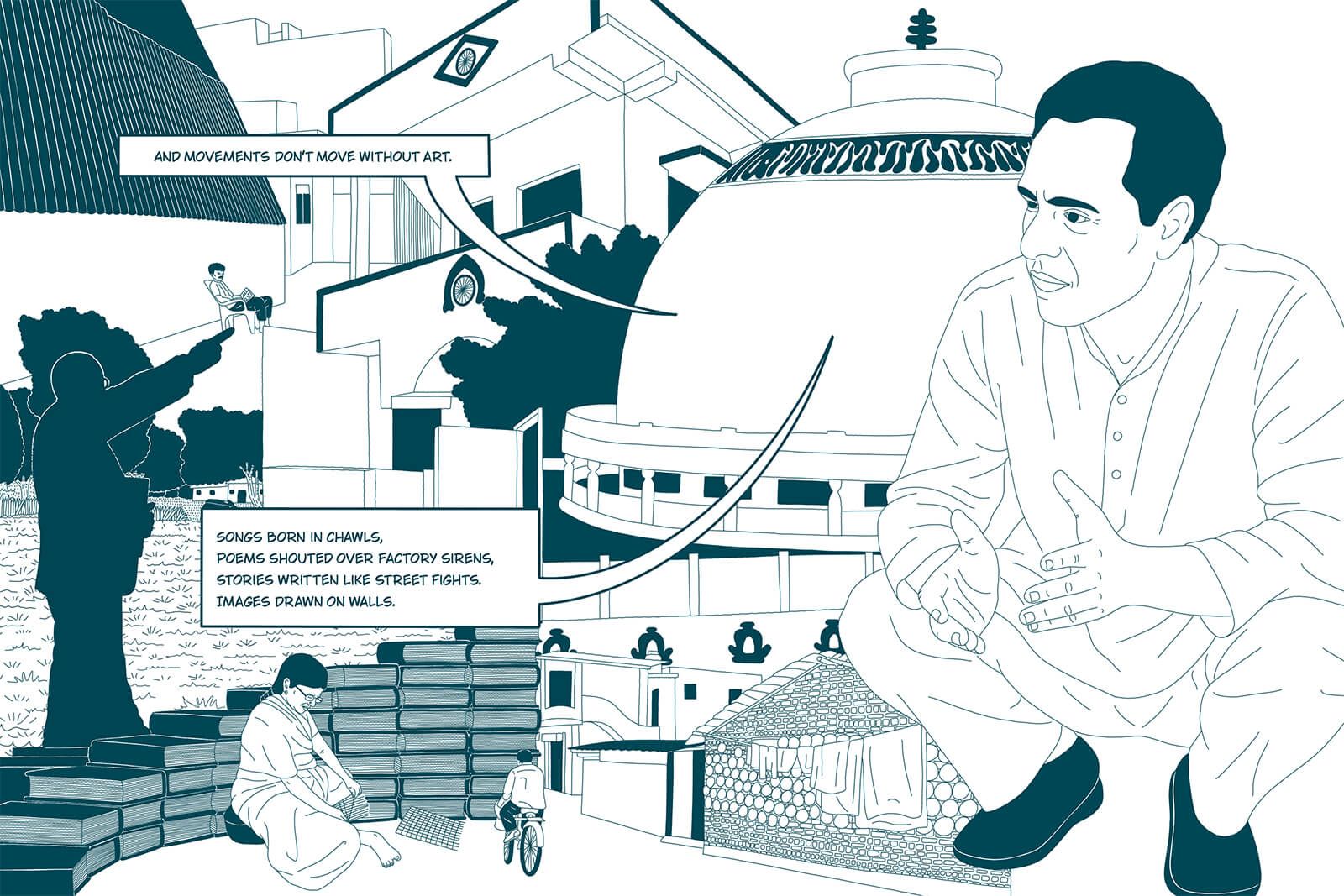
Srishti: A quote from the book reads, “Movements don’t move without art.” What does emancipatory, anti-caste art that demands fraternity, equality and liberty look like to you?
Siddhesh: I think there is no such thing as ‘anti-caste art’ because it goes back to the war of symbols. There should be more art of equality, liberty and fraternity, more art of justice. When you seek justice, you know that caste will be dismantled because the problem at the foundation of India is caste. Everything that seeks progress here would be considered anti-caste. Asking people to send their kids to school is an anti-caste thought. Asking for freedom for all genders is an anti-caste thought. Whenever you are seeking equality, justice or liberty, it is a part of the anti-caste movement because caste is the foundation of not only India, but South Asia.
Some people told me when I started working on anti-caste art: “You won’t be able to sell Ambedkar. You should draw Gandhi and Nehru also because Ambedkar won’t sell for more than 100 rupees.”
Aesthetics in India is mostly to do with rasa and bhava , which is missing a lot of agitation and other things to do without marginalised communities. So for me, that is not a complete form of aesthetics. People tell me about my aesthetic: “You draw too soft for a Dalit person, you should have those [harsh] strokes, you’ve had so much pain in your life.” People think since you are part of a certain community you should have a certain aesthetic or method.
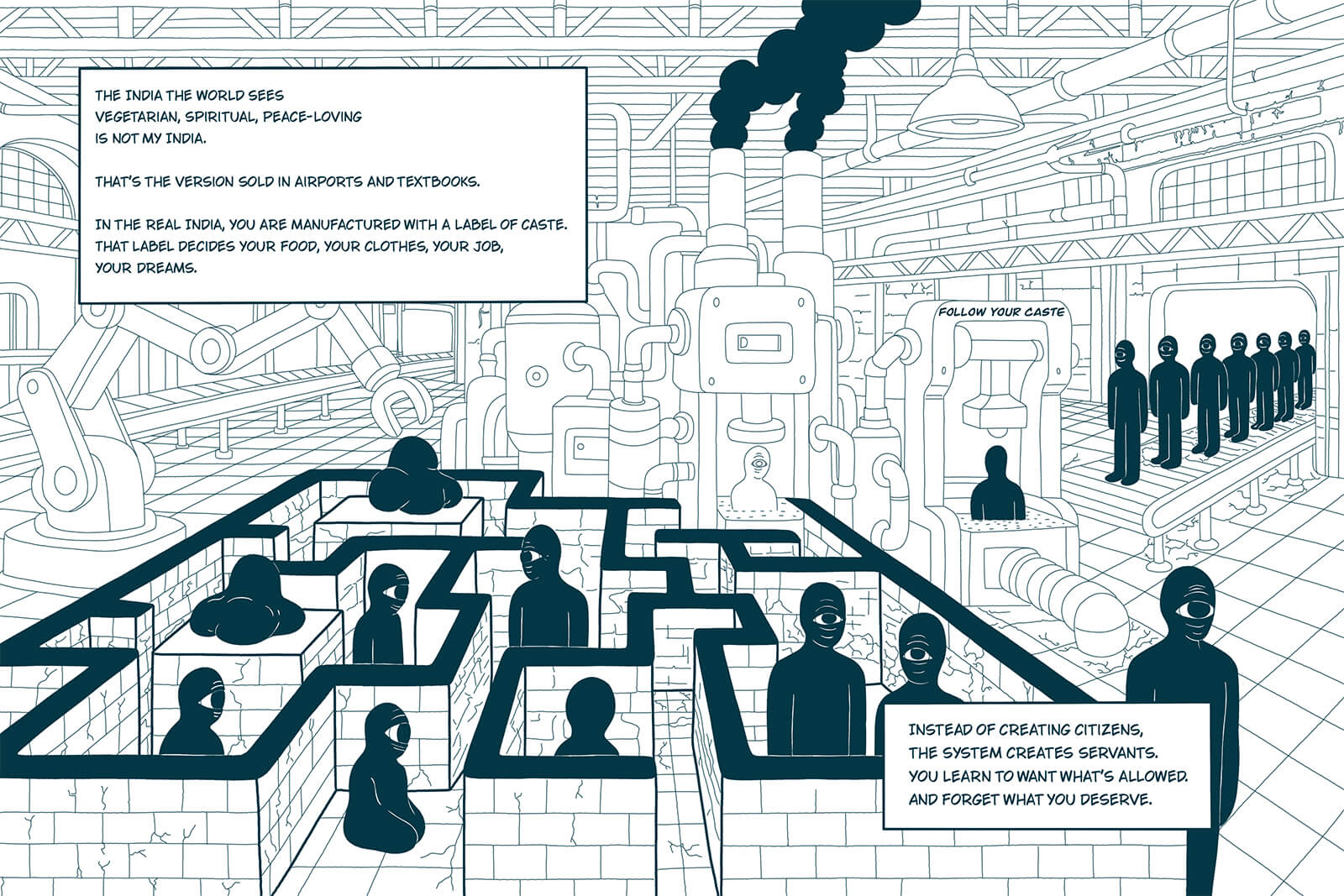
A lot of people might say that this book is not asking for people to be organised; it emphasises individuality too much. That is something I wanted to do with this book because ‘educate, agitate, organise’ is already our motto; it’s already there in our agenda, but we are losing our sense of self, our own cultures. Every culture is bound to lose, every language is bound to lose, but celebrating whatever you have is important.
There are so many people in our community who have been doing art and craft from an early age but don’t have the aspiration to go into design education or art education because they do not have the exposure to it, and they still feel vulnerable. There is this vulnerability about being ourselves, expressing ourselves or not always being strong. You can feel broken and shattered at some points, and you should be free to express that.
I think they are kept away from [the universities] because a certain class of people study there and because people will start seeking justice and representation of their own rasas and bhavas in those universities. But I want our people to have that exposure. You cannot just expect it from people. You have to build that society for people. It is slow work.
I don’t have much of a say in judicial matters, but I am an artist. I can at least make this art world a little safer for them, a little less vulnerable for them.
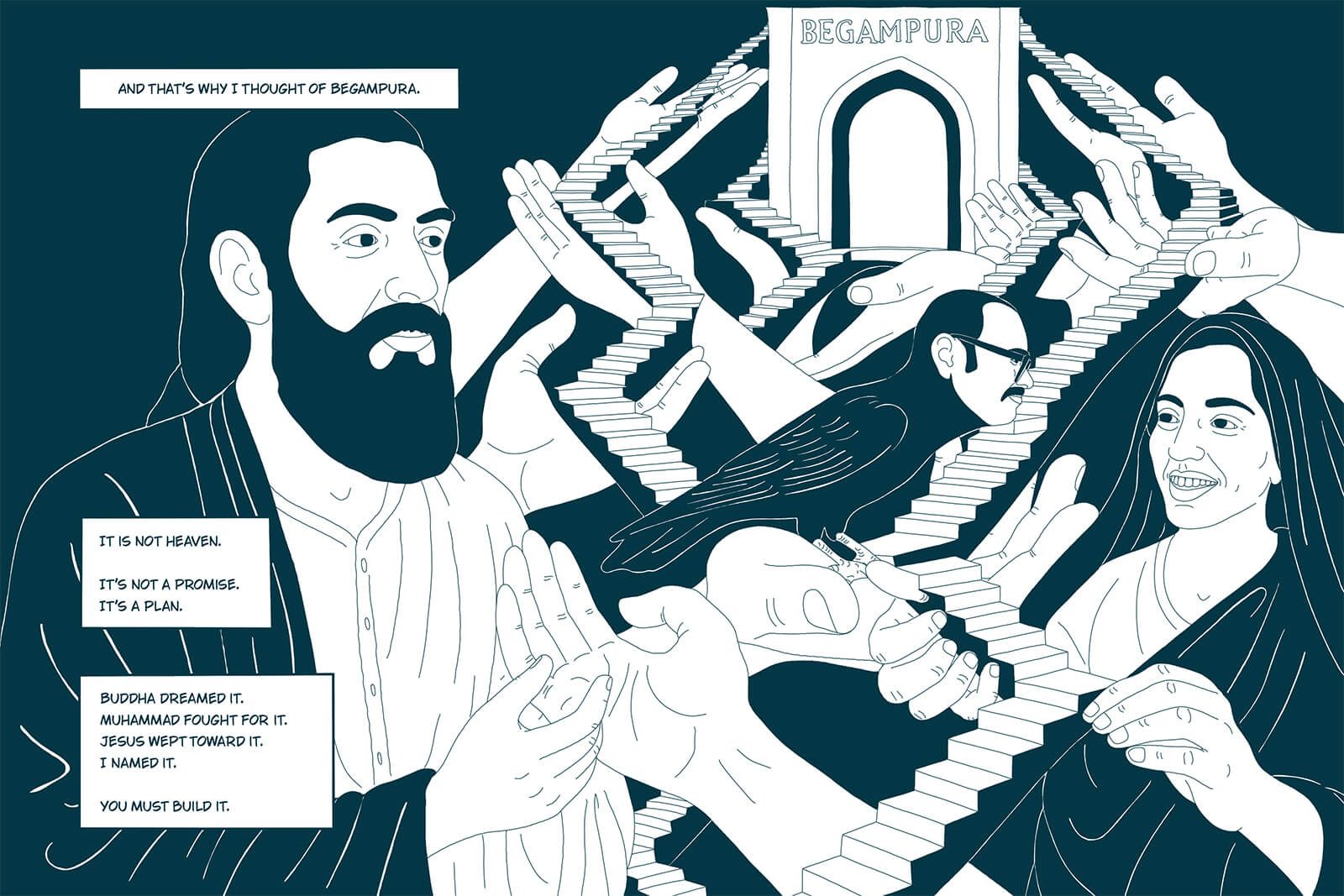
The Blue Book is an ambitious and emotional extension of Gautam’s existing work as a visual artist and anti-caste activist that brings the history of the movement to life for contemporary audiences. It is both an intimate, personal story of its characters and a powerful systemic critique and call for social change. Gautam effortlessly traverses timelines and geographies to build meaningful solidarities that destabilise the caste system and the divisive stratifications it creates. If caste is a lie given form, The Blue Book: An Anti-Caste Graphic Novel joins the ever-growing body of media and artworks that seek to give form to the humanist ideal of equality, liberty and fraternity.

by Anmol Ahuja Oct 15, 2026
How do heaps of souvenirs and relics with racist Aboriginal motifs and features become art? MCA Sydney’s winter showcase—the artist’s largest to date—beckons a possibility.
by Vandana Kalra Oct 14, 2026
With his latest exhibition as a point of departure, the modernist discusses his decades-long practice, the spontaneity of drawing and the social responsibility of artists.
by Srishti Ojha Oct 14, 2026
The first Dutch publication on the Turkish artist, the eponymous book centres on Refik Anadol: Latent City, his living data sculpture of Bruges, exhibited at BRUSK gallery.
by Srishti Ojha Oct 09, 2026
In his ongoing exhibition, the South African artist creates two post-apocalyptic futures to explore society’s relationship with textiles, patterns and technology.

make your fridays matter with a well-read weekend
Enter your details to sign in
Don’t have an account?
Sign upOr you can sign in with
a single account for all
STIR platforms
All your bookmarks will be available across all your devices.
Stay STIRred
Already have an account?
Sign inOr you can sign up with
Verification link sent to check your inbox or spam folder to complete sign up process
Tap on things that interests you.
Select the Conversation Category you would like to watch
Please enter your details and click submit.
Enter the 6-digit code sent at


Siddhesh Gautam’s first graphic novel explores dreaming equality and solidarity
by Srishti Ojha | Published on : Jul 31, 2026


 Sign in with Google
 Sign in with email
What do you think?