Art10 mins. read
Unearthing India’s buried legacy of visual storytelling
by Srishti OjhaAug 14, 2026



by Srishti OjhaPublished on : Aug 03, 2026
Often, divinity and cosmology are defined by their distance and untouchability, with these qualities making the divine aspirational and mystical. In the same vein, this intangibility is seen as what necessitates faith and inspires devotion. Indian artist Purvai Rai takes this order and flips it on its head in her solo exhibition Cartography of the Grounded Sky for Gladwell Projects at the Arts & Powerhouse Building in Jersey City, USA. The multimedia artist draws inspiration from her childhood in Punjab, India, where land is a living entity, inextricably linked to human activity and culture. She maps Sikh cosmology and philosophy onto the agricultural land and domestic courtyards that define her corner of the world with reference to the artīs of Guru Nanak Dev Ji, the founder of Sikhism. To Rai, devotion is not something reserved for religious sites or holy times; it threads through the daily labour of survival, in tending to the Earth and the intimacies of everyday life.
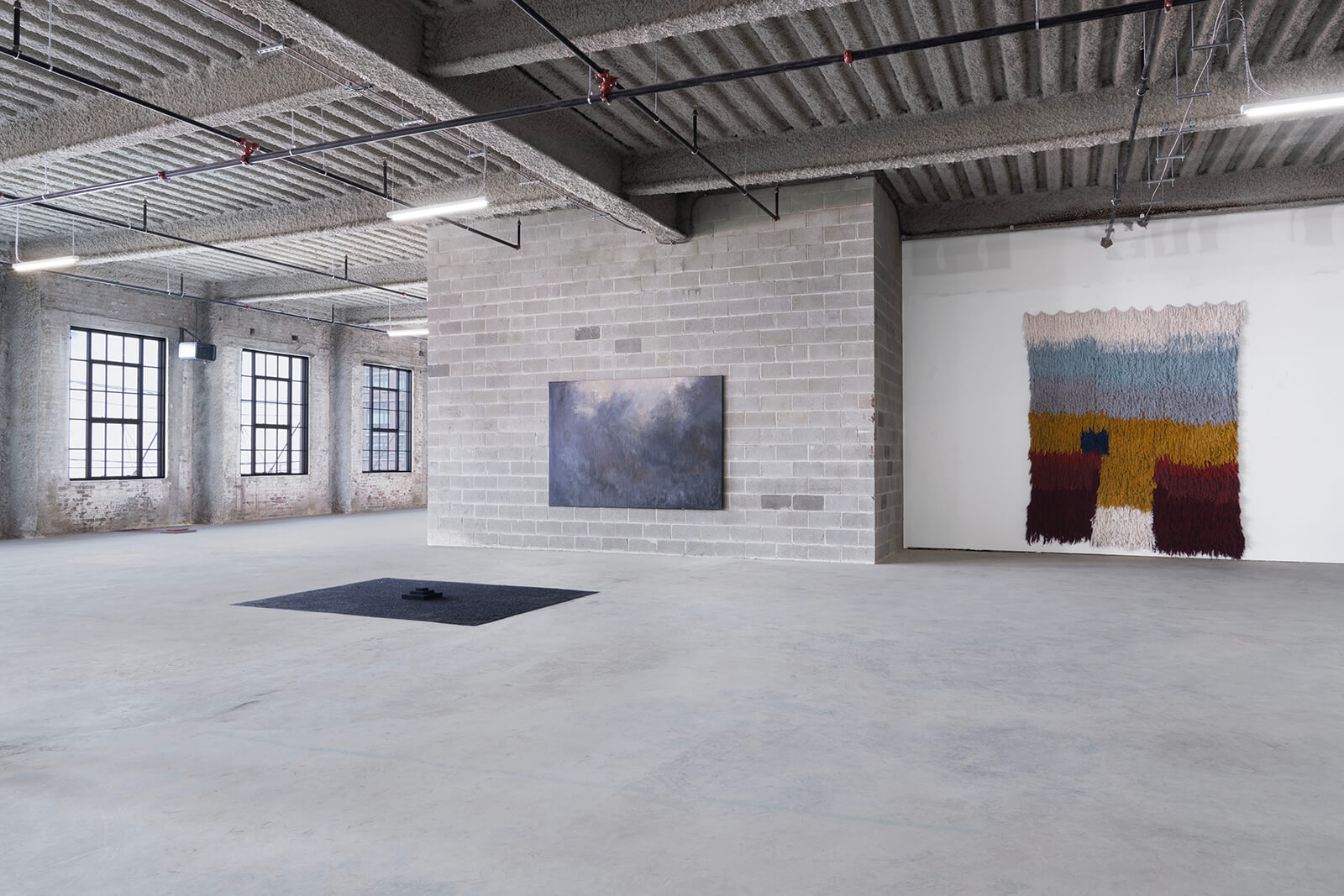
In the new multimedia works shown in this exhibition, Rai uses earthly materials such as compressed rice husks, wood and hand-woven cotton thread alongside symbolic materials more traditionally used in religious art, including oil paint, gold leaf and silver leaf, uniting them on the same plane. In a conversation with STIR, she explained the significance of these materials in her practice, saying, “Rather than bringing nature indoors, I try to reveal the relationships that already exist between architecture, agriculture, labour and the materials that surround us. Many of the materials I work with come directly from the landscape they speak about: soil, rice husk, kiln carbon, wool, textiles and fibres that carry histories of cultivation, construction and everyday use. These materials are not symbols of the landscape. They are fragments of it. They retain their own material intelligence and continue to carry the conditions from which they emerged.”
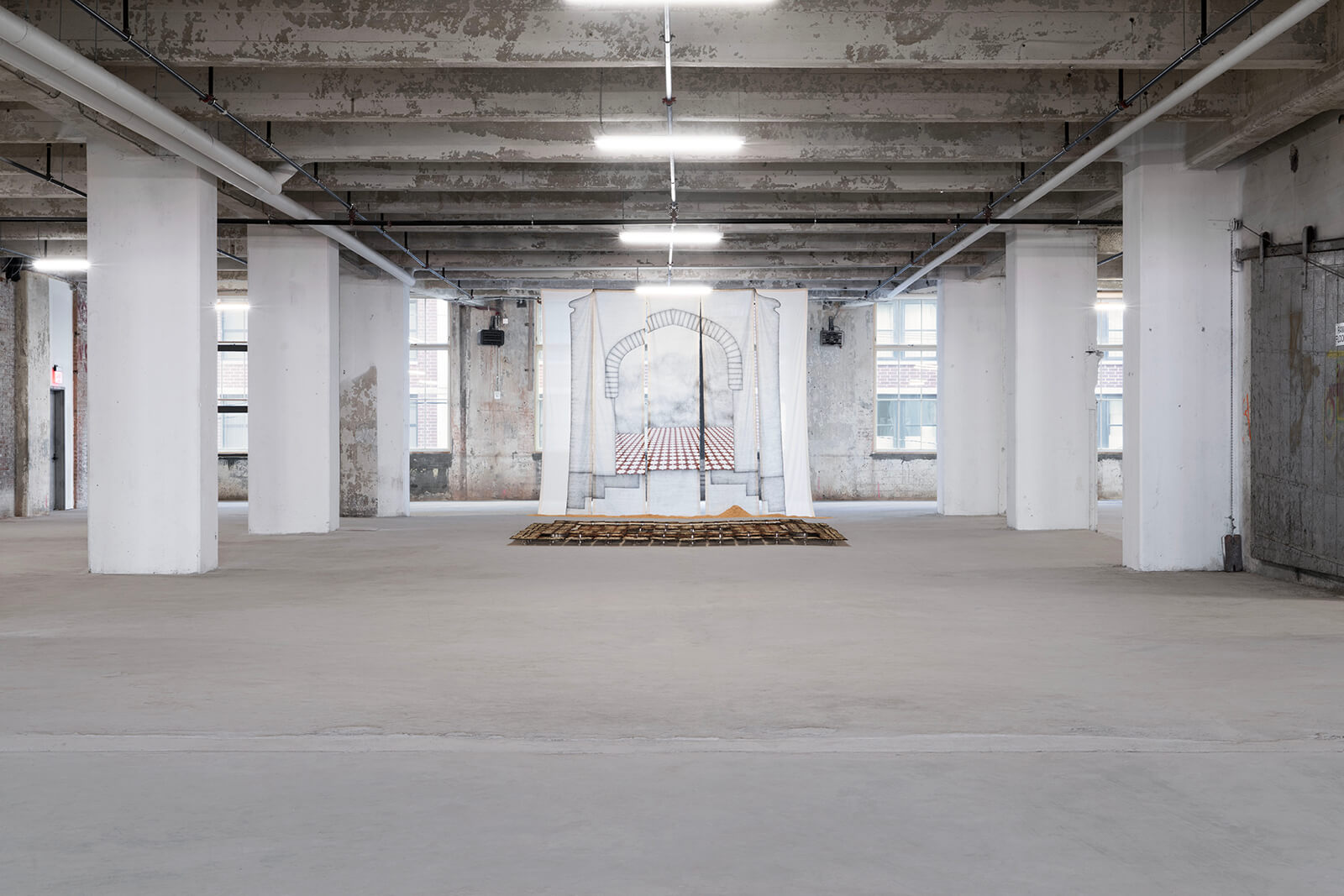
The exhibition design is imbued with the care and collective culture of Punjab. Upon entering, visitors pass through a scaled recreation of a ‘haveli gate’ (a grand main entrance to a traditional Indian manor house) rendered in fabric, separating the world outside and the world of the exhibition. Speaking about the Haveli Gate, Rai said, “Architecture has always taught me that meaning often resides in thresholds. A gate, a courtyard, a path or a doorway is never simply a functional element. They mark a transition between one way of being and another. In many of my works, the haveli gate becomes such a threshold. Historically, it separated the public from the private, but it also welcomed neighbours, sheltered travellers, stored grain and became a place where the community gathered. During the 2025 floods in Punjab, our family's haveli once again opened its doors to volunteers and displaced villagers. The gate became an active reminder that architecture is defined not by enclosure, but by use. That understanding is deeply informed by Sikh thought.”
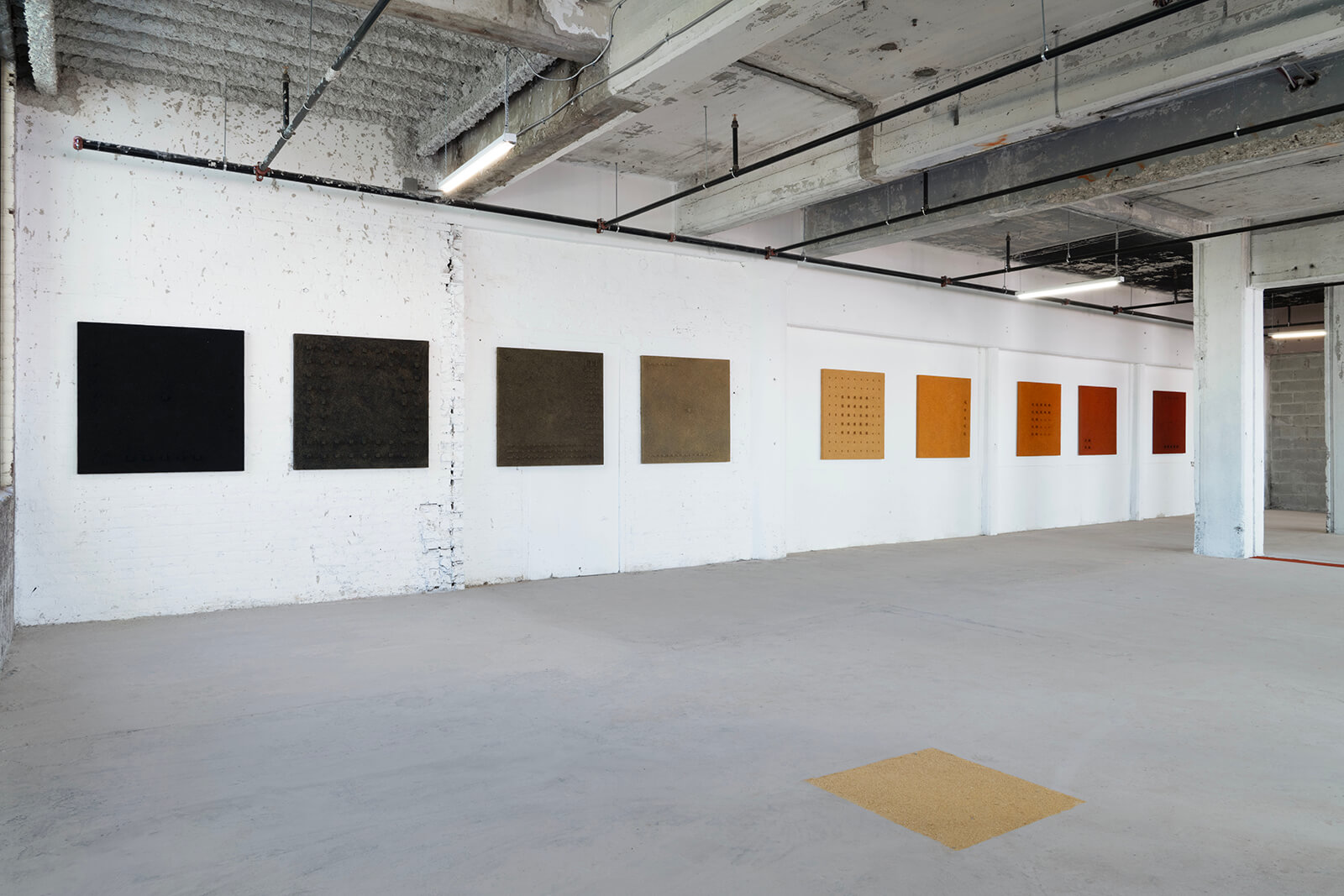
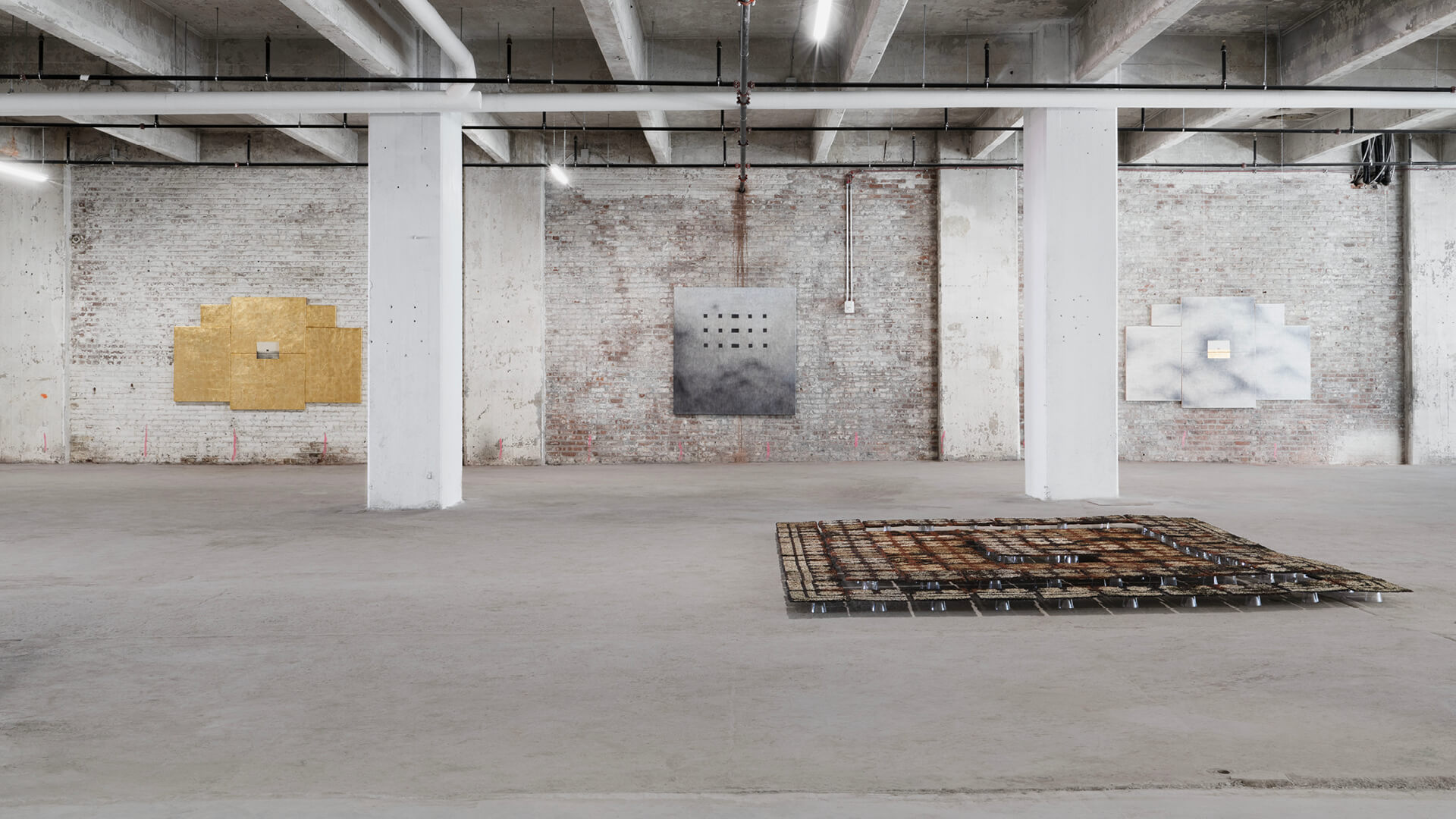
Walking further into the concrete and raw-brick space of Gladwell Projects, one sees geometric works: fragmented canvases glinting with gold, shaggy multicoloured tapestries, blocks of what looks like compressed soil and monochrome canvases that shift in a gradient from pale yellow to terracotta, to black and ash grey. The exhibition’s focus on materiality is evident in the feast of textures and techniques Rai assembles, herding organic elements into geometric forms in an echo of agricultural practices.
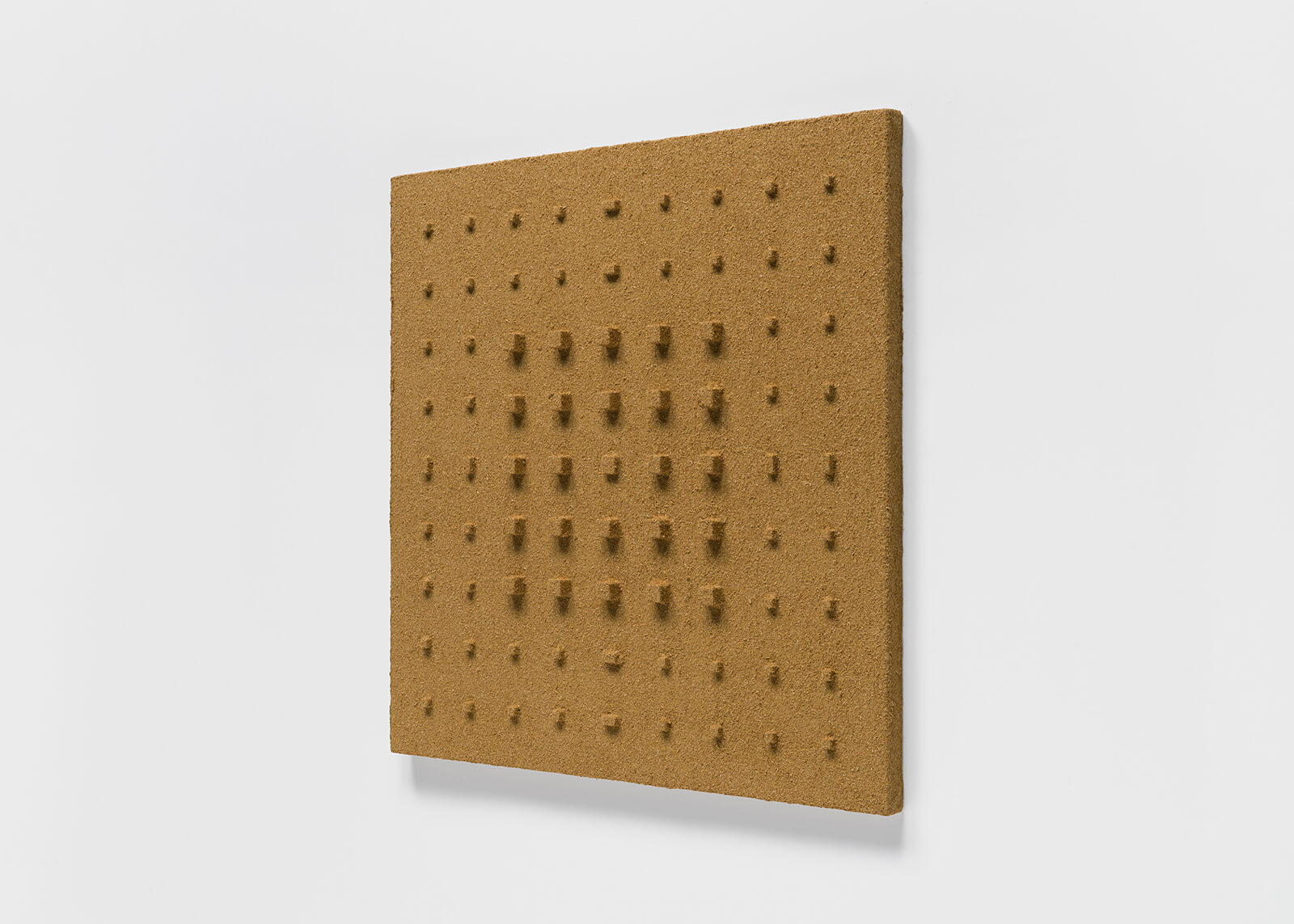
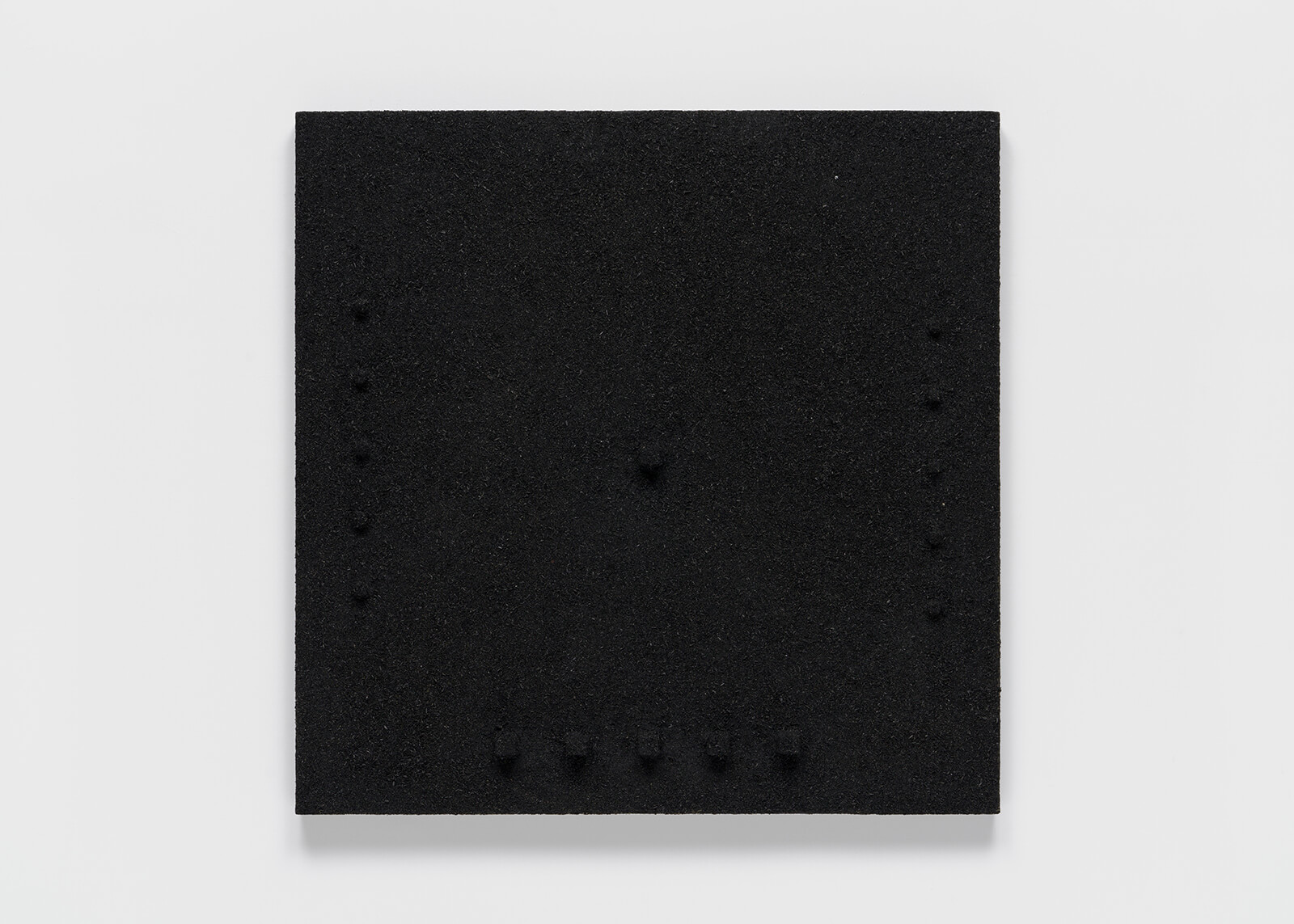
The works from her Geometry of Yield (2026) series lay out Rai’s use of elemental carbon as a leitmotif, connecting the atmosphere, soil, smoke, ash, microbes, harvested grain and the human body itself. The works, through gradients created using rice husk and pigments, trace the journey of carbon from air to being captured in land as generative matter, absorbed by plants as sustenance, cultivated and consumed by human beings and left behind as a remnant of destruction as ash and smoke—byproducts of fire. While the discussions on farmers' stubble-burning fields post-harvest are mired in controversy, Rai highlights the multiplicity of carbon as both toxic and life-giving, an element with its own lifecycle intertwined inextricably with our own.
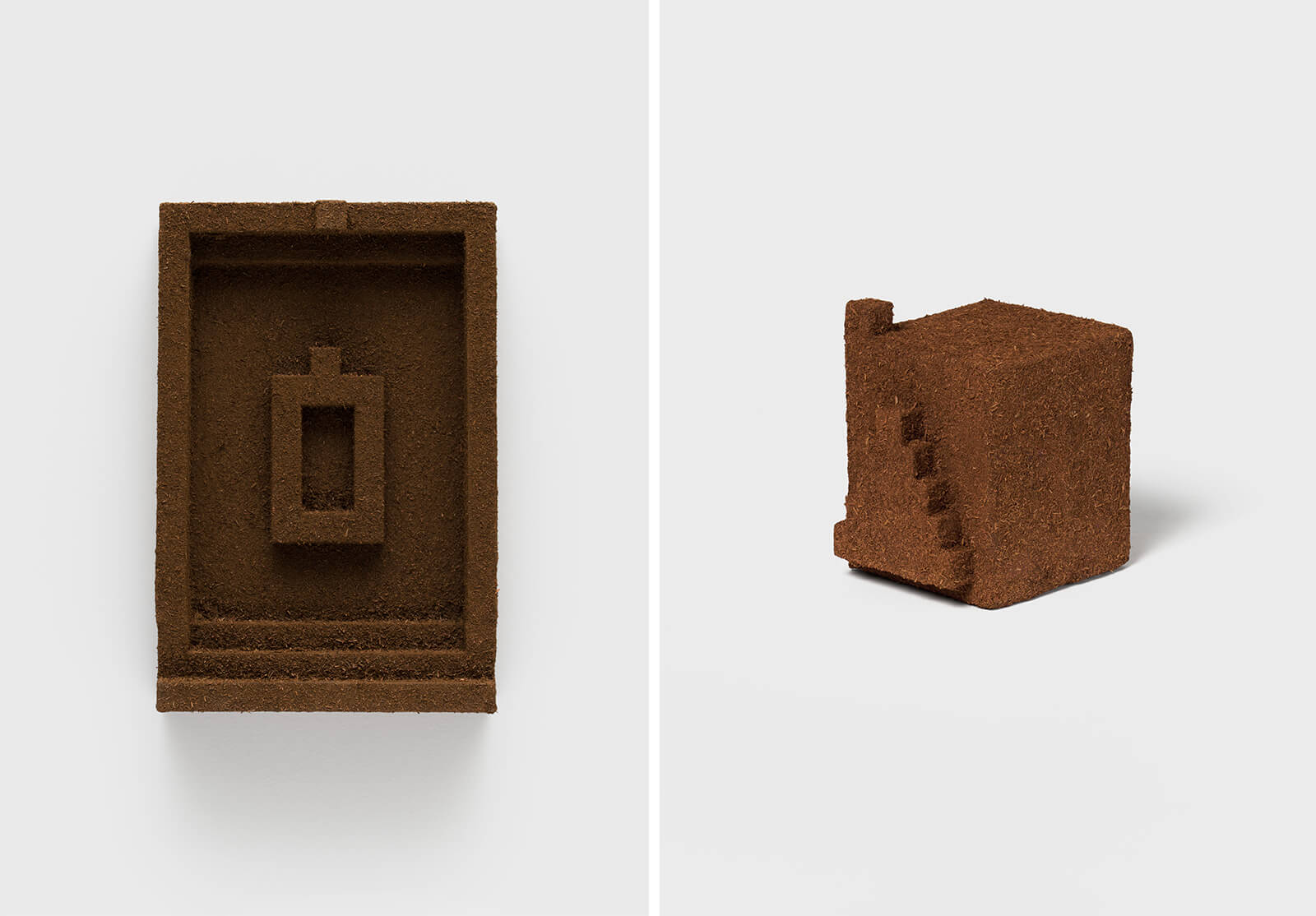
The geometry and cartography take the form of small, square shapes that project out from the otherwise plain canvases, mimicking an aerial view of an agricultural field, once again colliding the cosmological and the ephemeral with the grounded and the material. This is repeated in the sculptural works in the Soil Composition (2026) series, which features the same square projections and geometric forms that draw their shape from the topography of fields, irrigation systems (like Soil Composition 10 (2026)) and soil grids. Rai explained the centrality of cartography, saying, “I don’t think of maps as cartography in the conventional sense. Traditional maps tend to flatten landscapes into measurable surfaces: boundaries, ownership, infrastructure and coordinates. I am interested in another form of mapping, one that records relationships rather than territories. Growing up between architecture, photography and the agricultural landscape of Punjab, I learned that every field carries multiple spatial systems simultaneously. The same piece of ground is an agricultural field, a geological body, a watershed, a memory of Partition, a site of labour and someone’s home. None of these can be understood independently. My work tries to hold these overlapping geographies together.”
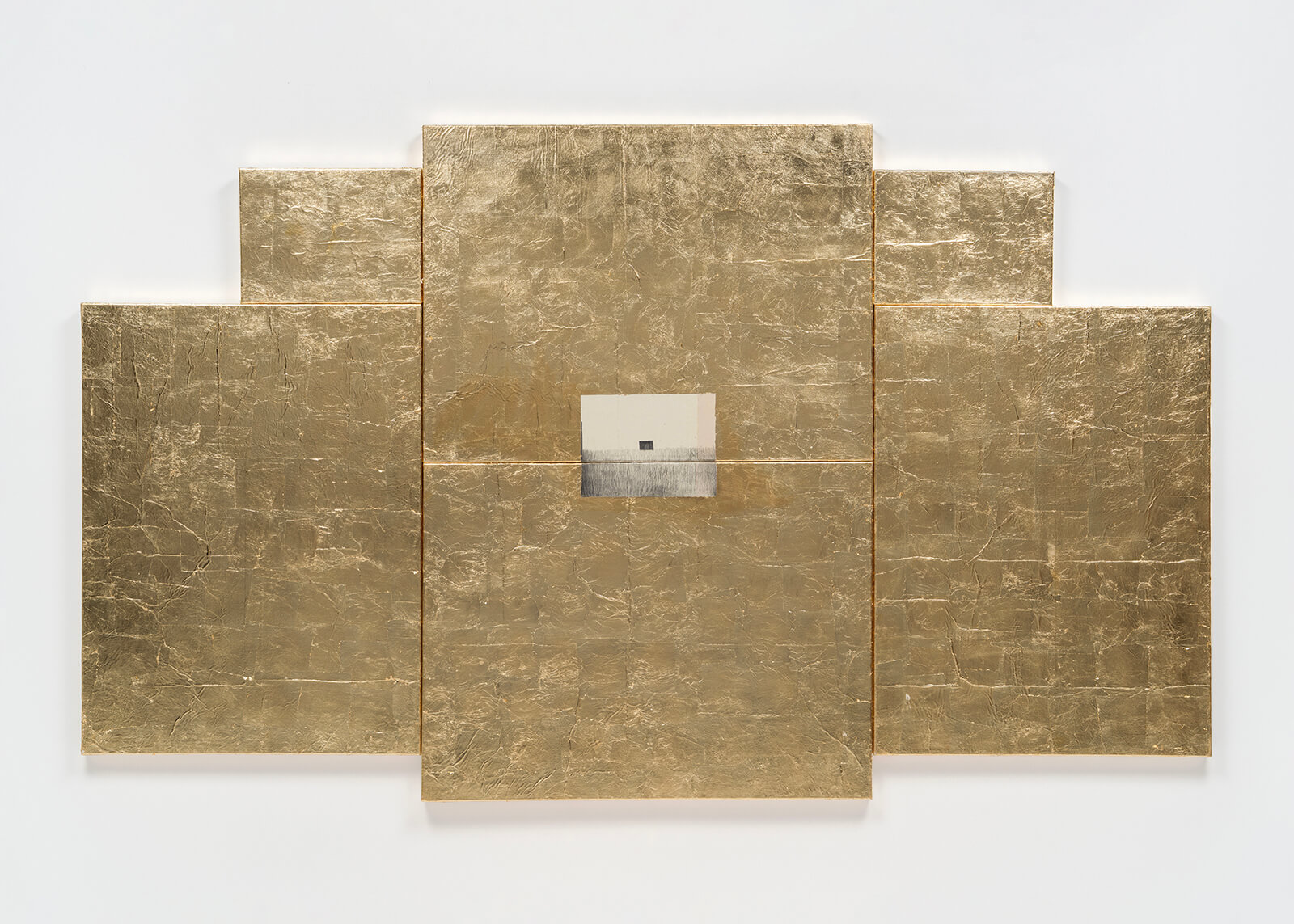
Moving to the works on canvas, one sees several fragmented canvases with backgrounds of breathy graphite and silver leaf contrasting with the brilliant sheen of gold leaf in a study of value and the transformation of the familiar into the sacred. Turning Gold 4 (2026) stacks canvases into an architectural form, centred around a small middle panel resembling a landscape, the ‘ground’ rendered in gold. Turning Gold 5 (2026) progresses and reverses this form—here the centre is rendered in graphite while the rest of the large canvases are gilded. Rai explains this seeming juxtaposition: “For me, spirituality is not something that exists outside the material world. It is encountered through our relationship with it: with the soil we cultivate, the food we share, the homes we build and the ways we move through space. I think of spirituality as a practice of attention and care.”
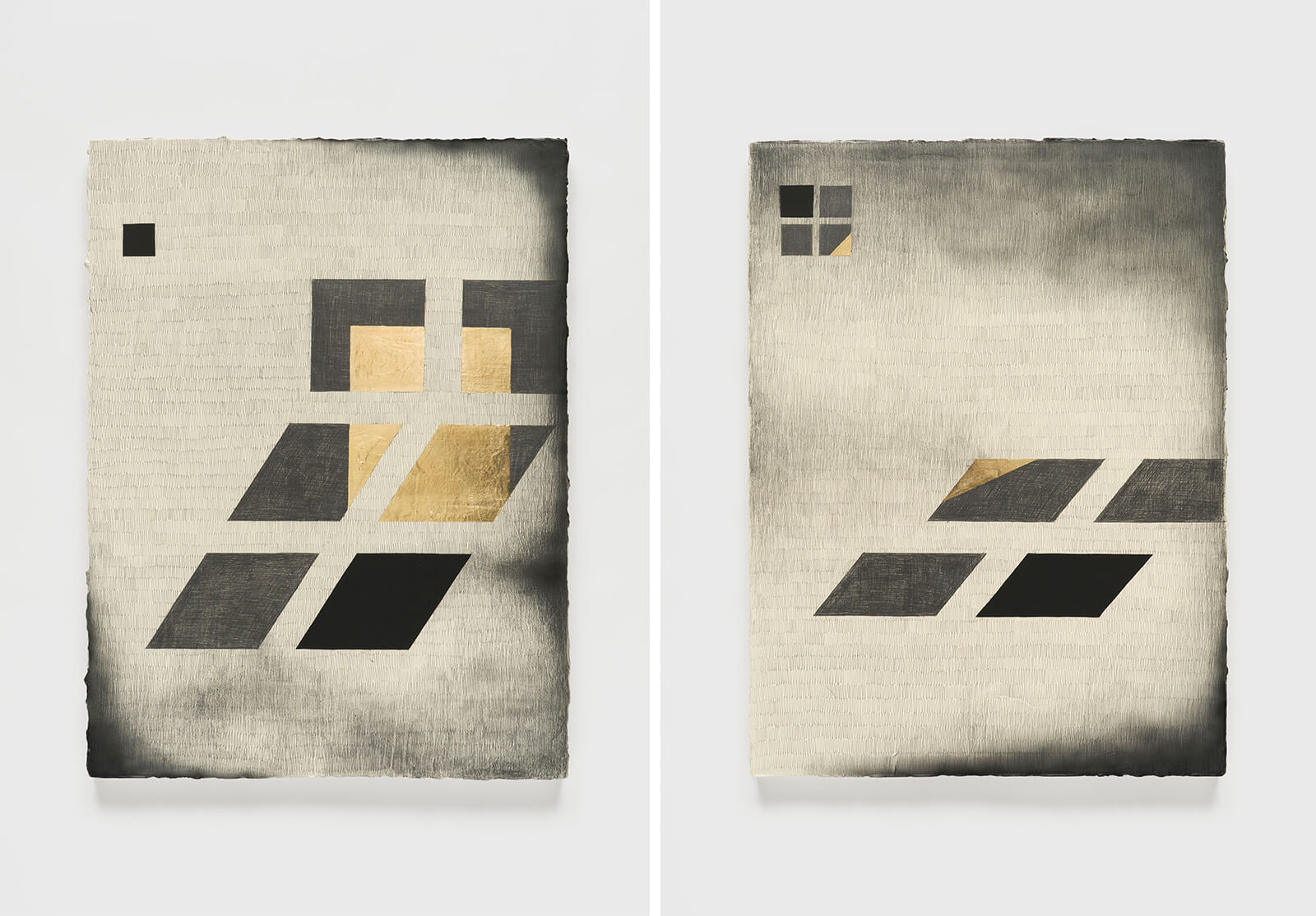
Canvases from her Untitled (2026) series use the same materials, colours, straight lines and sharp angles to gesture to Punjabi architecture and cartography in abstract shapes that echo windows, rooftops, fields, pathways and channels. These shapes are fragmented, appearing to drift apart, evoking an instability that recalls environmental crises and eroding memories and ancient practices of cultivation, harvest and coexistence. This is echoed in the uneasy atmosphere created by the airy, smoky background of graphite, creating a smog that threatens to close in on the depicted structures, balanced visually by the restrained use of gold leaf.
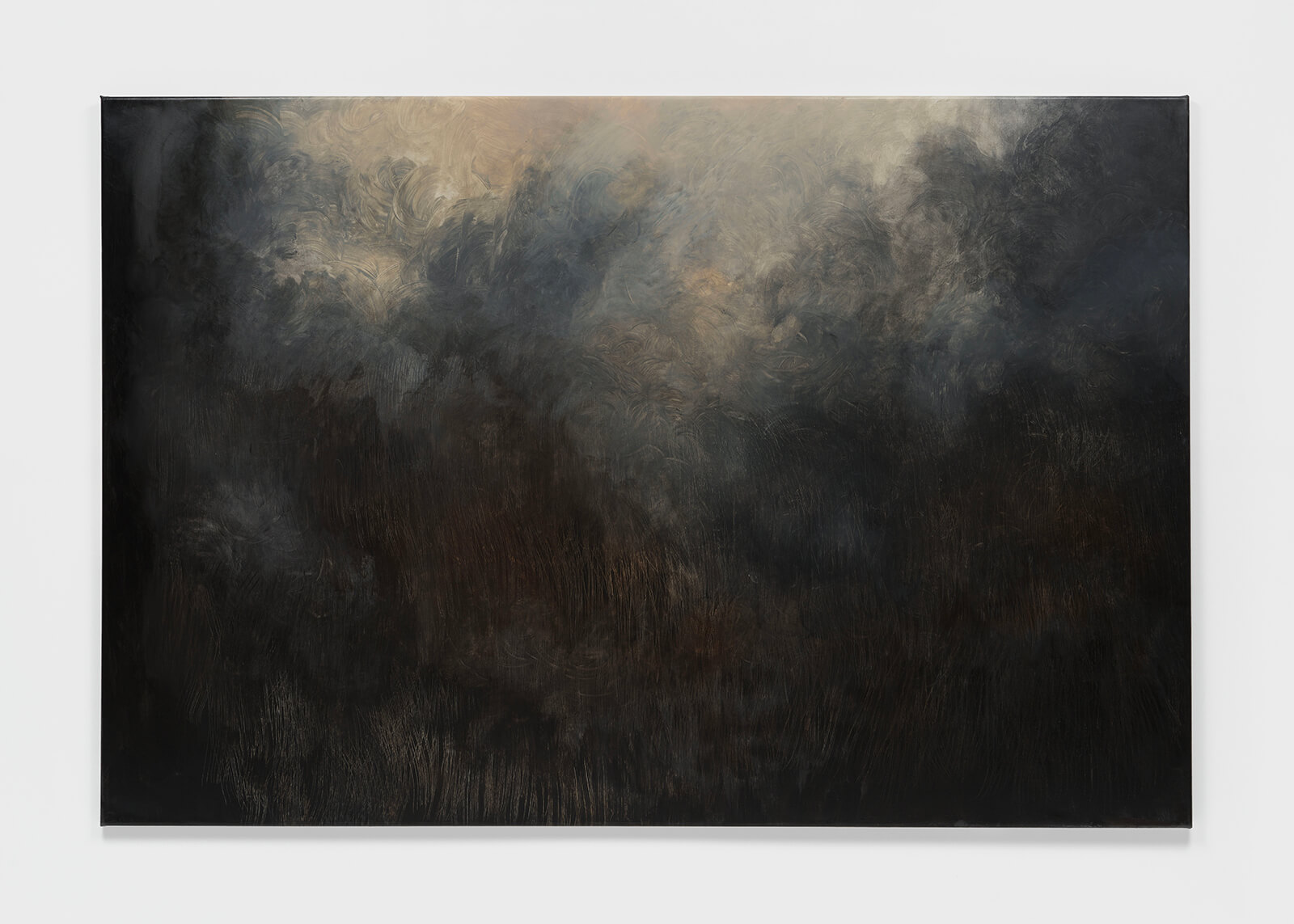
This visual motif of the contrast and encounters between dark and light, the vital and inert, can also be seen in a series of abstract, atmospheric paintings titled Until Harvest (2026). Until Harvest 1 (2026) is one of the few works in the exhibition that abandons geometry in favour of swirling currents and swells that resemble incoming storms, smoke columns and roiling emotions alike. The painting and its title both convey an anxiety and anticipation that marks the tense liminal period between planting and harvest, the potential of both abundance and destruction lingering in the air.
Until Harvest 3 (2026) returns to Rai’s familiar geometric language, showing grids of lines and dark, two-dimensional squares on the same graphite backdrop. She extends these forms and her exploration of the natural forces that shape agriculture (and vice versa) with her luminous Raindrop (2026) series. On cream-coloured rice paper, wooden blocks painted in black and grey and covered with silver leaf are centred and project outward. The background itself is divided into a faint grid that echoes the tile of domestic courtyards, the segregation of fields, the order of maps and the repeating patterns of both cloth weaving and sacred rituals. Rai explains the rhythmic, repetitive patterns in her works, saying, “Agriculture unfolds through seasons rather than exhibitions. The works often reference cycles of sowing, irrigation, harvest and flooding. These rhythms allow visitors to experience the landscape as something continuously becoming rather than as a static image.”
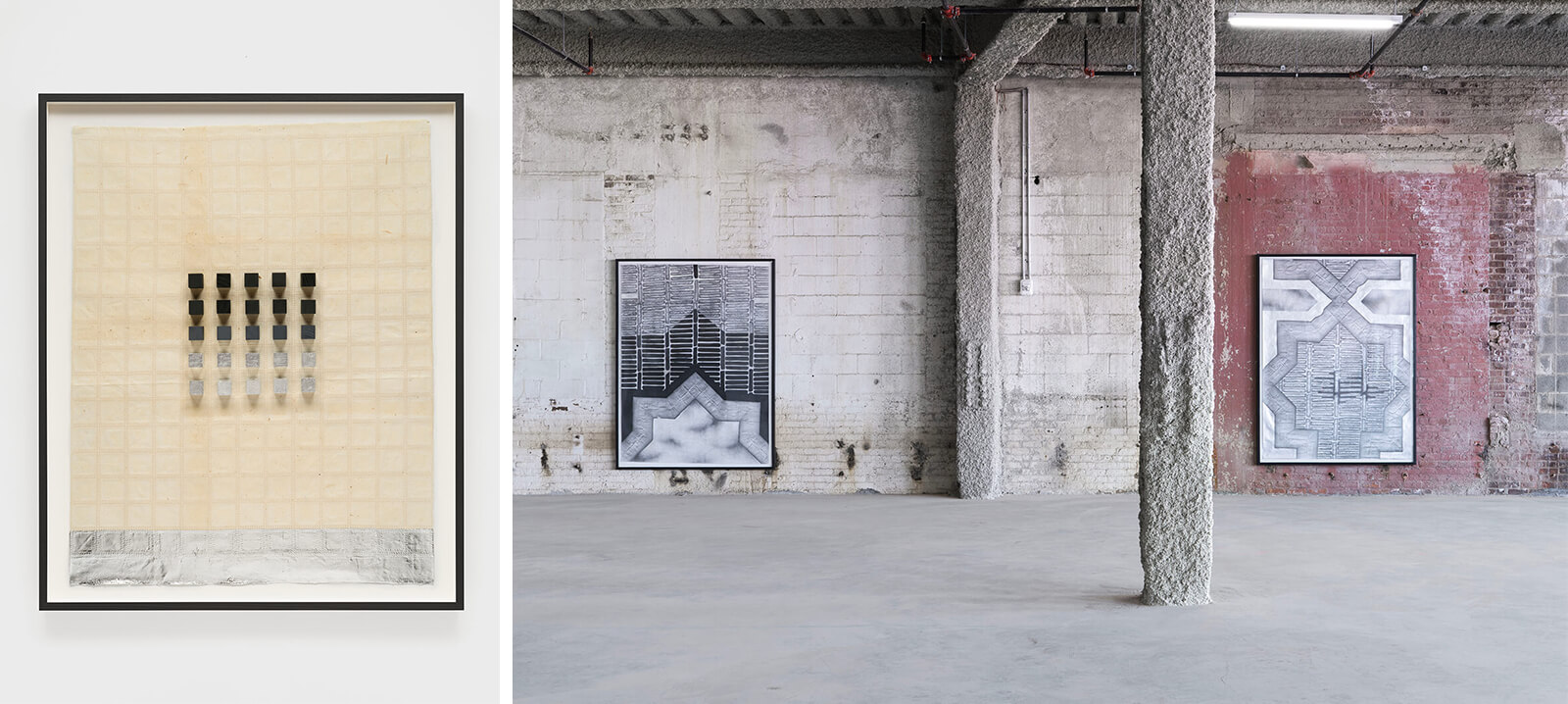
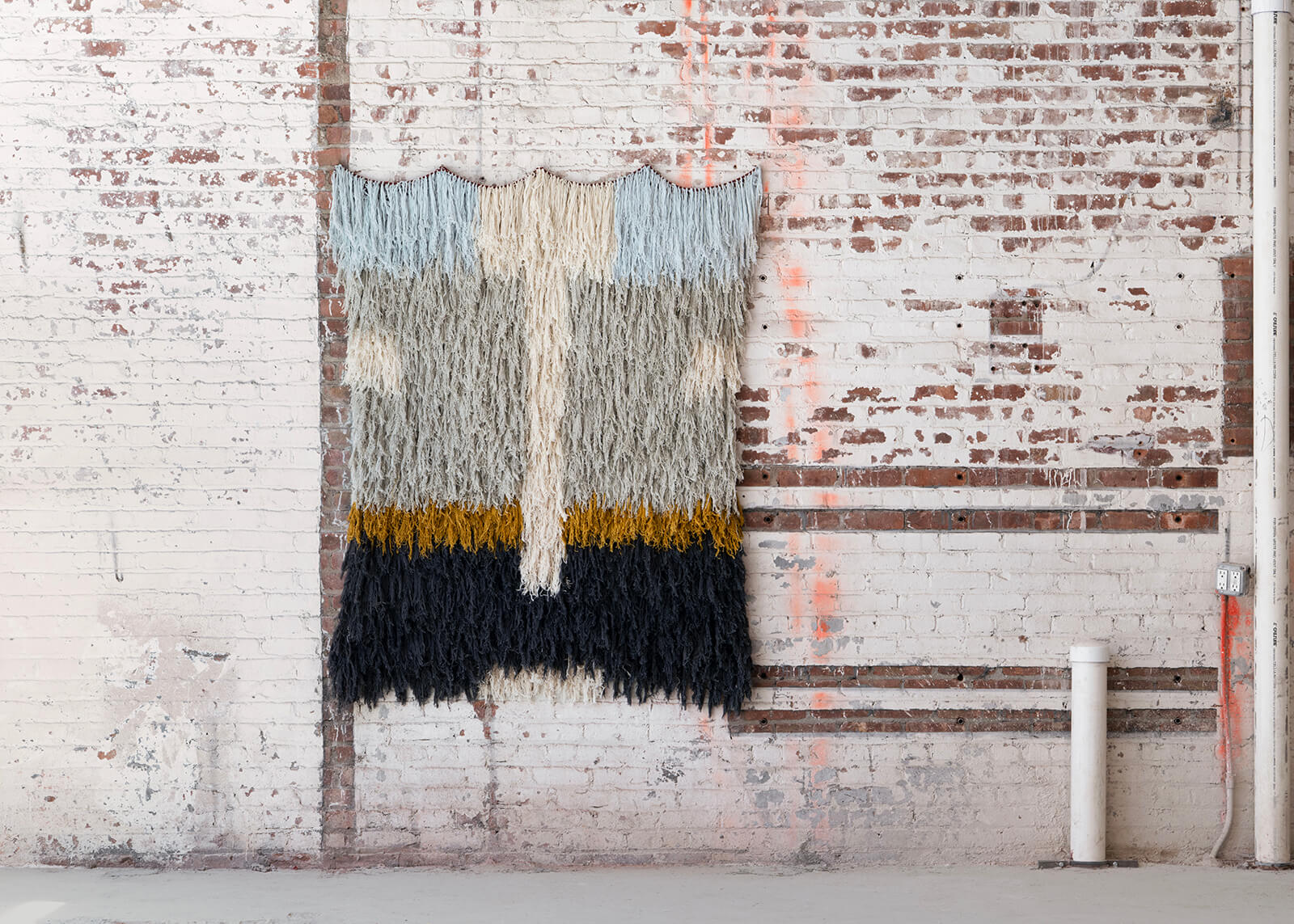
The silver leaf and graphite continue to appear in another set of large, portrait canvases from the series What I see when it rains (2026). Star-like shapes are outlined with square tiles and hold a system of lattices within. The cool-toned works rendered in silver, watery graphite and charcoal black resemble temple tiles, art found at the thresholds of homes and the interlocking, overlapping logic of memory, climate and labour. Finally, fabric works from the series One Harvest Season (2026) highlight the Delhi-based artist’s collaboration with the women artisans of Nawannpind in Punjab. Cotton threads woven and tied by Punjabi artisans Rohini Kaur, Rajni Bala, Rajwant Kaur, Geeta Sing and Manpreet Kaur are knotted onto crocheted cotton ropes forming hanging tapestries. If the field is where work becomes food, the domestic sphere of the house and courtyard is where food transforms into meals, becoming part of our bodies and culture. The works incorporate labour through the many hand-tied and knotted fibres which record touch, duration and generational knowledge.
Purvai Rai’s work insists on the coterminous nature of the sacred and material, cosmological and earthly and the rituals of everyday and the rituals of devotion. She stages a range of material, tactile and atmospheric encounters with the settings and logic of agricultural fields, sky, land, havelis and the labour that creates, maintains and transforms them. With Cartography of the Grounded Sky, Rai maps not only the physical and functional terrain and topography of the agricultural communities of Punjab, but also the emotion, labour, culture, faith and spirituality each of these settings is imbued with. To Rai, the divine, like carbon, is everywhere.
'Cartography of the Grounded Sky' will be on view till August 21, 2026, at Gladwell Projects in New Jersey, USA.

by Srishti Ojha Oct 21, 2026
Increasingly, artists, filmmakers and activists are turning to VR to create more personal, tangible accounts of the climate emergency and its impact on vulnerable communities.
by Mirra Lynn Oct 20, 2026
The Indian artist paints the old wadas of central Pune, capturing the traces of everyday life that cling to these structures, battered by time but unbowed.
by Anmol Ahuja Oct 15, 2026
How do heaps of souvenirs and relics with racist Aboriginal motifs and features become art? MCA Sydney’s winter showcase—the artist’s largest to date—beckons a possibility.
by Vandana Kalra Oct 14, 2026
With his latest exhibition as a point of departure, the modernist discusses his decades-long practice, the spontaneity of drawing and the social responsibility of artists.

make your fridays matter with a well-read weekend
Enter your details to sign in
Don’t have an account?
Sign upOr you can sign in with
a single account for all
STIR platforms
All your bookmarks will be available across all your devices.
Stay STIRred
Already have an account?
Sign inOr you can sign up with
Verification link sent to check your inbox or spam folder to complete sign up process
Tap on things that interests you.
Select the Conversation Category you would like to watch
Please enter your details and click submit.
Enter the 6-digit code sent at


Purvai Rai’s cartography of care, shared ecology, culture and divinity
by Srishti Ojha | Published on : Aug 03, 2026


 Sign in with Google
 Sign in with email
What do you think?