Architecture12 mins. read
Building future for a billion voices: the best of Indian architecture in 2022
by Jerry ElengicalDec 30, 2022



by Pranjal MaheshwariPublished on : Apr 16, 2026
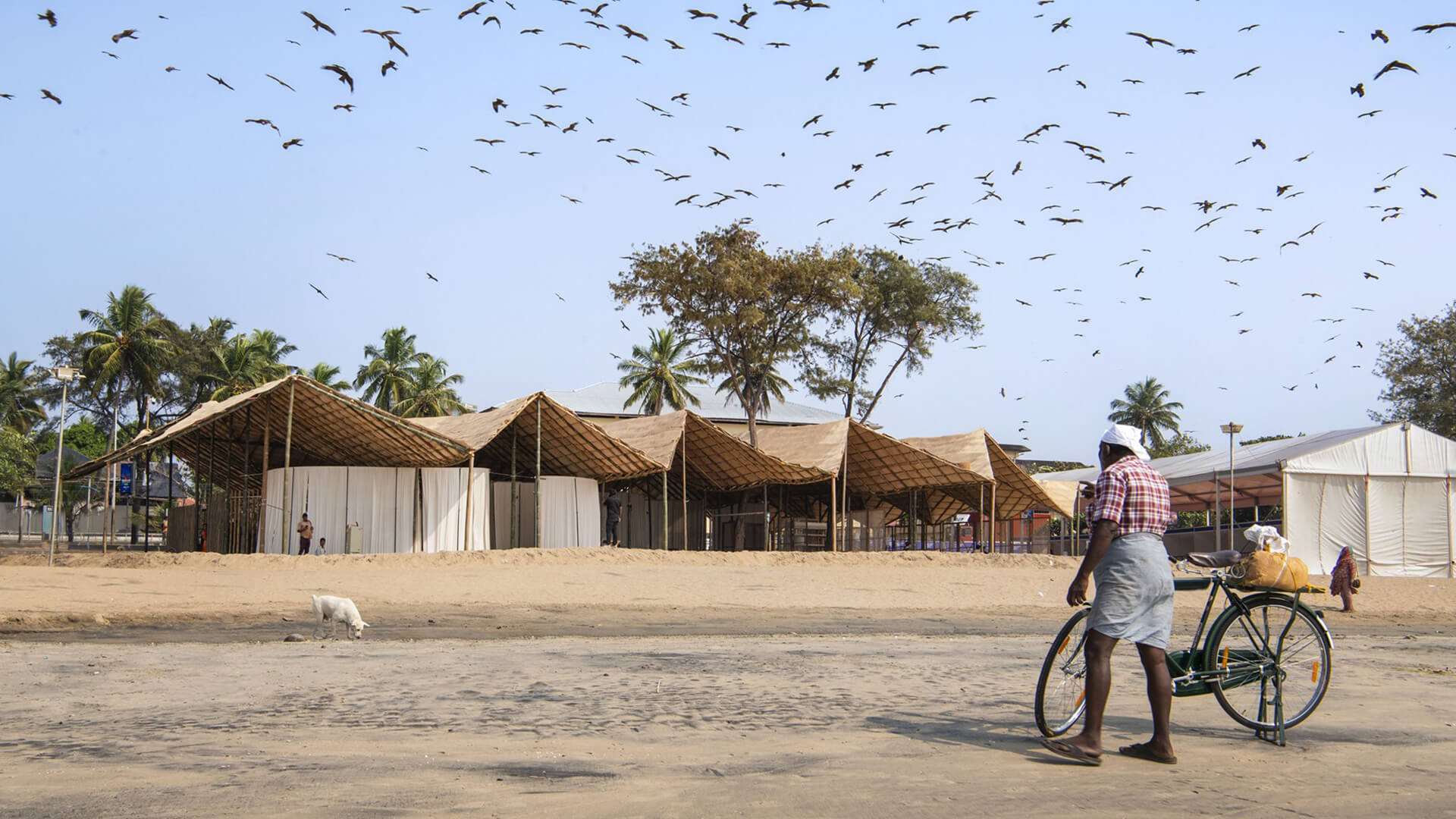
Every year, the city of Kozhikode in Kerala hosts one of Asia’s largest literature festivals along the coast of the Arabian Sea, bringing together around half a million people across a span of four days. As a celebration of the arts and culture of the region and beyond, the annual Kerala Literature Festival (KLF) features a series of programmes, including talks, panel discussions, film screenings, performances and other interactive activities to engage participants from diverse age groups, interests and languages. The defining theme each year is the ‘guest nation’ that brings with it a curated set of authors, poets and literary pioneers to foster a cross-cultural exchange. For its ninth edition in 2026, the festival invited Germany, revealing an opportunity to reinterpret and narrate the country’s deep-rooted cultural links with the state of Kerala, particularly the contributions of the Basel Mission and prominent linguist Hermann Gundert in promoting the local language and culture.
During their time in Kerala, Basel missionaries—distinguished for their empathetic approach to regional cultures and knowledge systems—undertook extensive efforts to amplify existing vernacular knowledge by establishing centres for modern education in regional languages, printing presses and industrial infrastructure for vocations such as the manufacturing of tiles and textiles. Distinctly, Gundert alone made foundational contributions to local literature, including the first Malayalam-to-English dictionary, the first formal compilation of Malayalam grammar and even the first Malayalam periodicals. In what hardly seems like a coincidence, Kozhikode stands today as India’s first UNESCO City of Literature, harbouring over 500 libraries and more than 70 publishing houses. This provincial yet significantly situated Indo-German cultural relationship formed the backdrop for the German Pavilion at the KLF 2026, designed by Bangalore-based architecture firm, The Purple Ink Studio and commissioned by the Goethe Institute.
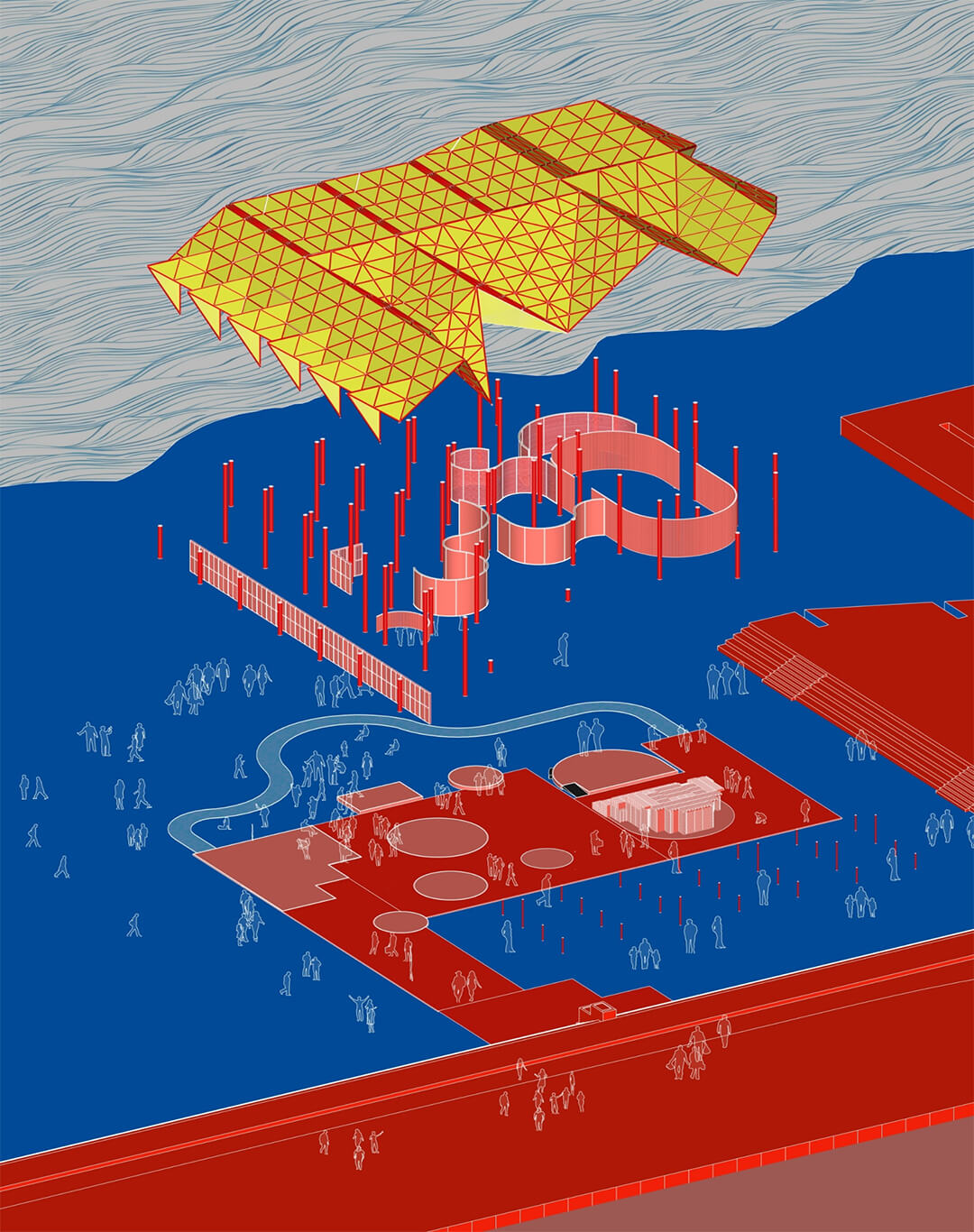
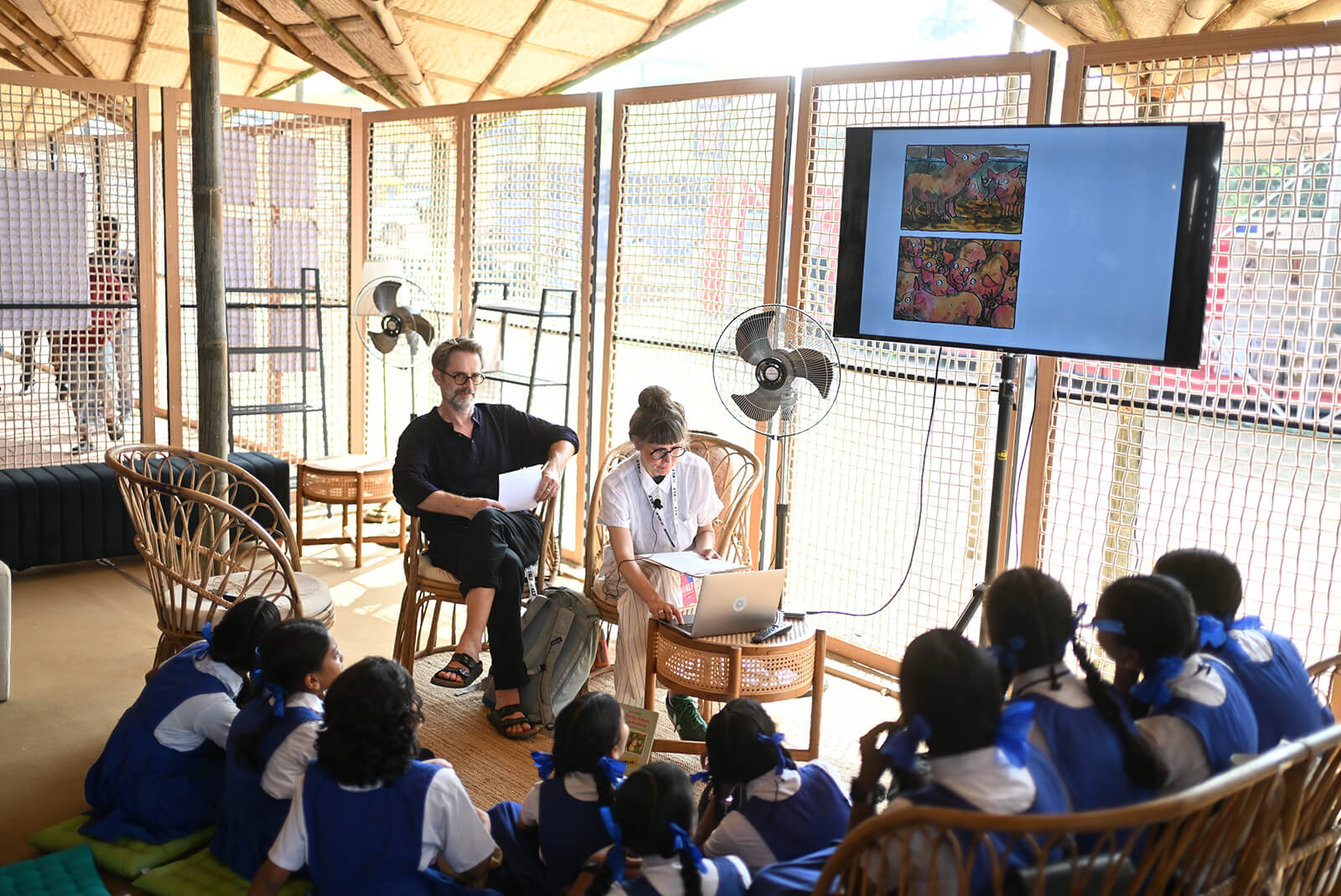
Translating memory into form, the architects imagined the pavilion as a temporary beach house produced by blending the two cultures. The spatial program was derived from traditional German residential and socio-cultural typologies, sheltered in local structural systems and construction techniques from Kerala. The spaces within included a living-cum-reading area; a listening room for Vinyl-collections from the record and music discovery store On the Jungle Floor; a Berlin kitchen—a spatial typology from old German apartments for informal gathering and eating—curated by food stylist Sanskriti Bist; a screen printing station for hosting Atelier Prati’s printmaking studio; administrative areas and spaces for casual interactions such as a courtyard, salon, lounge and a 'Biergarten' (beer garden) by the sea.
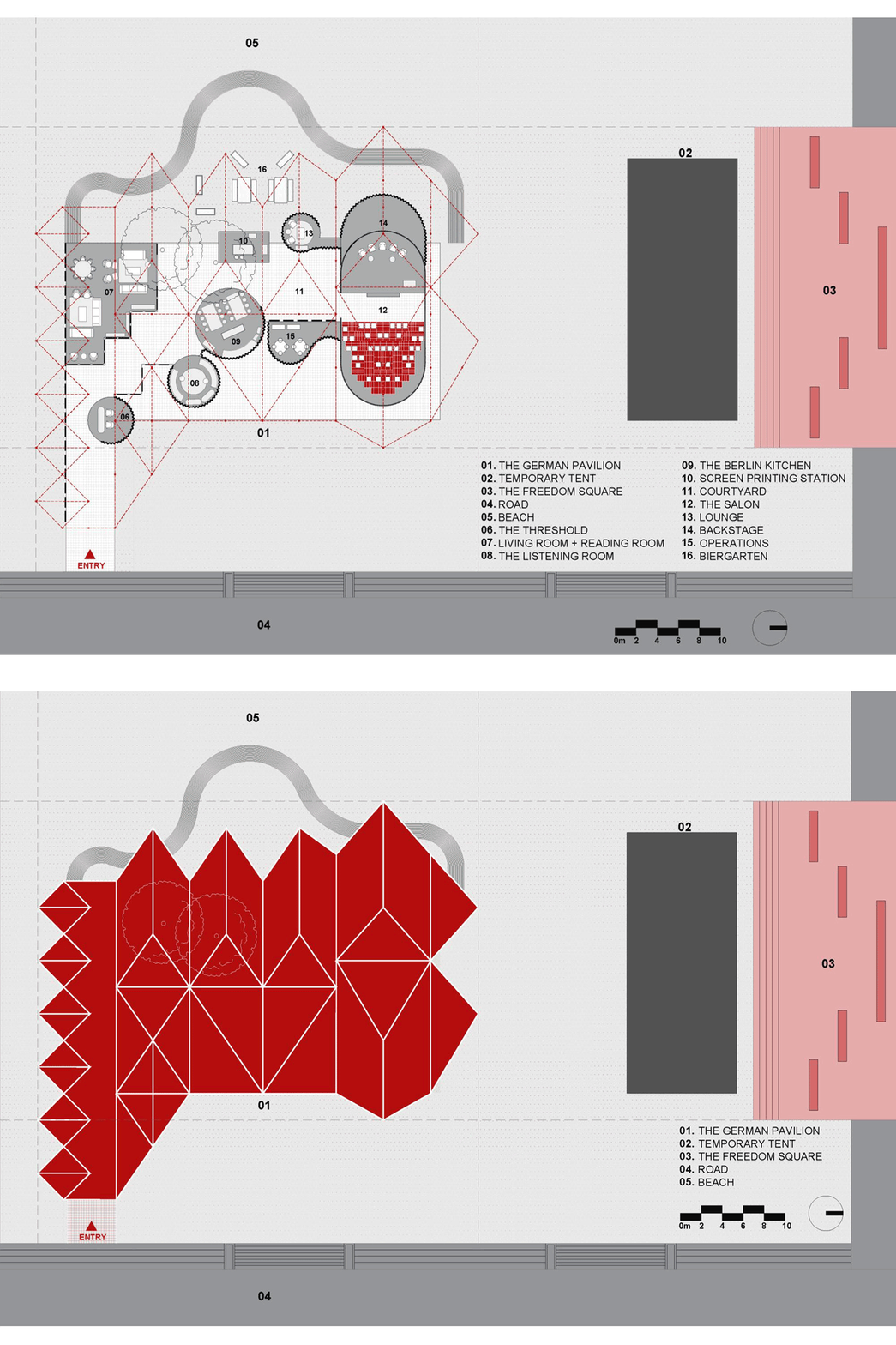
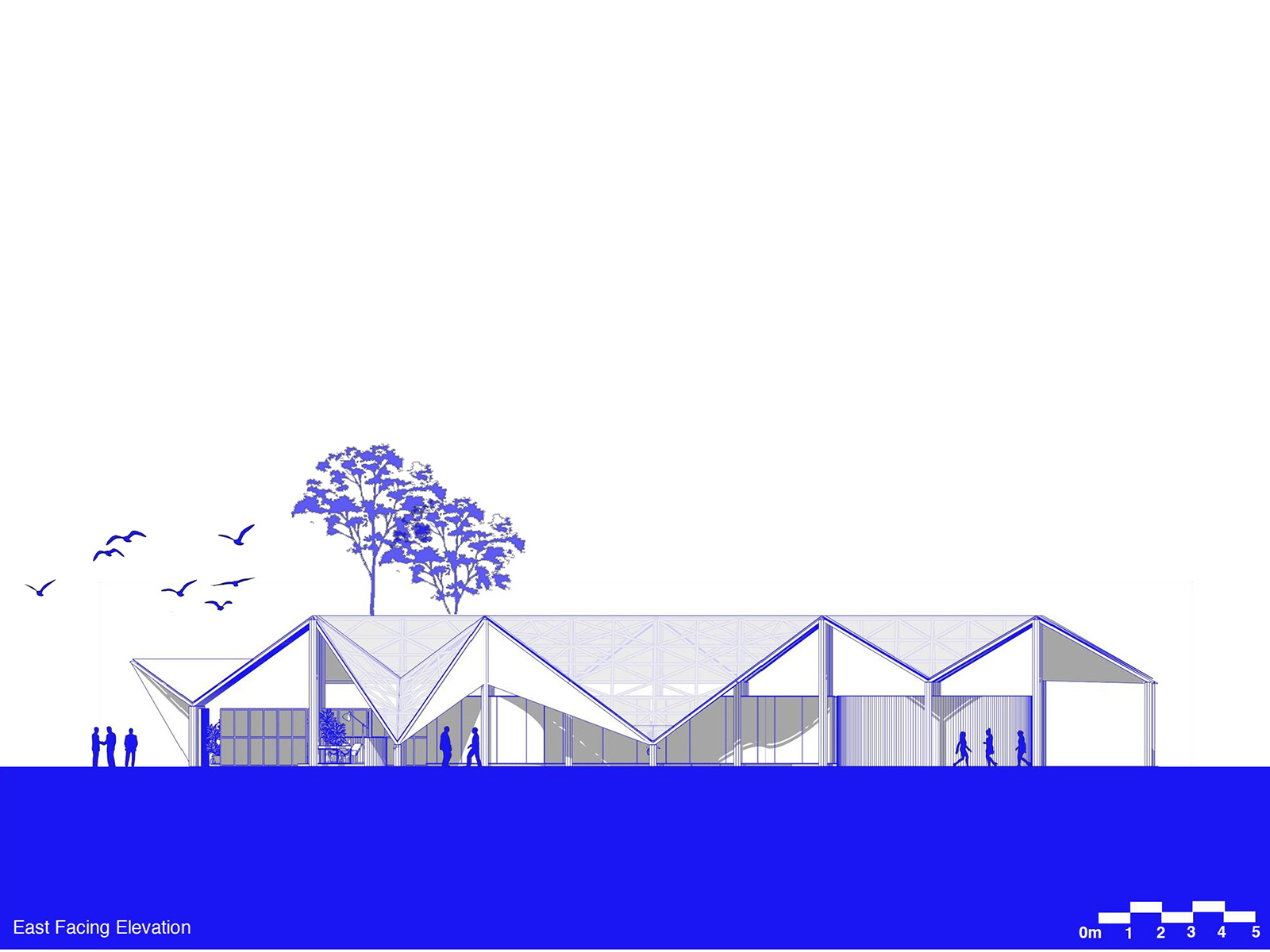
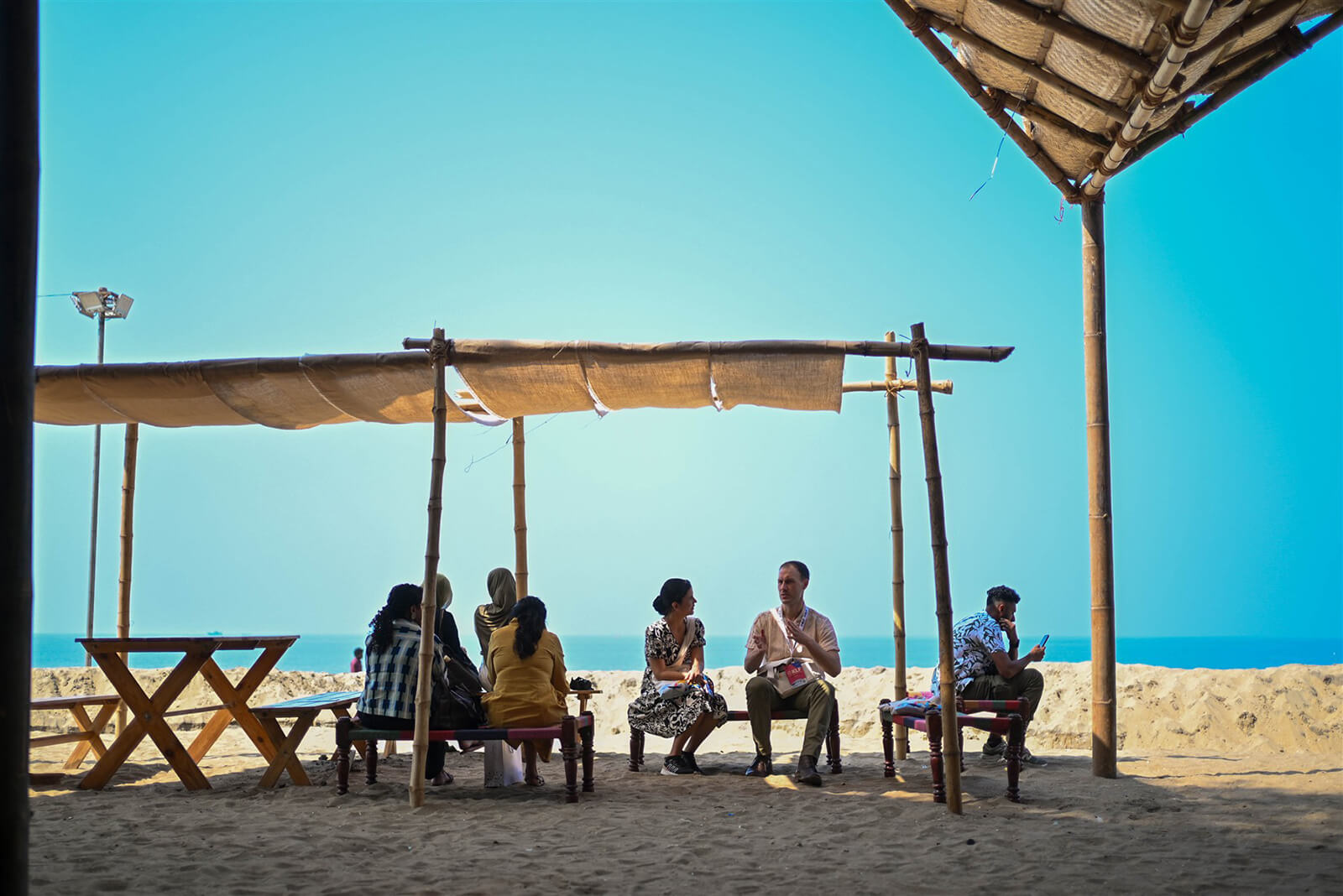
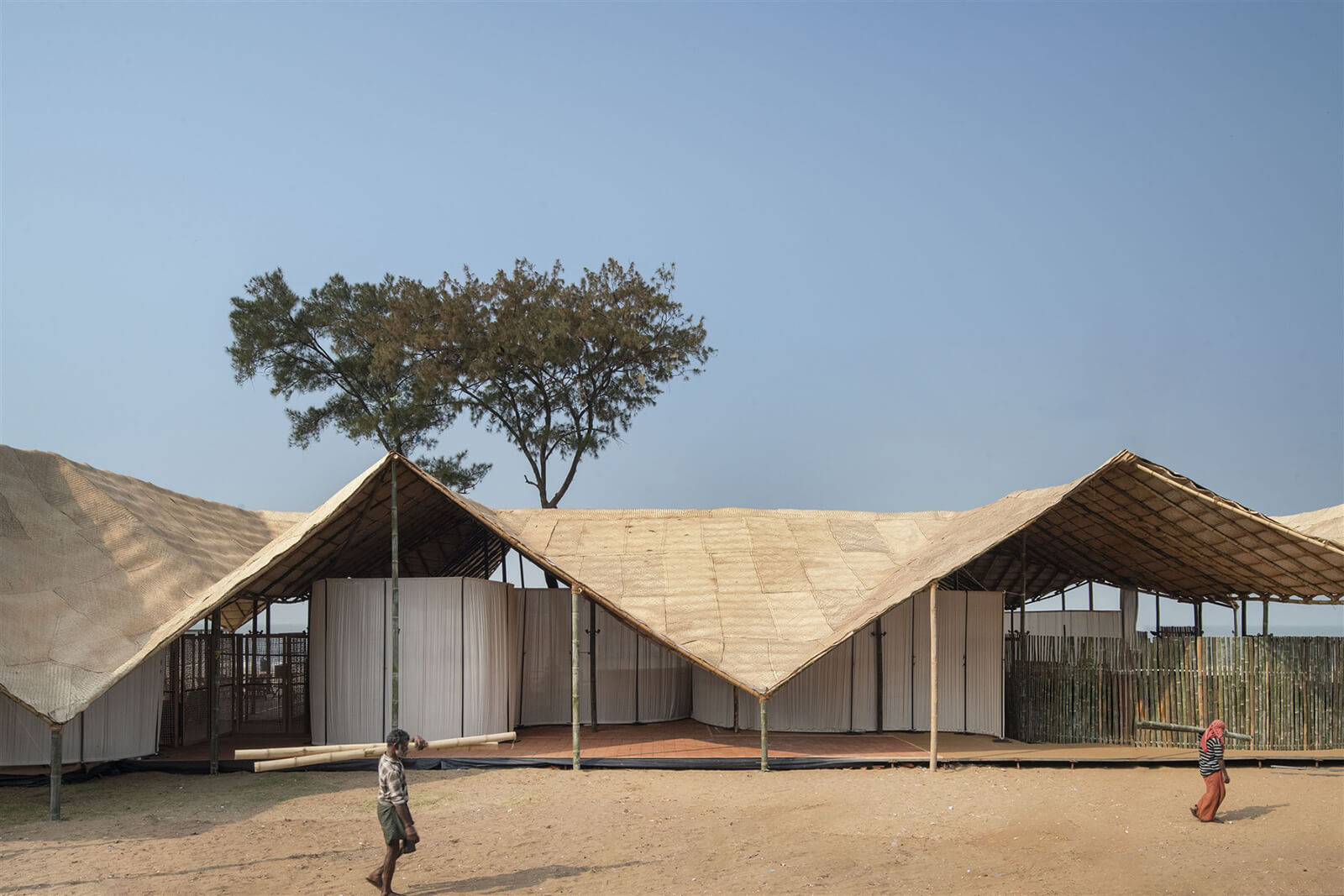
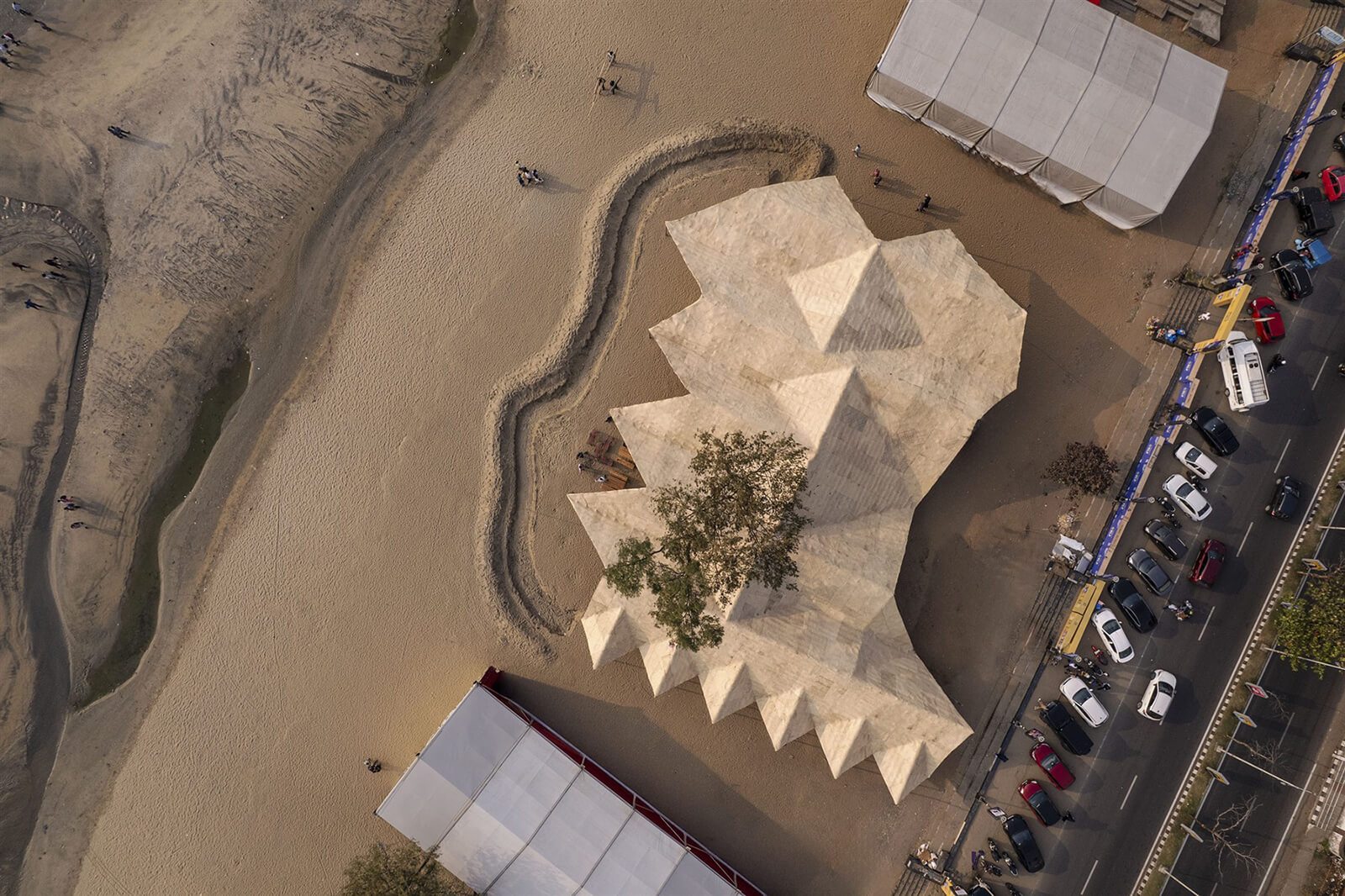
Structurally, the pavilion’s design embraced its ephemerality and the sensitivity of its location. Supported on a bamboo frame embedded in the sand bed, the roof form appeared to replicate the waves of the Arabian Sea, its perennial chaos simplified into triangular wave patterns of woven paaya (dried grass mats) sheets. The diverse programming in the interiors was modulated through lattice screens made of cotton ropes using the ‘plain weave’ technique and drapes made from the local Calico cloth. The terracotta flooring inside the pavilion gradually graded into the sand bed as one moved towards the sea, before ultimately terminating against a small dike created on the beach to prevent the incoming seawater from flooding the pavilion area.
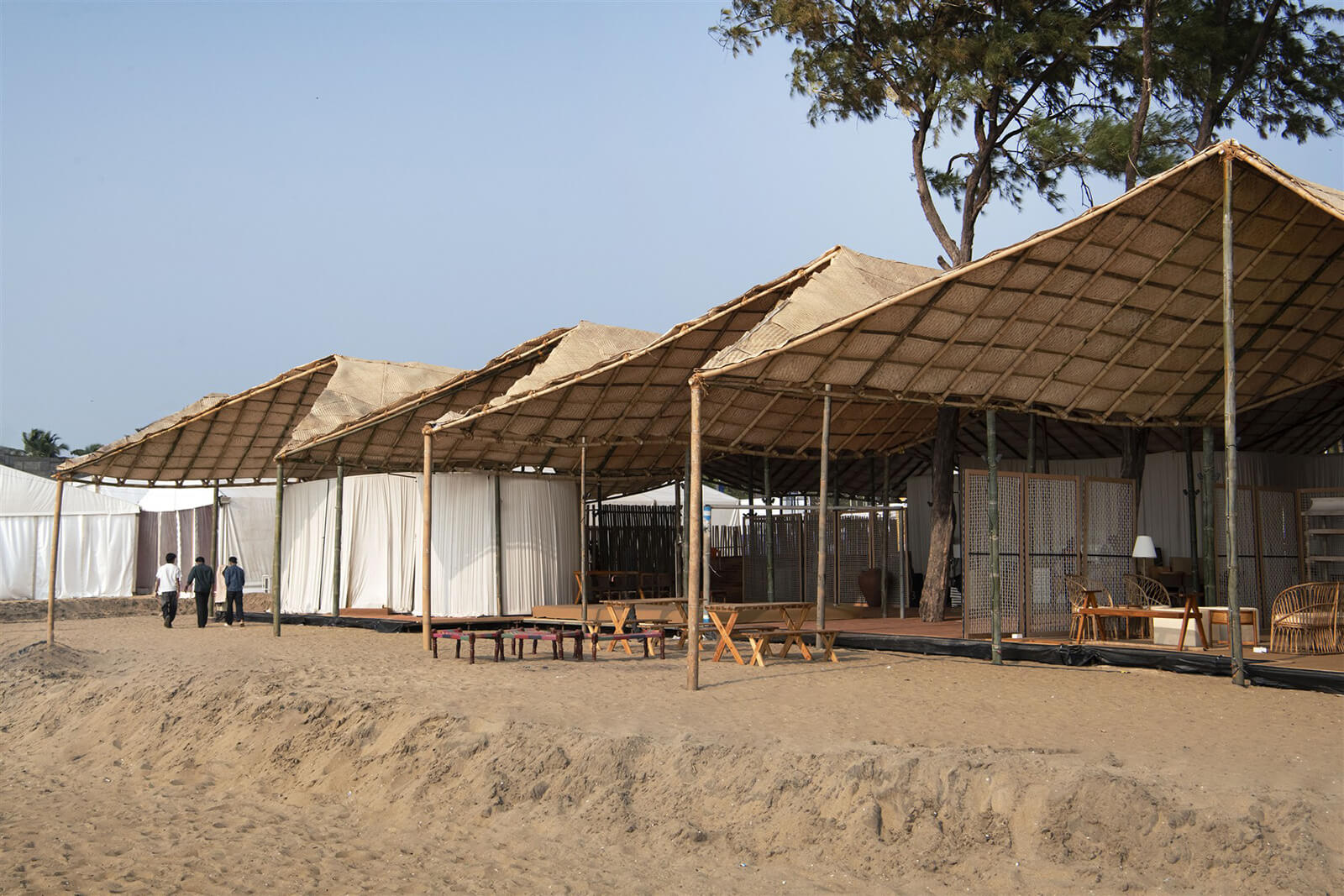
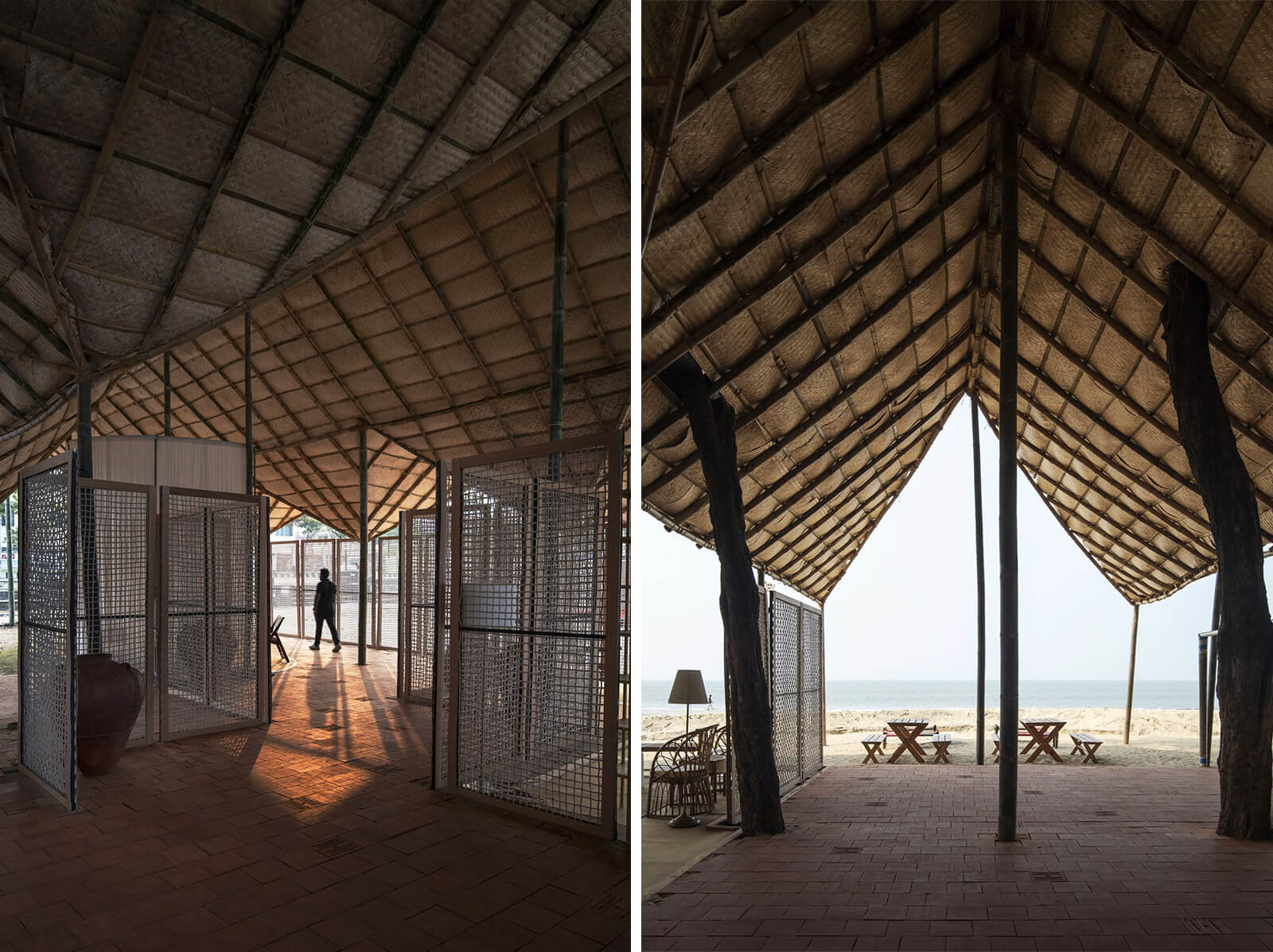
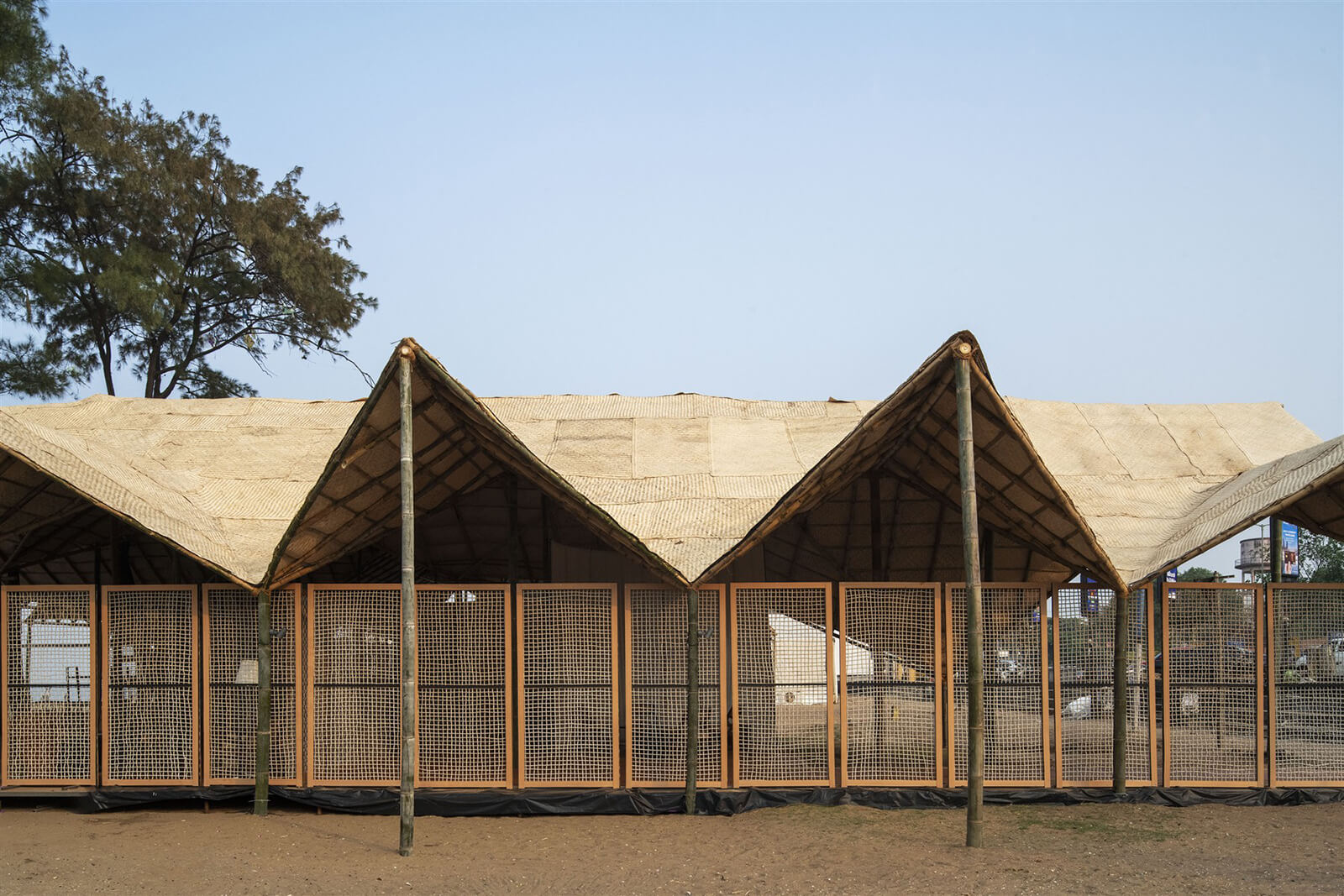
The structural system, in addition to keeping the assembly lightweight and quick to assemble, rendered the pavilion as a porous membrane embracing the pleasant coastal breeze and serene ocean views. As a physical manifestation of its cross-cultural history, the pavilion design referenced its Indo-German legacy through its material palette, derived from the weaving and tile industries of the Commonwealth Trust established by the Basel Missionaries, while its construction techniques served as a showcase of the local crafts and labour traditions of Kerala.
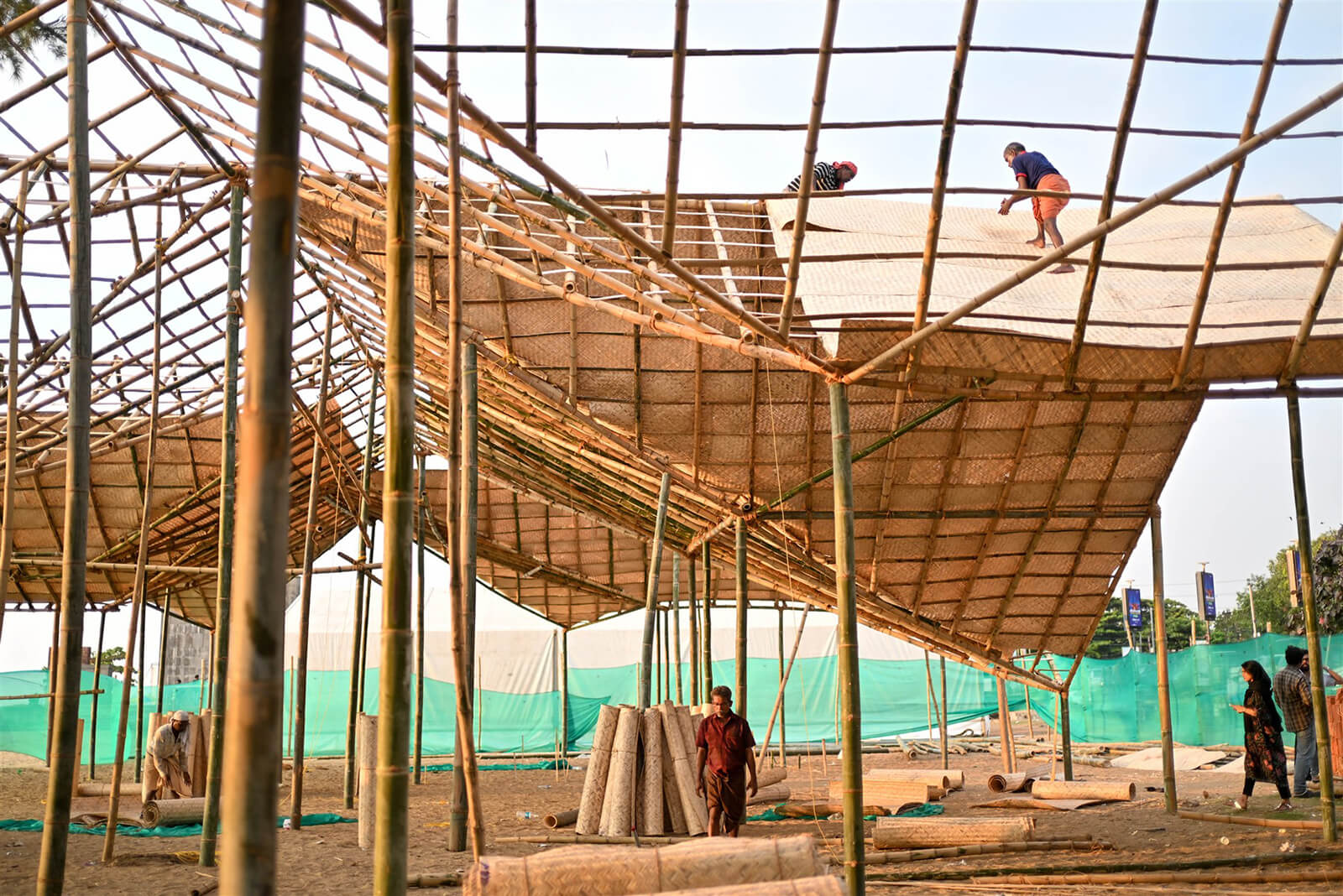
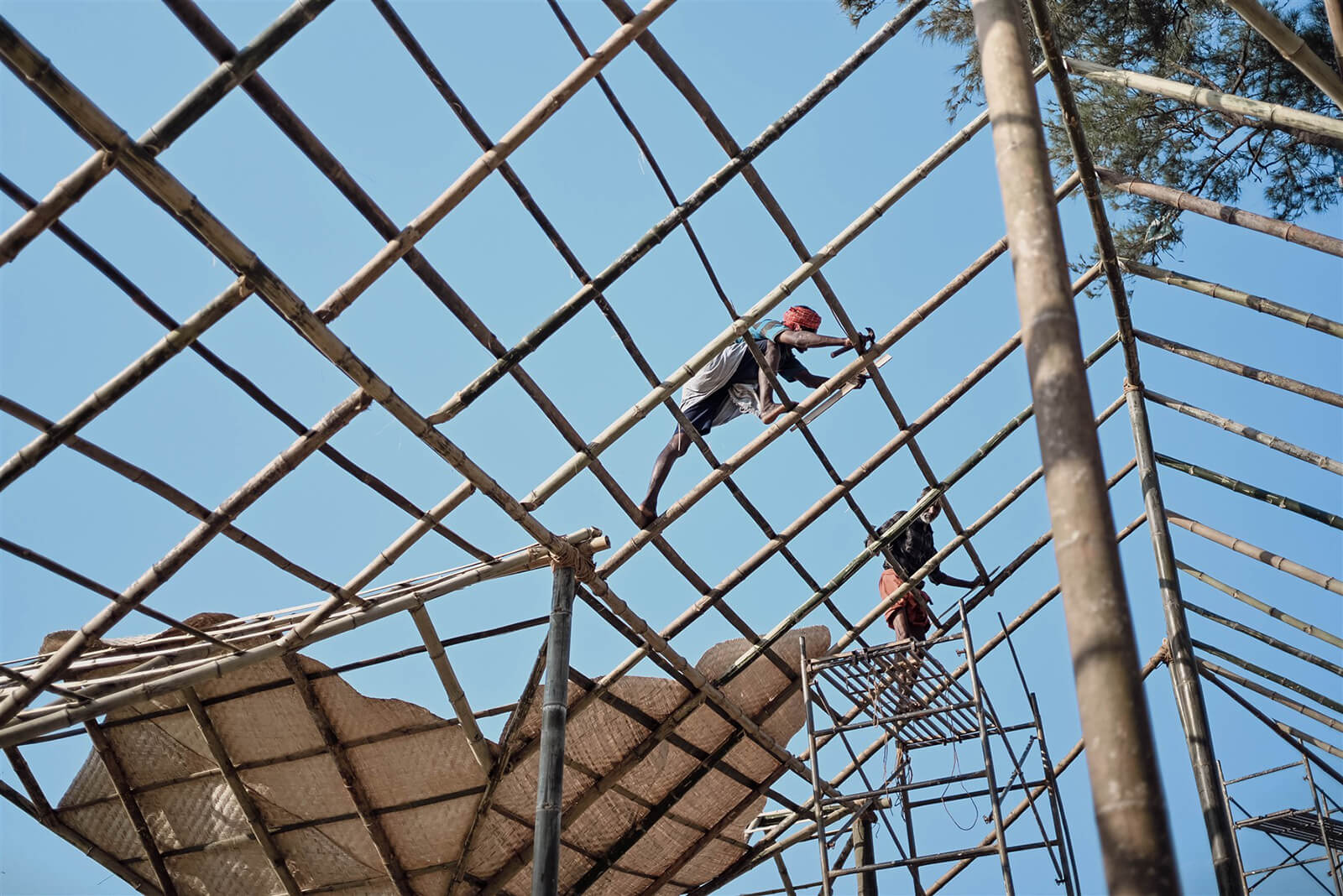
The German story reserves its distinct place in the historical progression of Kerala, especially owing to their significant organisation and amplification of its local culture, languages and arts within the braces of their formal, systematic and structured systems. Along the coast of the Arabian Sea, embracing the cyclically lapping waves, the German Pavilion stood for KLF 2026 as an architecture reflective of this unique, historical cultural entanglement. The inversion of its historical hierarchy—housing the foreign culture in a locally crafted, but proud, structure—is an interesting provocation that lingers and sets the stage for the festival next year.
Name: The German Pavilion
Location: Kozhikode, Kerala, India
Typology: Pavilion
Client: Goethe Institute
Architect: The Purple Ink Studio
Collaborators: Nirmiti Collective (structure execution), Pandal Planners (installation & execution)
Area: 1020 sq m
Year of Completion: 2026

by Pranjal Maheshwari Oct 19, 2026
The Mumbai-based architects integrate courtyards, mesh screens and north light trusses to create a dining space that doubles up as a community hub at SR University, Warangal.
by Mrinmayee Bhoot Oct 17, 2026
The Rotterdam-based institute centres the Indian Ocean as a network for exploring material histories and transnational links shaping coastal cultures, positing them as future models.
by Pranjal Maheshwari Oct 16, 2026
At the 2026 Stirling Prize ceremony, Mary Duggan with RUFF Architects, MAKER Architecten and Nakshabid Architects were felicitated for proffering quality housing and social equity.
by Mrinmayee Bhoot Oct 12, 2026
The new Centre for Contemporary Arts, fostering public engagement with art in Uzbekistan, is housed in a tram depot refurbished by the French studio, emulating local craftsmanship.

make your fridays matter with a well-read weekend
Enter your details to sign in
Don’t have an account?
Sign upOr you can sign in with
a single account for all
STIR platforms
All your bookmarks will be available across all your devices.
Stay STIRred
Already have an account?
Sign inOr you can sign up with
Verification link sent to check your inbox or spam folder to complete sign up process
Tap on things that interests you.
Select the Conversation Category you would like to watch
Please enter your details and click submit.
Enter the 6-digit code sent at


The German Pavilion at KLF 2026 is drawn as an intercultural, vernacular beach house
by Pranjal Maheshwari | Published on : Apr 16, 2026


 Sign in with Google
 Sign in with email
What do you think?