Art09 mins. read
Yayoi Kusama presents 'I Spend Each Day Embracing Flowers' at David Zwirner
by Vladimir BelogolovskyJul 14, 2023



by Vandana KalraPublished on : Aug 27, 2026
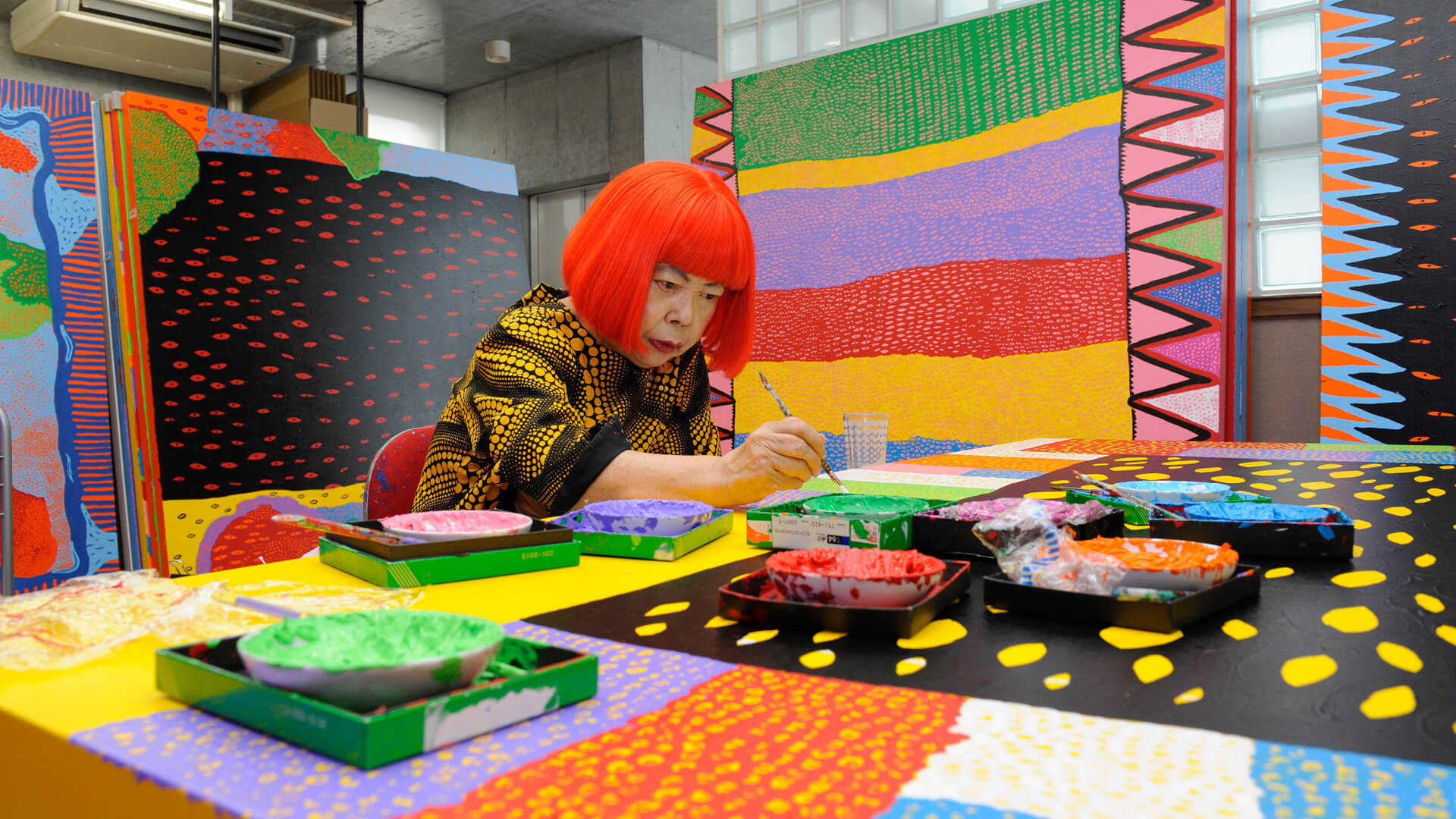
Yayoi Kusama (1929-2026) spent almost eight decades turning dots into fields, mirrors into infinite spaces and more private hallucinations into a recognisable artistic vocabulary that received accolades world over. “I will keep painting until I die,” she told The Associated Press in 2012, adding that she wanted to make “a thousand paintings, maybe two thousand paintings, as many as I can draw”.
Kusama did manage to fulfil that desire, as her studio confirmed that the legendary Japanese artist was indeed painting until her final days before she passed away in Tokyo on August 14, aged 97. A statement by her company, Yayoi Kusama Inc released on August 27, 2026, reads: “Throughout an extraordinary lifetime devoted entirely to artistic creation, Kusama pursued an internationally acclaimed career as a pioneering avant-garde artist whose creative practice encompassed visual art, performance, fiction and poetry. She continued to paint until her final days, never setting aside her brush, and continued exploration of forever love and eternal soul. We will carry forward Kusama’s wishes and, through art, continue to bring hope and strength for the future to people around the world.”
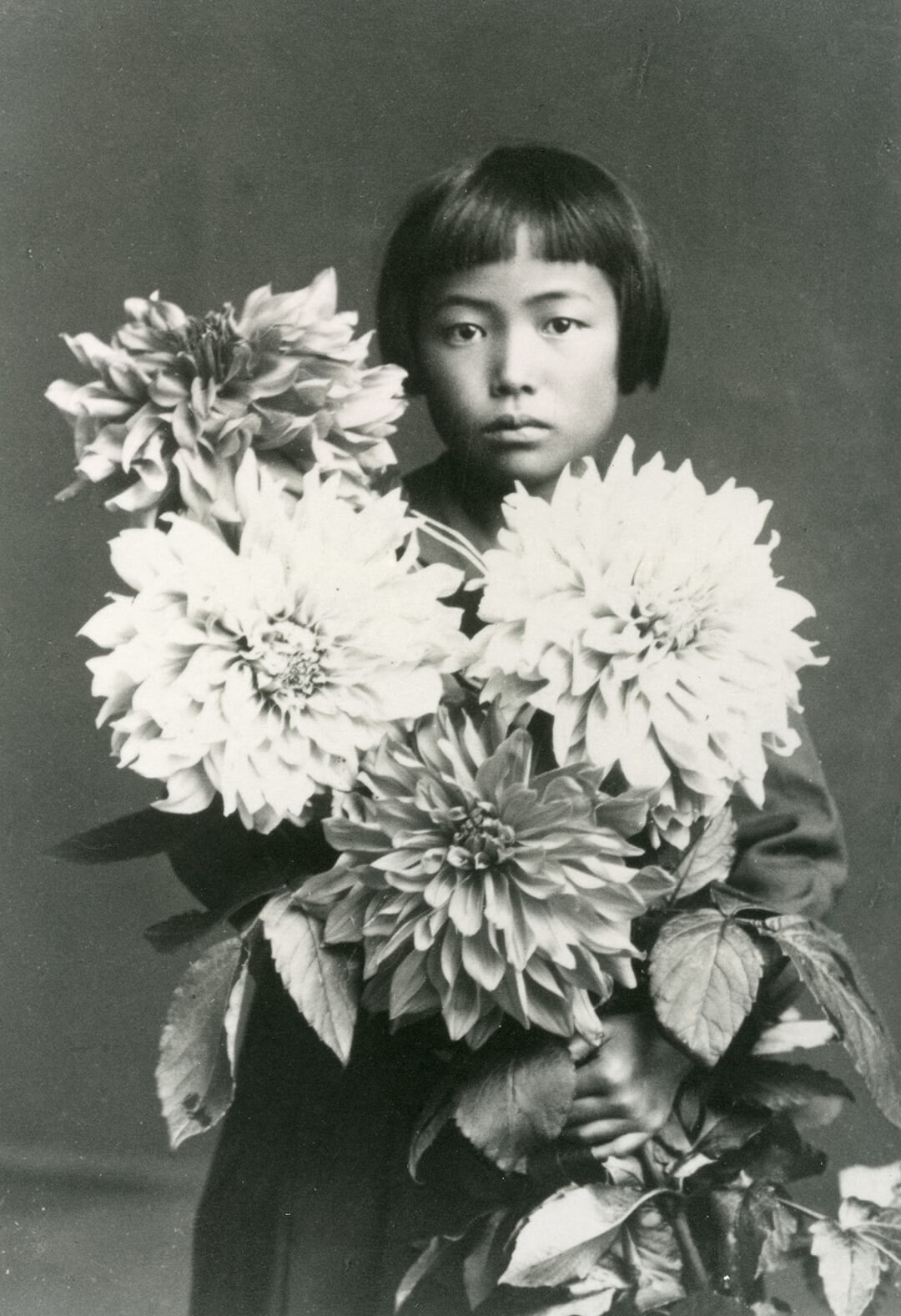
For an artist whose work became synonymous with dots and immersive spectacle, her career was rooted in something rather more troubling, for even as a child growing up in Matsumoto, Japan, Kusama recalled experiencing hallucinations of lights, dots and fields of flowers, which she began translating into art. “My art originates from hallucinations only I can see,” she told Grady Turner in a 1999 interview for BOMB.
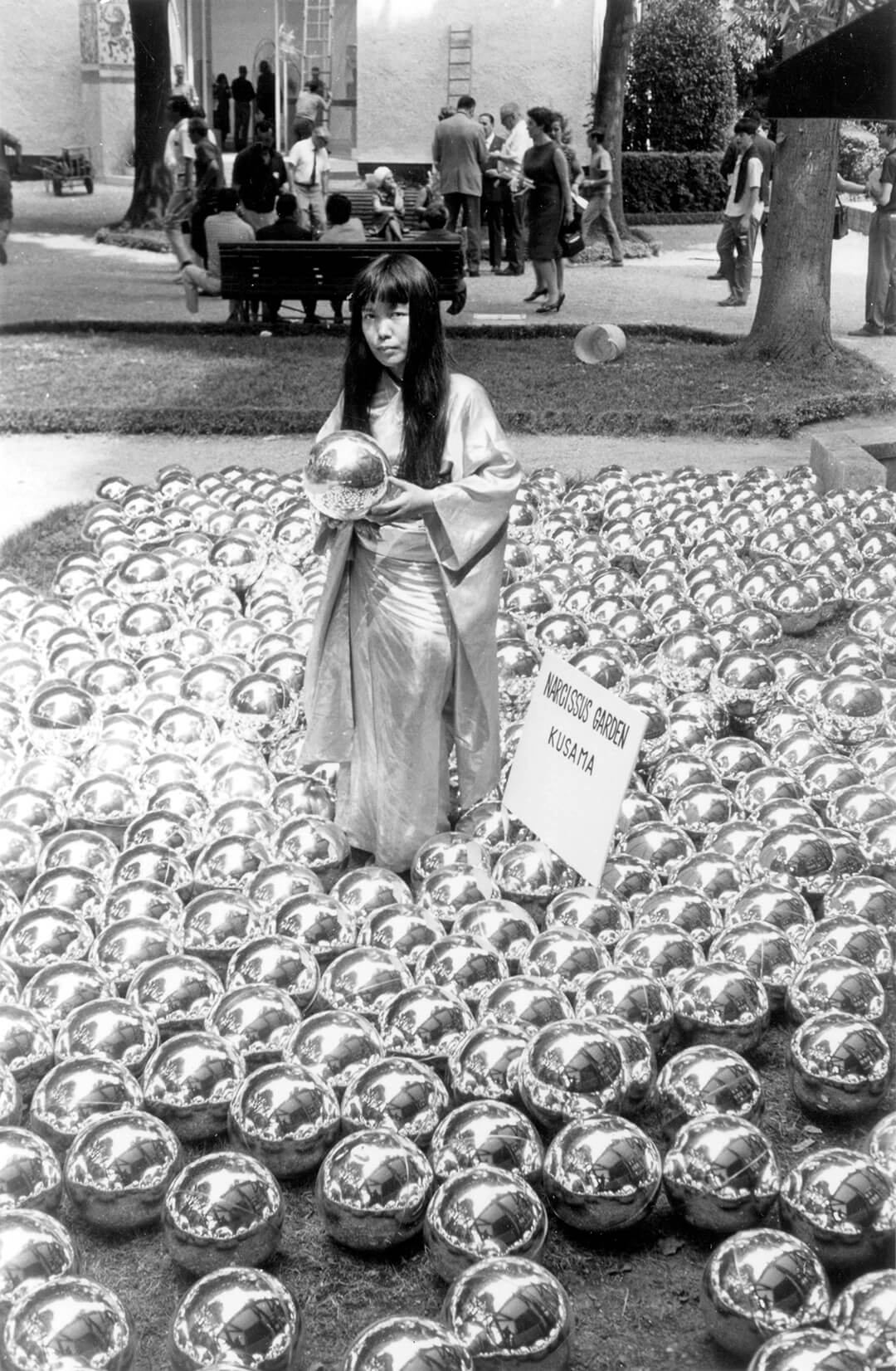
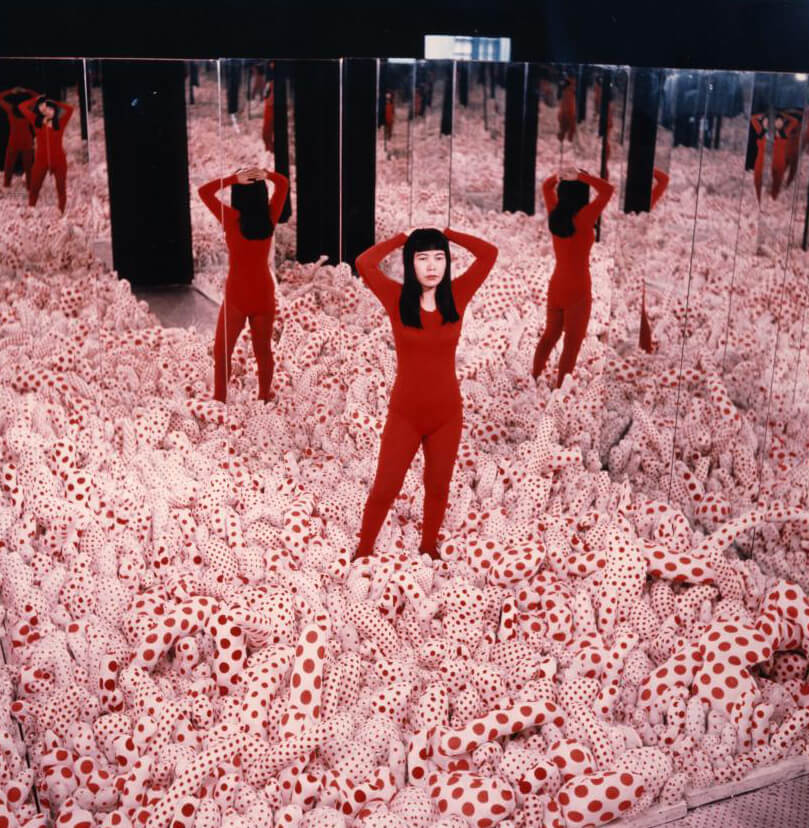
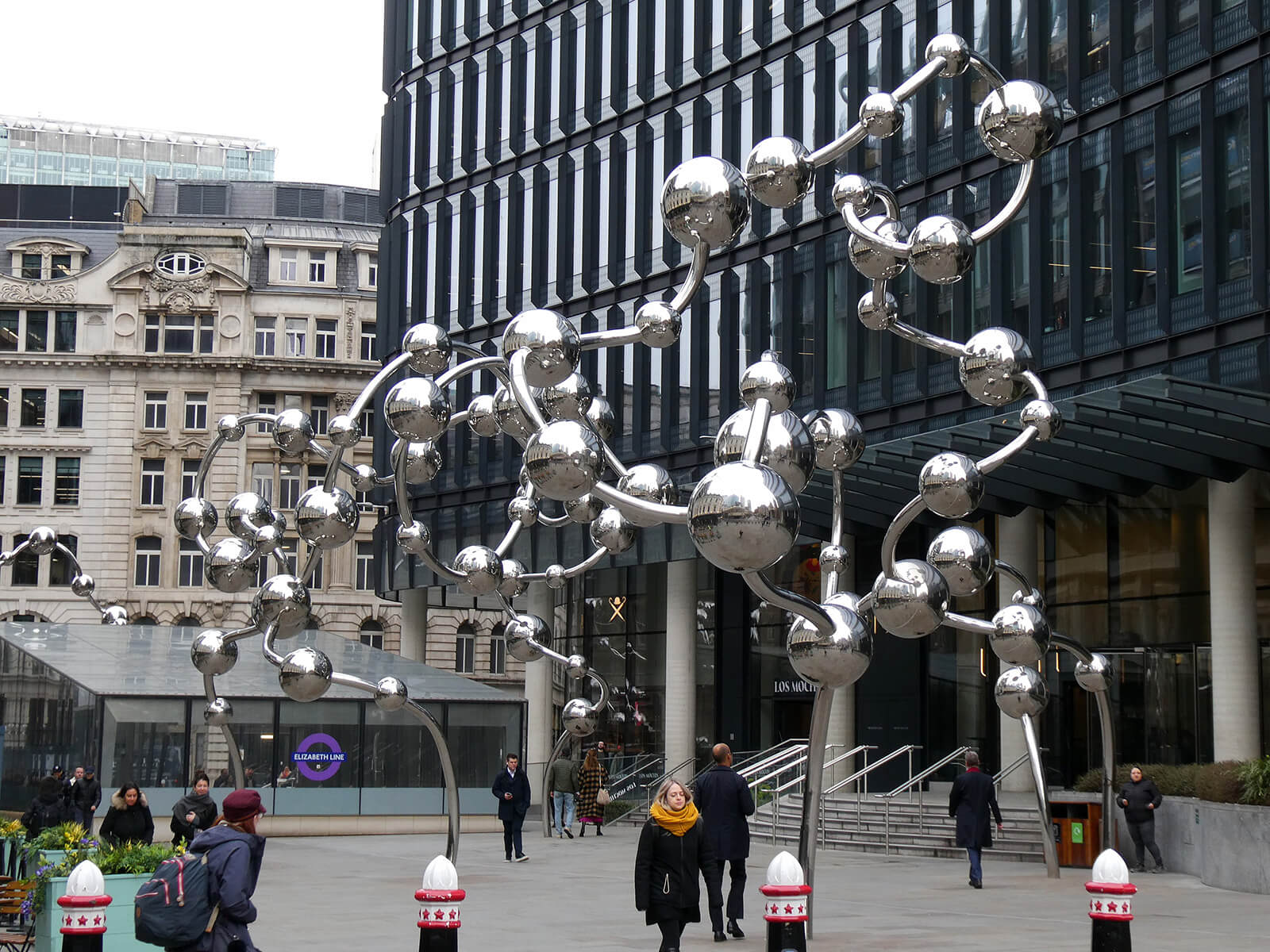
Leaving Japan for New York in 1957, she began the Infinity Net paintings in the Big Apple that saw vast canvases covered with thousands of repeated arcs. Soon, this repetition became both method and subject for herr, and the '60s saw works such as Accumulation No. 1, in which a chair was covered with a mass of hand-sewn phallic forms, and Infinity Mirror Room—Phalli's Field, which had stuffed forms filling a mirrored room. In 1966, she was at the Venice Biennale, outside the official exhibition, with her work Narcissus Garden, which saw around 1,500 mass-produced silver globes outside the Italian Pavilion. Kusama sold the spheres for $2 each, also making a commentary on the commodification of art. Over the years, body-painting events, acts of repetition and polka dots, too, emerged as instruments of provocation in her oeuvre.
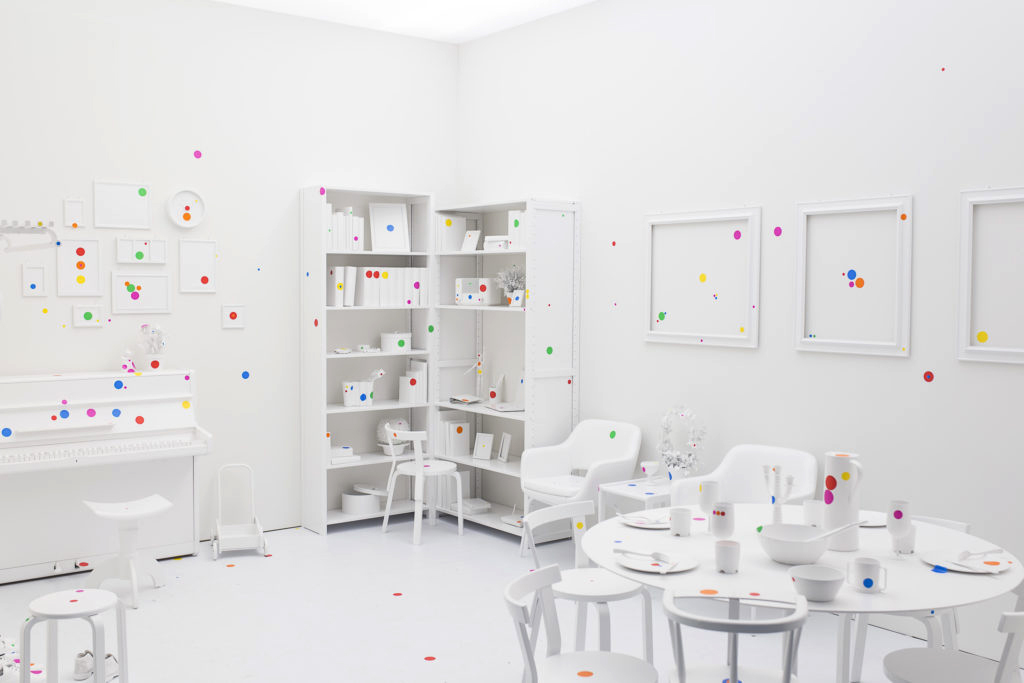
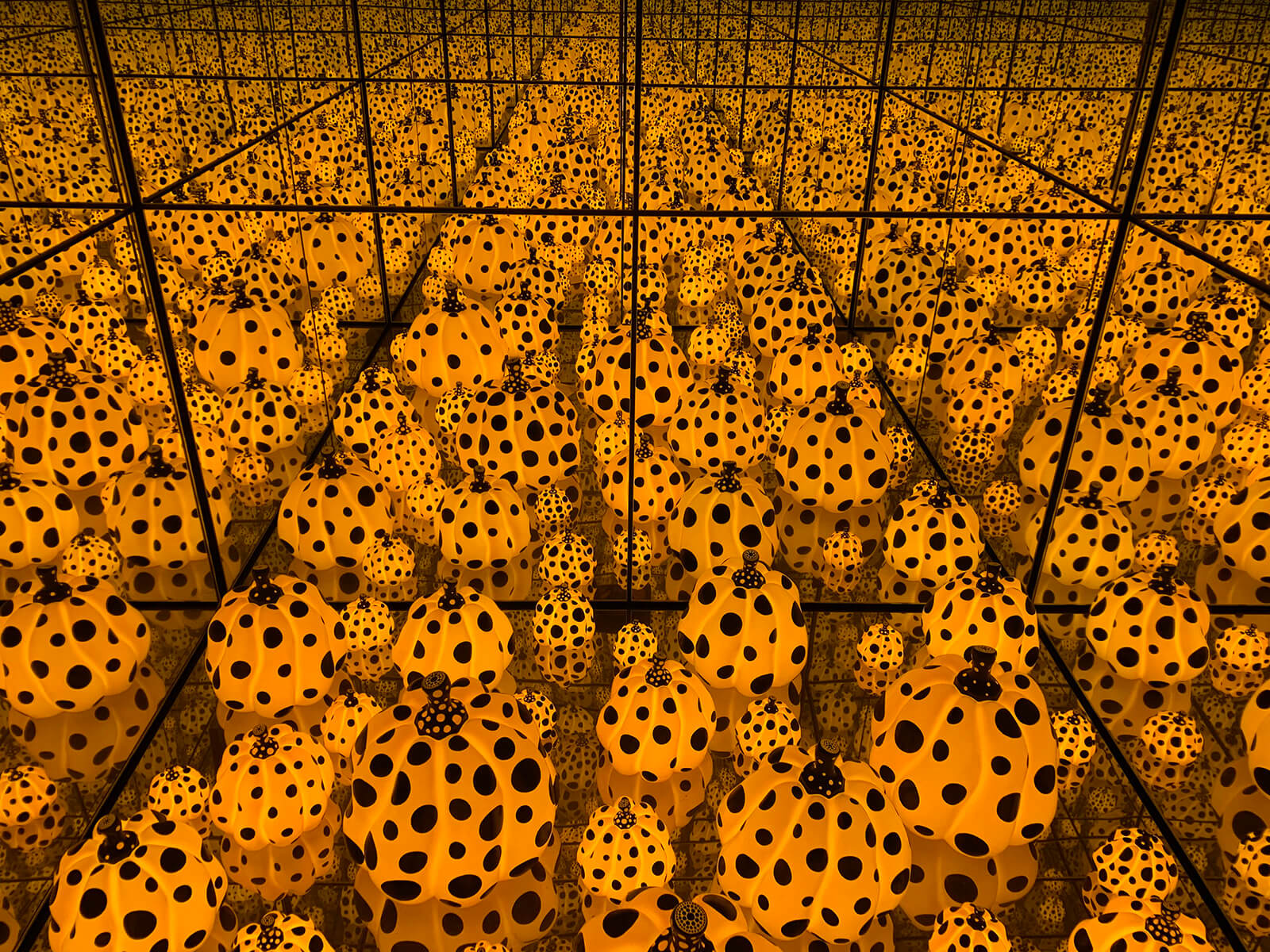
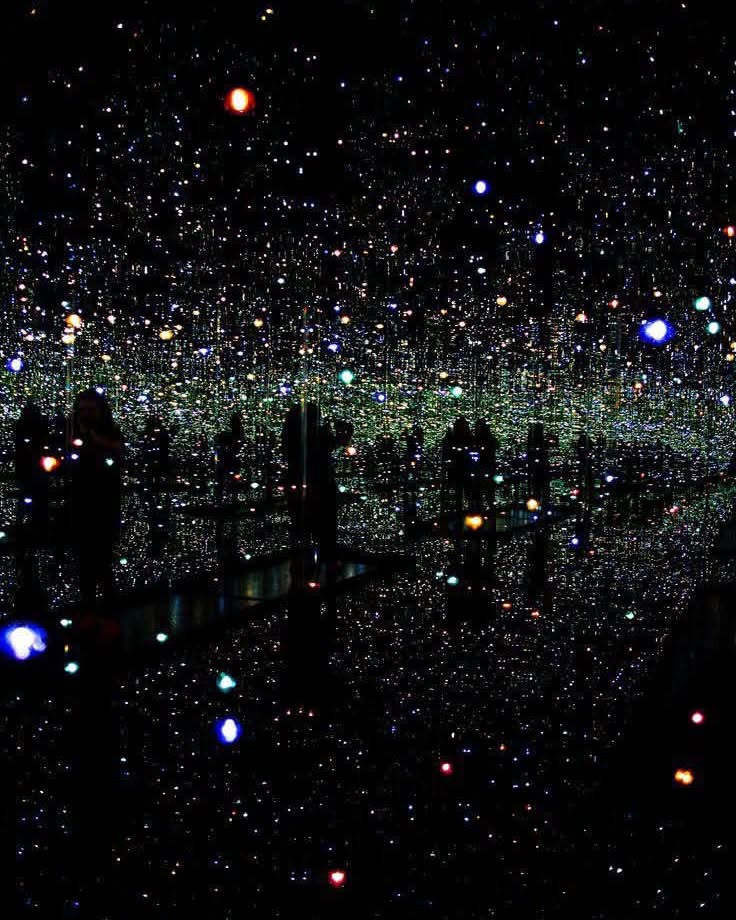
Returning to Japan in the early 1970s, she volunteered to join a psychiatric hospital in Tokyo in 1977, where she would live for decades, painting her thoughts. In her 2002 autobiography, Infinity Net, she reportedly wrote, "I fight pain, anxiety and fear every day, and the only method I have found that relieves my illness is to keep creating art." Even as she continued to create works, there was also international attention and a steady increase in the value of her artworks. If in 1989 she presented a retrospective at the Center for International Contemporary Arts in New York, the 1993 Venice Biennale saw her represent Japan with Mirror Room (Pumpkin), which saw a mirrored surrounding filled with yellow pumpkins covered in black dots. The humble pumpkin, in fact, emerged as one of her most recognisable motifs defining her oeuvre, appearing both cheerful and melancholic at the same time. If works such as The Obliteration Room (2002 onwards) asked visitors to cover the interiors with coloured dot stickers, Infinity Mirrored Room — The Souls of Millions of Light Years Away (2013) saw hundreds of coloured LED lights hang at different heights, flickering on and off and multiplied by the mirrors. Awarded the prestigious Order of Culture by Japan in 2016, in May 2022, her early painting Untitled (Nets) sold for almost $10.5 million at Phillips New York.
Though often described as the ‘queen of polka dots’, a better way to consider her legacy perhaps is as an artist who found in repetition a way to confront the infinite, spending a lifetime trying to analyse it.
by Srishti Ojha Oct 26, 2026
The Taiwan-based artist shares his opinion on exhibition rituals, protests and his search for ‘fragmented beauty’.
by Srishti Ojha Oct 21, 2026
Increasingly, artists, filmmakers and activists are turning to VR to create more personal, tangible accounts of the climate emergency and its impact on vulnerable communities.
by Mirra Lynn Oct 20, 2026
The Indian artist paints the old wadas of central Pune, capturing the traces of everyday life that cling to these structures, battered by time but unbowed.
by Anmol Ahuja Oct 15, 2026
How do heaps of souvenirs and relics with racist Aboriginal motifs and features become art? MCA Sydney’s winter showcase—the artist’s largest to date—beckons a possibility.

make your fridays matter with a well-read weekend
Enter your details to sign in
Don’t have an account?
Sign upOr you can sign in with
a single account for all
STIR platforms
All your bookmarks will be available across all your devices.
Stay STIRred
Already have an account?
Sign inOr you can sign up with
Verification link sent to check your inbox or spam folder to complete sign up process
Tap on things that interests you.
Select the Conversation Category you would like to watch
Please enter your details and click submit.
Enter the 6-digit code sent at


Yayoi Kusama passes away at 97: The artist who turned hallucinations into infinity
by Vandana Kalra | Published on : Aug 27, 2026


 Sign in with Google
 Sign in with email
What do you think?