Art08 mins. read
A London exhibition reflects on shared South Asian histories and splintered maps
by Samta NadeemJun 19, 2025



by Srishti OjhaPublished on : Nov 05, 2026
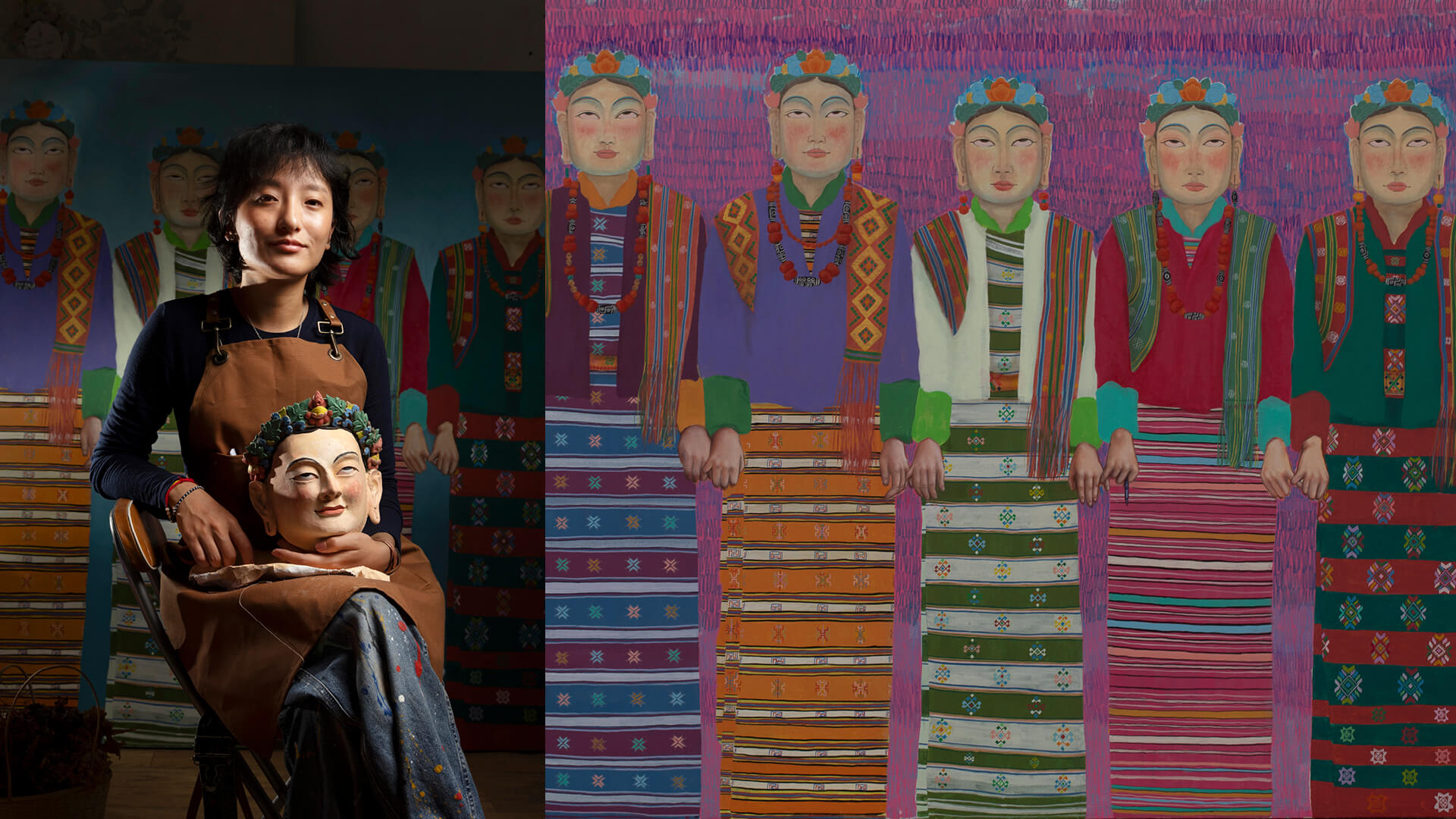
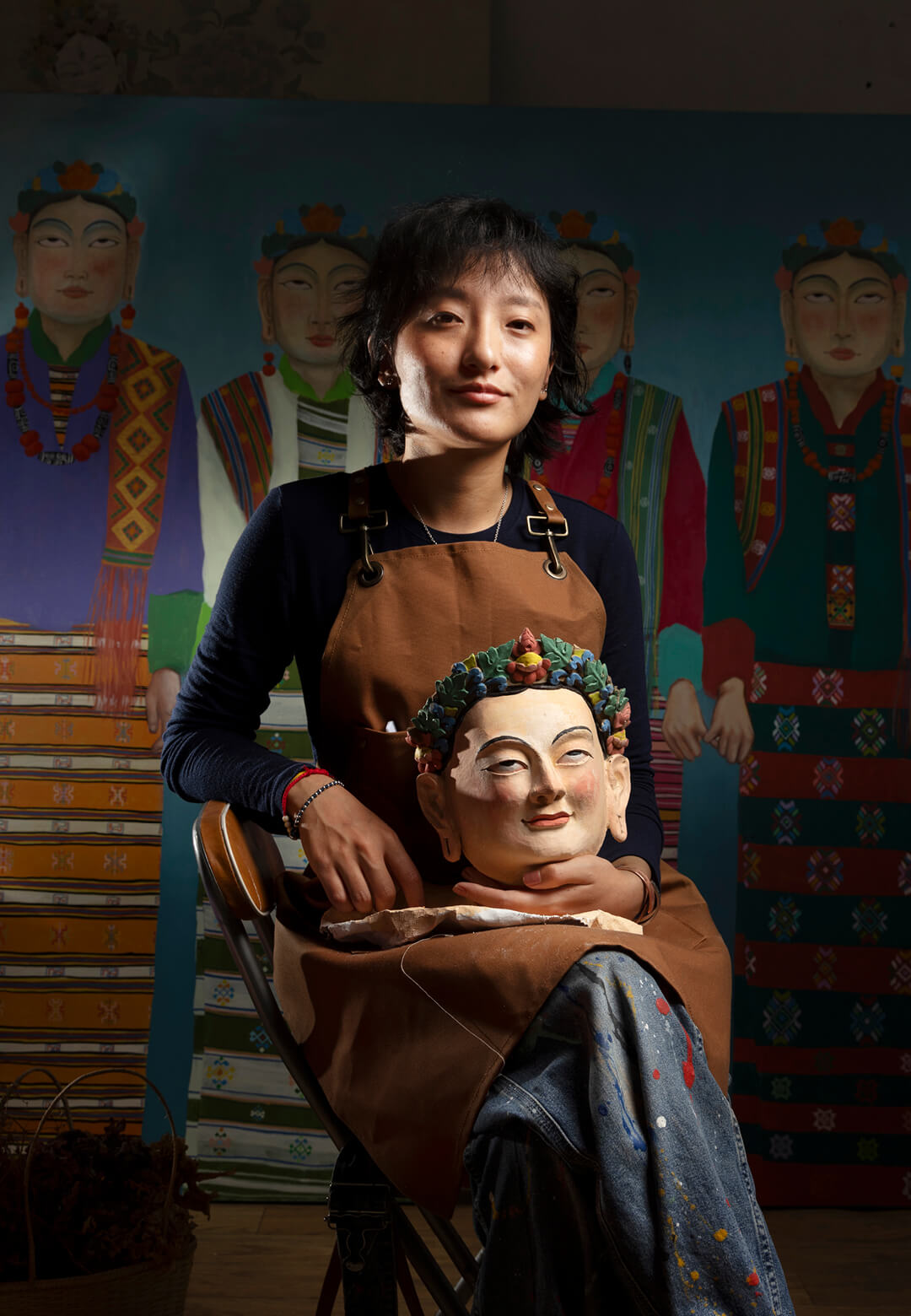
Pem Lham uses a steel thali for a paint palette, boras (packaging sacks) for textile art and found objects and paper for sculptures. The 29-year-old draws inspiration for her works from stories rooted in Bhutanese and Himalayan folklore, objects she encounters on walks through Thimphu, Bhutan and the experiences shared by friends and people she meets through her artistic practice. The contemporary artist recently won the 2026 Rubin Art Prize, one of the most significant prizes rewarding contemporary Himalayan artists with an unrestricted grant of $30,000. Primarily working on paintings until now, the artist spoke to STIR about the freedom the prize affords her to pursue multimedia and sculptural works she began experimenting with at Beaconhouse National University in Lahore, Pakistan.
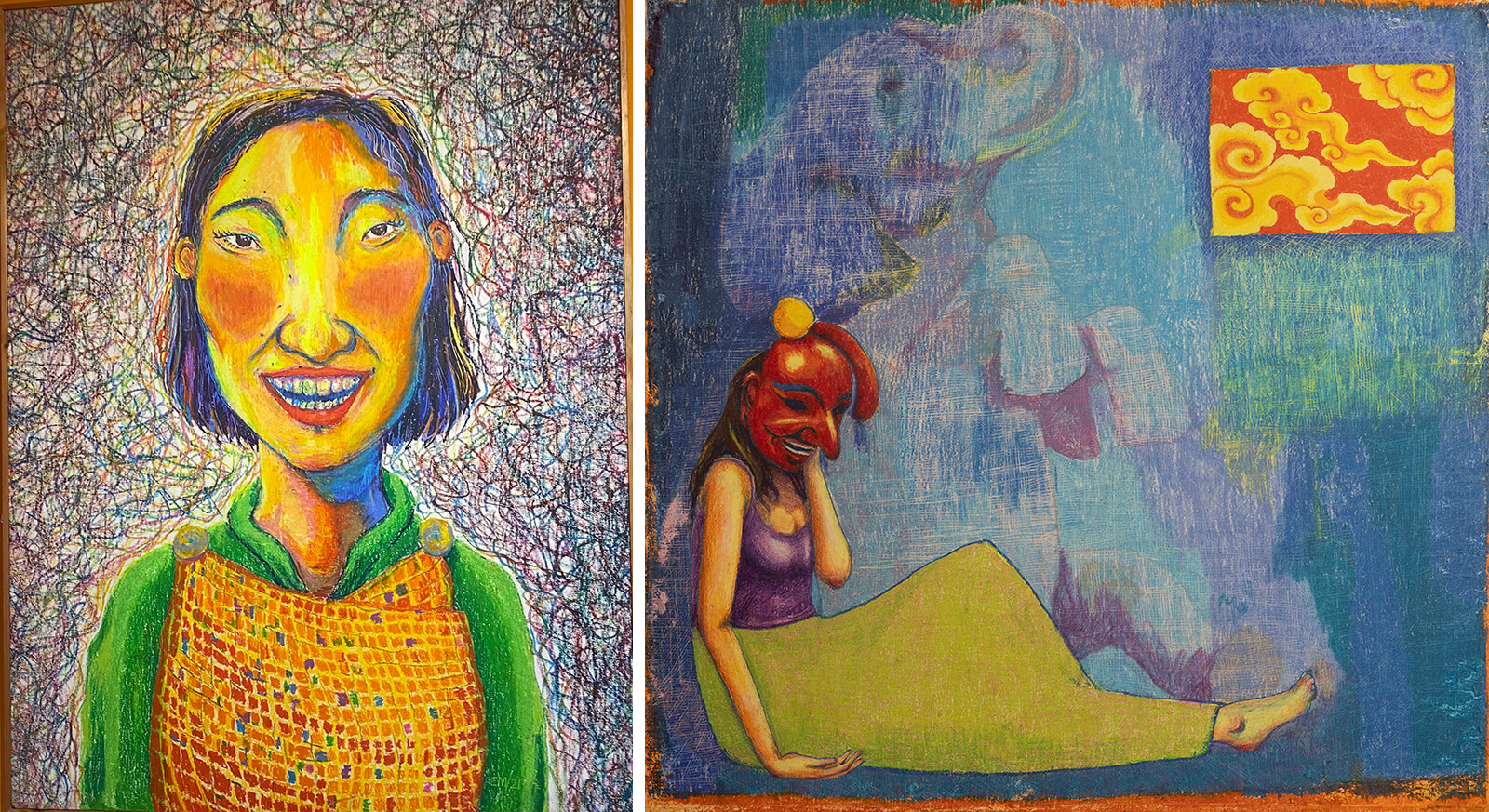
Tracing her practice, her evolution as an artist and an individual caught between a contemporary world and a traditional culture is clear. Her early works in oil pastel are energetic, with vibrant colours that contrast more than they complement each other. “After college, when I started painting, my paintings had a lot of anger and rage in them. It’s how I truly started expressing myself through painting. Gradually, though, I feel like Molayis changing me, bit by bit,” Lham said.
‘Molay’, which translates to ‘most beautiful woman’, is the feminine character from a Himalayan masked folk dance called the Pholay Molay. Much of Lham’s recent work includes her solo exhibition Molay Moley at VAST Bhutan in October 2025, and the group exhibition She, at Pristine Contemporary in New Delhi, India. The original folktale begins with Molay, a forest spirit, being kidnapped and married to a king who, after she is accused of infidelity, cuts off her nose to punish her. The story became a jumping-off point for Lham, who reinterprets it through a modern feminist lens and puts it into conversation with pop culture figures like Barbie.
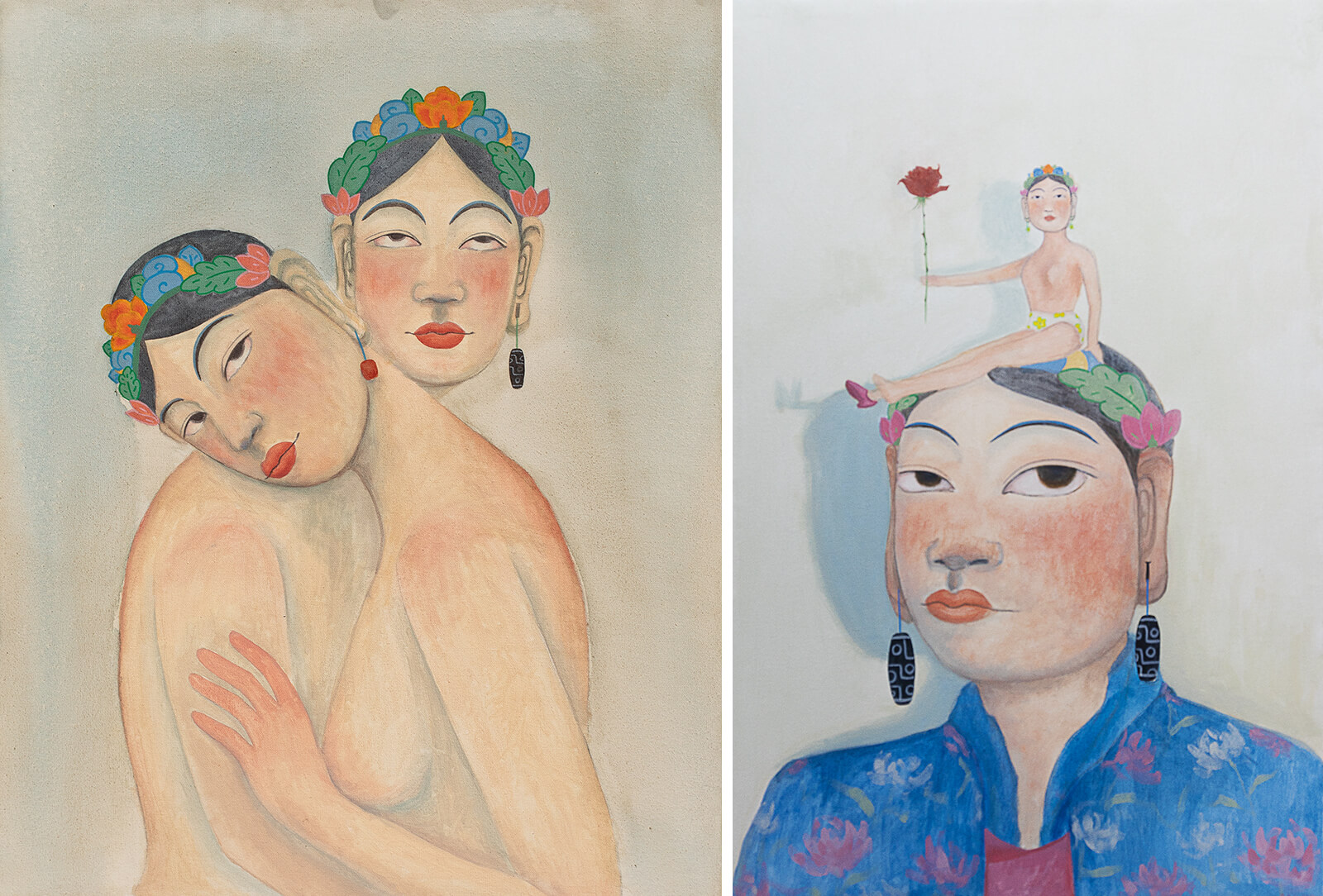
She explains her take on Molay, saying, “There’s so much patriarchy in [the story], in how her body and beauty were something for other people to judge without her consent and how it is the same even now. I thought her story should not remain as folklore. I can see Molay in everyone—in myself, in my family, my friends and in every woman I meet.”
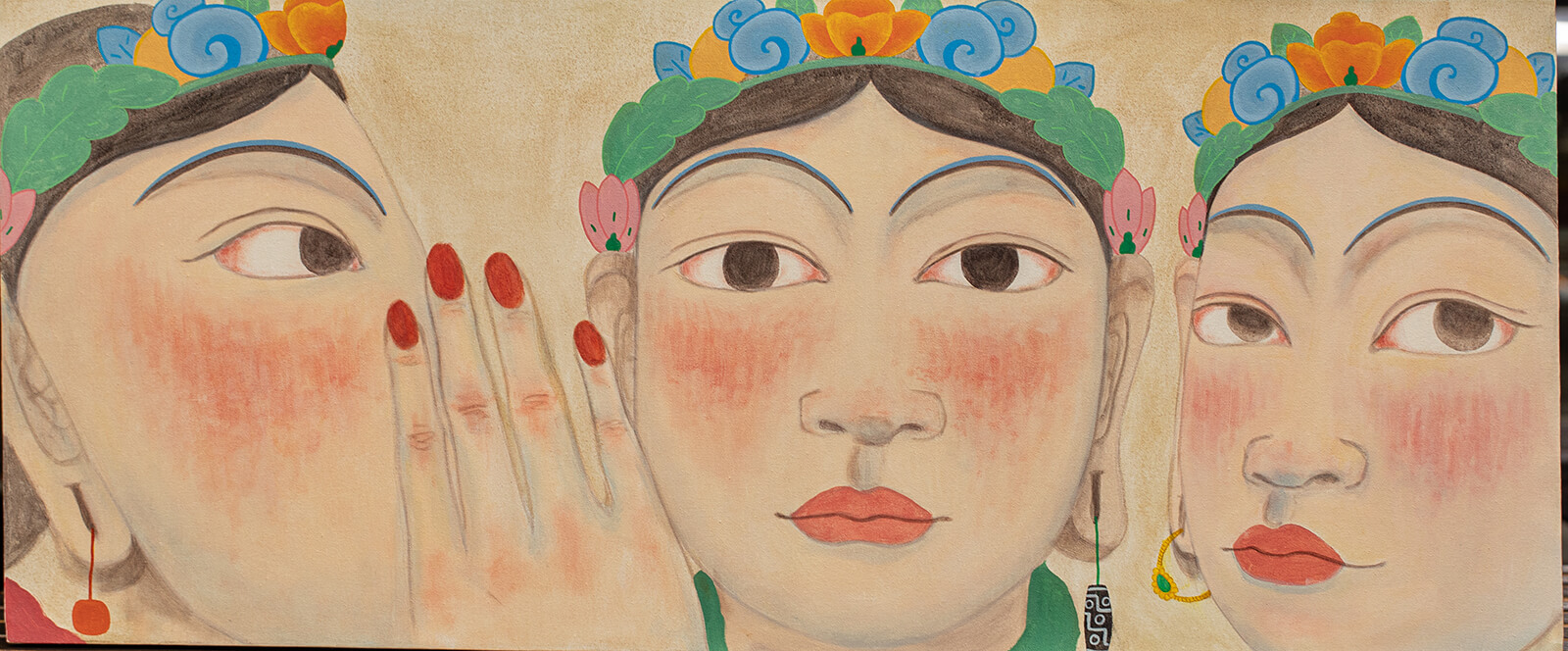
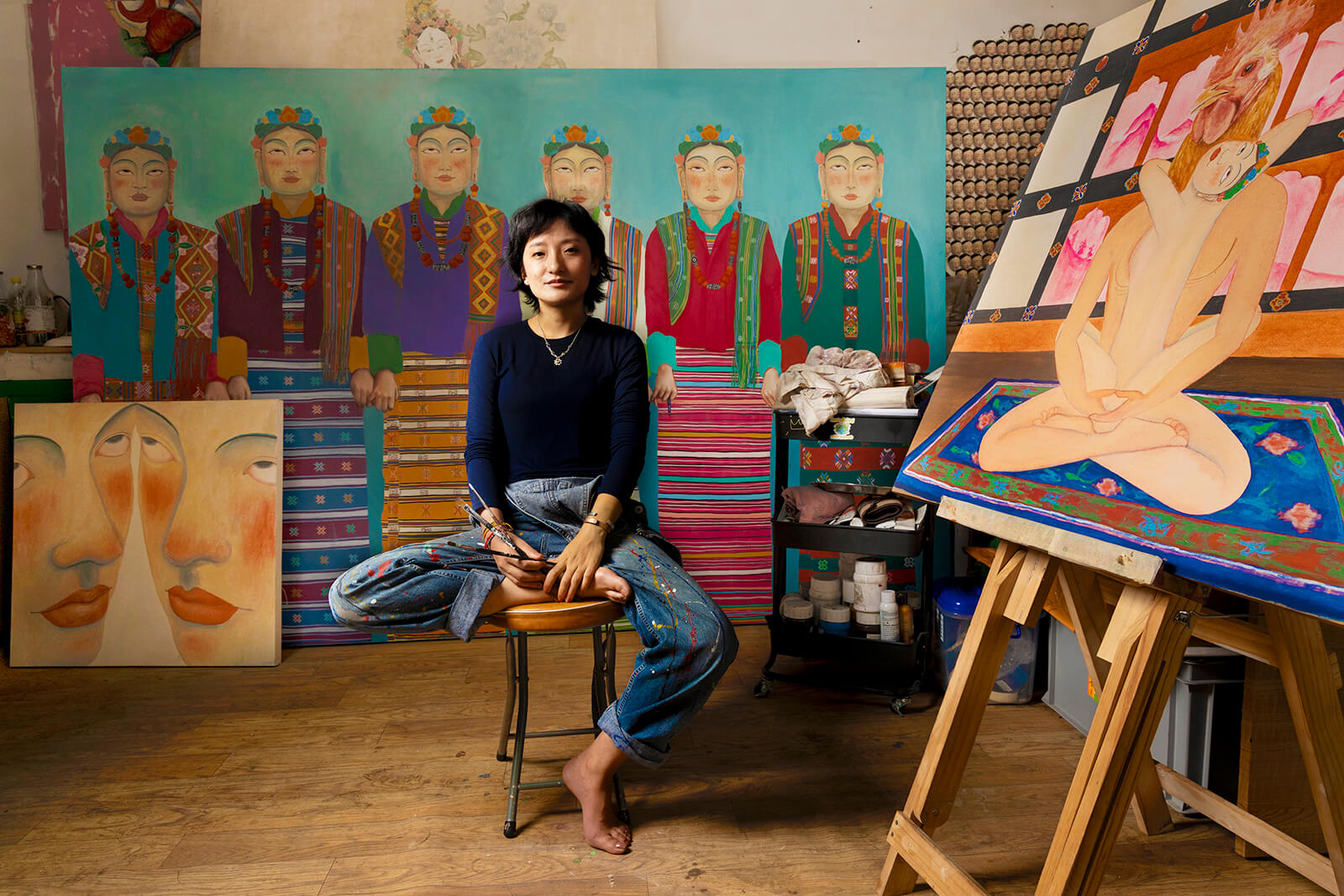
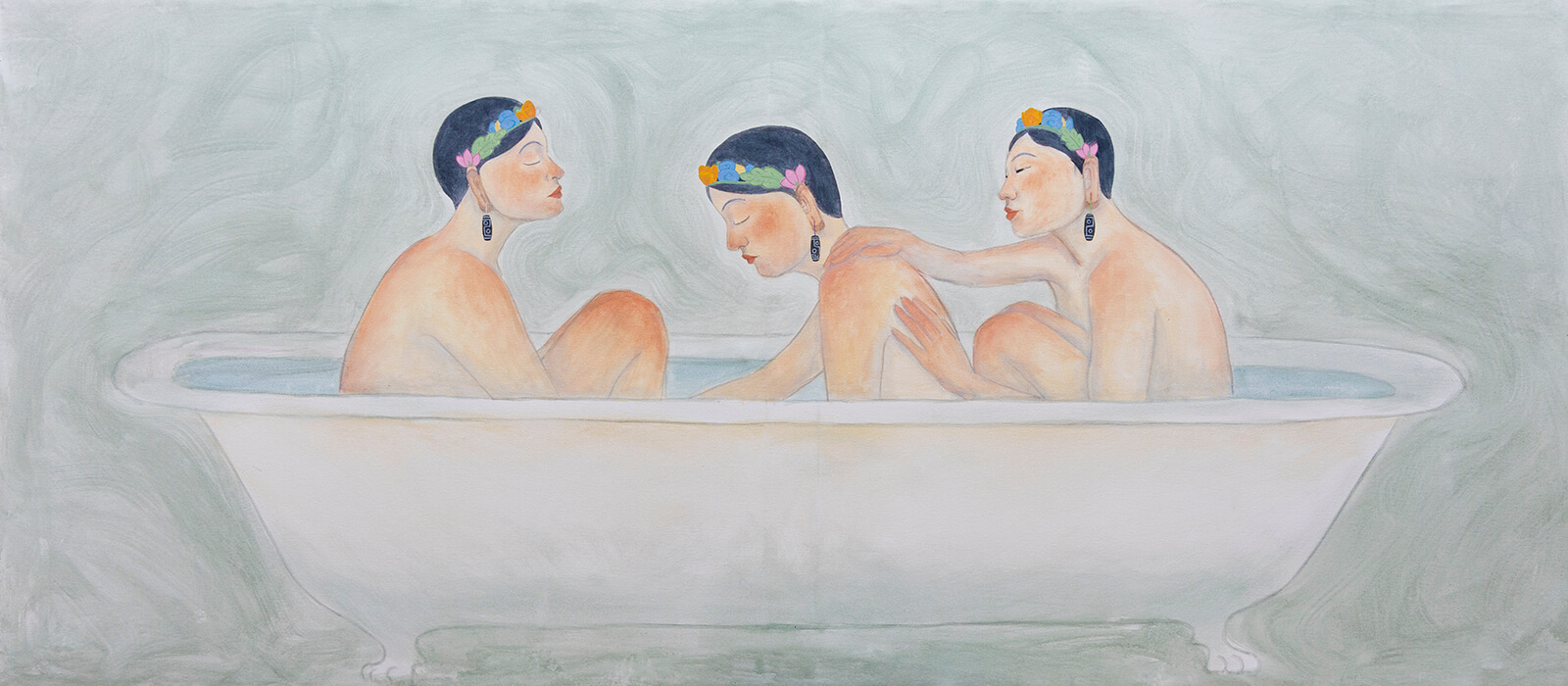
Her paintings, in this current period of her practice, show a new kind of restraint in their colour palette and form. The fields of colour are muted, and the earlier chaos of details and marks becomes flattened. The energy and character of the paintings come from the expressions, poses and interactions of their subjects—the Molay. In a series of untitled works, Lham shows the Molay interacting with each other—bathing together, whispering and holding each other. Their interactions with the viewer do not hold the same tenderness—when they face out of the painting, they roll their eyes in an act of quiet defiance that carries the same anger and frustration as Lham’s earlier paintings, in a more understated style.
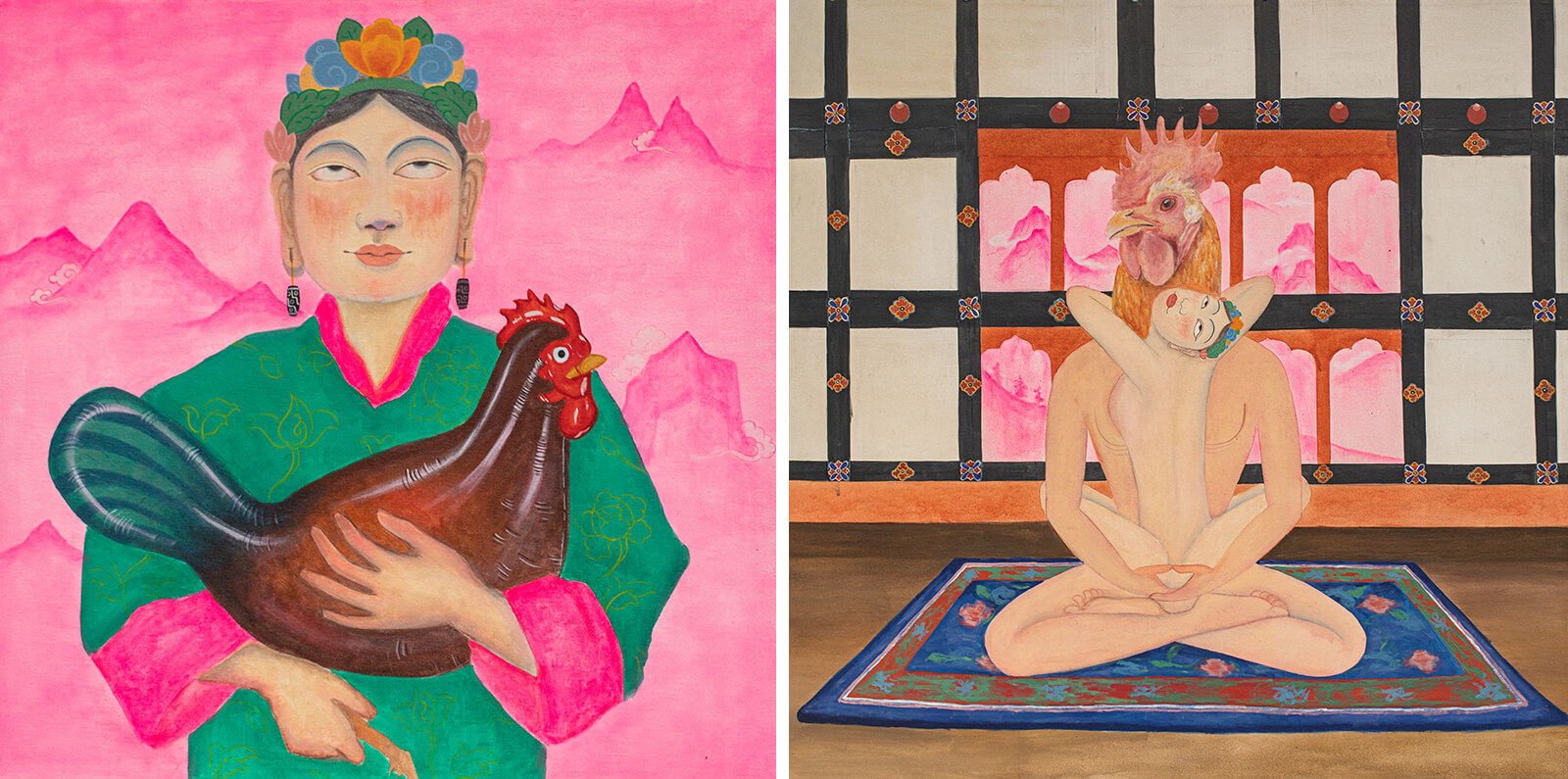
Men, in her paintings, are few and far between, represented as animals—roosters, specifically. She gives a tongue-in-cheek answer about the decision, as she states, “My art practice revolves around women; it reflects in my work where there’s a recurring [motif] of a rooster. In temples in Bhutan, we have a wheel of life painting with three poisons—a snake, a rooster and a pig—that keep us in the loop of samsara. The rooster represents pride, ego and lust. So, since in all my paintings there’s only Molay, I thought there should be male representation, so I used the rooster to represent the male ego.”
In her conversation with STIR, she emphasises the centrality of humour and satire to her paintings, even when dealing with traditional motifs and subjects, saying, “Traditions and culture have to keep changing and being relevant with contemporary times [otherwise] the separation between us becomes more and more.”
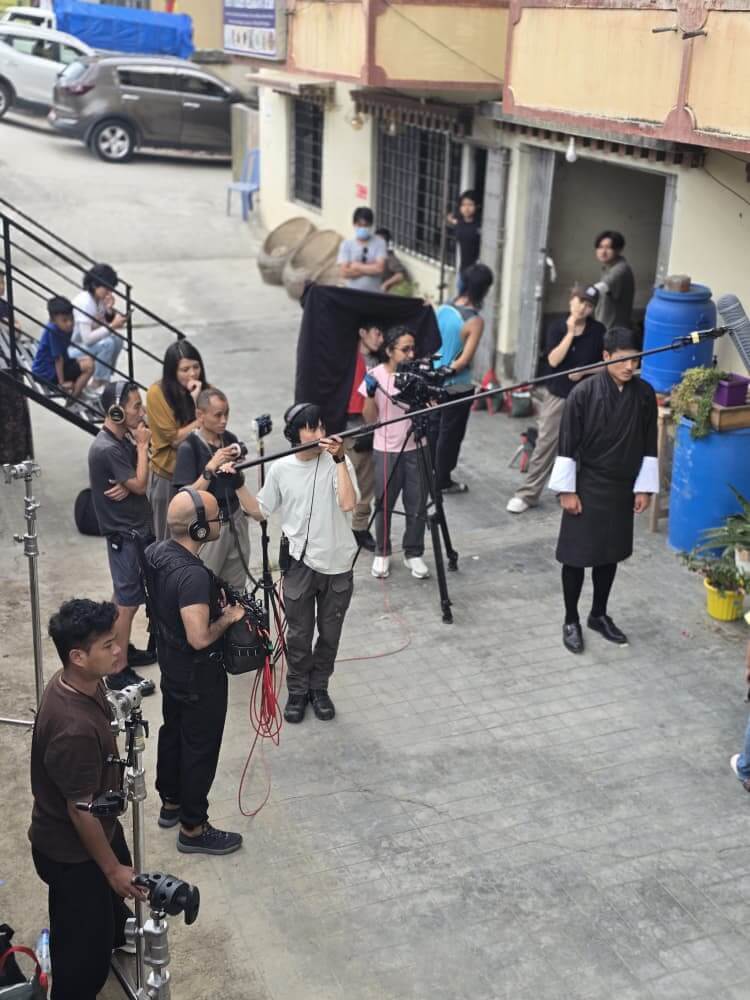
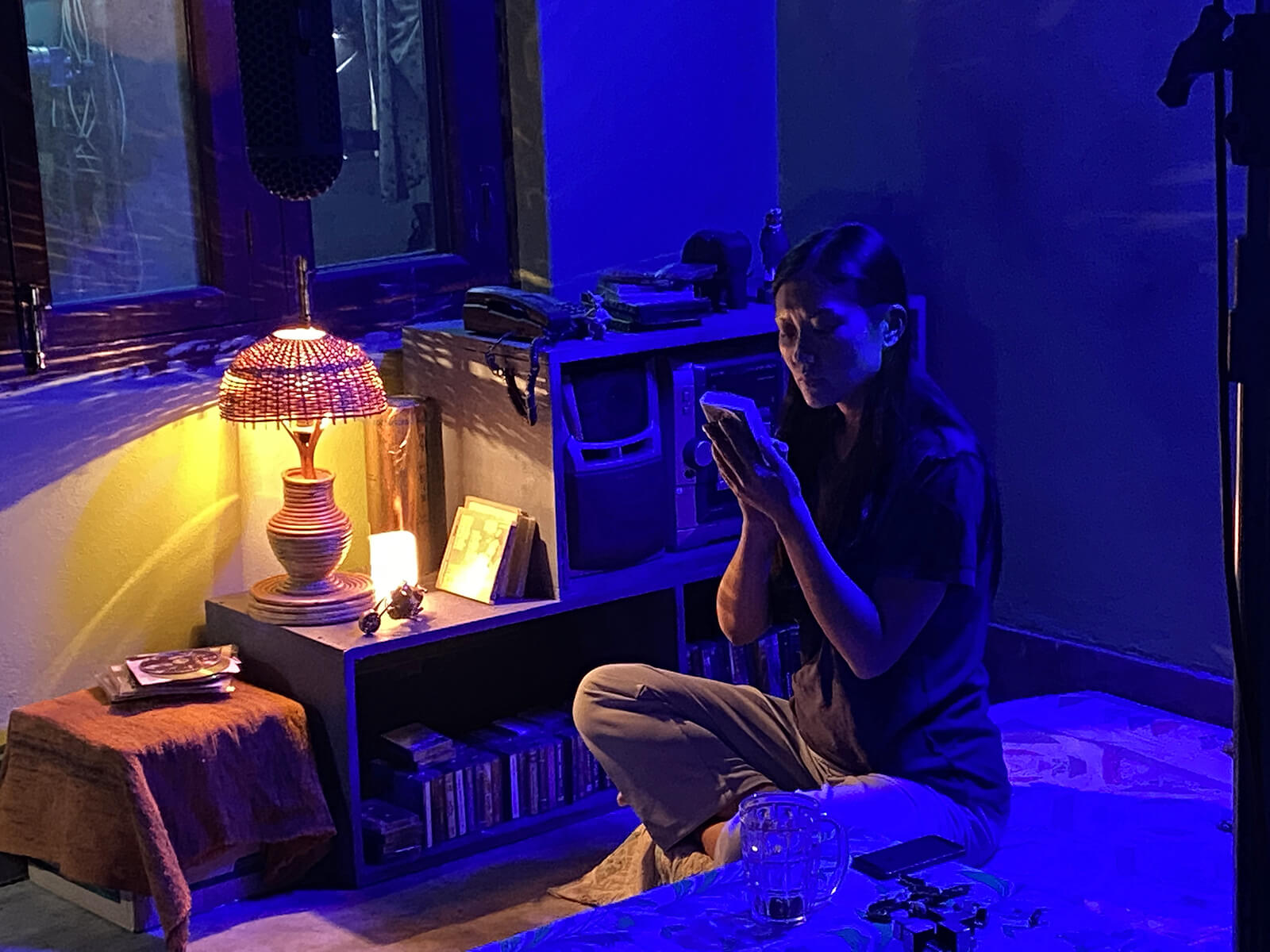
Recently, the artist has been experimenting with another, more contemporary medium—film. After being offered an art director role in Bhutanese director Dechen Roder’s film, I, the Song (2024), she has been stepping out of the studio and onto film sets, including the 2026 independent film, In the Light of Her Shadow (2026), directed by filmmaker Jamyang Dorji.
Winning the 2026 Rubin Art Prize offers the artist greater freedom than ever to continue these explorations and experiments. Having already done a great deal to bring Bhutanese culture and motifs into contemporary times and bringing it onto a more global stage, Lham is poised to continue refining her ever-expanding oeuvre, with no ceiling to stop her.

by Samar Jodha Nov 04, 2026
The exhibition in Delhi explores how colonial records and land classifications have shaped our understanding of shared resources and the communities that depend on them.
by Mrinmayee Bhoot Nov 03, 2026
The Pakistani-American artist’s first solo show in Europe brings together paintings that explore queer and immigrant lives, human connection and the complexities of cultural belonging.
by Srishti Ojha Oct 27, 2026
The 13th Gyeonggi Ceramics Biennale in South Korea showcases global ceramics, from ancient traditions to contemporary experimentation
by Srishti Ojha Oct 26, 2026
The Taiwan-based artist shares his opinion on exhibition rituals, protests and his search for ‘fragmented beauty’.

make your fridays matter with a well-read weekend
Enter your details to sign in
Don’t have an account?
Sign upOr you can sign in with
a single account for all
STIR platforms
All your bookmarks will be available across all your devices.
Stay STIRred
Already have an account?
Sign inOr you can sign up with
Verification link sent to check your inbox or spam folder to complete sign up process
Tap on things that interests you.
Select the Conversation Category you would like to watch
Please enter your details and click submit.
Enter the 6-digit code sent at


Pem Lham meshes Himalayan folklore with contemporary feminism in her work
by Srishti Ojha | Published on : Nov 05, 2026


 Sign in with Google
 Sign in with email
What do you think?