Art07 mins. read
Rohini Devasher’s Solar Poetics makes a case for wonder
by Srishti OjhaOct 02, 2026



by Samar JodhaPublished on : Nov 04, 2026
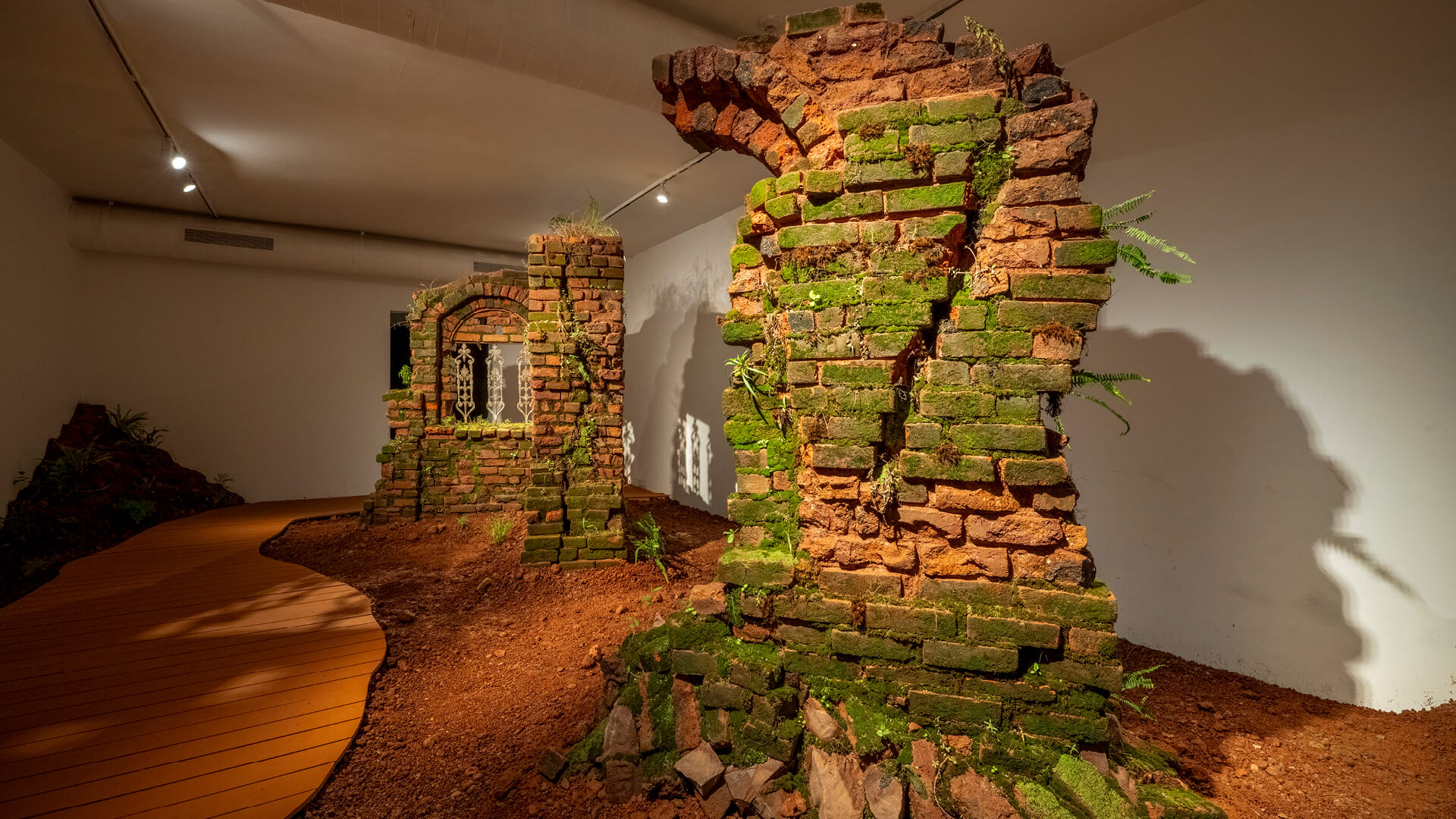
You don’t expect to find goat droppings in a museum, or sheep hair, or actual seeds, sand and clay, or bricks with moss and fern growing out of them, and in curator Premjish Achari's show at Earth at Kiran Nadar Museum of Art (KNMA), Inheritors of Earth, it is a pleasant surprise. Most of the time you take in art as if a glass wall stood between you and the subject even when the work is right there in front of you, and you stay an outsider to it. In some of the works here, that distance isn’t there; you are in among the material itself, and there is a video with sound that you sit in front of. It is still a museum, and the works were not made for the places they speak of, but it does connect you. I tried something similar with Bhopal: A Silent Picture, a 40-foot container recreating the night of December 2, 1984, as the trains pulled into Bhopal, dark, with sound, and kept at a single degree, which is how cold Bhopal used to get in December, so that people could feel something of that night.
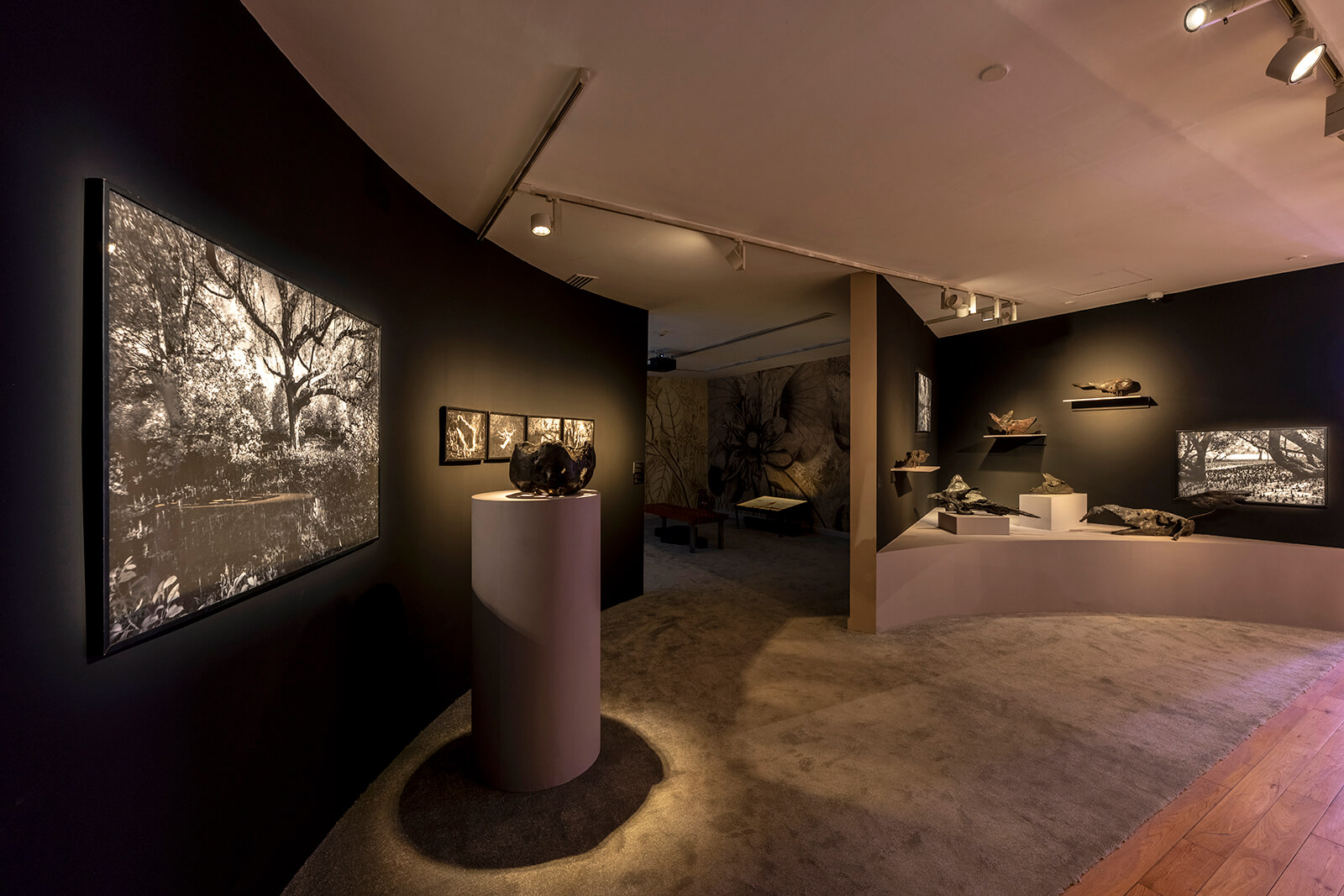
The show takes its title from Vaikom Muhammad Basheer's 1977 story Bhumiyude Avakashikal (Inheritors of Earth), in which plants, animals and people hold an equal claim on the earth, and it asks us to look with plants instead of at them. But most of what has been written down about plants and land in India comes from people who looked at them from outside: first the colonial botanists giving everything a Latin name, then the revenue department sorting land into categories for its books and, in our time, the museum, where a plant usually ends up as a name on a wall label. The political scientist James C. Scott, in his book Seeing Like a State (1998), called this making things legible, the state turning a complicated local world into something it can count, tax and map, and whatever does not fit the categories tends to drop out. The show's own texts name Itty Achudan, the Ezhava physician whose knowledge of the plants of Malabar went into the 17th-century botanical treatise Hortus Malabaricus and who entered the record only in part.
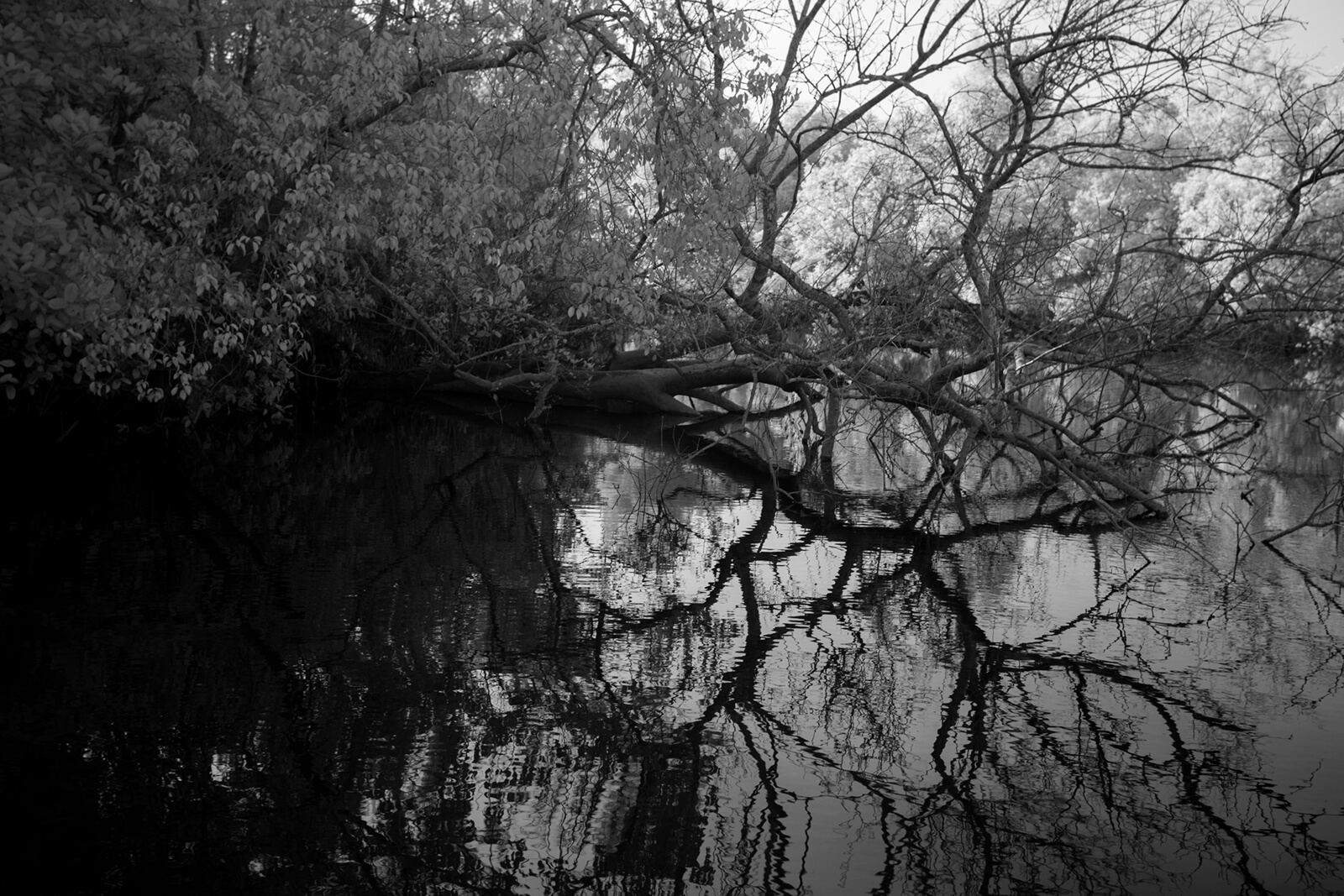
The other way of knowing land through use, and the rules people make around it, which is what the commons are. In my father's village in western Rajasthan, the cattle and sheep were walked east to Malwa before the heat set in and brought back with the monsoon, so the khejri, the ker and the rohida trees were left alone. No one wrote that rule down, and the same unwritten rules also decided who could take what, not always in favour of the people doing most of the keeping.
My father, Dr N.S. Jodha, spent his working life on this, and I am not an academic; I have just lived around his work for some 40 years. In 1986, he published a paper in the Economic and Political Weekly on common property resources and the rural poor in the dry regions of India: the village pasture, the pond, the grove, the scrub held by everyone and owned by no one, and showed that the poorest households depended on these far more than the better off, and that when such land was divided up and handed out, the better pieces usually went to those who already had land. Later, at the International Centre for Integrated Mountain Development (ICIMOD) in Kathmandu, he looked at the same question in the mountains: how fragile they are and how people there live from small niches. The ecologist Garrett Hardin had argued in 1968 that anything held in common would be ruined unless it was privatised or taken over by the state. It took Elinor Ostrom winning the Nobel Prize in 2009 for the wider world to accept what village studies like hers had shown: that communities can run what they share with rules of their own. Ostrom had been the first president of the International Association for the Study of the Commons (as it is now called); my father held the same post from 2004 to 2006.
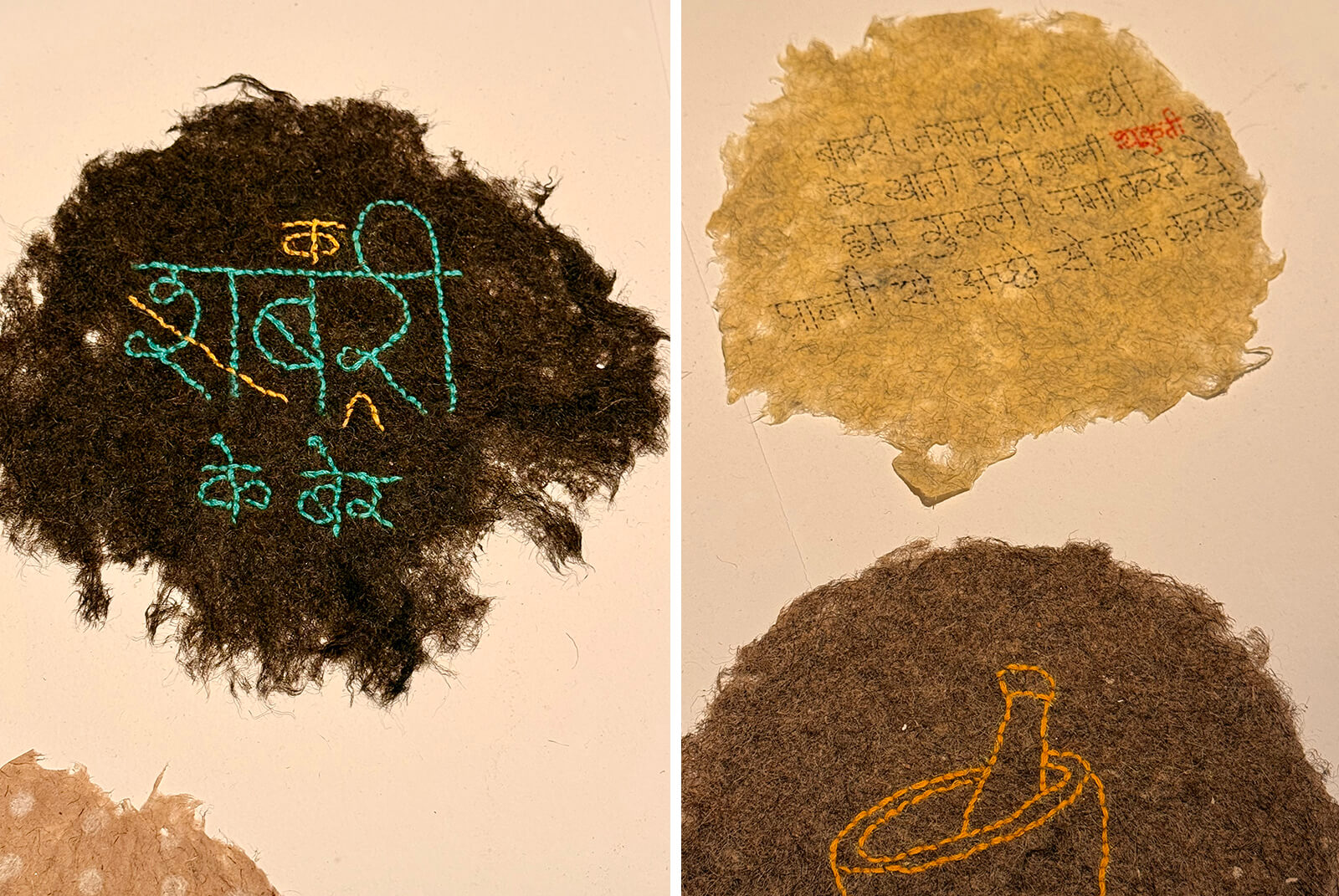
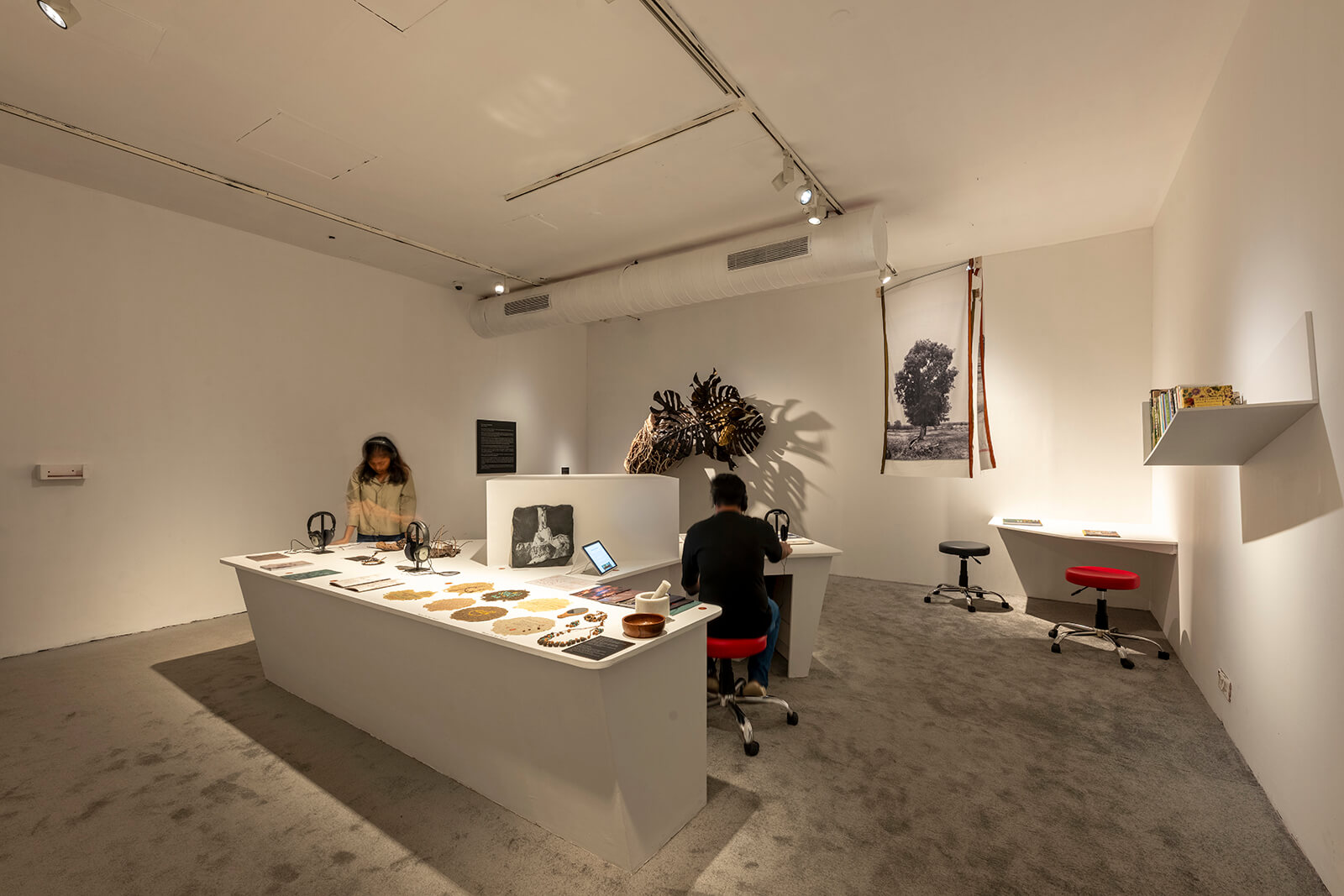
The work in the show closest to this kind of knowledge is by the Gram Art Collective from Paradsinga in Madhya Pradesh, a group of farmers and artists. Their title is embroidered in cotton on a mat of sheep hair: शबरी के बेर (Shabari ke Ber), with the श struck through, and a क stitched in so that it reads बकरी के बेर (Bakri ke Ber): Shabri's berries from the Ramayana turned into the goat's berries. Beside the seed jewellery sits a recipe handwritten on rough paper: break the woody part of the ber seed, find the tiny seed inside, eat it raw or roasted or mix it with jaggery to make laddoo. It is the most plain-spoken text in the whole show, the kind of village knowledge that never found a place in a botanical book or a government record.
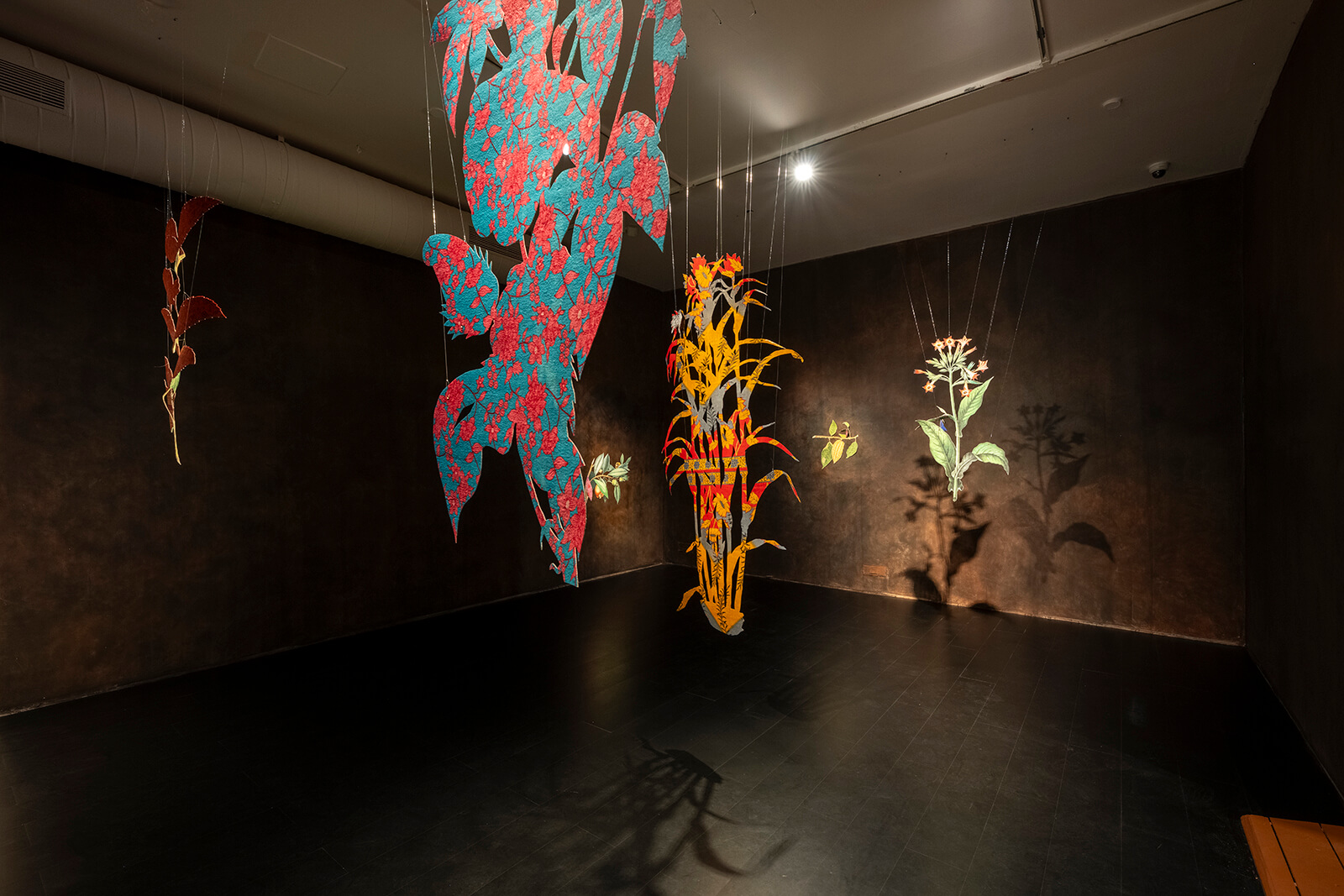
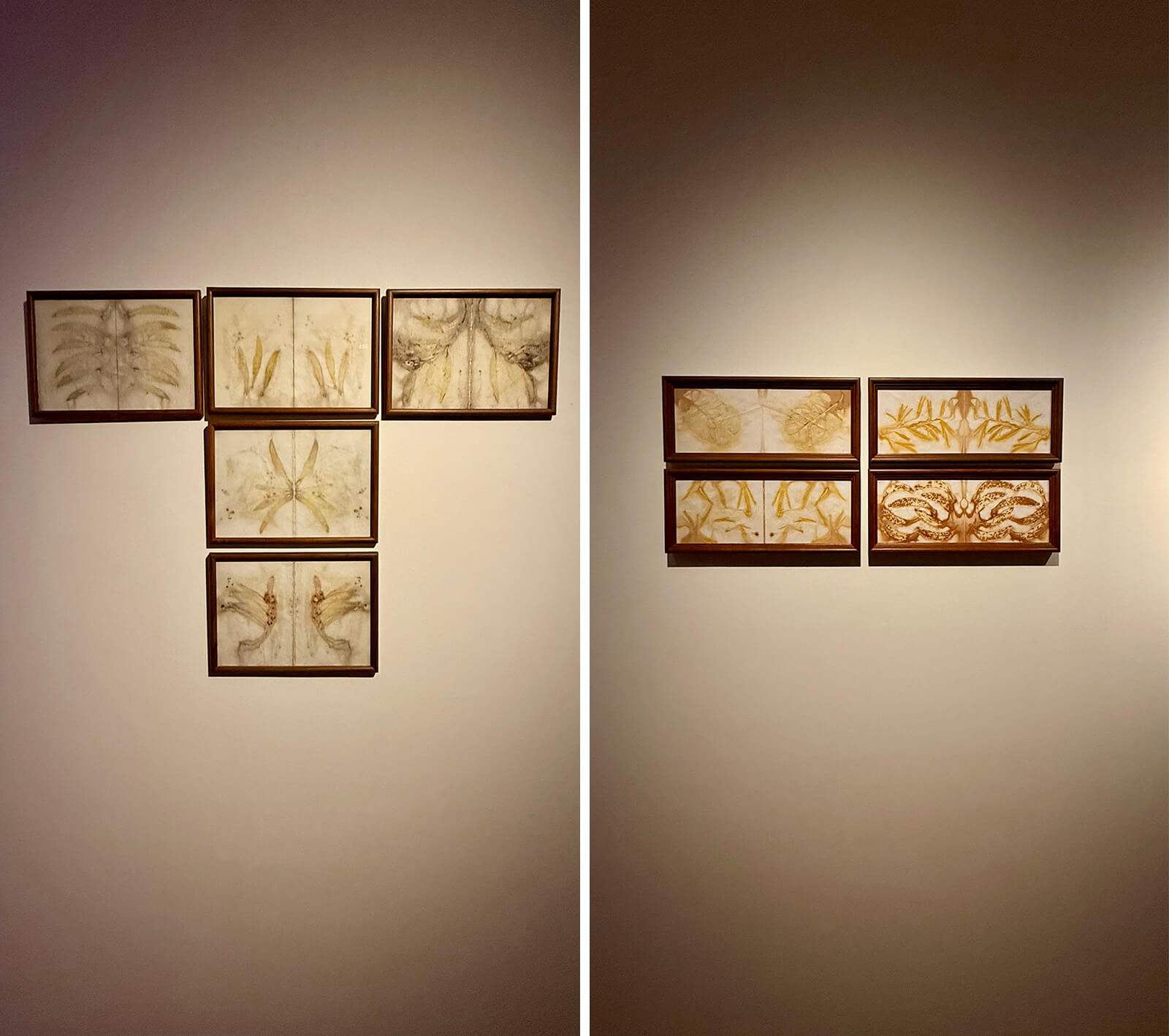
Ishita Chakraborty has painted tea, cotton and other plantation crops on jute and canvas and pasted them onto chappa saree cloth, the cheap printed cotton working women wear every day. Each of these plants came along a colonial route and went into the ledgers as a commodity, while the people who moved around to grow and pick them hardly appear in those books, and the saree cloth brings the women who did much of that work back into it.
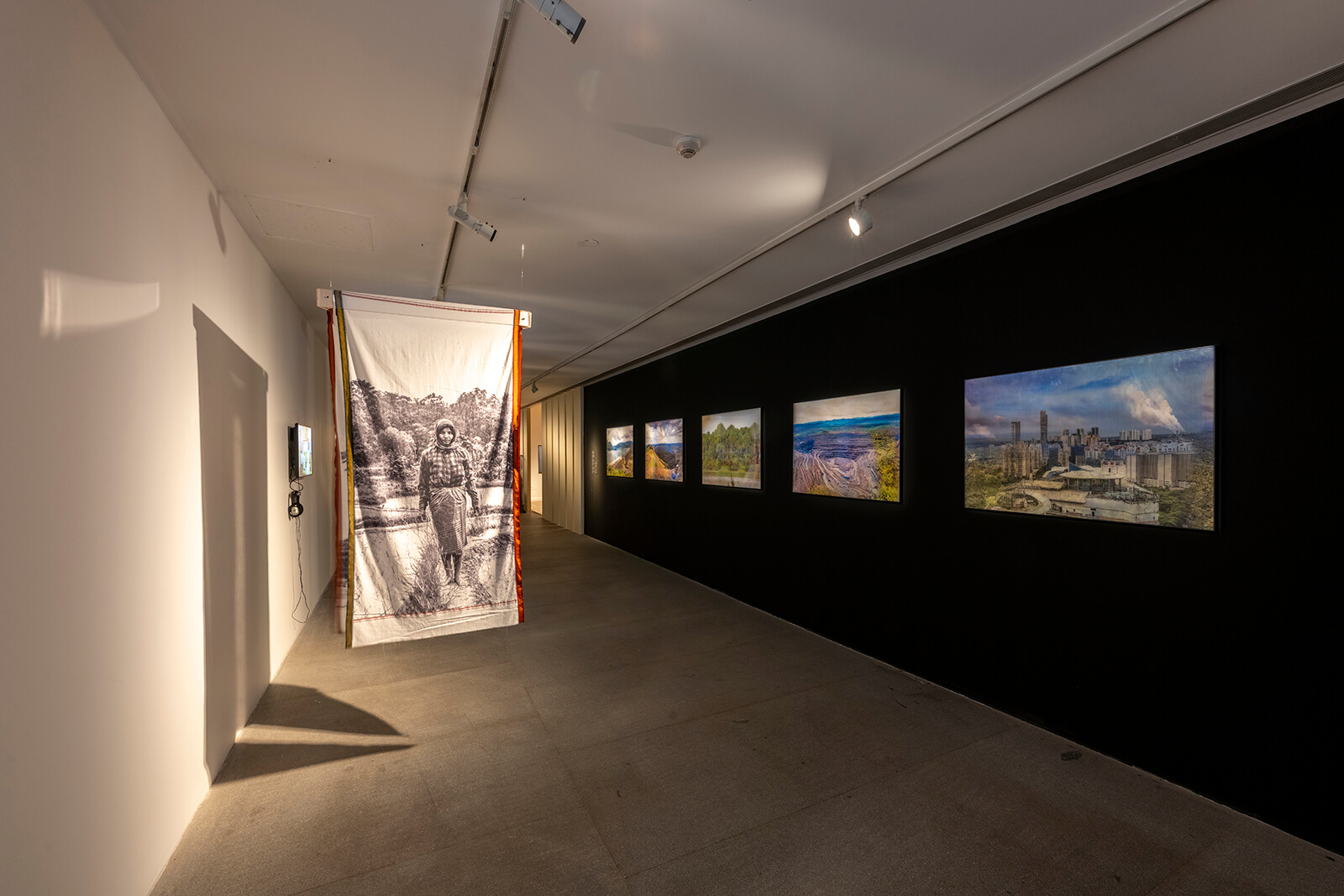
Vilayati babool, mesquite from Latin America, was brought in to fix land that had been written down as waste, and across Rajasthan and Kutch it has since taken over a lot of the grazing. Eucalyptus was planted across the country in the same spirit, and some of Hemangini Maharaul's self-portraits here are printed from its leaves. Abbas Malakar's text in the show takes on words like invasive and productive, which describe plants only by what they do for us, and I would add wasteland, the revenue category for land whole villages graze and gather from, because it was never anyone's private property.
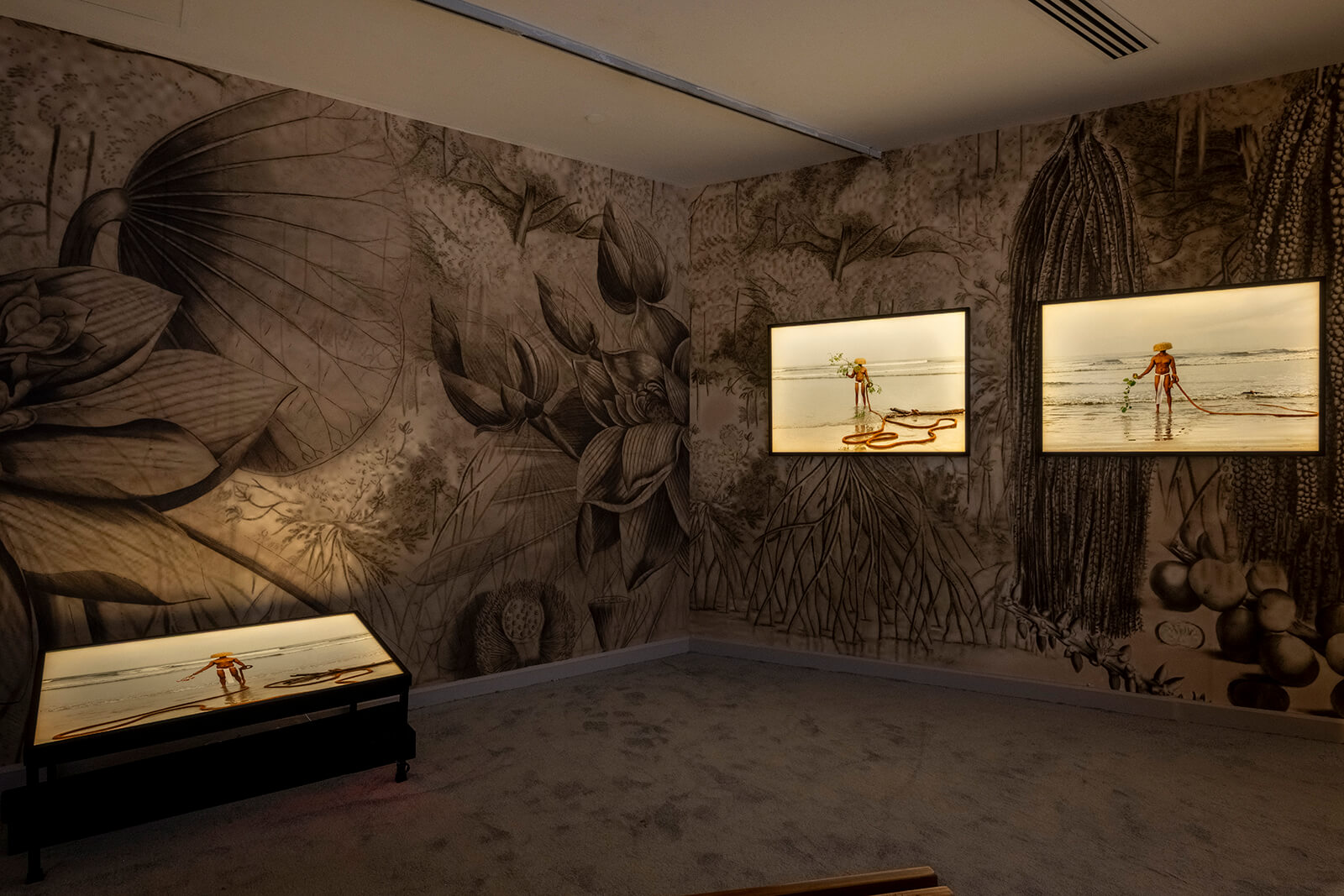
When I drive through western Rajasthan now, the solar panels run for kilometres, and the wind turbines with them. Earlier, people came from outside for other resources; now it is this. We need clean energy, yet the parks are going up on exactly this kind of common land, because on paper much of it is waste: the orans, the sacred groves, were never entered in anyone's name. Villagers from Jaisalmer have walked hundreds of kilometres asking for their orans to be put down in the land records as orans. Out in the Thar desert, the Great Indian Bustard, with only a small number left, keeps flying into the power lines, and in Kutch flamingos have died the same way. In the mountains, the same push is for hydropower, where plans made for the plains do not fit fragile ground, and the flood at Chamoli in 2021 swept away one plant and wrecked another that was still being built.
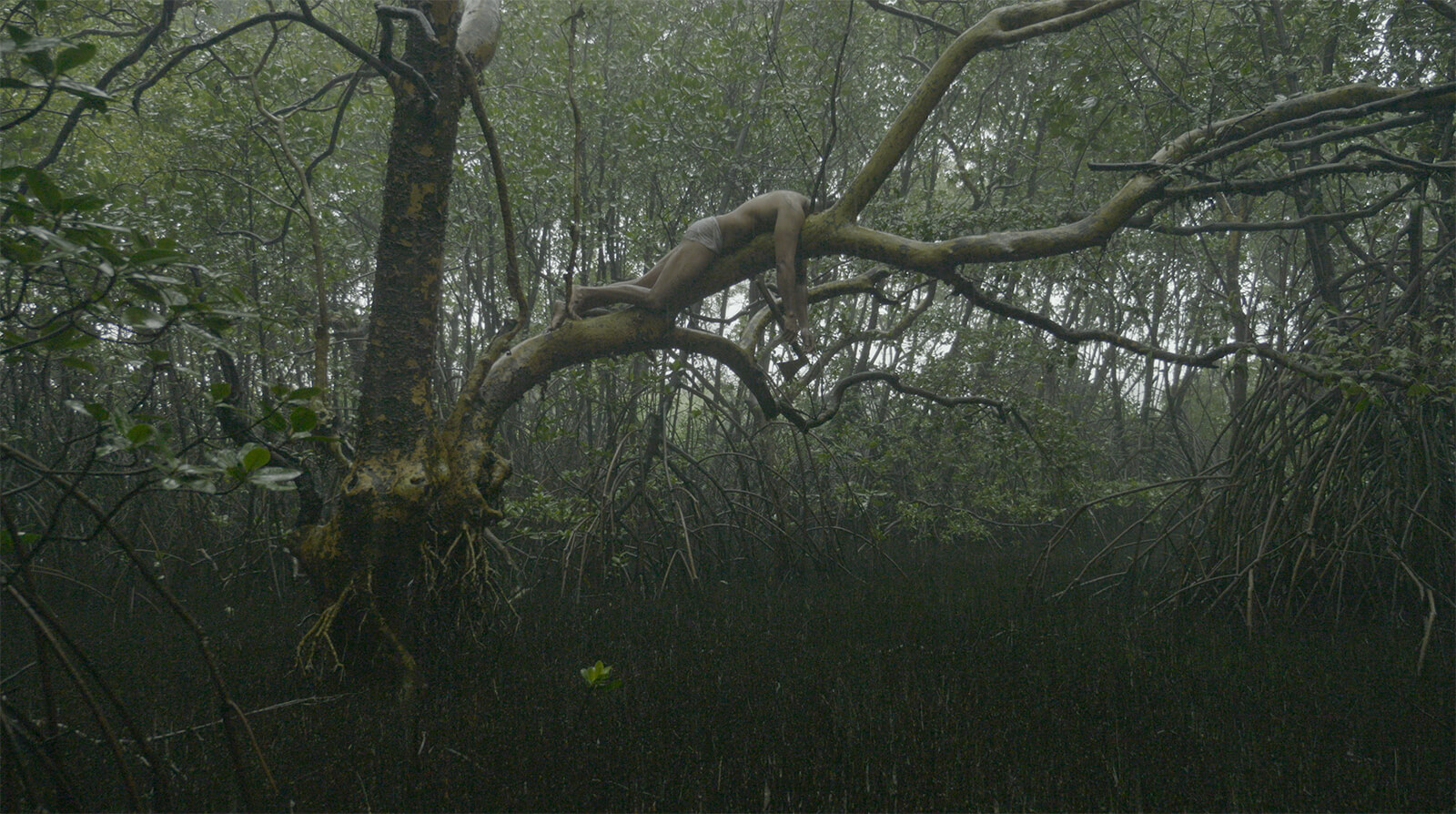
I had seen soil used like this in Venice in May, in Koyo Kouoh's In Minor Keys, where Dawn DeDeaux's Dirt Bowl Table held 64 bowls of soil gathered from different parts of the world, with soil from Kouoh's birthplace in Cameroon at the centre of the table, put there for her, as she had died before the exhibition opened.
On the Gram Art Collective’s table is a wooden bowl of ber seeds, a marble mortar and pestle, and beside it, the recipe on handmade paper and printed along the edge of the table: do not touch.
‘Inheritors of Earth’ is on view from September 9 – December 22, 2026, at the Kiran Nadar Museum of Art, Saket, New Delhi, India.
The views and opinions expressed here are those of the author and do not necessarily reflect the official position of STIR or its editors.

by Mrinmayee Bhoot Nov 03, 2026
The Pakistani-American artist’s first solo show in Europe brings together paintings that explore queer and immigrant lives, human connection and the complexities of cultural belonging.
by Srishti Ojha Oct 27, 2026
The 13th Gyeonggi Ceramics Biennale in South Korea showcases global ceramics, from ancient traditions to contemporary experimentation
by Srishti Ojha Oct 26, 2026
The Taiwan-based artist shares his opinion on exhibition rituals, protests and his search for ‘fragmented beauty’.
by Srishti Ojha Oct 21, 2026
Increasingly, artists, filmmakers and activists are turning to VR to create more personal, tangible accounts of the climate emergency and its impact on vulnerable communities.

make your fridays matter with a well-read weekend
Enter your details to sign in
Don’t have an account?
Sign upOr you can sign in with
a single account for all
STIR platforms
All your bookmarks will be available across all your devices.
Stay STIRred
Already have an account?
Sign inOr you can sign up with
Verification link sent to check your inbox or spam folder to complete sign up process
Tap on things that interests you.
Select the Conversation Category you would like to watch
Please enter your details and click submit.
Enter the 6-digit code sent at


Inheritors of Earth at Kiran Nadar Museum of Art examines land and the commons
by Samar Jodha | Published on : Nov 04, 2026


 Sign in with Google
 Sign in with email
What do you think?